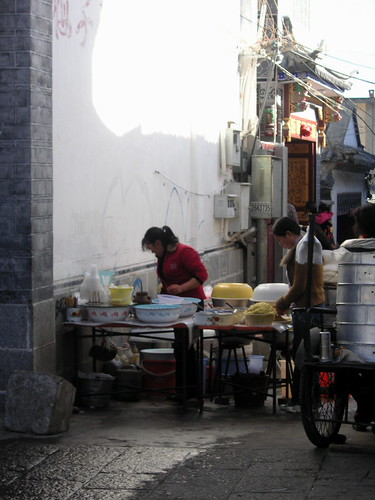
Jinghong, Xishuangbanna

Just after Howard and Gene arrived, we spent several days in far southern
Yunnan, in an area called Xishuangbanna. The capital of the region is a medium-sized town called Jinghong, on the banks of the Mekong River (known in China as the Lancang) — maybe 50km downstream, it crosses the frontier to run about another 75km or so as the border between Laos and Burma, before dropping into northern Thailand and then heading further east to form the border between Laos and Thailand. I say all that by way of giving you a sense of where we were geographically.
Among other things, this region is known as the home of the Dai ethnic
minority, which is linguistically and culturally related to the inhabitants
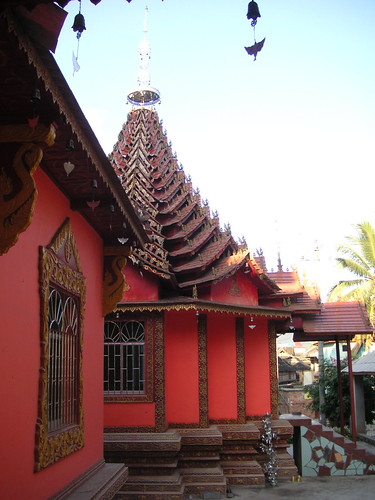
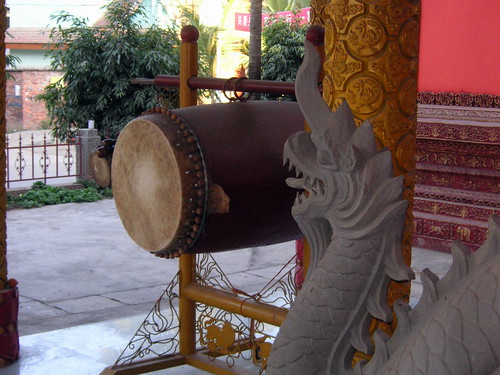
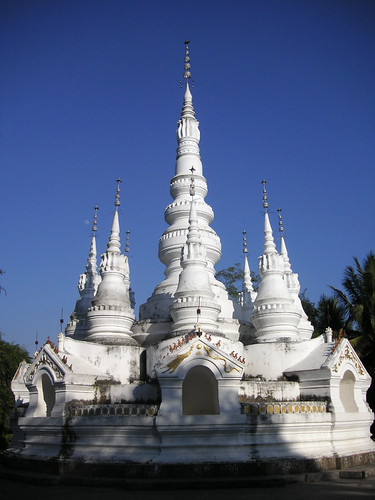
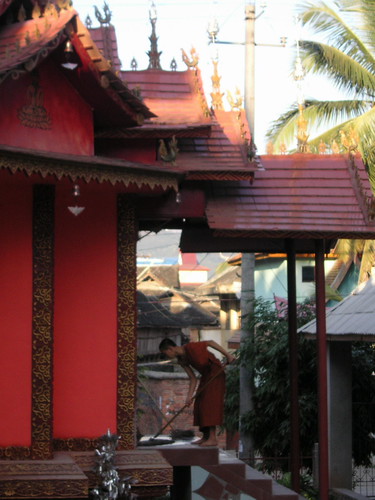
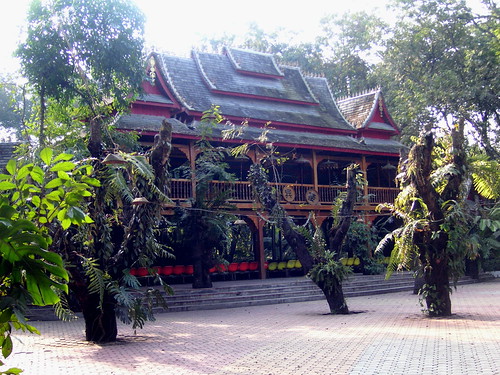
of Thailand. This means some wonderful food that’s quite close to Thai food in its feel and flavors, as well as temples and other architecture that seem culturally closer to Thailand than what one thinks of as China. It was a
relaxing and enjoyable way to start our one week tour of Yunnan.
Sanchahe Park, Xishuangbanna
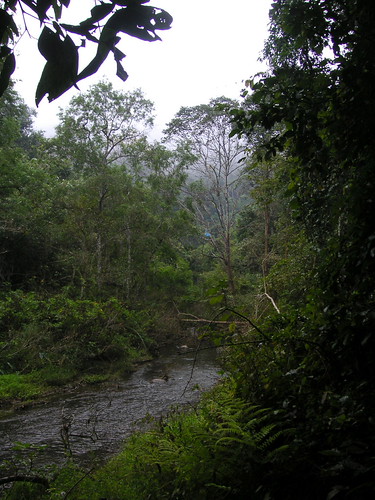
About 30km outside Jinghong is a natural park called Sanchahe, which runs along a river called the Sancha River. As this shot shows, it’s a dense
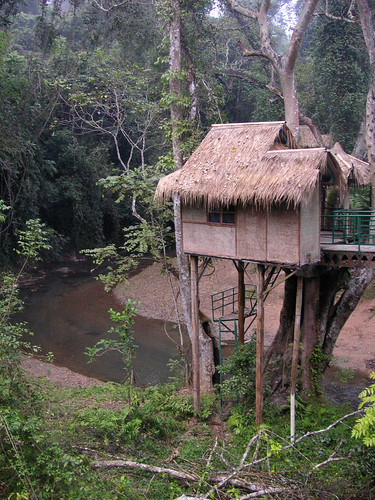
jungle park, and is best known as the home of a band of about 40 wild elephants. (If you’re curious about the blue thing in the shot, it’s a cable car that connects the two entrances to the park: Chinese tourist sites seem to feel cable cars are de rigueur.) We spent parts of two days there, overnighting in houses built up on stakes so they’re among the trees. They’re built at a bend in the river where, one hears, some of the elephants occasionally come to drink and wash themselves in the morning.
I had high hopes of seeing live wild elephants, but all we saw were elephant
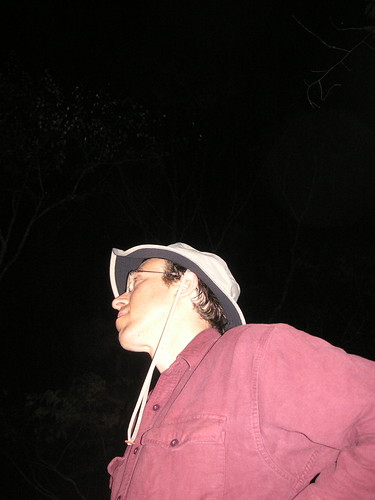
footprints in the mud — still a rather cool experience, but not quite the same as seeing them splash in the river. The park’s lovely, though there aren’t any good hikes to be done there as I’d hoped: it’s rather commercialized to be honest. Nonetheless, the night is very dark and full of the sounds of thousands of frogs all singing their little lungs (?) out. We did a bit of walking on the elevated walkways at night, hence the nighttime shot of Howard.
Beijing Area Hikes
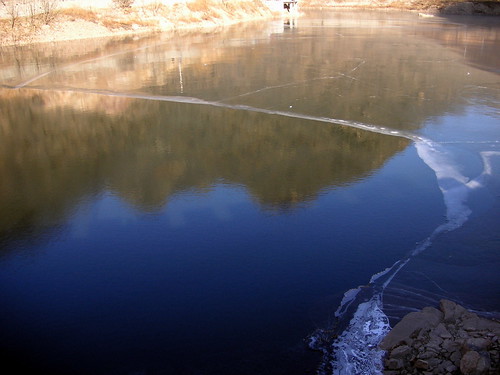
Even if I’m not going to amazing places like Yunnan or Xi’an (see below), I do try to get out of Beijing on hikes at least every few weeks. Otherwise the hustle, pollution and general craziness can get a bit overwhelming. Here
are a few shots I took on December and January hikes. All the ice on the lake was cool, because it kept settling and cracking, since it was in the sun and the temperature was just about at freezing: we’d hear these groans and cracks and pops. It was rather eerie.
Also note how dry the mountains are: we truly are on the edge of the Gobi desert here. It’s not rained or snowed any substantial amount since at least September: there have been three small snow flurries I know of, but so little it all blows away or melts very quickly. I love getting out of the city…but it’s getting pretty depressing, how dry and dusty it is out there. In the city, it’s amazingly dusty and dirty most of the time, but you’re surrounded by buildings so it’s easier to ignore it. There are also some shots of an early Ming temple at the base of a mountain our group hiked one day.


 (so much world, so little time....)