
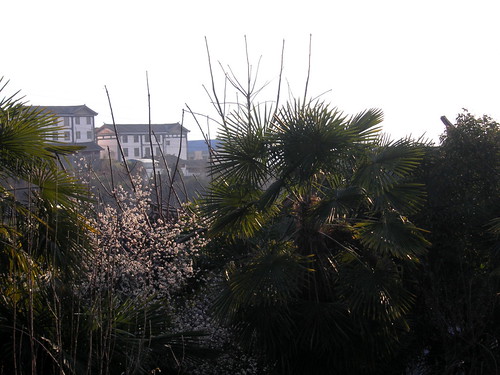

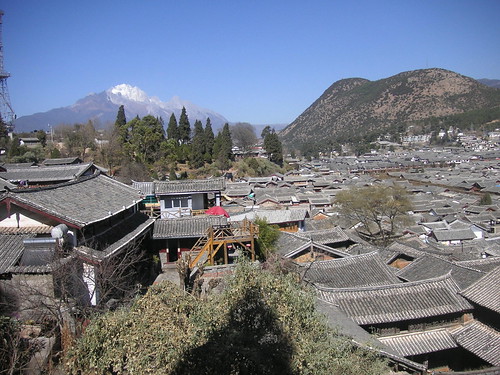
Lijiang at Dusk
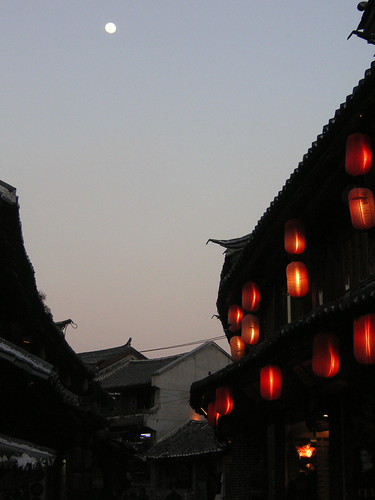
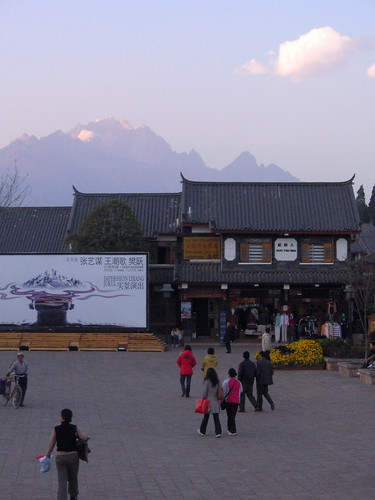
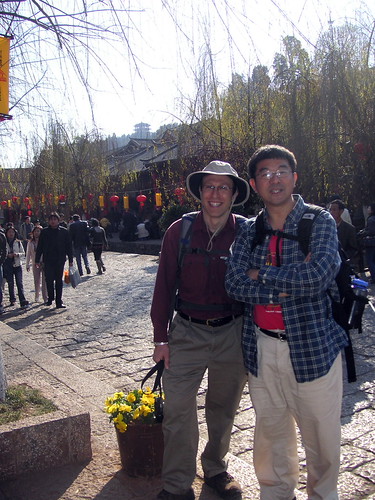
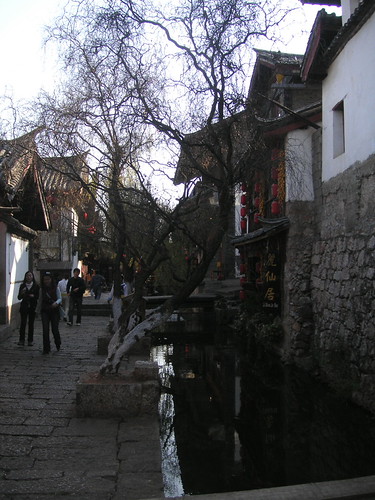
So maybe the moon and the red lanterns are a predictable image…but that made the experience no less beautiful. 🙂 The next few shots capture a bit of the street life of old town Lijiang — check out how clear the water is
in the canal; you may even be able to make out some of the wonderful gold
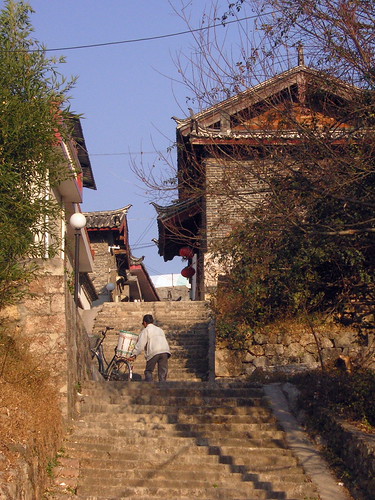
fish that add color to the canals throughout old town. The shot looking up the steps is there because of the guy who was taking his loaded bike up,
step by step. It seemed quite the image to me.
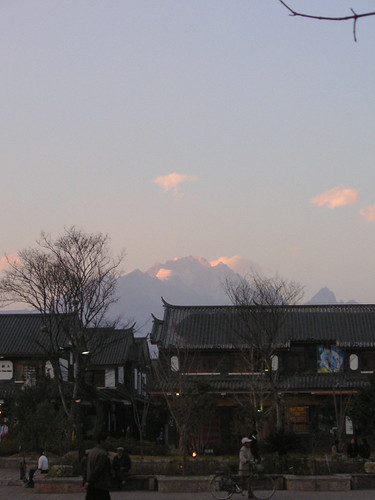
A Weekend in Xiamen
OK these photos are OUT OF ORDER, because I knew that once I posted the
Tiger Leaping Gorge & Lijiang photos, I would most likely not post more pics
or updates for another chunk of time. That meant that if I’d followed the
order of things, these shots of the last weekend H&G and I spent in the city
of Xiamen on the coast of southern Fujian province would be the first things folks see when they check the blog, for at least a few weeks. And, frankly,
Xiamen was lovely but it doesn’t deserve that honor over the gorge.
So here they are, looking as though we went to Xiamen in between Dali and
Lijiang. Not so, but hey, it’s my blog and I get to do what I want! After
Lijiang we came back to Beijing so I could spend a week at work while they
explored the great city, and then we flew to Xiamen for the weekend.
A few factoids about Xiamen, as long as you’re looking. It used to be known
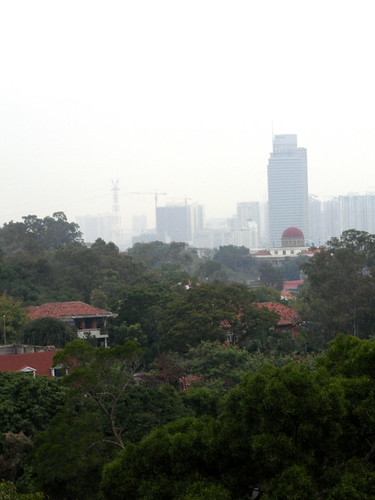
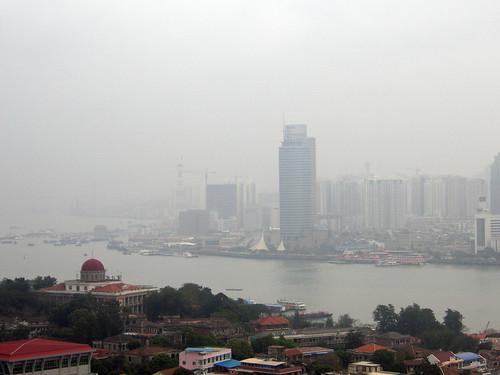
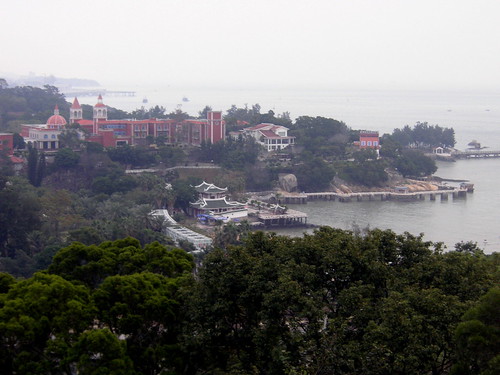
as Amoy, which comes close to representing how the name is pronounced in the local dialect. (Which, for those not up on their Chinese geography and history, is closely related to the dialect spoken in Taiwan, since Taiwan is a mere 100km or so across the strait from Fujian, and was in fact part of Fujian province under the Qing, until it was ceded to Japan after Japan’s rather successful 1895 war against China…again, assuming I’m correctly remembering my college history studies.) We spent two nights on the lovely and very relaxed island of Gulangyu, just across a short channel from the main part of Xiamen. There are no cars on Gulanyu; people walk, ride bikes, or hop on golf carts to get around.
Xiamen was one of the treaty ports, when the western powers (especially France and Britain) repeatedly attacked China during the 19th century in order to force its market open to western imports…and to opium imports that the British East India company was so interested in selling to the Chinese in the waning years of the Qing Dynasty — if I remember my history correctly. In any case, due to this history Gulangyu, which housed some of the foreign consulates, has a good deal of 19th century colonial architecture, in addition to its relaxed feel and nearly tropical vegetation and climate. Though I only ordered on their behalf and didn’t eat any myself, Howard and Gene tell me the seafood was also quite excellent.
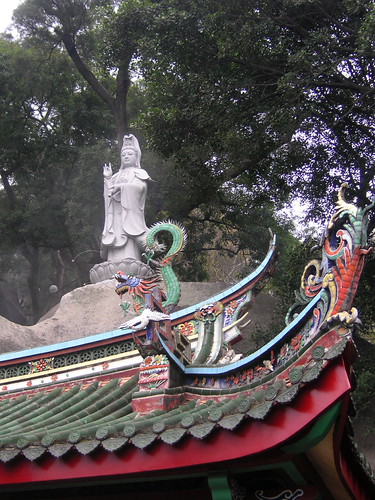
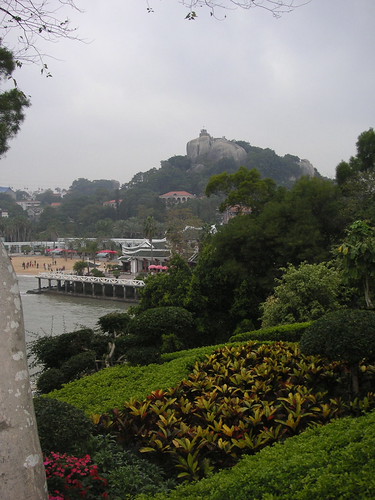
Oh, if you’re curious, this is a shot of the temple built at the base of “Sunlight Rock,” the 93-meter high rock you’ll see in some of the other shots, which dominates the island. It’s said that Koxinga, who in the 17th Century (?) led a group of warriors from Fujian across the strait to claim Formosa (later known as Taiwan) from the Dutch (who claimed to have discovered it around then, though when they did it was already inhabited by indigenous people whose descendants are now registered among the official ethnic minorities of the PRC)…anyhoo, this Koxinga guy is supposed to have sworn some big bad pledge with his soldiers about driving the foreign devils out of the Chinese sphere of influence. So there’s a statue and a museum to him on the rock, also. Most of the other shots were taken from the top of the rock.
Dali – Three Pagodas Complex
Before hitting Lijiang, we had spent a day and a night in Dali, a truly lovely town by the side of a long and beautifully blue lake, with tall green
mountains on the west side and medium brownish dry mountains on the east
side. Dali itself was — a thousand years ago or so — seat of the Nanzhou
kingdom, established when the Bai minority (said to have settled this
region perhaps 3000 years ago) fought off the Tang dynasty to establish their own base of power, which lasted until Kublai Khan (of the Yuan dynasty, for those keeping track) retook the region in the 13th C.
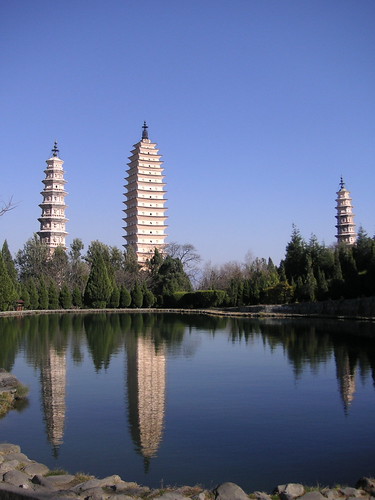
Aside from its stunning natural setting, Dali’s key claims to tourist fame are the three pagodas complex (the eponymous structures shown here, along with a few newly built and quite impressive temples which seemed, to my
sophomoric eye, to be rather in the Tang style — not surprising if true, as
the pagodas were first built during the Tang dynasty [mid-8th C, by engineers from Xi’an, not long before the Bai established independence from the Tang], about which see much more further down, in my presentation of a weekend in Xi’an), and its lovely and well-maintained old town with canals and many attractions (from quite nice restaurants to shopping galore) for tourists of all stripes. (PS Lonely Planet tells us these are some of the oldest standing structures in Southwest China.)


 (so much world, so little time....)