Views of the Three Gorges

I’ve been trying just to post a few more shots for the past hour, and each time they get rejected…so I’m trying a single shot. Maybe I can get it working again…if not…more shots of the gorges whenever I can get it to work for me. 🙂 It’s gettin’ late here in BJ!
Life in the Gorges


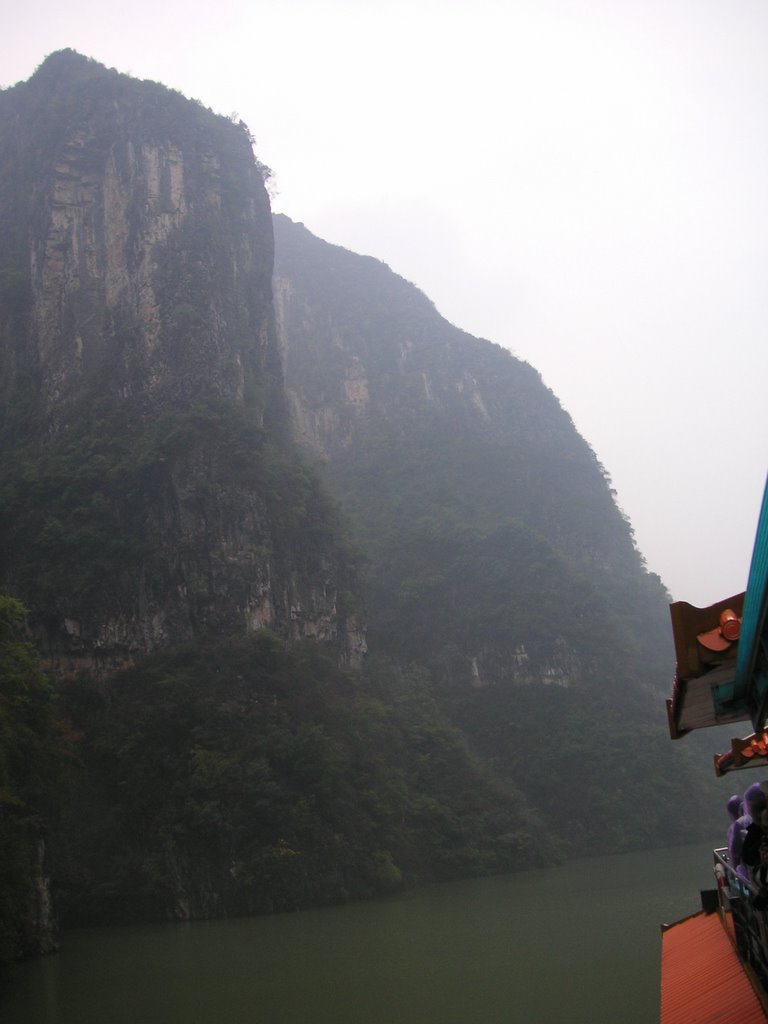
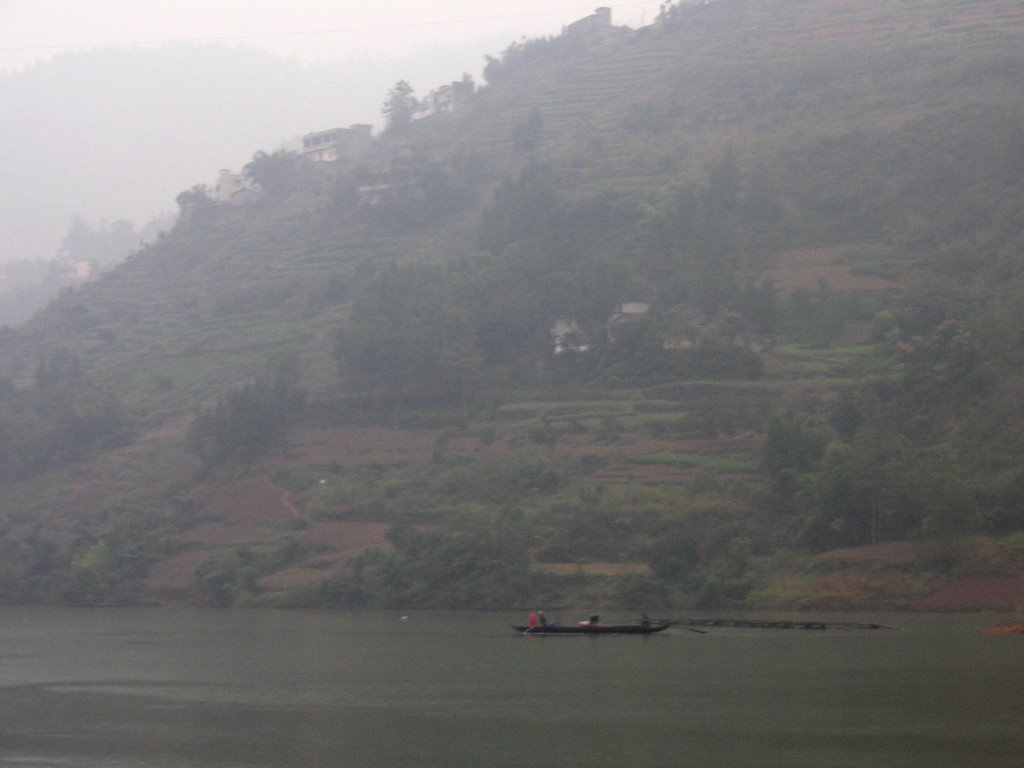
Cruising through the Gorges, I very much had a feeling of the age of the landscape and of human habitation there. Also of the relative poverty of the region. So often, we passed imposing cliffs with one or two small shacks somehow wedged into the slopes, with terraces of fields somehow carved out as well. In one of these shots, you’ll see a house up on the hill and a boat at the bottom…obviously the way this family gets its produce to market, I’m guessing. We saw little water taxis picking folks up from the bottoms of their slopes, and carrying them across the river for work or for shopping. And all of this in a region of virtually endlessly steep cliffs with few roads and little means of travel other than the river, really. Quite amazing, in some ways.
Cliffs, Towns, Boats in the Gorges


The shot with the town and boat is actually where we disembarked to tour the Dam. The green cliffs are from the second gorge.
Paul & Steve on the Cruise


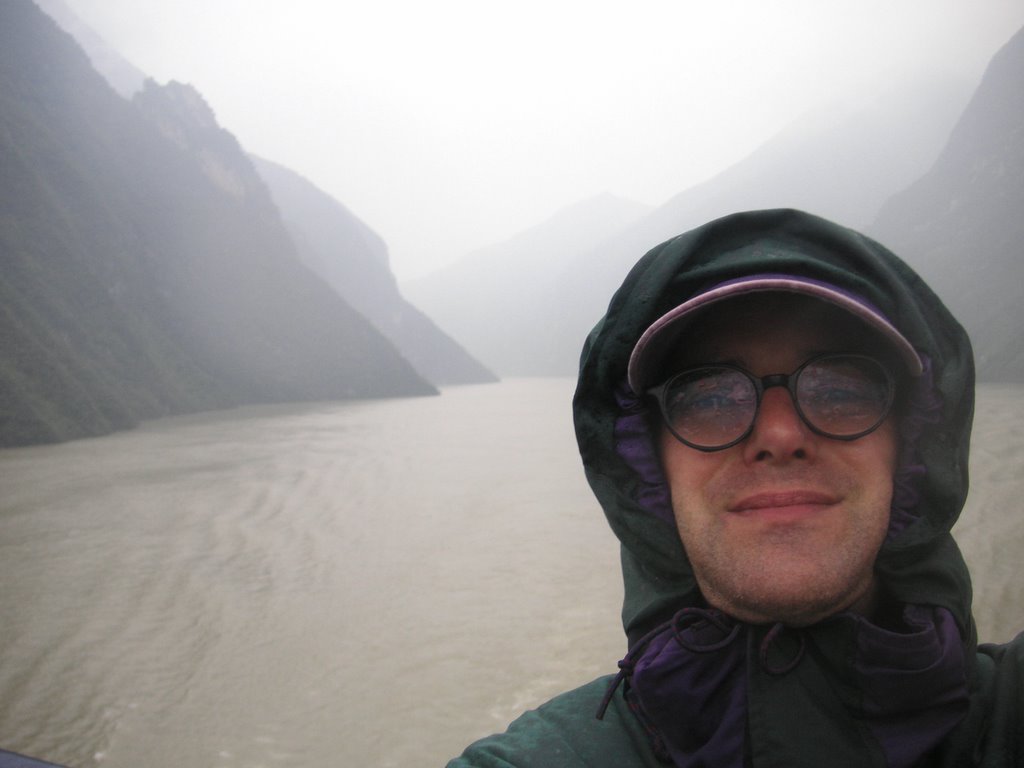
And of course there have to be some pics of us in the Gorges. 🙂 The one of me all wrapped up in my jacket was a self-pic since I was at the back of the boat trying to hide from the rain and cold behind the engine (warmer, but more smoke — it’s all tradeoffs, no?) and Steve was being brave up front. Man, it was wet and cold…and beautiful.
Third Gorge, Post-Dam

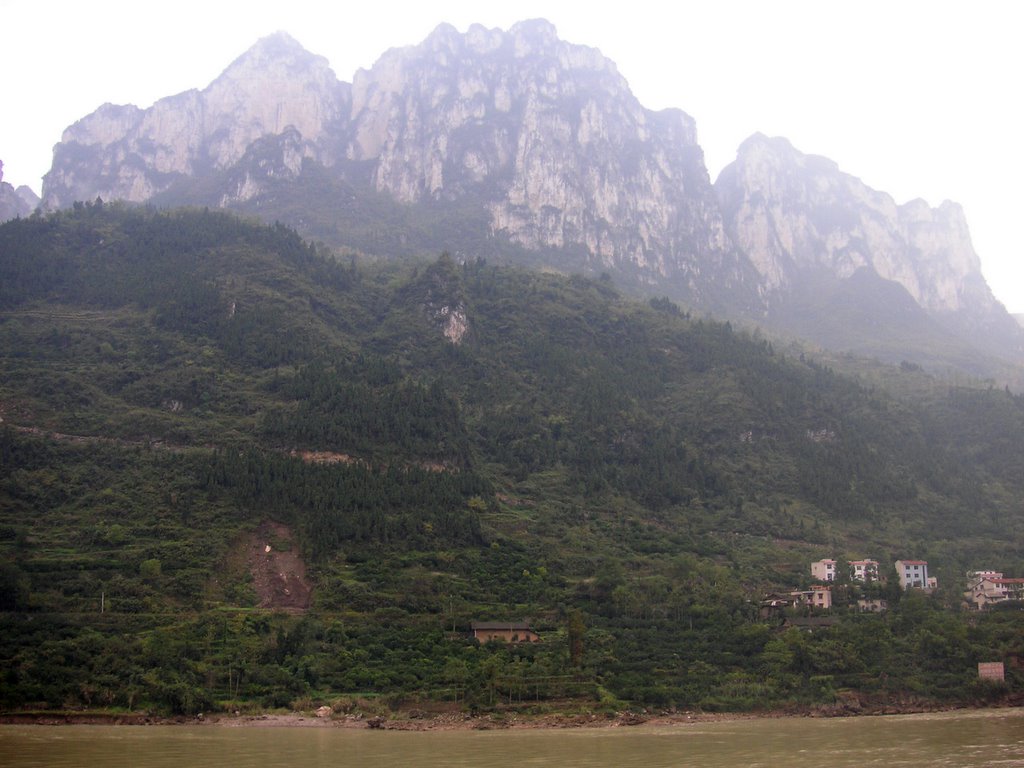
These are a few shots taken after we cleared the Three Gorges Dam. Shots of the dam are a bit later on.
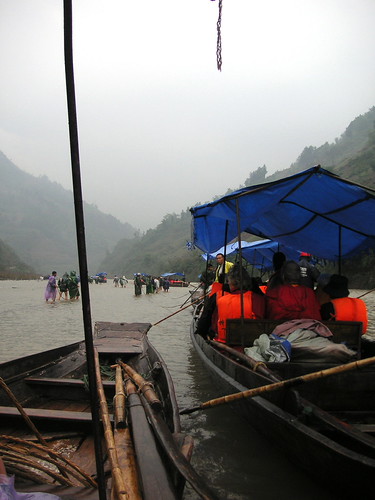
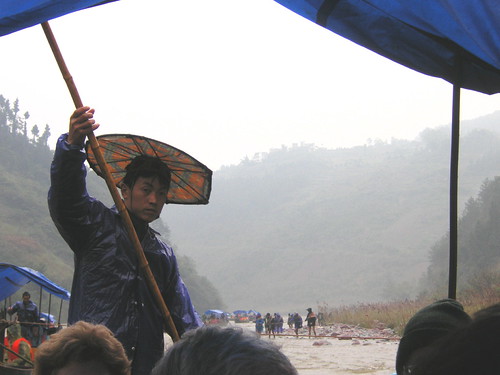
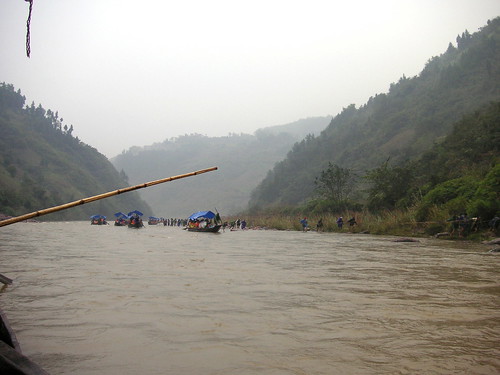
Peapod Boats on Shennong Stream
We did two side trips on our cruise. The first was to a tacky “ghost town” (a few shots later) on the first day. The second afternoon, we spent several hours on first a smaller motorized boat cruising up an ever-narrowing side stream, then on “peapod boats” (so named because of their shape) being first rowed, then pulled, up an ever-shallower stream surrounded by beautiful moody hills.
Steve and I shared a boat with a really GREAT group of Australian tourists and our boat was by far the most interesting one — we sang “Drunken Sailor” and “Waltzing Matilda” to entertain our captain, tour guide, and paddlers as we were rowed upstream, and generally had quite a good time. Steve had time, afterwards, to speak with the oldest member of the group and to learn that for him, this day was literally the realization of a lifelong dream. He is a WWII veteran, and after the loss of his wife a few years ago he decided he’d finally travel the world and see things he’s always dreamed of seeing. This was his first trip, and being pulled upstream by the trackers (you can see them in one of these shots) is something he’s dreamed about since he read a book about boat traffic, and foot trackers, on the Yangtze and its tributaries as a child in Australia, during the teens or twenties.
Indeed, Steve and I found the Shennong Stream trip — aside from our pleasure in the company; those back home should ask Steve about his talent show performance of Waltzing Matilda with the group that evening — both beautiful and very interesting. The peapod boats were until recently used exclusively for work and transport of goods; these days they’re just about exclusively used for tourists coming off the big cruise ships. It seems clear that Three Gorges tourism is an important part of the economic picture of many of these towns.
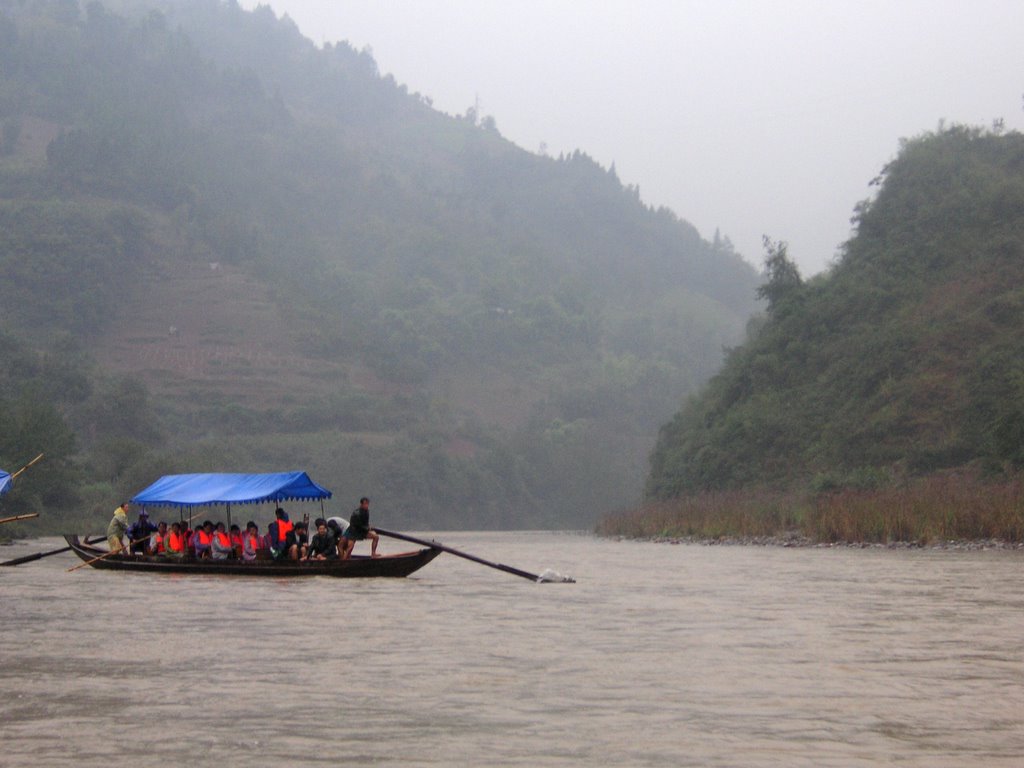
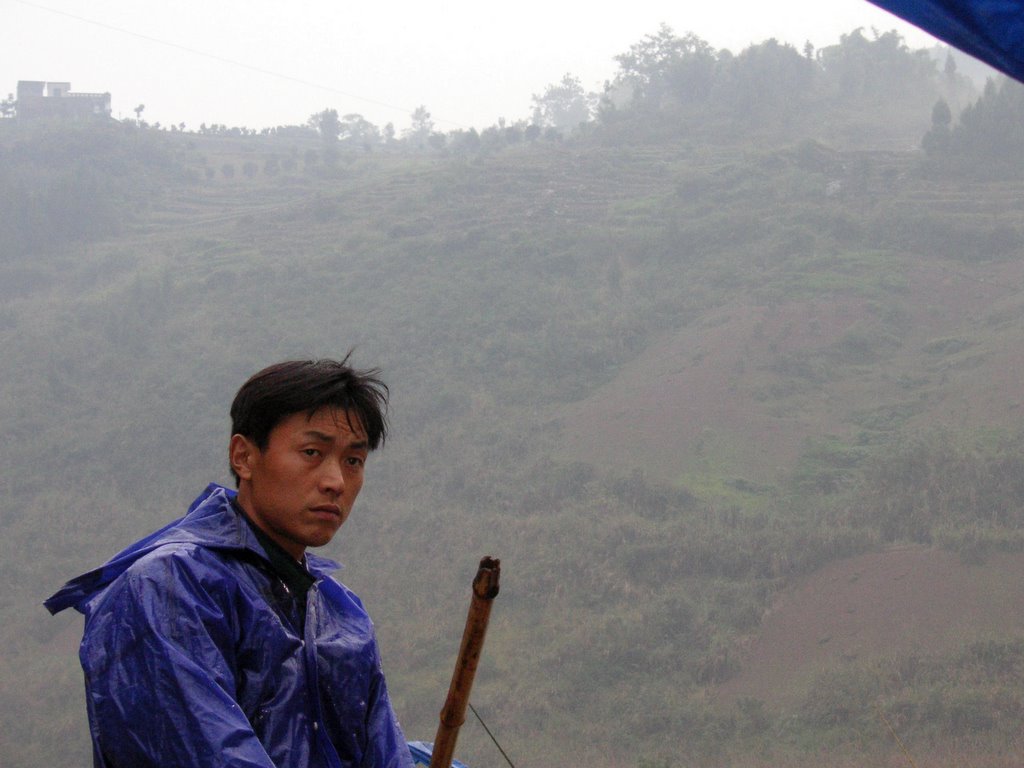
Water Level Sign
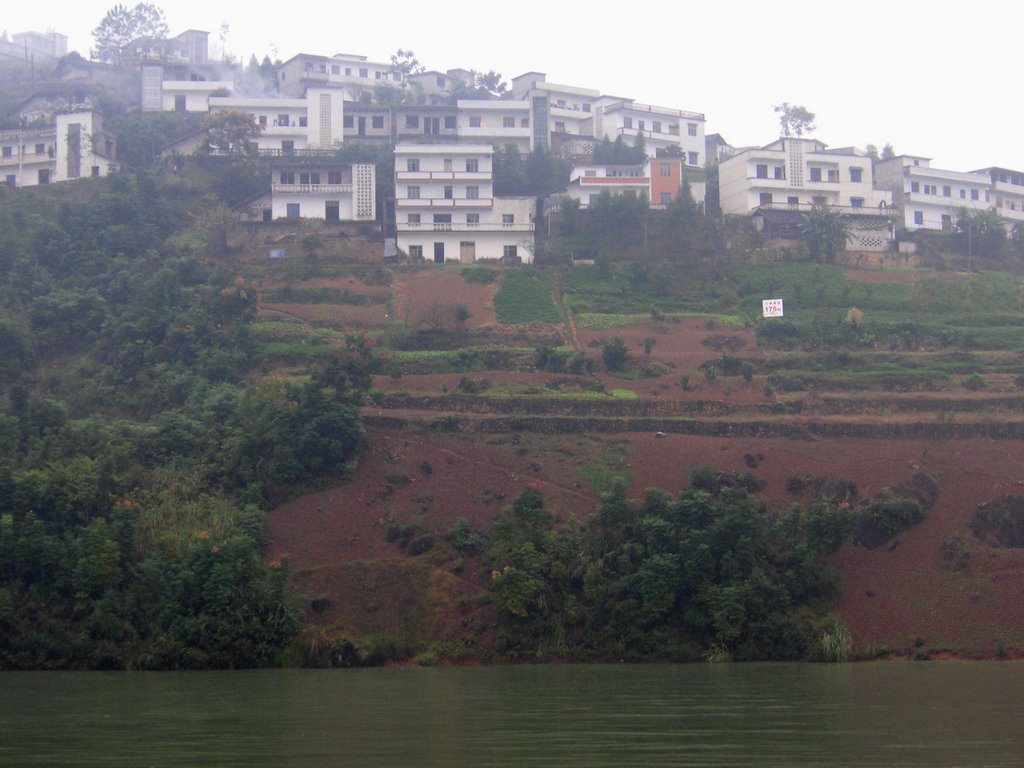
This shot is on its own since you can see how high the water level will ultimately be: the white sign on the hill shows the ultimate water level. The river has already risen most of the way it will rise — a woman from Australia who leads tour groups told us she noticed a real difference from her last trip, last year. But it’s all still quite impressive and beautiful, as I hope you agree. Shennong is in between the second gorge and the beginning of the third gorge…I think…Steve will comment if I’m wrong, since I’m pretty sure he’s got the map at home with him :-). In any case, we were getting pretty close to where the dam is now in operation, but going up Shennong Stream we were also going back uphill basically.


Locks of the Dam
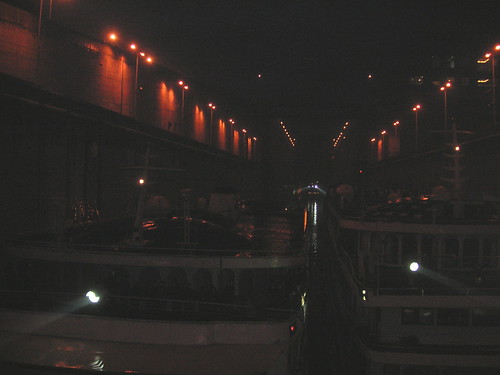
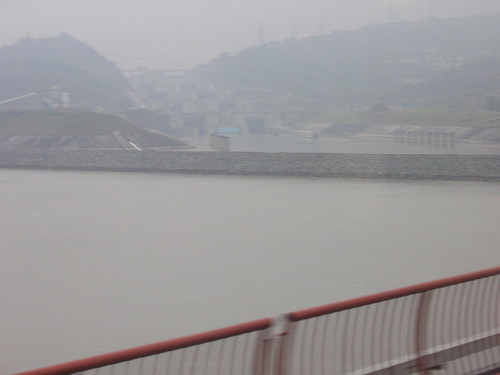
Sorry for the fuzziness of these two shots, but they’re the best I could get. The ill-lit nighttime one shows is taken from our boat, showing all the other boats being shoe- horned into the second (of five) locks of the Three Gorges Dam, at around midnight on the last night of our cruise. Many of us stayed on deck the whole time to watch the process. It’s amazing. It’s now three weeks later, and I didn’t take notes, but if I recall, each lock raises or lowers ships about 22 meters or so, and they’re one after another. Right now, the first lock is not yet functional since the water level has not risen above the level of the second lock yet. Anyway — it was intensely cool, though in an industrial sort of way, not in the beautiful nature of the gorges sort of way. The really fuzzy shot is from the bus after we’d toured the Dam and learned more about it. It shows the step-like progression of the five locks, from outside and downstream.
One has mixed emotions about the dam: having lived through power outages all summer in Nanning, I know China’s need for more power. I also know Americans (and many others) are in no position to criticize China very effectively since we dammed many of our greatest and most beautiful rivers and natural areas (Glen Canyon, anyone) thirty and more years ago. (Quite aside from how greedily Americans consume energy of all origins.) And indeed, the Gorges are still quite awe-inspiring and beautiful as they are — even in the mist — as you’ve seen. Yet how much more awe-inspiring would they be, if they were another 120 meters or so taller than they are now?
The dam itself falls roughly 1/3 of the way into the third gorge, heading downstream. This means the water through the last part of the third gorge is lower, and the height of the cliffs is a bit more dramatic. But, whether due to the dam construction or the relative proximity to a major city (Yichang, where we ended), there are generally more towns and houses through this part than through the other two gorges we went through. Also, perhaps, by that point we knew the trip was nearly over and were ready for our next destination?
Ghost Town or Tourist Trap?
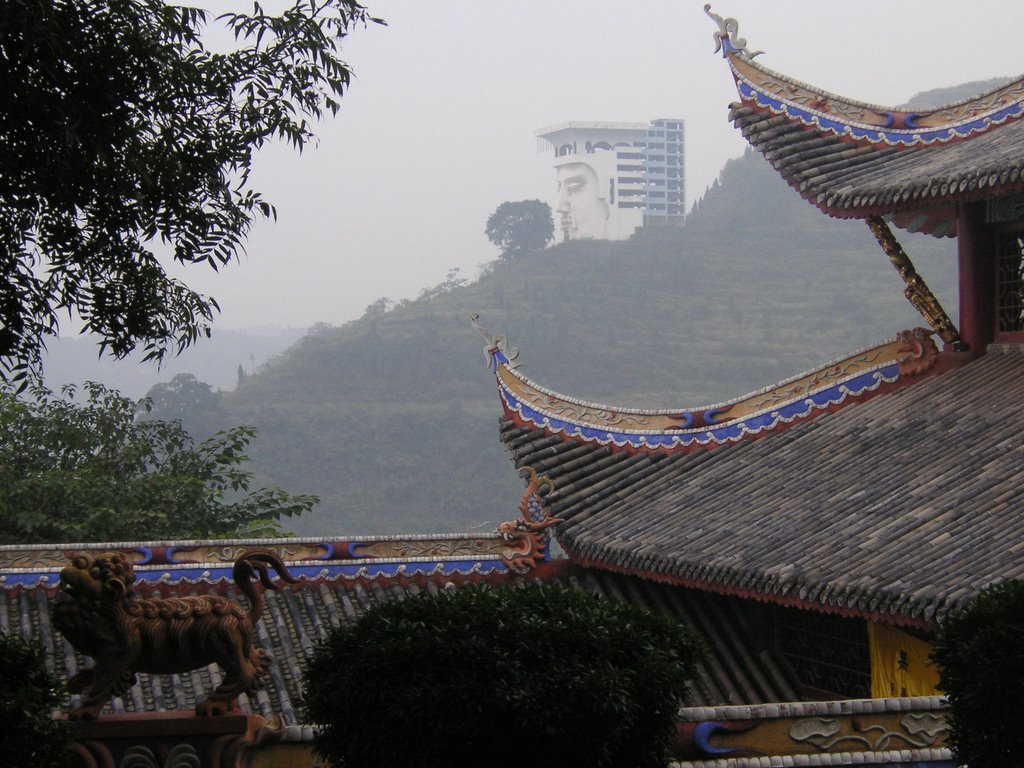
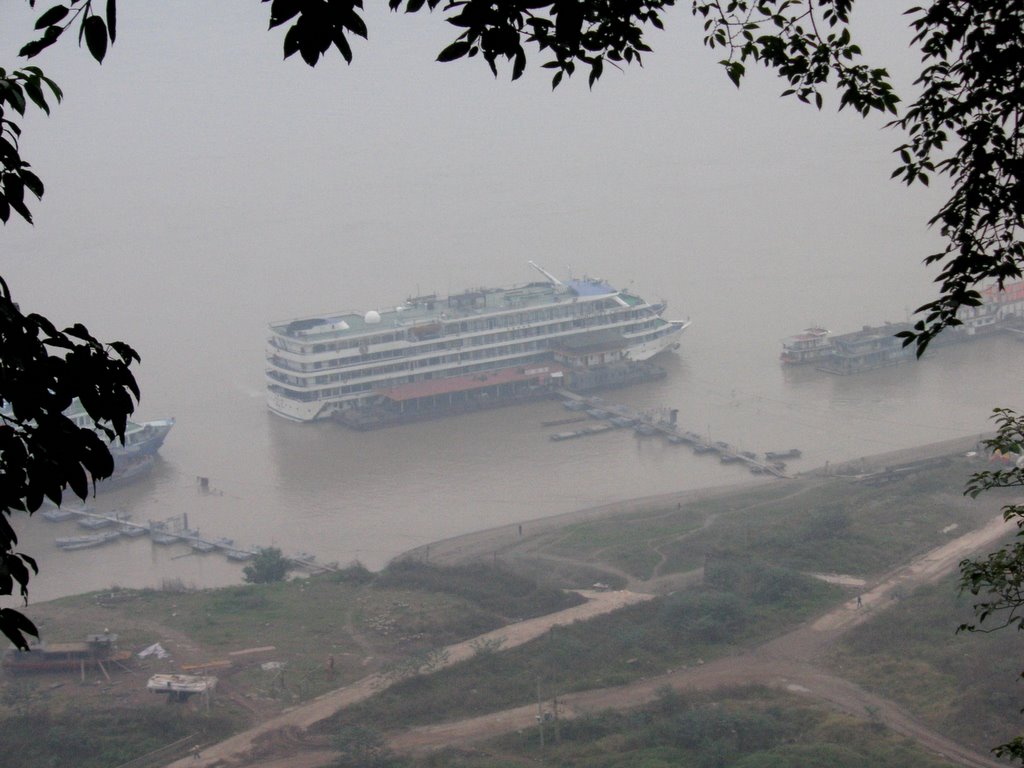
On the first day of our cruise, Steve and I were reminded that tourist traps are neither a purely modern invention, nor restricted to the Ozarks. 🙂 One of these shots is just our boat, taken from high up on the hill where most of the “Ghost Town” is located. Since we had a great time on it, I wanted to commemorate it.
The other shot shows a freaky set of buildings in the shape of a head and sort of arm-like things. It is WAY freaky in reality, and basically it’s one big tacky contraption to get the cruise ships to stop here, and stop they do! For a few hundred years, or perhaps more, locals have been saying there are ghosts and spirits and stuff here. There are a few Republican-era (1911-1949) buildings and temples of moderate (extremely moderate, by comparison with the sites Steve had already seen here in Beijing and that I can see any time I want) interest and taste, and then quite a lot of really tacky and weird stuff. We enjoyed our visit, though. Oh, and I’ll never forget trying to take my nap as our boat purred its way downriver, when Steve said “Ohmigod, Paul, you have GOT to see this.” It was for the scary/tacky white thing on the hill.


 (so much world, so little time....)
