Ghost Town or Tourist Trap?
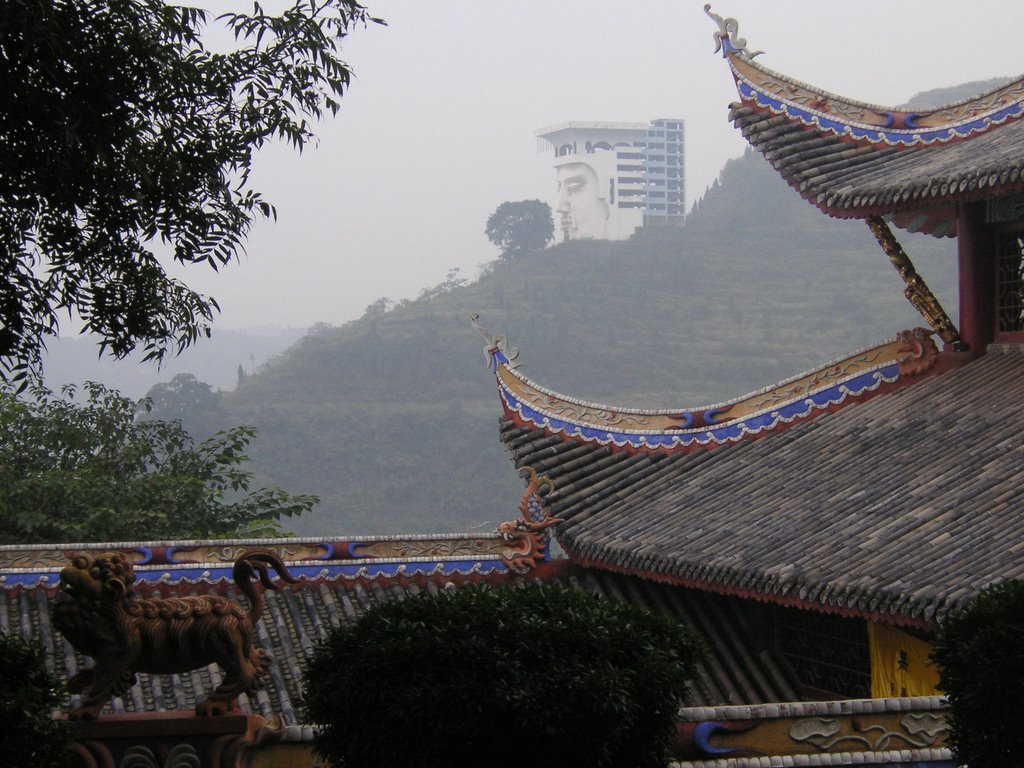
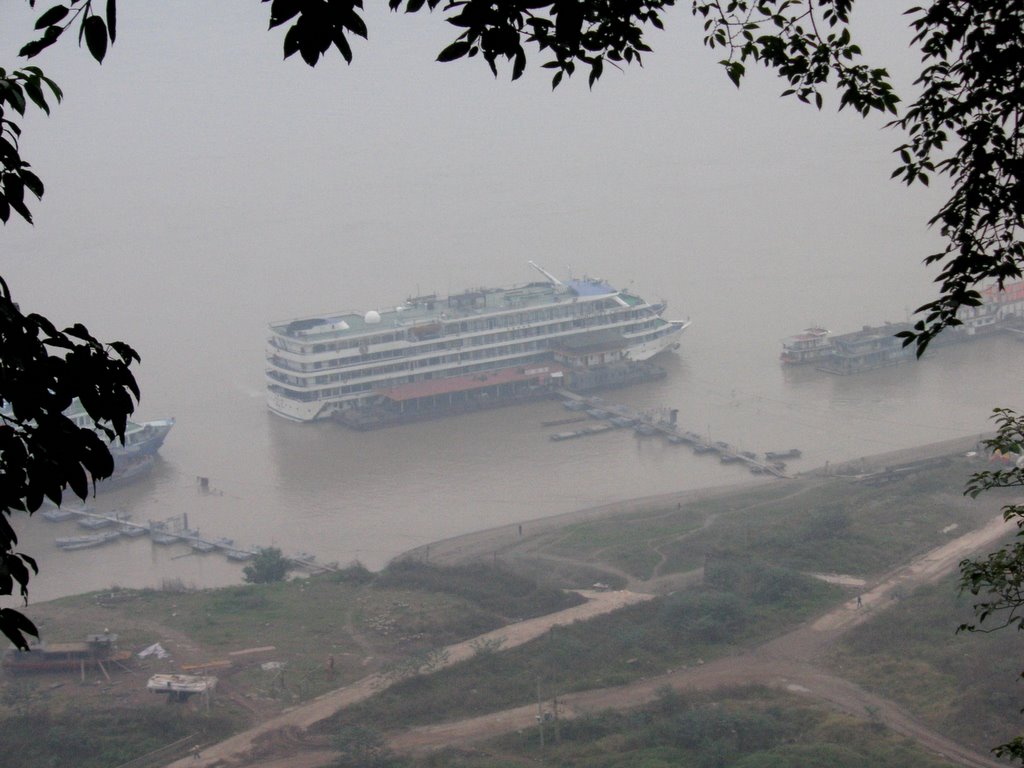
On the first day of our cruise, Steve and I were reminded that tourist traps are neither a purely modern invention, nor restricted to the Ozarks. 🙂 One of these shots is just our boat, taken from high up on the hill where most of the “Ghost Town” is located. Since we had a great time on it, I wanted to commemorate it.
The other shot shows a freaky set of buildings in the shape of a head and sort of arm-like things. It is WAY freaky in reality, and basically it’s one big tacky contraption to get the cruise ships to stop here, and stop they do! For a few hundred years, or perhaps more, locals have been saying there are ghosts and spirits and stuff here. There are a few Republican-era (1911-1949) buildings and temples of moderate (extremely moderate, by comparison with the sites Steve had already seen here in Beijing and that I can see any time I want) interest and taste, and then quite a lot of really tacky and weird stuff. We enjoyed our visit, though. Oh, and I’ll never forget trying to take my nap as our boat purred its way downriver, when Steve said “Ohmigod, Paul, you have GOT to see this.” It was for the scary/tacky white thing on the hill.
Construction & Gates @ Ghost Town

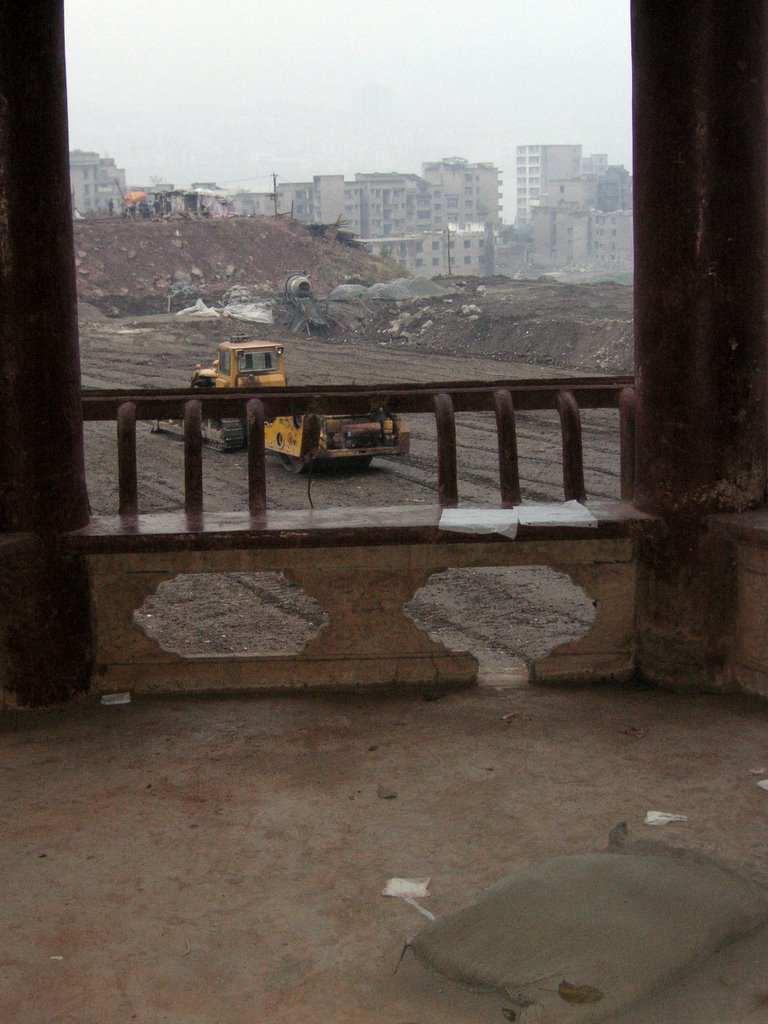

The town that’s attached to this particular tourist trap has been moved uphill twice now — once when the first dam went in during the 70s (?), and again now. Steve thought, as we sat at the bottom of the hill waiting for our group to catch up (I’d pulled us off on our own to view things without the flag-bearing guide because I wanted to see things at my own pace), that I should get a shot of the construction still underway to rebuilt the city in its new location. There’s also construction ongoing for other, new tourist delights to keep folks coming to this area even after the water level has reached its final height. Just think what you’re missing!
Steve & Paul at the Three Gorges Dam
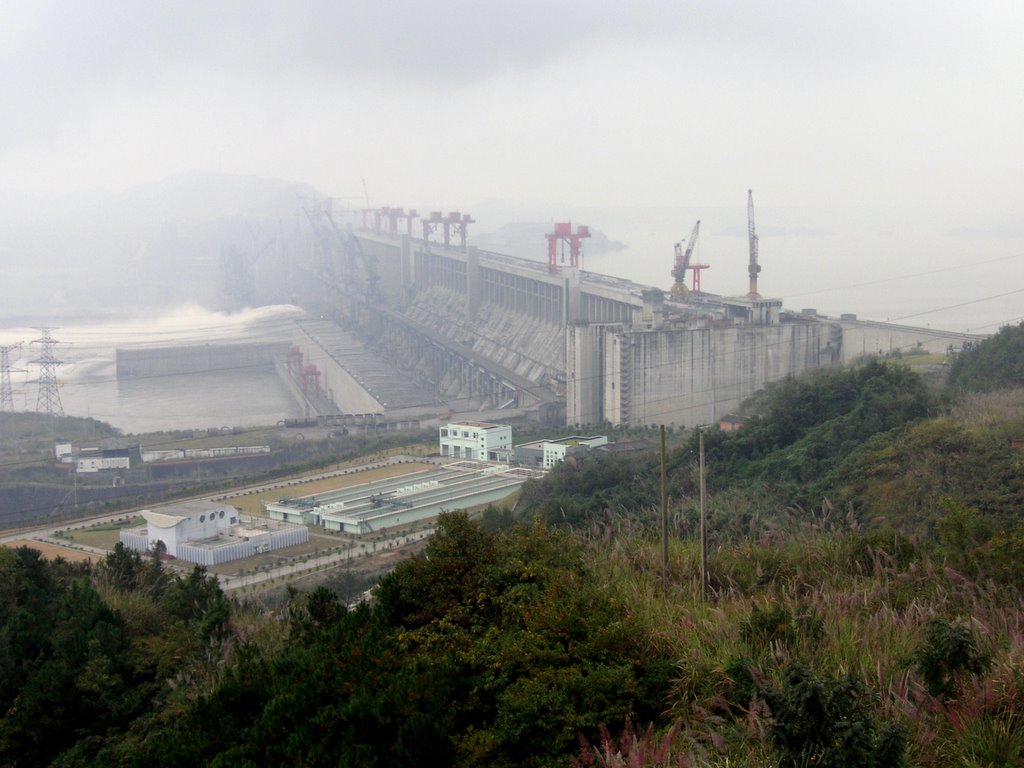

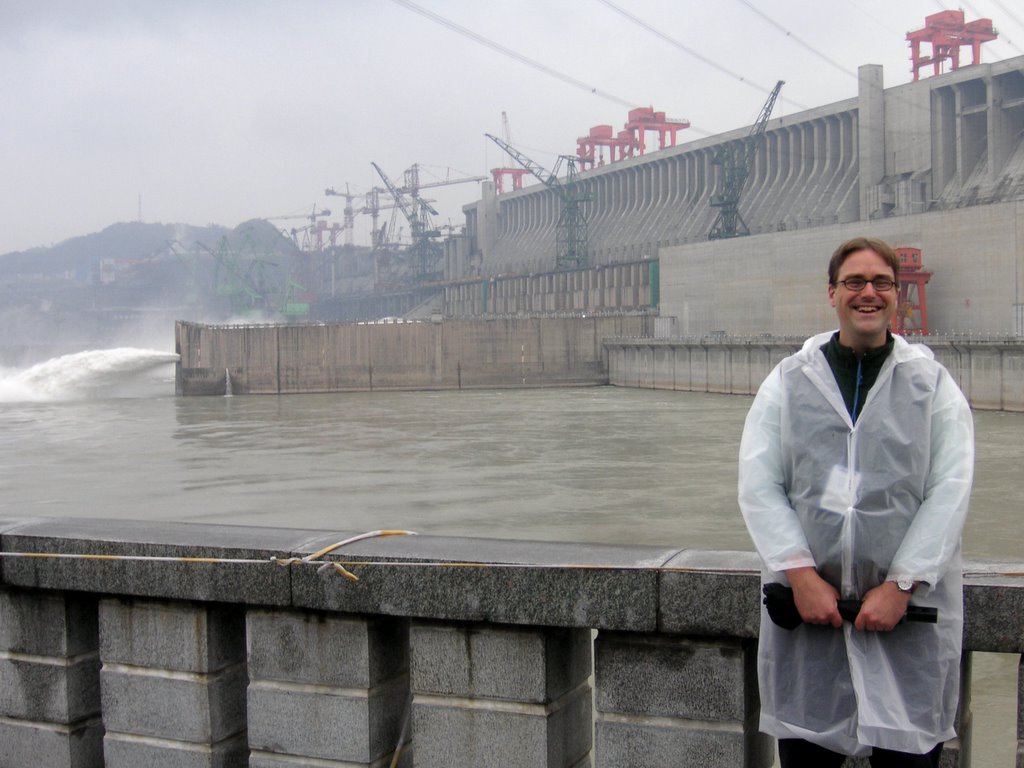
Naturally we had to take shots of ourselves at the dam. It’s quite a massive project. I find, from a dramatic standpoint, the Hoover Dam a bit more breathtaking because it’s so tall and architecturally visible. But this dam is a great deal bigger, and of course holding back a whole lot more water.
Beijing Miscellany :-)


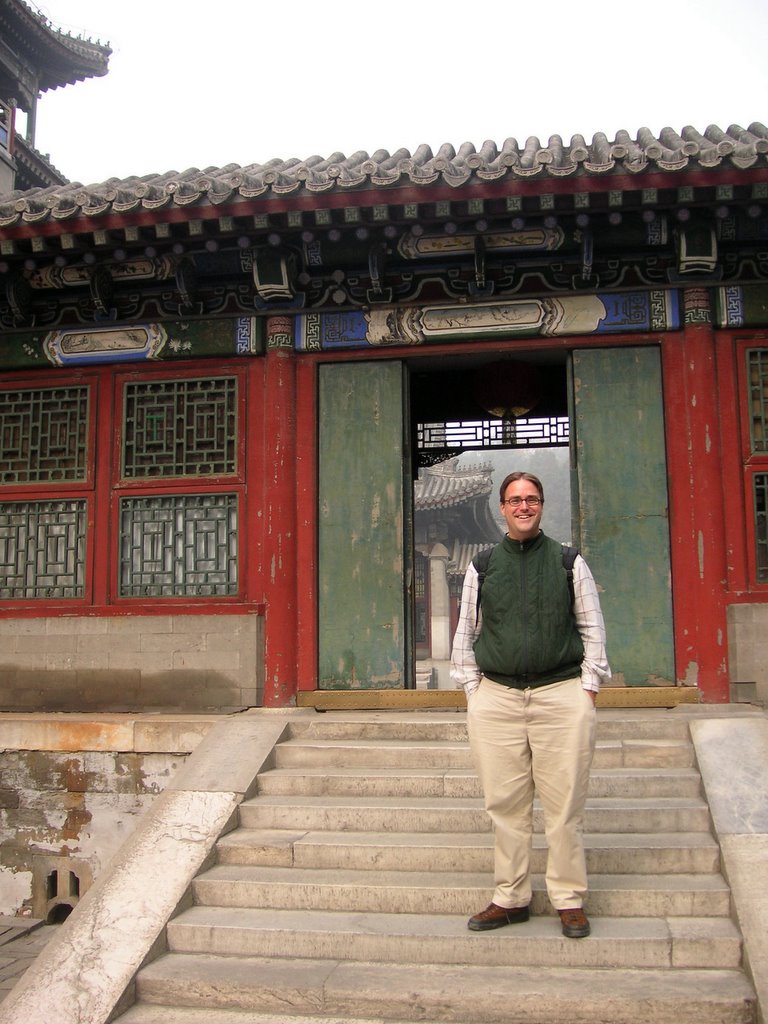
I forgot to post these photos with the group of shots that appear later, from the hikes Steve and I took in the mountains to the north of Beijing. They’re sort of “miscellany” from his last weekend here, when we spent a lovely day at the Summer Palace. My hope is that Steve remembers some of the beauty of the grounds and buildings there, as much as or more than he remembers the dreadful pollution of the day! Those who’ve been watching my blog know how much I love the details and and paintings on roofs and ceilings of many traditional Chinese buildings — hope you enjoy the ceiling-painting shot as much as I do.
Ancient Buddhist Art in Dazu County
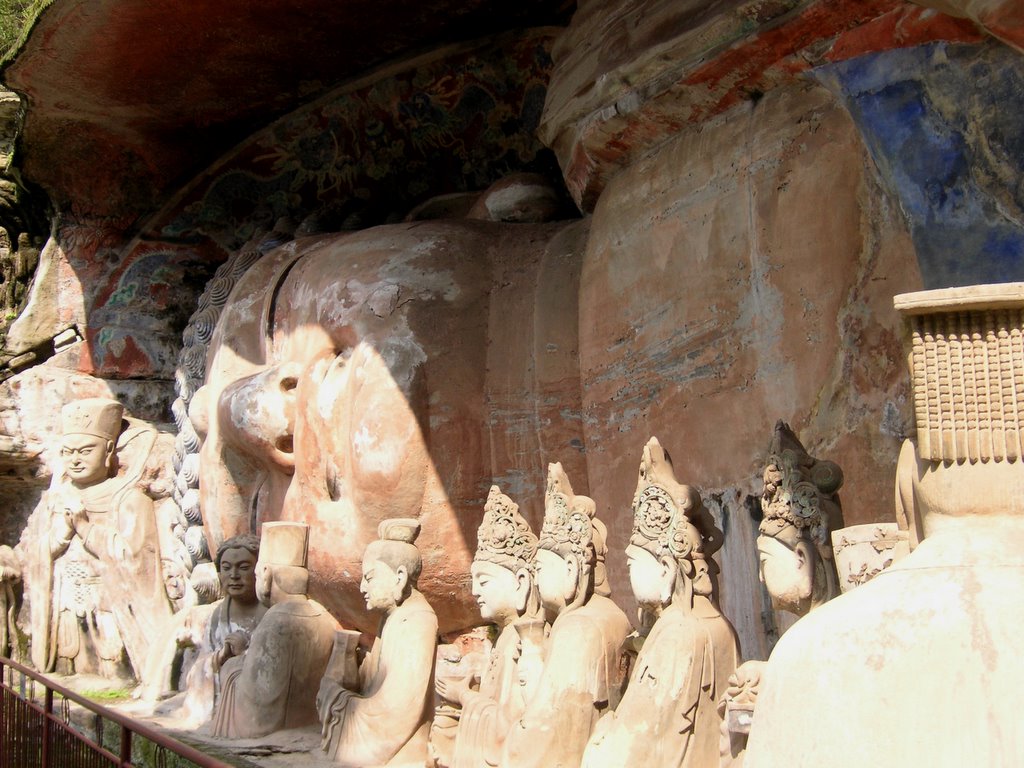

Our cruise of the Three Gorges of the Yangtze River departed from Chongqing, on Wednesday morning though we were welcome to board Tuesday evening. (Which we did — why pay for a hotel room when you can sleep on a cool ship with a different view of the city?!) Since we arrived in Chongqing Monday morning and had the afternoon to the see the city (a few shots below), we had the full day Tuesday to see what else the region had to offer. I determined by far the most interesting thing for Steve would be the ancient Buddhist caves in Dazu County, an area about 2 or 3 hours outside Chongqing city by bus. So off we set with a Chinese-language tour group I’d arranged through our hotel desk.
These and the shots that follow show you some of the highlights of what we saw. It’s truly remarkable. Though I’ve not yet been to the most-renowned caves at Datong and Dunhuang, one guide said these are almost at that level of historical and artistic importance. I guess I’ll see when I finally make it to them, but Steve and I were both quite inspired and awestruck by the beauty and grace of the art here. Since the giant reclining Buddha is one of the highlights — of many highlights, really — of the area we looked at, I’m leading off with some shots of him. Steve: by the way, I read in another history book over the weekend that the two destroyed at Bamiyan were something like 55 and 30-something meters high. So perhaps you could check your source that said they were well over 100 meters high? If indeed they were 55 and 30-something, then I think this guy, as well as the Boddhisatvas, must be getting into that range, don’t you? In any case, I hope you all enjoy these views!
Images of Dazu
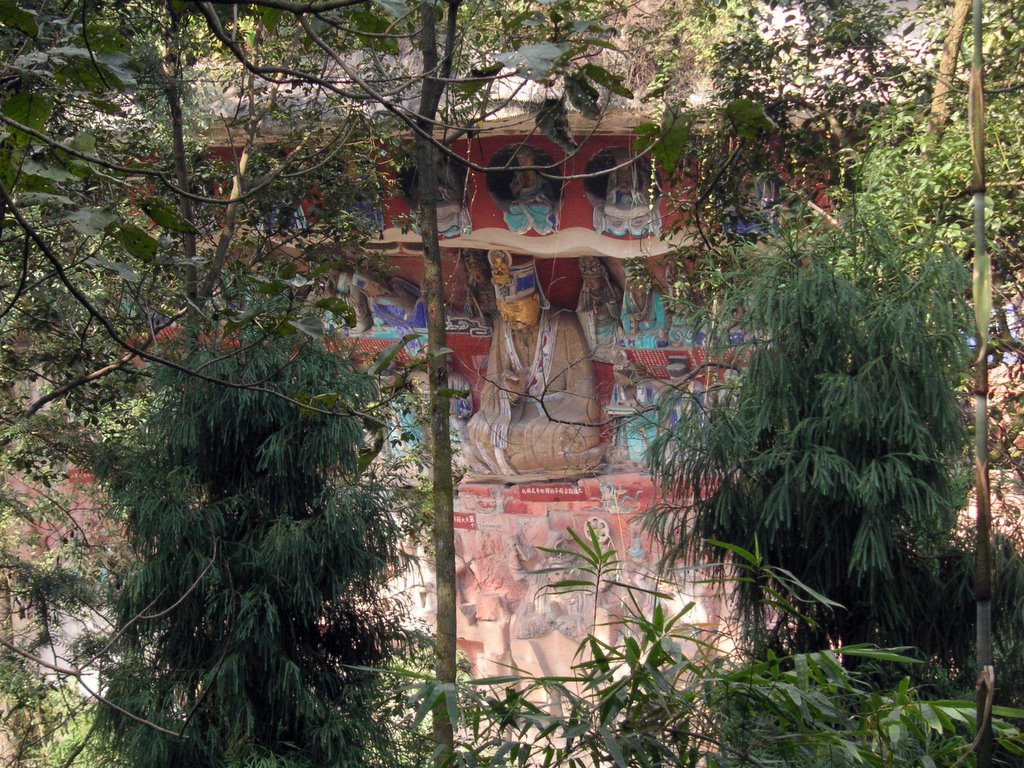

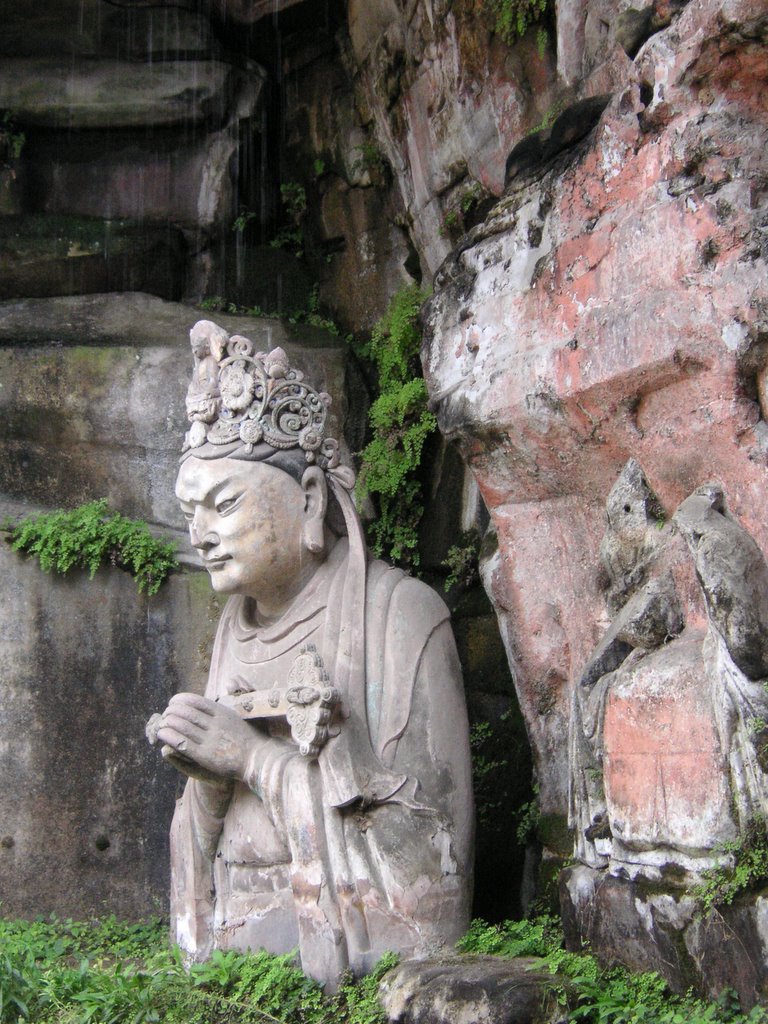
Though Dazu County has numerous sites of ancient Buddhist grottoes and scultpures, we went to the most famous one, basically. It’s situated along a horseshoe-shaped canyon. Here you see a view across the canyon, from one side that’s full of art, to another side. The big Buddha you’ve just seen is near the top of the canyon, on the side we are looking at from in the shot above. The big Boddhisatvas you’ll see in the next set are at the top of the horshoe (or is that the bottom?).
Images of Dazu
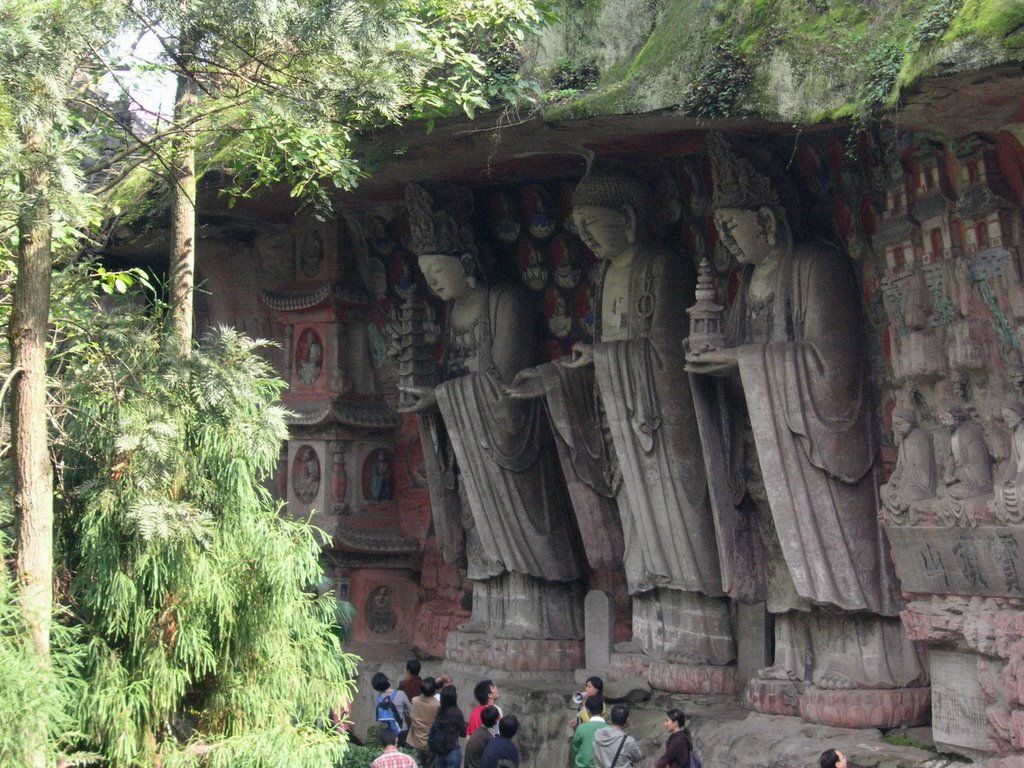

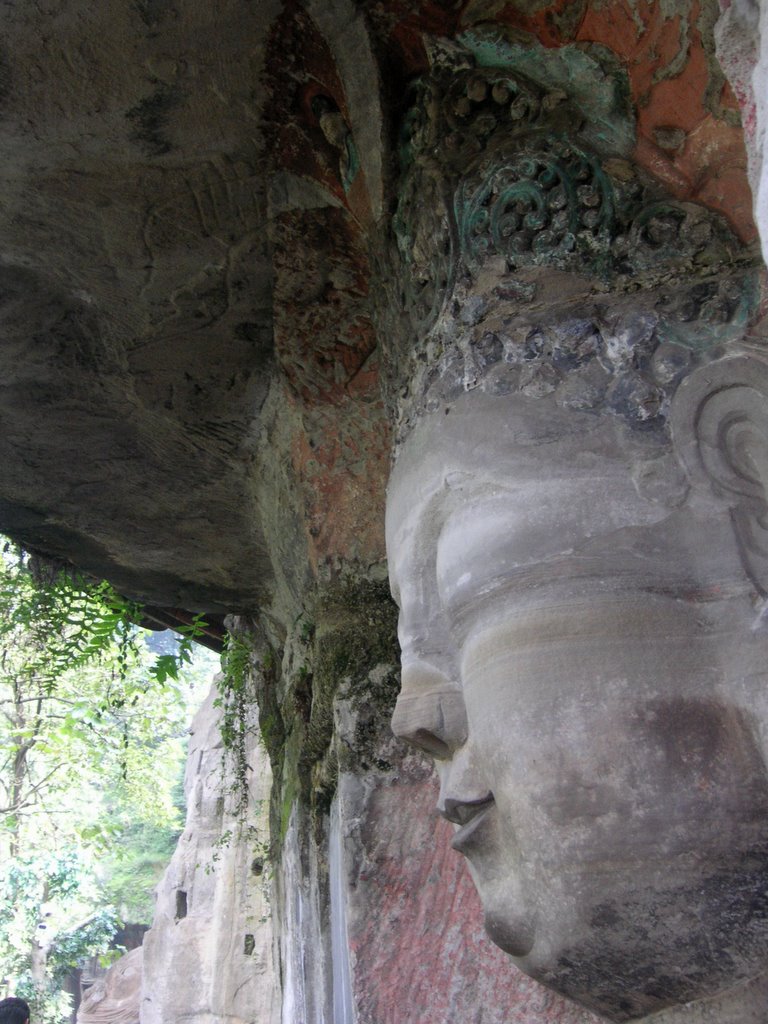
These three Boddhisatvas are one of the (many) highlights at Dazu. These are just a bunch more images to give you a sense of the place.
Steve & Paul Do Dazu

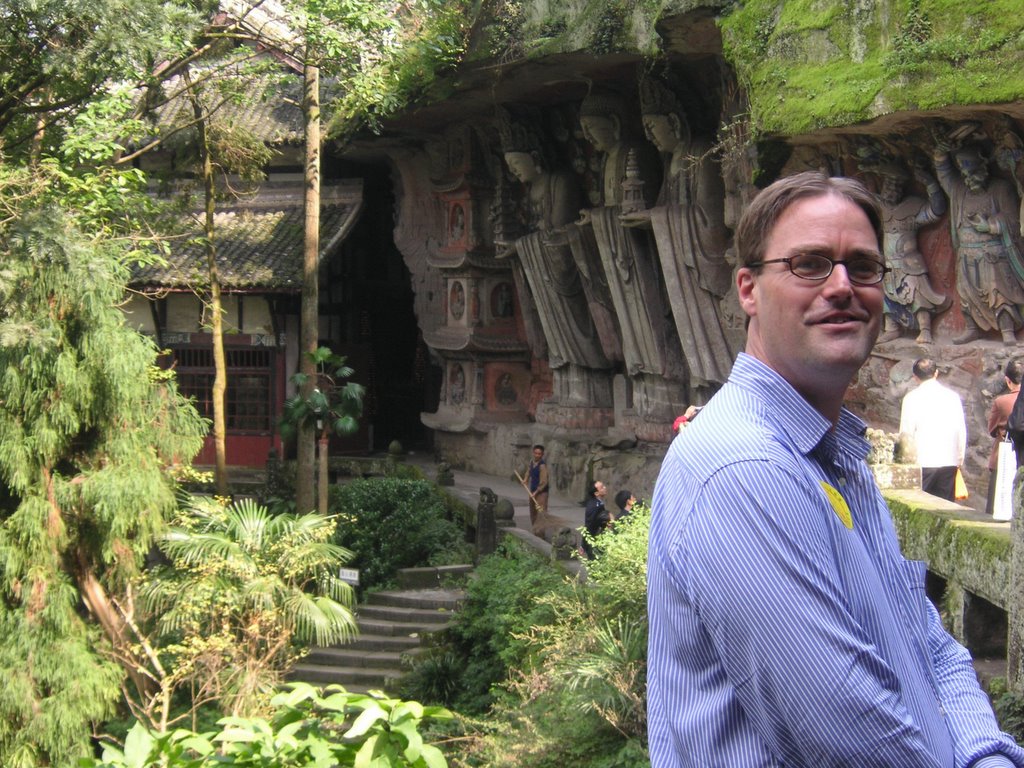
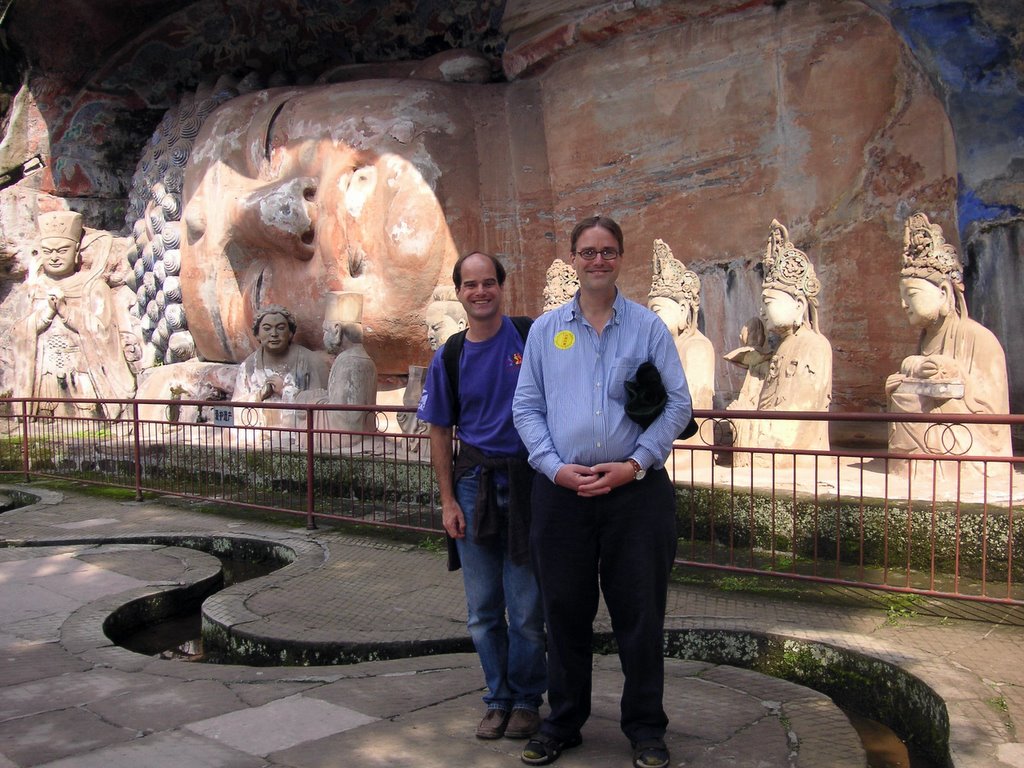
Okay, so most of the Dazu photos are about the remarkable art history lessons, and the simply stunning sculptures and other creations. But I know at least some of you want to see some shots of me and Steve (yeah, Mom, I mean you!) So here are a few — and note the one with us standing in front of the head of the giant reclining Buddha — gives you an idea how big the thing is, huh?
Wheel of Life and Others


The round thing is the wheel showing the various fates of life. It’s held by a big demon guy, who looks pretty threatening. The other shots are both — I think, it’s been more than two weeks — from the “levels of creation” panel that you’ll see in a more complete shot shortly. One shows the Buddha, at the highest level of creation; the other shows a wise king who presumably rules over the levels of creation. I hope Professor Dobbins, who taught me Chinese Religion & Philosophy back at Oberlin, will agree when I say that I found this “wise king” concept to be rather un-Buddhist, but rather a quintessentially Chinese syncretism of Confucianism into Buddhism.
Levels of Creation & Sinners at Dazu
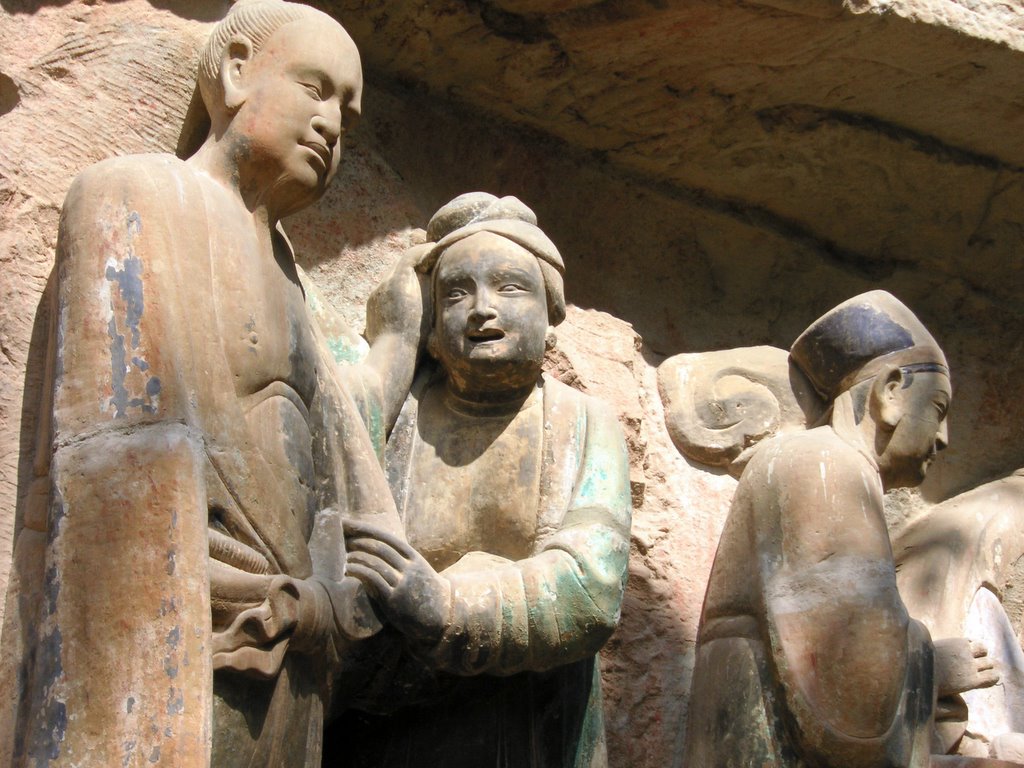
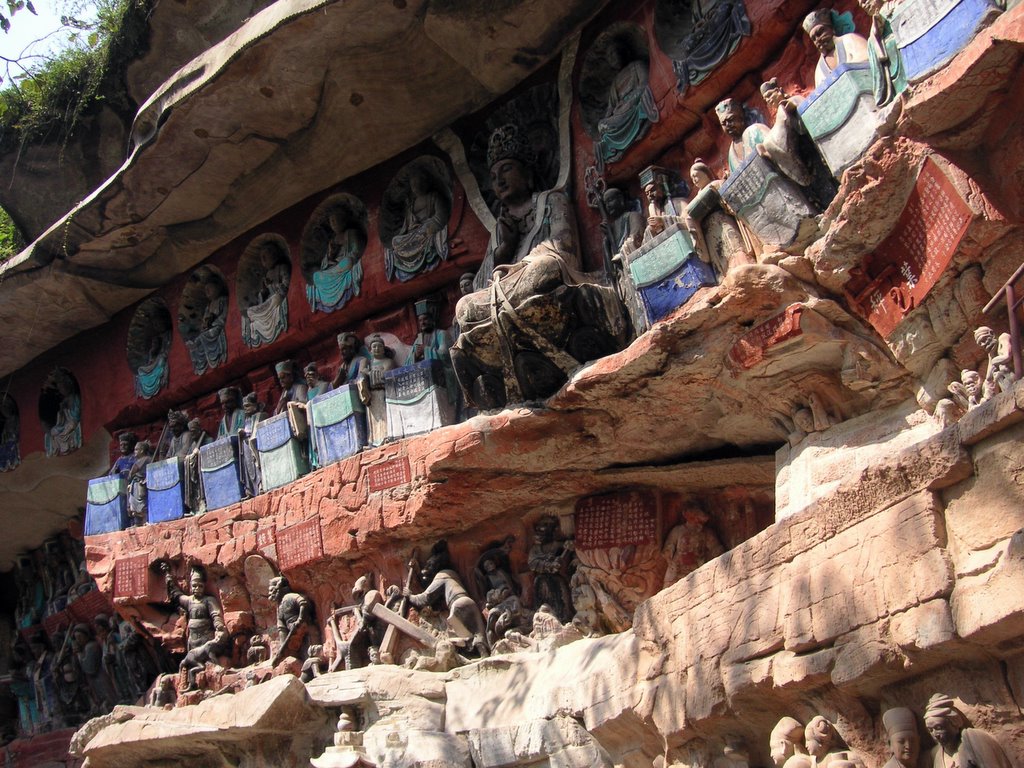

One thing that struck me at Dazu is how different the conception of Buddhism shown there is from that which many of us PC-type Americans are often attracted to. Here at Dazu, you see instead visions of sinners suffering in lower levels of creation, and indeed a whole canyon face devoted to the different levels of creation. In these three photos, you see the faces of some unhappy sinners who’ve lived the wrong kind of life, and the canyon side given over to the levels of creation diorama. I was very struck by the quality of the sculpture – note the realism in the face of the woman who’s suffering from her sinful ways.
The Scale of Things
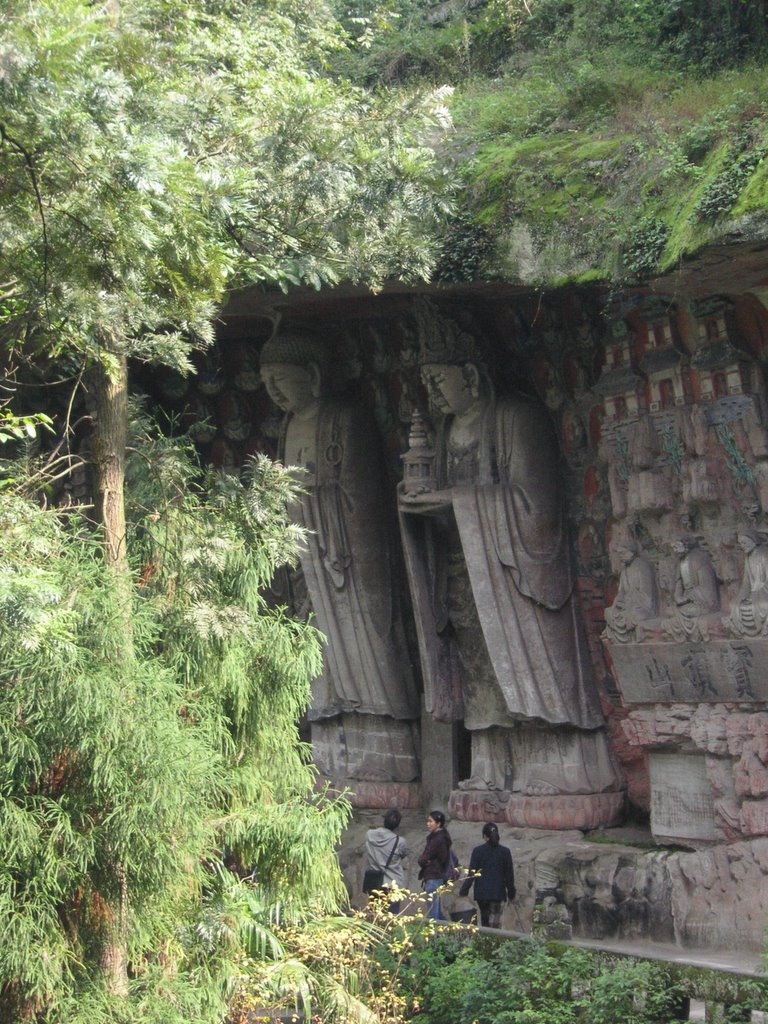

These two shots were intended to give you a sense of scale. These are some truly big sculptures, paintings, and engravings!
Naptime – Dazu
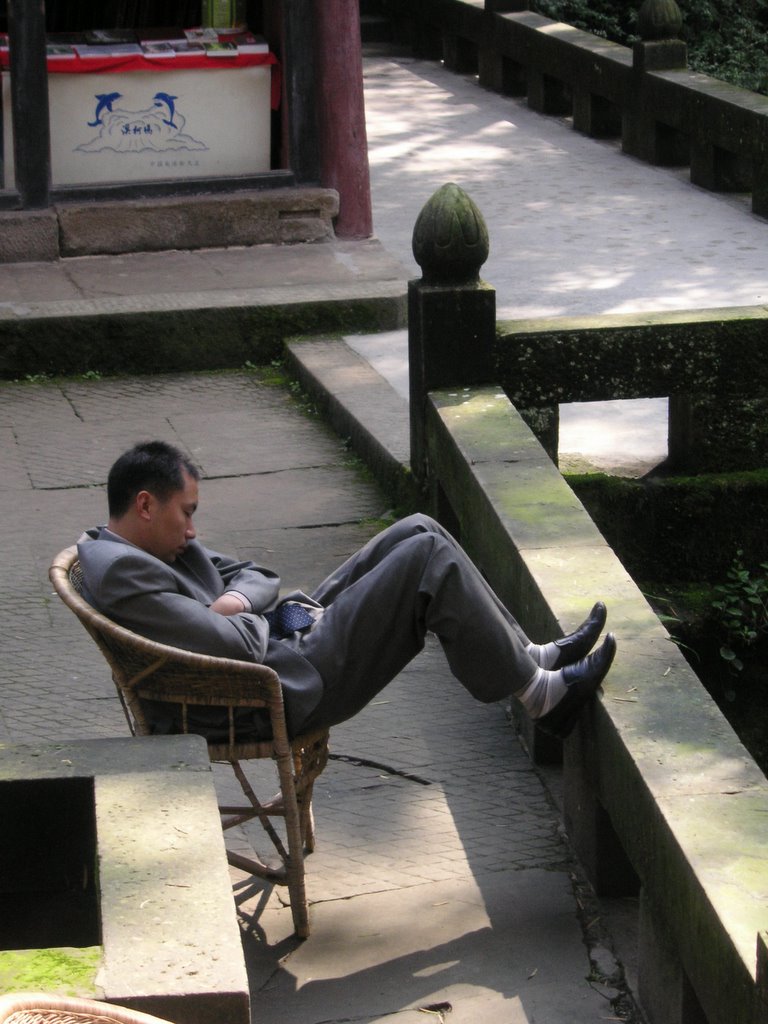
Even in a place as remarkable as Dazu, those who work there must get tired occasionally. 🙂
Chongqing – At the Point
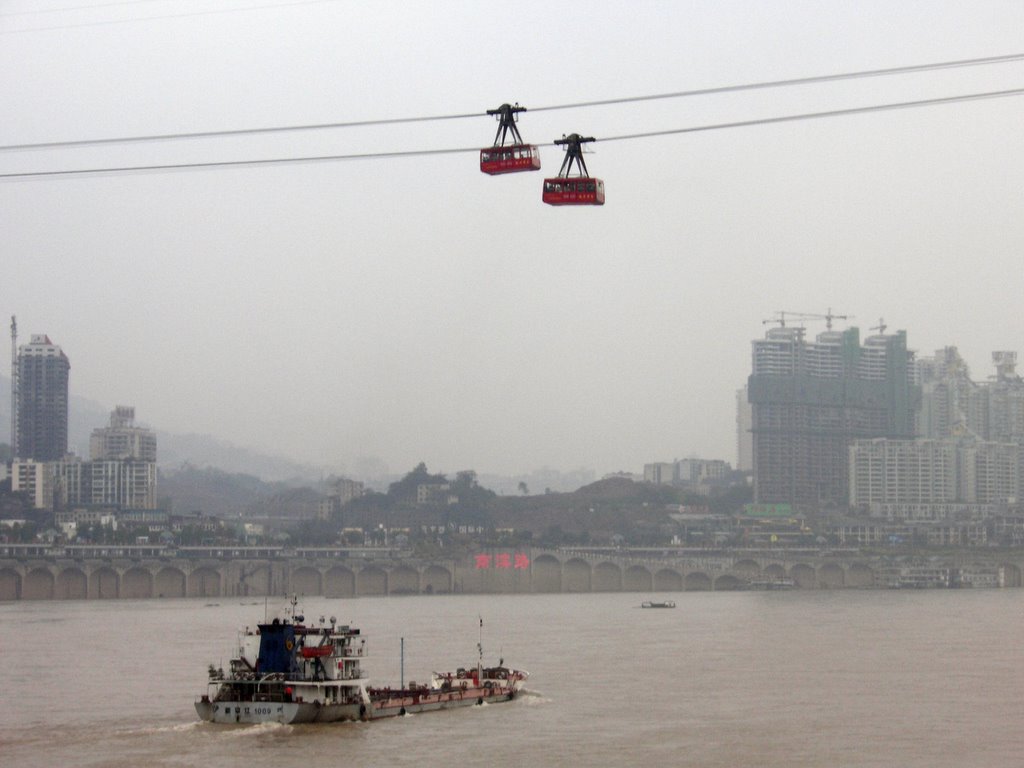


Chongqing is situated at the juncture of the Changjiang (aka Yangzi, aka Yangtse River) with another large river coming in from the north. Steve took pleasure in noting that this makes Chongqing just about as much like his home of Pittsburgh as any other Chinese city might be — which is to say, not much! In these pics, you see him at the point, and then two shots actually taken from the ship on the morning of our departure for the cruise downriver: one shows the “point” where land and the two rivers meet, and the other shows the cable car that runs from the peninsula (central downtown Chongqing) over to the north bank of the Changjiang. There are such cable cars from downtown across both rivers.
Street Scenes – Chongqing


More scenes from Chongqing: not sure what the lovely plaster-and-wood building was, but Steve and I saw it as we wandered the city. The chicken in the doorway, with clothes hanging on the line, was on one of the side stairways leading from the upper, more commercial part of the city down to the lower port area, where goods entering and leaving Chongqing by boat are warehoused and loaded onto or off ships. Steve displayed a marked fear of all chickens he saw while in China…and given that most chickens in China live, like this one, in fairly close proximity to many humans, this led on my part to occasional amusement I must admit. I certainly hope I never end up regretting my good humor on this point…


 (so much world, so little time....)