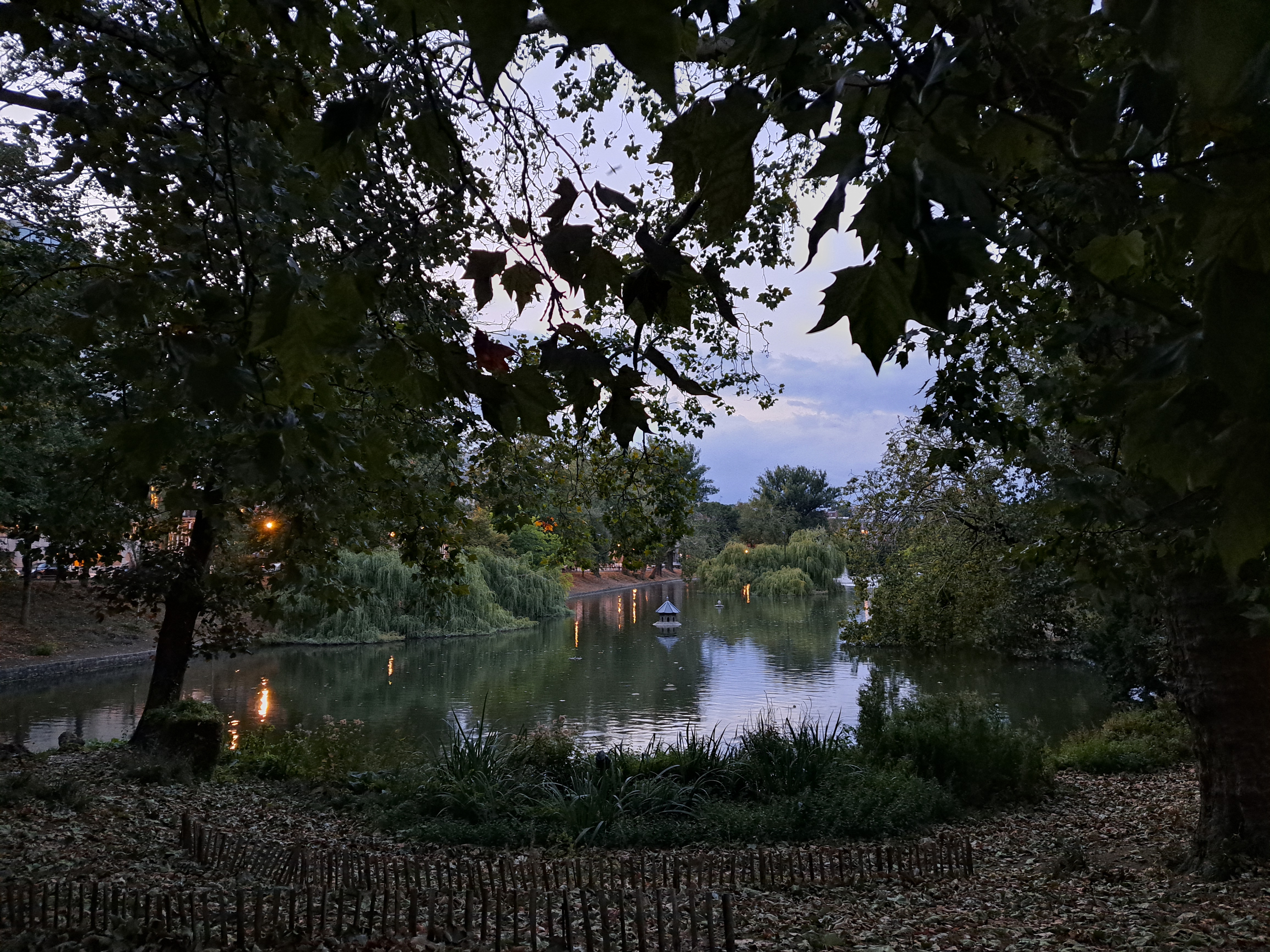
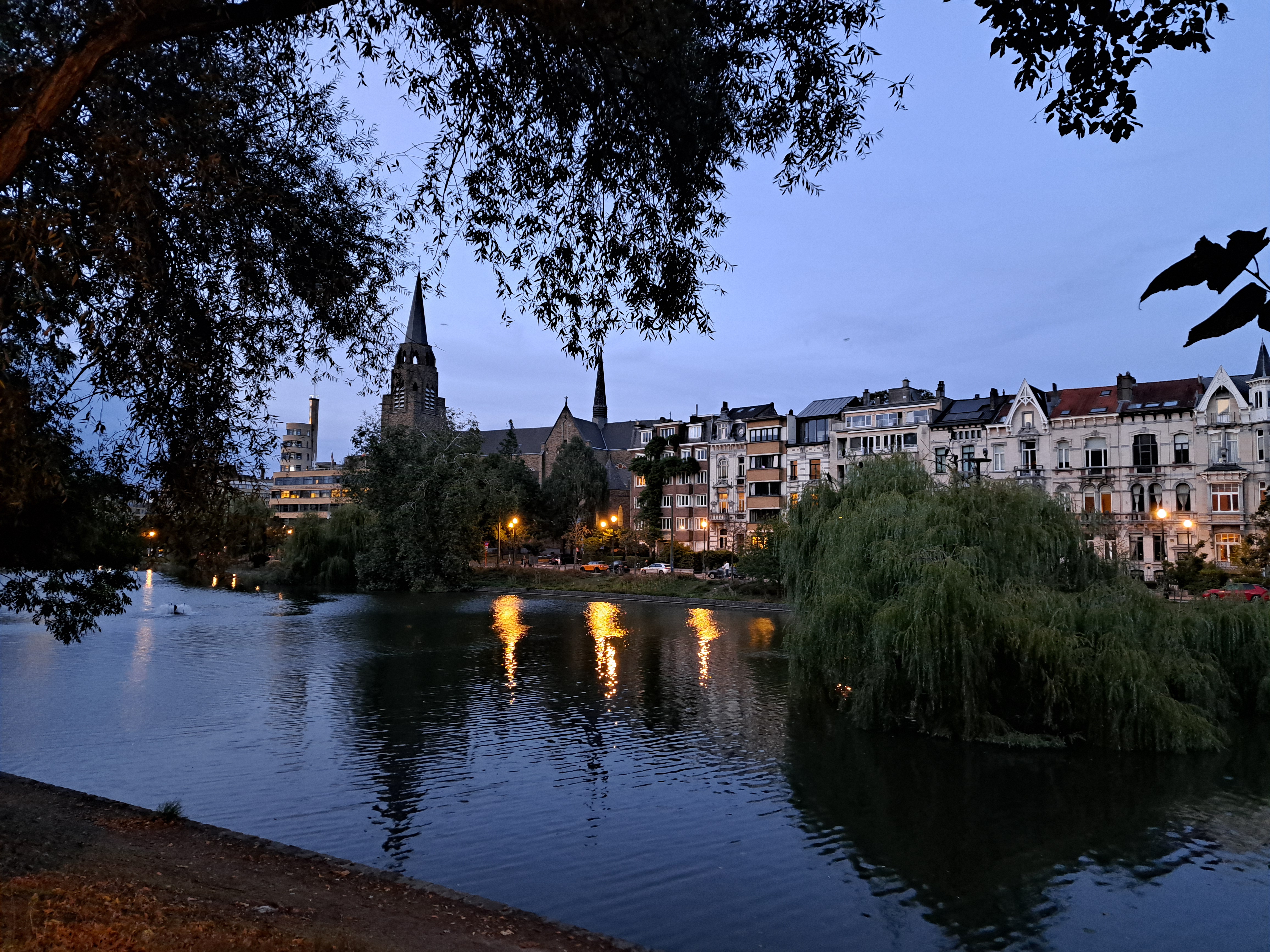
Up the street from the abbey & park I recently shared from my last Brussels visit lie two lovely little lakes, called the Etangs d’Ixelles according to my map, of which I’d also been previously unaware.
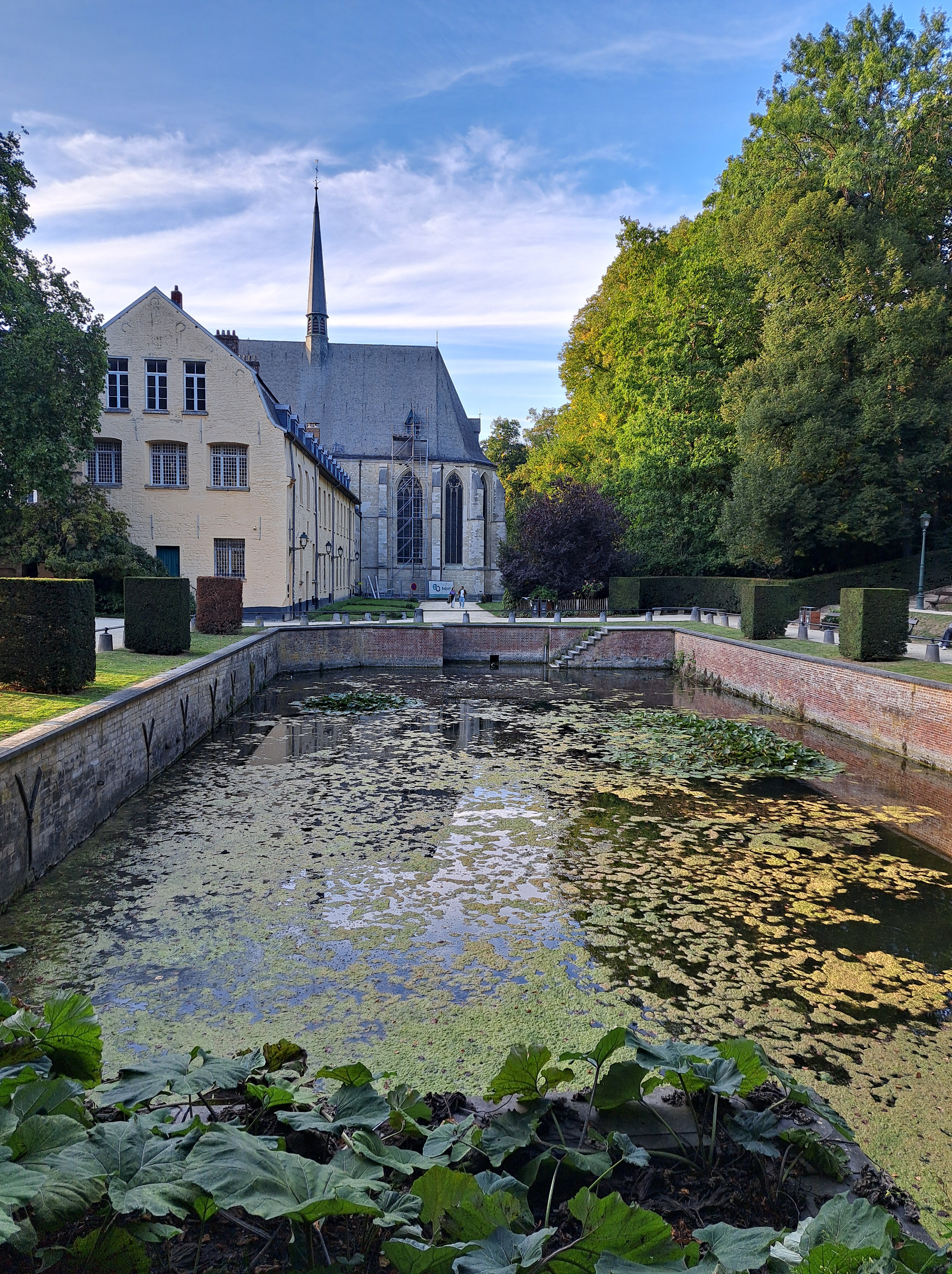
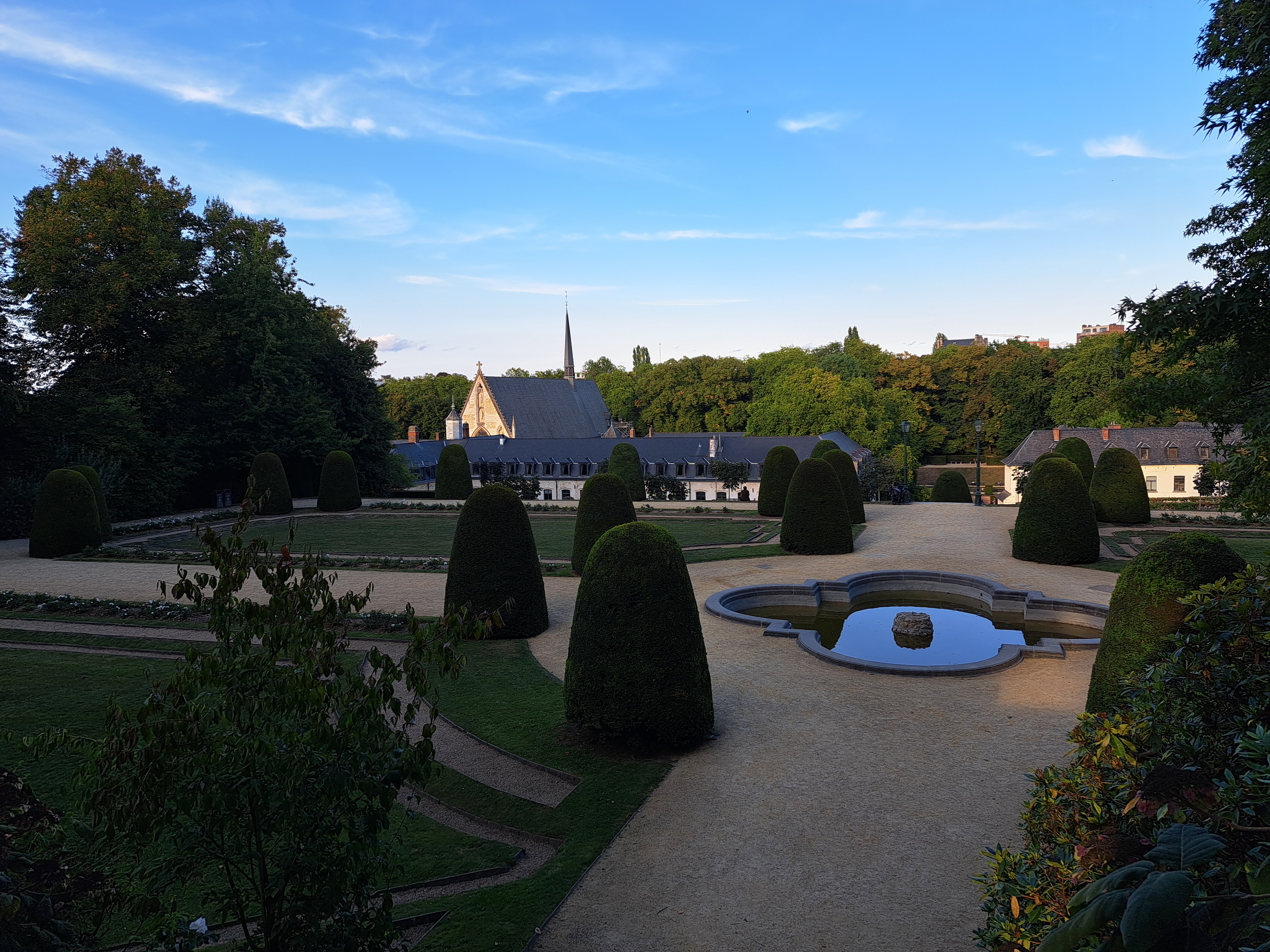
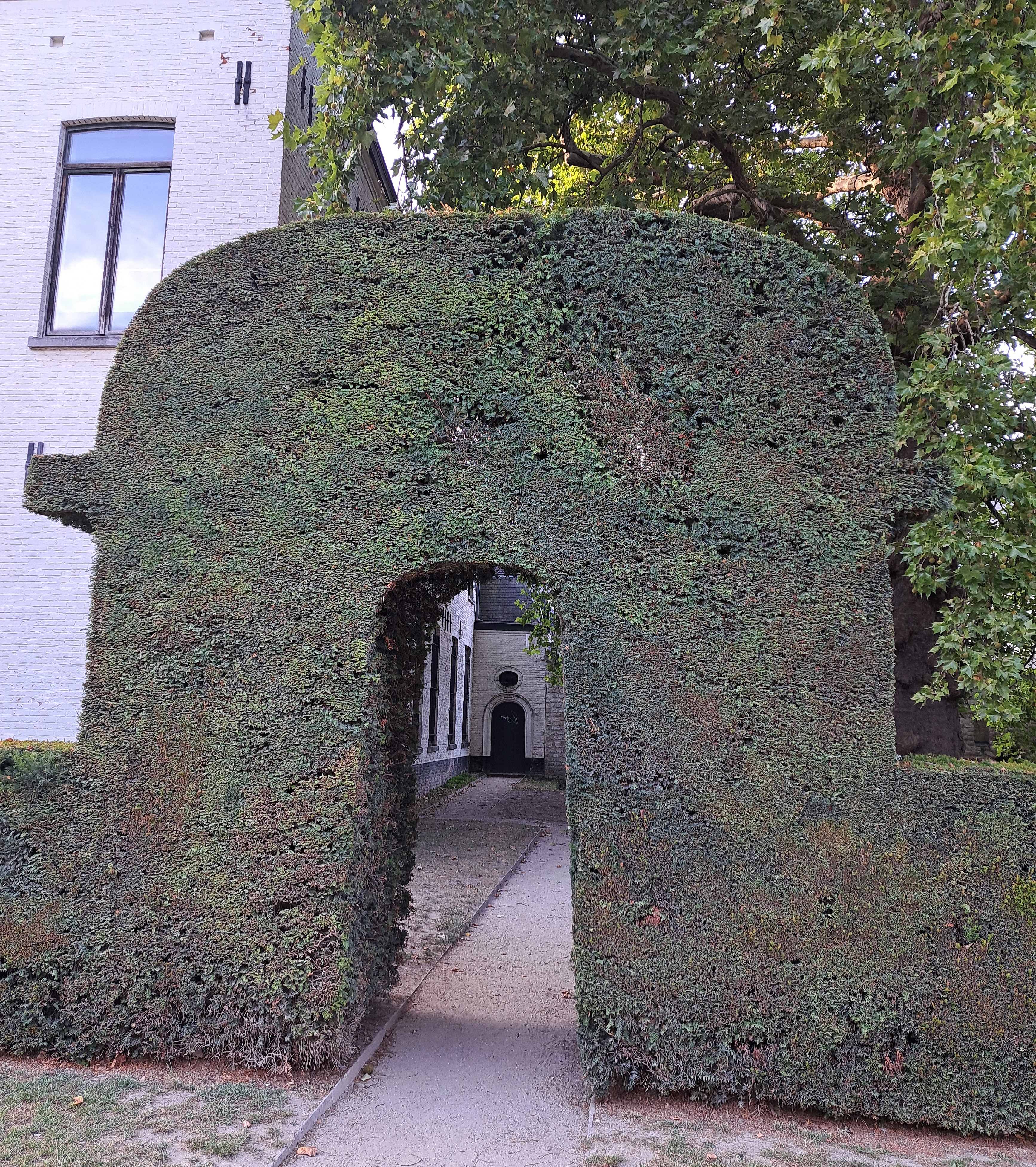
Another delightful discovery on an evening walk at the end of day-long meetings in Brussels last week was the gardens of the Abbaye de la Cambre, which from the late 12th Century until abolishment in 1796 (French revolution and all) was a Cistercian Abbey in the Maelbeek valley…which to most untutored visitors today looks like a hilly part of Brussels. Yes, unlike A’dam, Brussels has hills! 🙂 But then, it also has more uncleared dog poop on its sidewalks than A’dam does, just sayin’. Today the complex houses both some religious stuff and an arts institute, while the gardens are quite lovely and open to the public.
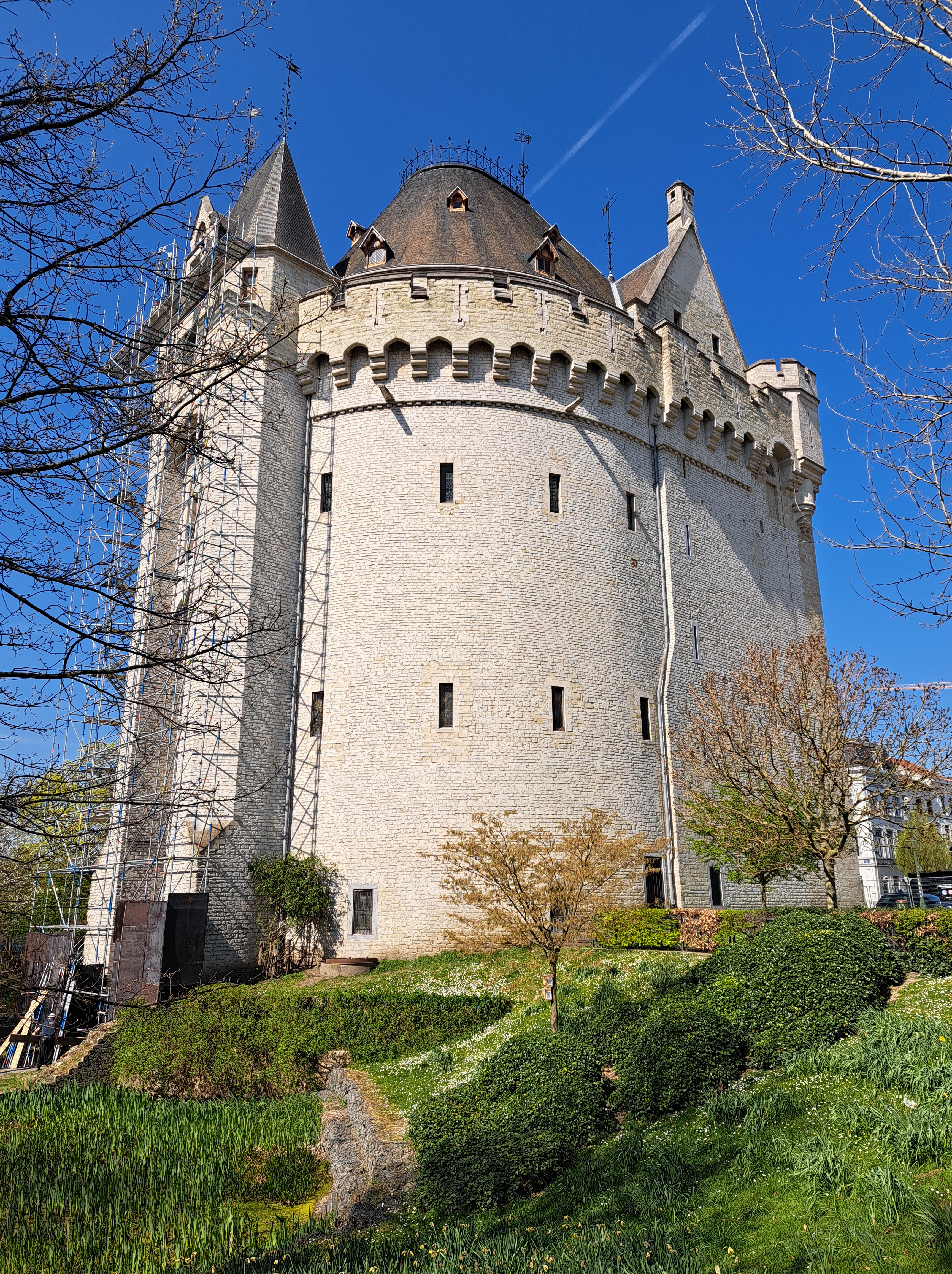
The last remaining part of the second city walls of Brussels, the Porte de Halle (FR) / Hallepoort (FL) / Halle Gate (EN) is now part the Royal Museums of Art and History, ergot Ah, Royalty material. It was originally built in the 1300s, same general time frame as the Keep at Vincennes. It’s been remodeled often since. I happened past it during my walk to the train station after some meetings in Brussels back in April.
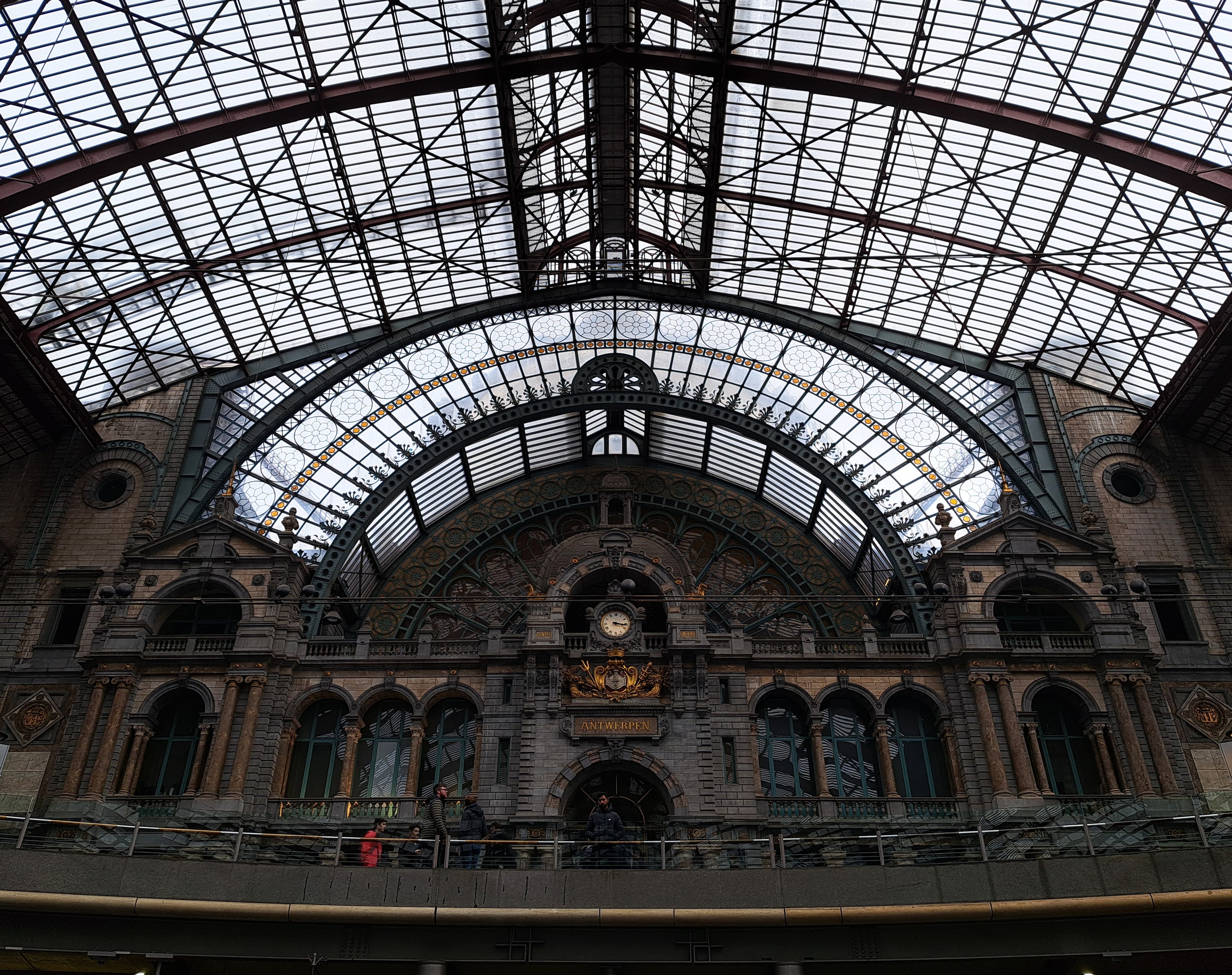
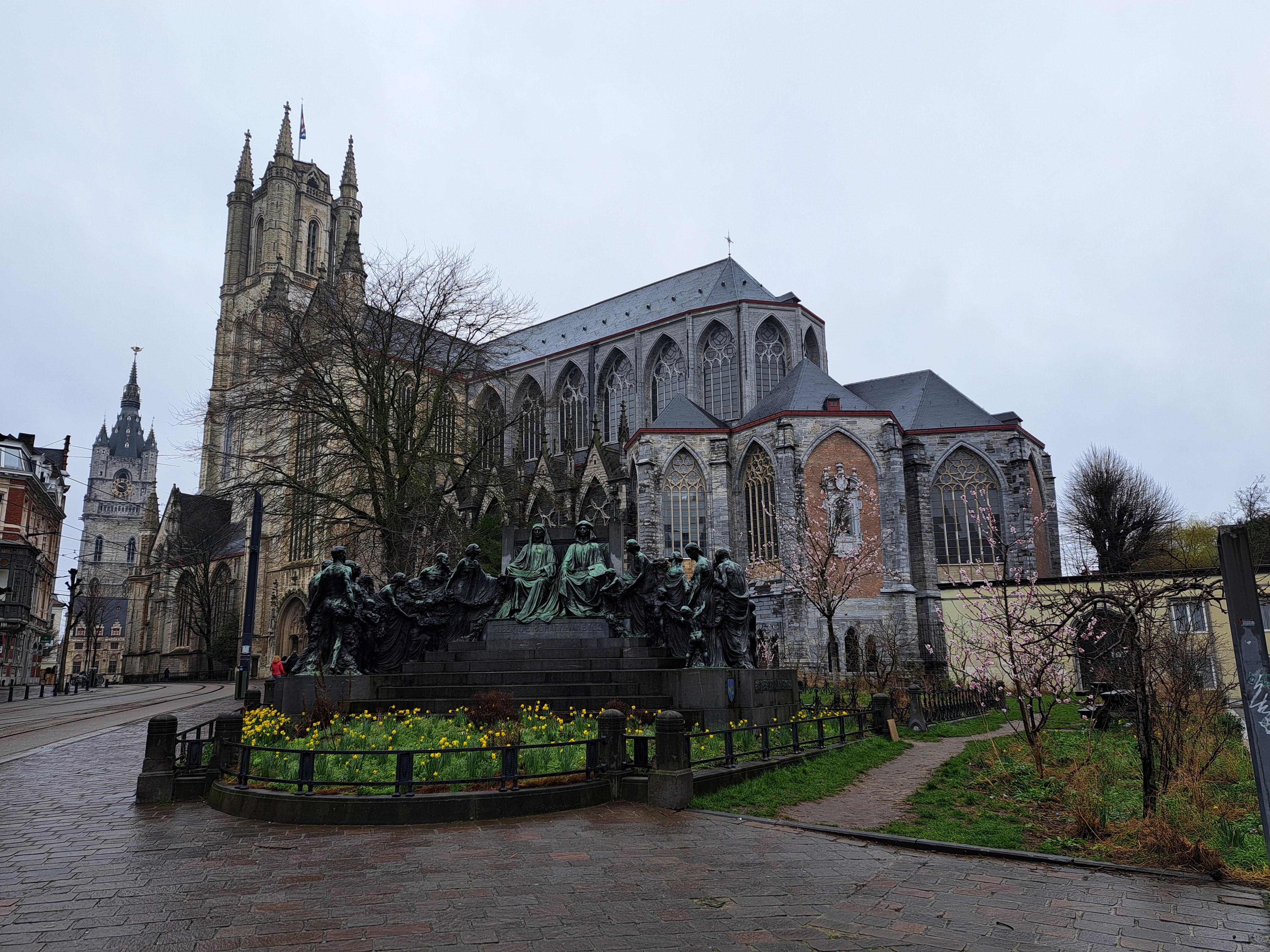
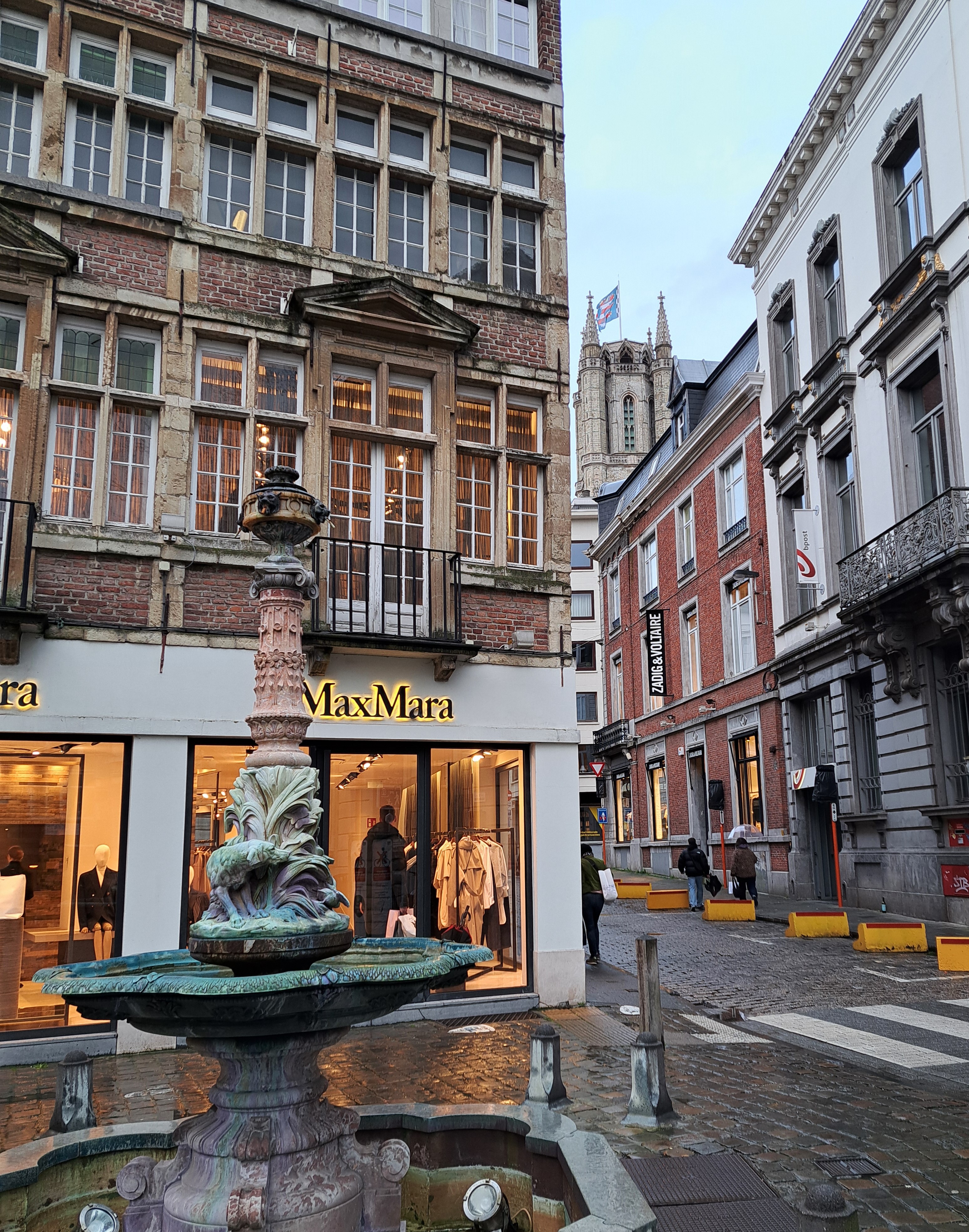
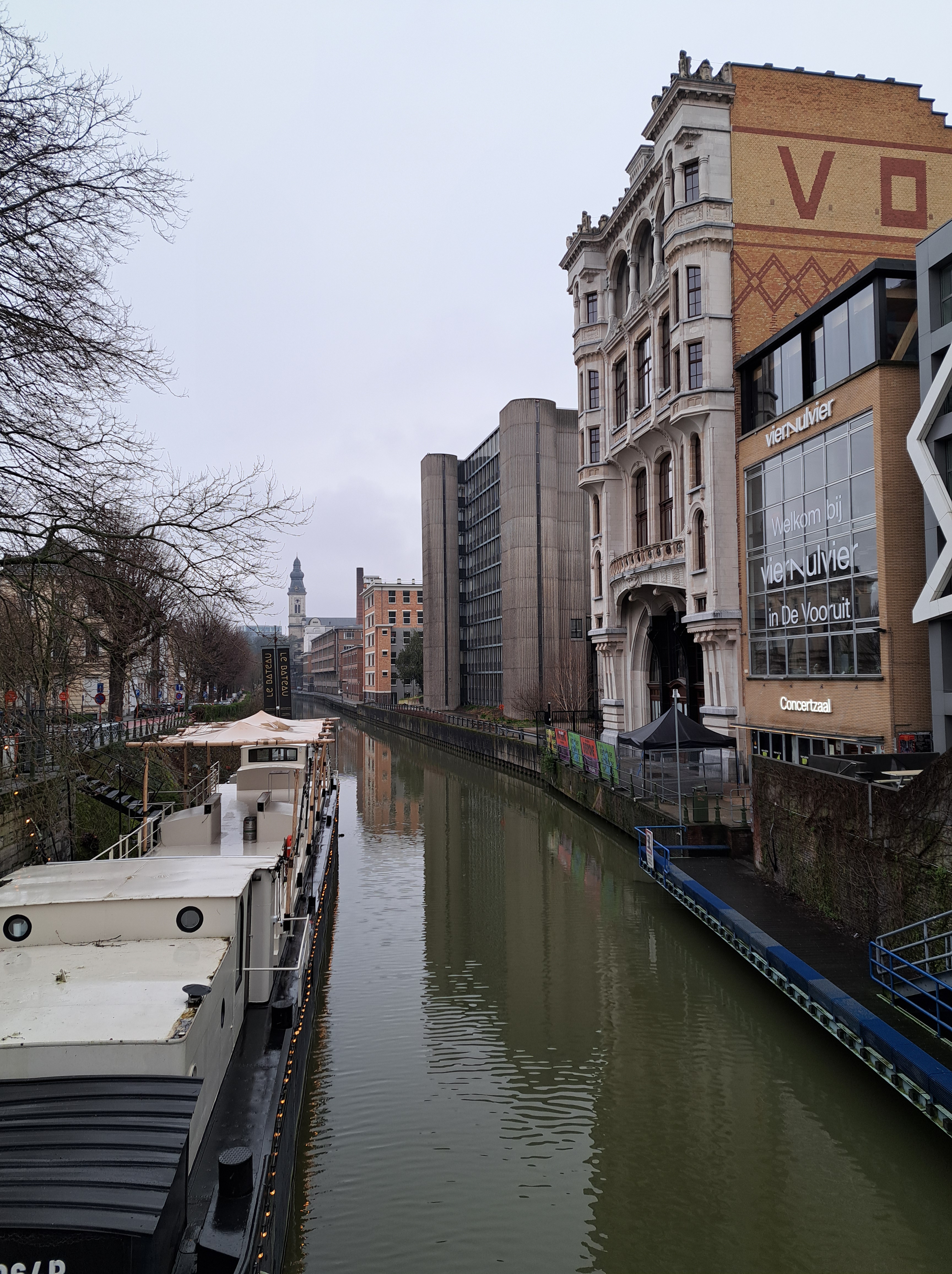
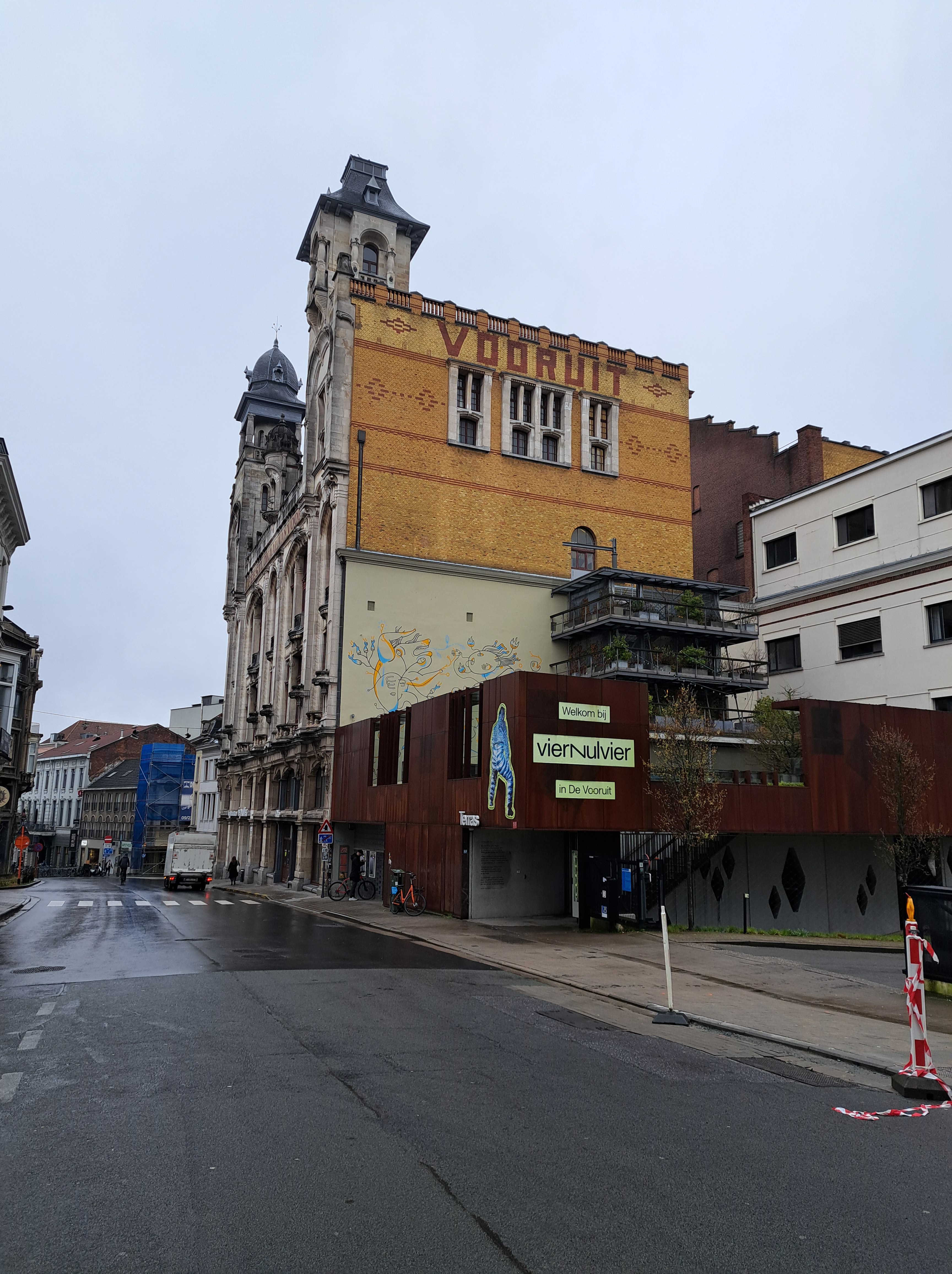
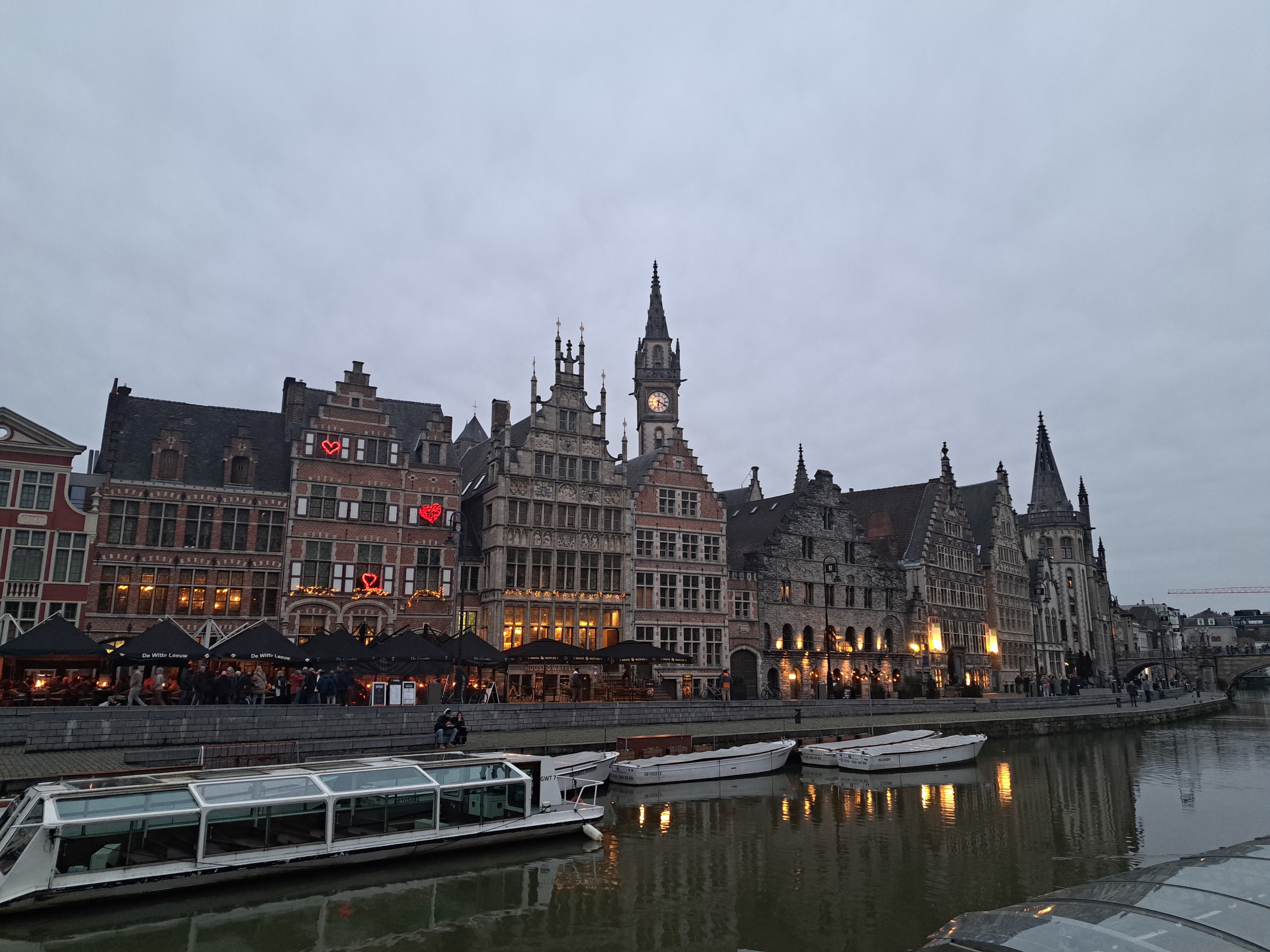
Above, an older part of Antwerp’s absolutely fascinatingly complex multi-level old & new train station. Below, the last from our short weekend in Ghent.
I wandered through a lovely string of parks our first morning in Ghent, as Steve slept off some of his jet lag. He’d commented that the countryside looked mighty wet from the airplane as he approached Amsterdam; I explained that it had rained every day between about October and January, not always a lot but really (or nearly) every single day. By his arrival, the rain had reduced in frequency and volume, but as you’ll below, mud and standing water were everywhere. On the bright side, when I first approached this pond, I thought those were a real flock of naturalized parrots but in fact they’re colorful wooden parrots perched there to appeal to the children who’d be playing here on a clearer day no doubt.
This is Gravensteen, seat of the Counts of Flanders for hundreds after years after this current incarnation was built by Philip of Alsace in 1180. I suppose technically counts aren’t royalty but at various points in its history, the counts in question were younger sons of French kings, it seems, so there. Despite the gray skies, Steve and I also found the views of Ghent from the parapet quite interesting. The paintings you’ll find in the gallery below are humorous renditions of some of the gruesome acts of punishment committed in this building over the centuries. For such a bloody place, the audio guide did a fine job of keeping it rather humorous and fun. Oh, and little known fact, John of Gaunt – who shows up both in English history as Duke of Lancaster and, I think, in some of Shakespeare’s history plays – was originally from Ghent, since the English apparently called Ghent Gaunt.







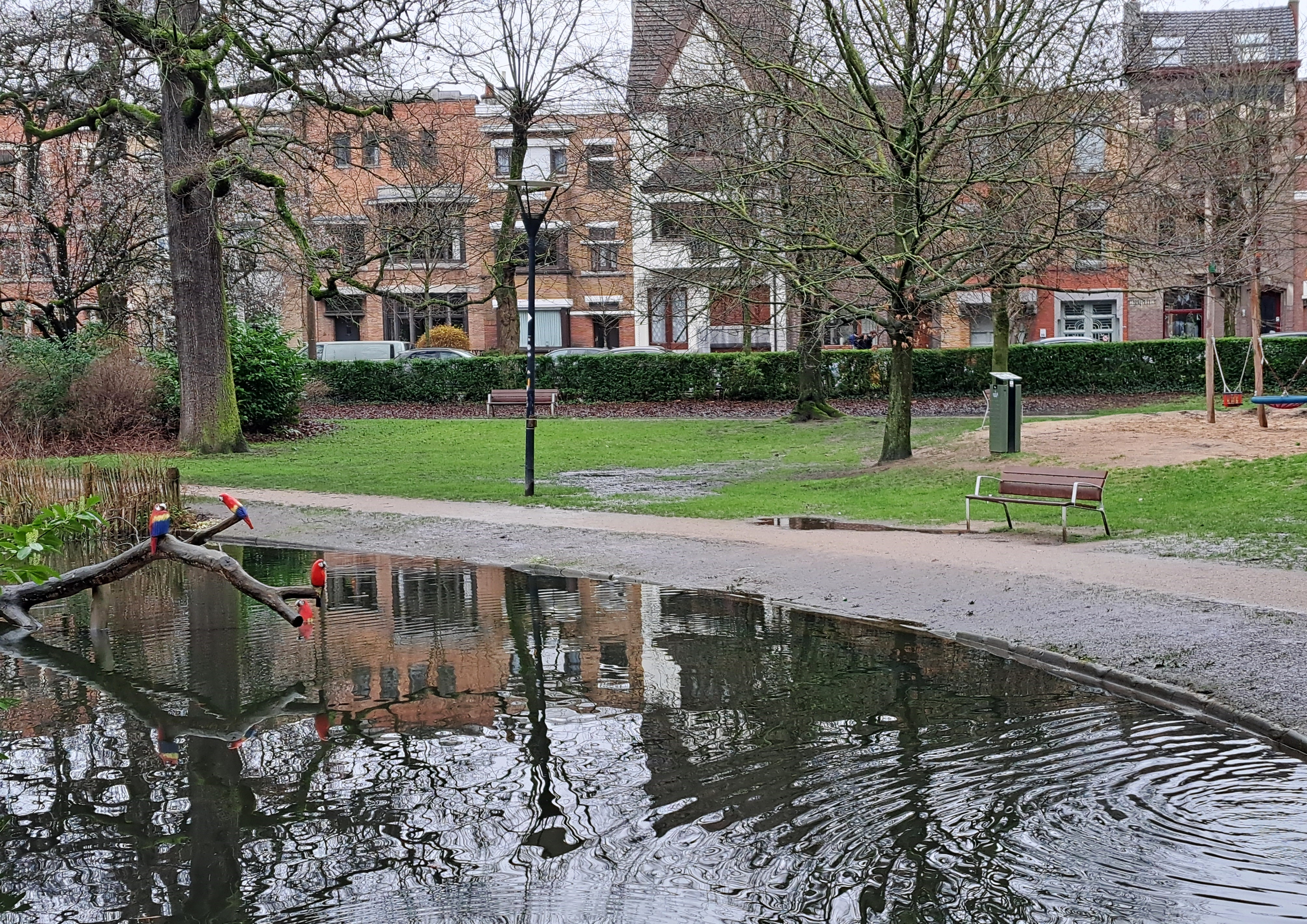 I wandered through a lovely string of parks our first morning in Ghent, as Steve slept off some of his jet lag. He’d commented that the countryside looked mighty wet from the airplane as he approached Amsterdam; I explained that it had rained every day between about October and January, not always a lot but really (or nearly) every single day. By his arrival, the rain had reduced in frequency and volume, but as you’ll below, mud and standing water were everywhere. On the bright side, when I first approached this pond, I thought those were a real flock of naturalized parrots but in fact they’re colorful wooden parrots perched there to appeal to the children who’d be playing here on a clearer day no doubt.






 (so much world, so little time....)