
Visiting Xi’an
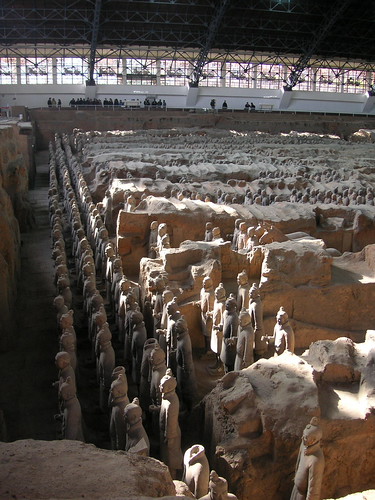
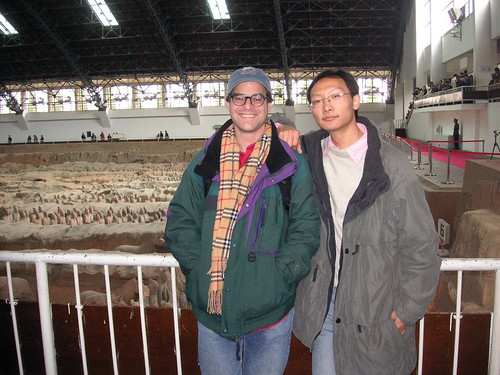
I’ve passed through Xi’an many times, since our Baoji Children’s Street Centre project is about 2-1/2 hours west of it, so whether I take the train or fly, I’m passing through Xi’an. But even though it was the first capital of a unified China, and remained the dynastic seat for more than a thousand years, until the end of the Tang Dynasty in 907, I hadn’t found time to visit all of its incredibly rich and impressive historical and cultural sites. Finally, in December I hooked a weekend onto one of my regular visits to the children’s centre. My friend Davey, who’s studying in Xi’an, was kind enough to accompany me throughout the weekend, so I had someone to share my impressions with — and someone who knows Xi’an well to help me squeeze an awful lot into two short days.
Most outside tourists know Xi’an as home of the famous army of terracotta warriors from the tombs of Qinshihuangdi, the first emperor to unite all of the core Chinese heartland under one rule. As you’ll see in the following shots and notes, Xi’an (Chang’an, as it was known then) was the primary dynastic capital from that time (221 BC) until 907 AD. (And oops, I I just realized I mis-wrote in a note you’ll read later on: I identified the Han as starting in BC224, while in facts its dates were 206BC to 220AD – sorry, take this as a correction in advance, since you’ll read this before that.)
In any case: though Xi’an today is only the capital of Shaanxi province, hardly one of the most important or beautiful provinces in contemporary China, it was for more ages the heartland and capital of what was most likely, at that time, the most powerful empire on earth. (Westerners get all hepped up about Rome, but this capital was in charge of huge territories long after the fall of Rome). This means it’s literally riddled with historical sites and buildings, far beyond just the terracotta warriors. It was a fascinating and philosophical experience for me, in the Shaanxi historical museum for instance, to see incredibly gorgeous ancient (300BC and earlier) jewelry and pottery coming from the ground around Baoji — a contemporary city that I know as a rather
dreary and polluted city without a whole lot to recommend it, honestly. To think that on that ground, in that place, civilizations were growing when my ancestors were hanging out in huts trying to ward off the cold…it’s rather humbling. 🙂
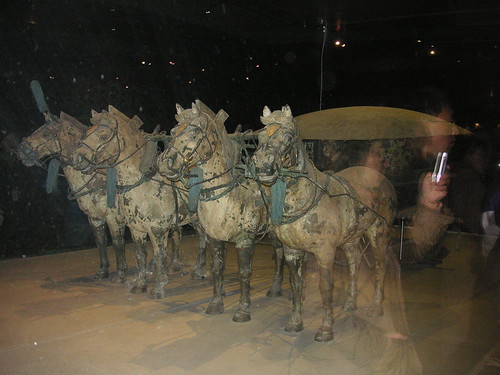
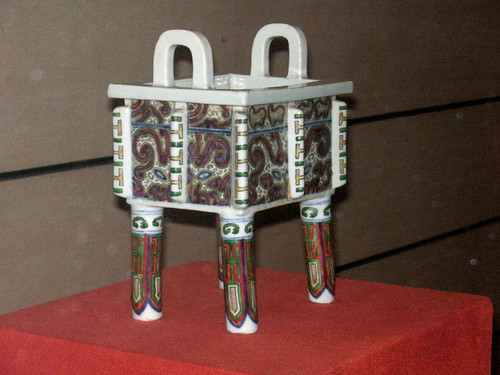
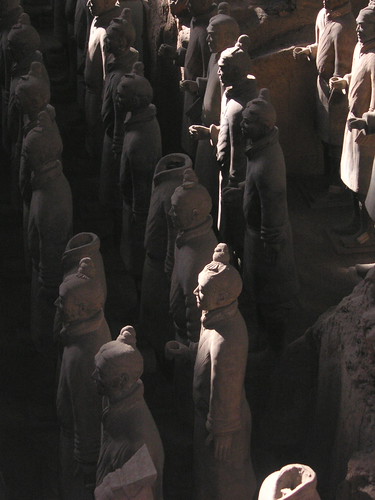
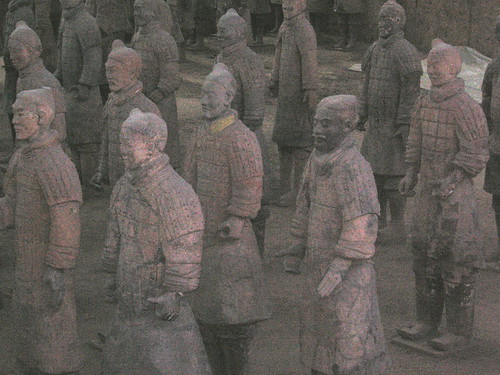
You’ll note two shots I took through museum glass (yes, they permit it — it hurt me to do it, but it’s permitted and these two items really grabbed me): one is a piece of pottery from around 600 or so AD, which is painted with designs that simply astonished me since they are so unlike other Chinese designs I’ve seen: both the design of the piece, and the painting, seem almost more Aztec to me than Chinese. The other are some metal horses and chariots from Qinshihuangdi’s tomb museum. And a note on the warriors: a few of them have traveled around the world with exhibits, but what’s astonishing up close are 1) how incredibly many of them there are, and they are still digging and excavating; and 2) how each of them has different and unique facial features. It’s rather overwhelming.
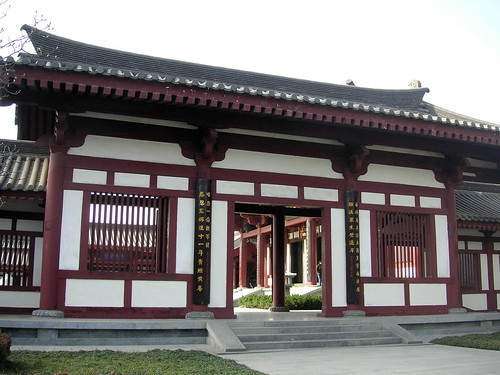
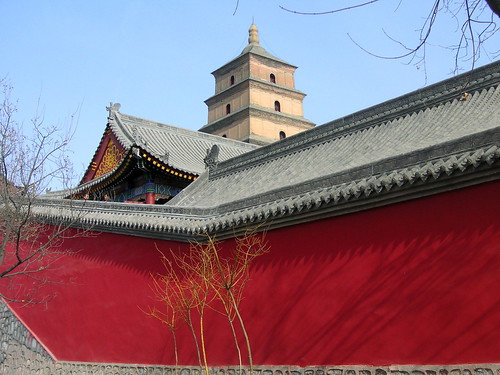
Xi’an – Big Goose Pagoda

Xi’an (or Chang’an, as it was known then: the latter means long peace, the
former means western peace) was capital of the empire at the time when
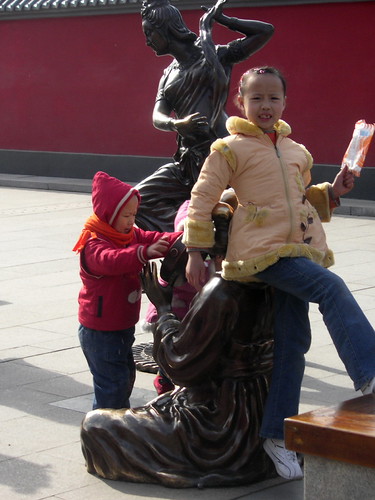
Buddhism made its way into China, along the Silk Road (of which Chang’an was the eastern terminus for its earliest history). This pagoda was originally built in 652 to house the first Buddhist scriptures brought from India to China. These were brought by the monk Xuan Zang, whom you see in the (contemporary, of course, since one doubts it would have survived the cultural revolution had it existed then) statue. He was the first monk to leave China seeking India to bring back the great words and works of Buddhism, and it’s his journey that inspired the Journey to the West.


 (so much world, so little time....)