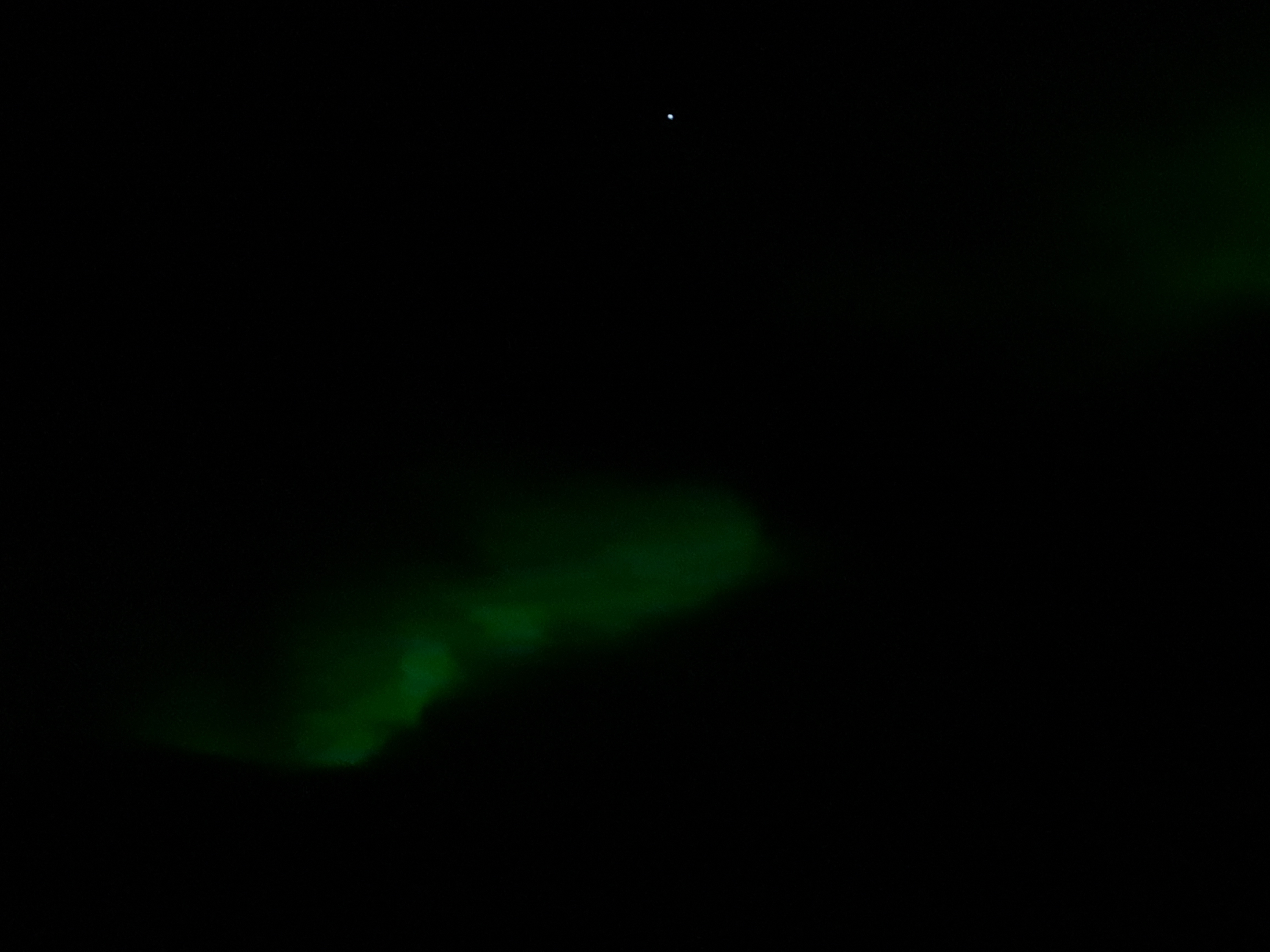
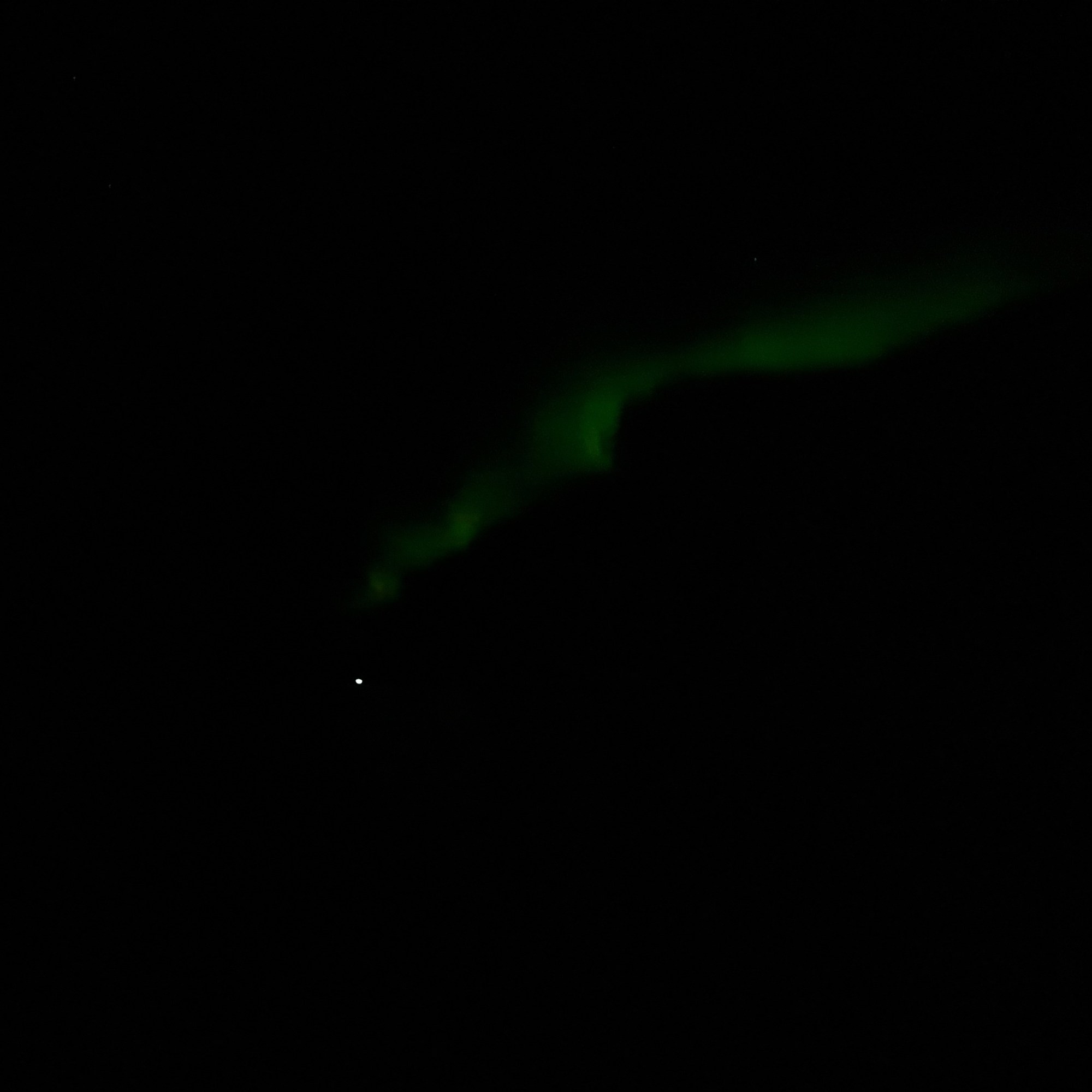
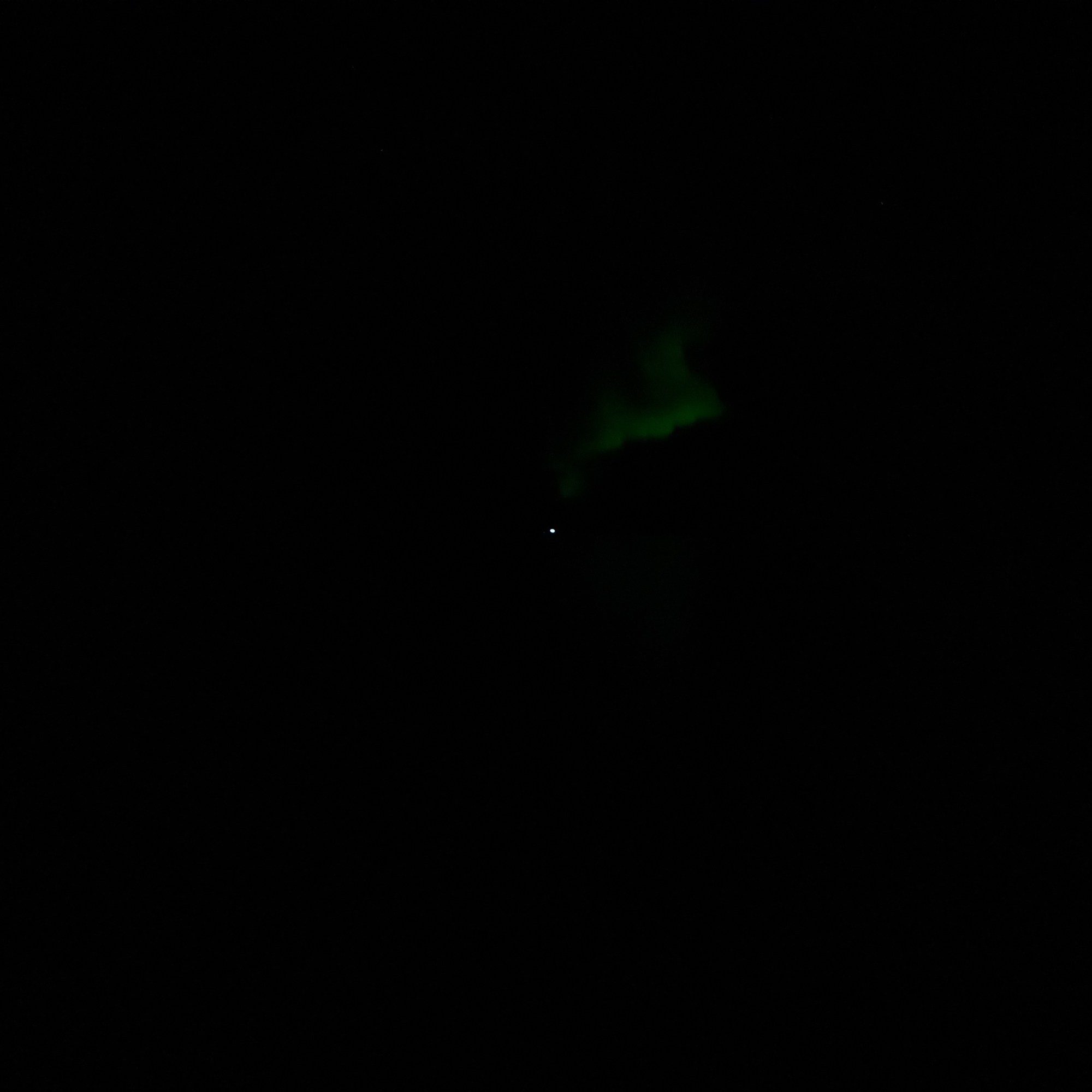
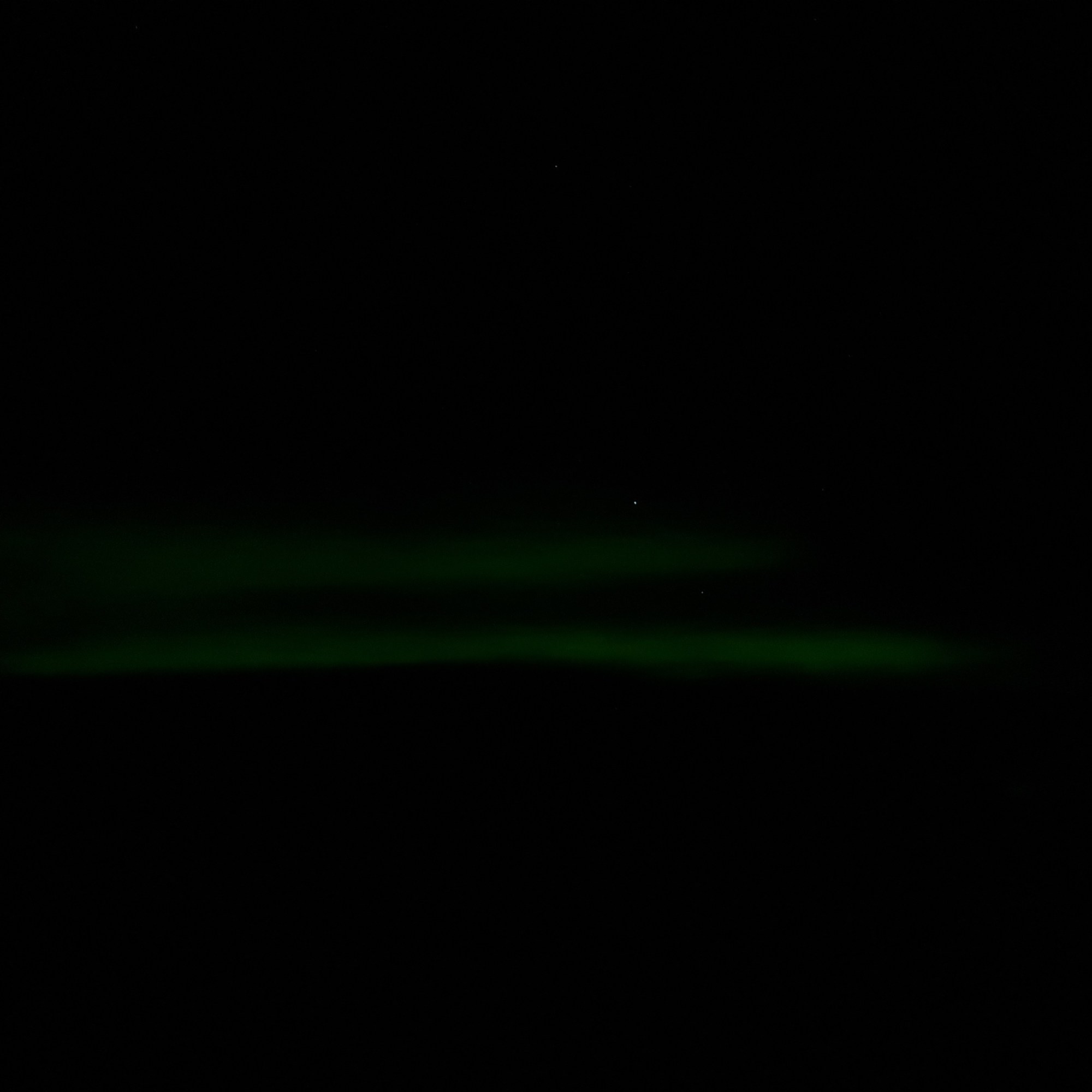
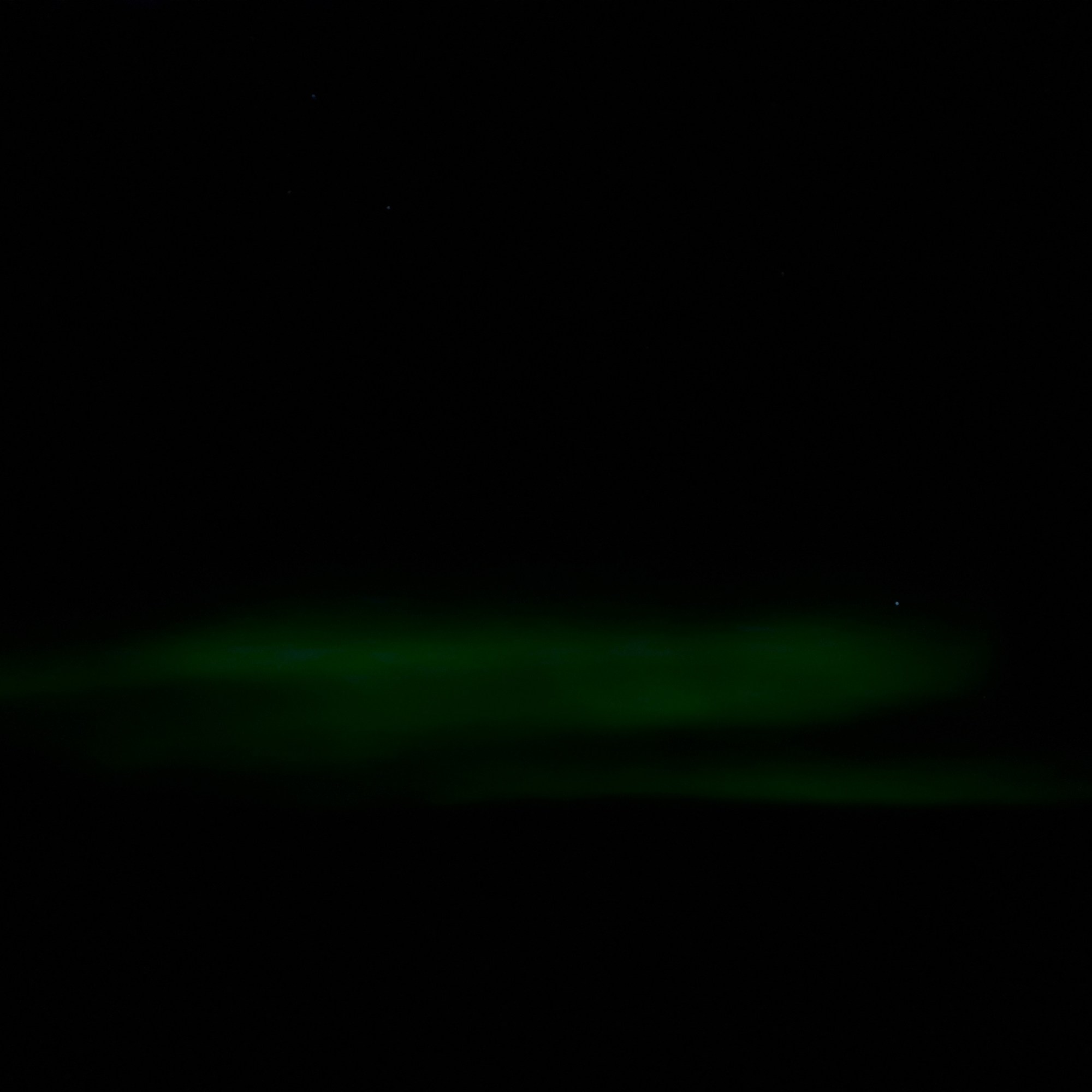
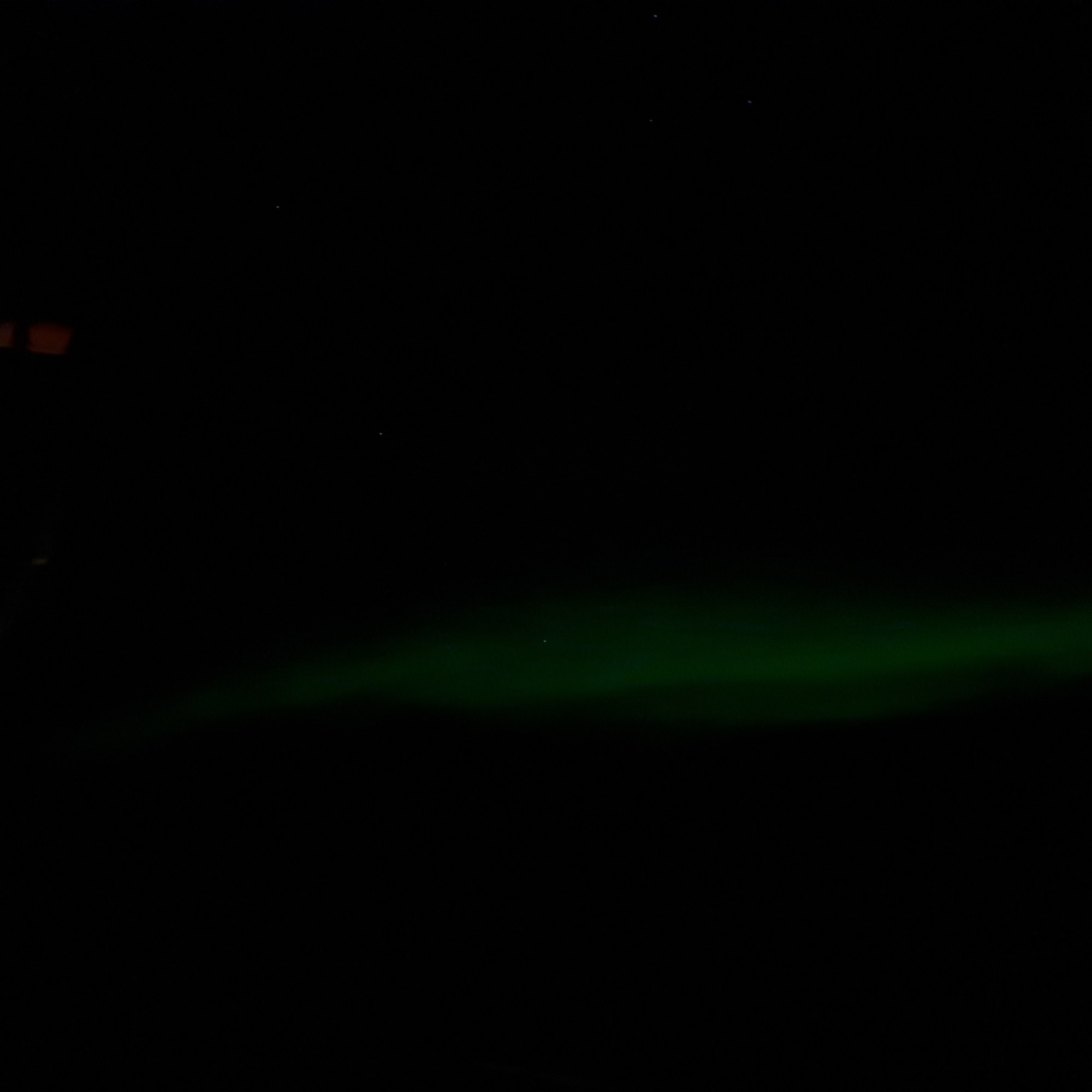
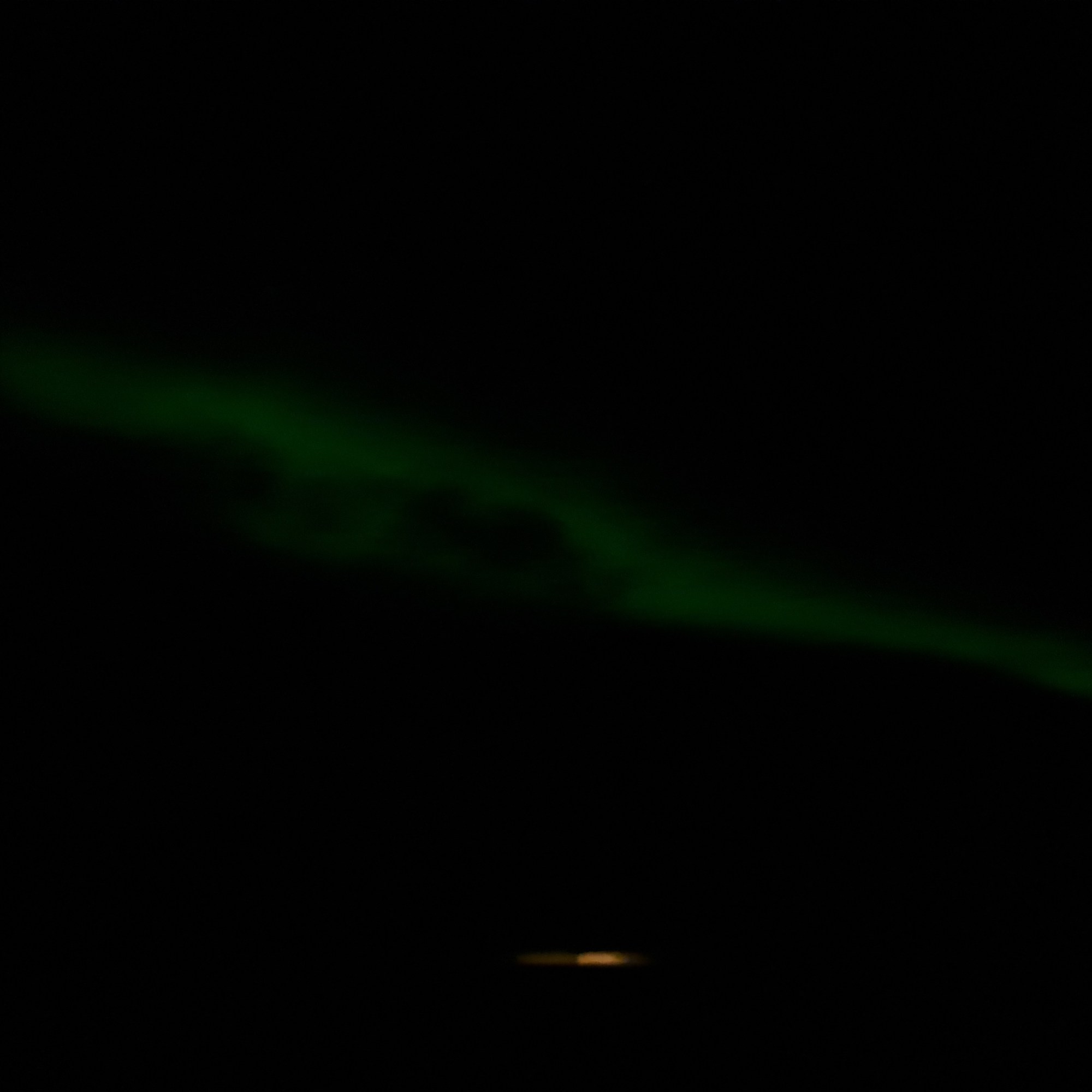
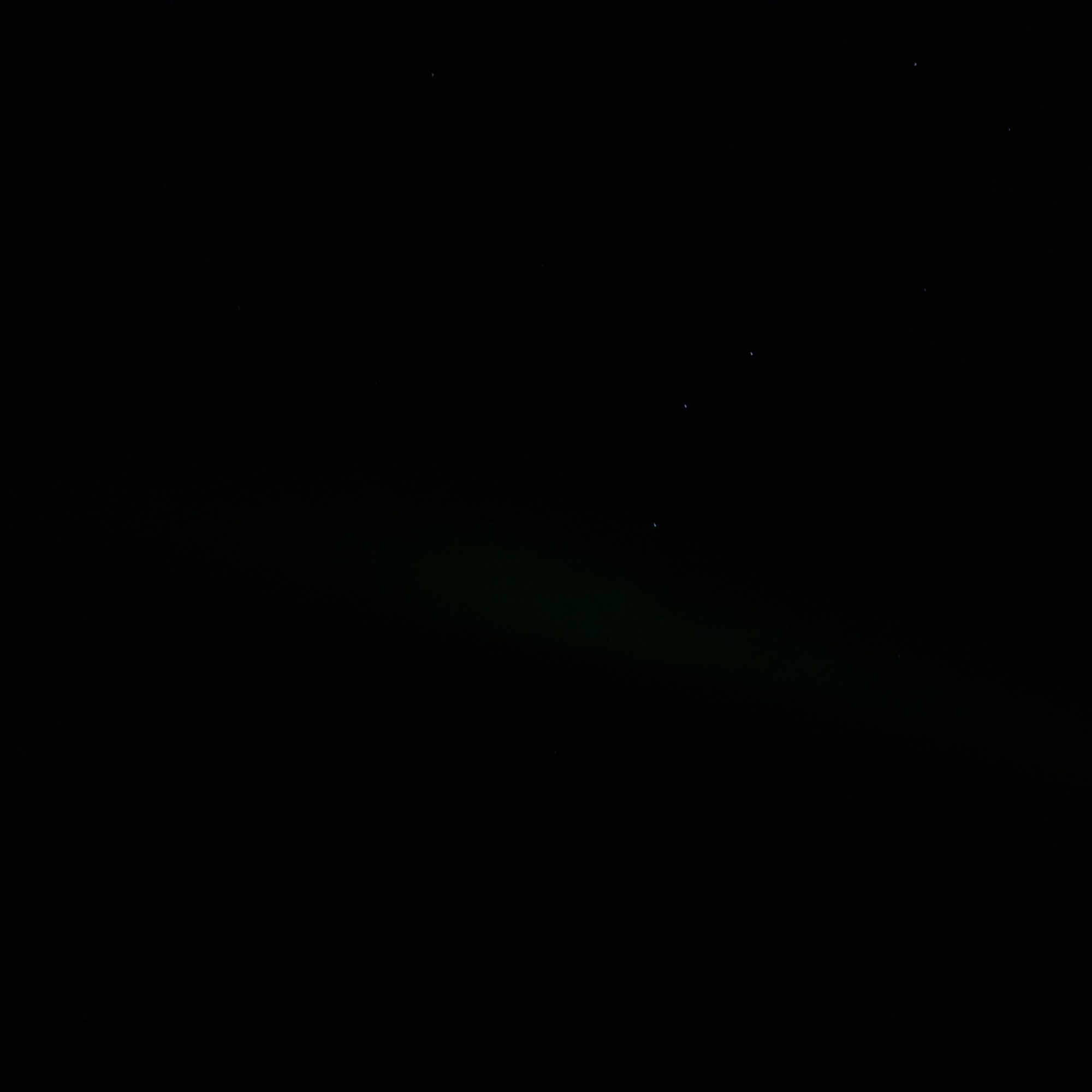
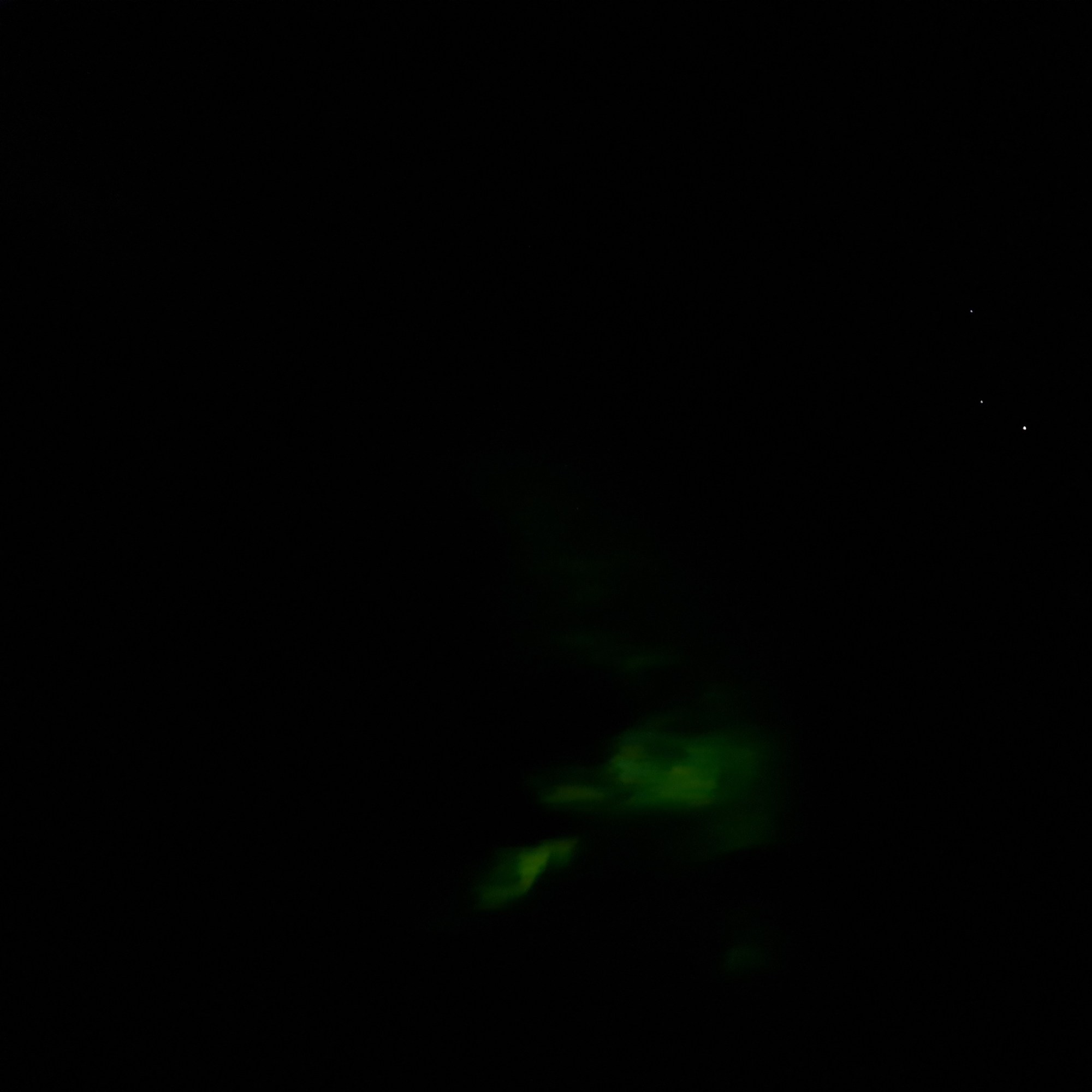
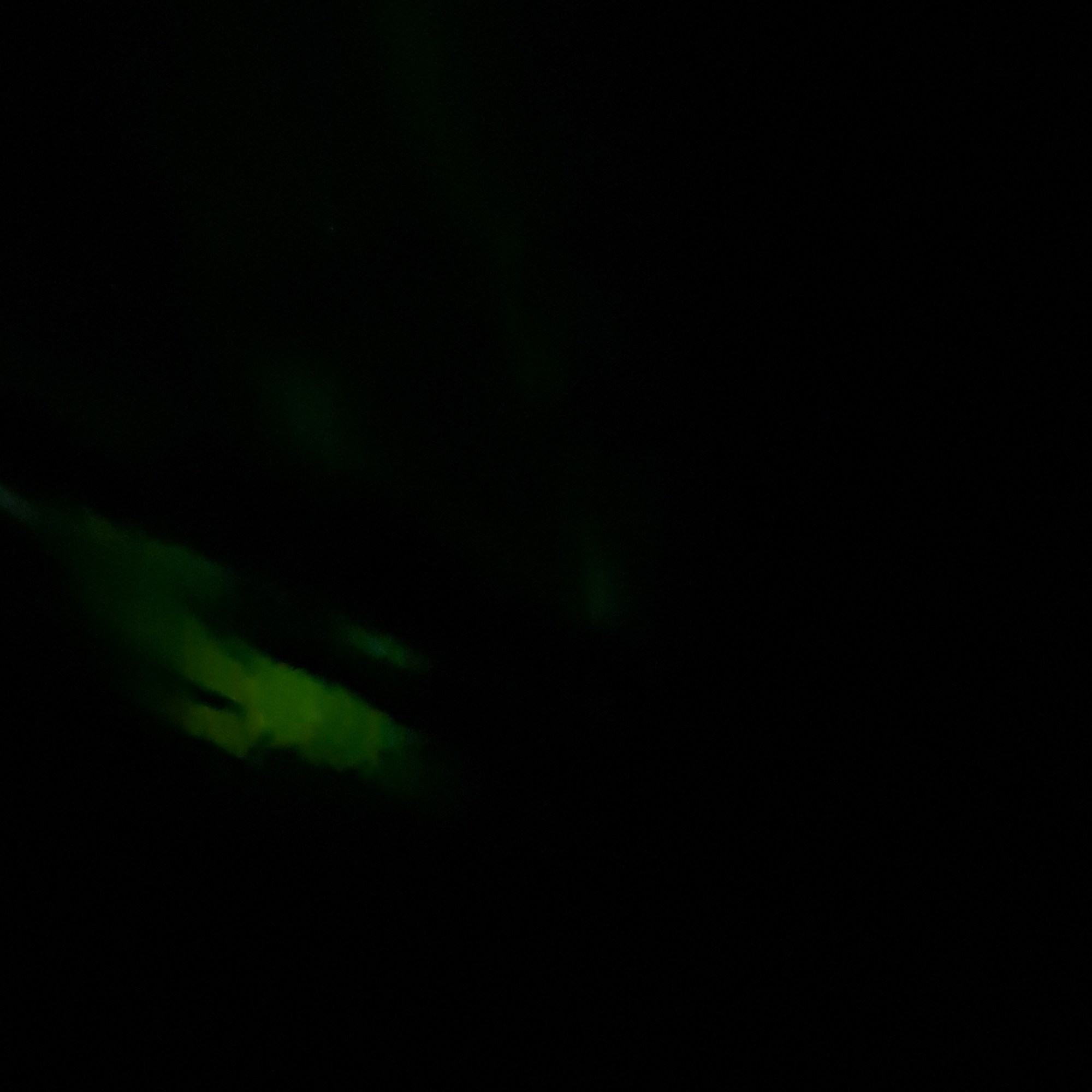
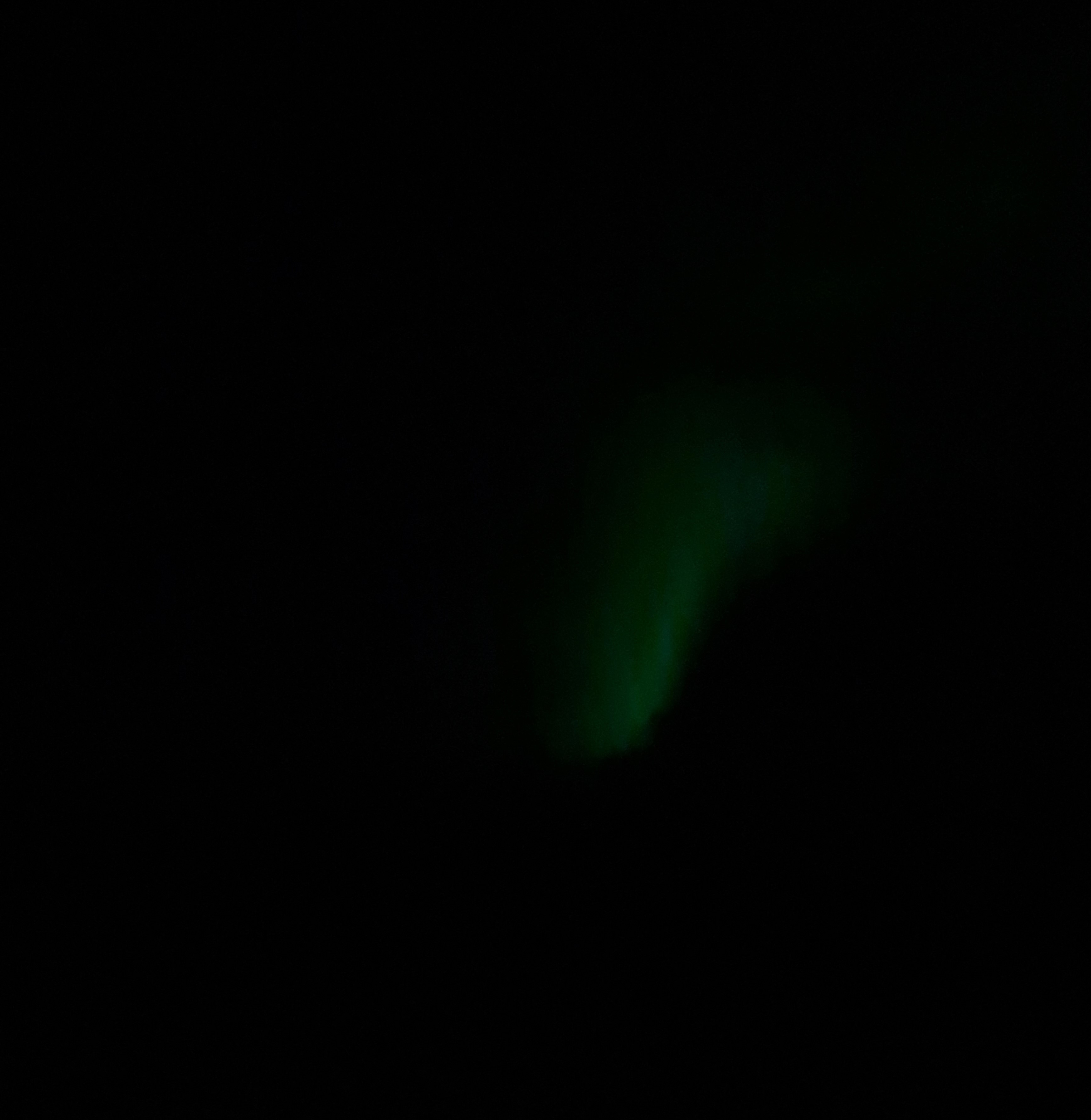
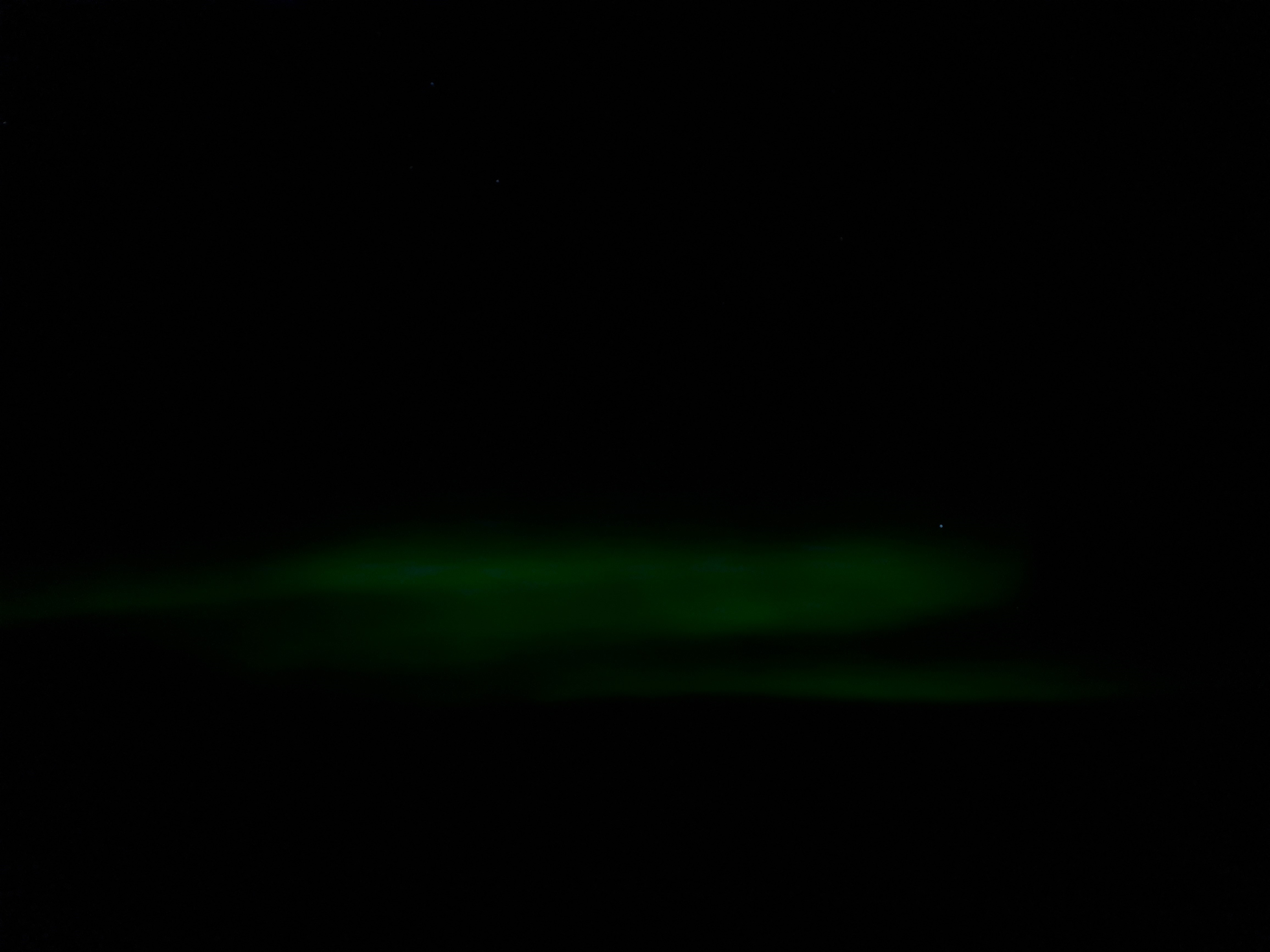
Last shots from my own little pocket phone camera of the aurora, taken on the 22nd, 23rd and 24th of January. Do view these on a larger screen if you really want to see them, in a low-lit room ideally. I fear that otherwise, many of you seeing this on your phone screen under bright surrounding conditions will think I’ve posted a bunch of black box photos. 🙂
Tips for anyone who might want to view them: don’t rush when you get the alert; instead, put on your layers of undergarments, middle garments and wind-proof outer garments. Expect to want to spend time looking at dark skies that your eyes tell you are just showing a bit of mist, until you notice the mist moves around, changes shape, and appears in different parts of the sky. The real life experience is less visually dramatic than what you will see in calendars, or in your own photos if you get a tripod and quality lens, etc. But it’s far more variable and awe-inspiring, from my own experience.
You might recall that my old friend Gary and I first scheduled our cruise in order, once in our life, to see the northern lights live. As I’ve shown through dozens, even hundreds, of posts since January – we saw so much more than just the northern lights, even with the days as short as they were. We did, as I’ve shown you only a few times before, also see the lights themselves, three nights in a row on which we were fortunate to have clear skies. I don’t have a fancy camera that allows a long exposure – but my plain old phone did capture several images, which are hard to make out if you have background light. This was our experience: the first time we thought we were looking at mist or smoke in the sky, until we noticed it was moving and changing shape frequently. The colors only emerge as your eyes sensitize a lot – or on the camera if you have a long enough or good enough exposure. At the bottom, one from Gary where the color is less rich but the lights are more visible than above or in my other small shots below.
The Aurora was, of course, the main reason we decided to take that cruise to the far north in January. I posted the first “skylights” entry early on the 23rd of January, the morning after we first saw them. Then, I showed one of my own very subtle images, plus one Gary had taken with his camera which allowed a much longer exposure. From calendar images, or people who can take truly long exposures with an excellent camera on a tripod, you’ll get a much more dramatic view. But the subtle, ghostly green you can dimly see above and below come much closer to what my own eyes experienced on the three nights when we were fortunate enough to spend time appreciatithe aurora. These were both taken around 18:30 on the 23rd of January, the second evening they graced our skies. One’s eyes need time to adapt – at first, you might think it’s mist or a cloud, but the longer you stay and let your eyes adapt, the more you’ll notice how the lights change shape and move around. Our cameras tend to see the colors better than our eyes do, but we found that bundling up well and braving the wind and cold for a longer time in the darkest place we could find really did the trick to experience these best.
Above is from my camera, whose maximum exposure length is less than Gary’s, with whom I’m traveling. Below is from Gary. (That’s me, all bundled up.) These’ll view better on a full screen without much lighting around. The one above corresponds better to what my eyes felt they saw than the longer exposure Gary got. My eyes saw faint but definite shifting lights against the stars. The lights can be very subtle, but constantly shifted, at least during the two hours we watched them last night and this morning. A guy I chatted with on the boat this morning, who’s lived in Trondheim nearly forty years, saw red lights on New Year’s eve for the first time ever. At first it was easy to mistake them for fog or clouds, but then they intensified, or moved. The eye itself can’t see the colors as well, but cameras can capture them with time exposures.












 (so much world, so little time....)