


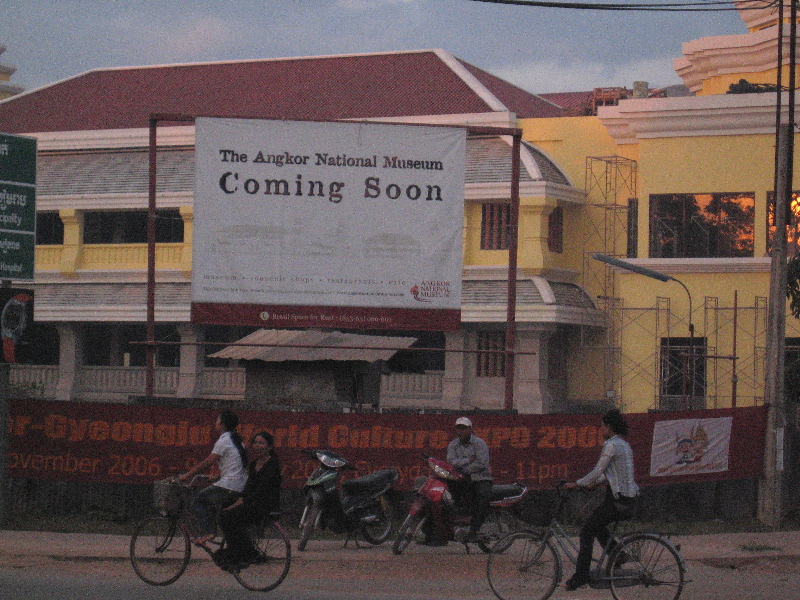

Bayon
 If Angkor Wat is the principal emblem of the sites here, the brooding faces of the Bayon are a close second. The French explorer who first re-“discovered” this temple described hacking his way through dense jungle and coming upon a pile of rock from which he saw a face peering down at him…and then another…and then he reeled back in near-horror as he realized how many faces there were looking down at him. As Lonely Planet puts it, talk about Big Brother: one theory is the face is modeled on the ruler of the time.
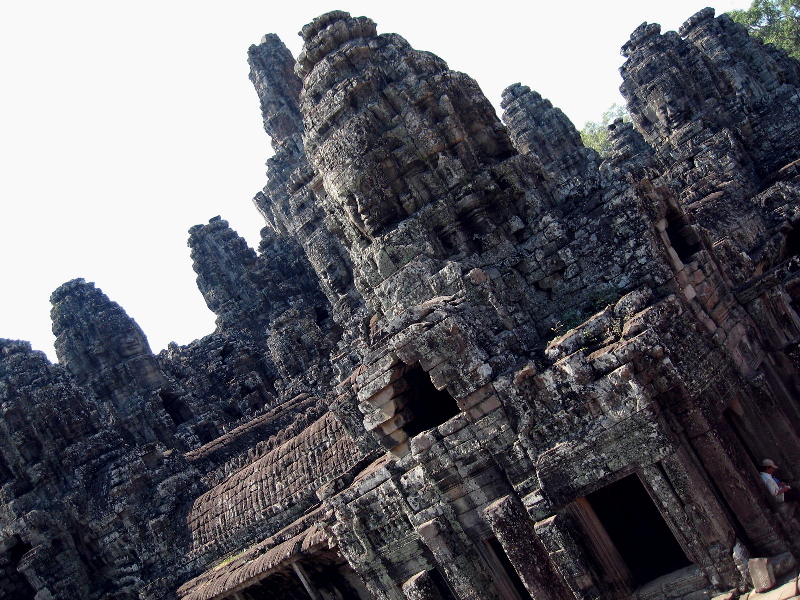
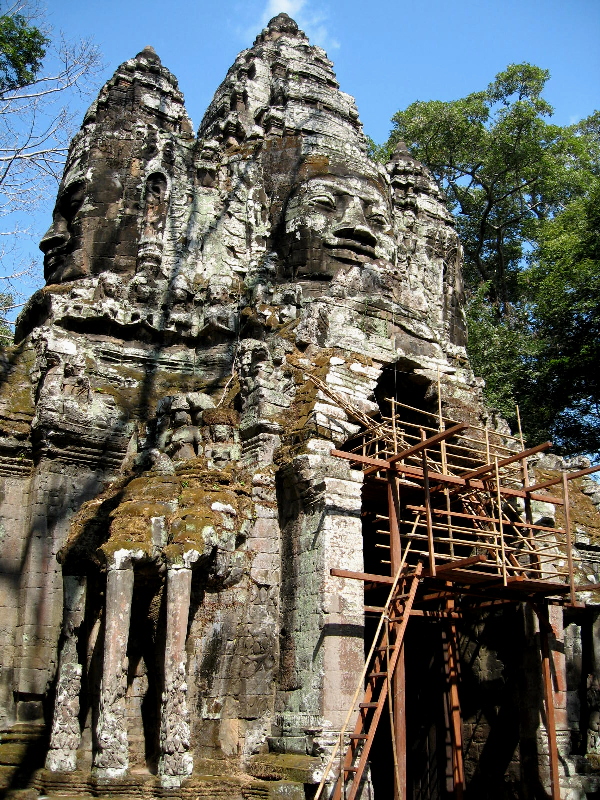
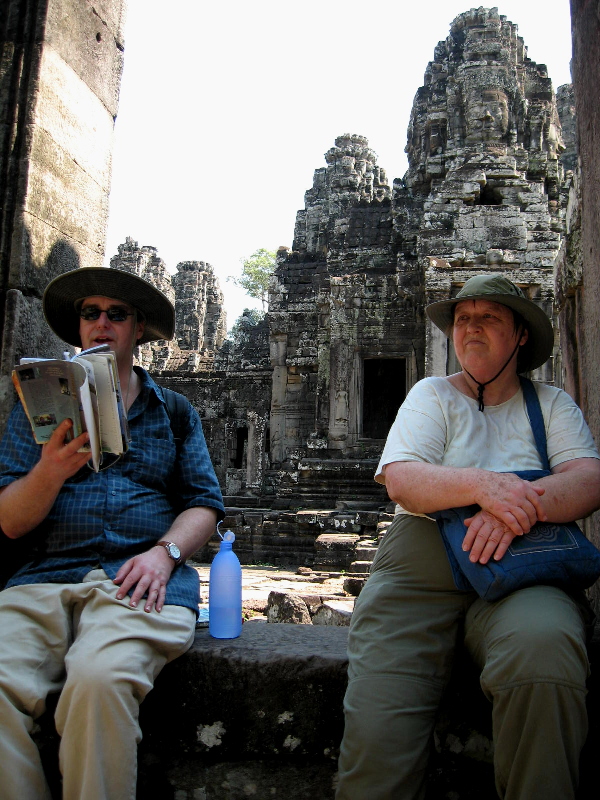
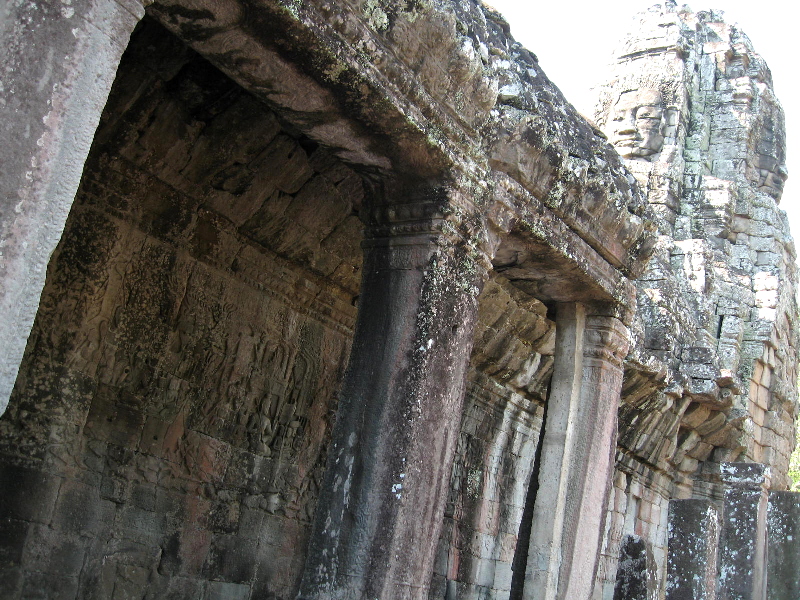
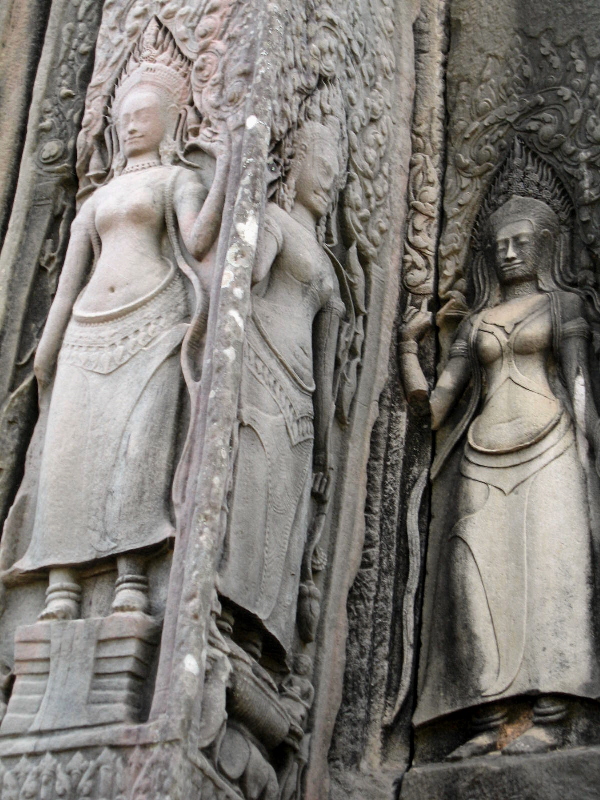
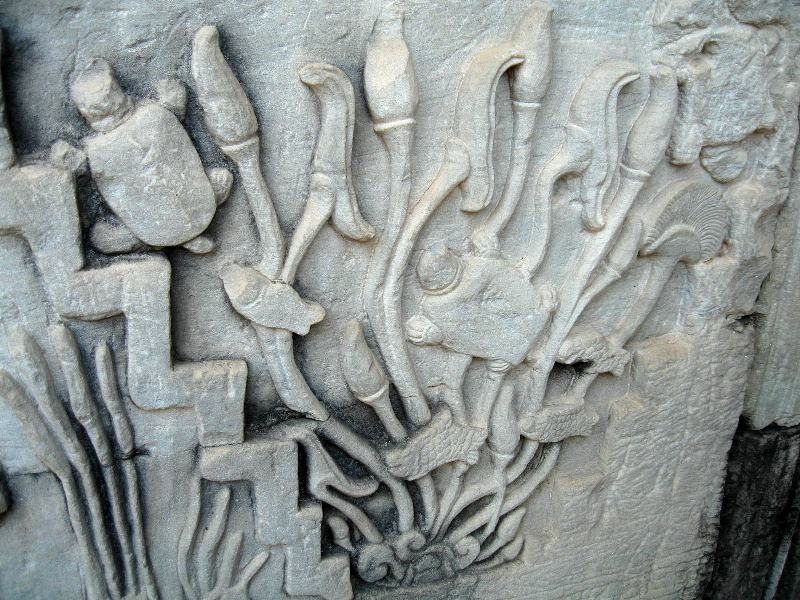
While it’s best known for the towering faces, Bayon has tons and tons of bas-relief sculptures that recount both stories from the classic myths, and tales of governance and daily life – quite like Angkor Wat in fact. These are very deeply carved and thus to me quite impressive and life-like, but the tour books agree Angkor Wat’s are of higher artistic quality. Still, I think you’ll agree these are quite impressive!

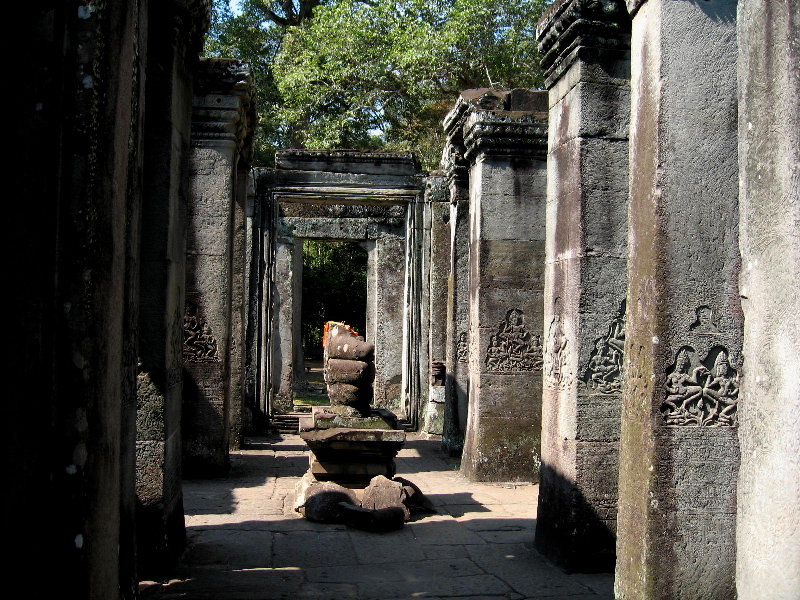
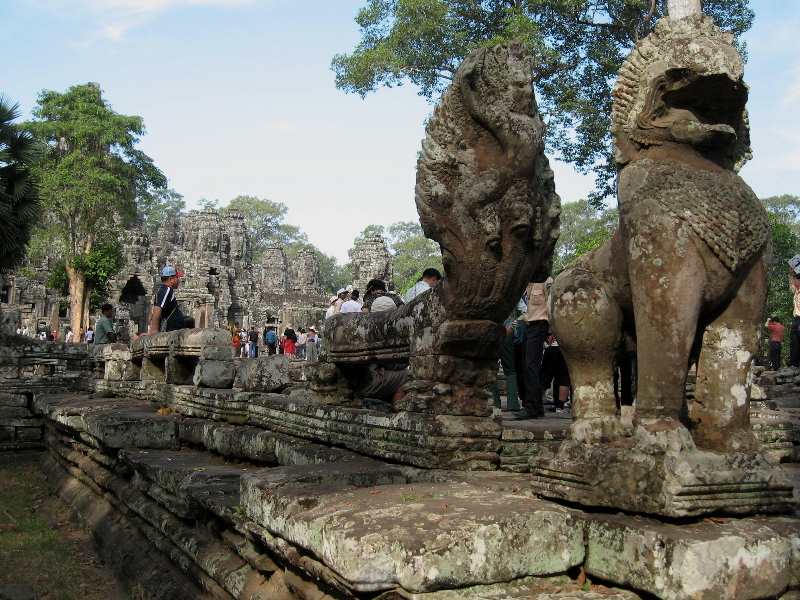
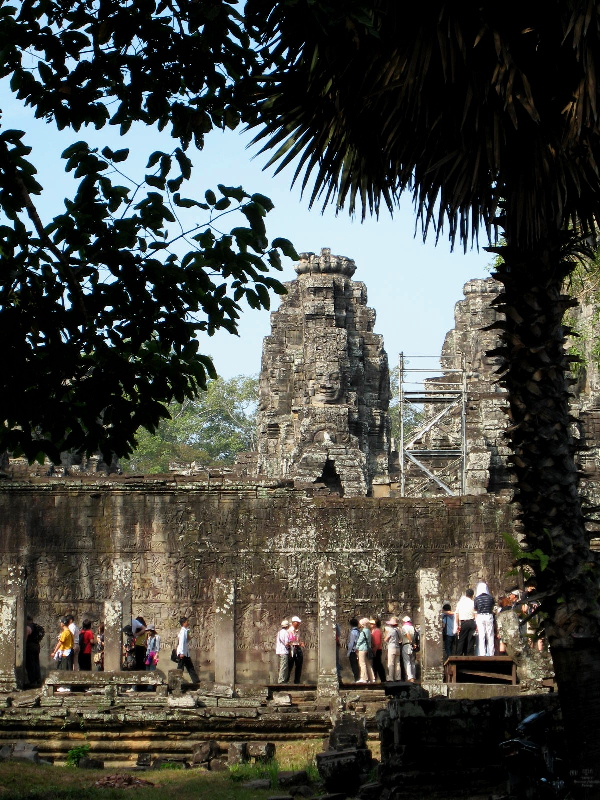

 Do notice the costumed Cambodians posing with tourists here on the east entranceway to the Bayon.




Ta Prohm
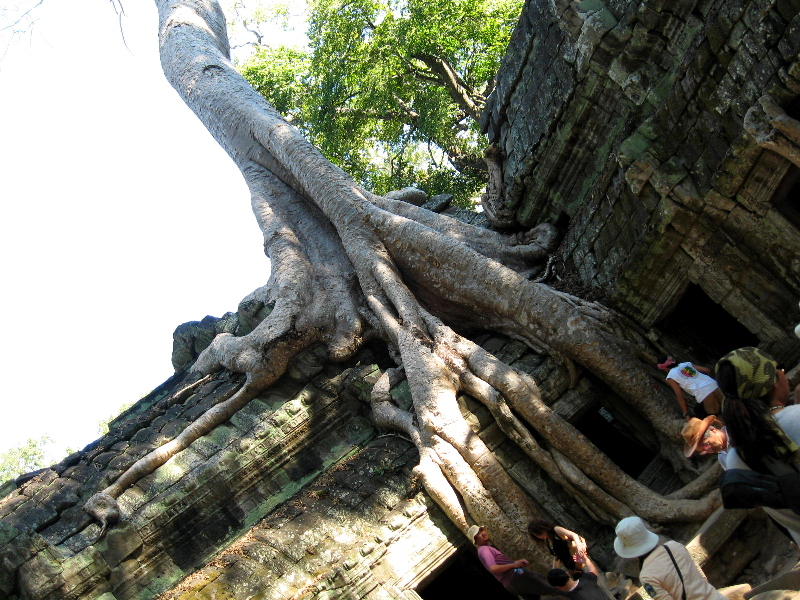
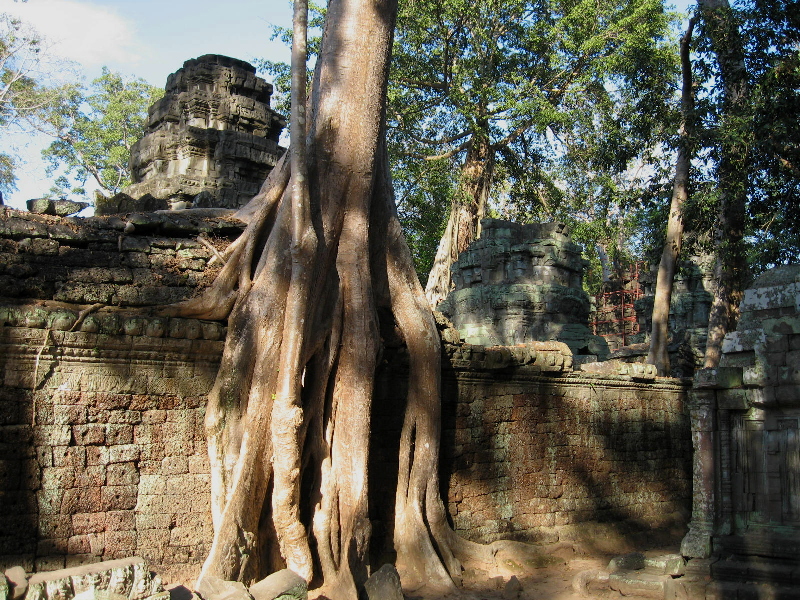 Ta Prohm is a large temple complex which most people refer to – somehow it comes easier to the Wetsern-trained mind – as the Indiana Jones temple. It’s essentially being left in a state of continuing decay, moderately arrested and maintained. Here you see something of what the other temples must have been after centuries of the jungle growing in, over, on and around them – when the first French archeologists re-“discovered” them in the late 1800s and early 1900s. You may recognize some of this from any number of adventure movies which have been filmed here in recent decades.
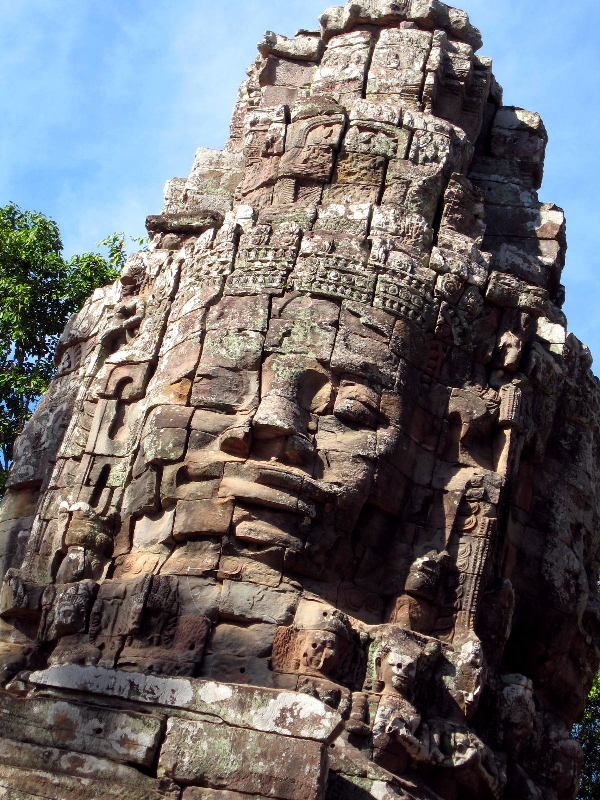 These impressive four-sided Buddha (?) images guard the east and west entrances to the Ta Prohm complex; having not yet seen the Bayon, Steve and I were quite impressed and Steve was almost a mite freaked out, perhaps. They’re quite dramatic, the first time you see these big stone faces!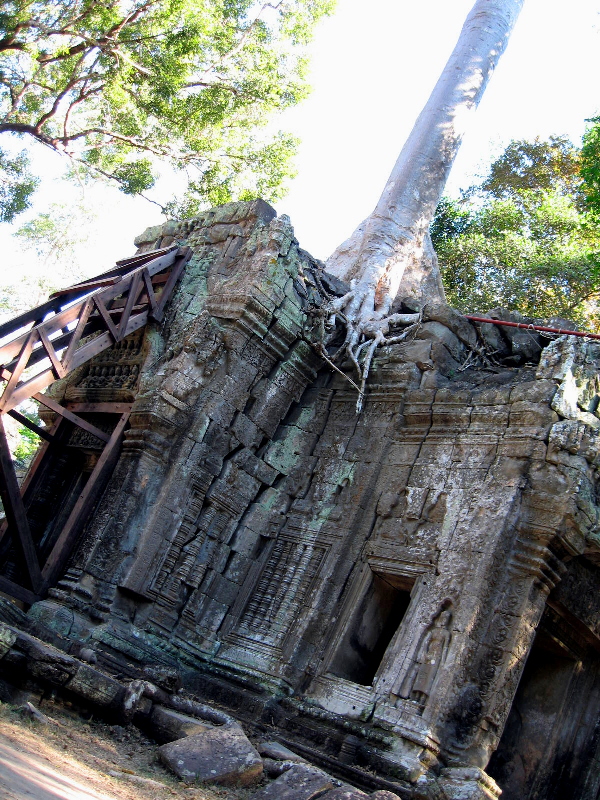



Inside Angkor Tom
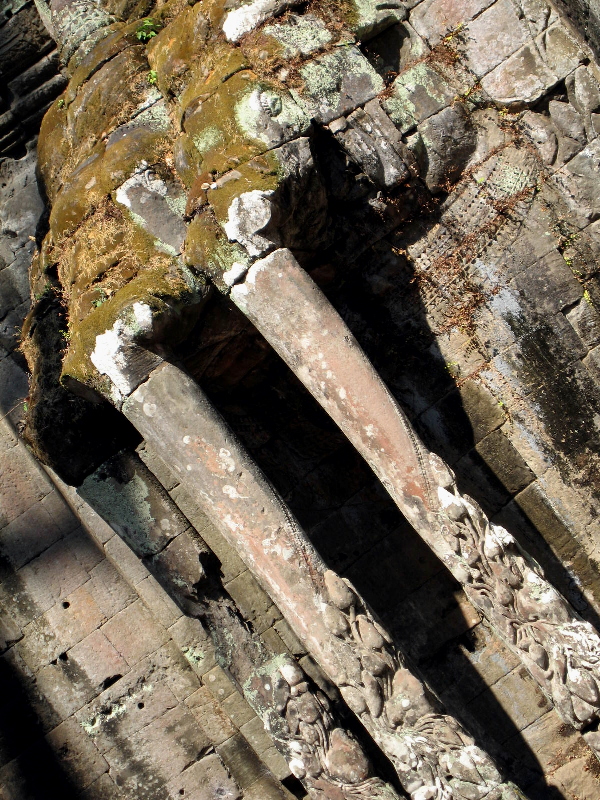 These are the elephant sculptures decorating the archway at the east exit from Angkor Tom – the long things are elephant trunks.
 So vast is the temple complex that the “inner circuit” driving route that shows you some of the most important sites is more than 30km long and the “grand circuit” is more than 50. Neither covers Banteay Srei or Kbal Spean, the Roluos Group or other outlying complexes often quite grand themselves.
Angkor Tom, which was the largest unified construction, was a massive city many times as large as Angkor Wat, which sits south of it. These photos show some of the temples and gates in and around Angkor Tom, with a side trip for sunset at Phnom Bakheang in the middle.
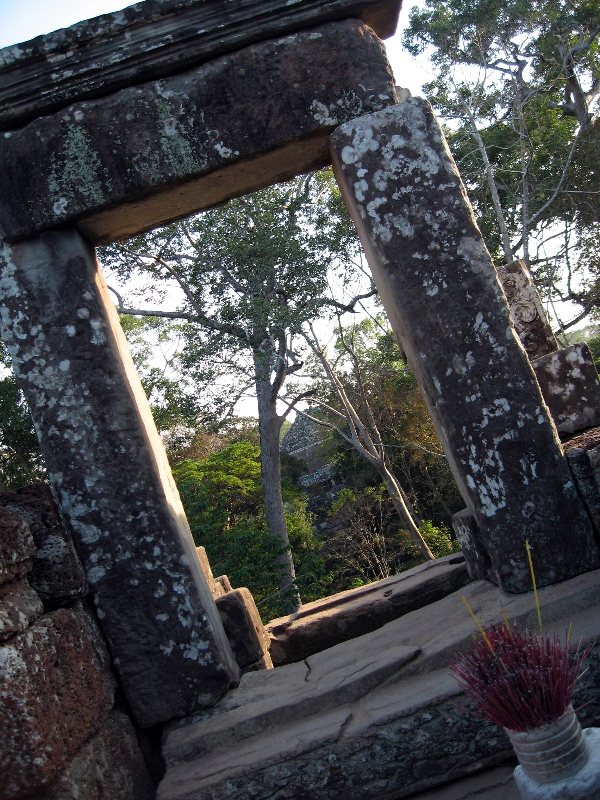
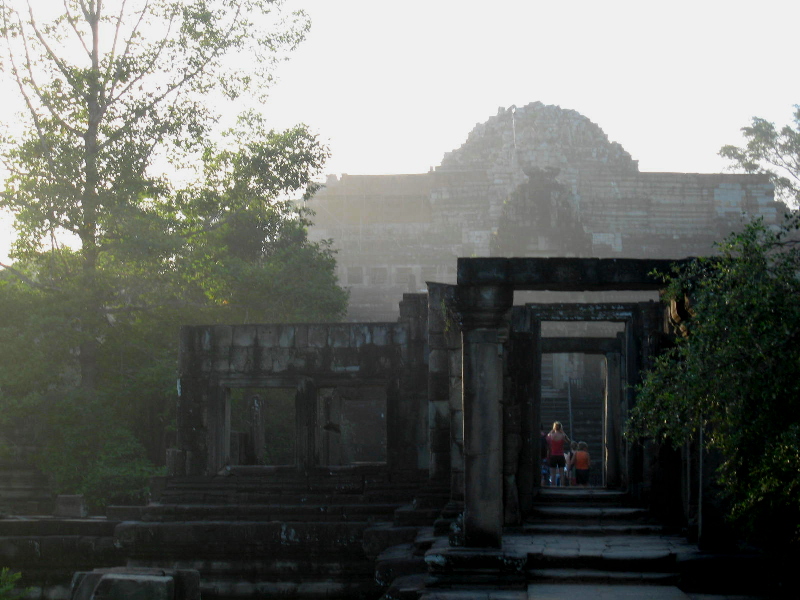 This one is the Baphuon under restoration; we were sad not to see the inside of one of the “top five” main sites from an art-history and architectural standpoint.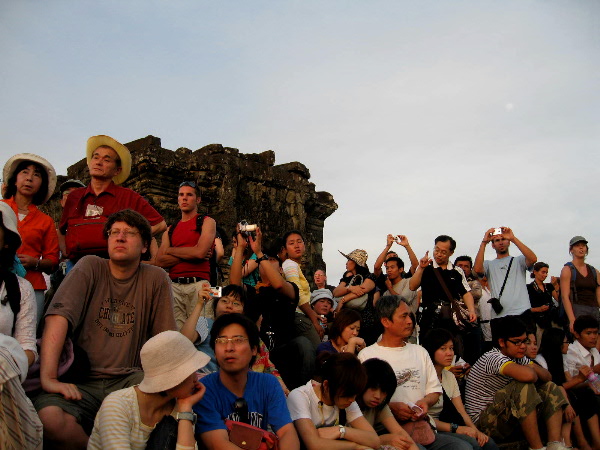

Immediately south of Angkor Tom’s southern gate, complete( as are all of Angkor Tom’s five grand entrances) with a bridge depicting the churning of the ocean milk story (with which we’ve all become rather conversant), is Phnom Bakheang, a hilttop temple that affords the most visited sunset views in the complex. As you see, it was quite the scene. Felt almost like Key West, though no one clapped for the sunset. Mercifully, we found a more peaceful vibe a few evenings later.
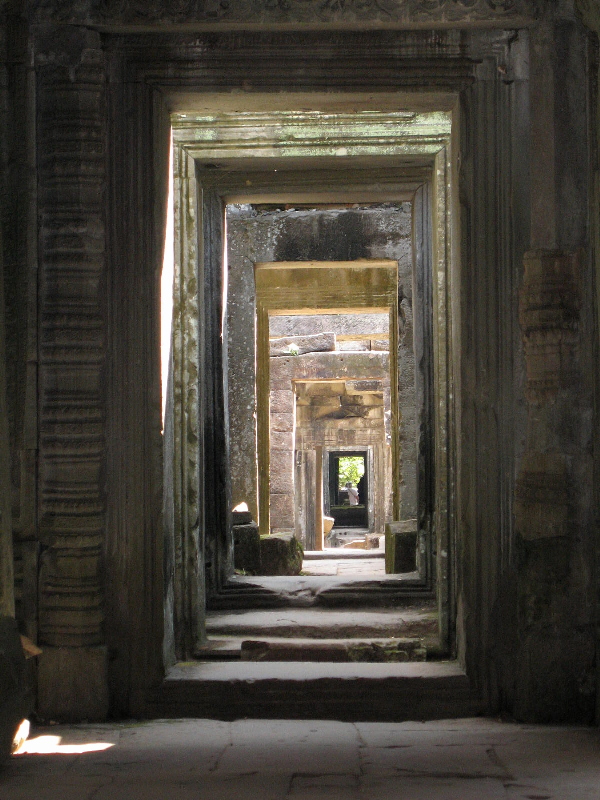 OK, OK, so this one doesn’t really fit here…but it’s an image from yet another massive, complex temple that Steve’s guidebook described as having “gone slightly pearshaped” in the execution stage. It’s massive, and just goes on and on and on and on. And oh yeah…sorry for the false advertising, but it’s not in Angkor Tom: it’s a complex all to itself, named Preah Khan.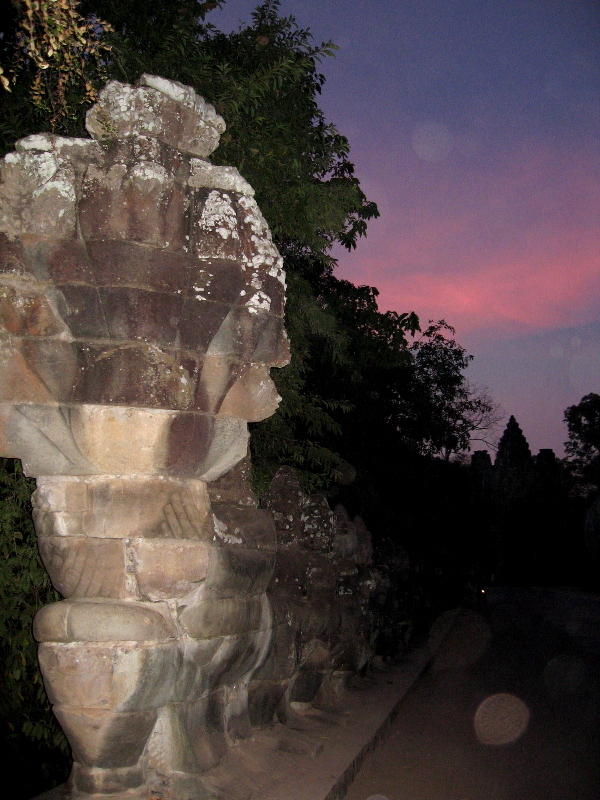
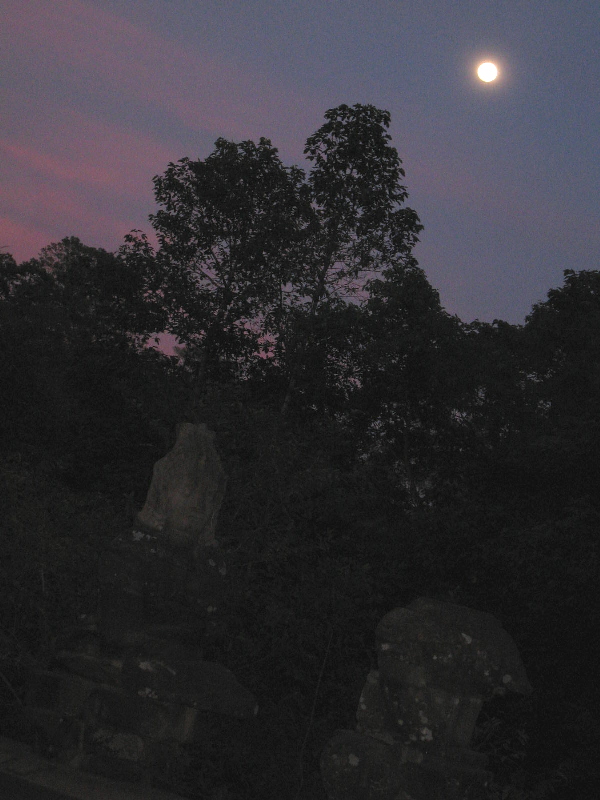

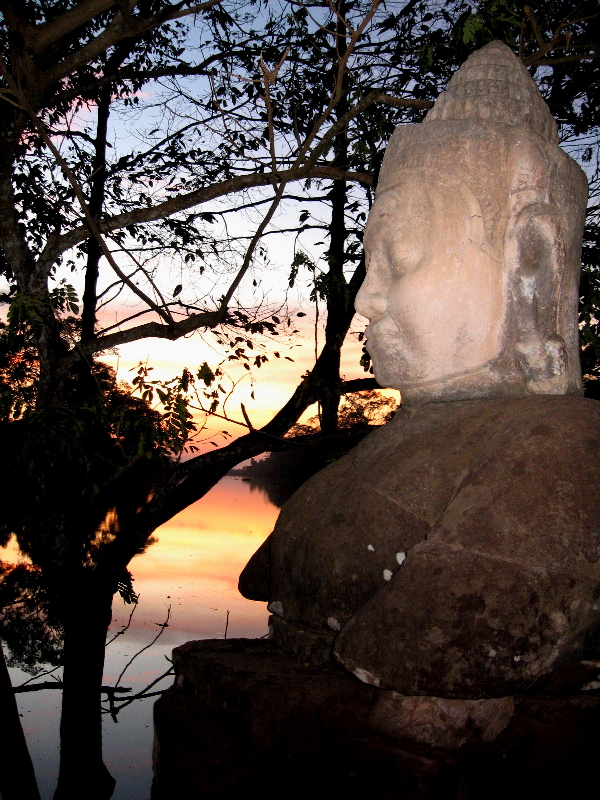
Sunset at Pre Rup
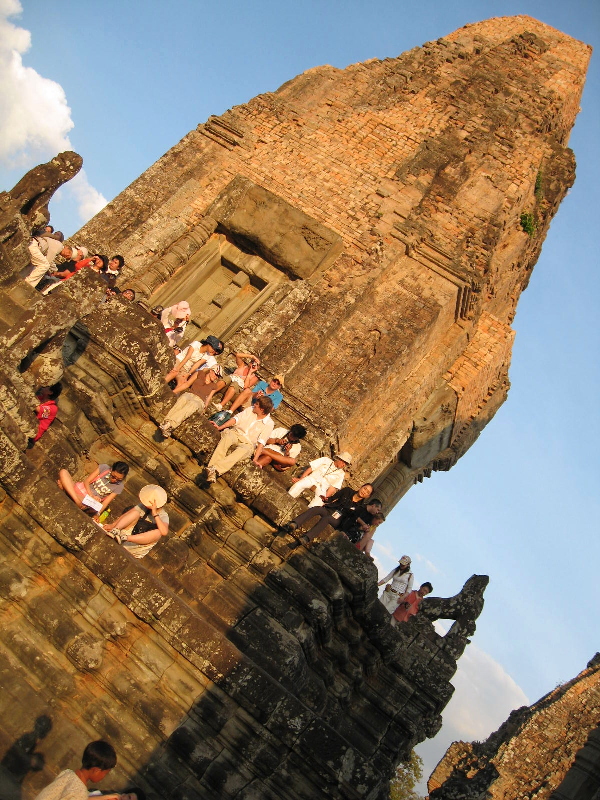
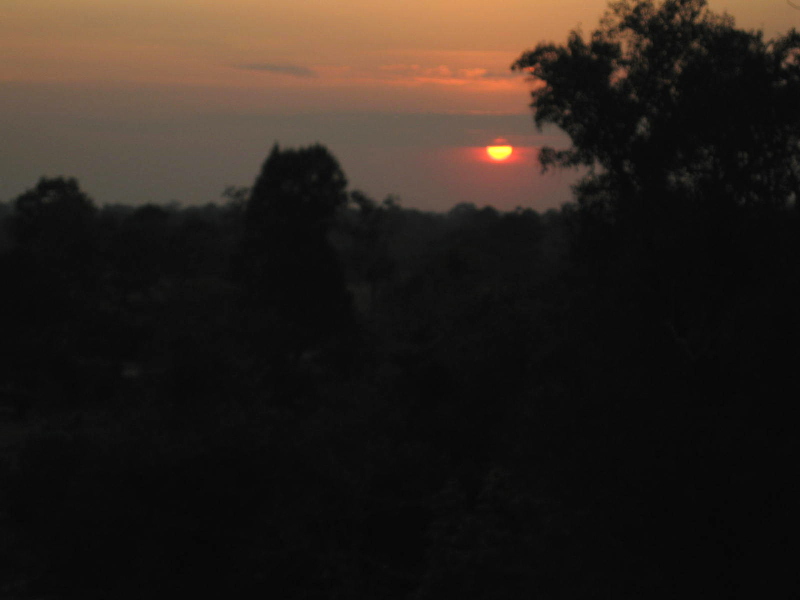
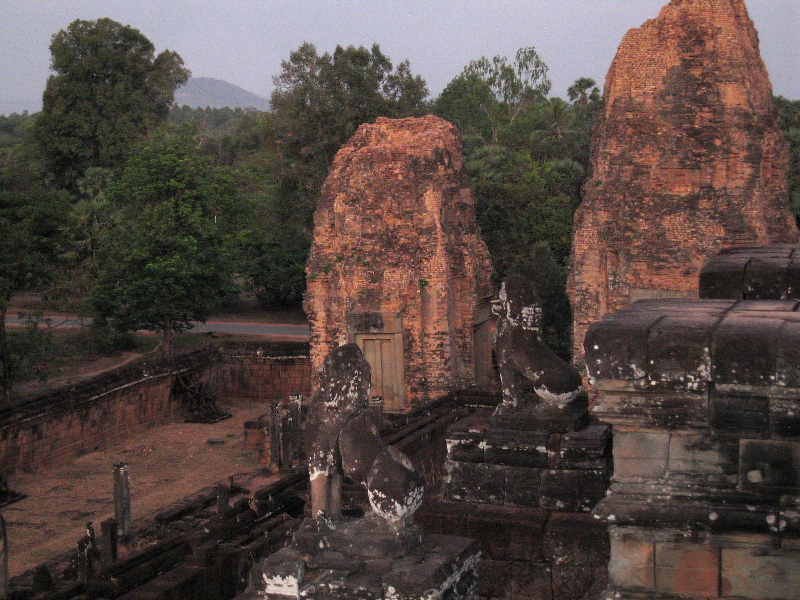
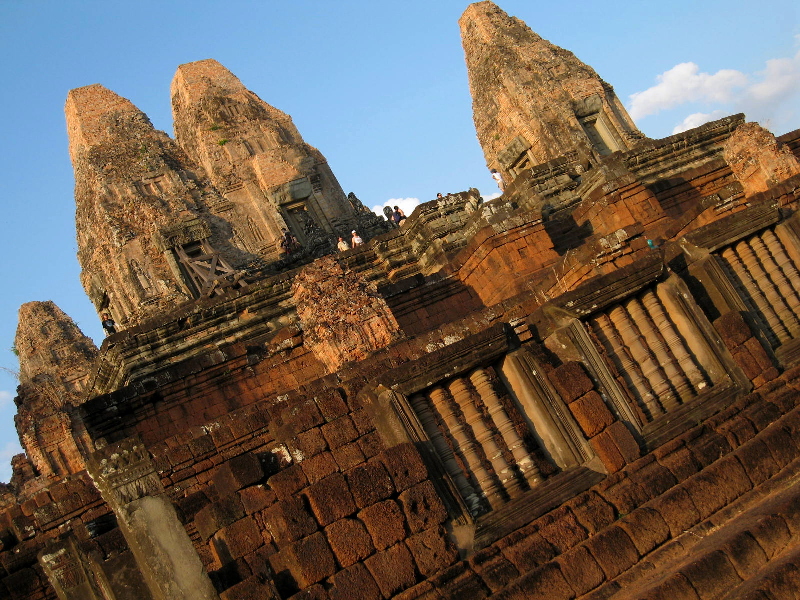
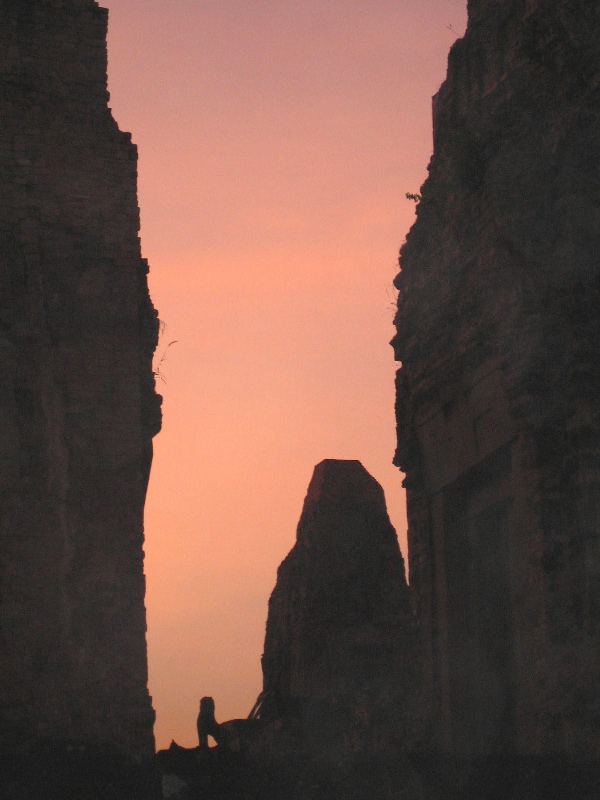
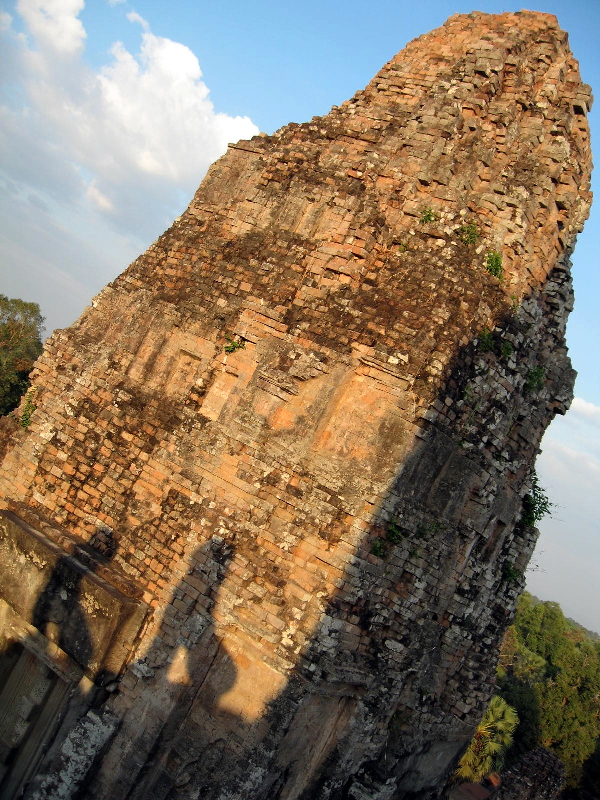
Steve and I spent the sunset hours of the final day on our pass for the archeological site at Pre Rup, a brick-built temple ruin that we’d passed several times, en route to and from Banteay Srei, Ta Prohm and all the others. Each time, we’d said “oh, we must spend some time there.” With Mom resting up after an adventuresome (let us not forget, Mom, the taxi zum klo!) morning at the Bayon and general Angkor Tom area, Steve and I enjoyed a much more peaceful and atmospheric sunset than we’d experienced at Phnom Bakheang our first evening.





 (so much world, so little time....)