


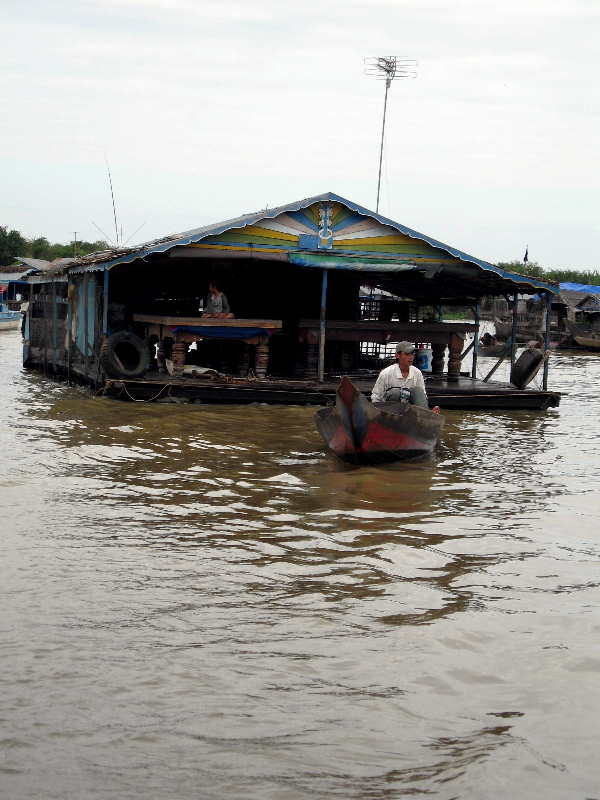

What’s a floating village without a pool hall, sleeper boats, supermarkets, foreign tourists ensconced in splendor, or, most importantly of all, Knorr Swiss?
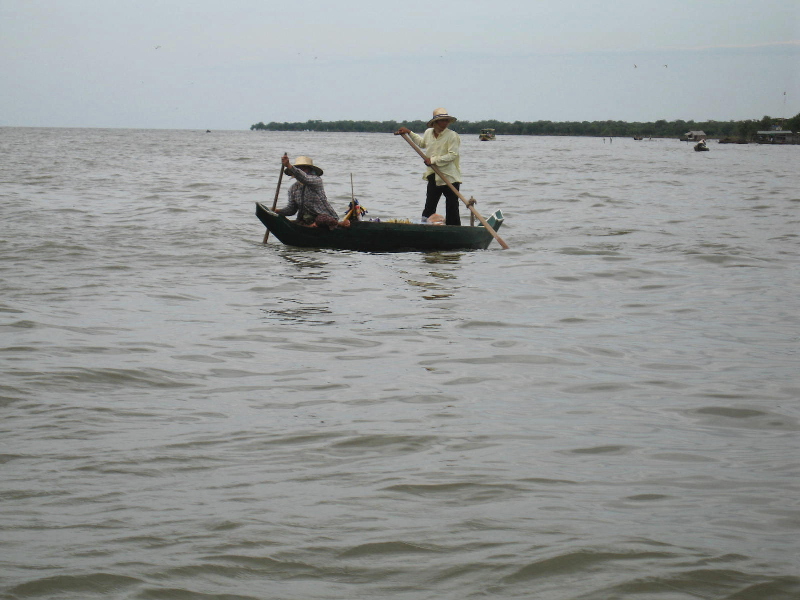


The floating village, though in many ways a tourist trap, still has all you need in a village: paddling peddlers pursuing tourist boats while holding up bottles of water and coke, schoolkids drawing on the planks outside their classroom, shops, churches…even the occasional floating pigsty!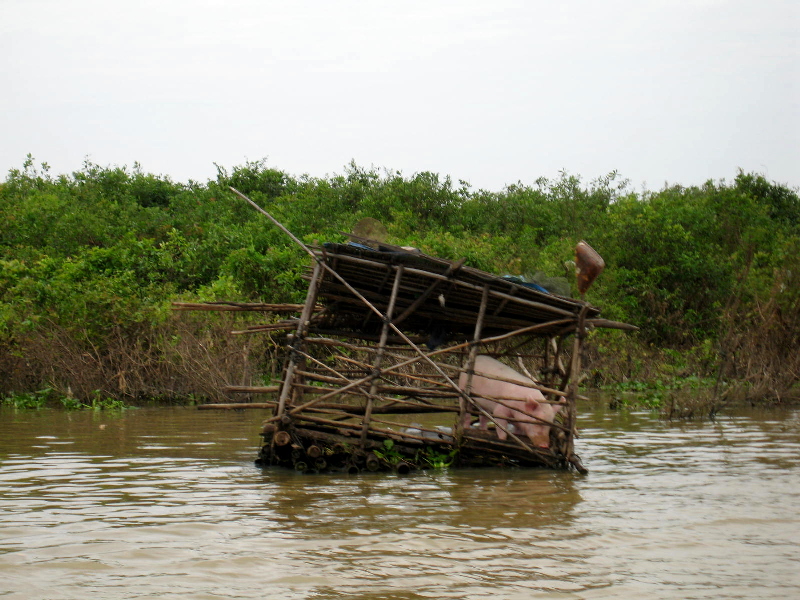


 We traveled from Siem Reap down to Phnom Penh by boat: the full length of the Tonle Sap Lake from northeast corner down to the point where it narrows to a river, then more or less the full lengh of the river, though our
 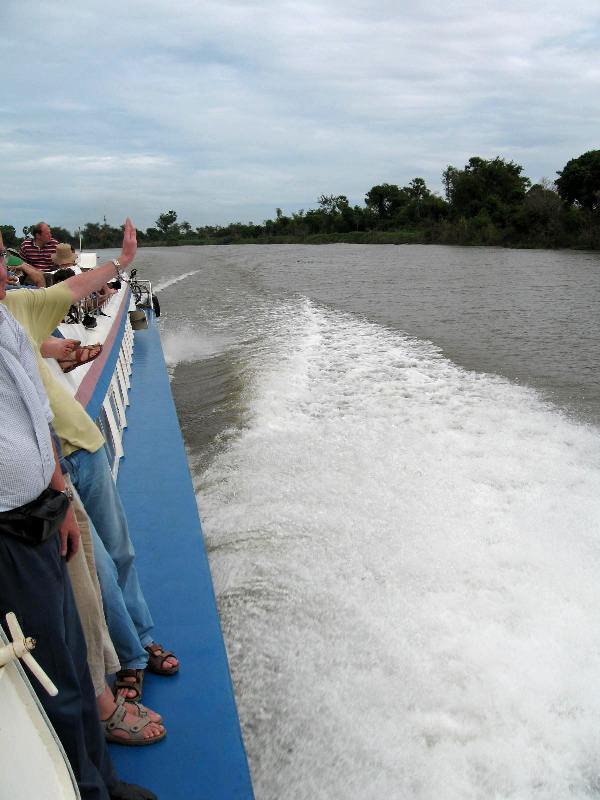 boat docked a km or two short of the point where it runs into the Mekong. This was another time I learned how differently Steve and I experience things: later that day, from the comfy ambiance of our lovely PP guesthouse, he commented that the boat ride had been “extremely stressful” for him. For me, it was one of the highlights of my time in Cambodia! There we were on a fast boat with a great view of this massive lake and river system I’ve been seeing on maps since I was a wee bairn, heading steadily toward a city whose name conjures a myriad of images for me – and I was with my dear family members the whole time! I truly don’t understand what stressed him out – sorry, Steve.
These shots: the fairly narrow walkway on our low-riding boat, on which I stood a lot of the time to take in the view; lots of people chose to ride on the top, but by the time I decided I wasn’t too scared to climb up there (and noticed a cute guy or two up there as well), it was too crowded. Plus I’ve always liked being at the front of a moving boat. In another, if you look closely, you can see a much less touristic floating village that’s down near the narrows where Tonle Sap becomes a river.
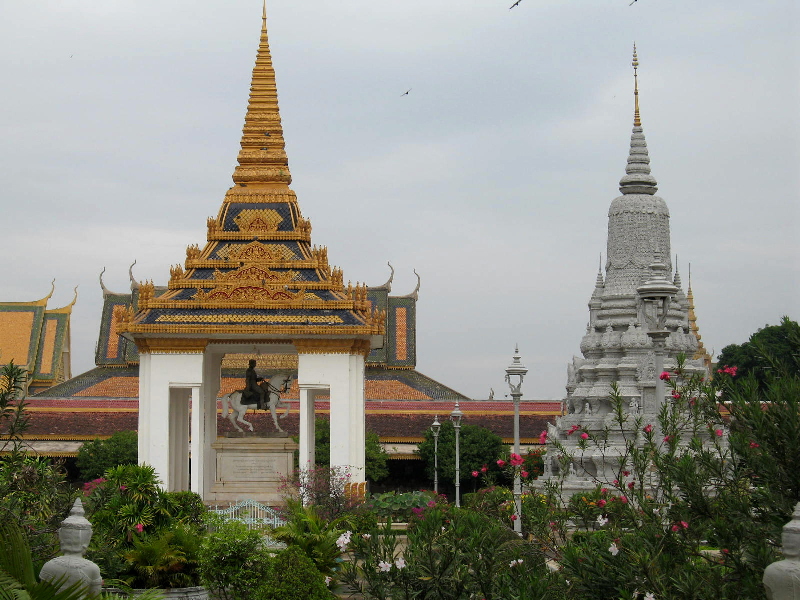
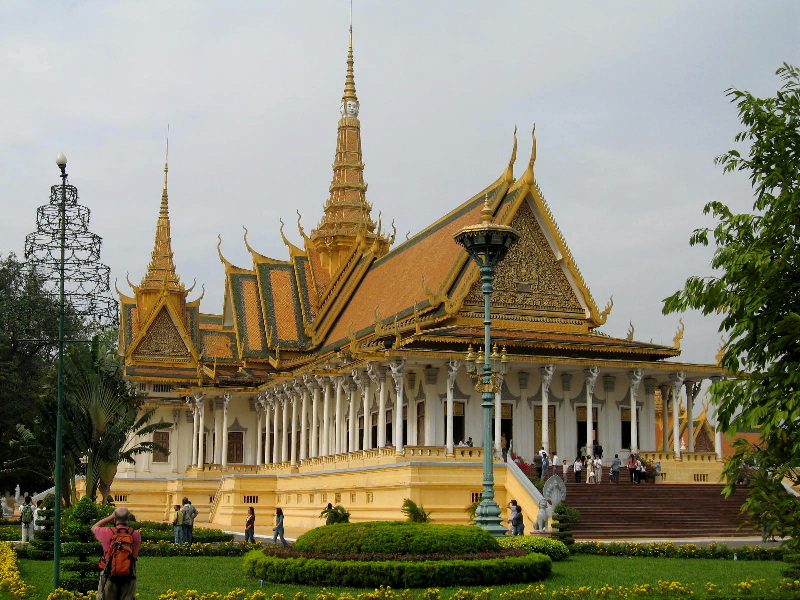 The Royal Palace on the riverfront in central Phnom Penh is impressive and quite beautiful, and a monument to greed, profligate spending and waste of a poor country’s resources. It felt to me not unlike my disgust as a teenager looking at the opulence and wealth of the Vatican in Rome. One appreciates the art, but wonders whether the resources might be better spent educating and immunizing children, and building roads and infrastructure.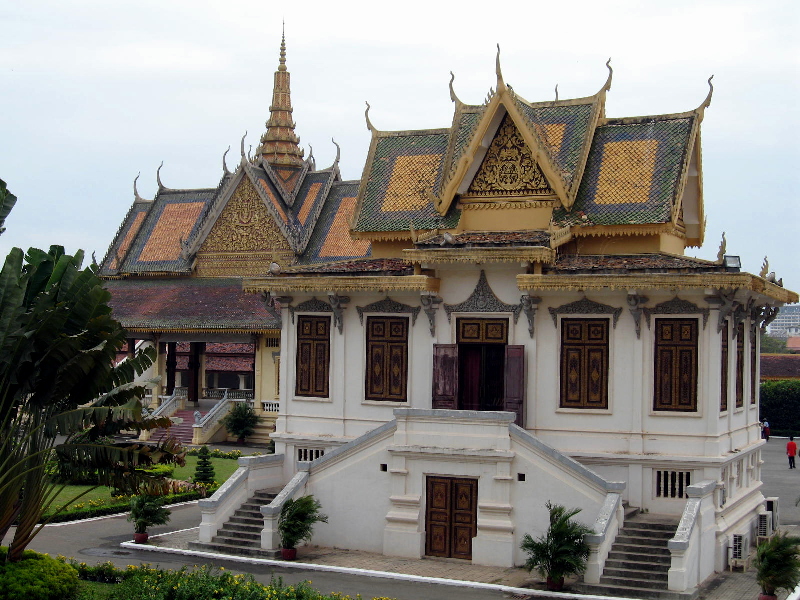
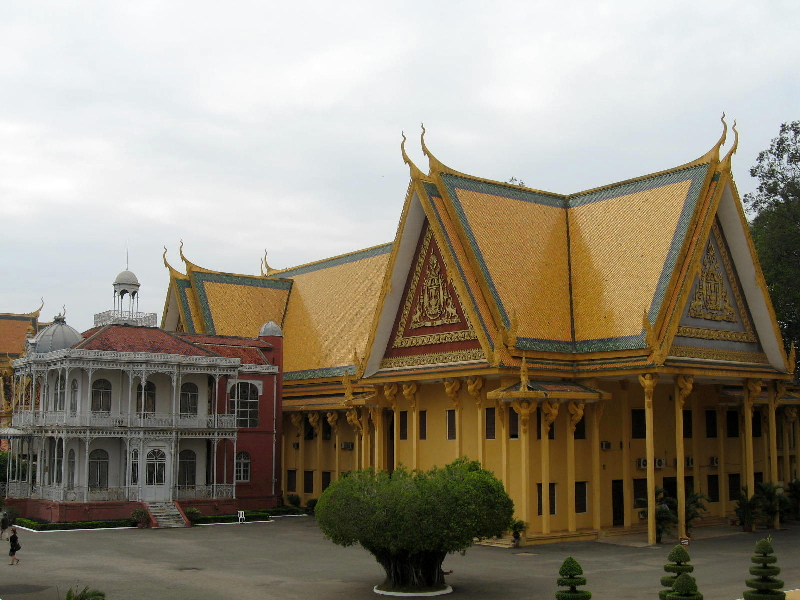
Look closely at the house on the left in this picture. This is what happens when you’re a French colony: Napoleon the 3rd “gives” you a used building, after he’s finished with it at the world exposition in Paris or wherever. Love the dynamism of classical Cambodian and French architecture blending so seemlessly, huh?


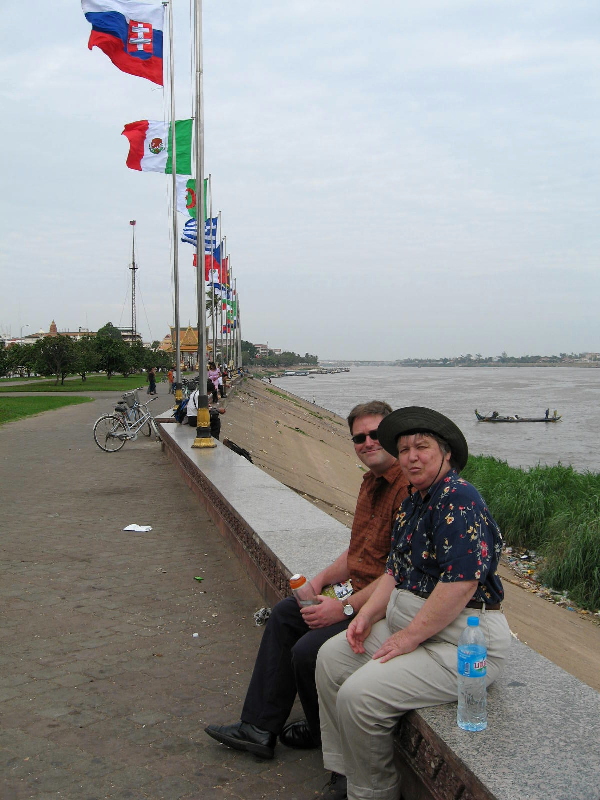
We really enjoyed the Phnom Penh waterfront: trying to figure out which flags represented which flags, trying to figure out how the decided which flags to include, and the general vibe. The Royal Palace and the National Museum are both right down by the waterfront, and our hotel wasn’t far away, so we spent a lot of time down there.
In the shot at the bottom, you see where the 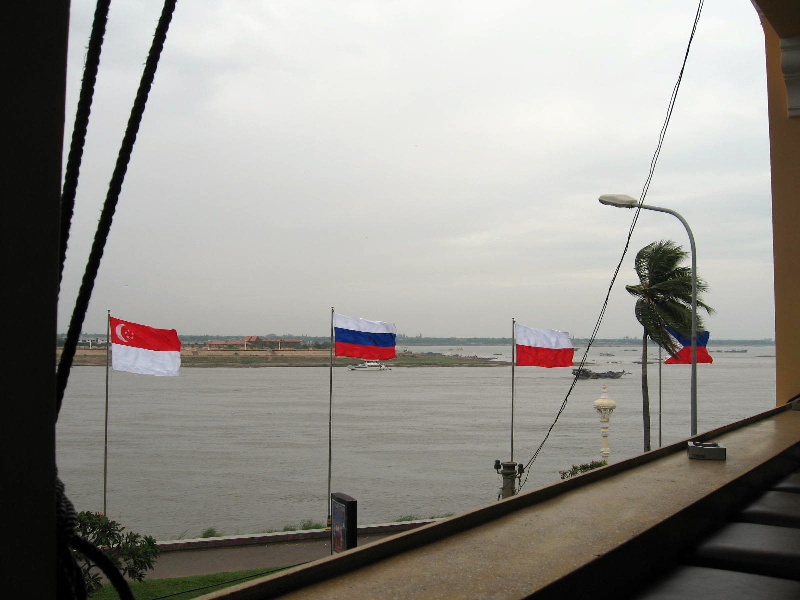 Tonle Sap River (closer to the flags) joins the Mekong (beyond the point, and at the far right). This shot, by the way, was taken from the lovely Foreign Correspondents’ Club Phnom Penh, which welcomes non-initiates of the fourth estate.
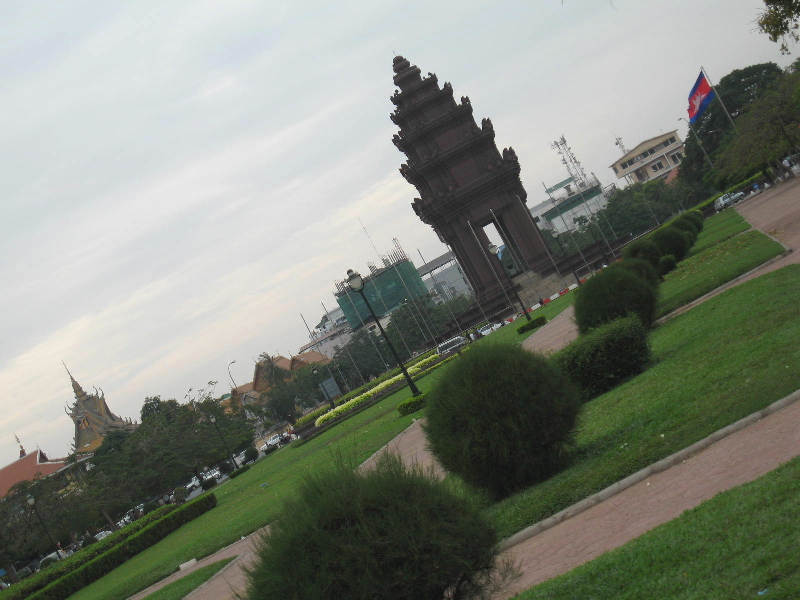
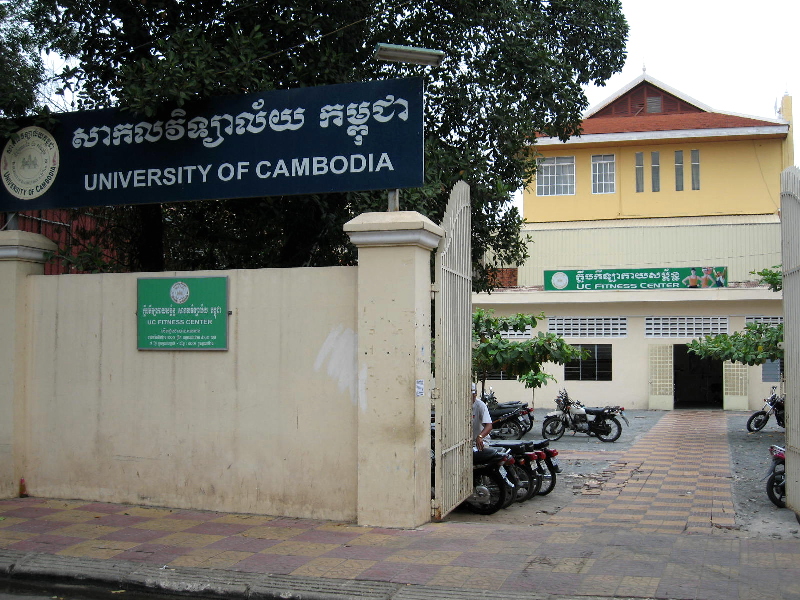 To the left: University of Cambodia Fitness Center; I enjoyed the contrast to, say the UC (Berkeley) Fitness Center. Yet another reminder, that – for all its grandeur, e.g. the Independence Monument no the right – Cambodia’s really a rather small country.
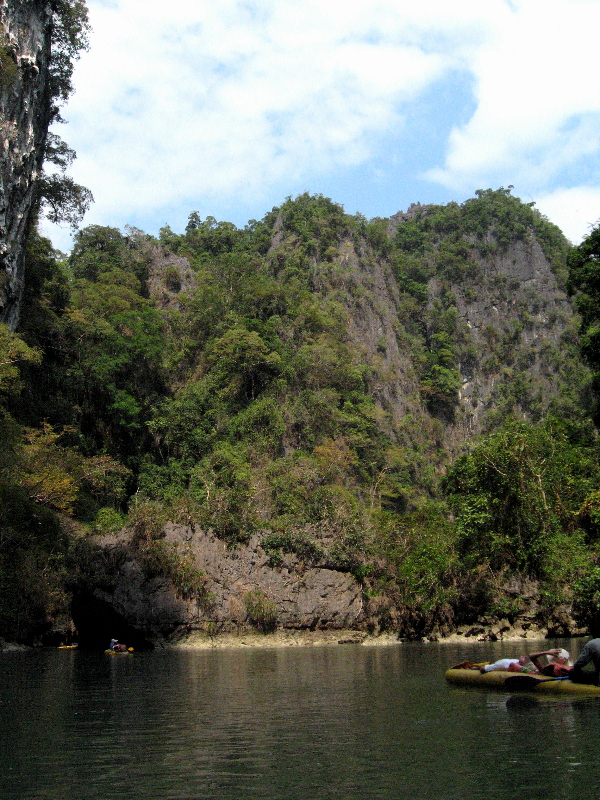
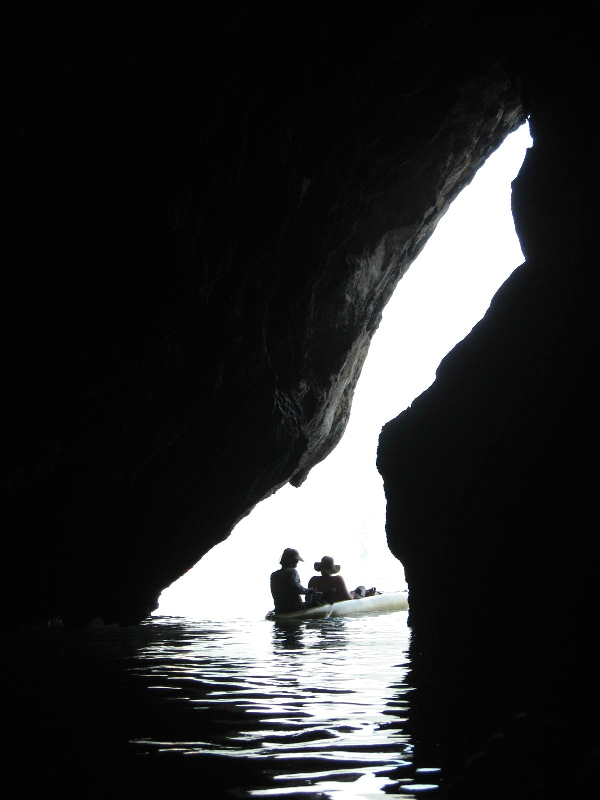
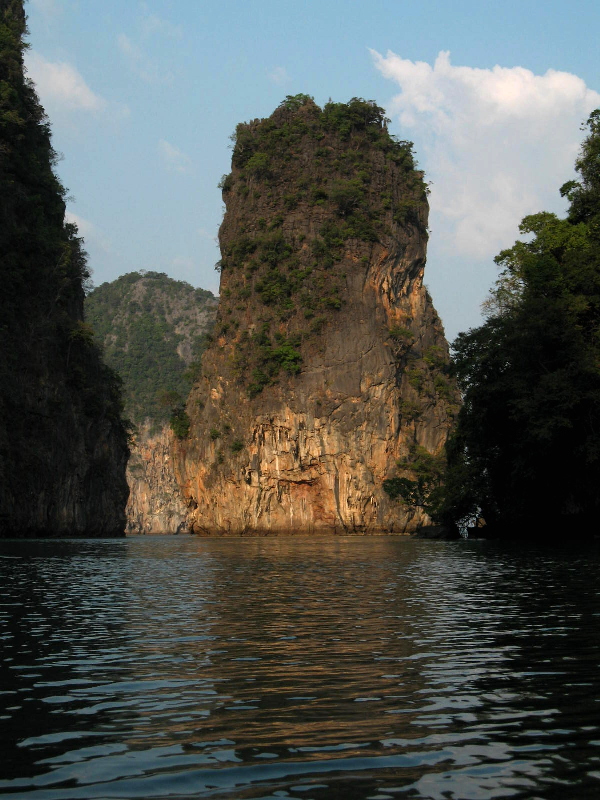 We all welcomed a chance to relax a bit in the sun, by the pool or at one of the more secluded beaches, when we got the Phuket Island. Nonetheless, I felt we just had to explore Phang Nga Bay, to the north of Phuket. On the very last day we were all together, we splurged on a magnificent full-day boat and kayak trip to the bay: lunch and dinner on board a bigger, comfy boat that took us from karst island to karst island, where we then hopped into guided, paddled kayaks (2 people per kayak, though Steve got one to himself) for tours through the limestone caves and cliff-bordered lagoons in the interior of the islands. It was a spectacular day, as you can see from the pictures.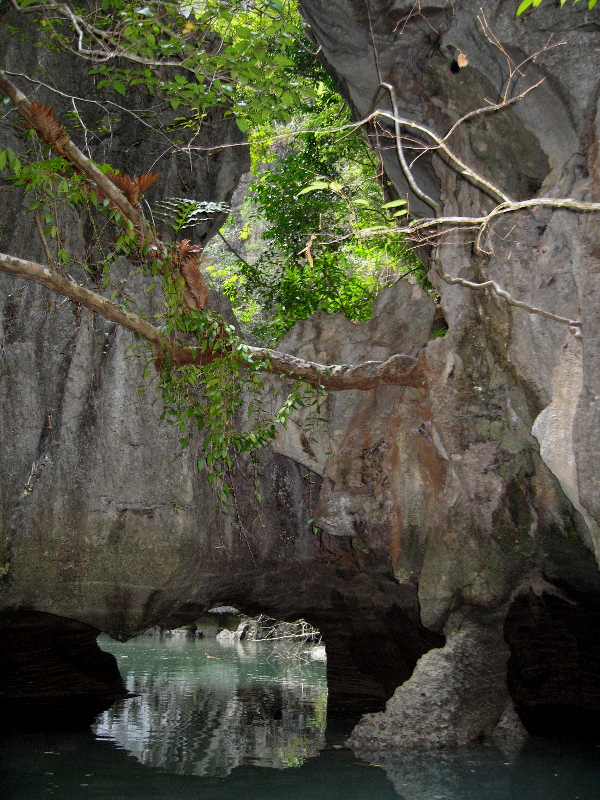
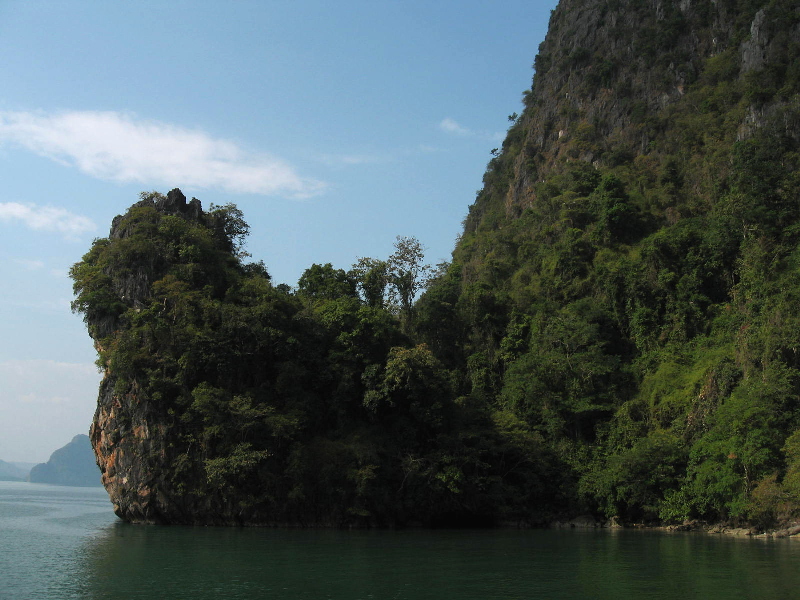
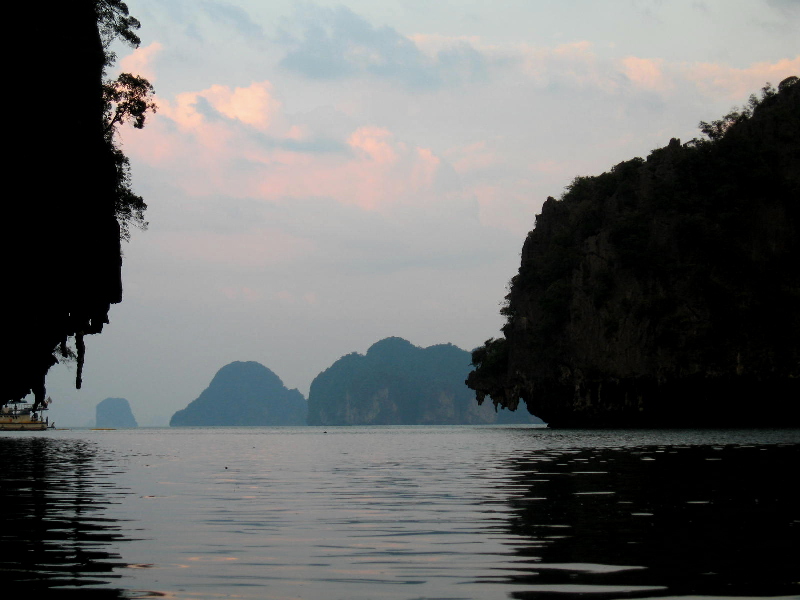

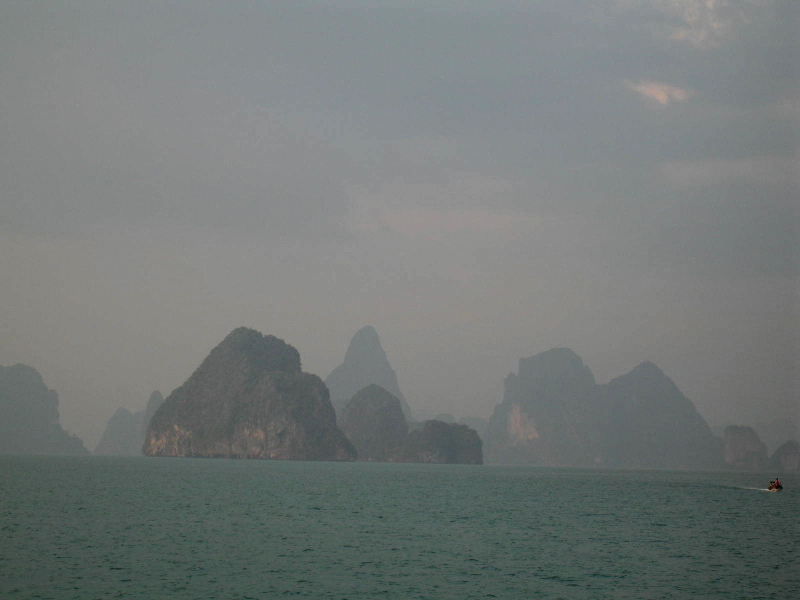


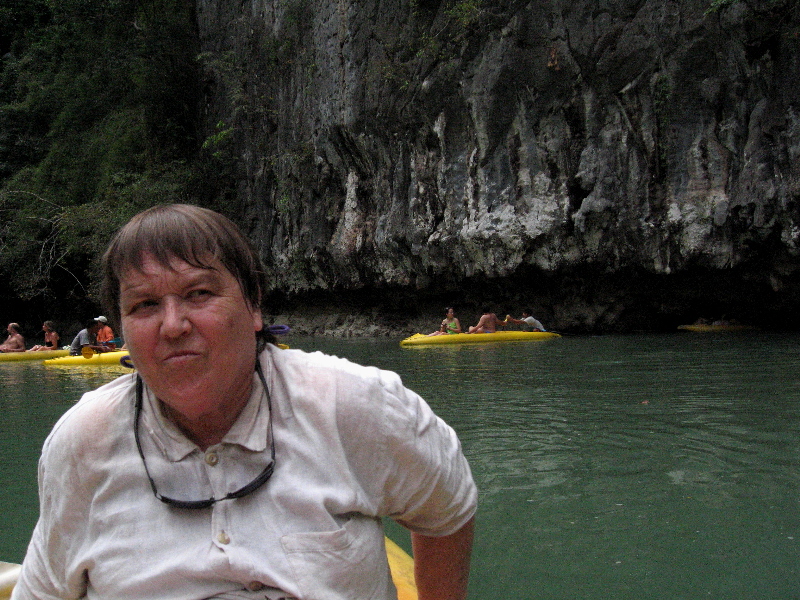


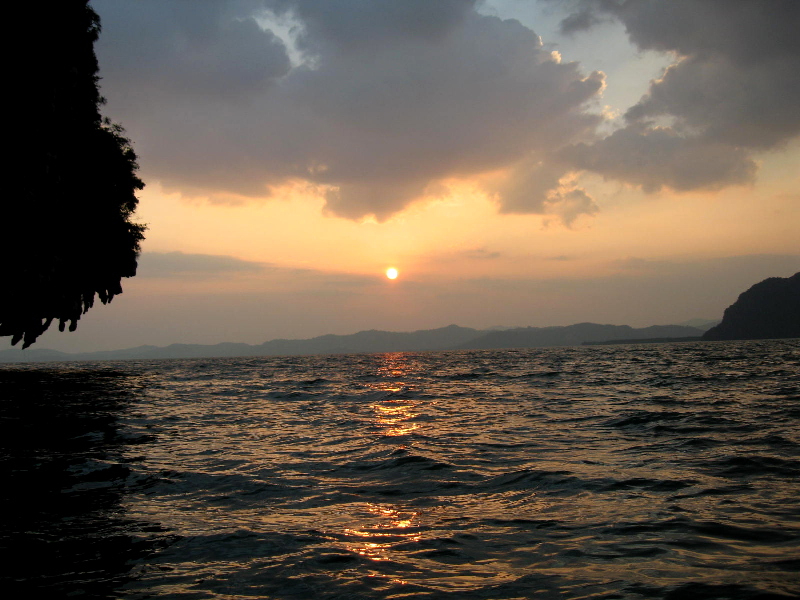
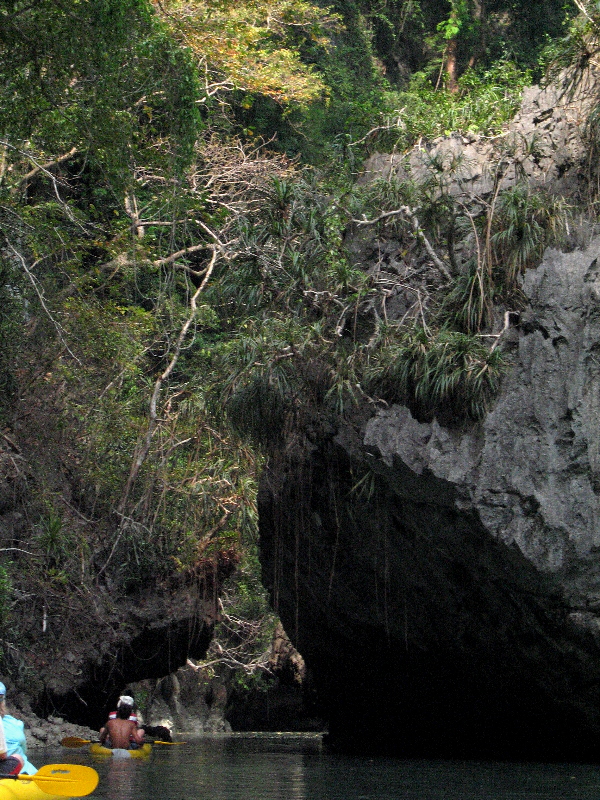
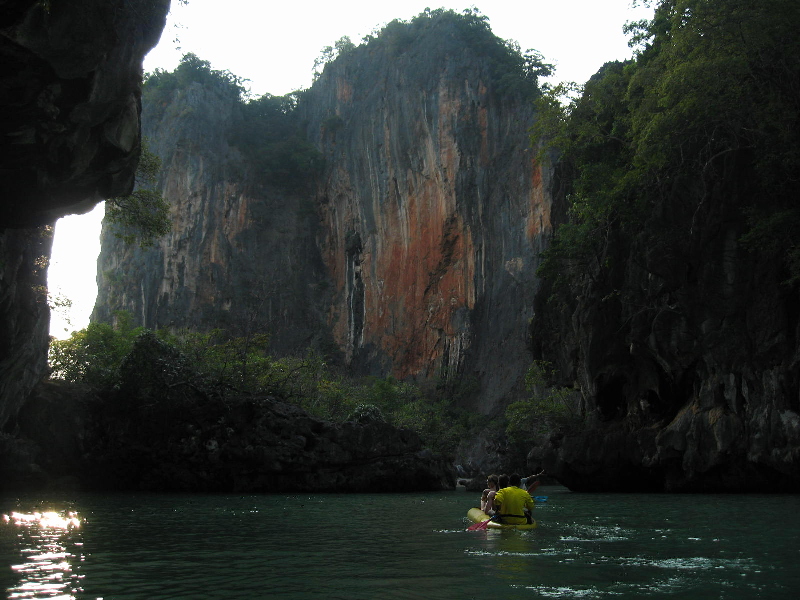
 After our third guided kayak outing into the inner lagoons and caves, we had a solid hour+ of free time. While I and many others hopped into kayaks for some independent paddling, Mom assembled the above floating offering for the gods of the sea, ably directed and helped by our guide.
 After dark, we all hopped back in (guided and paddled, this time) kayaks for the fourth outing, back through a long cave into one of the inner lagoons, where we lit our offerings and floated them around the lagoon. It was an enormously beautiful site and a very special feeling, being on this little kayak inside a lagoon on the other side of a dark 200-meter long cave, watching the glow from candles all around the lagoon bobbing in the wake as their makers set them afloat.
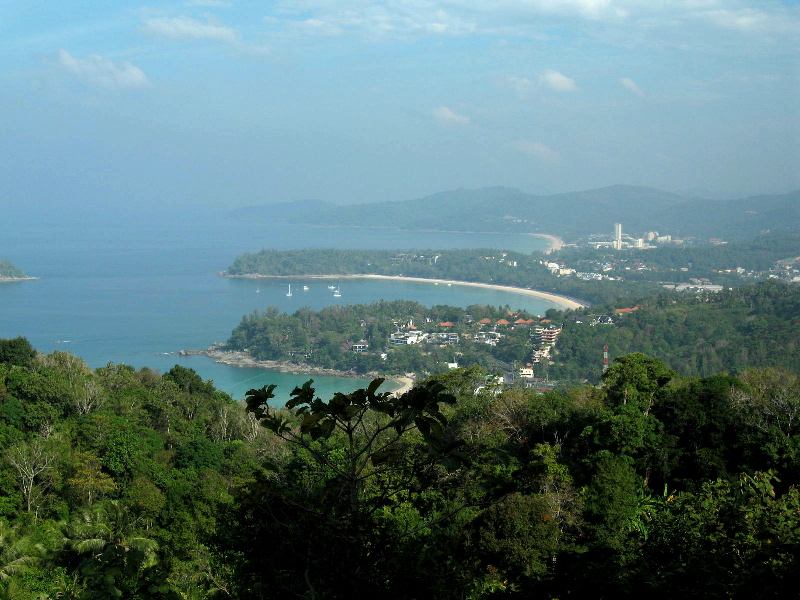 A few views of the west side bays of Phuket. The island’s certainly lovely, but with all the development, it feels more like Miami Beach to me than the kind of place I like to vacation normally.

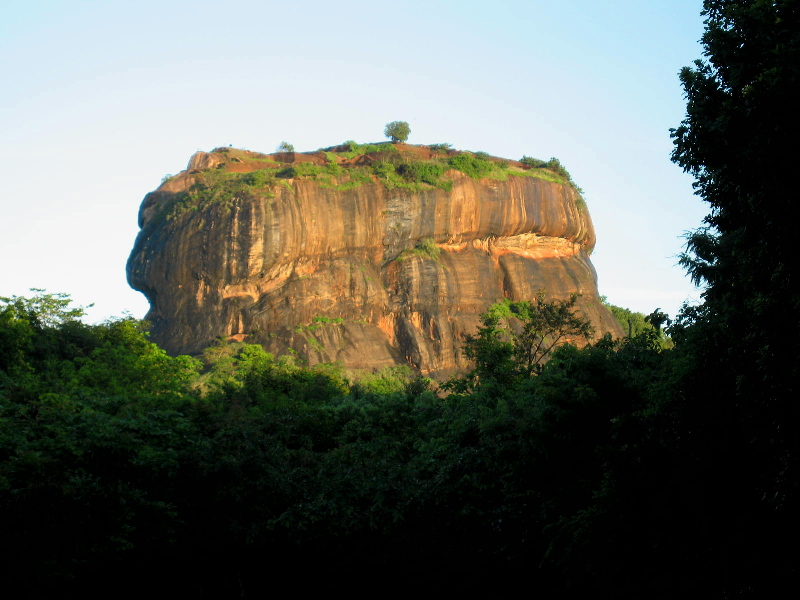 SMW, SLT still comes to you from lovely Sri Lanka, down here surrounded by the Indian Ocean. My life, and my e-mails, have been too full of reality and news, or the lack thereof, for the past few months…so I’m gonna take a pass and tell you nothing more than that I’m still here, and will be until this blog tells you something different. Whenever that might be, I still can’t say. So sorry.
 These are the magnificent water gardens at the base on the western side of the rock, the main entrance. It’s very impressive to walk up to the rock through these gardens.
You guessed it, you’re about to get a brief history of Sri Lanka. A very brief history, not to worry. The Veddah, SL’s ur-inhabitants, can be thought of as perhaps comparable to America’s ur-inhabitants: pushed out, killed and/or greatly reduced in number by later arrivals. There are some Veddah still remaining, but they’re not a demographic, political or cultural force. Sri Lankan culture as we know it today began being formed by immigrants from Northern India, who arrived most likely some time around the 6th Century BC. Sinhalese legend says the son of a north Indian king was exiled for some crime, and put in a boat with 700 men – the idea seems to have been “you can’t really kill the son of the king, but you can send him off to the open ocean and let him die there.” Legend says he landed in Sri Lanka on the same day the Buddha achieved enlightenment, over on the mainland.


 (so much world, so little time....)