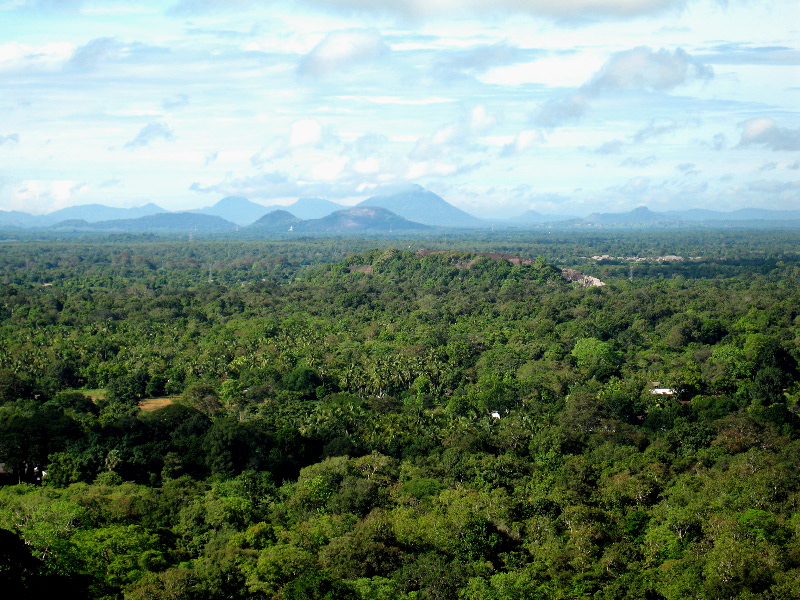
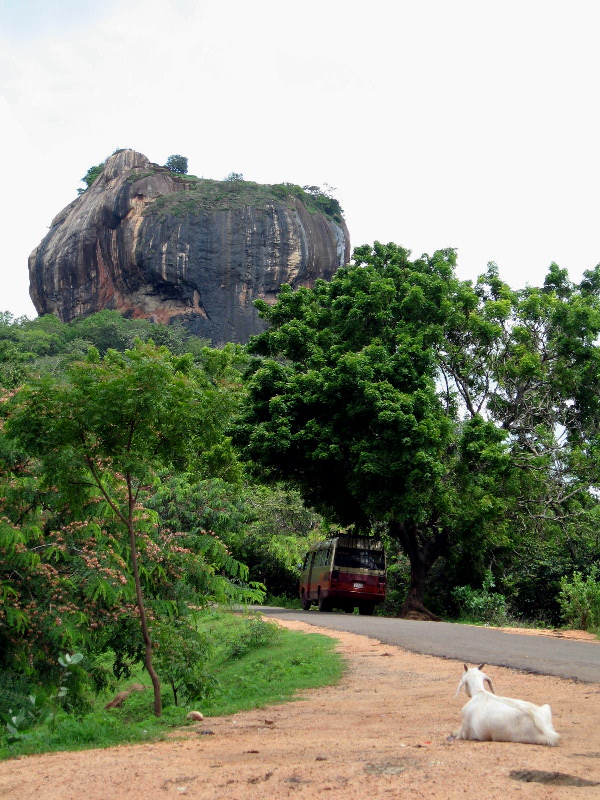
Dambulla rock as seen from Sigiriya. Look reeeeaaaallly closely right at the base of the small round hill at the center left of the pic, and you’ll see something sorta shiny. I’m sparing you any closeup shots of this enormous gilded Buddha image. (Quoth Lonely Planet: “…a very kitschy structure completed in 2000 using Japanese donations. On top…sits a 30m-high Buddha…Signs claim it’s the largest Buddha in the world, but it’s not even the largest in Sri Lanka.”)Latest
Dambulla rock as seen from Sigiriya. Look reeeeaaaallly closely right at the base of the small round hill at the center left of the pic, and you’ll see something sorta shiny. I’m sparing you any closeup shots of this enormous gilded Buddha image. (Quoth Lonely Planet: “…a very kitschy structure completed in 2000 using Japanese donations. On top…sits a 30m-high Buddha…Signs claim it’s the largest Buddha in the world, but it’s not even the largest in Sri Lanka.”)
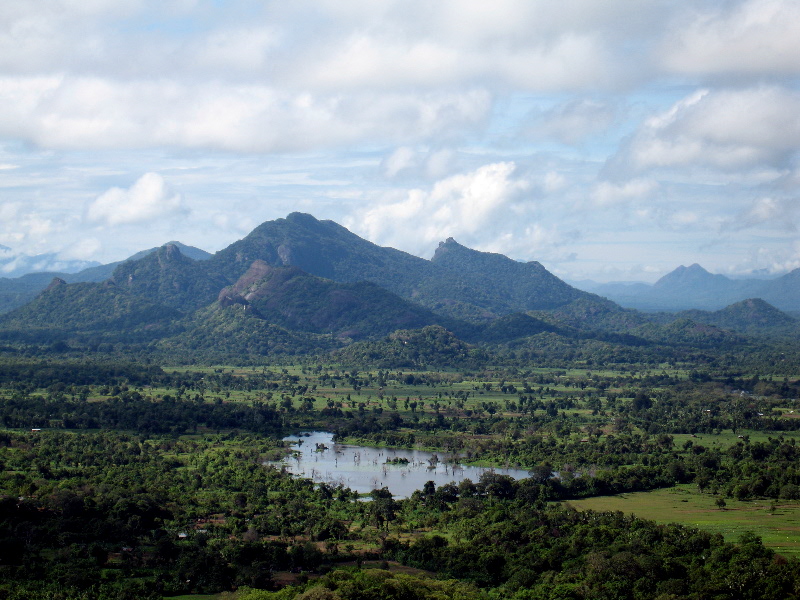
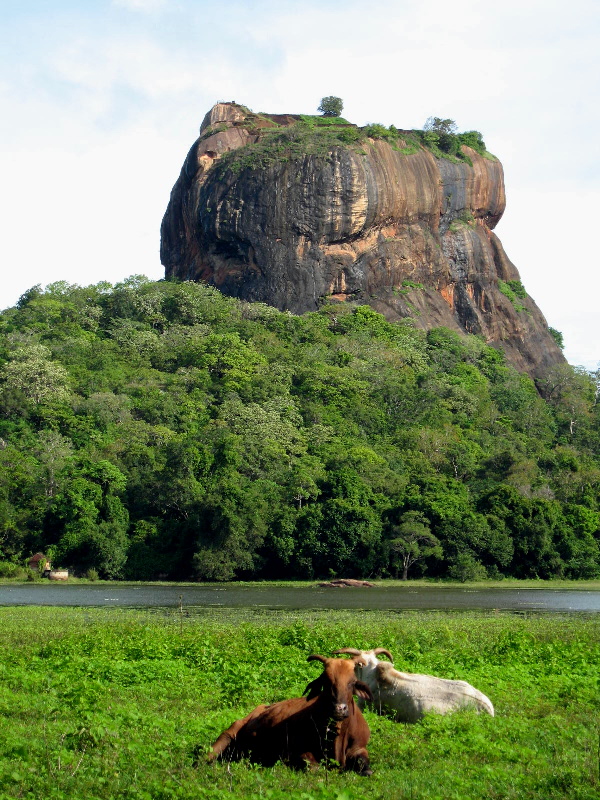
This would be the Dambulla rock. Note cow in foreground. Impressive slab of rock, yet not so pittoresque as the one in Sigiriya, wouldn’t you say?
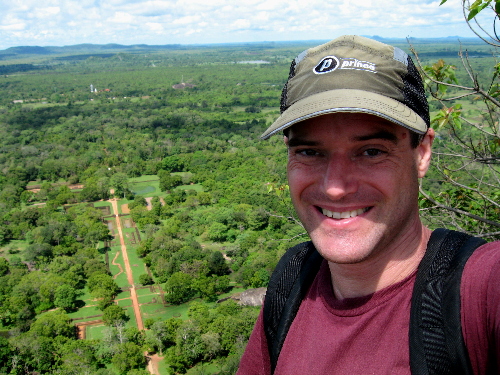
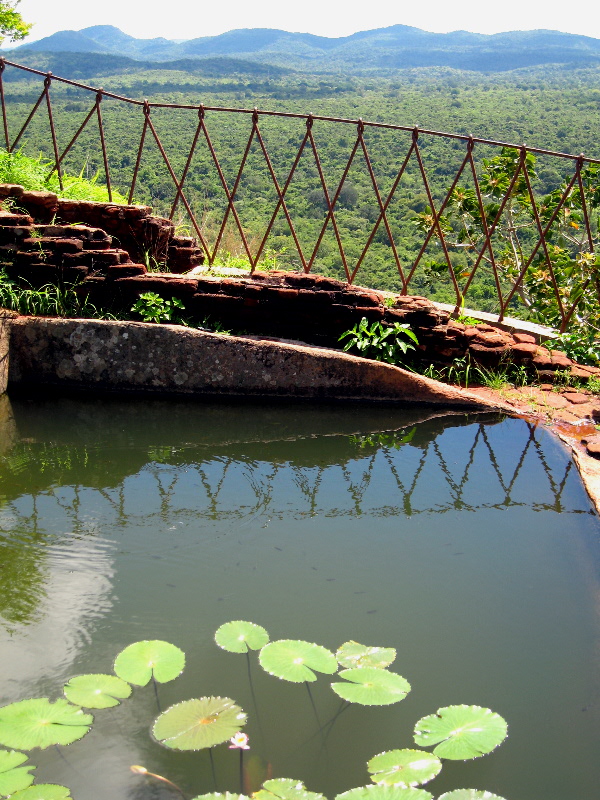
Below: the hill country as seen from the (lower) rock at Dambulla, then from the (higher) rock at Sigiriya.
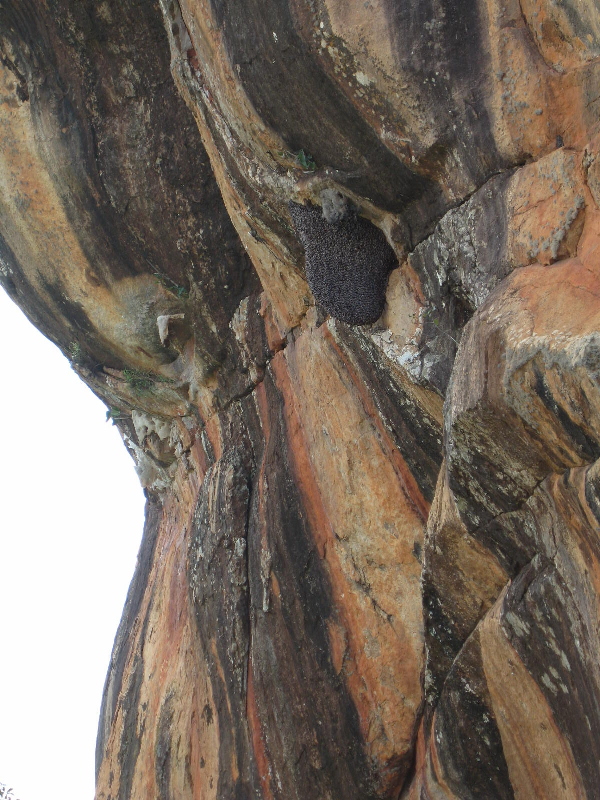
A few final images I just couldn’t pass up. The wall, if you look closely, holds a damn large hornets nest – like, scary large. This is just to the left on the rock wall as you’re looking at the lion’s paw steps.
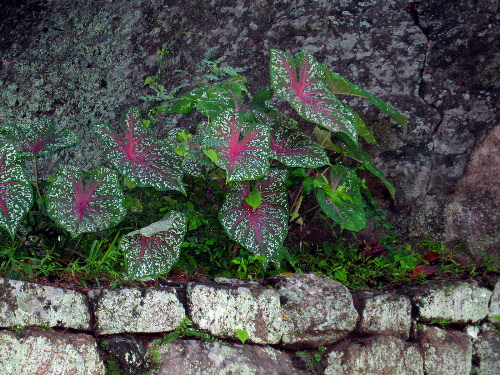
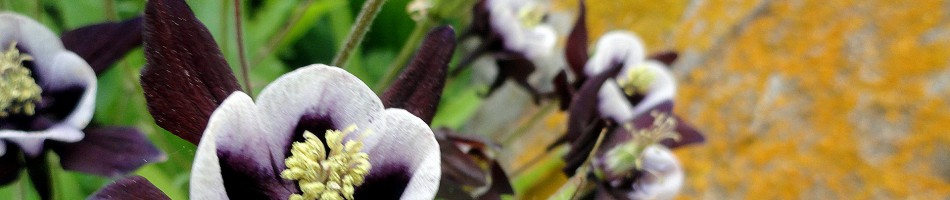
BEFORE I saw this hornets nest, I saw this sign down in the gardens, and thought “well, now that’s a novel way to make sure people don’t get too loud” – not really believing it was a realistic problem. Silly me. The other – just a pretty plant in the gardens at the base of the rock.
Polonnaruwa
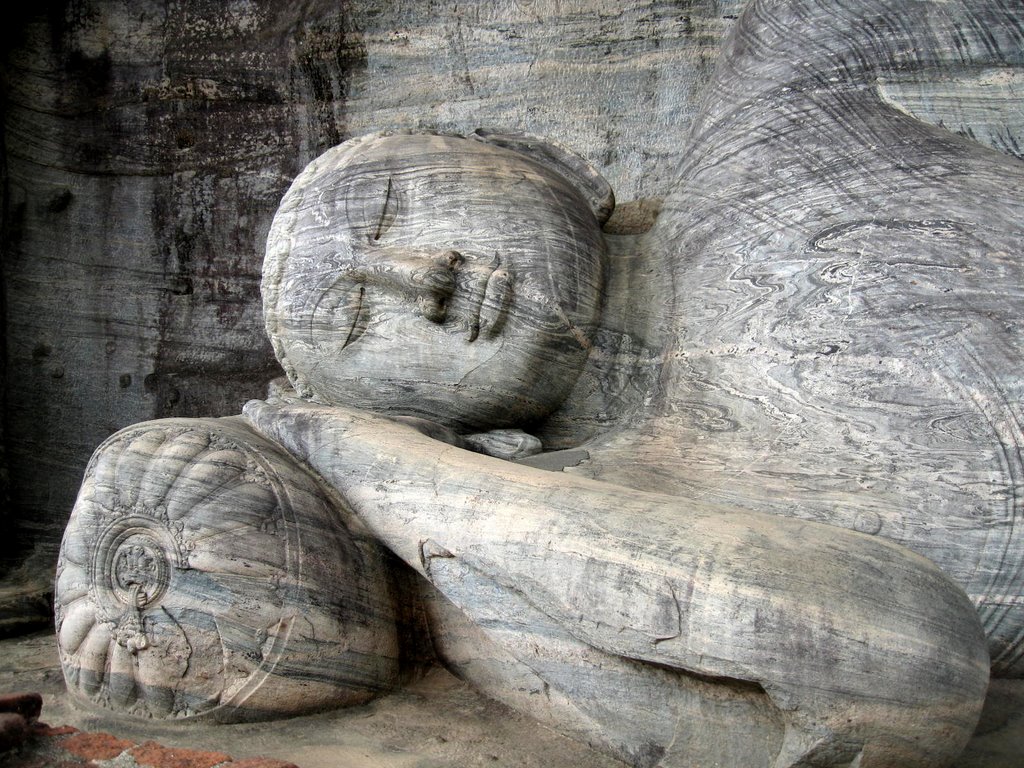
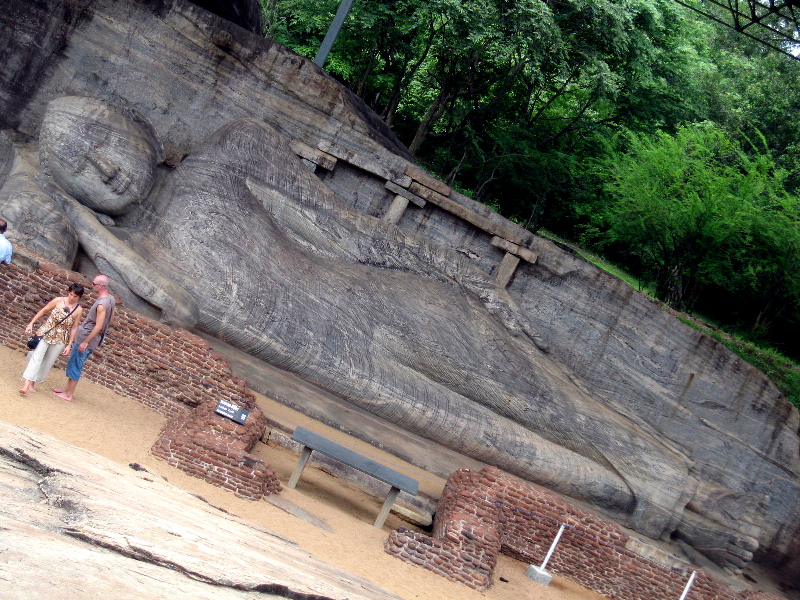
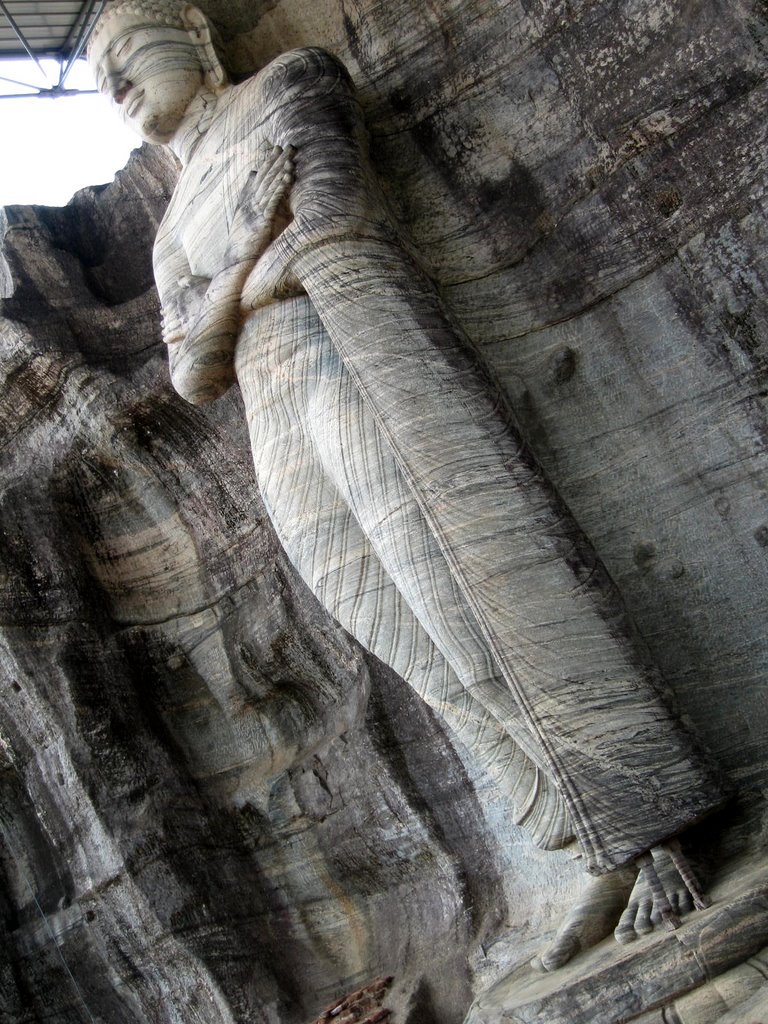
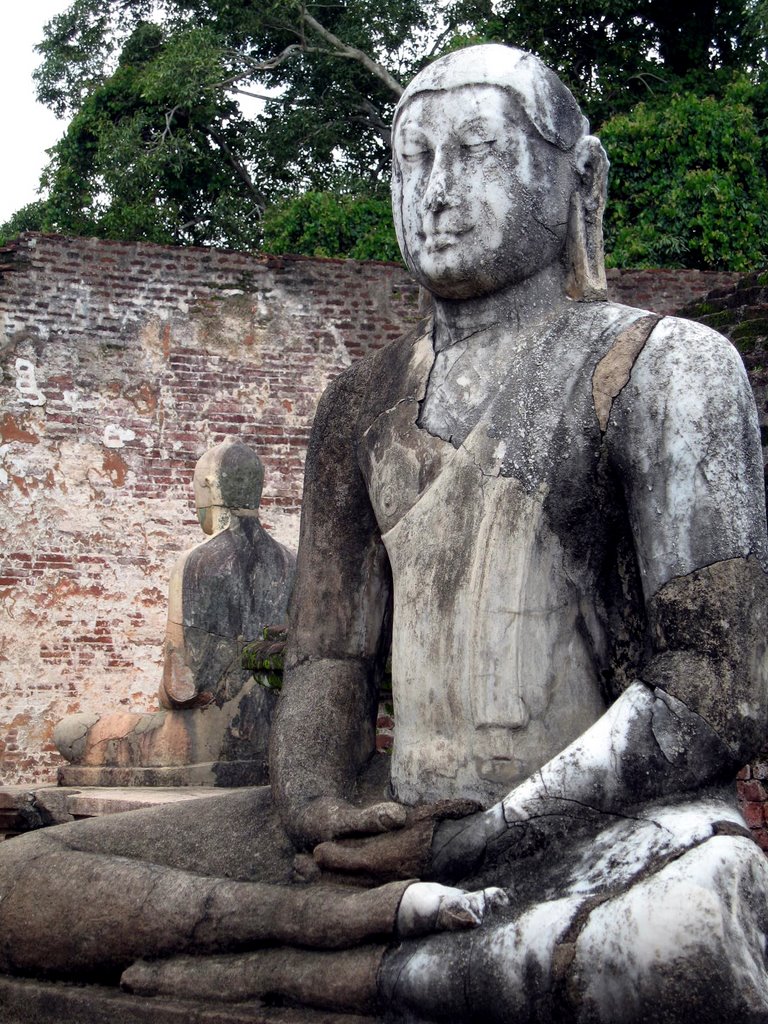
The travel sequence for my five-day holiday was: Sigiriya (from which a side-trip took me to Dambulla, very close by), Polonnaruwa, then Kandy at the tail end. Here we are in Polonnaruwa, looking at the Gal Vihara Buddha images, described by LP as likely the high point of Sinhalese rock carving. These are certainly among the most beautifully carved monumental images I’ve ever seen – look at the way the grain and texture of the rock is worked into the scultpure. Notice the beautiful way the pillow compresses a bit under the Buddha’s head. Notice, in the shot with people in it, the enormous scale of these sculptures! These images were all cut from one single long slab of granite, under Parakramabahu, as part of a monastery he established at the northern end of Polonnaruwa.
Lankatilaka
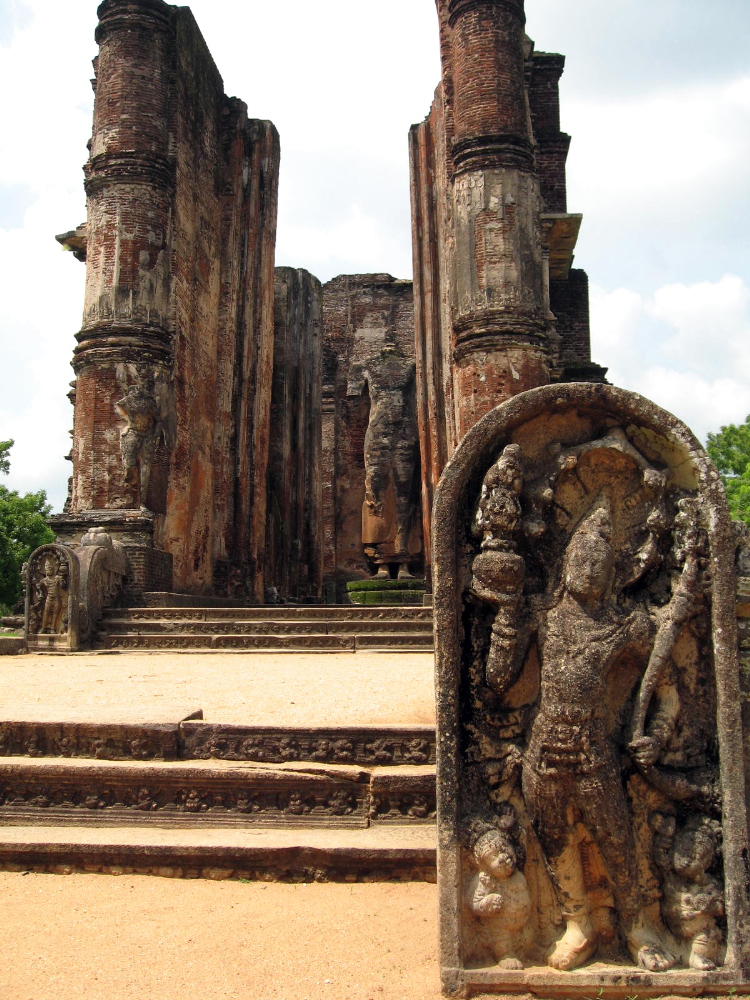
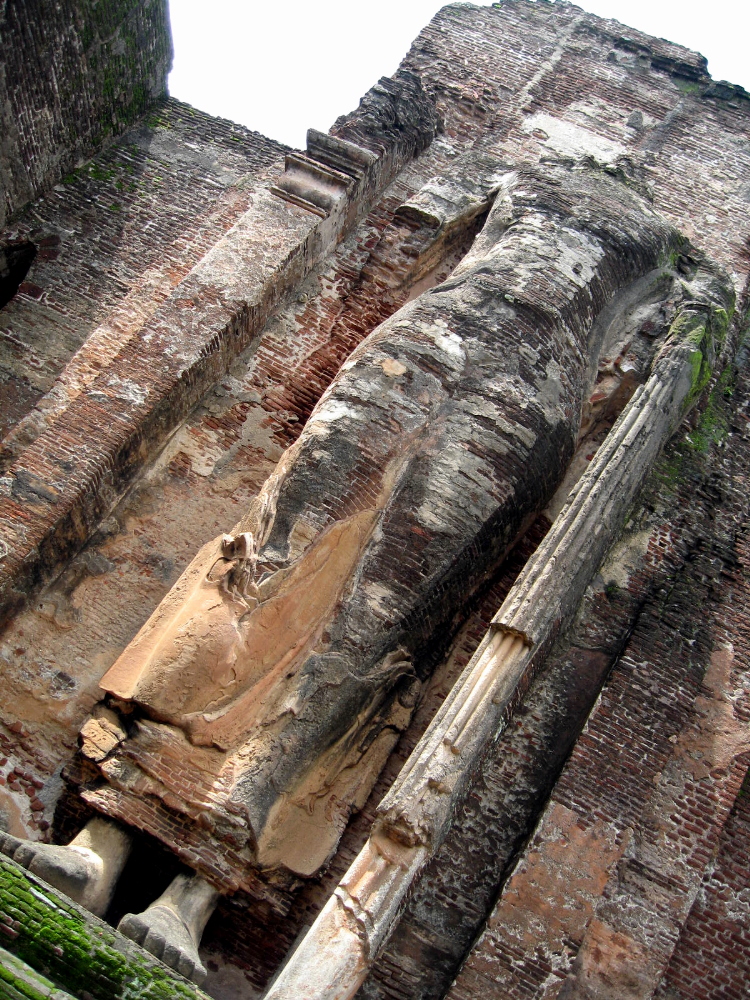
The Lankatilaka image house was constructed under Parakramabahu to house the large brick Buddha you can still see there, though it would once have been covered in plaster and of course had a head. I found the whole thing extraordinarily beautiful and jaw-dropping. This was my favorite spot in Polonnaruwa (of many that I loved); though the Gal Vihara carvings you’ve been seeing are likely the single most-famous or most-important grouping at Polonnaruwa, I found it easier to warm up to this ruin, as it were.


The Quadrangle


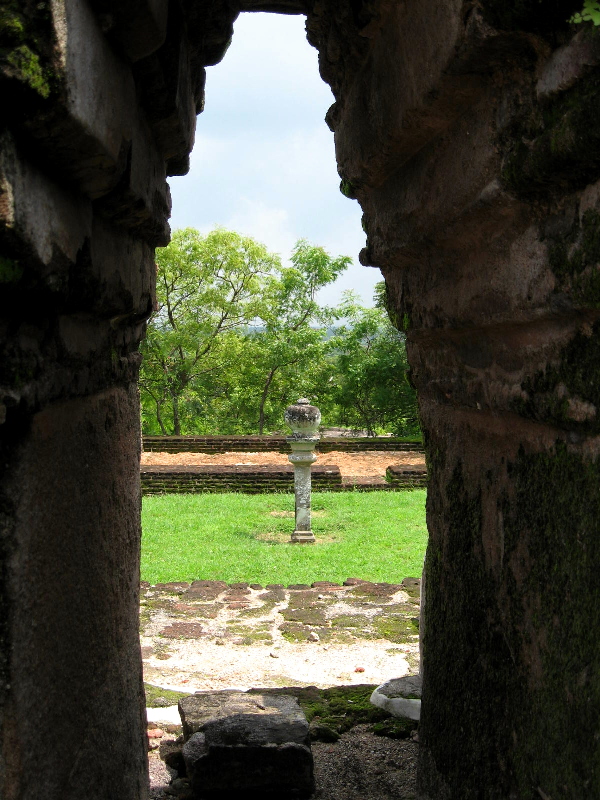
The quadrangle, LP tells me, is the densest concentration of historical buildings in a small area in Sri Lanka. It’s quite compact and feels very much like a…well, like a quadrangle on a college campus I guess.
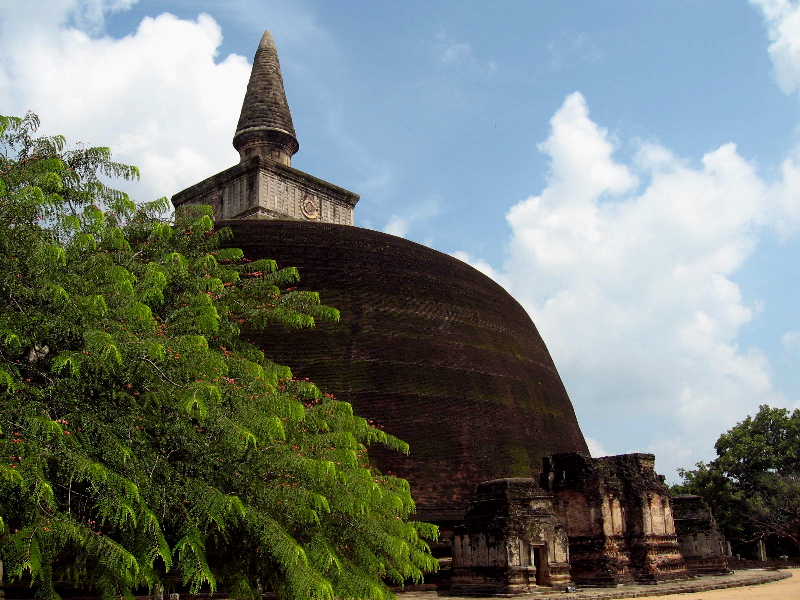
Rankot Vihara Dagoba
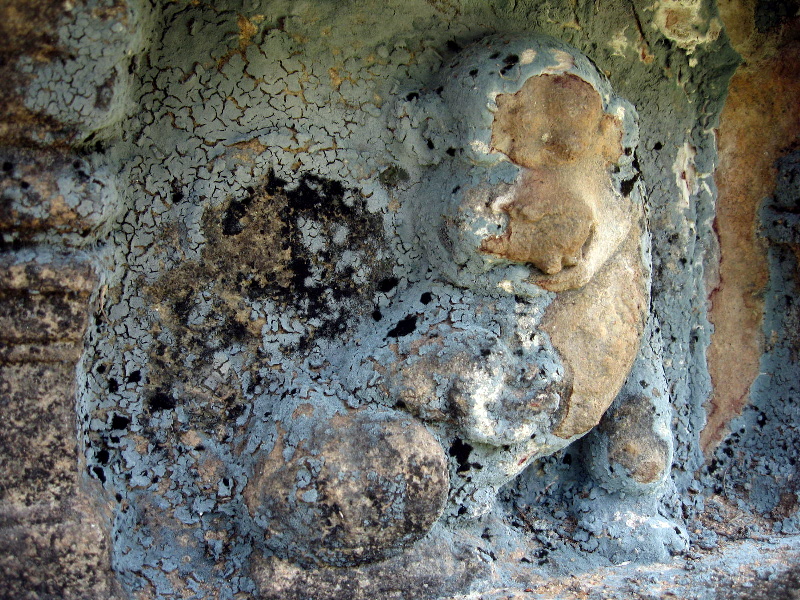
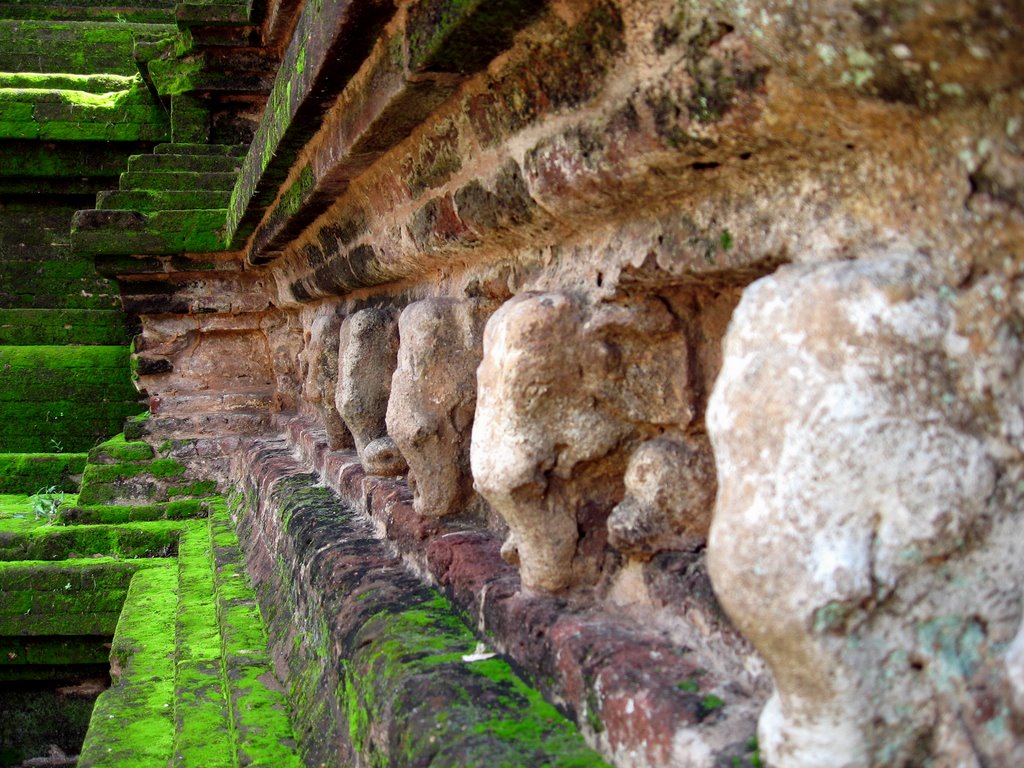
Though not the most obvious thing about the Rankot Vihara, this elephant frieze gets pride of place because I simply loved the decorative elephants and how the moisture has leached some fine coatings onto them, contrasted with that rich green of the moss. Ain’t it purrty?At 54 meters high, this is the largest dagoba at Polonnaruwa and the 4th-largest on the island (of the bigger, I suspect at least one or two are quite modern and not, frankly, terribly interesting, given some things I’ve seen…there’s the occasional element of tack to contemporary Buddhist architecture in SL as I see it, e.g. that glimmer of gold from the enormous golden Buddha that I subjected you to only from the distance, next to the gorgeous and historically important Dambulla caves). It was the first building and compound at Polonnaruwa at which my jaw really started dropping – all the things you’ve already seen caused my jaw to drop even more, but sequentially I saw this first, and despite the heat I was a bit awestruck.

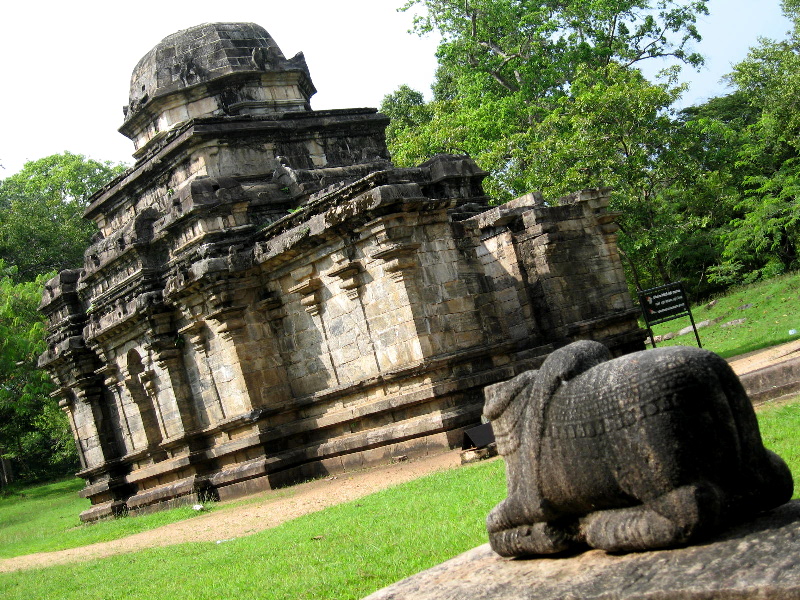
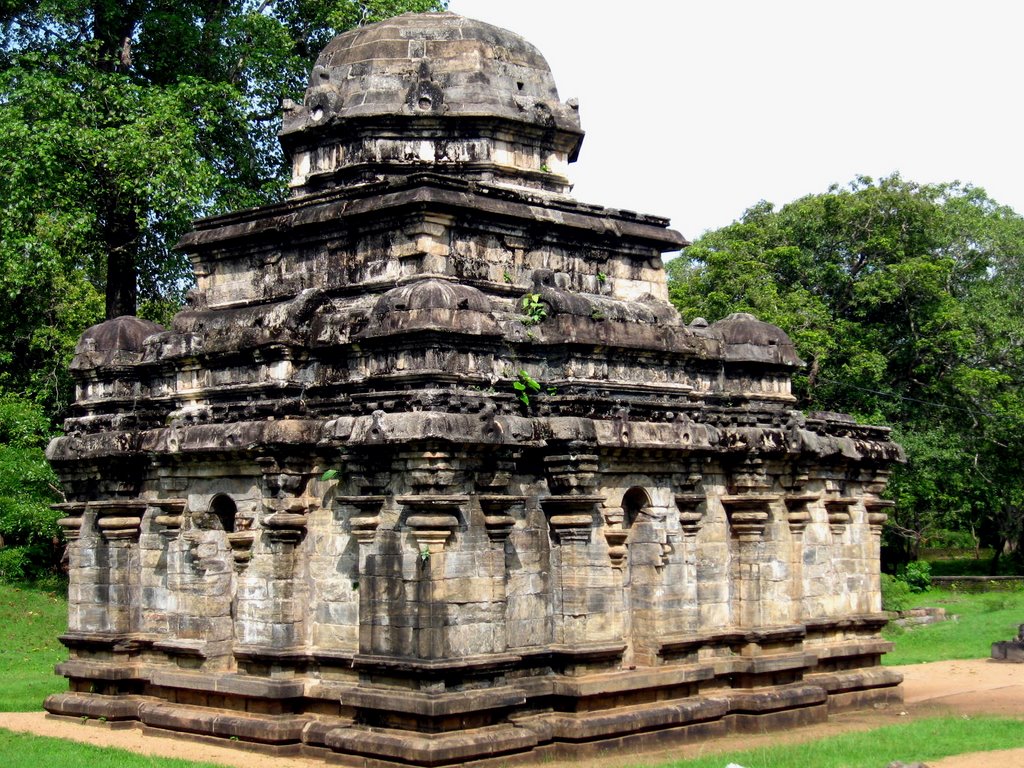
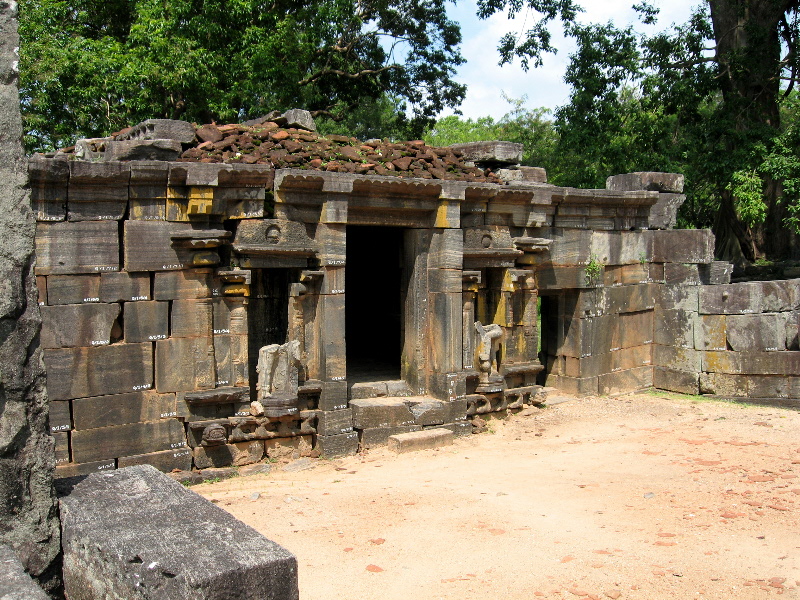
Shiva Devales
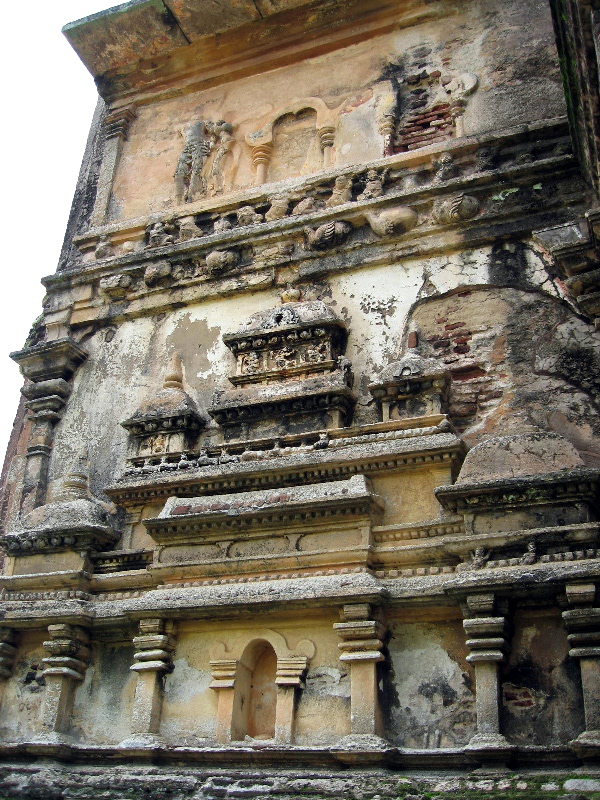
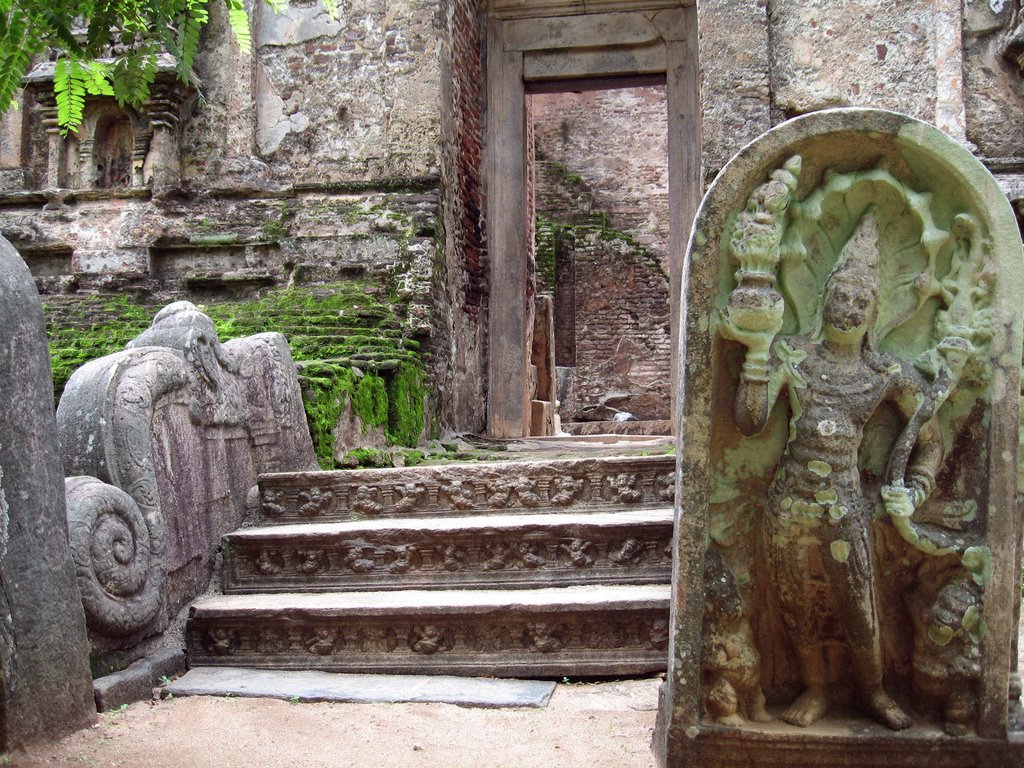
All of these images reflect Hindu influence that was strong at Polonnaruwa both before and after it was a Sinhalese Buddhist capital. The first two, with the still-intact rounded stone roof, are of the oldest building still standing – a Shiva Devale (I think Devale must mean some kind of temple) dating from the pre-Sinhalese Chola era. The third and fourth are another Shiva Devale dating from the 13th Century, when Hindu influence crept back in after what Lonely Planet calls “Polonnaruwa’s Sinhalese florescence.”


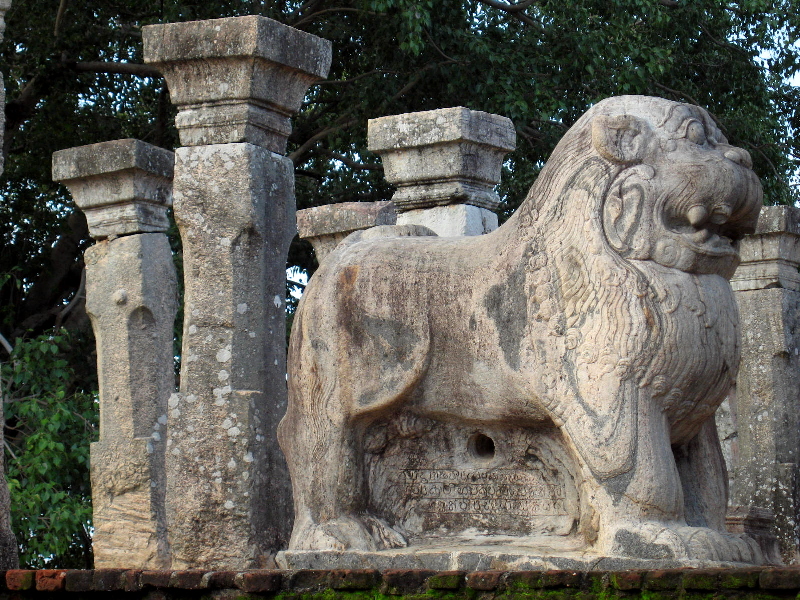
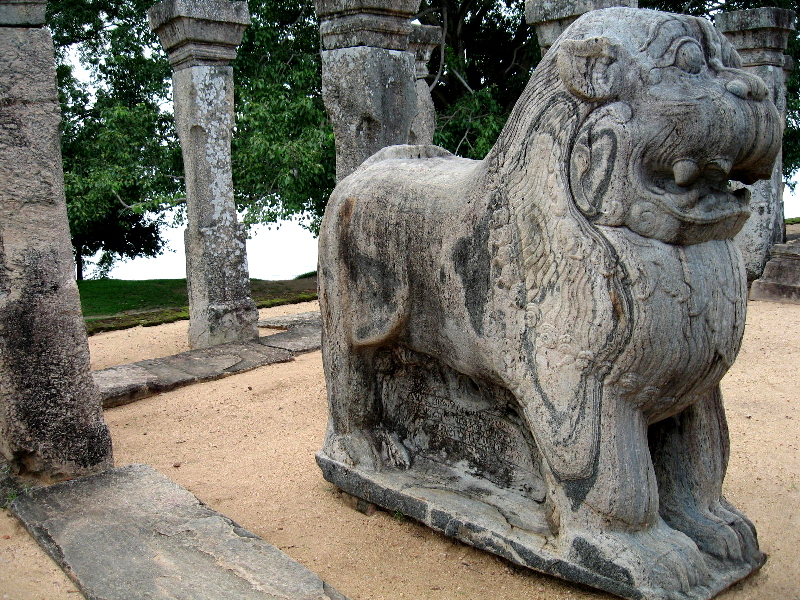
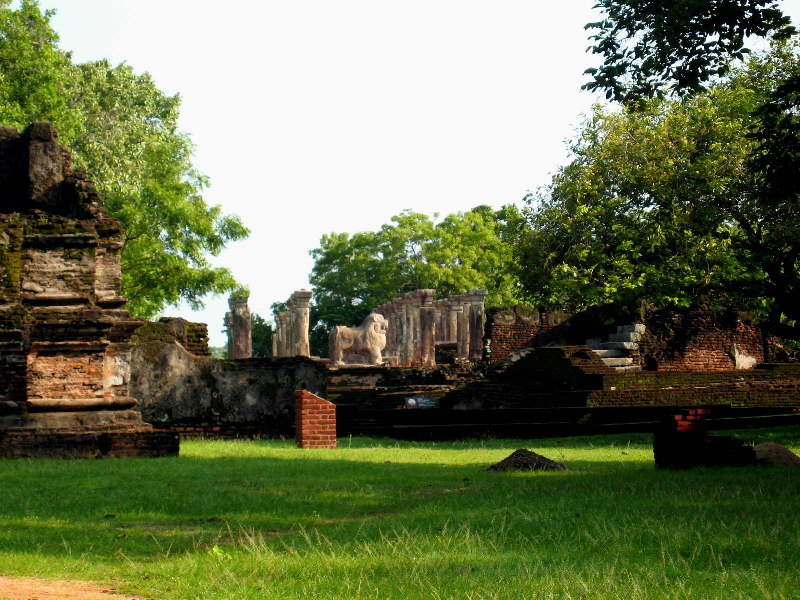
These are all views of Nissanka Malla’s council chamber. Remember the two meanings I know of about the lion: Buddha was the Shakya- Simha, or lion of the Shakya clan; and the Sinhalese origin tale says that the exiled north Indian prince who with his followers found refuge in Sri Lanka was the Sinha (lion) prince. I just thought this lion carving, situated as it was surrounded by green grass, the lake and other ruins; at the head of the council chamber (on each pillar is written the name of the minister who sat by it), was particularly attractive.

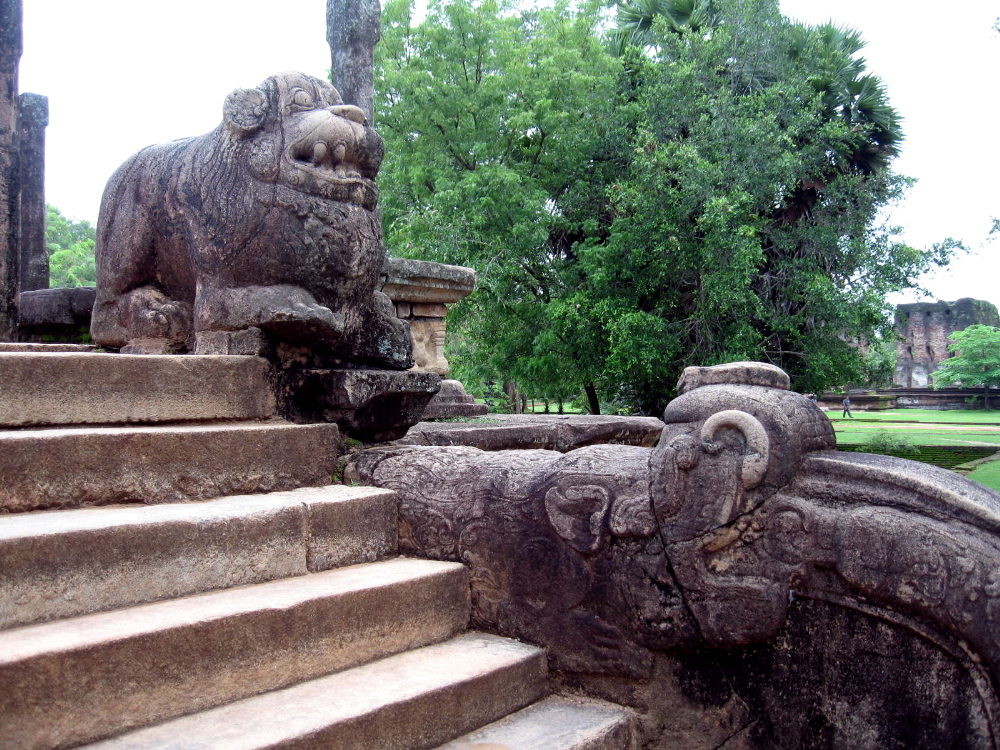
The frieze (three-tiered: elephants, lions, and dwarves – a sign of good luck, where I believe the other two are more signs of power) and platform of Parakramabahu I’s audience chamber.
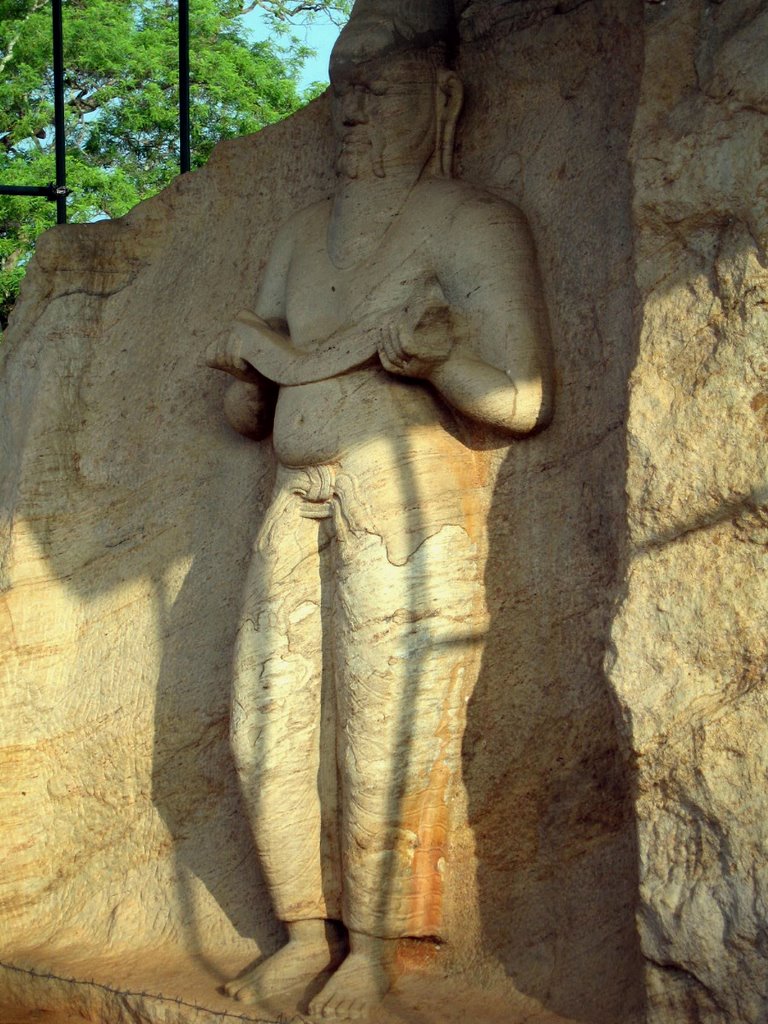
From another section of the ruins altogether, but a section dated from the era of Parakramabahu I; there are two interpretations of this. One says it’s a Buddhist scholar reading a sacred text; the other says it’s Parakramabahu holding the yoke of kingship. According to the ever-helpful Lonely Planet, the joke is that it’s just the king holding a piece of papaya and about to chow down.
Parakramabahu’s bathing pool. The spouts are supposed to be shaped like crocodiles, but I didn’t see it…
Images of Topa Wewa

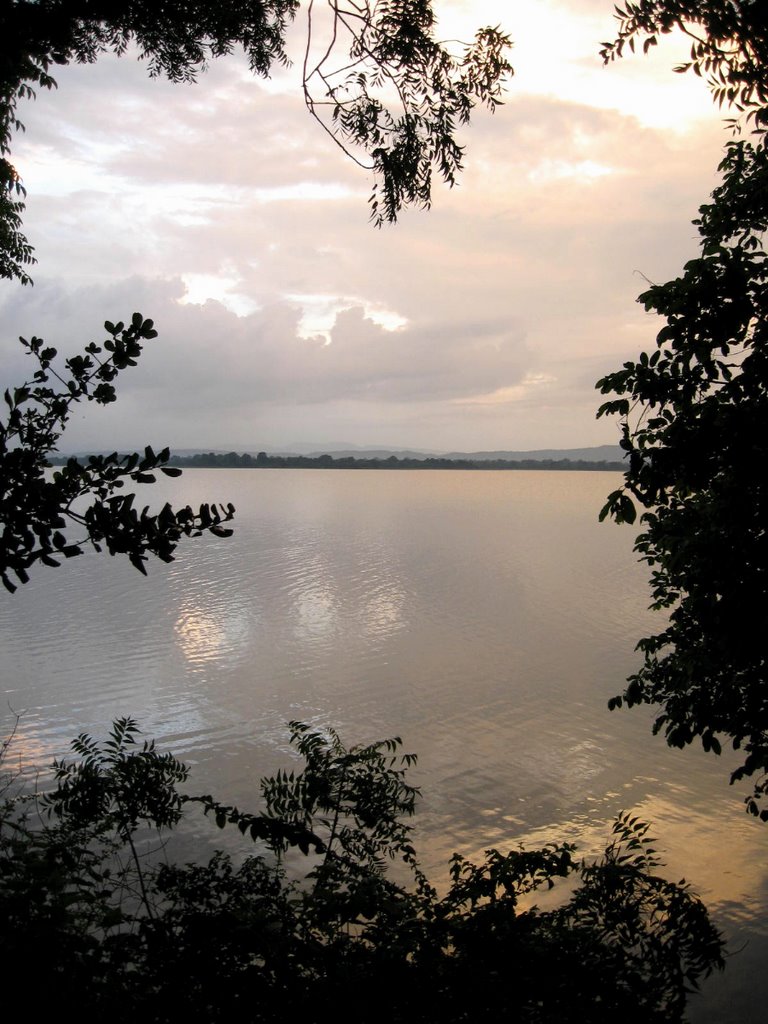
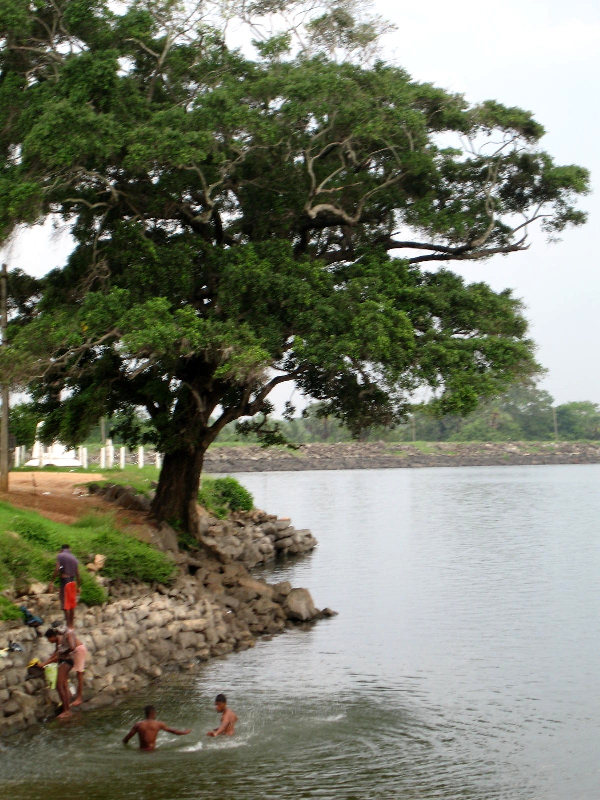
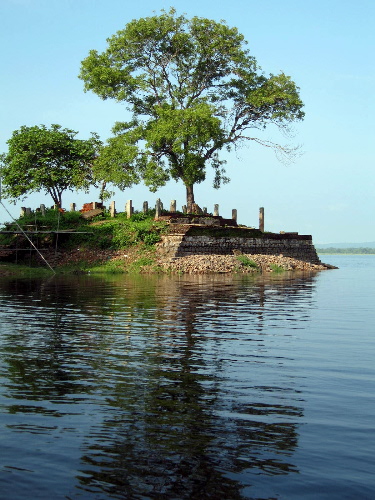
Irrigation, and reservoirs, achieved apparently very impressive levels in ancient Sri Lanka. There are reservoirs, called “tanks” almost everywhere; the one estabablished by Parakramabahu I in Polonnaruwa was so large it was called a sea. Today it’s simply called Topa Wewa, which means something or other. Topa Wewa basically draws up the western border of Polonnaruwa, and two of the ancient ruins sites are close to it; one is right on its shores. It’s quite lovely to sit by it looking west toward the low hills and mountains.

From top: you know I’m a sucker for framed sunsets, or anything framed for that matter; this trip’s also taught me that most Sri Lankans still use any available water for clothes washing, bathing and just generally having fun; a view from my morning run; and the ruins of Nissanka Malla’s summer gazebo on a little island in the Wewa.