Marvelous Memories of Manipur

 so much world, so little time has finally managed to sort the hundreds of photos that accumulated during my last months in Manipur and my weeks of travel in northern Europe after I left India. You’ll note that we’ve also settled on a new blog site – something we’ve felt needed doing since our last posts from India, showing the sights and scenes of my lovely vacation in Kerala. Why, you ask? My old site, paulbrockmann.blogspot.com, had introduced a new photo editor which made it impossible for more than one or two photo-heavy posts like mine to appear on the main page. They didn’t even offer me any choices, as the current host does, about paying for upgrades to allow a heavier front page…they just changed it and – shazam – many of you were suddenly unable to understand, for example, that I posted four different ‘stories’ or entries about Kerala. In the 5-1/2 years I posted at blogspot, I’d developed a certain style and many of you had gotten used to it. I know who most of my readers are because you’re mostly my friends, family & colleagues from around the world. I hope you’ll feel the current site allows you a better overview of what I’ve been doing than the old site under its new posting rules. All of the old posts, from February 2005 on, have been imported here – but honestly, they show up better there if you can take the time to click on the individual link for each one, because the wordpress importer shrank all the photos. I’m also going to have to figure out a way to show an ‘archive’ column on the left or right of my main page, so it’s easier to navigate to the past entries. But for now, I wanted to show you some of these lovely memories of my nine months in Manipur, along with – lower down – some visual highlights from my weeks exploring new parts of northern Europe.
My style has necessarily changed with this new blog: many of the photos appear far larger than they ever did before; to balance that, many of the other images will appear in gallery format so it doesn’t take so much time to load and scan through the pages. In all cases, you can click on a photo to see a full-size version, or its name. Some of the names will tell you something, many are more for my information than the general public’s. Please give me feedback: what you do and don’t like about the posts, the text, the new host, the photos, the design, my current hair style, you name it. Write on my own address, if you want, or leave a comment here – which is pretty easy to do, I think. (Guess I’ll find out, huh?) Above all, I hope you enjoy these peeks of where I’ve been and what I’ve been doing since January.


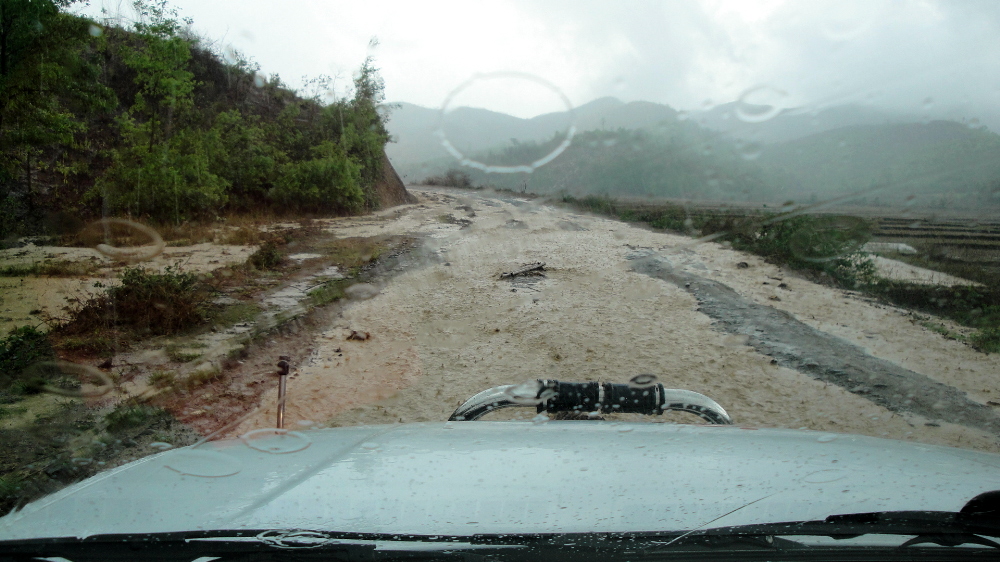
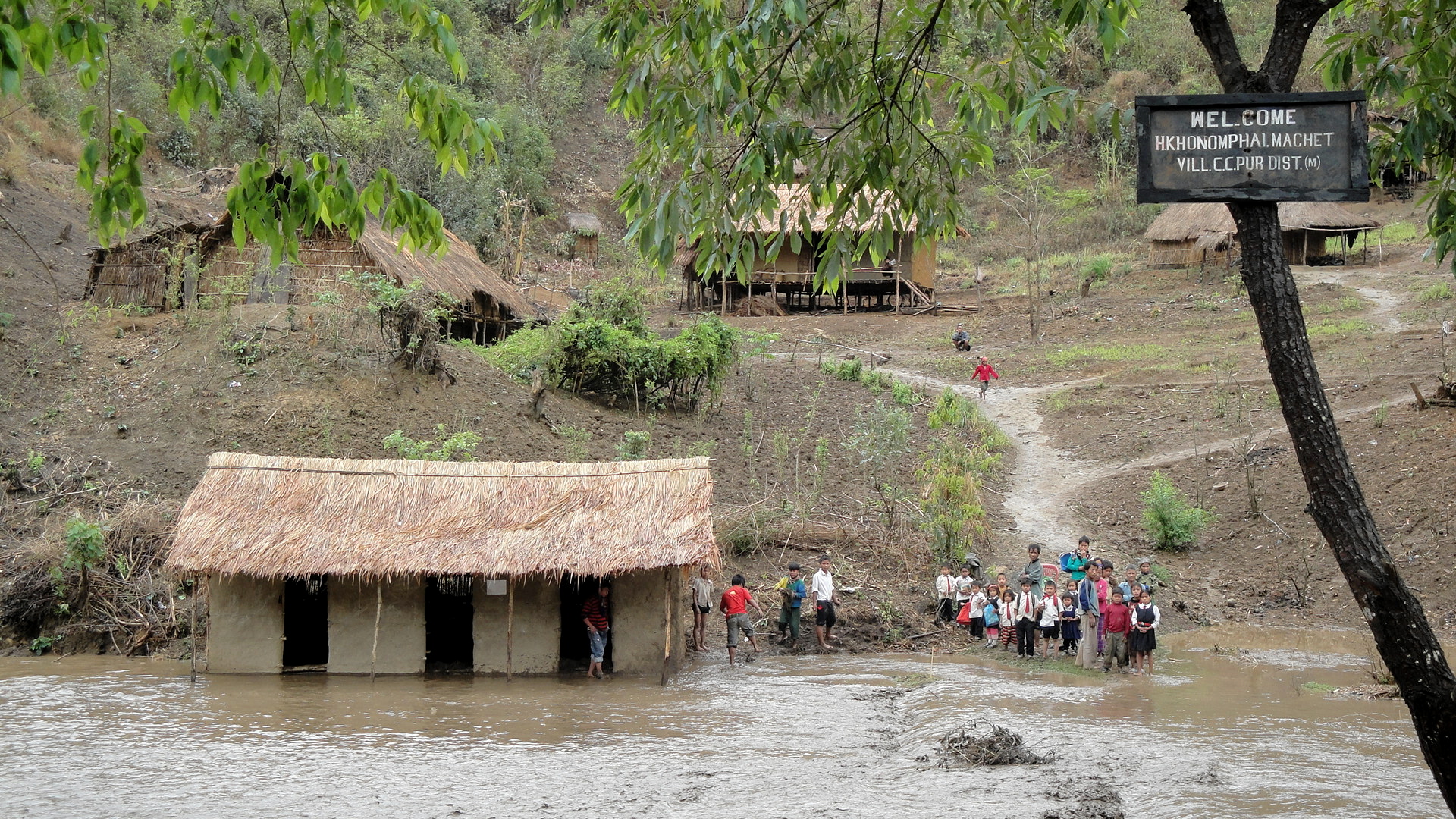
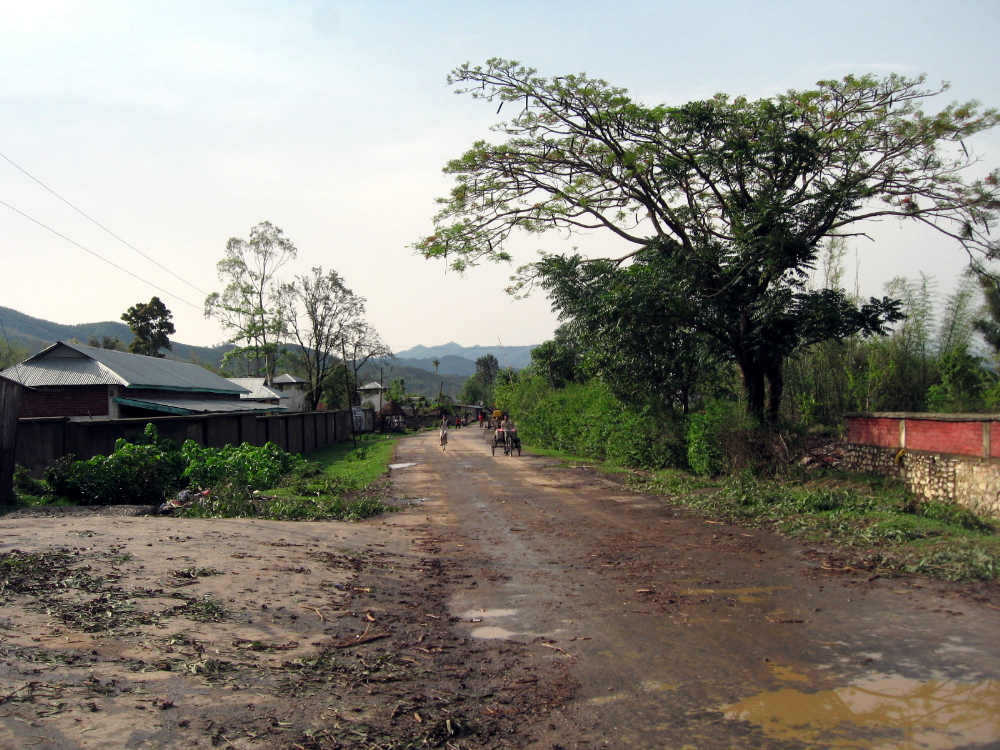
Coming back one day on the road between Sugnu and Tuining, the skies just opened up – hail, massive rain, rivers in the roads. Below is a school being evacuated after the creek by which it sits got a bit too big for its banks from the same storm – the shot below was taken about 10km and 30 minutes down the road after the shot above.
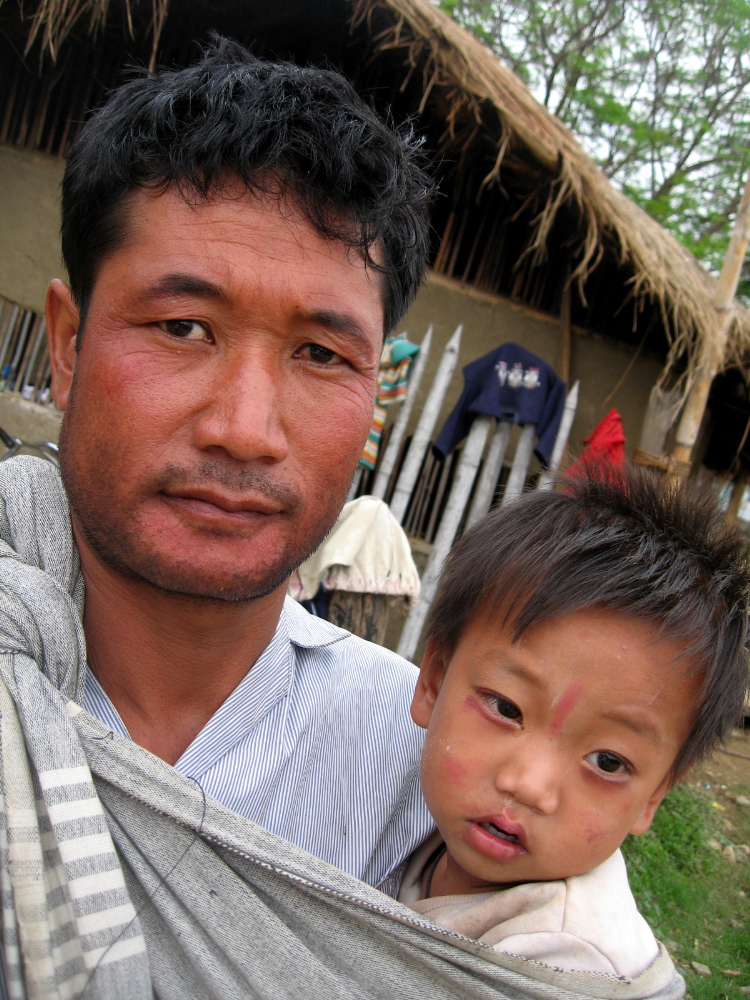
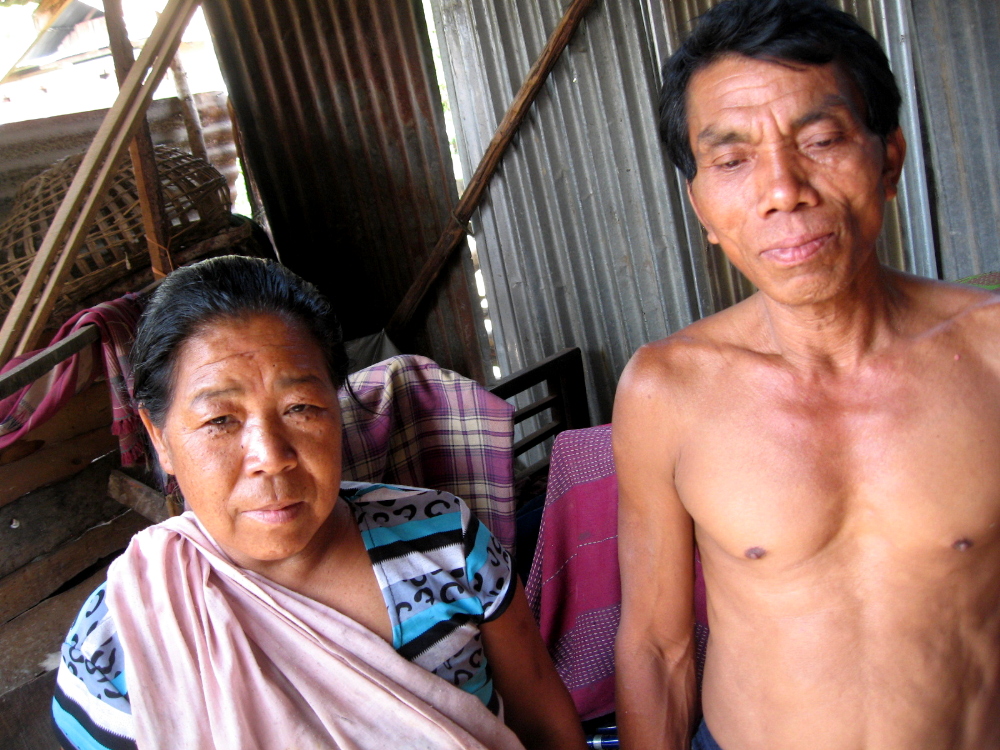
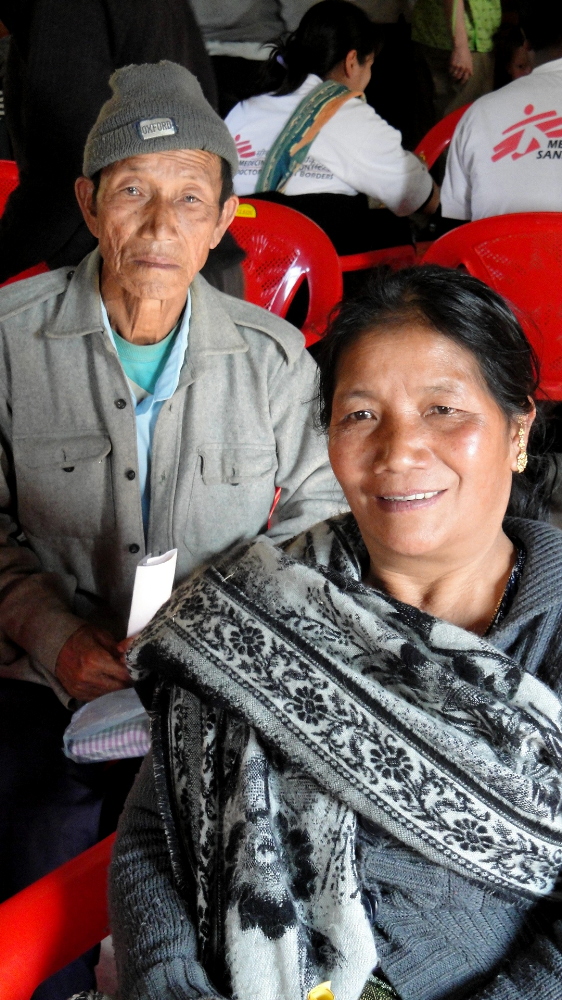
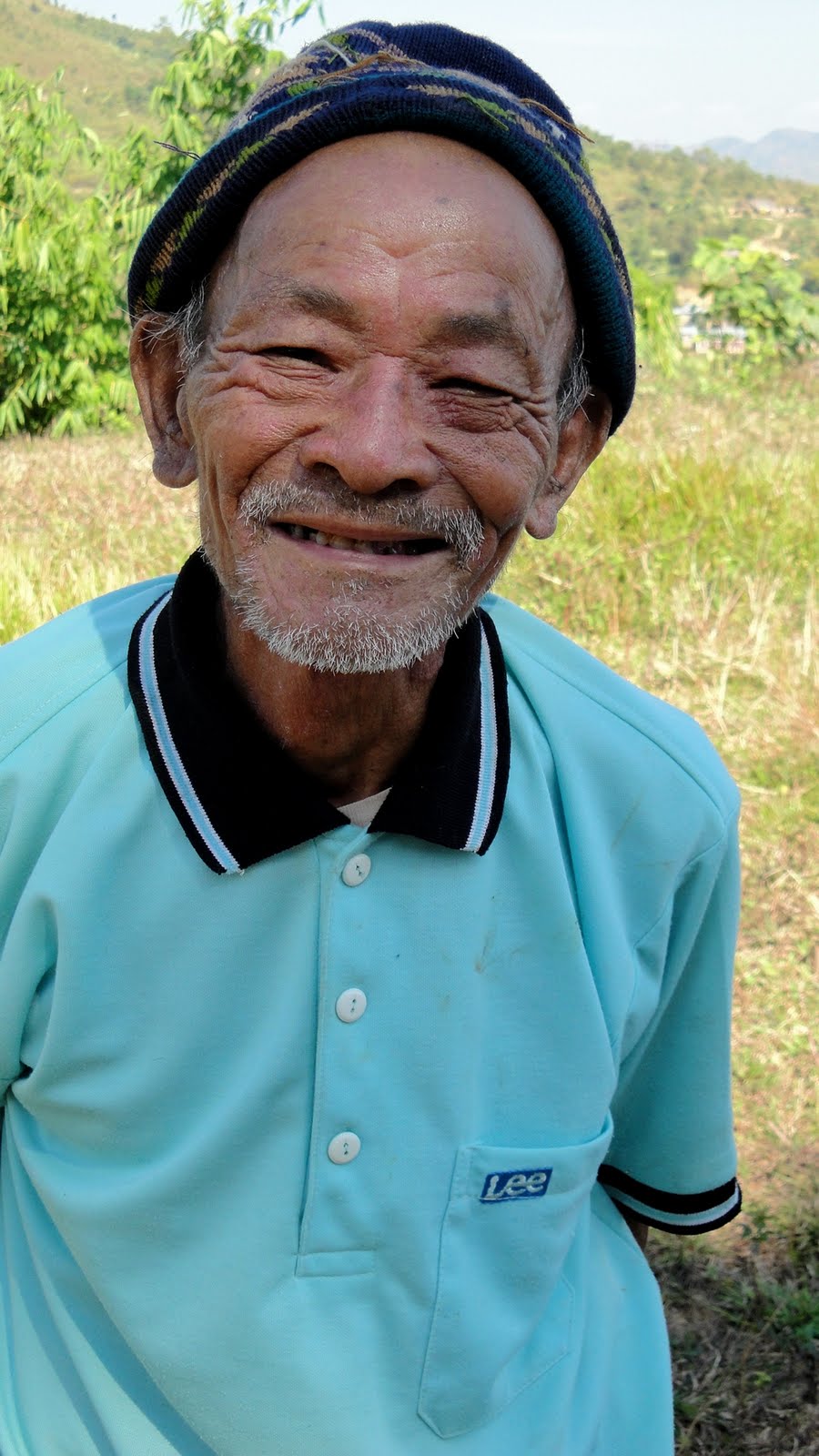
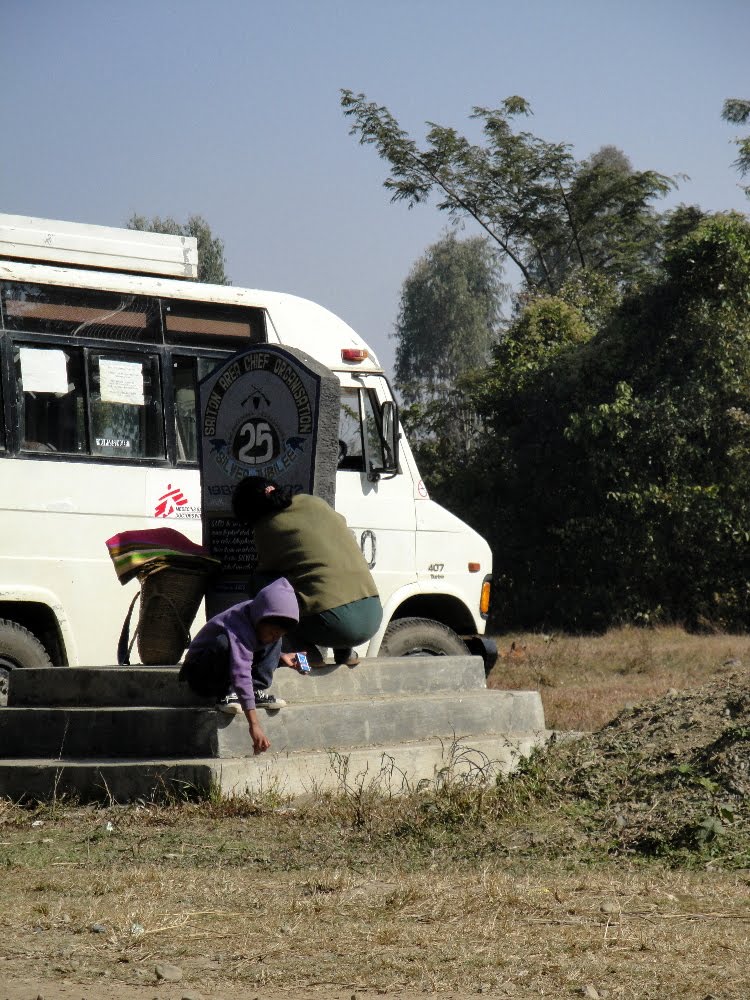
 Though I left Manipur nearly three months ago (!!) and have been back in the US nearly two months, somehow I simply haven’t gotten to sorting these photos, settling on a new blog host, and deciding what and how to show you all. Believe it or not, I’ve eliminated well over half the photos from posting. I’m afraid that I’m still asking you to look at a LOT of photos, but I find Manipur, its people and places, so endlessly photogenic and interesting. If you’ve followed so much world, so little time for while, then you know I have a basic rule that this blog is about my experiences as a person and not really about the work I do in the places I go with MSF. However, in the case of these photos I’ve decided to include more photos taken on the job, or taken of me at the job, than I normally would. I’m also including, farther down, a whole gallery of faces of colleagues, friends and patients from Manipur. I hope these people don’t mind appearing here, and I hope they and readers all understand that I do this as tribute and thanks to the people, places and communities that have left strong impressions and lasting memories with me. Spending a year in Manipur, I hope, helped me learn more humility: the face of MSF that donor countries normally see is the ‘expatriate,’ best known in the US from characters on the TV shows Will & Grace or ER that do similar work. But in Manipur, perhaps even more than in most MSF projects, it’s really our locally-hired national staff who make possible the work we do. In a region with so many different languages and histories, none of us international staff would get much of anywhere in terms of productive work without relying very heavily on the local ‘national’ staff who are really the backbone of most MSF projects. I’ll have, further down, some shots that are fairly obviously work related; but throughout this section I hope you’ll enjoy the people and scenes of Manipur where I think MSF is doing such good work.
As I write this I’m in a lovely vacation rental in Provincetown, at the tip of Cape Cod. Even here, various folks I’ve chatted with talk with pride of how they support MSF. And well they should be proud — it’s the small donors who make it possible for us to work in places like Manipur. Ask yourself if you’d ever heard of Manipur before I went to work there; and ask yourself how Manipur ranks in the donor-awareness of most citizens of the world compared to, say, Haiti. Haiti certainly has great needs – and indeed MSF has been and remains heavily engaged there both pre- and post-January 2010. But it’s the millions of private donors around the world who allow MSF to look at a small isolated place like Manipur, and decide to try to respond to some unmet medical needs there in a way that both preserves life and restores dignity, and hopefully also helps support the government’s own provision of longer-term solutions than we alone can provide. It’s my strong belief that MSF and all our colleagues and donors should be proud of the work we do in Manipur. I’m off my high-horse – enjoy the pics.

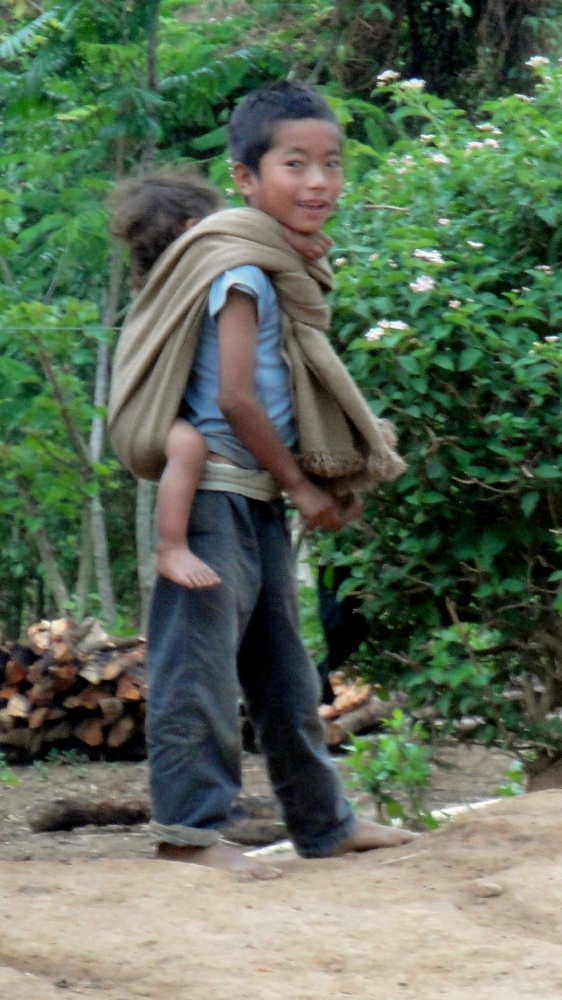
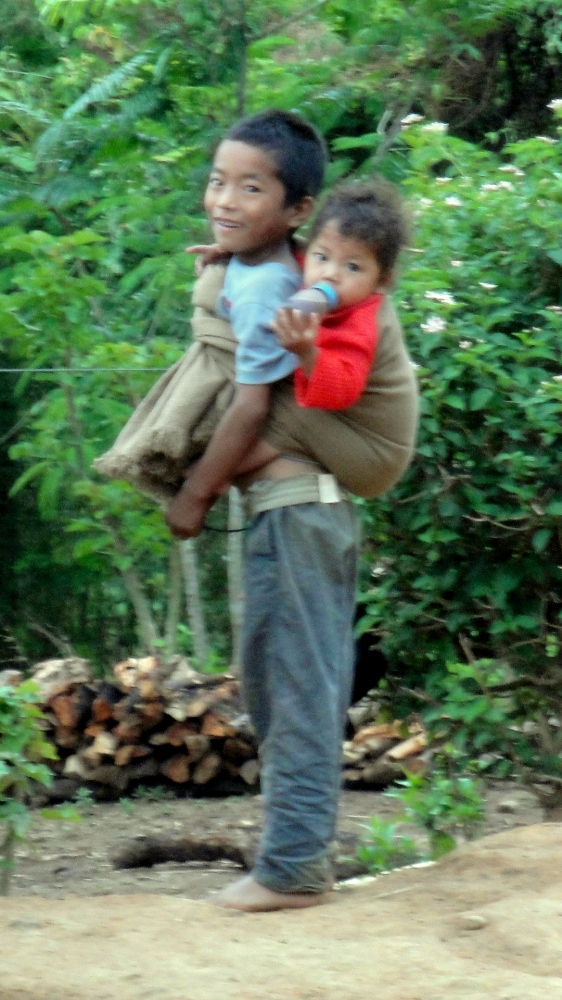
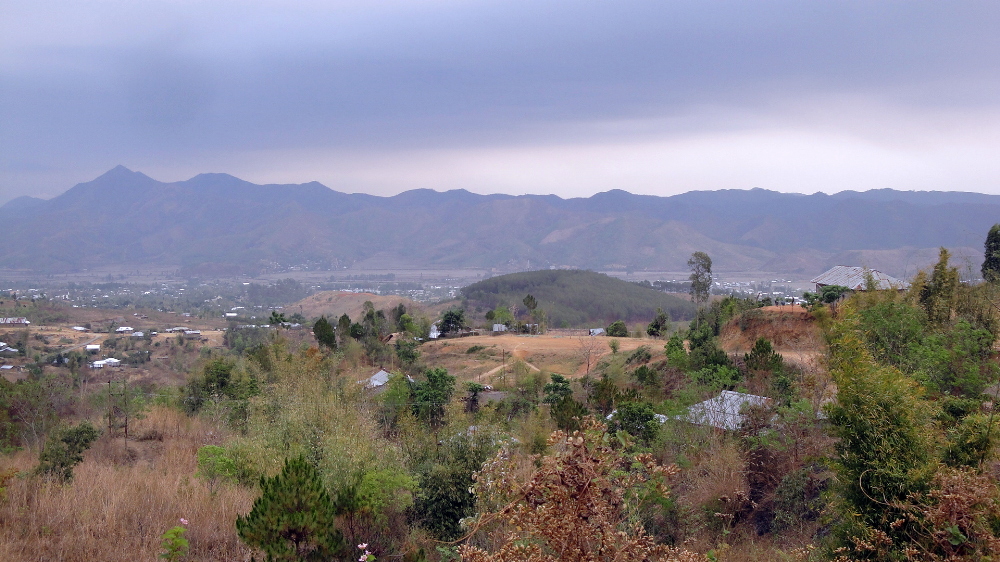
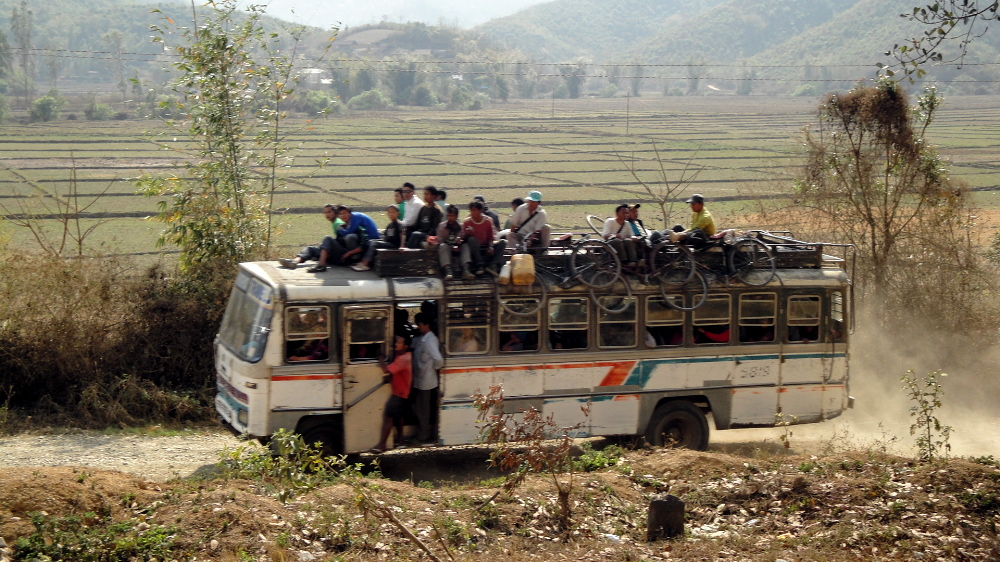


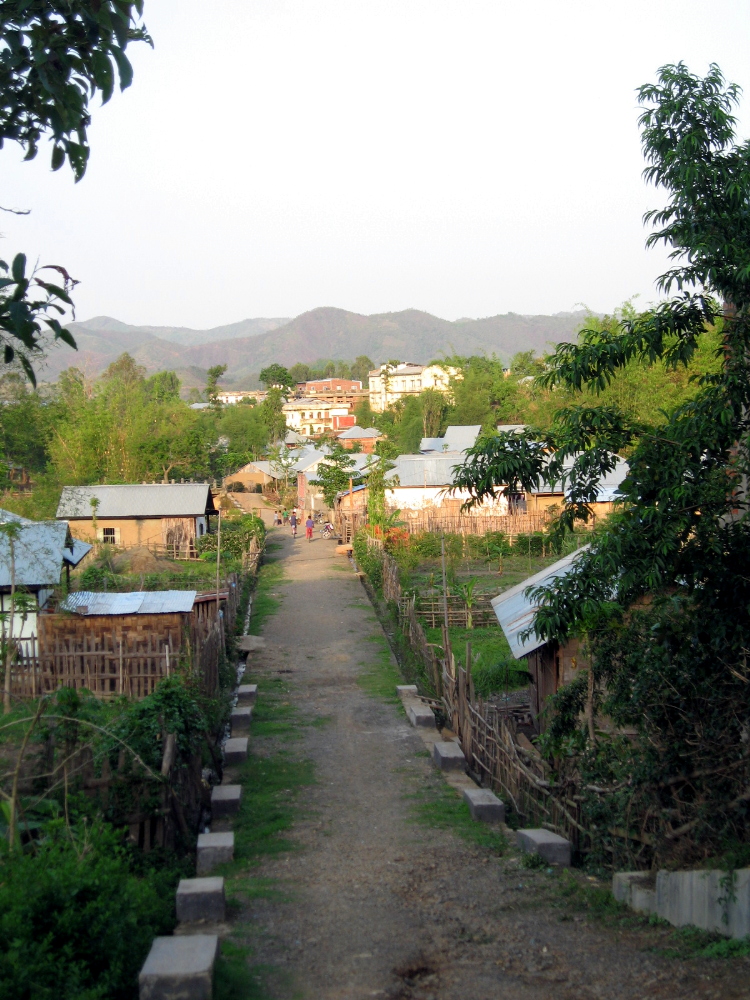
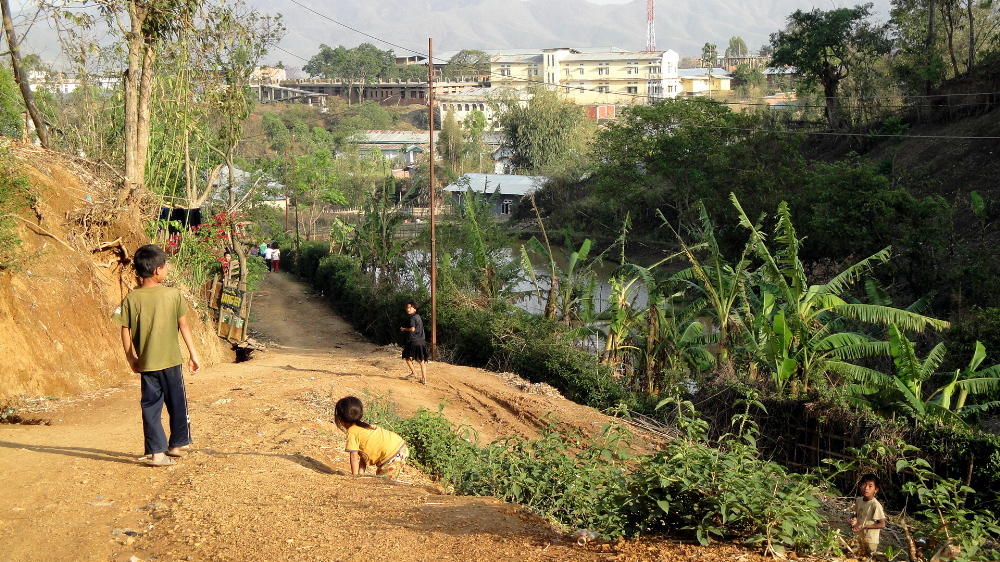
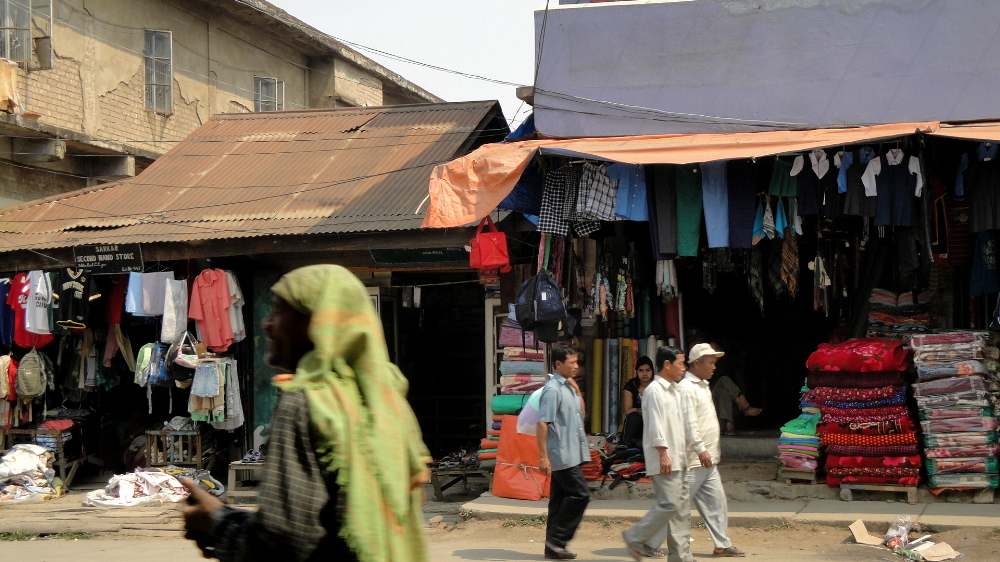 …immediately above, and for a while below, are scenes from the main town parts of Churachandpur; yes, including the pig trying to get out of his sty, which was more in a neighborhood just behind where our main house and office were located.
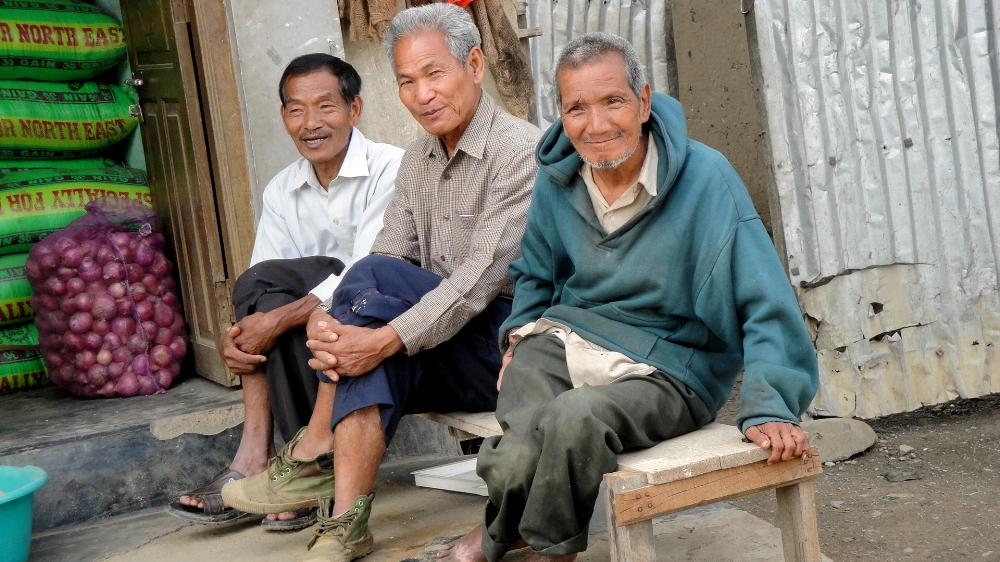

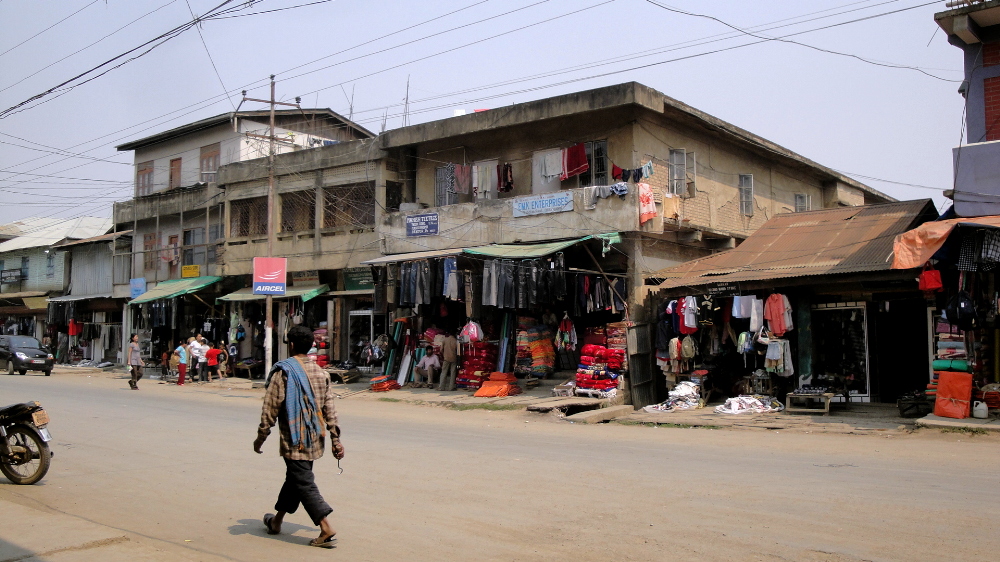

…from fairly fancy houses and shops, to streetfront shops and pigstys, CCpur’s got it all…

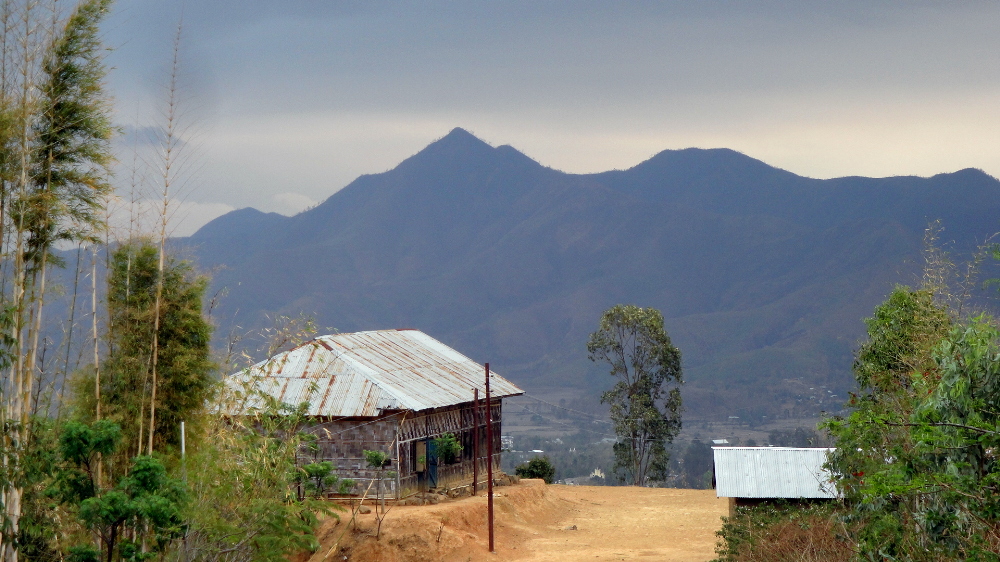
Below is the view from our house, more precisely the view from the bathroom I used most days to shower and brush my teeth and so on. Not a bad view, huh? Quick review & explanation for those who don’t know: maybe 1/3 of Manipur’s total population is made up of people belonging to various hill tribes such as Gangte, Kuki, Miso, Naga, Paite, Vaiphei, Zou etc. (More than 40 recognized minorities make up the 2-1/2 million residents of Manipur.) Nearly all of the hill tribal folks were converted to Christianity by missionaries from the US and UK in the early 20th century – indeed, below you’ll see a festive arch commemorating the ‘gospel centenary,’ i.e. 100 years since those first missionaries introduced Christianity to that part of Manipur. Since we lived, and primarily worked, in Churachandpur and other hill tribal areas, we saw a lot of churches — and they make an interesting visual against the lovely mountains. The majority population in Manipur are the mainly valley-dwelling Meitei or Manipuris, who’ve been living in this little valley for something like 2000 years and have a long history of art and culture of which they are quite proud. The Meitei are about 80% (so I’ve been told) Hindu these days, having largely converted when a king led them to do so in the 18th century (I think); the remaining 20% or so mostly adhere to the Meitei or Manipuri indigenous religion, which existed before the conversion to Hinduism. There are some churches in the valley, but I don’t think many Meitei are Christian.

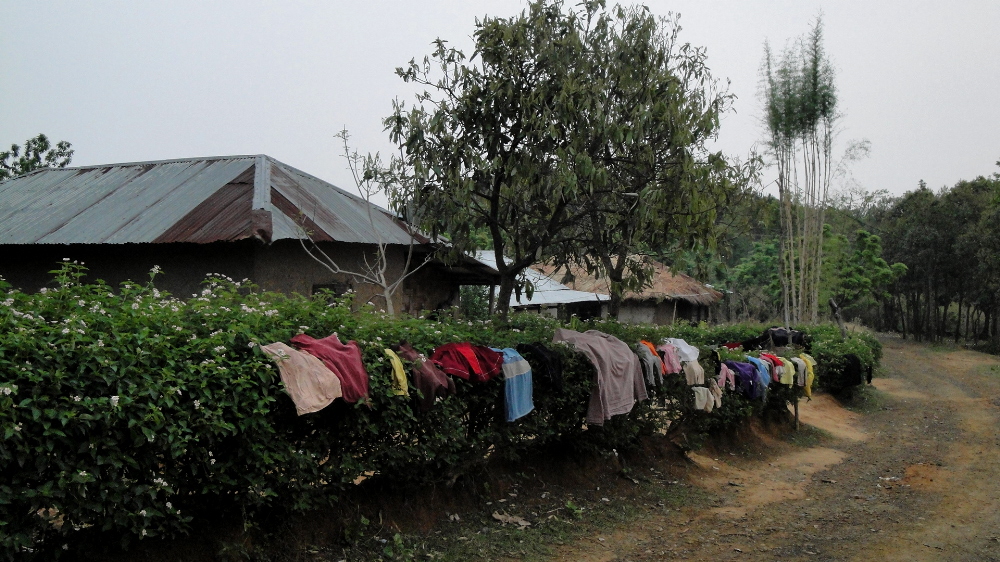
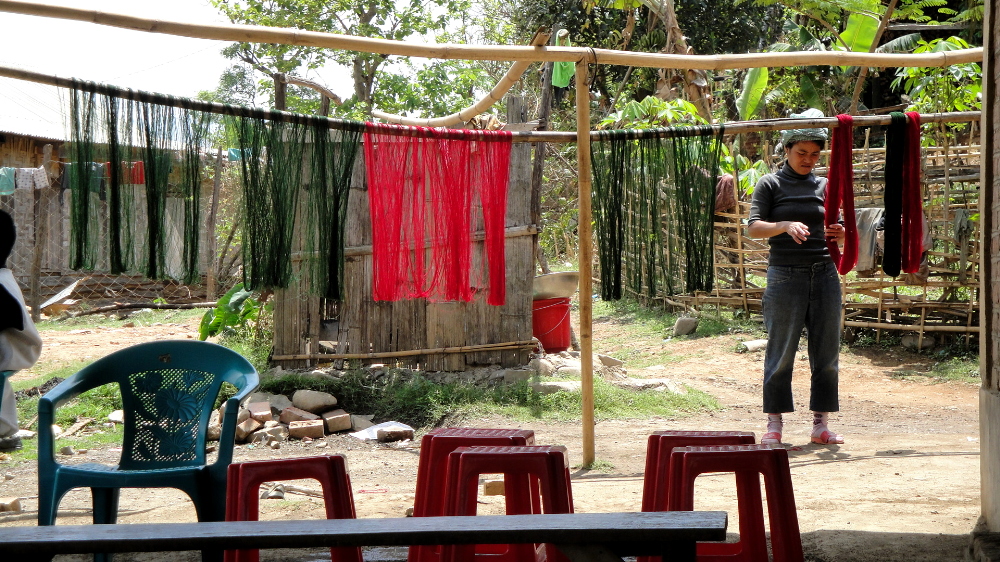
 I seem inevitably to end up with many shots of clothes hung out to dry. Mostly it’s because there are always clothes hung out to dry somewhere; it’s also because clothes are colorful and interesting in a photo. It also helps me remind me of what we Americans should remember more: our problems with resources and oil in the gulf are of our own making. And the wars we fight are of our own making, because we greedily overconsume the world’s resources and then find we must fight wars to defend our access to those resources, and place our troops in places where they’re not welcome, just to defend our access to as many cars and clothes dryers as each of us feels we need. Yes, our decisions do have consequences, and yes, it’s very possible to live a happy and rich life without all the SUV’s and clothes dryers. Or oil in the gulf – for which don’t blame BP, look at your own consumption and wonder why companies do what they do and why congress gives companies so many free passes…
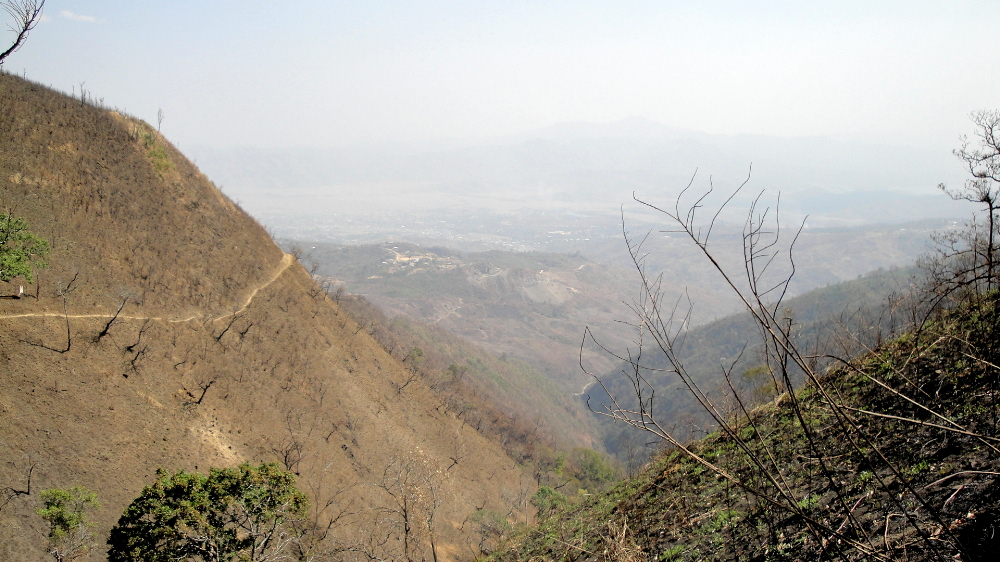
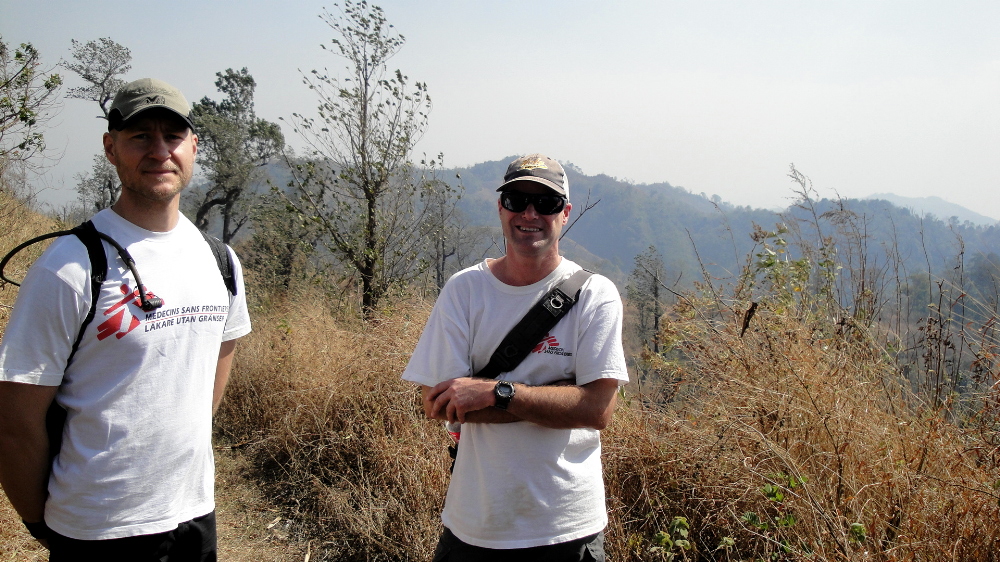
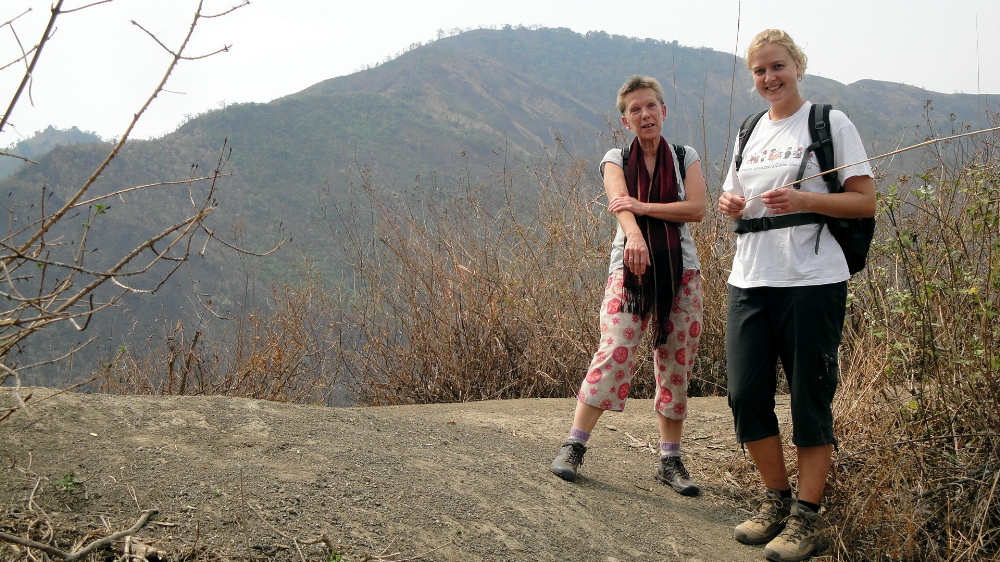
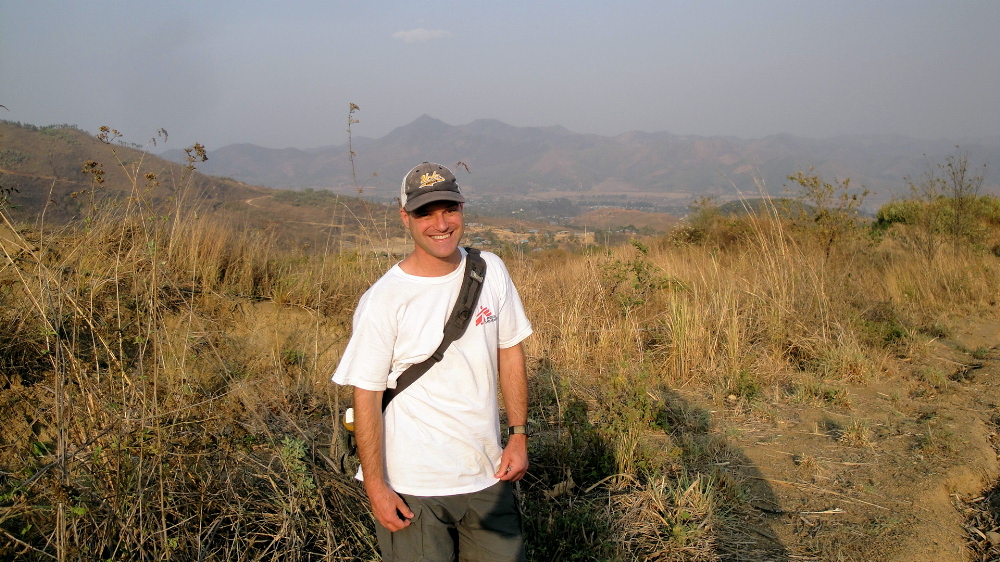
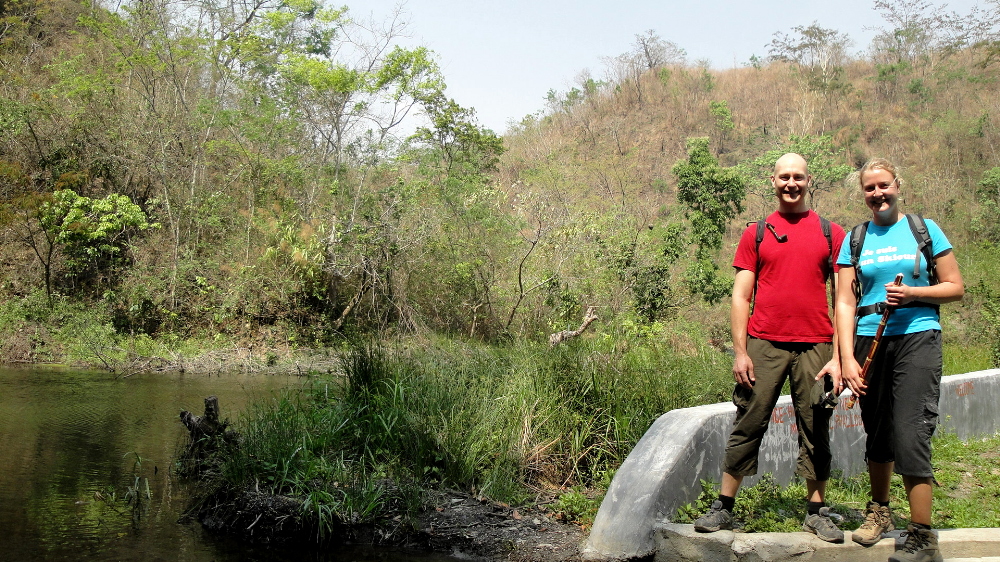
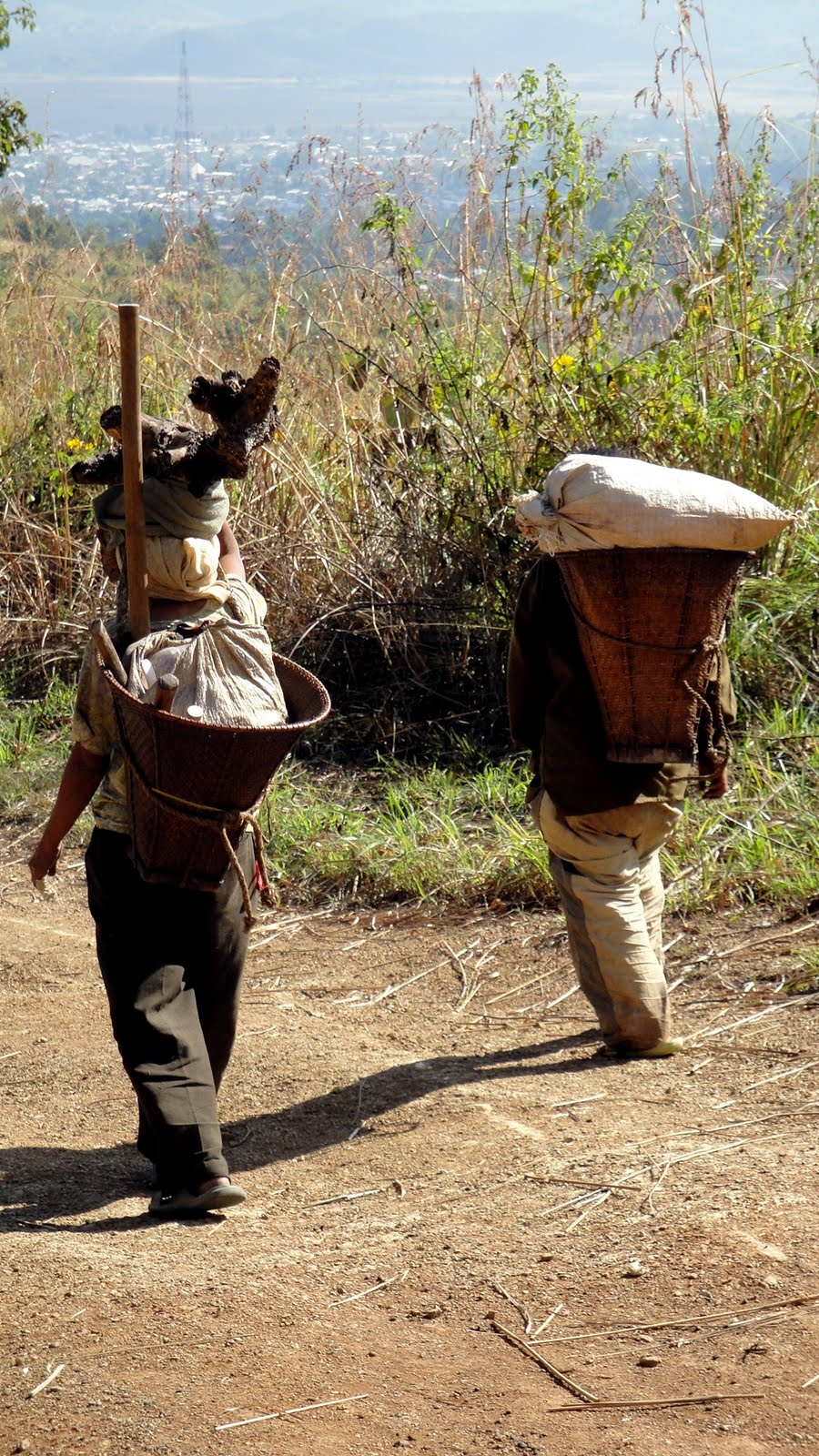
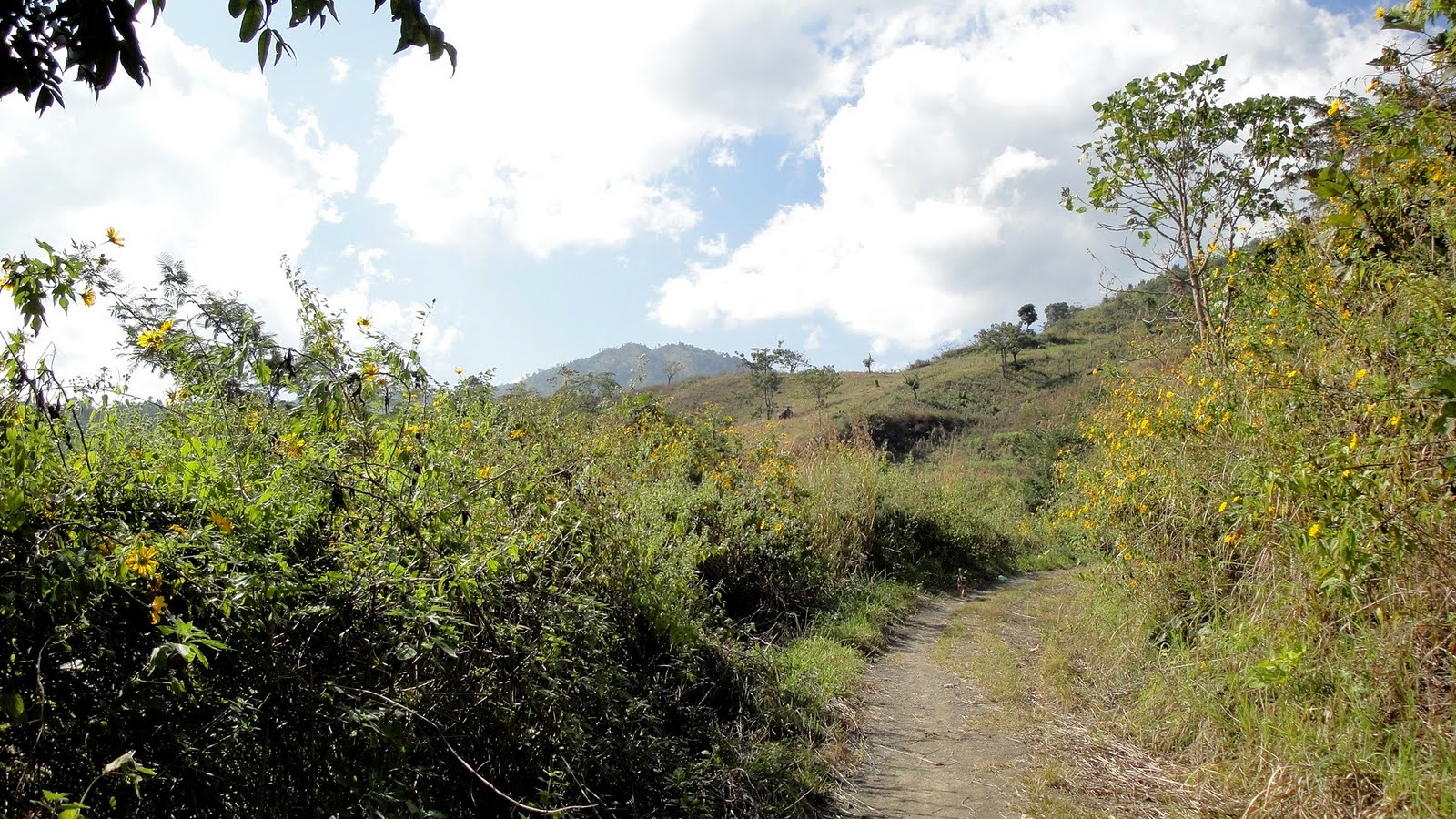
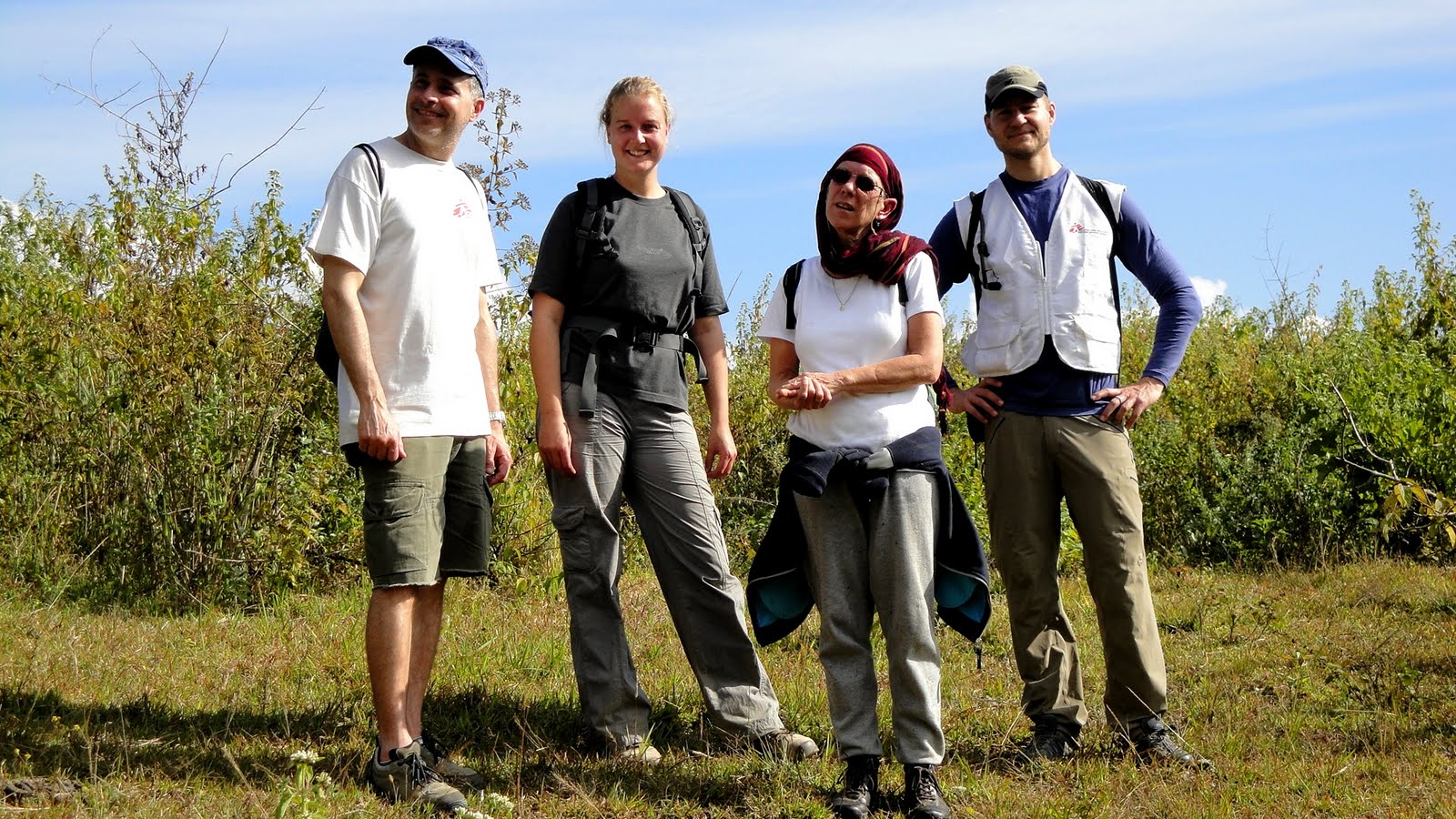
On a lighter note: below are some shots from the longest weekend hike that Par, Fiona and I did during my time: up and over a few large hills and around the trail you can see below. Also a shot of Par and me on the walk. This was, obviously, late in the dry season. Quite different from the verdant look during the rains, huh? BTW, in case clarification is necessary: we weird foreigners used these trails for recreation; for locals they’re how to get your produce to market and do your shopping trips.
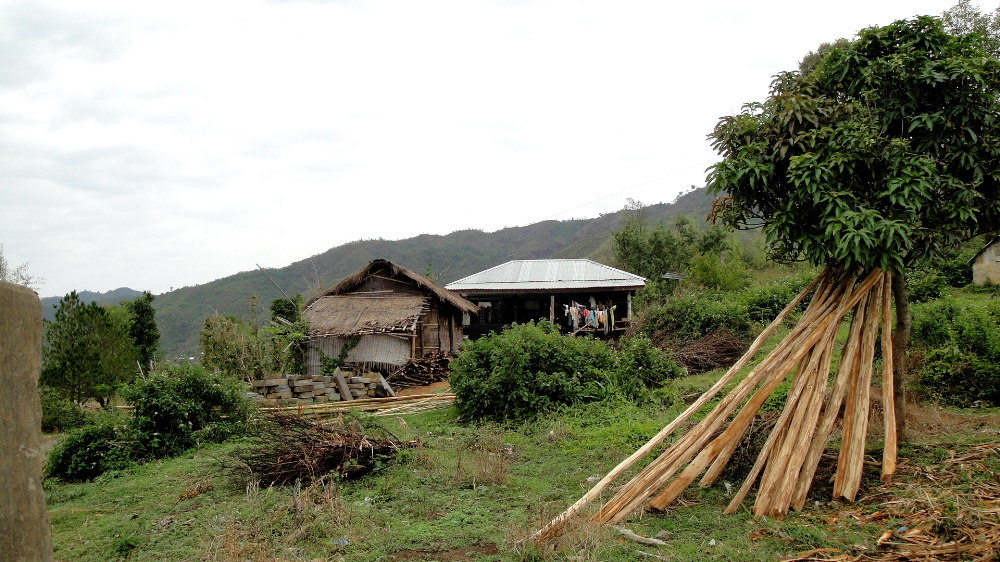
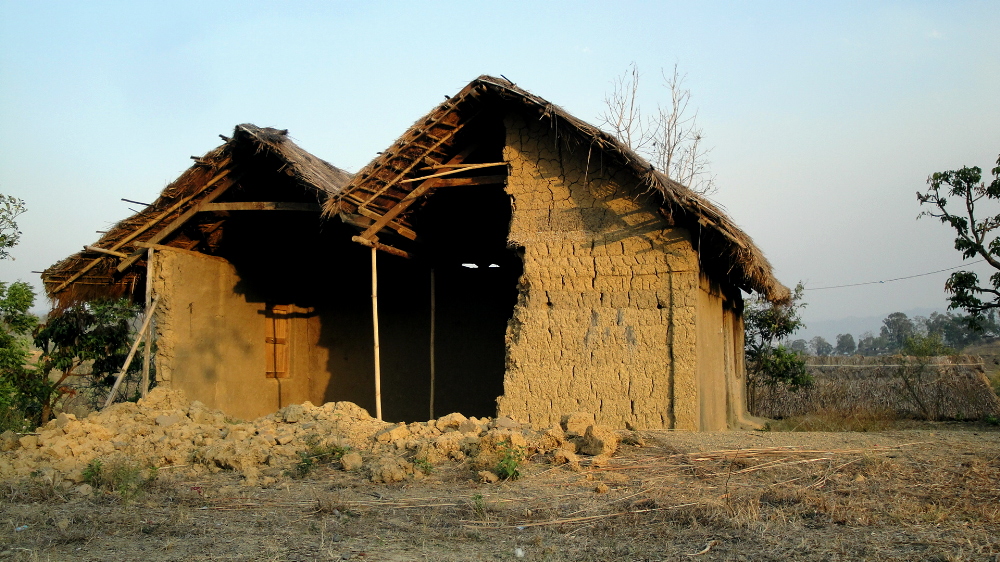
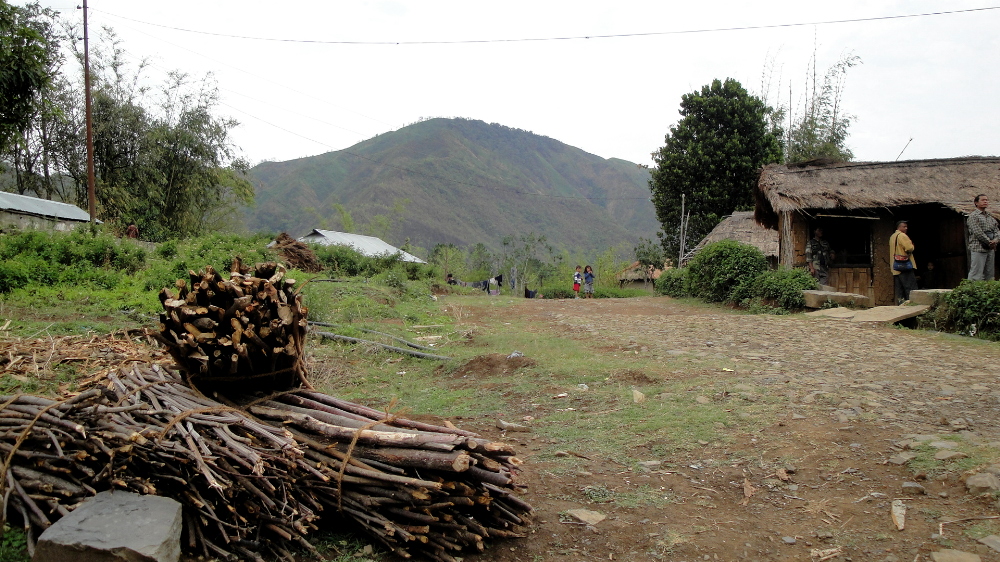
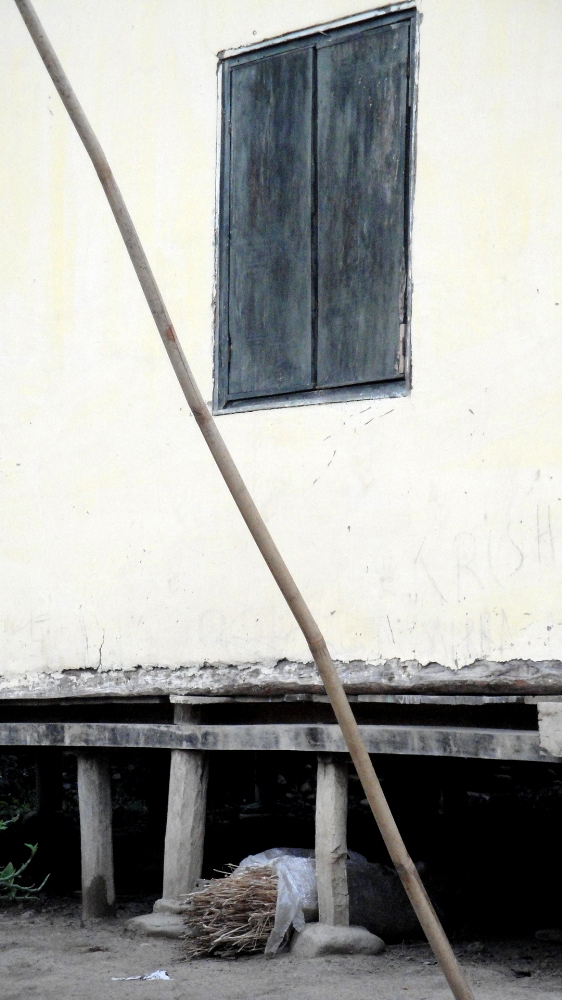
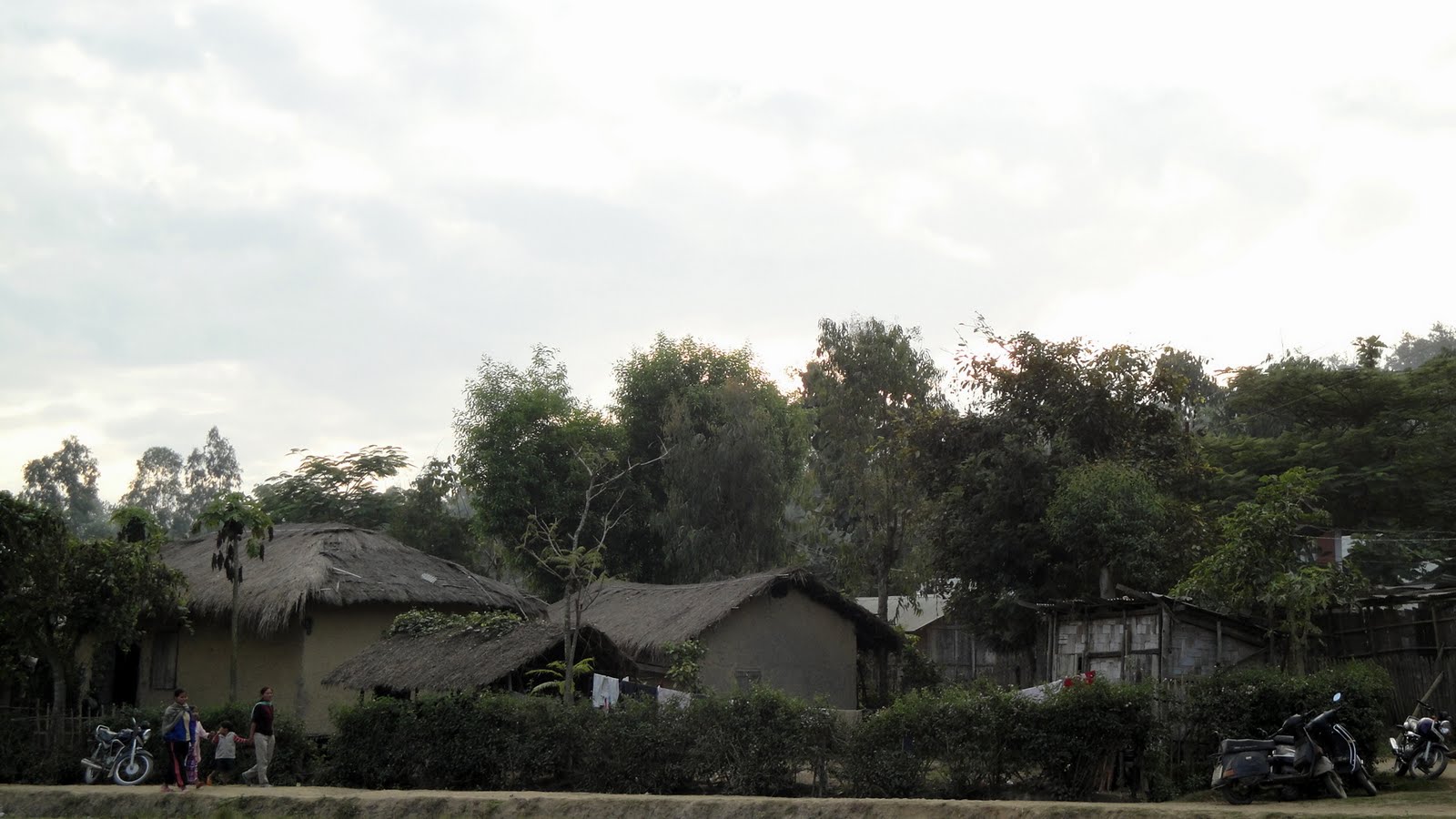
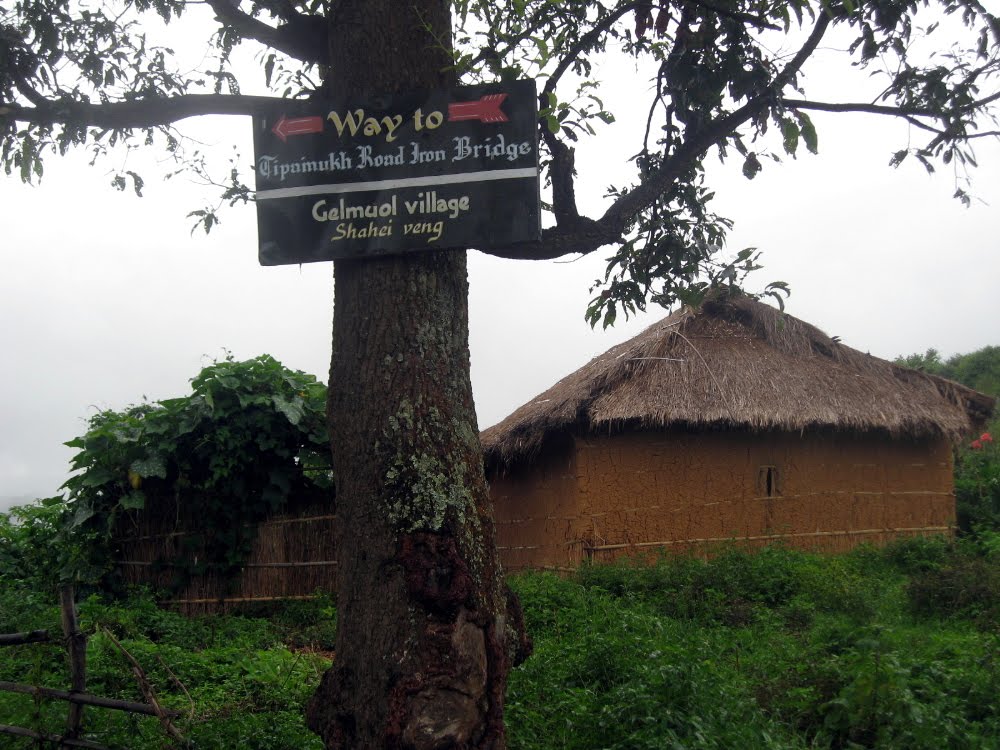
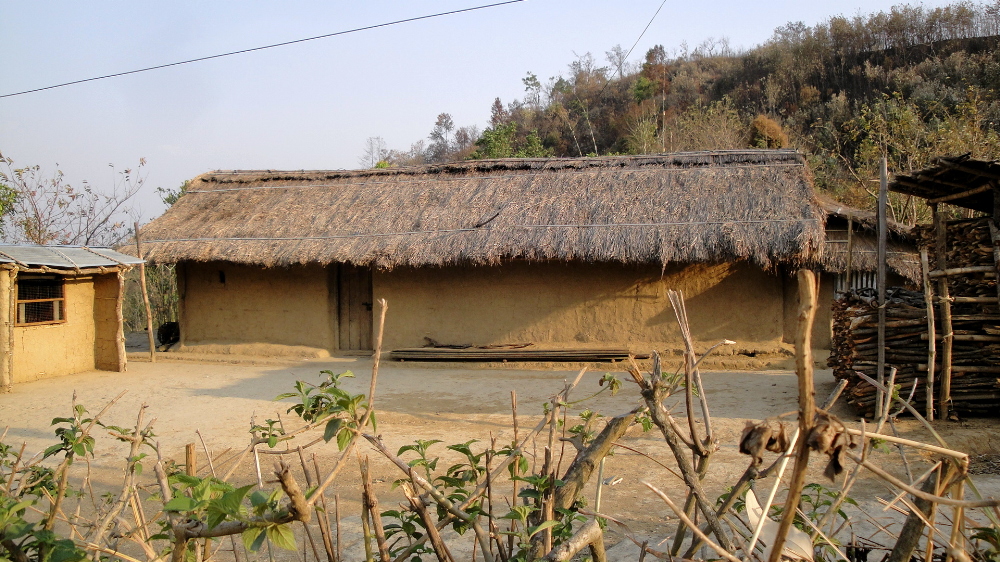 Several friends commented on photos of the architecture in Manipur. Above is an excellent example of a good-looking completely traditional hill compound — thatched-reed or rush roof, construction of planks and mud and reeds. This compound shows great civic pride and good upkeep – it’s swept, the wood is neatly stacked, the roof rushes are new and fresh-looking — it’s all really lovely, isn’t it? Our new house in Sugnu, which I was fortunate to spend a few nights in before leaving, is of similar construction but painted a bright blue and with a (bloody loud in rain, but longer-lasting) tin roof; you’ll see it below. I can attest that these houses, while picturesque, are not so comfortable or weather-sound as brick or stone structures; it’s maybe like a midpoint between camping and a solid house with a basement. In any case: below are some examples of houses that haven’t been quite so well maintained, or that finally succumbed to the elements.
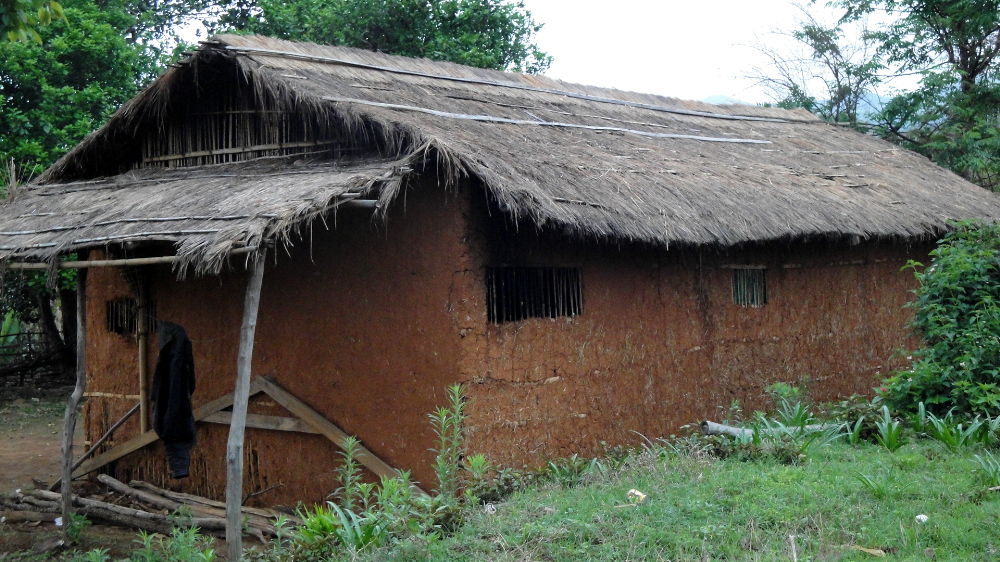
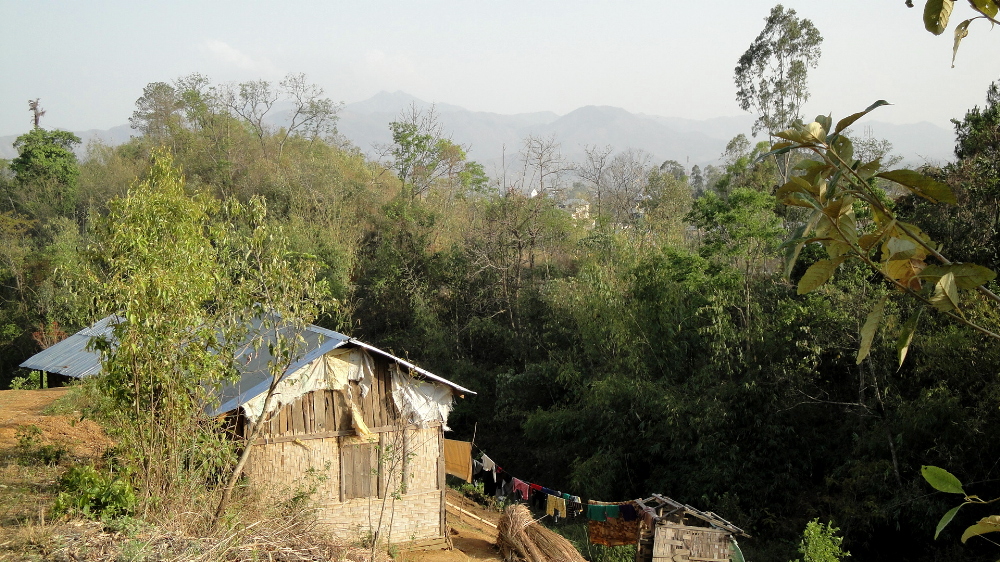
 This one is woven bamboo with a tin roof. I think it’s got a gorgeous location and is a very atmospheric house.

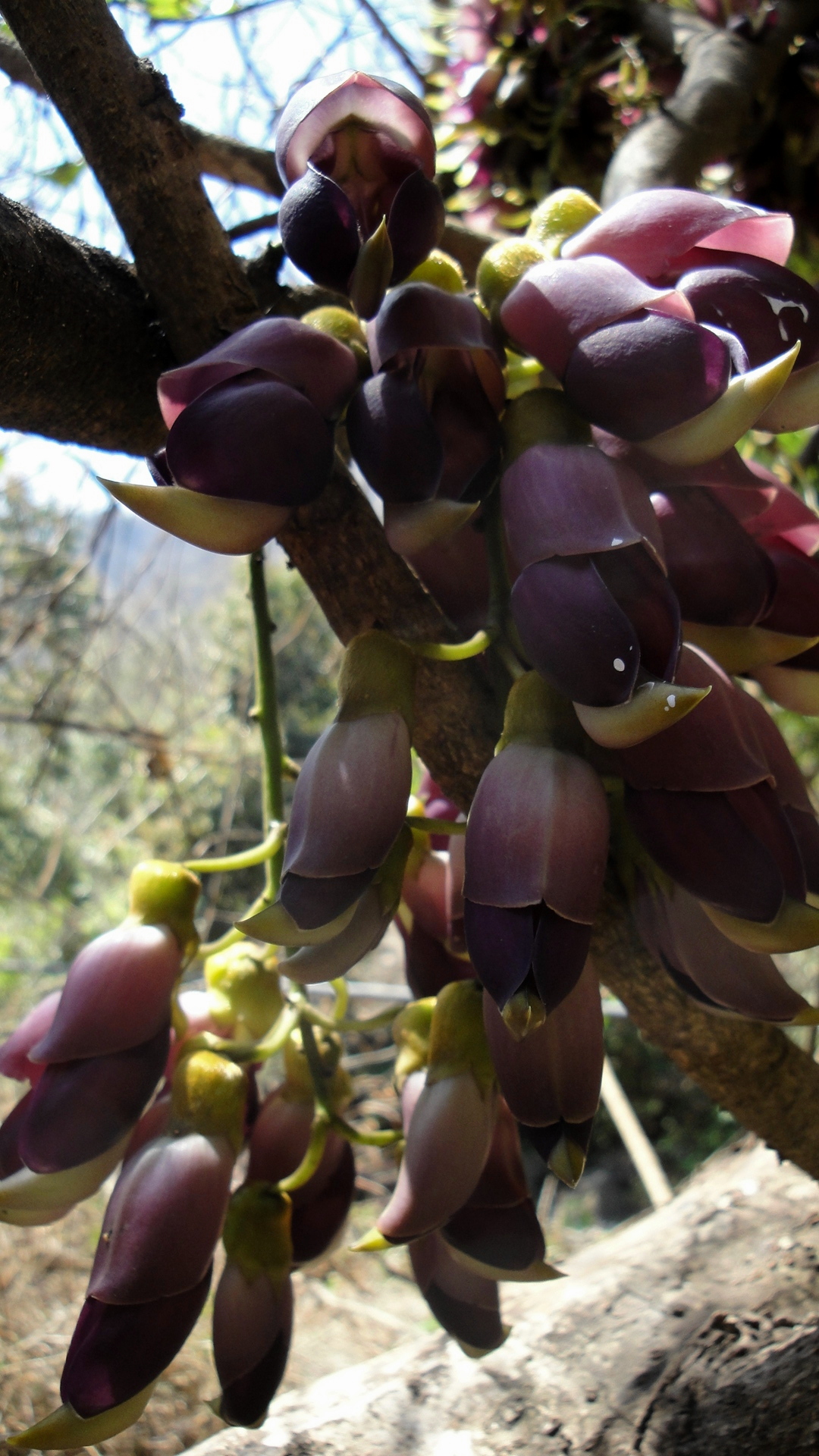
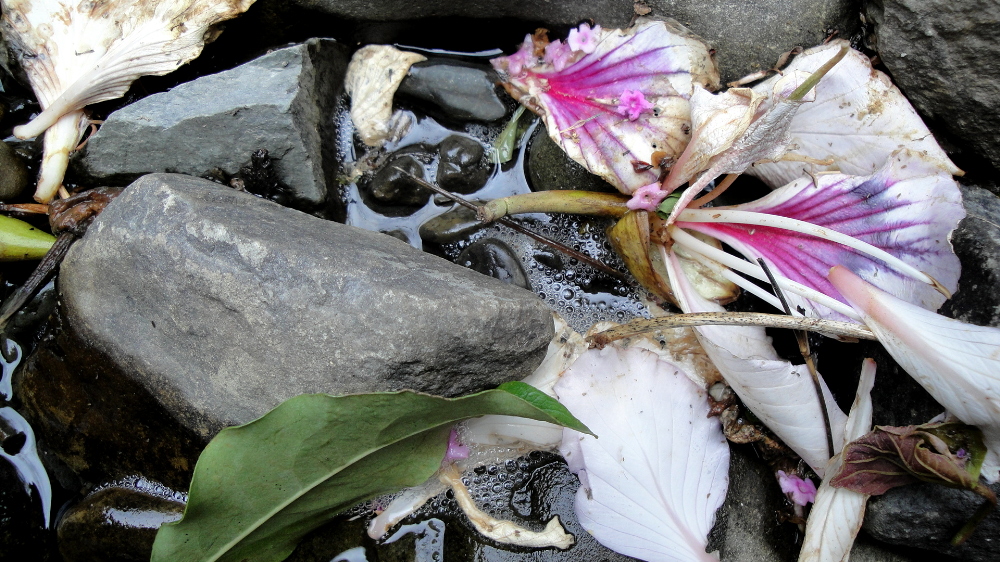
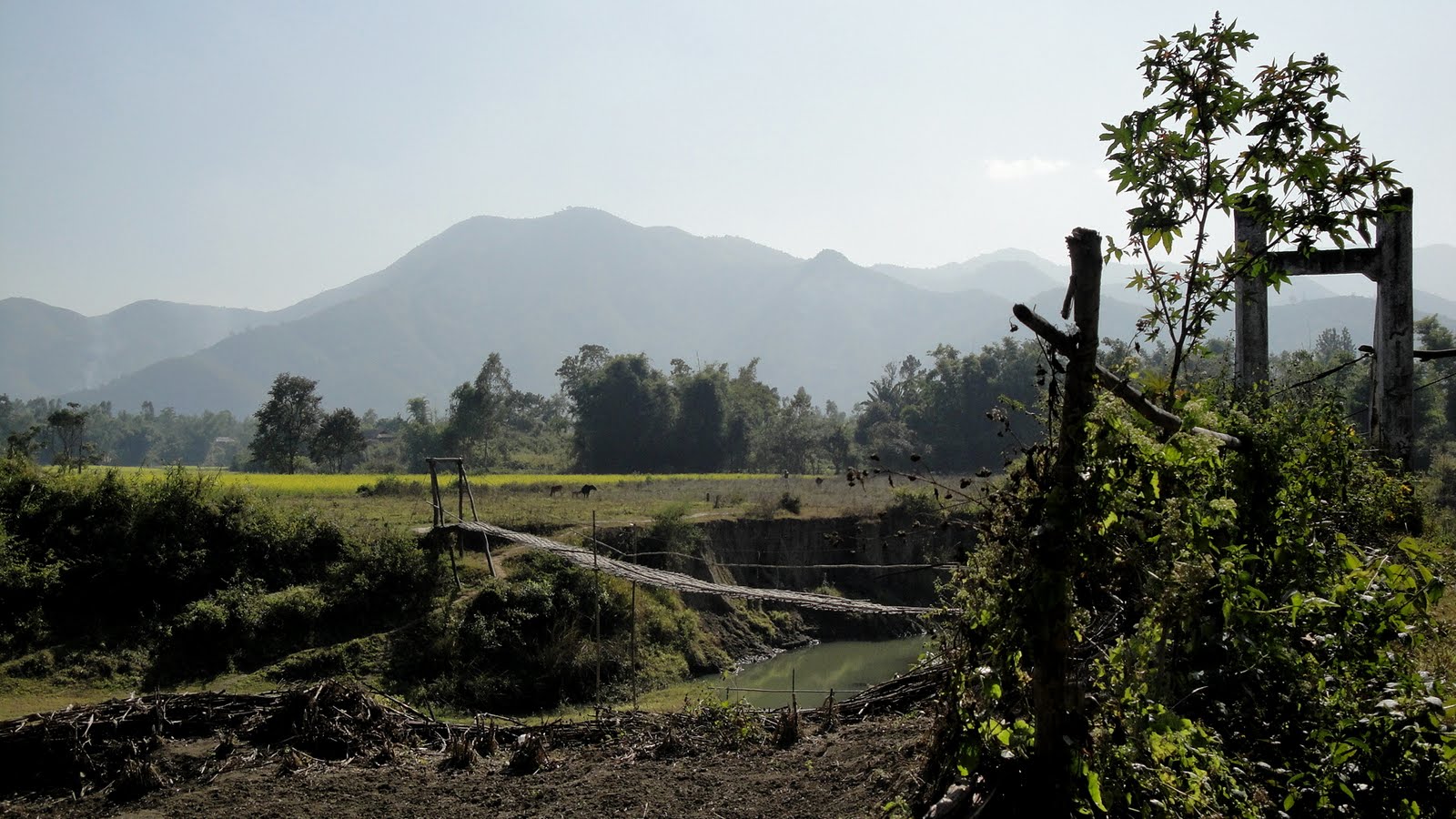
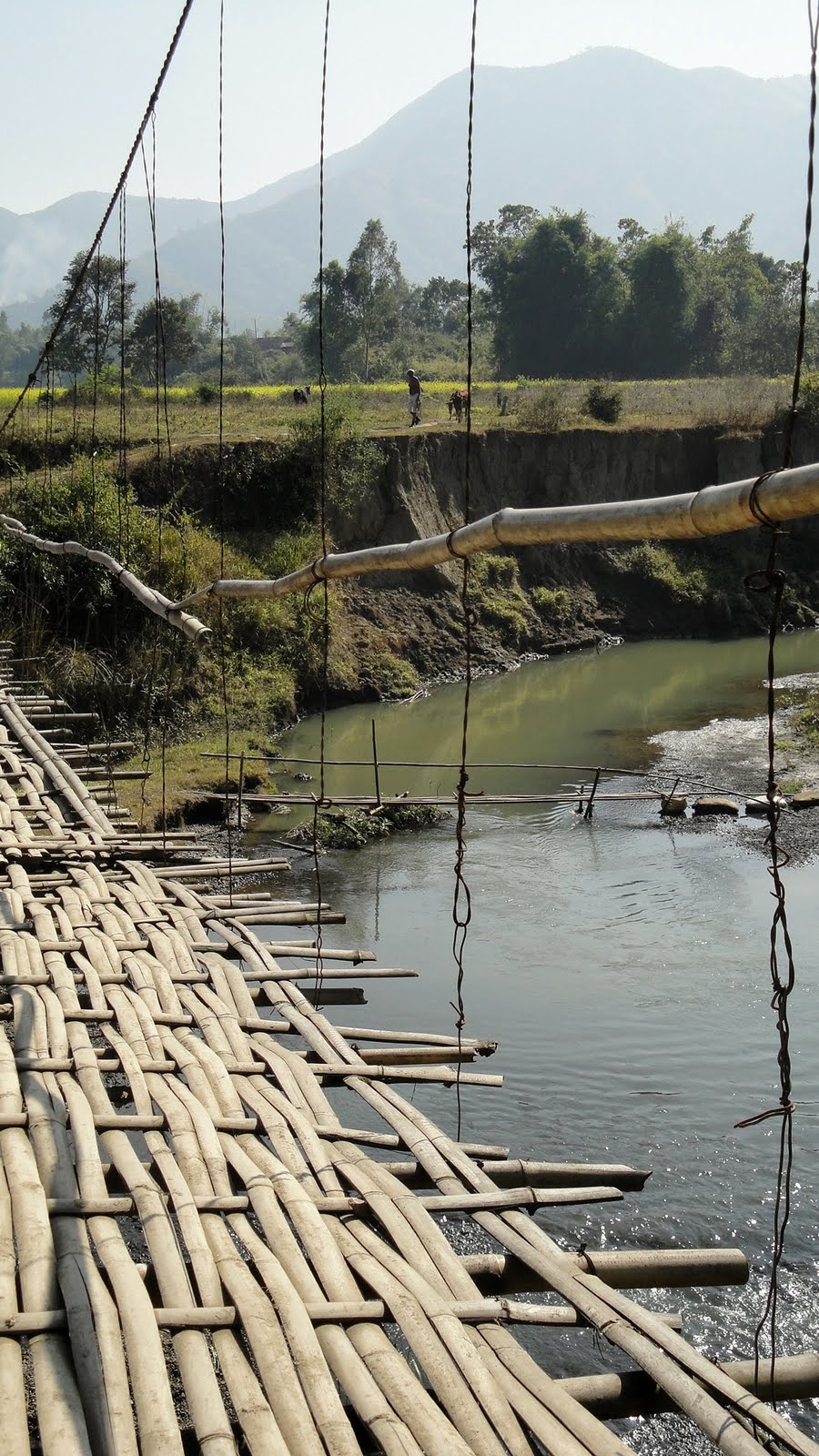
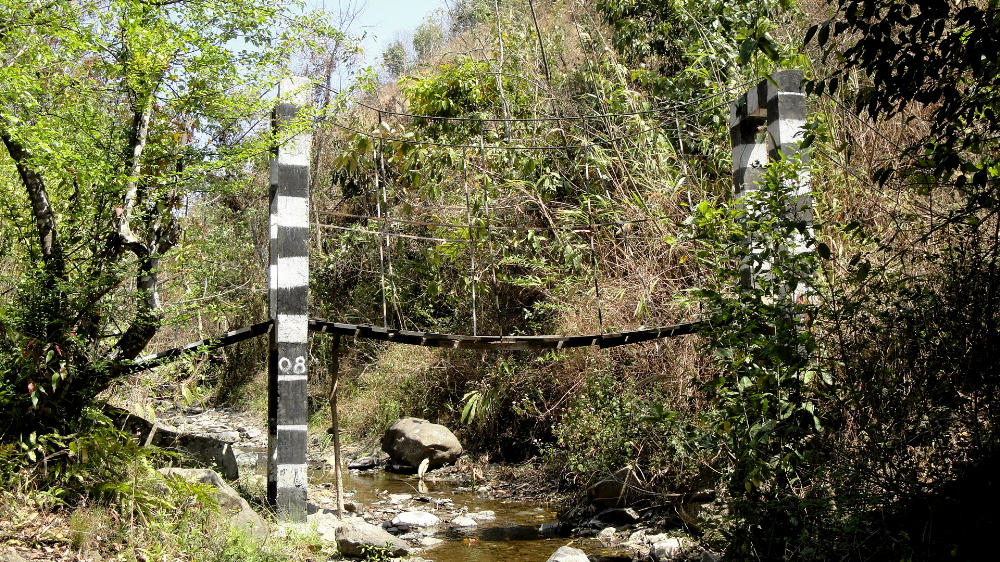 The foot bridge and the deep-purple orchids are both from one of our favorite hike resting spots, by a little creek in a valley between two ridges that are both lovely and dramatic. The orchids are standing in for any number of other stunning orchids and other flowers I saw but didn’t photograph during my time…especially these bluey-lilac orchids that were hanging enchantingly from a number of trees sometime around October, but I never happened to have a camera handy any time I saw them.




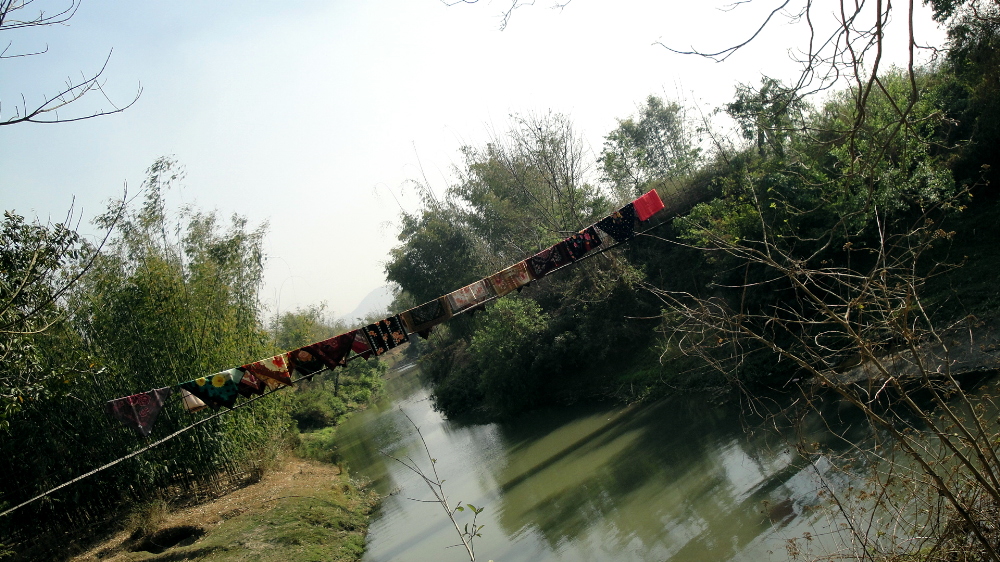
Blankets, hung out to air and dry on a footbridge at the edge of CCpur town.
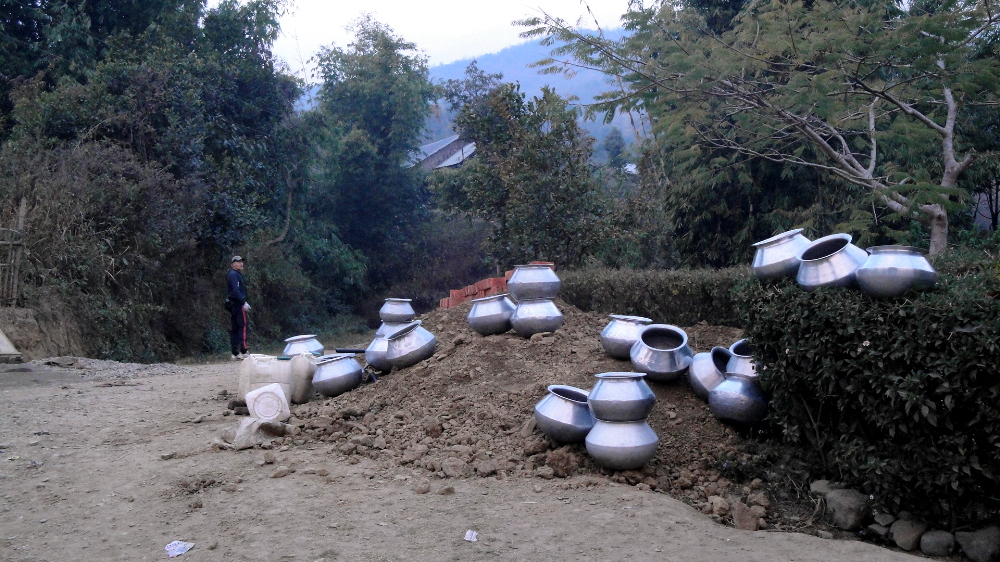
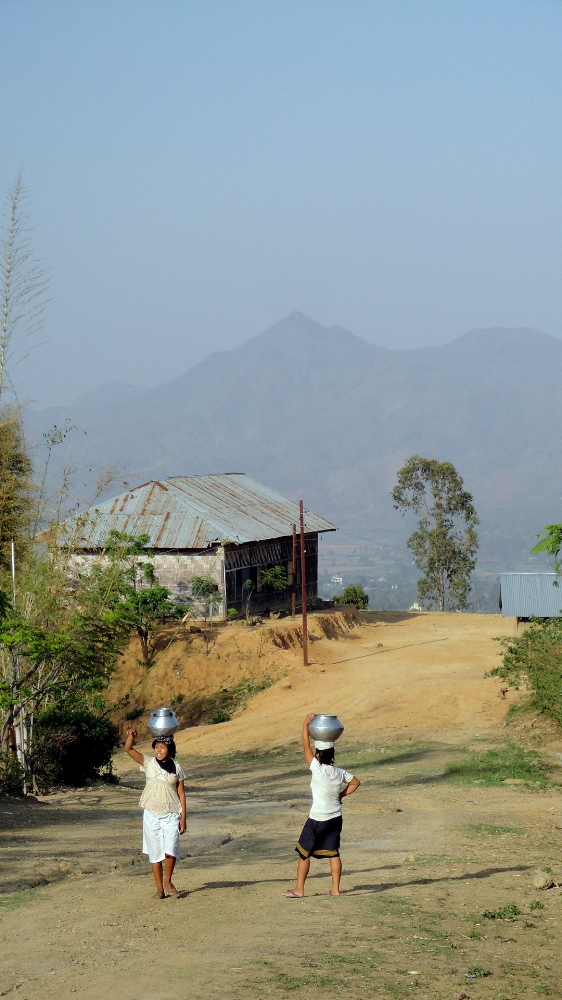
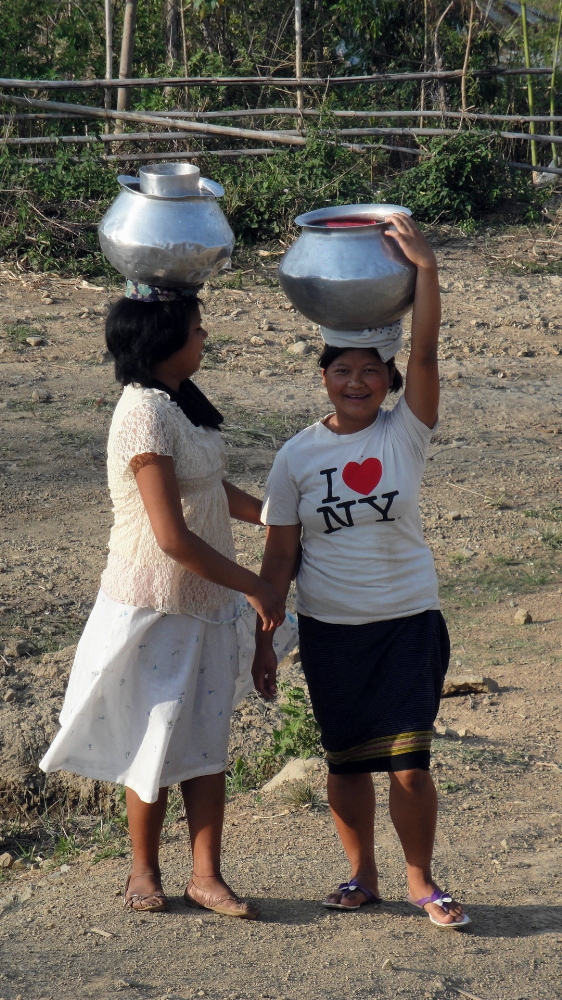
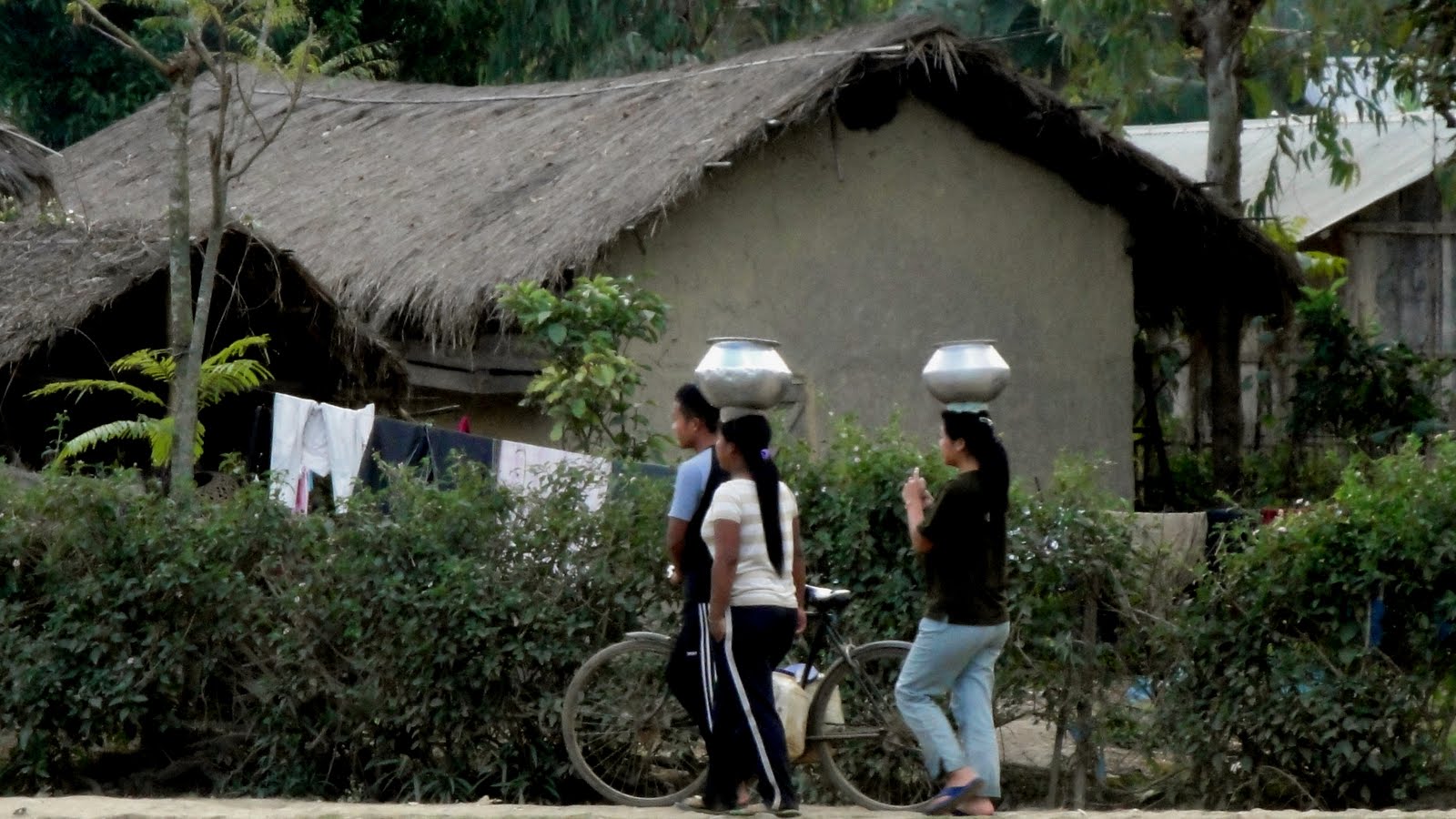
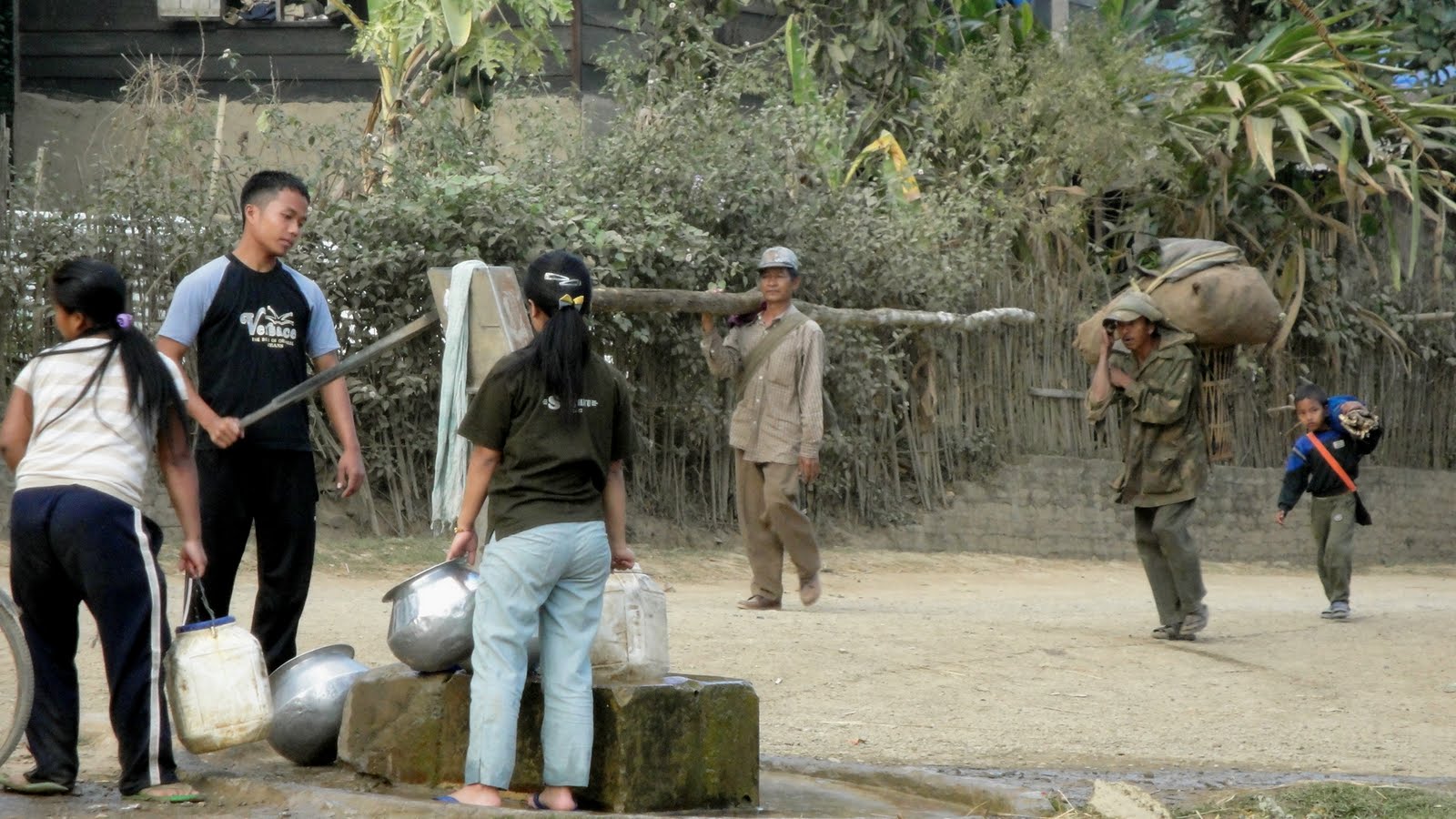
Above: while Par waits for me to catch up on one of our morning ‘hill and valley’ (our favorite route, really) runs, I took this photo of all the water ewers piled up by the village’s water spigot, waiting for the morning water run by all the locals fetching their washing and cooking water. Below, two locals doing just that…both likely wearing second-hand clothing that’s come from the US, but one more obviously so.
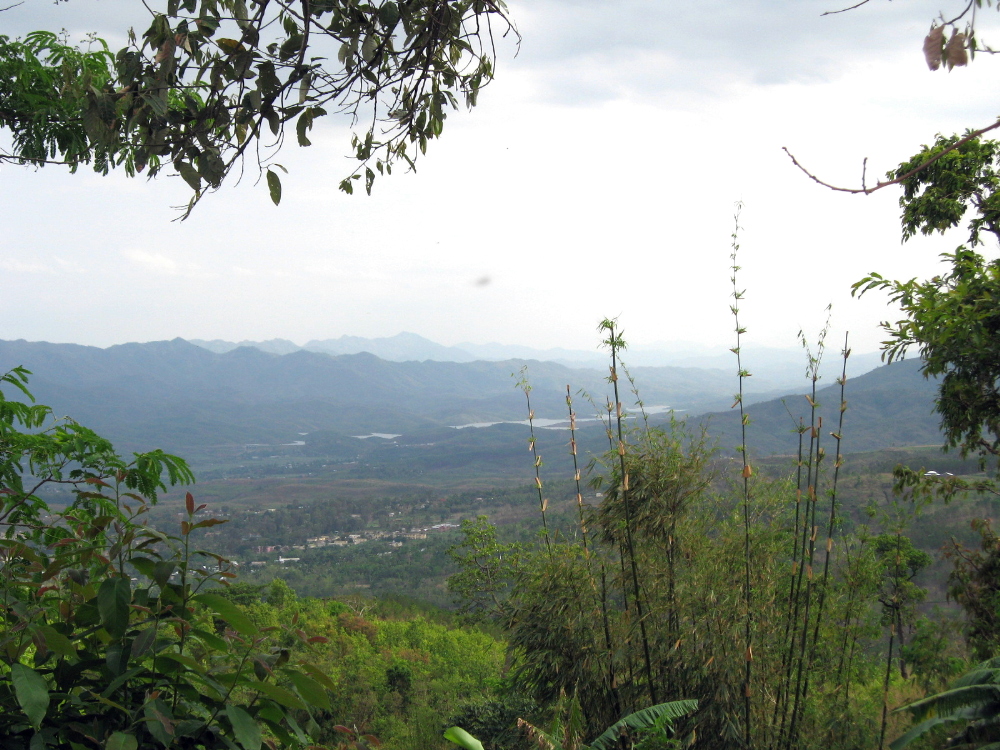
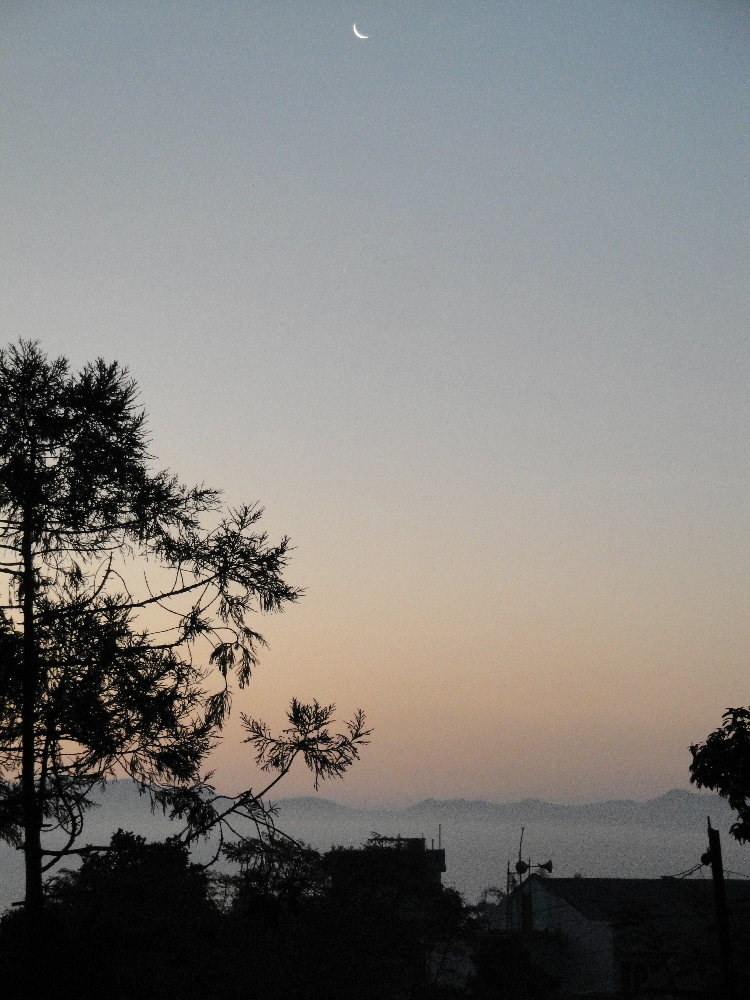
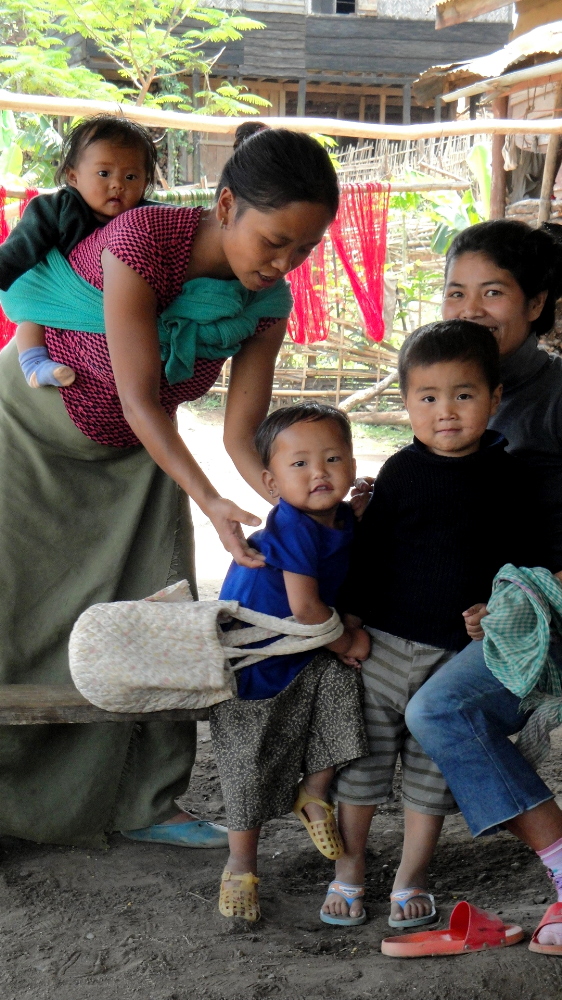
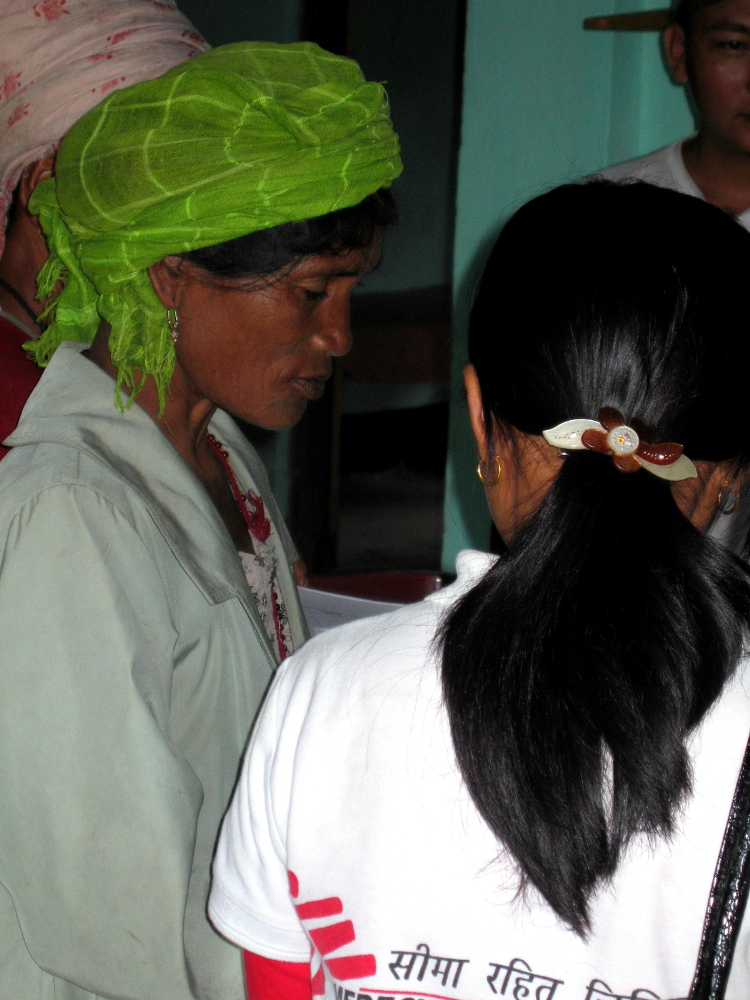
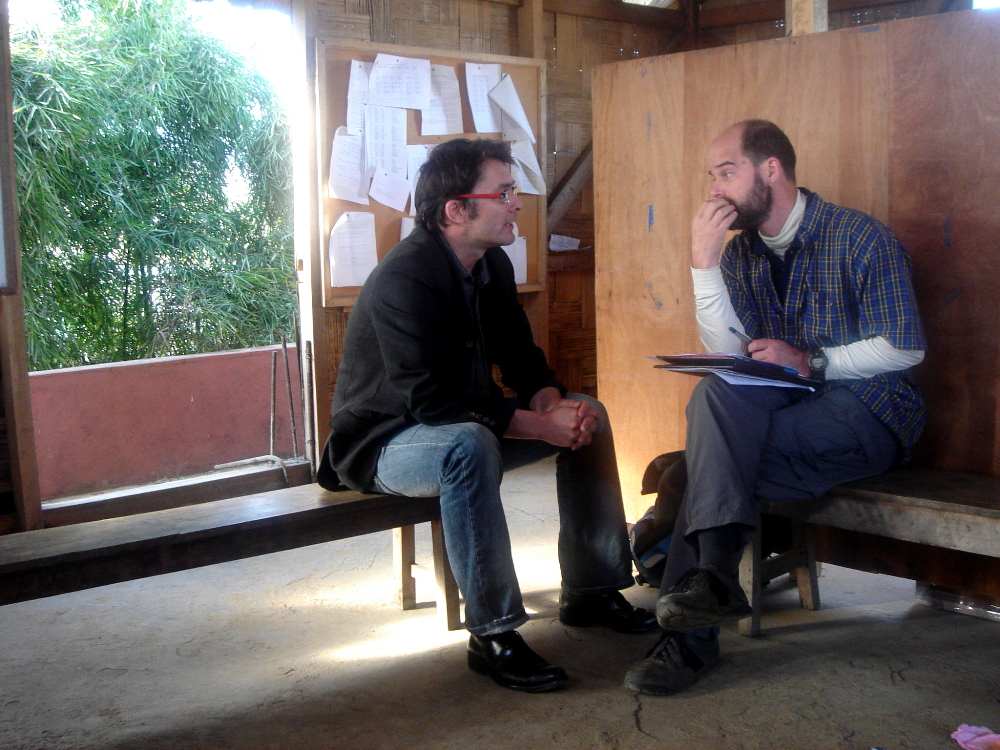

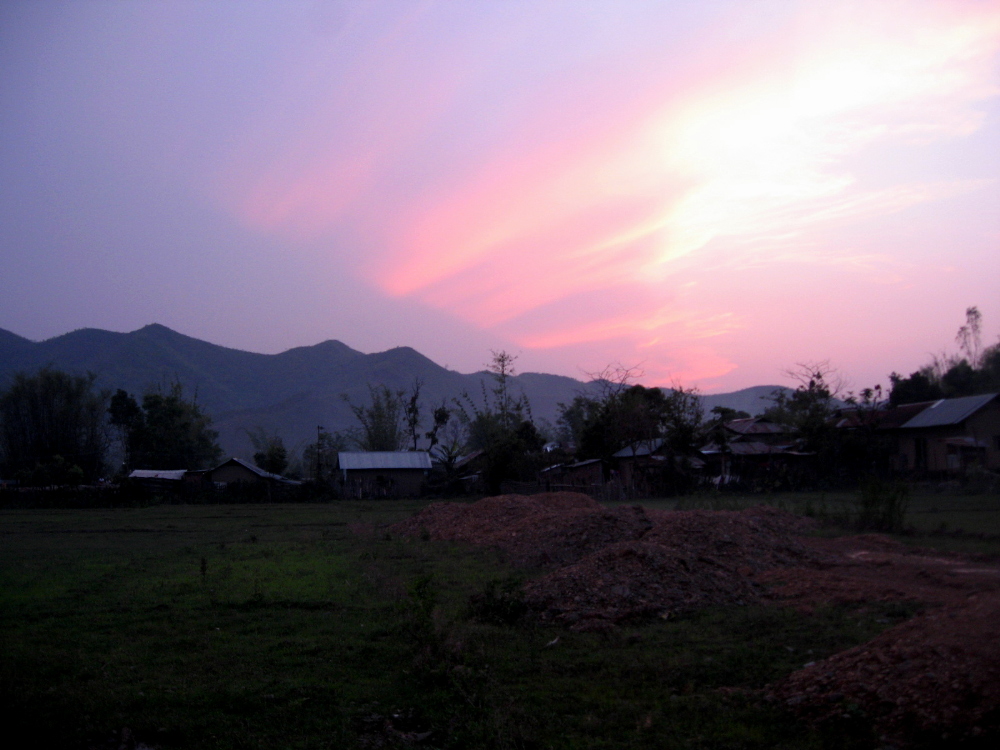
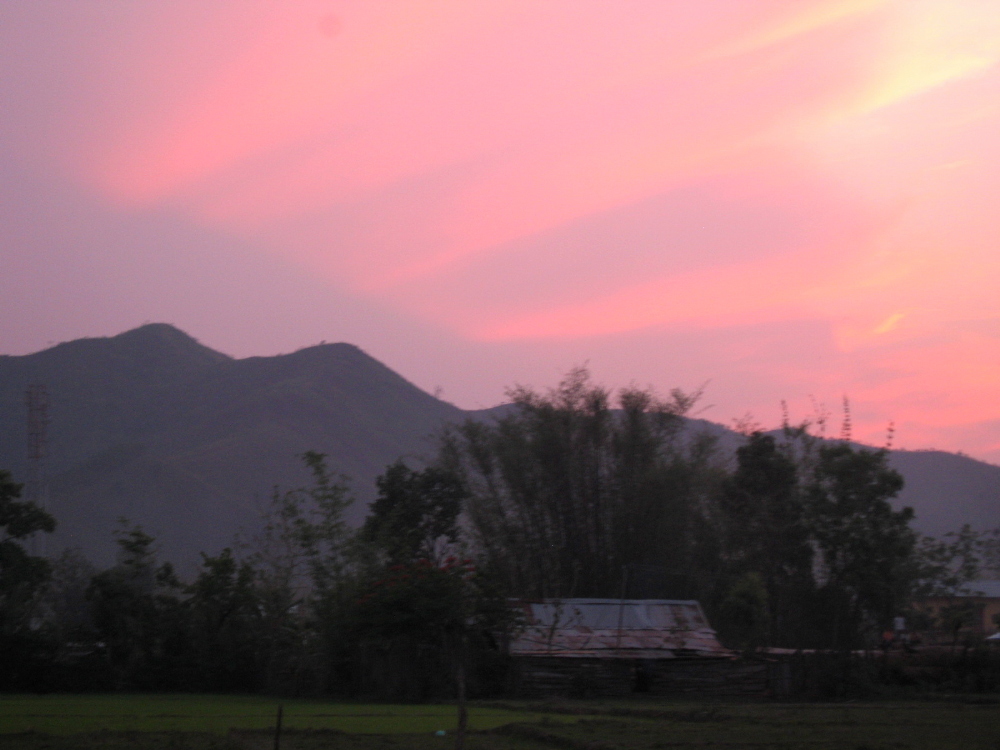
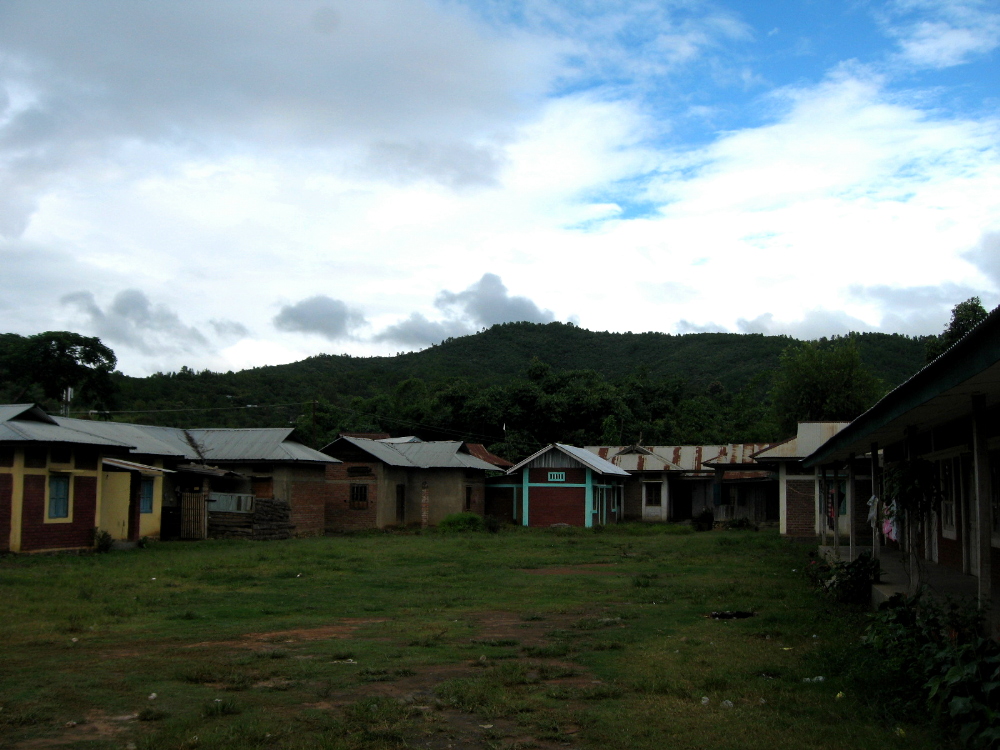
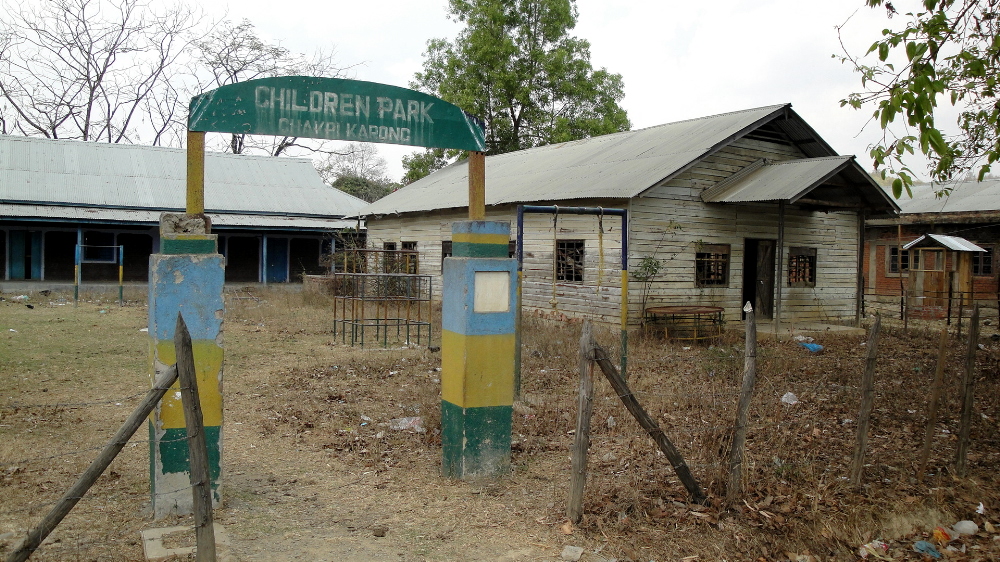
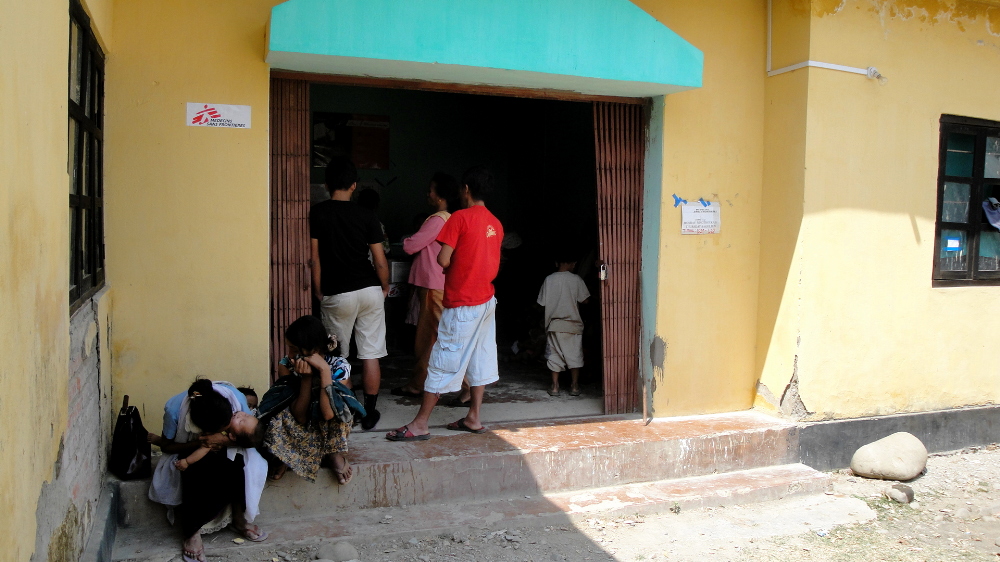
Up above is a photo I like because it shows how steep some of the terrain where folks do their farming is. Immediately above is another shot of the almost-scary sunset on the last night I spent in Sugnu, the new town where we were starting to work just as I was leaving. And below are a few shots more directly related to work. Just below is the clinic compound at Chakpikarong, a more remote town than CCpur where we started work shortly after I arrived; it, like many other health structures in the area, was not open and fully staffed with any regularity, and part of what we try to do is provide a regular schedule so that residents of remote villages (people were walking sometimes many hours to get to us) would know they could come to us reliably and get care. We also try to work in collaboration with staff (medical, lab, etc.) assigned by the health department in order to support overall greater provision of care. Below this next shot, you’ll see a ‘Children’s Park’ in also in Chakpikarong, which I put in just by way of saying that it’s not only health structures that have been a bit abandoned and unmaintained during the years when various conflicts have so strongly affected life in Manipur. But as I said above, I think this is an area of which most of the world remains unaware; it’s certainly an area where no other INGO’s, so far s I know, have any regular on the ground presence. Another reason I’m proud of the work we do there. 🙂


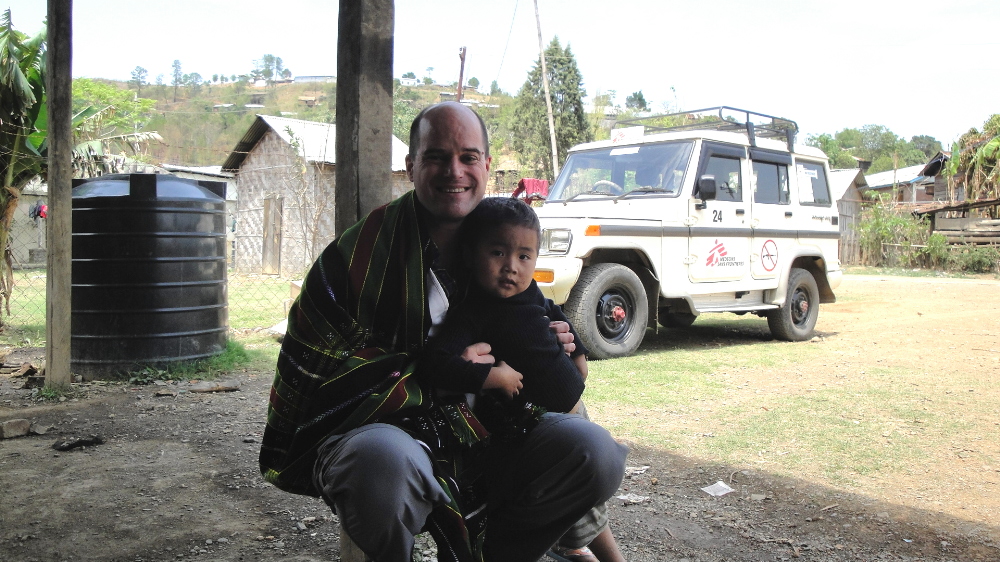

Immediately above: first day we occupied our new house/office in Sugnu (it rained, heavily) and hired staff to watch the compound, clean/cook, and help us get acquainted with our new neighborhood and its various communities. A lot of people showed up, as you see, and it was quite a full day! Below, appropriately as the last shot in this set, me eating with some of our local colleagues at my farewell party.

Little Things
 Happy holidays, friends. Here in Lamka it’s a sunny and cold Christmas morning; fresh cinnamon rolls have popped out of the toaster oven now and I’m enjoying a quiet morning with tea and roll before the rest of the house awakes. Spread all around the table here in the living room are the spoils of my glorious christmas which will be happily shared with my colleagues. This embarrassment of riches – chocolate to last us all well into the new year, books to kick start MSF library into the new year and to occupy my free time easily until the end of this assigment, and DVD’s of BSG that’ll allow us all to huddle in front of the charcoal brazier by the TV on the coldest nights – is courtesy of the unstinting generosity of both Steves, Angela & of course Howard and Gene, whose early presents arrived with them for our November vacation. I could never thank you all enough, truly. What I offer, for now, are glimpses of the trails and hills, colleagues and villagers, that fill my life here. Happy holidays, and let’s get 2010 off to a promising start, shall we?

 It’s dry season here in Lamka and they’re prepping some road beds for paving, or at least building up the gravel and dirt that cover some of the roads. Out for a run with Fiona I saw again one of my favorite neighborhood sights: a few 10-something kids dragging an obviously hand-made wooden cart (handmade wooden wheels and all — didn’t get a close enough look to see if there were metal axels but I suspect not) bumping by with jerry-cans of water sloshing around inside. (Interpretation: these folks are poor enough that they lug their own water, and poor enough that it’s better to build their own wheelbarrow rather than buy one commercially. Welcome to Lamka.) A couple days earlier, on another of our beloved weekend hill walks, I’d landed dramatically on my bum after jumping a ditch by a field where some kids were playing cricket. (Rare, that: first time I’ve seen cricket here, where the fields are about 99% given over to soccer usually; another indicator we’re culturally in southeast, more than south, Asia.) As though choreographed, the second I took my spill, every one of the kids burst out in uproarious laughter that was light-hearted and funny, not at all teasing or mean. They just found the sight of this bearded weird foreigner going down on his butt extremely amusing. The looks we get on our hikes tell us clearly enough that simply the idea of walking for fun is odd enough as it is — if one has the luxury of free time, one ought to use it to rest from one’s labors, not to take on new ones! Or at least to engage in some normal entertainment such as soccer! What’s with all this walking-through-the-hills business???
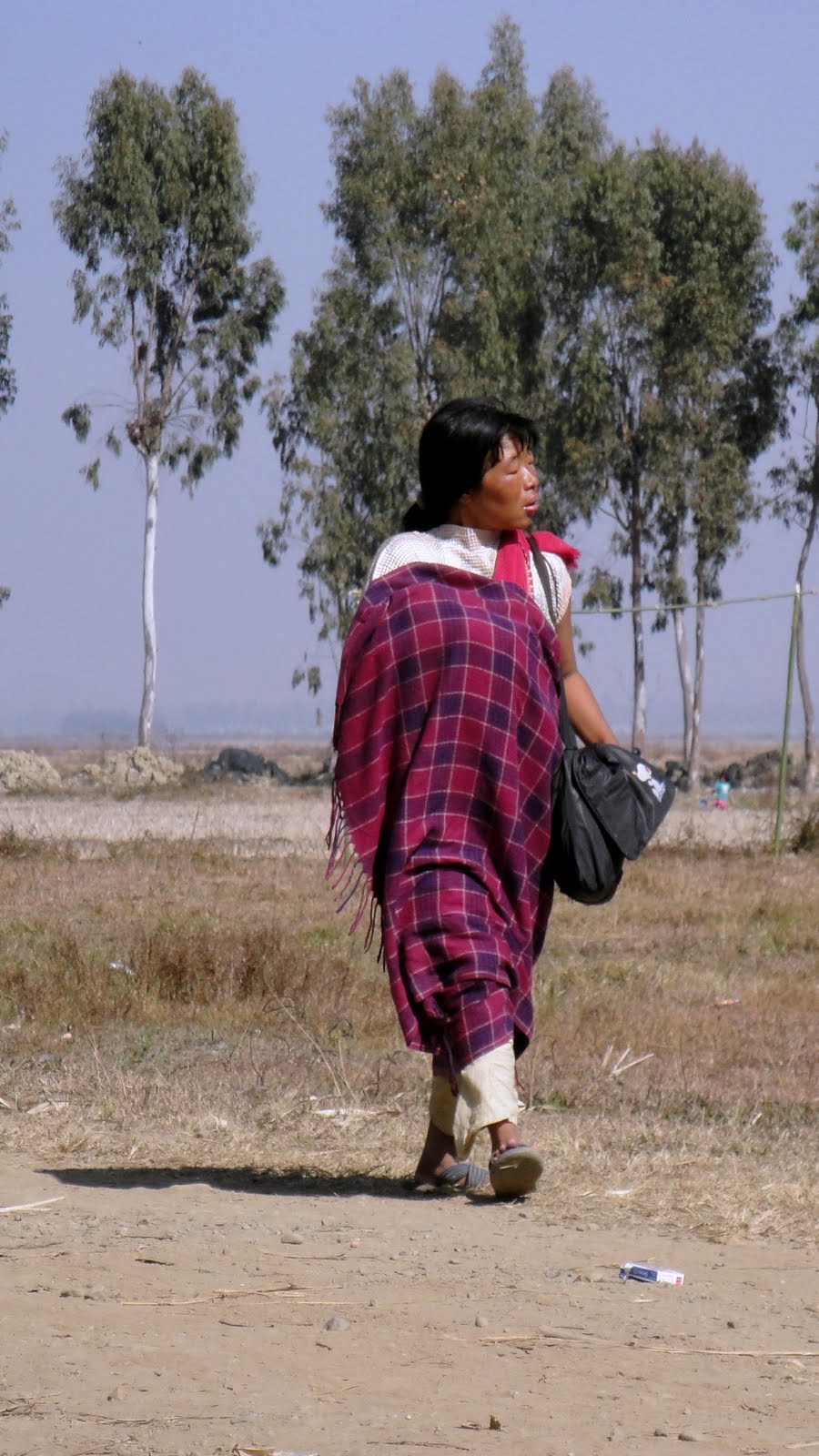
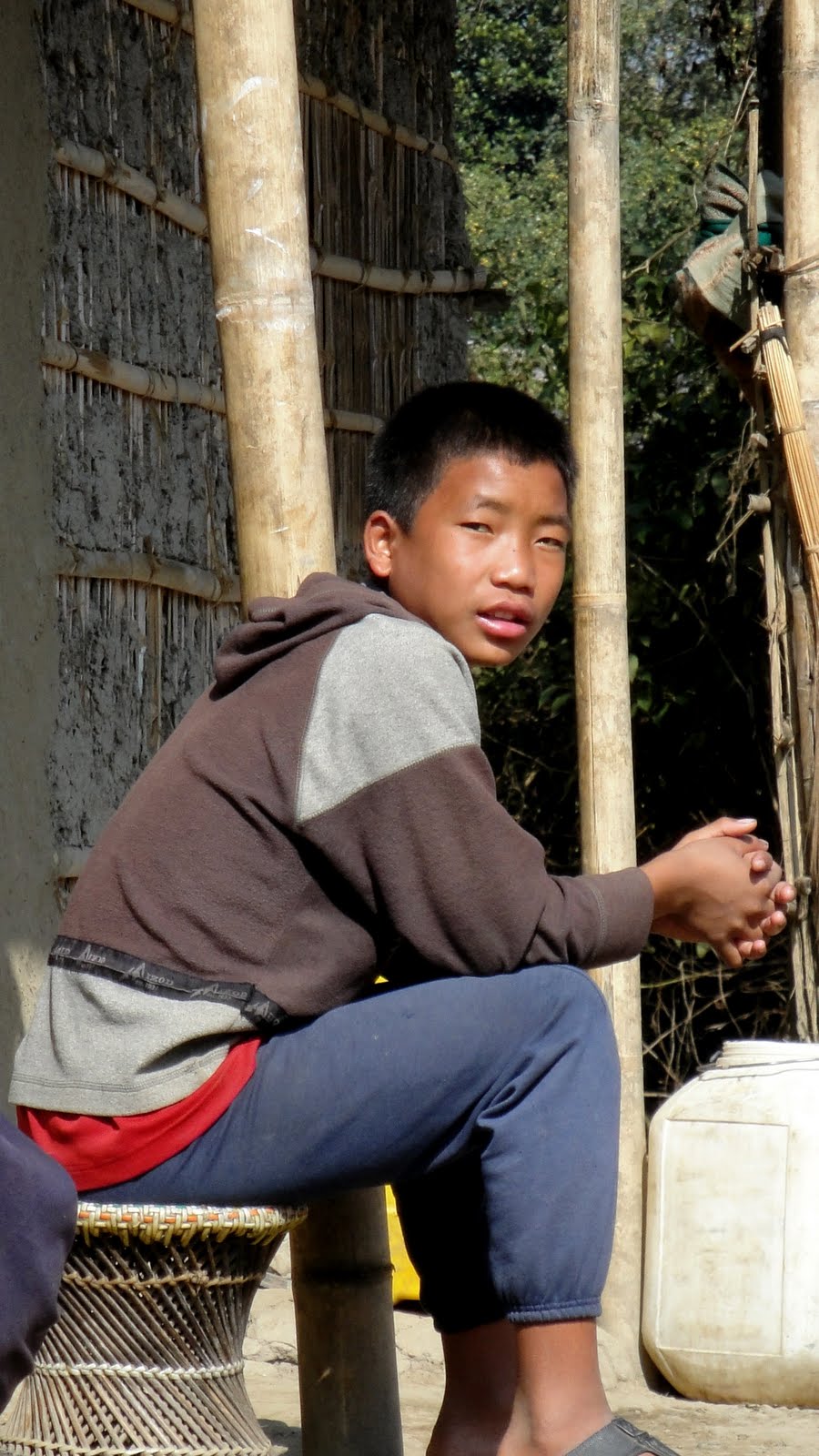


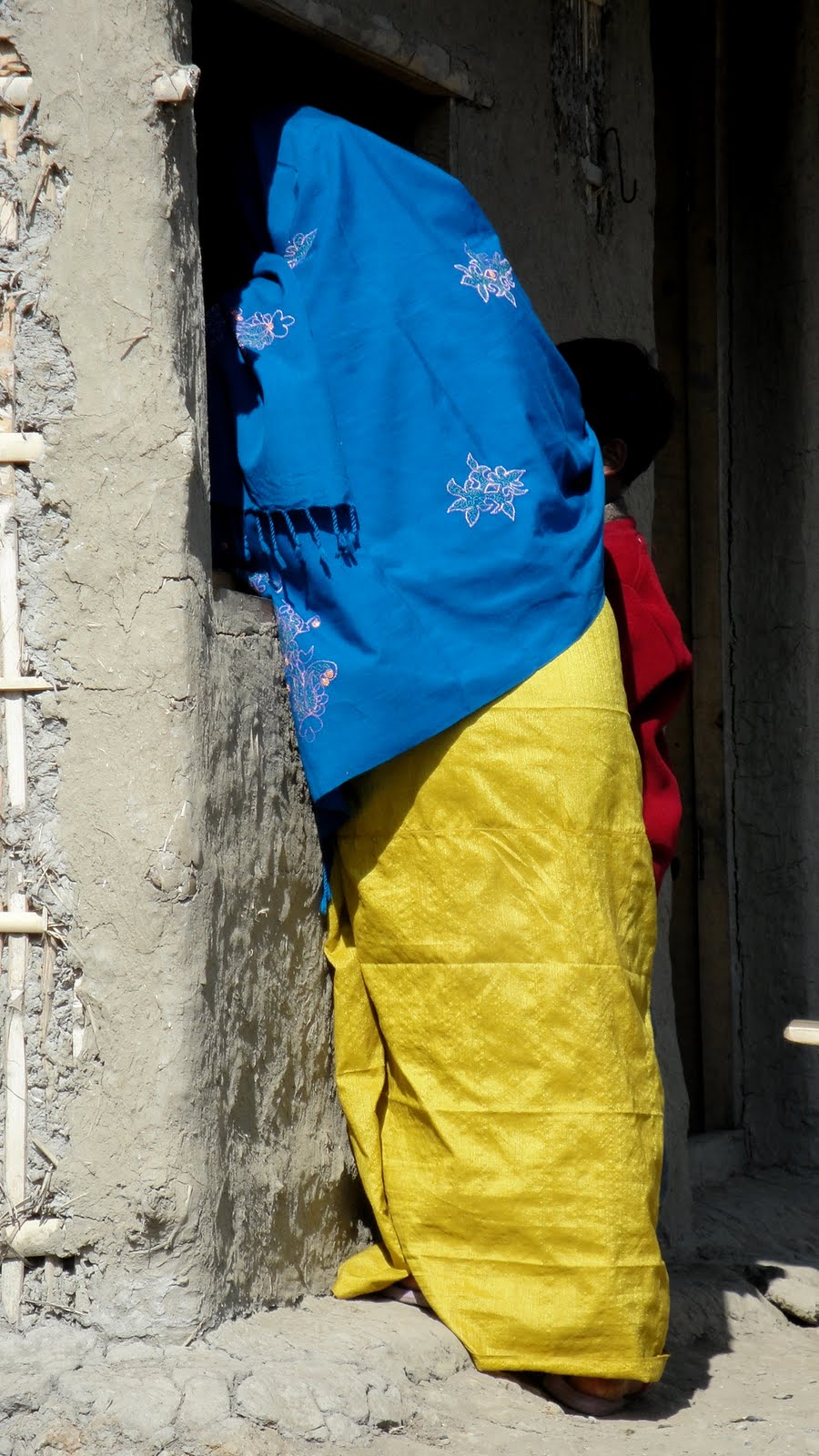
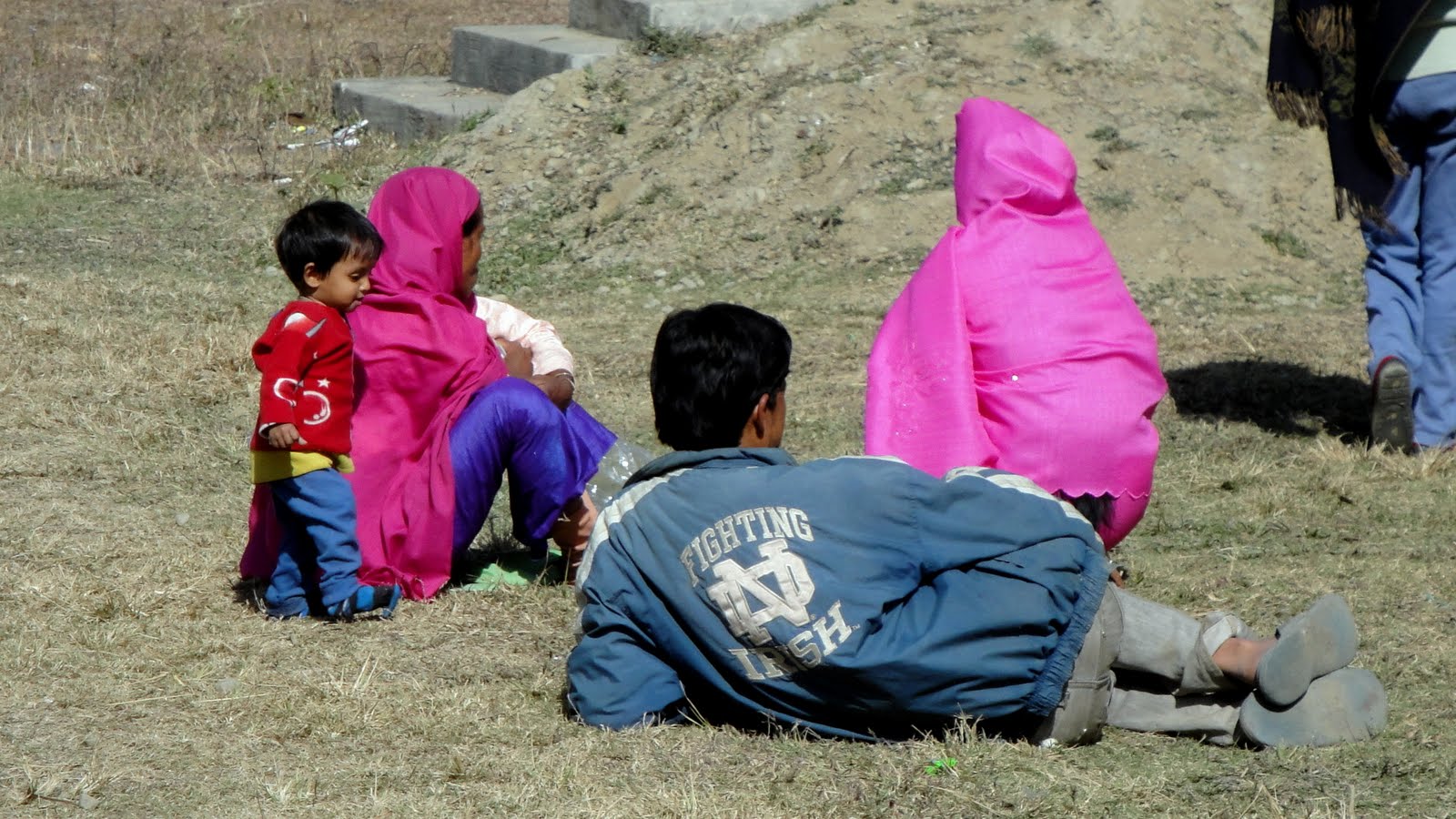 …above & below: now you know where those used clothes that you drop in bins end up: I assume they get sold to aggregators who then ship them out to a place like Lamka, where they fill many a shop.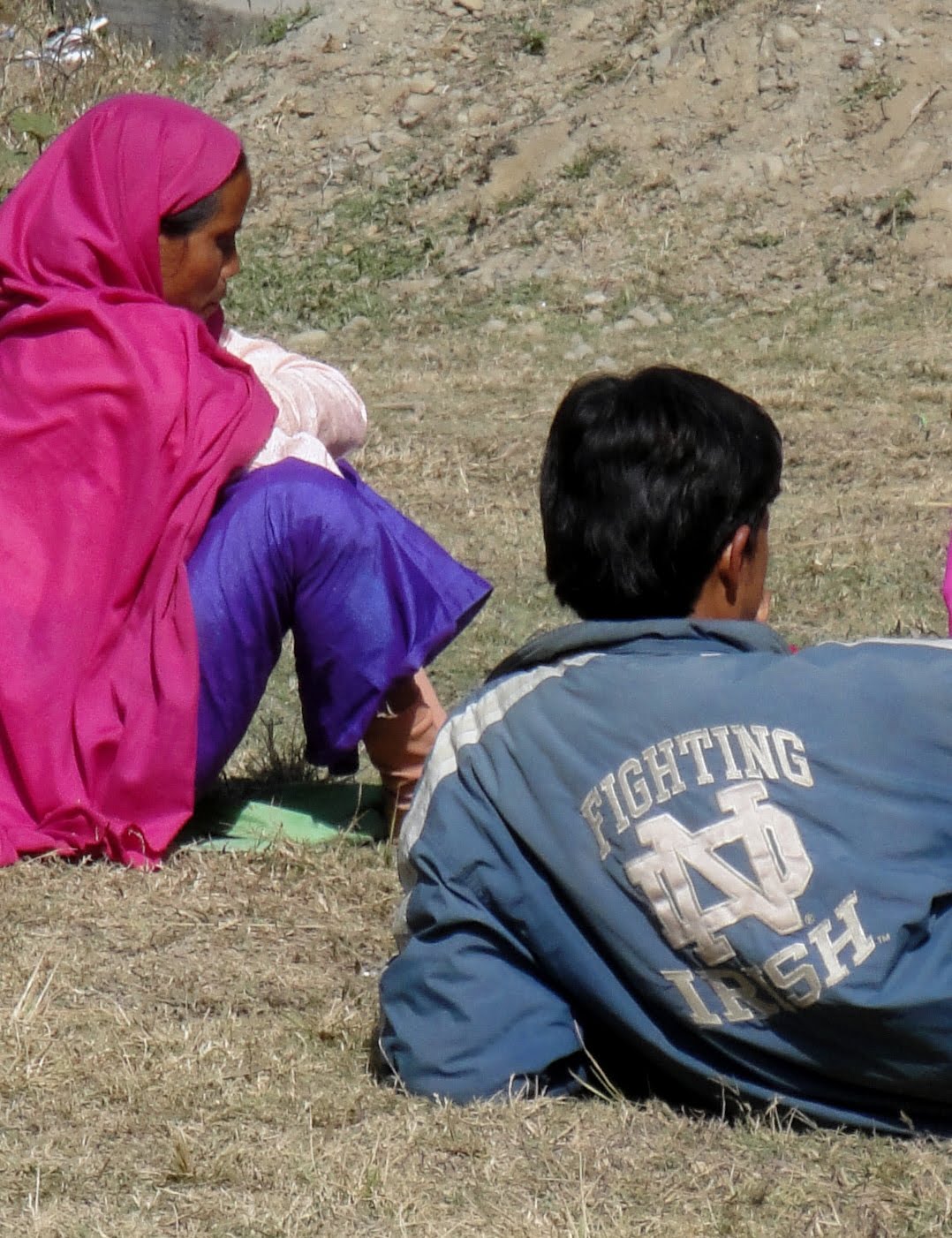



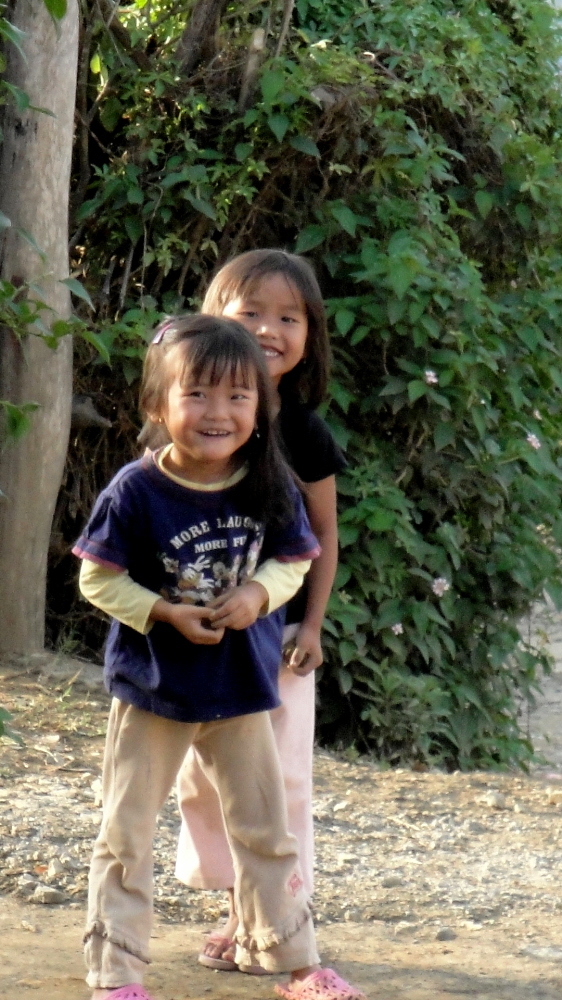
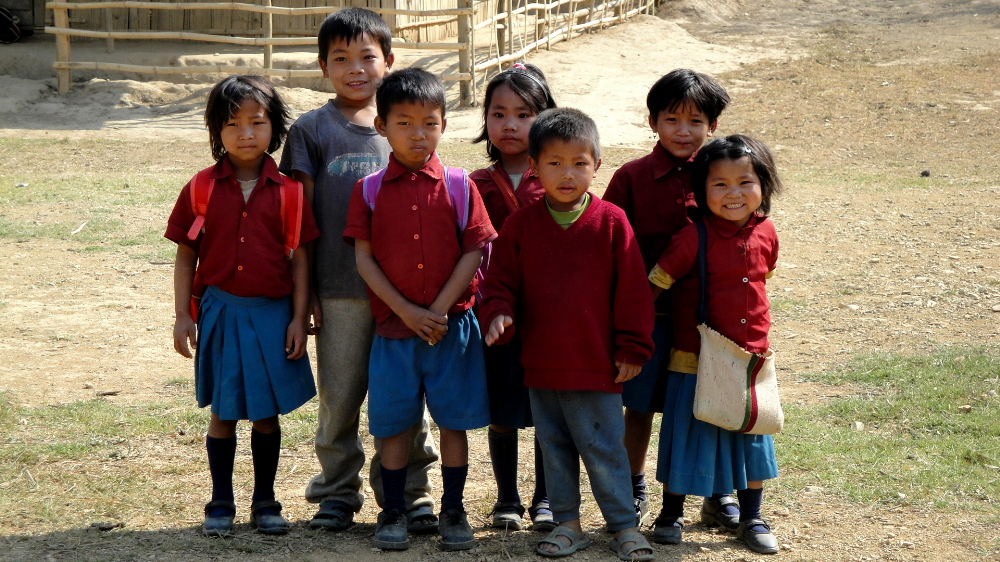
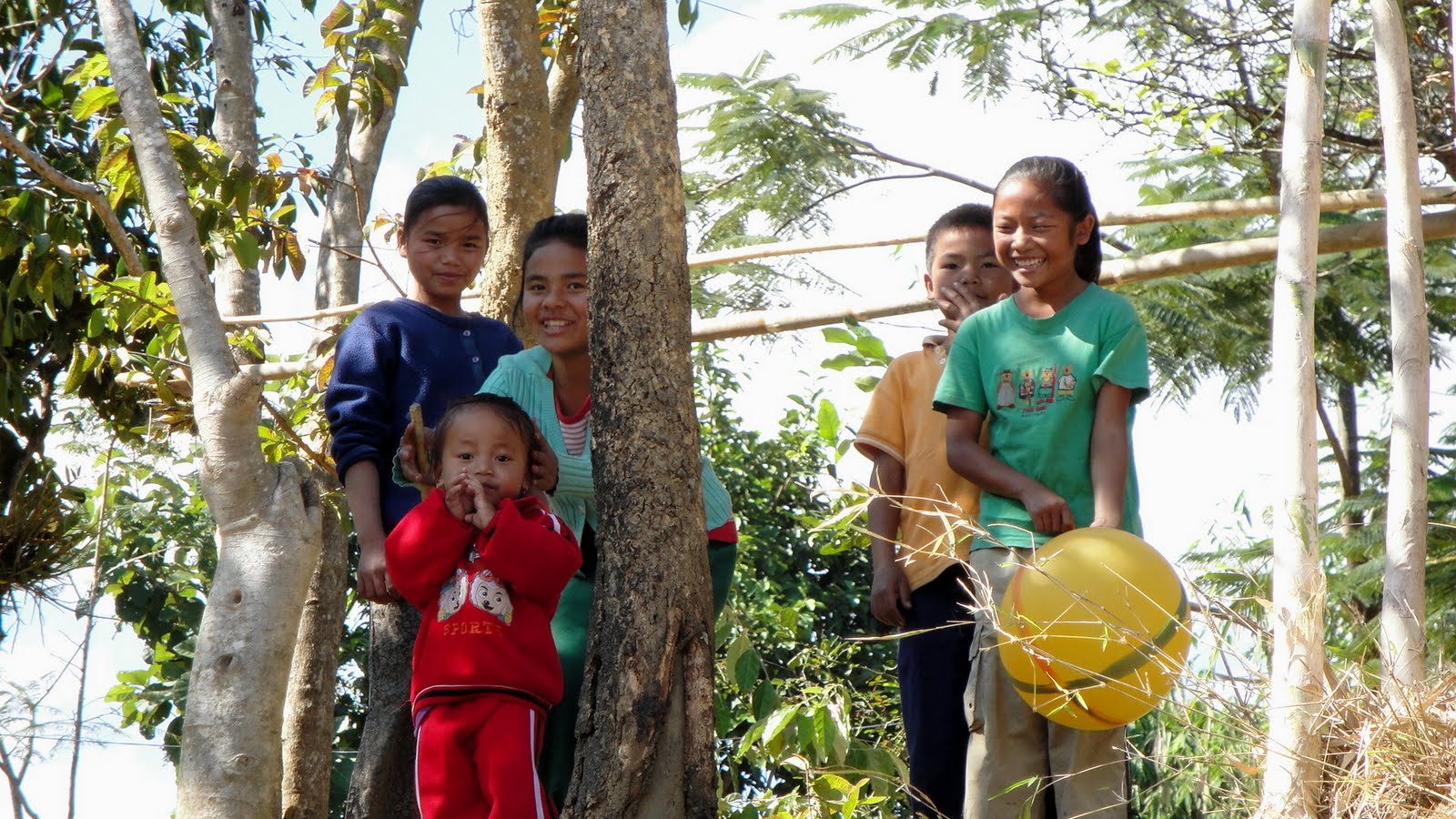 Walking on (and taking one of these photos timed just to when the littlest of the kids was doing one of the dozens of cartwheels he did as I watched – a skill I suspect he’s learned only recently…), I commented to Fiona and Marja that this was a thing many Americans would not understand. These are folks many of whom live, literally, in wattle and daub huts (look closely at some of the photos and understand that these are typical, not unusual) crowded many to a room. These are folks who all walk a ways every morning, afternoon and evening to the nearest spigot and fill those large aluminum water carriers you see in a few of these pictures, for cooking cleaning & personal hygiene…and trust me when I say this water would not pass US FDA standards.
 …those are the kids in question; click on the photo and you’ll see the cartwheeler more clearly.
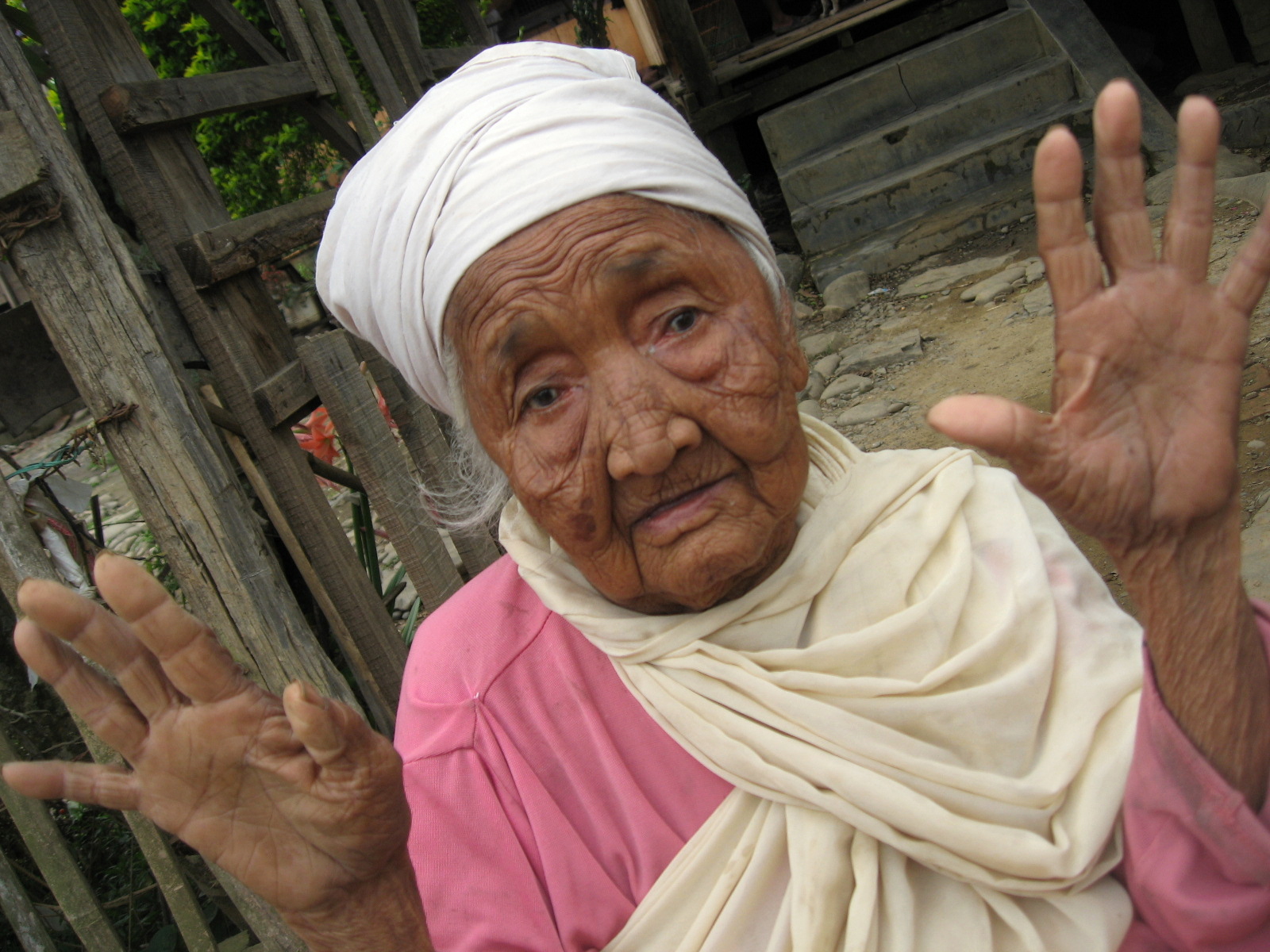
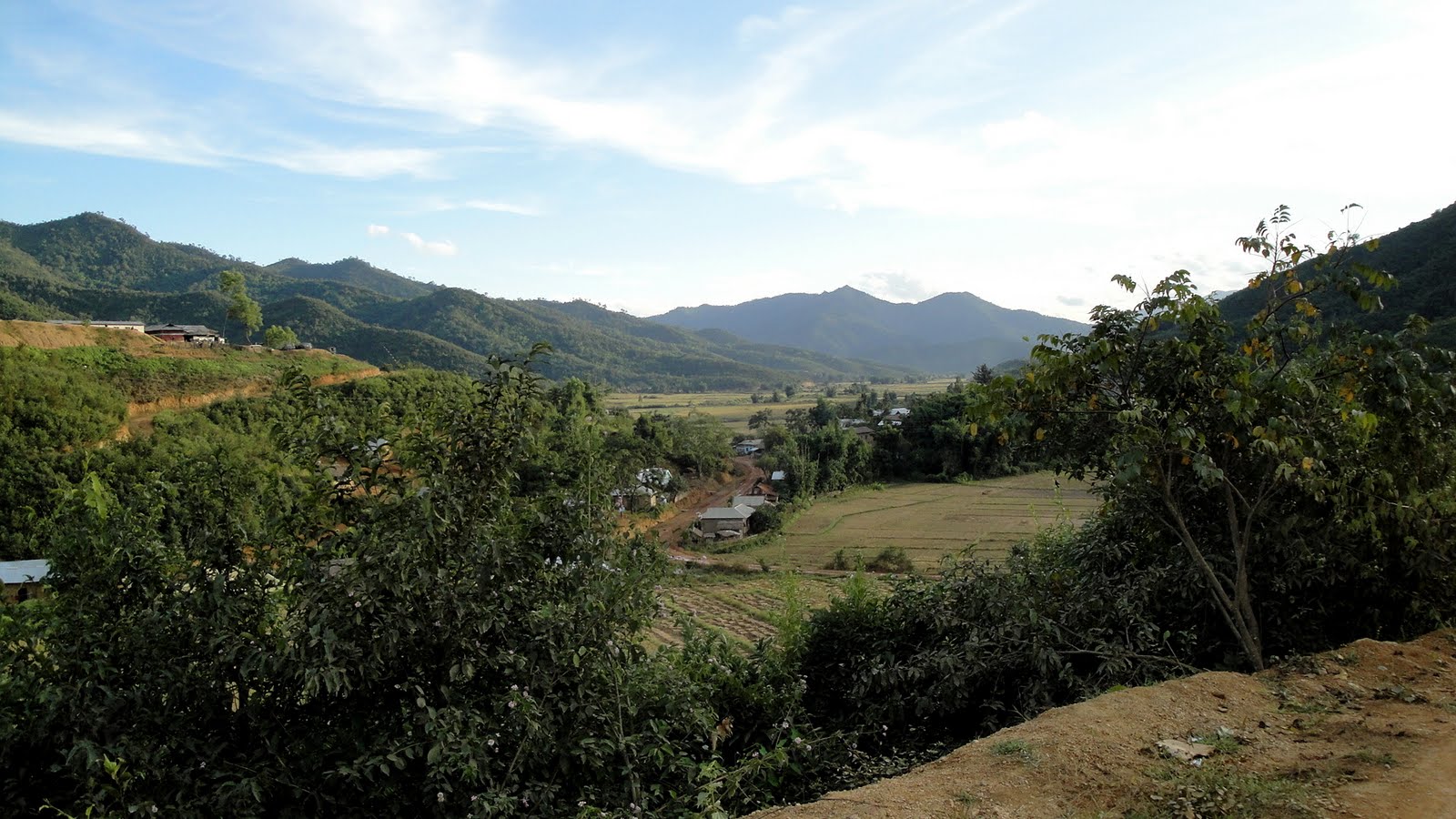 These are folks who, if they have electricity at all, have it only during those rare and unpredictably intermittent hours when there’s actually power coming over the city lines. I said to Marja and Fiona, ‘I’m not sure that most Americans understand, or believe, that it’s possible to be so simply and gleefully happy when one lives in this kind of setting with so few of the comforts and luxuries that we take for granted.’ Part of me thought it was hyperbole on my part, but I really wonder. When I consider the horror – truly! – with which so many of my friends from LA and elsewhere have greeted the concept even of just backpacking or camping, for a few days and a change of pace, in a place lacking a hair drier and streaming internet…well, I just really wonder whether these Americans would know how to locate and experience joy here. And that makes me sad. Again and again I hear friends from the US long for more connection to community, better links with family and the world around them. But again and again I see them go on shopping sprees and sit for hours in front of the TV or the computer instead of getting up, giving up the luxury, and getting out and about to meet and greet the world.
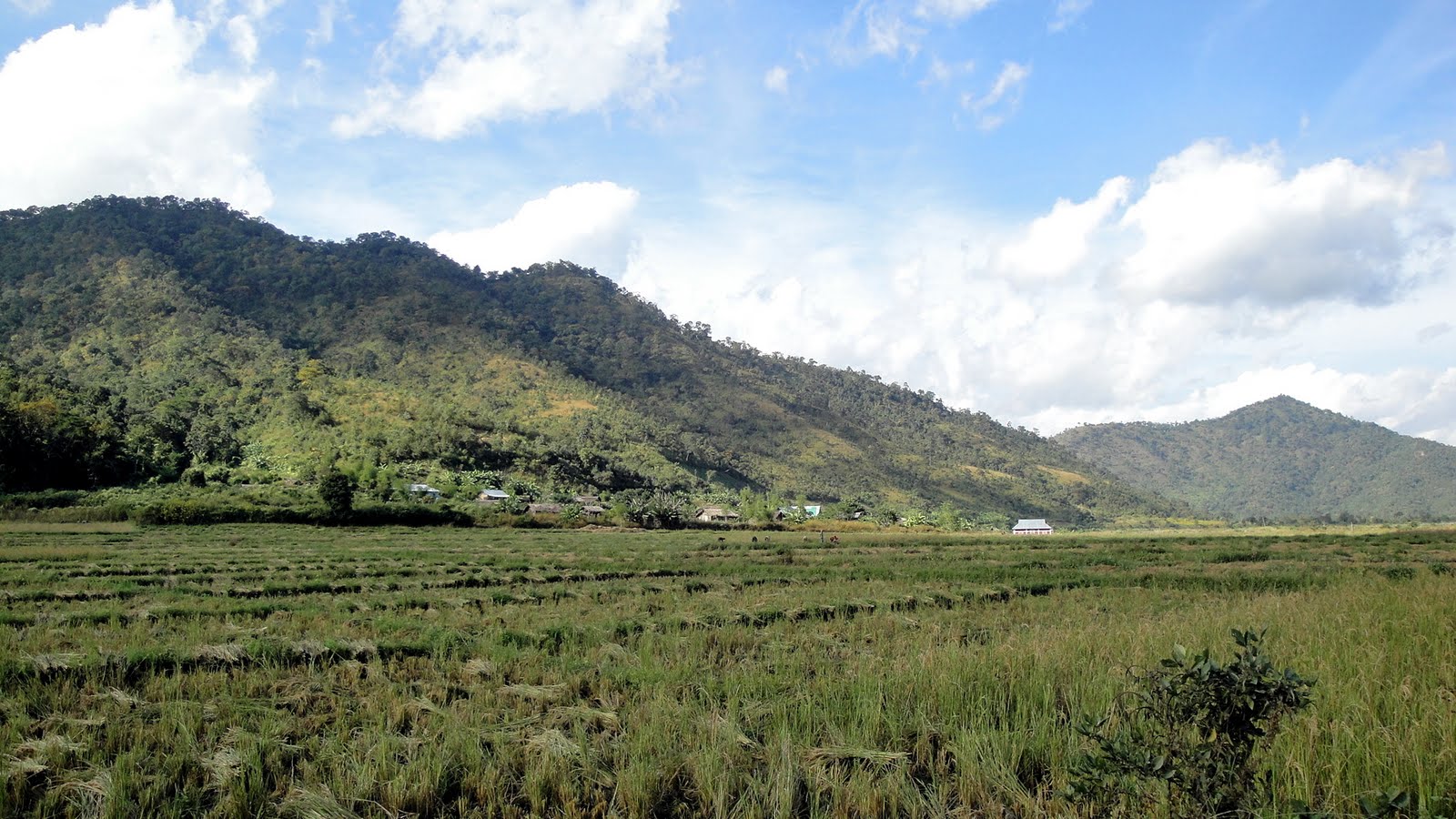
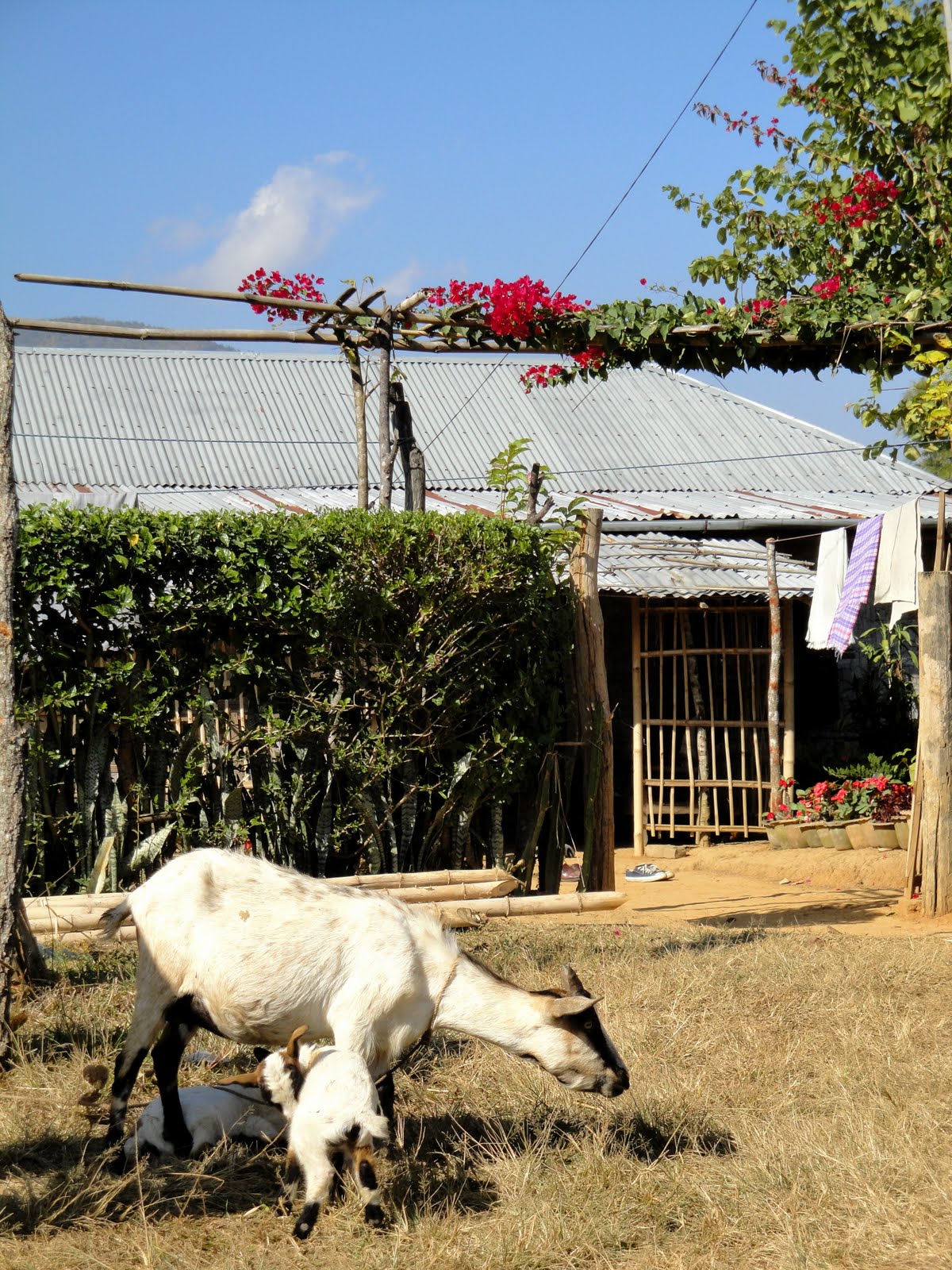
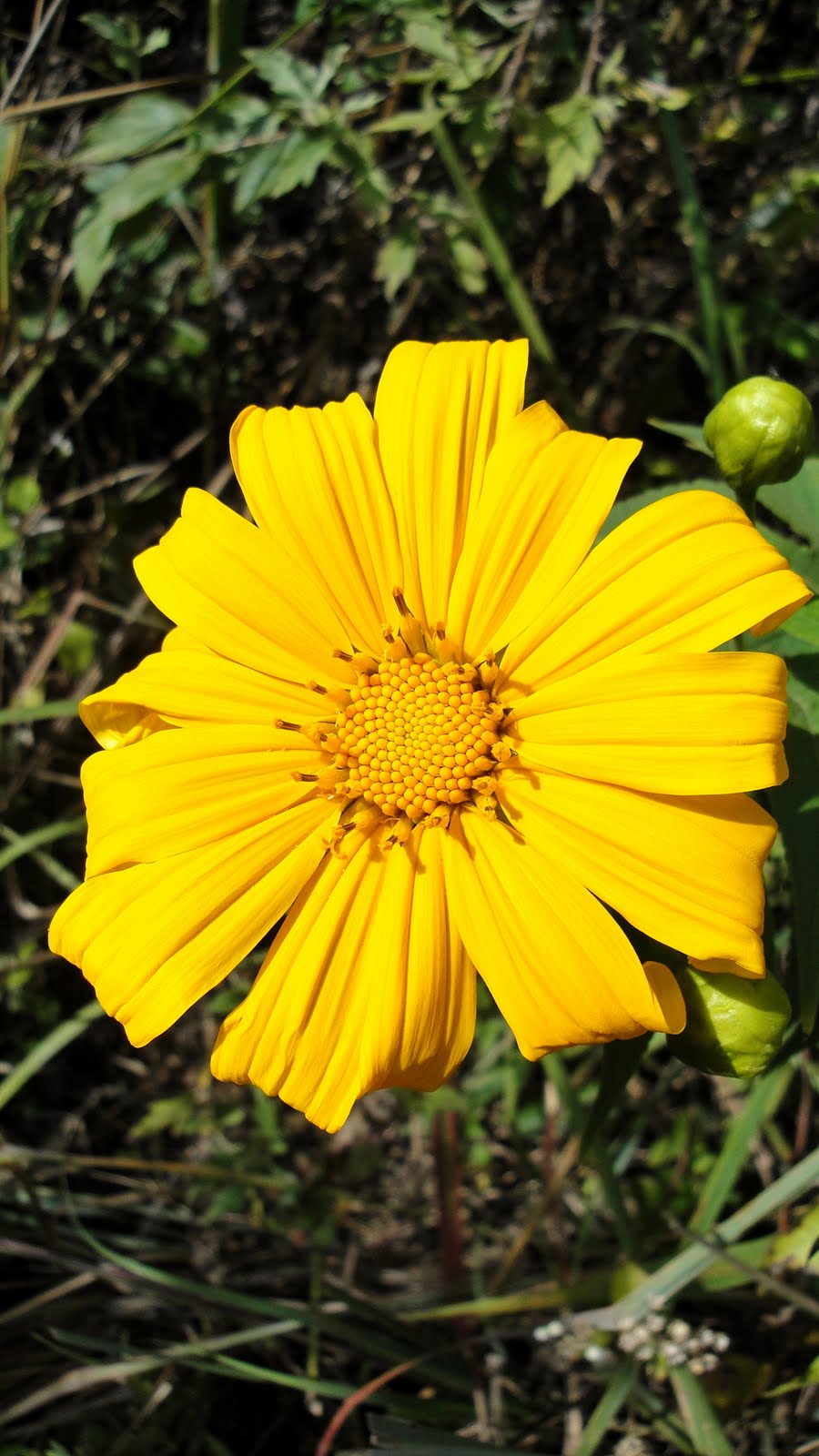
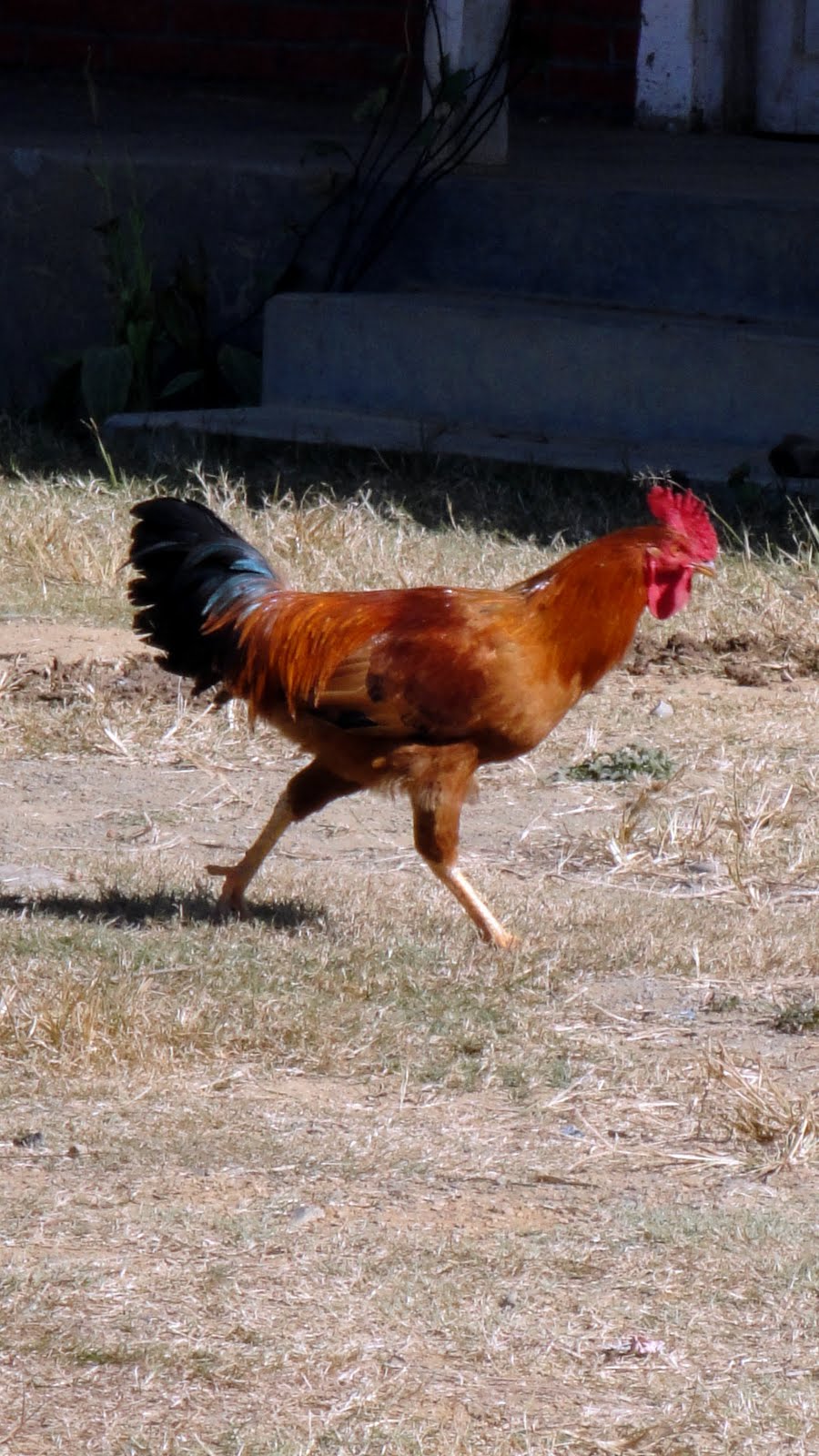 …I can never see a chicken strolling around without thinking of how Steve jumped out of the way in fear of bird flue, any time he saw one when he visited me in China four years ago…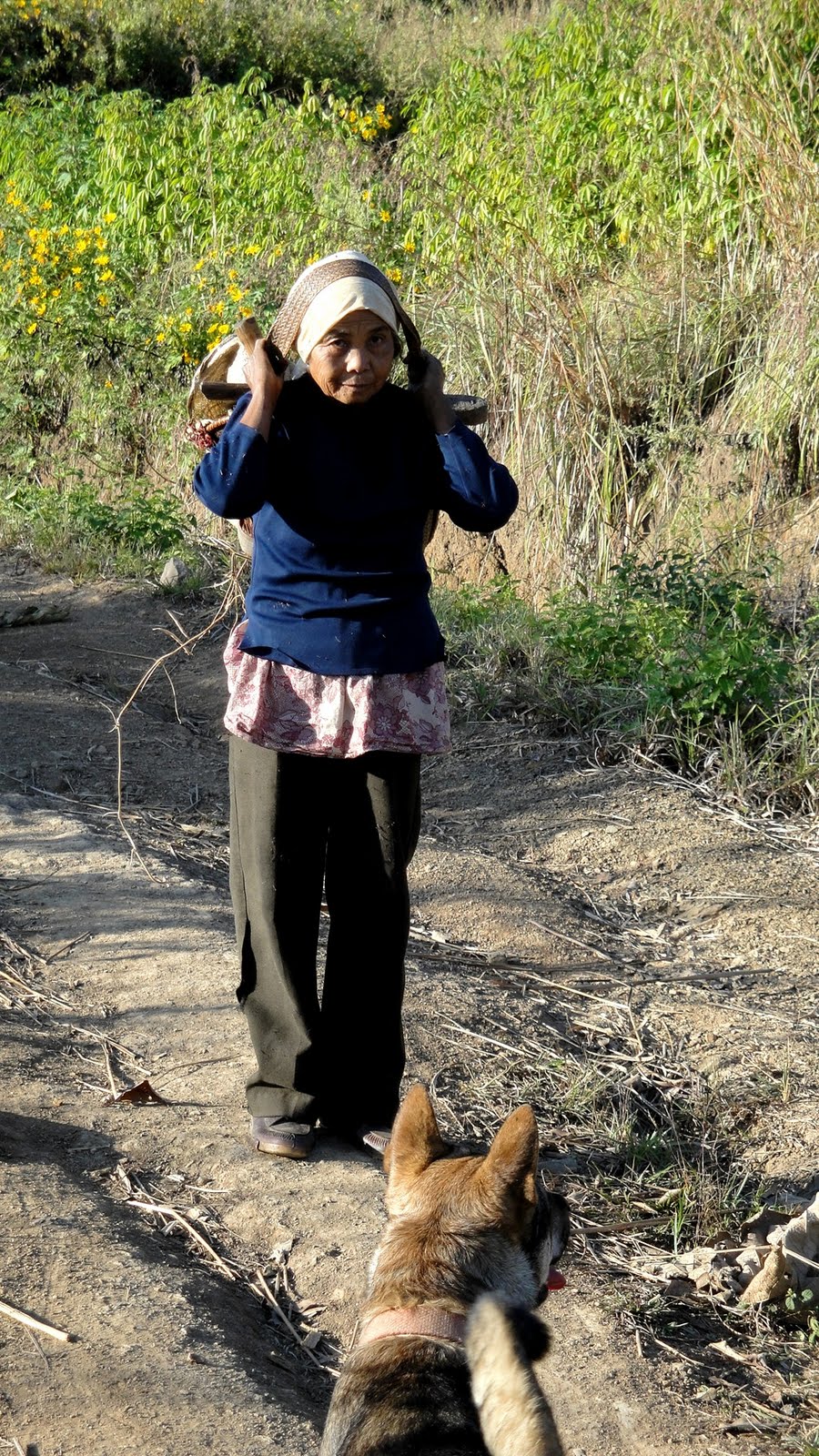
 Readers of this blog and friends who’ve corresponded with me lately know I’ve been tired – I’ve been working hard, it’s the cold season here in Lamka and with no indoor heating I do tend get a bit tired after a day huddled around a charcoal brazier. Perhaps I’ve not put out there quite enough of why I do this, all the things I do love not only about my work but about the opportunity to be reminded that the luxury I know awaits me back in the US is not necessary — it’s pleasant, it’s luxurious, but it can also be a trap. I plan to spend most of 2010 enjoying my family and friends back home, enjoying the lovely home I helped my Mom make for herself this year.


 Just about this time a decade ago, as 1999 waned to 2000 and those in the know insisted that the new milennium didn’t really begin until 2001, I was at the peak of my last career, in publishing. I’d owned my lovely new house in Long Beach for a mere seven months and my mother came to celebrate the turn of the year and my first Christmas at my new home. Through those sunny southern California holidays, builders were tiling and redoing the pool behind my house, installing solar paneling to keep the pool warm on those cool coastal California summer evenings, the house had bee nicely earthquake retrofitted…and I wondered how I’d make good my escape from that life. Much as I enjoyed – and truly I did – the wine & cheese evening I had with my mom and some friends to celebrate the new year, proud as I was of the turtle and fish tiles I’d chosen to decorate the newly refinished pool (and truly I was), I just saw publishing in an unstoppable decline and frankly knew I’d learned what I needed from the career anyway and was ready for work that would do as much to connect me to world as to fill my bank account. But I had, of course, no idea how to make the shift from well-paid corporate executive to under-paid humanitarian worker. What the US likes to call the ‘non-profit’ sector tends, there at least, to frown upon those with business backgrounds on the assumption that we can’t make the transition well from a cash bottom line to a social or humanitarian bottom line…or from a larger paycheck to a much smaller one. I think if more American were willing to reaxmine their goals and hopes, it could happen. I’m certainly happy it’s happened for me, and I look forward to connecting with all of you again on an extended down time in the US in 2010. Happy holidays & new year, everyone!

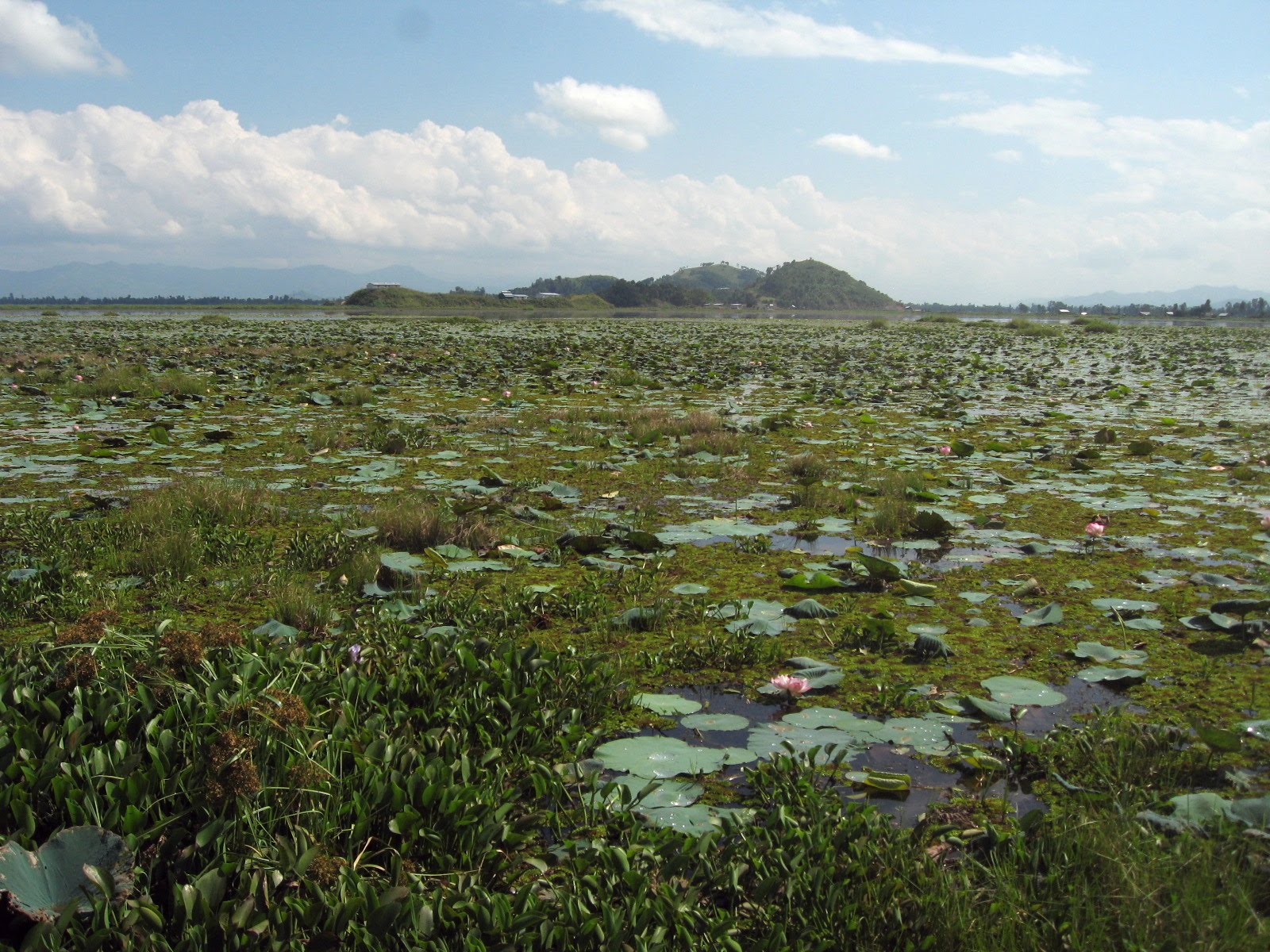
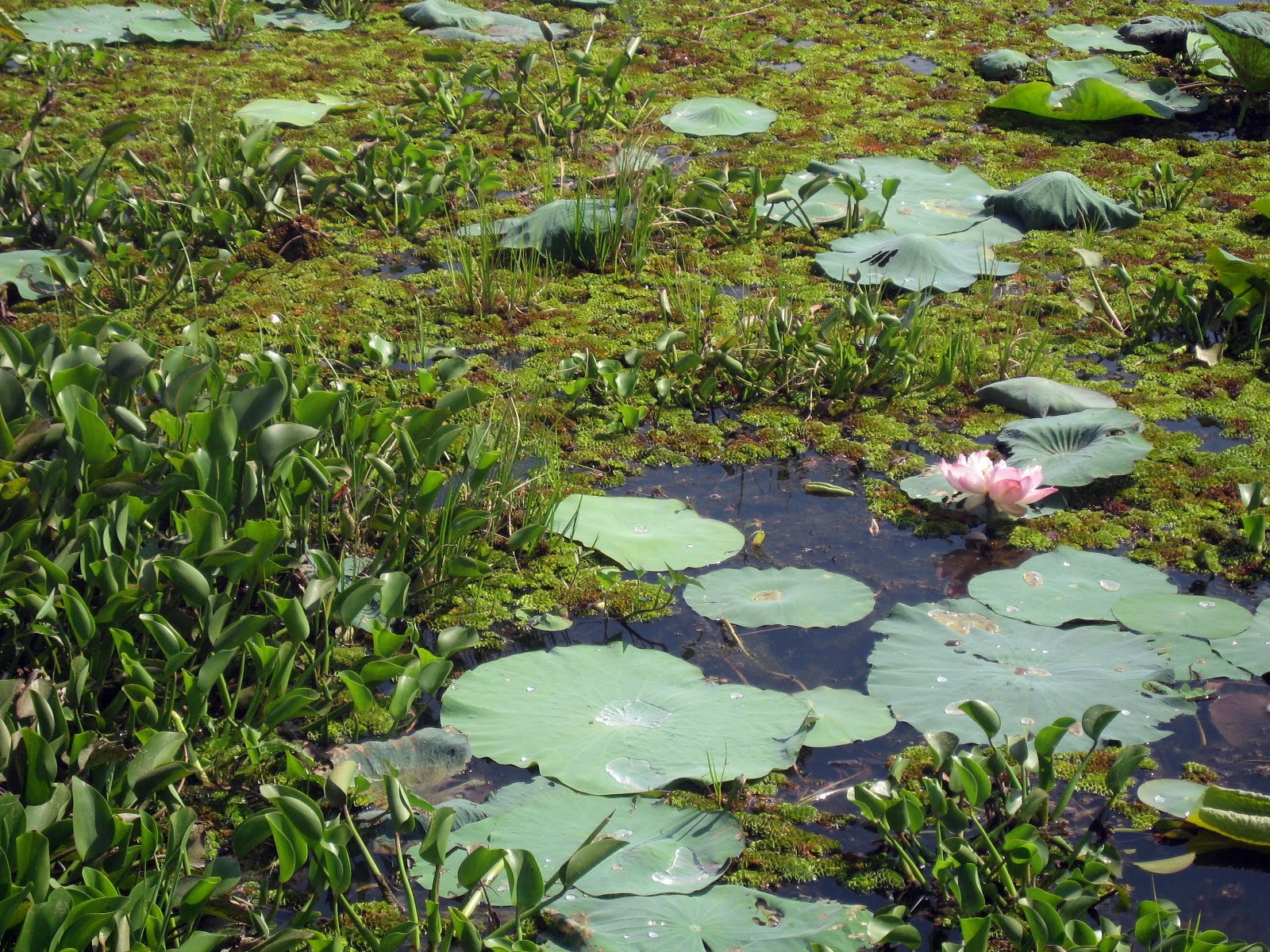
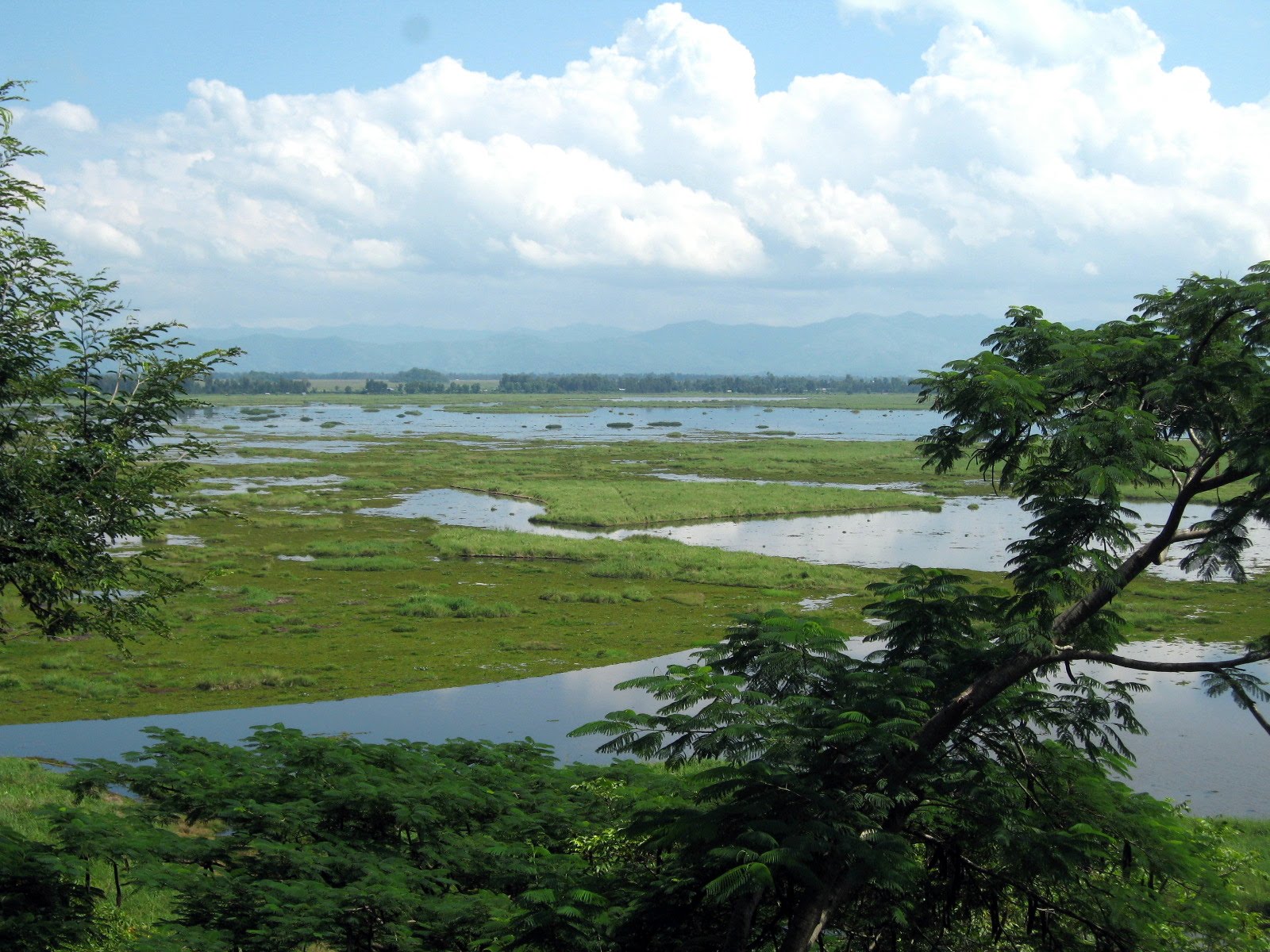
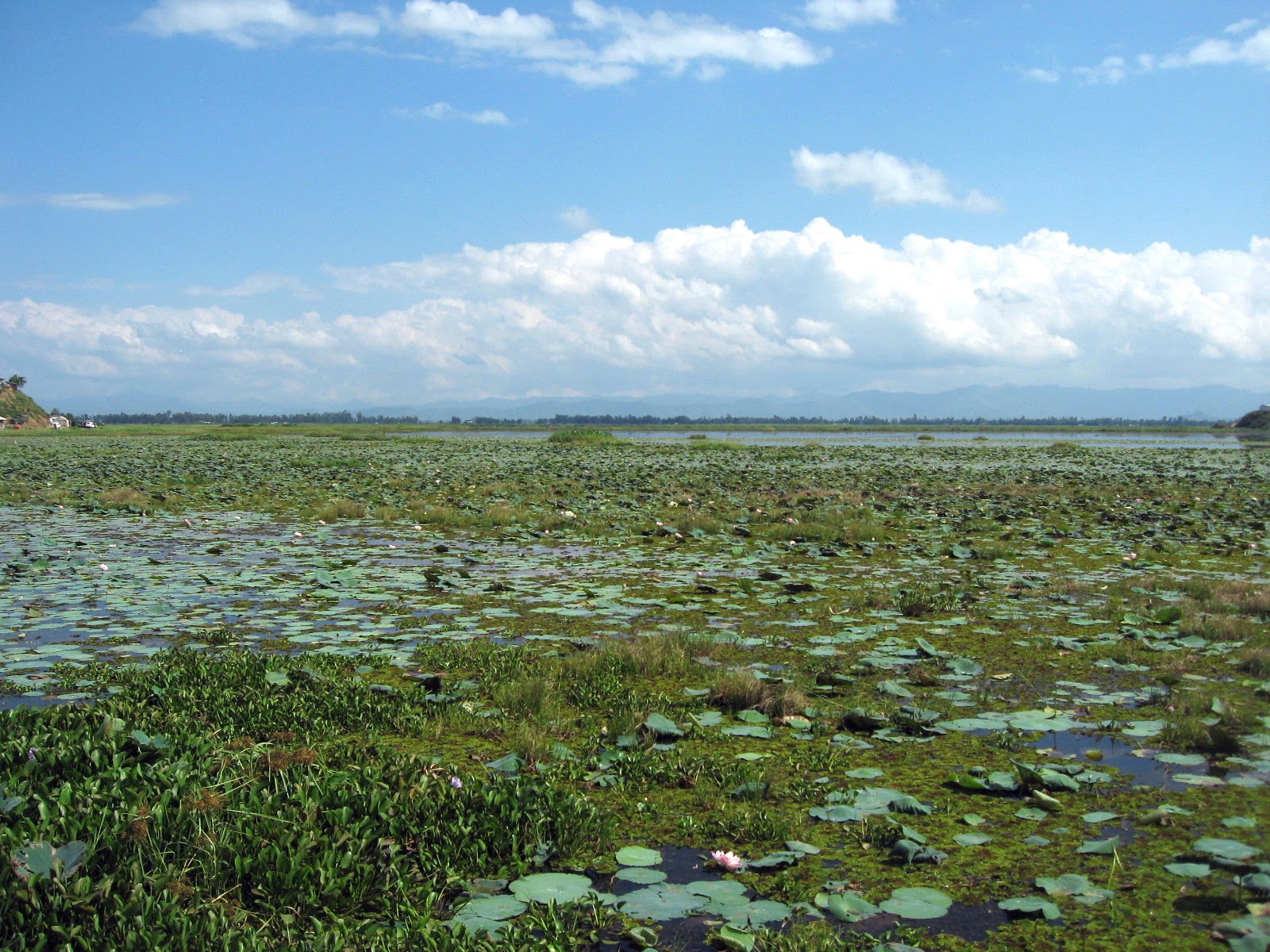 …if you’ve googled Manipur, you’ve read about Loktak Lake. Le voila, above and below.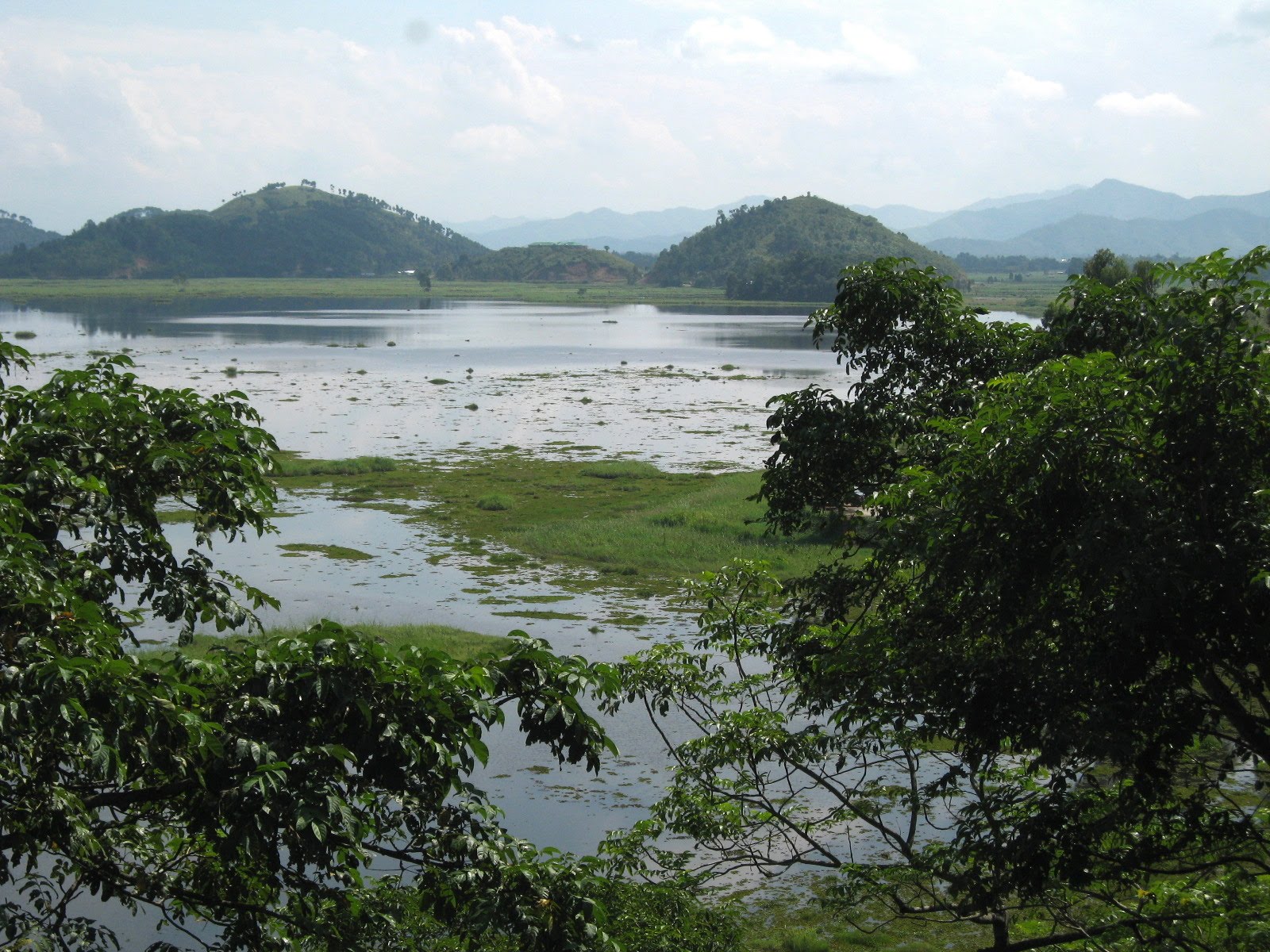



,
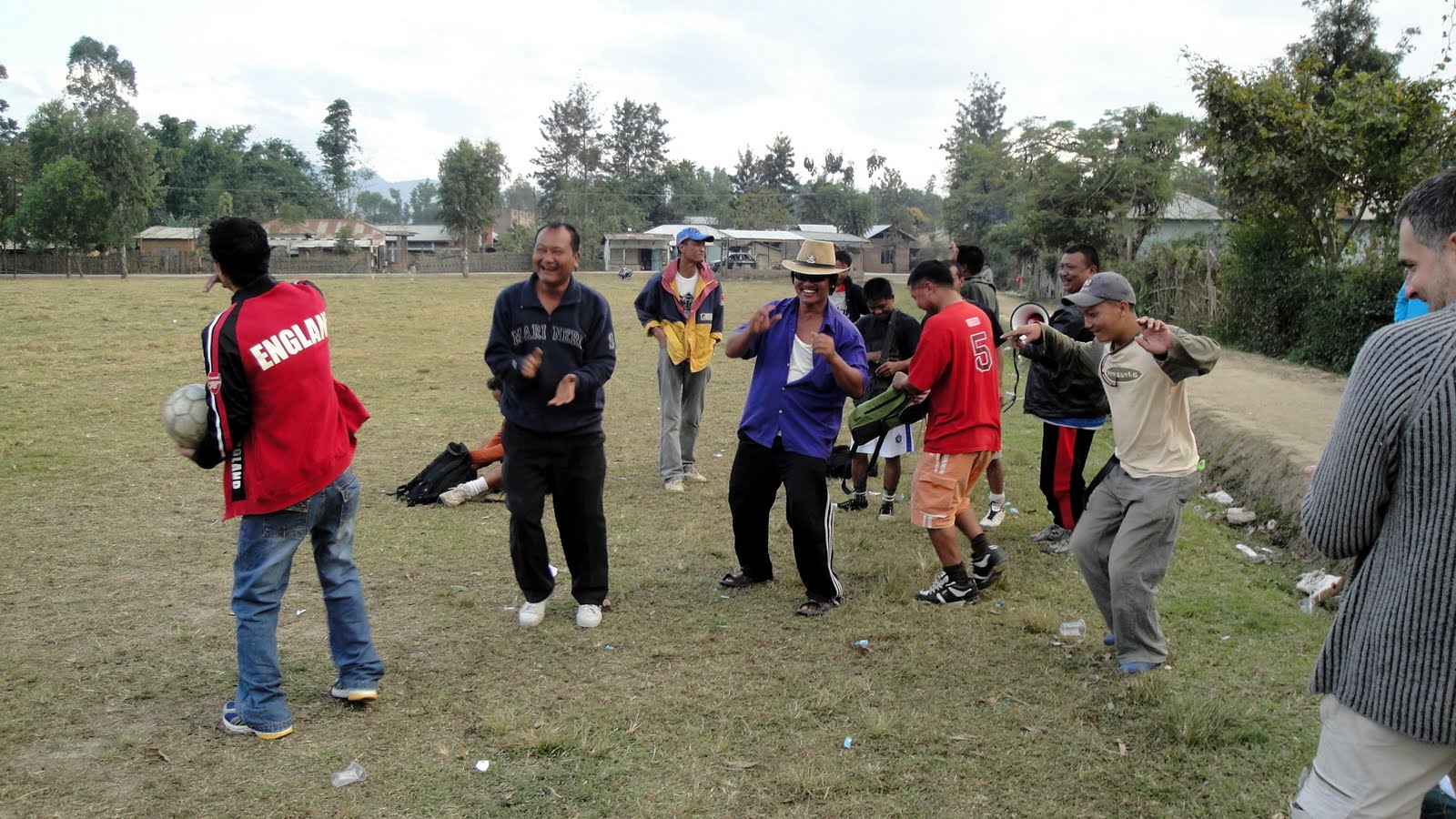
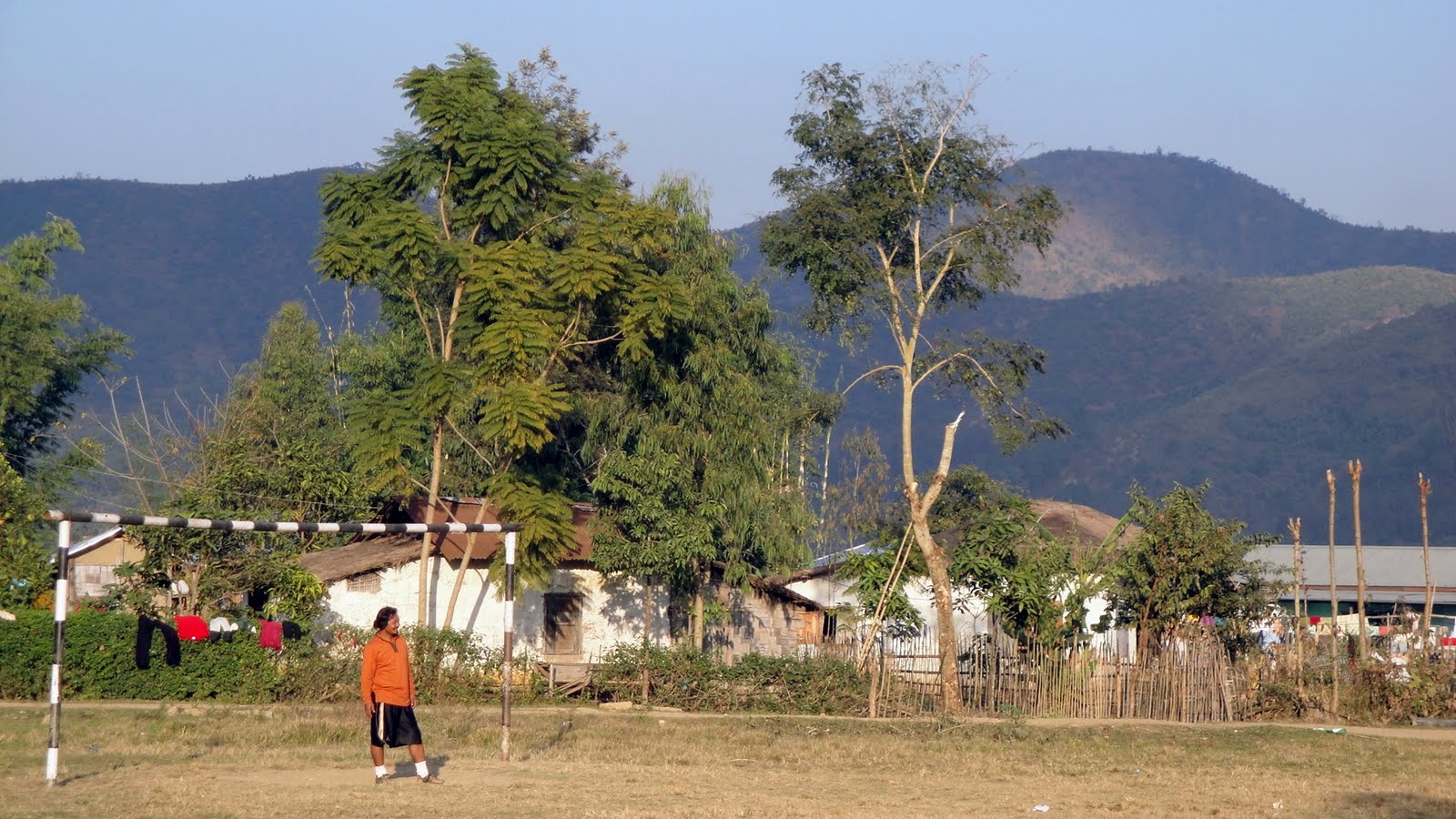
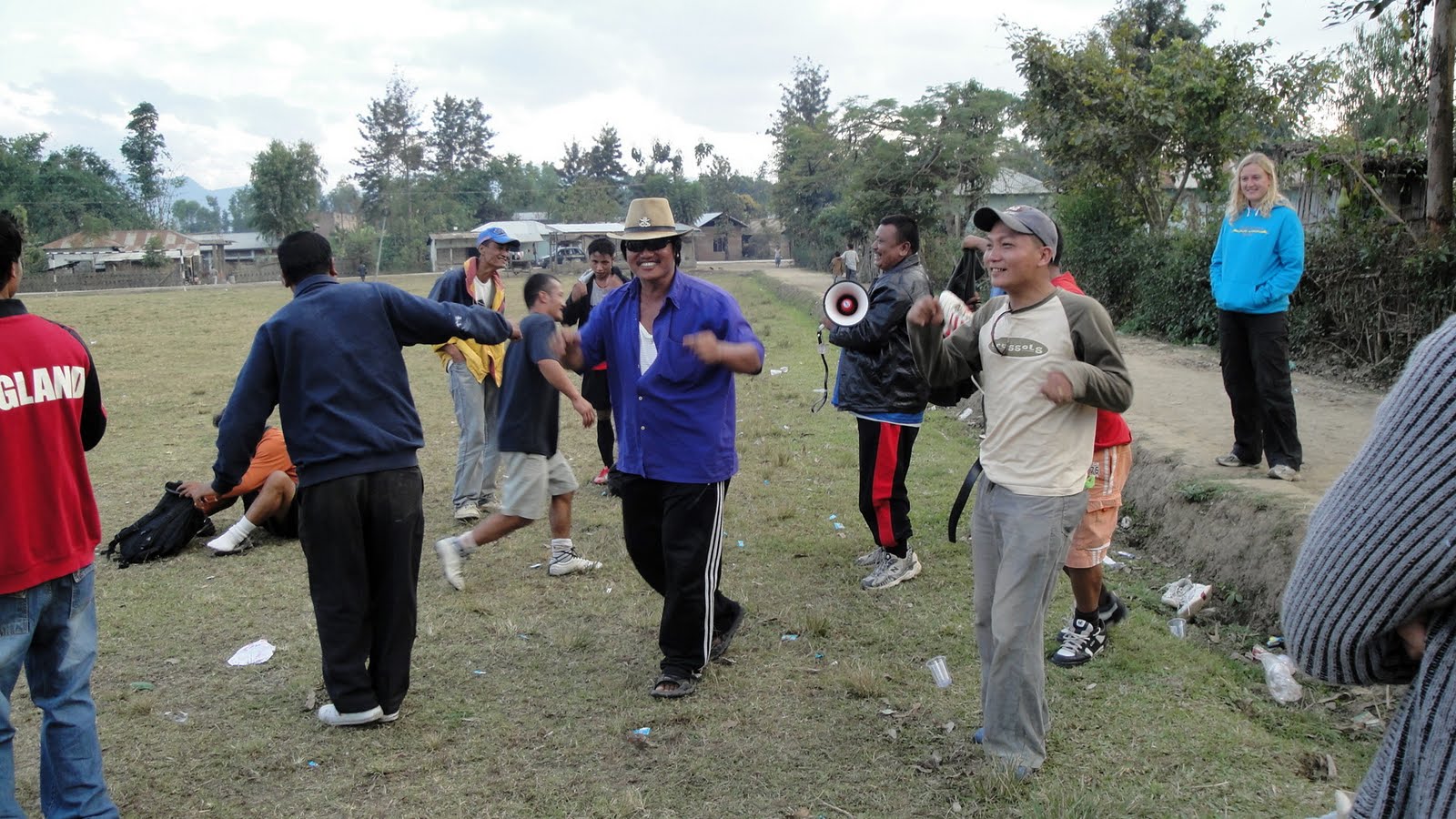
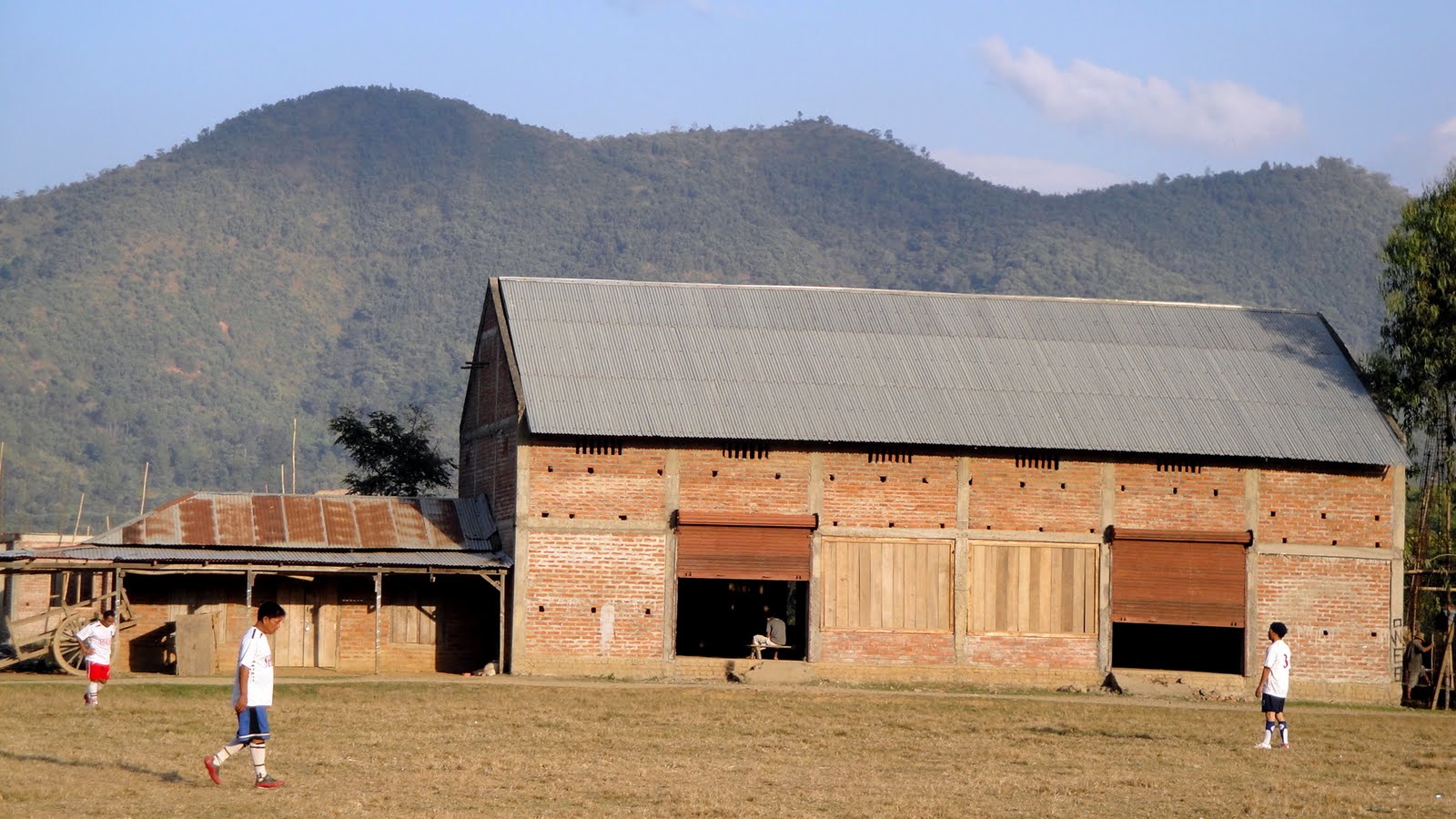
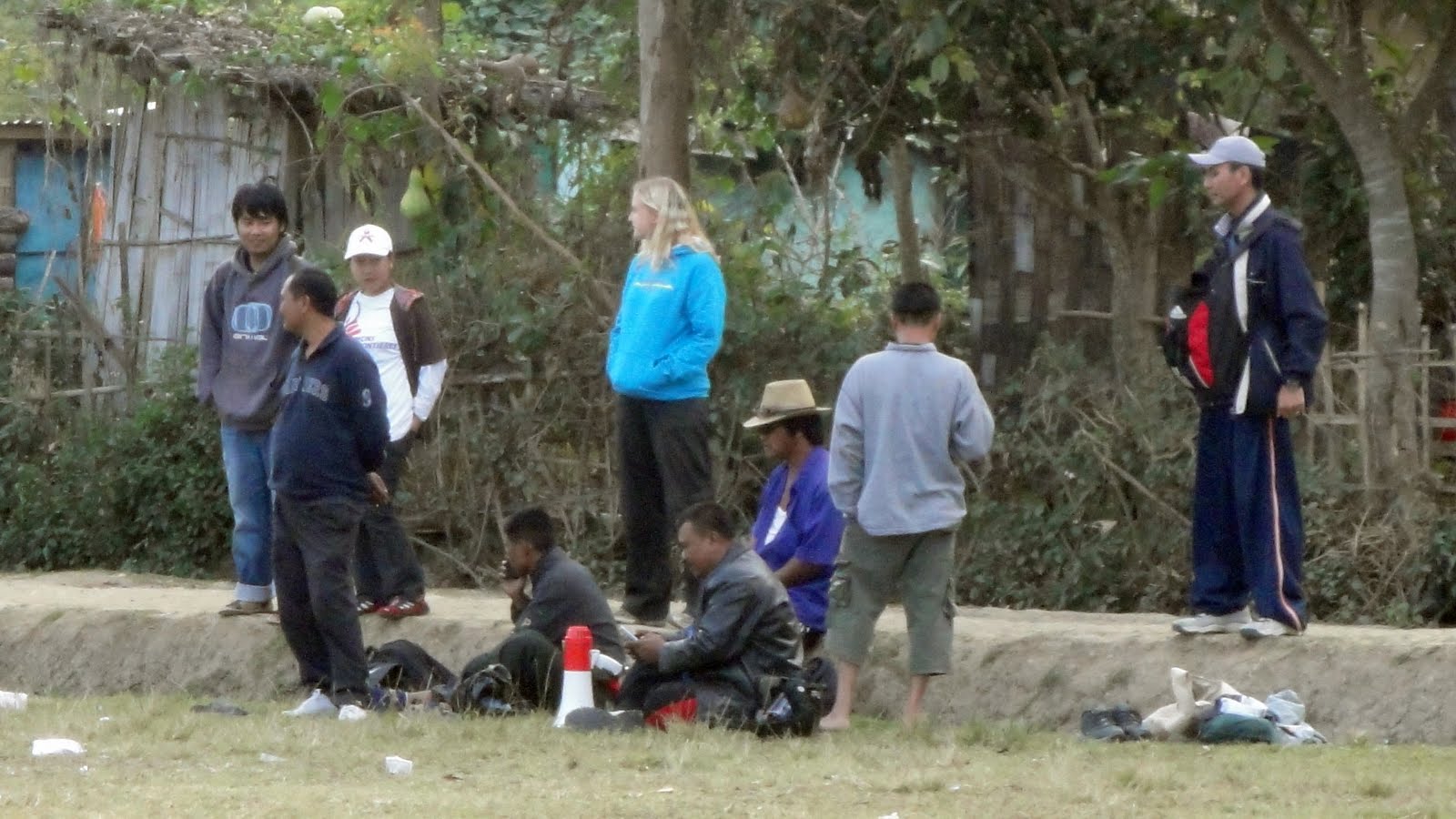 Above & below: watching the friendly football (soccer) match between MSF and Shalom, the local community care center that we work closely with…and village scenes around the soccer field or football pitch.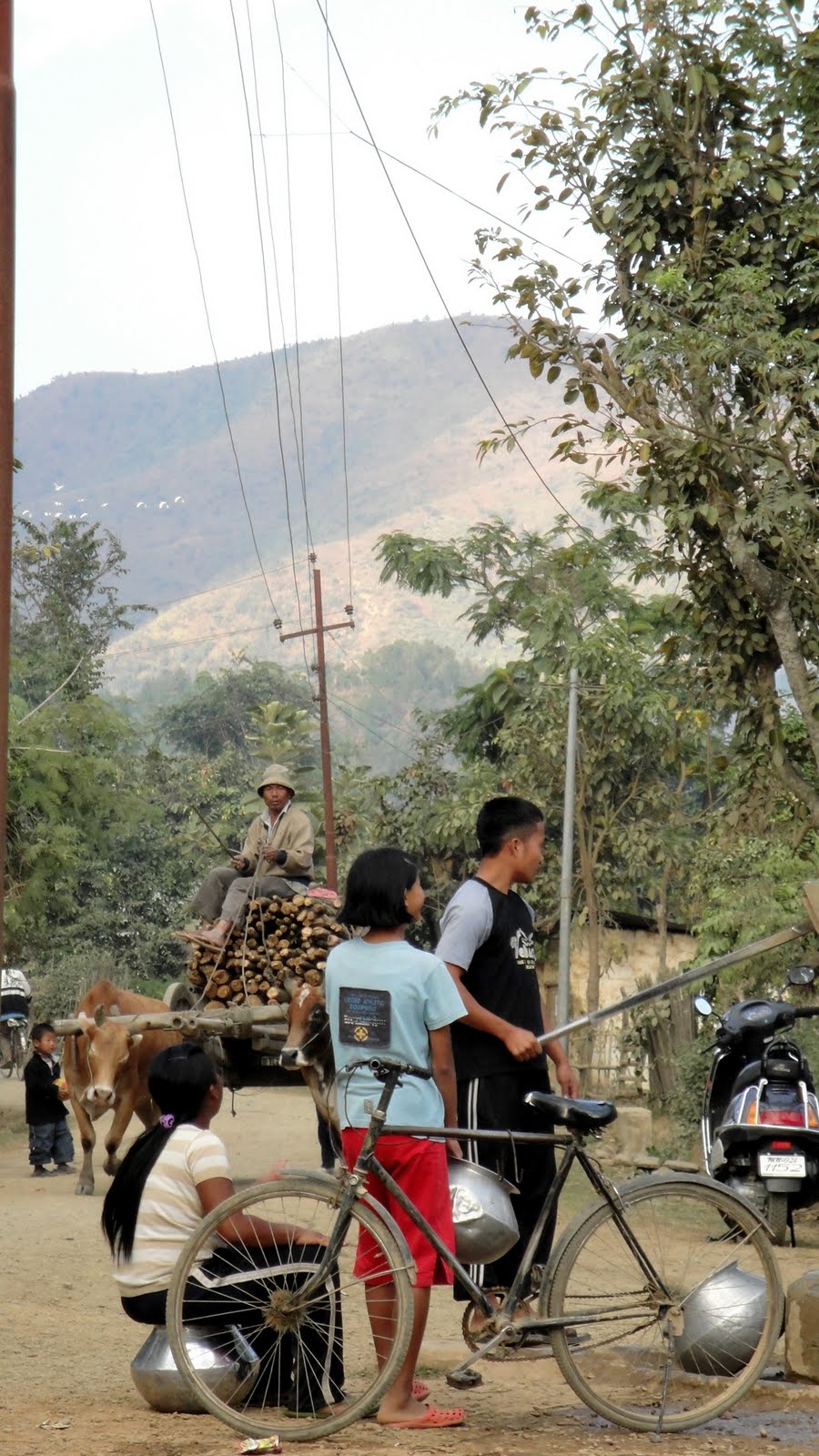
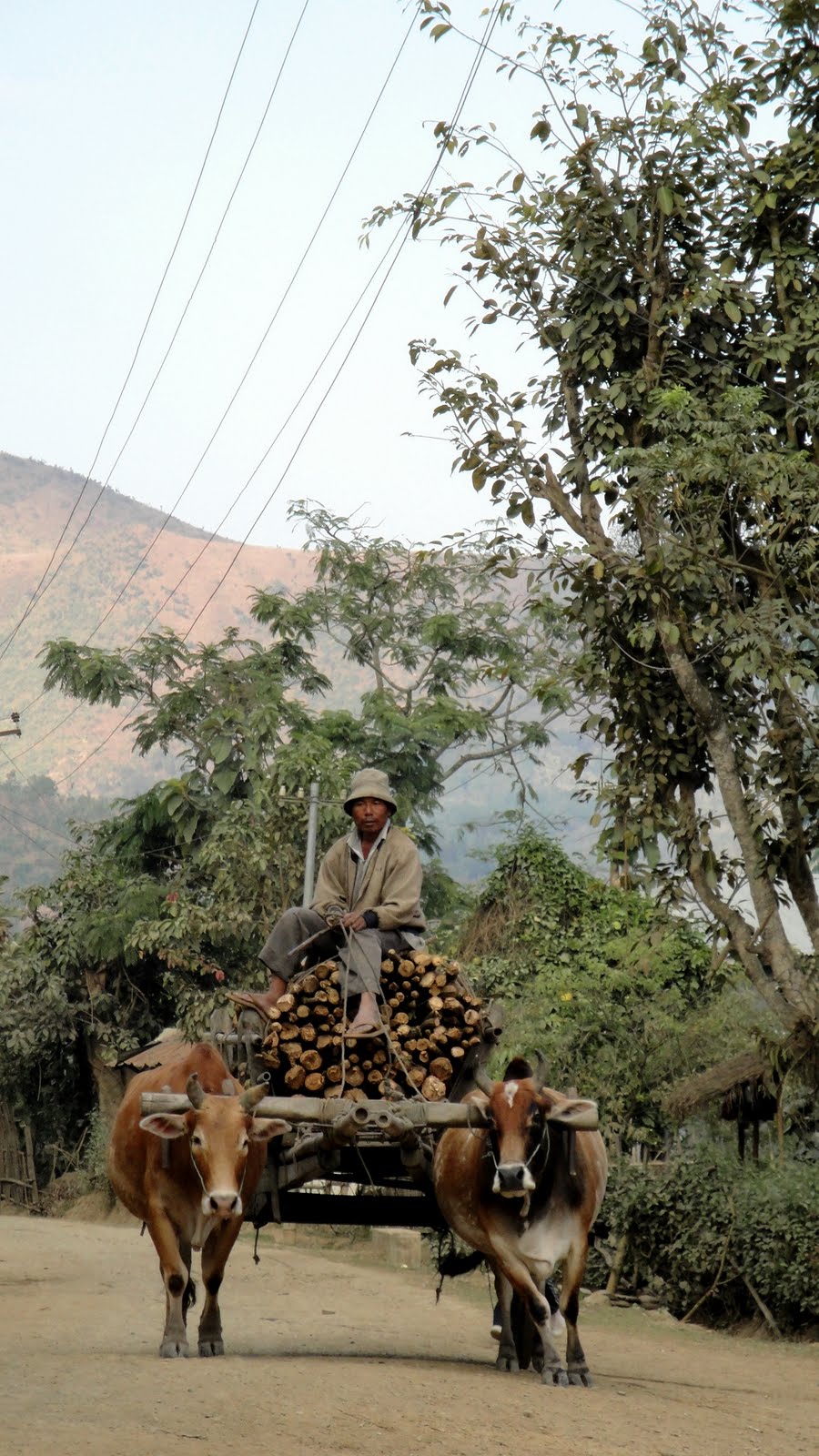
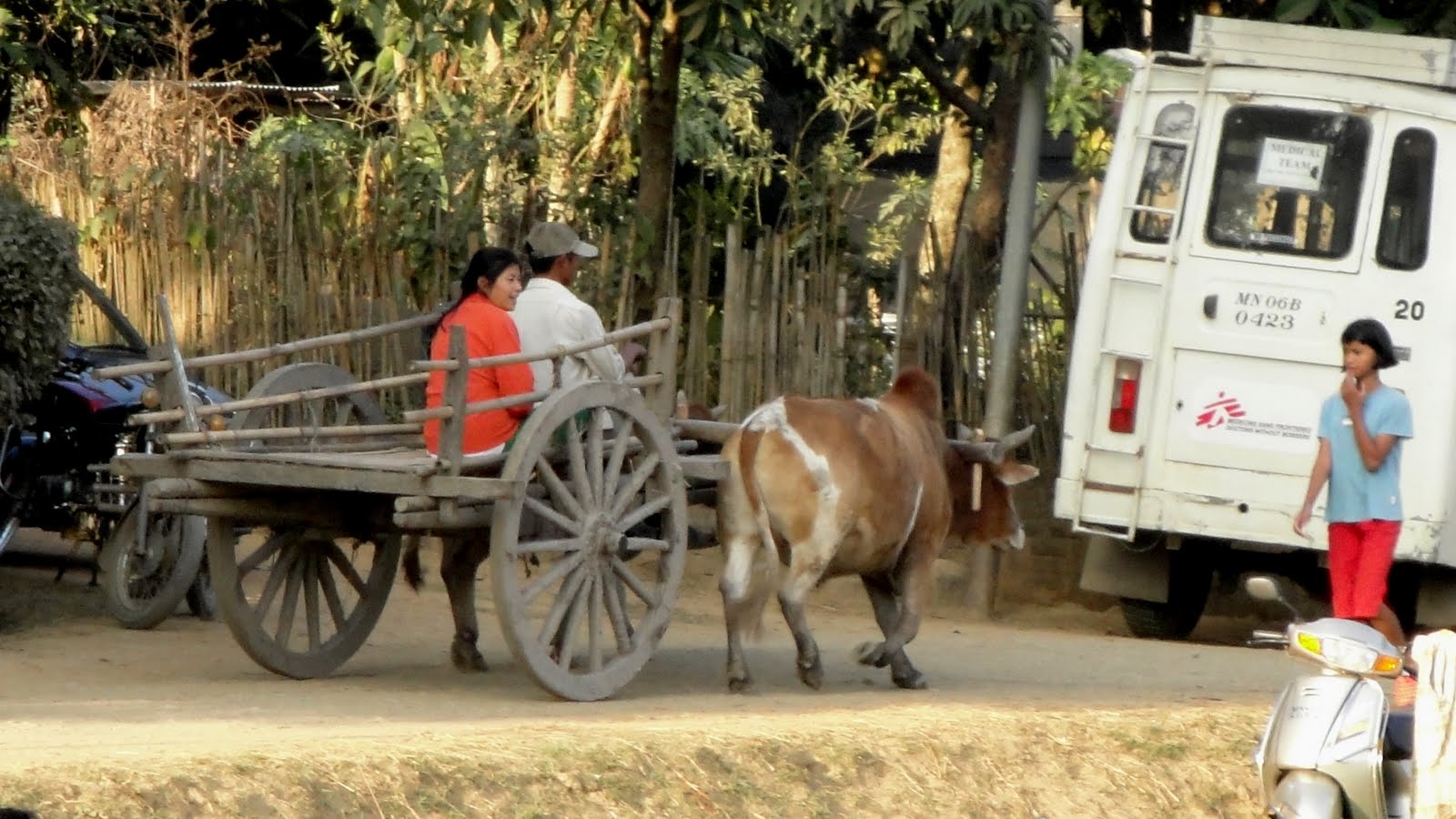
 …Above: one of my favorite kids (an AIDS orphan) at the local NGO that houses patients who’ve come to town for ART treatment, many from Myanmar; and below, the pre-wedding send-off ceremony for a colleague.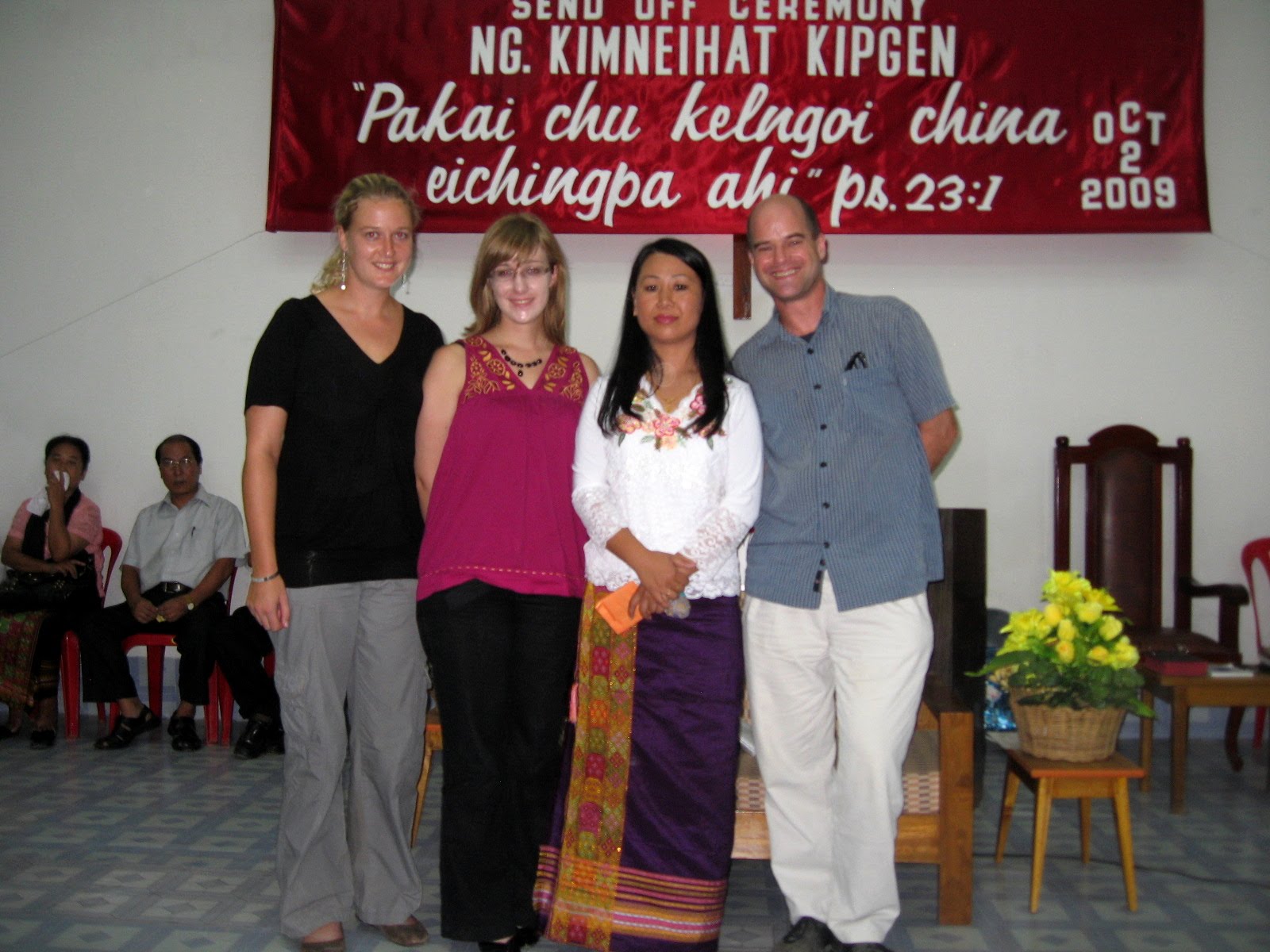

l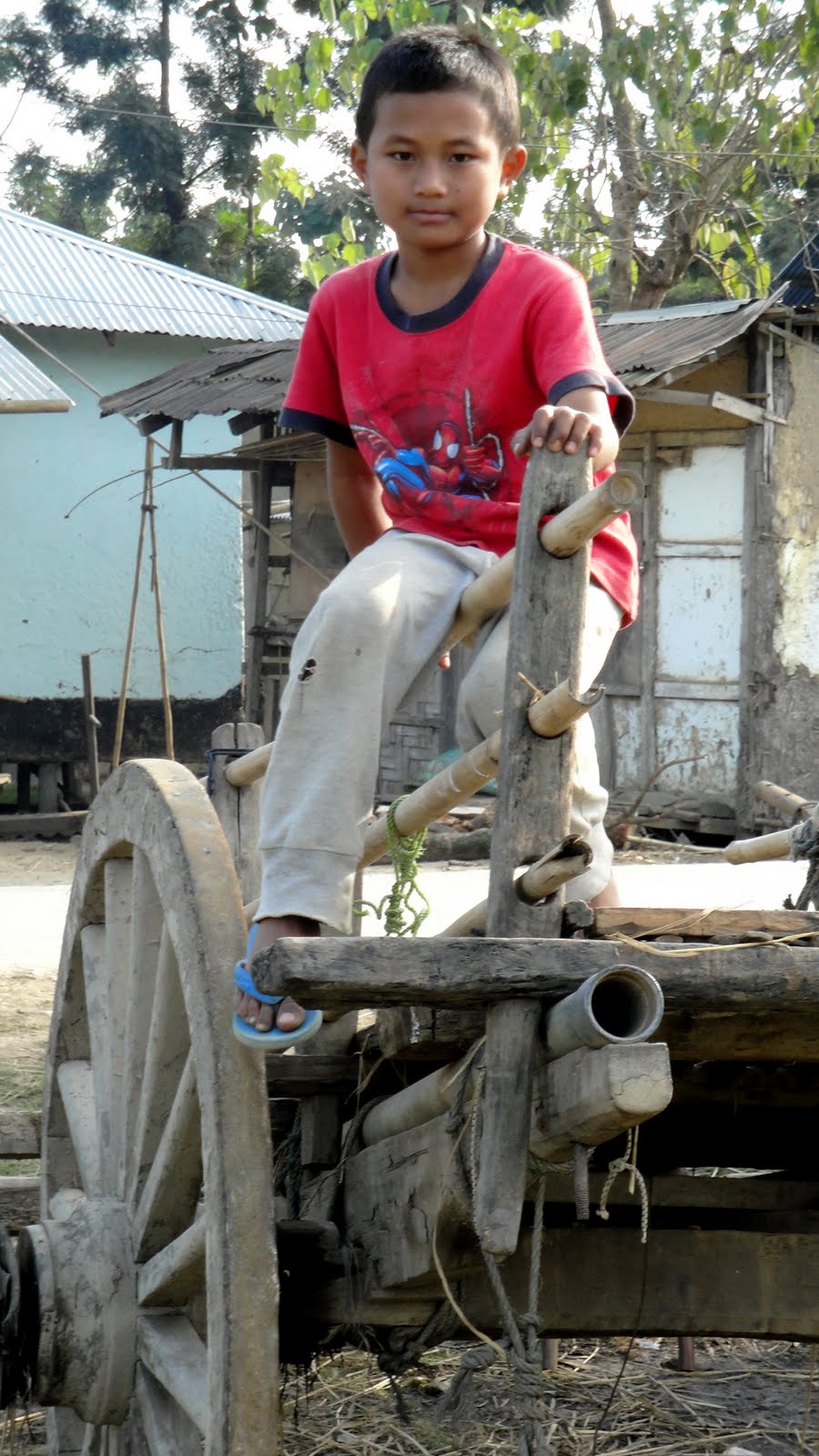
t
g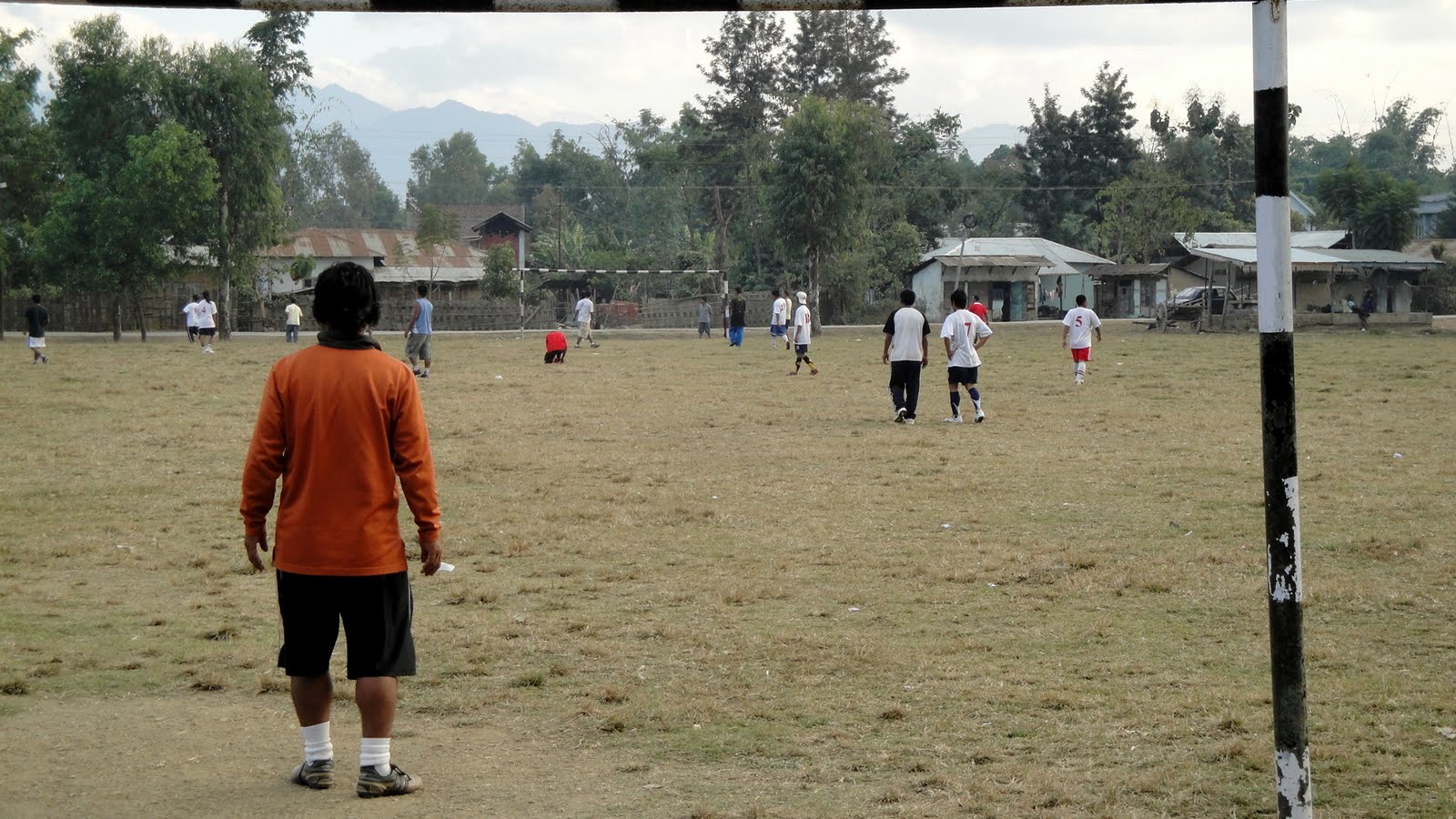

The Green Hills of Manipur
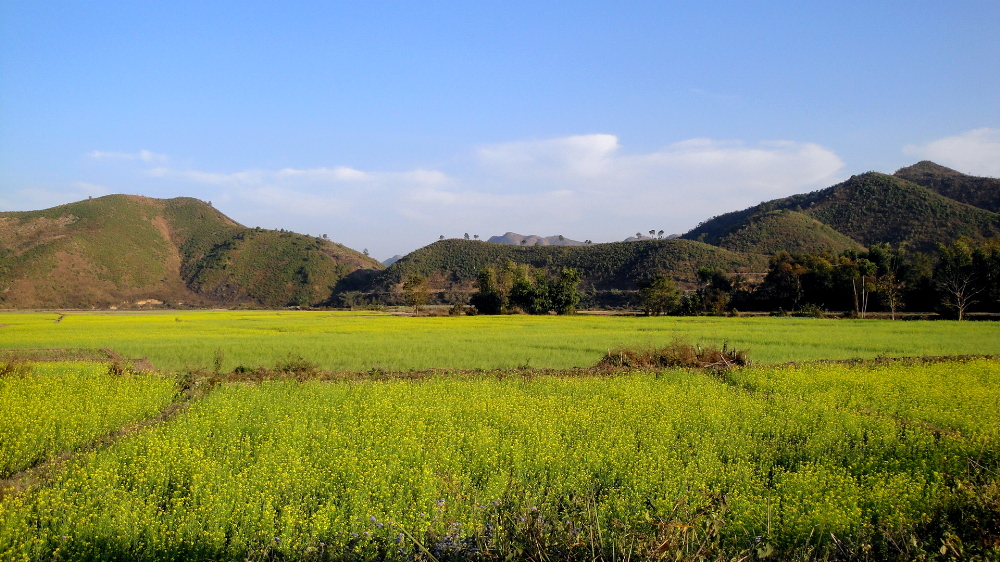
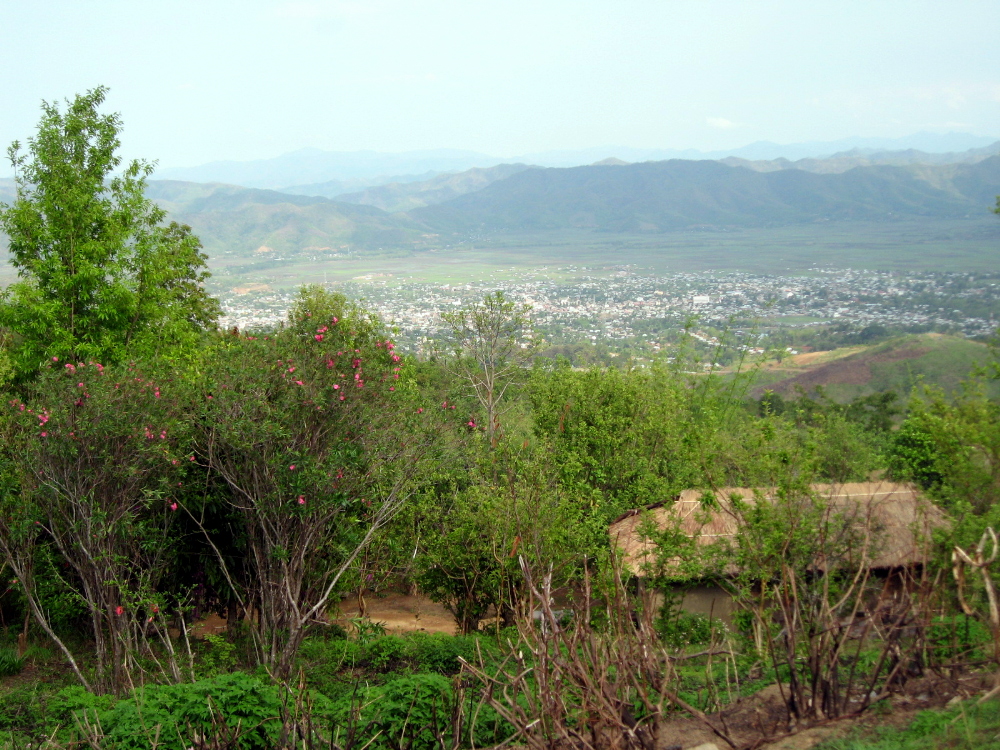
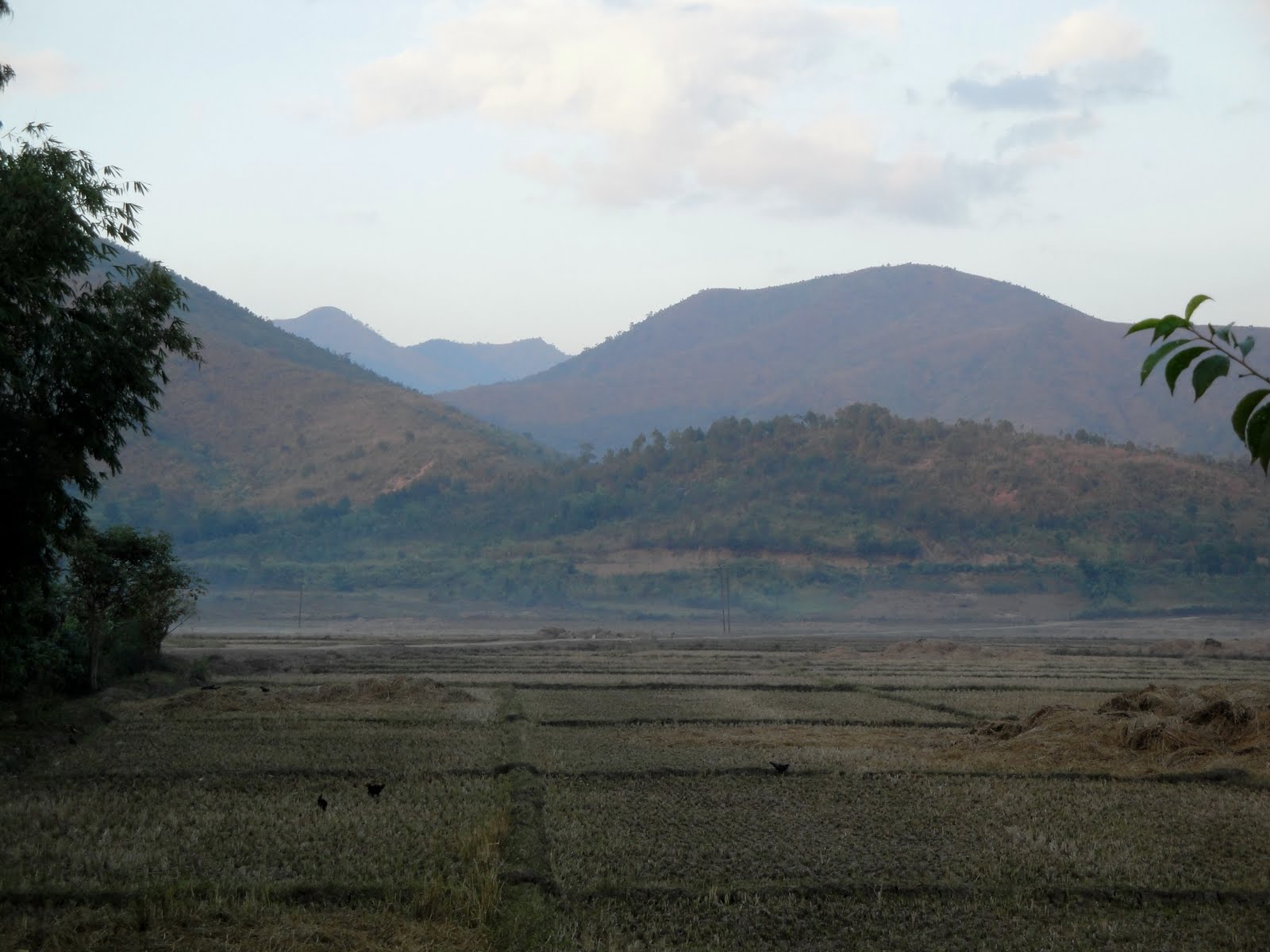
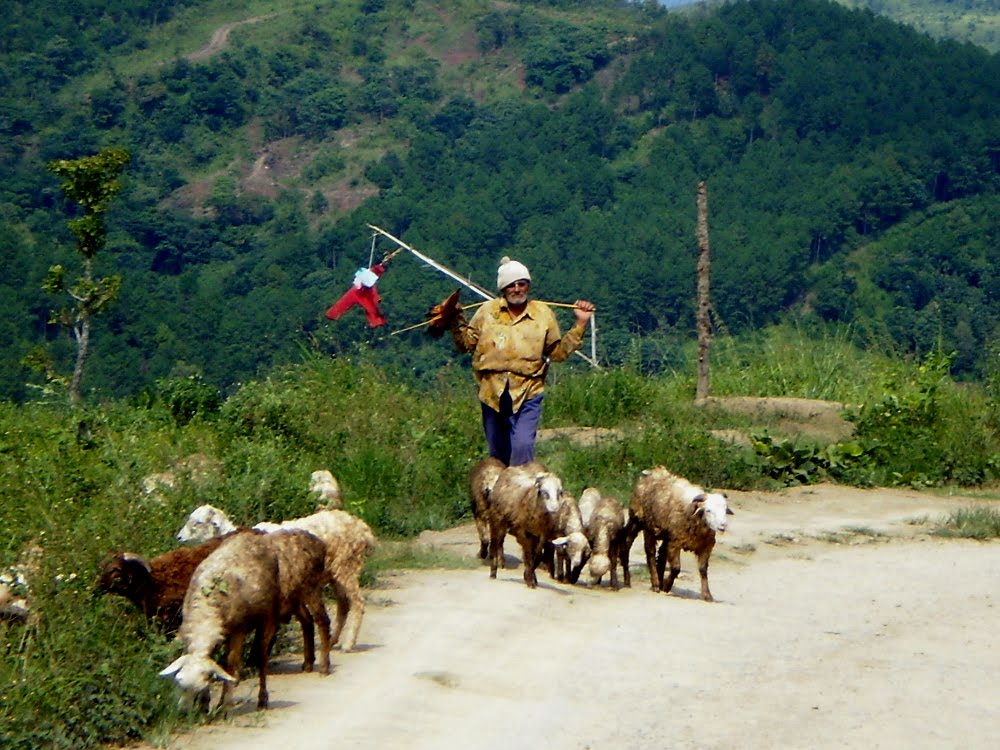
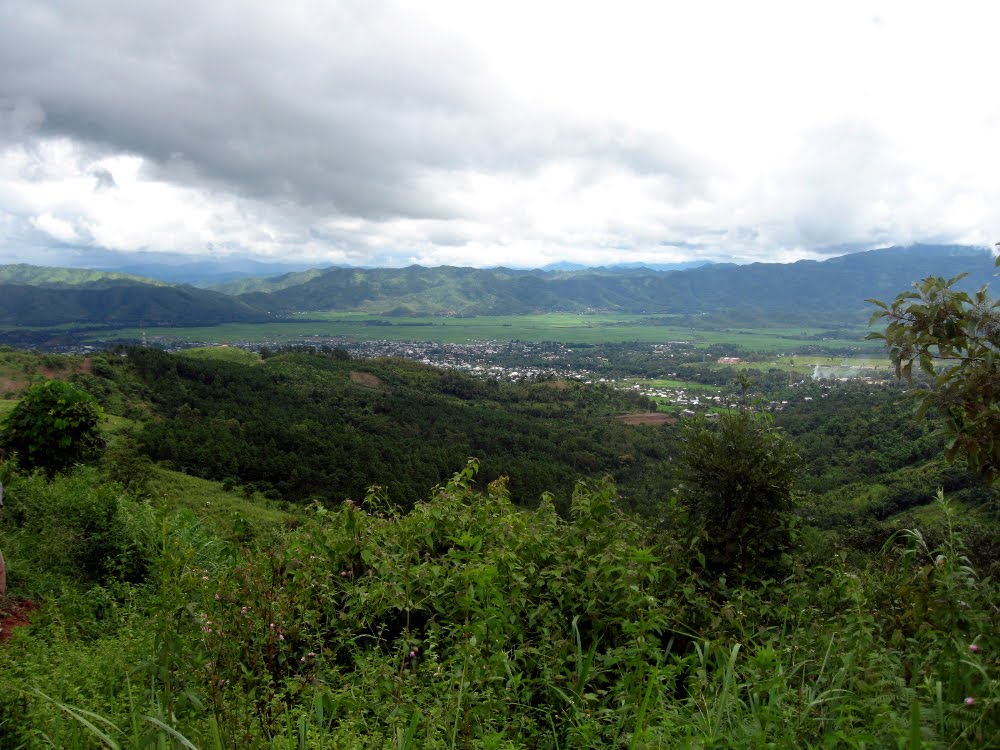
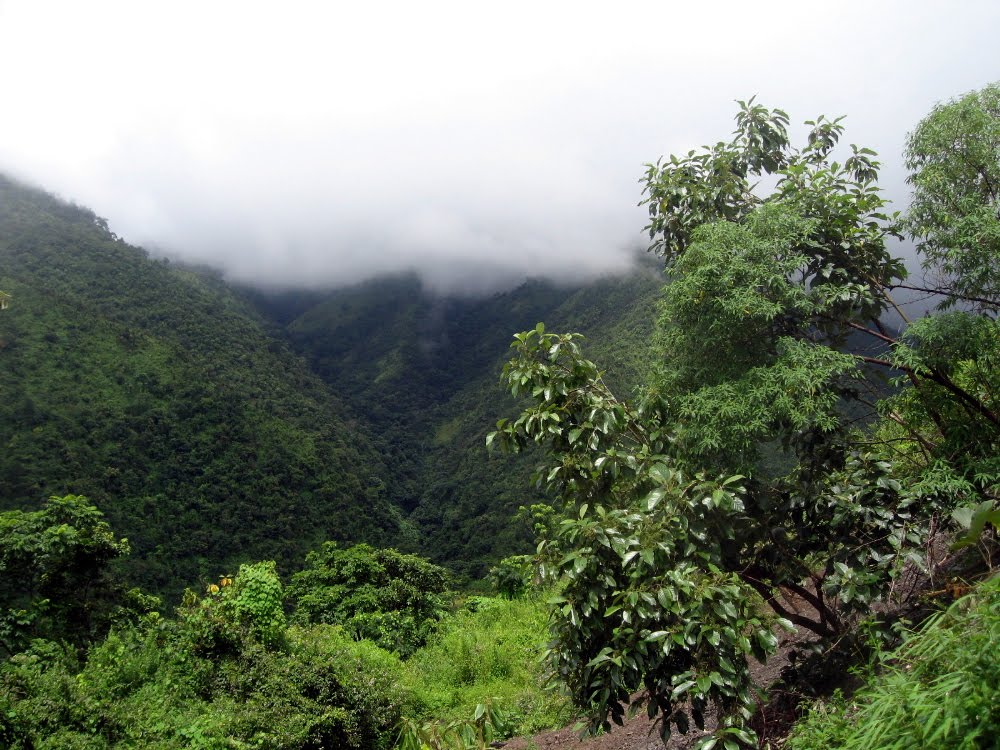
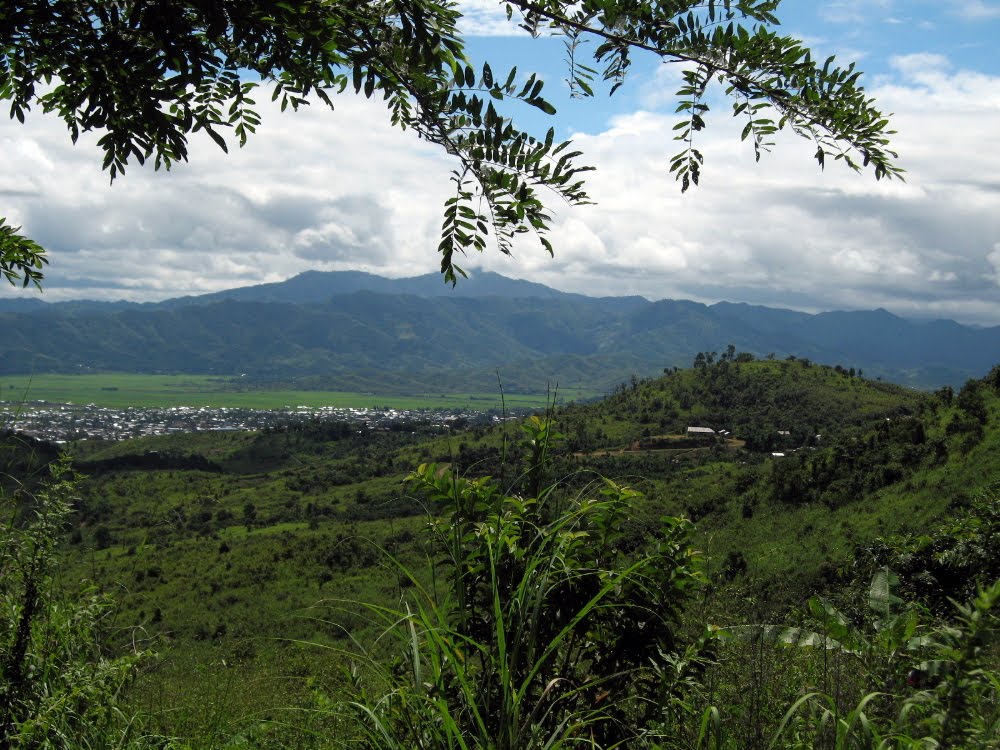 smw, slt is proud to present your first views of where we’re now based. Just about all of the photos above and below were taken on the several long Sunday rambles I and my colleagues here at MSF-Manipur have taken in recent weeks. You’ll notice that we’ve once or twice experienced the monsoons first-hand; you’ll also notice that we’ve been befriended by some local youth at a waterfall and even a shepherd in the hills. Well…the shepherd tolerated it when my colleague Fiona asked if he’d pose for a photo, then had to scramble after his sheep to get them back in line. Fiona and I felt pretty guilty about that little bit of touristic enthusiasm. I’ll throw in the occasional caption, but mostly I’m gonna let the photos speak for themselves. Above, what you see is Lamka Town, aka Churachandpur Town, sitting in its little bowl of a valley as seen from the hills that we’ve been hiking most Sundays, and doing brief runs through on many a morning. It’s truly a lovely place, and so far so good with the work: keep those fingers crossed that all continues well, please. Thanks.
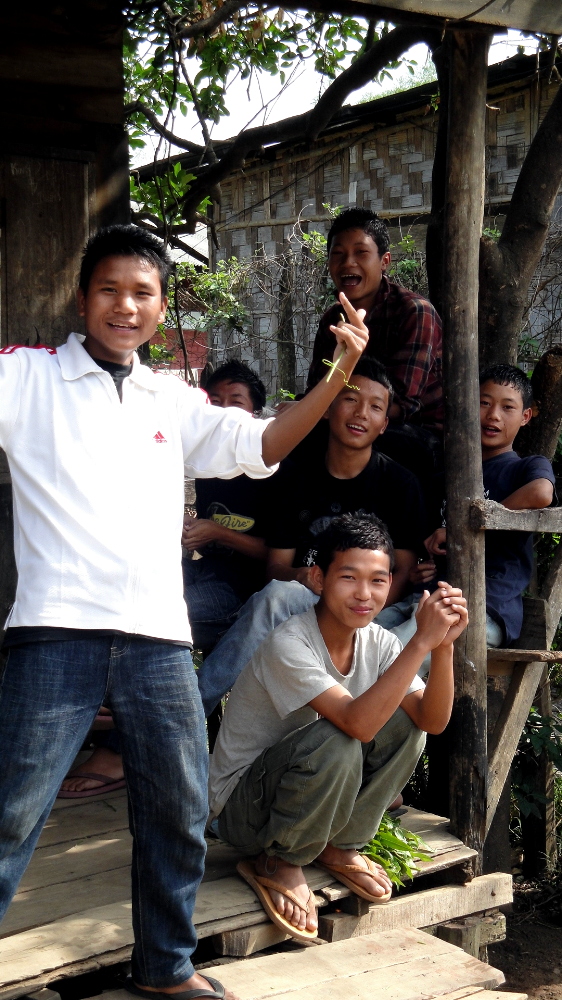
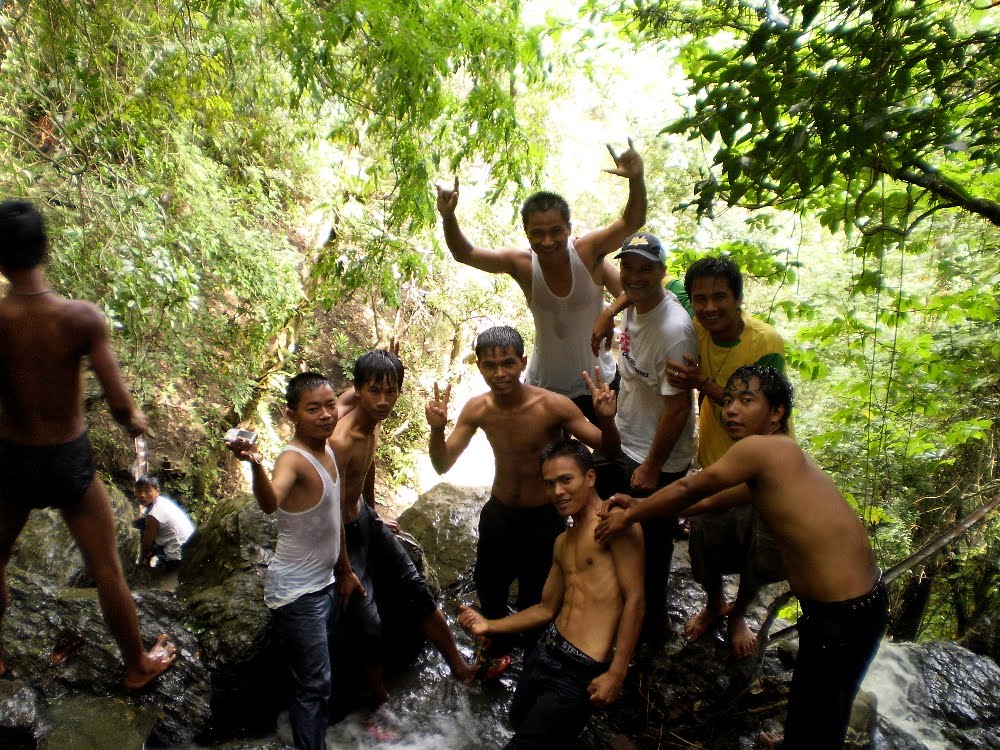 …that’s me in the ball cap, on the right. They all wanted the pic – it wasn’t my idea, honest! And oh by the way, immeiately behind us is about a 15-meter waterfall.

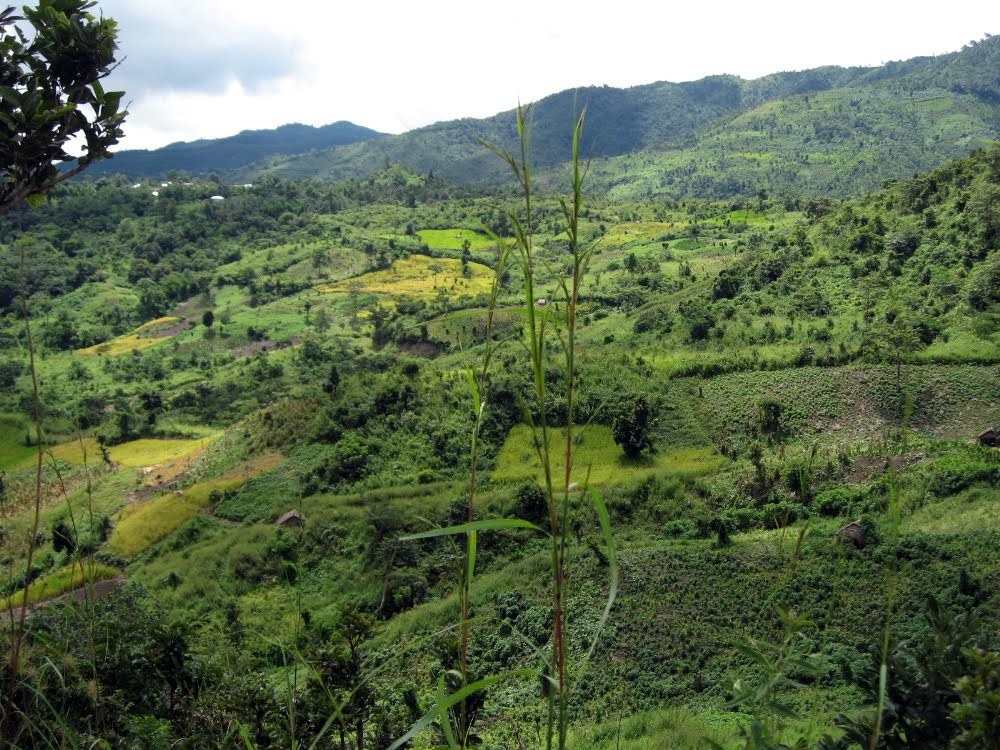


 Everywhere you walk in these hills, you chance across these little villages — this one was at the back side of the ridge we climbed in taking many of the views of Lamka that you’ve been seeing above. When Fiona, Phil and I reached the ridge and looked down, she said ‘How do the kids get to school?’ Good question.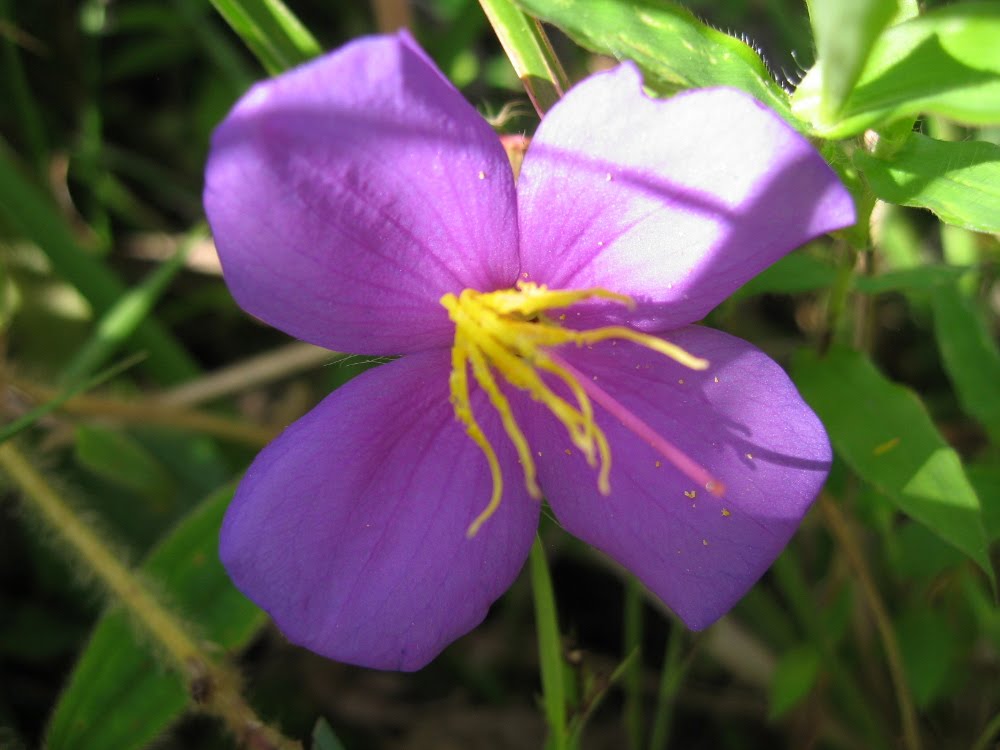


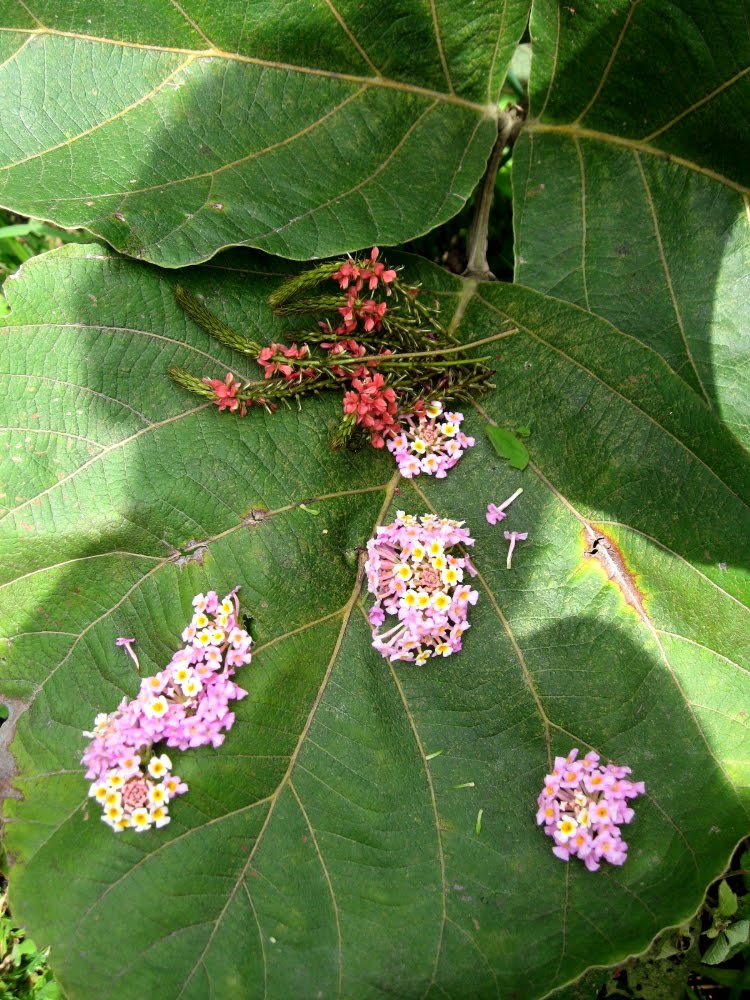
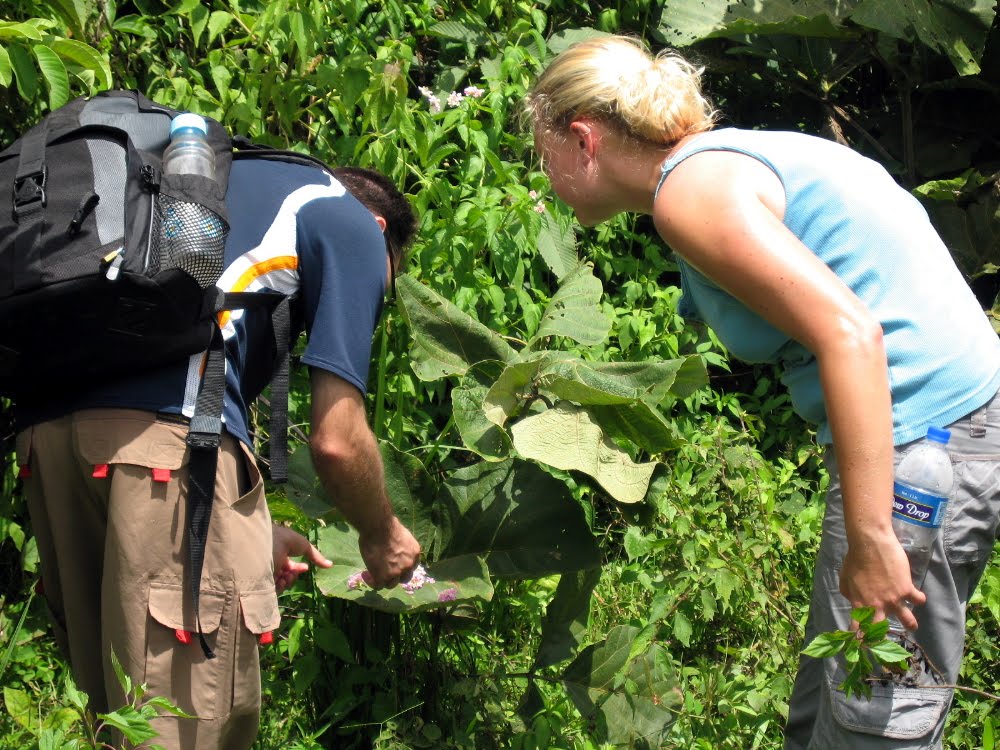 That’s Phil and Fiona making art: in honor of Phil’s and my great fondness for environmental art (he’s a longtime fan of Richard Long, I of Andy Goldsworthy), we turned one hike into an ongoing art experiment: see walking banana peels below, and flower art, further down…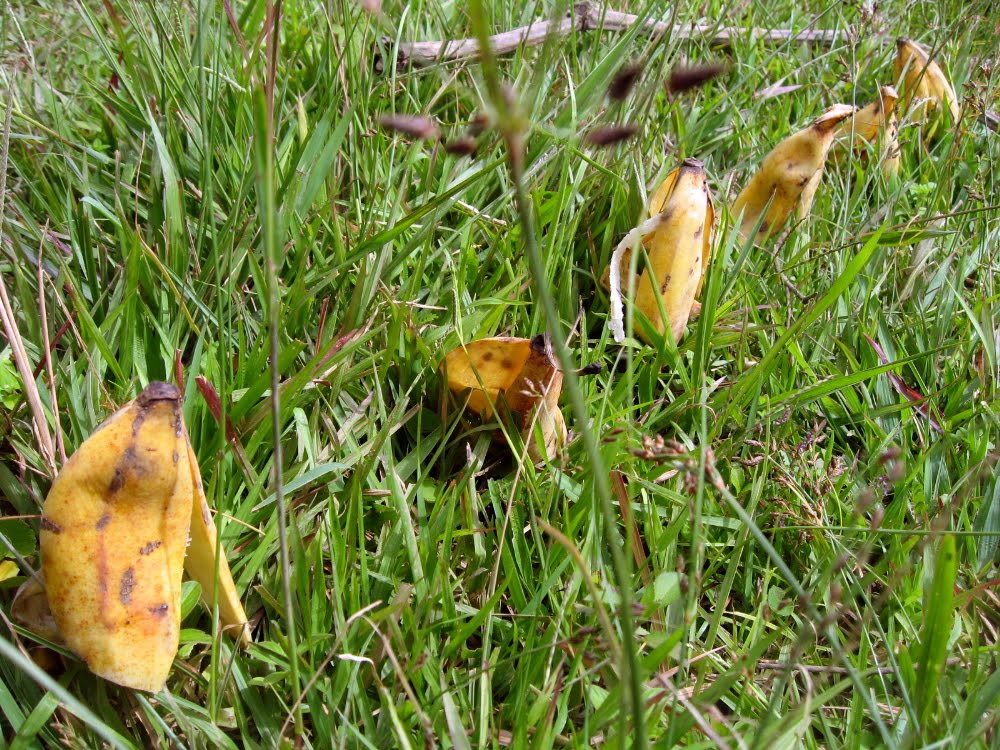


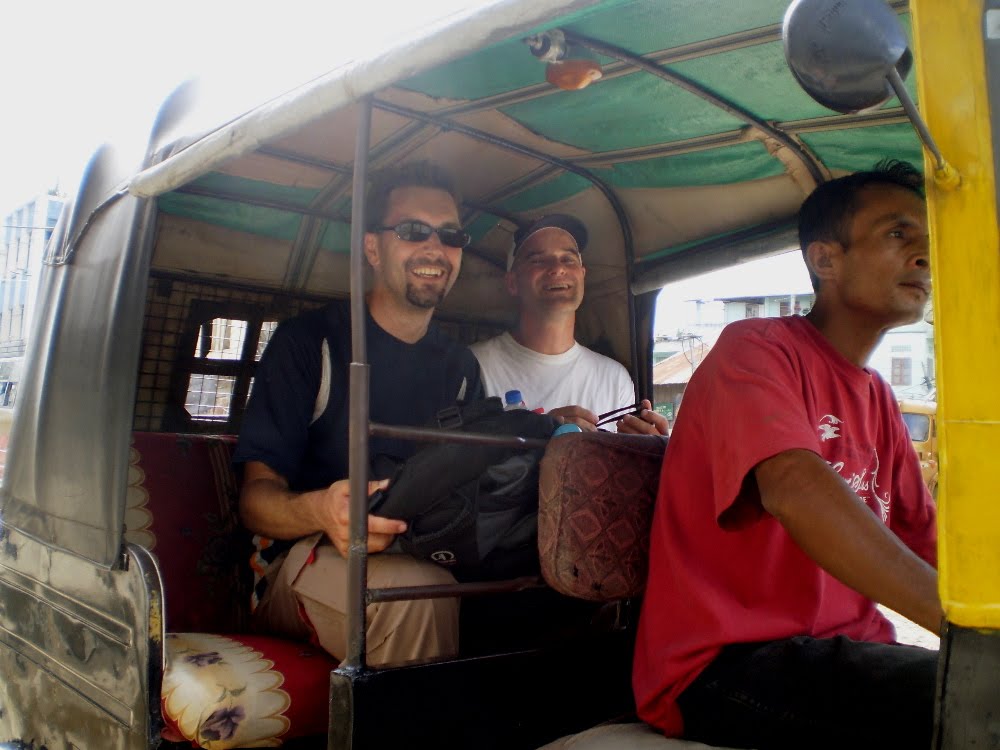
 …that’s Michelle. It was raining pretty darn hard but for some crazy reason we were all having a ton of fun.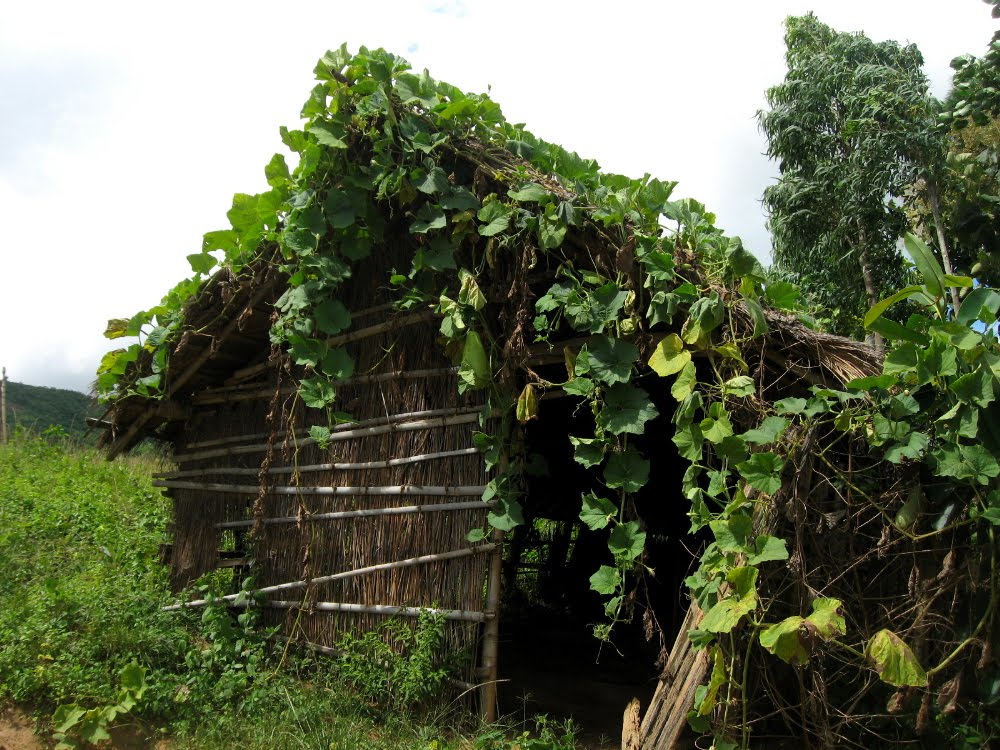
 …Phil & Paul take a load off en route to our usual post-hike restaurant outing.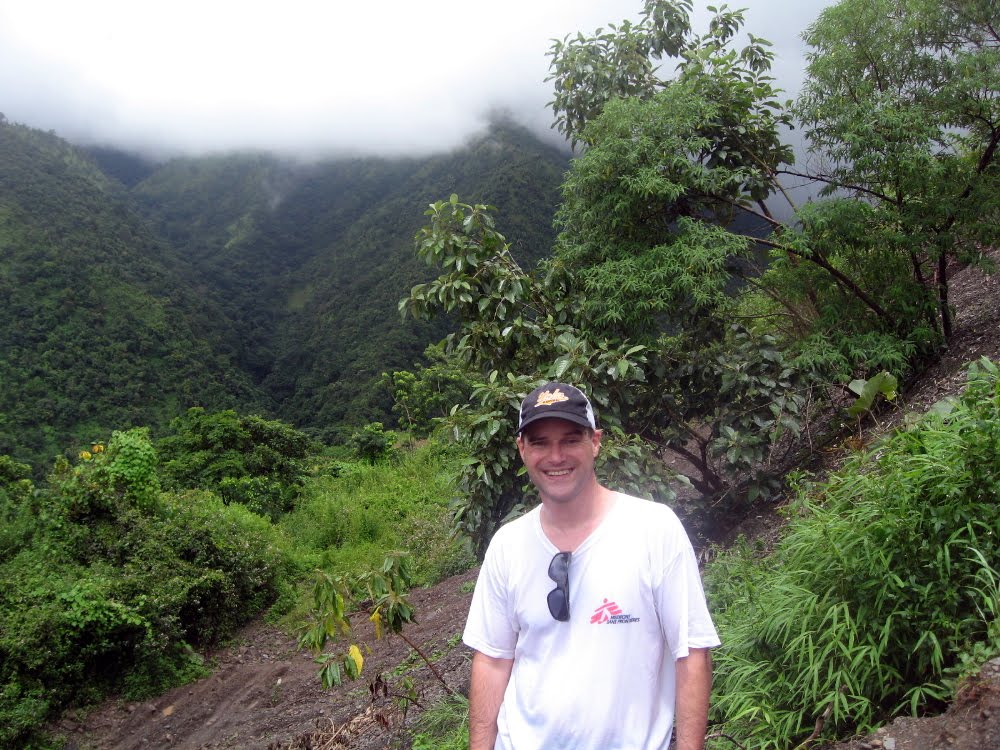
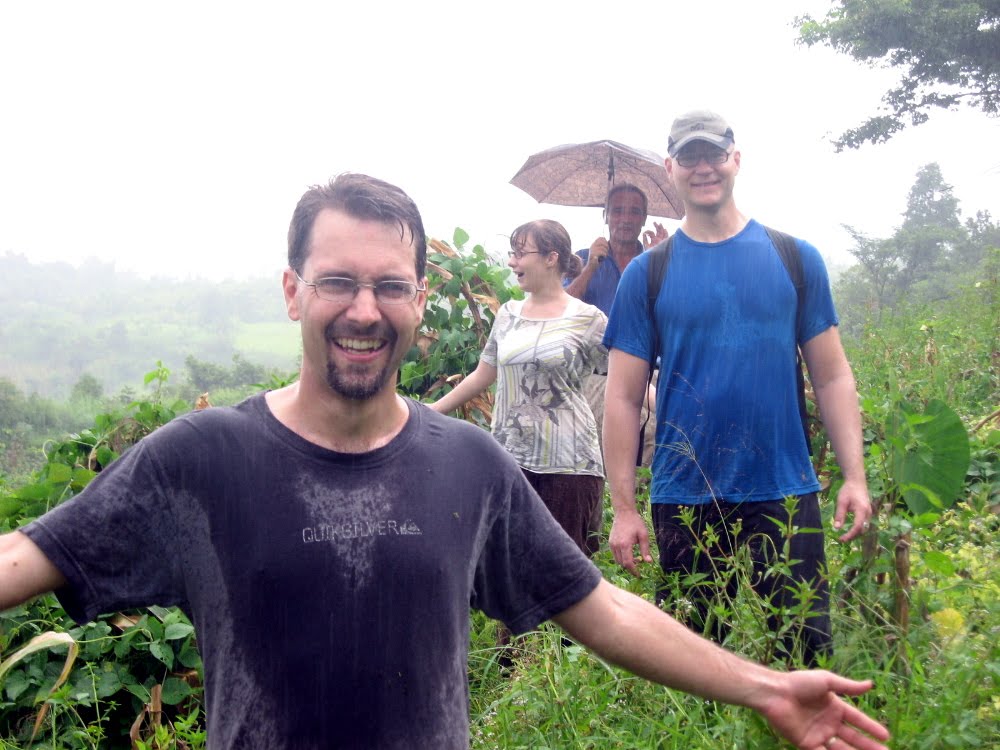 …what there is to do on a day off in CCpur.
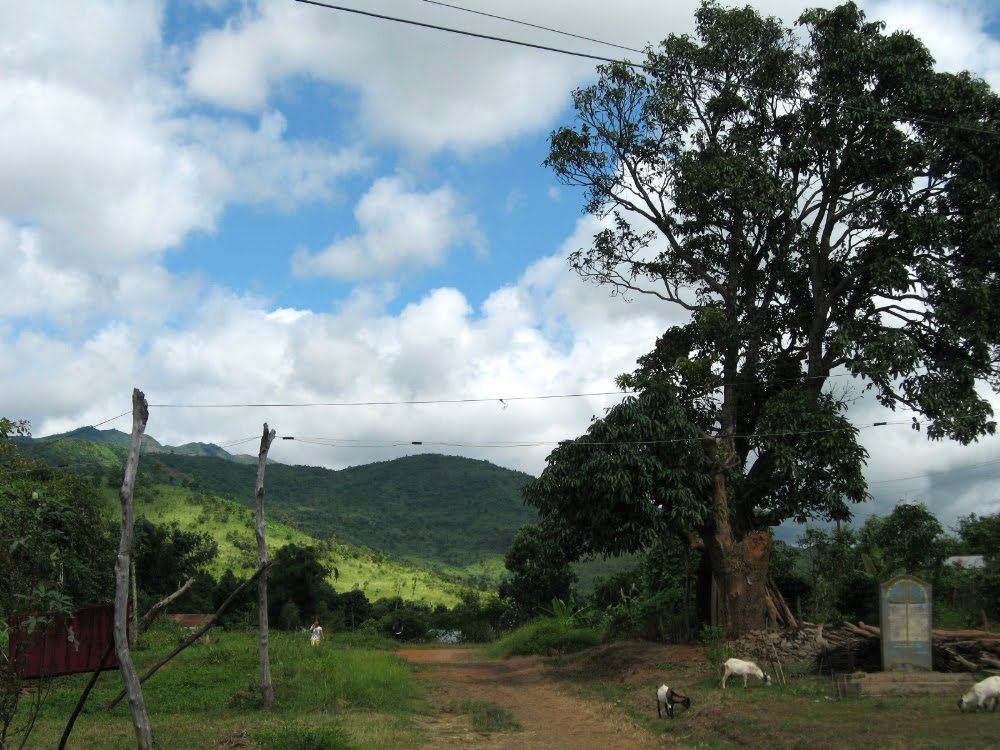 This is a little village on the outskirts of town that’s both on one of our favorite morning run routes, and figures in the early km’s of several of our favorite walking routes. Sorry I don’t have much more to show you yet: I’ve been working long days, but as you see, at least I get out every now and then. Cheers.


 (so much world, so little time....)