Yes, friends, after 18 months my publishing instincts have reasserted themselves: I’ve become bored by my own blog, so I’m redesigning it. Actually, on some twisted little level I’m becoming bored by China (gasp, goes Paul’s audience and his inner censor – can this be true?!) and ready to move on to whatever comes next…but more about that later. The point here and now is: I’m trying some new things on the blog, so let me know what you think, OK?
But about that boredom, you’re thinking. Can’t be a midlife crisis – doesn’t selling up all my stuff and leaving the US qualify as a satisfactory resolution to that one? Especially when it follows a few years dedicated to becoming a certified advanced holistic massage therapist and doing energy work in Northern California? Is Paul coming unraveled, we all wonder? Am I regressing? Having been a dutiful little boy who got good grades and never cut school for my entire educational career (yes, folks, I’m boring) and done the career route – am I now dedicated to becoming a flake? J
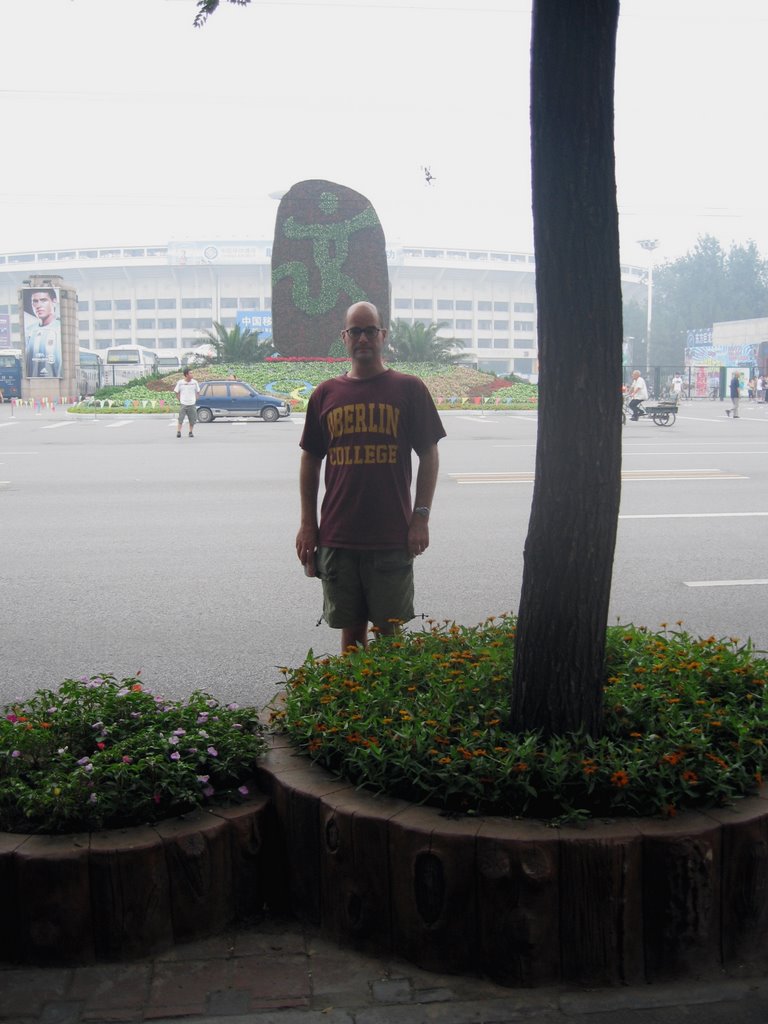
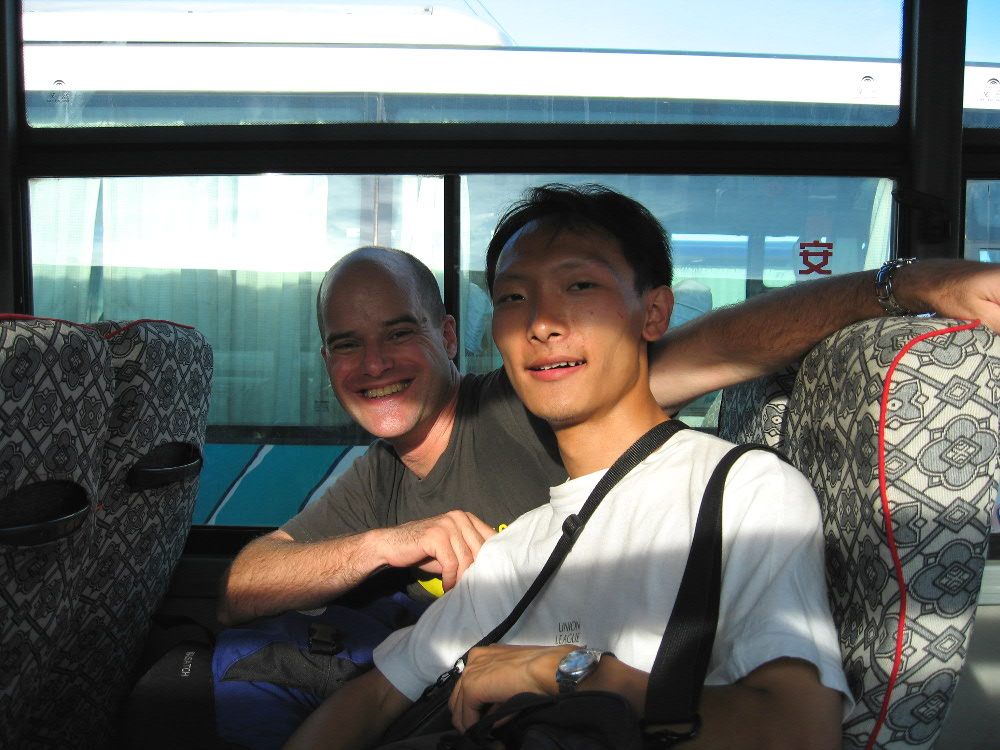
Nah – just shaking things up a bit so I don’t fall into a rut here. Never ceases to amaze me how much I’ve adapted to the most mind boggling things. Says my friend Ondrej (that’s Mr. Risk to those who’ve actually read the text rather than just skimming the photos), “Surprise? After 16 [in his case, a piddly four] months in China, I don’t know what that word means.” Actually, let’s blame all this on Ondrej, shall we? I lost my beloved first-ever digital camera (one never forgets one’s first): clearly his fault, since it fell out of the cab in which he’d distracted me with his charming ways and handsome looks. I shaved my head: clearly his fault, since he said he only likes dangerous-looking men. So he’s cost me a new camera, several haircuts just keep my pate shiny and tan – and all I get is a new friend who’s now in Brisbane missing the crowds of China. Sadly, it seems I still don’t look dangerous, even shaven-headed. So next I’ll start tattooing and piercing various parts of my body, no doubt. Would a big iron cross tattooed across my forehead make me more sexy-dangerous, do you think? It would certainly be SOOO me.

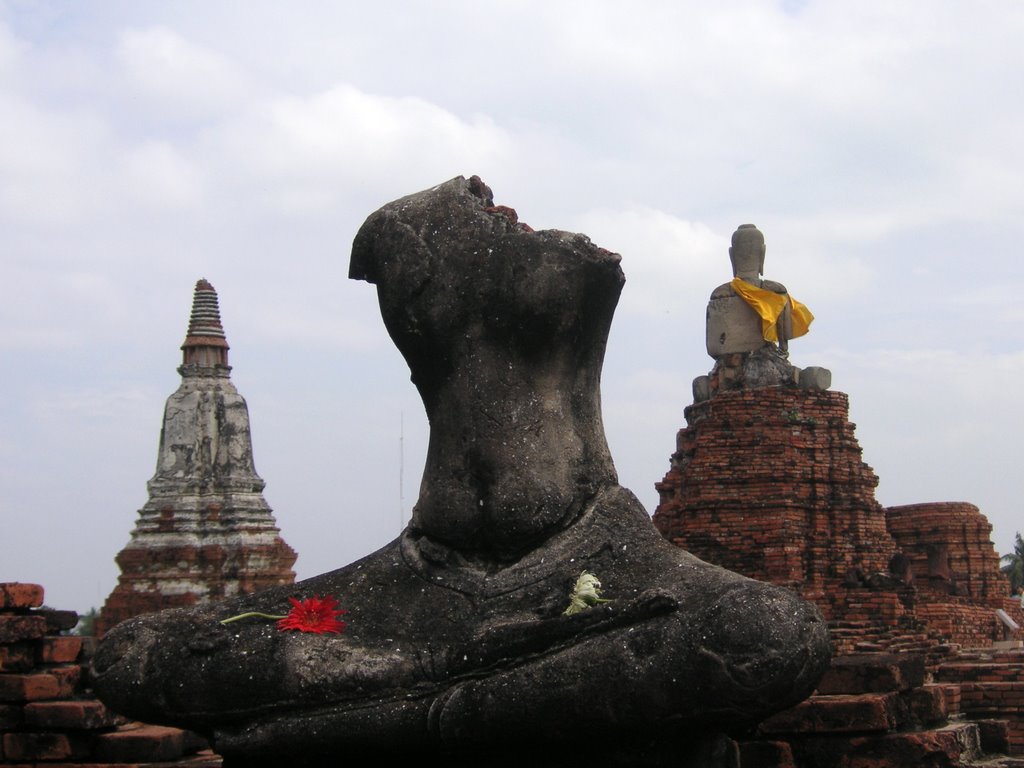
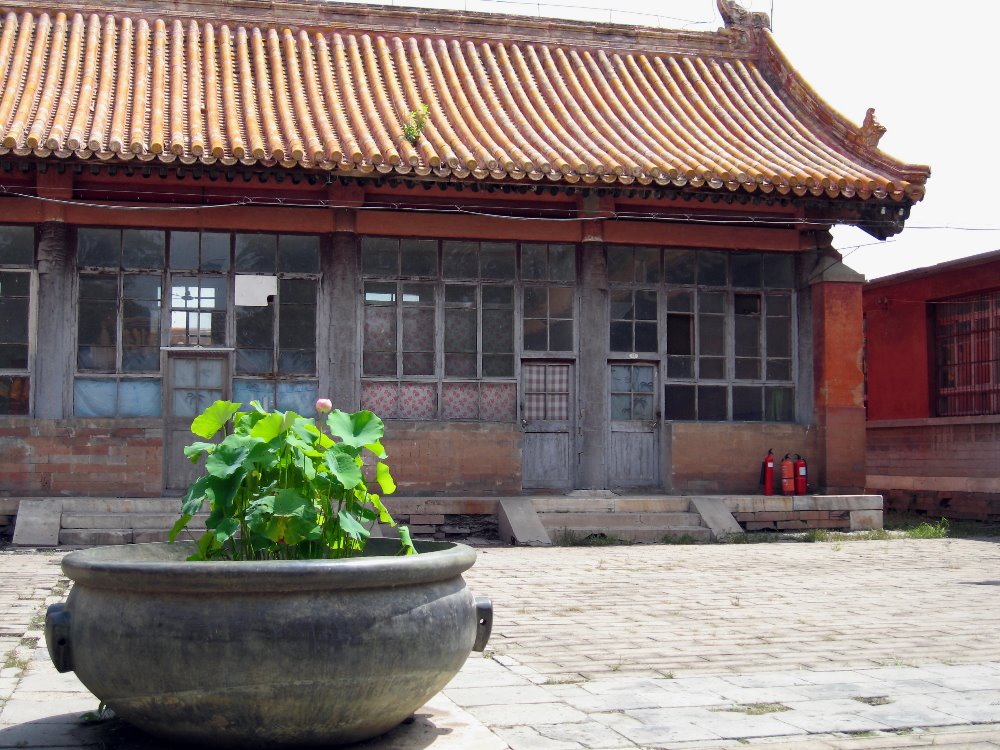
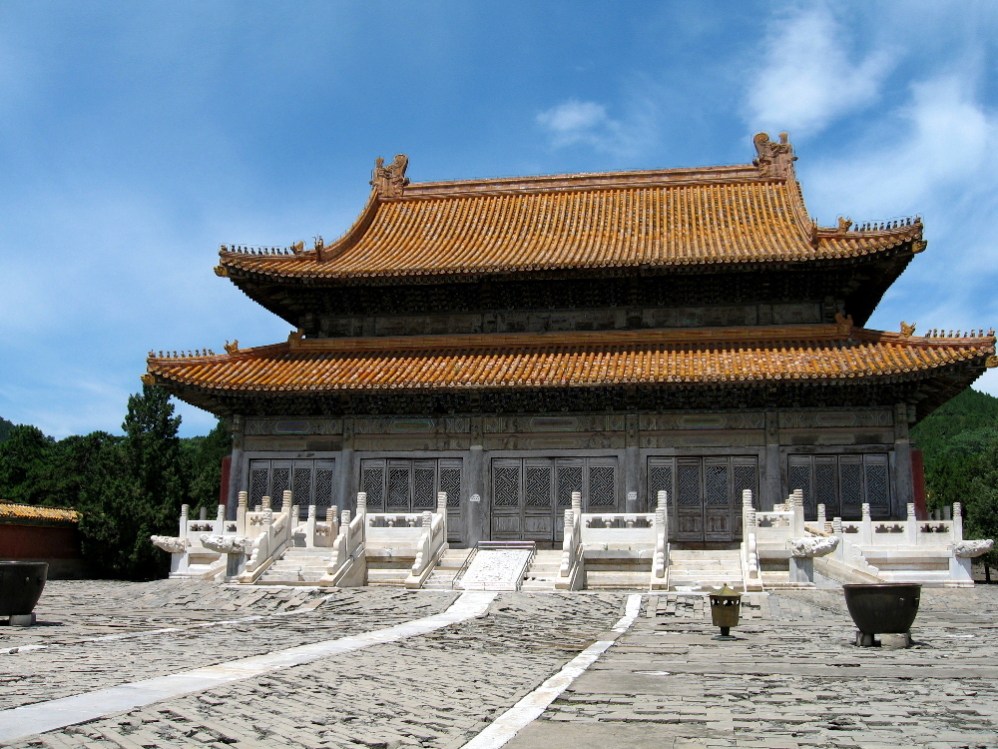
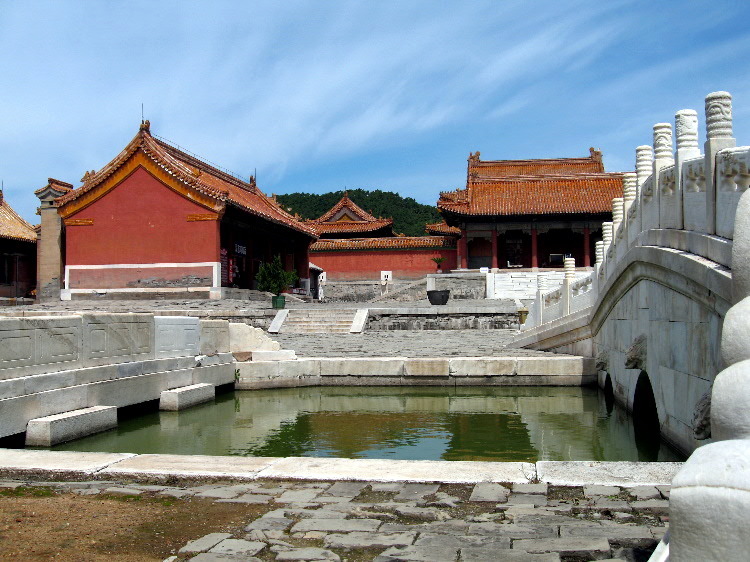
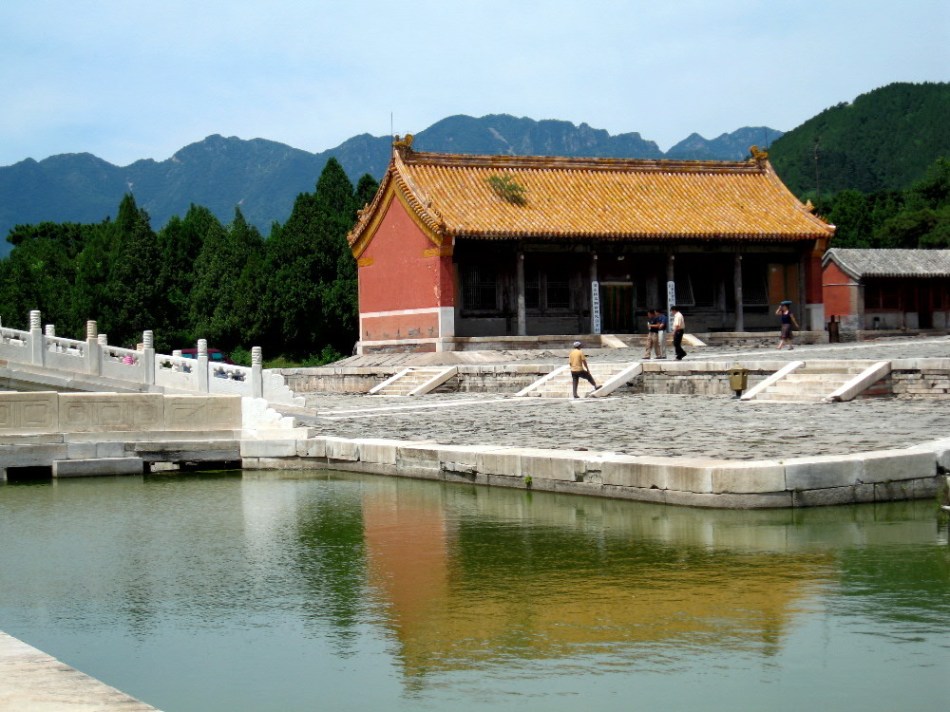
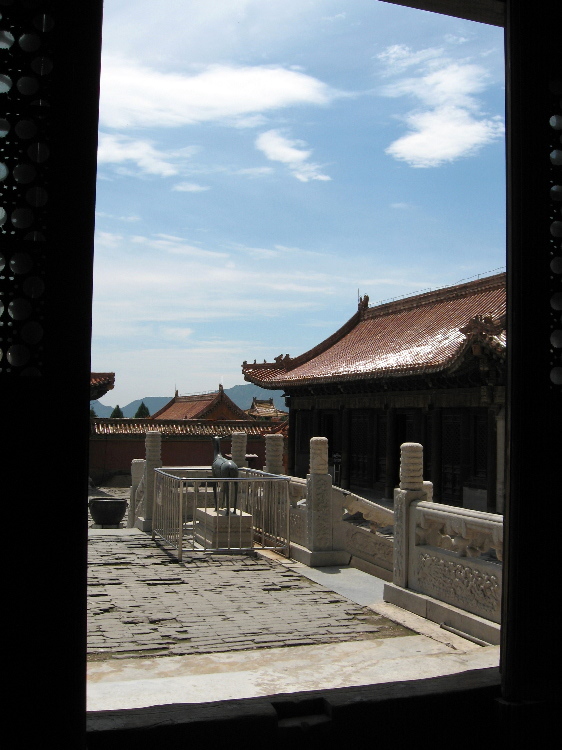
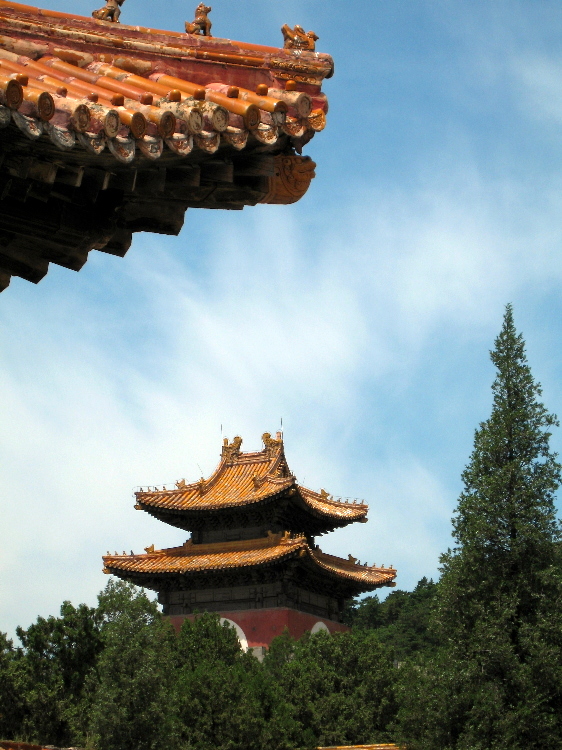
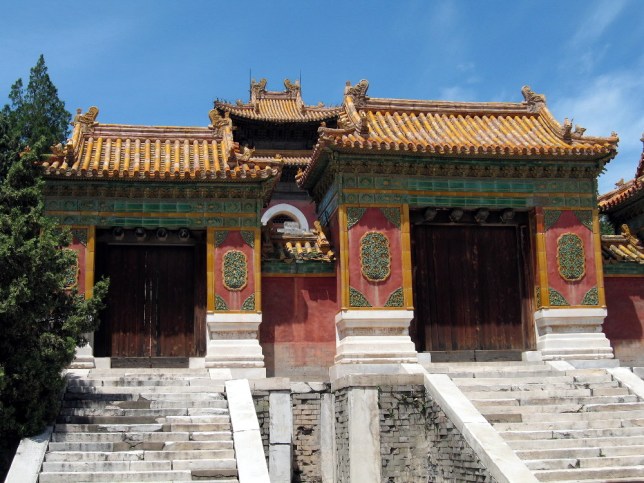
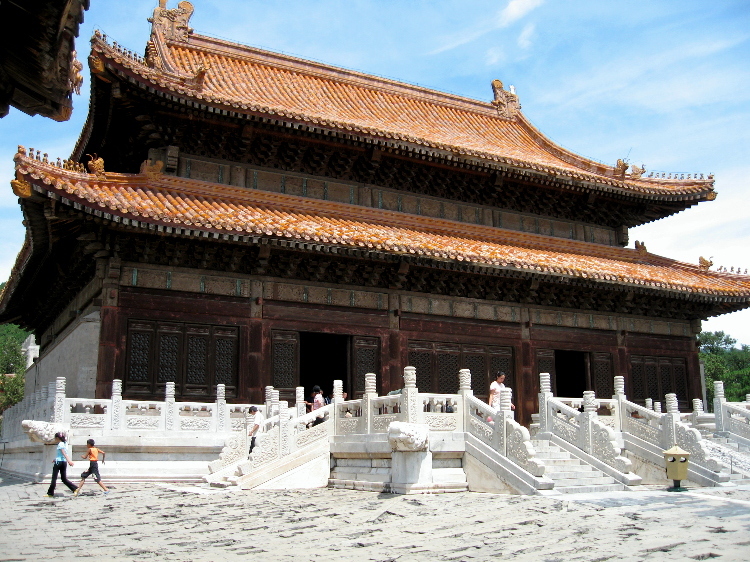
OK, OK, enough about my summer makeovers and my failed love life. You want to know what you’re looking at. Well, they’re the Eastern Qing Tombs, duh! They don’t appear in any of your tour guides, you say? Haha! Finally got out of the tourist books! And it’s well worth it. Sorry folks, you won’t see these on any guided tours soon: they’re too far outside Beijing to fit neatly in the three-day packages that combine Wall & Ming Tombs, Forbidden City, Tiananmen, Temple of Heaven, and the mandatory stop at Yashow so you can purchase all those pirated clothes China’s no longer making or selling. (Yeah, right, just like all those pirated CDs that we can’t buy here any more.)
 Now about those tombs…ever the boring academic, let me inform you that the Qing Dynasty (as noted in my last posts from the seashore) established itself after storming down from the wild northeast (aka Manchuria) and driving out the last of the Han Chinese Dynasties in 1644. (These dynastic dates all make it sound so neat and clean, but of course it really wasn’t – it was civil wars and gradual disintegration throughout China for years, until finally the Manchurians stormed the gates en masse.) It ruled, more or less, until 1911: again, saying “Qing Dynasty, 1644-1911” sounds so tidy. In actual fact, the dynasty reached its peak during the reigns of Kangxi (1661-1722) and his grandson Qianlong (1735-1799), and after that it was one ugly, long decline, during which Europe started trying to boss China around quite a bit. (The French and British, in particular, took a fancy to marching on Beijing and burning down palaces and things in order to make the Chinese open more ports for trade. See – the WTO does serve a purpose!)
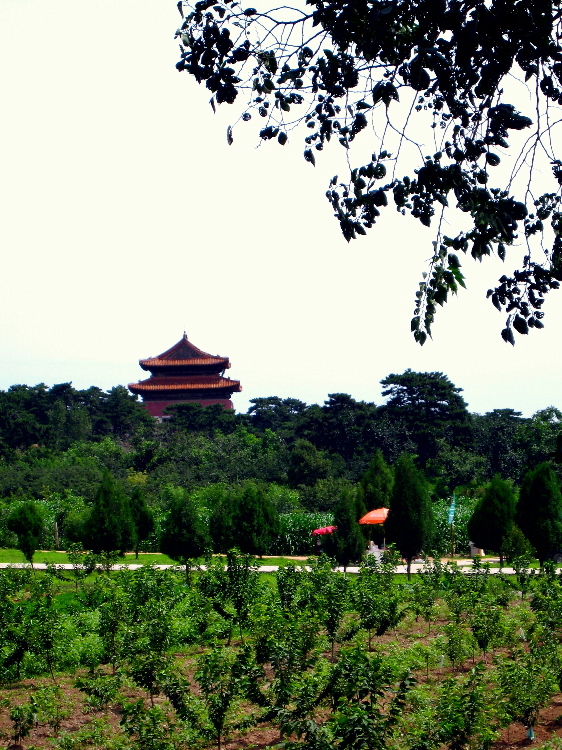
What’s interesting about the Qing Tombs is they’re divided: almost everyone’s over here, on the east, spread along the slopes of these mountains at the edge of this gorgeous valley. Then there’s Yongzheng, Kangxi’s fourth son, who came between the other two and was – though quite ruthless – said to be one of the finer Qing emperors. Kangxi, living as long as he did and of course surrounded in the Forbidden City by all those concubines and wives, managed to produce quite a few progeny, of whom something like 13 were sons. If you think your family’s had some inheritance disputes, just imagine how Kangxi’s sons settled their differences! Yongzheng killed all but one (the most loyal) of his brothers and ruled from 1722-1735. When it came time to plan his tomb, though, he suffered some remorse, and chose a separate location far out west of town for himself, his wives and his concubines.
Socio-cultural aside about ruthlessness. In Chinese history – and to tell by my (modern, smart, female) Chinese teacher, still in contemporary culture – it’s accepted among men and emperors. Ruthlessness is just fine. My reading of Chinese history is currently turning up a few ruthless women, invariably the wives or concubines of emperors (or in the case of the Gang of Four, party leaders), and without exception they (Lu Hou 吕后 , Ci Xi 慈禧) are seen as the personification of evil. Just an interesting little note: as my teacher says, women shouldn’t hold power. Bad for them. But men – hell yeah, kill your brothers. No problem! Gotta be cruel to be kind, gotta be firm to rule well, and certainly gotta be a man to rule!
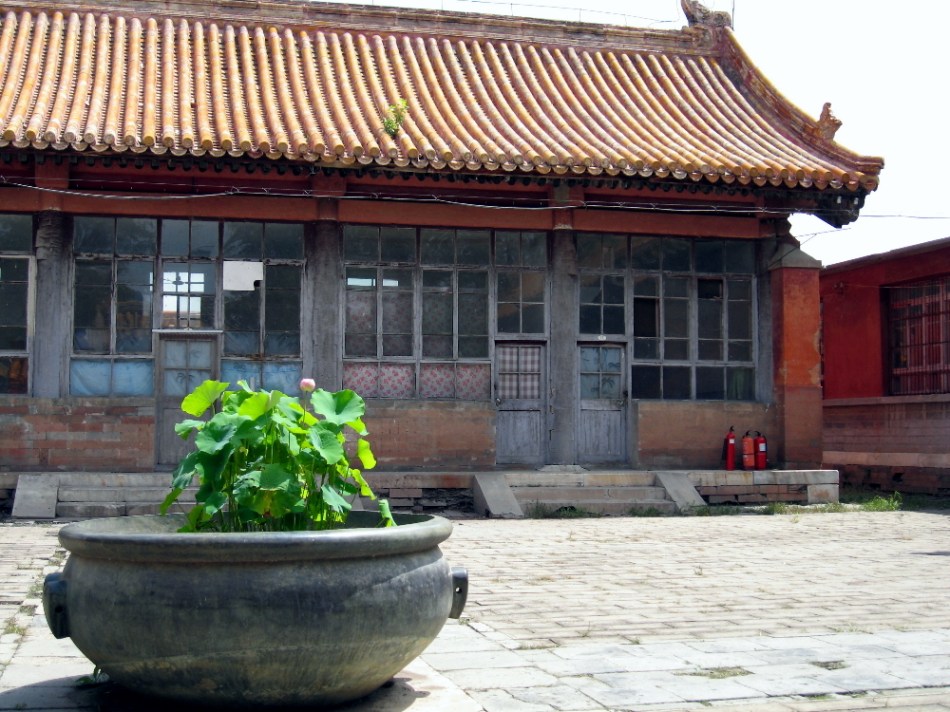
Tidbits about the tombs: there were far more than we could see in a full afternoon, surrounded by fields, orchards and chestnut trees, scattered like jewels along the verdant hillsides at one end of a hill-encircled valley. (Great 风水 – aka feng shui – one understands.) Only a few have been maintained and/or restored – rebuilt, as the critics would say. One great joy is how you feel they’re left in a fairly natural state of deterioration; indeed, Marg and I discussed whether thepeeling and faded paint at one tomb is original from when the emperor was buried there in the mid 1800s, or at least from dynastic-era maintenance (after all, the post-dynastic era didn’t bother much with tomb maintenace until at least the early 1980s, one assumes, given the various obstacles those years presented).
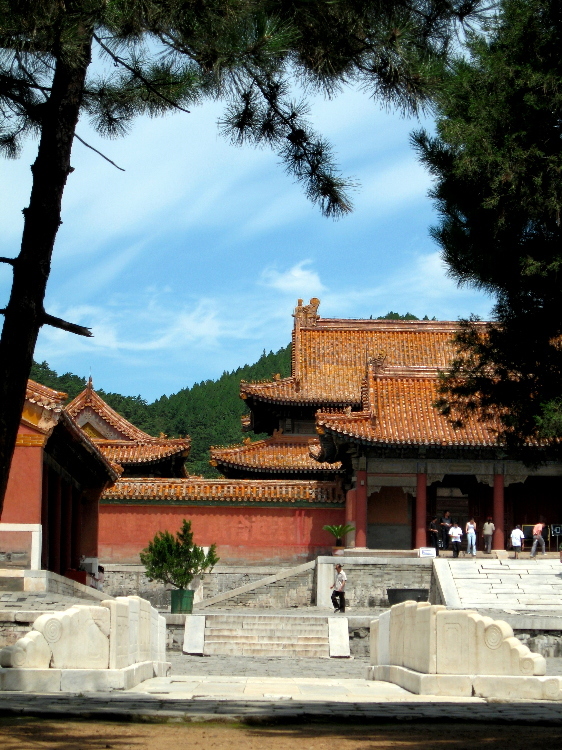 These aren’t ancient, certainly. But they’re old, and they’re dynastic, which places them in a very different time line from the one we live in now, in China. Also, the unrestored ones are very under-visited and atmospheric: the new ones, blesssed with dioramas of tacky statues representing the services that would have been held here to honor the ancestors during the dynastic era, see more tourists. But we spent more than half an hour wandering around one compound and only saw three other people! Final note: the names on the tombs are written both in Manchurian script (which I never even knew existed) and in Chinese characters. Though I’ve been to many Qing-era temples, etc. in China, I’ve never been to official Qing dynastic buildings, so I’d never seen this before.


(July 2016 editor’s note: I’ve edited this post to combine many separate photo-uploads which were necessary when I first posted it, and to take advantage of improved photo-layout options available now.)