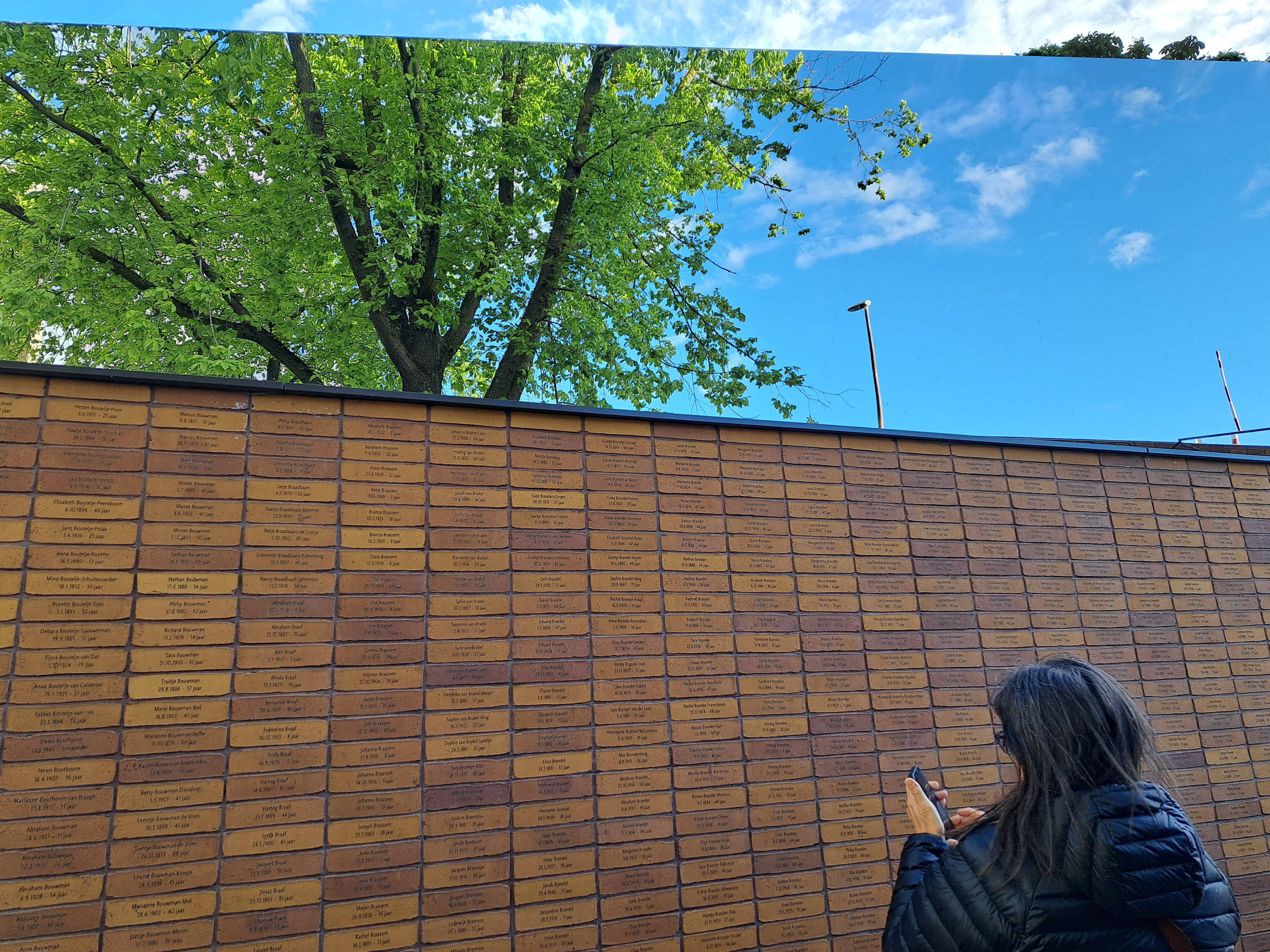
Amsterdam’s Dutch National Holocaust Names memorial (which opened in September 2021, not long after I moved to A’dam) is heartbreaking, and also beautiful in its simplicity and symbolism. I went again with a visiting friend on, appropriately, the weekend of the 80th anniversary of the first Dutch national liberation day.
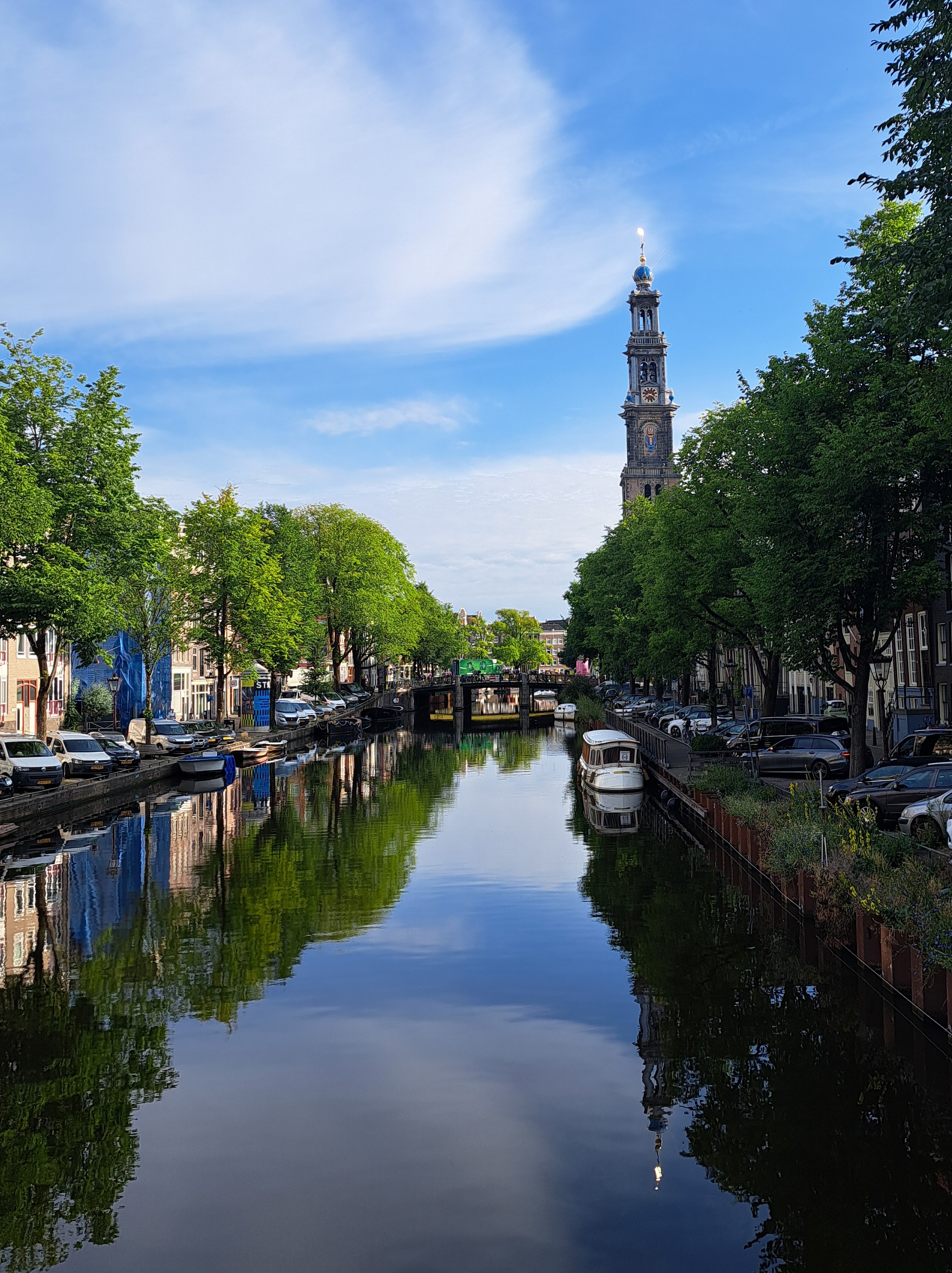
Now and then the morning bike commute to work is so lovely that I stop and take a photo or two, such as these shots from June and July. The right-side photo shows Westerkerk, which is referenced in Anne Frank’s diaries and which sits next to both the contemporary Anne Frank Huis museum, and the fabulously-named Homomonument. (Commemorating queer folks targeted and killed during WWII.)
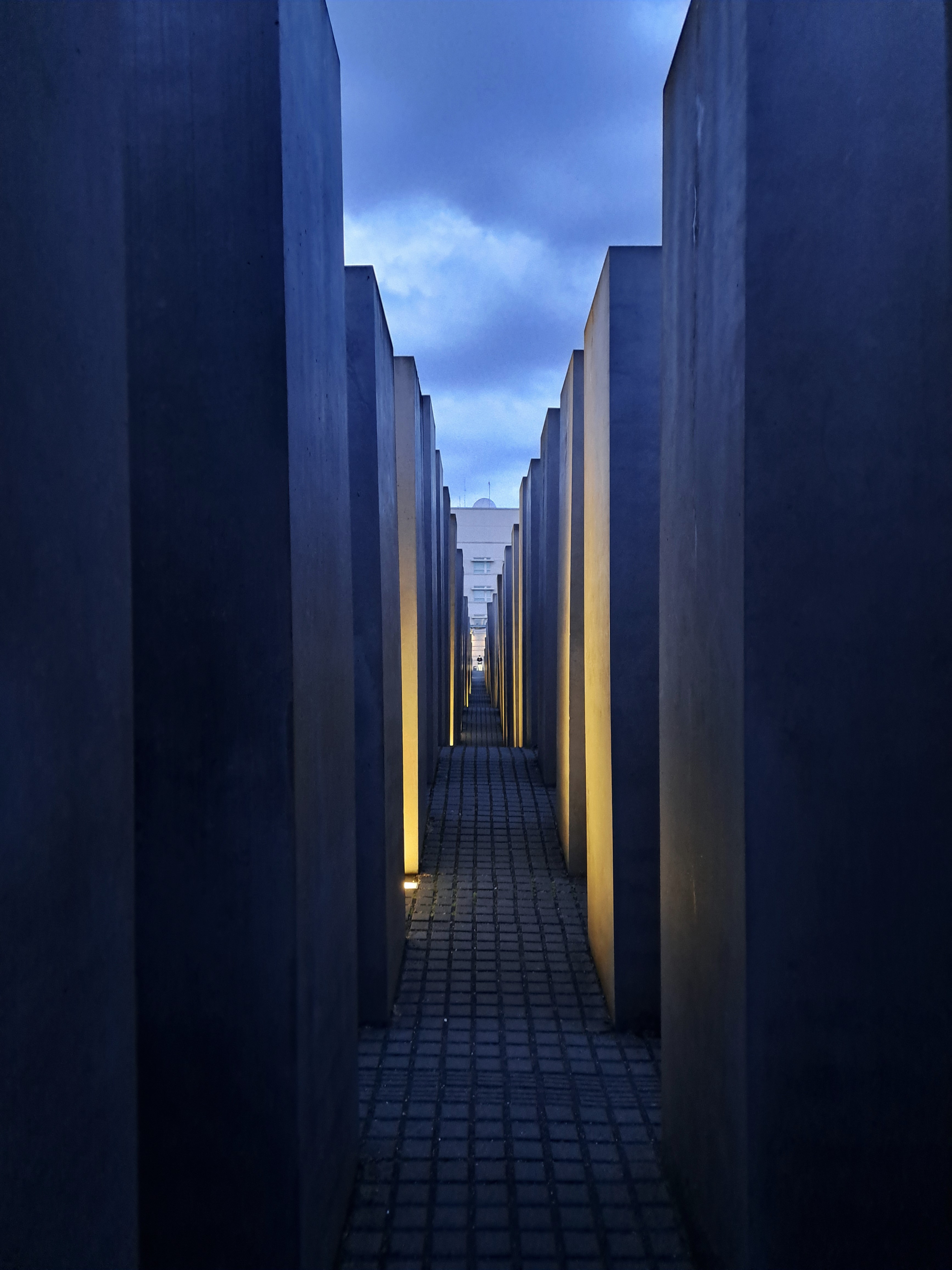
Memorial To The Murdered Jews of Europe, one of several monuments to humans killed during the WWII-era holocaust that have been established in Berlin since the last time I really had a chance to explore the city fully. More photos of this quite wonderful city where history indeed weighs very heavily in future posts.
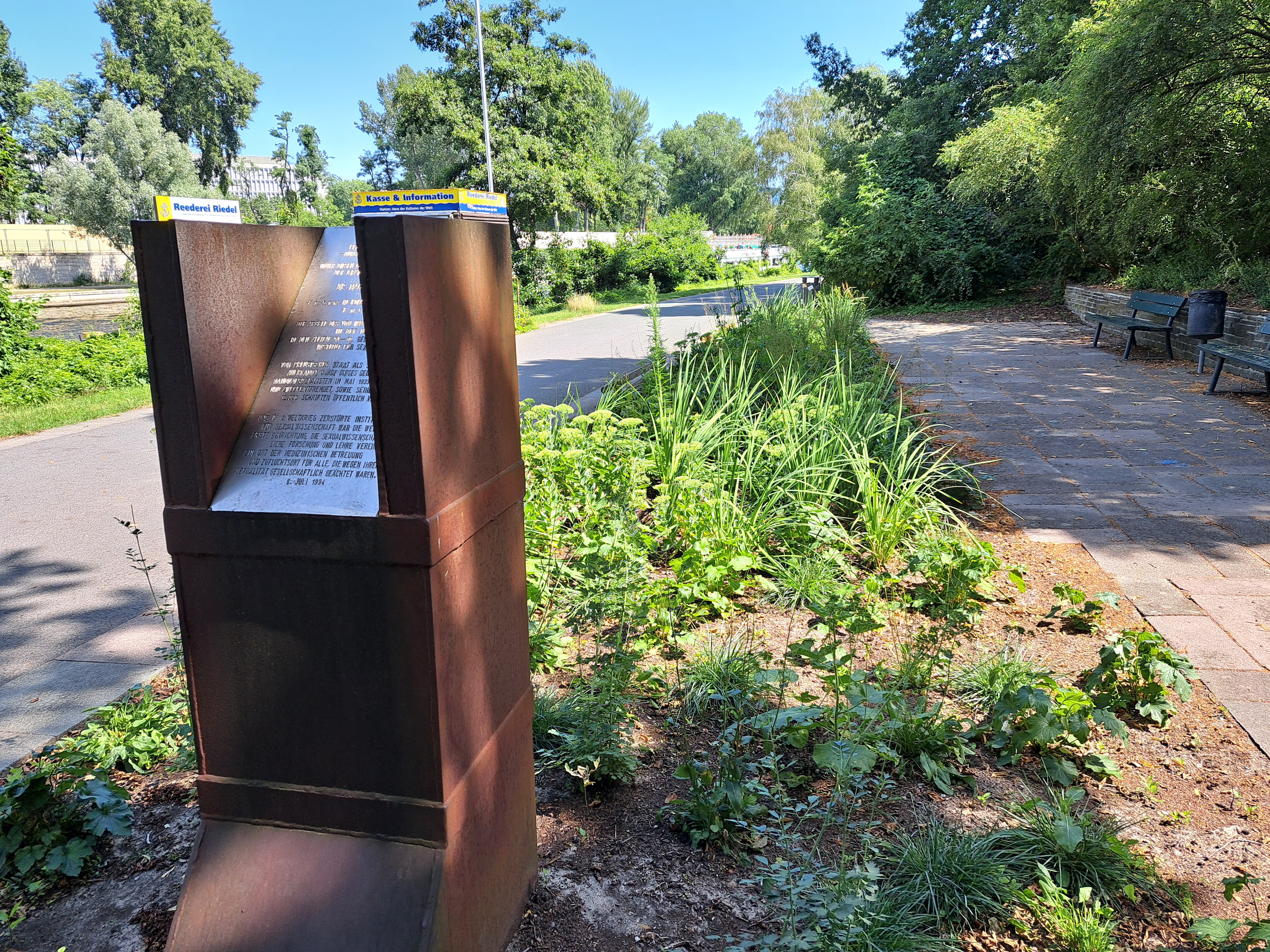
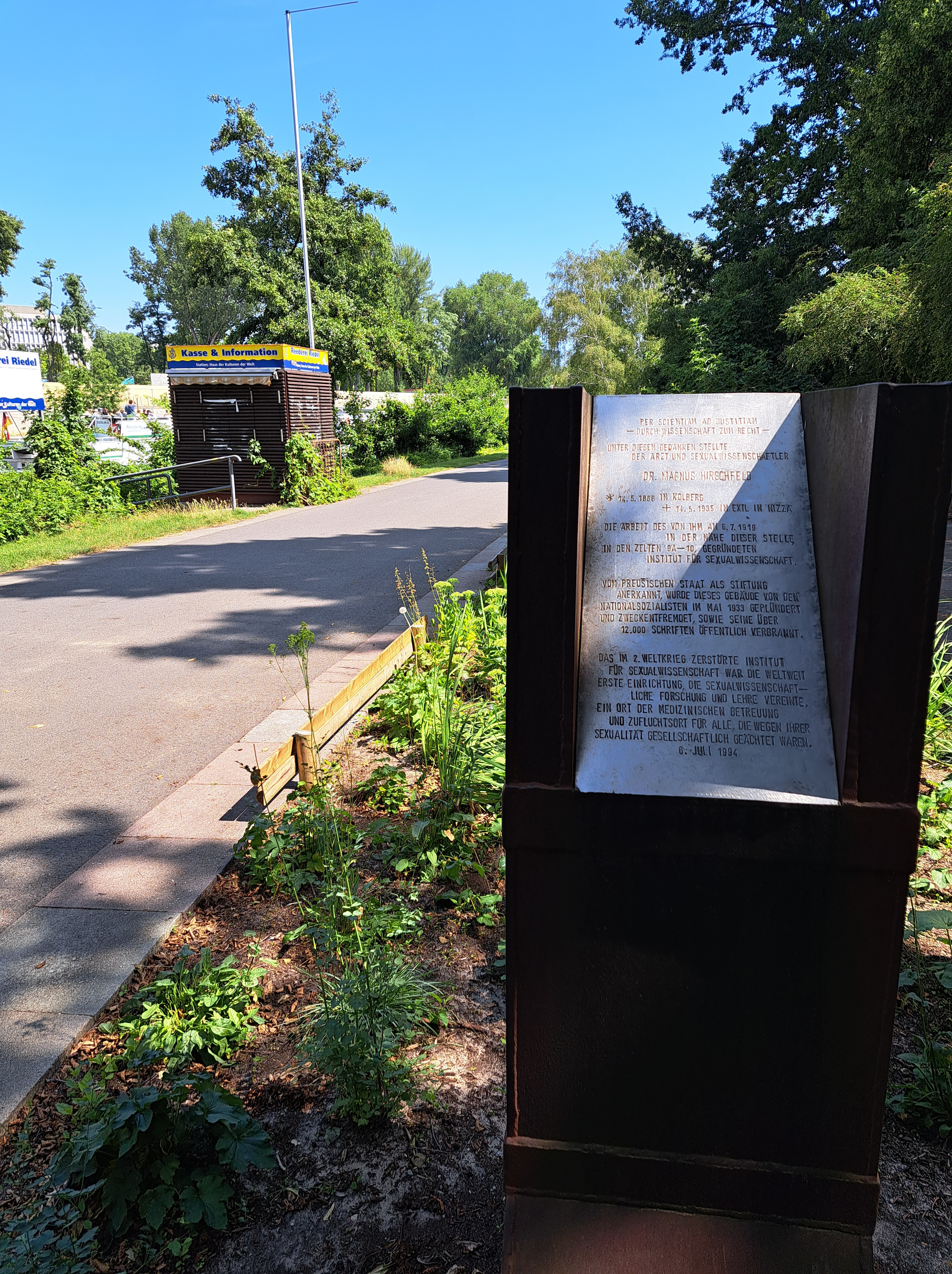
On the lovely garden path along the Spree, a memorial to Dr Magnus Hirschfeld & his institute for sexual sciences, destroyed (naturally) by the Nazis in WWII…
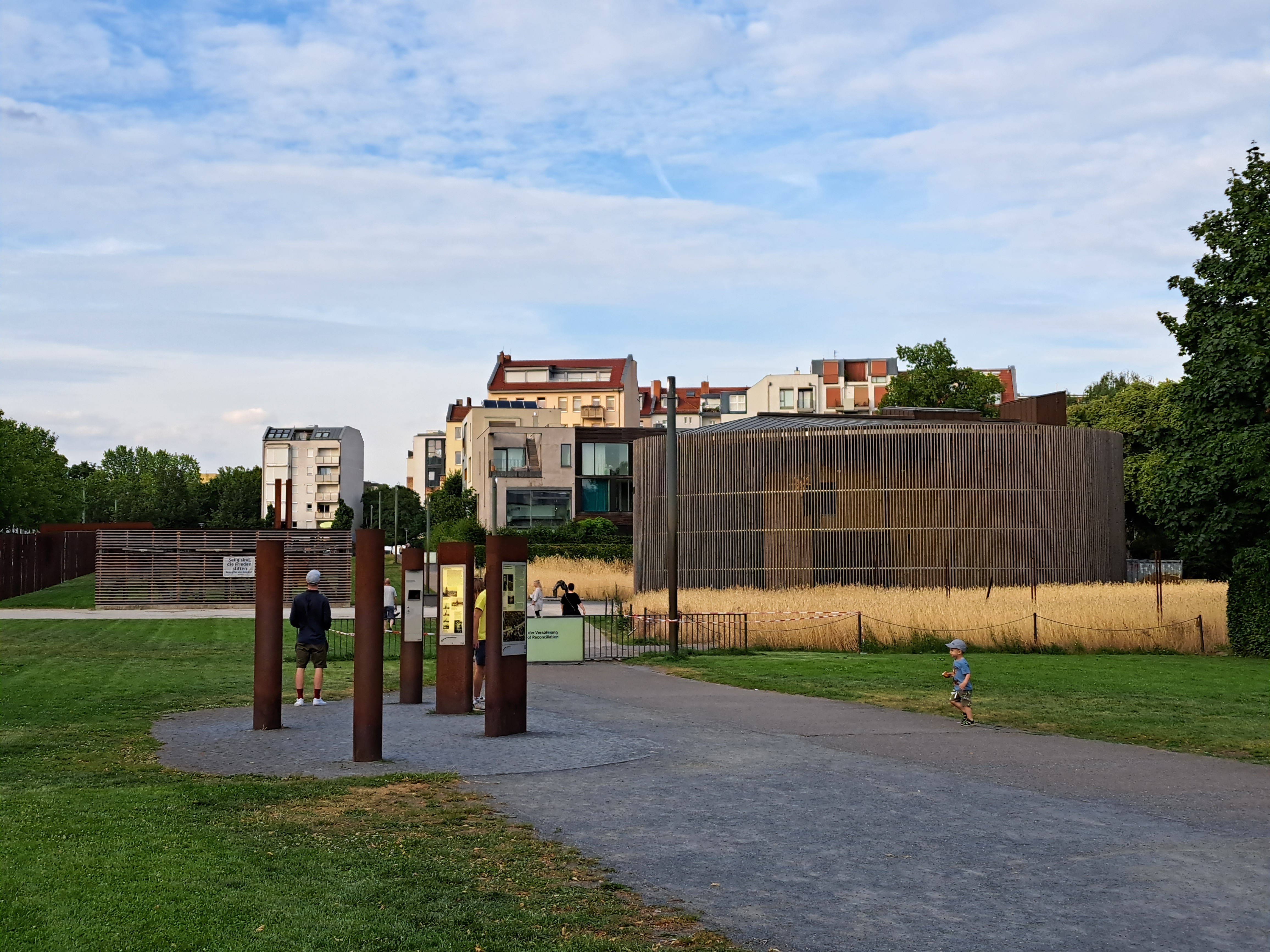
Returning to Berlin in July for those work meetings gave me a chance to visit neighborhoods where the city was once and is now no longer divided. Yes, I still cry when I walk past these places and remember my own crossings of that wall when it was really rather scary, because you knew armed border / wall guards were watching you. These photos are all from an evening walk in and around the Berlin Wall memorial park along Bernauer Strasse, one of the streets along which the wall itself once ran. The lovely murals in the gallery below were on an apartment building in what was then East Berlin…I’m fairly sure…my dear brother, for whose book on the period right after the wall was finally breached I will give an unabashed plug right here, might correct me if he sees fit.
In July, work trips took me to Berlin for a few days of meetings and then to Brussels for a few more days of meetings shortly thereafter. Though completely exhausted on my only overnight-evening there (super early train down, after being out late enough to take some of those “City Lights” photos I’ve just been posting, if you want to know…), I still managed to get out for a walk and found quite a lot of stimulating visuals. 🙂 This modern tourist attraction sits right next to the memorial that I’m also showing you below, in quite an interesting juxtaposition.
On the beach by the small South-Holland village of Wassenaar, on the night from 27 to 28 February, 1944, several French resistance fighters landed to support the Dutch resistance effort. Slightly more than 79 years later, Nikos and I visited the beach (on our way back from the short outing I showed you earlier), within days of the anniversary and commemoration, and were moved by the wreaths honoring these lost lives, so many decades later.
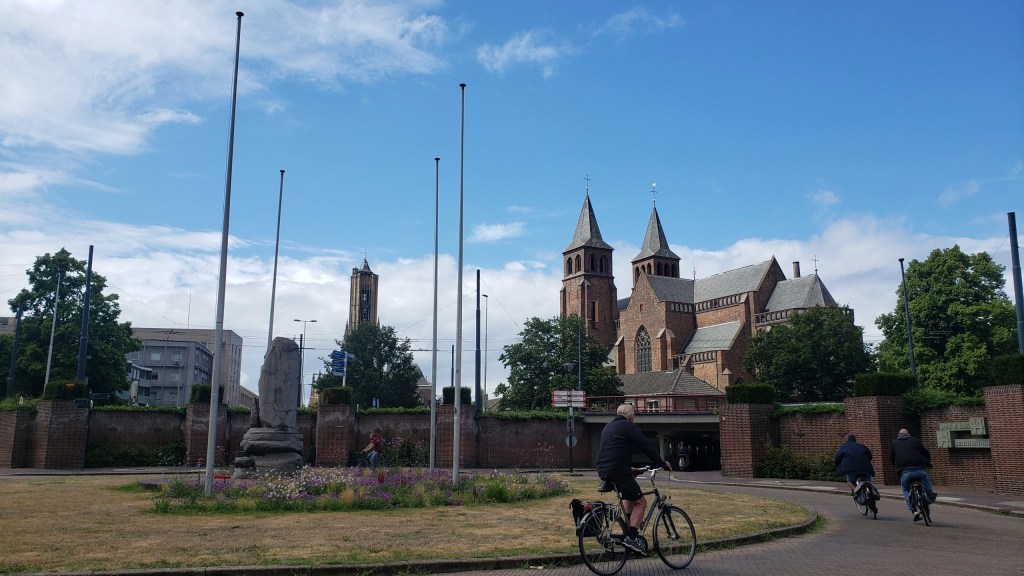
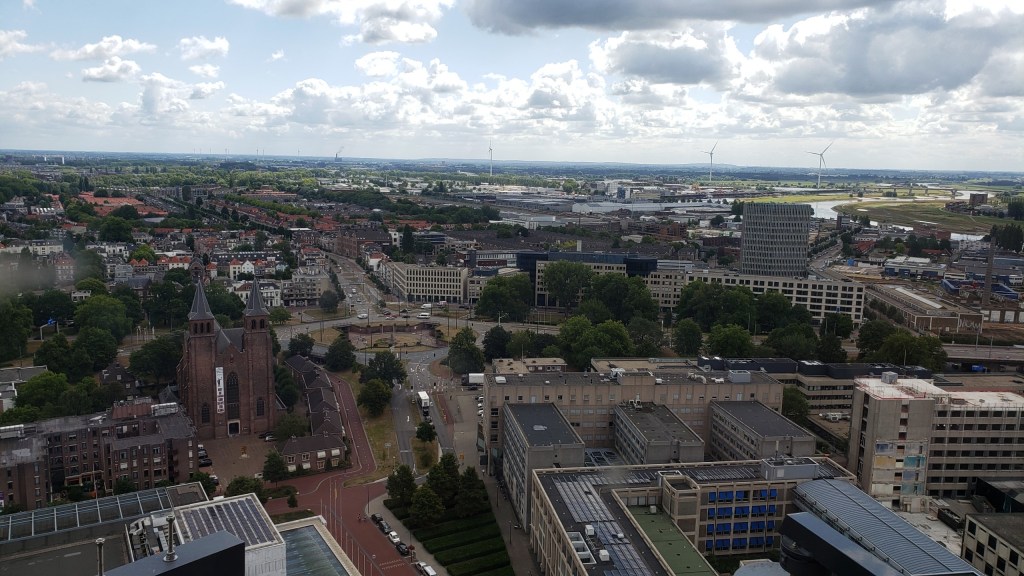
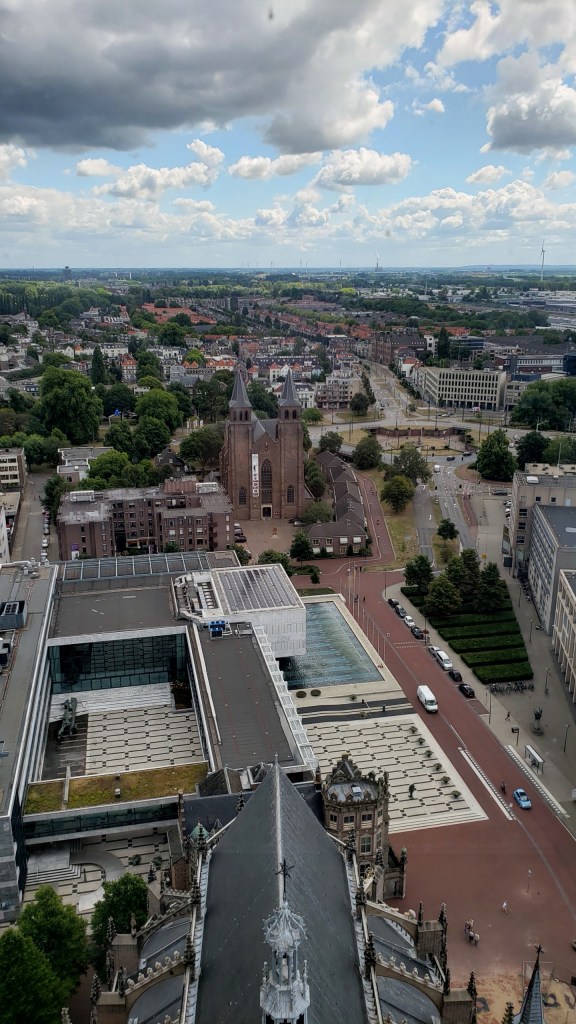
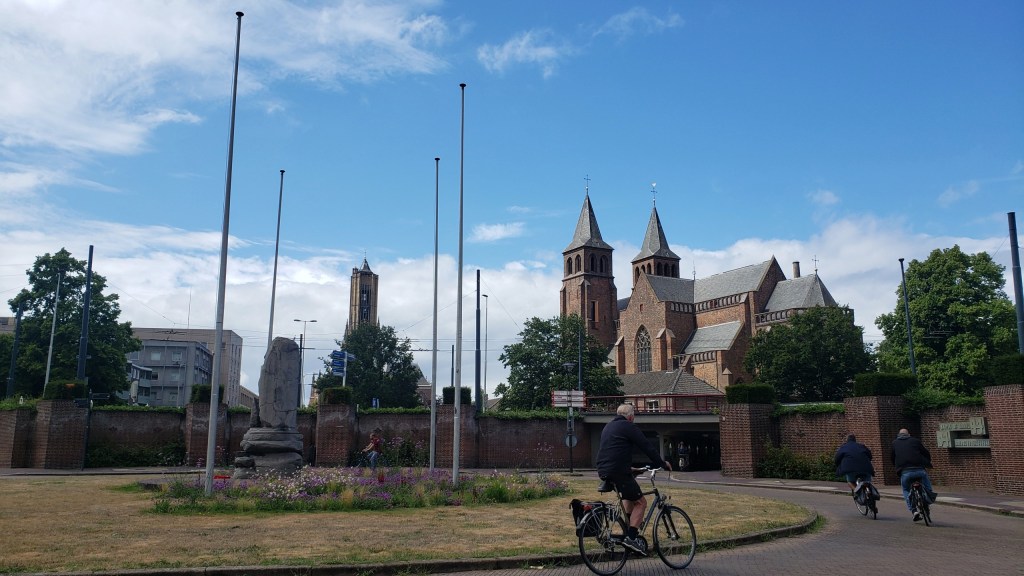
Above, the memorial garden and bike-roundabout commemorating the WWII events noted yesterday. Below, other views from both ground level and from high in the tower of Eusebiuskerk, about which we shared more in an earlier post….and will share still more in posts yet to come :-).
Compare the river traffic in yesterday’s post and today’s. This is the Nederrijn (“lower Rhine”) at Arnhem, just some 15km north of Nijmegen. My working hypothesis is the Dutch generally channel passenger boats and river cruises into this branch of the Rhine, versus commercial freight traffic onto the much larger Waal.
Fun-sad fact: in late 1944, the allies held (most of?) Belgium and areas of NL to the south of the Waal, at least this far east. Meaning allies held Nijmegen; Germans still held Arnhem, with no-one’s-land between. The rounded building with windows on the left is a fine museum commemorating and documenting a (individually) valiant but (tactically) disastrous effort in September 1944 to liberate Arnhem and free the road for an earlier advance on Berlin. One outcome of this failed operation was the premature exposure of many Dutch resistance fighters. Another was the (German-)forced mass evacuation of Arnhem – in winter – and the destruction of the bridge here, which is now named in commemoration of the British commander who tried valiantly but without success to hold the bridge for the allies.


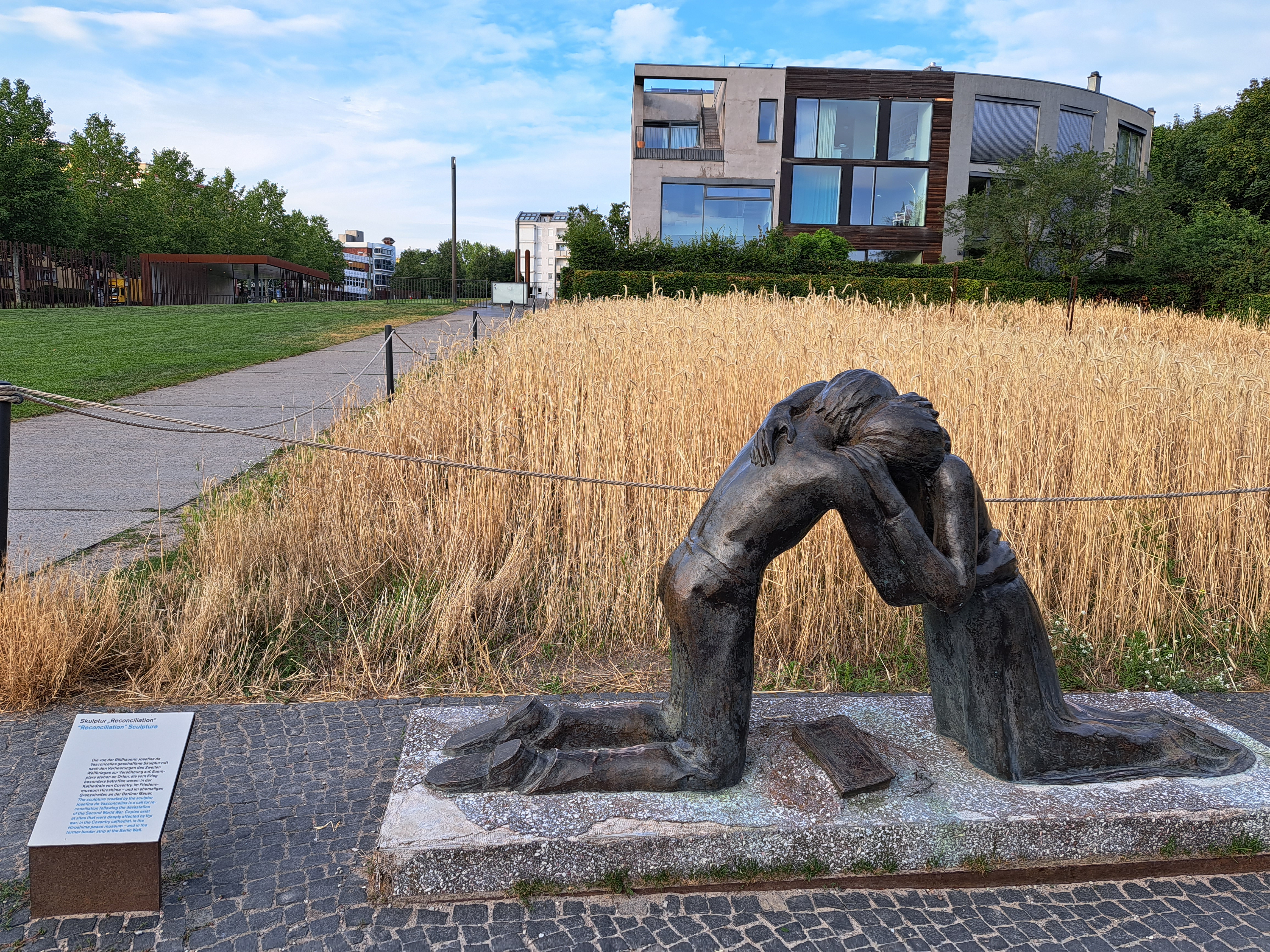 Returning to Berlin in July for those work meetings gave me a chance to visit neighborhoods where the city was once and is now no longer divided. Yes, I still cry when I walk past these places and remember my own crossings of that wall when it was really rather scary, because you knew armed border / wall guards were watching you. These photos are all from an evening walk in and around the Berlin Wall memorial park along Bernauer Strasse, one of the streets along which the wall itself once ran. The lovely murals in the gallery below were on an apartment building in what was then East Berlin…I’m fairly sure…my dear brother, for whose book on the period right after the wall was finally breached I will give an unabashed plug right here, might correct me if he sees fit.






 (so much world, so little time....)