Kids, Coconuts & Campaign Posters
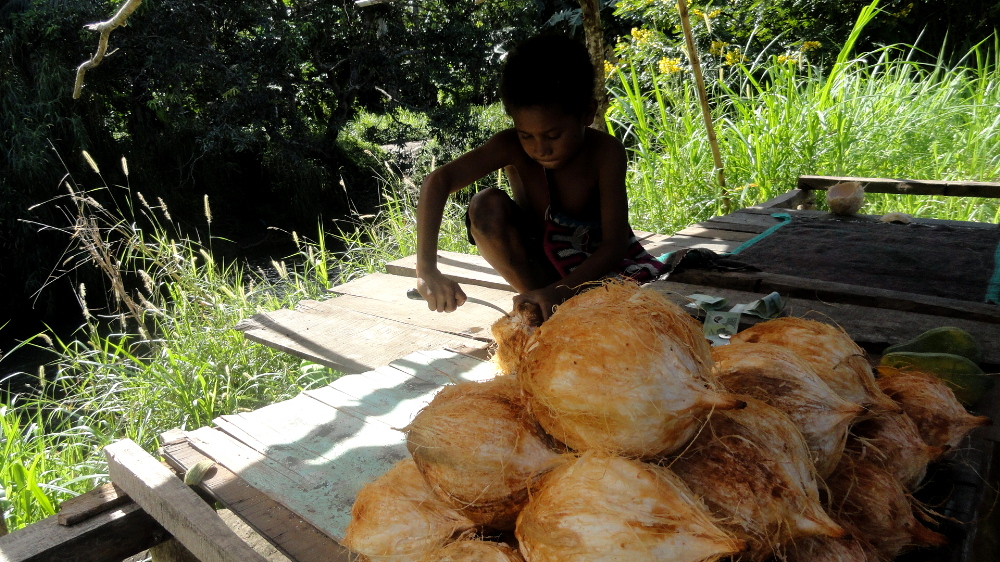
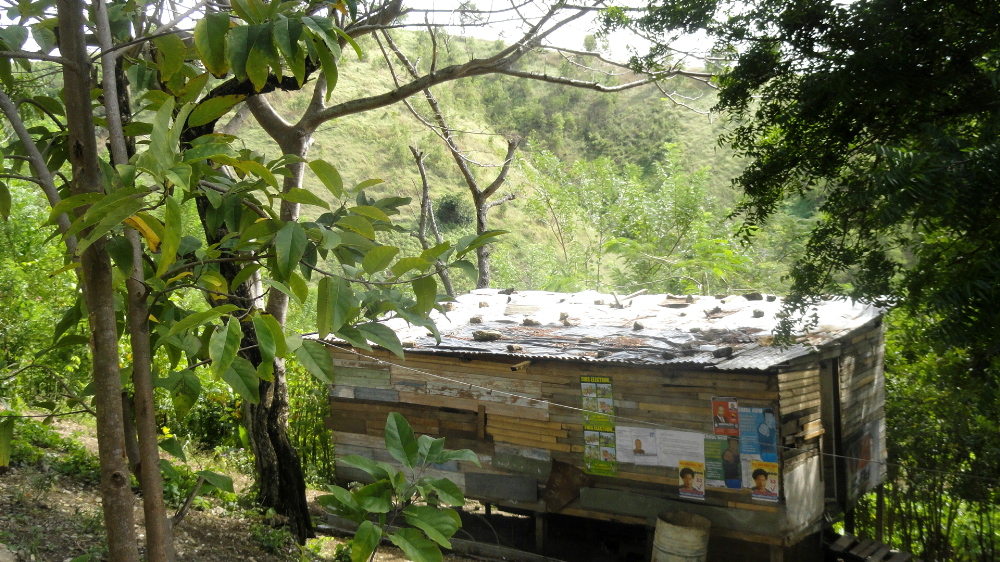
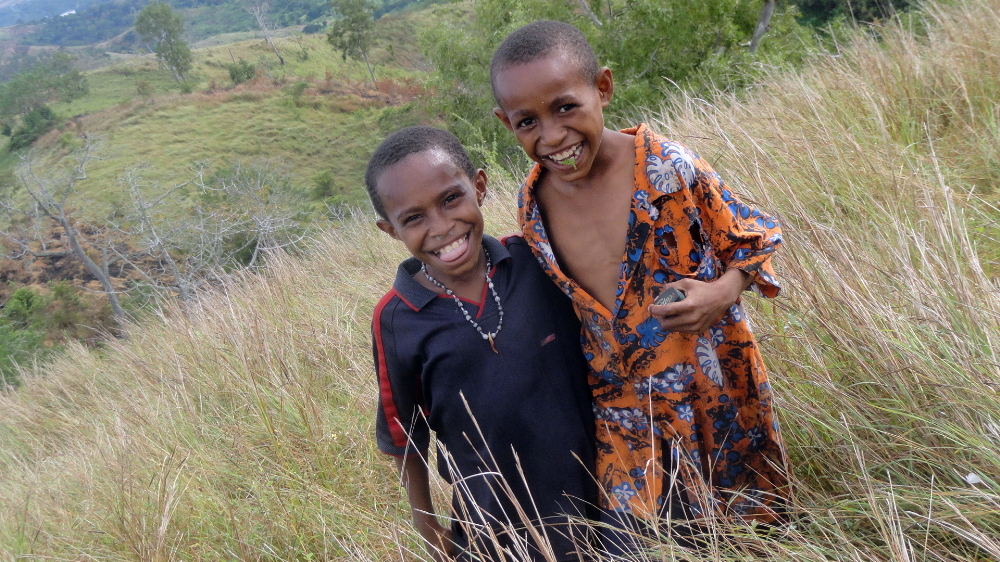

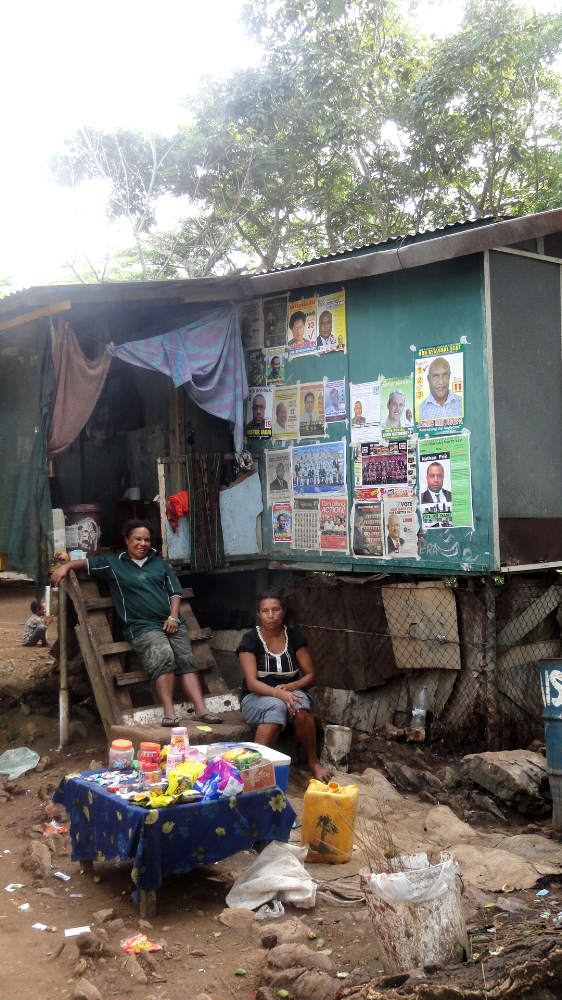
Look closely at the photo a few up, and you’ll see a good half-dozen campaign posters on the side of that shack. A few more will show up in other shots, below. Yes – it’s election season in Papua New Guinea. Lots of drama , and lots of candidates – something like 3500 candidates for the 111 seats in parliament. There’s a system of preferential voting, where people voting for a first and a second choice – if no one wins an outright majority at the start, then there are repeated cycles where the candidate with fewest votes is dropped, and his (very, very few women are running) voters’ votes are redistributed to their second-choice candidates. A quick google search will lead you to any number of stories about the current elections, so I won’t go into lots of detail – just let you know that’s going on.
In the meantime, I’ve been getting out for tennis with some regularity, which is just wonderful for stress-management, fitness and work-life balance since the guys I’m playing with aren’t work-related. That, and watching Wimbledon on TV, are among the luxuries that come with being in the capital for the first time since 2007. Work’s going well, but that’s not the topic today either.
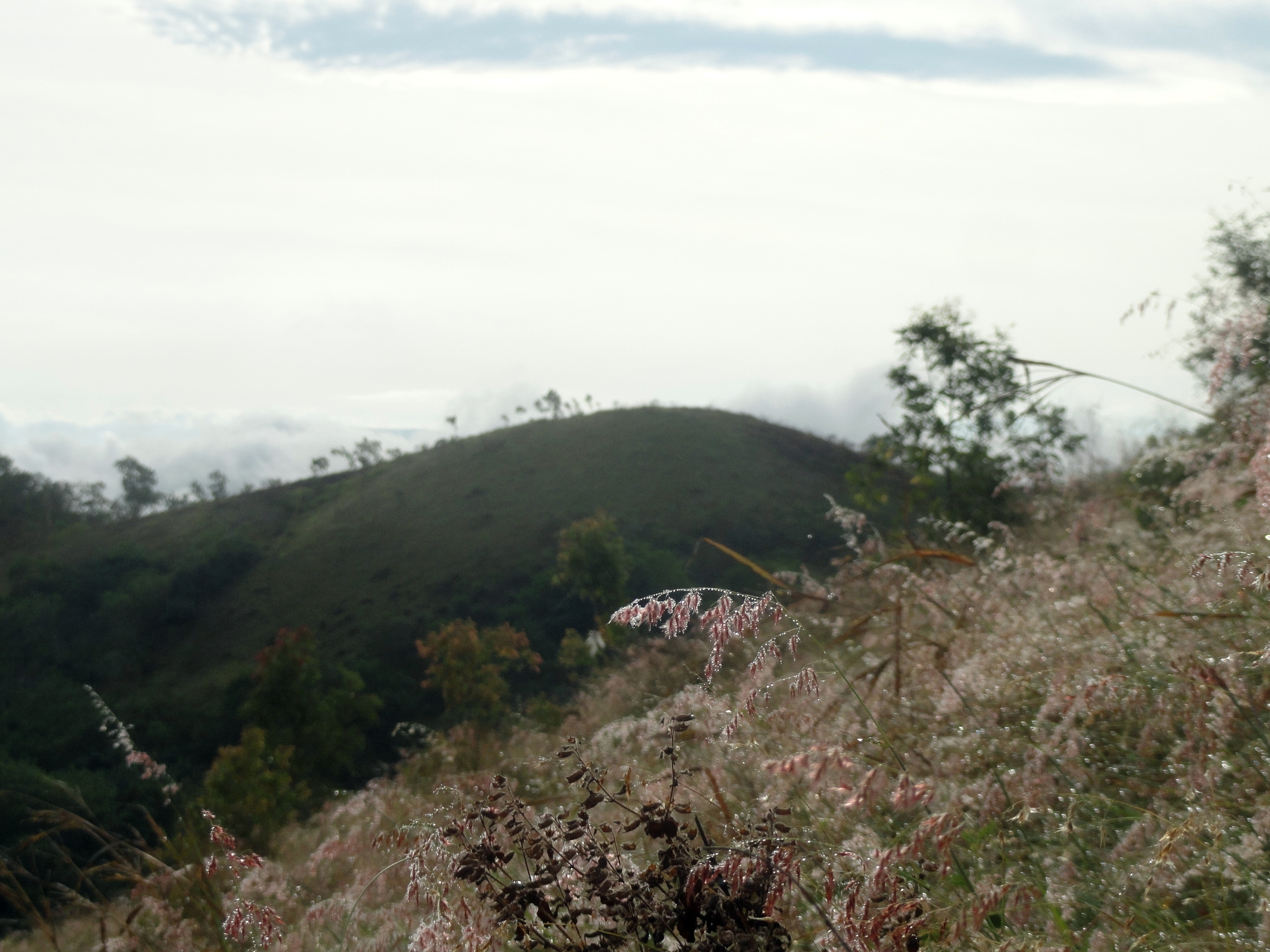
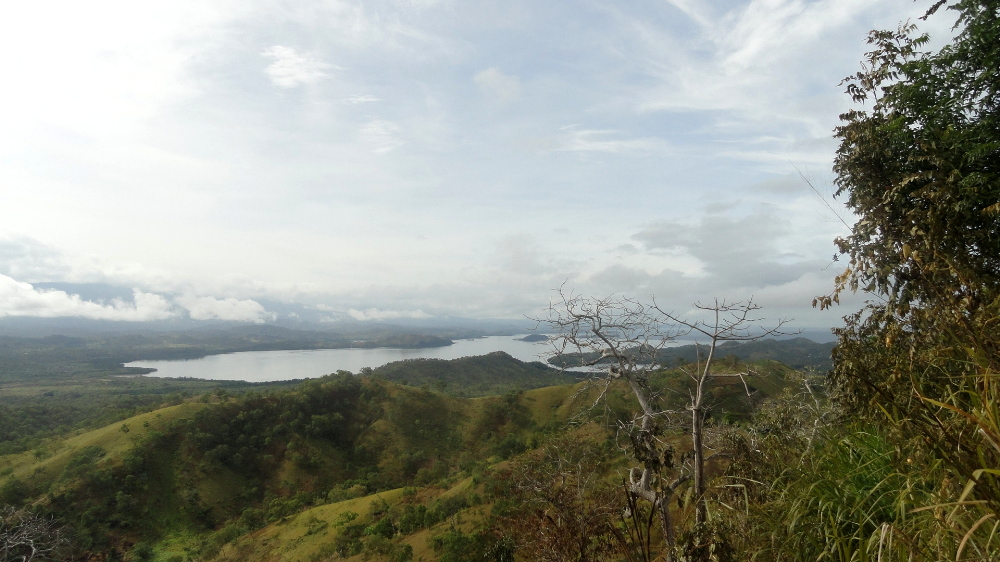
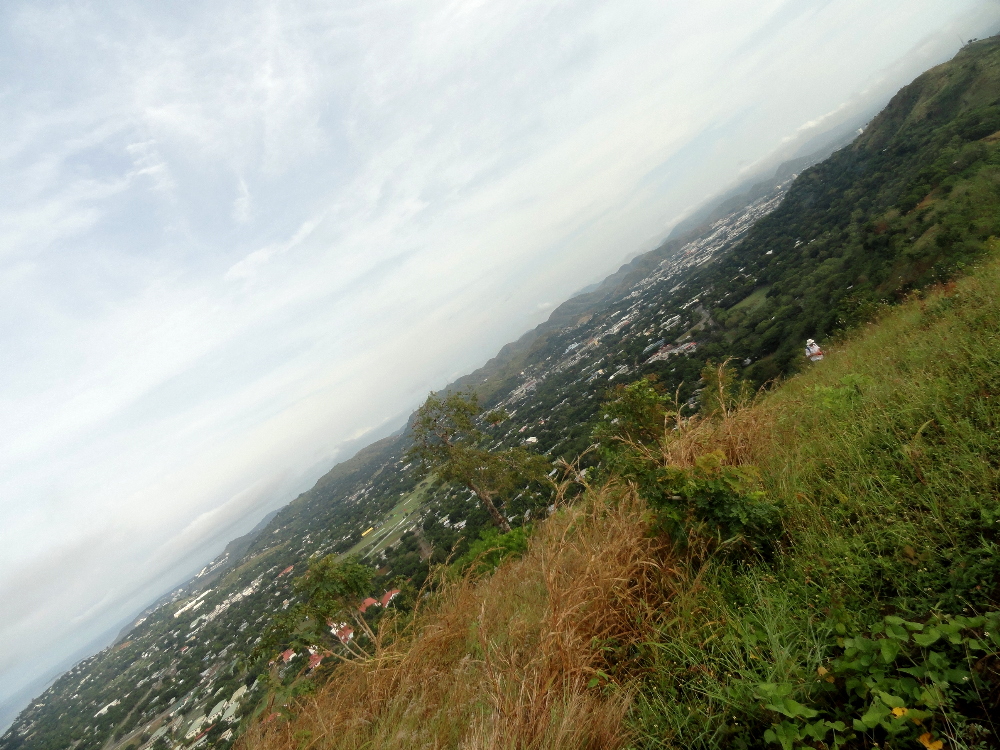
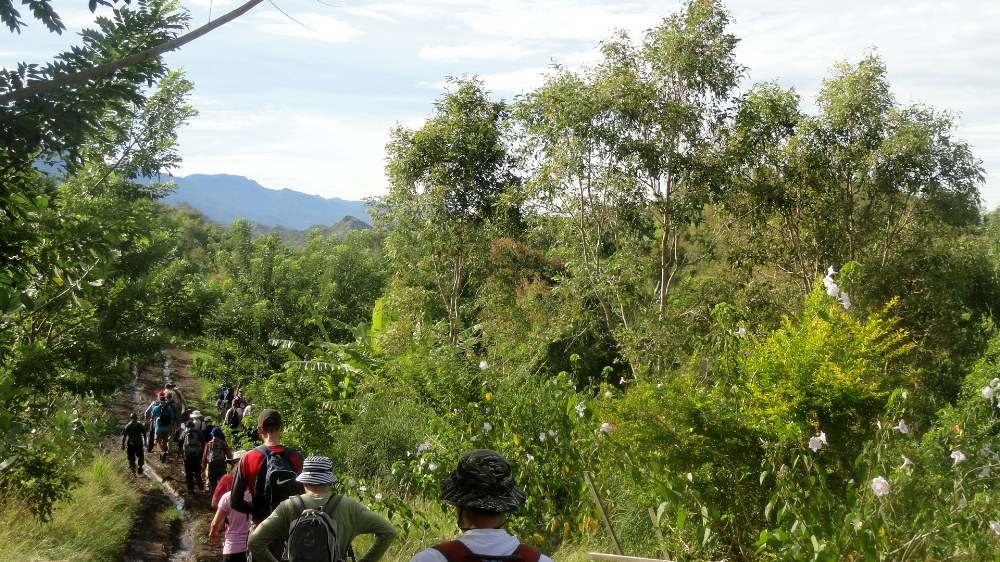
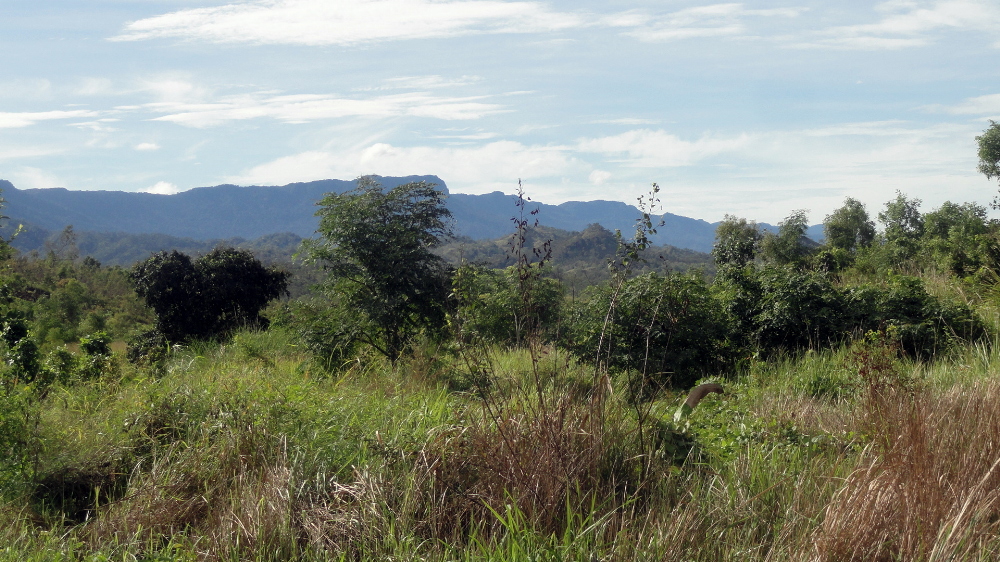
In fact, there is no topic today — just a collection of shots from some of the recent bushwwalks, especially one two weeks ago in the hills of East Boroko, which give you some different views of the town and its surroundings than I’ve been able to show you so far. As you see, it sure is beautiful – but as you also see, it’s mighty different from those northern European fields I put up last. Sometimes it really is all a bit much for my brain. And this week I’ve learned of the passing of one of my family’s oldest friends, someone who knew my father when they were kids, who was instrumental in bringing both my parents to the college town where I was born. Though I love this life and the work, the privileges of living in places so different from that town, where I can learn and grow so much…there are downsides, when we lose dear friends and I’m all the way across the world. Ah well – not much to be done. To Margaret Barrier, anthropologist and great spirit who will live in my memory.

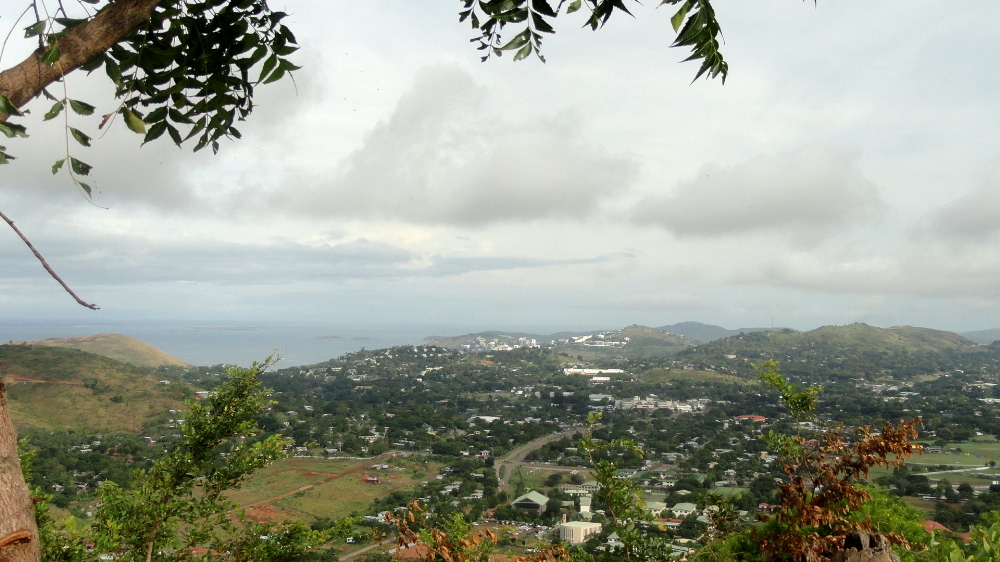
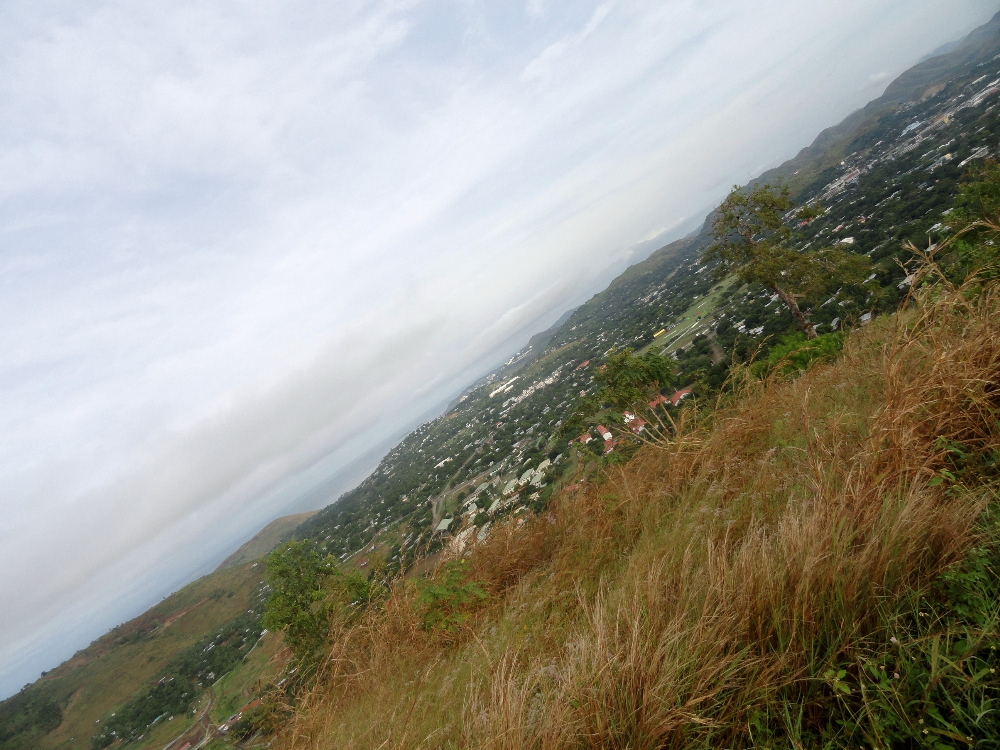
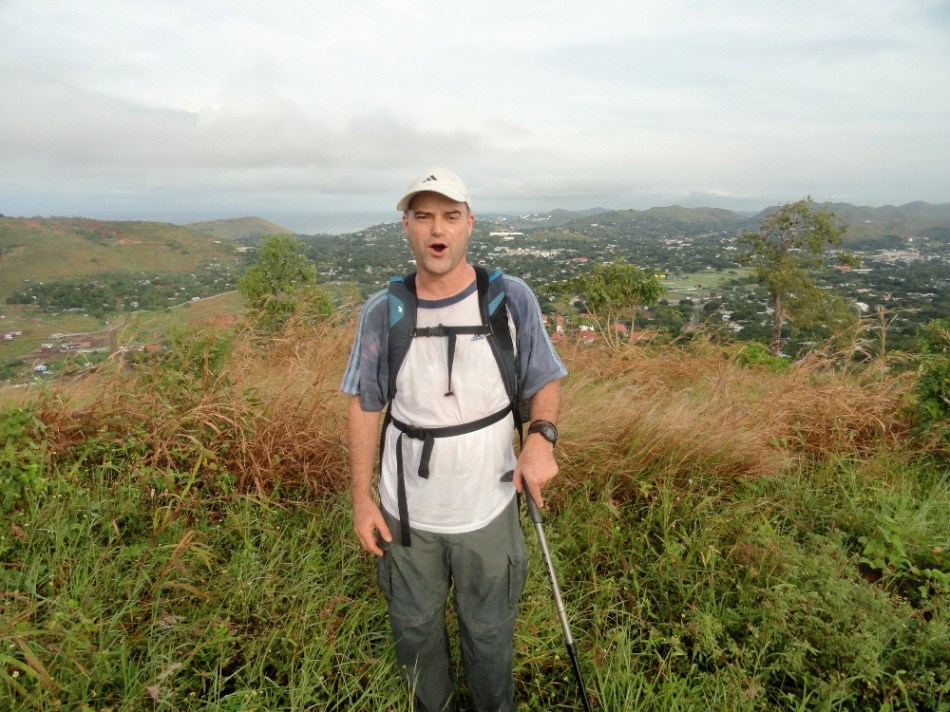
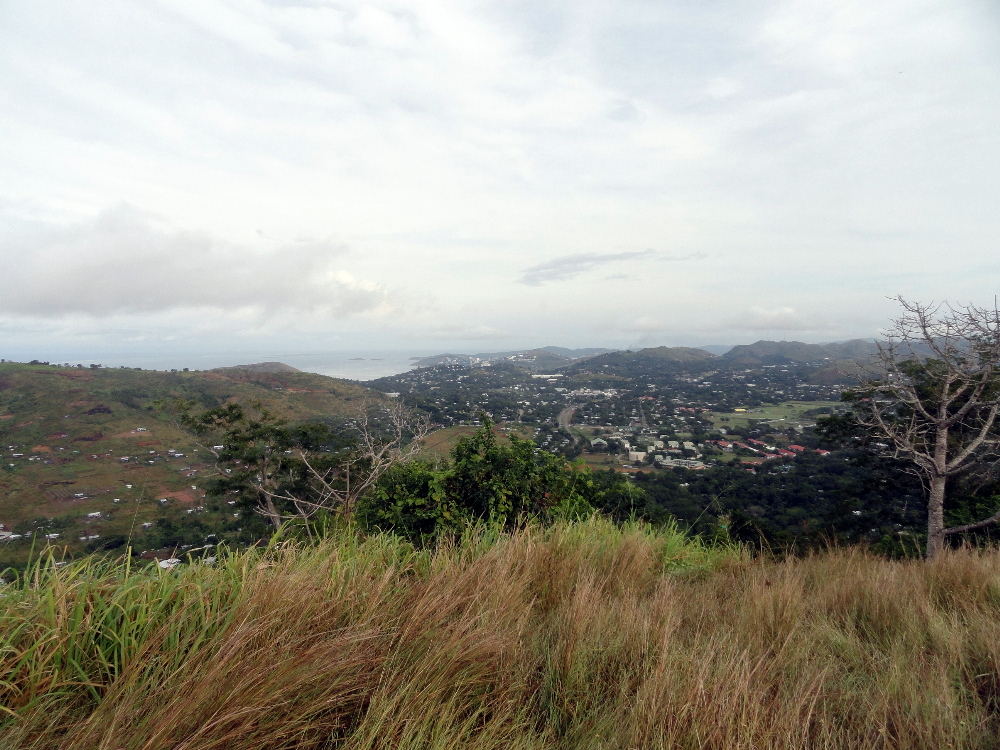
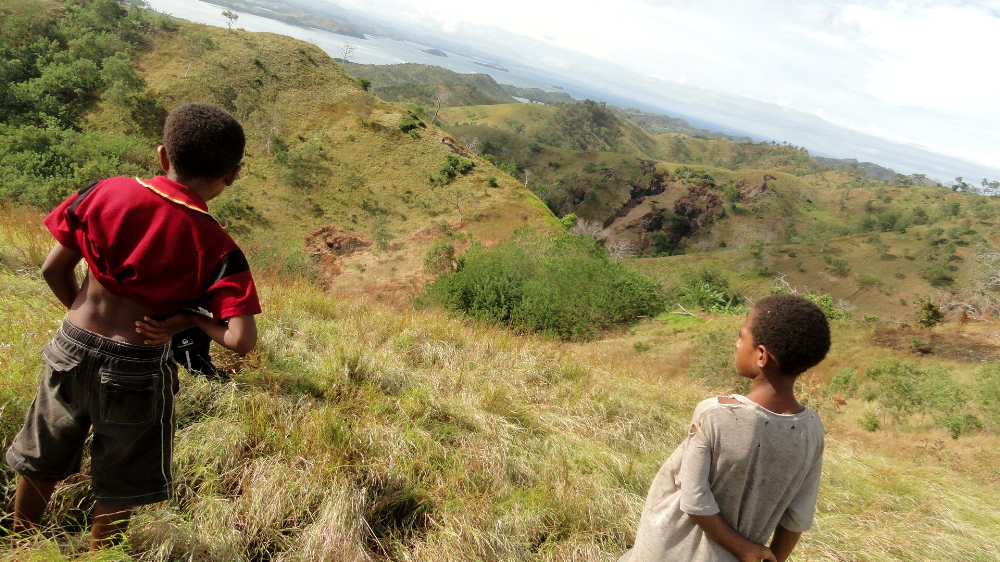
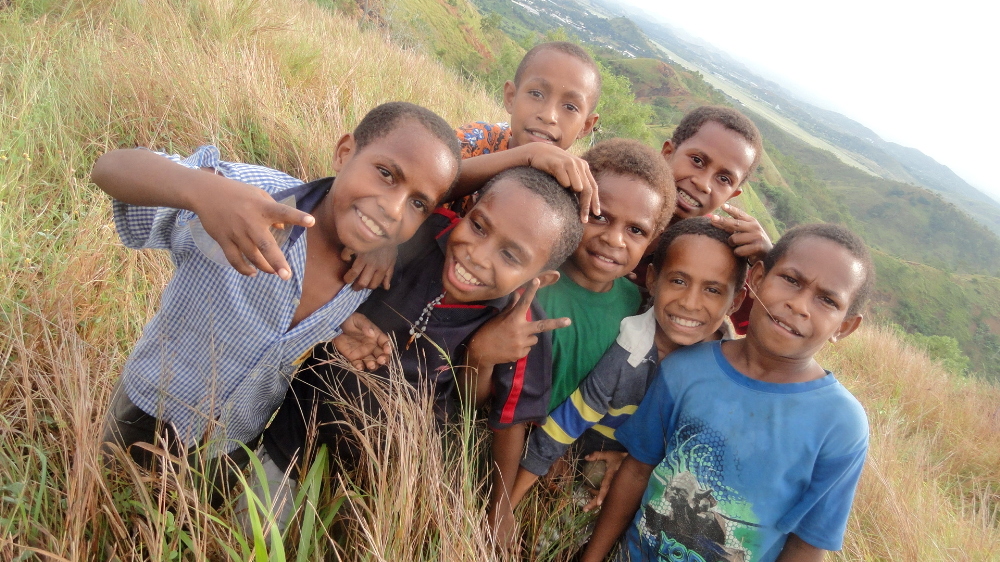
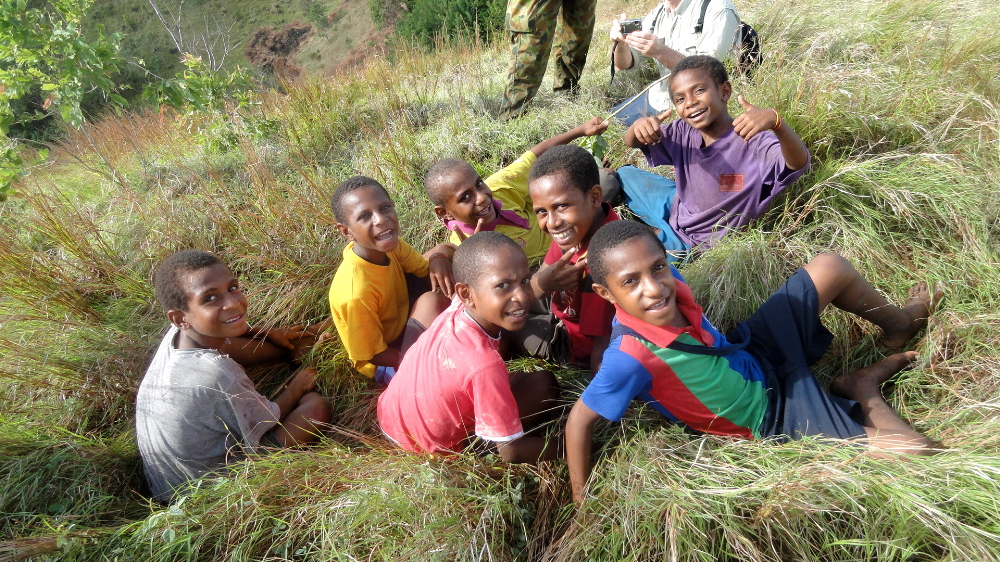
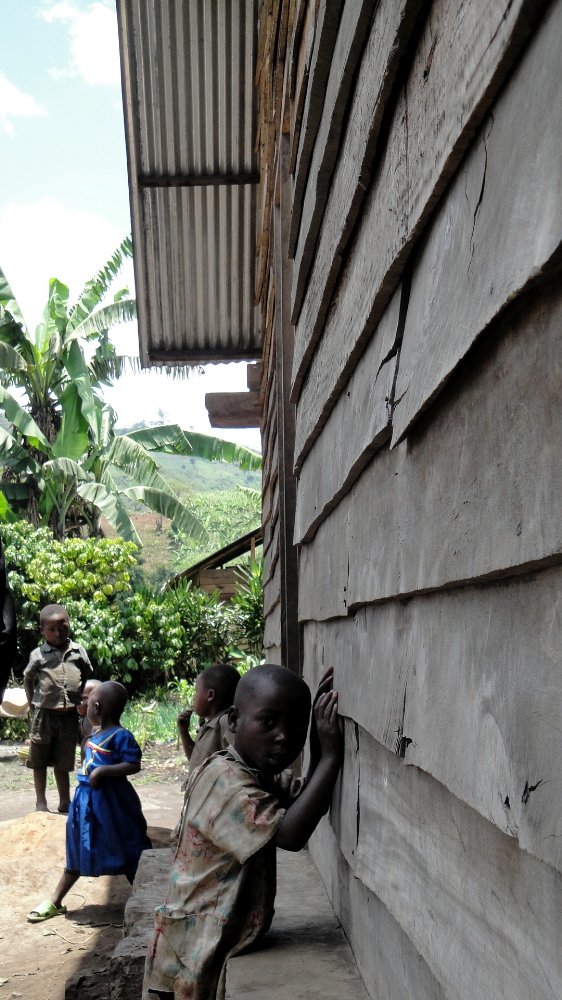
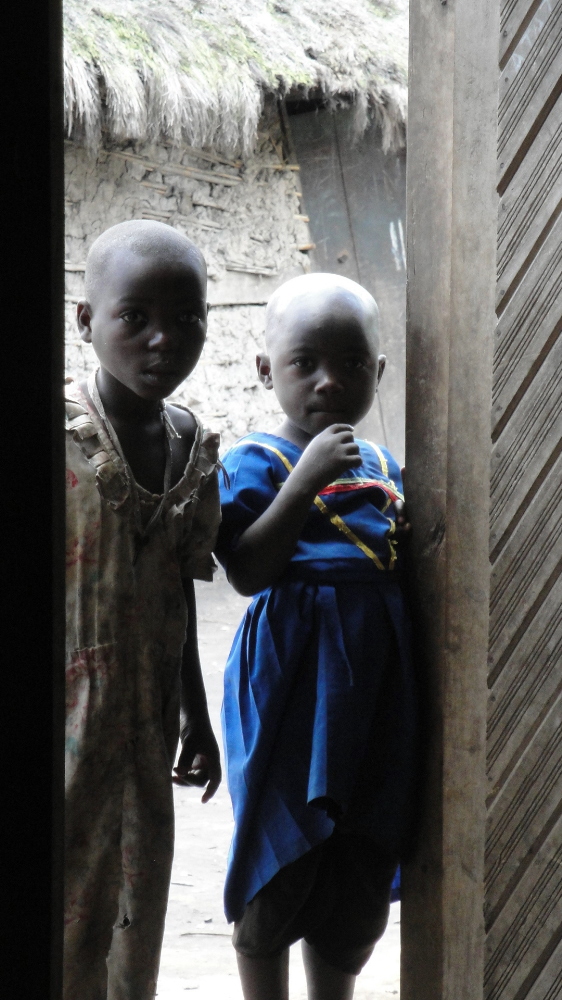
As you’ve noticed, on this East Boroko hike we had some kids from the area who decided we were a lot of fun to follow around. I took full advantage, as I always do when I find myself surrounded by a bunch of kids who’ll be more than happy to strike a pose for the camera. Also, you’re seeing different views of the urban-suburban sprawl, and of the town part of Port Moresby than I’ve been able to show you before. Hope you’re enjoying, Catherine and others who’ve asked. 🙂

That’s the airport runway, at the top left corner of the shot above. As you see, it’s one of the few places around with sufficient level ground to land a jet! Below is the guy who guided us on this hike. During election season, the former police who are often our guides and guards on these hikes have all been taken up with election security, so we’re doing some unusual hikes.


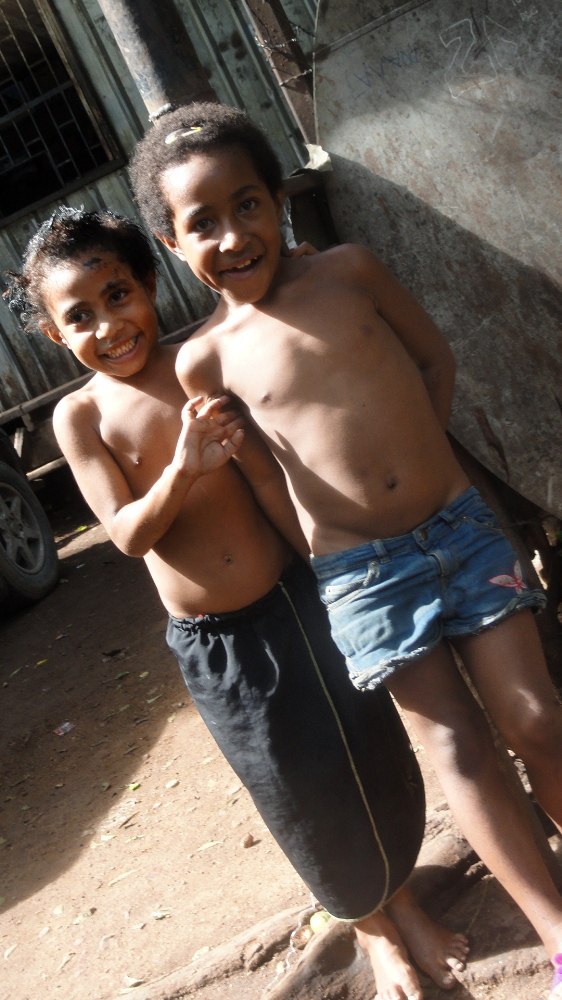
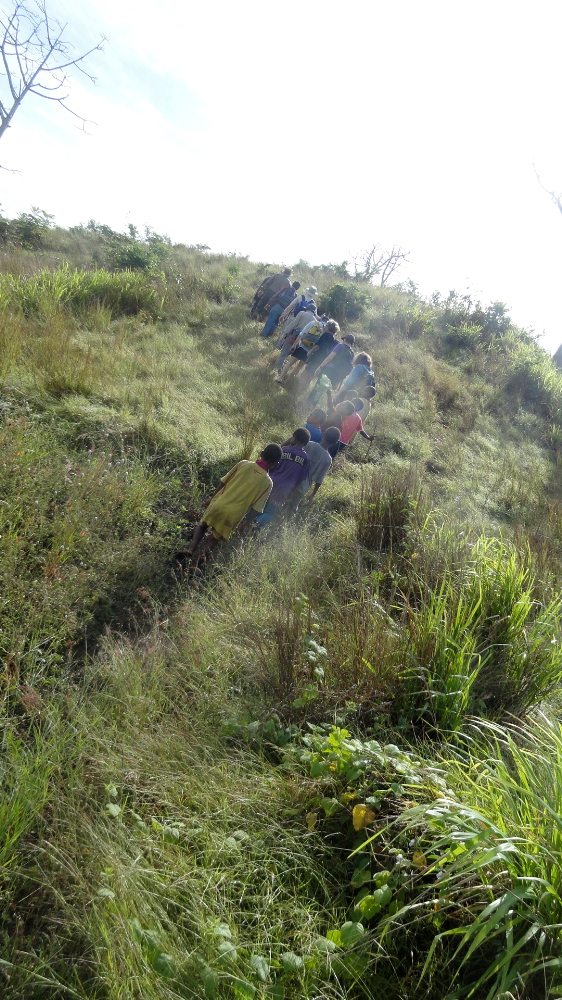


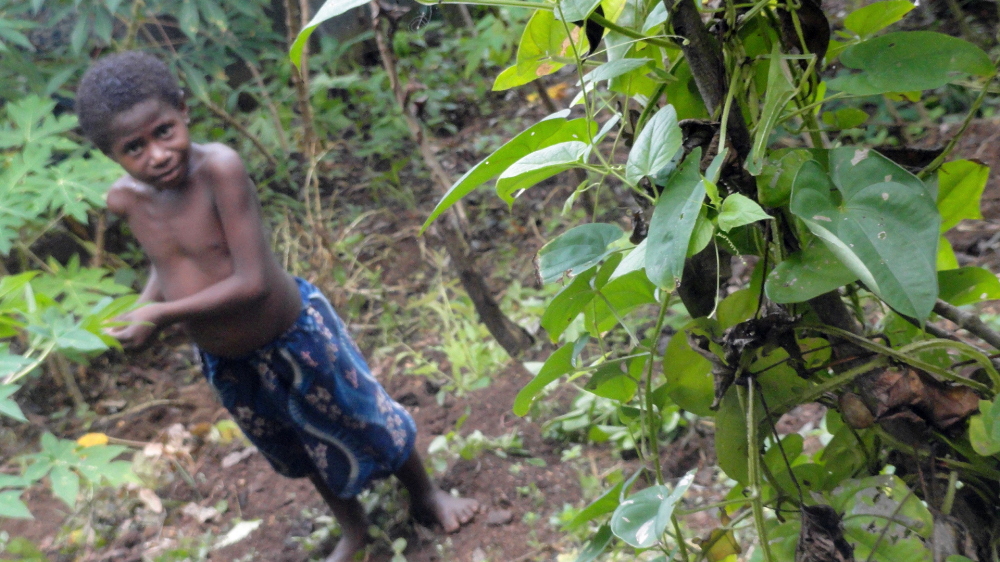

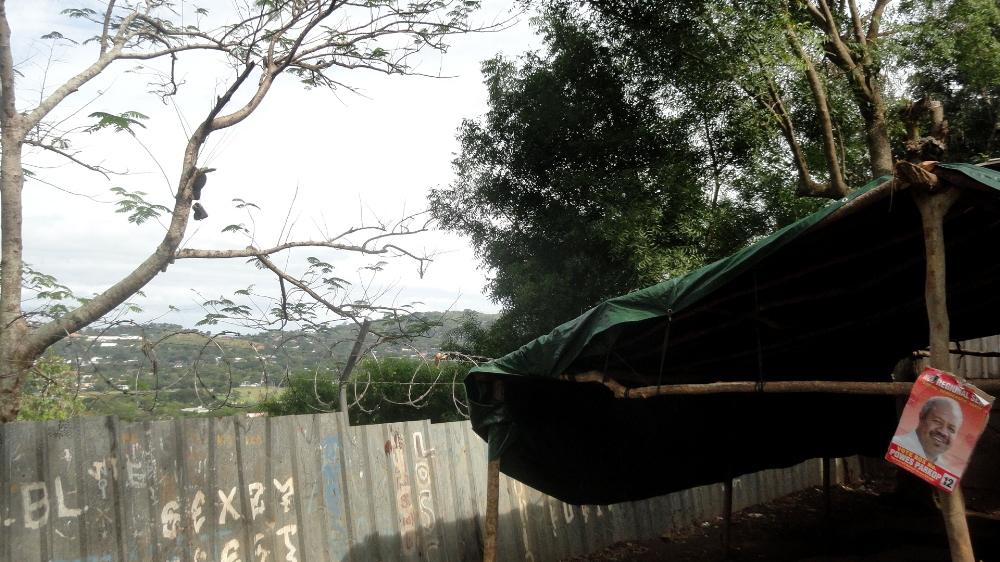
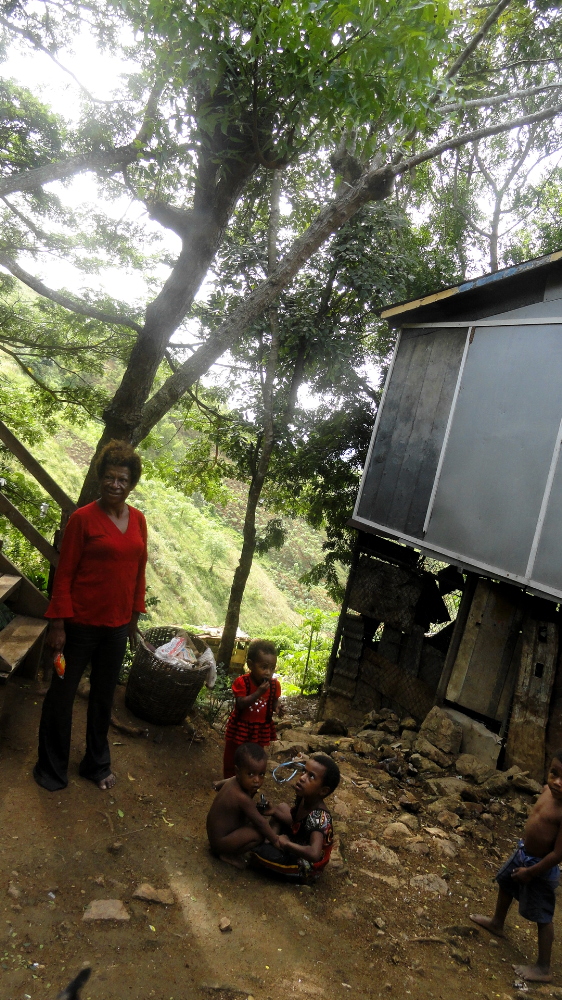
…this hike took us through one of the settlement areas and then up into the hills; below we’re in the settlement with some friendly folks, and all the shots of election posters were taken, obviously, where folks live.


Summer Evenings in Northern Europe

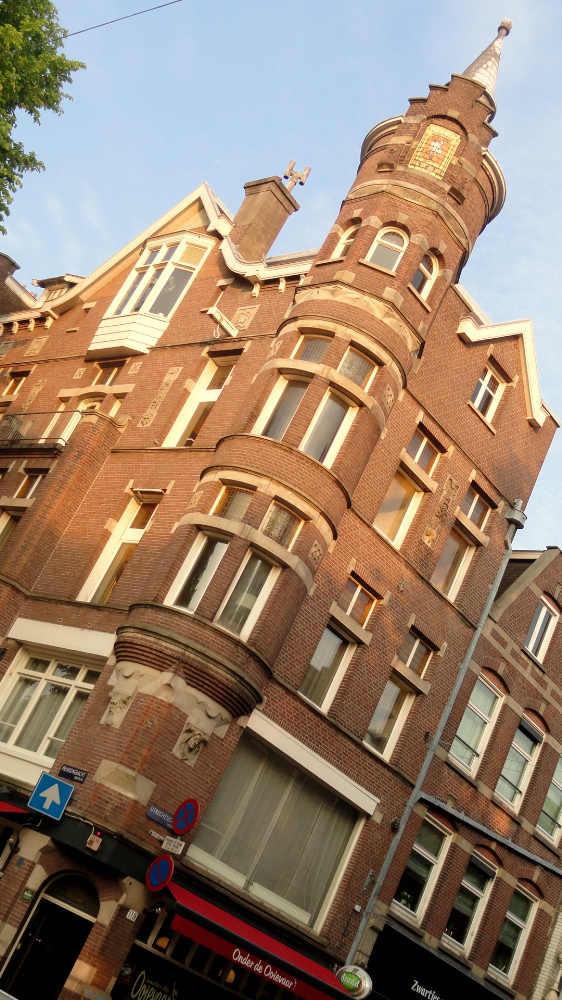
smw, slt had the opportunity to spend 36 hours in transit one way, and 34 hours in transit on the return — to spend five days in meetings in Amsterdam at the end of May and the start of June. This was all worth it a) because the meetings were great and important, b) because being in northern Europe around the summer solstice ROCKS and makes long walks at 22:00 with full daylight possible, c) because I managed to slip away for a short & fast weekend with four generations of my wonderful exchange family + regular-brother Steve, d) because during that lovely weekend I got to enjoy long walks through the beautiful summertime fields of northern Germany, or e) all of the above. After viewing these photos, feel free to comment which of the five multiple choices you believe is correct.
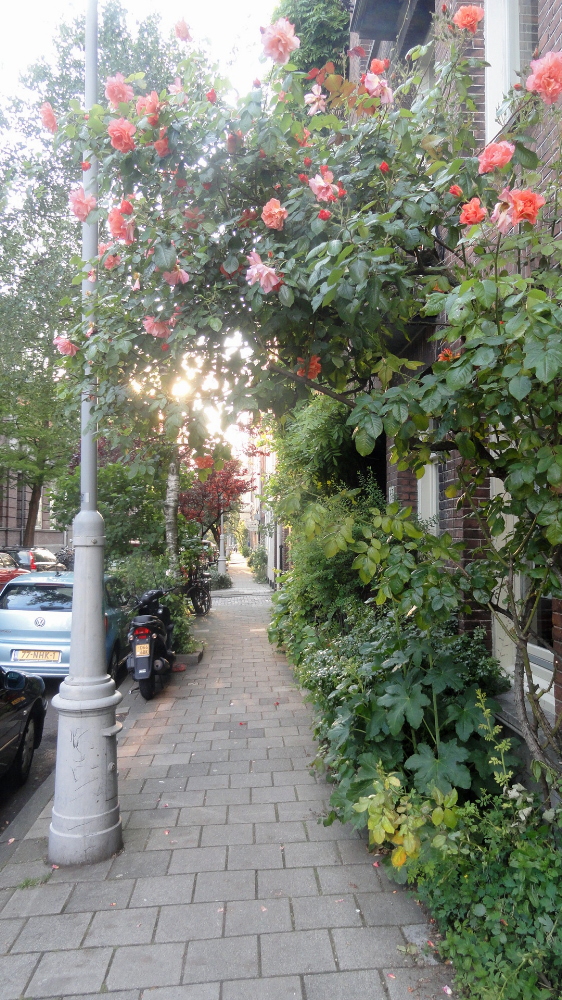
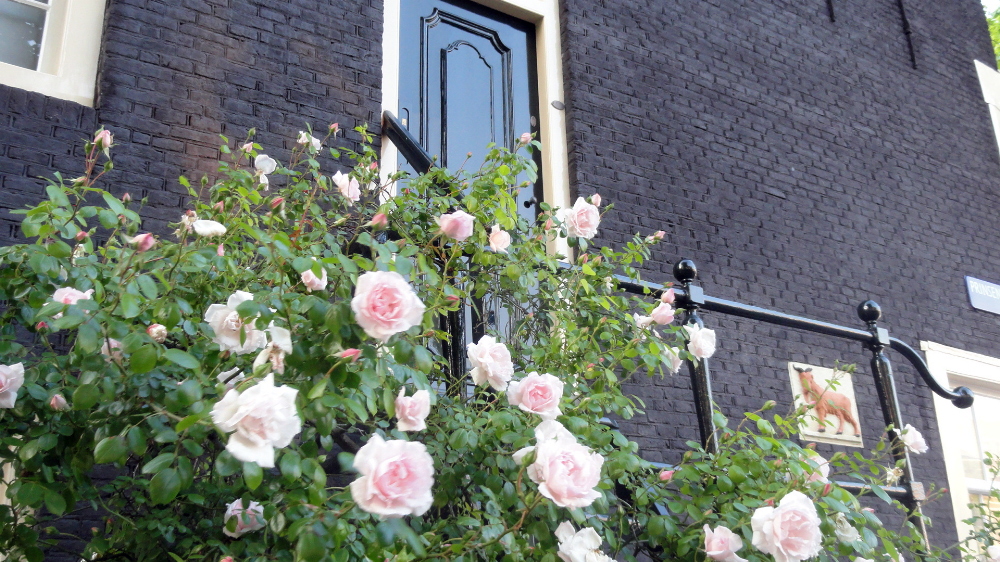
…everyone knows Amsterdam as a city of canals and houseboats; not quite as many know it’s also and VERY importantly a city of BIKES…and roses 🙂
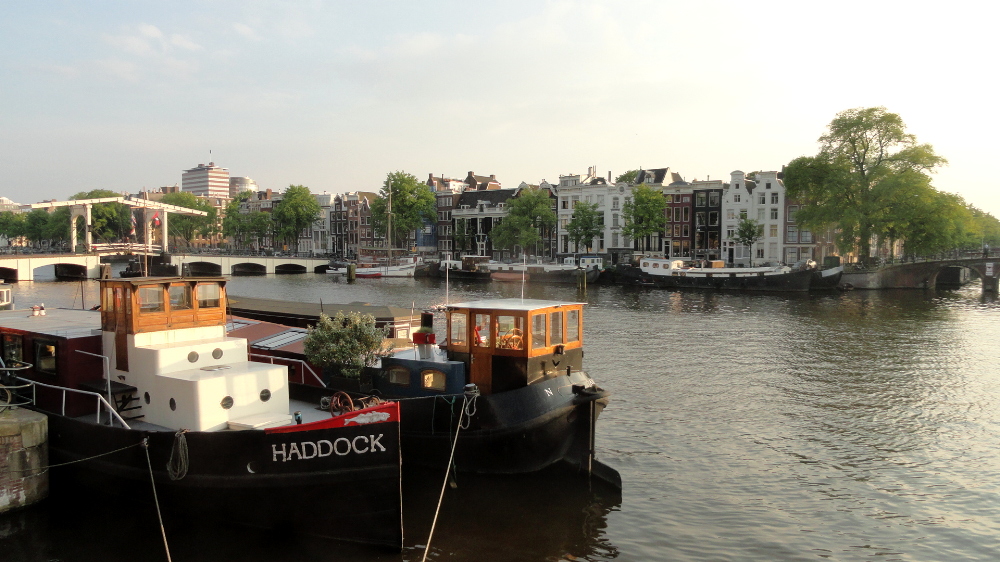
…the magere brug is one of the oldest bridges in Amsterdam (I think?) and my favorite route from MSF office and hotel over to the center of town. The walk on this particular summer evening was interrupted when I walked past a church into which evening-dressed people were streaming…and ended up enjoying a lovely concert as part of the Holland Festival.


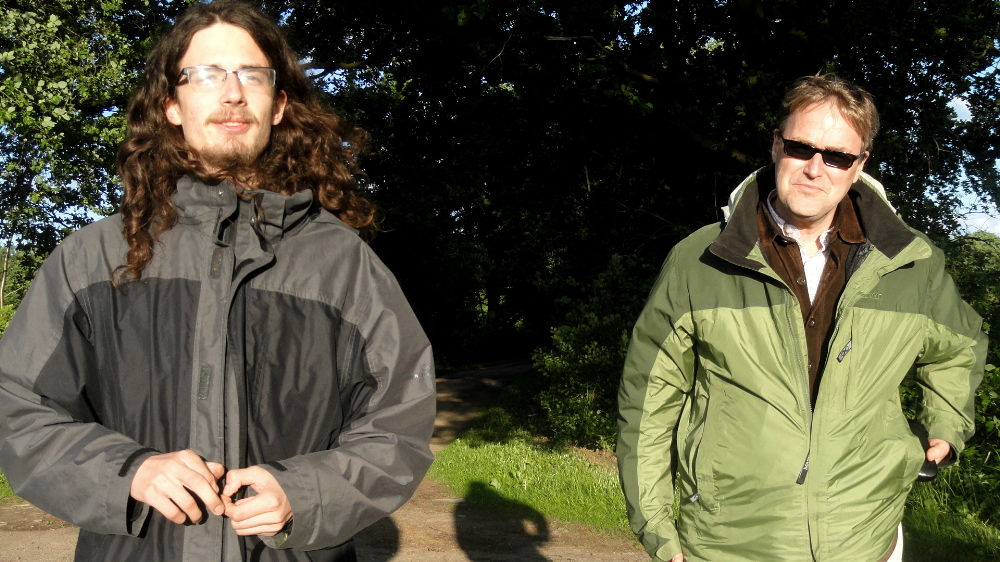
…exchange-nephew Fabian and brother Steve on a walk through the fields below…


…exchange mother with one of the new next generation, great-grandson Luca. Wow.
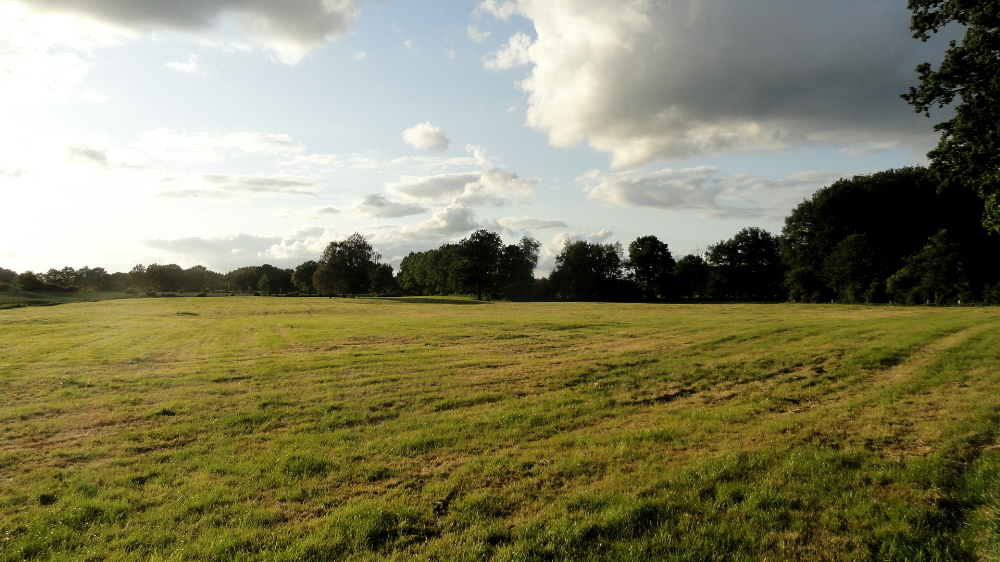
…ok, so I know that these fields may not look all that special to many people. But as I first learned when I returned to Europe after two years in China & Sri Lanka (back in 2007), there is a part of my soul that deeply responds to the pastoral scenes of grass, trees, wheat and corn which are closer the landscapes in which I (and my ancestors, I suppose) were raised. Compare these shots to the photos from bushwalks around Port Moresby (some, below; others, when I get them uploaded in the coming week or so), and you’ll see how different these are from the landscapes surrounding me now. Plus – this photo was shot around 21:30, at which time POM’s sky has been fully dark for three hours.

 …exchange-niece Bea, as it were, with the other next-generation member, Valentina 🙂

Downtown Port Moresby – Hills, Hulls & H20
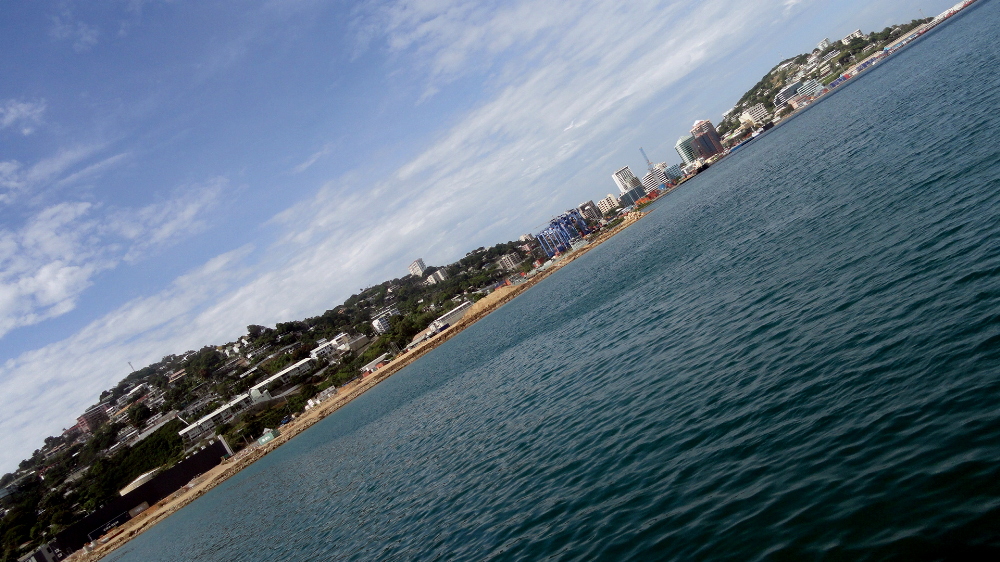
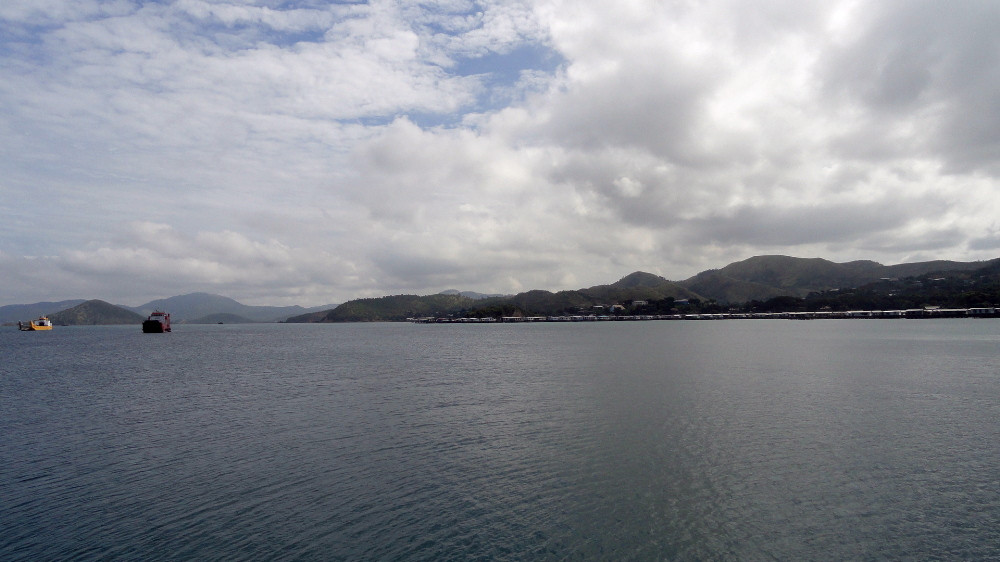
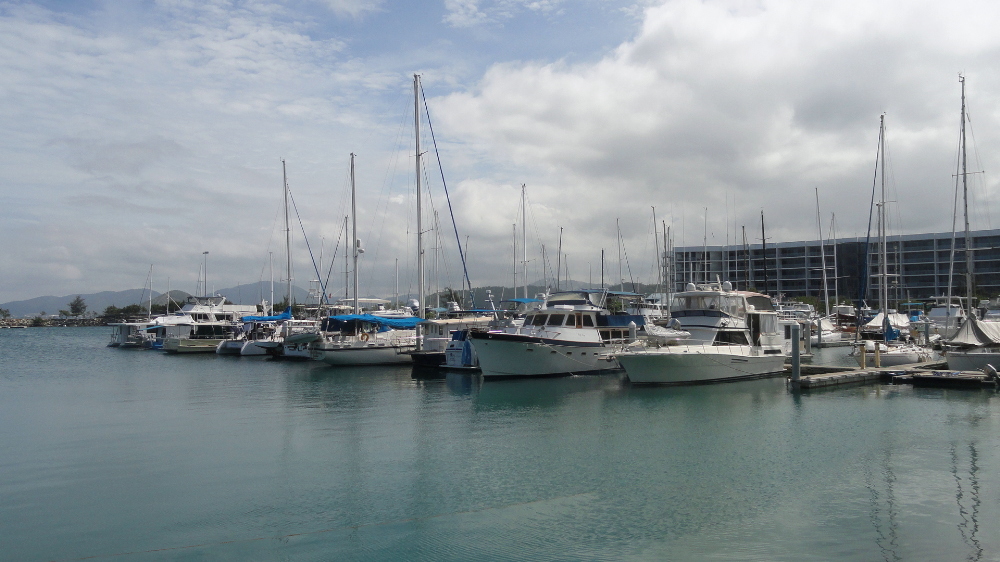
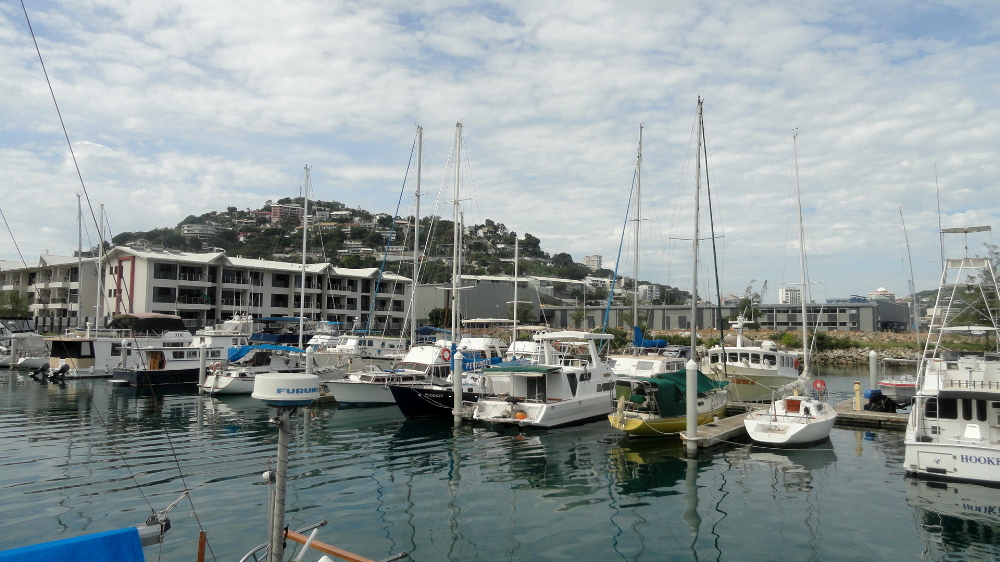
Today marks exactly two months since I landed in Port Moresby, so in honor of my lovely new home I thought I’d quickly answer the request from some of you for more photos of the town itself. All but one of these photos were taken this morning when I met a friend for breakfast at the yacht club (yes, I know) then had a lovely walk around the boat basin, watching sailboats come in and out, the scuba club getting ready to head out for some scuba around the harbor, and so on. As you’ll see, Port Moresby is situated in a lovely area with hills, outlying islands and coastline. Directly above are the two hills of the main part of town with the tall towers of the central business district (CBD: a common term in this part of the world) in between. Like most of the cities I’ve traveled through or worked in lately, POM is also a city of contrasts – lovely harbor and hillside houses for those who can afford them, and many less-expensive settlements which are more densely inhabited and with less access to services, etc. — e.g. below, if you look closely enough, you’ll see a lot of very low-rise shacks built out onto the water itself. If you’re facing outward toward the water from where I had breaky (that’s Australian for breakfast), the shot above was to the left and the one below was to the right. For reference, the office and home between which I shuttle day to day here are on the other side of that low spine of hills in the shot below. PNG has hundreds (usual estimates say over 800) of different tribal and ethno-linguistic groups; the settlements in these urban areas tend to be mostly inhabitants who’ve moved in from other areas, typically the highlands in the middle of the island, and don’t have any traditional family or clan ties, or rights to land, here.
It’s been an interesting week in Port Moresby politically – the drama of parliament, prime minister, high court, elections and so on has reached new heights this week; a quick search for PNG-related news this week will give you a better sense of it all than I could hope to here, but suffice it to say things are rarely dull here and this week did not disappoint on that score. Since we live in the Gordons area of town, just down the road from the House of Parliament, we’re close to where demonstrators sometimes end up when there are marches for good government, etc.; we’re also a long stone’s throw from where two different groups of police stood off one day recently though the situation did not, thankfully, escalate any further than that. In other work ways, it was a fairly stressful week but a productive one, and on the personal front I played some doubles (yay! thanks, Will!) and with a couple colleagues collaborated in creating a fine Thai curry for all of us here at base – as our finco commented it was the first time everyone in POM sat down to dinner together since he arrived in early April. And I actually got out for some socializing today as well…goodness, if I don’t watch out, I might begin to look like someone who has a wee bit of work-life balance! This is a new concept for me and not common among us long-term MSF field types, to be honest. Not quite sure it’s a thing I know how to do any more, but here’s hoping…
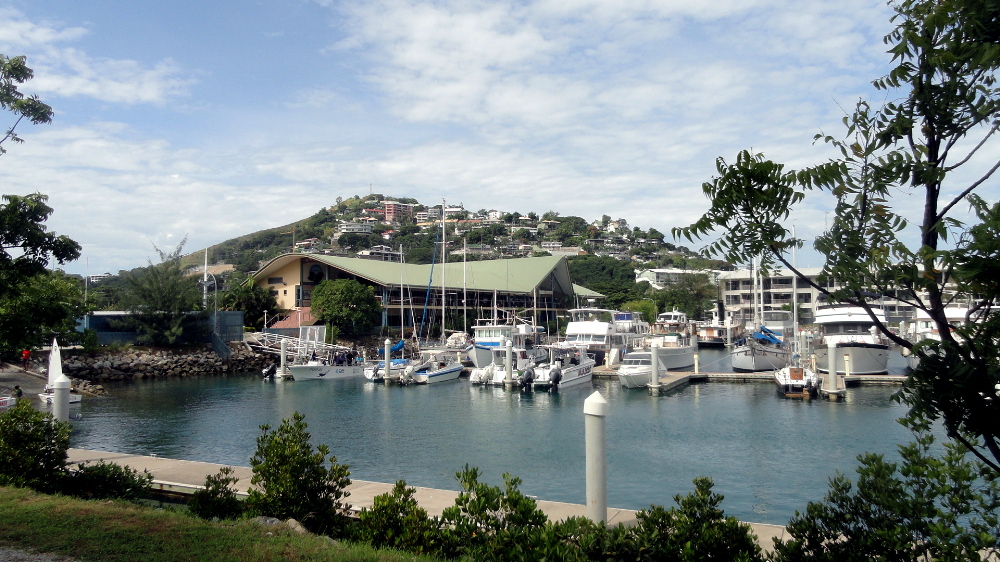
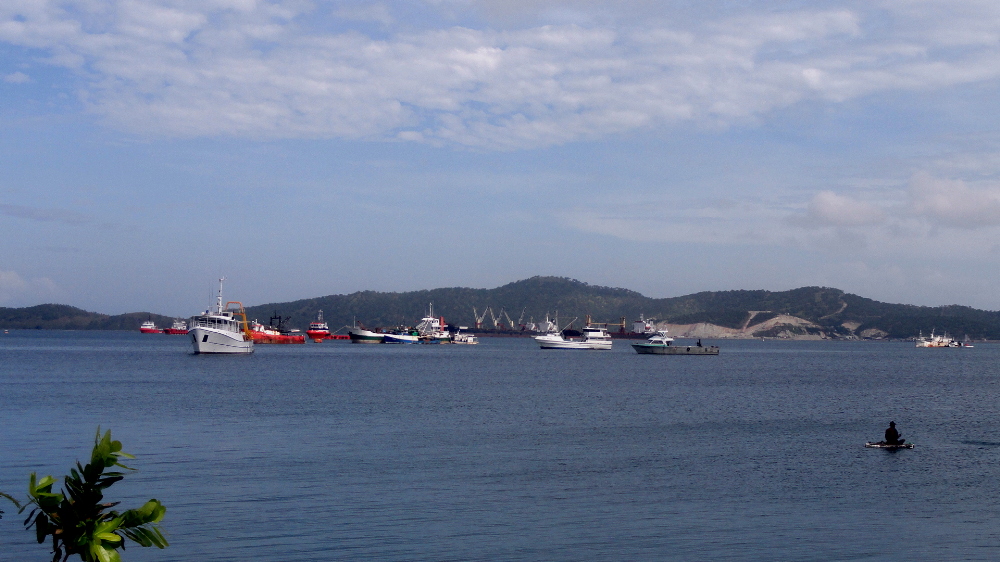
…I love this contrast: sleek boats & fancy apartment houses below; working tankers and ships, above.
…below, the containter port in the foreground, the towers of the CBD in the middle, and Ela Beach just off the frame to the right.

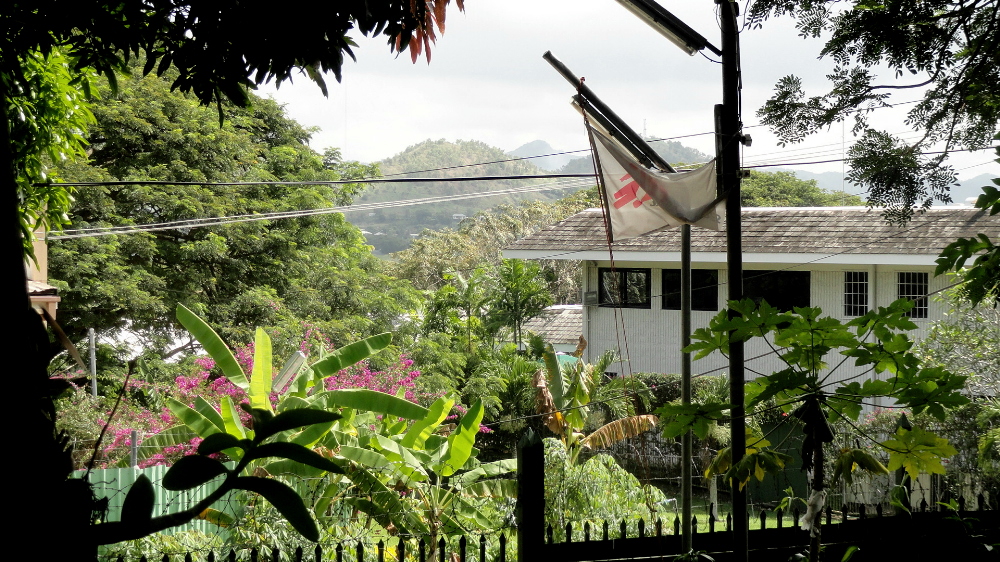
…below: literally what I see when I look out my window each morning. Our compound is shady and lovely – sometimes I miss the light, but I never miss the heat the sun brings with it. We’re in a hilly, green section of town about 10 or 15 minutes’ drive from downtown and the harbor.

Out & About in PNG

Before I came to Papua New Guinea I’d been hearing about it for years. I’m one of those weirdos who can stare at maps for hours, and I sometimes carry in my head a mental of image of where I would be, if I were represented by a dot on a map. The first time I ever actually knew someone who lived and worked here, she was a colleague based in Port Moresby as I am now, back when the current MSF mission was launched in 2007. I had this image that Port Moresby would be on the north coast of the island. But no. My dot on the map would appear on the southern side – pretty far to the southeastern side, though not at the very eastern end.That’s the town of Alotau. (Keep in mind, please, that the vagaries of colonialism and global power politics mean that the western half of this island is part of the nation of Indonesia.) So picture a big island – second largest in the world? third largest? check it out on Wikipedia – that’s pretty long east to west, and not quite as long north to south. The center of this big, rugged island is full of steep & dramatic mountains – these are generally called the Highlands. The coast has lots of mountains also, though there are parts I’ve not been to yet which have big coastal wetlands and valleys.
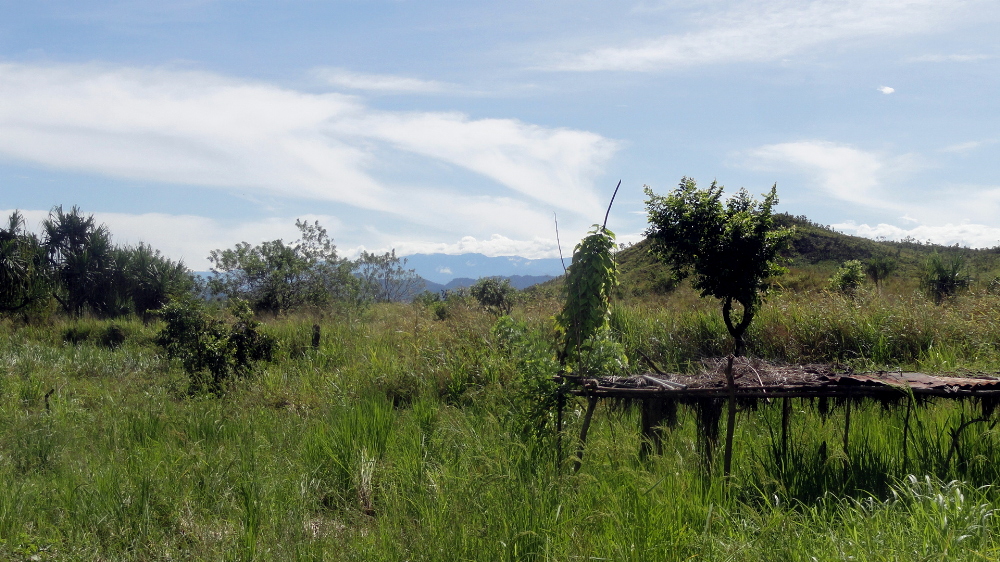
Unfortunately, in this post you’ll only see one photo taken in the Highlands – it’s the very last shot, of me standing in front the airstrip at Tari, in what is becoming Hela Province but used to be Southern Highlands Province.Most of these shots were taken around Port Moresby – like the one just above, taken just last week when I — finally!! — got out with the bushwalking group that does organized hikes round about greater Port Moresby. Some, like the one just below, were taken in Lae on the north coast – sorta where I originally imagined that Port Moresby might be, back before I sat down with a map and started trying to picture where I’d be living and working when I actually arrived here.
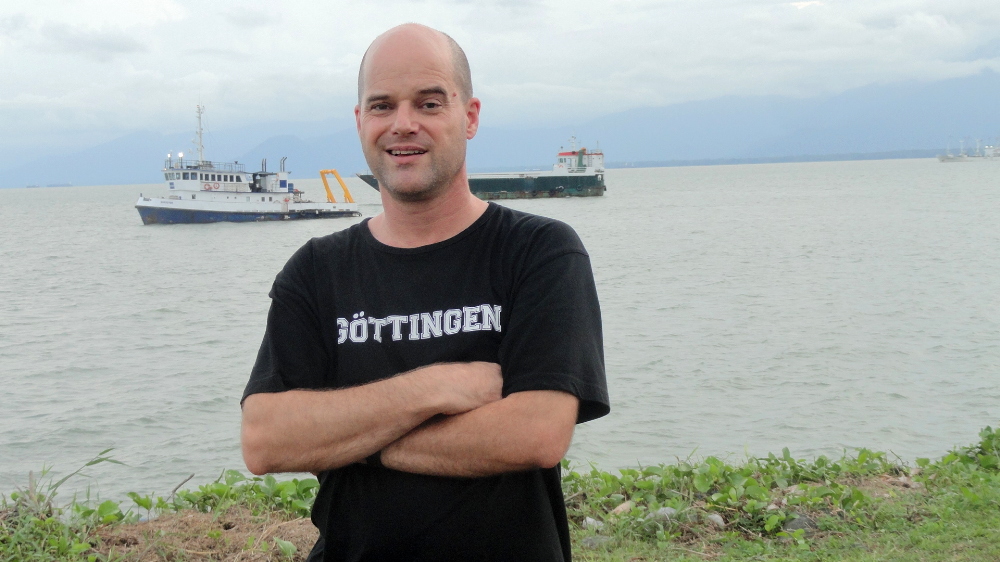
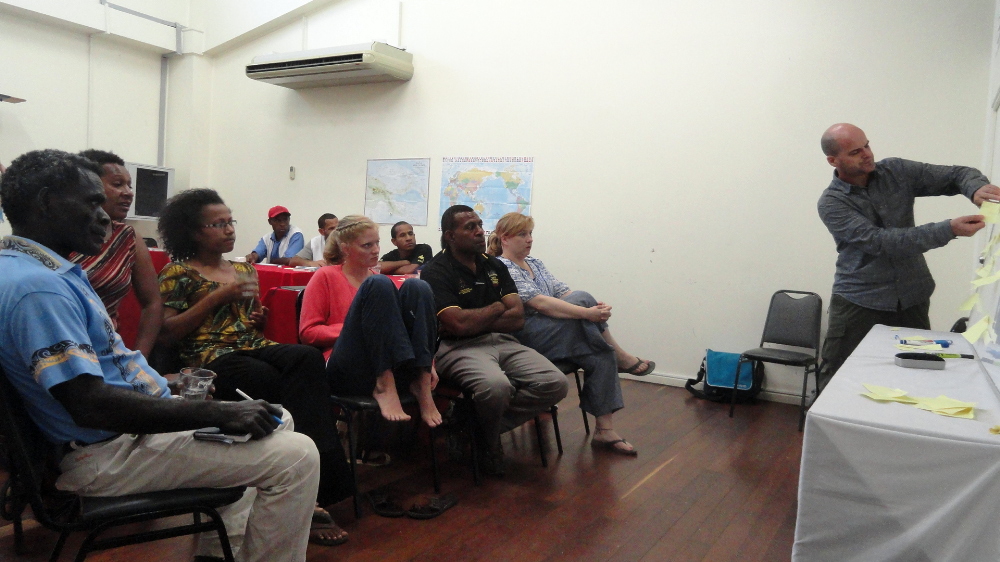
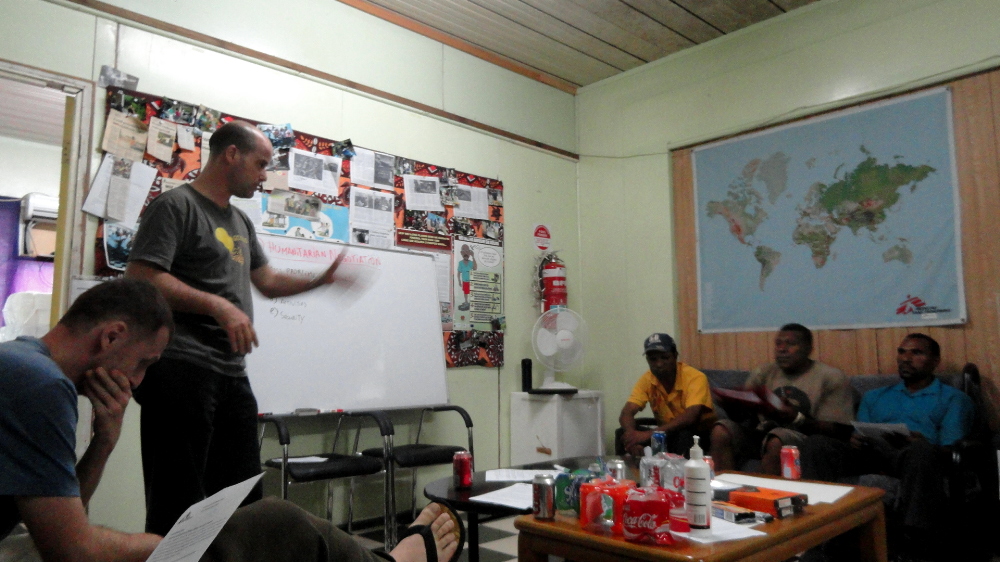
Our oldest project in PNG is in Lae — we work with the local hospital, running the Family Support Center which provides specialized care for survivors of family & sexual violence. For that reason, when we decided to hold our first-ever MSF field associative debate in PNG, we decided to hold it in Lae. People from our other projects, in Tari and on the island of Bougainville to the east of New Guinea, and also from the coordination teams in Port Moresby and Buka, all got together for some great discussions about our work here – focused on the topics of access and negotiation. You’ll see a few pictures of me leading discussions either at the main FAD in Lae, or at the mini-discussion we held here in Port Moresby on my second weekend here.
So yeah – I’ve been here nearly two months. I’m in a bigger city again so I can have a social life, and I’m slowly establishing some patterns. Mostly I’ve been working and I won’t bore you with that. Though I will encourage you to check out this link, which summarizes one of the main things we’ve focused on in our work here in PNG: http://www.doctorswithoutborders.org/publications/article.cfm?id=5390&cat=special-report
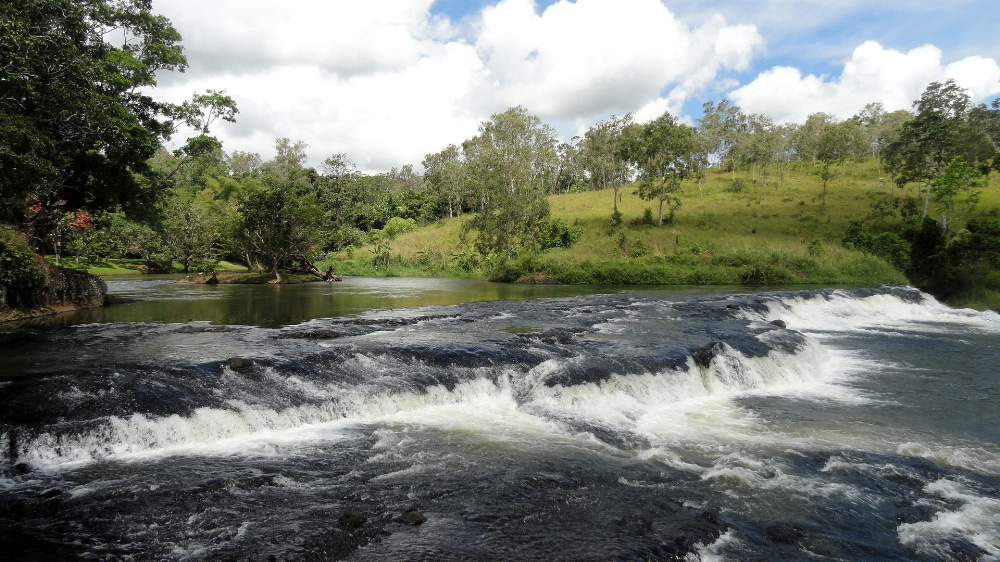
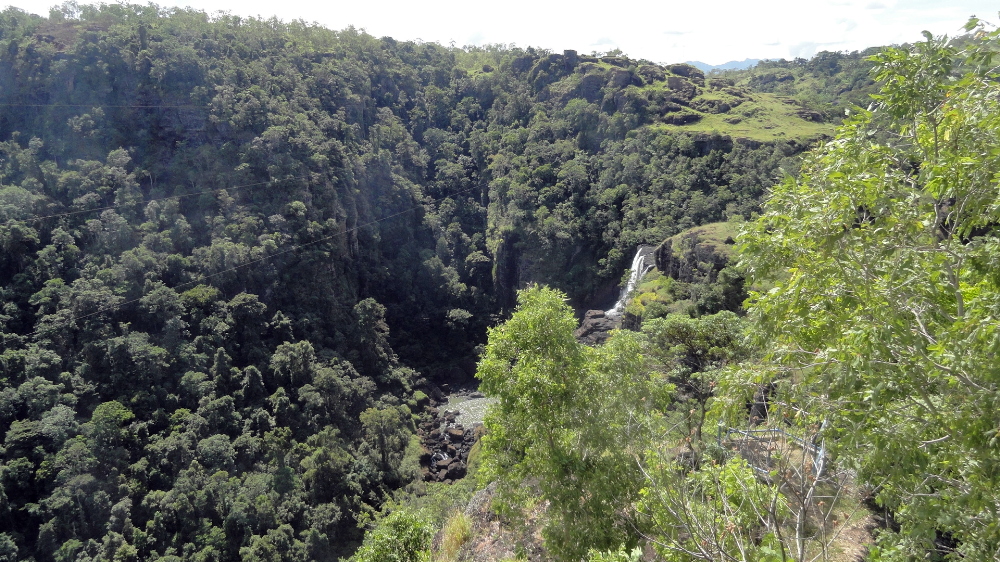
The highlands are as beautiful as I expected, though I have to admit I’ve become spoiled – first Manipur, then North Kivu, now PNG: I just keep going to places that are amazingly beautiful. I have not gotten out quite as much as I’d have liked – one weekend I joined several colleagues for a road trip northeast of town to Crystal Rapids, which you see just above. I’ve been able to play tennis once with a colleague and hope to do so more often; just as I hope to join the bushwalking group as often as possible.
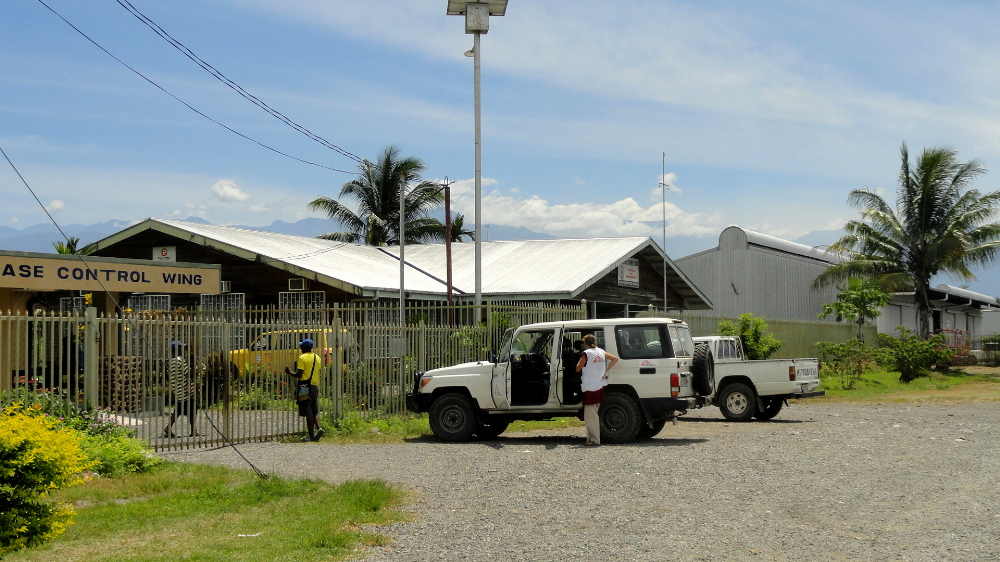
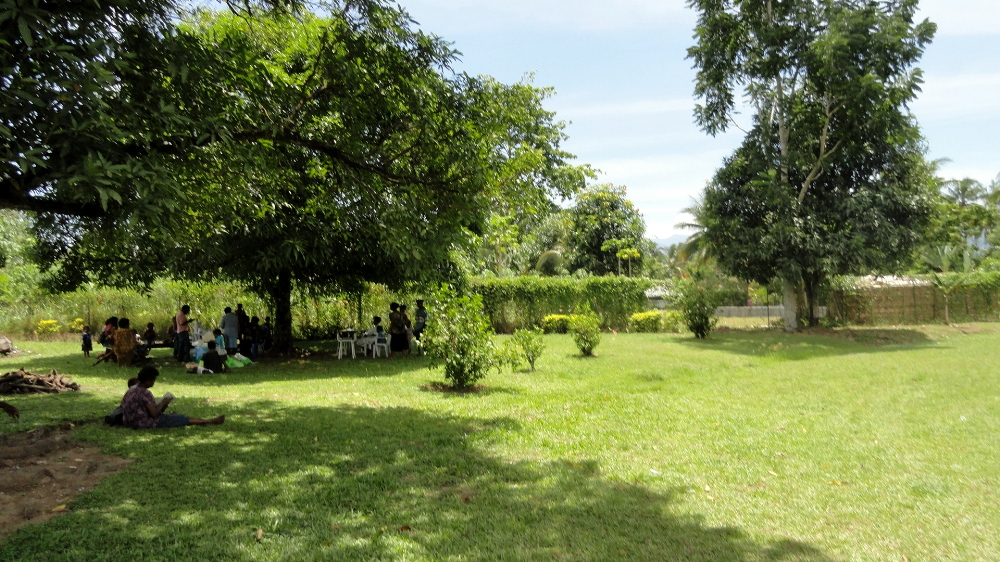
But for now I think I’ll just leave you with some shots of where I’ve been and what I’m seeing out my window, so to speak. Thanks.
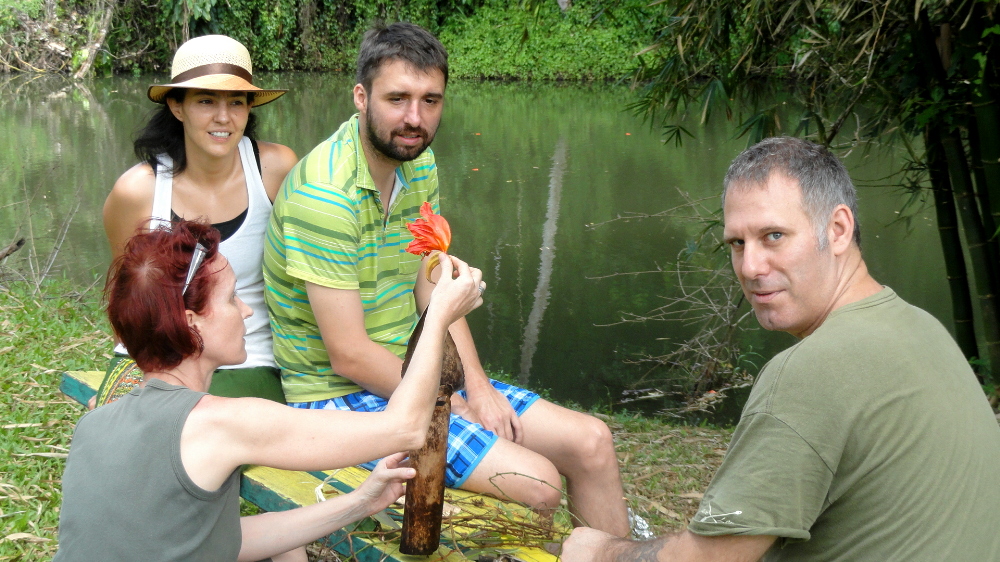


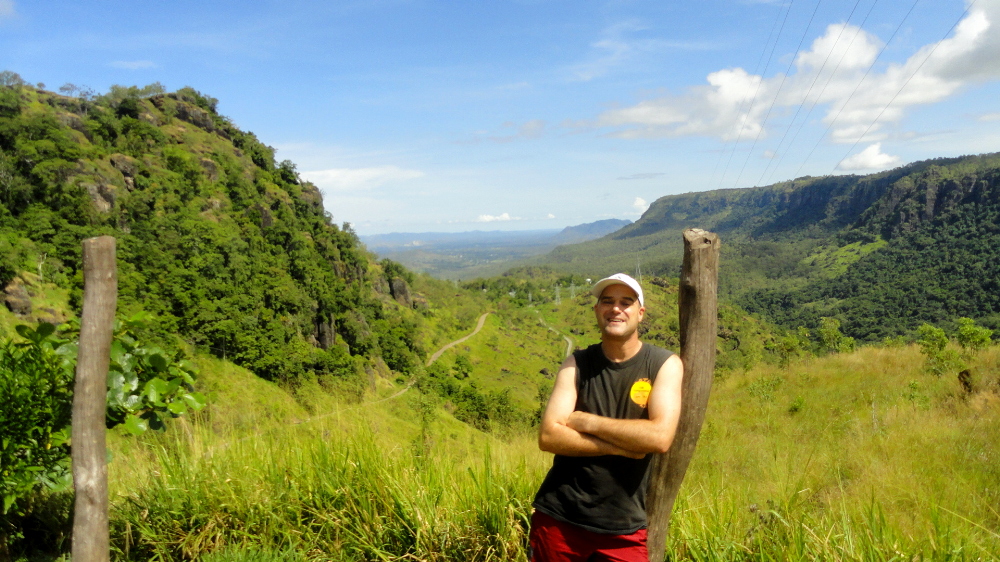


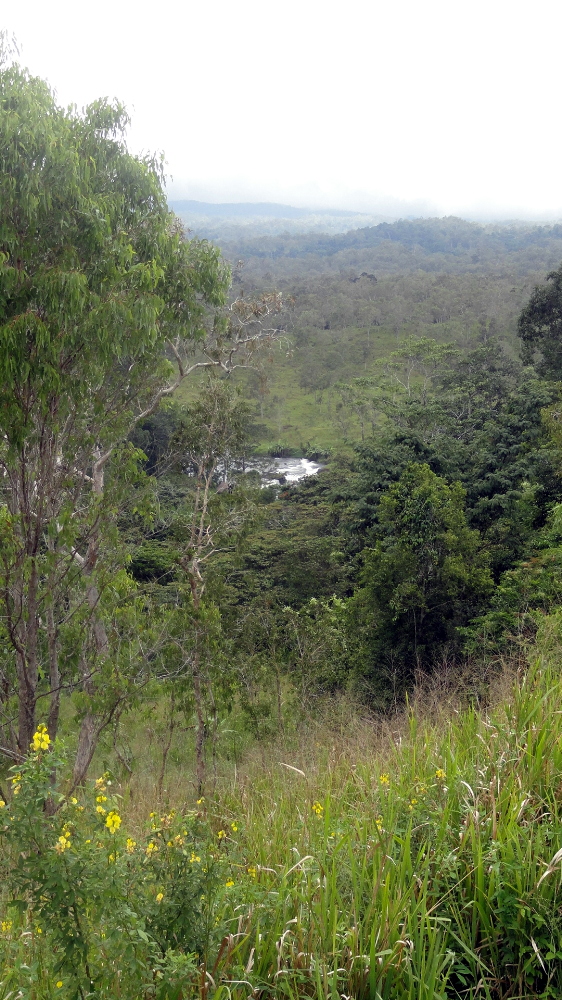
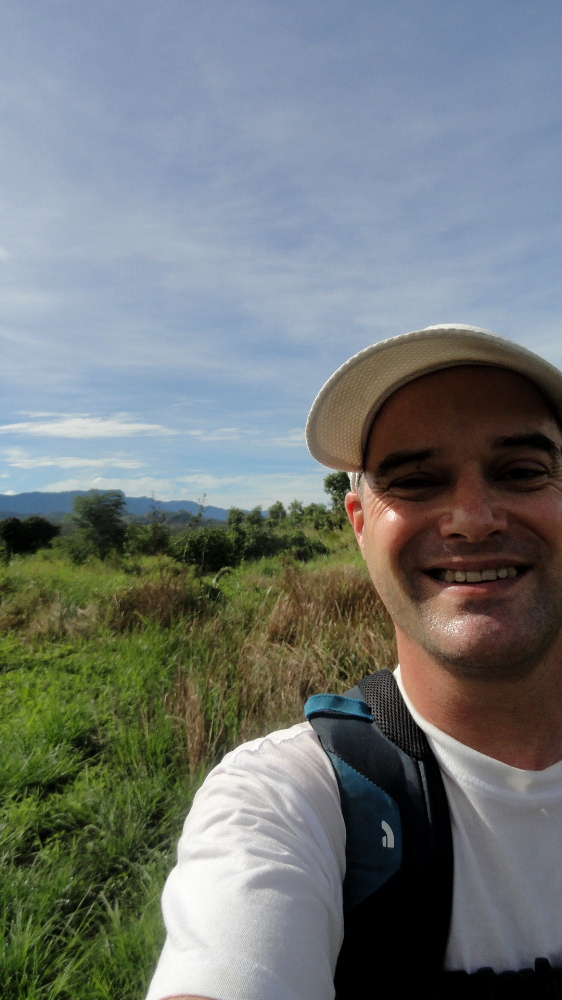

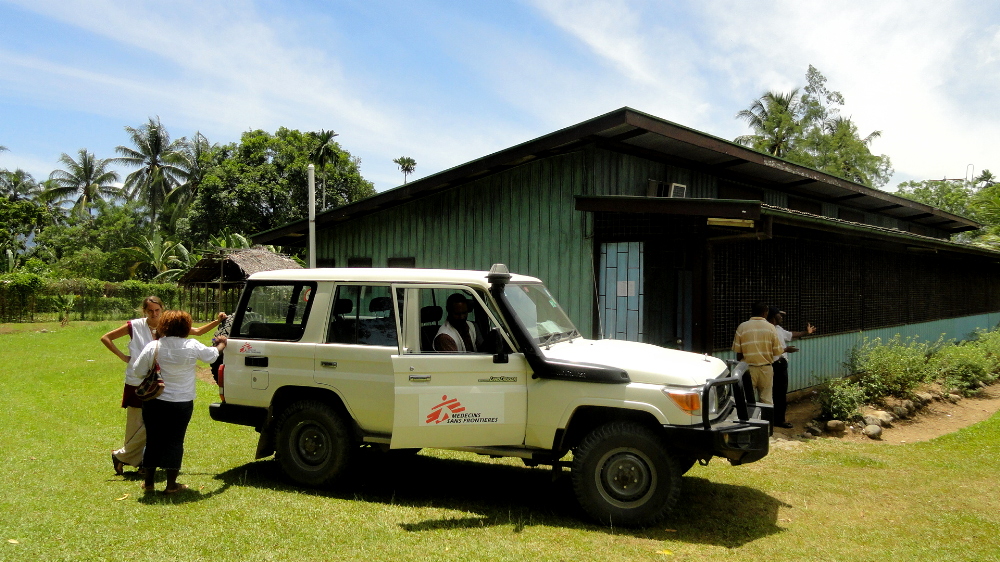

Washington in Bloom
smw, slt has packed up the big bags and moved on for a longer term again. This time we’re off to Papua New Guinea where we expect to be working for a year. This is going to be an interesting assignment for me – new and different context and part of the world for me to work in, also a new role as head of mission. As usual, this will remain a personal blog of the world as seen through my eyes…so more about PNG if, as and when appropriate. For now, my farewell to the land of my birth comes in the form of a photographic essay of my lovely final week there, spent in Washington, DC. Since many of my international friends have never been to the US or DC, I enjoyed taking shots of the city in its springtime glory. DC is a lovely city to visit – excellent free museums you can wander in and out of at will, grand monuments to the many of the great thinkers and founders of the American experiment, and lots of public green space around the mall and monuments. I’ve tried to show some of this, along with the occasional shot of me or my family, some of whom also came down to DC while I was there. Enjoy the shots – I’ll throw in the occasional caption, but I’ve nothing else to really add in terms of text for now. Peace, health, companionship to us all in the coming year.
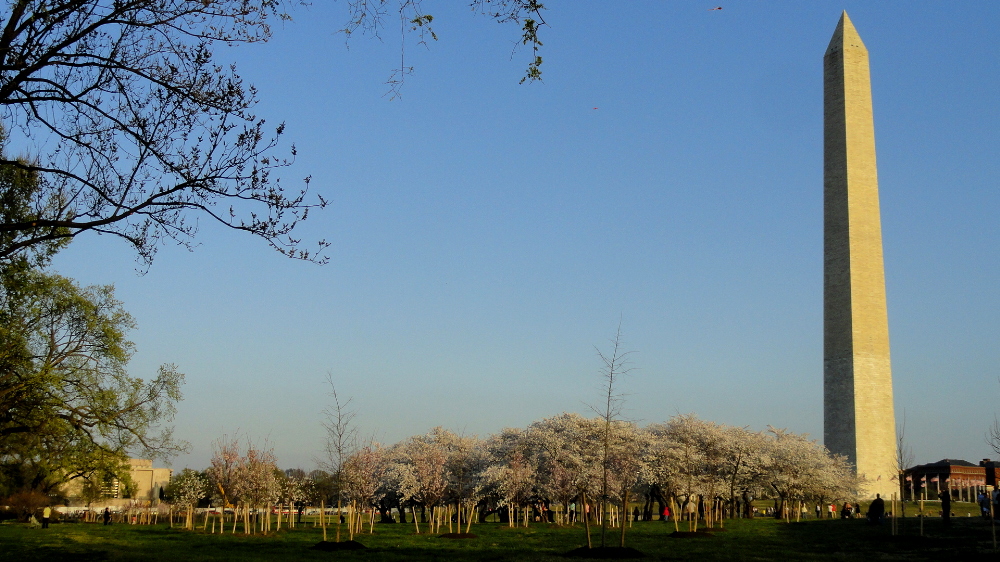
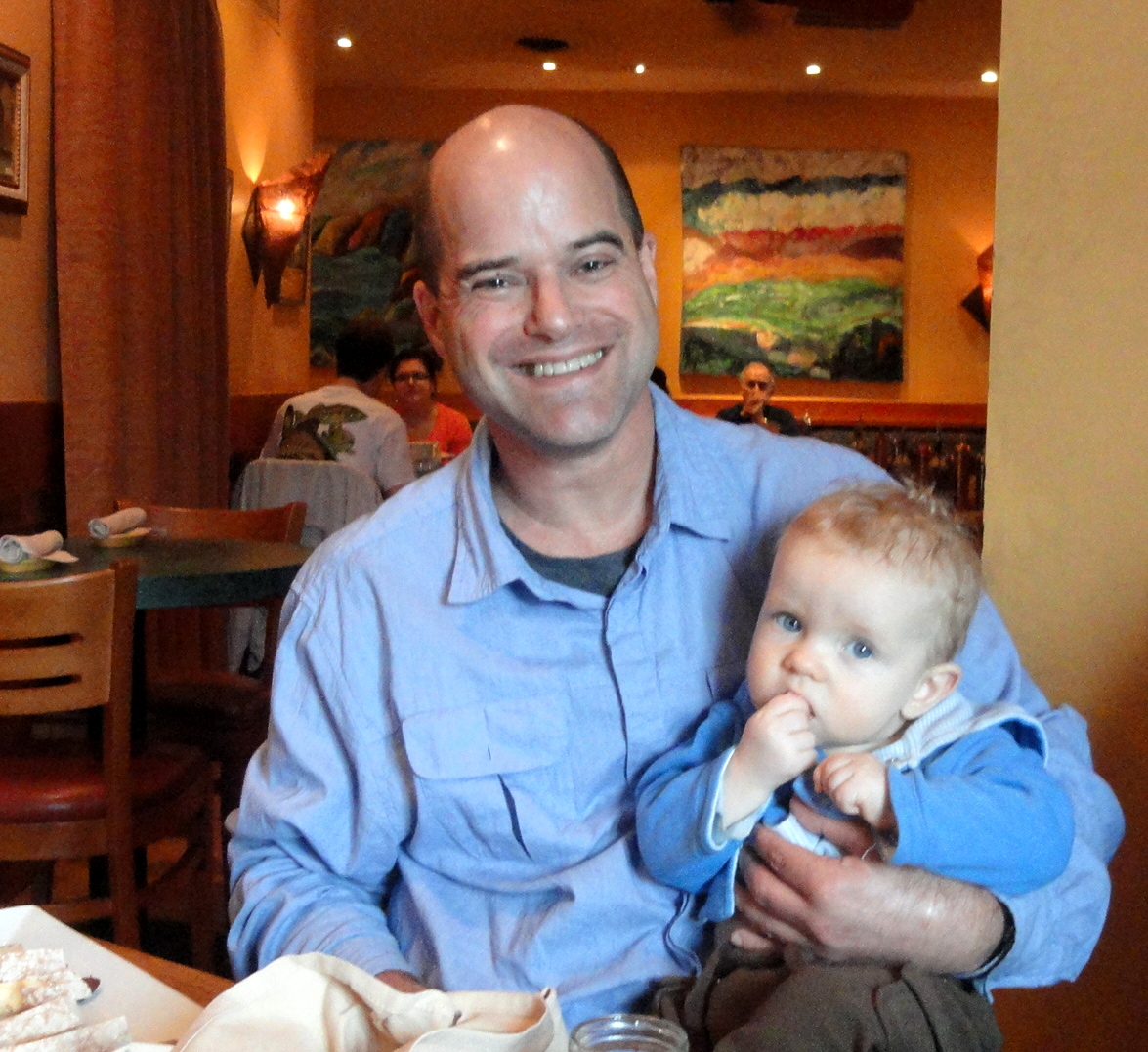
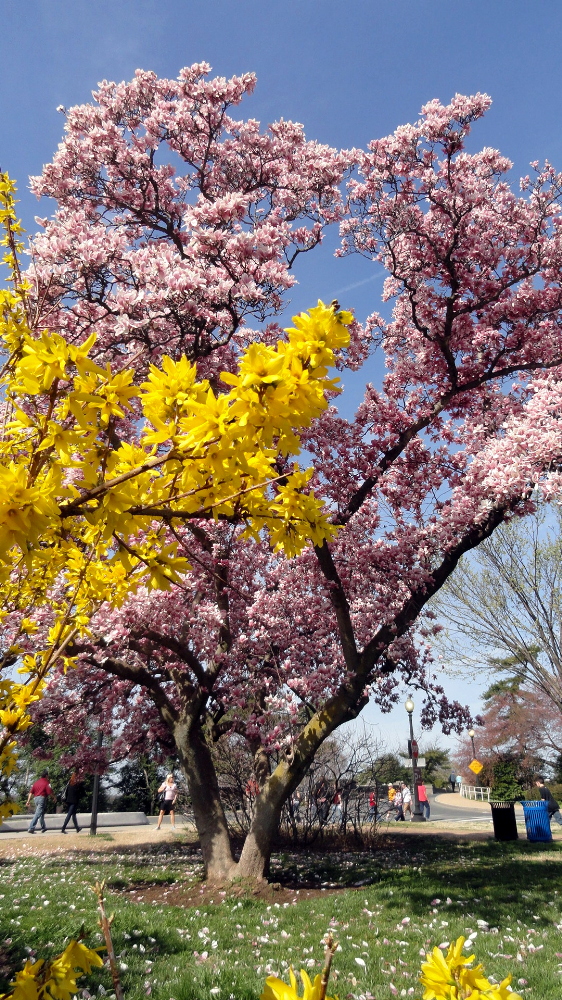
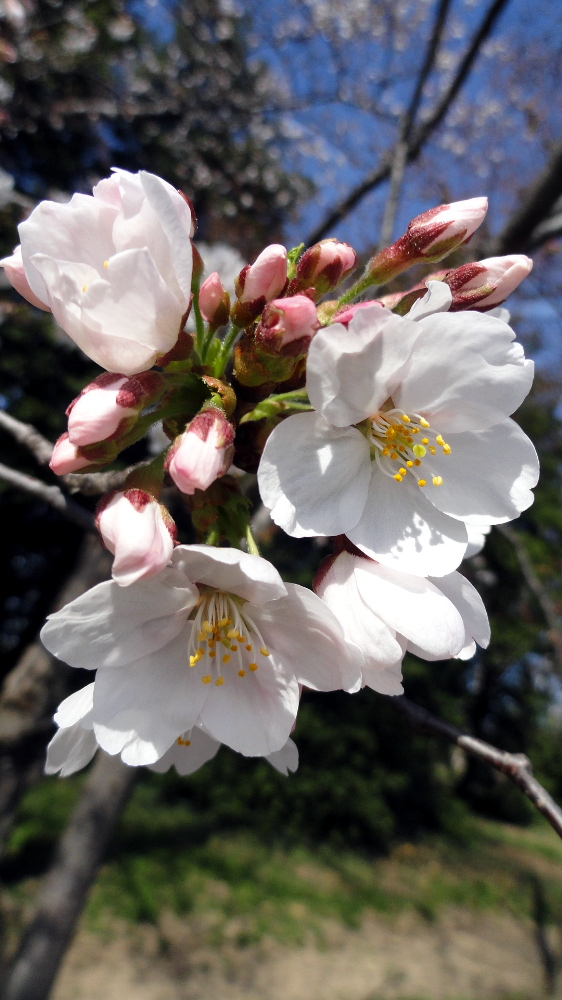
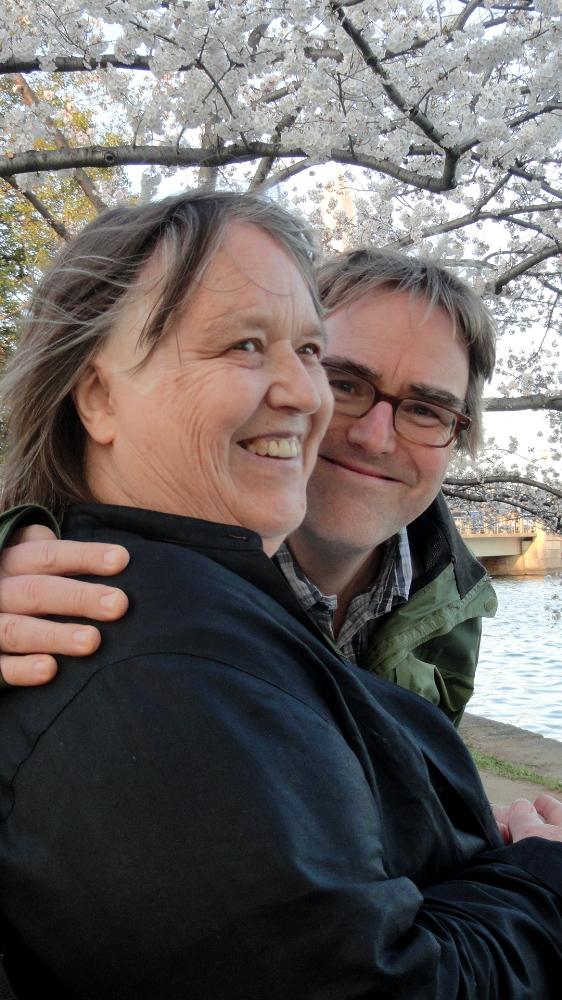
….this year, one understands, was the 100th anniversary of DC’s famous cherry trees being donated by the nation of Japan. As it happens my visit was perfectly timed to see the trees go from bud to full bloom, thanks to several days of glorious warm sunny weather. Below it’s me enjoying brunch with my little cousin twice-removed, Adair — he’s Amalie & Bryan’s son and they drove down from Baltimore for a really great brunch with me, my mother & brother, and my cousin Maria. Thanks, guys :-).


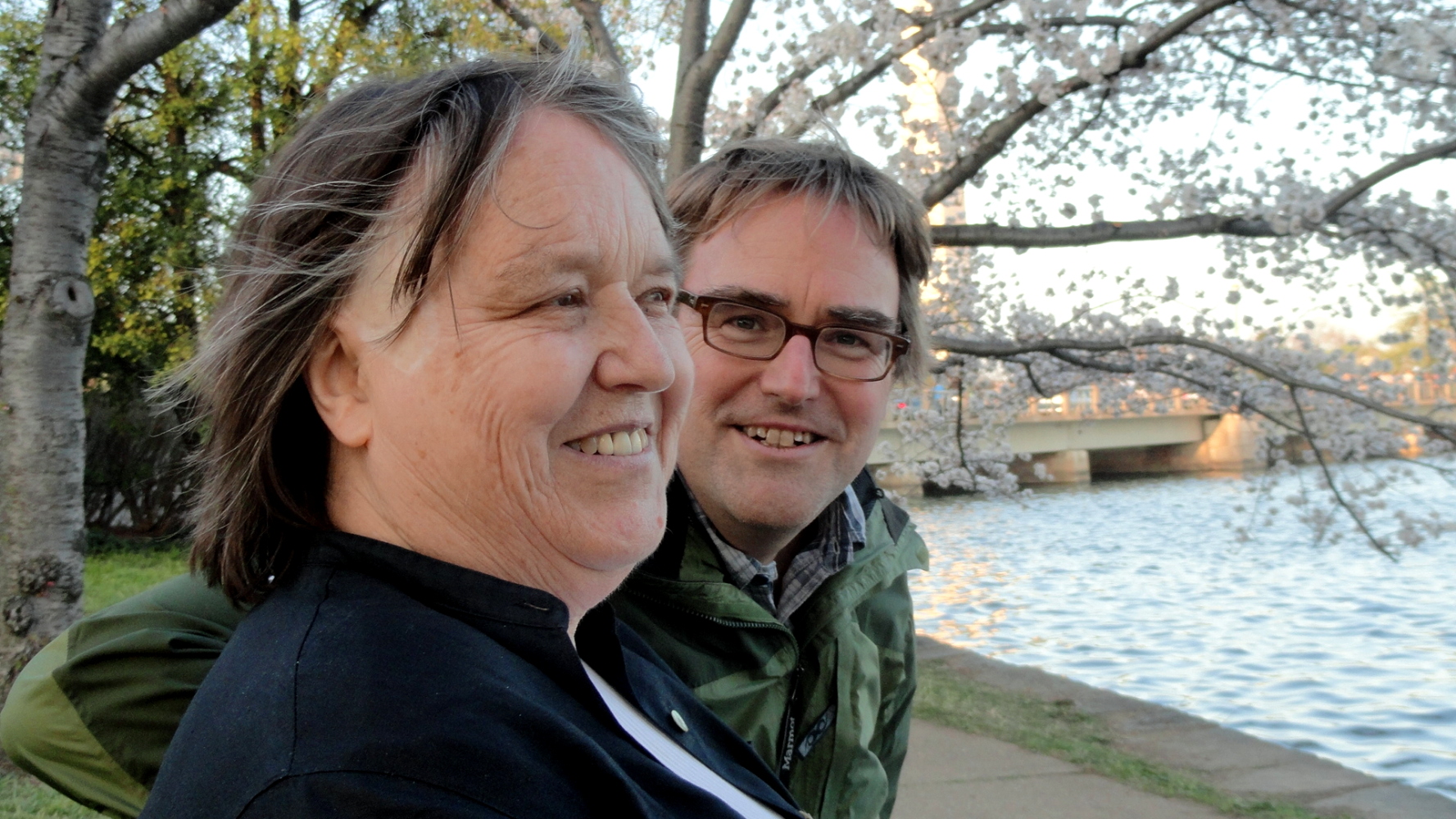
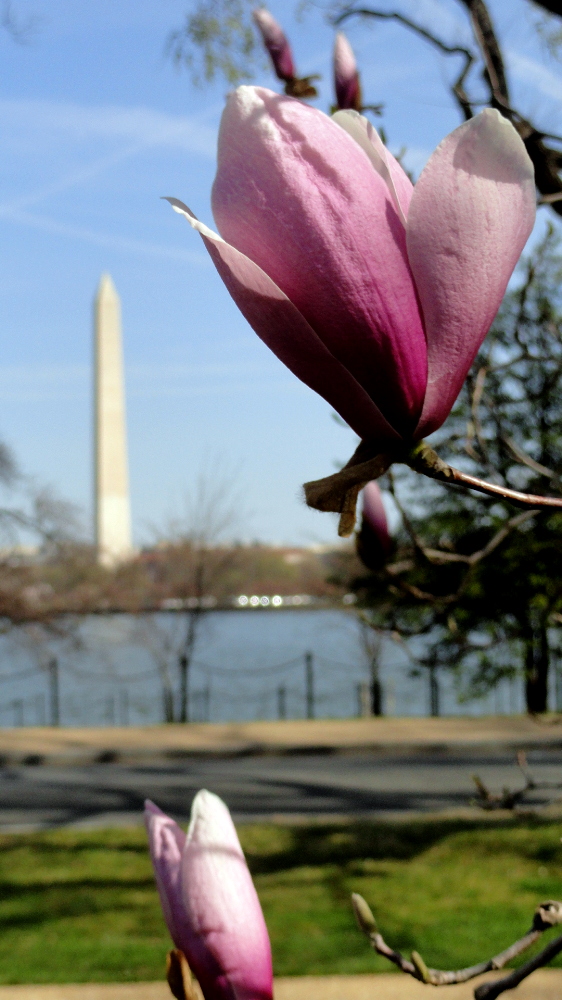
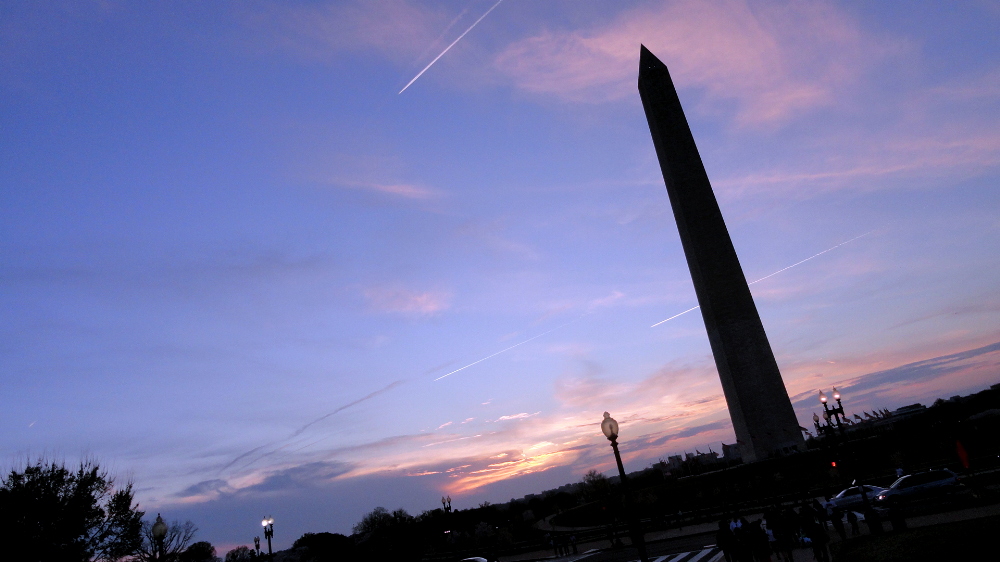
The Washington Monument is the tallest building in the District of Columbia (and building codes will keep it so), and it’s therefore fairly omnipresent and makes a good focus for — too many, I know… — photos.
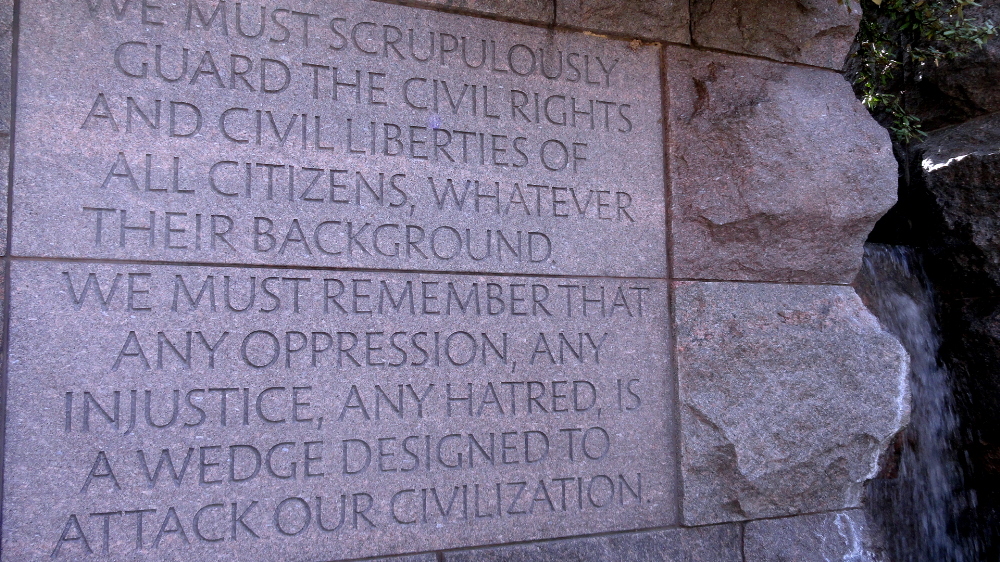
From the FDR Memorial.

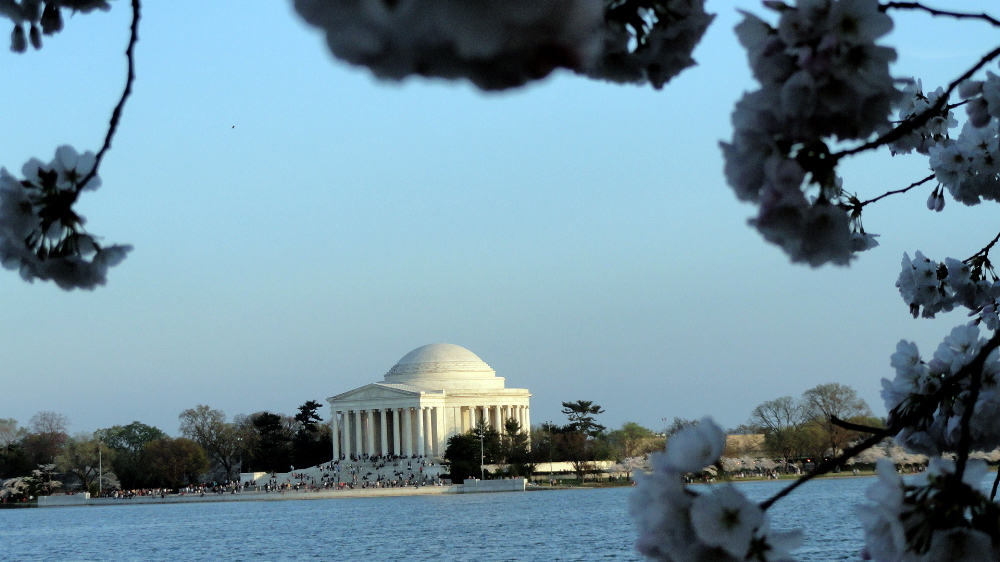
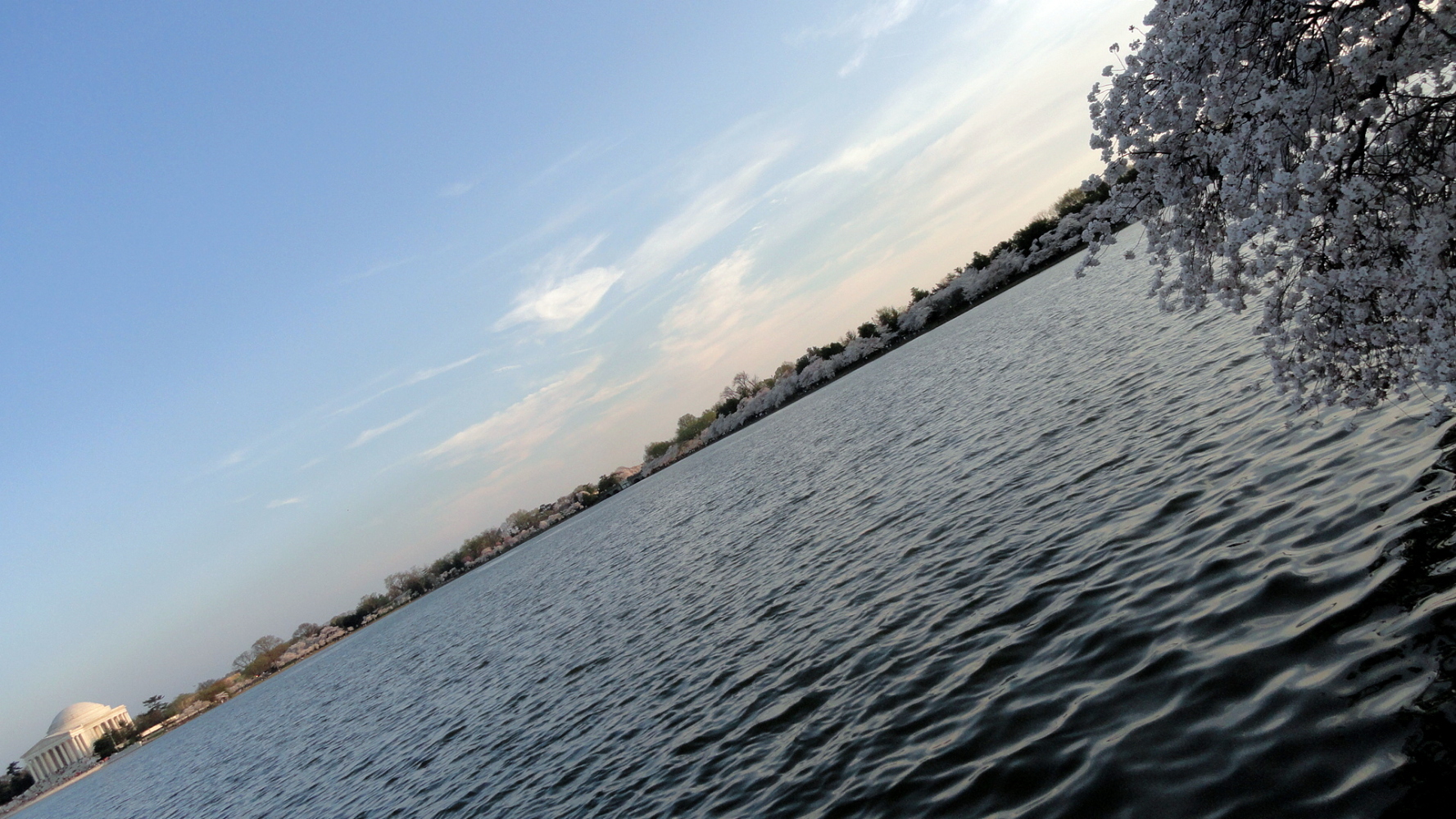
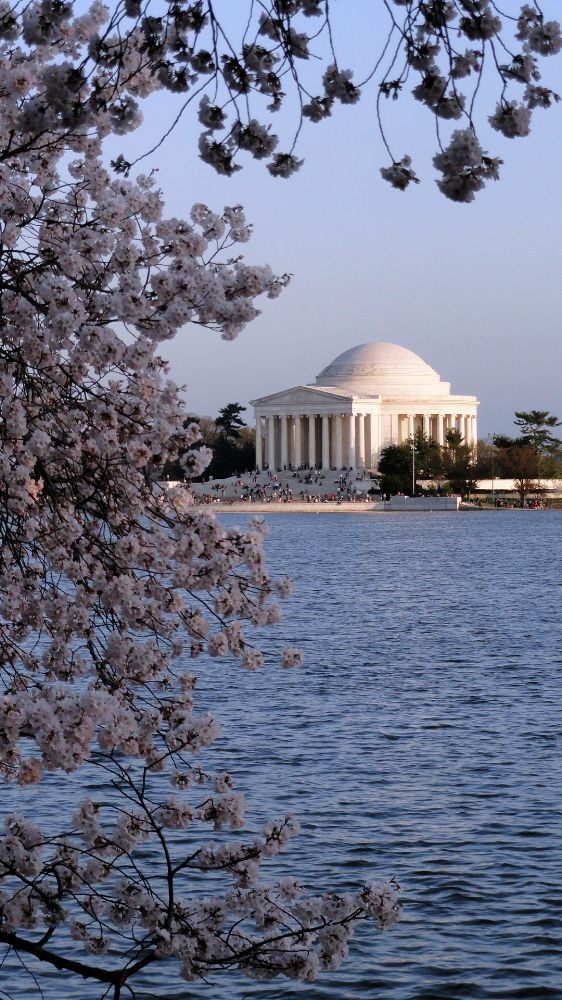
…above, taken earlier in the week; below, about five days later once the trees had burst into full bloom. That’s the Jefferson Monument, by the way, my personal favorite both because I think it’s the most graceful of the three biggest & oldest monuments, and also because Jefferson was such a great philosopher of democracy, and also a conflicted representative of the ideals he represented: a committed Democrat who had slaves and agreed to the original language of the constitution which gave slaves no rights whatsoever but counted them as partial people for the distribution of political power in the new system (for allocating seats in the House of Representative, if my memory of history serves correctly…)

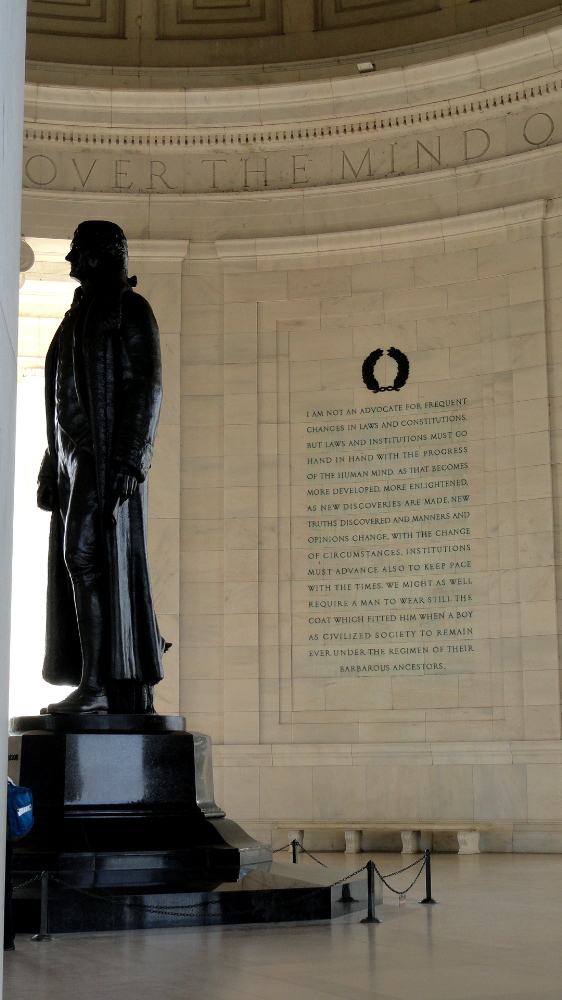 …Thomas Jefferson: a statue of the man, and some of his words.
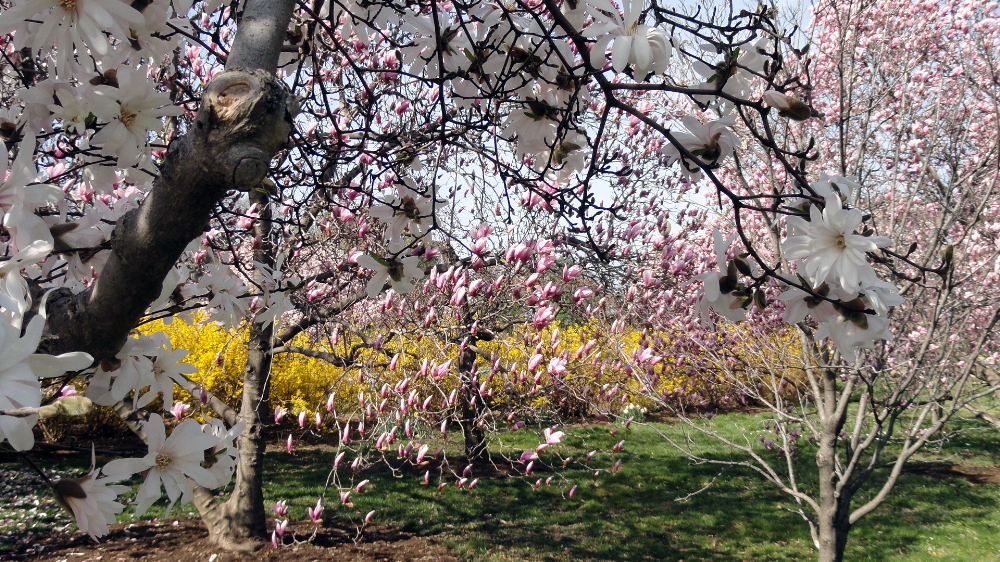

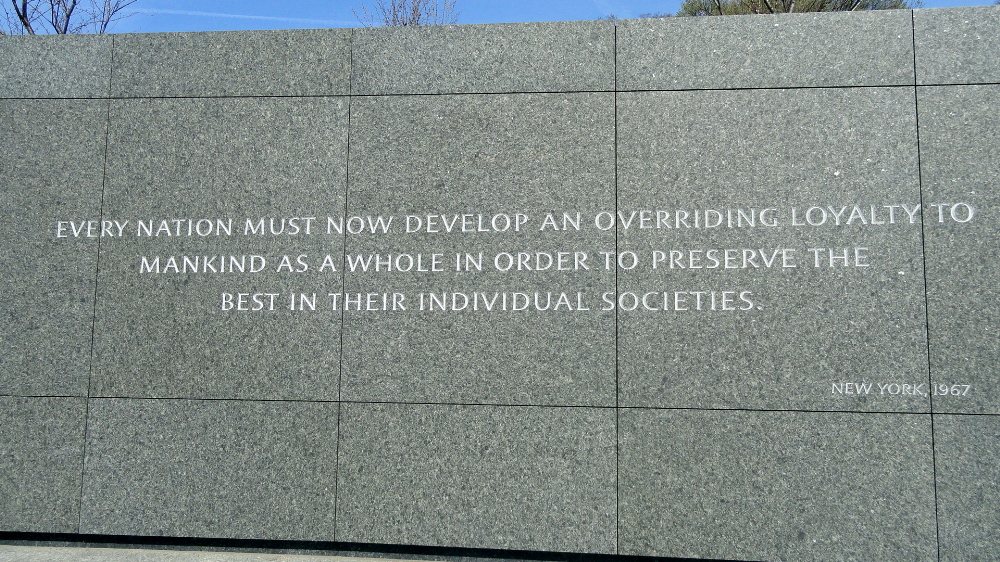
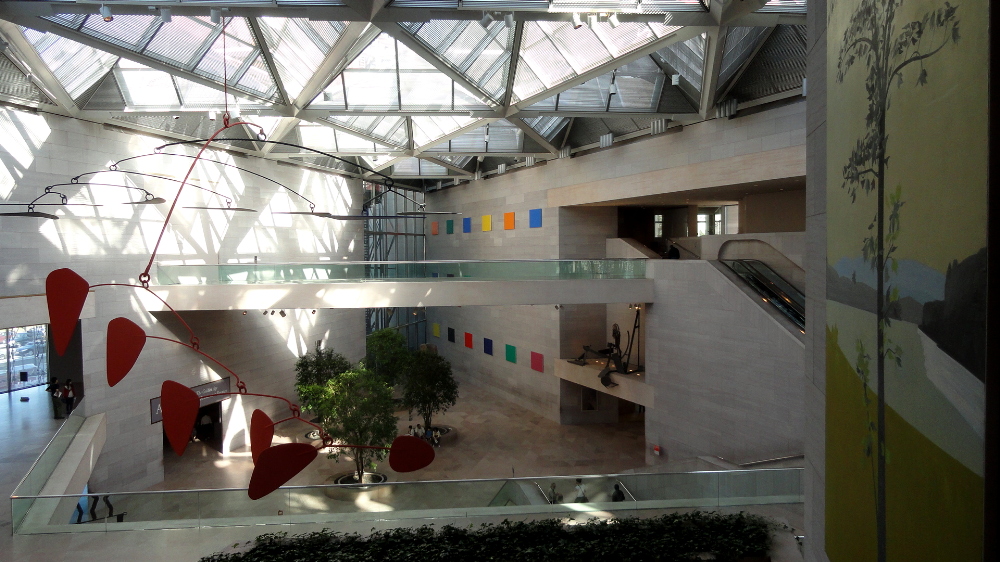
Above, from the Martin Luther King, Jr Memorial; below, me in a particpatory art installation on display at the (fantastic, free) Hischorn Gallery.

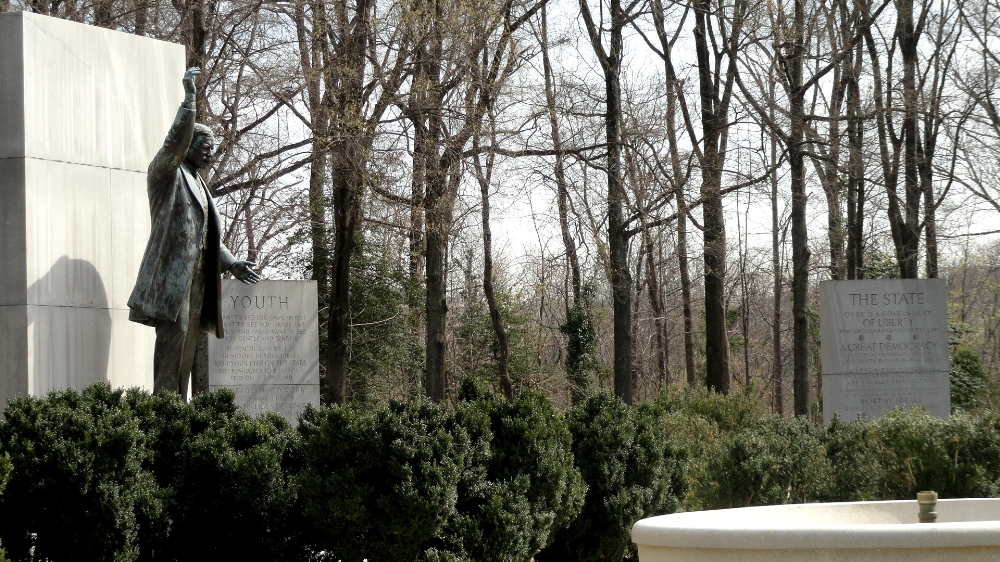
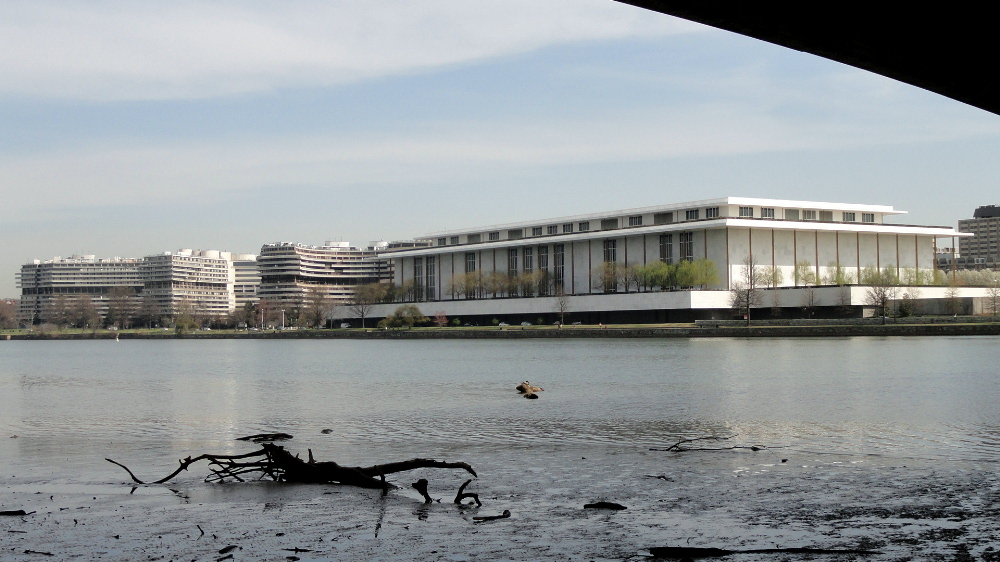
One of the more unusual monuments is Theordore Roosevelt National Memorial Island, to which I went both in honor of the man who launched our national park system and was the first political leader to recognize the importance, in a nation clearly growing at a very rapid rate, of setting aside open space for future generations to enjoy and for the protection of our natural heritage…and also to remind myself that Republicans have not always been as willfully ignorant, greedy, and dishonest as they seem now to have become. Below are two shots taken from the island; one shows the Watergate Hotel (yes, site of that infamous incident from which so many later government scandals around the world have drawn their name) as well as the Kennedy Center for the Performing Arts (built to honor JFK of course).

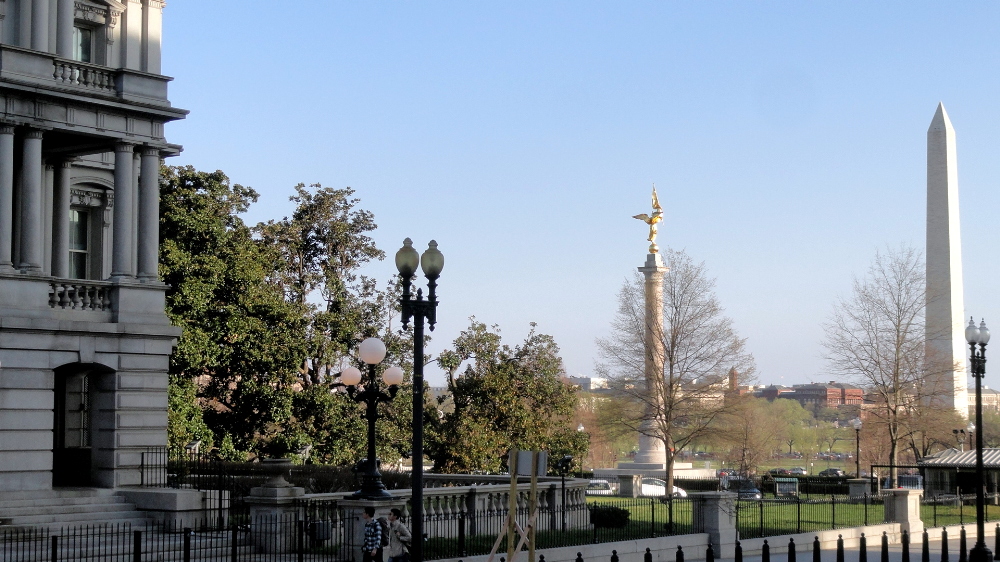
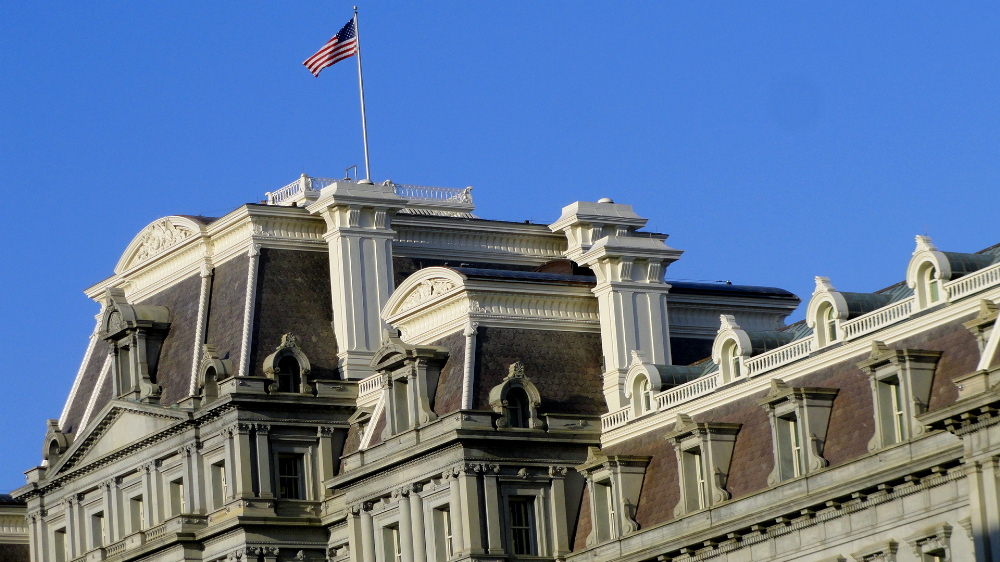
A corner of the old executive office building, some shiny memorial column, and a corner of the mall all on a sunny late afternoon; below another shot of the gables and turrets of the old executive office building.


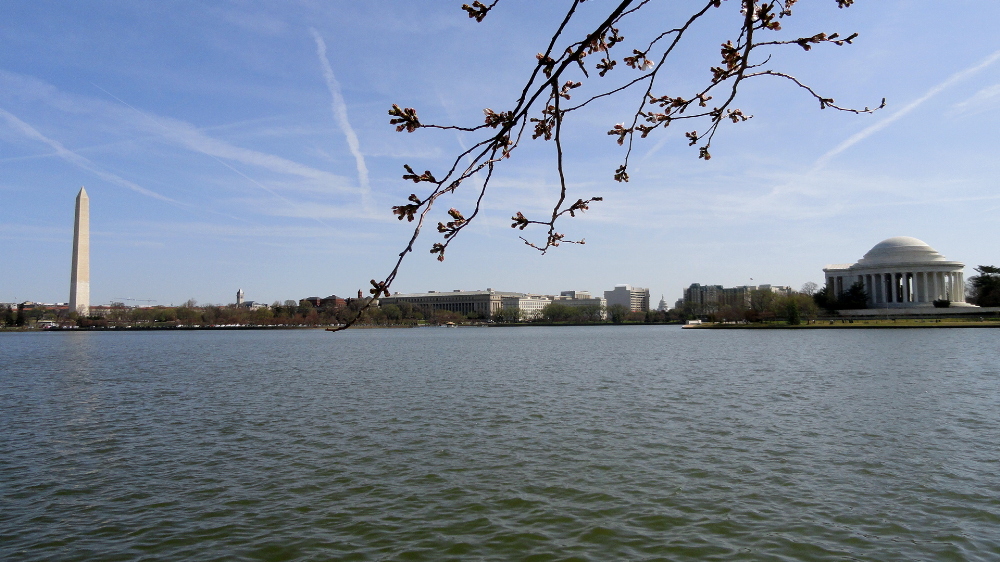
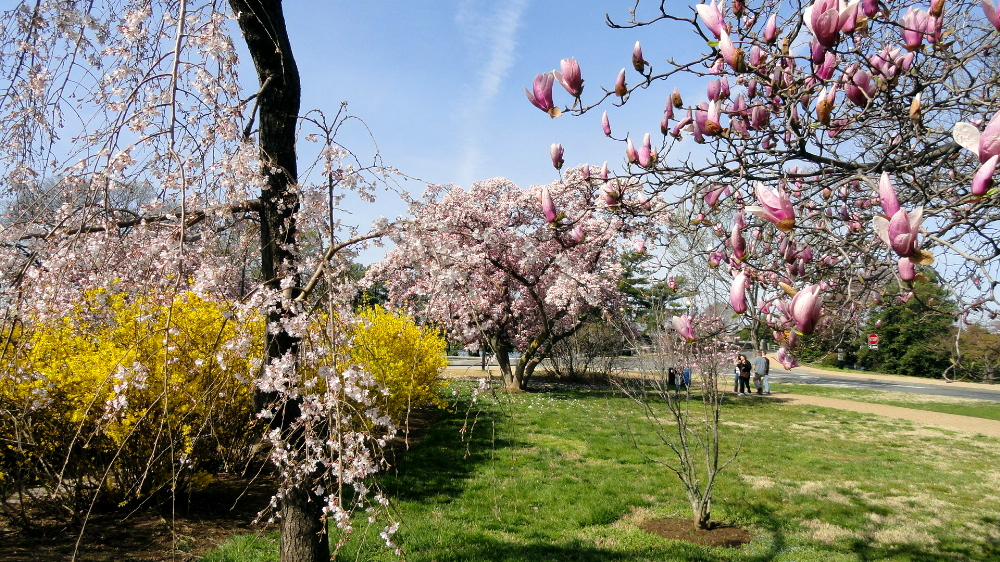
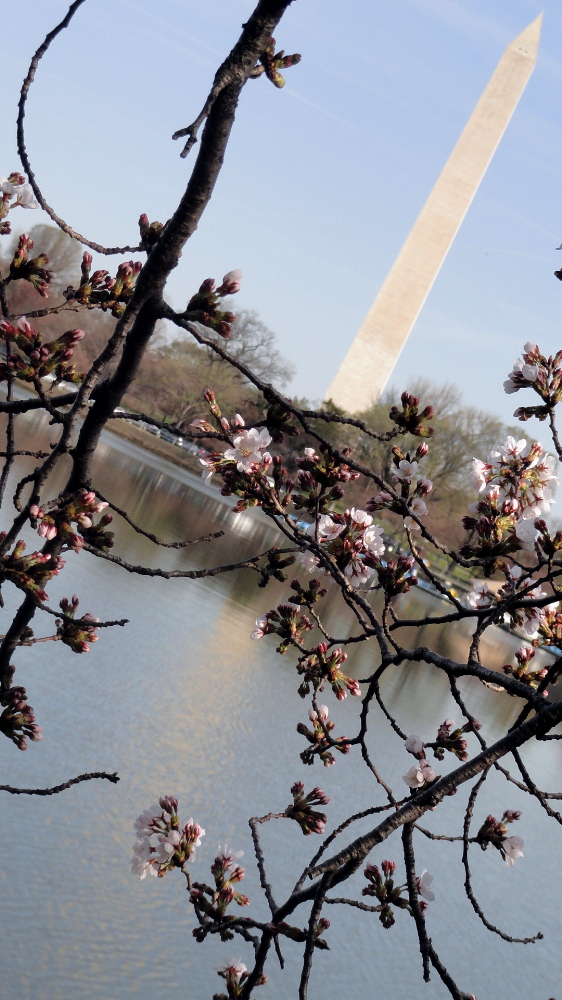 Above: earlier in the week; below: later in the week 🙂
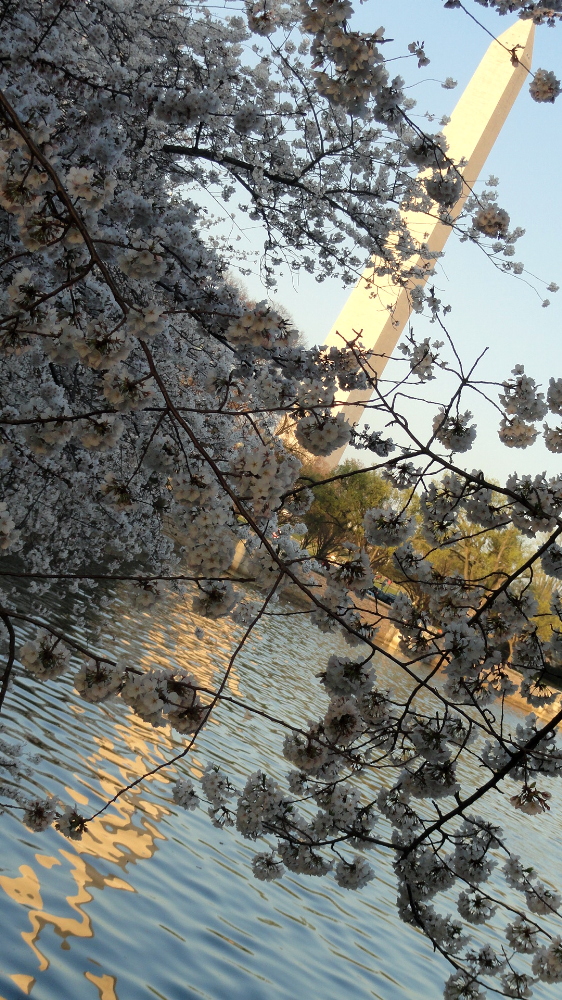
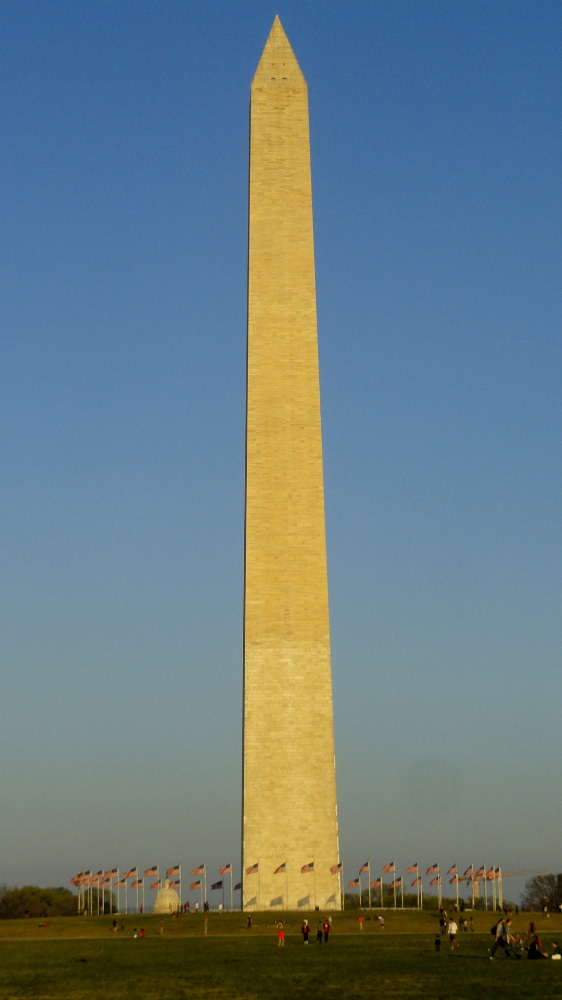
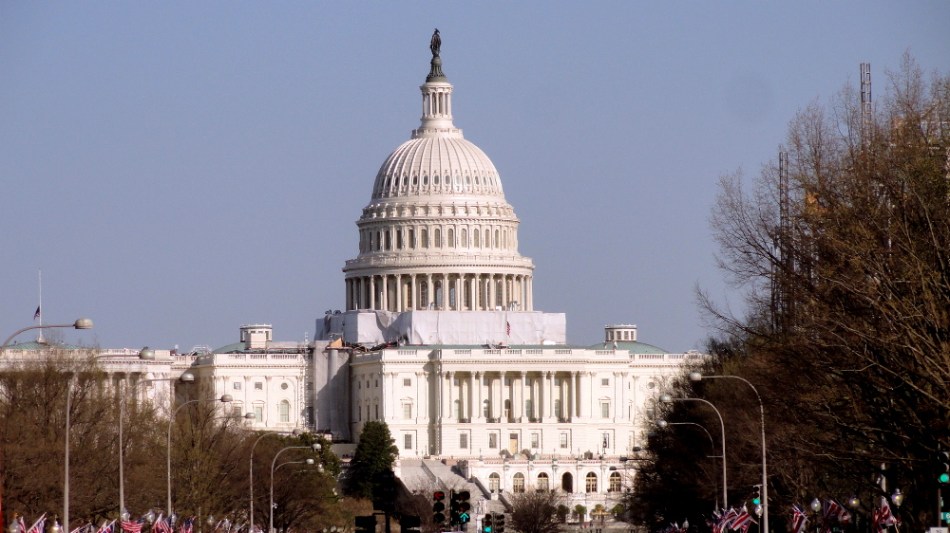
A farewell shot of the capitol dome behind the Washington monument. May American politics find a measure of sanity and civility while I’m away.
Yosemite, My Yosemite…
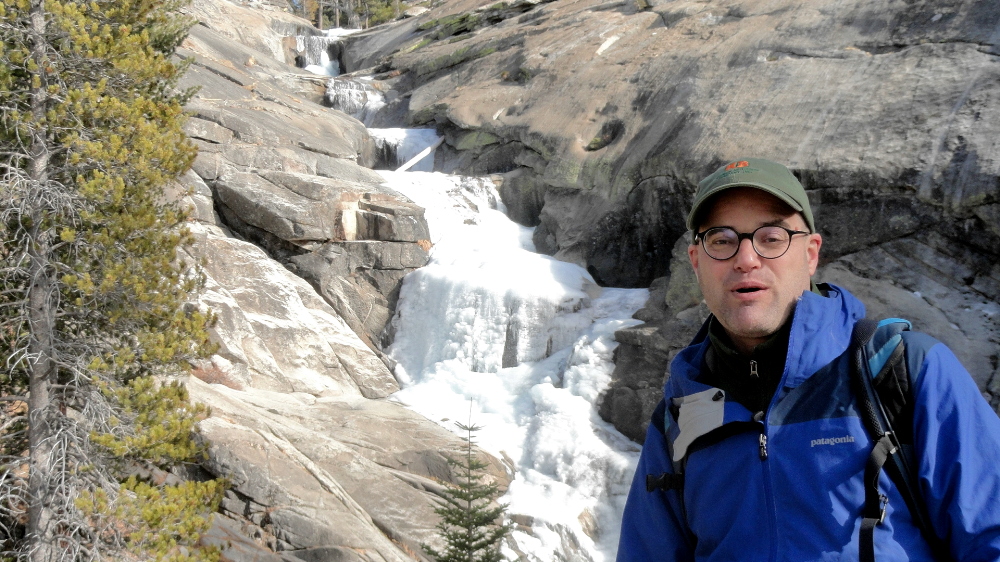
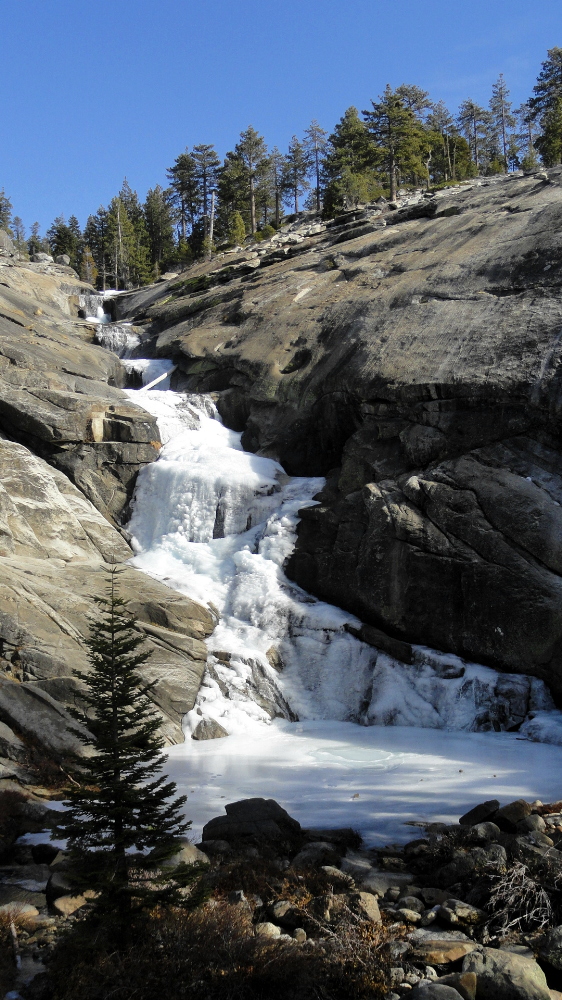
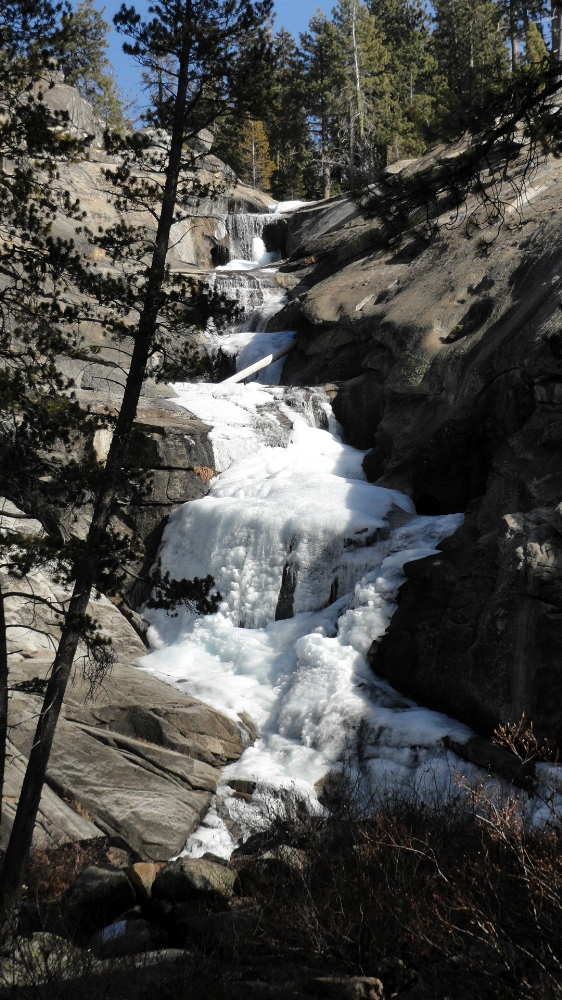
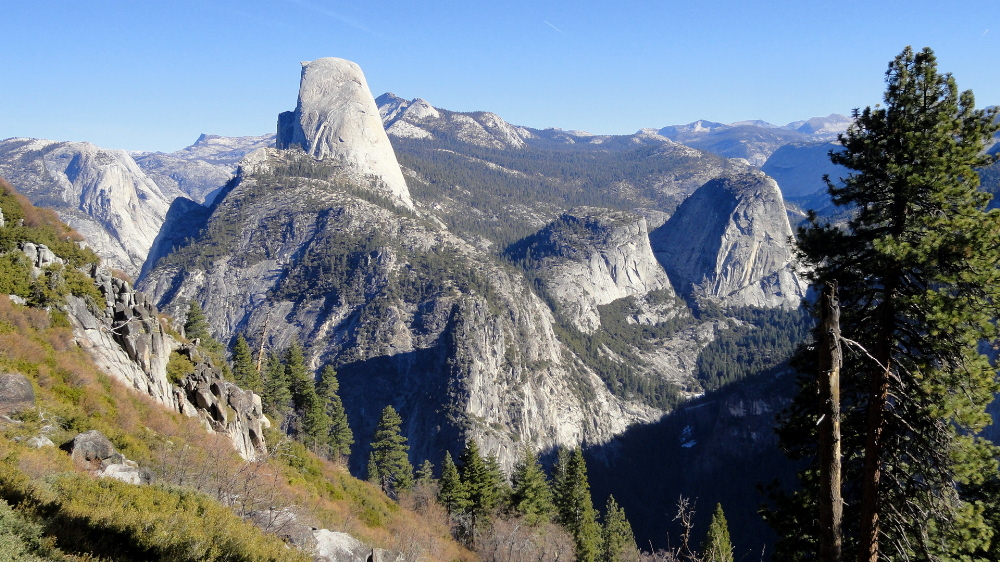
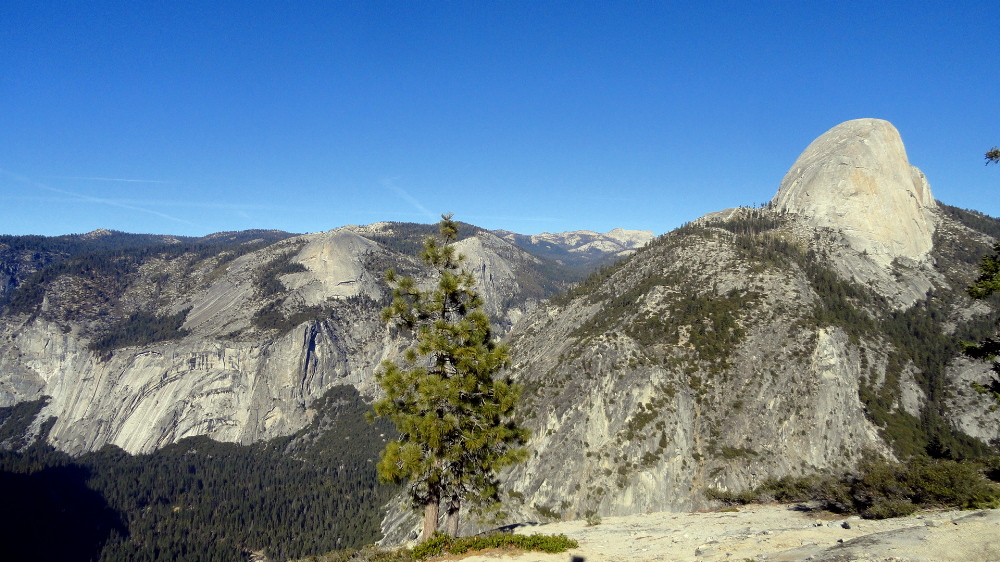
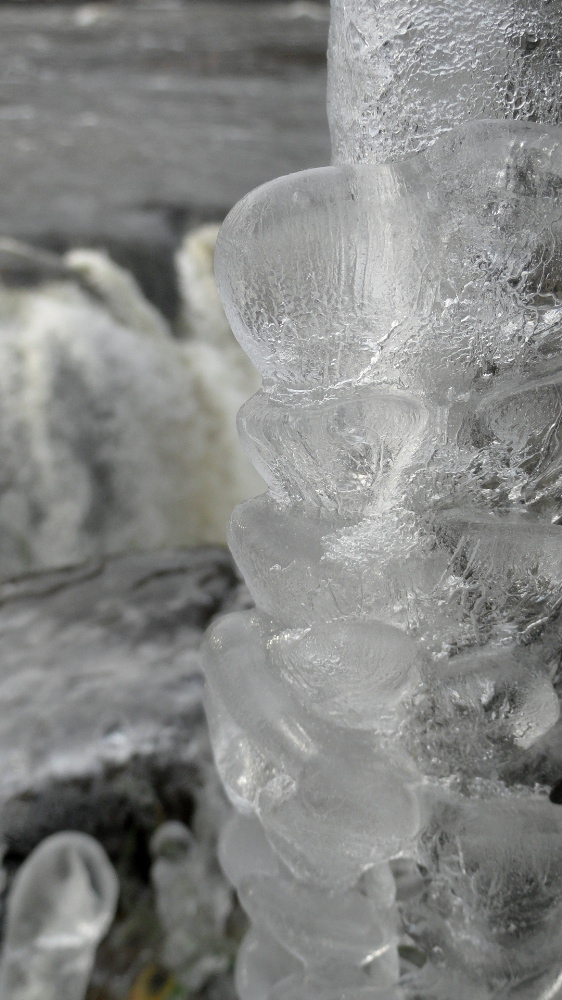
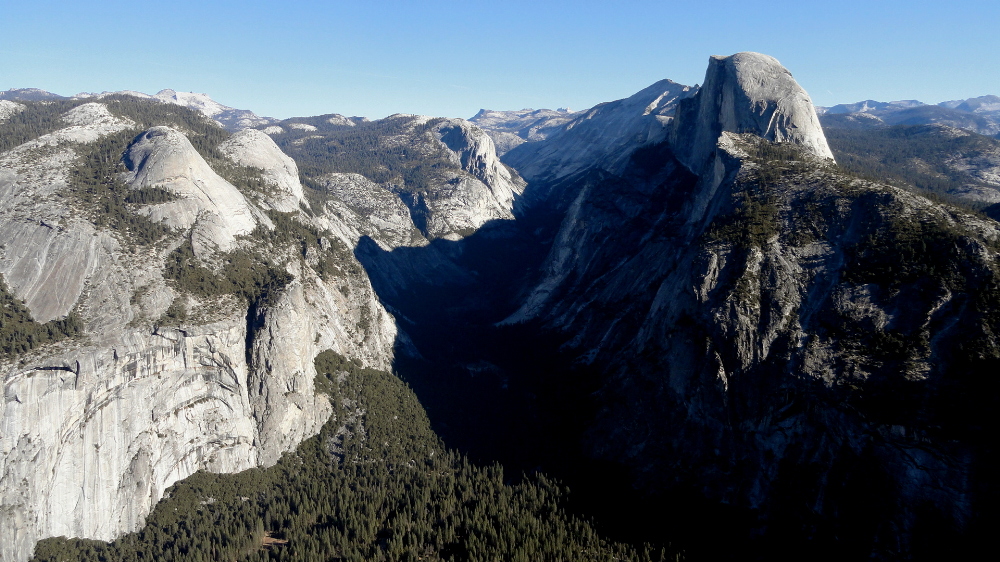 For the holiday weekend to celebrate Martin Luther King’s birthday, I went down to Yosemite for a few lovely days of hiking and relaxing with some great friends from SF and LA. I’m based here in SF now since early January, then back to LA in February with an expected start of my next assignment either late March or some time in April: not yet quite clear. More on that whenever I can. For now – enjoy the pics of Yosemite in an unusually dry and snowless winter. Hopefully there will be some storms soon, because as those of you who know it will see, these photos do NOT look like Yosemite should in mid-January (= mid rainy season)! Nonetheless, as you see in the shot below, of me next to a frozen Chilnualna Falls, the temperatures are cold enough, there’s just been no rain or snow for two months in this wet season!
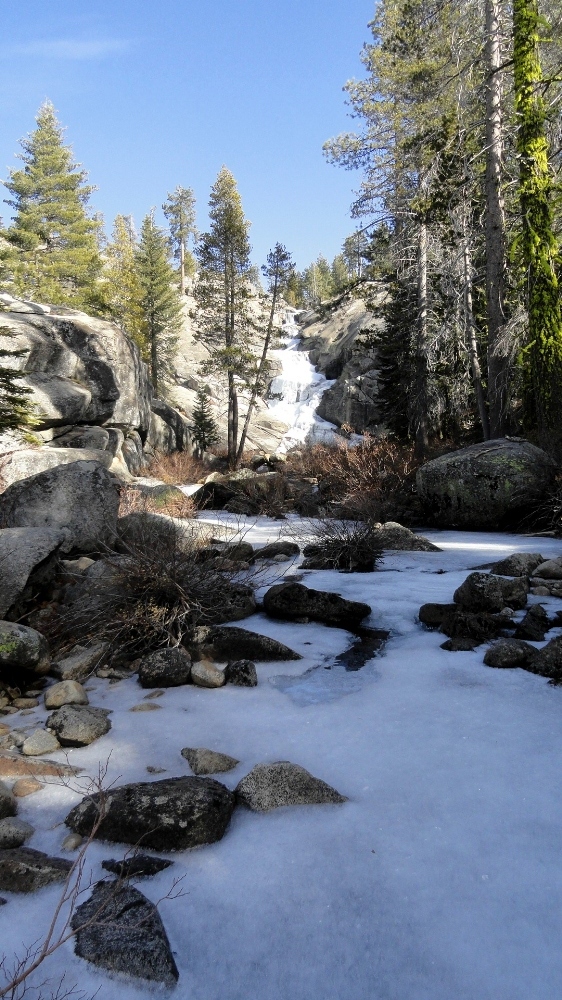
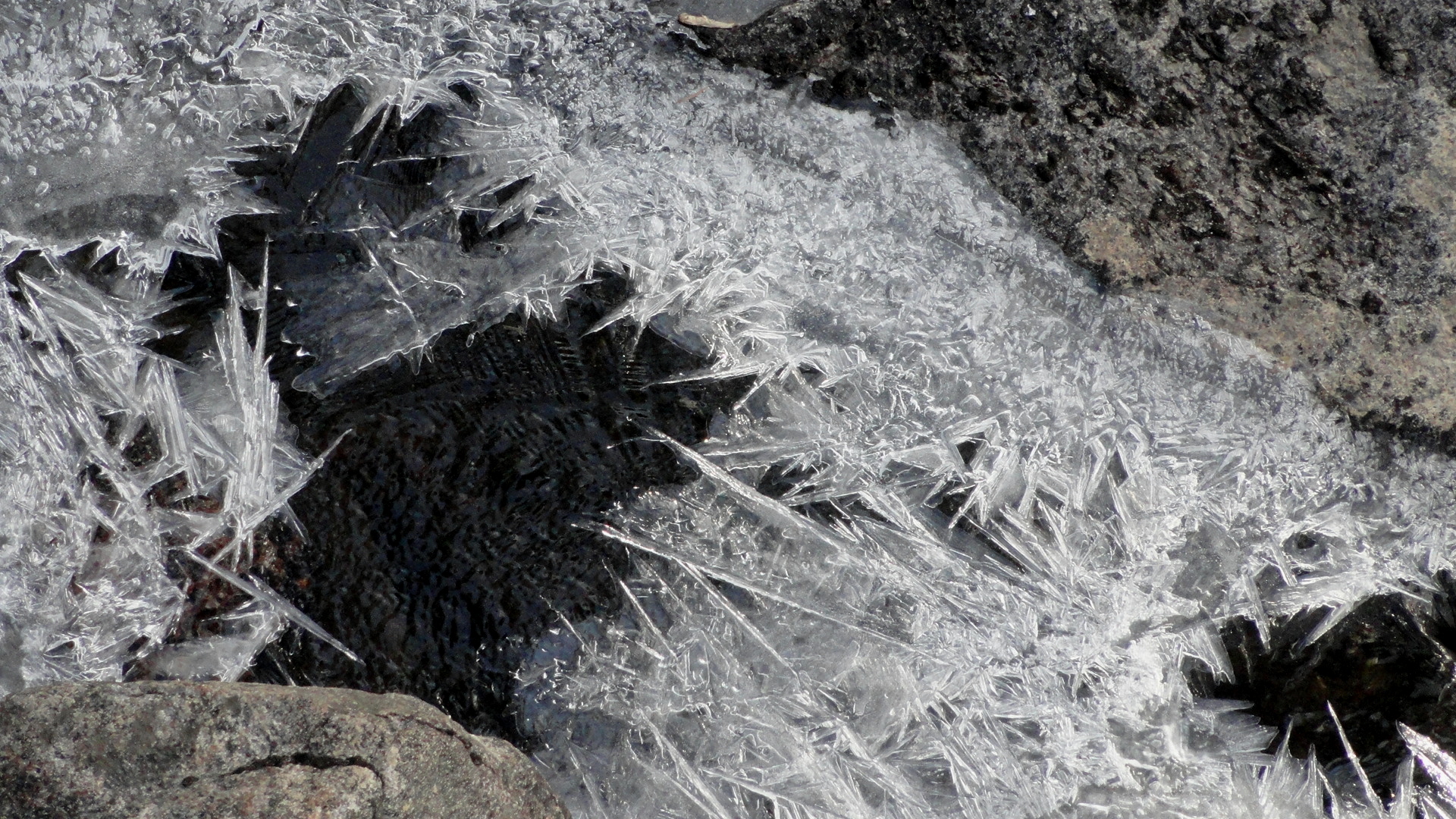
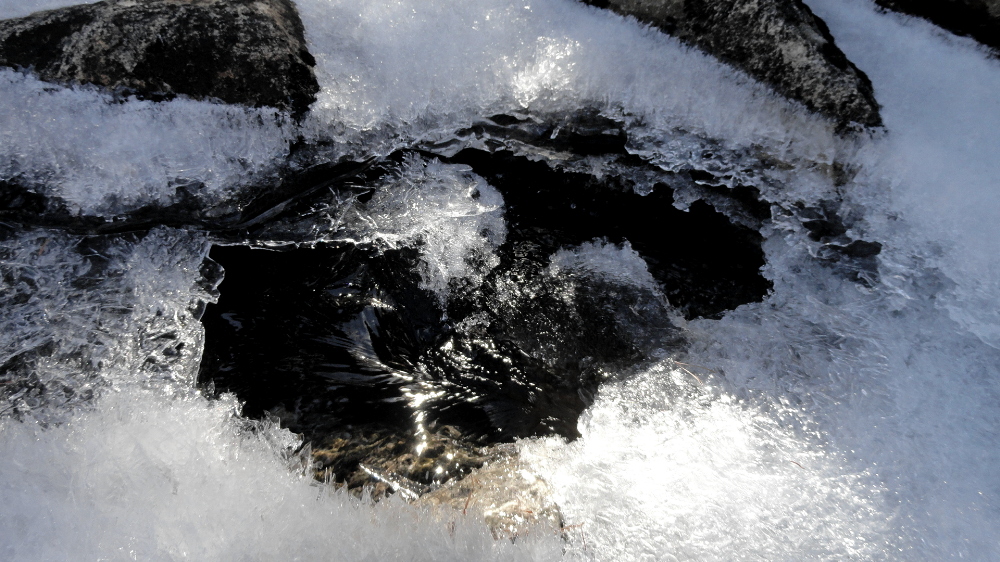
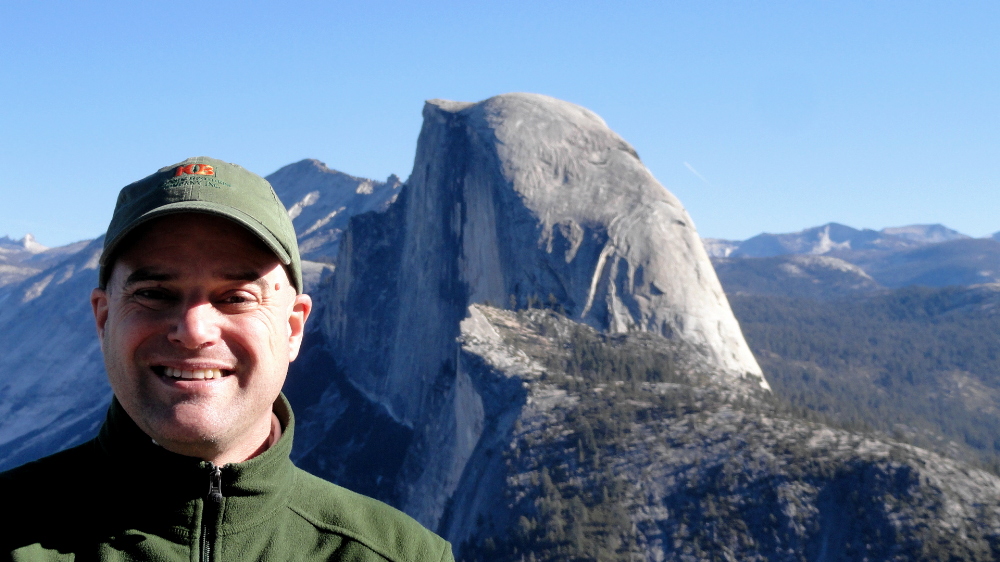

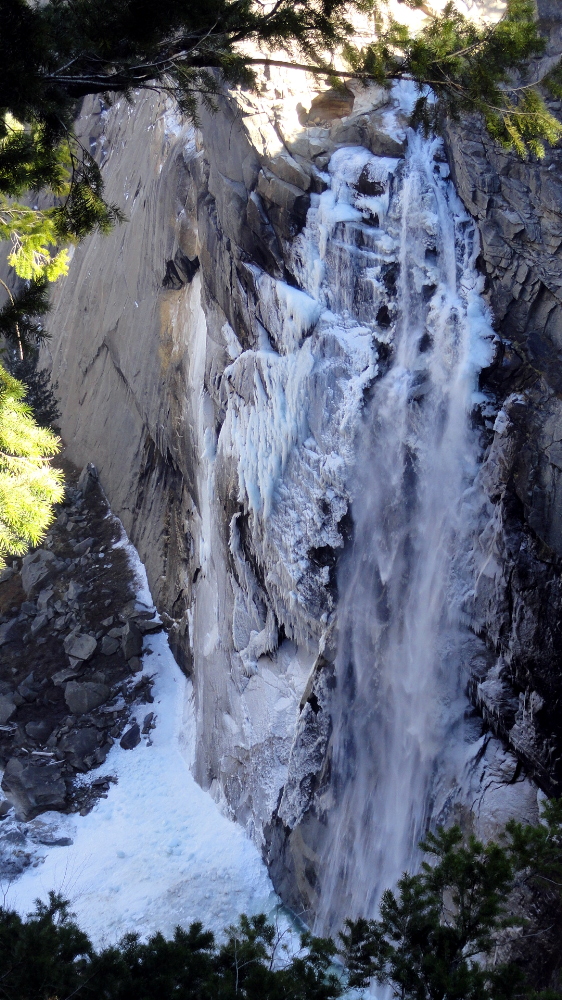
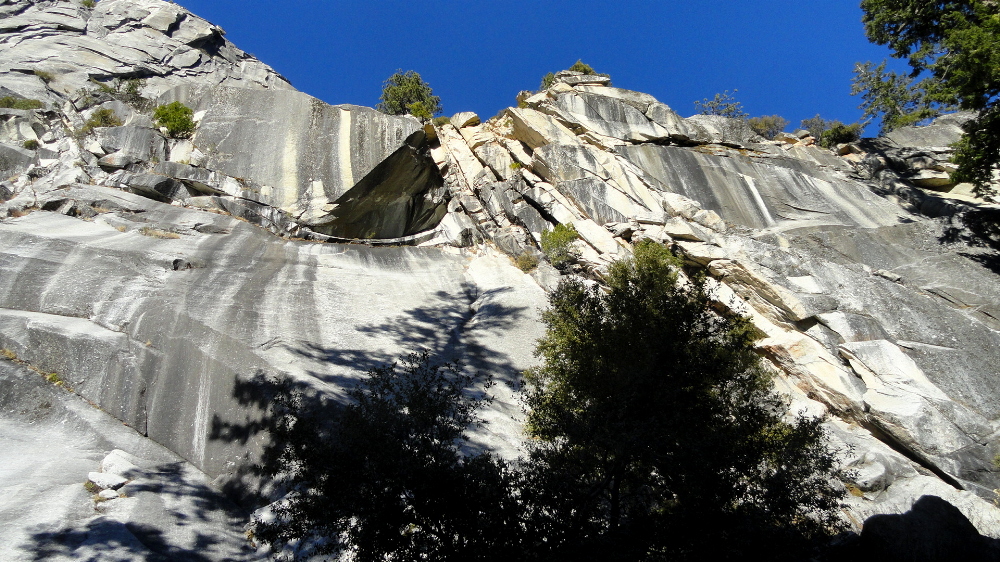
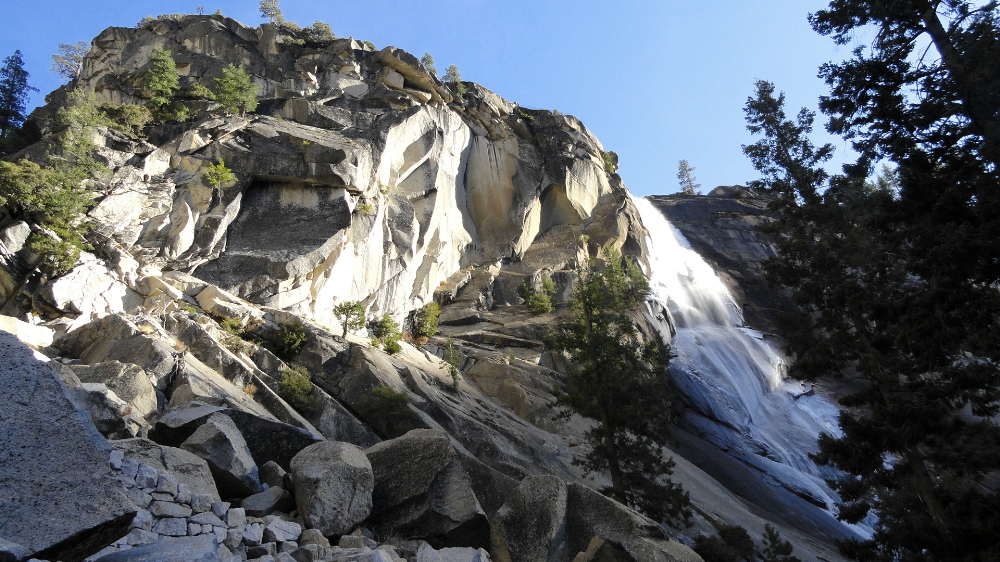
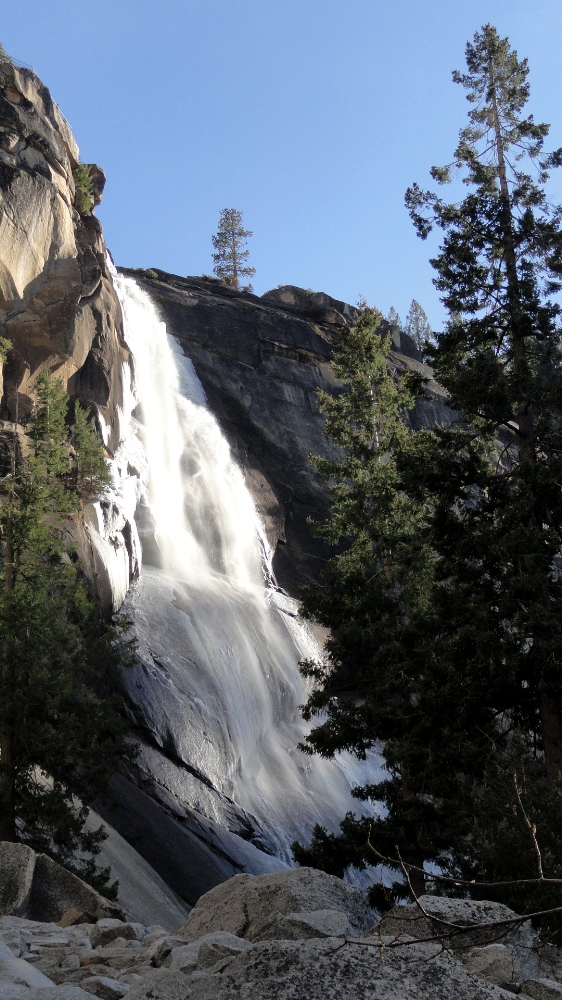
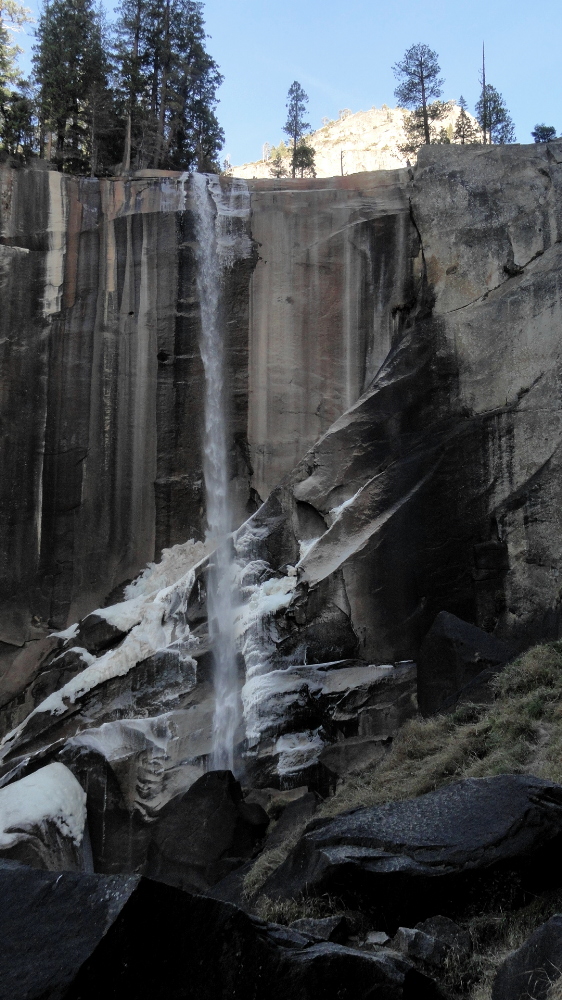
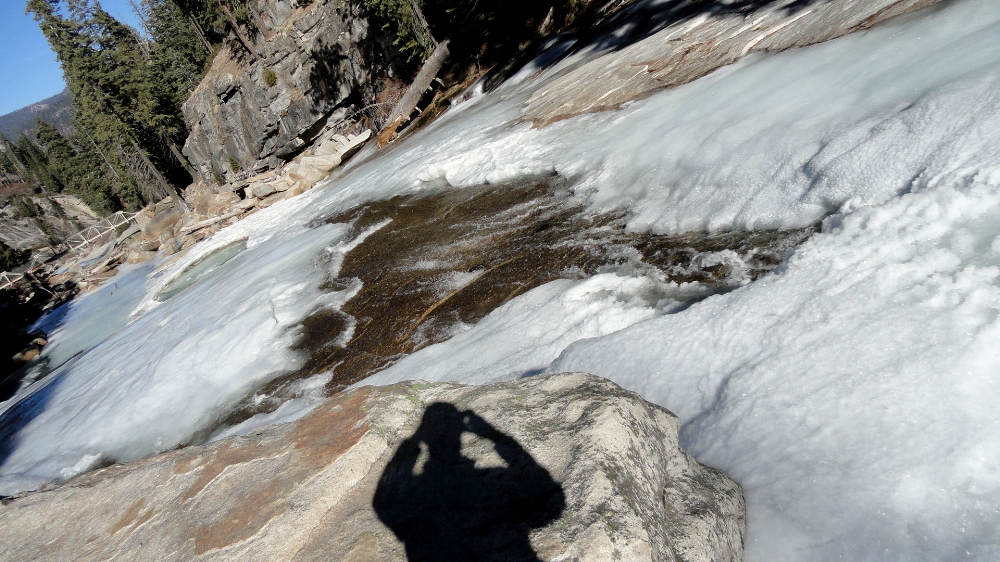 Above, a few shots of Nevada Falls with not much water but a good bit of ice; just above, my shadow self-portrait on Illilouette Creek, up above the Mist Trail, and below a very thin trickle of water in a late-season dry Vernal Falls, below Nevada Falls. For those not familiar with Yosemite: usually in the summer and after a good rain, the water streams over this many for most of the width of that rock surface.
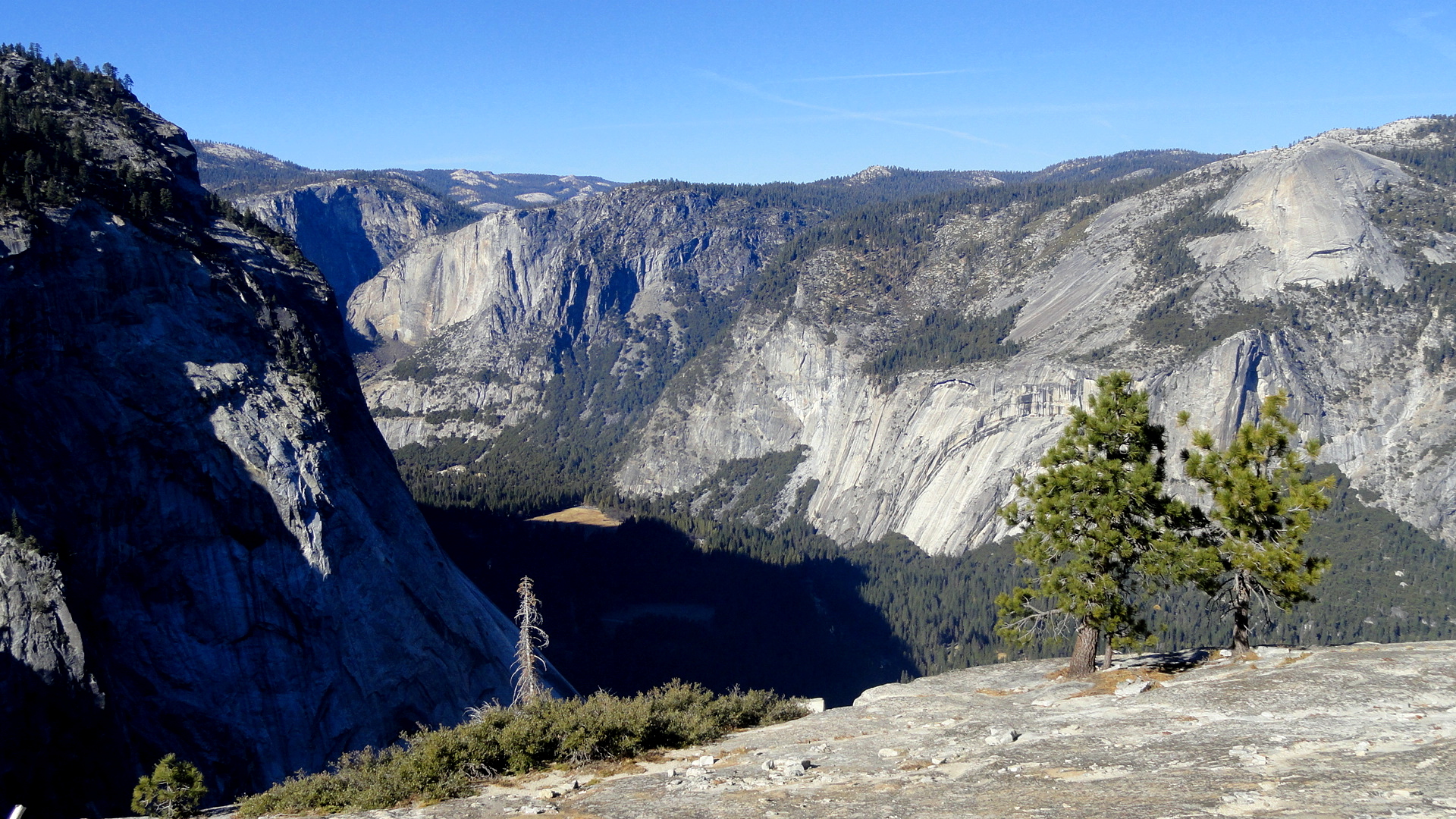
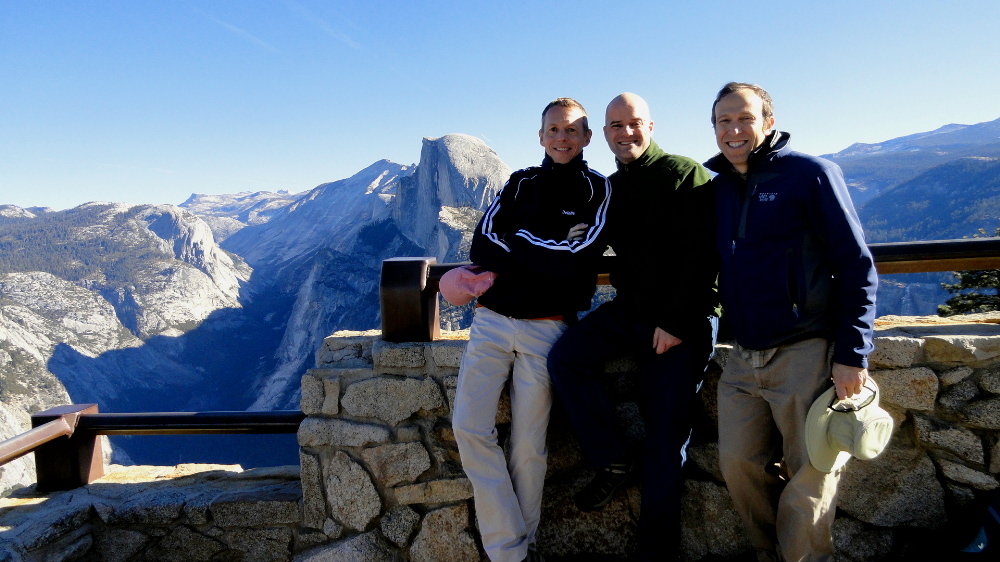
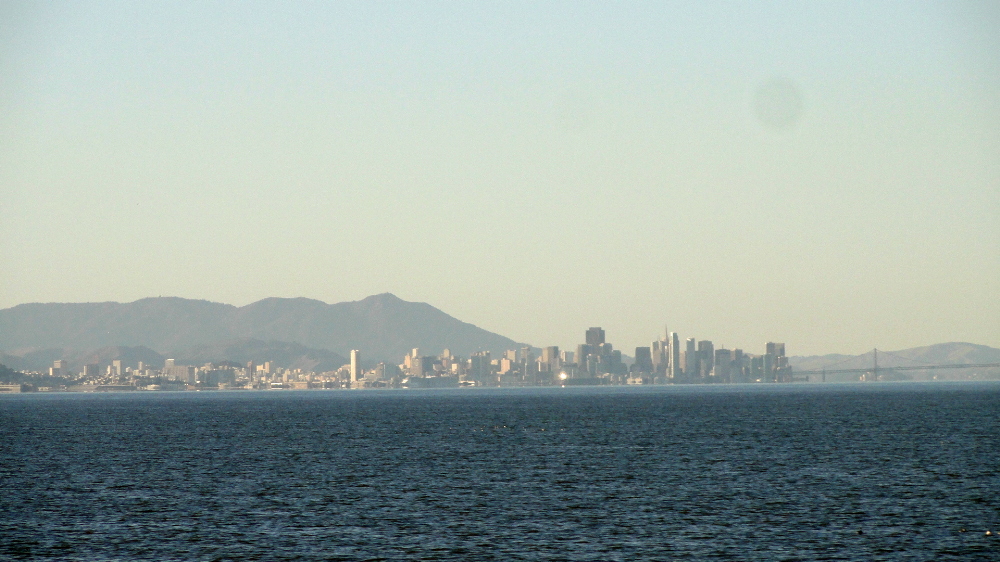
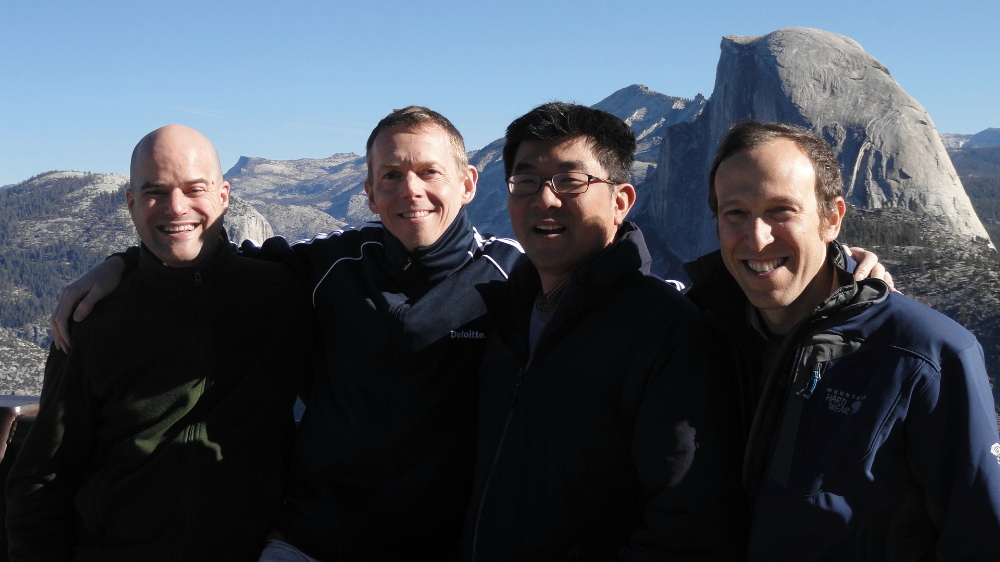 …and as our final shots, me with the boys: Jim from LA, and Howard & Gene from SF who organized the whole thing and who are familiar faces to regular blog followers since they’re my most reliable friends for visits when I’m in unusual spots outside the country. Thanks, guys. 🙂 And, below: the lovely city by the bay as seen at high speed from the San Mateo Bridge as we were delivering Jim to SFO on our way home…
Homes for the Holidays – A Sampler
 Christmas morning, my brother Steve reading the newspaper while I try to share the last wildly varied batch of 2011 photos before it becomes 2012. Croissants are doing their final rising over in the oven here at my mother’s house. This is my second winter holiday season at ‘home’ or with family since 2004 (since then, in order: China, Sri Lanka, Nigeria, NYC, India, Congo…no wonder I get confused sometimes). Perhaps the smell of croissants baking will prompt Mom to rise and then we can satisfy my older brother’s curiosity about what might be under the lovely Christmas tree off to my right. Last year at this time I’d been in my new home of Mweso for about two weeks and was celebrating these holidays with new colleagues in a beautiful new location and a great new job.
 I wrote the last blog entry my final morning on the island of Lamu, in Kenya – early August. Then I returned for about eight final weeks of challenging and productive work in Mweso, did the fastest debriefing and return to the US that I’ve ever done — left Mweso on 30 September, Goma on 2 October after a full day of meetings there, debriefed in Amsterdam on the 3rd afternoon and 4th morning…and did a short presentation about Mweso and MSF’s work to a group of NYC high school students on the afternoon of the 5th. Since then I’ve spent: a wonderfully relaxing five weeks getting my head together and biking along the coast a lot in LA; the thanksgiving holiday with Steve, our mother, and our uncle and aunt in Pittsburgh; and the past four weeks with my mother here in the NYC suburbs. What I’d like to share with you all are photos I took during all that time – last weeks in my Mweso home and our outreach sites around the zone, plus images from lovely outings in my various US homes. Between assignments, I really am an unemployed homeless person but I’m blessed with lots of generous friends and families who welcome me to share their homes here.

 Returning to the US was a bigger shock than usual this time – spending my first few nights with my friends near Columbus Circle, I’d stare out their windows at the towers of midtown Manhattan and the bustle of traffic on the street, and wonder if I was really still in the same world. I know I am, but the shock of transition and change can be so overwhelming at times. As usual I’ve taken full advantage of so many luxuries, from Thai food and midnight bike rides through quiet, safe , good streets to concerts and plays with lots of friends. Email conversations have just begun between me and MSF about where I’ll go next, and when. I’ll be in SF for most of January and some of February and then tentatively plan a cross-country trip to visit friends and relatives scattered through the nation’s mid-section…but as always the plans remain open to amendment based on evolving news about possible future assignments… More on that if and when appropriate.
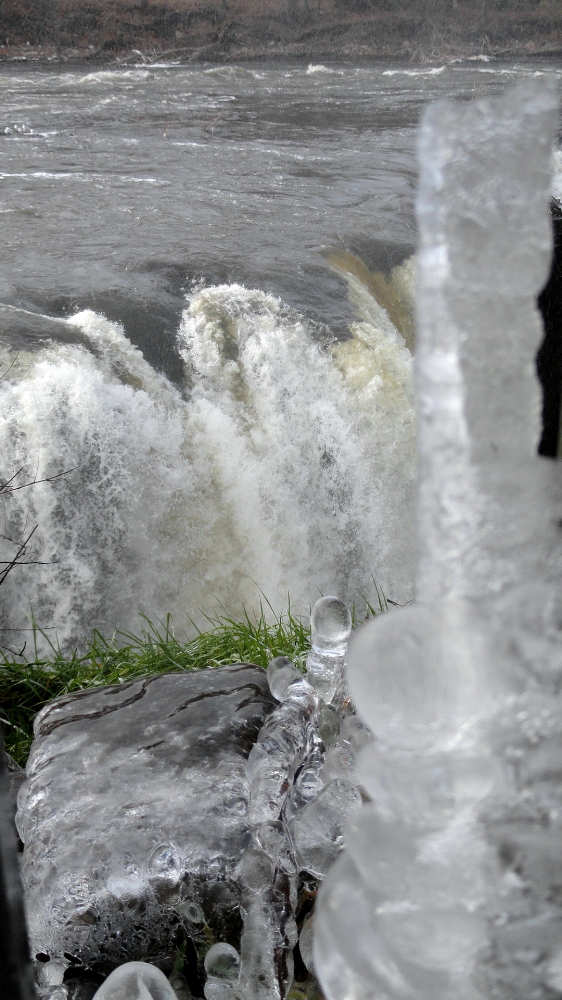
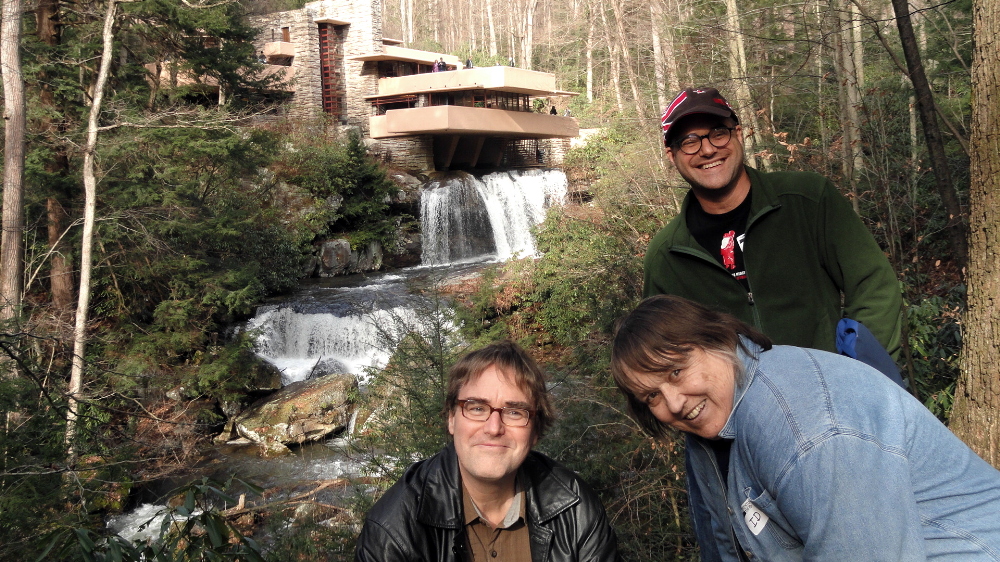
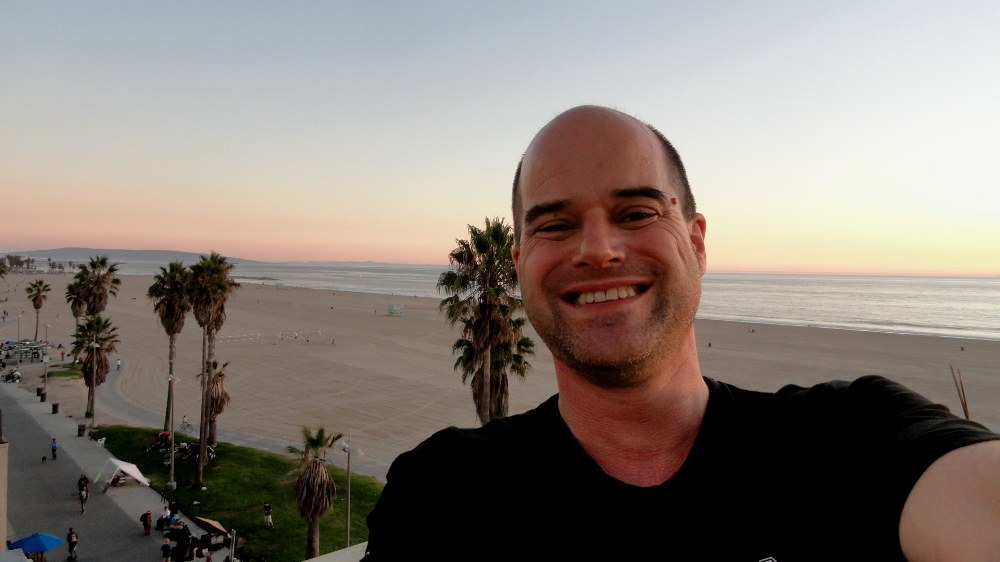
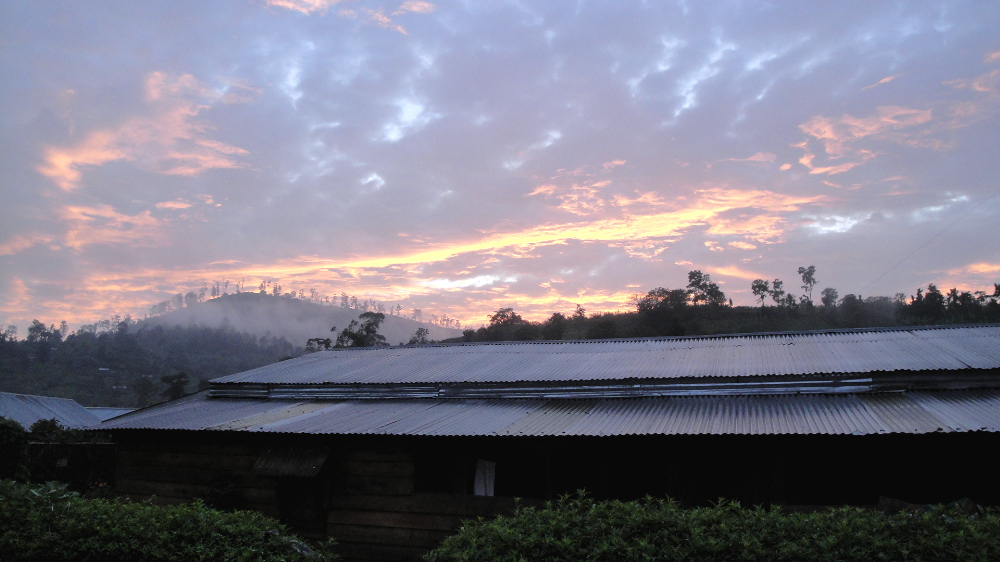
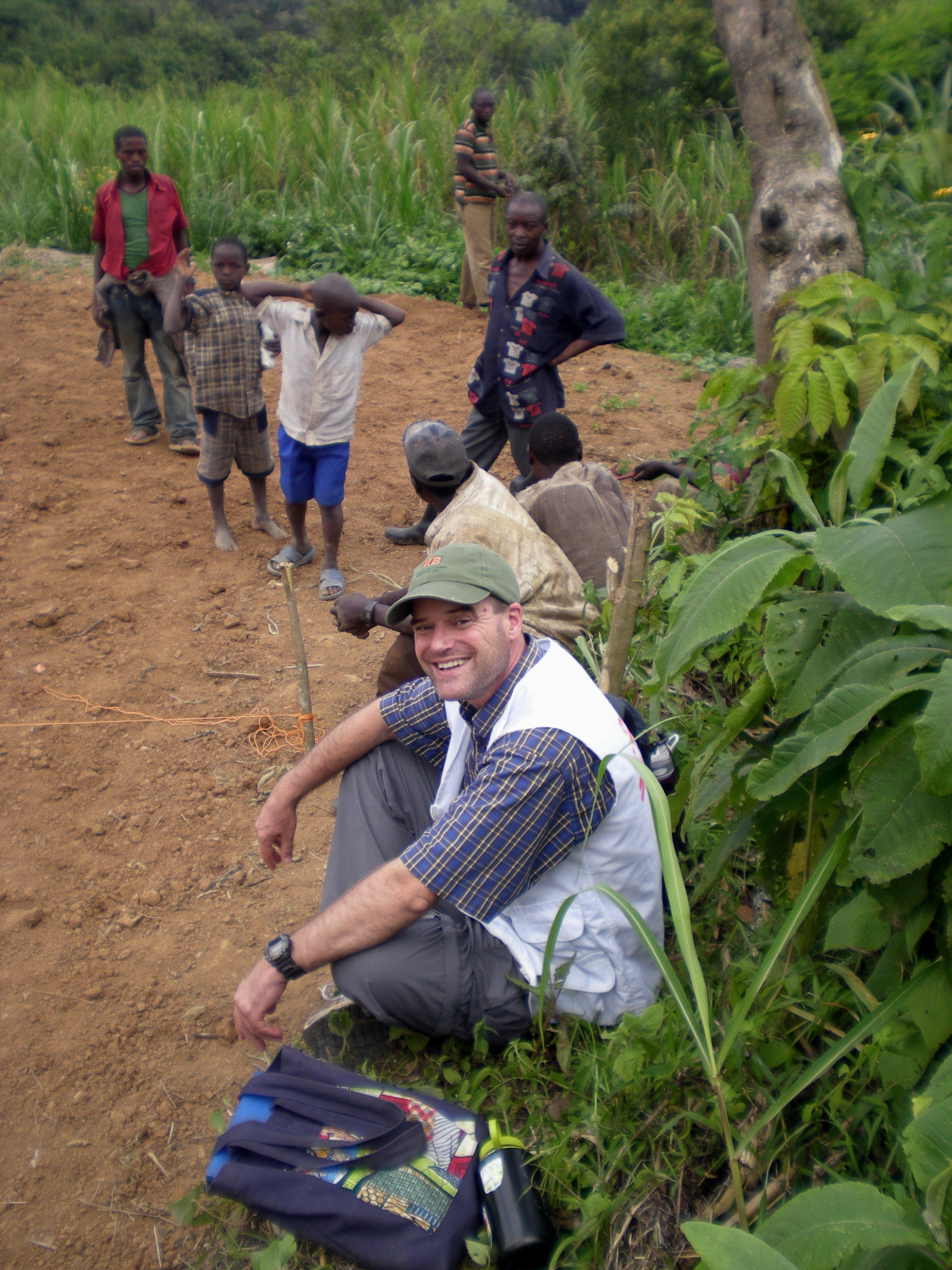 ..Above: me in June, on day one of construction of the health post in the beautiful mountain-top village of Ihula, something that we & the village & the BCZ can and should be rightly proud of. Above that, Mweso sunrise a few days before I left in September; Steve, Mom & me at Fallingwater late November; Calder on a hillside at Storm King early October; and two views of the Great Falls in early December. Below, a self-pic the evening I got back to LA.
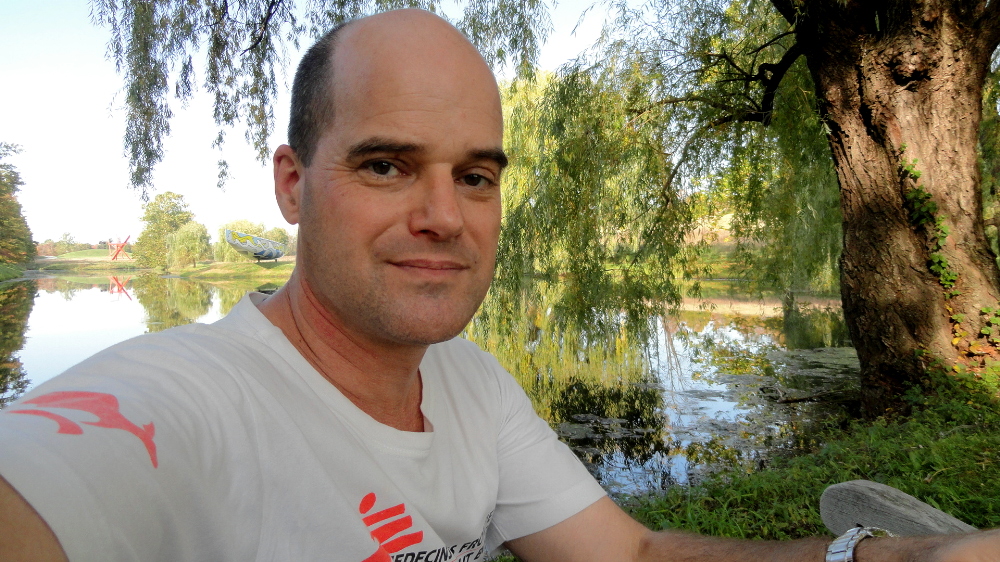
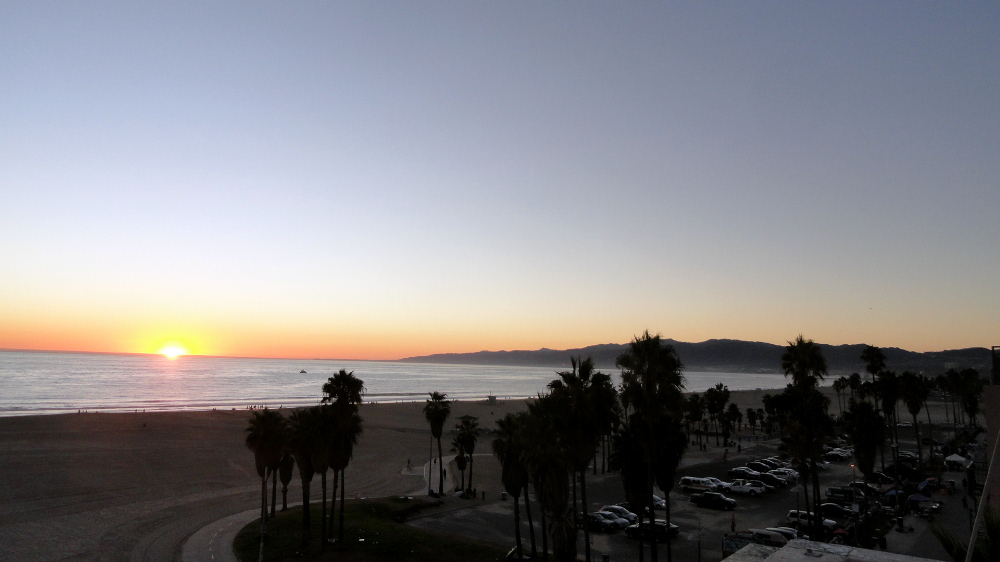
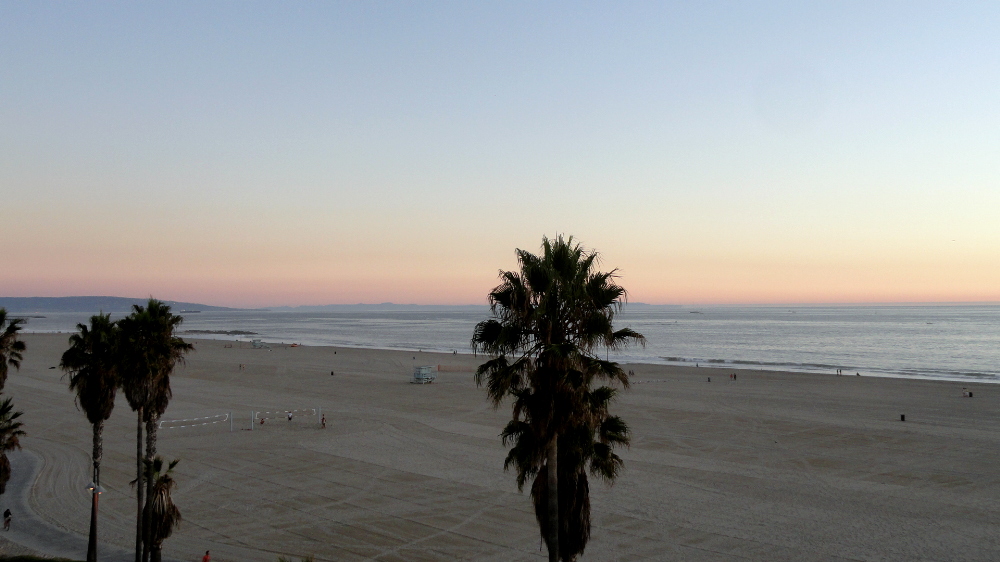
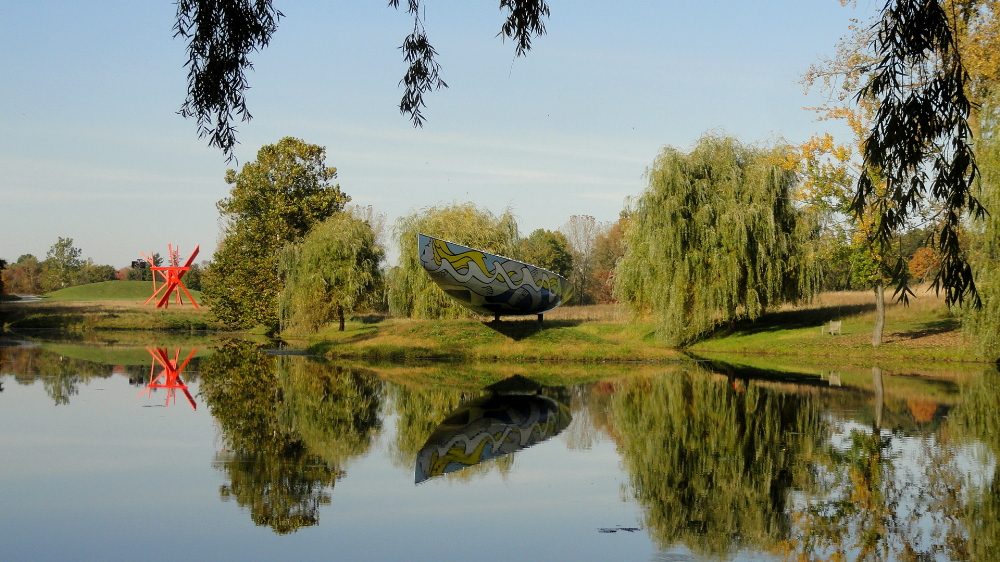
 I don’t want to write much now – I’ve said it all before and I hope the photos are interesting enough on their own. What I’m throwing up here are are photos of the following which occurred in the order listed: a trip Mom and I took in early October to Storm King Sculpture Park in New York State; a few Venice sunsets; a trip with Steve, Mom, and Aunt Judy & Uncle Bill to two Frank Lloyd Wright-designed houses outside Pittsburgh – one being Fallingwater, arguably his most famous creation and the other being Kentuck Knob which also has a sculpture garden on its grounds; and some wintertime views of the Great Falls in Paterson, NJ in early December, which we visited to give Sam a different image of NJ…perhaps they’ll do the same for you. 🙂 I’m organizing the photos based on variety and visual pleasure for me, and hopefully a sense for some of you of why I sometimes find simple questions hard to answer – when you consider that all of these photos were taken between mid-August and mid-December in places that felt at the time, at least to some extent, like home to me. A bit lower down, I will include in italic some text that I wrote on about my third morning back in the US when my nerves will still a bit raw at how totally different everything is here than where I’d been living so very recently. Since it’s sat unfinished for 12+ weeks and I’m now in a very different space, I’m not going to bother completing it… I hope the photos may tell you things I can’t find the words for now. May 2012 bring more peace, more health, happiness and stability to us all, known and unknown, all the rich, beautiful, conflicted & organic mess that is modern homo sapiens and our green home world.
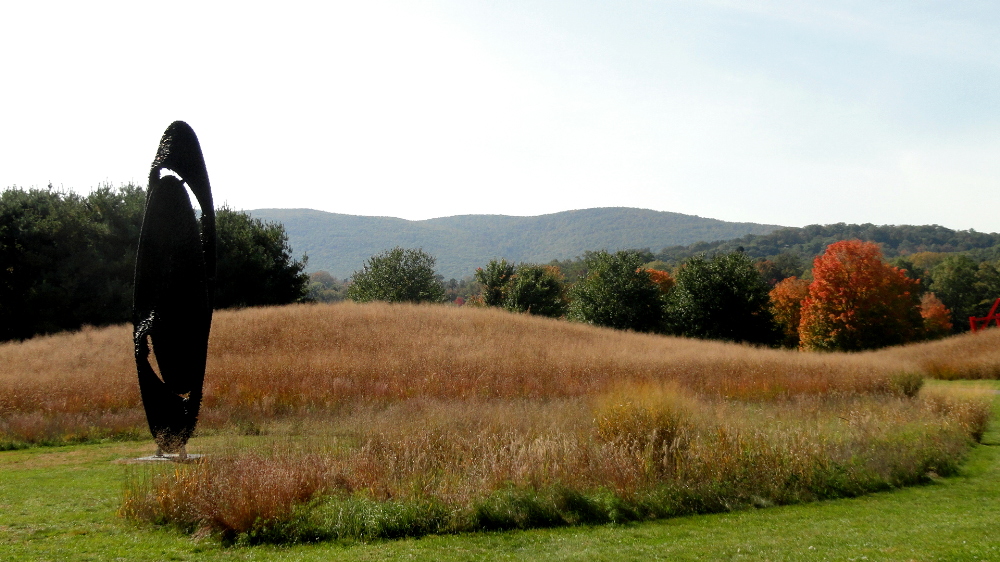
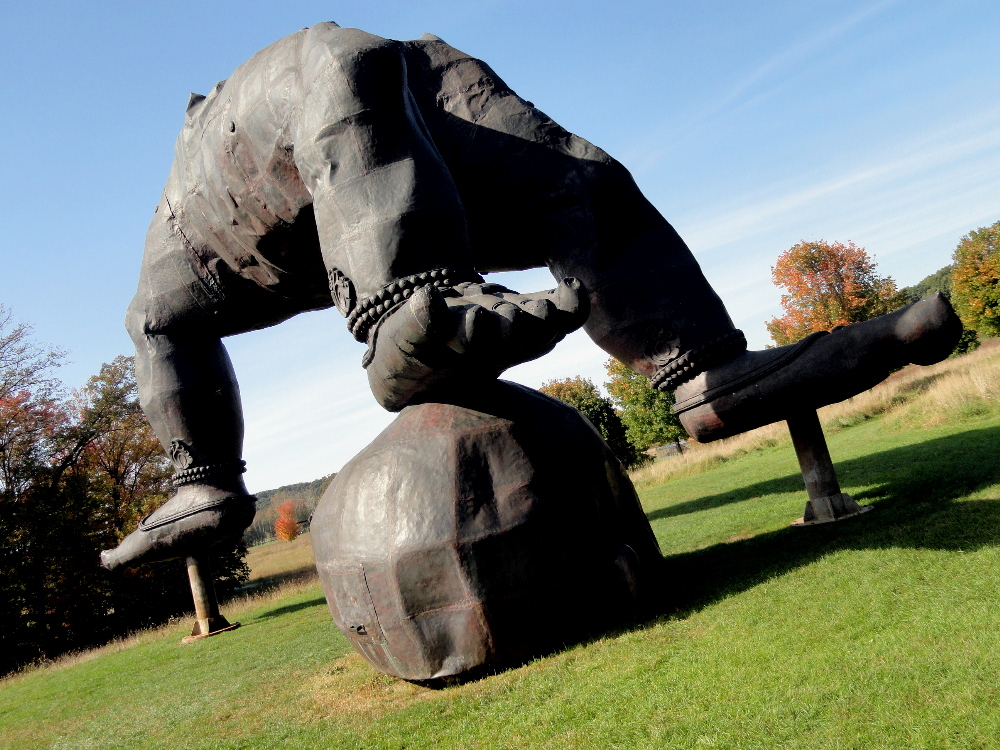
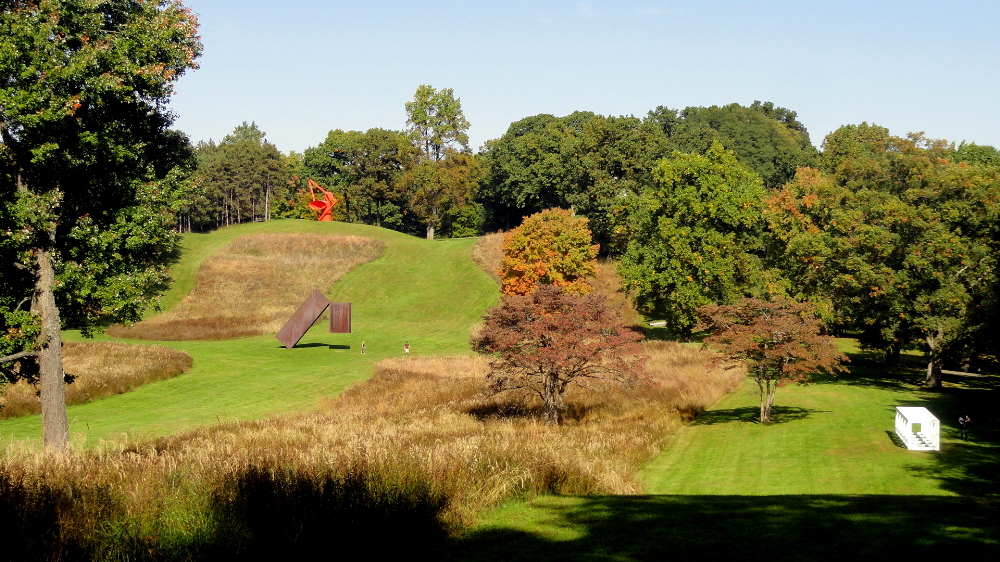 All the autumnal photos of beautiful grounds on a sunny day with sculpture in foreground or background were taken on … October 10 … at Storm King, one of my mother’s and my very favorite places in the NY metro area. I’ve been visiting Storm King since the late 1980s any chance I get and am always happy I’ve gone; this day felt unusually blessed because the weather was so lovely and walking around the grounds cleared my head so well and reminded me some of the things to which I have access here, that I can’t see when I’m working normally.
 And here’s the text I started in October and never finished: Early autumn in New York rather than early spring in the high country of North Kivu. (Late September = early spring south of the equator, technically…) Quite the change of location and cultural milieu to take in. As I write this I’m watching the sky grow lighter off to the east, as the nighttime lights of New York City’s skyscrapers slowly wink out and the deep blood-red-orange of sun’s earliest warning lightens to pale peach and the upper sky goes from black to pale blue. Soon the ball of the sun will blaze out and make it uncomfortable in this lovely window seat overlooking central park and the skyline. I’ve been fortunate to take advantage of good friends’ hospitality here in Manhattan, which coupled with three jet-lagged early mornings and three stunningly clear, sunny early autumn New York days have combined to give me three of the best-ever sunrises I’ve seen in New York. Quite the welcome home, really. Pity I didn’t think to bring my camera, but just trust me that the views of central park, skyline and sunrise make this an amazing window seat.
 Which is just as well because it all adds up to helping remind me I’m not in Mweso any more. And I’m not really even sure quite what or how to say about that. Since I’ve put so little about Mweso on my blog, I feel a need to give it more air time, so to speak. It hardly seems right that the past ten months of my life were based in this place where I and my colleagues (both international staff and national staff) all worked hard, week in and week out, to do some very good work (if I may say so), and of which I’ve barely put anything up on the blog. Some of my friends have seen emails with more detail about my life and work in Mweso, but since this is always a personal blog and since my life in Mweso was 95% about work, there didn’t seem much to say about life in Mweso.
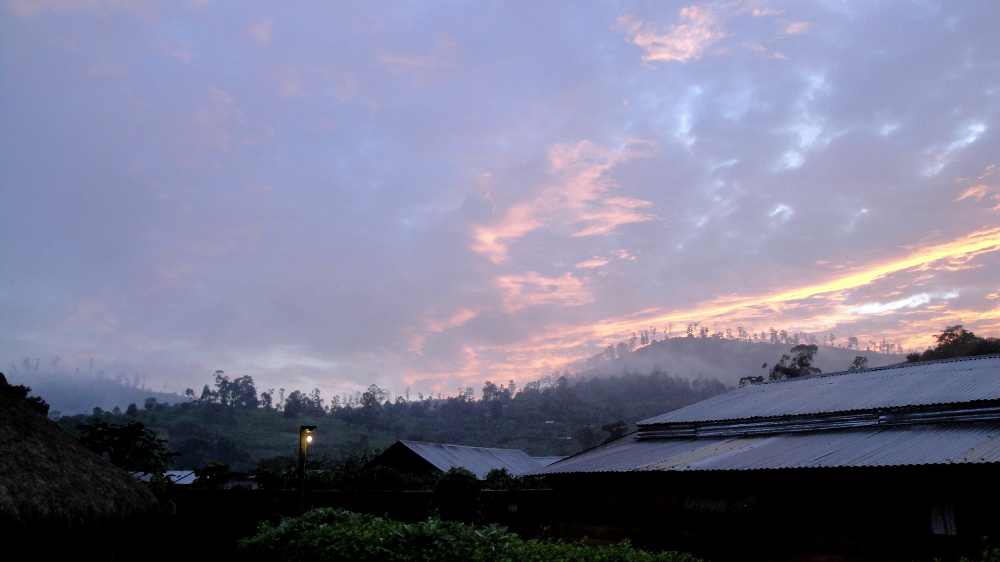
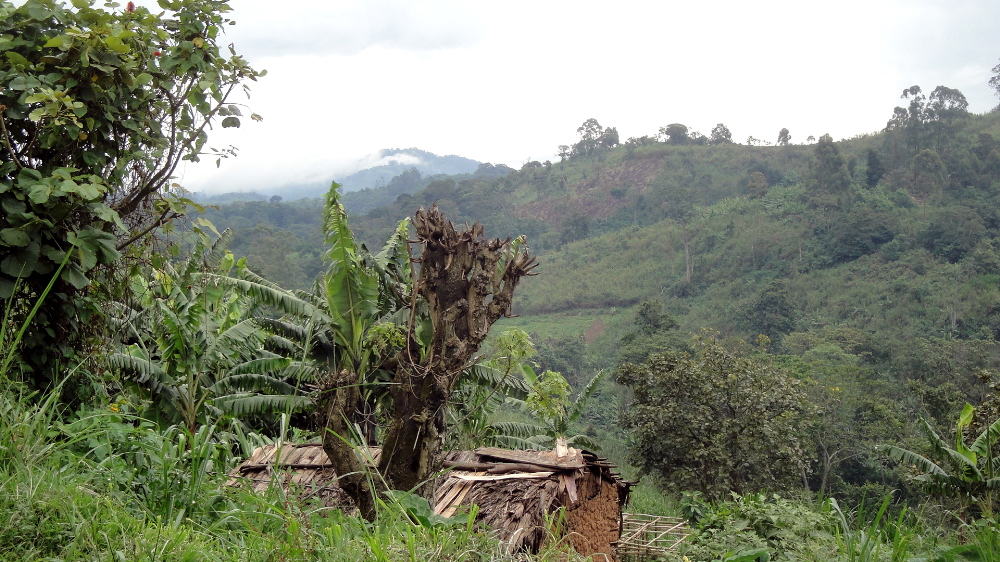
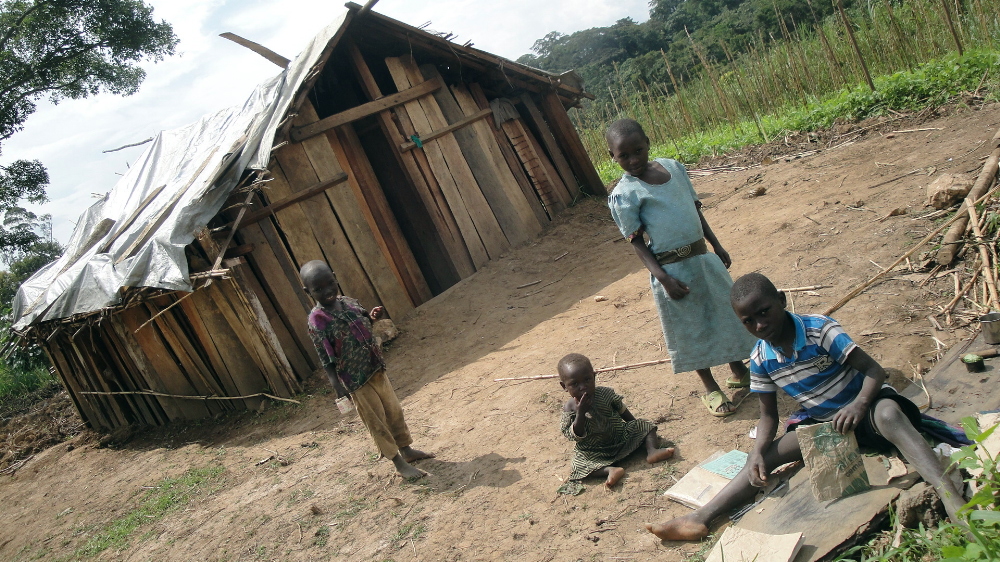
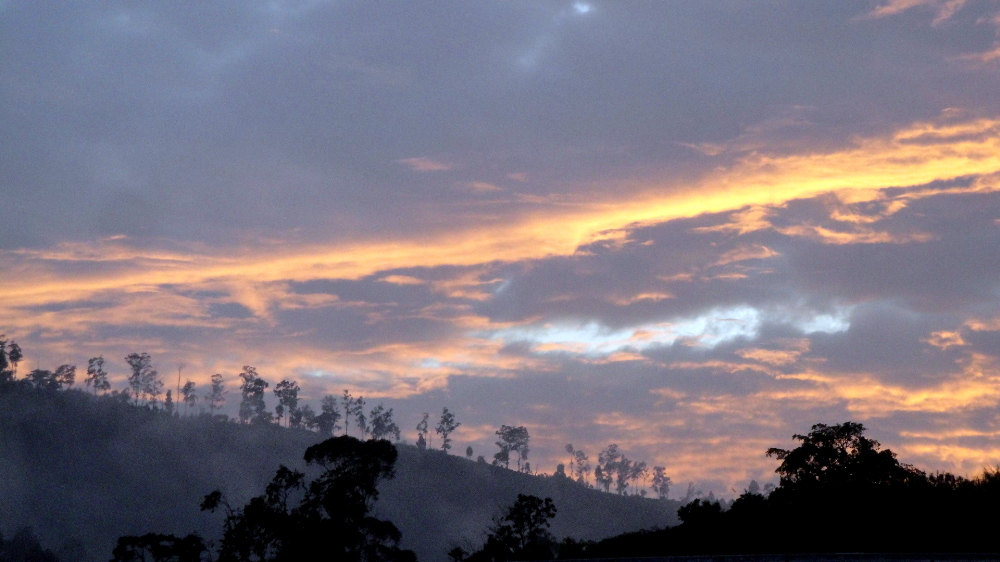
 Most of these photos from DRC were taken during several different days I spent high in the hills at and near the town of Ihula, where we ran a mobile clinic 1x/week, when I arrived there a year ago, and where we worked during my time to construct a new health post which would then make quality care available, with our support, every day of the week to the folks up here who’d otherwise walk many hours – often across front lines – to get to health care. The sunrise shots sprinkled around were taken from our expat home & base-office one morning before my departure.
 And so what you see are mostly photos of Lamu and London for the past ten months. Sure, both are great places that I was delighted to visit on my vacations from Mweso. But what have my last ten months been about, really – trust me, it was not dominated by the waves on the beach or great dance and theater in London. (Oh by the way, the sun is about halfway above the horizon over around Queens now; a livid pinkish-orange ball that I can already no longer look at. When I look at the two entries here in which I did show photos of North Kivu and say a bit about it, I think I did a fairly decent job of talking about how we live and what I was doing there, more or less.
 My first day back in the US, I spoke to a group of high-school students here in NYC about MSF, our work, my work, and so on. One student asked about common misconceptions and I responded about over-romanticizing, or over-dramatizing, what we do or how we live. (And that’s where I ended in October. Not gonna finish those thoughts now. You probably get it. Lower down there are actually some pics of me at work, hauling rocks and shoveling sand for the foundation of the new health post.)


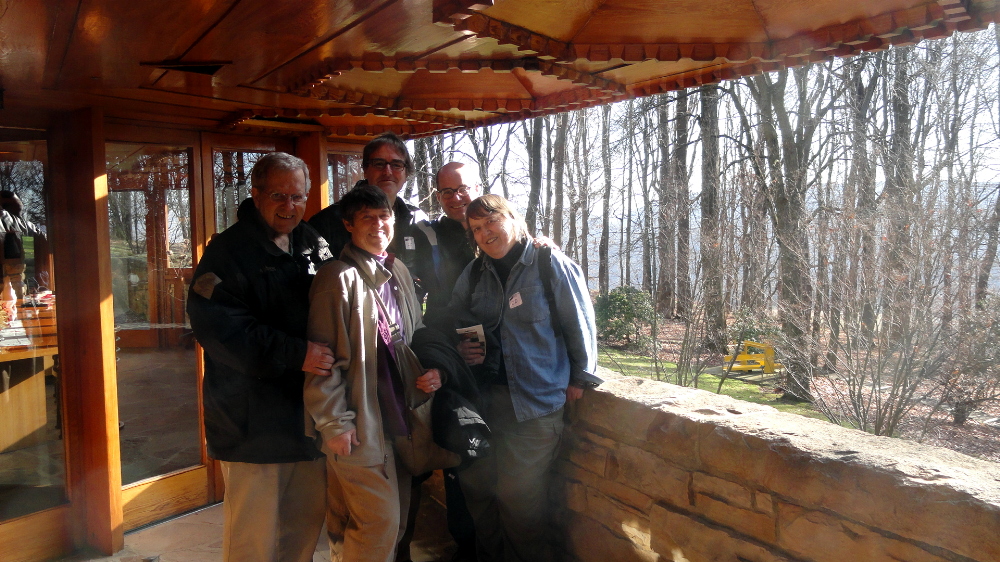


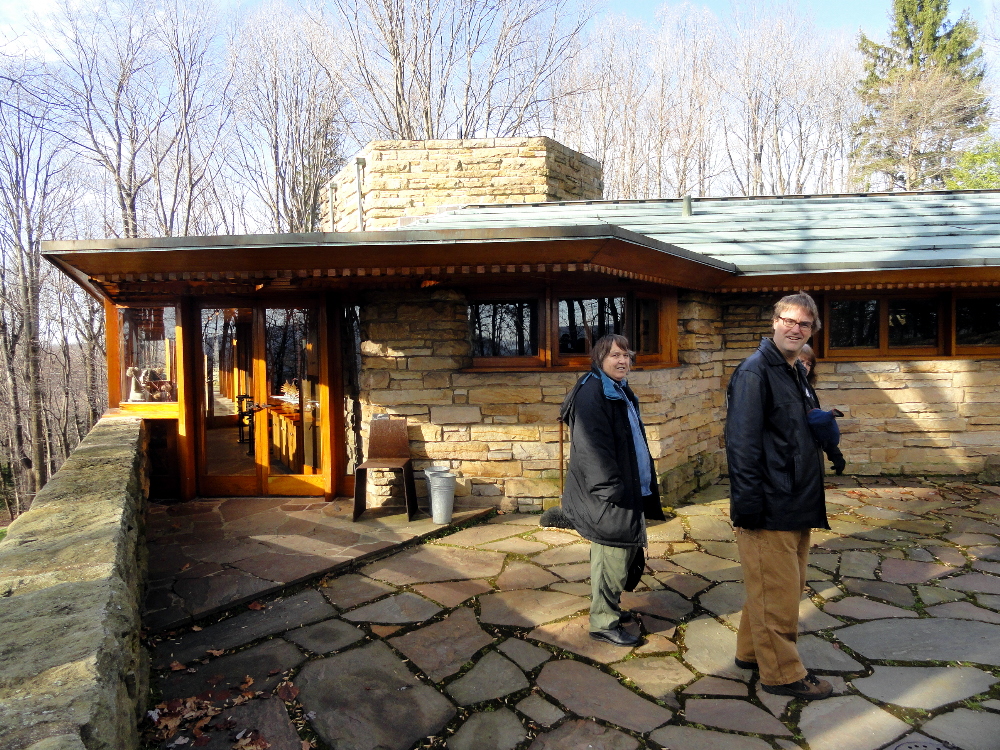
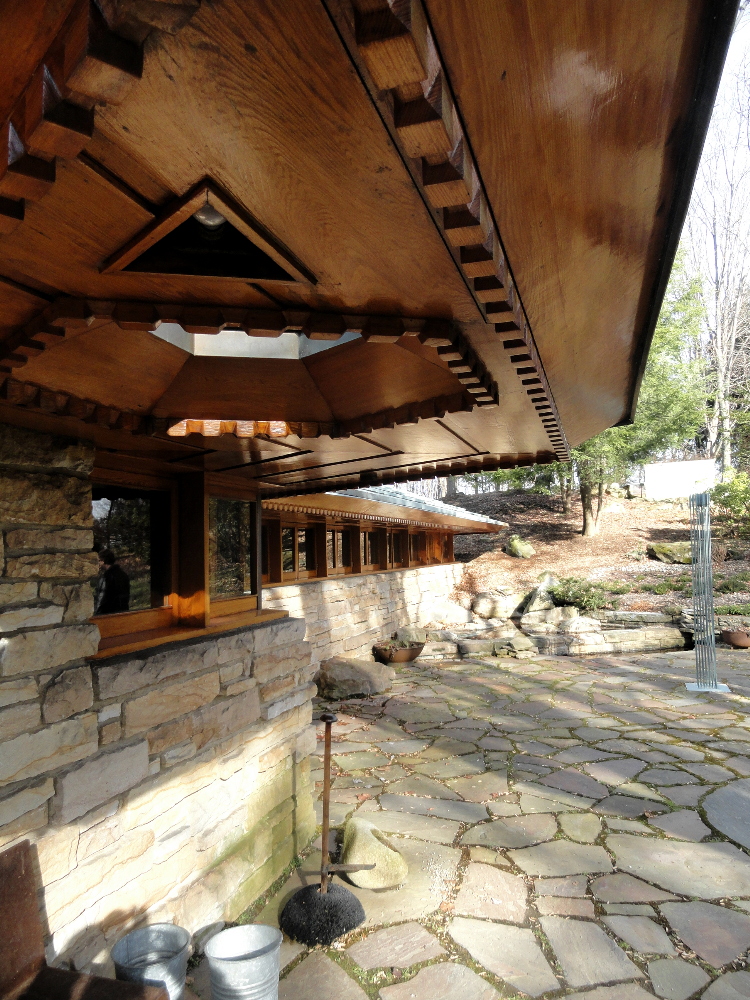
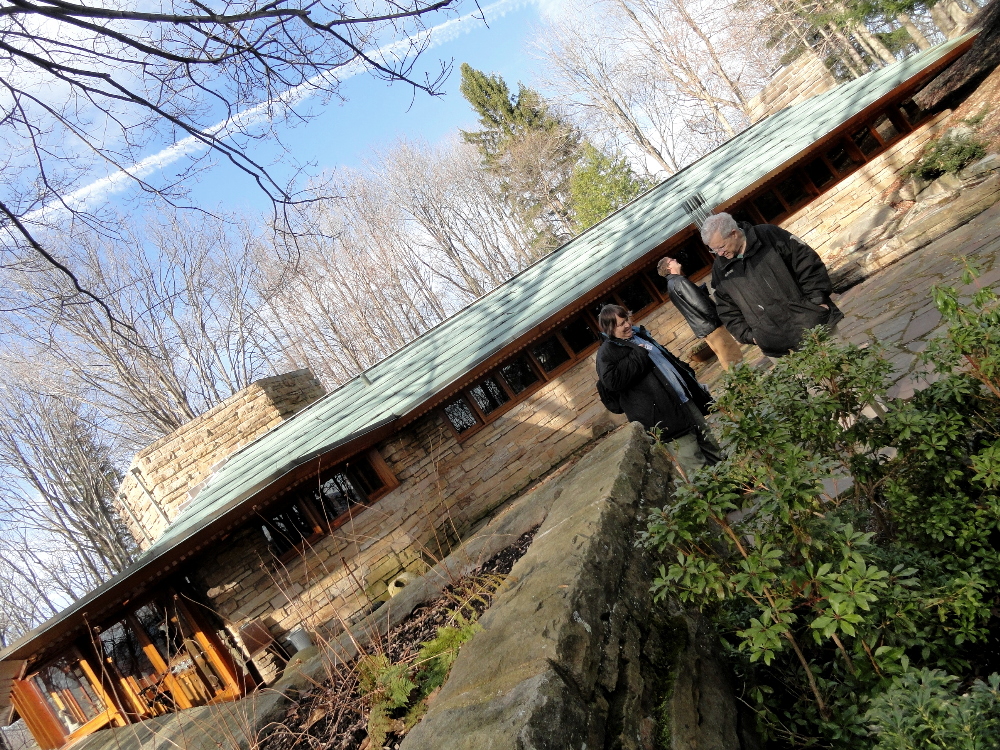
Above, Fallingwater; below, Kentuck Knob. Fallingwater: a magnificent house constructed on/in/over a waterfall – truly spectacular. Kentuck: so much less dramatic, but so much more like home: I would LOVE to live in Kentuck Knob, and would feel comfortable and happy all the time, I suspect. I think Fallingwater would make me feel constantly overwhelmed by its own magnificence – it doesn’t feel homely to me. 🙂
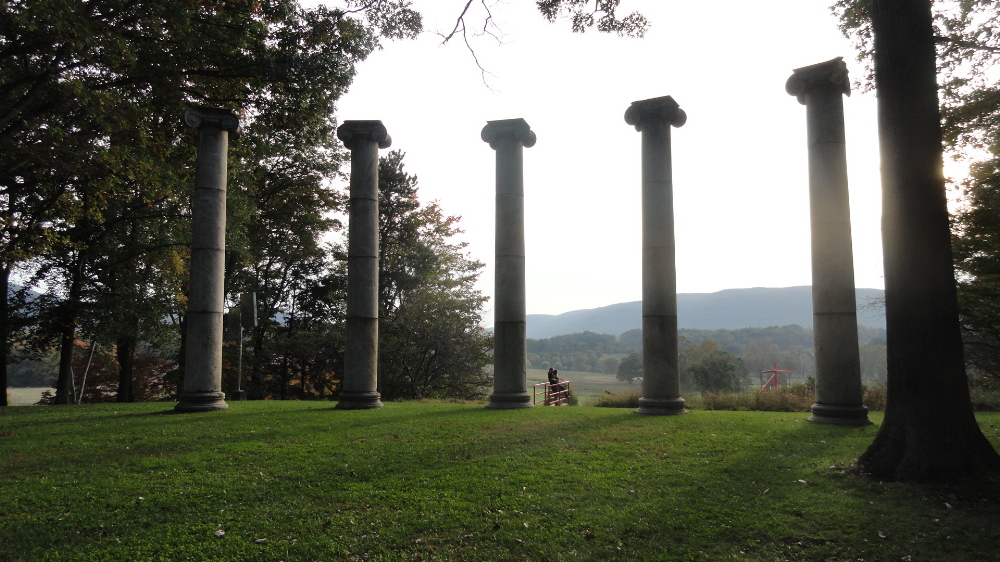


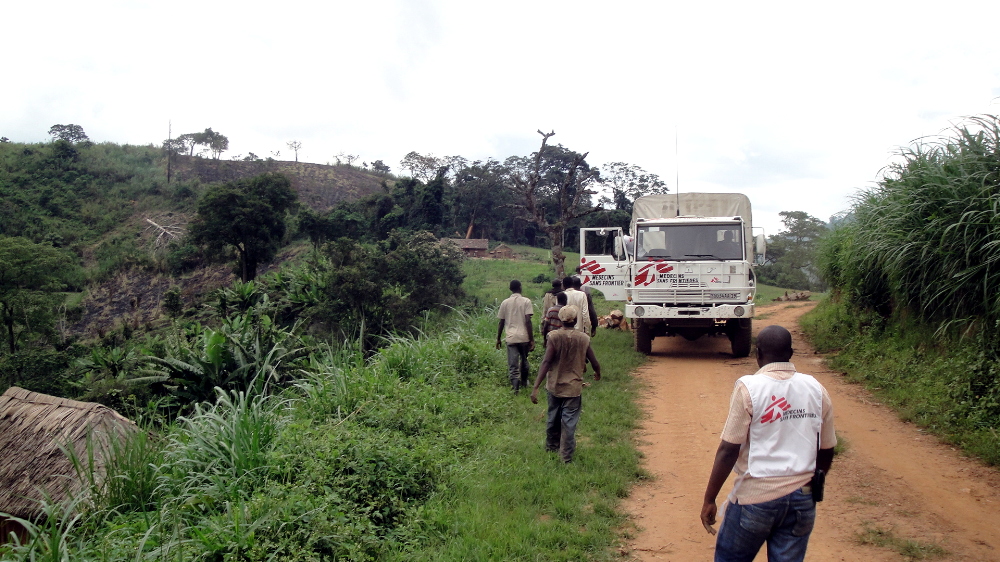

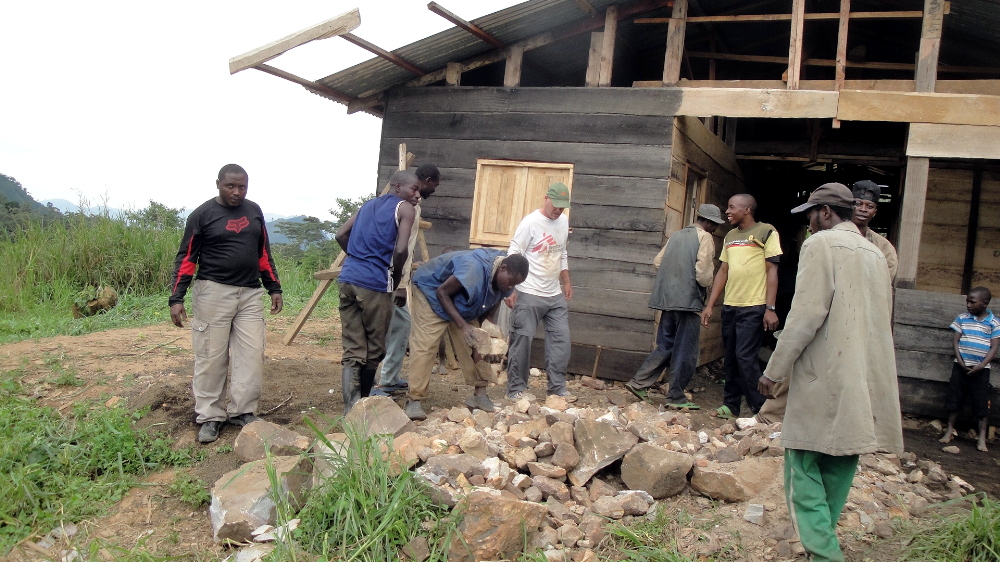
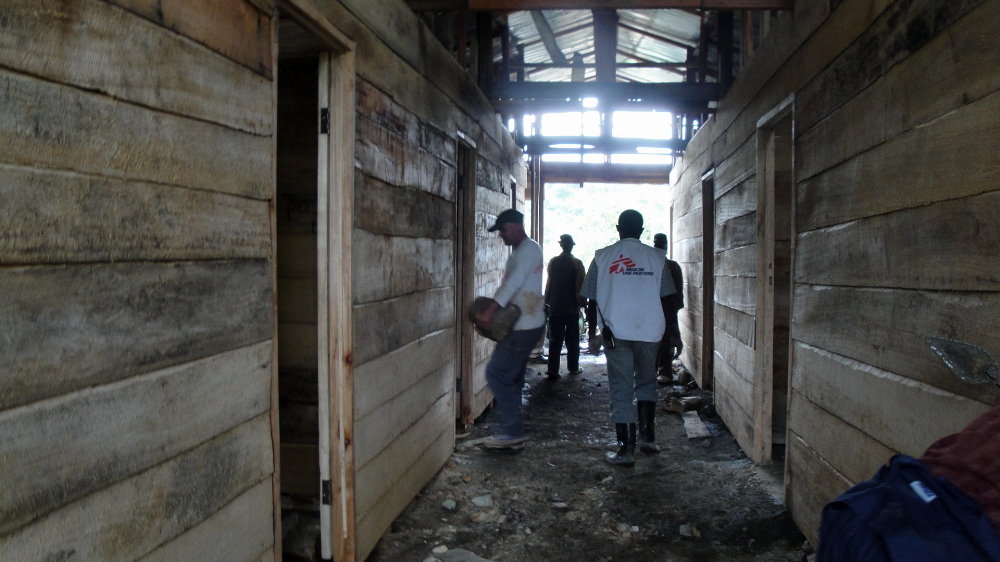

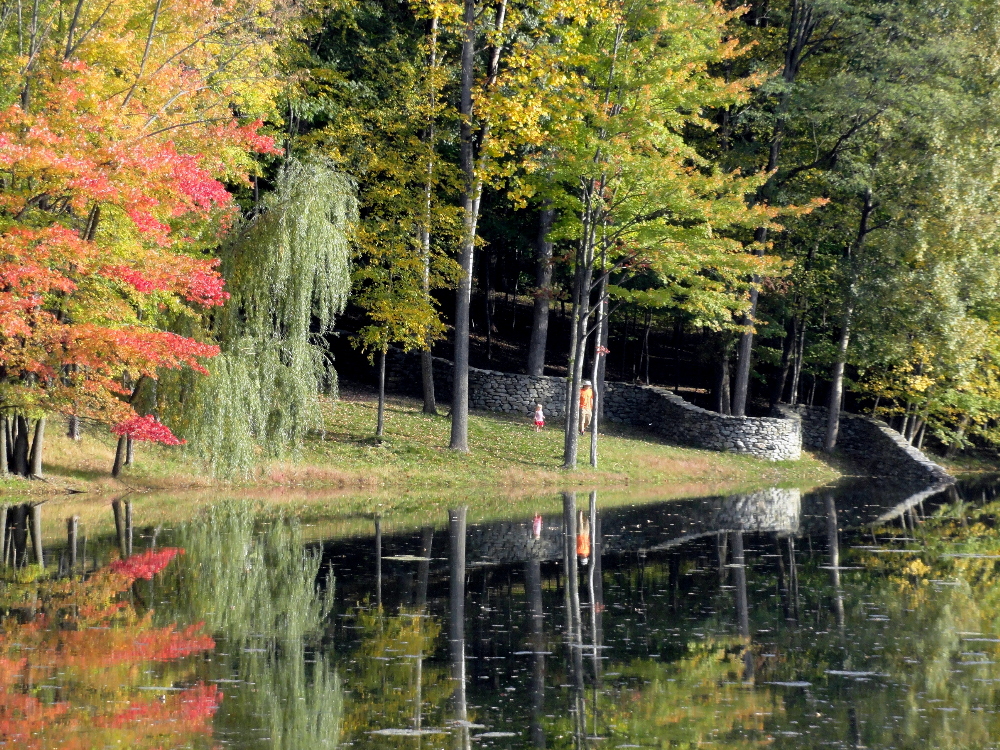
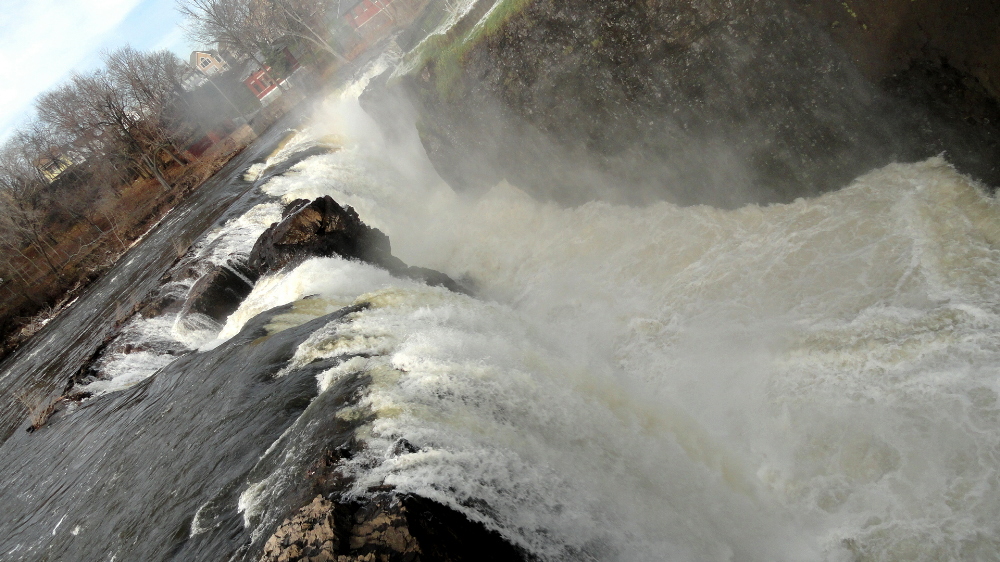

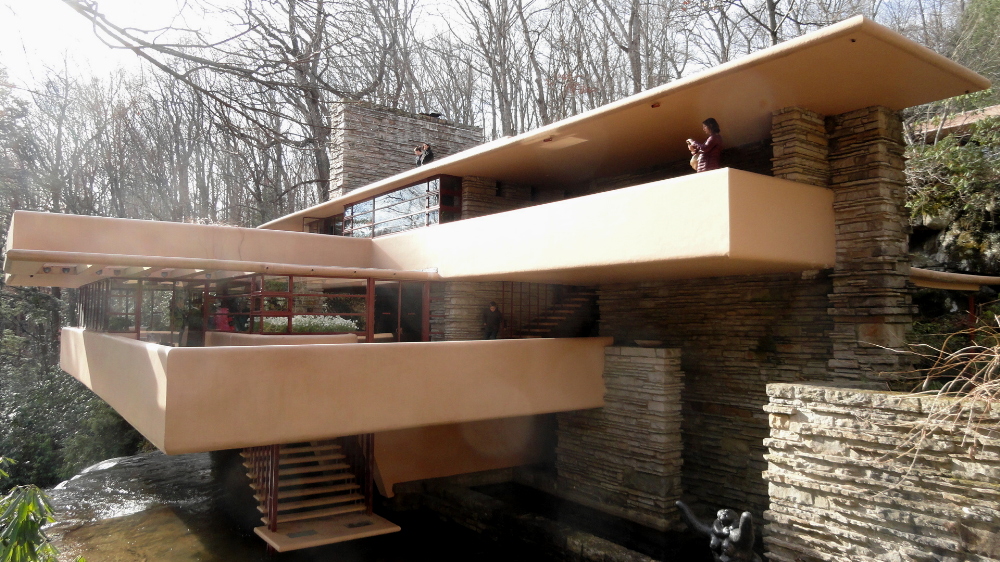
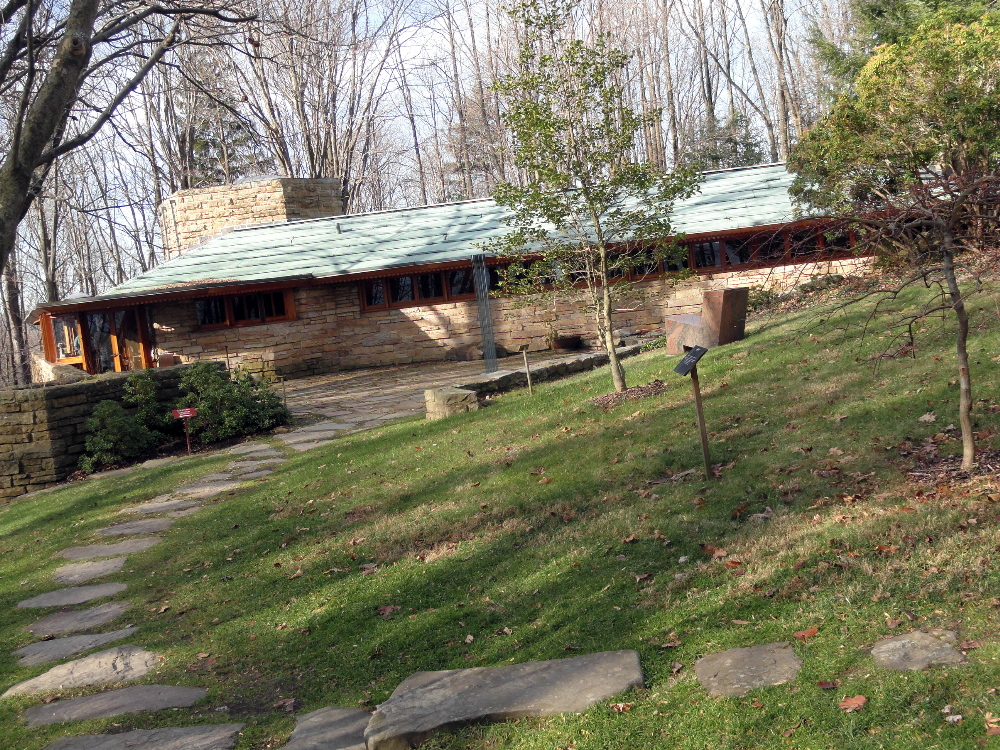
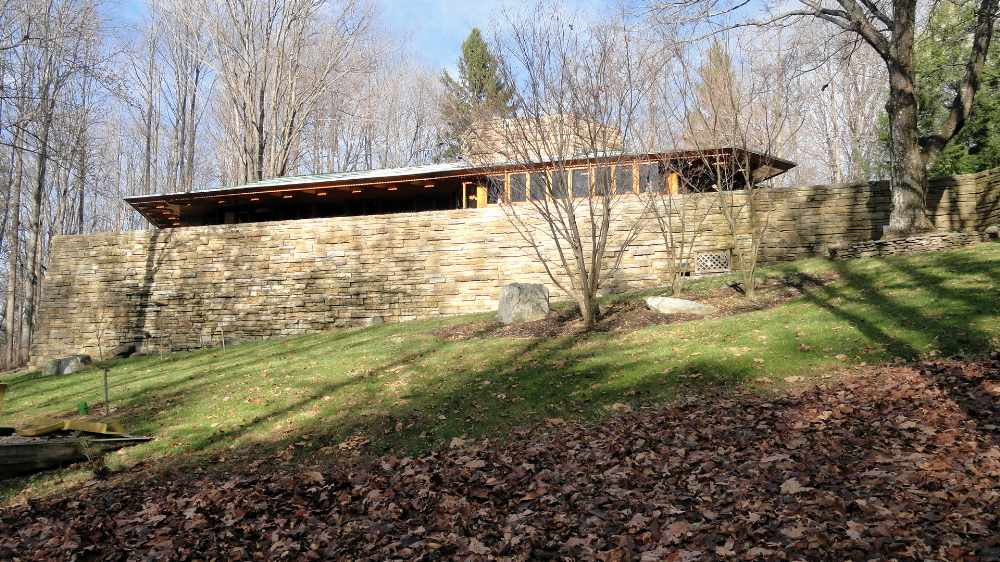

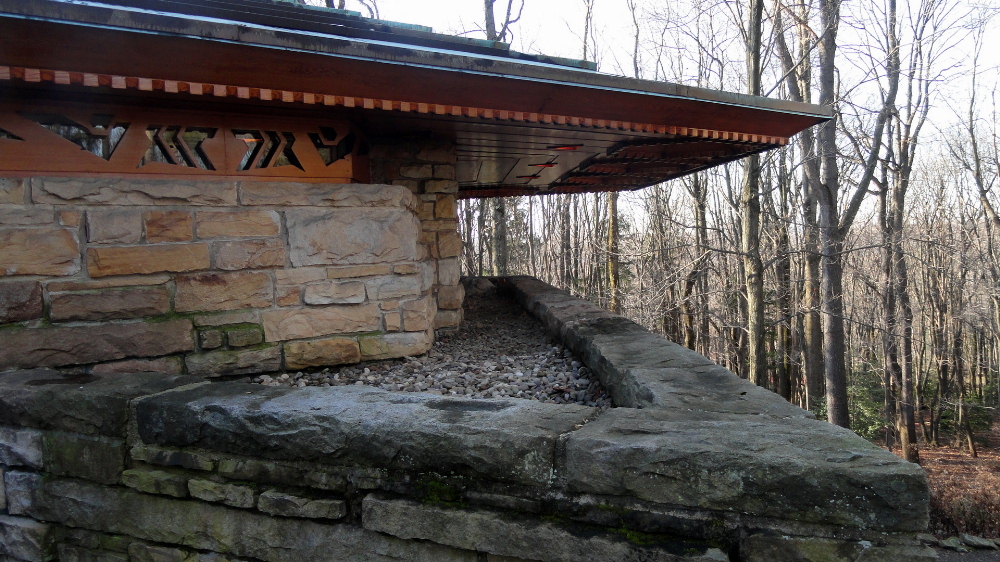
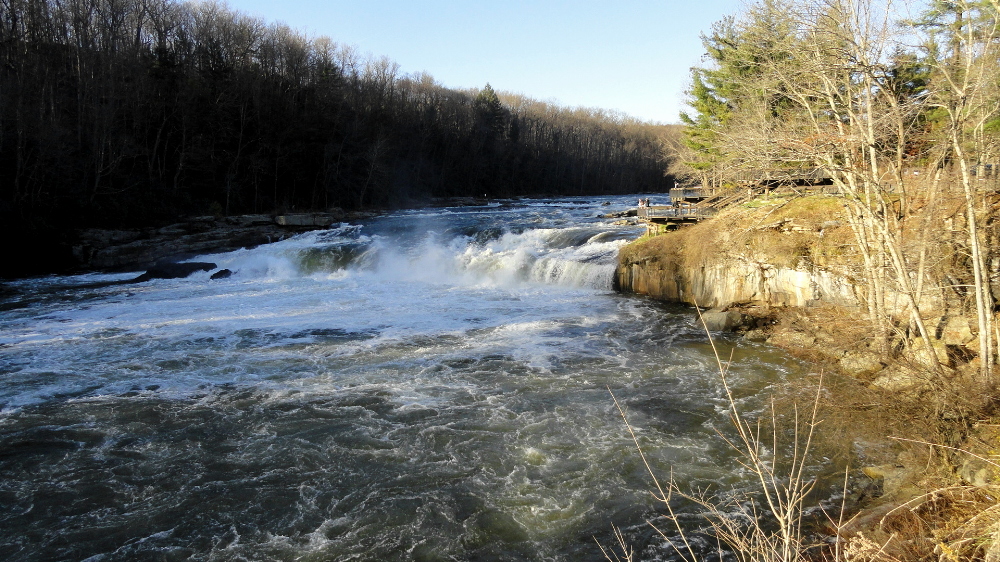
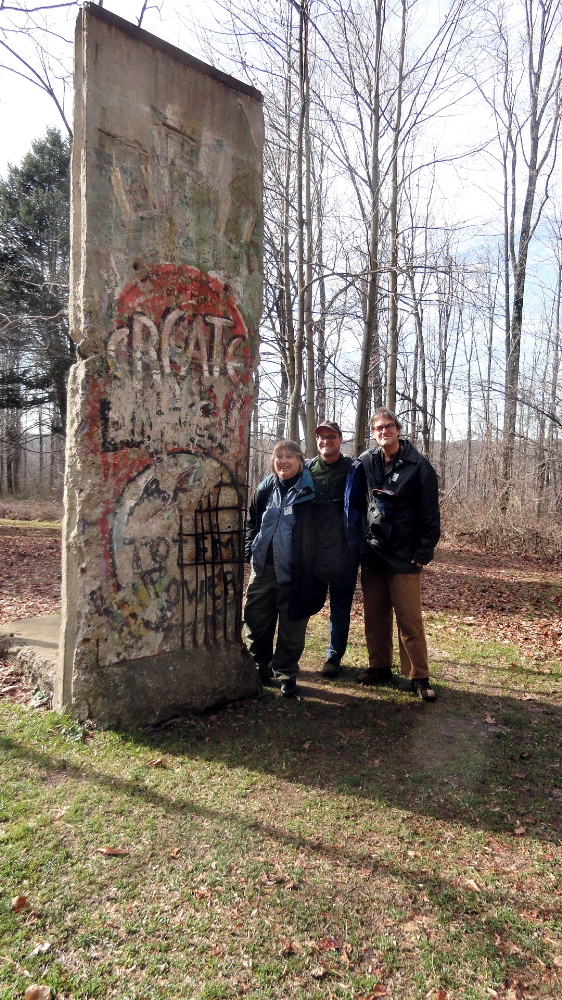 Mom, Paul & Steve at a Berlin-Wall segment installed in the sculpture garden at Kentuck Knob, which also contains some Andy Goldsworthy stone work, cousin to the two twisty curvy stone walls you’ve been seeing in photos from Storm King. If you don’t know Andy Goldsworthy, find a place to see his installations – photos can’t do them justice; they are site pieces best seen in person. Stones, water, walls are themes in these photos – from hauling stones for the foundation at Ihula, to Goldsworthy’s playful stone walls; from the huge stone support wall on the downslope side of Kentuck Knob to the waterfalls at Fallingwater, the Passaic River in Paterson, or at Ohiopyle on the Youghigheny River downstream from Fallingwater, below.






Loafing Around Lamu

 So we’ve come to the last morning of this relaxing nine-day visit to the island of Lamu. I figure I should throw these pics up on the blog right away because otherwise it would wait until October when I’m back in European/American space again with reliable internet, before I’d have a hope of uploading so many photos. Apologies in advance for just how many photos there are – believe me, I edited out quite a lot but it’s been such a joy to have so many interesting people, things & vistas to photograph that my little shutterbug eye has gone a bit crazy. My routine has mostly been early-morning and late afternoon walks around town or the dunes by Shela in order to see people and places in the cooler, more interesting light then instead of the heat of mid-day sun, which here so close to the equator is mighty ferocious, even though actual air temperatures are quite pleasant since we’re surrounded by ocean with good trade winds.
And it is trade that made Lamu what it is – a lovely historical town (on an island of the same name) with a mix of cultural influences from India, Arabia, and various parts of Africa. Lamu and the whole Swahili coast have been on the trade routes since humans took to boats and started trading, one assumes. There are clusters of islands off the Swahili coasts of both Tanzania and Kenya; the most famous of these is Zanzibar in modern-day Tanzania, but Kenya has a few islands jewels of its own and I’ve now enjoyed one of them for a week or so. I’m going to put anything else in captions and hope you’ll enjoy the photos as much as I enjoyed wandering around and taking them.
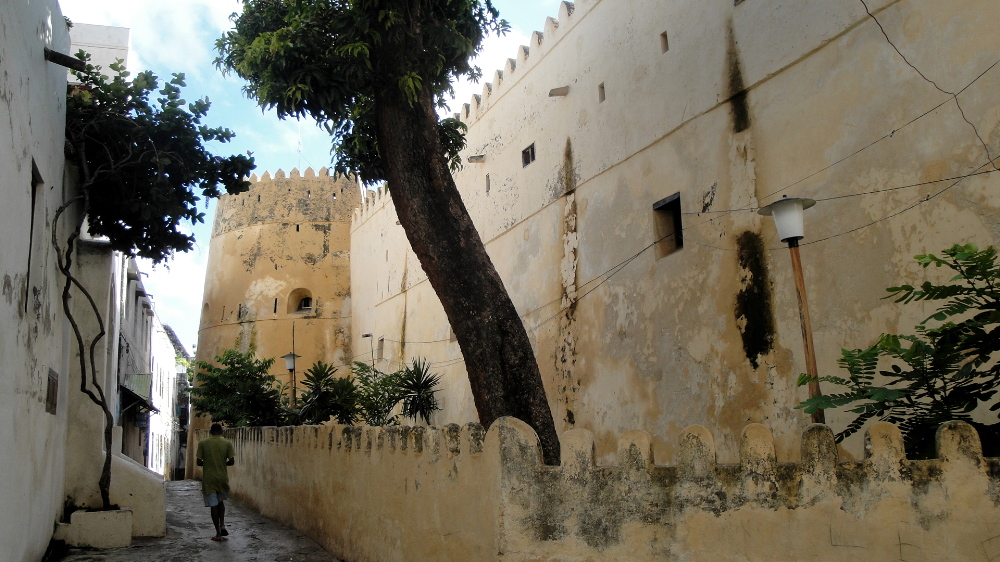
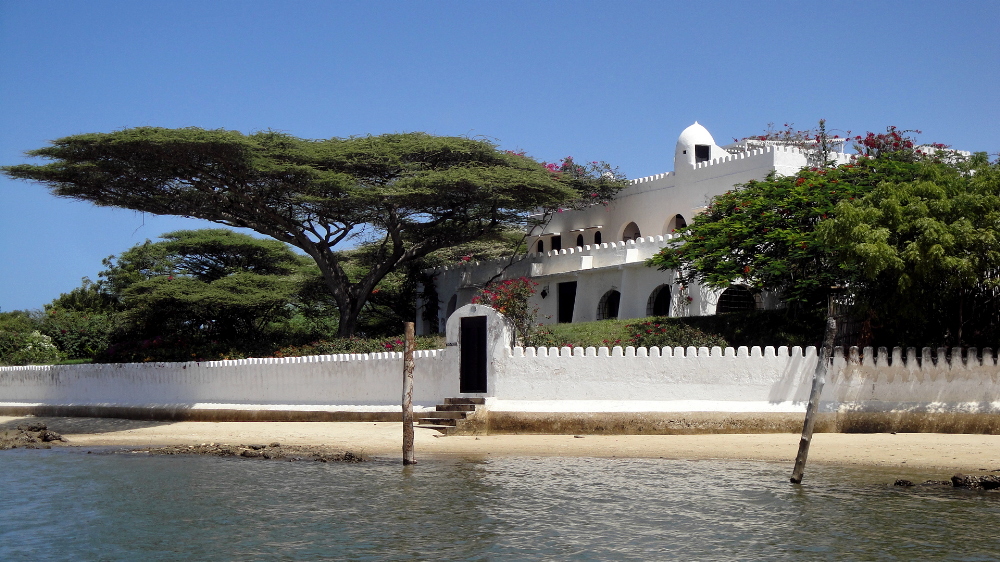
 A coastal fort near the village of Shela, which the southern tip of Manda island across the straight and open ocean to the right. Shela has old history but is nowadays influenced by a strong presence of expats with vacation and year-round houses there, so it’s a bit wealthier and quieter than the more traditional and hopping town of Lamu a short bit away. If you’re curious at all after reading the last entry I posted: Manda is a very big island with a deep channel nearly cutting it in two so it looks like two islands from here, but in fact there’s a narrow isthmus on the other side and the airstrip is on the northern half. Below is contemporary Shela seen from the water.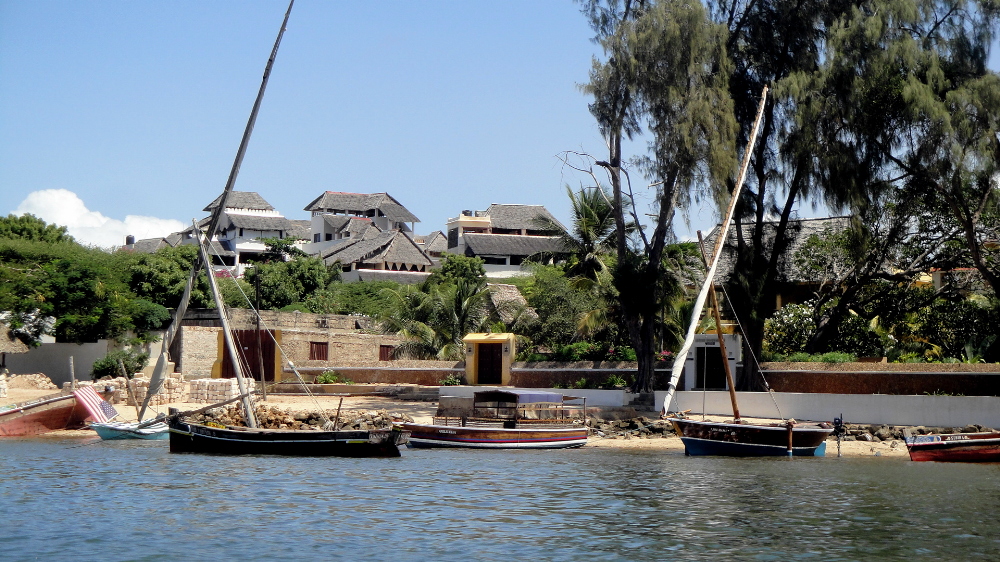
 Look really closely and you’ll see that’s a bit of a rainbow forming above Manda island.


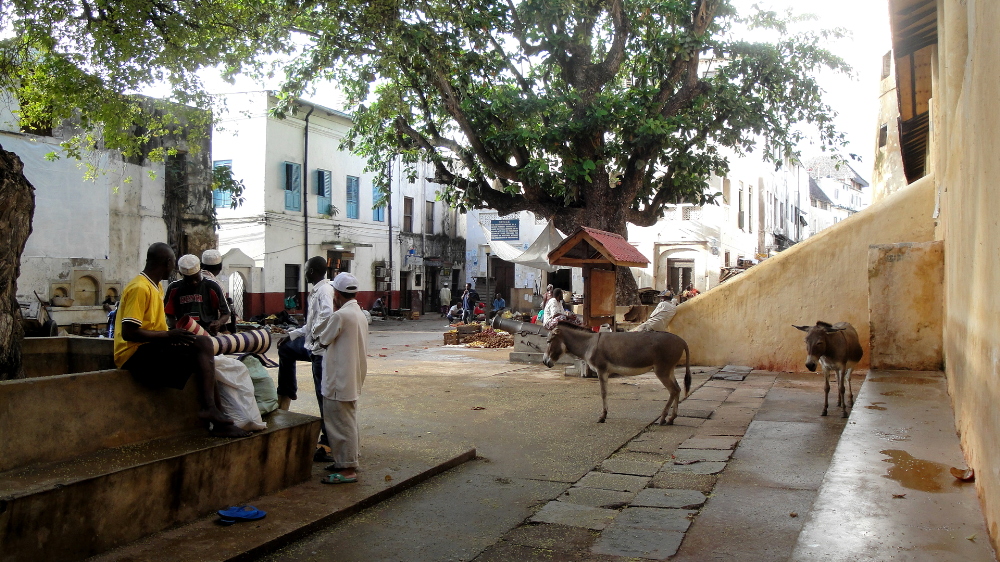
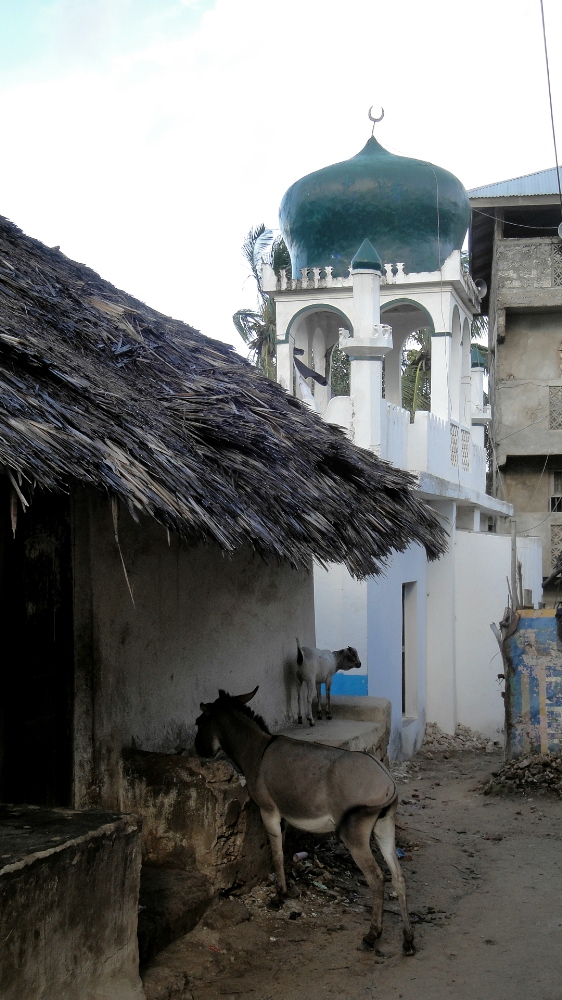
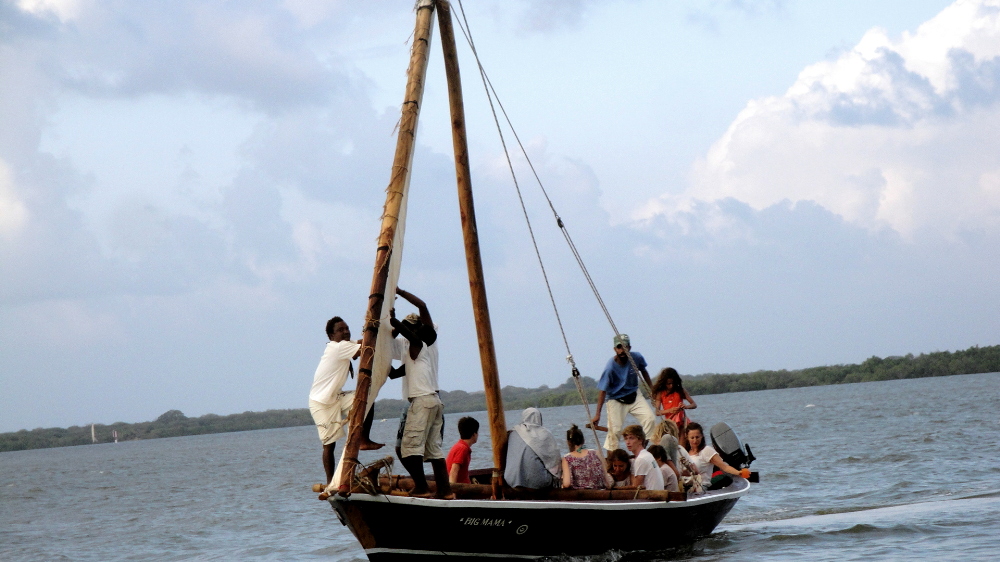
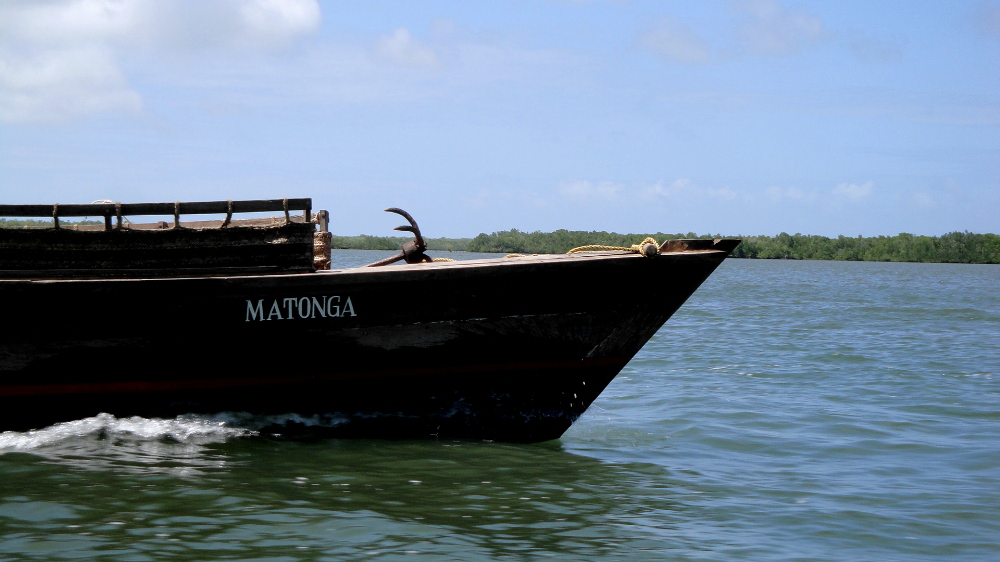
Many of the boats here fly various interesting flags, including this one which also played some nice music as it plied along the channel between Lamu & Manda. Below: no bridge to the island, so no cars except an ambulance and a tractor or two; so donkeys haul the sand and bricks for building, the coconuts and bananas and so on. They wander the streets and they make their barking cries that sound like someone is being tortured all the time too.

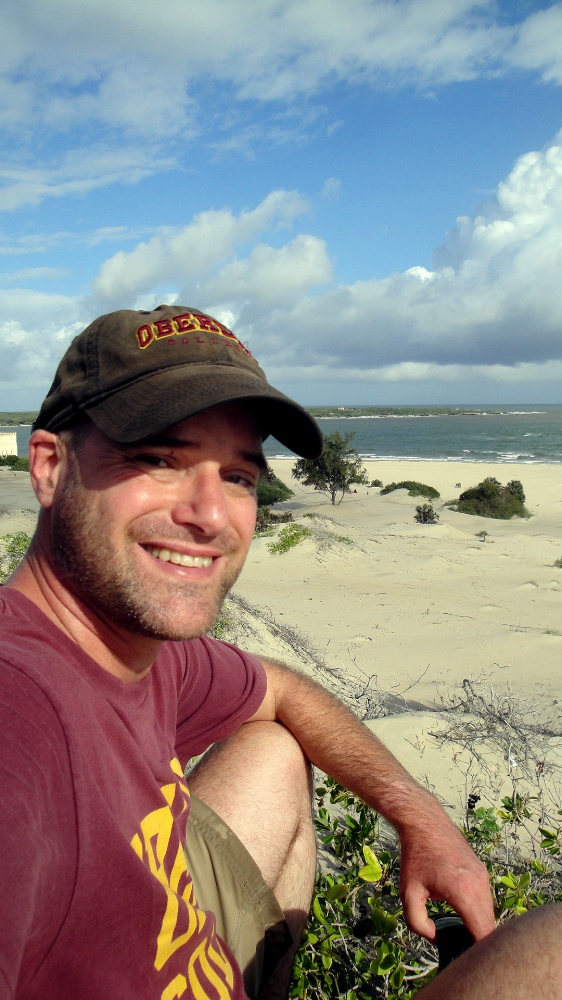
 I took a few nice long walks along the beach and in the dunes. The freedom to do this so safely has been wonderful; in yesterday’s walk which was the longest I worried I’d gotten lost and even had some nice paranoid fantasies of snakes and so on, but all ended well with a smoothie in Shela and a sunset walk back to Lamu town.
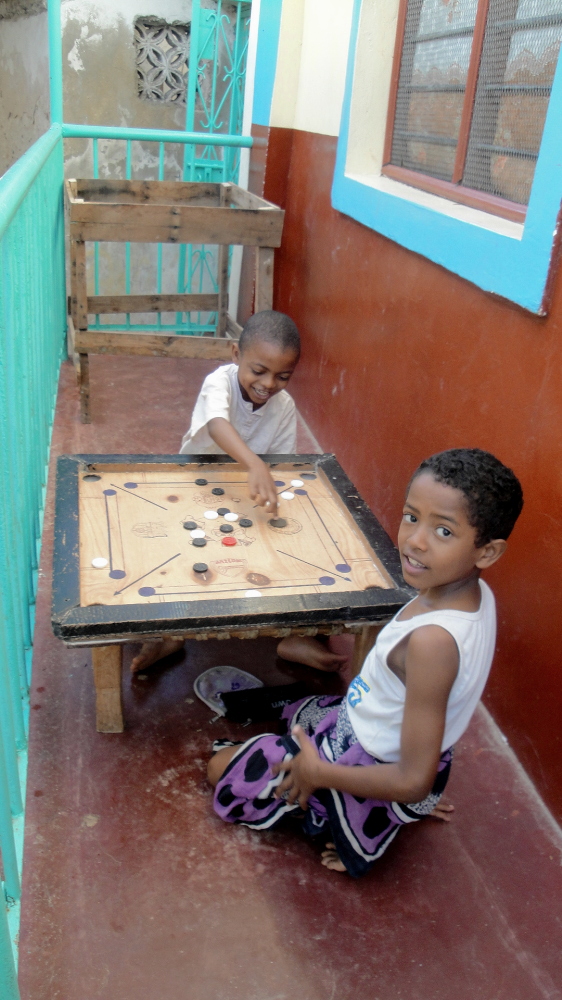
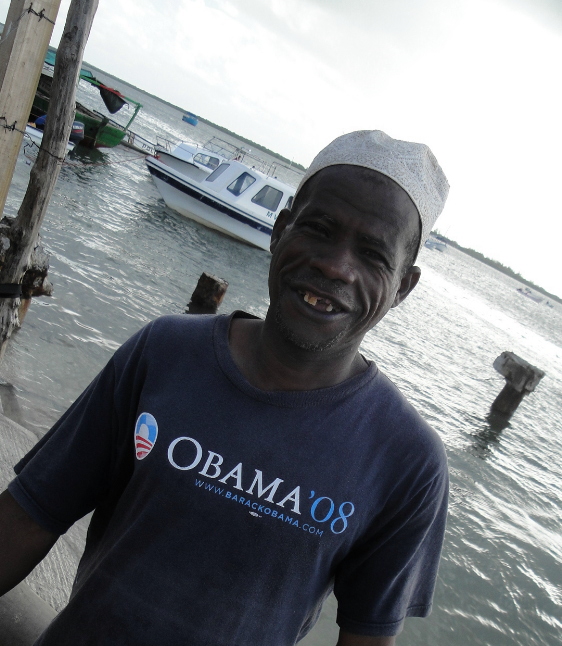
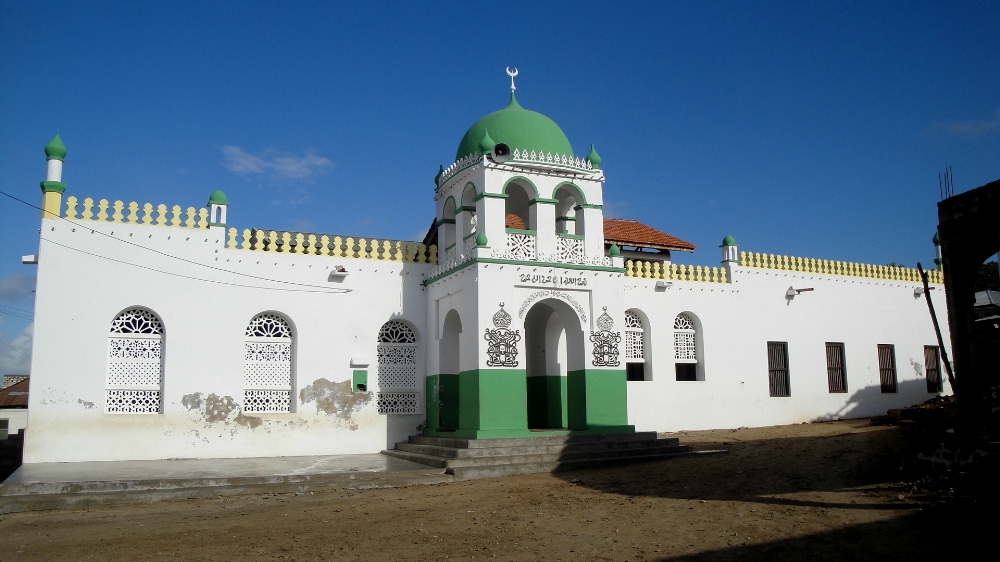
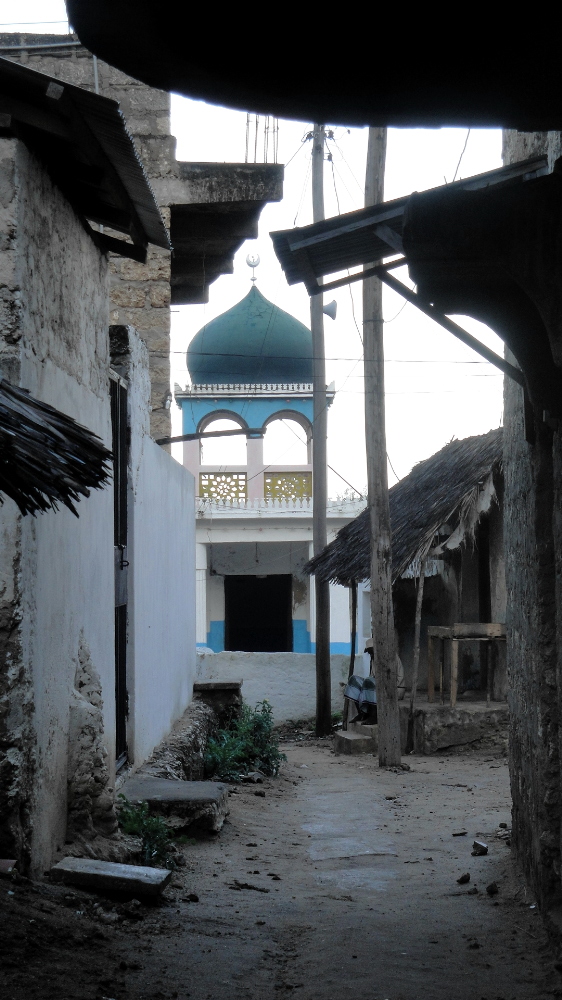
 The Friday mosque, in Shela, is one of very few here to have a high minaret. It was built around the turn of the last century. BTW for those curious and who didn’t guess, all the portraits of the friendly & open inhabitants of this lovely island were taken with their agreement. Trying to tackle my perennial shyness about adults, youll see I did approach a few adults as well as many kids. Sadly no adult women or older girls agreed, so you’re seeing more of the male inhabitants of the island. Oh well.


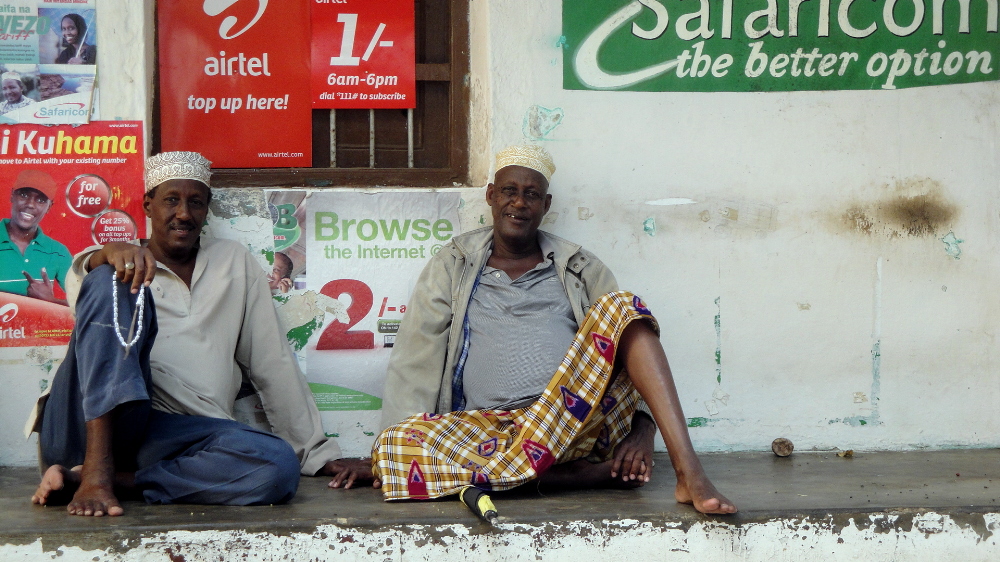
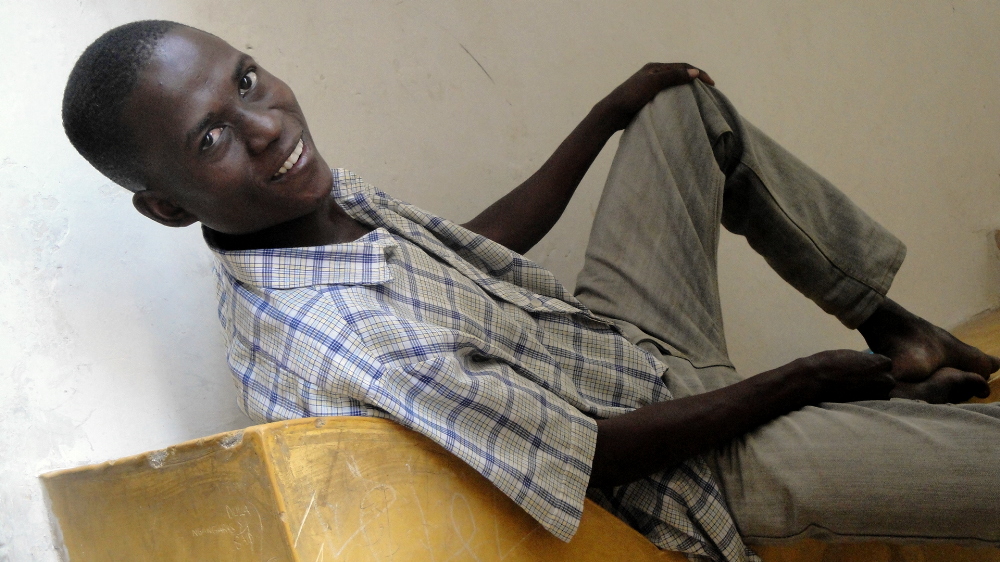
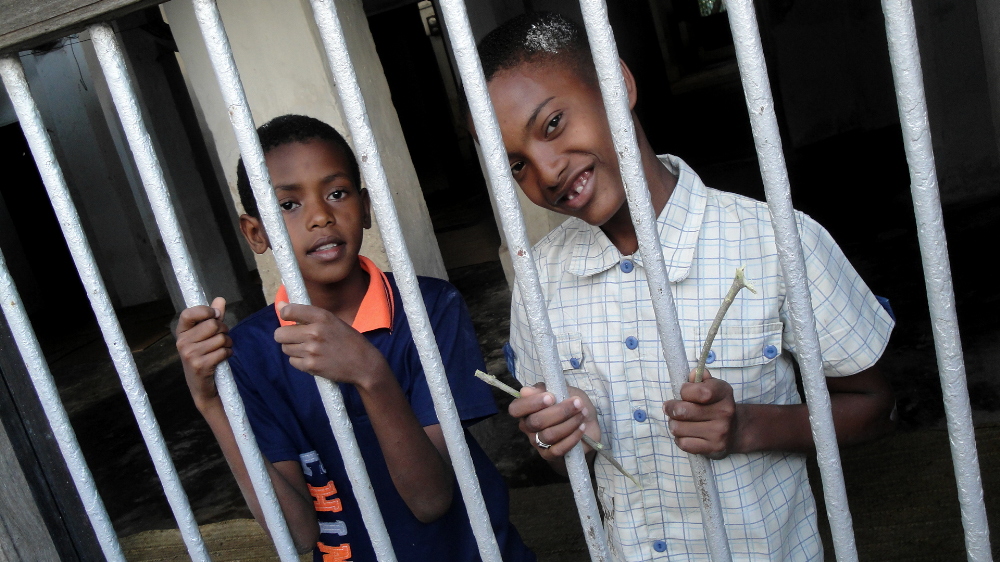 These guys are in one of the mosques and assured me it was quite alright to take their photo; the guy on the right greeted me and started a conversation as I walked past. Folks here are very friendly and welcoming. I suspect the white spot in his hair is flaking whitewash from where he brushed his head on a wall; this has happened to some of my clothes.
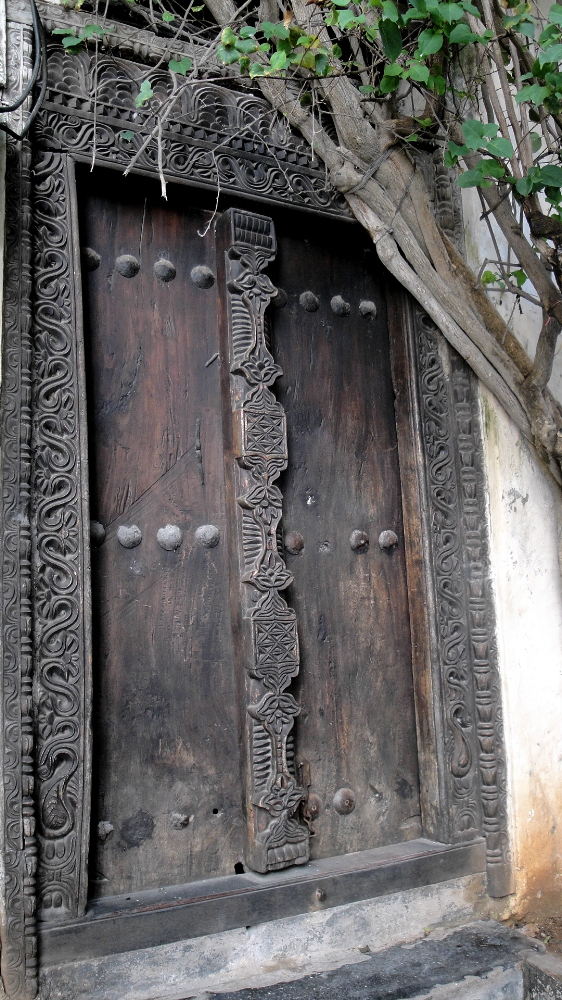
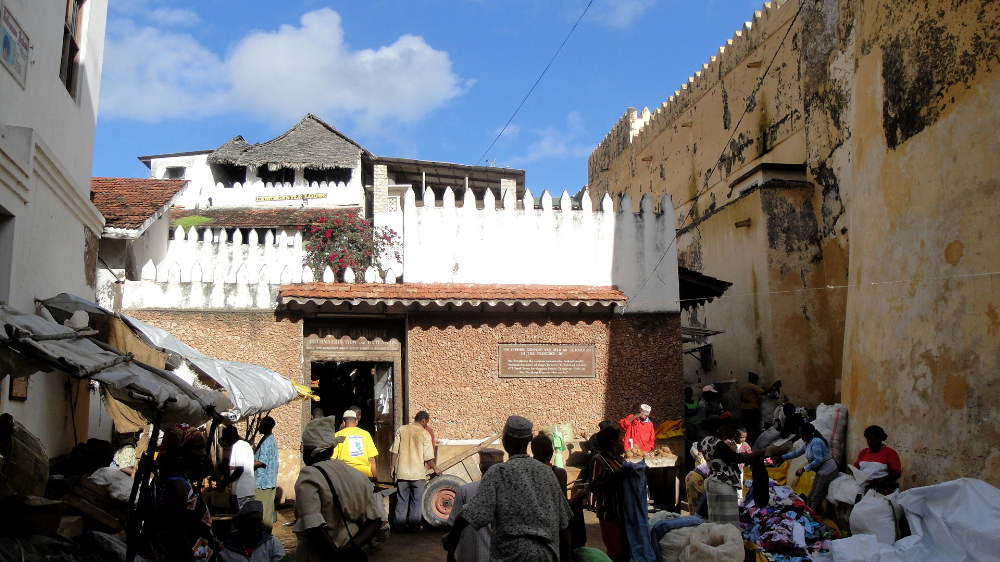
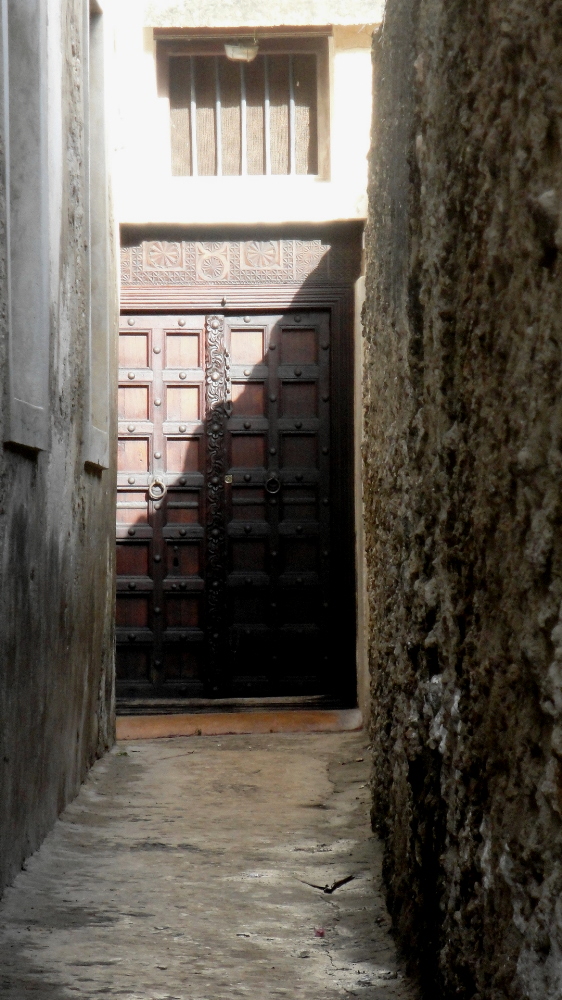 Ah yes, the first of many doors and alleys that you will see. Wood carving is important here, for the dhows and doors and for other decorations. I’ve really enjoyed wandering and seeing the lovely alleys and doorways and thought I’d share a selection (really! I didn’t photograph every alley and every door in Lamu town, though you may feel that way!) with you.
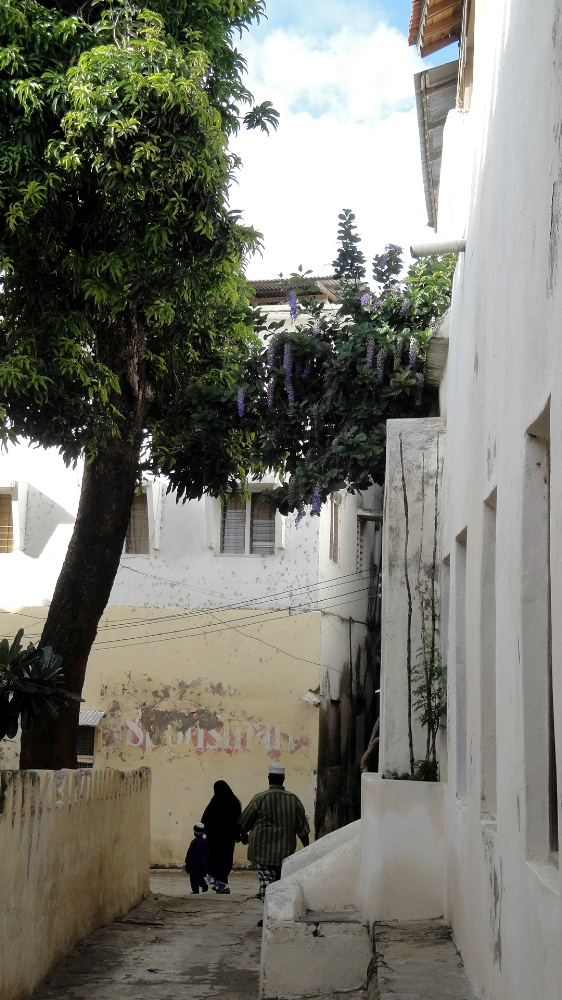


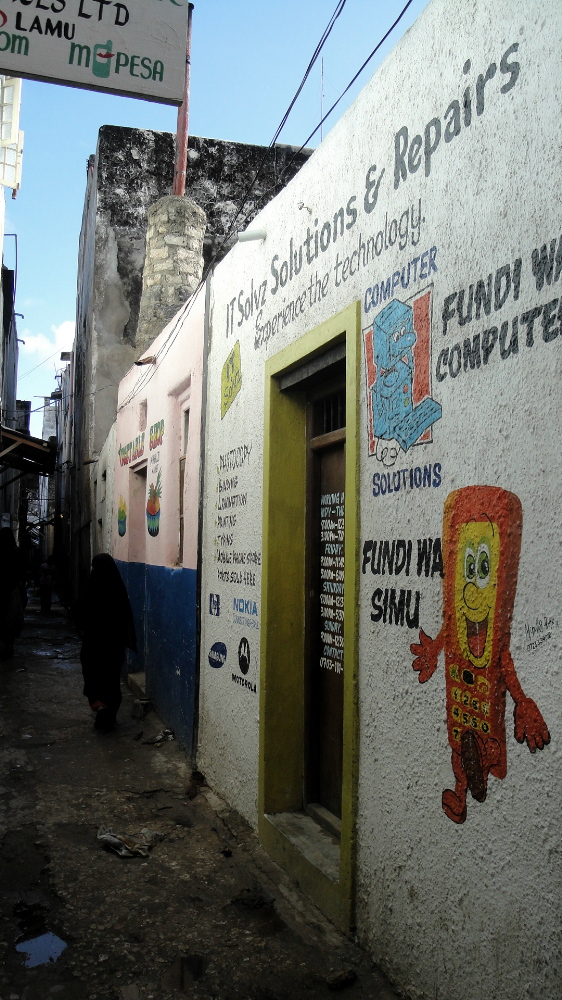


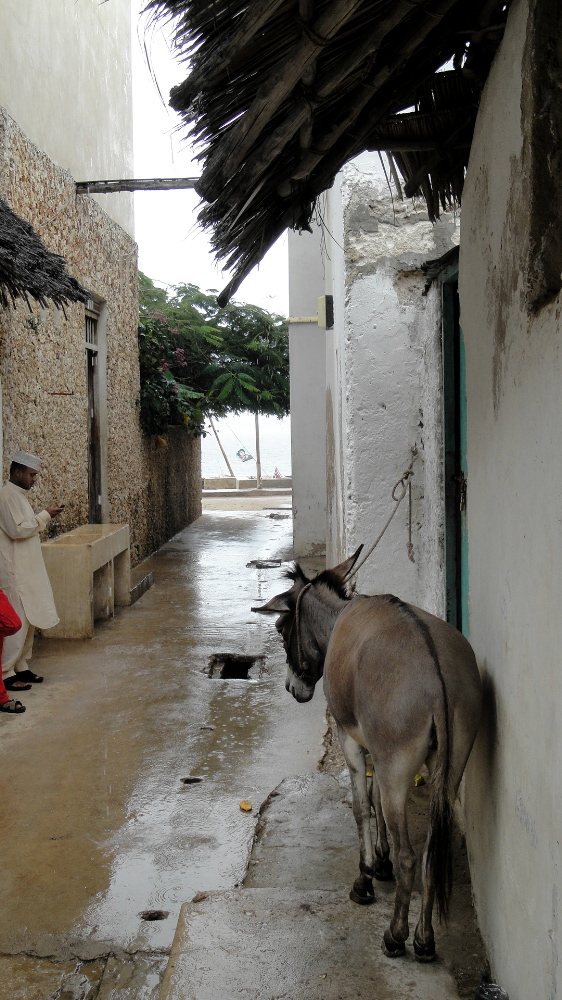

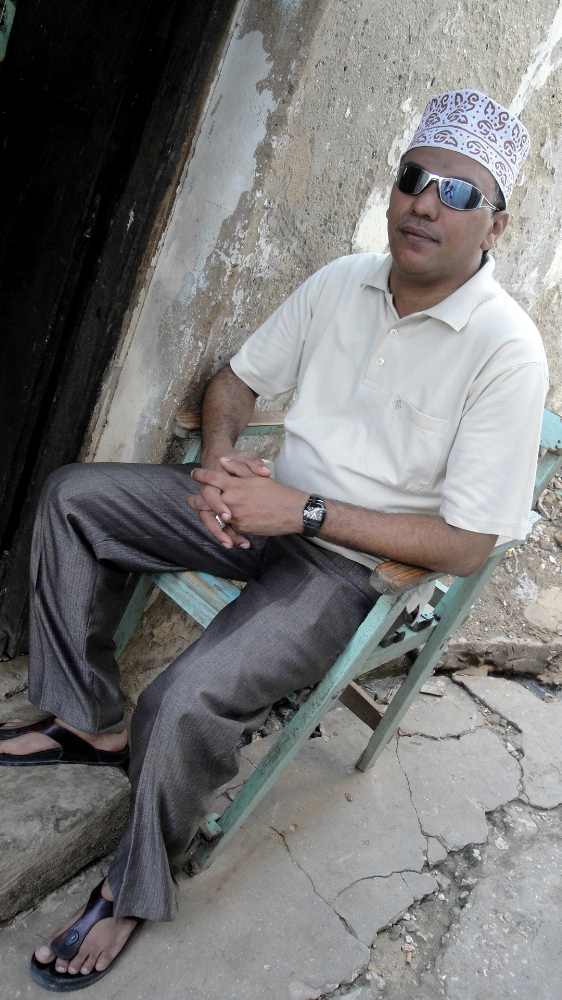

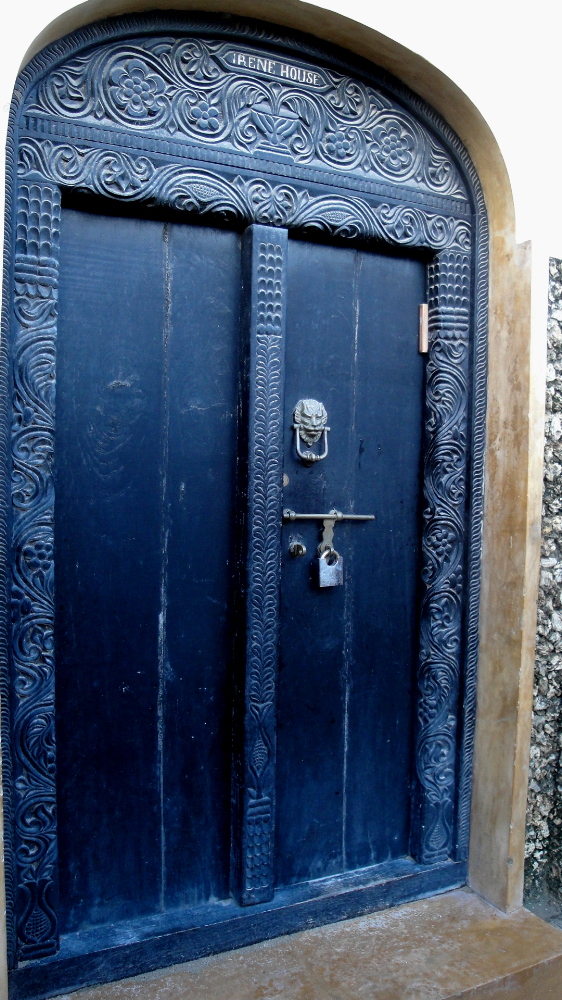

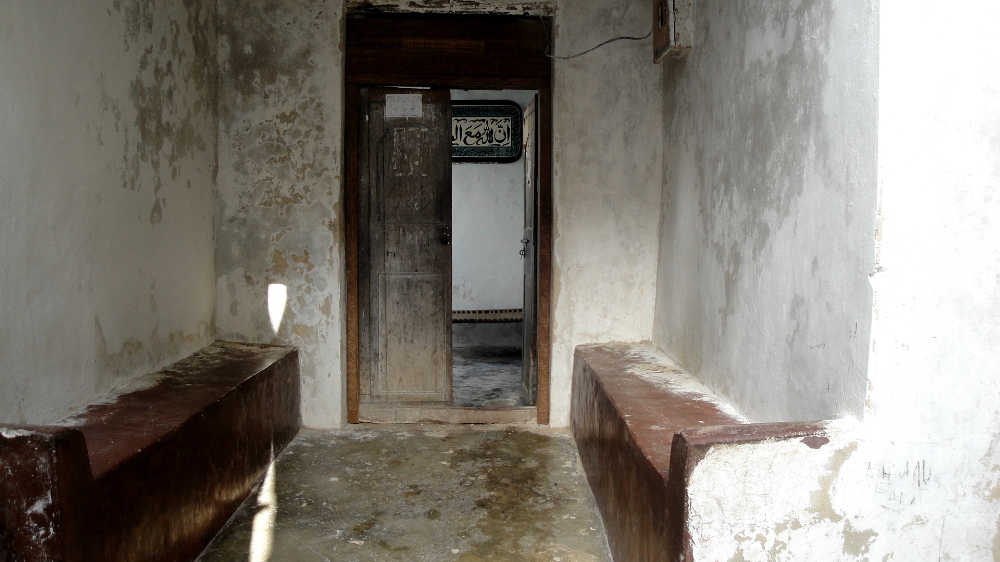 Very many of the houses have these lovely out-front porch seating areas. It’s very social.
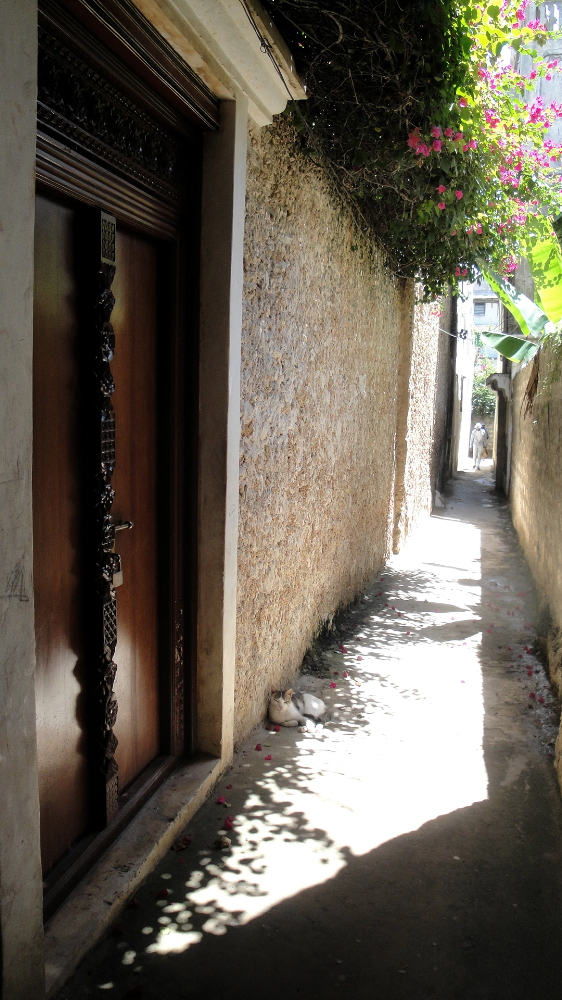
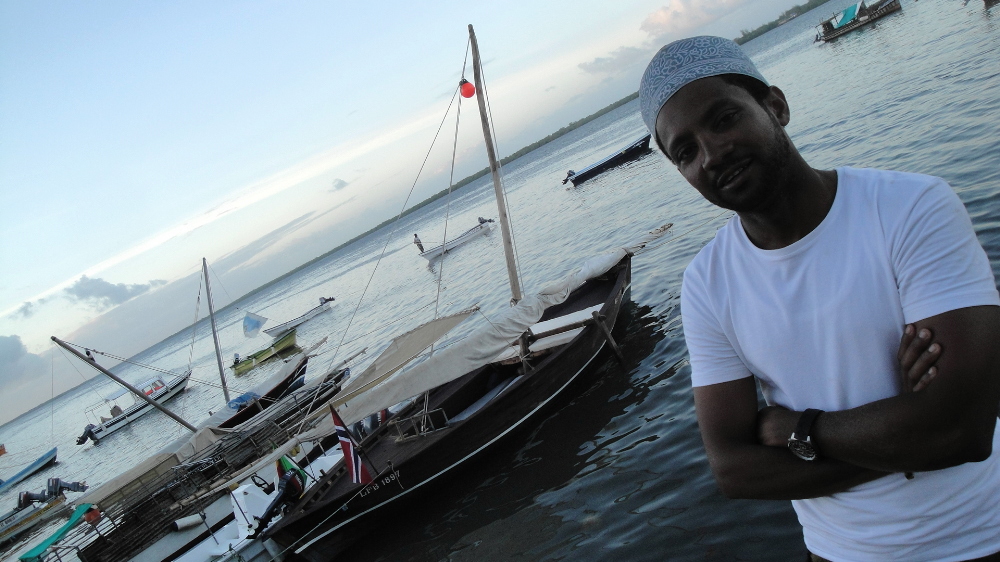




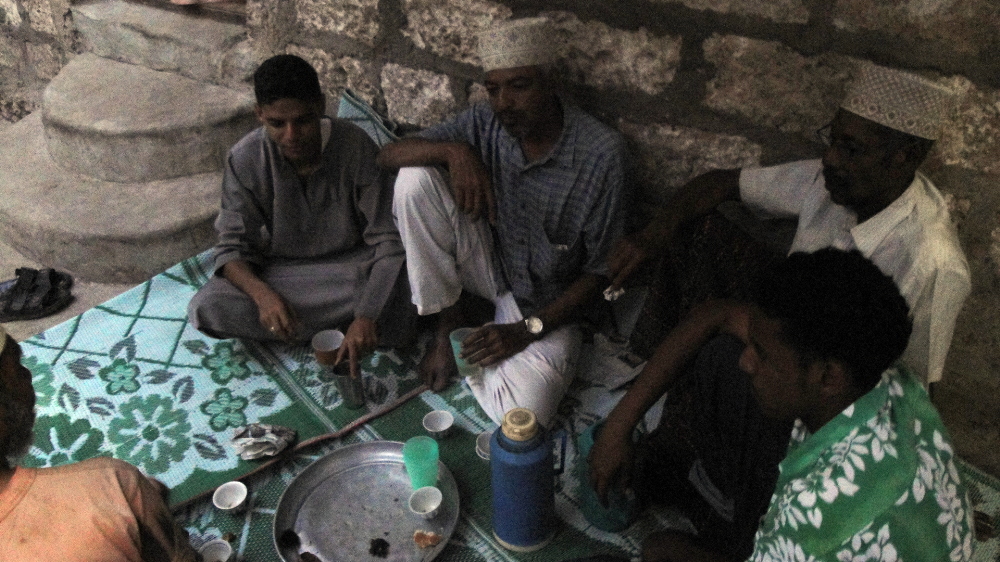 Ramadan began on my second full day here so I’ve been careful not to eat or drink in public as a matter of respect Everyone breaks their fast in little groups – of neighbors, of friends, not sure what – and then they go for the evening service (I’m assuming; that seems to be the timing though I’ve not paid great attention). On one of my walks this group, which I’d wished a lovely breaking of the fast, invited me to join them. Ginger coffee and dates, yum. And I was told one should never have just one of something – one should have three or five. That was the host who told me. I did mention the people here are very friendly and open? 🙂 PS these photos are grainy because the flash chose not to go off even though it was, of course, a bit after sunset…

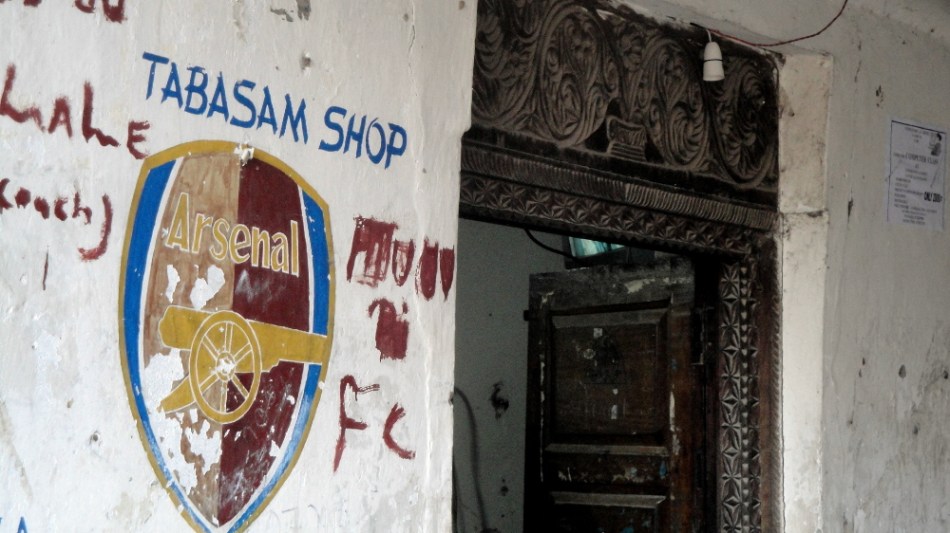

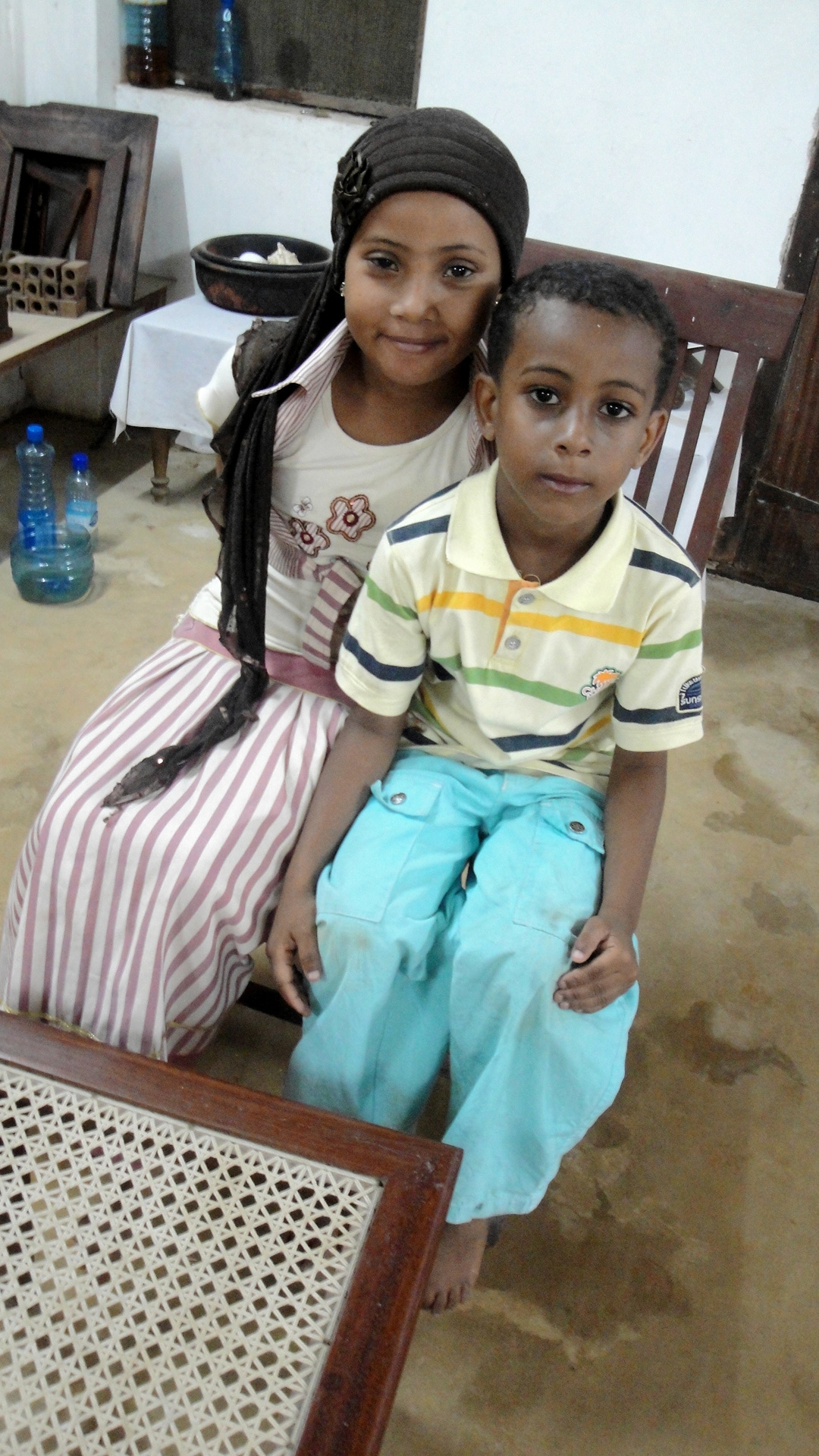

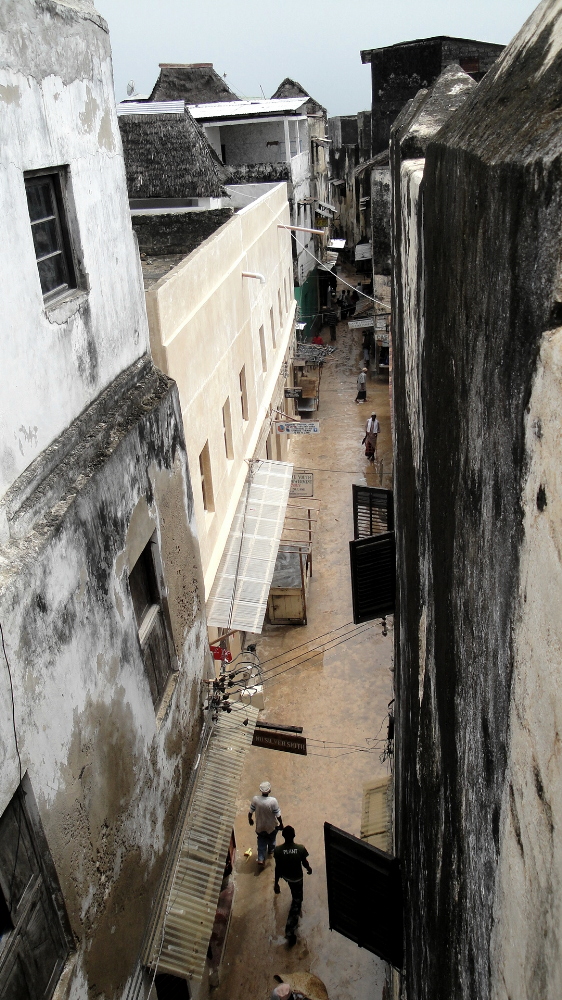
This is the main shopping and tourist street in town, which I generally avoided in favor of the smaller alleys and more residential quarters I’ve been showing you. However it does have a lot of interesting stuff also. The other main thoroughfare is of course along the harborfront, whch I truly avoided because it’s the one place where a foreigner can’t walk without being asked more than once whether one would like to take a boat somewhere.

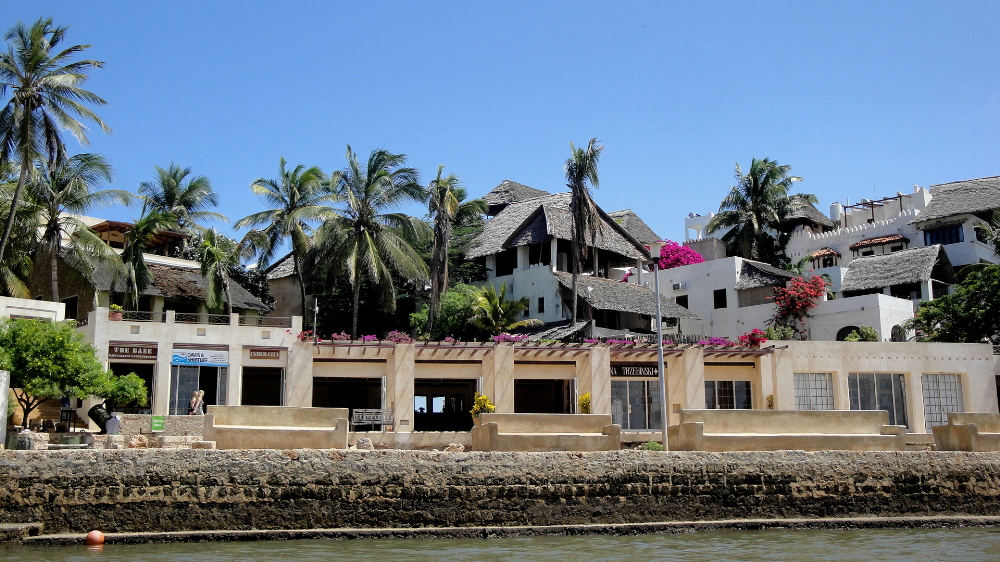
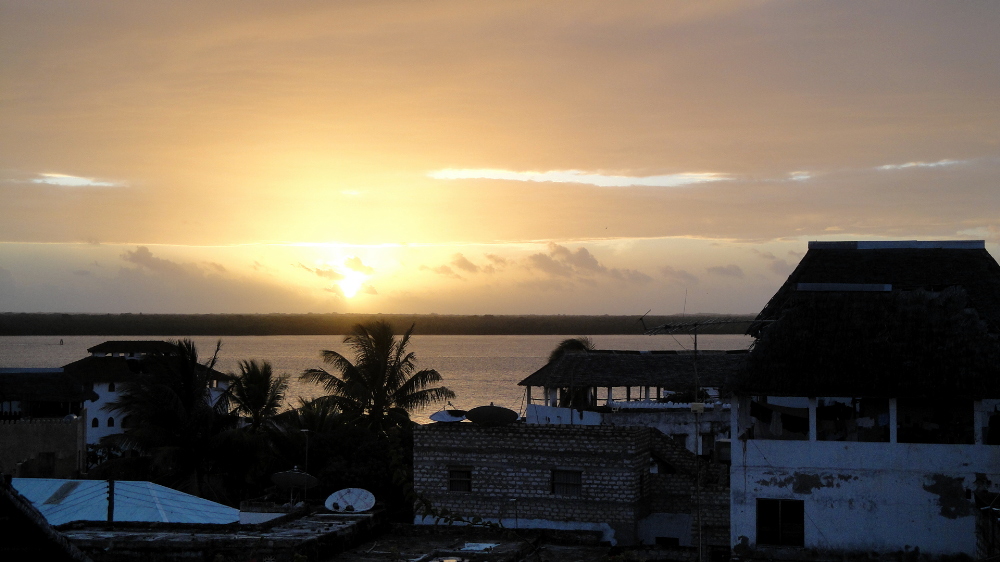


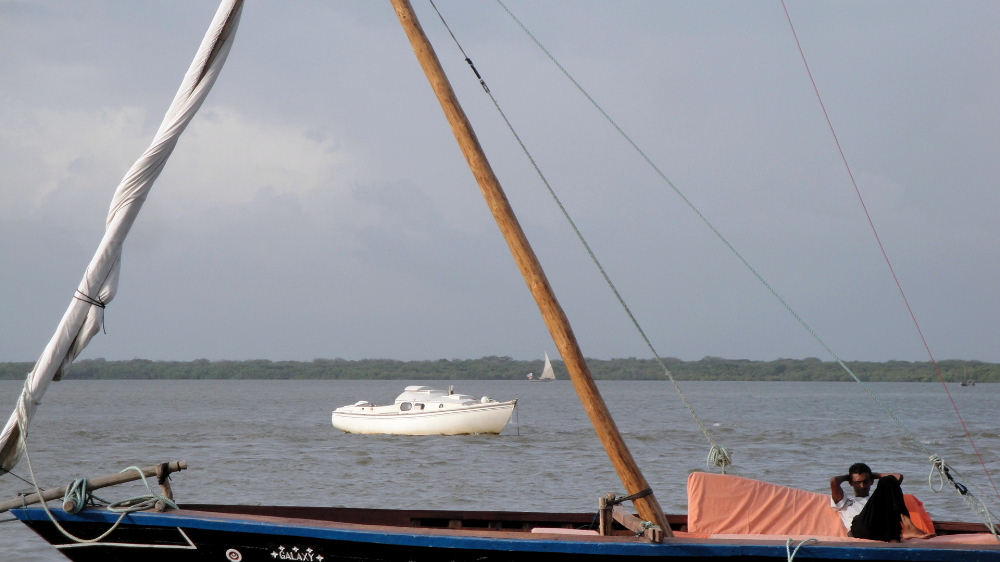
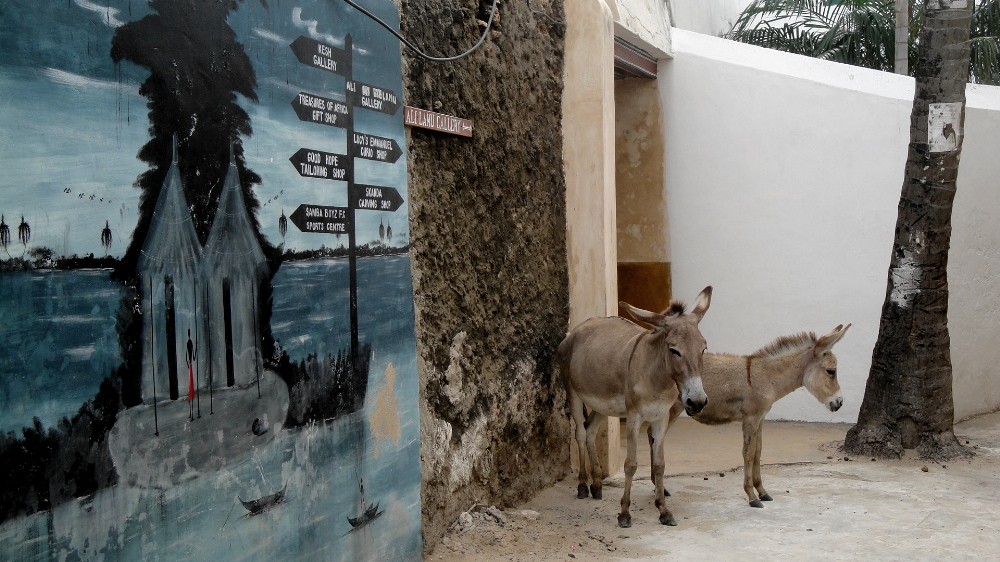

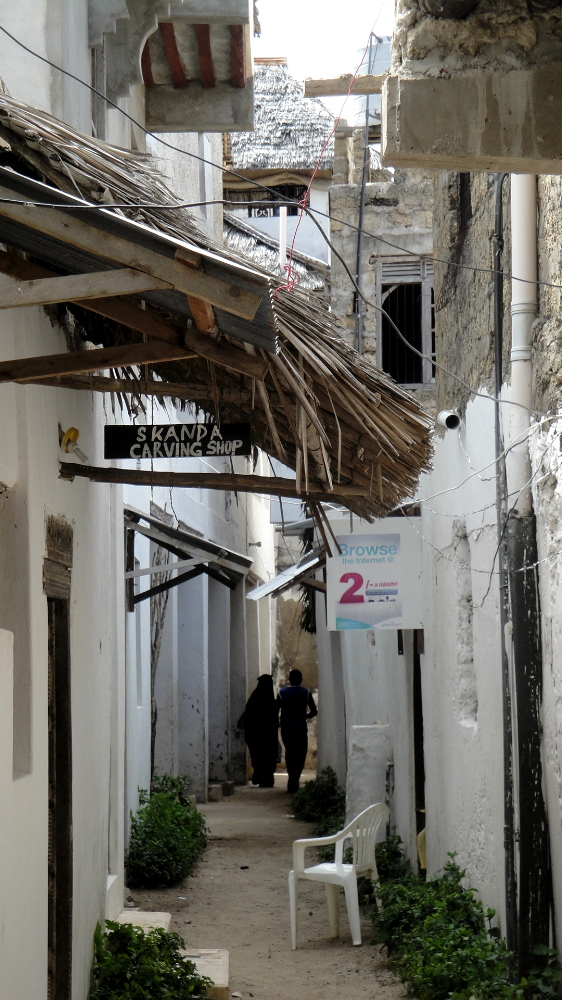

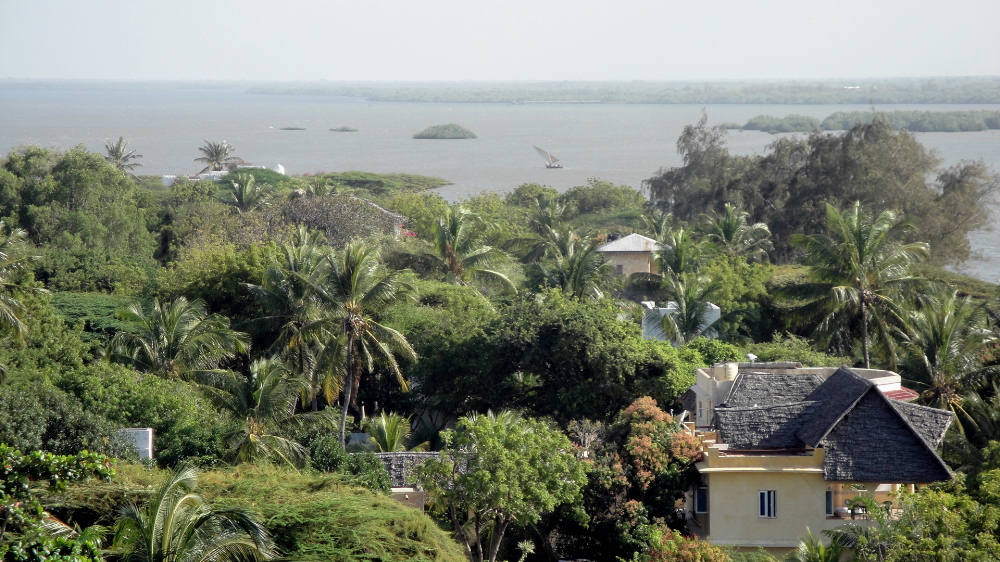
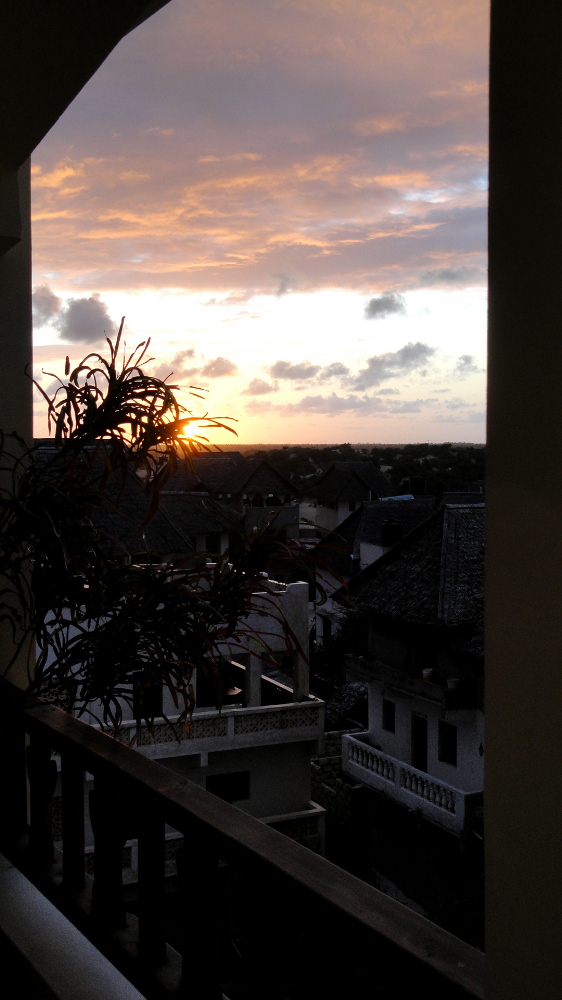
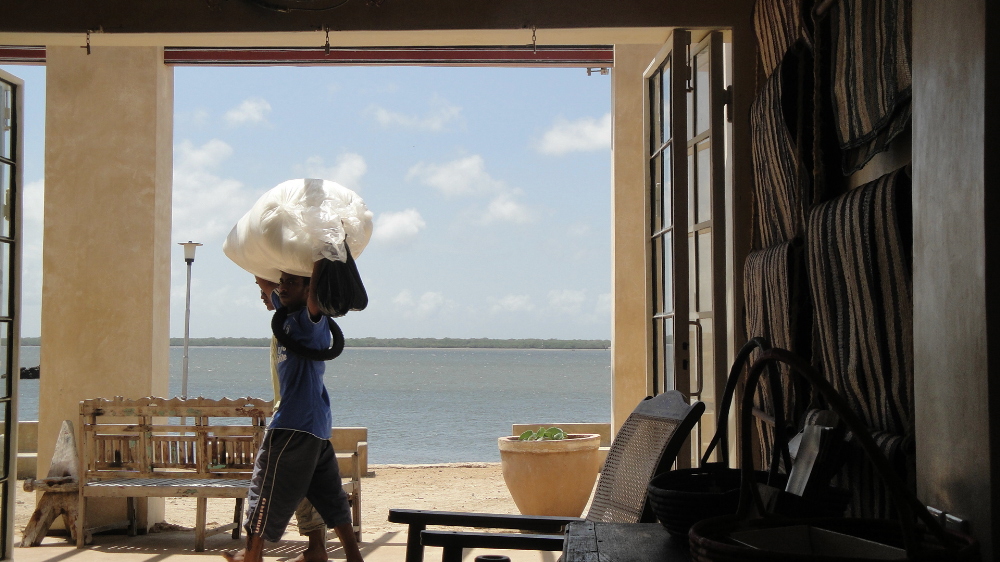
This set of shots is all from Shela – you can tell because it’s a bit newer looking, more spacious, etc. Above is sunset from the balcony of my room in Shela (I split my time – first five nights there, then four in Lamu town), and below are two shots looking out from the lovely little cafe which became my home-away-from-hotel in Shela; that’s where I wrote and posted the last entry which some few of you may have already viewed.

Health in the Hills
 I rarely know what I’m going to write about with a blog entry, before I start writing it. The blog’s always been about the photos and trying to give my family & friends – wherever you may be in the world – a visual on my life now. Or on my cranial and facial hair levels now… This is also always a personal blog, about my own personal & life experiences in this world since I ditched the shortsighted and shallow corporate world and took up this wandering, experiential lifestyle. That is, it’s not even a semi-official blog related to the wonderful work of the organization which has been my only employer since then, even if it’s nearly impossible to avoid referring to my work every now and then since….well, when you do what I do, work = life usually. Which may be why – now my current assignment is so utterly all-consuming (and the internet connection so utterly underwhelming) – I seem destined never to post anything except when I’m far enough away to relax a bit, and find sufficient internet bandwidth.


As I type these words into my little notebook computer, I lounge in a cafe in the village of Shela on the island of Lamu off the coast of Kenya. Lamu, from what I gather, is an older, smaller and quieter cousin to Zanzibar – and Shela is the smaller, quieter (but newer) village on Lamu. (Lamu is described as the oldest living village in East Africa. What, precisely, would that mean in the birthplace of humanity?? Perhaps more on that later, when I get around to posting about Lamu itself…) So me voici in great comfort on a daybed with tons of pillows & ceiling fans whirring above to dispel the mid-day equatorial heat, while chador-clad women alternate with bikini-clad Westerners walking past on the terrace out front, in the small strip of land between me and the water. This is the waterfront of Shela – where the dhows & motorboats that ply back & forth to Lamu town stop by, where the handful of watefront shops & restaurants are clustered, where the high tide laps right up onto the sidewalks and the low tide leaves a strip of runnable beach. Across the sound is Manda island, though I admit to being confused about Manda island. To get to Lamu you land on something called Manda airstrip and take a boat over to Lamu island; long story short, the island I landed on is defninitively separated by a big channel from the island people now tell me is Manda, and it ain’t no high-tide channel either so maybe the Manda airstrip is trying to consfuse us all by hiding out on yet another island. Or maybe I was just having a blond moment when I landed and have become quite geographically confused & challenged. Who knows, and I’m sure you really don’t care. 🙂

Anyhoo, if you are reading this more than a few days after I post it, you will likely already have seen photos of Lamu and environs, because I’m taking many each day and hope to sort and color-correct them for posting before I leave Lamu, early next week, for the arduous and many-segmented return journey to my current home of Mweso.
So yeah, about Mweso. It’s a lovely village and I really ought to get out and take more photos of it! In these two entries you will see…precisely three photos that were shot in the village of Mweso. Oh well. But you’ll see LOTS of others that were shot in the teeny little mountain village of Ihula. And here’s where that boundary of personal blog starts to blur. Because, you see, I’d also like you to understand a trifle about what it is that fills my days so full now. We’re in Mweso because the general reference hospital resides there – source of nearly all secondary care for a physically large & very mountainous zone with a great shortage of even vaguely-passable roads and a great abundance of health, nutrition & sanitation needs among a large, diverse and generally quite vulnerable population. The hospital is the largest and most time & resource-consuming activity we run from the project I’m currently managing – lots of patients both in- and out-, on all wards, etc. In addition to this we support two health centers.


Americans and others from highly-developed and over-health-cared nations might want to step back a bit and look at the structure & theory briefly. (The US is over-health-cared, even if tens of millions can’t access the system easily or affordably and the current republican lunatics are fighting to the death to keep those tens of millions locked out…) In DRC there are rural health zones – roughly 23 or so in the province of North Kivu, which is very roughly the size of the former West Germany. We work entirely in the rural health zone of Mweso — though Mweso is not the largest town in the zone (Kitchanga, 45 minutes down the road and site of an MSF sister project, holds that distinction). Mweso has the zonal offices and the eponymous Hôpital Général de Référence. Our own base (house & office) is next door to both. Each zone is broken into a number of smaller units called an ‘Aire de Santé,’ each of which has its own health center. Kicker for all you tea-party supporters among my readership: in DRC the theory is all patients see a nurse first, not a doctor; all health centers are nurse staffed and the only doctors in the zone are based in the hospital, though two of them make oversight visits to the dozen+ health centers in their zone. A really large aire de santé might have health posts under it, but at least where we are not much of this can function very well unless there’s a partner agency – like us – to fund it all and preferably, again like us but unlike many other agencies, to help supervise and support it with medical expertise and training rather than just medicine and funding for staff incentives.
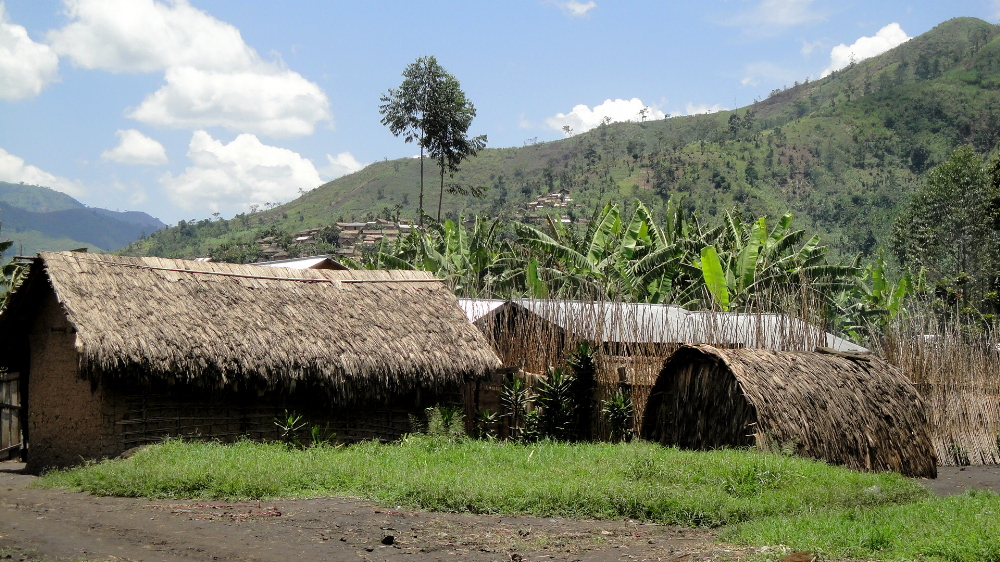
So coming back to what we do: aside from the hospital, we we also support two health centers in Kashuga (lots of IDP’s, smaller number of regular residents; IDP or internally displaced person is what the UNHCR calls a refugee who’s not crossed a recognized international boundary even if they have crossed from one zone of armed control into another) and Kalembe (better balance of regular residents & IDP’s there). Kalembe is the center for an enormous honking aire de santé, and that aire has villages in three different political territories (think county in the US, Landkreis in Germany) — Masisi, Rutshuru and Walikale. We have a mobile clinic on the other side of the river in Walikale territory, high up in the mountains in a little village called Ihula. Ihula is literally the end of the (dirt, this being DRC) road. And since it’s such a big aire de santé with a lot of population spread out over mountainous areas with some funky stuff going on here and there, we and the people of the village & the good folks of the health zone management all thought it would be a nice idea to establish a regular health post up there, so the mamas can have a place to deliver their babies or get their sick kids cared for every day of the week, instead of just the one day a week we manage to get our cars and team and meds up there. So – we’ve been working w/the village for the past two months or so to actively get this thing built. It’s been a tough slog – logistical and other complications, as you can imagine. Then there’s the always interesting general context in which we work, but that’s something I’m sure as heck not going into on a public blog, sorry. 🙂 Suffice it to say I am mightily proud of what we are accomplishing and deeply hope that, within the weeks after I return from this island idyll in the Indian Ocean, we will actually have a fully funcitonal health post operating up there. Fingers crossed, one and all, please.

gotta have a little bit of wildlife, folks – true, ants massing are less interesting and strangely more scary than an elephant seen in the distance, but this is what I can offer you, sorry…

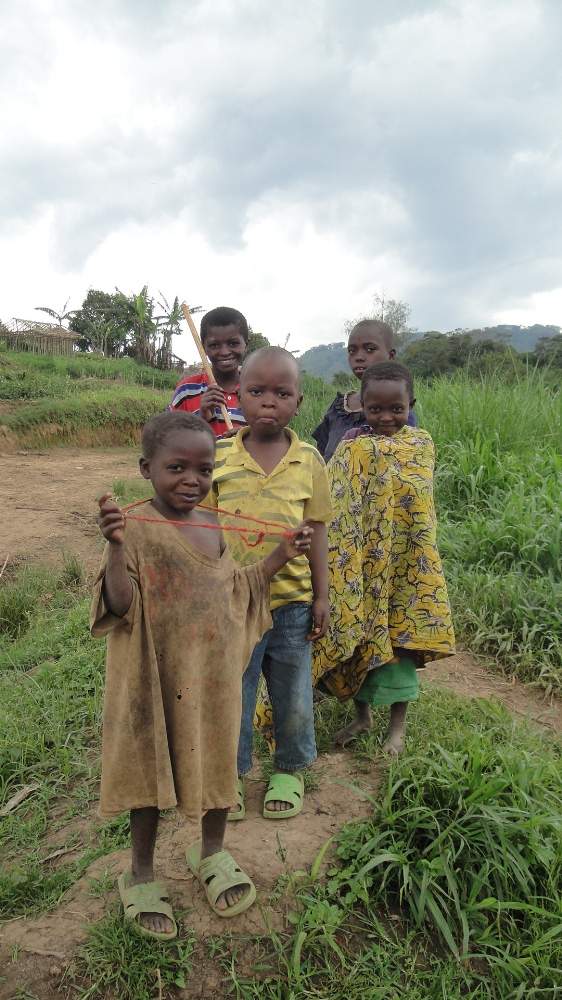
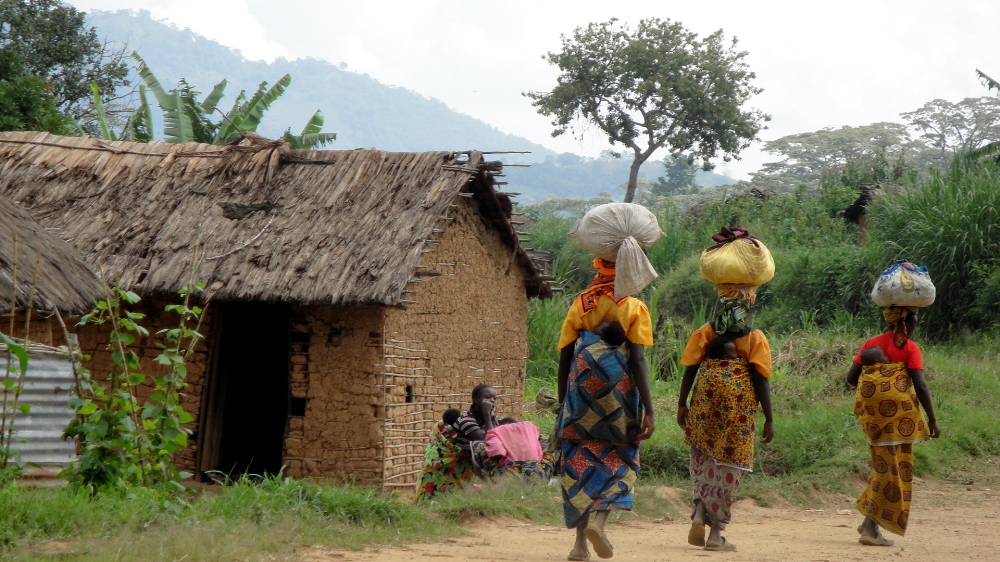
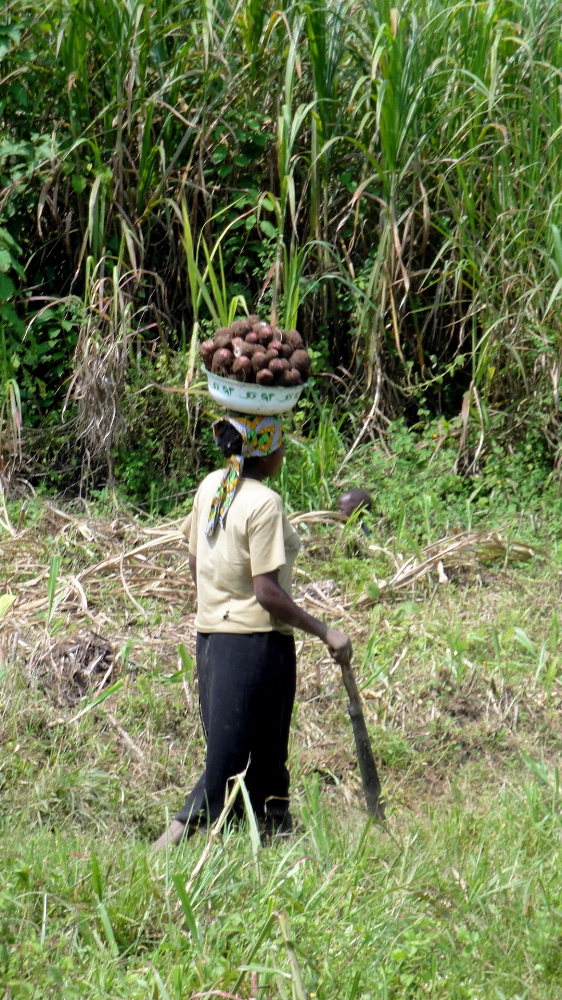
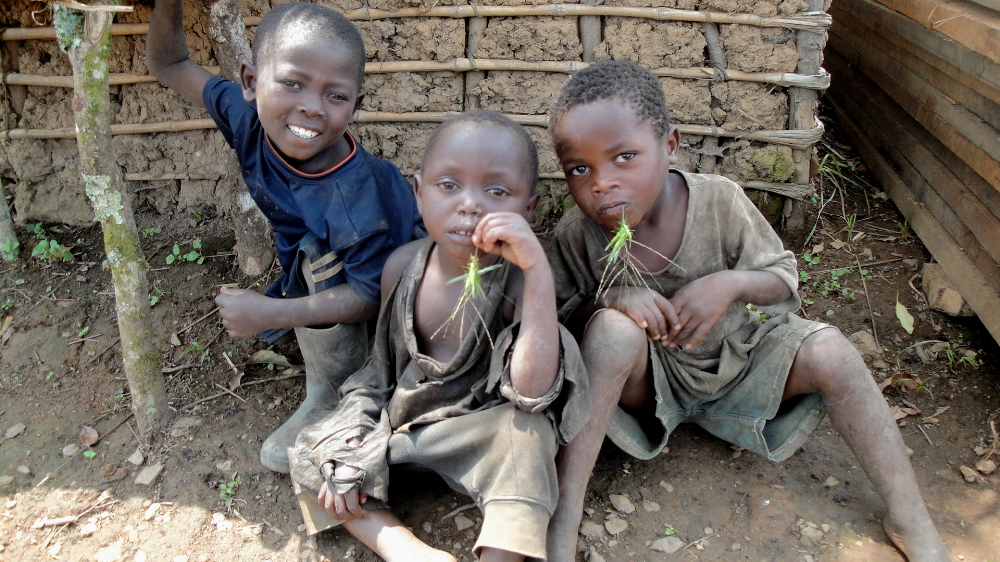
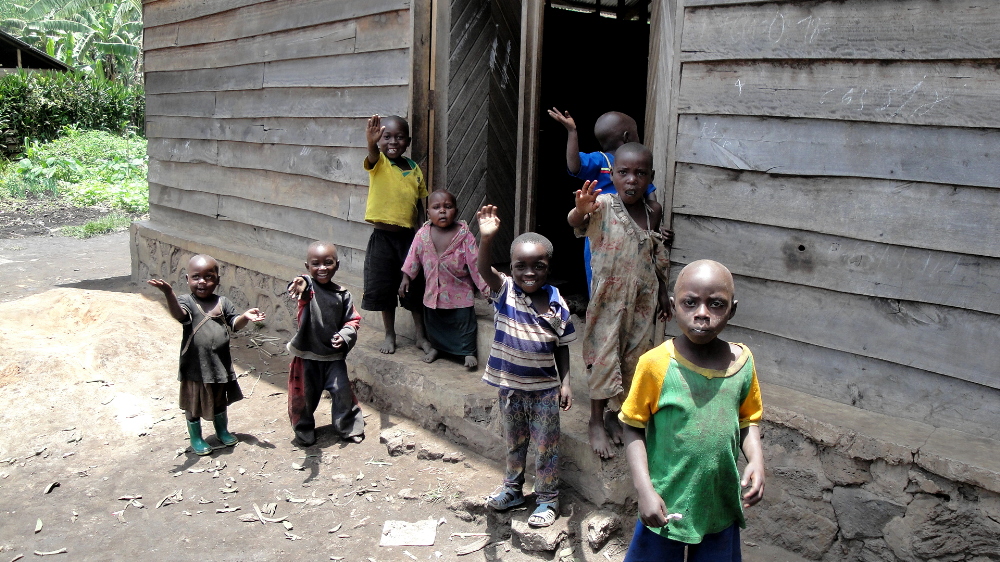
…ok, ok, ok: I know the whole ‘women with things on their heads’ is as overdone as the whole ‘adorable kids smiling big huge smiles’ thing is. But, rather like stereotpyes, there’s a reason it’s all so overdone: the kids are just more naturally less shy than the adults, and … well … the whole carry things on head thing never ceases to amaze me. How do they manage without hurting their necks?!
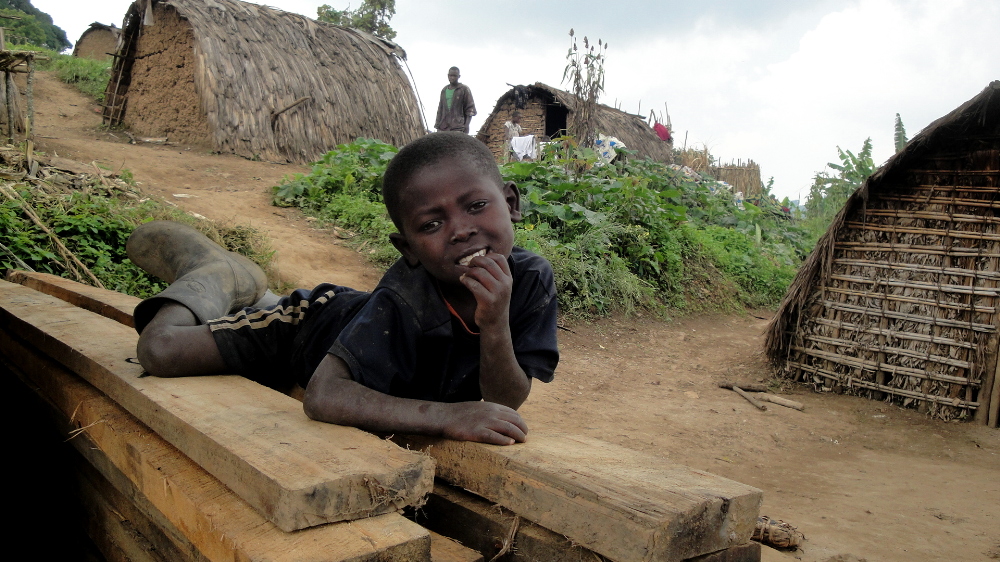
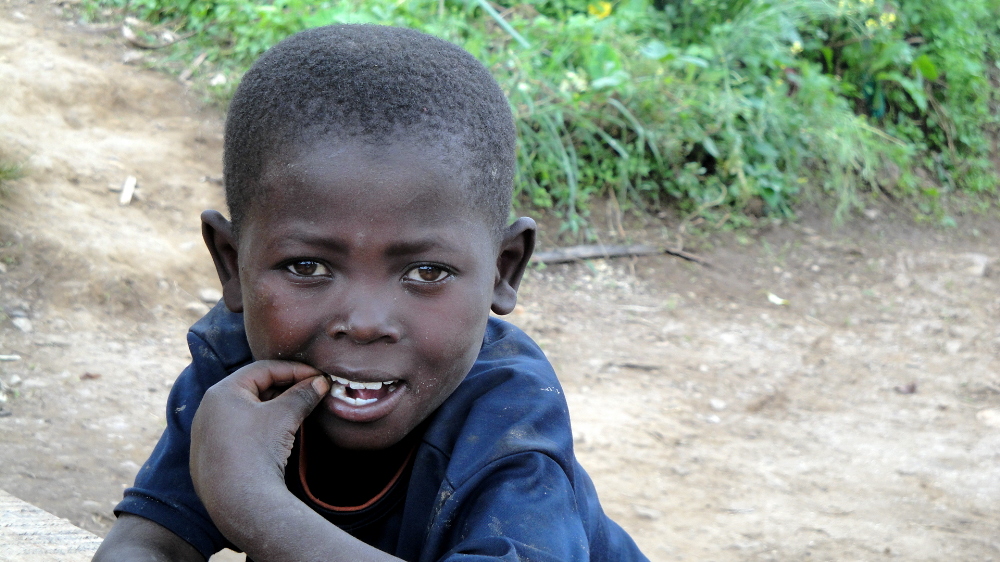

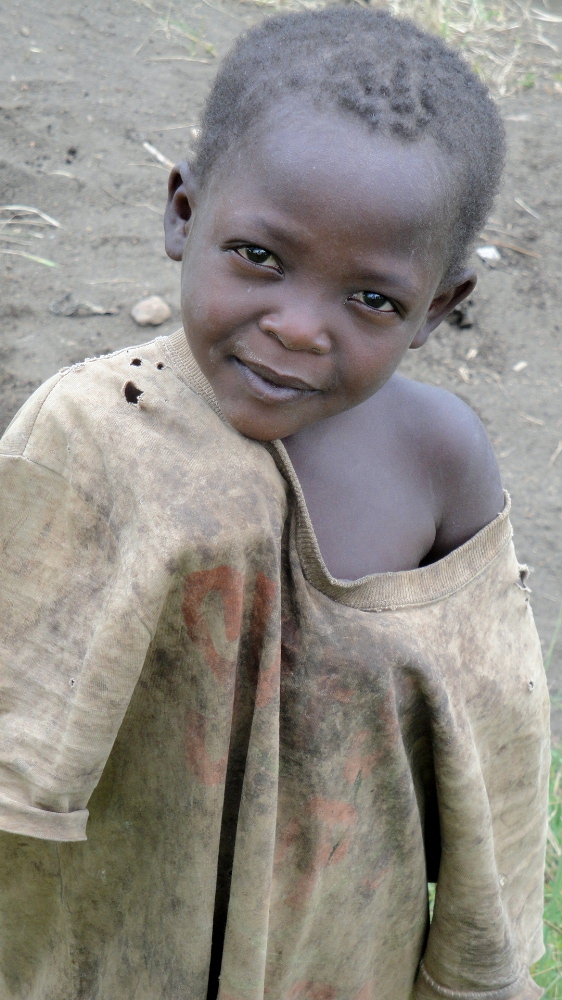
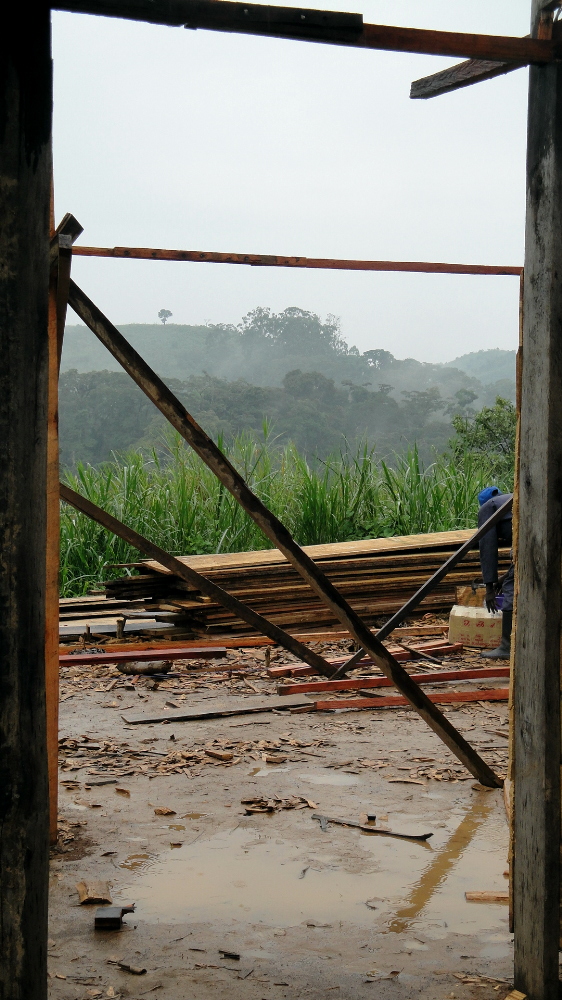 Above, my friends, is the start of the health post (private blog, I know, but I’m both publicly and privately proud of what we’re doing here), and below is a young patients (at our current mobile clinic, with his Mom) in the single most popular form of t-shirt worn by kids in our zone: the Obama t-shirt, which comes in dozens of varieties and can be seen everywhere.

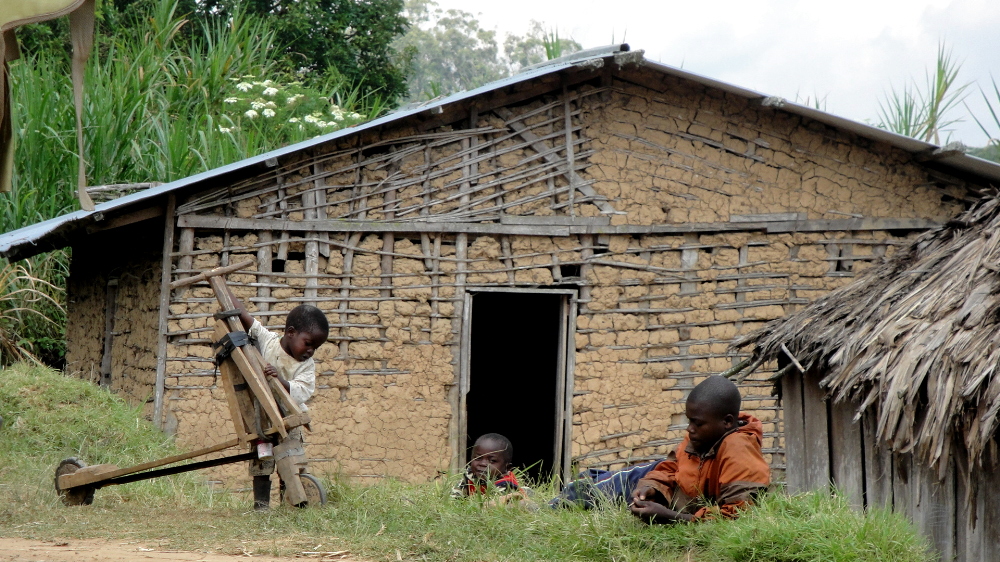
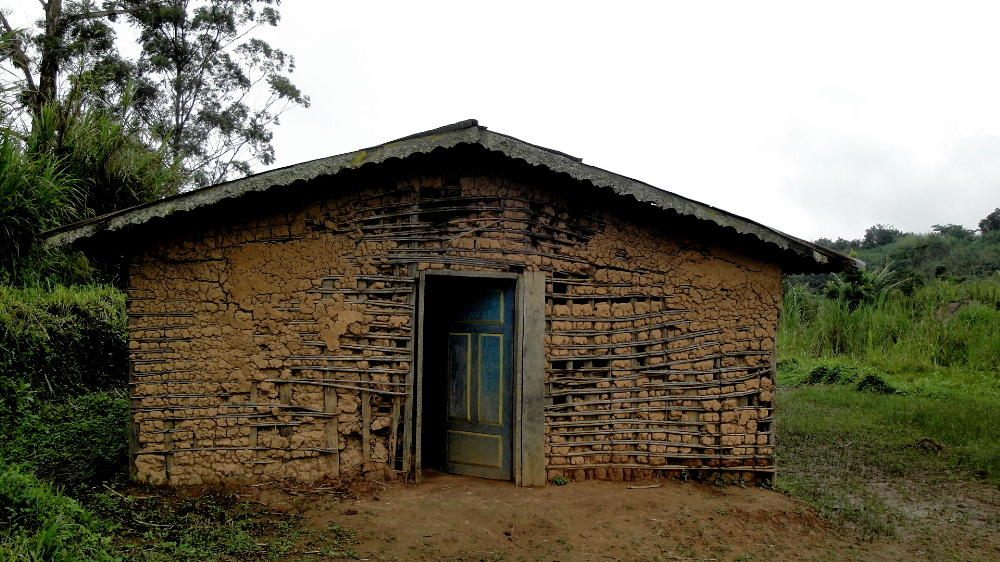
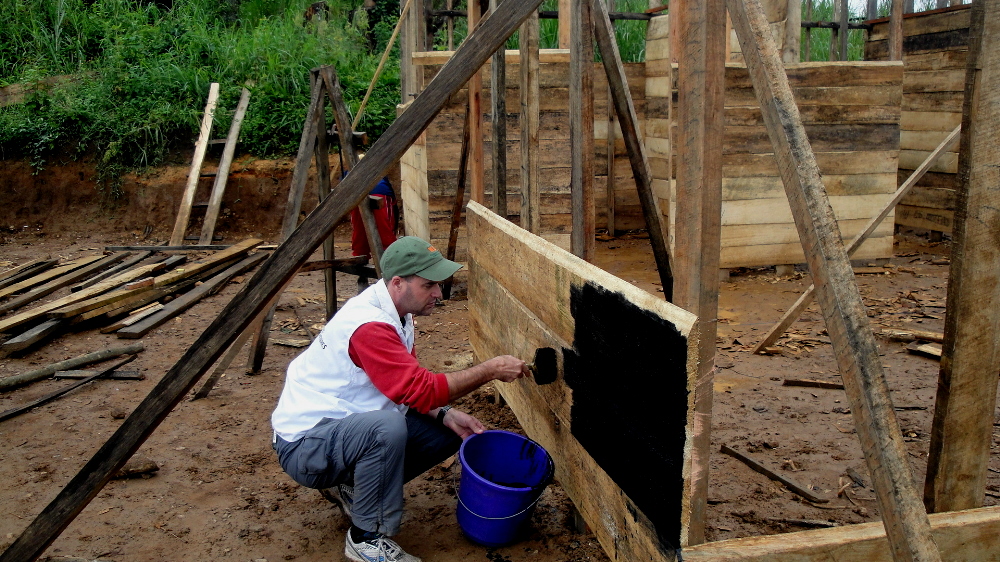
 I’m learning a lot about the traditional building style in the region – you may have noticed that the foundation goes in last? – and about the anti-insect properties of used motor oil on wood. The planks are shaved so they’ll overlap each other nicely, thus providing a touch more weather protection.
 Enough about the work. A bit about the life. There’s not much of it. Flying from Nairobi via Malindi to Manda Airstrip on Saturday morning, I had a delightful chat with a doctor from Scotland who worked in Kenya for 20 years before deciding she needed to get work back in Scotland in order to send her kids through UK secondary school and university…and the point is, yes: I said something to her about working 70 hours weeks & really needing a vacation, and then I stepped back to see if I was exaggerating. I actually came up – for myself – with a likely average figure of between 65 and 75 worked hours per week. It’s all cool – not like there’s a lot of multi-plexes and orchestral and theater performances to take up the rest of my time, so I’m quite happy to do the work; there’s that added nudge when you basically know that, yes indeed, your work really is saving lives every day especially when your project has been scrambling since early May to keep up with the periodic outbreaks of cholera scattered here and there around the zone (oh yeah, on top of the structures we support all the time with everything, we also do epidemic response even in places we don’t usually work, if it’s close enough and no one else really can), and the ongoing never-ending seasonal fight against malaria in Kashuga which came back with the heavy, late rainy season and so far WILL NOT go away. Enough about that – it’s been frustrating, but we’re doing good work. What was my point: we work hard, and don’t mind it since we know it yields results. Right.

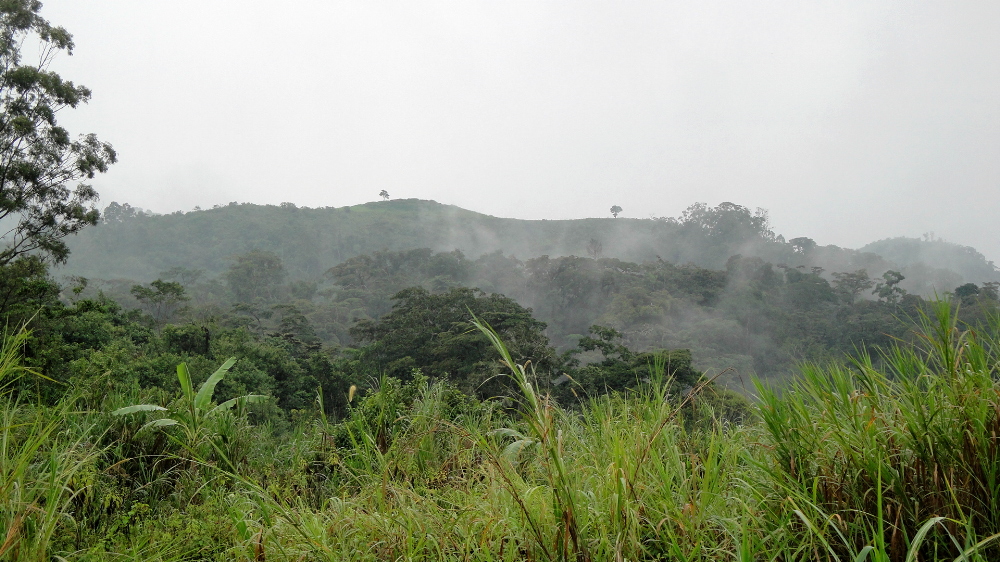
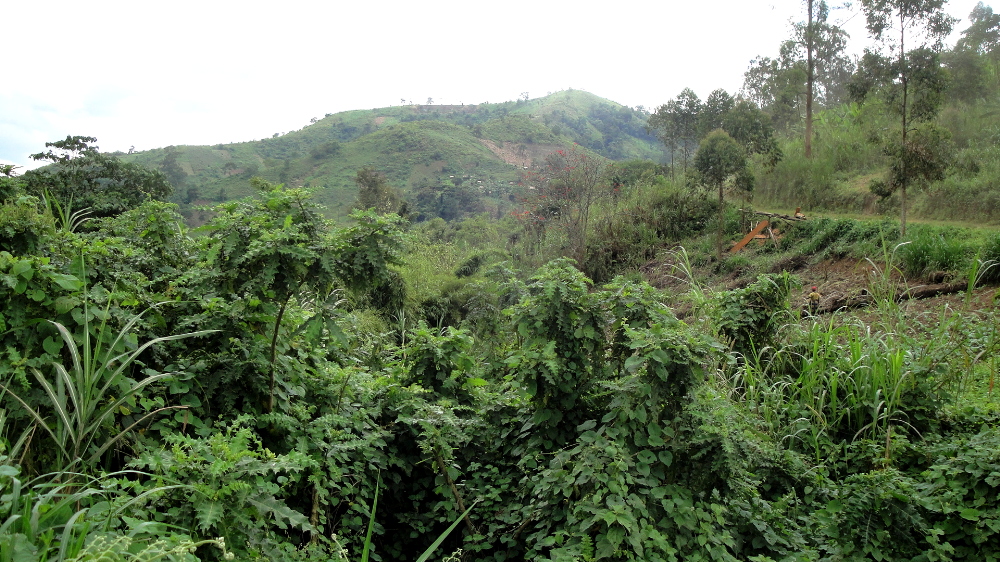
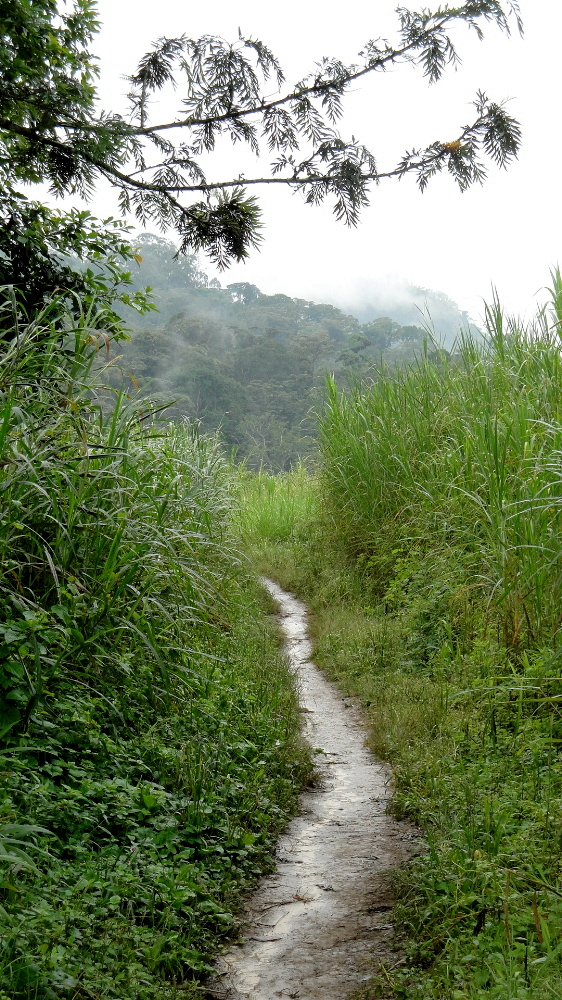
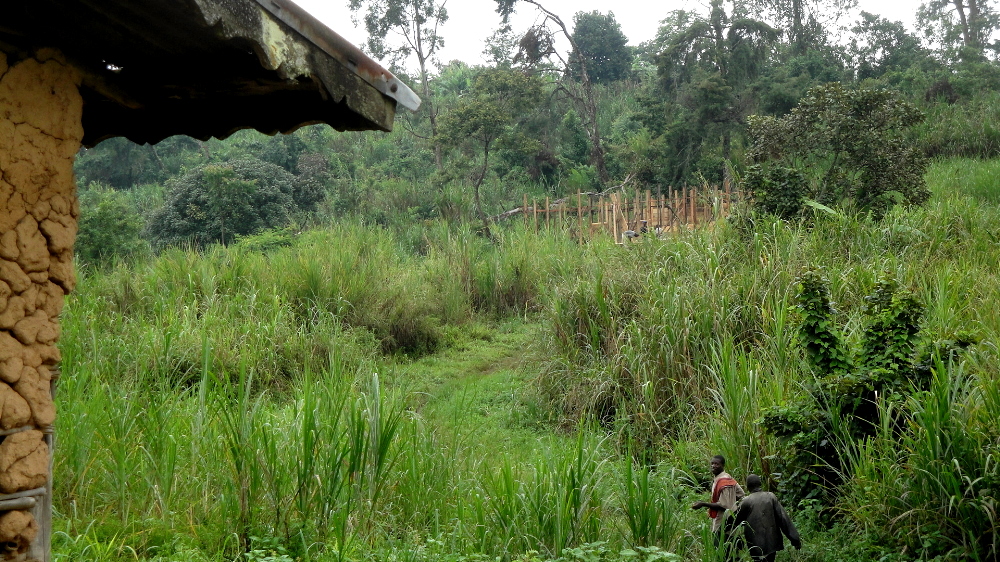
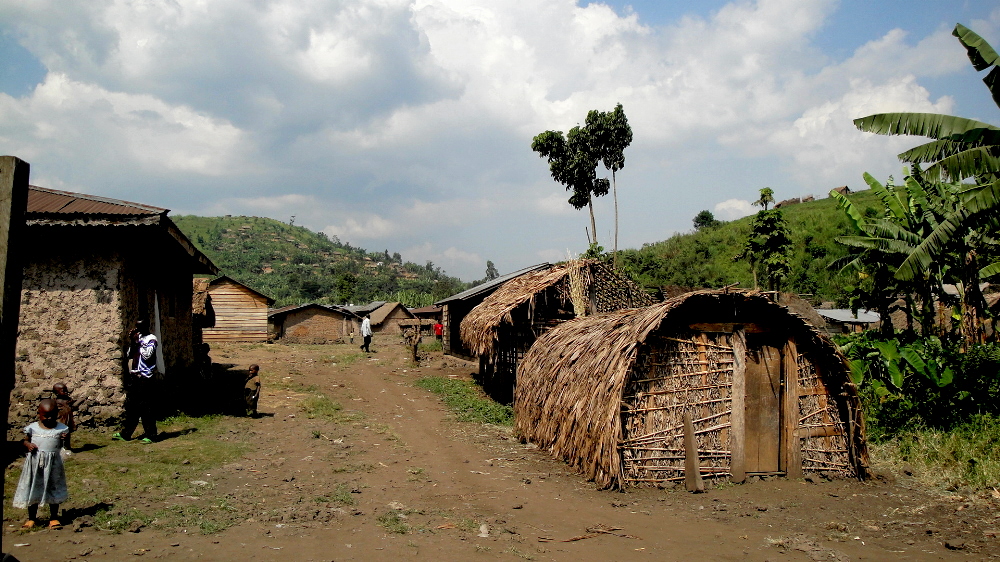
 Look closely at the image above and you’ll see how steeply the hill drops away: the center of Ihula village is on a saddle with very steep drops on either side. Pictures can’t quite capture it but it’s really a very dramatic landscape.
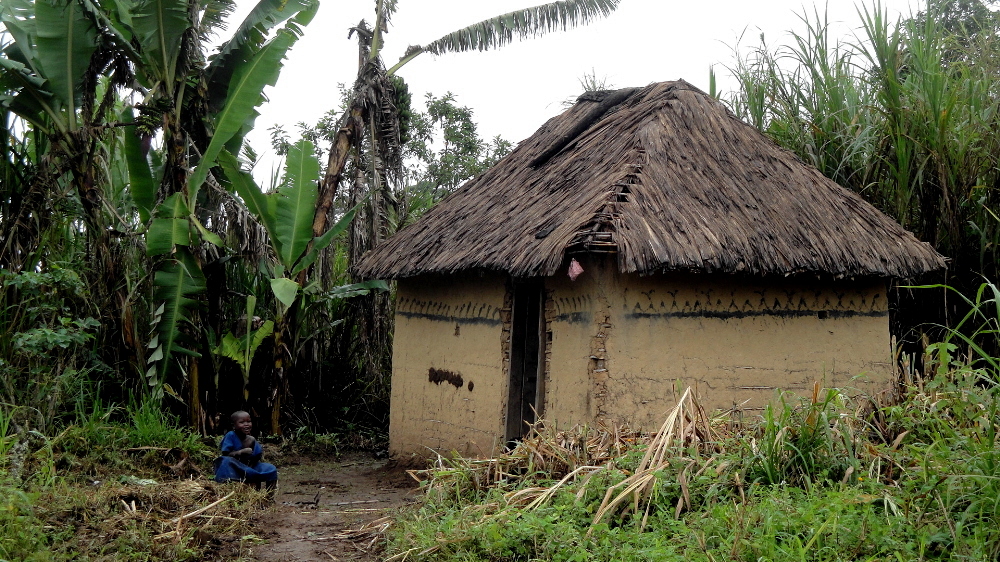
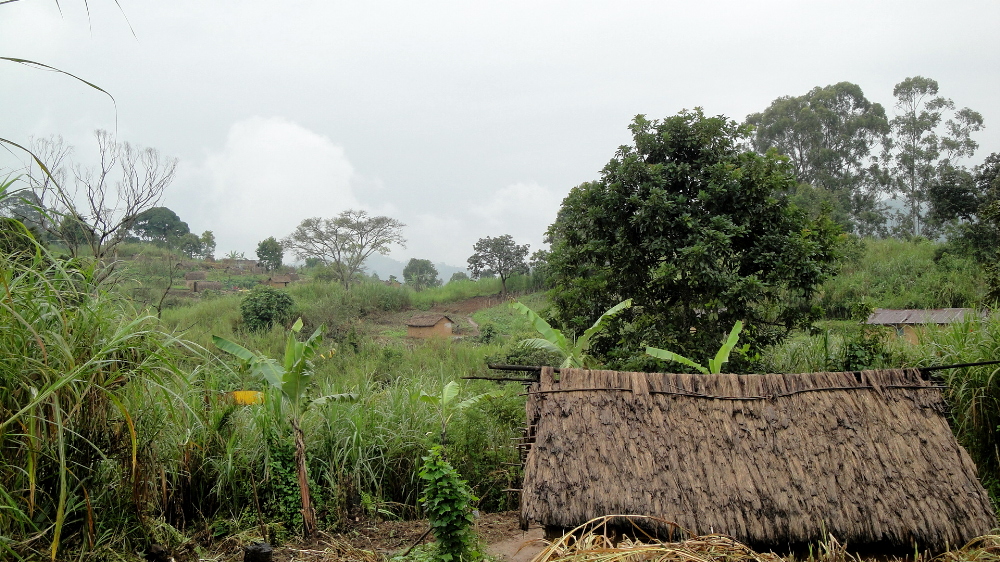
Various Views of North Kivu
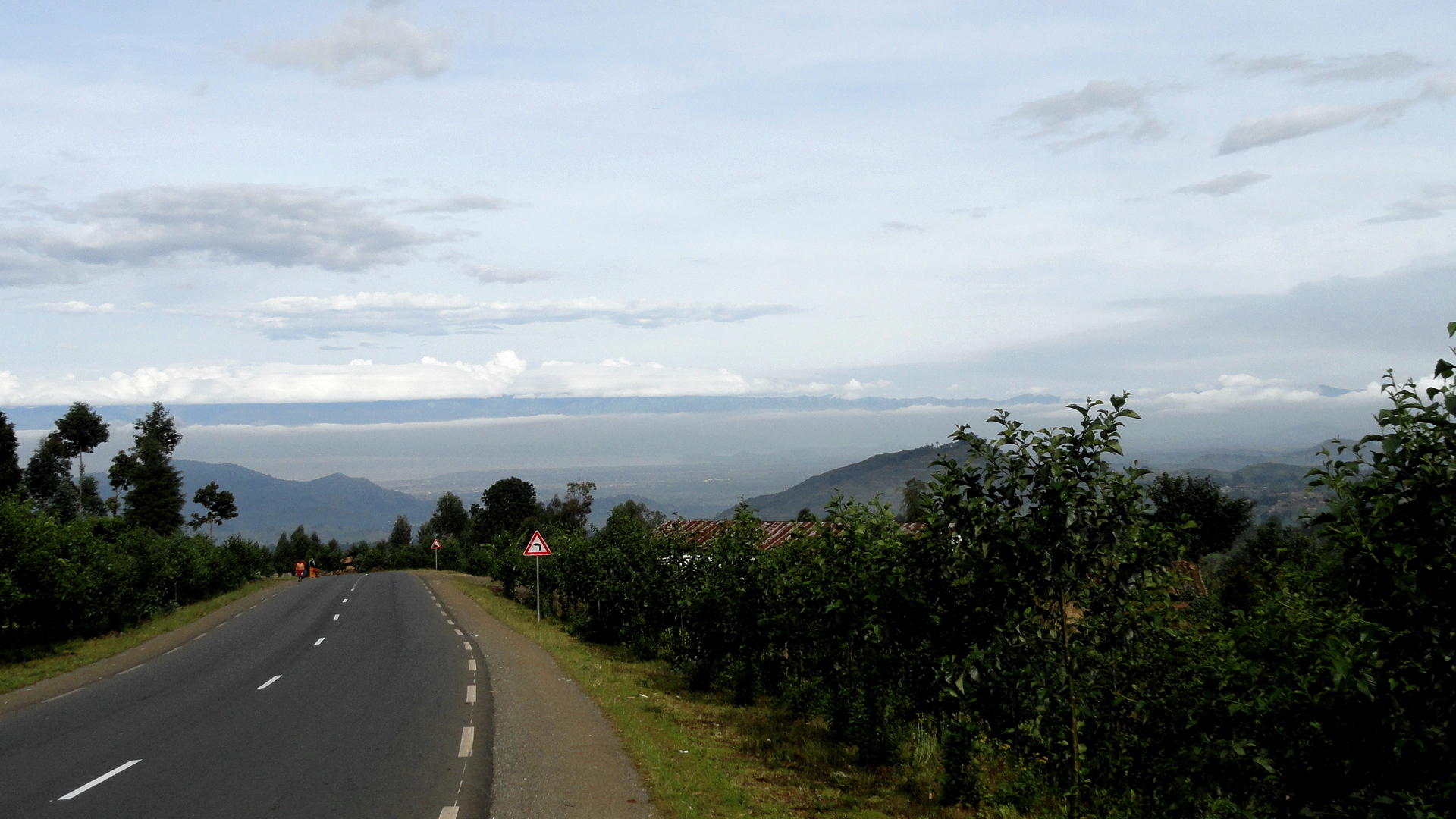
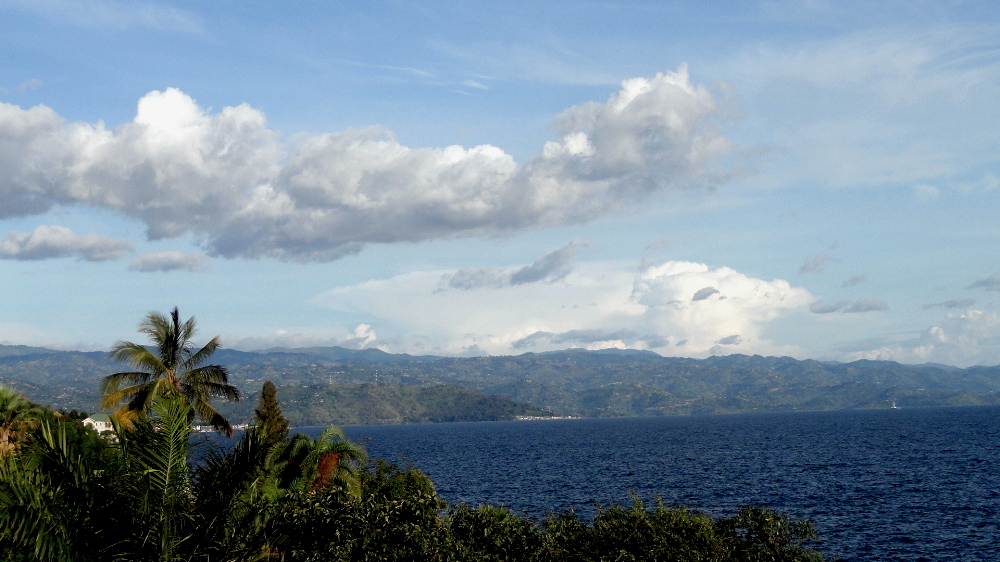
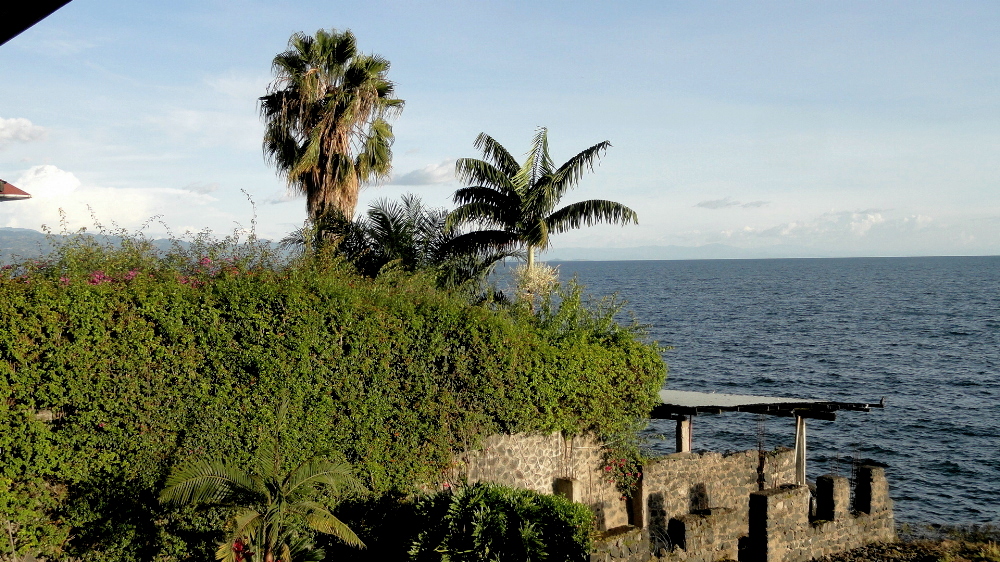
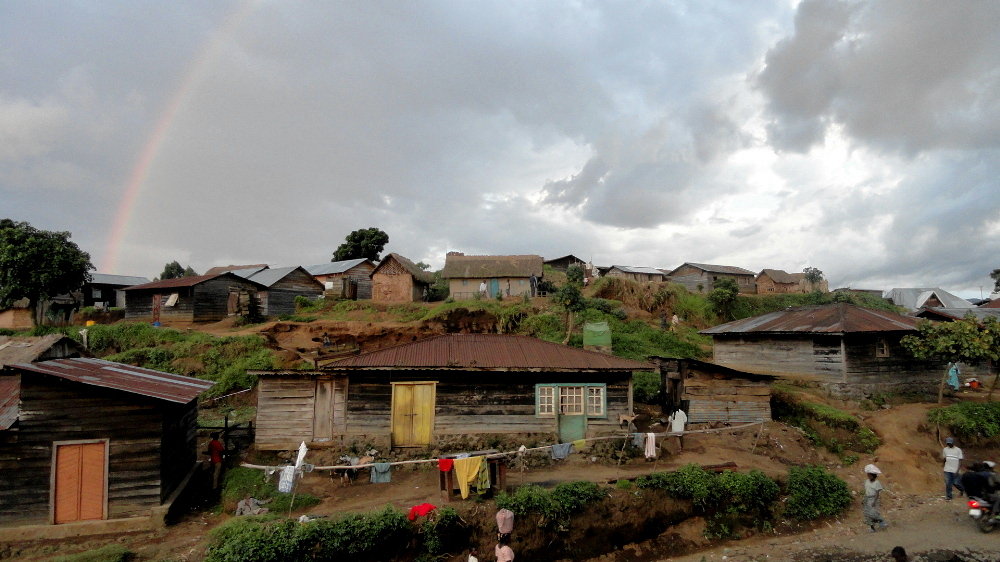
So this is the miscellaneous photos section – various items accumulated over the months and stuck here as the second of two entries I’m posting same time, more or less. Above: from the hillside in Rwanda, descending toward Gisenyi and the border, the north shore of Lake Kivu and the a bit of North Kivu in the DRC. You know it’s shot from Rwanda there are no roads even vaguely as decent as that in all of North Kivu – at least none in Goma or anywhere I’ve been! Below – other shots of the lake from the expat houses, of the base in Mweso, a rainbow over Kitchanga, and a few miscellaneous shots of Kashuga. The rest of my lengthy text continues…below. 🙂
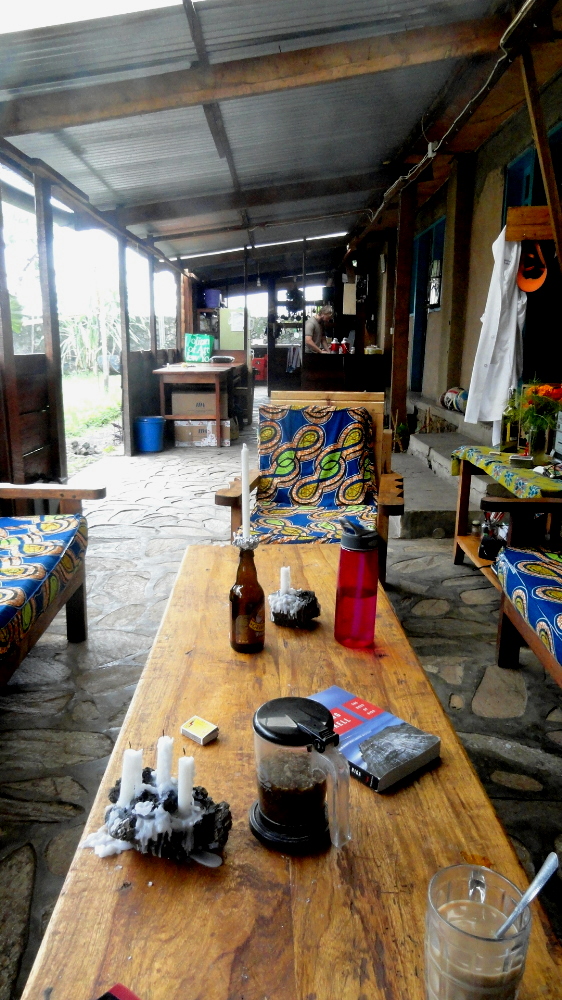
We do, however, live wonderfully well within our compound, and when we have the energy we even pop a movie onto a computer and beam it onto a sheet hung on the wall in our common room. I usually cook something lovely from the garden on Sundays – if you’ve ever known me any place I even vaguely live, you’ll know that my thing is to cook for the folks I like, or love, or wish would love me or like me or…whatEVER. Anyhoo, so when Hosanna came to the project back in February she brought tons o’ seeds: we’re talking swiss chard, kale, string beans, basil, you name it. And I admit to some pride at the pretty fine soups, quiches, stuffed calzone-type items, and pot pies I have been churning out. It goes like this: wake up early Sunday (because I always wake up early, because I always go to bed early, because there’s nothing else to do in the evenings in Mweso except look at the amazing stars in the amazingly dark sky or listen to the beautiful chorus of frogs – there are different kinds and they sing in shifts; no kidding), sit on the porch (picture in the second of these two posts over which I plan to string this text; if you look closely you’ll see my cup of tea & my book on the table at bottom of photo…yup, that was a Paul Sunday morning in Mweso) drinking tea & trying the internet (if it takes less than five minutes to get an email to display, it’s a good morning; usually I give up after about ten minutes with no results) or, as a backup, writing in the ol’ journal or reading. After that: maybe yoga, maybe a session on our cool new elliptical machine (miracle for stress management, that), maybe some eggs (lately, Raghu’s been developing a fine way with a frittata and we’re all benefiting), and perhaps a nap.
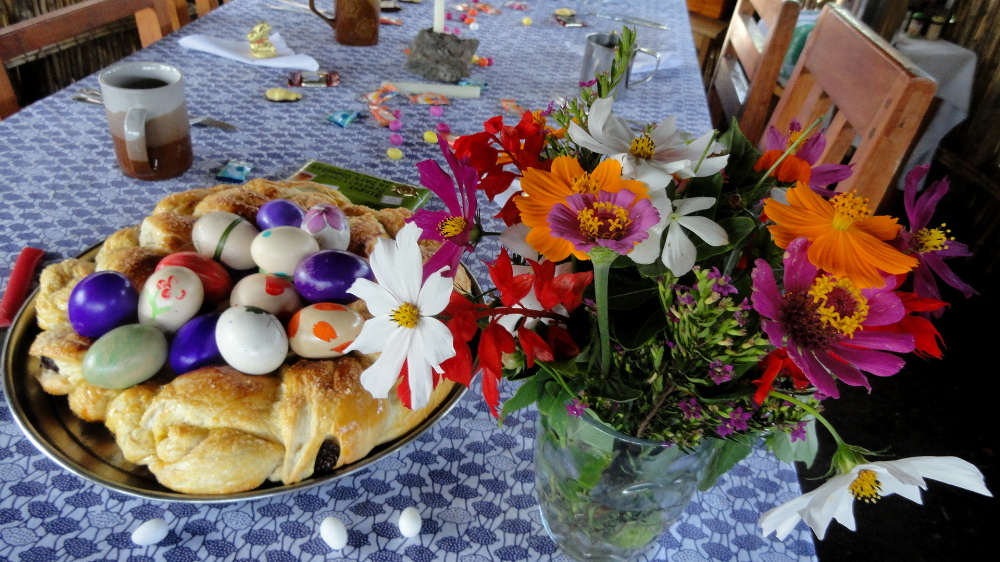
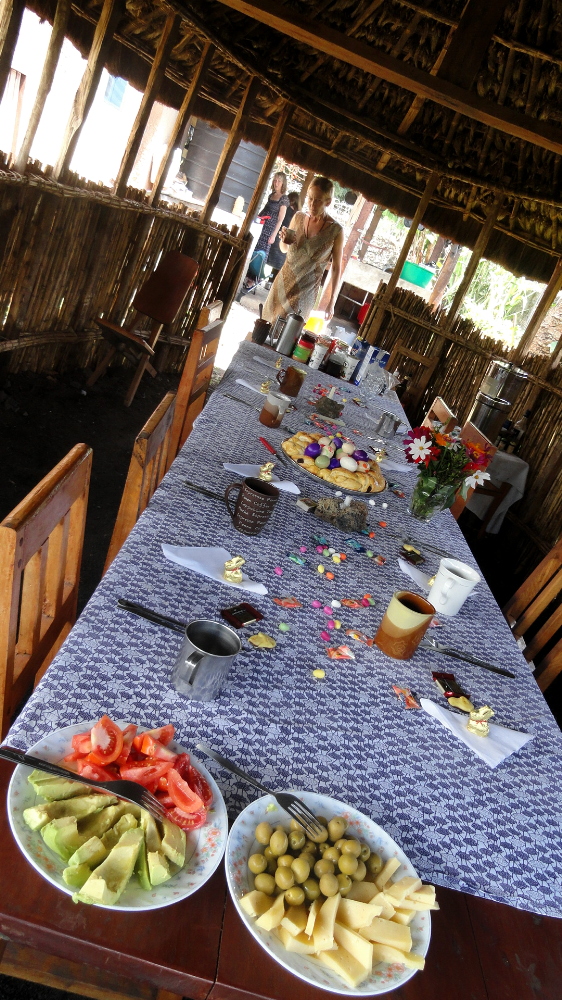
If the workload is too heavy, I might actually spend middle o’ day working, but I try to wall Sundays off and not even enter the office once. Then in the afternoon I’ll grab the sheers and fill a basket with what looks good in the garden, then start cooking. Usually Carla will help me chop and peel, unless she’s in the operating theater. Usually others will be playing cards or listening to music on the other side of the porch; and if I can, I’ll join them. Or we’ll all play a game of Risk. Then, when the food’s ready, we light some candles in the paillotte (two photos of it all decked out for easter brunch in the same set as the porch photo) and settle in for dinner. Sometimes after that comes a movie, or a campfire; sometimes it’s back to the card games or Risk or just off to read and relax before bed. Then, the next day, the work week starts up again and before you know it another week’s gone. And that, my friends, is how my past eight months have swept by rather like a river in flood – amazing, overwhelming, intensely educational & rewarding, and really rather exhausting. Hope you enjoy the photos. If all goes as planned, I’ll have a bit less than two months to go still in Mweso after I return; and with any luck, I’ll return from this vacation with more than enough energy to have a strong finish. Let’s hope so. :-).

Loving London in the Springtime
 As they are annoyingly prone to do, these days of concerts & plays, strolls in the park and vege Vietnamese food on Wardour Street have raced past as though determined to rub my nose in my own impermanence. Yeah, yeah, I get it – I want to say…but can’t I just slow time down a bit, pretty-please? I mean, what person that knows London – as I flatter myself I do, somewhat – would even dream of SEVEN days in a row where the sun shone either most or all of the day?? 🙂 It has been spectacular – and I feel as though I’ve grown to know every blossom and every blade of grass in certain corners of Hyde Park, so much time have I spent there relishing the freedom and peace to amble anonymously among the daffodils and cherry blossoms. Friends have been seen, concerts have been enjoyed, dance and opera have thrilled, and … well, I think I haven’t slept quite enough, which is rather a problem when you consider I’m supposed to be resting. Oh well – que sera sera, and it’ll start sera-ing once I complete the prolonged return journey to Mweso, which begins tomorrow. The good news, the silver lining to the cloud of KLM’s canceled overnight flight to Kigali: I get to spend Wednesday in Amsterdam, and I’ll get to stay & catch up with a friend there as well…then have the daytime view of all that desert in northern Africa as our plane races over southern Europe, the Mediterranean & just about all of Egypt & Sudan on its way to the green hills and mountains of Central Africa. Then, duffel stuffed with legumes (at Waitrose yesterday: Paul bought out the shelf full of Native American loose tobacco – for a colleague, not me; the lady behind the counter rightly guessed that I was going to, as she put it, ‘another country’ – and put a major dent in their yellow split peas, red and green lentils, and mixed-bean soup packets, as well as their vege bouillon cubes…can you tell I’m missing pulses/legumes in Mweso?) and toiletries, I’ll begin that beautiful but painful overland bump-fest back up to Mweso. Wish me well.
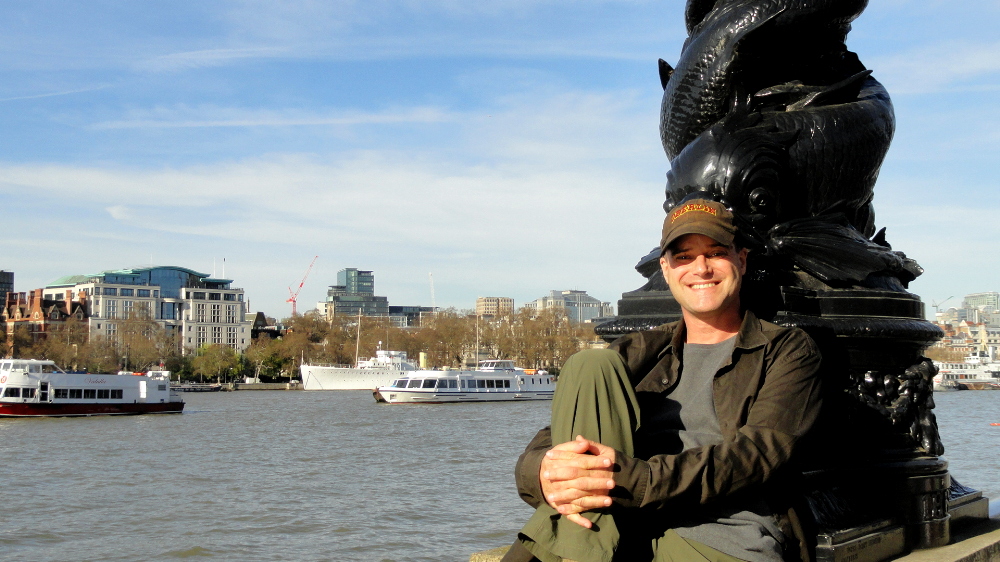
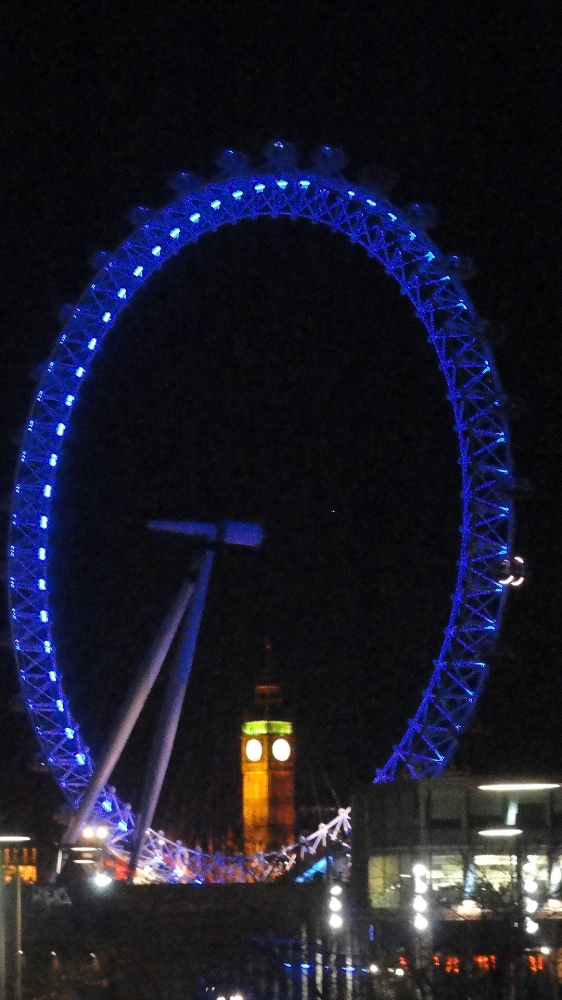
Oh, right, about the photos: mostly taken on the South Bank and some in Hyde Park; as you may know I pride myself on not taking the tourist-standard shots of the most famous landmarks (think how James Bond films always tell us we’re in London with a closeup on ol’ Big Ben; I attempt, feebly I know, to distinguish myself at times by my off-center approach), but felt that, after all these years of visiting London, perhaps it’s time for me to take my first photo of such classics as Big Ben and St Paul’s, or such new classics as the Eye. These are mostly South Bank shots, and my love affair with the fish-shape lamp poles on the South Bank, with a few views from Hyde Park. How unusual that I don’t have any flower photos. If you see any in this posting after all, it will mean one thing: that after drafting this and loading all the photos I had, i decided on one more pot of tea at the Serpentine Bar & Kitchen, and on the way finally got a few flower shots to add some color here…think of me, sipping my pot of tea and looking out at the lovely serprentine as shown in one of those lower photos here. That’s the image for this trip…that and, of course, many a concert and play…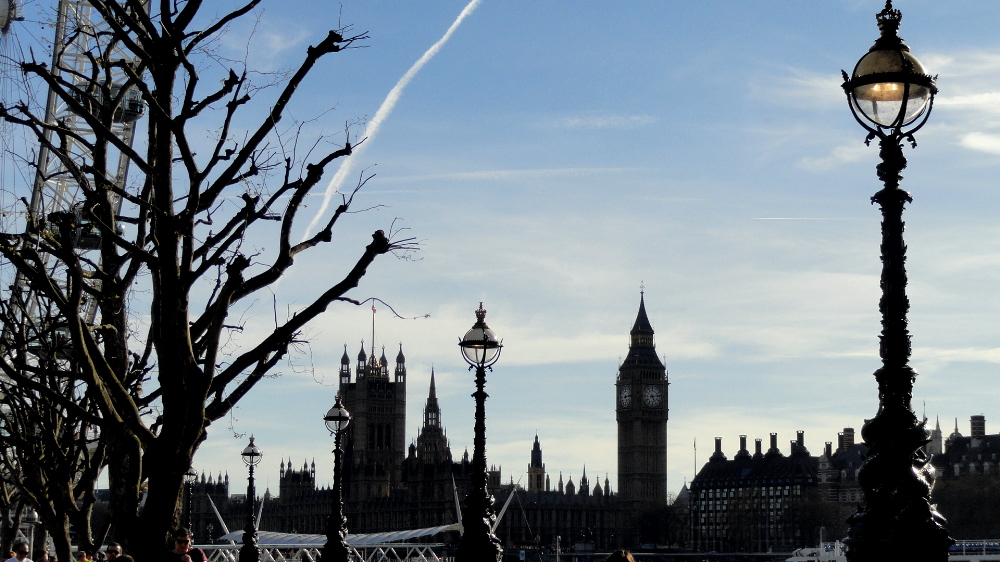

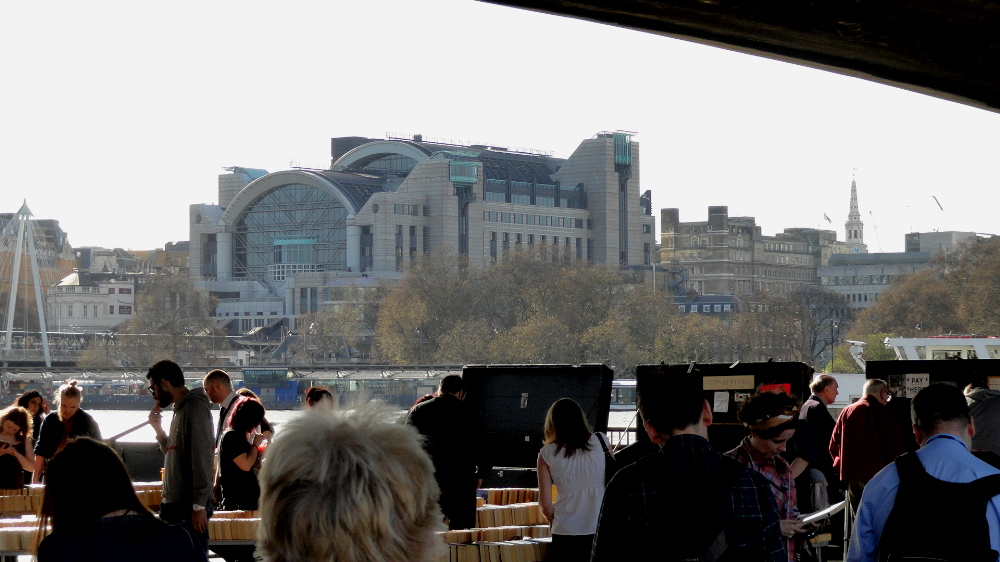


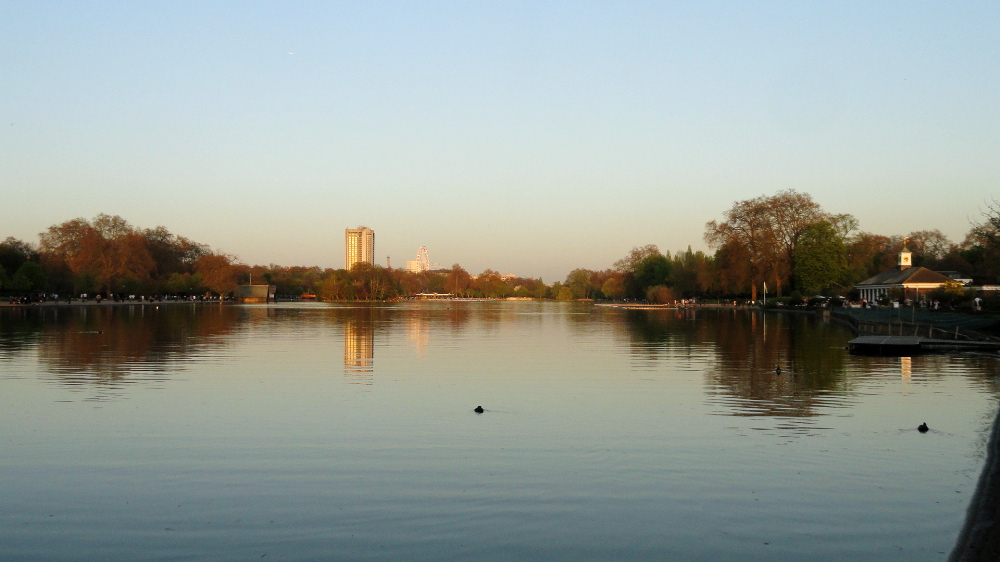
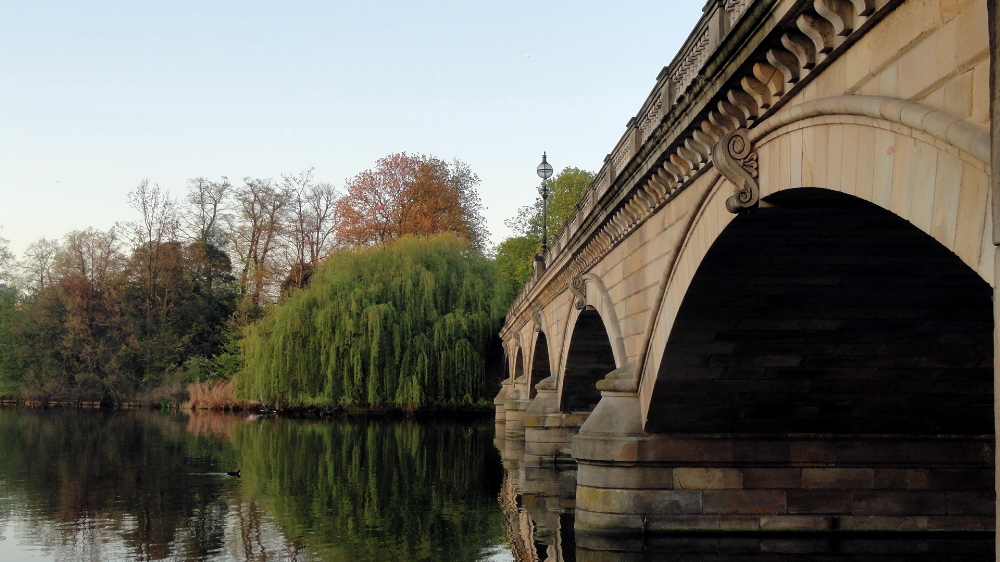
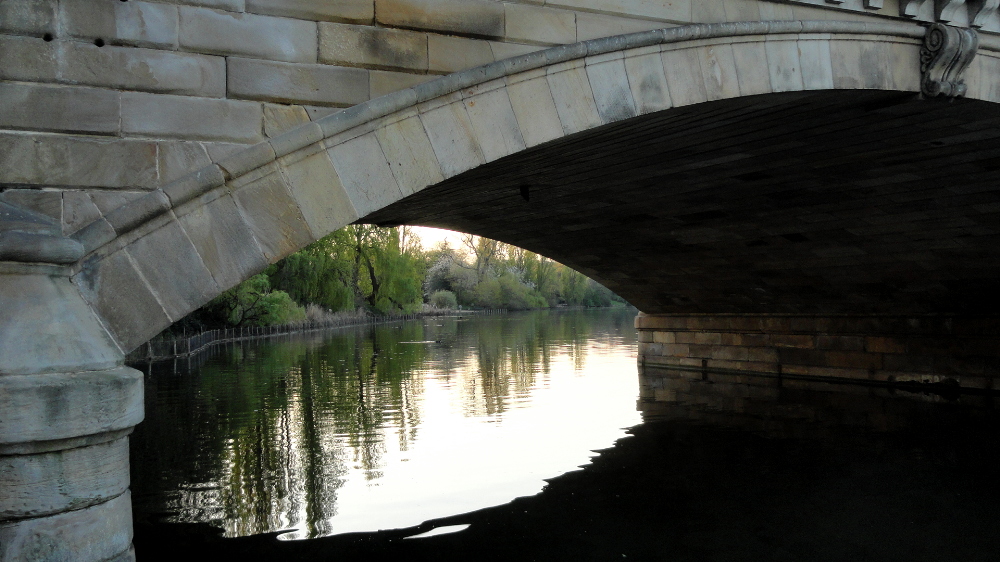
 …and yes, just to confuse you all and see how much you’re paying attention, I decided to throw in a few of the shots I took while ambling through Amsterdam during the eight-hour layover there on the Saturday of my inbound flight. Hehe.
Hills & Villages of North Kivu

 smw, slt has finally made it to a place where bandwidth is both sufficient and reliable enough to permit the posting of photos to the blog. Sadly smw, slt has also been more constantly and consistently busy than ever before in life, so not very many photos have been taken but herewith we share those that have. Last night I sat with H&G in the stalls at Sadler’s Wells & watched the Russell Maliphant company perform an astonishingly beautiful piece called AfterLight. Earlier in the day while enjoying views of London from the upper deck of a bus I’d been reading a Harper’s article on the tendency in hyper-developed consumer democracies (my words, not theirs) to fight constantly against pain or discomfort or any general acceptance of (real) pain, impermanence or unpredictability. “There is a terrible blindness in happiness. Just as trash, in the consumerist universe, ends up invading every space and reminding us of it existence in countless nauseating ways, so suffering, unable to express itself, has begun to proliferate, increasing our awareness of our vulnerability. The West’s error, in the second half of the twentieth century, was to give its people the mad hope that an end would soon be put to all the calamities; famines, poverty, disease, and old age were supposed to disappear within a decade or two, and a humanity cleansed of its immemorial ailments would appear at the gateway to the third millennium having proudly eliminated the last traces of hell. Europe was supposed to become, as Susan Sontag put it, the sole place where tragedies would no longer occur.”
 I think those last words are the give-away: Europe (and by extension the US, Japan, Canada – the G7 or G20 or however many hallowed nations were to be allowed into the new world order’s club of the blessed) were to become that lucky zone of infinite possibility. Literature and popular culture are rife with futurist stories in which the wealthy & powerful invent ever-new ways to protect their own wealth, power and comfort while maintaining their control over the legions of have-nots. And I guess that’s the thing – it feels to me on some level as though Americans, whom I know best, sit uneasily with our unfair access to and domination of the world’s resources, so we invest vast amounts of time into convincing ourselves that not having the latest i-phone app is a legitimate tragedy. This way we can remain focused on ourselves and our own pains and woes, and ignore anything else in the world.
I remember when I was first introduced to the concept of existentialism, in ninth-grade French classes. 15-year-old Paul was singularly ill-equipped to ponder a philosophy of life’s bone-wearying essential emptiness. Ever the pragmatic optimist, such deeper questions as why am I here, and is there really any meaning anywhere never grabbed much of my attention. (Young Paul’s answers: a) because Mom gave birth to me; and b) does it matter, as long as we’re learning & getting good grades & having fun? ) However one side-effect of my current global-wanderer lifestyle in which I toggle back and forth between two worlds that often seem barely connected (even though both have lovely human beings in them and both occupy space on the same rock hurtling through space) is that I find myself pondering the deep imponderables much more often than young Paul did. When minor culture shock – or at least a deep sigh of relief – can be caused by the simple act of crossing from the DRC into Rwanda by walking around the little border-barrier – and then hopping in a nifty modern seat-belted little car to hurtle towards Kigali along the flat, even, paved roads of Rwanda after six jolting hours on the usual volcanic-rock strewn “roads” of North Kivu, you can imagine how other-worldly the view of Oxford Street in full swing from the top of London Transport bus can seem.

Where’s my point? There are two. I’m definitely in some culture shock, but the concerts and dance performances seem to be calming my mind and freeing it from the virtual lock-down its been in. (Did I mention that we’ve been working unusually hard of late? All good, and all important, but one does become a bit tired and work-obsessed.) More importantly, I find myself still troubled by how much we developed-world powerful folks, most especially my sadly blind American compatriates, remain wedded to the dream that we can divide this precious earth and this precious humanity into different worlds and treat some of its places, and some of its inhabitants, better than the others. It’s just not very sustainable, my friends. And if you think that your wealth and comfort have no connection to the lack of wealth and comfort in so many other parts of the world…ask yourself how realistic and logical that is. From what I hear and see when I’m back here in the developed world, it seems a lot of the folks here (developed = where I am now) would benefit – really, in a meaningful way, and I’m not being cynical – from spending a little more time with the other half. And there’s little doubt that a lot of the folks that I work with in my usual work life – whether the populations we serve or the specific people I work with day to day – would benefit from a bit more access to what we have here. It’s not about equal access to i-phone apps; developed-worlders seem constantly to complain about the lack of meaning and the lack of connection. These are not complaints one hears where I work – there the complaints tend more often to be about lack of food, lack of educational opportunity, or lack of treatment or testing for malaria.
It’s about, in the words of the sixth UU principle, “The goal of world community with peace, liberty, and justice for all.” I’m trying to live so as to put meaning to those words. This does not make me a hero (much as a few friends try to tell me it does every so often), it makes me someone who is trying to answer the existential question and greatly enrich my own life by choosing to live in constant awareness that there is, truly, a whole world out there and I am one very small piece in it. And my sense of life and worth and joy and sadness are all much greater when I connect myself with that flawed whole, rather than trying to live my life in some state of semi-perfect numbness, disconnected from contact to other people and other places.
OK, so much for the deepness. Can’t much help it when I’ve done the leap from one side of the global divide to the other, sorry. Readily admit, though, that dance at Sadler’s and vegetarian Vietnamese Pho on Wardour Street are lovely things to have access to. 🙂 Be well. Enjoy the pics. Keep in touch.
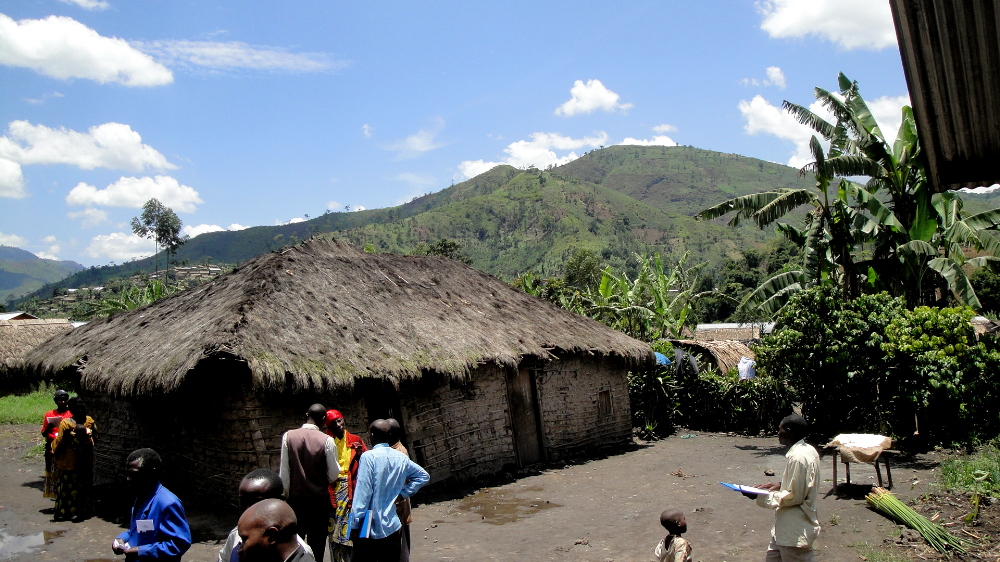
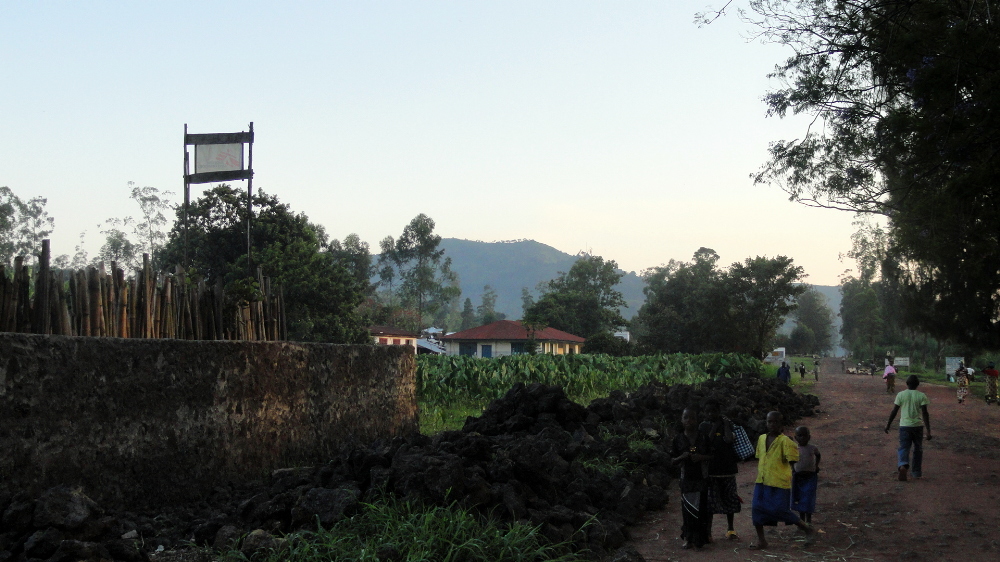
 ..and now for the captions: I don’t carry the camera around much on road trips – for security and other reasons, a good rule of thumb on the roads is to only take what you really need and don’t much mind losing – so most of these photos are from the town of Mweso; but some are from Kashuga and Kalembe, towns where we work with ministry-of-health health centers. I show quite a few of life around the compound in our office hours, including an example of how well we use our front porch for those lazy Sunday afternoons when it’s gotten a bit hot and everyone’s a bit tired. Tip: if you put your cursor over any of the photos, you’ll see the name of the file, which I’ve tried to keep informative.
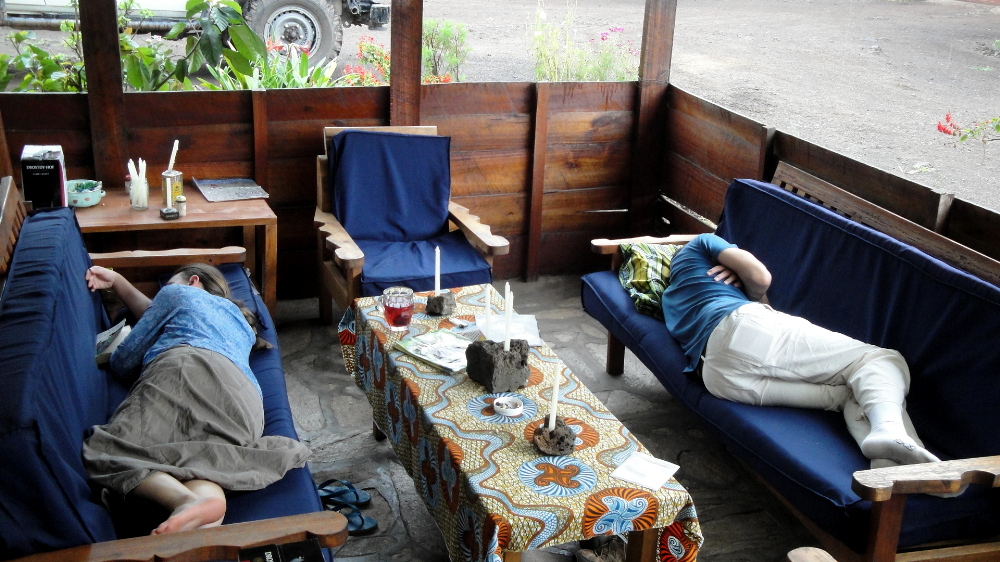
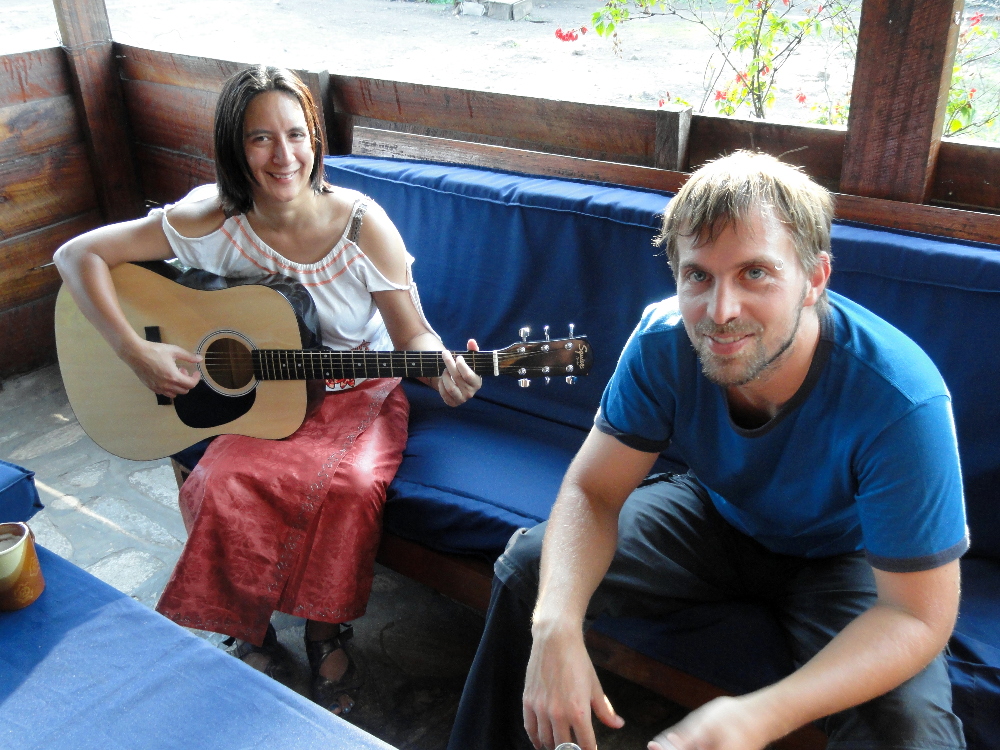


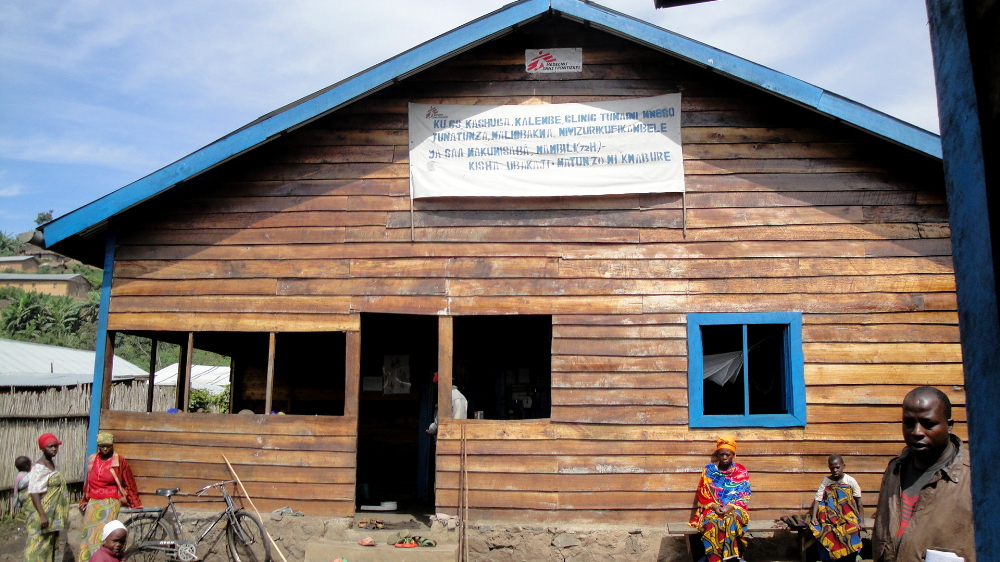

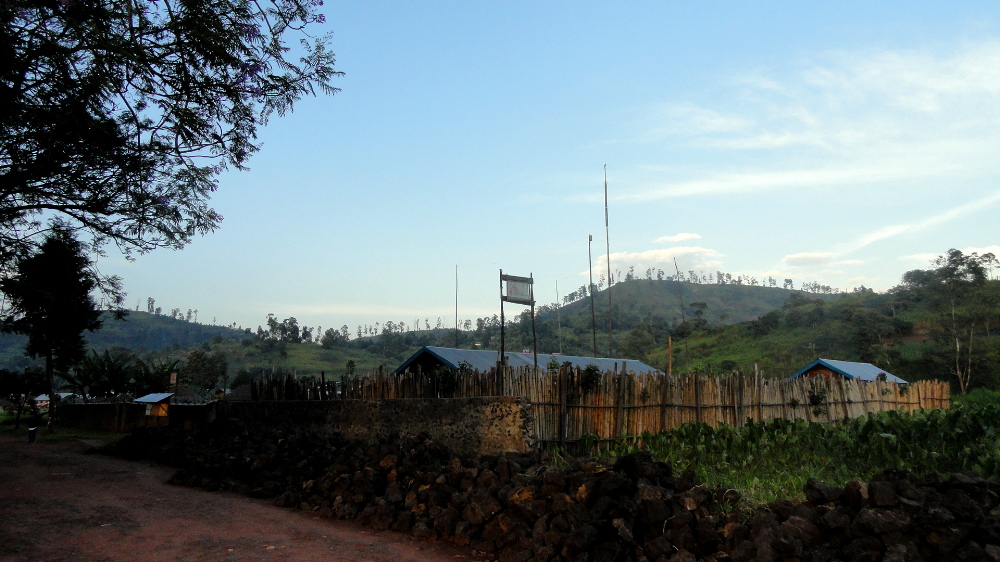
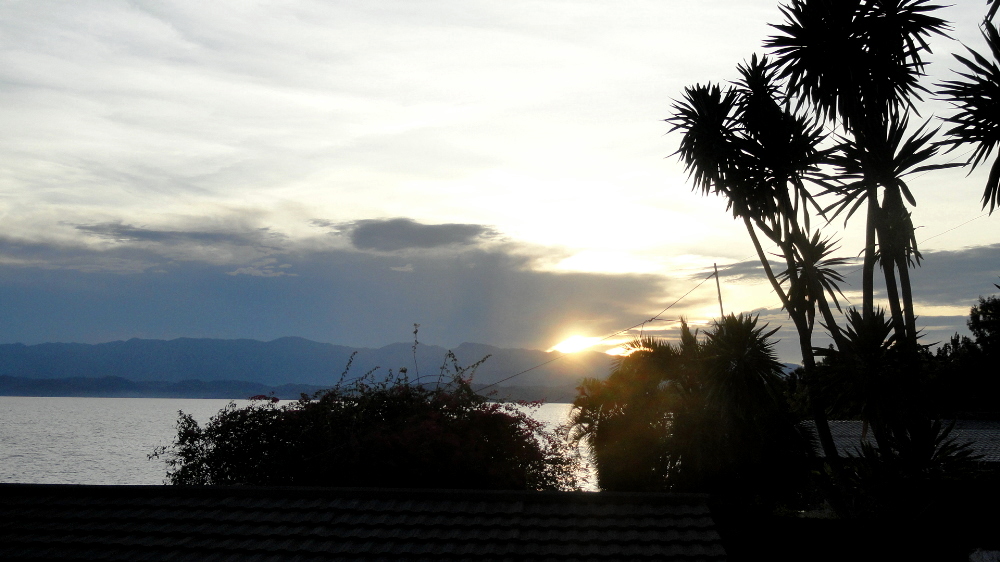
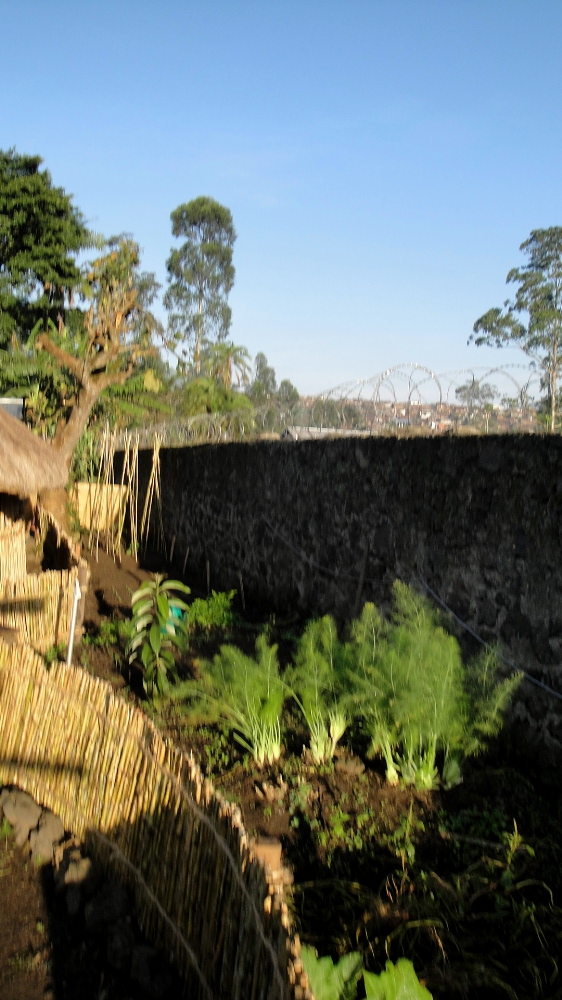
Above: a lovely sunrise view of the front door to our compound and the hills to the west; below, part of our garden (we grow lots of our own vegetables and of our newest expat arrivals brought kale and sugar-snap pea seeds!), and if you look through the fuzzy focus (sorry) you can see some hill in the background and might make out some of the huts from the IDP camp on the hill up there.
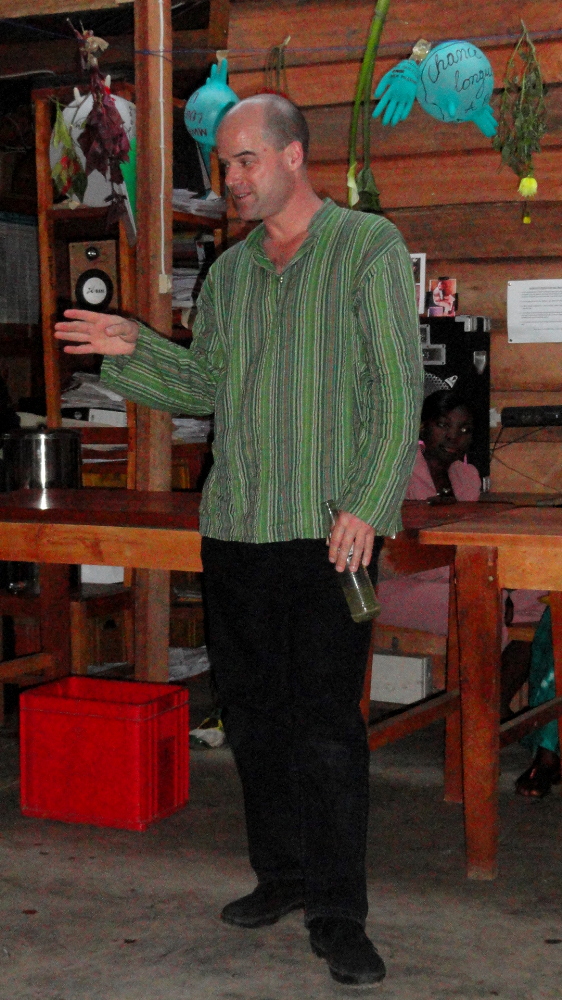
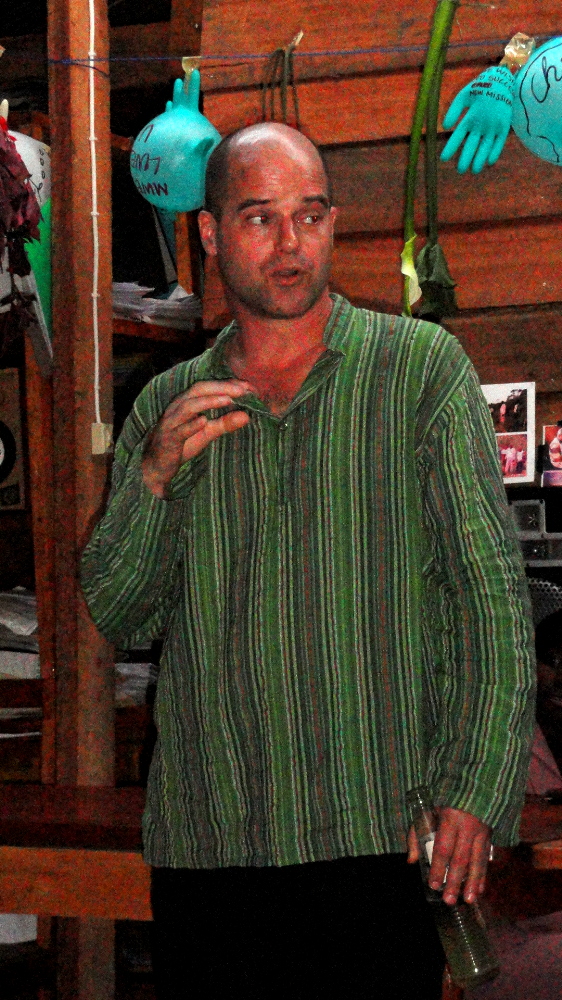
Ok, this may or may not work because the photos keep trying to overlap each other but I try to mix up the layout a bit…anyway if it works out you’ll see this caption in between two shots of me talking at the farewell party for my successor (back in December), then down below a shot of the whole team as of late January; of this team which I inherited only three still remain and one of those will be leaving the day I return. (Sob. Constant turnover, a fact of life with us…)
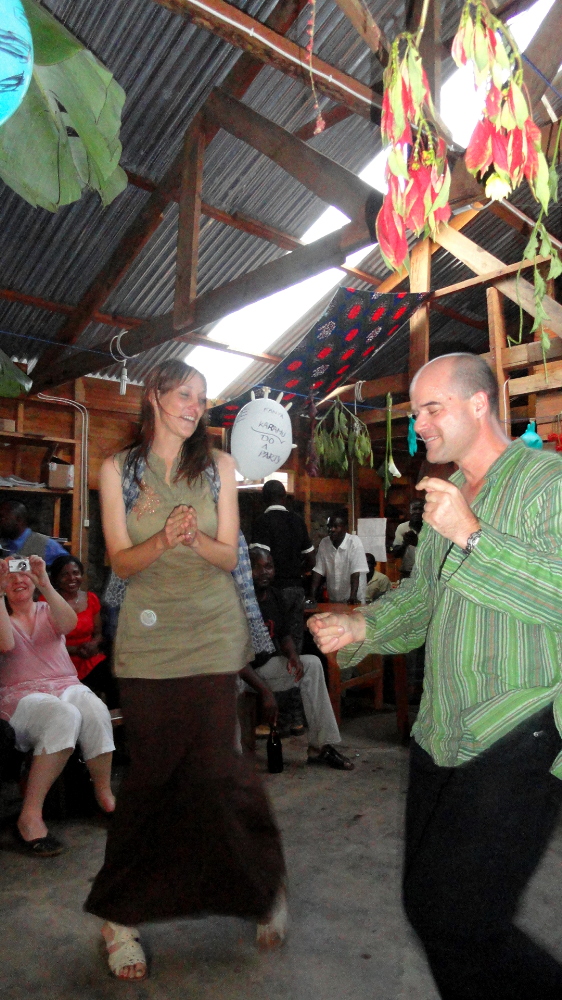
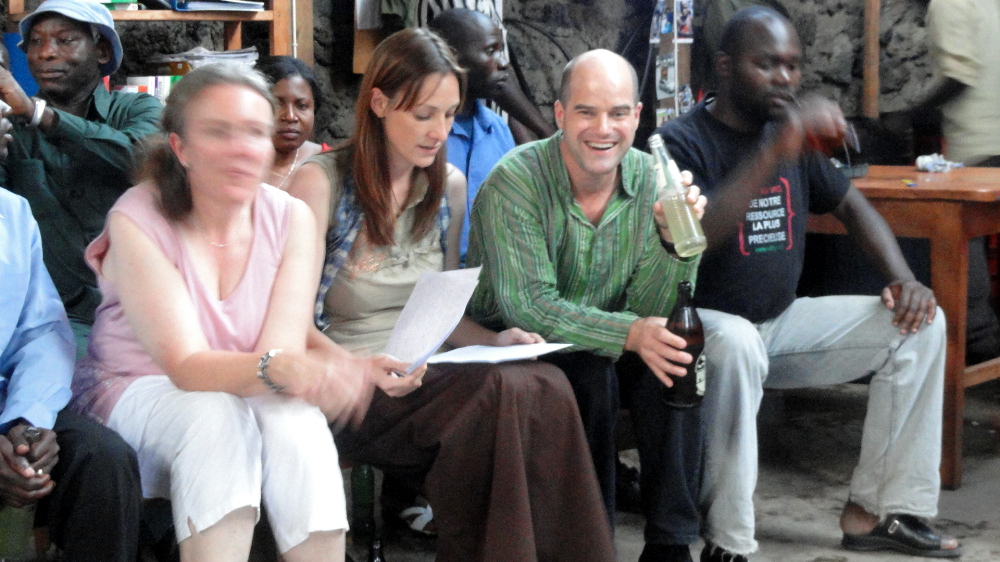
 Below, a few other shots from that farewell party.
Rambling Through Berlin @ Christmastime
 smw, slt has been in Europe for five weeks. First we did some training in Holland, then we visited some friends and family in parts of Germany (rather than burn extra carbon and money just to fly across the Atlantic two more times in a short time period), then we came to Paris where we’ve been trying to get our French up to full strength before working in it every day down by the equator. After a month of grey skies and f**king freezing temperatures – yikes! – I’m definitely ready for equatorial weather. As it turns out I’m cutting things a bit short and heading to work earlier than planned, which is just fine by me: I’m ready to work; I’m sad to miss my last week in Paris and my chance to see colleagues and friends again in Amsterdam, but I’m eager and excited to get to work again in what I’ve always heard is a beautiful, complex country that is, as the French like to say, très passionant. My dictionary says that word translates as fascinating, gripping, enthralling, exciting…which misses the point that its root is passion, a word and a concept that the French, among all, take really quite seriously. I’ll be in touch, when I can, from DRC…wish me luck and much passionant-ness. In the meantime, enjoy some views of Berlin, Paris & Holland under mostly grey skies.
 I visited in Berlin in 1980, 81 and 90. I lived in West Germany in 1980-81 and first experienced the old Soviet Bloc in August 1980, when I traveled with a class trip (from my German high school-for-a-year) to Poland, just weeks after the Solidarity movement began its strikes in Gdansk. I think historical consensus is that those strikes were the beginning of the (long) end of the Soviet bloc, indeed ultimately of the Soviet Union itself. I have dear and close friends, as good as family, scattered around northern West Germany who had relatives in East Germany throughout the GDR/DDR’s existence as a separate state. Those relatives never had the freedom to cross the border and visit their families west of the border, and West Germans faced various impedimentary rules and restrictions when visiting their own relatives in East Germany. I last visited this great world city in May 1990, when the wall and the GDR/DDR both still existed, physically and legally, but were both clearly in a caretaker, end-of-life state. That’s the only time I ever crossed the border through the “Palace of Tears,” aka Berlin Friedrichstrasse S-Bahn station, where GDR (West German) citizens were required to enter and exit East Berlin: other times I crossed that border I, like all American citizens, had to cross through Checkpoint Charlie. (It’s called Palace of Tears, of course, because of how many were shed over the years by families from east and west required to part company there until the next visit from west into east could happen.) Now I walked through Checkpoint Charlie unimpeded, along an un-walled & Christmas-decorated Frierichstrasse; and yes, with tears in my eyes thinking about how this great city and the people of this nation were cut in two for so many decades, and enjoying how very vibrant, alive, and whole both the city and the country now seem to be. Berlin’s a mighty fine city full of culture, museums, history, lovely streets and buildings both old and new, whose local and national governments have done a great job of reuniting, in a pleasant and functional way, what for so long were two halves of one whole, cut off in the middle. Enjoy the photos.
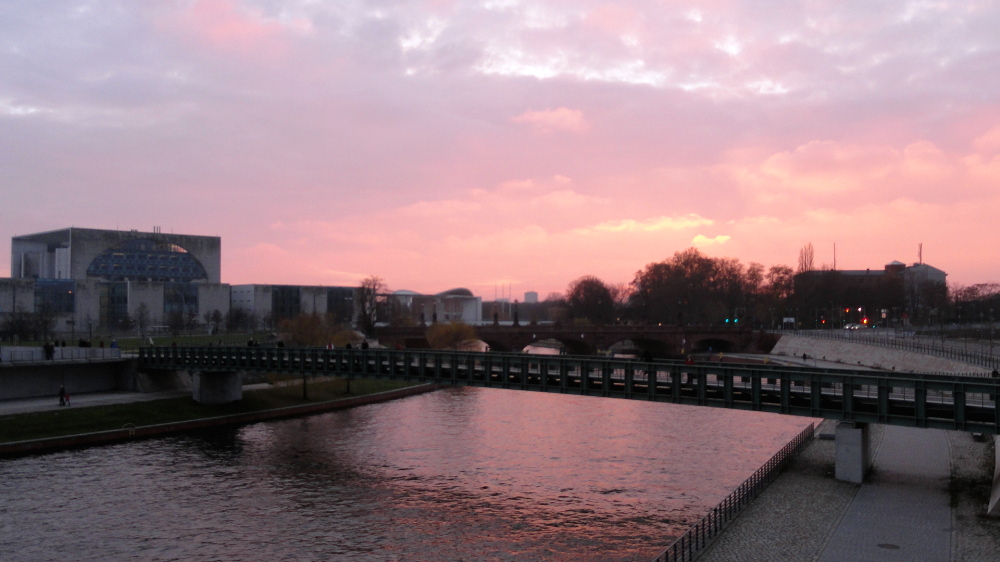
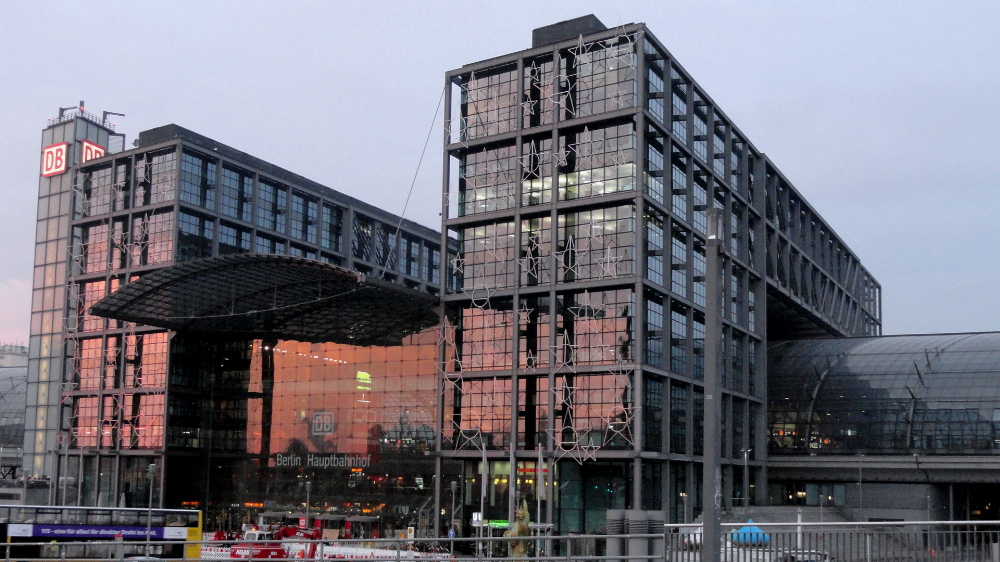
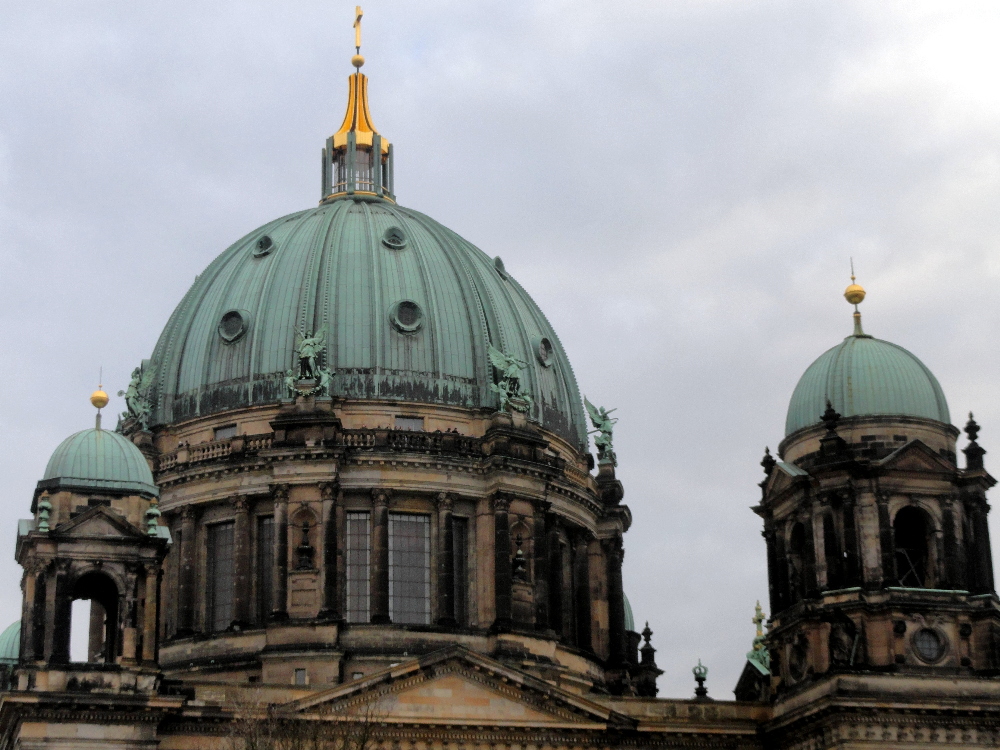
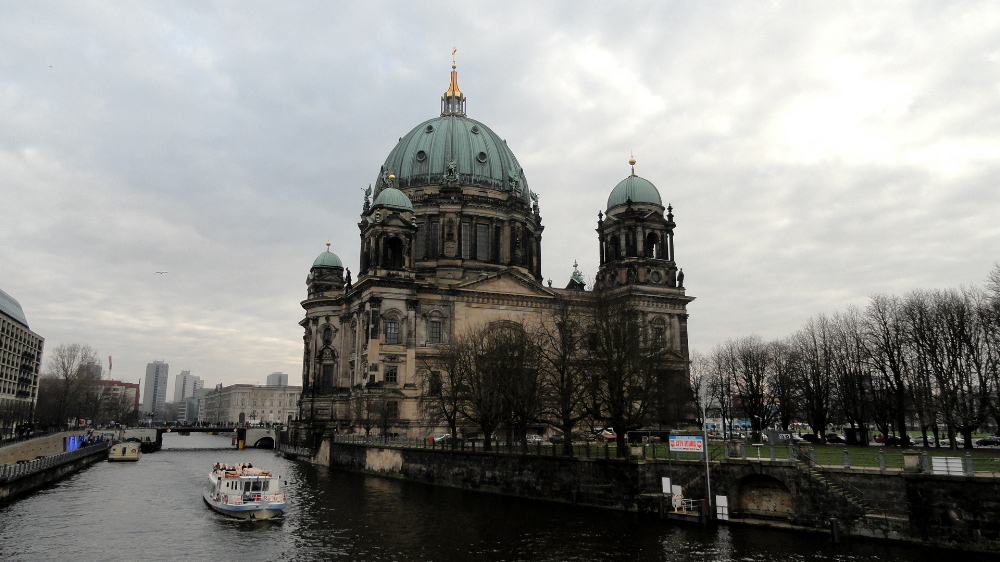
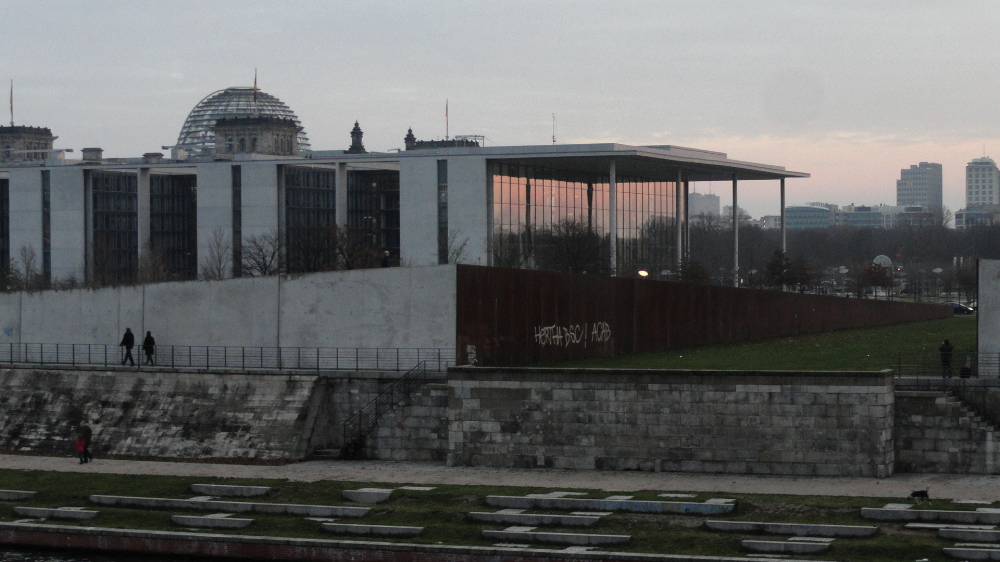
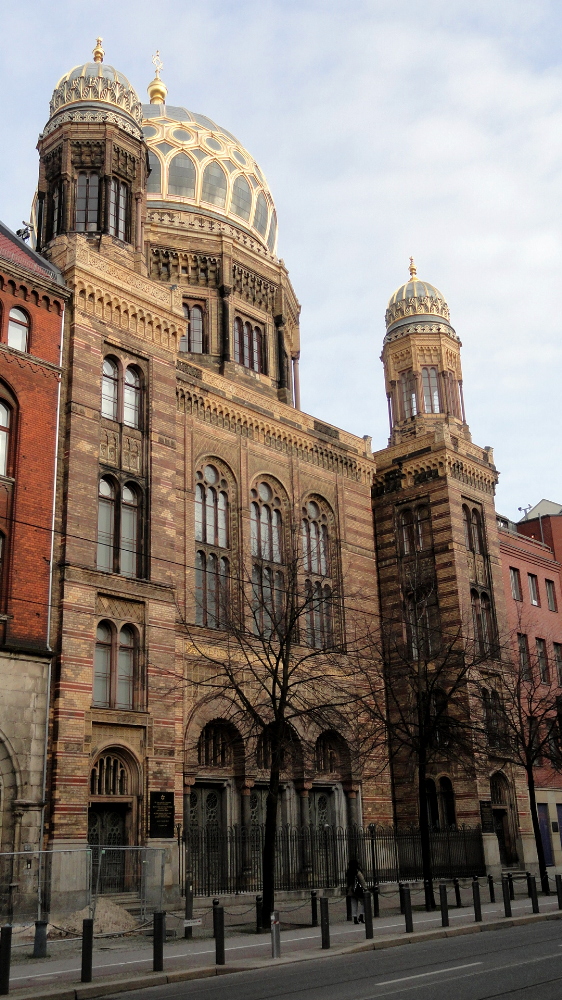
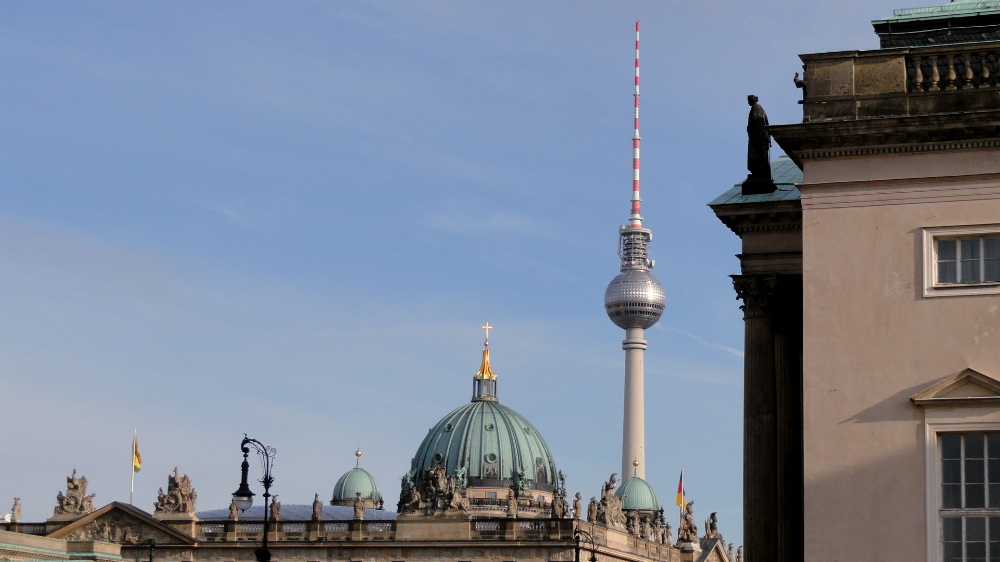
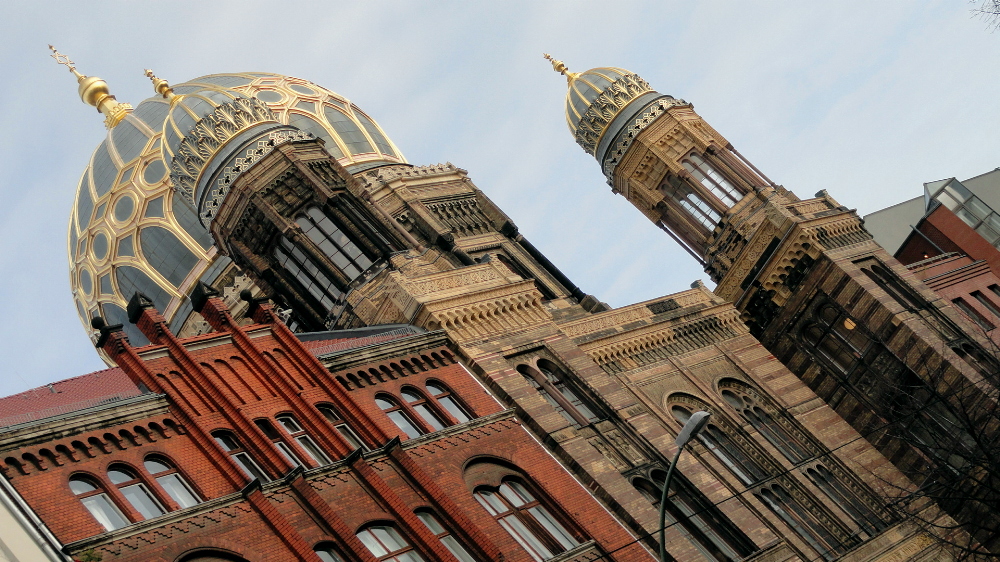 Immediately above: Synagogue on Oranienburgerstrasse, which I guess benefited from benign neglect through the GDR years as it was on the east side; below, the stunning and functional new main train station (don’t ask how trains were organized in the divided Berlin; it was messy and far from ideal), smack in the middle of what used to be the no-man’s zone; it, like most of the ultra-modern govenrment buildings you’re seeing in and around the banks of the Spree in the heart of the city, have all been put up in the past 20 years to make good use of the old barbed-wire & guard-tower death zone on the east side of the wall.

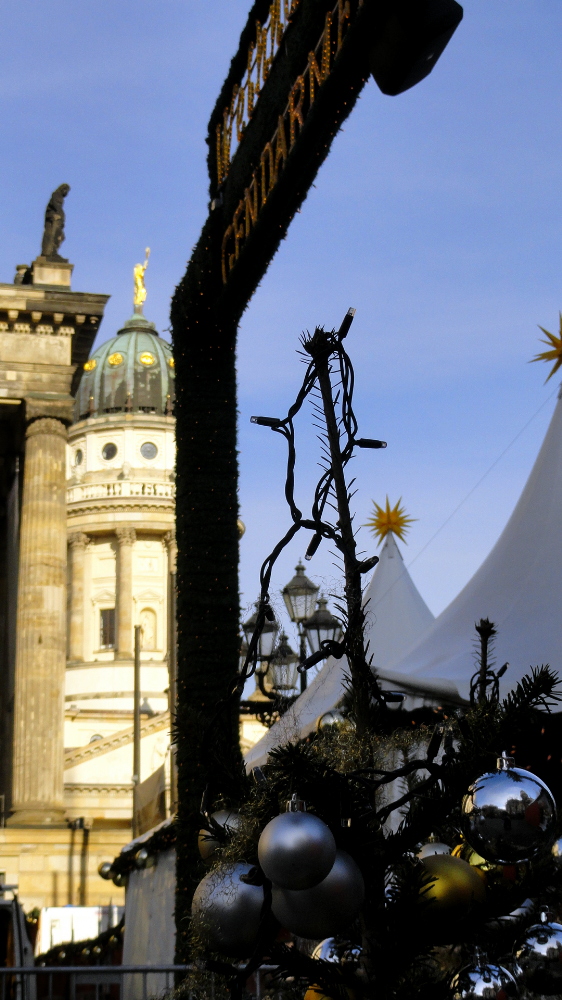
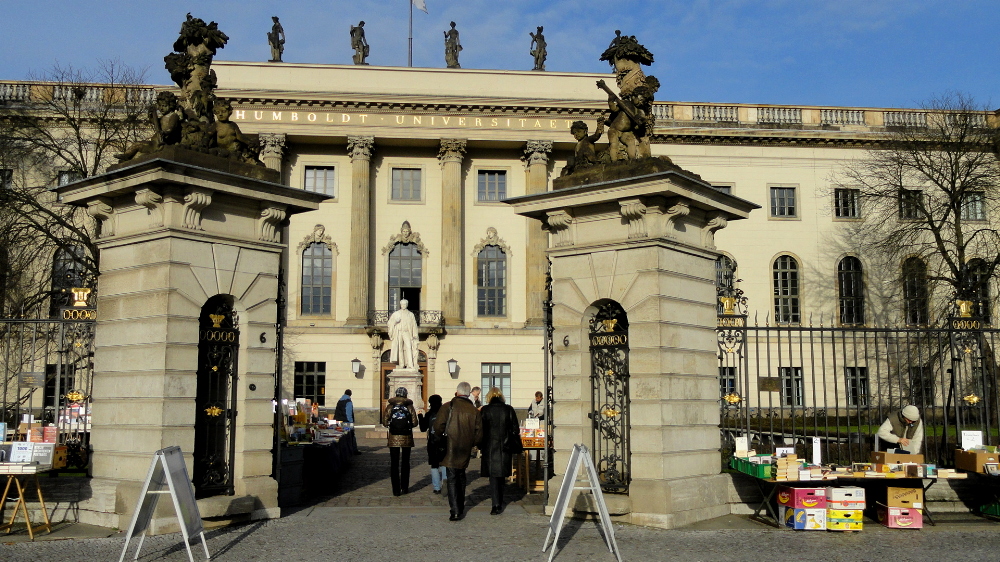
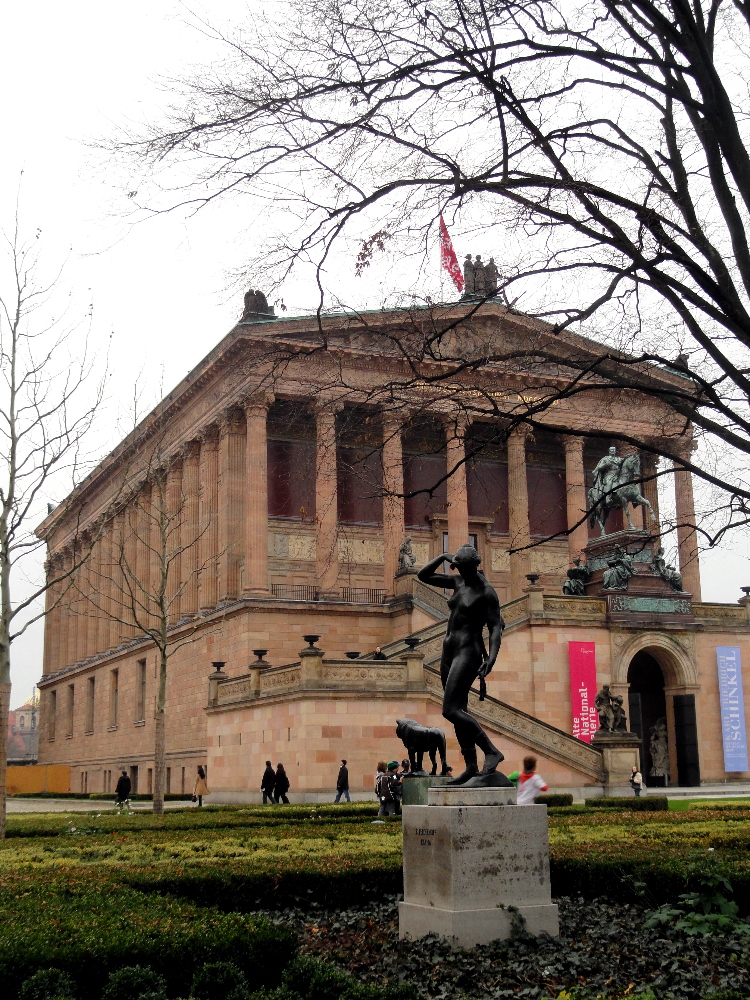
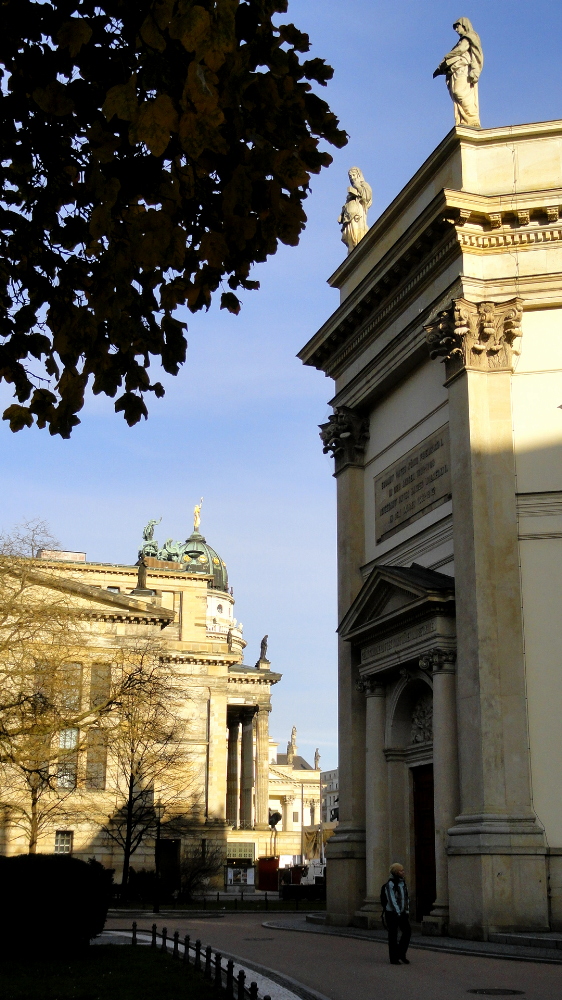
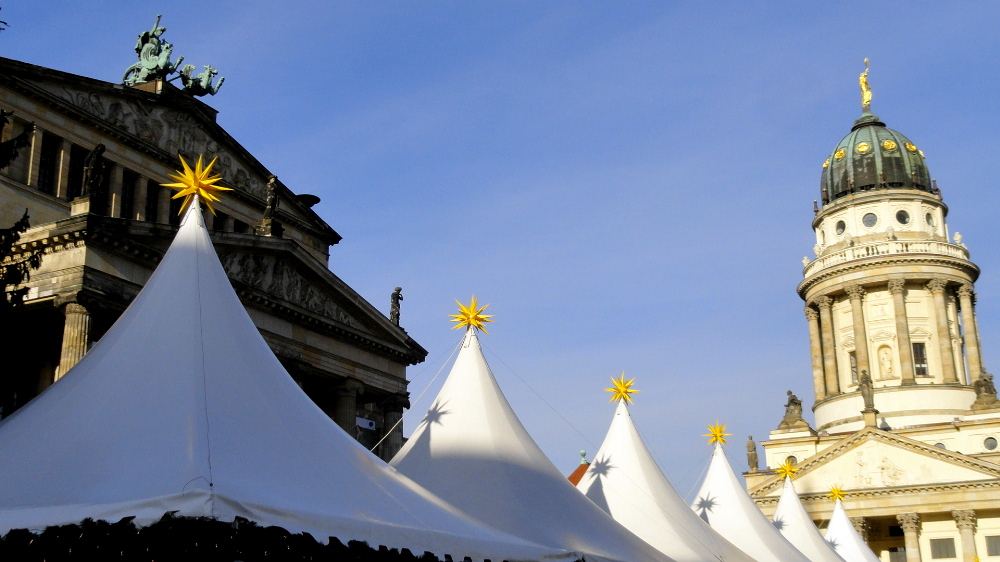
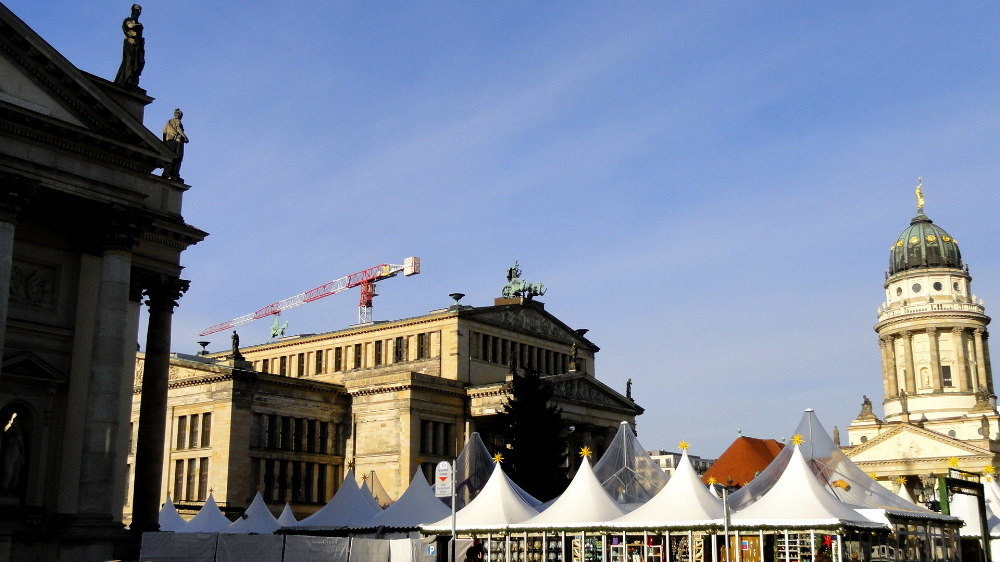
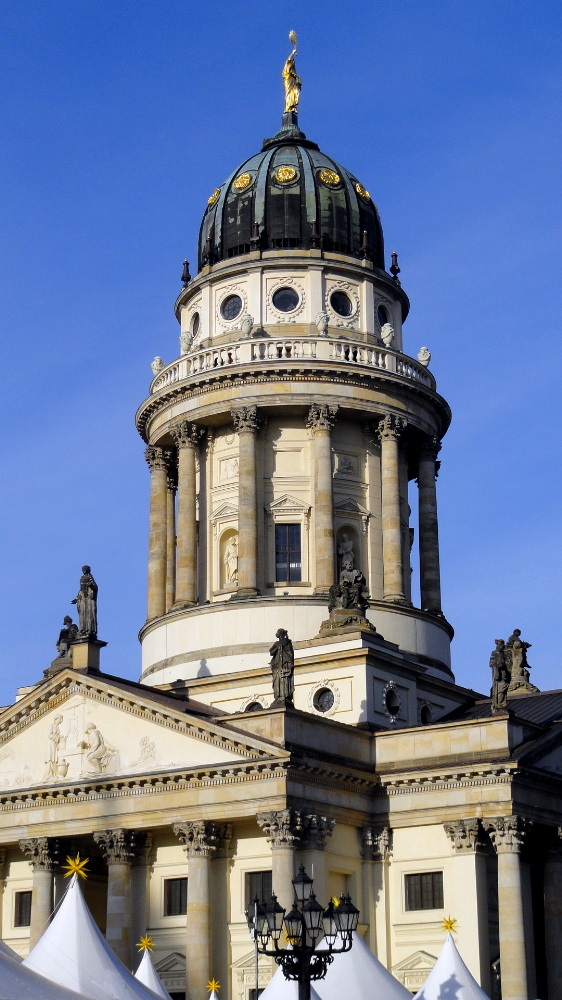
Have you noticed I took as many pics as possible when the sun managed to break through the clouds? Most of the blue-sky photos are from Gendarmenmarkt, a gorgeous public square a few blocks north of Checkpoint Charlie (and the Wall) in the former East Berlin, whose twin churches and concert houses are now lovingly restored and, these days, hosting a classic German Christmas Market. Below: one of my brother’s homes away from home, Berlin’s greatest university which has gotten a shot in the arm by being on a newly reunited Unter den Linden, also on the former east side… And below that, one of the grand old buildings on (formerly east side) Museum Island, which amply demonstrates why taking photos is more fun when the sun is shining.




By the Banks of the Seine
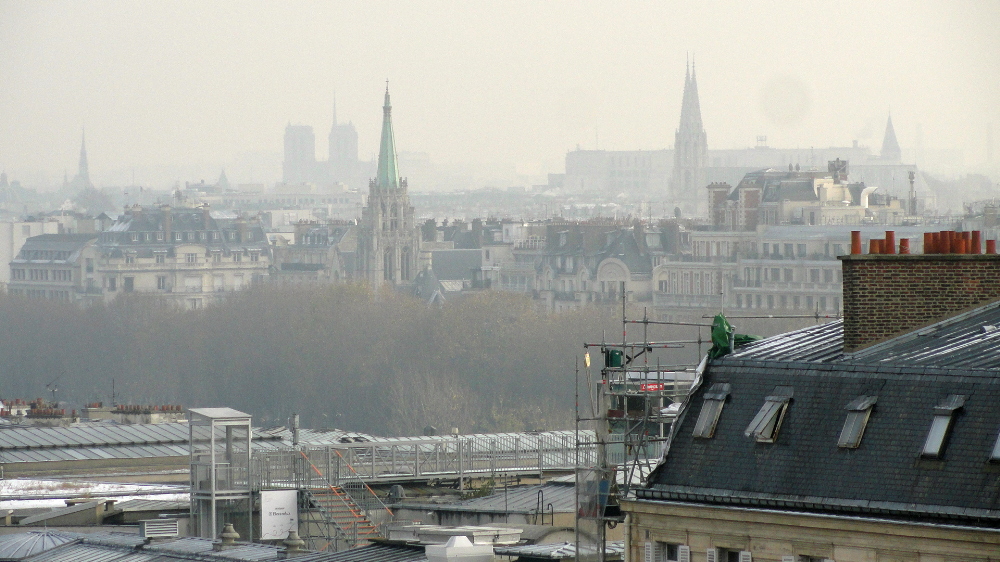
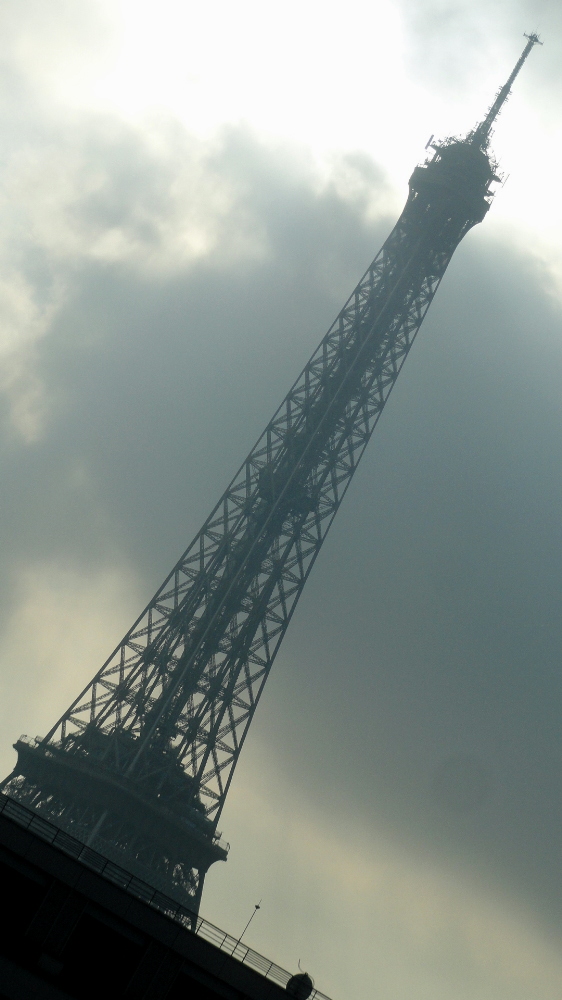 So the plan was to spend two weeks+ in Paris, taking in French-language movies and plays by the score, reading one or more novels each week, generally getting my French fully grooved and normal before starting to work in it as my day to day language for the first time ever. Oh well: with this early departure, most of that’ll be left undone and … I guess I’ll just have to come back on vacation some time! At least I remembered to take my camera out a few times, and despite steadily grey – and often very snowy – skies I did capture a few images I’m willing to share. And thanks to Howard and Gene, I’ve filled my head and soul with wonderful music performances most days I’ve been here, plus quite a few of the museums and sights of the city. Highlight: baroque ballet (Mozart and Gluck) at the Royal Opera within Versailles Palace: excellent production, extraordinary setting in the palace after dark with no regular tourists around, truly a feeling of privilege. As always and ever, thanks to G&H for generosity and scouting/research. 🙂
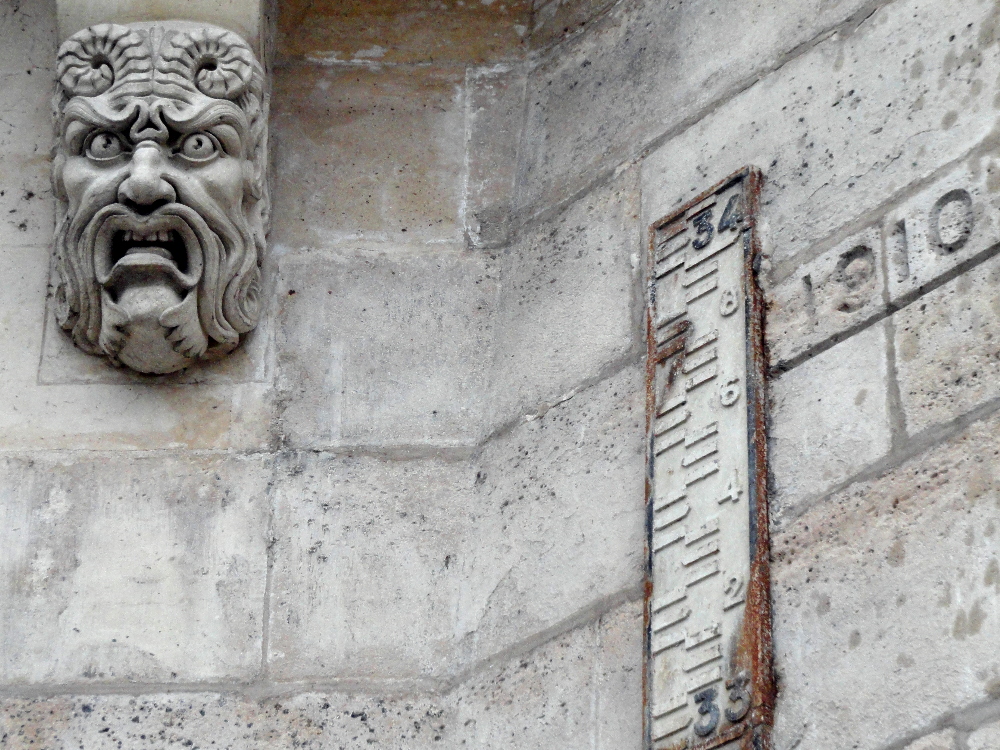
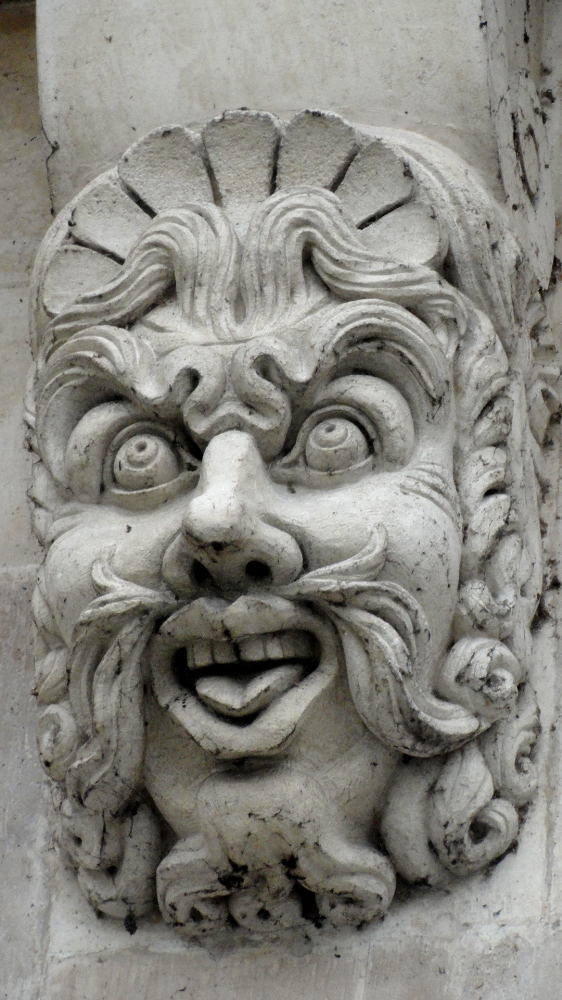
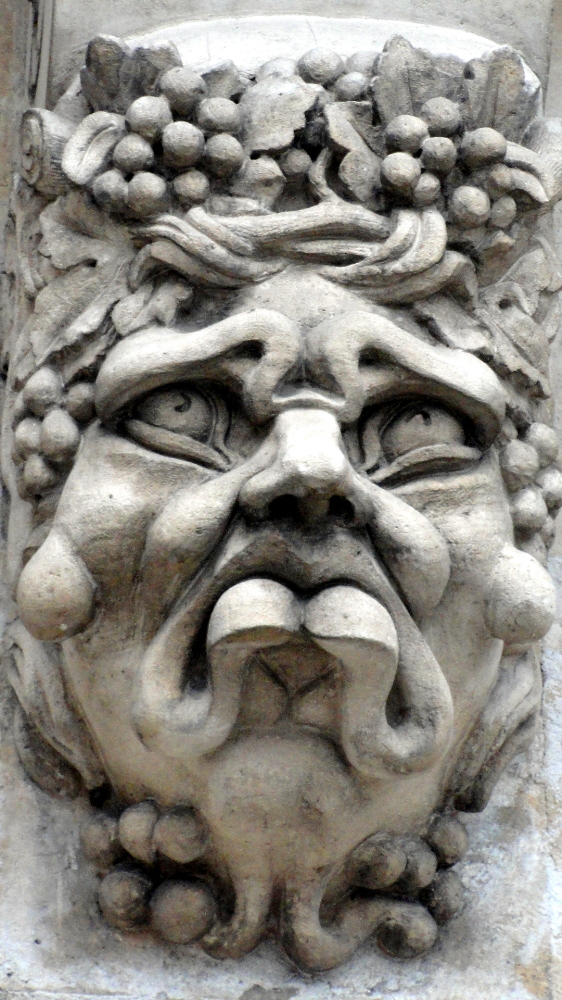
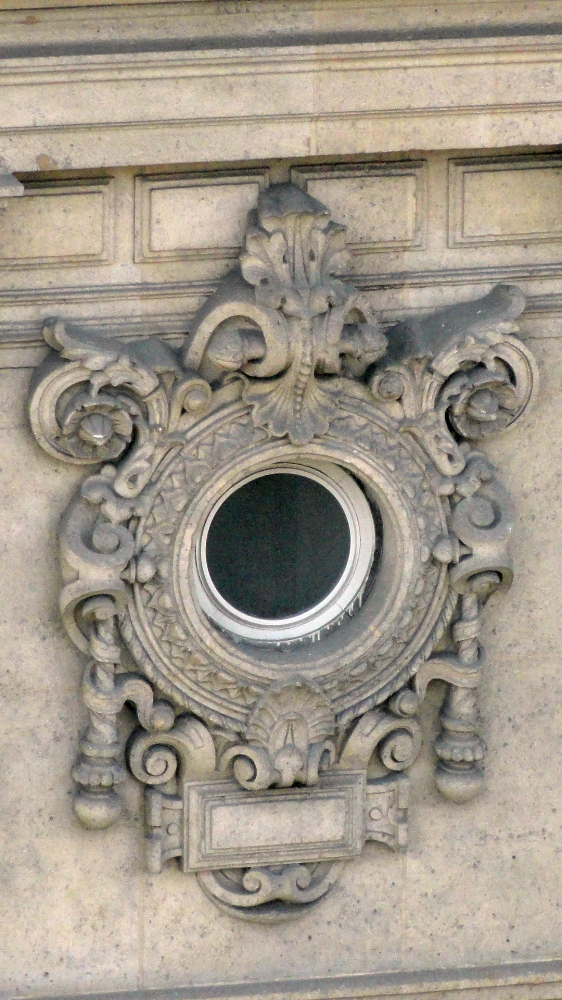
The Seine, naturally, is central to anyone’s experience of the city, and I’m especially fond of the many statues, gargoyles and other ornaments the adorn the various bridges over the Seine through the city. The above guy sits next to a marker showing the high-water mark of the 1910 floods, in which the river didn’t actually rise above the hastily-heightened levies, but seeped through gutters and sewers and flooded the city indirectly, leaving many streets (and the train tracks at Gare d’Orsay, now a lovely museum) under several feet of water. So many bits of the city’s long history are tucked into corners and side streets and odd places, which is part of the joy of a slow exploration of it, over time. 🙂 Below are more ornaments from bridges, one of two from buildings around Place d’Iena (as seen from the Asian Art Museum) and, for fun, of a Japanese statue mounted on a wall inside the Asian Art Museum.


Autumn in Amsterdam & Noord Holland
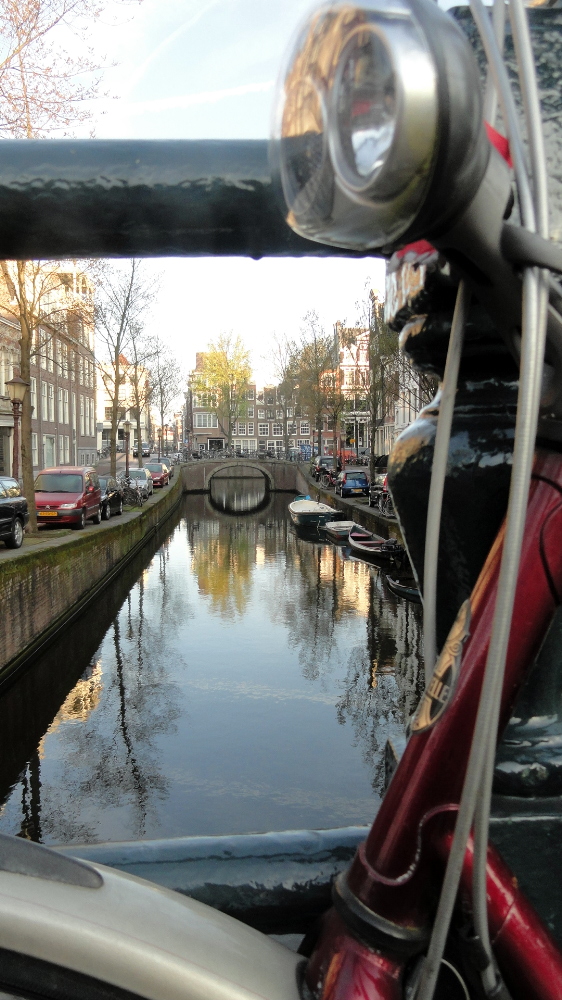
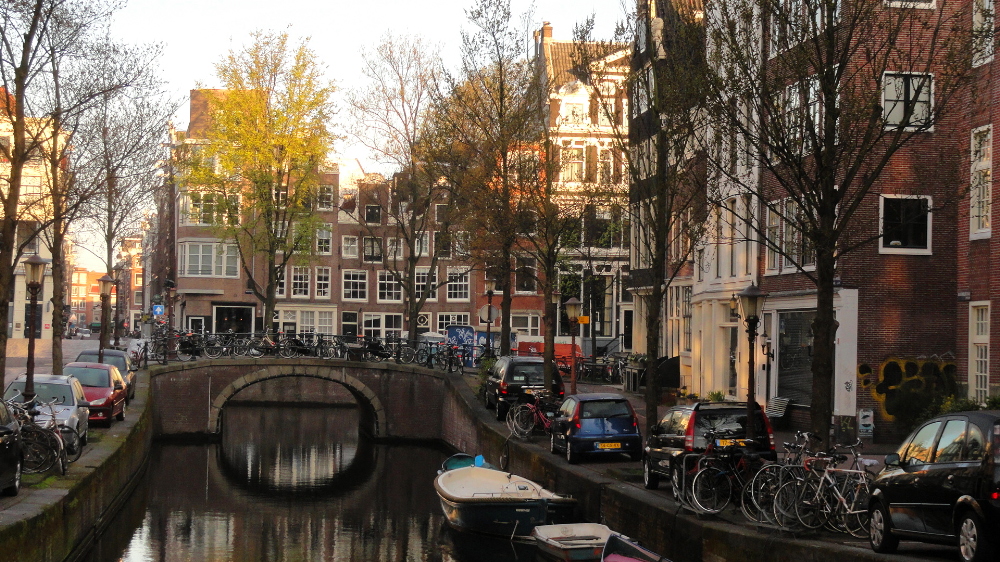
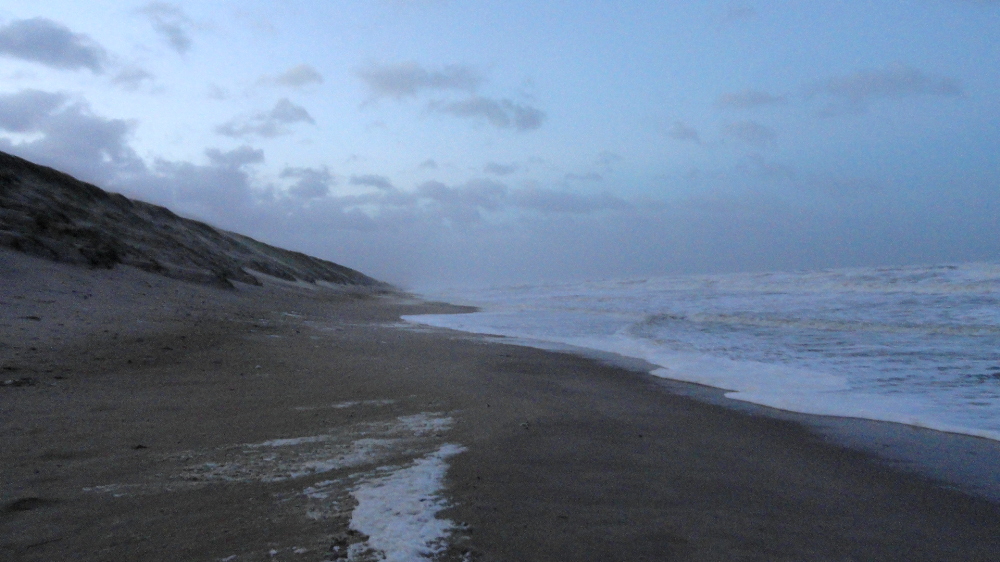
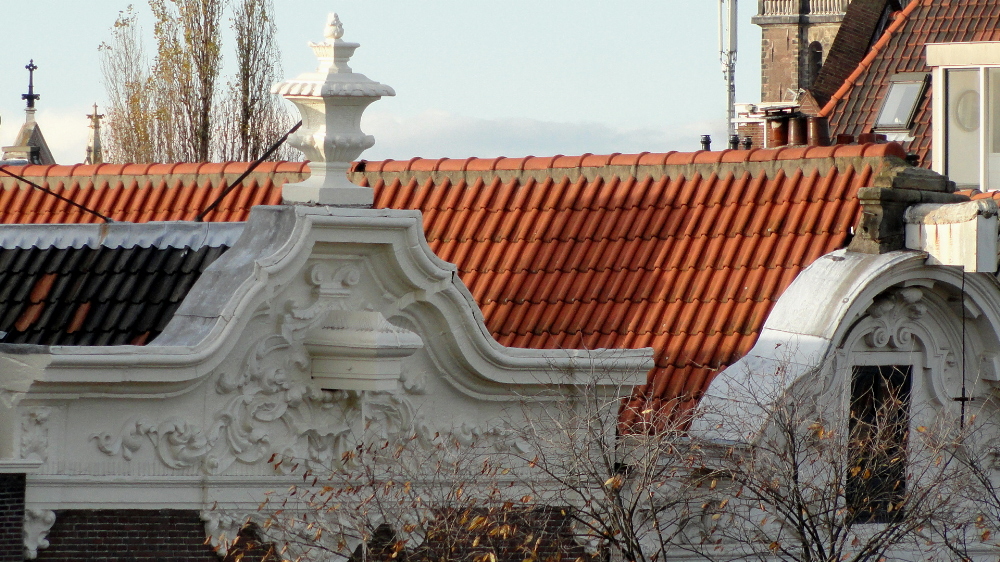
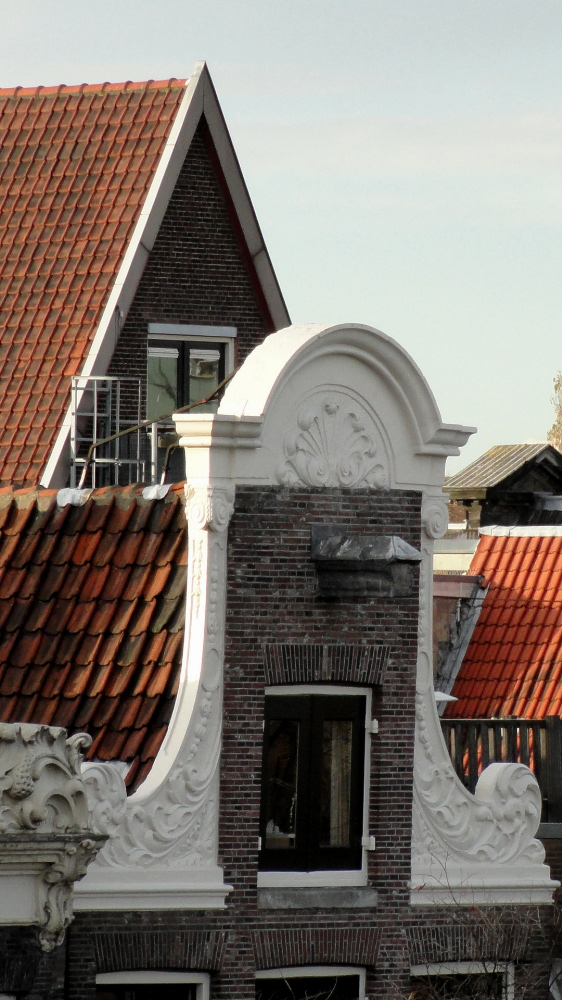
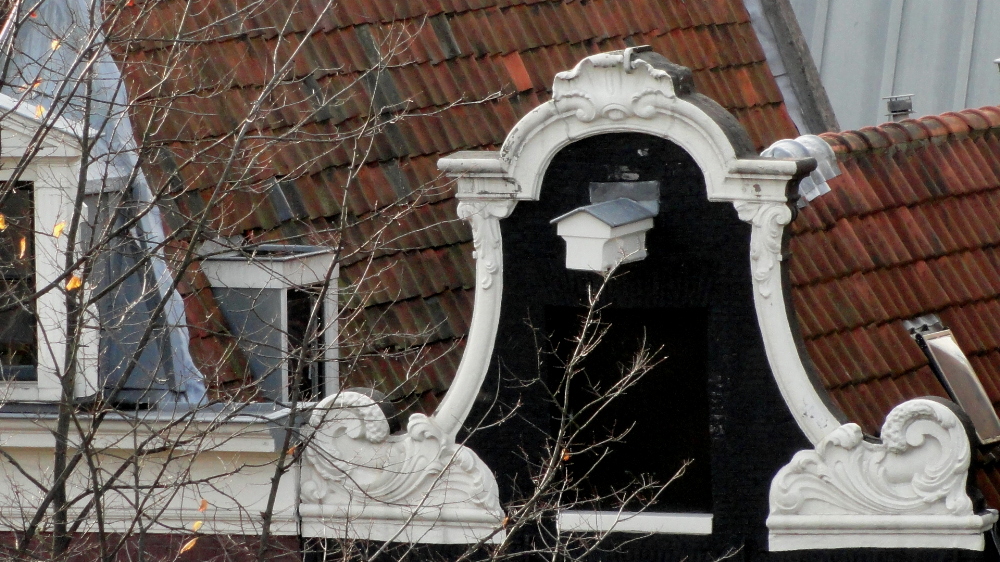
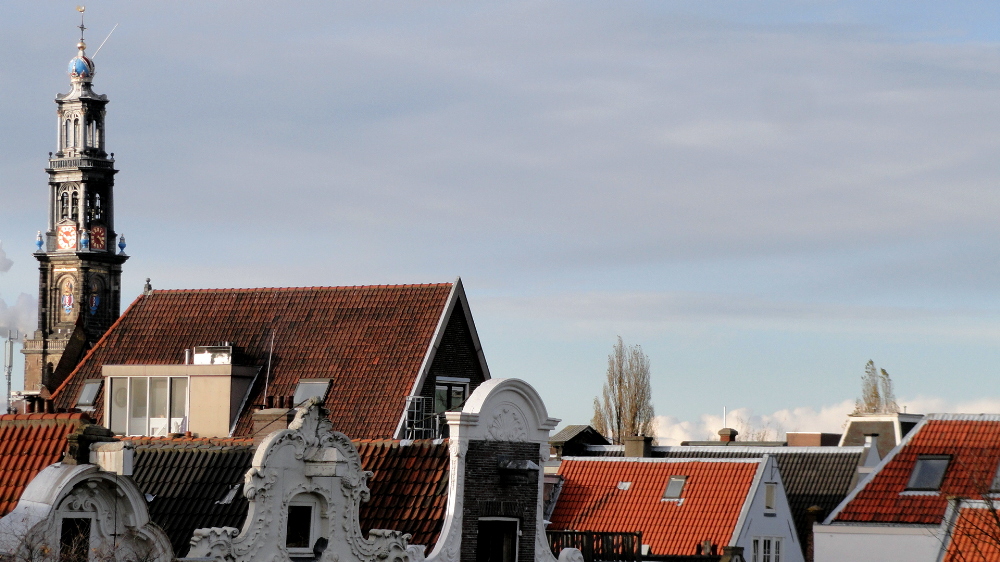 The first two weeks of November were spent mostly in a small town in Noord Holland – a little bump of land that juts up into the North Sea above Amsterdam – with an extraordinary (I don’t say that lightly) group of colleagues getting some more training for my ongoing career with this pretty darn amazing organzation. During the middle weekend, I escaped into the city so I could have lots of Chinese & Thai & Indonesian food and walk the streets & canals of this lovely city, grey rainy weather notwithstanding. These are mostly photos taken from the window seat of my room at the very top of a gorgeous little hotel right by a canal on the west of the city: the afternoon I checked in was one of the extremely (depressingly) few days of the entire past month where there were periods of blue sky and actual sun. The ocean shot is from the outrageously windy morning of 12 November, when most of us decided to bike over to the coast before starting the final day’s classes. Talk about sandstorms: I now know how dunes are really formed, firsthand. We were all sandblasted, but it was very worth it.
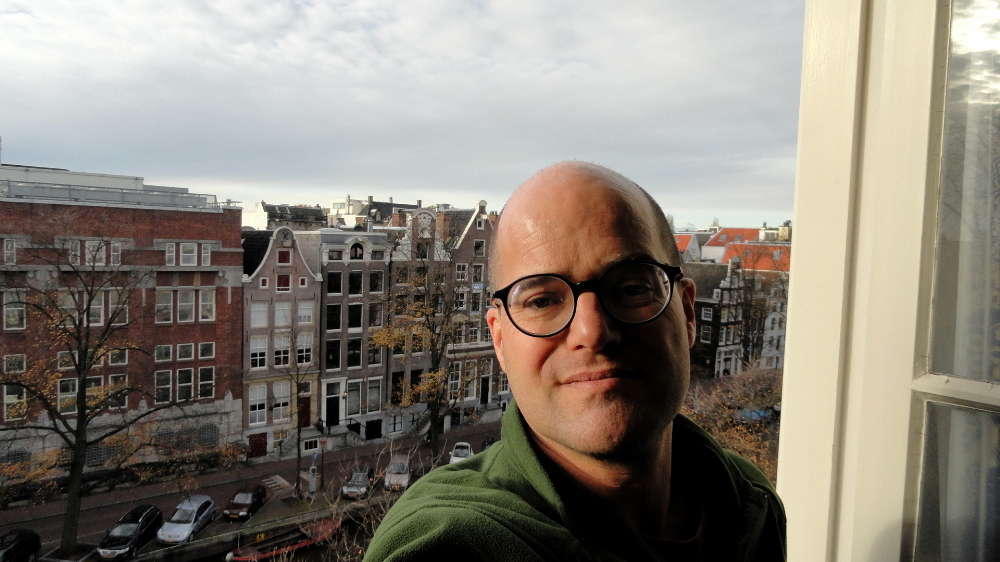 …this is the only photo of me during this visit in Europe. Oh well.


 (so much world, so little time....)