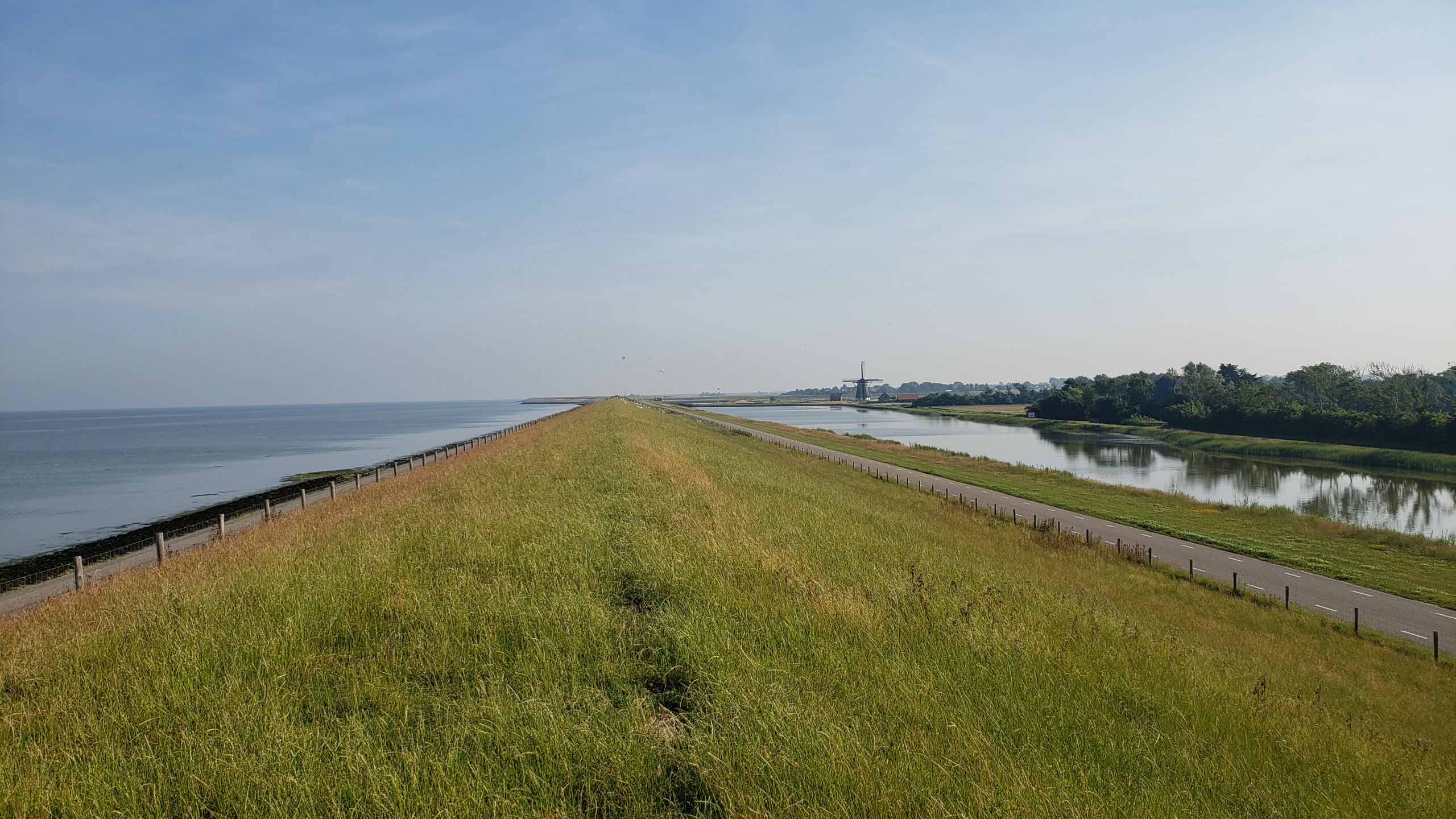
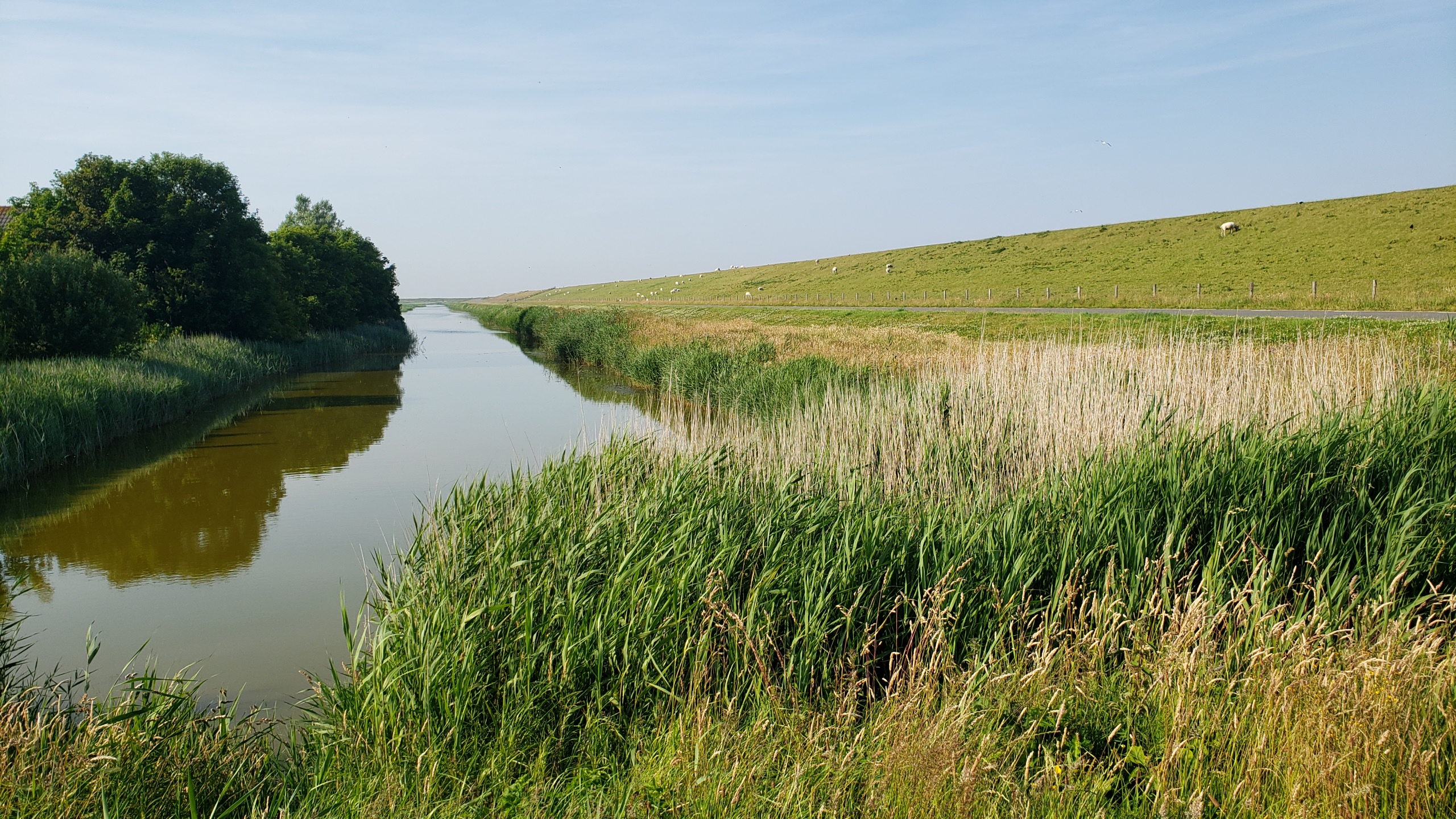
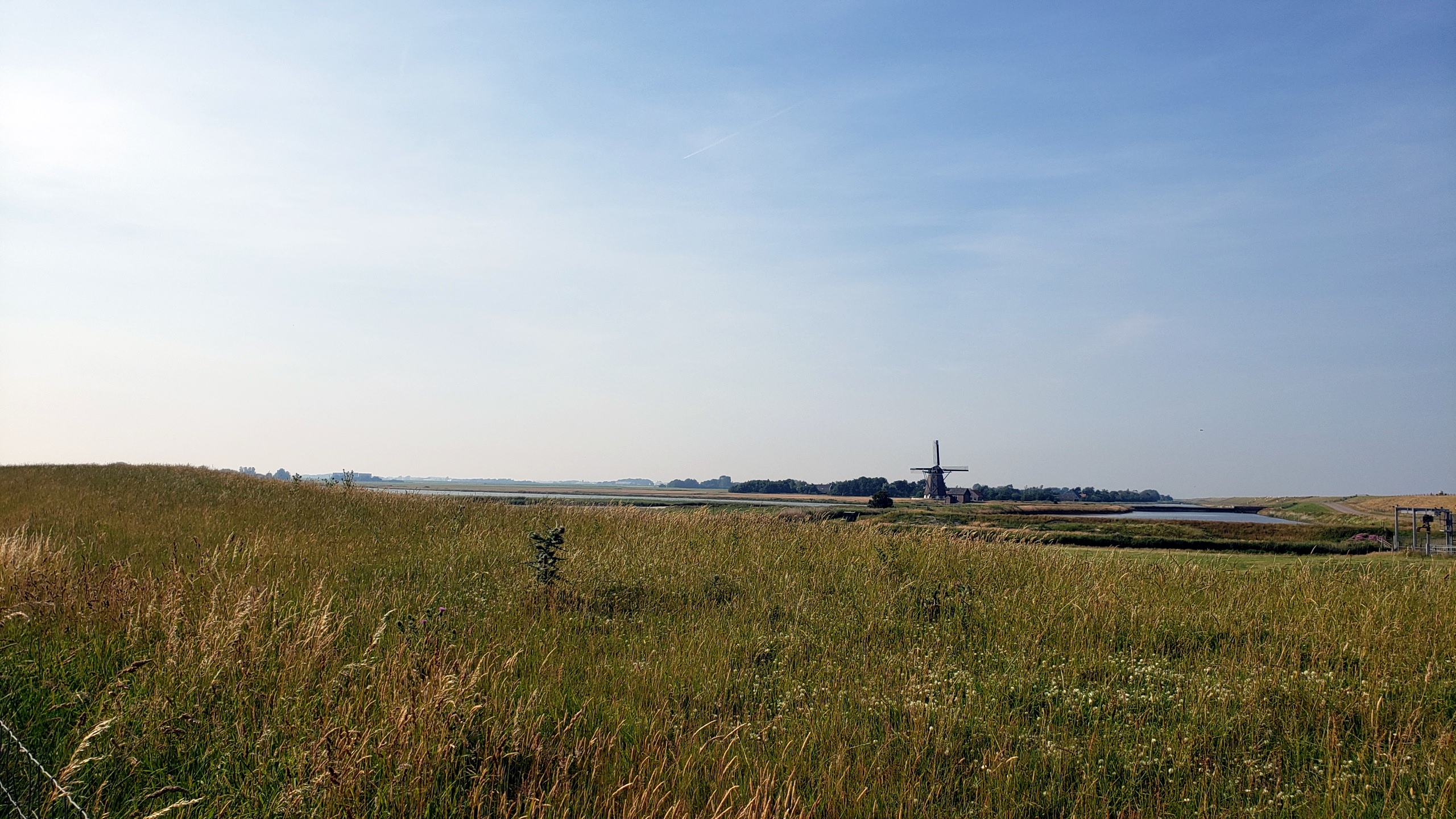
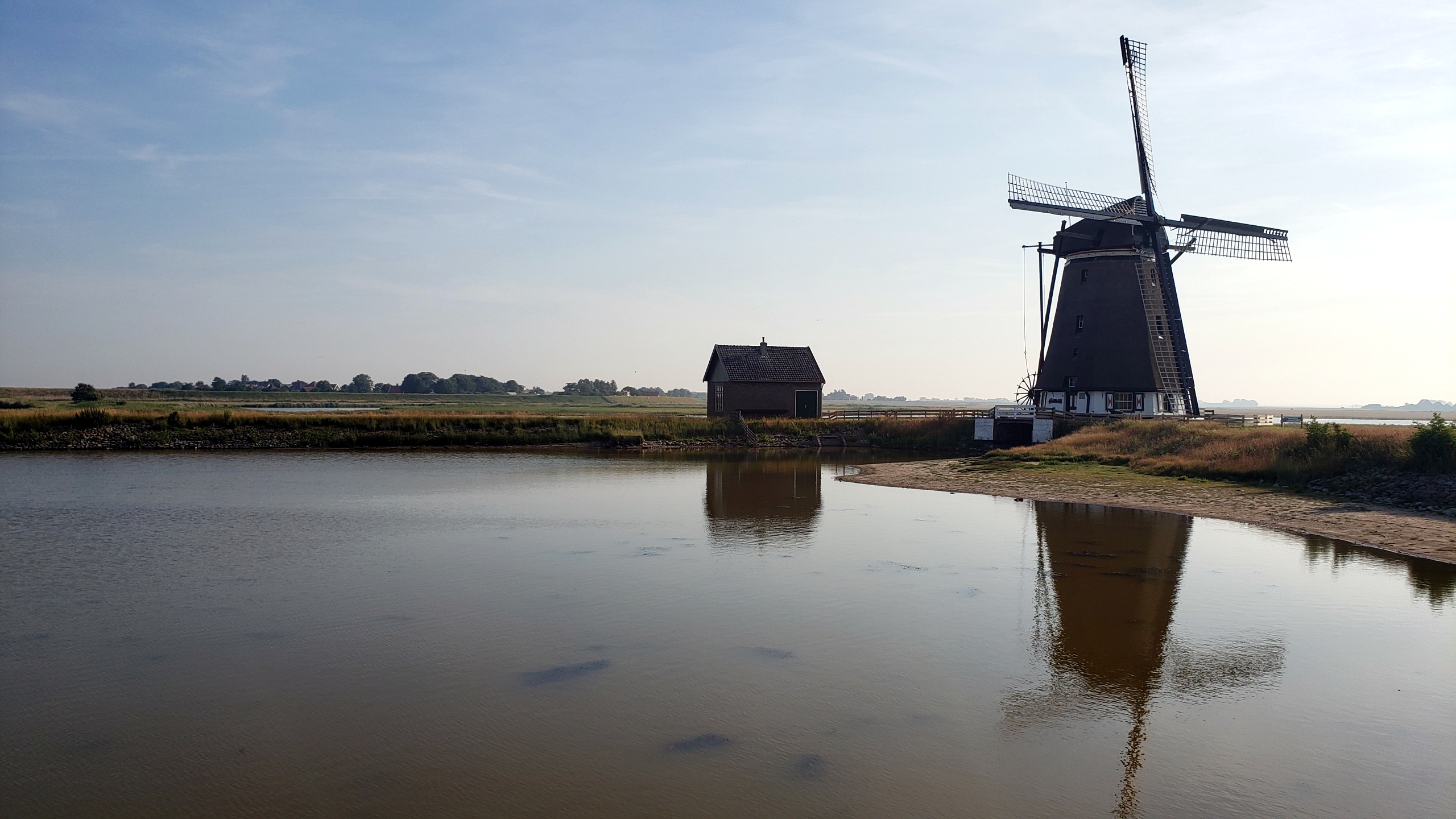
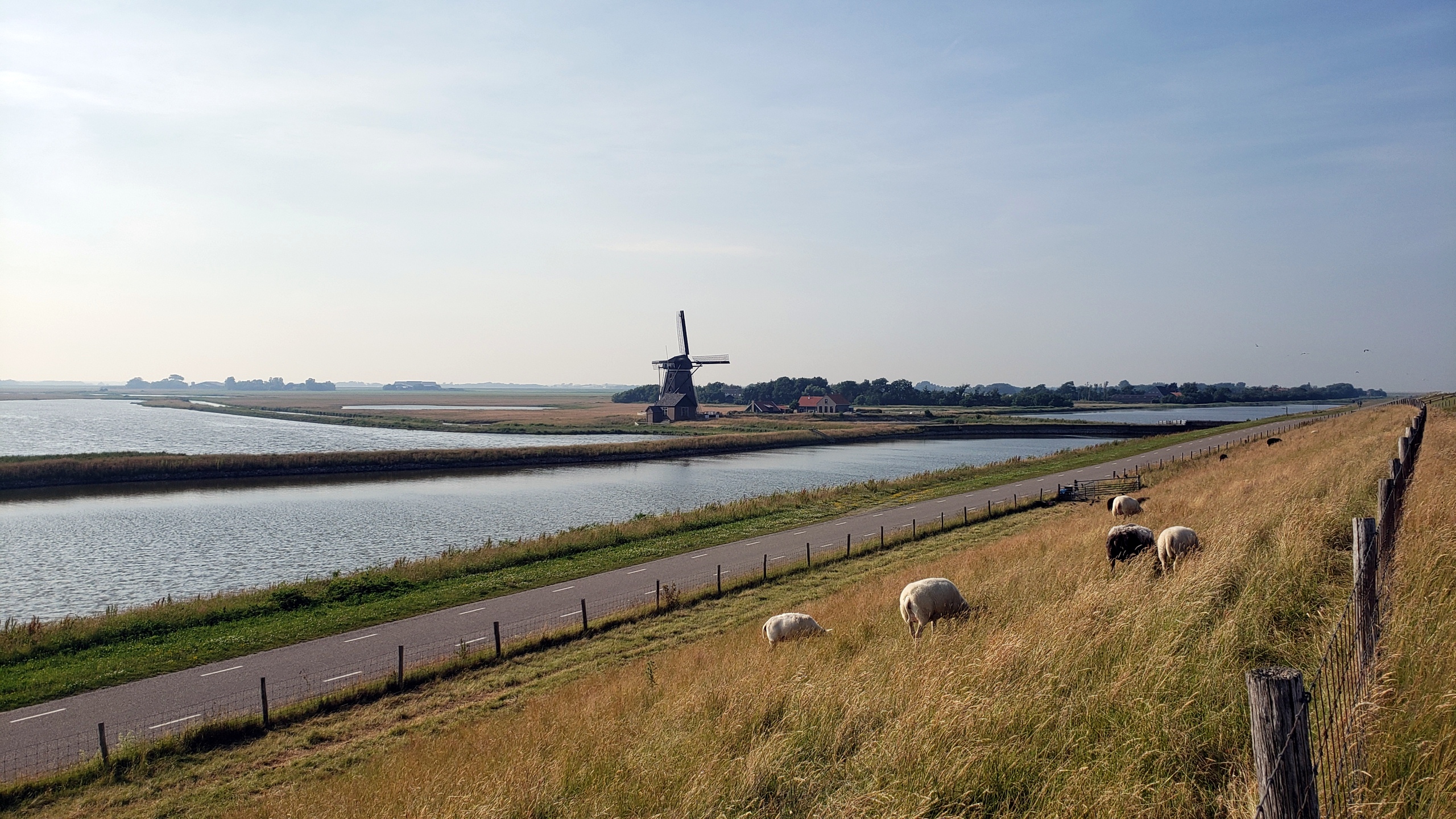
This is the dike about which my brother Steve asked me in a recent post. To the right is an inland (country) canal, to the left what I believe can already be called the Wattenmeer or Wadden Sea here, although most folks think of it as being much further east. Texel is the westernmost of the many Frisian islands which collectively – I believe? – form the outer boundary of the Wattenmeer. Correct me in a comment if I’m wrong, someone, please. This dike runs most of the length of the eastern edge of Texel, where natural dunes aren’t as prevalent as they are on the western (much windier!) side. The road – also named Lancasterdijk – runs up nearly to de Cocksdorp, which you’ll see again from this vantage point in our next post :-).
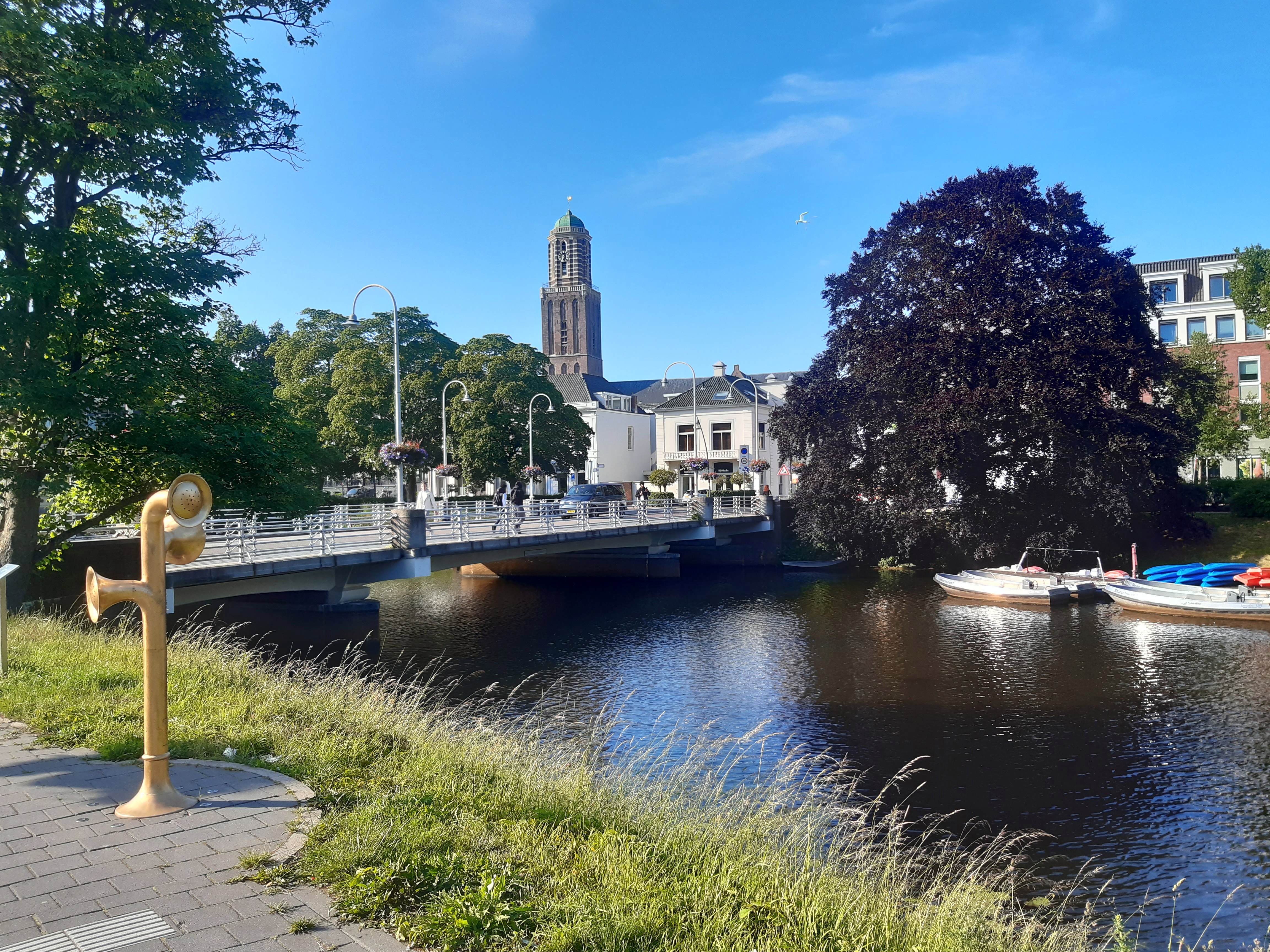
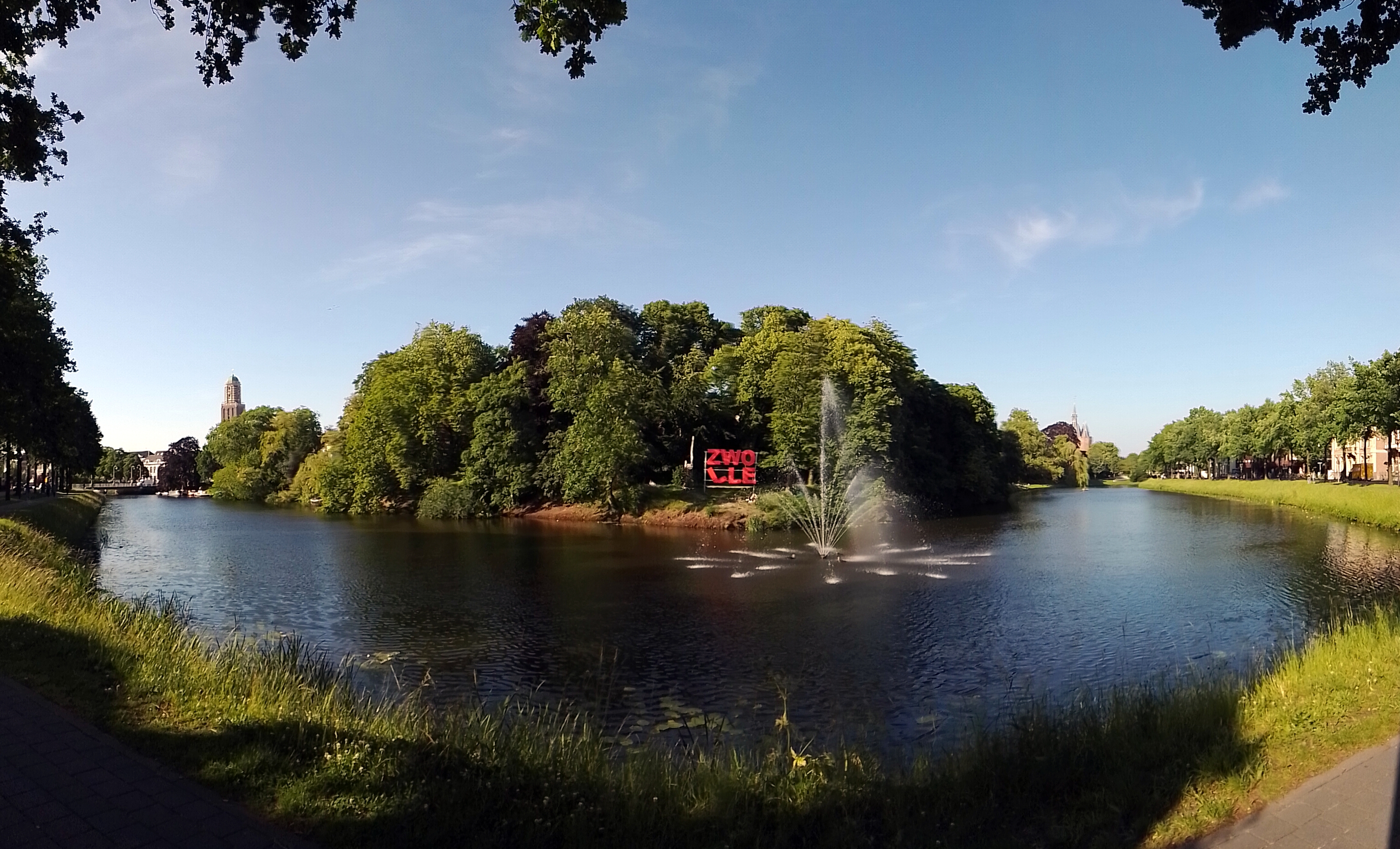
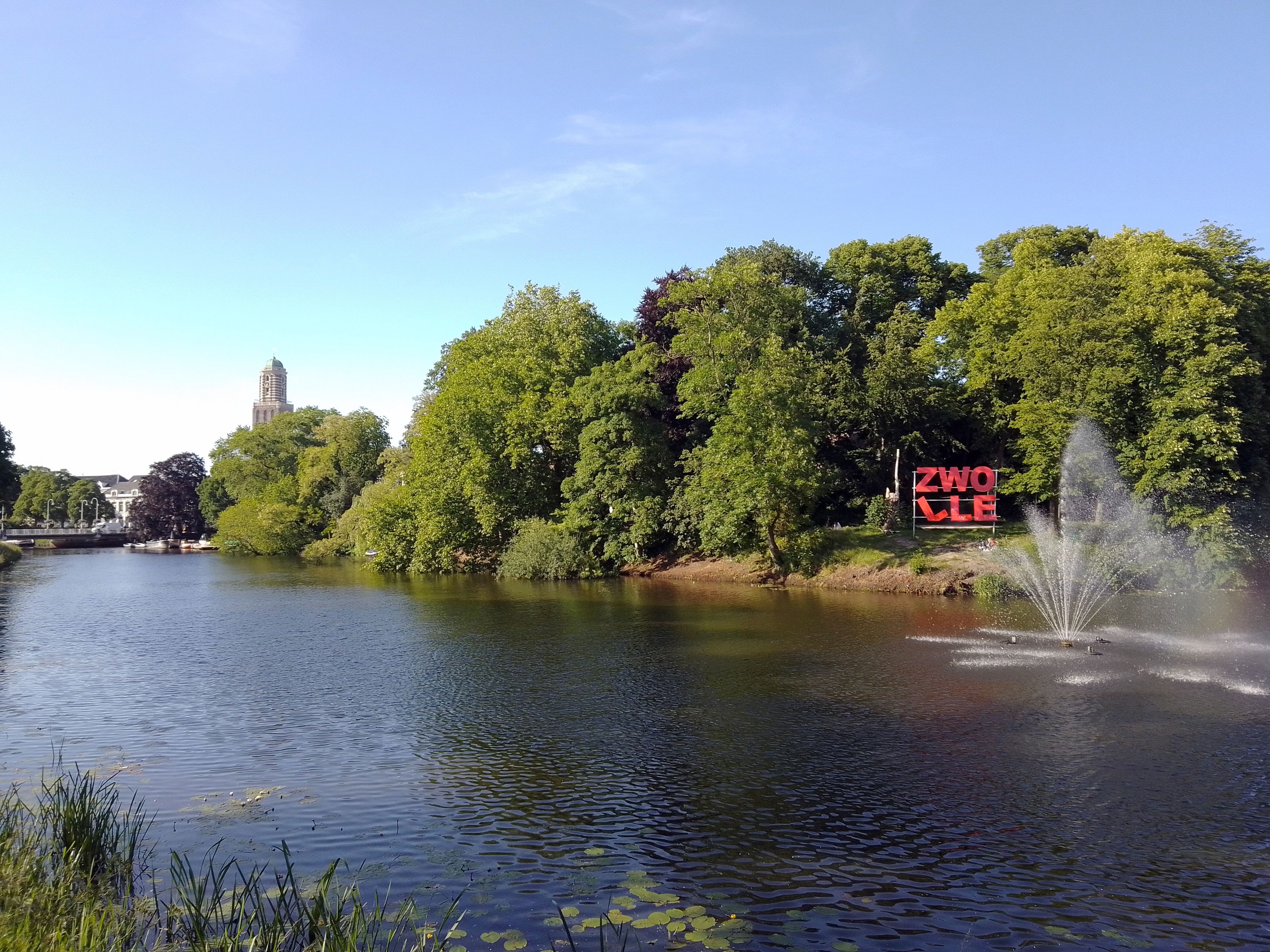
More photos from lovely Zwolle, two which we introduced you in an earlier post. The Upright yellow contraption in the photo on the left was some form of audio-art installation whose details and sounds I’ve forgotten; the unusual roof in the photo on the right belongs the main museum in town, a photo of which in its entirety you will see in an upcoming post quite soon, I promise.
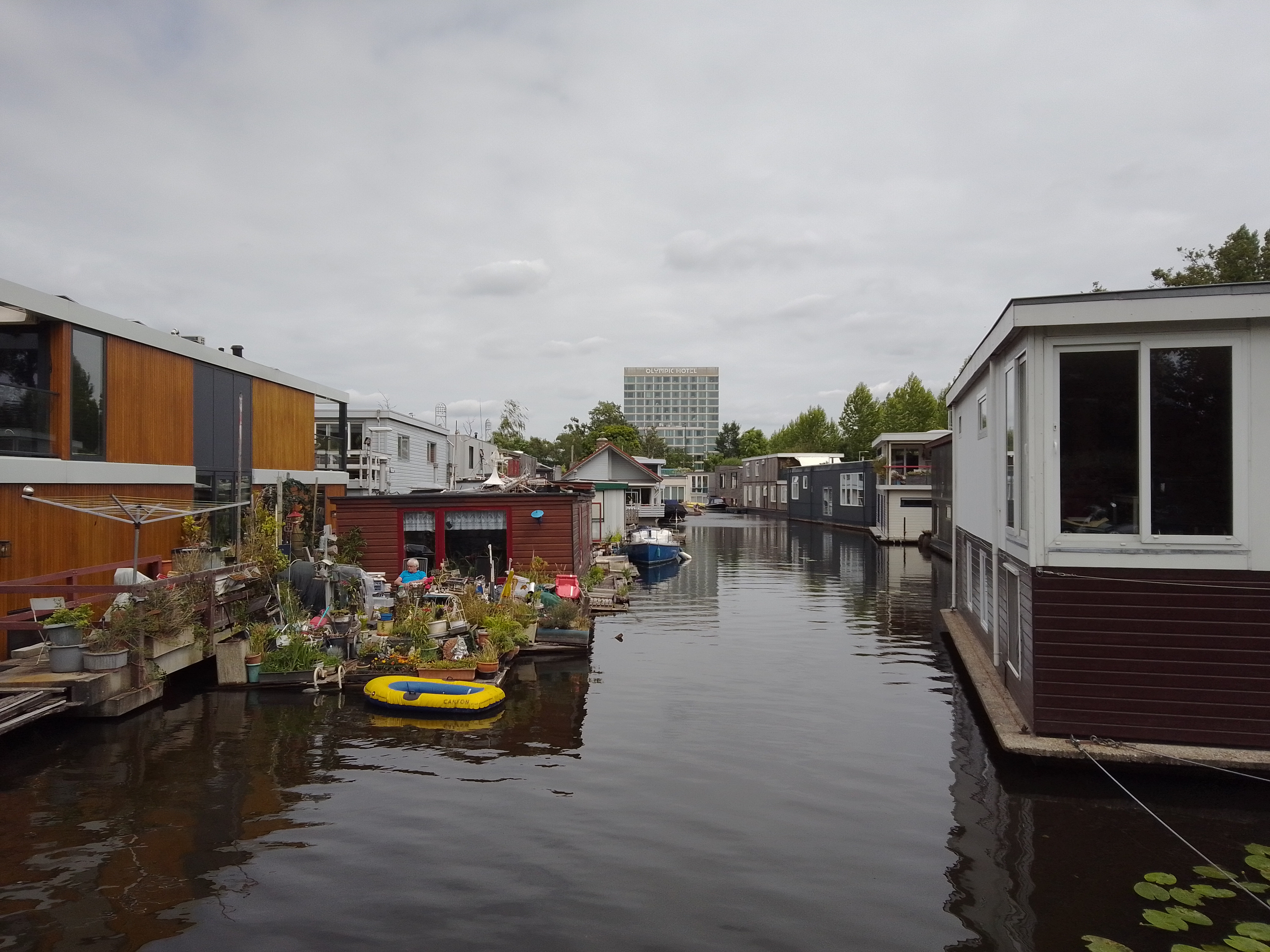
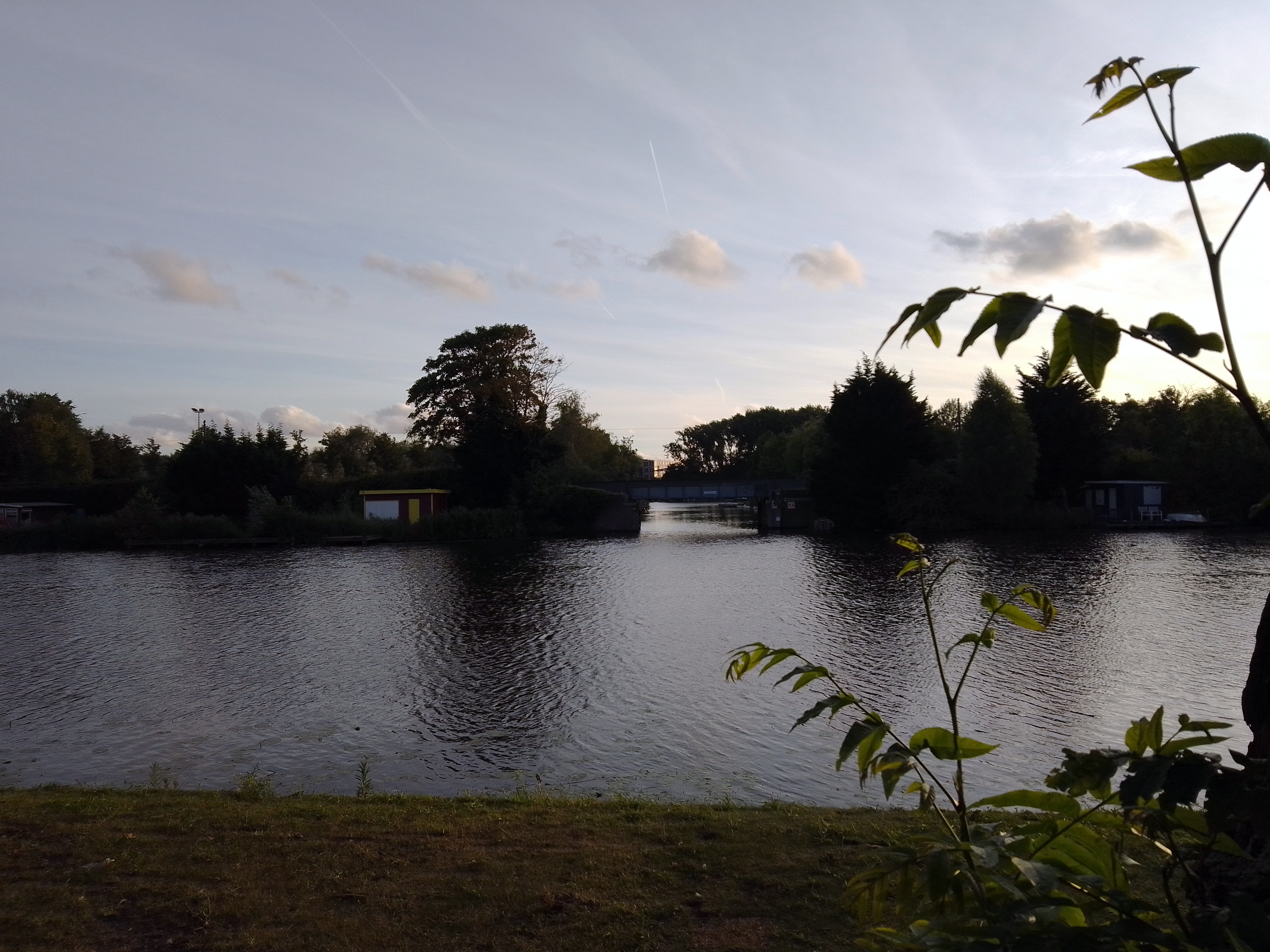
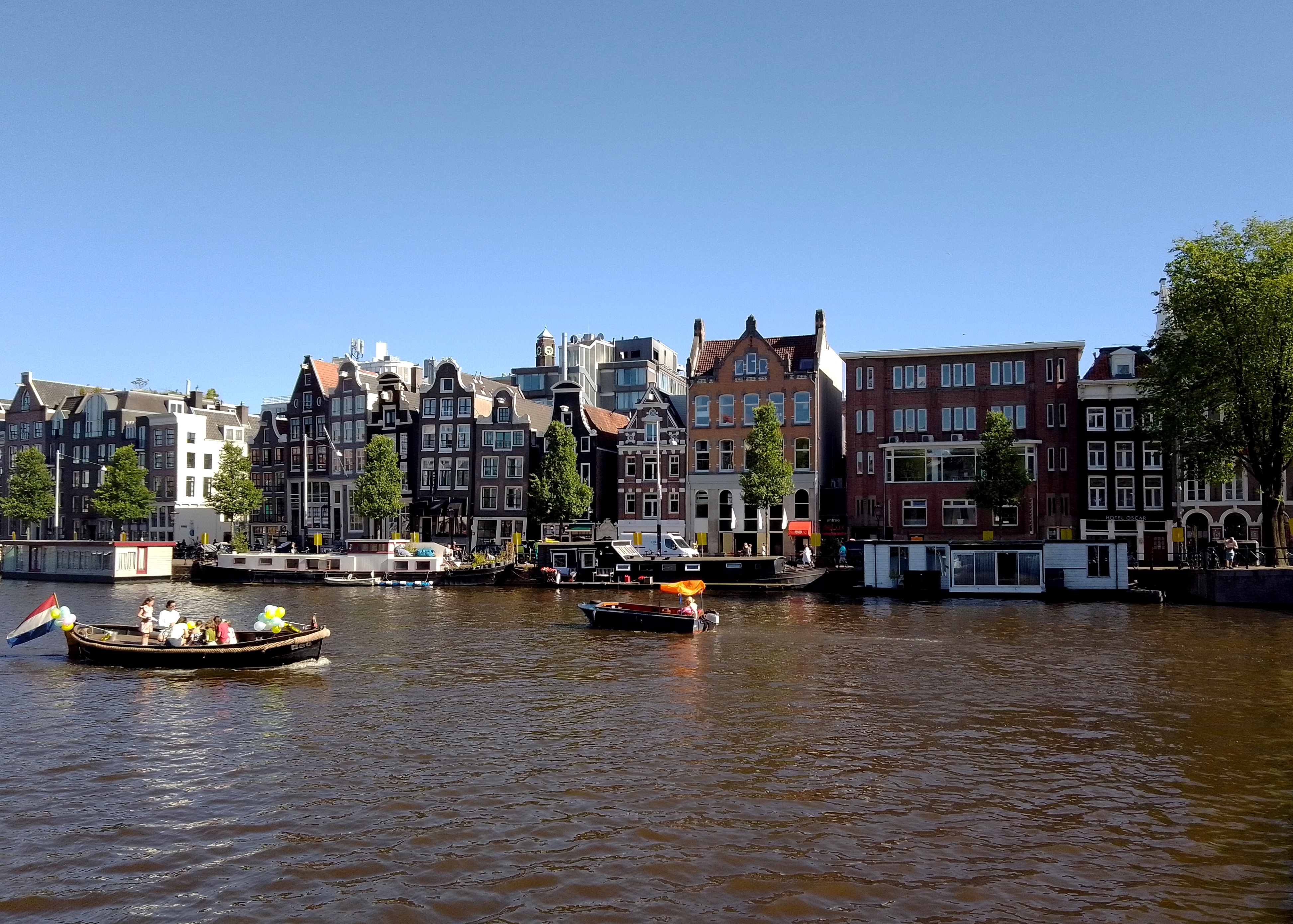
Both taken along the Amstel by where the Dutch National Ballet & Opera company are housed in the same building as City Hall. The one below taken from a balcony during intermission of an evening (yes – summer in the north) ballet performance.
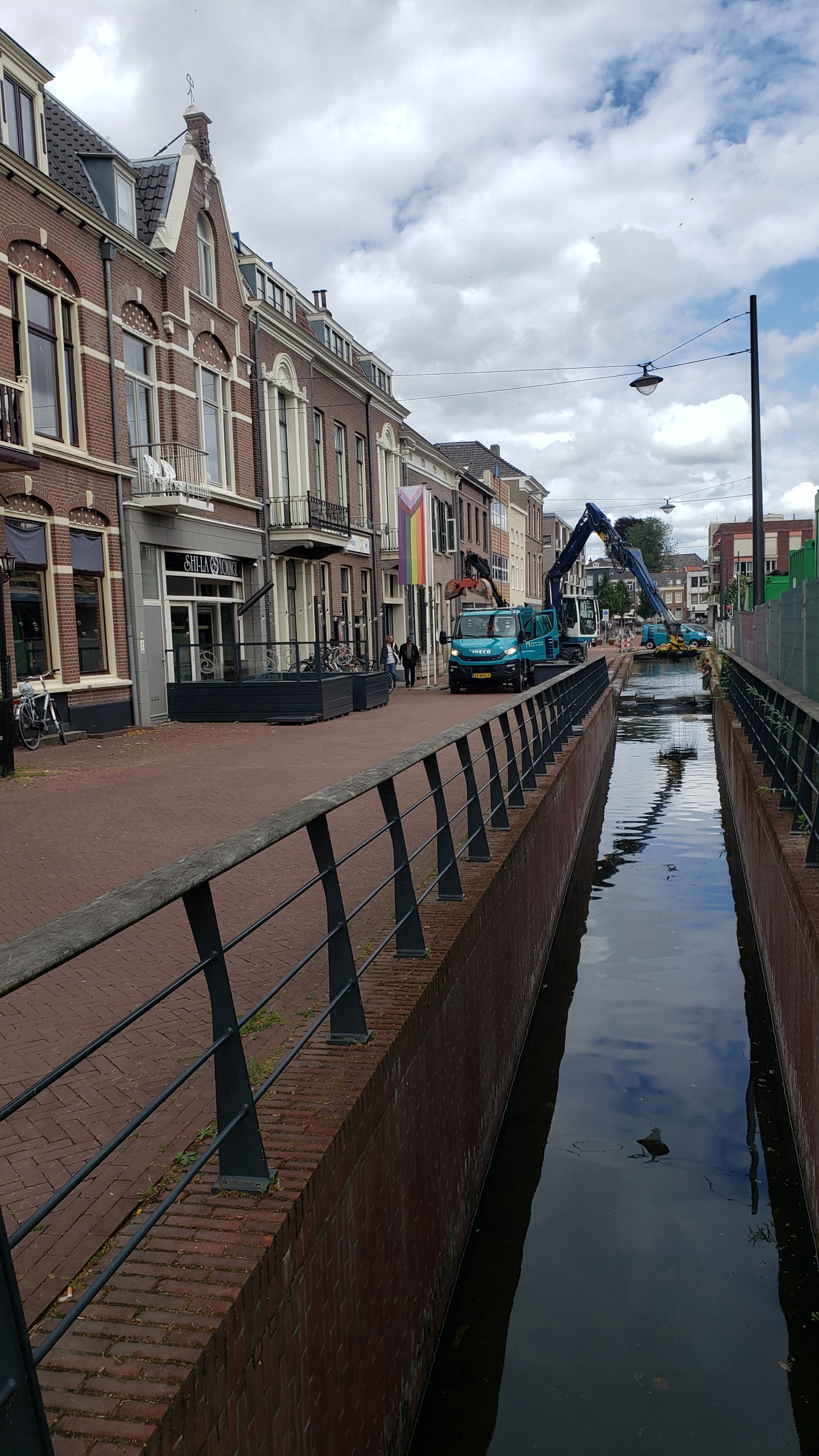
Let me introduce you to Zwolle, the lovely little capital city of Overijssel. (A province whose descriptive name means “above the Ijssel river,” if you’re curious. And Zwolle is named for the minor contour- which in the Netherlands would likely be called a hill – upon which the city was originally founded: Zwolle is related to the English verb “swell.”)
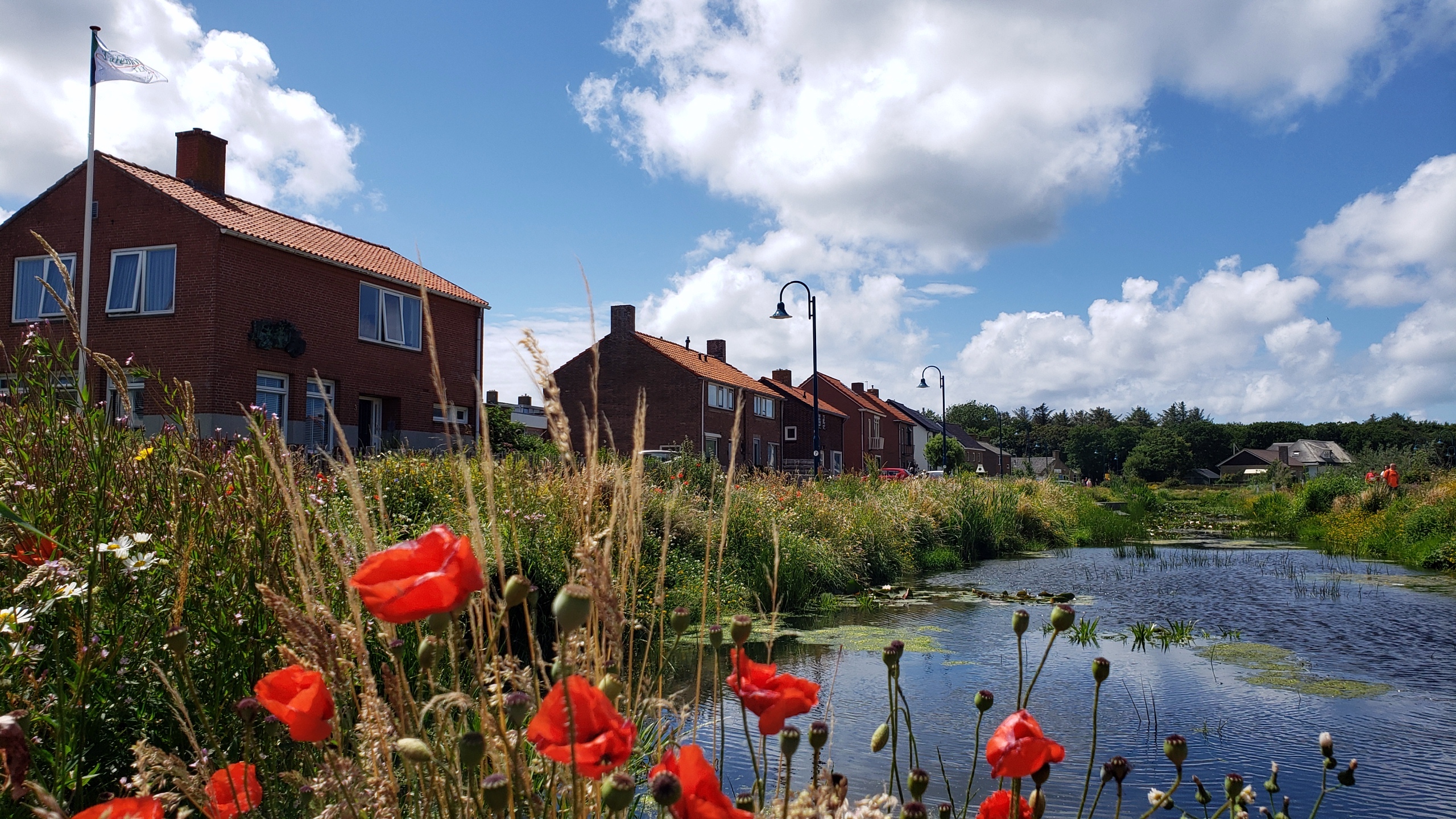
First of many photos I’ll be showing you from the lovely island of Texel, off the coast of the mainland and the northernmost part of “Noord Holland” aka North Holland.
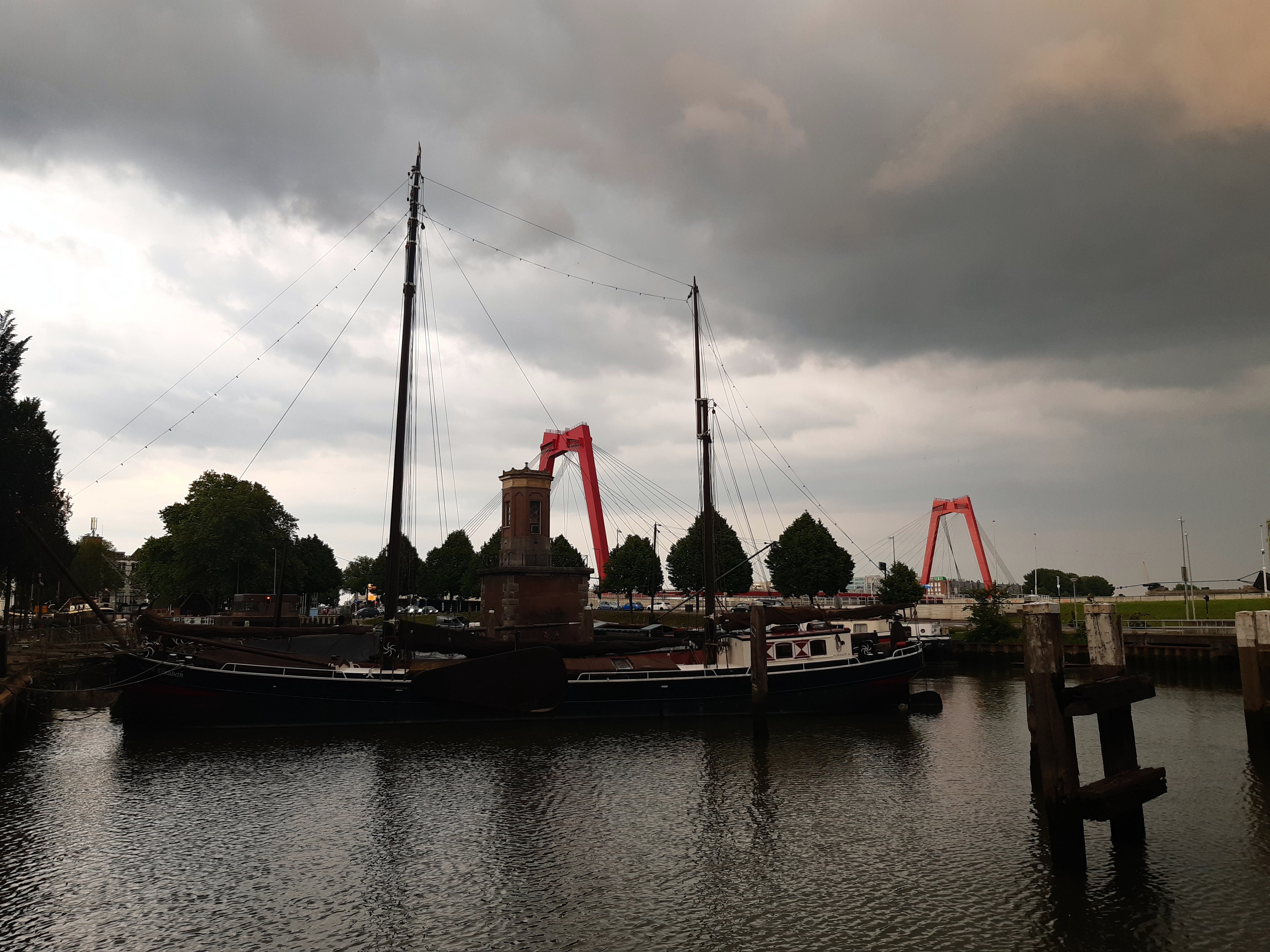
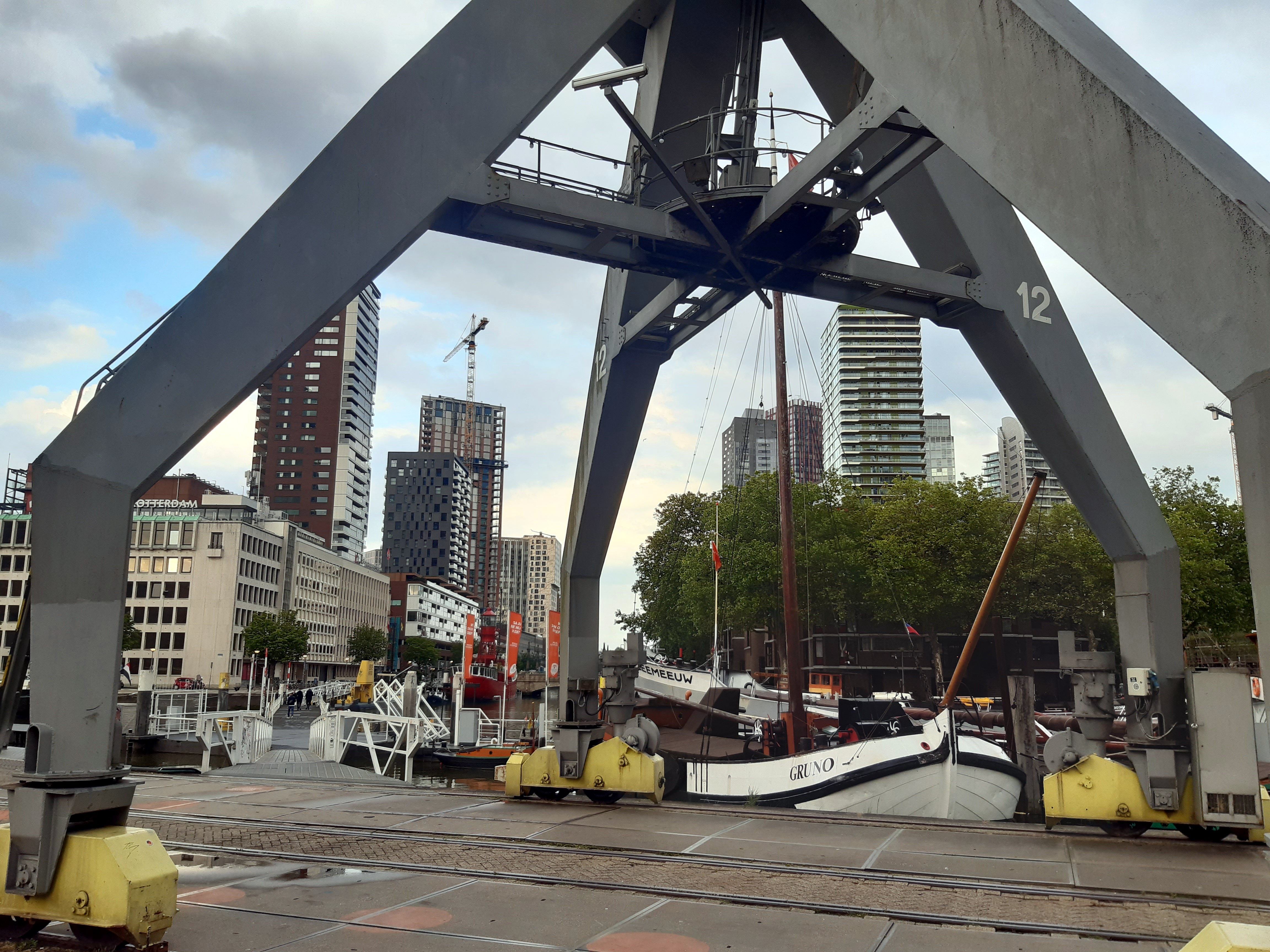
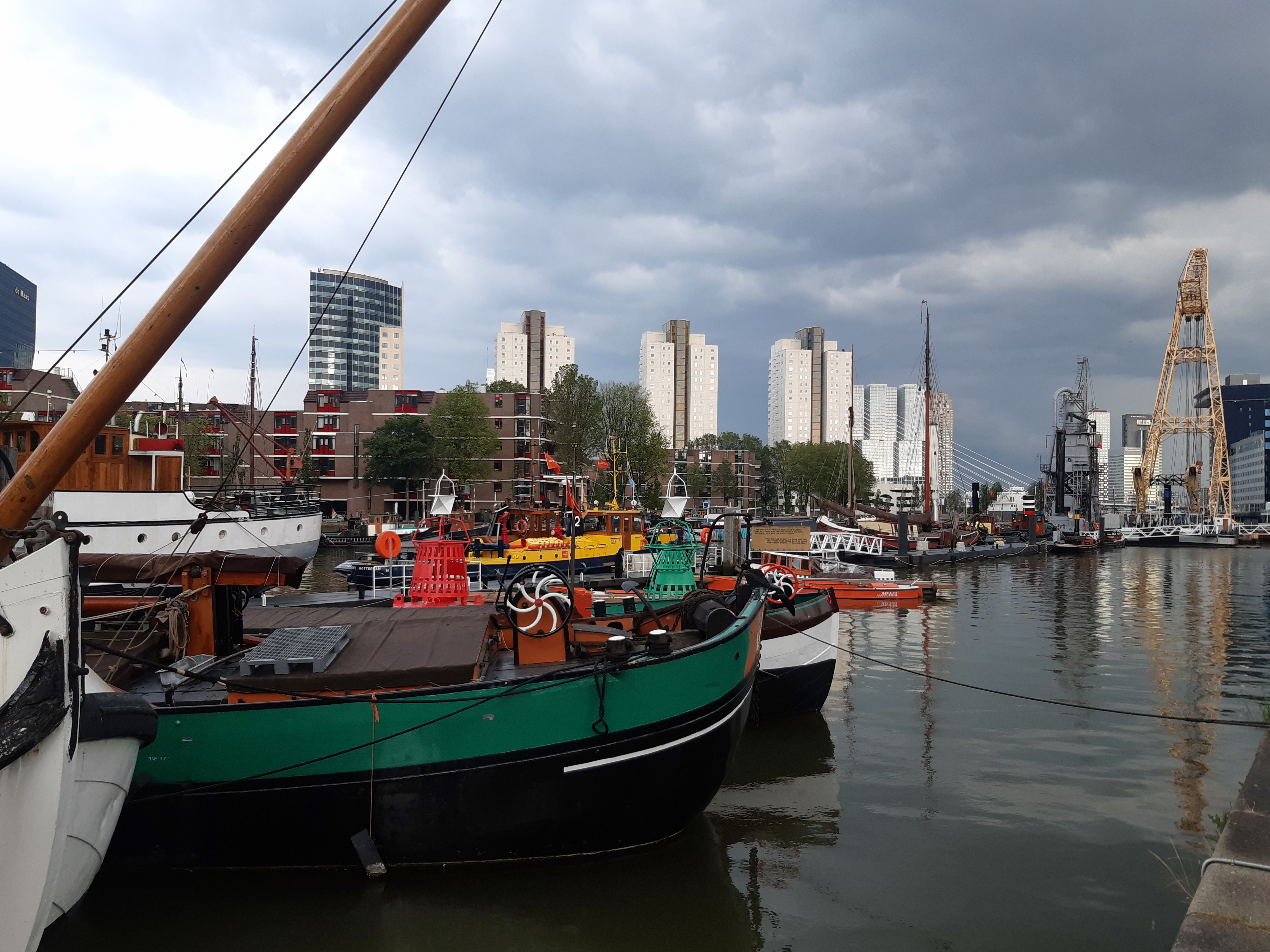
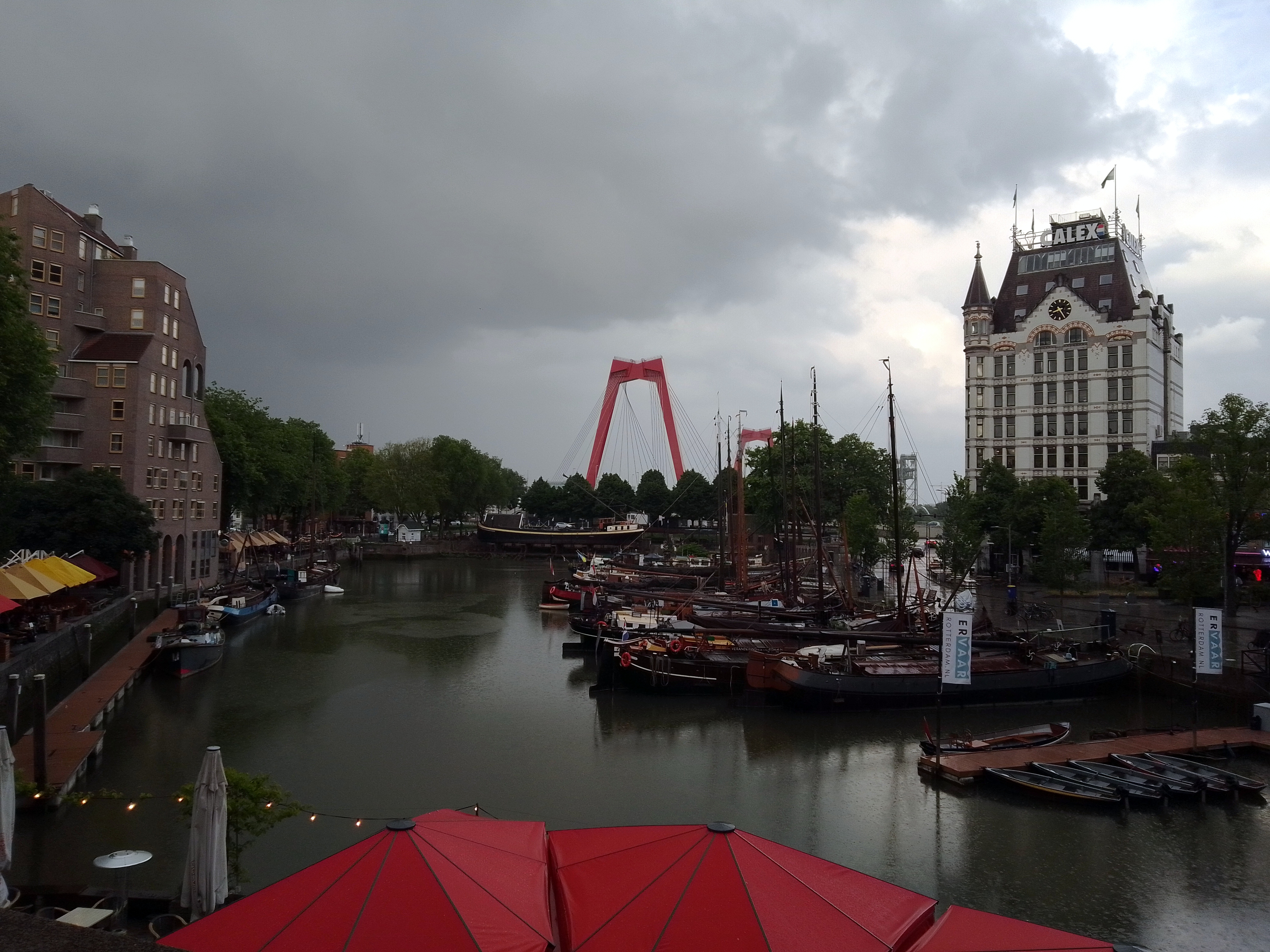
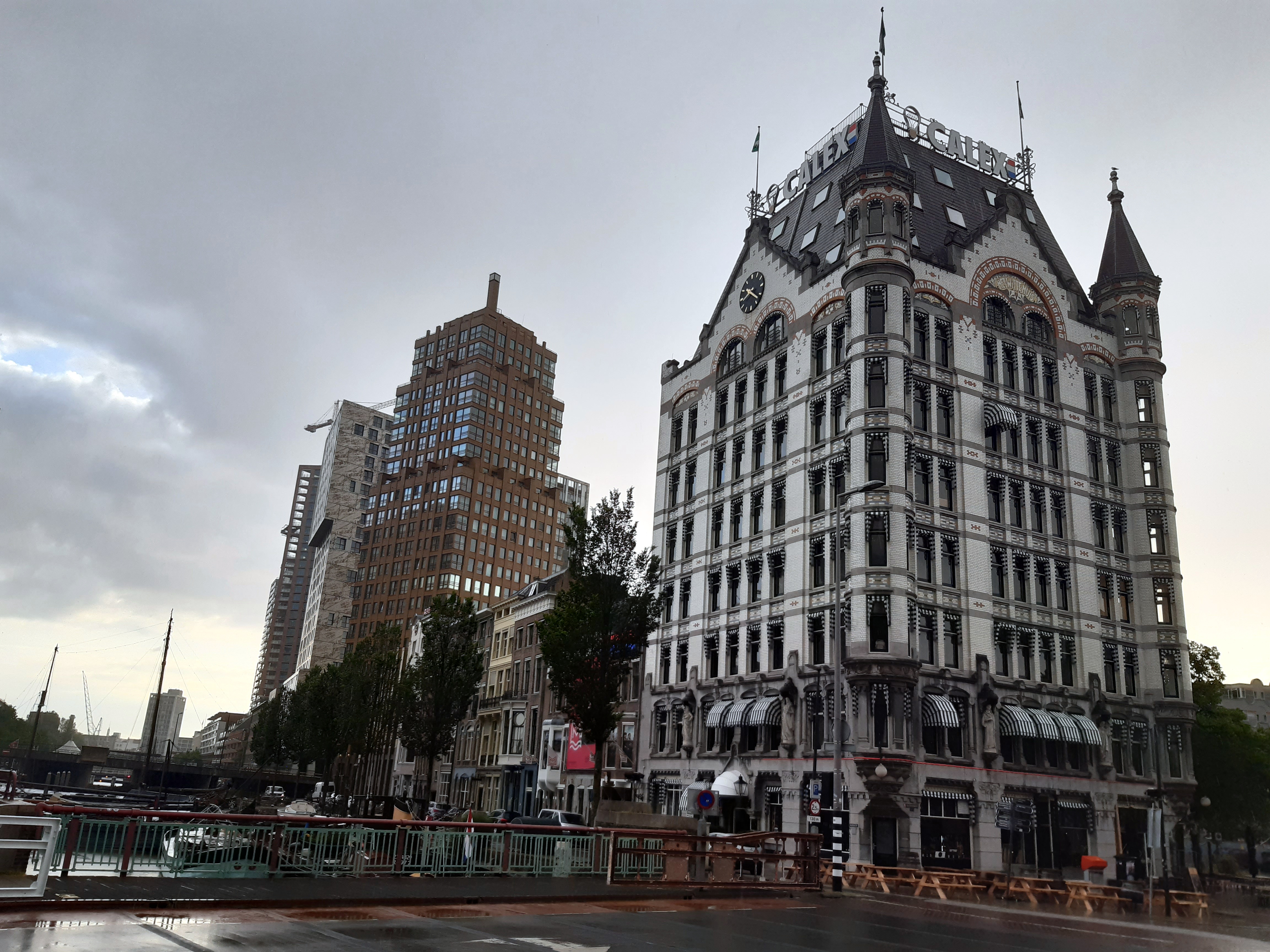
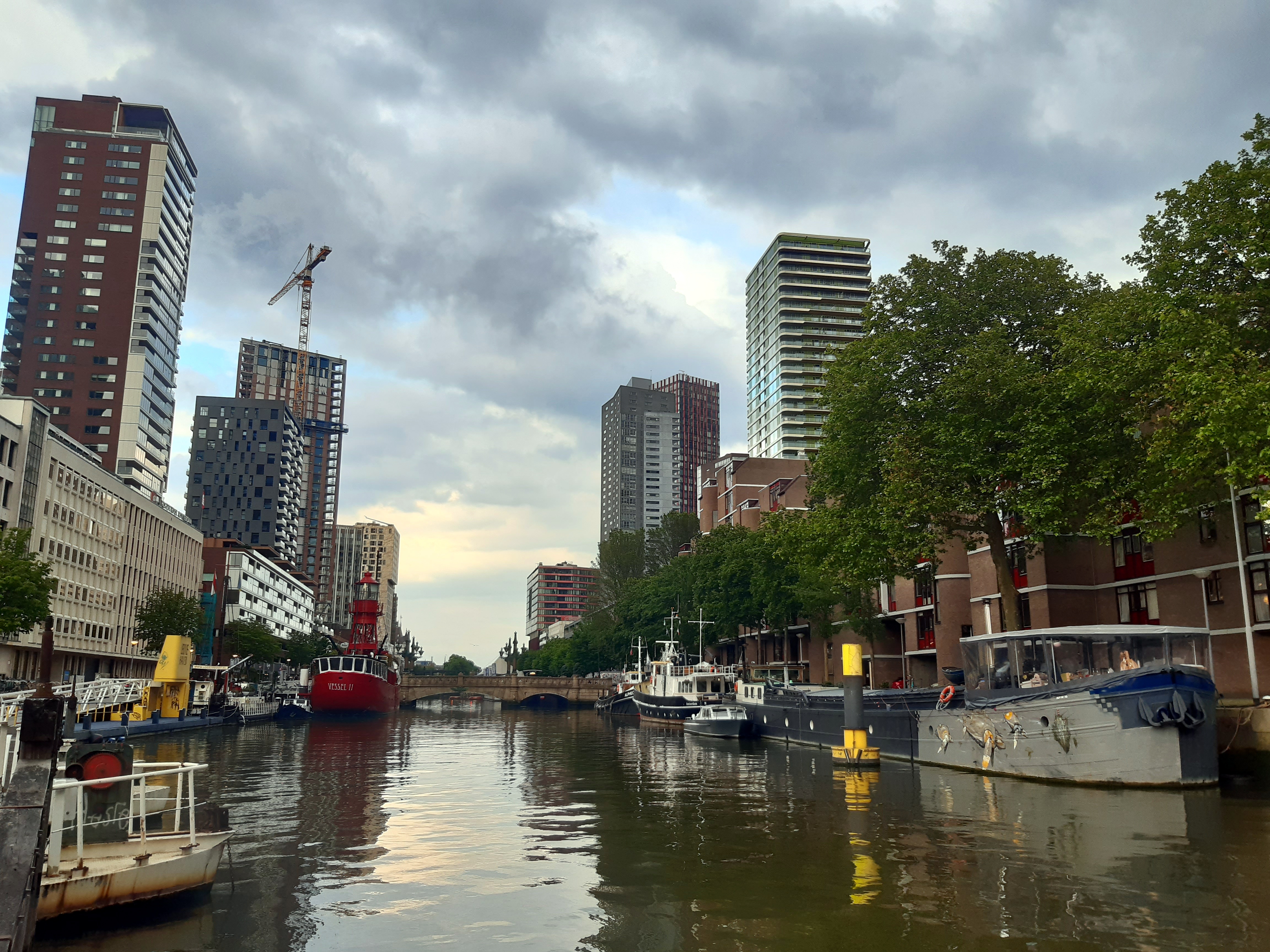
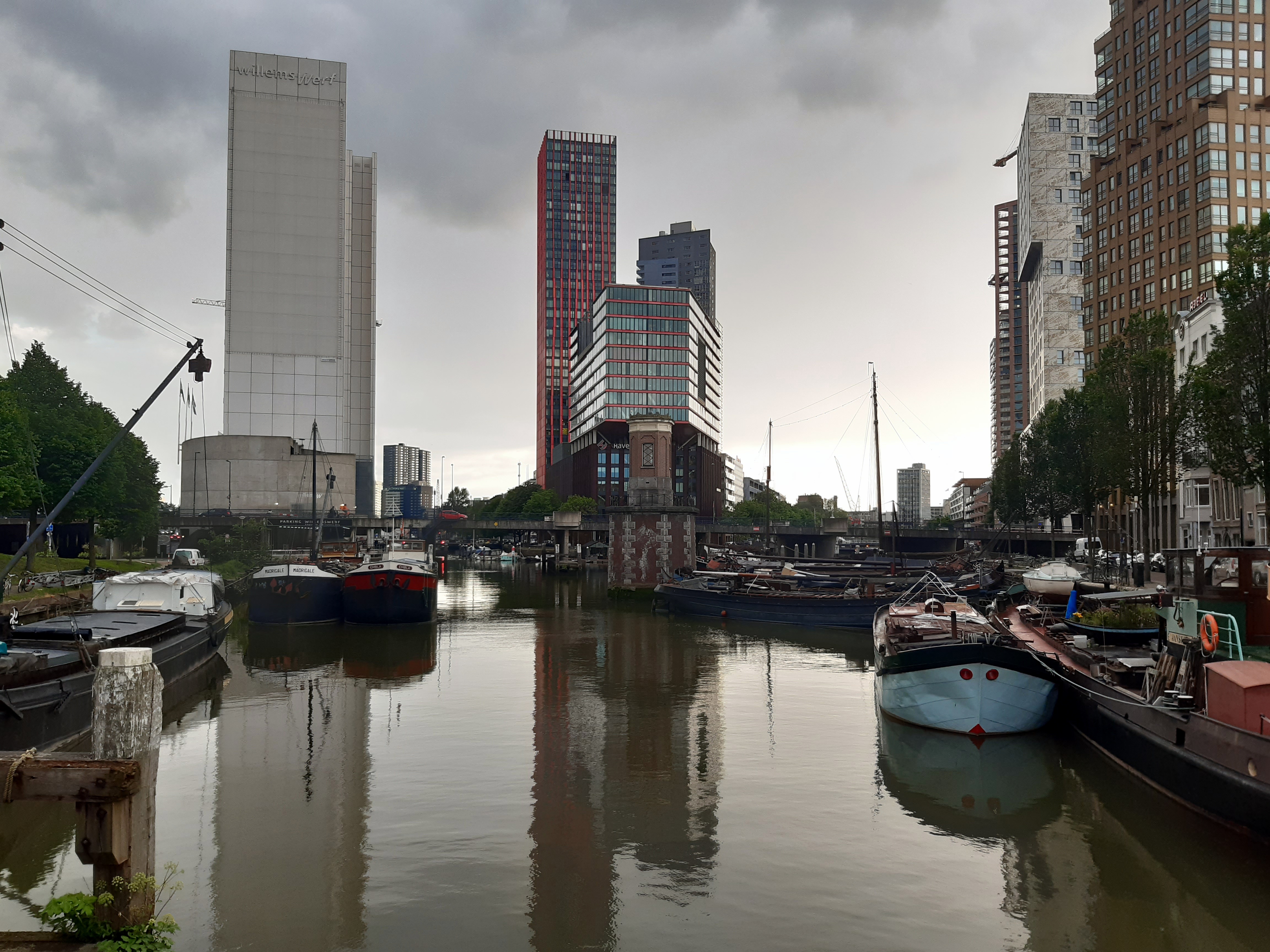
Rotterdam, one learns, is Europe’s busiest port and was until fairly recently the busiest in the world. It also has a long history of shipping, and in its urban center features both an indoor maritime museum (which I’ve not yet entered), and a living outdoor museum that you can walk through for free (as I did during the evening walk which yielded these photos), or do tours with information shared if you book and pay…I assume. Haven’t yet researched that part. And as you’ll see, some of the lovely older buildings did manage to survive WWII. I’m told that the one you see here was temporarily moved so that they could build a new tunnel under it, then brought back to its plot once the tunnel was constructed. Good engineers, these Dutch folks, eh?







 (so much world, so little time....)