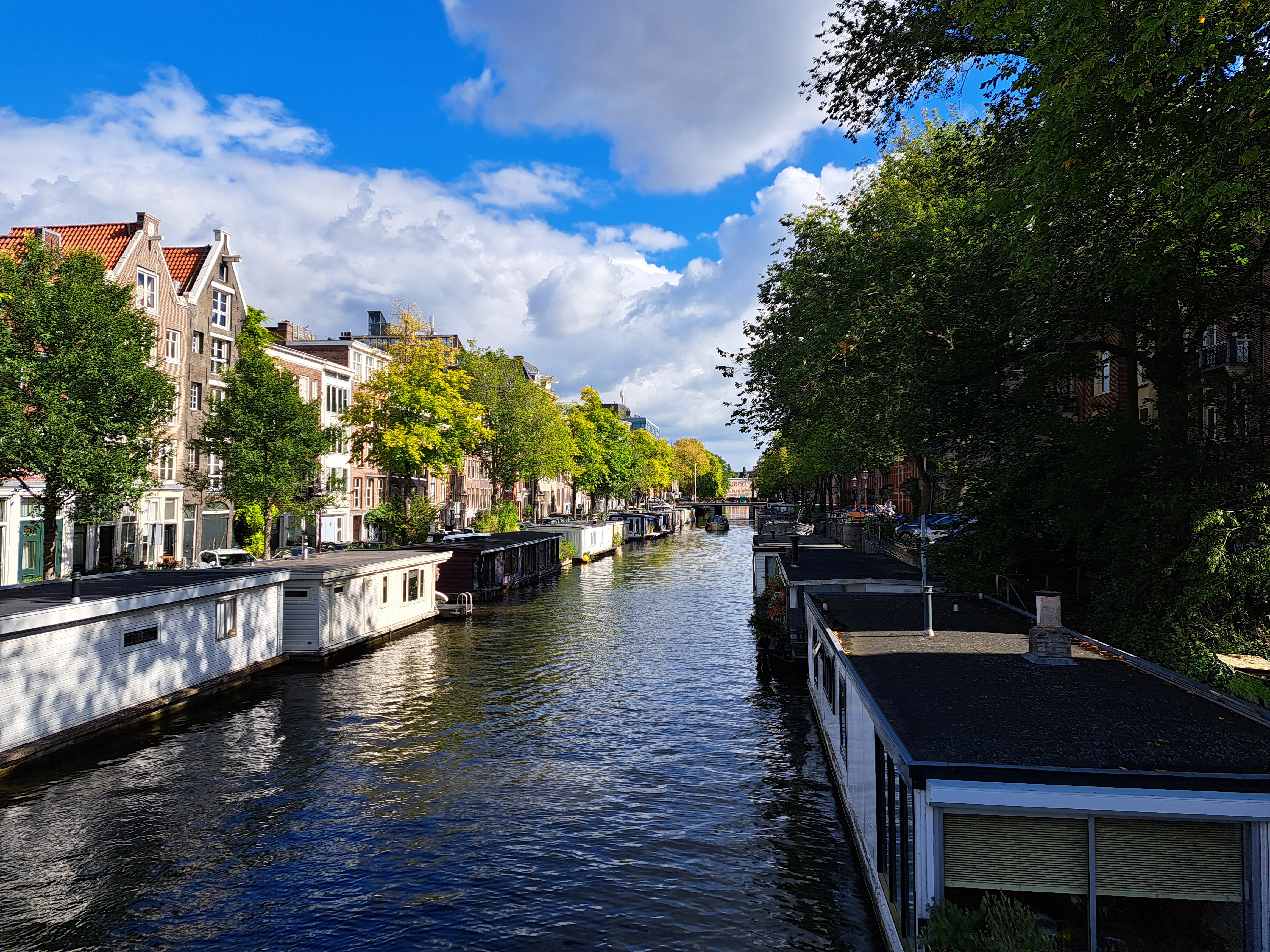
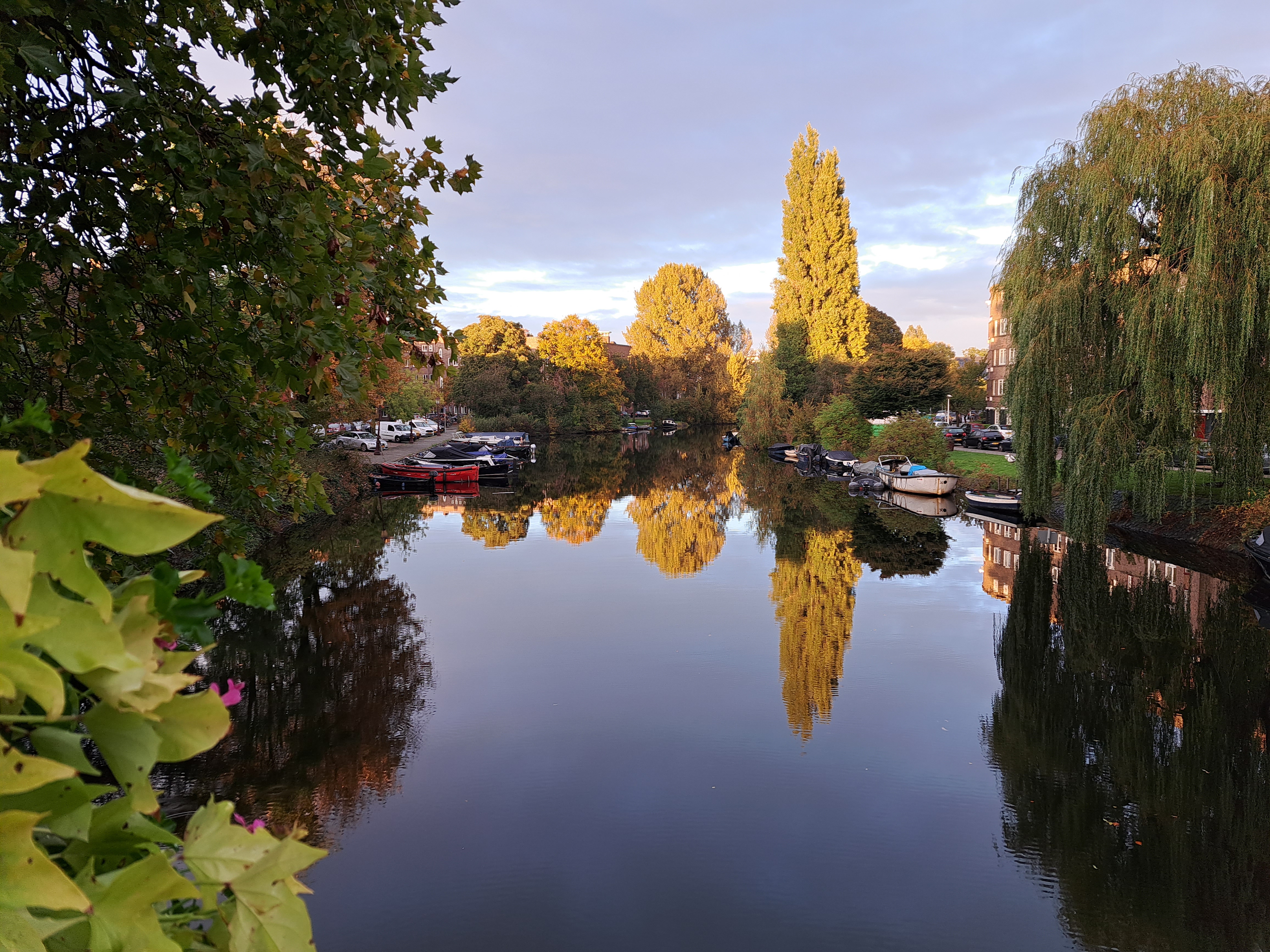
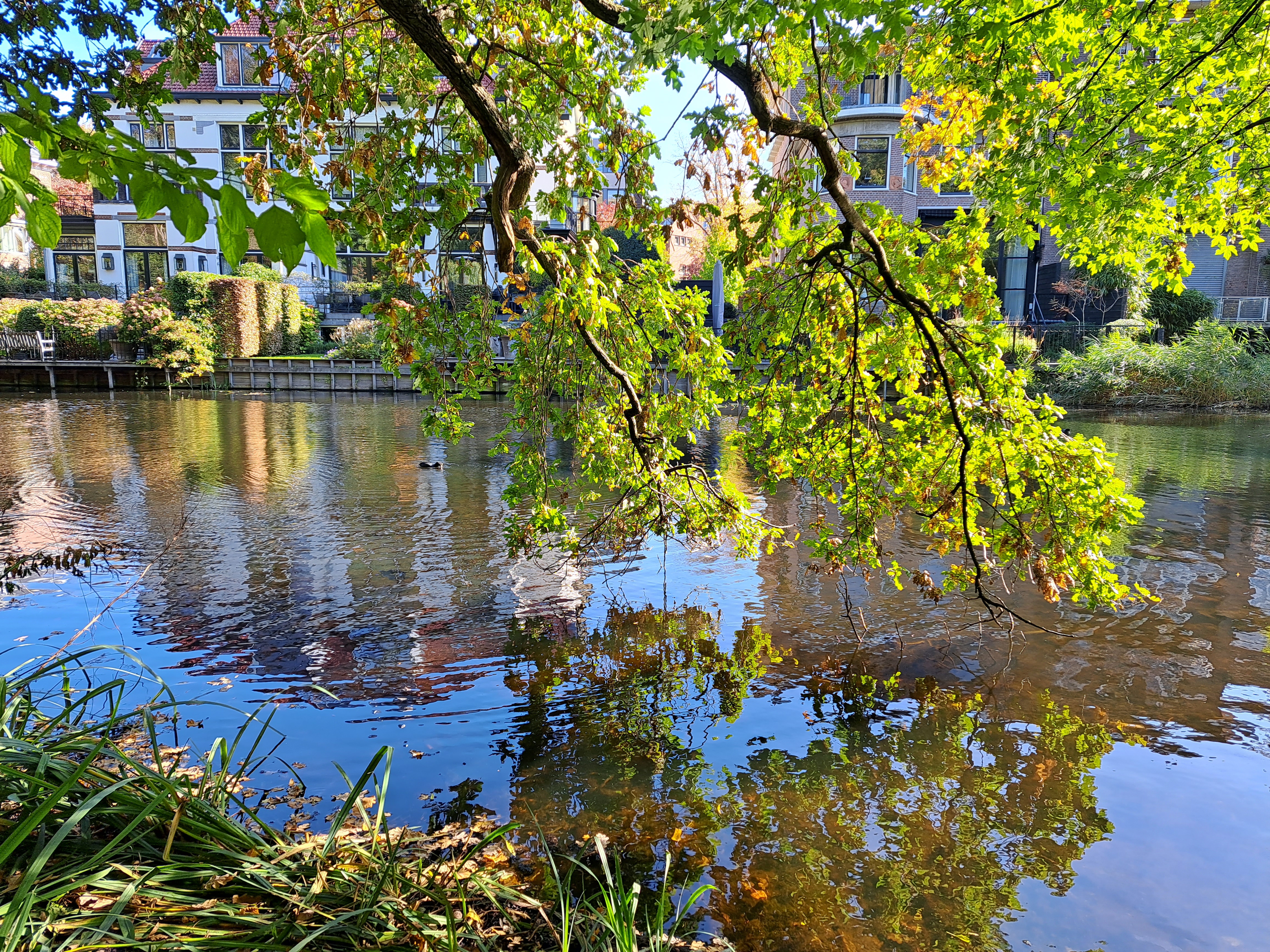
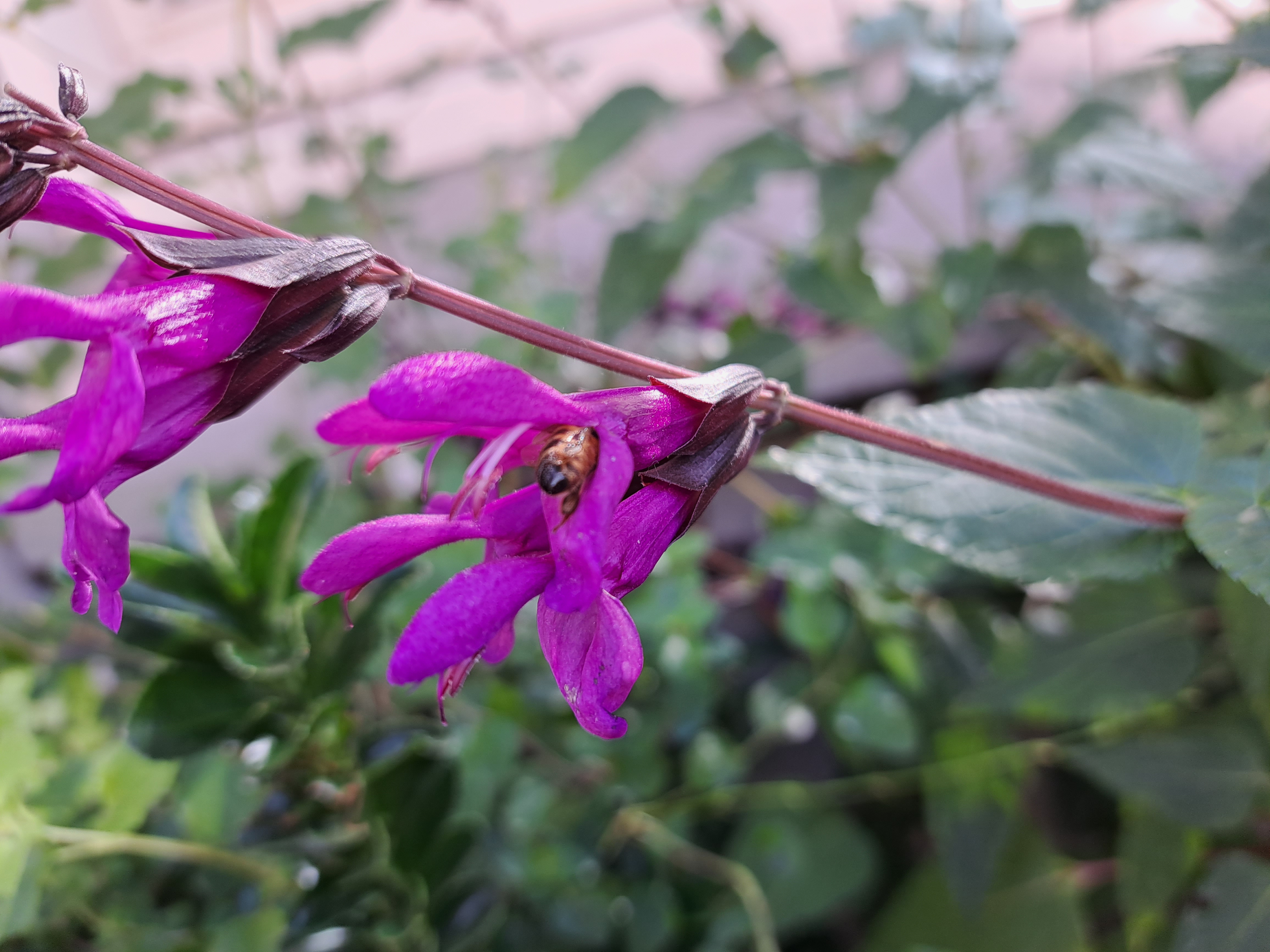
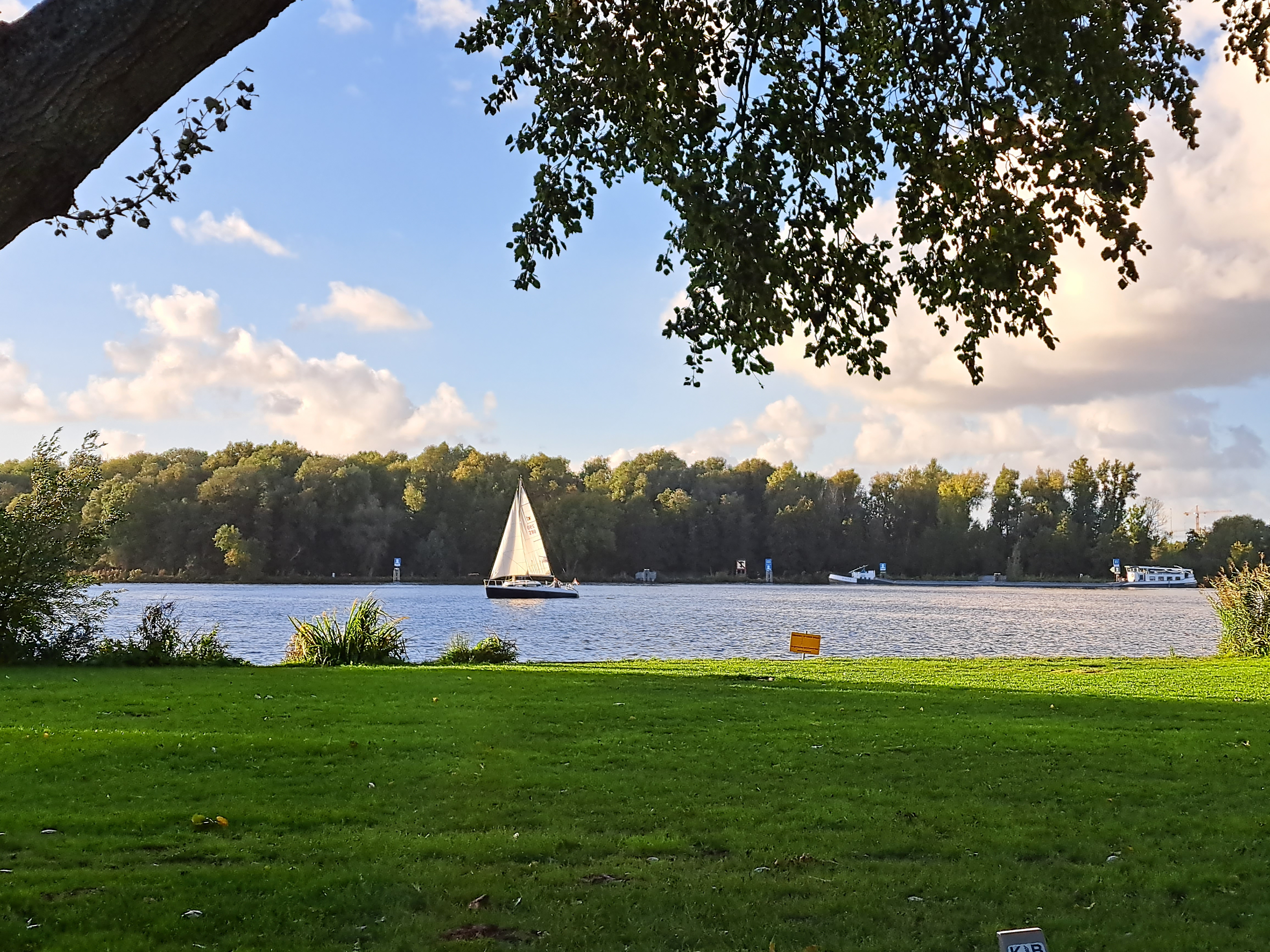
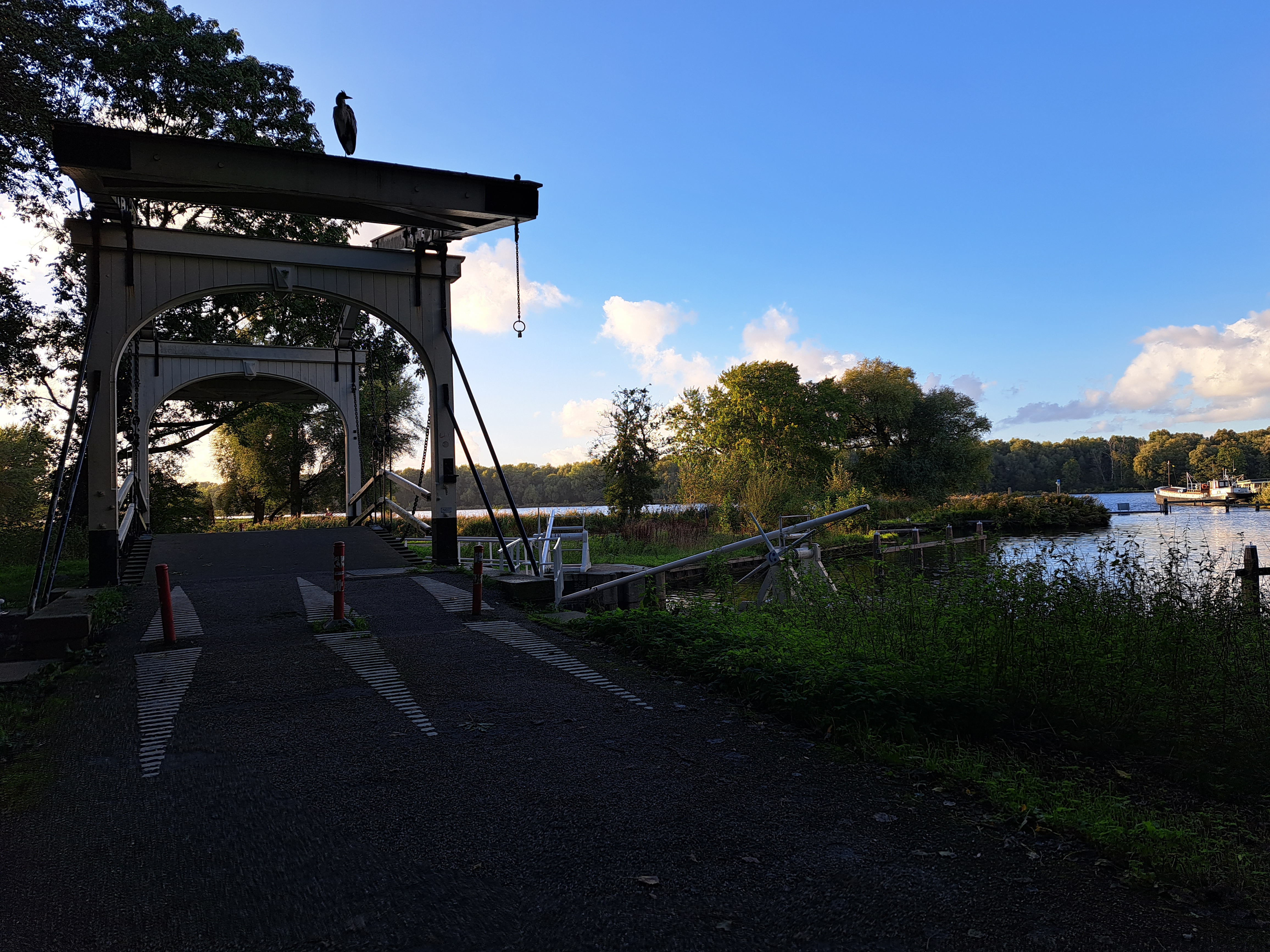
We’ve reached the point here in the fairly-far-northern hemisphere where the sun rises disappointingly late and sets disappointingly early, I find myself counting the weeks and days until the earth starts to rotate the other way and begin shortening the southern days and lengthening our norhtern days…and if on a work-from-home day the sun peeks out from behind the clouds after my last onscreen work appointment, I automatically think “get out of the house for a walk and enjoy it while it’s shining!” The above came from one such recent walk along one of my favorite local canals.
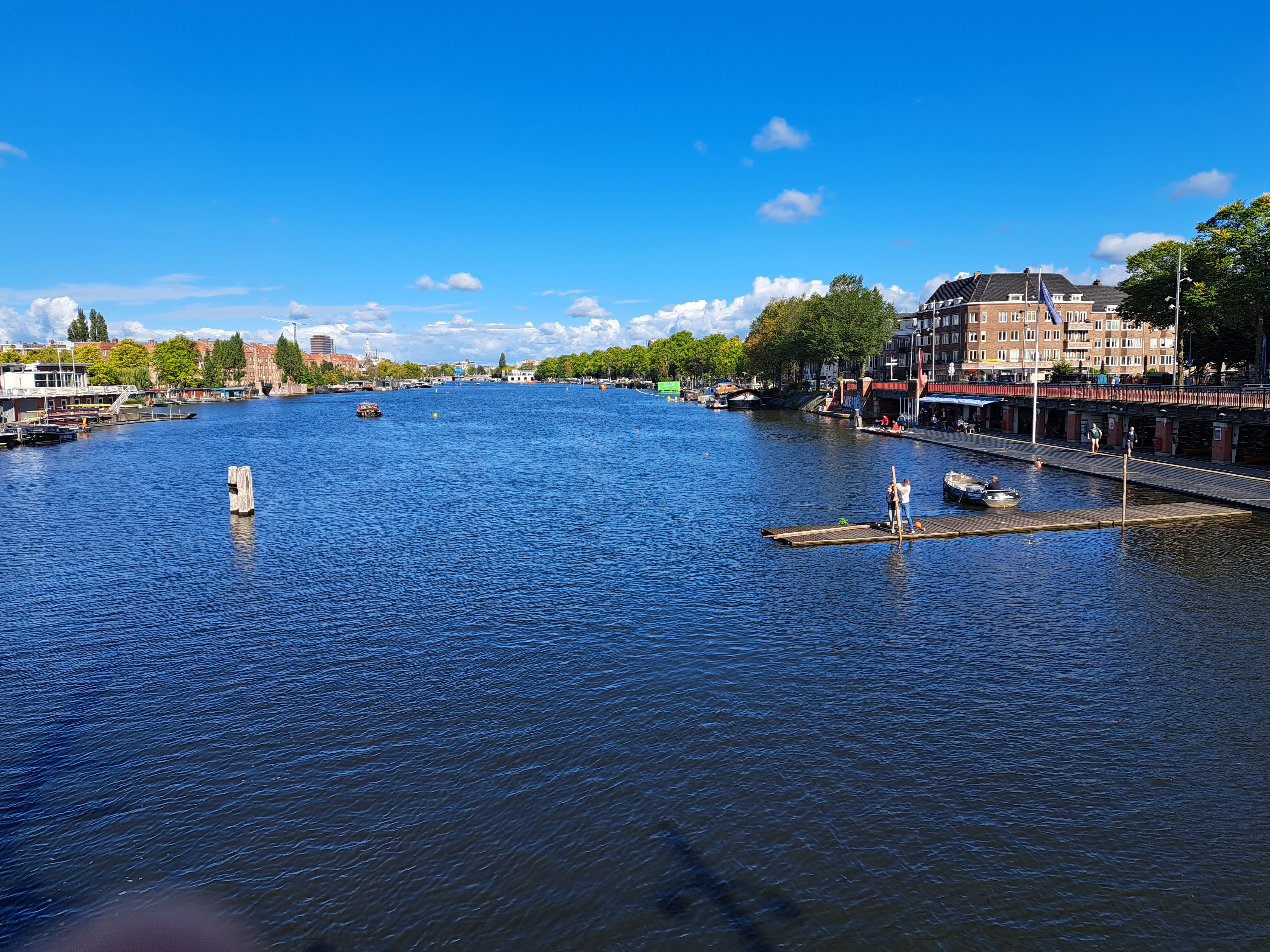
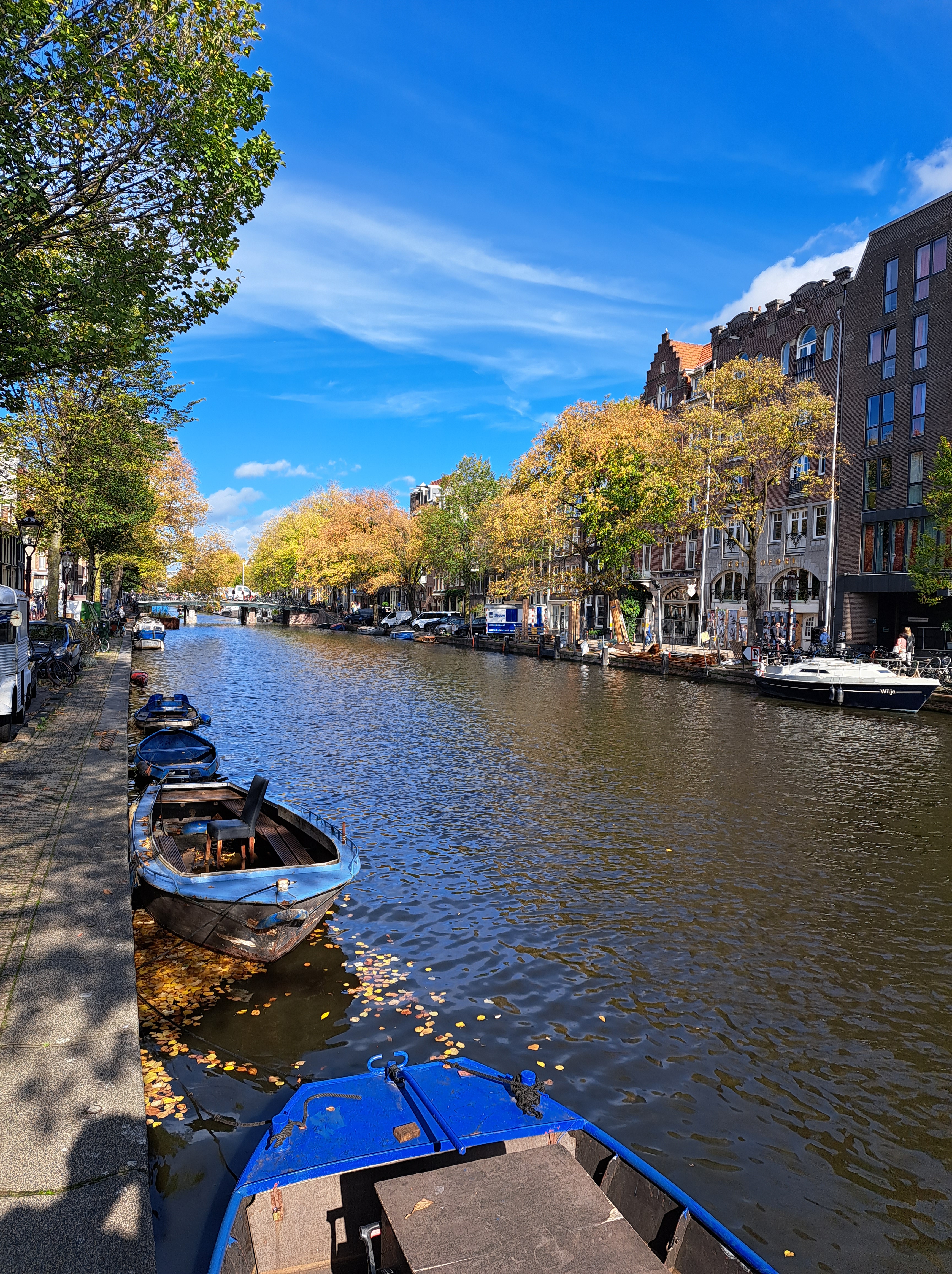
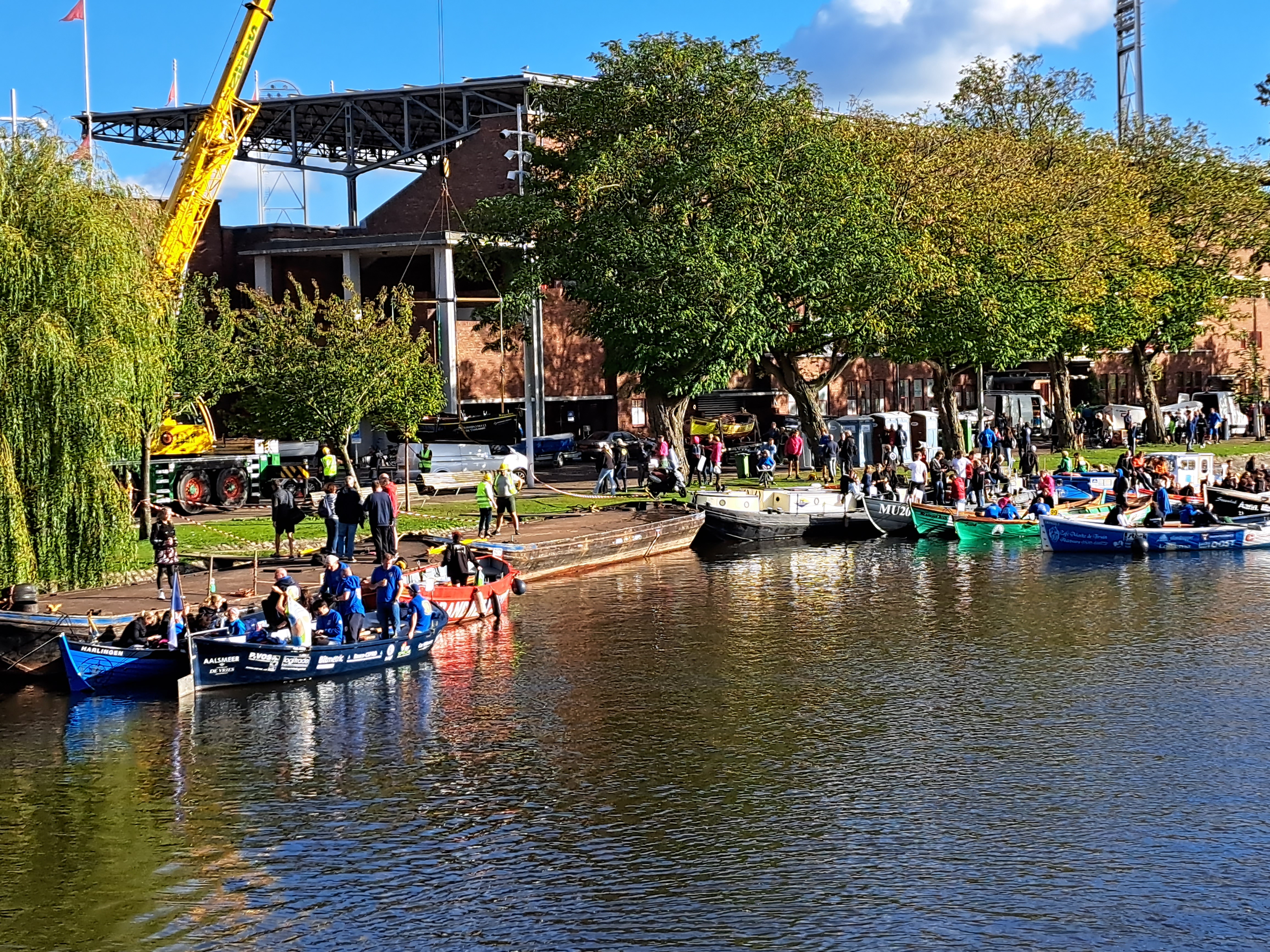
From roughly the same spot along the Amstel, while exploring the city with different friends on different days in late September. A thing I keep meaning to do is sign up for rowing lessons, which I think are offered from this pier; though, if I do it, I’ll likely end up doing it on the Nieuwe Meer a bit closer to where I’m living.
Yes, the gates to Vondelpark can be closed, as I learned to my … surprise, chagrin and / or shock … the day of and the day after one of the major spring storms that knocked down trees. Unless one climbed over fences, stone walls, or gates such as these, one could not enter the park for a day or two. Gasp.
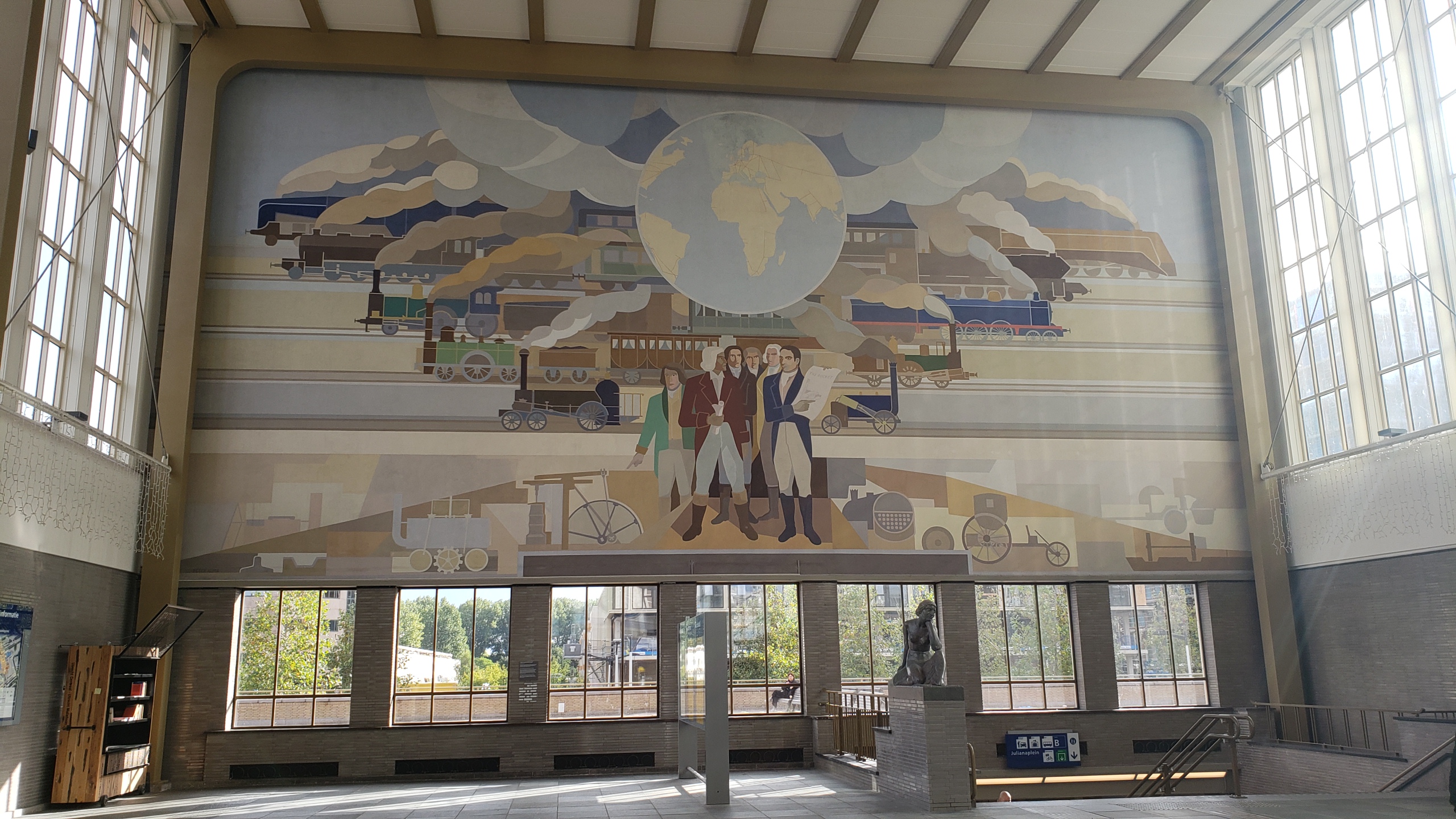
Amstelstation in A’dam. Point of departure for the ride to my 24 hours in Maastricht. I’ve not yet done research on this mural, but I hope to at some point.
Trying to enjoy Vondelpark and all my other urban-garden walks as much as possible while there are still leaves on the trees, especially since those leaves are changing color daily 🙂
So this was obviously some kind of competition, festival or both which I biked past on my way home from a glorious team-tennis Saturday recently. Tap or click on the image below & then enlarge it, and you’ll see a boat being lifted out of the water by a crane. I guess many of these boats were carried in by road rather than coming under their own power along canals from farther away 🙂
Same walk as the last entry: you get a sense why this is one of my favorite walk routes when the sun is shining, I trust? On the last warm swimmy day of August or early September, I followed a tennis outing (my club courts are a short bike ride behind and right, from the perspective of the photo above) with a swim on the far shore of this lake…but though we did see a few natives swimming on this outing, my bones would find the wind and air temperatures much too cold to brave those waters any more. We’re looking north across Nieuwe Meer, from the edge of Amsterdamse Bos, for anyone who wants to map-check any of it.
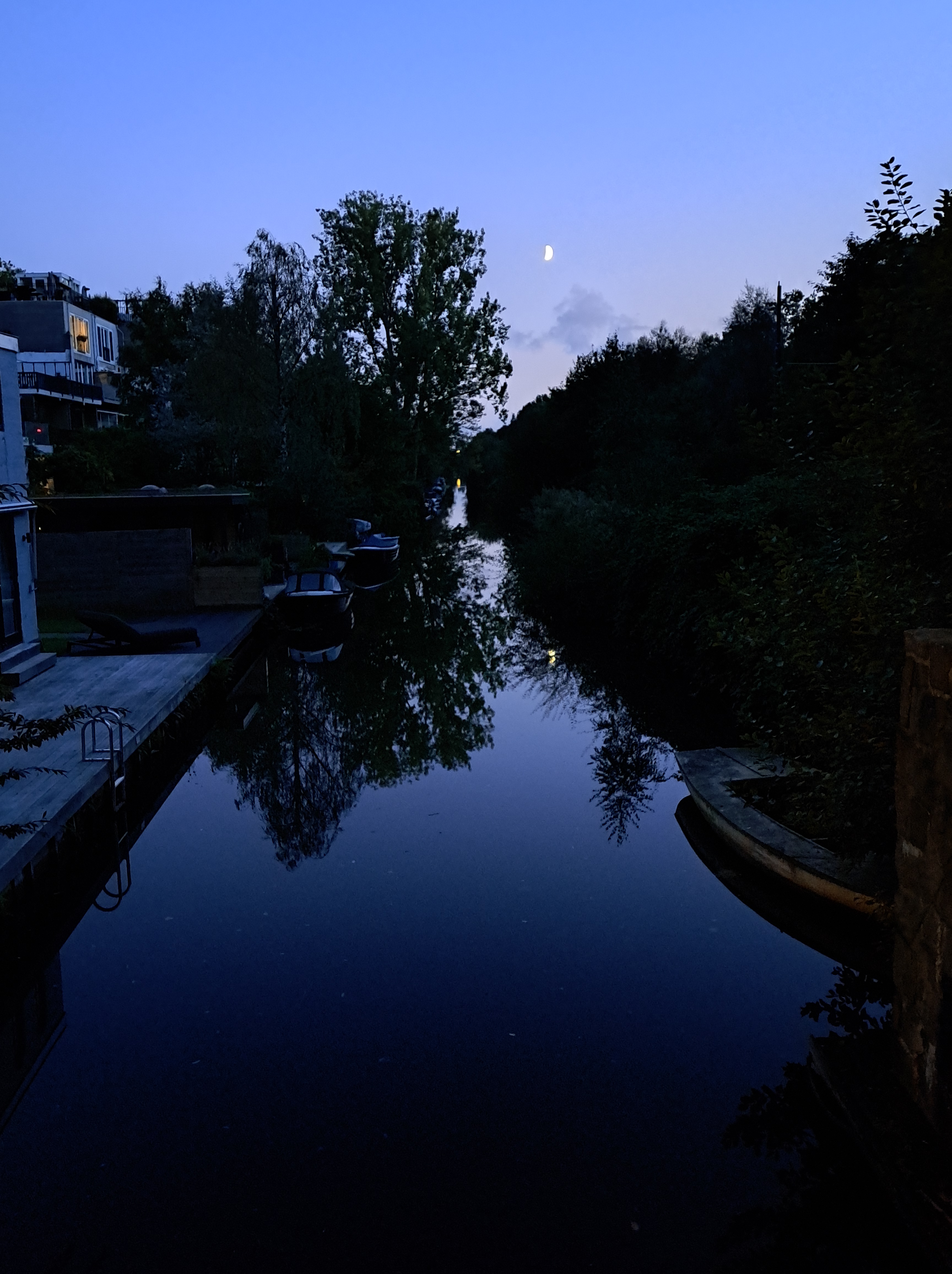
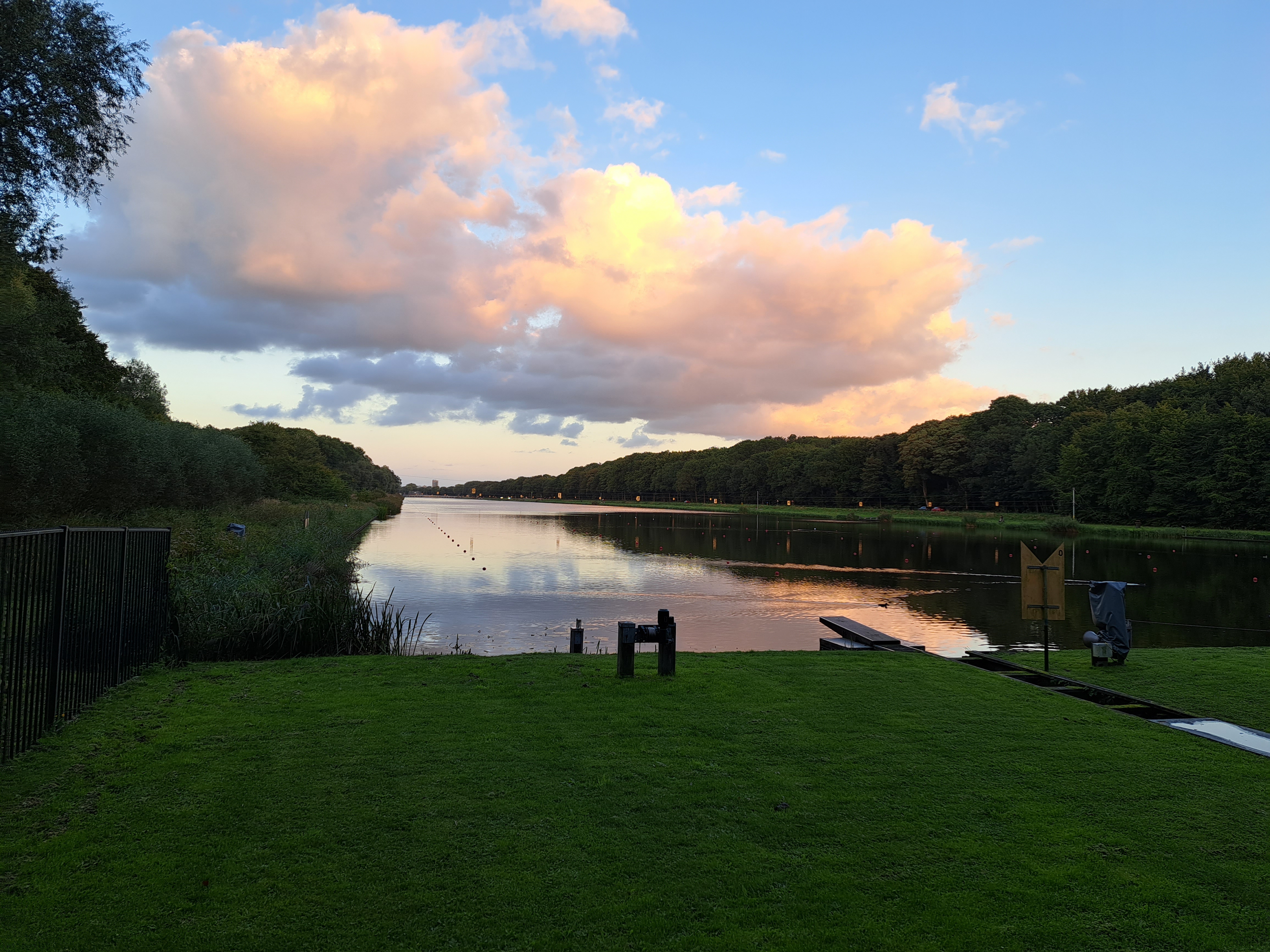
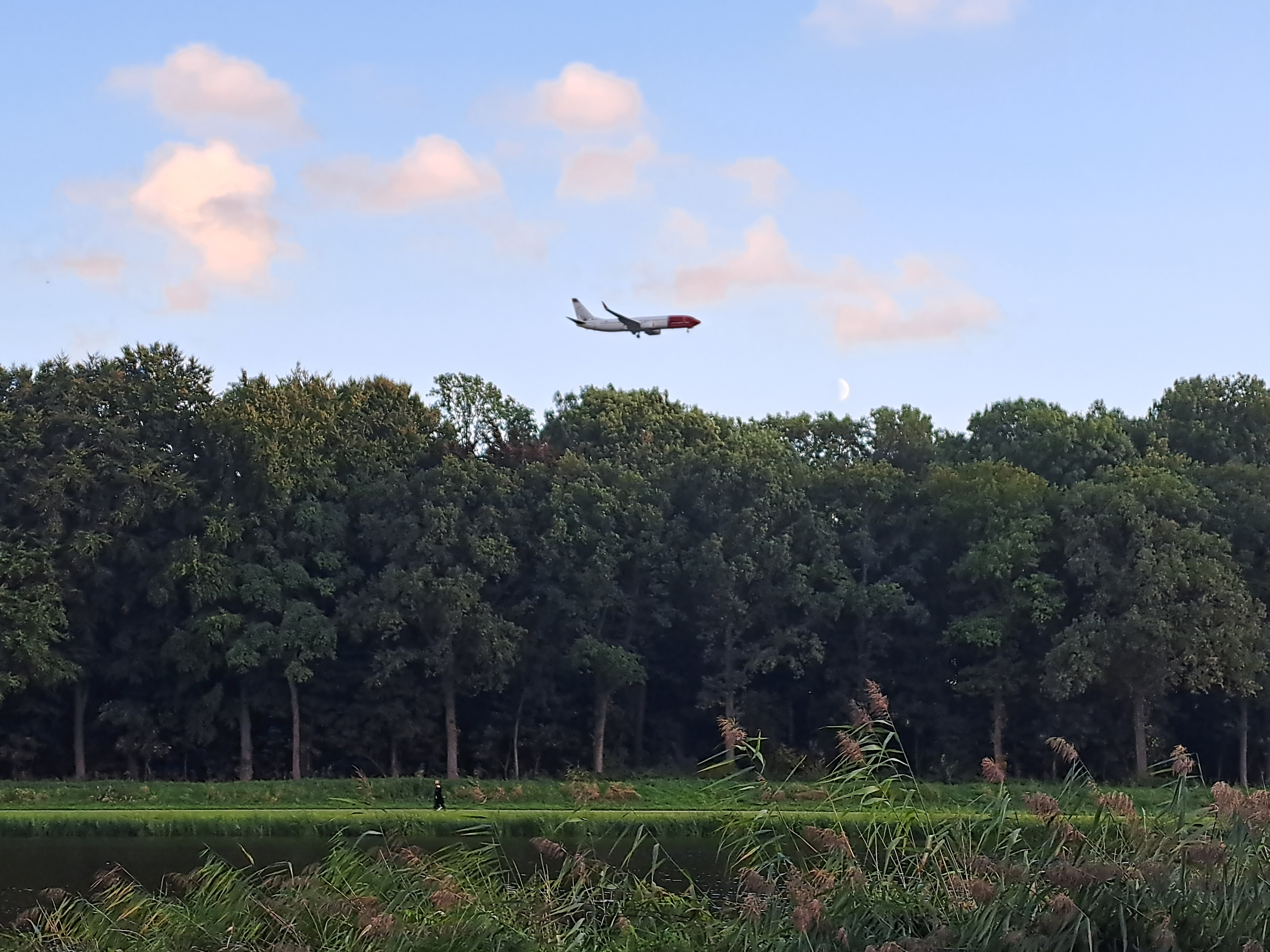
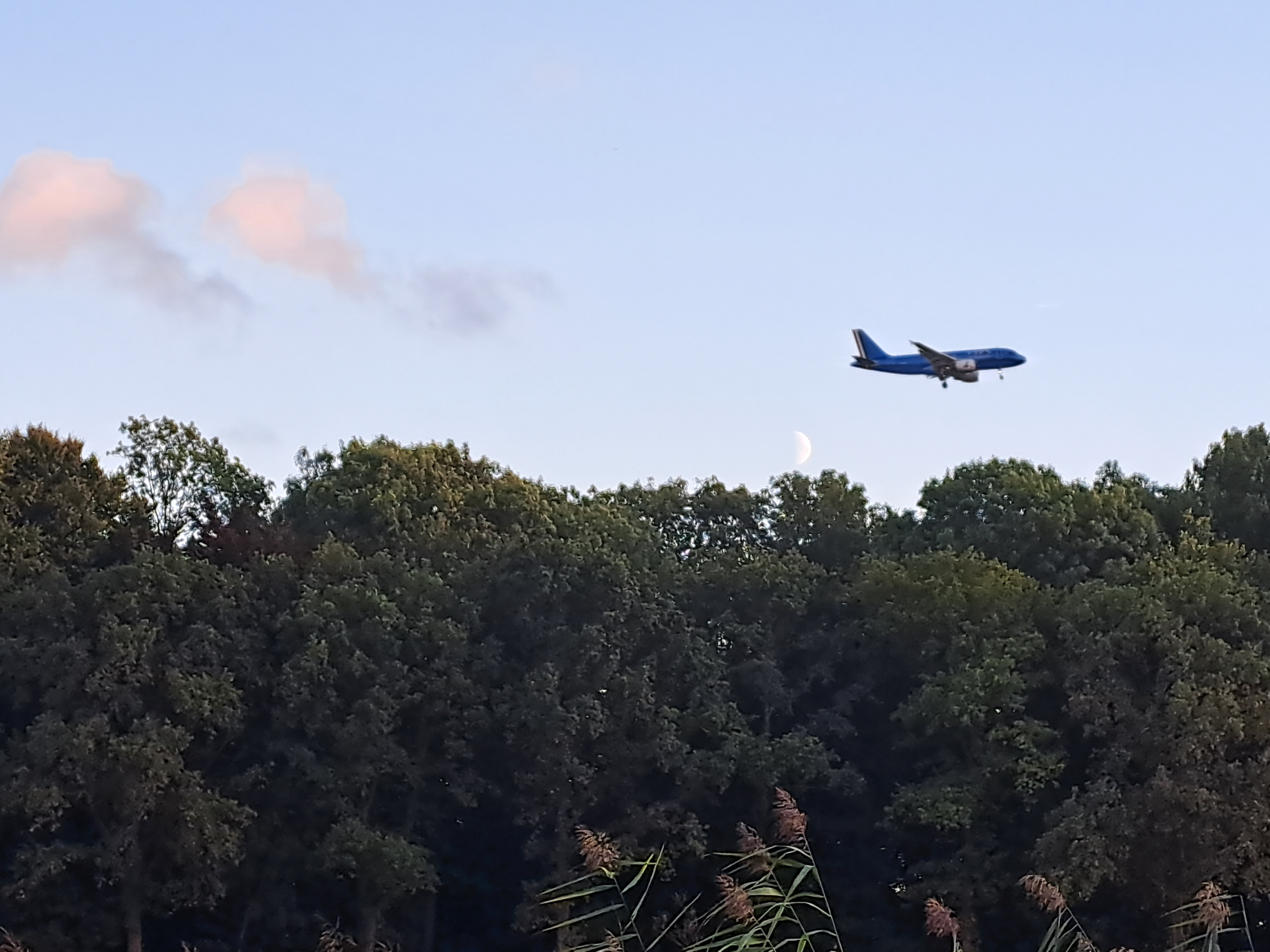
Back to the Bosbaan in Amsterdamse Bos on a lovely early-autumn evening. Note the moon just below the airplanes’ approach path to Schiphol, in the photos below. A well-placed bench allows one not only to contemplate the moon, the sky, the trees, the planes and the Bosbaan (the forest water track or water course, I guess) itself, but also to rest the weary legs.