Latest

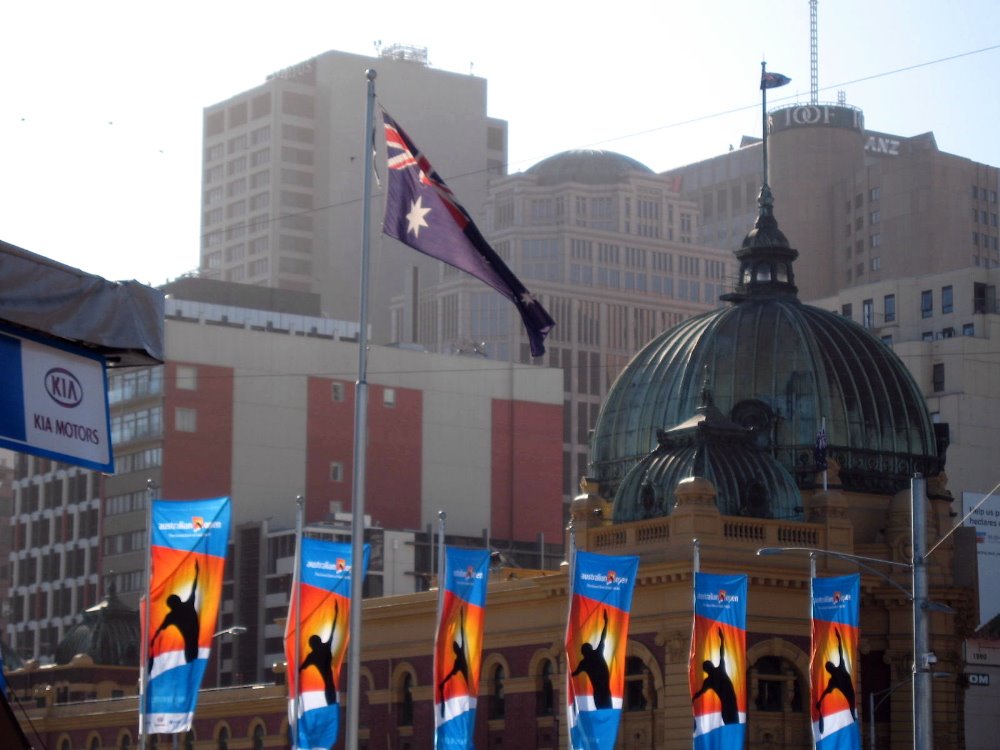
Australia Day on Federation Square

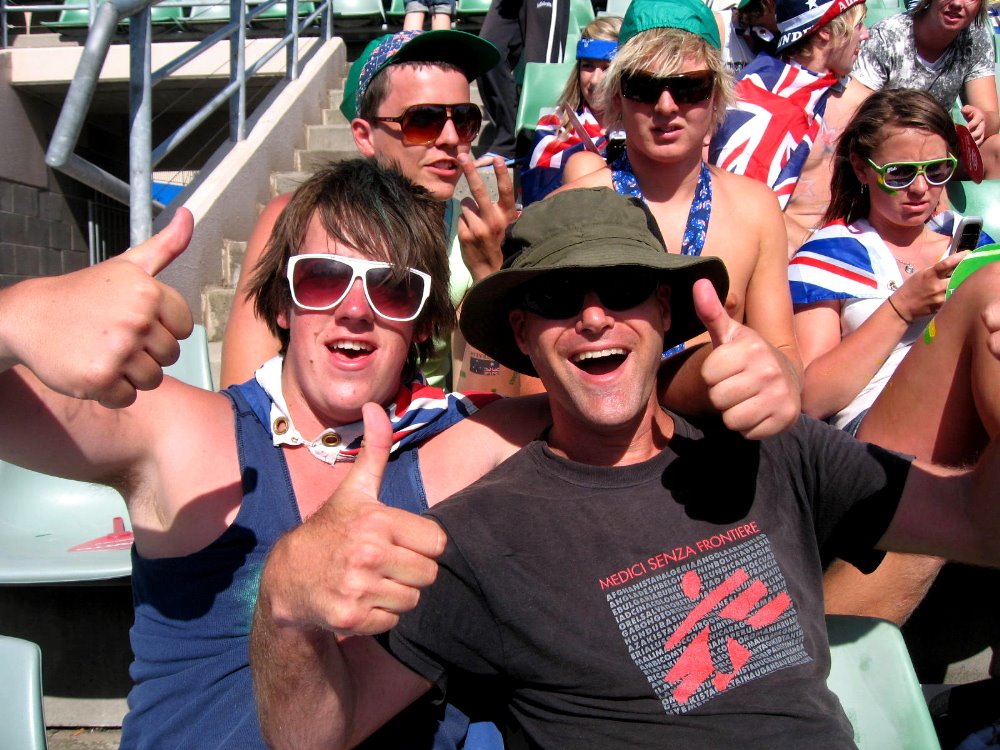
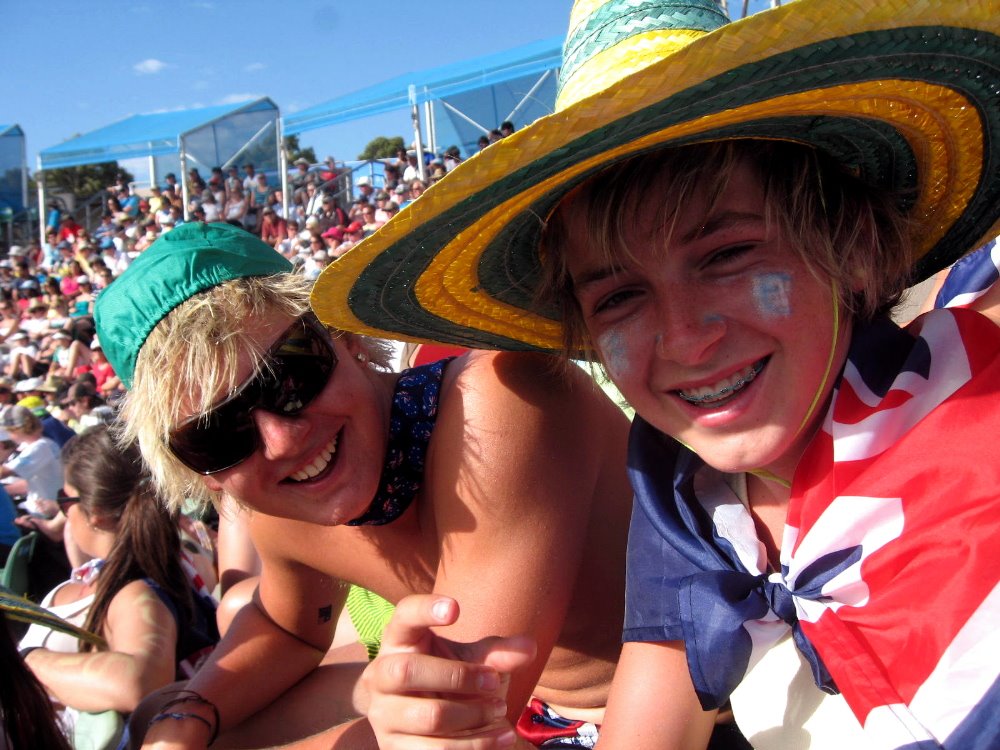
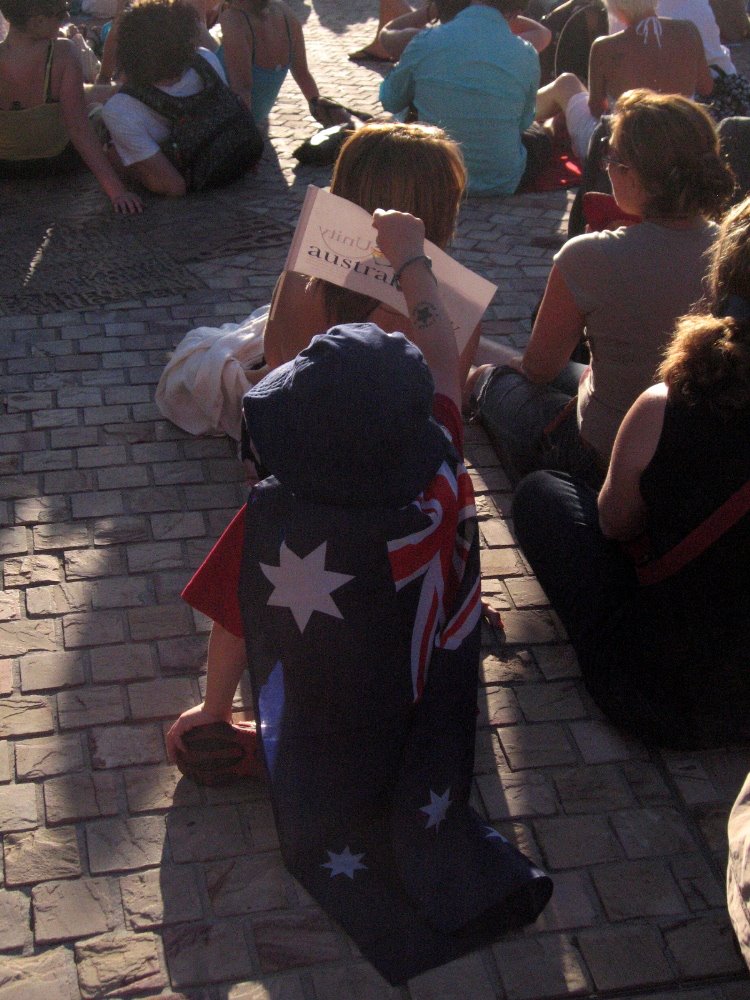
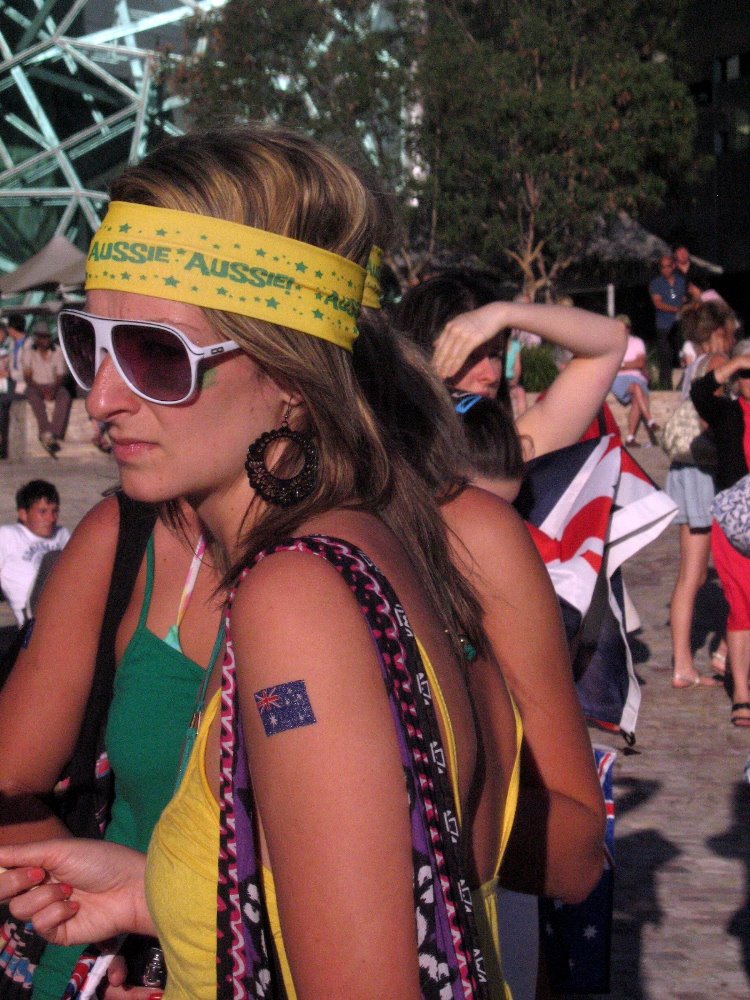
Federation Square is the recently-created center of Melbourne, home to the Ian Potter Center which houses the Australian portion of the National Gallery of Victoria — Aboriginal and European-tradition art by artists from or tied to this continent. There’s an enormous public space there where crowds hang out to watch live concerts, cultural events, and so on. During the Austrlian Open, matches were displayed live on a big screen during the afternoon hours to anyone who wanted to enjoy the crowd and the square despite the hot sun, and then in the evenings a live concert came on. The square was packed on Austrtalia Day with folks there both for the Australia Day fireworks over the Yarra River and the concerts on the public stage, and for the tennis matches broadcast before hand. Herewith some shots of the town, the stands, and some of the proud Aussies who took it all in. (The adorable and friendly guy below moved here recently from Margaret River – see above — to play rugby with the melbourne Storm rugby team. As I see it, he alone is more than sufficient reason to start watching the Melbourne Storm!)

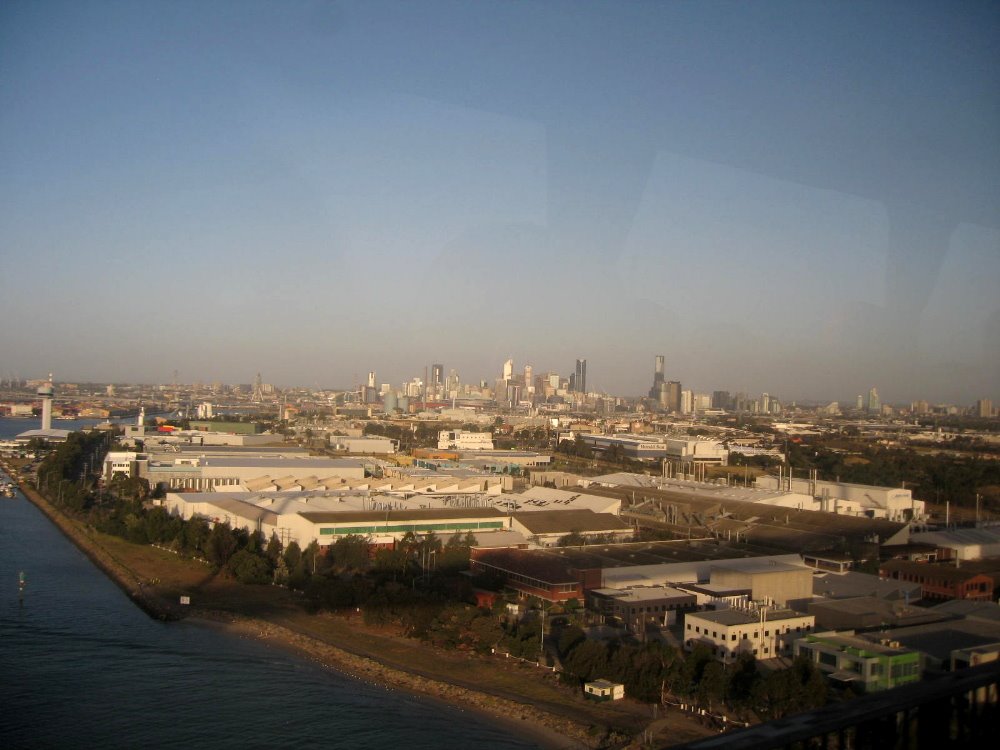
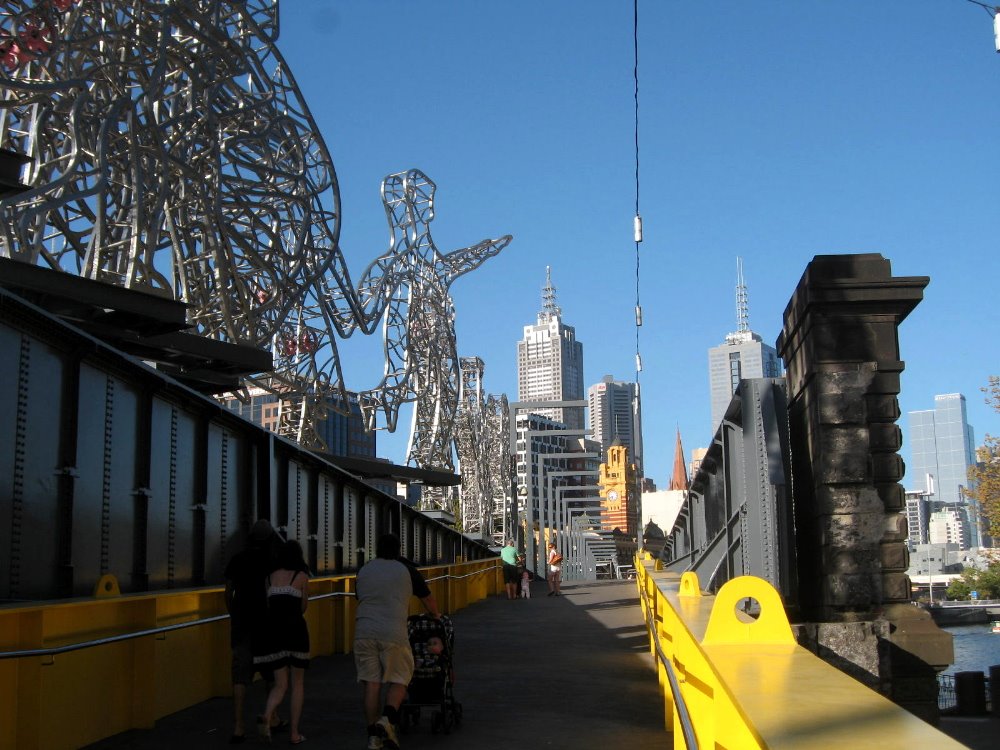
In honor of my long Australia-Day weekend in Melbourne, the nation’s first capital (albeit provisional and temporary since Canberra was already planned, and delicately situated in between Sydney and Melbourne, both then and now rivals for top-dog status among Australia’s cities), I give you sights of the riverfront of this cultured, lovely and very enjoyable city which hosts more leading sports venues than one would imagine, and more adorably Aussie-proud sports fans per capita than even Boston can boast, most likely.
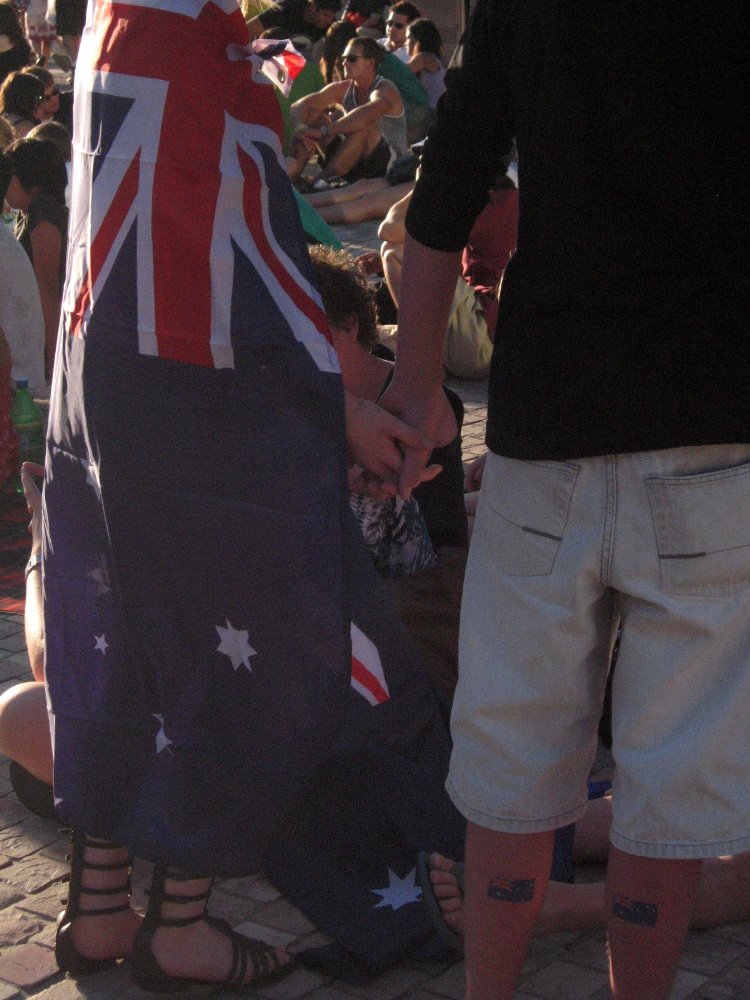
…I couldn’t help feeling it would be tacky if lots of Americans paraded our flag quite so boldly on July 4, but then we’re about 10-1/2 times the population of Australia and cast a bigger shadow economically and militarily, though ever since Vietnam they’ve shown a remarkable willingness to go along with out crazy foreign-intervention and regime-change fantasies. Somehow, it being Australia, it seems rather quaint and sweet to me. I doubt the Papuans and Indonesians would feel quite that way, but what do I know…

Melbourne started in a rather Manhattan-esque attempted land swindle around 1800, not long after the first fleet sailed into Port Jackson on January 26, 1788. (Yes, I celebrated Australia Day precisely 220 years after those first convict settlers landed on the shores of what is now Sydney to try eking out an existence under a different sun and different stars, with an ecosystem more radically different than that of the Europe they knew than they even began to understand until the late 20th Century.) Anyhoo, this guy named Batman (I’m not kidding) gave a few trinkets to some Aboriginals whose ancestors had done a great job of living with and on this land for many milennia, and figured that meant he’d somehow ‘bought’ the land from them — just like that old Chestnut about Manhattan island. And like that, Mr Batman was deluded because under English law, only royal agents could negotiate for land, and the Aboriginal inhabitants, rather understandably, didn’t see how a human could claim to ‘own’ a piece of land which would still be around long after we’ve returned to dust… Still and all, it’s from those roots that today’s gleaming skyscrapers of the modern Melbourne with its Batman Avenue sprang. Like California and Alaska, Melbourne and the newly-organized independent colony of Victoria (it was all New South Wales, at the start, but Melbournians quickly realized they were cooler and more cultured than those Sydney-siders, I guess) grew by leaps and bounds after gold was discovered nearby, and for the latter half o the 19th Century Melbourne was much bigger in population and, I deduce, relative weight within the colonies, than Sydney. Today they’re rather comparable, with Sydney a bit bigger in population and housing the more business, while Melbourne is undisputed sport and culture capital, so I understand.

Despite many similarities between the European arrival in North America and the one in Australia, one is constantly reminded here that one is very definitely NOT in Kansas, or even California, any more. Reasonably educated, cultured and even multilingual Americans (such as yours truly) often need decoders to get by in the land of Oz. To whit, from my excellent Western Australia road atlas and guidebook: “One of the most photogenic of the all the region’s mammals, the chuditch was once persecuted as a raider of chook pens.” This sentence clearly reads as English, but if I didn’t know better I might think it came from the creative mind of a fantasy or sci-fi writer, so little sense does it make to any non-Australian, perhaps even to many Australians. the chuditch is just an indigenous species here, unique to this continent which departed the super-continental mothership much earlier than most of the other continents…except, of course Antartica, which ain’t so known for its land-based flora and fauna. ‘Chook,’ on the other hand, fits into that lovely category ‘Australian Shorthand’ into which also fit such items as Brekky (you can buy, I kid you not, a carton of Brekky Juice aka Orange Juice, in the supermarket here) and Arva (tea in the arvo may not be the Queen’s English, but one does meet up on Sunday Arvo here for tea). Chook? Chicken. But how am I to know that? Is it in the OED? And to think they have the nerve, here in tiny little (population-wise) Oz, to make fun of American English! True, they SOUND more couth than we…but I don’t expect I’ll bind brekky, arvo or chook in the OED when next I check.
Consider, further, my predicament three weeks ago at a local winery on lovely Cape Naturaliste (Geographe Bay and adjacent Cape Naturaliste, for the curious, were named after the two ships in the French fleet that first mapped the region): I want to order the salad with rocket, shaved parmesan and evoo. The menu also offers delicacies like kanagroo salad and other items I can’t identify — and my culinary vocabulary is not small by most definitions. When I first saw rocket on a menu in London, around the time of the US Supreme Court’s judicial coup in favor of GW Bush (thanks so much), I wondered how my teeth would handle all that metal. Then I figured out that we were not talking about the Mars lander, but about a classically English bastardization of the French ‘Roquette,’ better known to Americans as Arugula. But evoo? In a country where common animals include the quokka and the echidna, and the emu is regularly seen sharing grazing space with the cow — both destined for the barbecue grill, I think — one simply can’t know whether evoo is a small woodland creature (I imagined those fuzzy things in ‘Return of the Jedi,’ honestly I did!), or simply … extra virgin olive oil?

Such is often my situation here in Australia: we’re speaking the same language, but things often seem a bit reversed or off-kilter. I don’t suppose this should surprise me; my situation is not unlike that of the early British colonists to arrive here, who were surprised to find trees that didn’t shed leaves, but DID shed their bark, summer in January and winter in July. One sadness in my trip south of the equator, thus far, is that all the drains – toilets, bathtubs, sinks, you name it – are too damn good: they just suck that water right out in one big whoosh, leaving no time for a whirlpool to form. This means that I cannot yet confirm or deny rumors that, when whirlpools form here south of the equator, they run counter to the direction of northern whirlpools. Can any scientists in the audience (is there an audience?) confirm whether, somehow, the laws of physics are such that down here, whirlpools run counter-clockwise (that’s anti-clockwise to the very few Aussies in the audience) rather than clockwise, as they do in the 0ld countries?

Having driven, now, roughly 800km on the roads, I can confirm that it is possible to adjust to left-side driving. My parallel parking leaves much to be desired (at home I’m so proud of being able to park well on both sides of the street; but here, the trouble is more understanding how the whole car relates to me when I’m behind the steering wheel on the right-hand side of the car. I find that ultimately, this difference is far weightier than which side of the road I’m driving on — it’s just that everything is reversed: after three days of driving, I’m now proud to say I only turn on the wind shield wipers 50% of the time, rather than 95% of the time, when I go for the turn signal. (Different side of the steering column, of course.) And when Howard and Gene – with whom I eagerly anticipate spending two glorious weeks in New Zealand next month – told me I had to rent an automatic, rather than manual, car, I inwardly sniffed; if it were up to me, my inner devil suggested, I’d save the extra cost of automatic and put it to more bottles of Canterbury Sauvignon Blanc. Thank goodness their wiser heads prevailed, and I did the same when I hired (that’s Australian for ‘rent’)this car in Perth. Even with the automatic, I am still pretty well all thumbs: my left hand and arm simply are not used to being quite that responsible. Heck, they can’t even brush me teeth, and now I’m entrusting them with my life? Possible avenue for scientific inquiry: do right-handed people growing up in left-side drive countries develop a greater level of ambidexterity than most of their counterparts in right-side drive countries? I do find it interesting how very clumsy I feel behind the wheel, though by now I’m generally confident and not so terrified of simply ending up on the wrong side of the road, flat out, as I was to begin with.

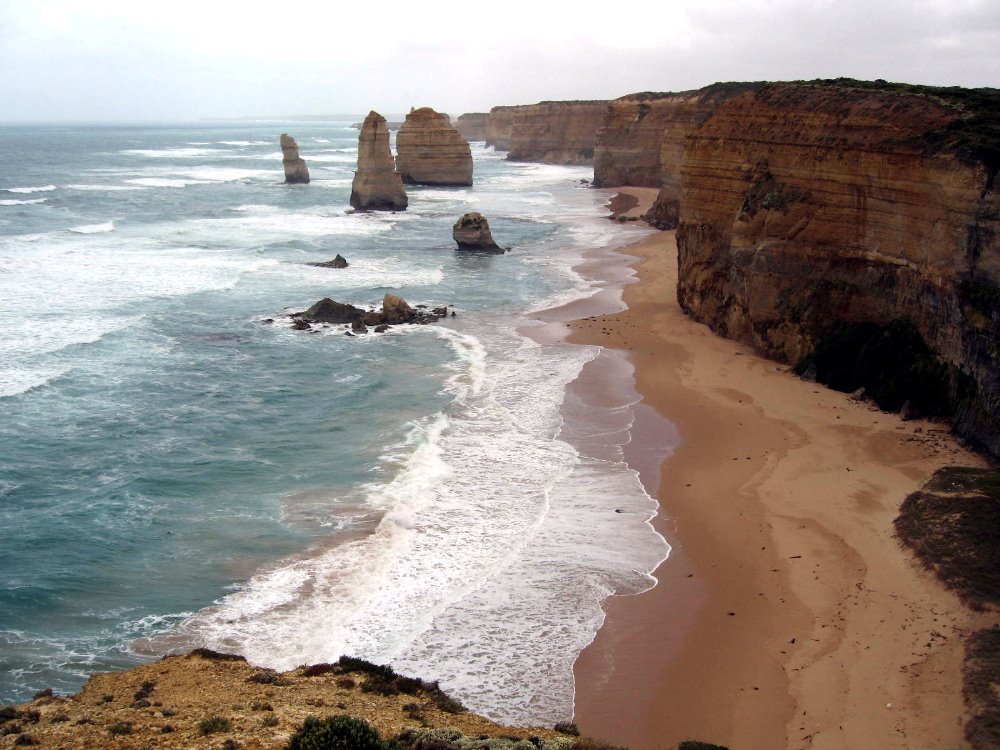
Victoria’s Great Ocean Road

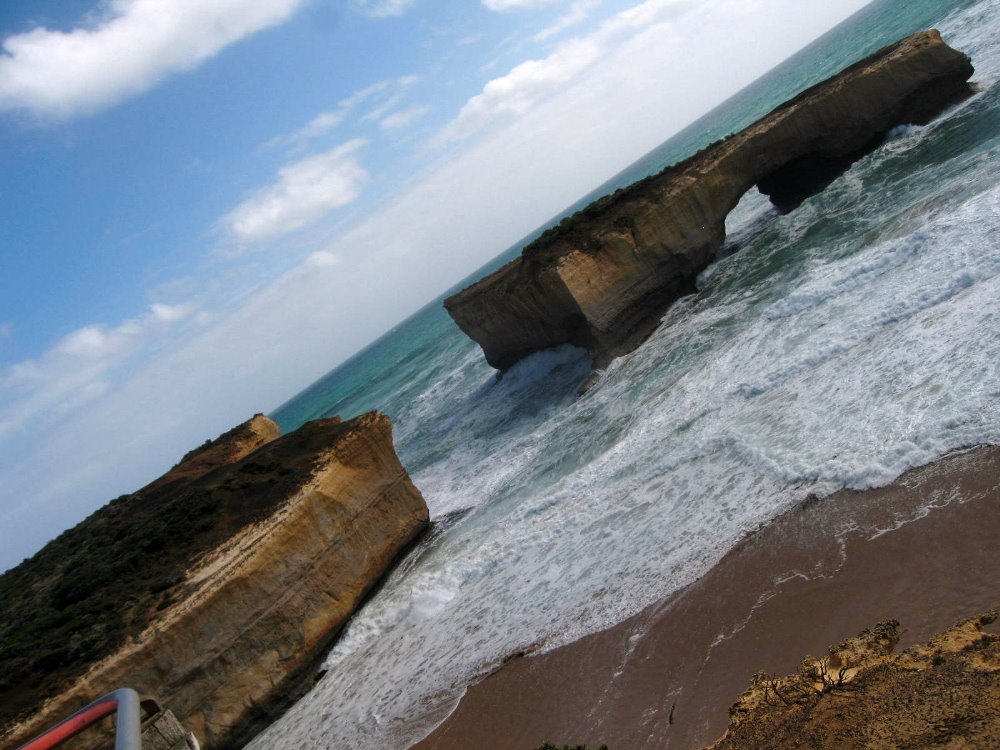
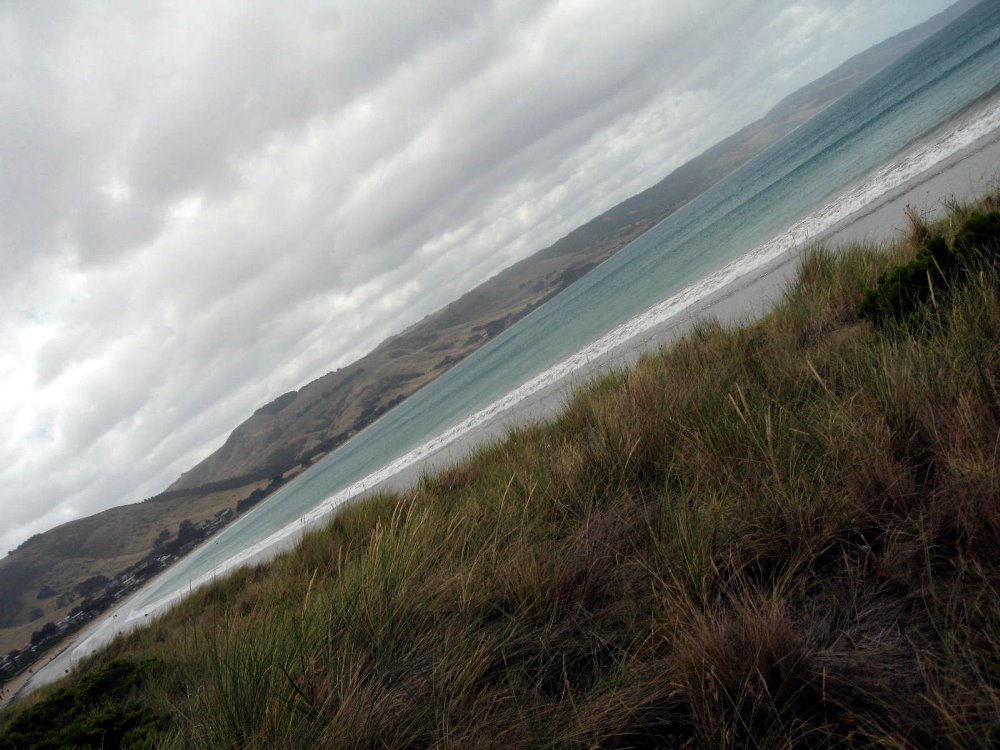
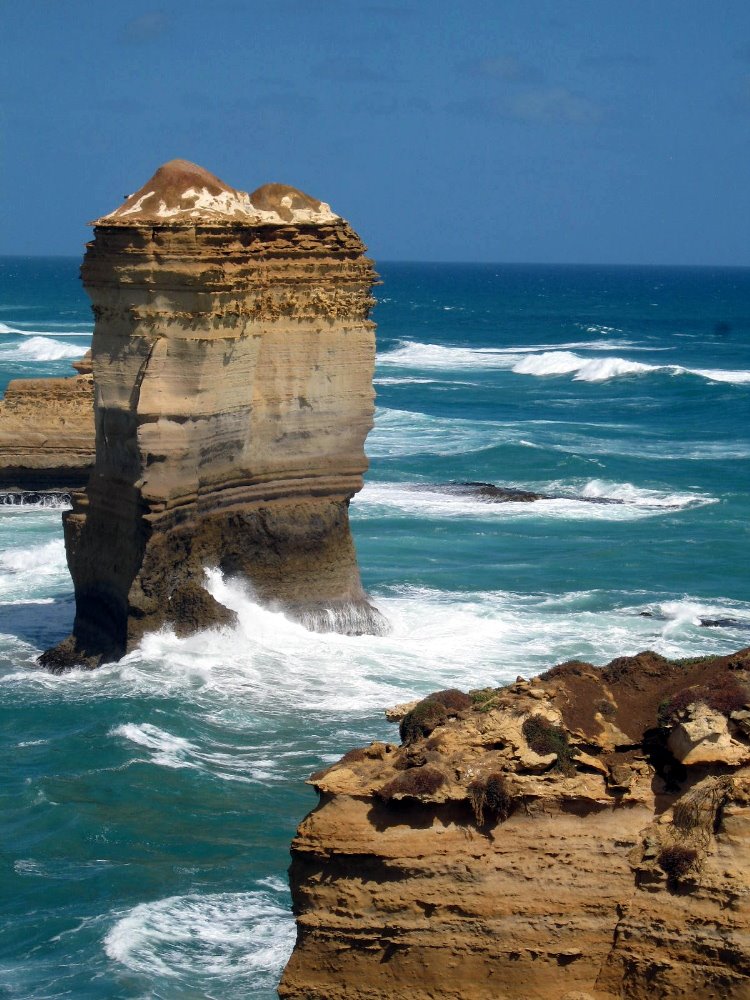
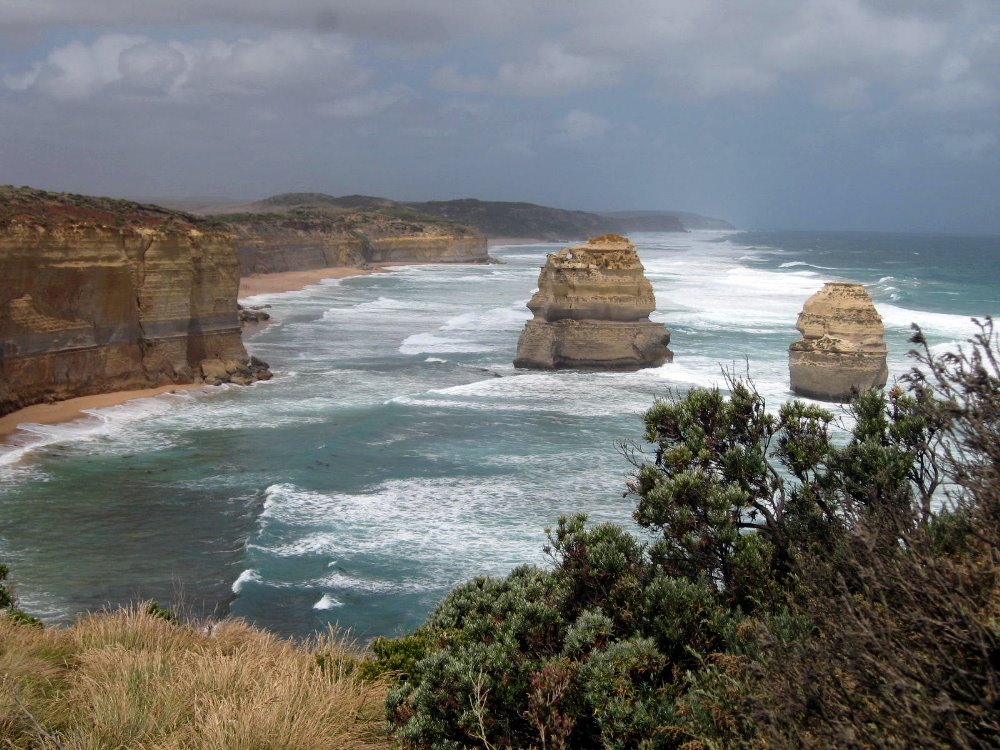
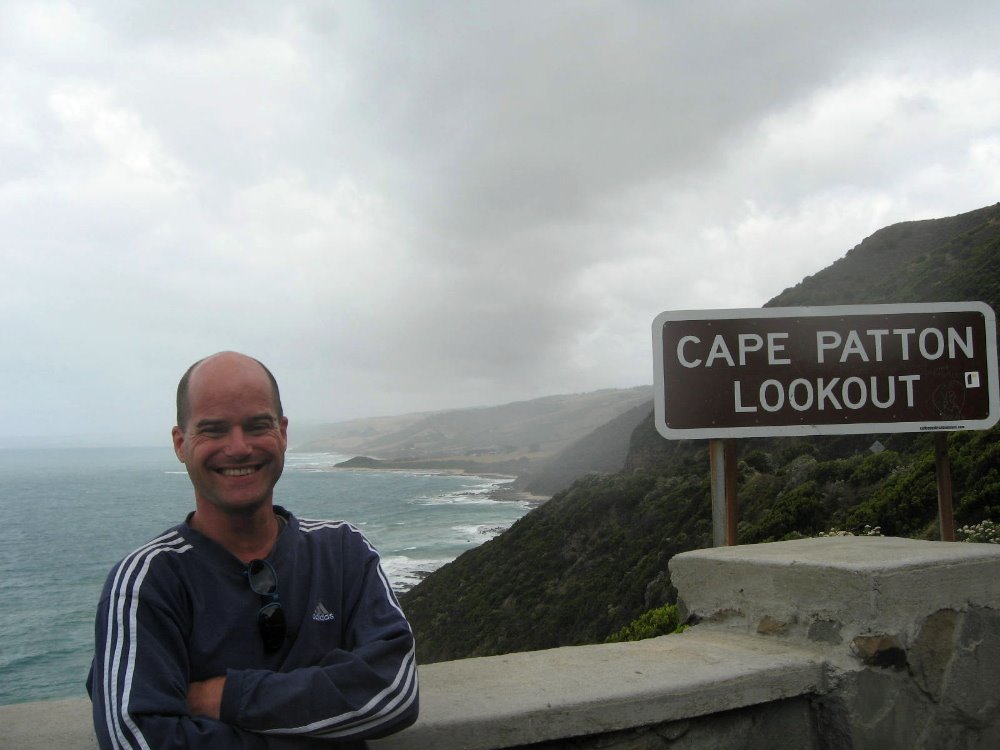
Coastal Victoria, south and west of Melbourne, was home in the late 1800s and early 1900s to many isolated farmsteads, all more or less cut off from each other and from Melbourne or regional hubs like Geelong by the ruggedness of the coastline and the lack of any good connecting road along the coast. Farmers near the coast rode north/inland, then along the main road, then back down to the coast to visit their neighbors. In the wake of World War I, in many of whose most brutal battles young men from Australia and New Zealand suffered extremely heavy losses on the front lines struggling to defend British-controlled positions (non-Aussie/Kiwis who haven’t seen the great movie Gallipoli should absolutely rent it to learn more of this aspect of history), there were strong feelings that the returning soldiers deserved both honor and jobs in a newly down global economy (we’re talking about the 1920s, not 2009), and that a good coastal road in Victoria would stimulate the local economy by increasing regional tourism and developing more interconnection between coastal farms. A private initiative was formed to provide the jobs only to returning veterans and build the Great Ocean Road both in honor and in support of those veterans of what was then still simply The Great War. In the 1930s the road was acquired by the government and stopped being a private toll road, and now it’s one of the key tourist attractions in Victoria, with views and drive-feel rather similar to California Highway 1 through the Big Sur coastline. On my day’s bus trip along this route, I saw koalas in the trees, a koala running by the side of the road at high noon (no joke — poor thing must have been very freaked out), and a lot of gorgeous coastal views.

Ahhhh the Australian Open

Which brings us to tennis. The original idea of this extended vacation in Australia started with a fantasy of watching the Australian Open in person, which idea sprang from comments heard over the years from players and commentators that the Australian is the most relaxed, friendly, and open (and easy-to-get-good-tickets) of the Grand Slam tournaments. (As the common stereotypes go, Wimbledon is the most grand and traditional; Roland Garros is also grand and full of tradition, with the added element of being highly unpredictable and unusually hard-fought due to the red-clay surface, and highly emotional because, well, it’s in France; the US Open is loud, brash and very New York.) The fantasy took on more potential for reality when my current life with MSF made it possible for me to take extended breaks between assignments, without some corporate bigwig thinking I’d lost my mind and will to work — after all, it’s hard to lose a career when you no longer have one! 🙂 What pushed the idea over the line into true reality was realizing how many friends I’d met in recent years who live here, and who might welcome a visit – which made it both more appealing, and more feasible since I’ve taken shameless and very enjoyable advantage of the hospitality of three wonderful hosts/host families here in Australia.


…Aussie fans are so much fun, especially in the first week when there are still Aussies in the draws for whom they can get drunk, paint themselves in the national colors (officially the flag, but yellow and green for sport), and shout out “Aussie Aussie Aussie, Oi Oi Oi” endlessly during changeovers.
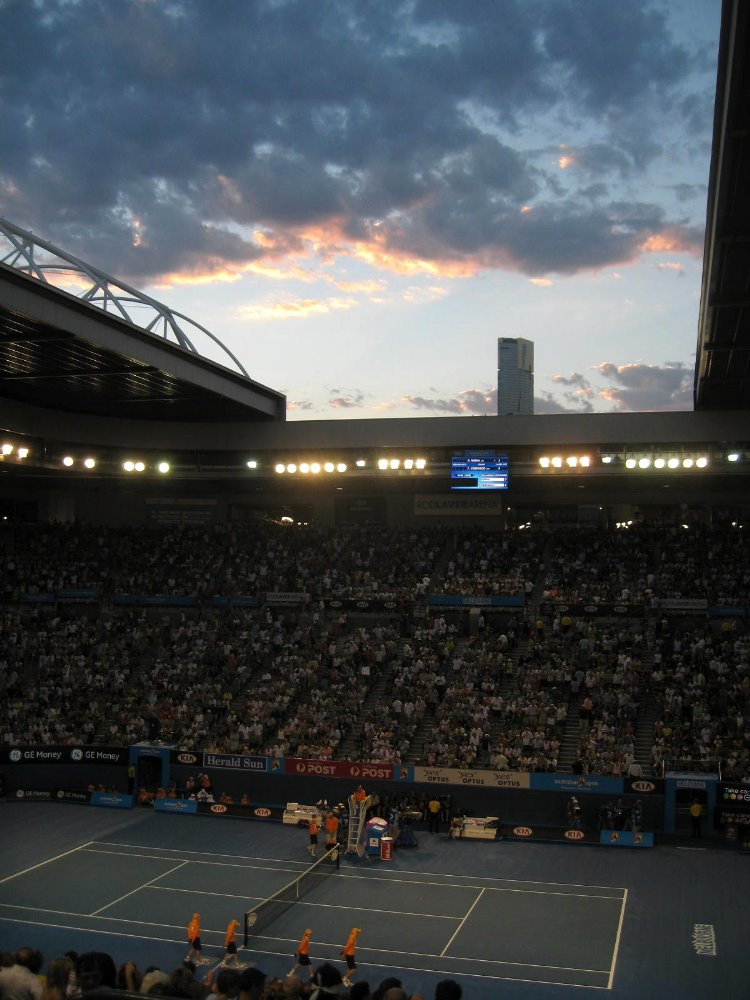
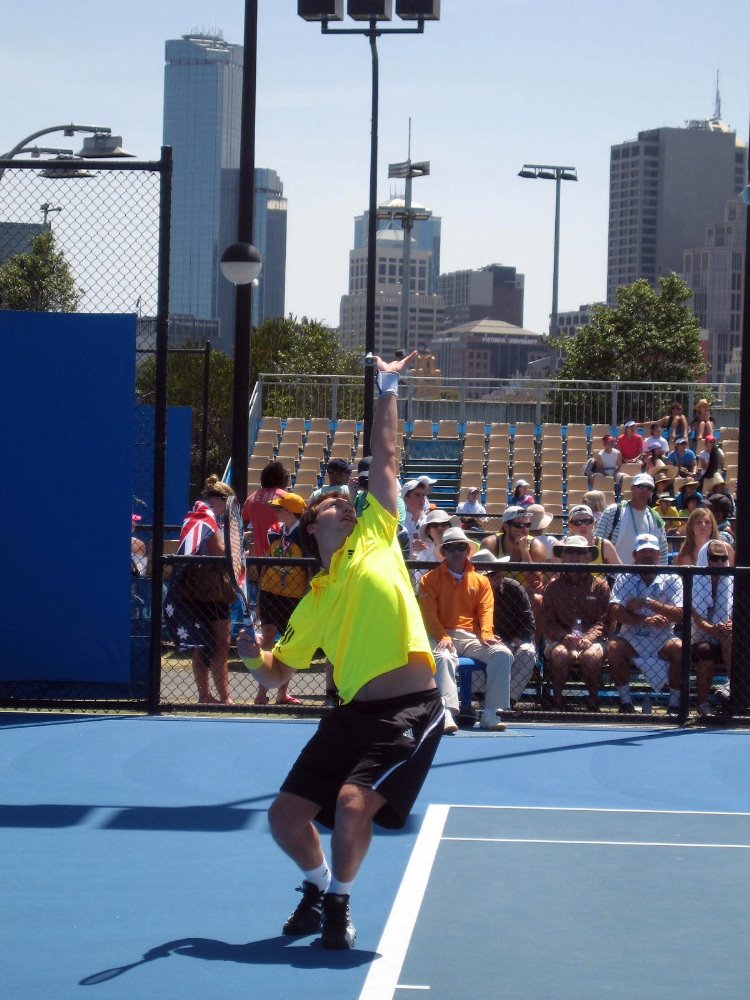
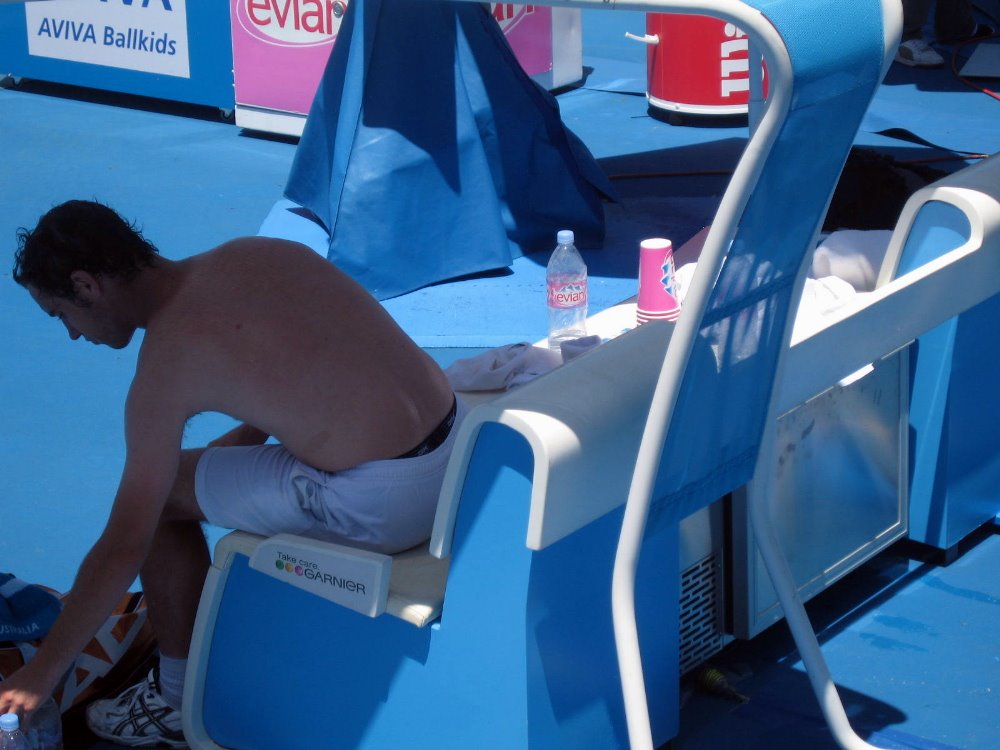
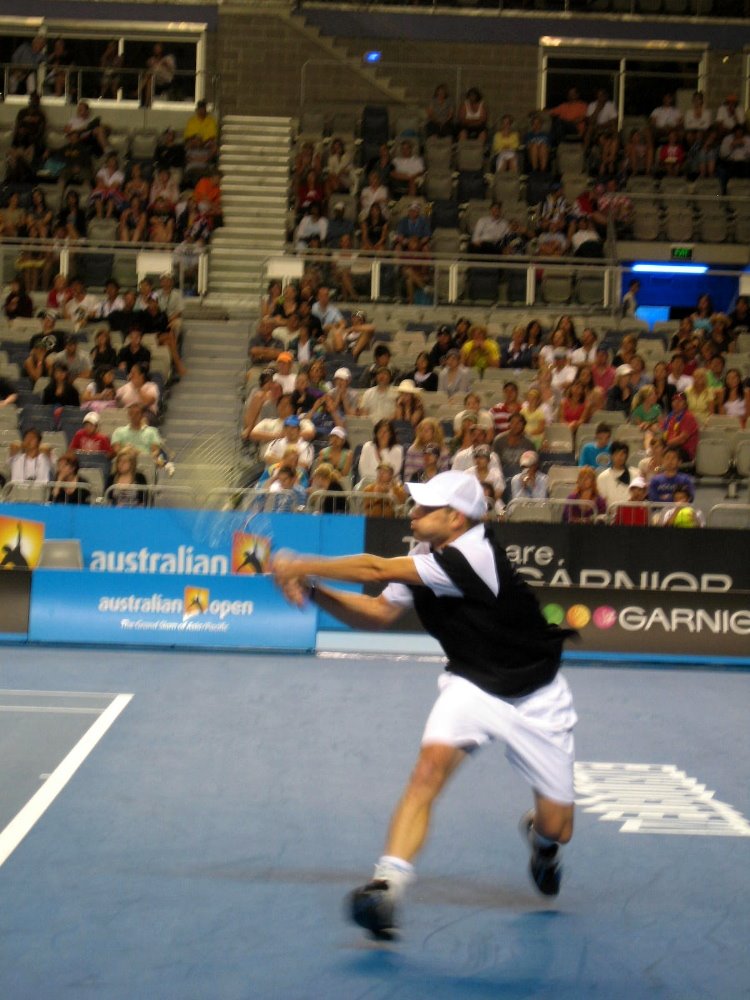
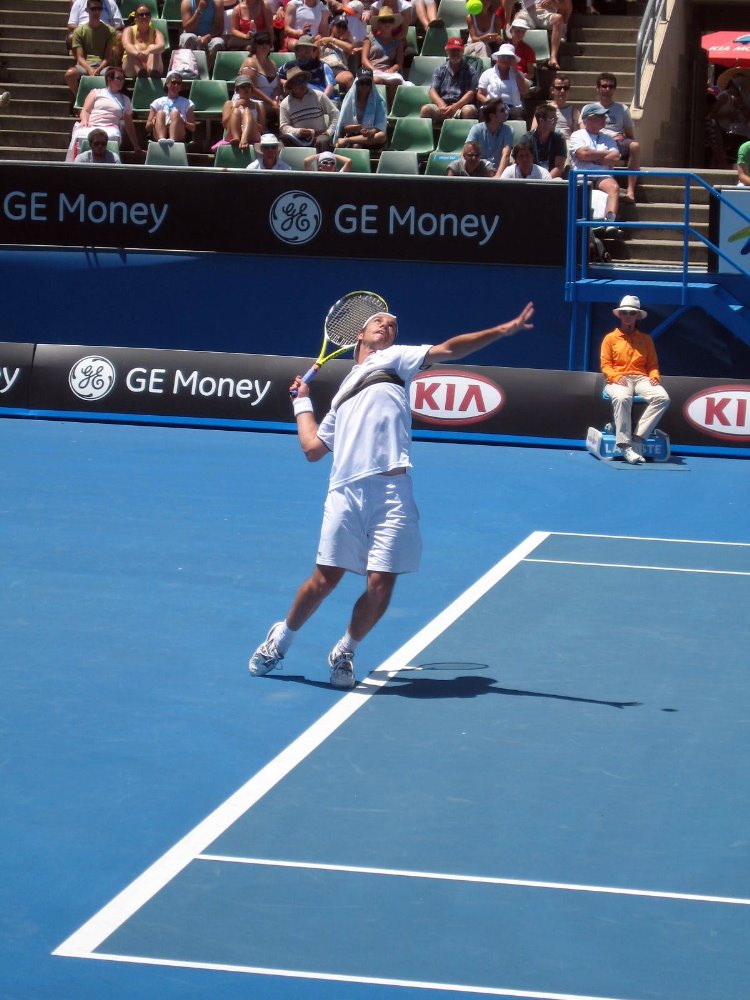
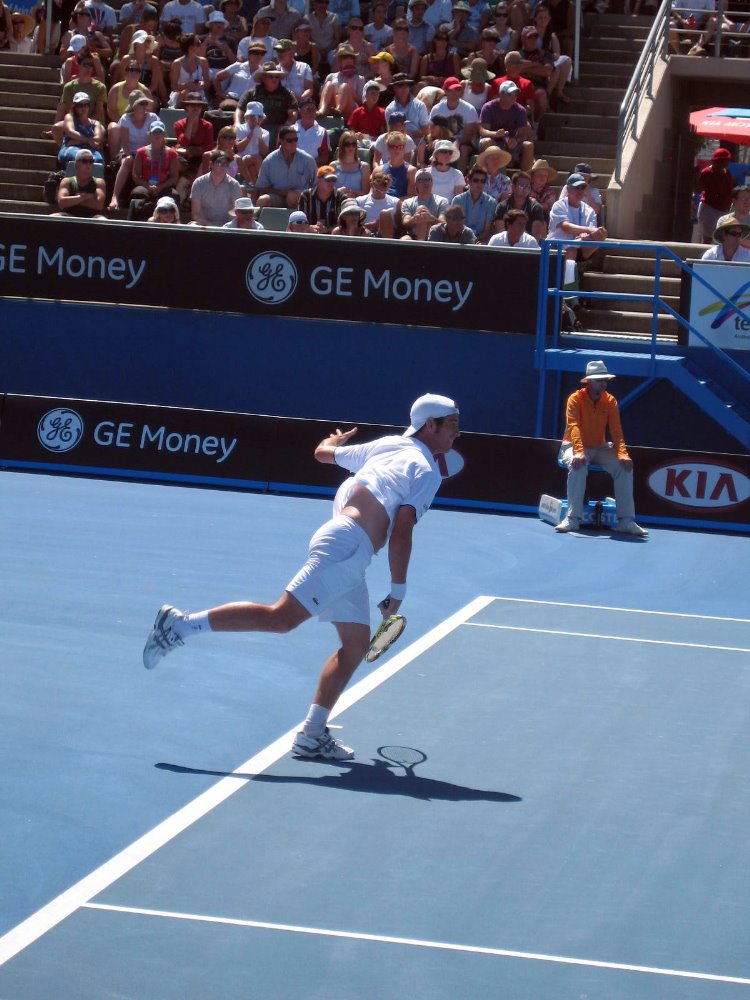
But getting back to tennis. It’s now Monday AM in Melbourne, I’ve only a few more days in Australia before moving on, last night I sat in row JJ to watchRafael Nadal beat Roger Federer in the first five-set men’s final here for more than 20 years, and I feel like posting some of the tennis pictures I’ve taken over the past two weeks and indulging myself in some of the thoughts I’ve had while watching all this tennis. I was treated, two nights ago, to the best match I’ve ever watched in person and one of the best I’ve seen even on TV — Nadal/Verdasco in the second men’s semi-final; a five-set match that will likely live long in history and is already the longest match in Australian Open history (last night’s final was excellent, but since Roger was clearly not playing his very best, it didn’t feel quite so satisfying to me). I’ve never seen two players so consistently come up one extraordinary shot after another, and one extraordinary return after another. The entire stadium was in awe as the match unfolded, wondering if Verdasco would ever have a Cinderella moment of realizing how out of this world he was playing, against one of the true all time greats, and fold…but indeed, it was literally not until Nadal had actually won the match in the fifth set that one knew that would be the result.

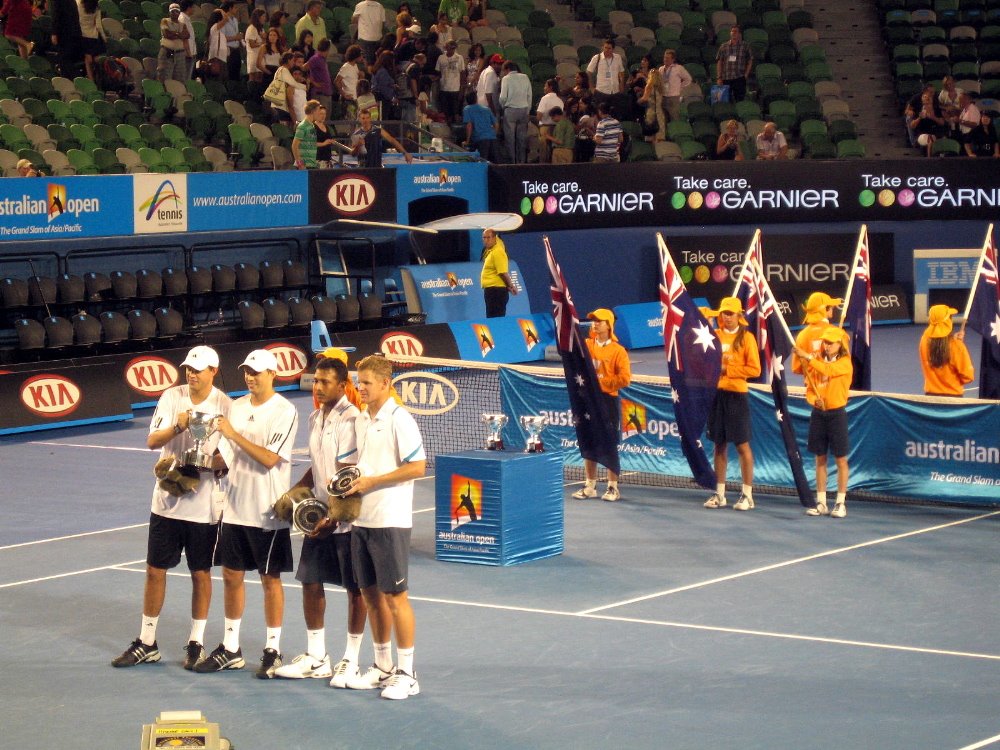
An advantage to being in the stadium is you get to see all the matches, including doubles which TV usually short-changes, because the audience usually short-changes it. We moved down to excellent courtside seats for most of the men’s doubles final which followed Serena’s demolition of Dinara, which the Bryans Brothers from Southern California won in three sets. I was close enough to get Bob’s left shoe, when he threw it into the crowd! Now if only I could figure out what to do with it…

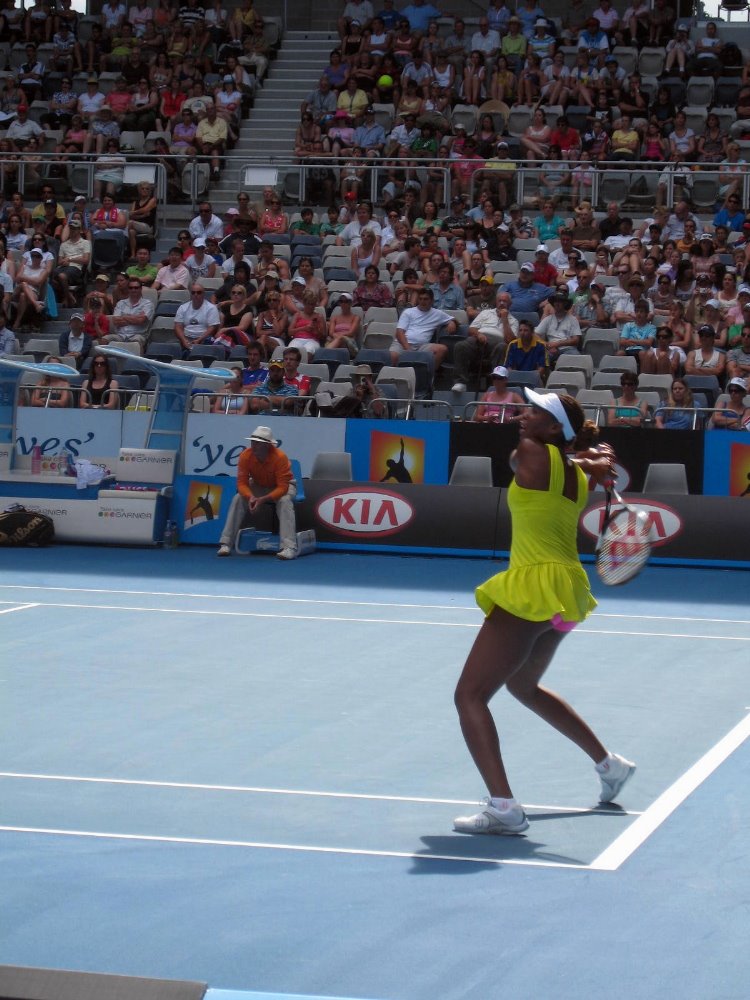
…Venus serving to Dinara, above and below, during the women’s final.
I was quite chagrined, Saturday night, to see Dinara Safina live down to the worst fears of her possible underperformance in the underwhelming women’s final, rather than living up to the clearly tremendous game she is capable of. Trudi, in the stands with me before the match, asked why there were so many empty seats; I told her a) that it would fill up more by match start and b) that frankly the women’s matches at this year’s AO have usually been either lopsided, or see-saw matches where first one player then the other goes off her game — not battles of will with two players consistently producing their best tennis over multiple sets. (E.g. Verdasco-Nadal.) And anyone who loves tennis has to be asking themselves some hard questions about competition in the women’s game. When we demand money for women’s matches and so on, fans have the right to expect more of the women’s tour than we’ve seen in this tournament. Men’s matches are best of five sets to begin with, so they’re frankly working harder throughout the tournament; but what lover of good tennis would prefer to watch Serena wipe the floor with Dinara in less than one hour, rather than the 4-1/2 hour epic which confirmed Rafa in his place at the top of the game, and told us we’re likely to have another year of tremendous rivalry as Roger tweaks his game to show Nadal he can still be #1?

…I saw several of Venus & Serena’s doubles matches, including this quarter-final trouncing of a Chinese team on an outer court where I had the pleasure of sitting in the very front row.

Serena gamely tried to make it sound like she ‘had’ to go for broke becuase Dinara hit the ball so hard, but let’s be real — Serena worked far less hard in the final of this year’s first grand slam, than she would in a casual practice during one of her off days this week. Like most fans, I was charmed by Ana Ivanova’s ready smile and great game at last year’s French Open final — and I wonder what the heck has happened to her since then?! What the DEVIL is wrong with the women’s game? Why is women’s tennis beset by women who can’t come up with the goods when the pressure is on? Where are the long hard-fought matches between Graf and Seles, or Navratilova and Graf or Evert? The game is crying out for some great new players to emerge and really claim their place — to challenge Serena in a meaninful way. Dinara can do it, but she’s gonna have to believe she can and develop some consistency; and until she and a few others raise the bar and contend consistently for the top spot, I for one am going to find women’s tennis boring and very secondary to the current excitement on the men’s side.

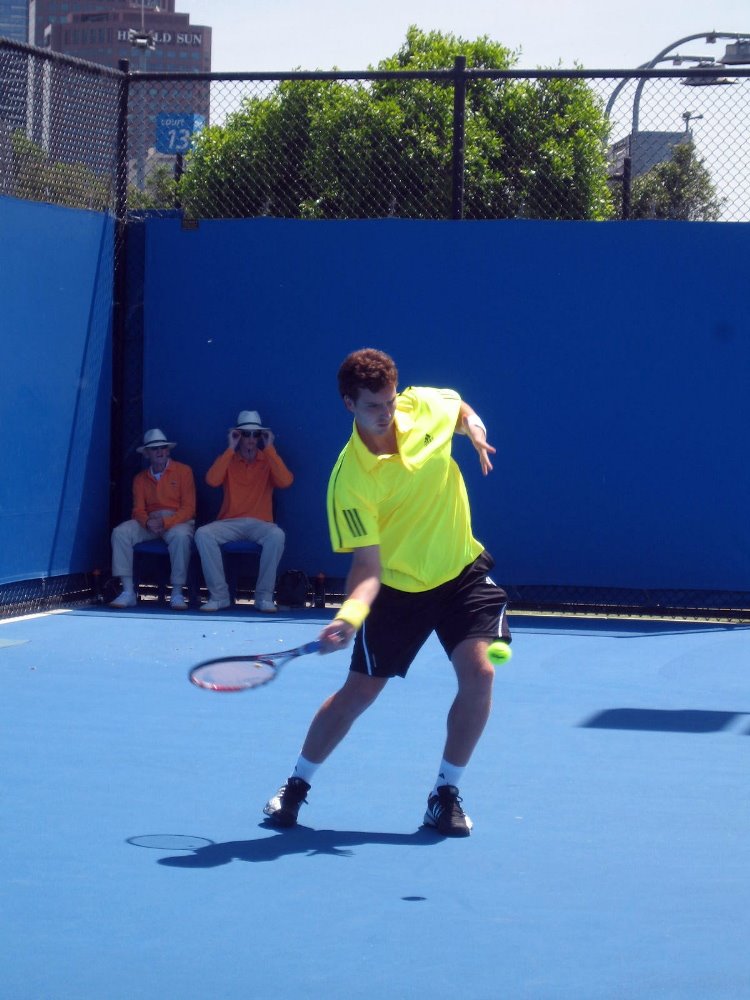
…the first week, I had literally courtside seats on Hisense Arena, the second-largest arena, as well as being able to see any match I wanted on the rest of the courts. That’s where I got these really close up shots of Venus – good thing I saw her in singles action during the first round, which she won; and of Andy, below.

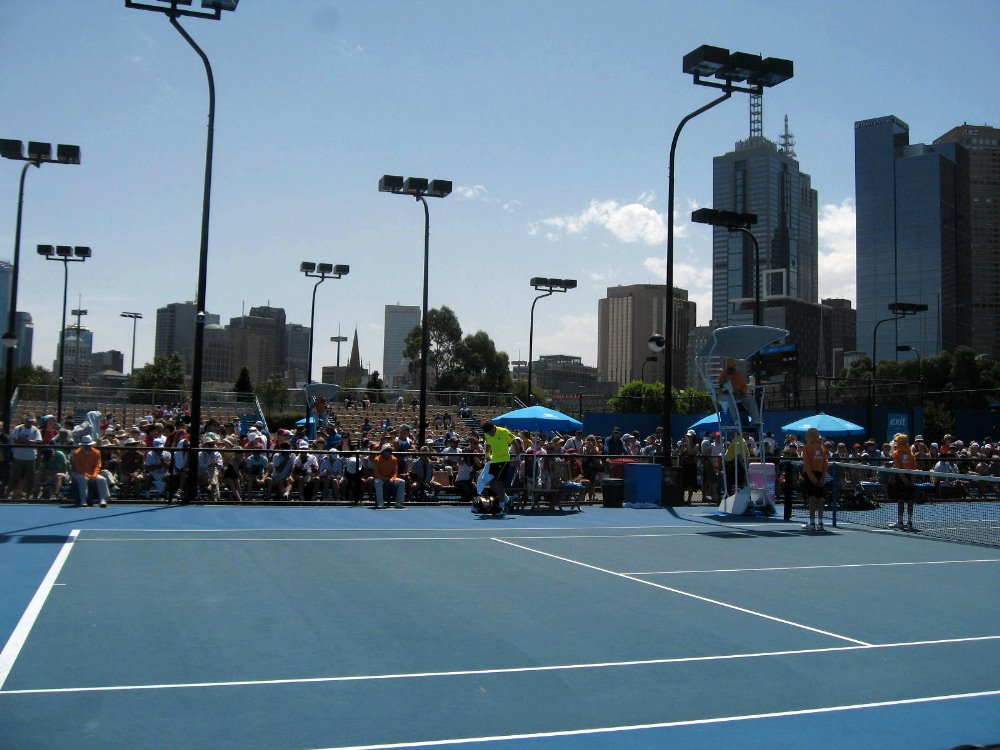
…this being one of those smaller, outer courts, on which I watched Ernests Gulbis in the first round. One of many lovely things about the AO is that Melbourne Park is literally in the heart of the city, so sitting in the stands you’re seeing the skyscrapers of downtown right there, plus of course it’s easier to get to.

By far the most interesting women’s matches I watched were doubles matches featuring Ai Sugiyama and Daniela Hantuchova. Ai Sugiyama has to be the most polite player ever to grace a tennis court. Not only does she play her big heart out on the court, which is always great to watch, but she literally holds out her hand in semi-apology every time she hits a winning volley at the feet an opponent or between two opponents at the net. The message, it seems, is ‘I’m so sorry that in order to win I have to beat you.’ Probably the best women’s match for me was Hantuchova/Sugiyama’s three-set thriller over Black/Huber, a match whose final outcome wasn’t evident until the last point had gone down in the third-set tie-break.

Gulbis (a Latvian) is a supremely talented quite young player, and wonderful to look at for both his shots and his looks; I’m not alone, I think, in hoping that his mental game can mature to match his skill level.

Close runner-up to Sugiyama in the Outstanding On-Court Demeanor awards is Elena Dementieva. This player, who can smack the crap out of the ball from the baseline with the best of them (her semi-final against Serena was far better than the final with Dinara, though she too choked on key points), took balls from the ballkid to hit over the net during serve warmup, so Serena wouldn’t have to wait to keep warming up her serve (when all the balls had ended up at her end of the court, because Serena was booming so many practice serves). She waited with great concern to make sure Serena was really OK after Serena fell in returning one of Elena’s great shots. During her service games, when every other player man or woman would take a few balls, and then just toss the unwanted ones backwards behind them as they head to the service line, for the ballkids to more or less scramble after, what does Elena do? She looks at the ballkid, asks for a ball; once the ballkid has tossed out the new ball, Elena throws the old one directly back to the ballkid, so it looks rather like some child’s game with both of them tossing balls through the air — but what it really is is Elena taking the ball kids seriously and making it easier for them to do their job, rather than harder…

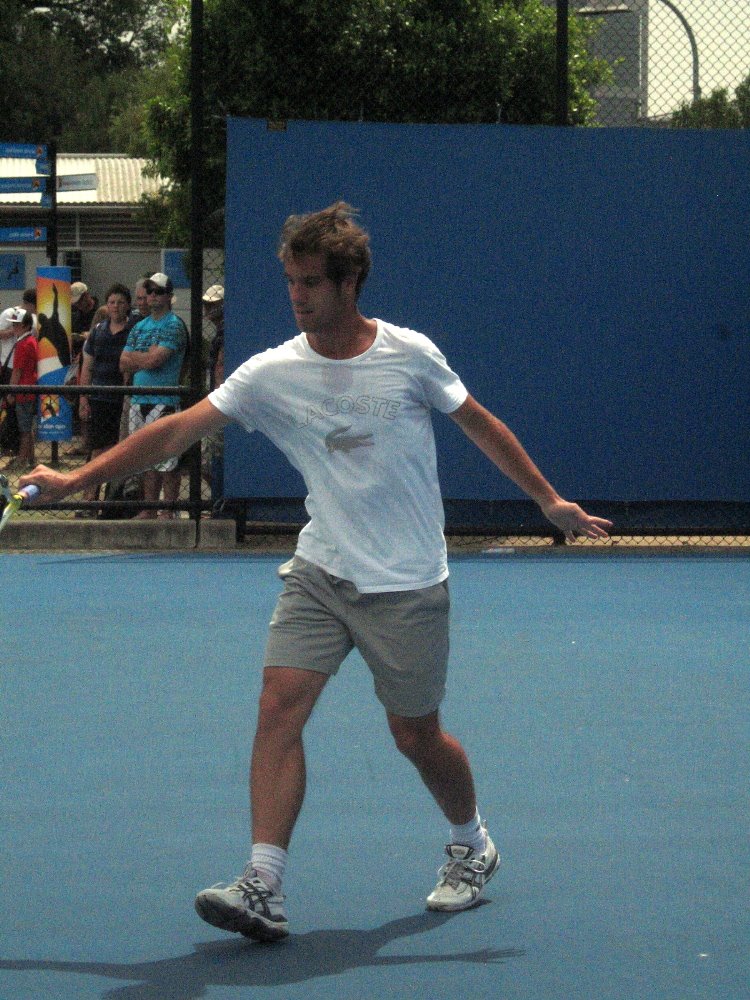
…since I love his backhand and his game in general, and never mind looking at him, I caught all Richard Gasquet’s early matches and cheered loudly in French for all the good points. Even enjoyed seeing him hatless – which never happens in a match – at a practice session.

…Which brings up a contemplation of politeness vs winning toughness and confidence, selfishness and boorishness vs focus and determination. Most fans would agree, I think, that among the many things that make Federer, Nadal, and Serena unique and special among great players of the game is that they not only bring absolute commitment and determination – utter lack of doubt or fear, essentially – to every point along with their great skill. They are single-mindedly focused on their games, yet they also never act up or behave rudely or nastily – I’ve seen them all wait patiently while an opponent threw a tantrum or the fans behaved badly; I’ve seen them all give gracious post-match interviews whether they won or lost. Roger, of course, is the unequaled leader in being both tremendous gentlemen and deadly predator on court (last night’s loss notwithstanding…though Rafa really is getting ever closer to Roger’s greatness, and is also truly a well-behaved and well-spoken player). It’s that combination that, to me, makes these players among the true greats of all time. So do Elena and Dinara need to just get more selfish – perhaps even more boorish? During the women’s dubs final between Venus/Serena and Hantuchova/Sugiyama, Venus and Serena were never rude on court, but they also generally didn’t seem to take account of their opponents except when a ball was coming off one of their rackets — their opponents existed only as obstacles en route to another trophy. As a player myself, I long for that focus and know I’ve almost never brought it to the court — I like my opponents usually, sometimes I don’t, but for me the social aspect of tennis is usually as enjoyable as the competition, and I appreciate their great shots as much as mine. But I’m a duffer, and no one’s ever paying to watch me play. Dinara, much as I love her – and however adorable her apology to Australians for having to beat their lone remaining singles player – owes us a better match than she gave us last night – especially when we all know she can deliver if she just gets over her mental block.
It is, indeed, their humanity that allows us to welcome these players into our hearts the way many of us do. But ultimately, what we want from them is great tennis – not charm or apologies or good manners on court. Even I, who loathed John McEnroe’s on-court behavior, would far rather watch McEnroe play any day, even at his racket-throwing ballboy-and-umpire-abusing worst, than see another set of Dinara double-faulting away games. (I also think McEnroe was often right on the points he wanted to argue – he had and has among the best eyes in the game and is now one of the very best and trenchant commentators on TV.) So: give us more Federer from here to eternity: grace and lyricism on court, killer instinct with gentlemanly behavior and never a moment’s doubt of his ability to win. And let more of the women emulate him, Serena and Nadal — yes, sometimes Nadal’s intensity can be scary, but the boy leaves his heart out there, and always behaves well on court and toward his opponents. Onward and upward, dear game of tennis.

Seeing Sydney

It’s frightfully early Sunday morning, 1st February, in Melbourne. The worst of this week’s heat wave seems to have passed, and coming back from the tennis this evening it was actually rather pleasant. I’ve been traveling again for more than a month now; a month that, as always when one’s having tons of new experiences all the time, and regularly seeing new places, learning new things, and meeting new people, has passed far faster than seems really possible. I know full well that, before I even really know it, I’ll be back at what’s become my regular life in the US. During my absence, the US has undergone further change — we’ve ushered in a new president, ushered out probably the most destructive president we’ve ever had as well as a frightfully corrupt major-state governor, lost many thousands more jobs, and entered a new year.

All I have to offer, for now, are some photos of Sydney, where I spent several days in early January with my good friend and former Nigeria colleague Trudi. She’s with me here in Melbourne now for the finals of the Australian Open; about that, about politics and my thoughts on Australian flora, fauna, history, culture and landscapes — more later. For now, no thoughts to offer other than thanks for staying tuned, and I hope to show you more of Australia — Western Australia, Victoria’s coastline, Melbourne — soon enough.


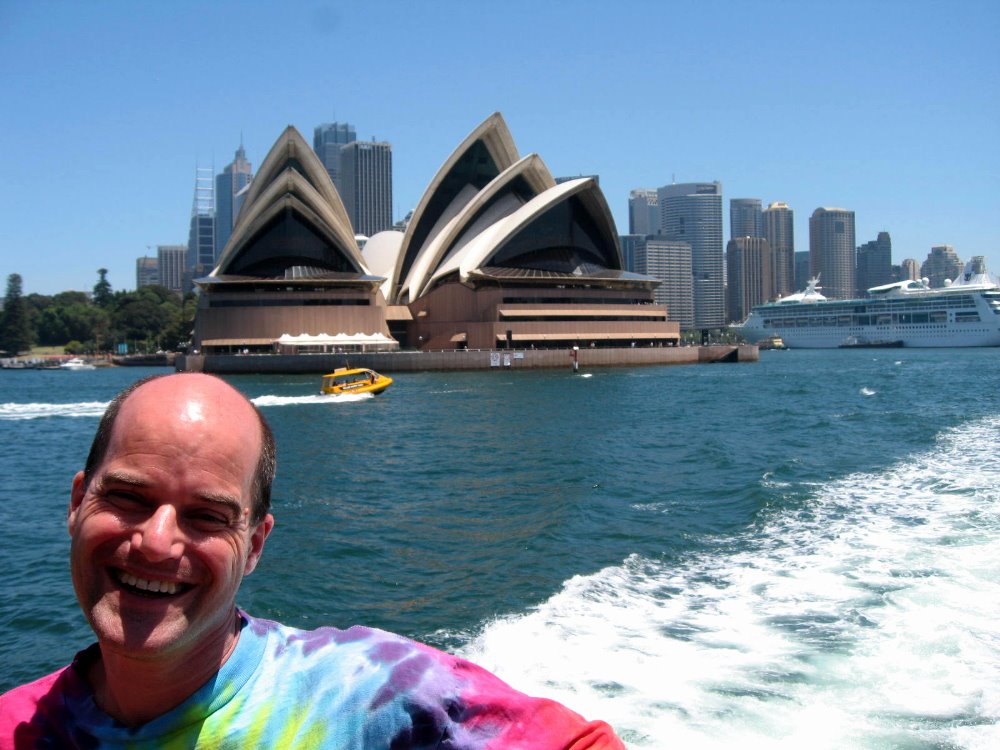
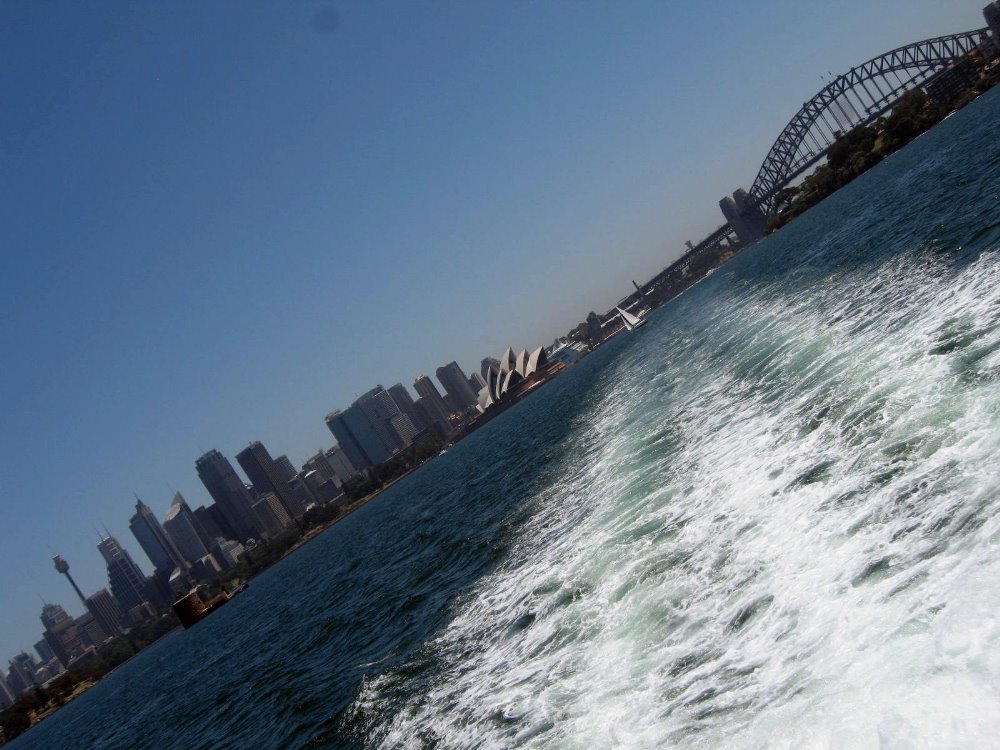
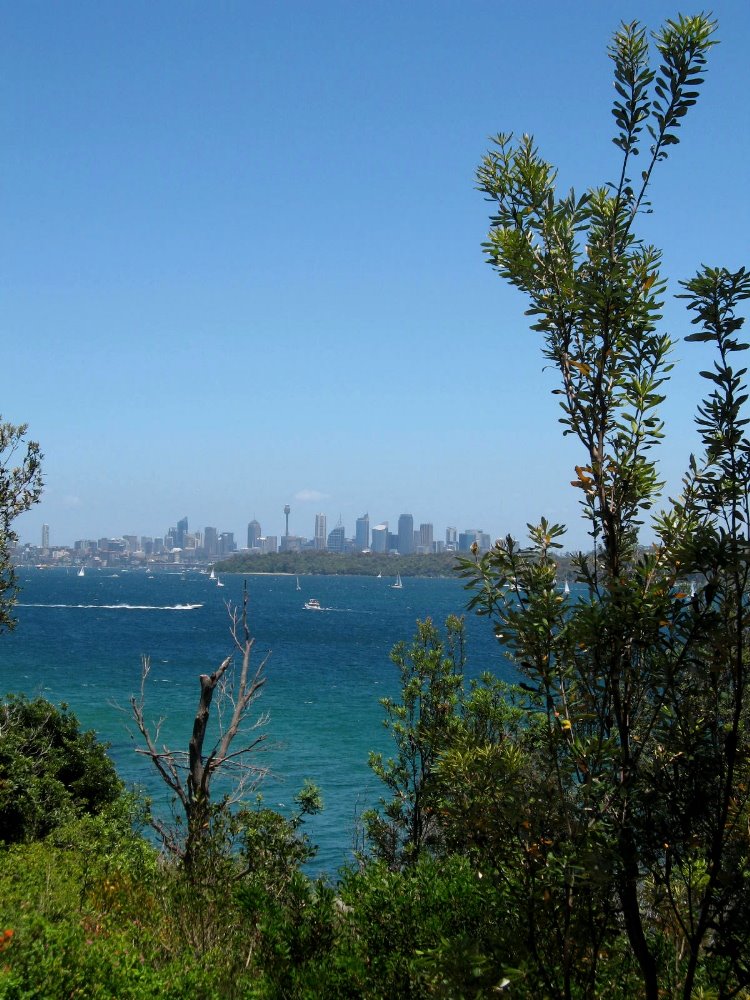
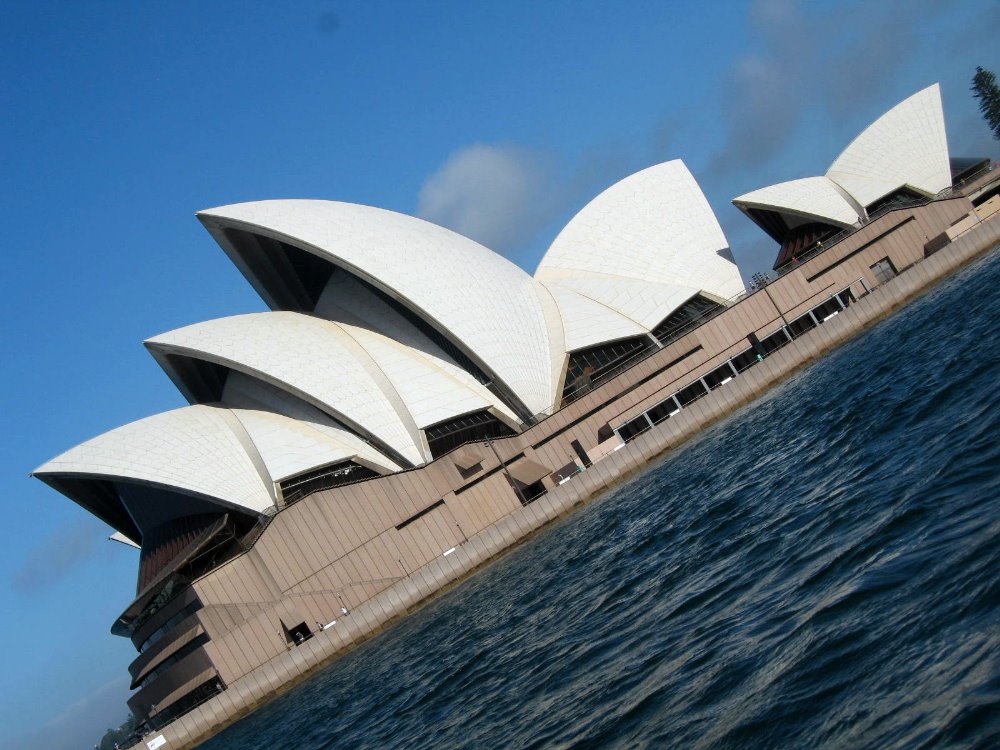
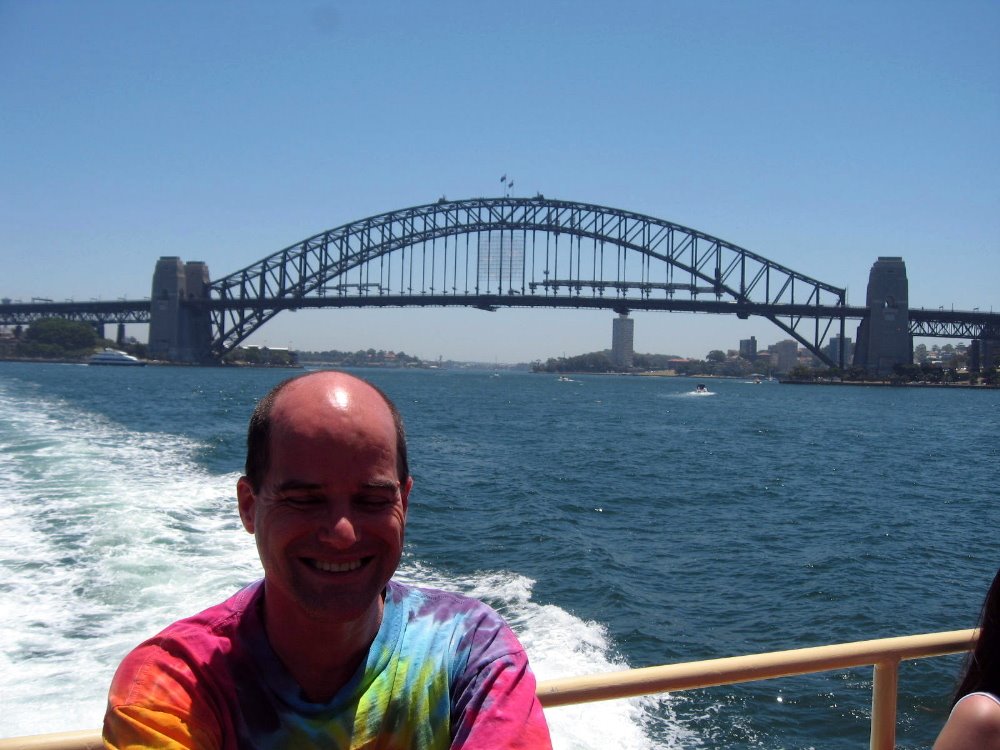
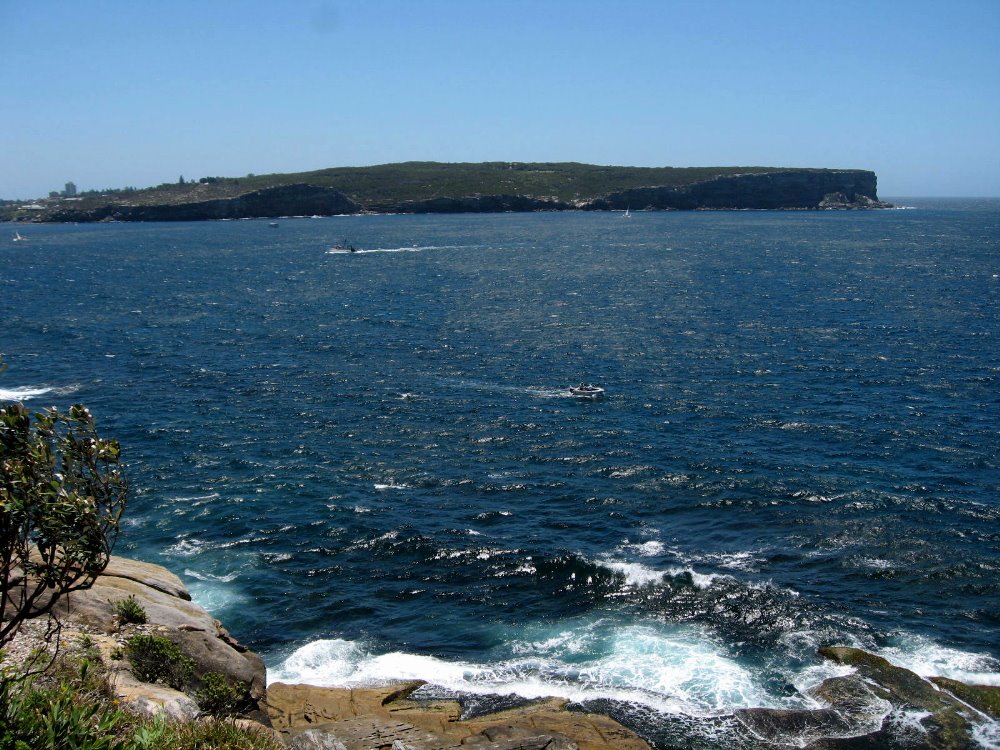
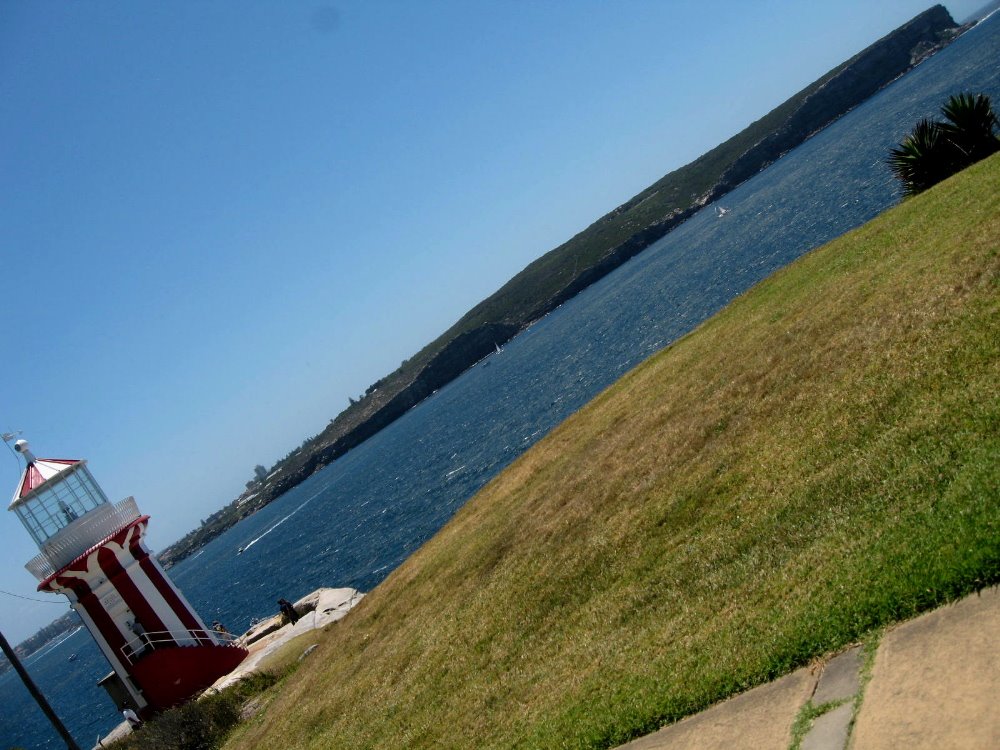
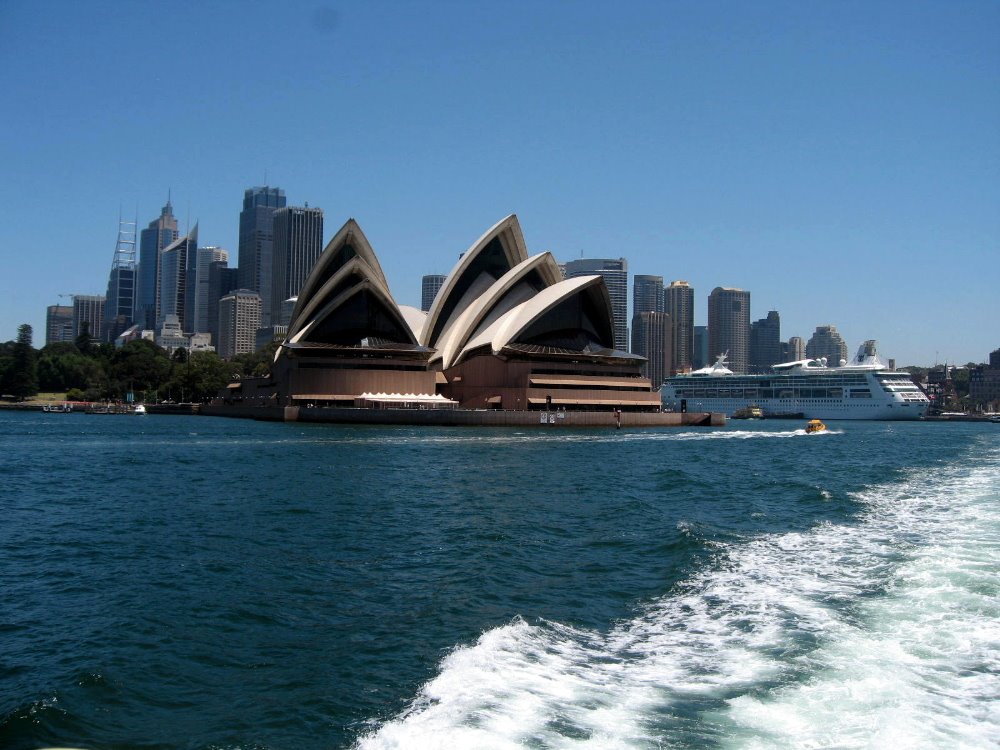
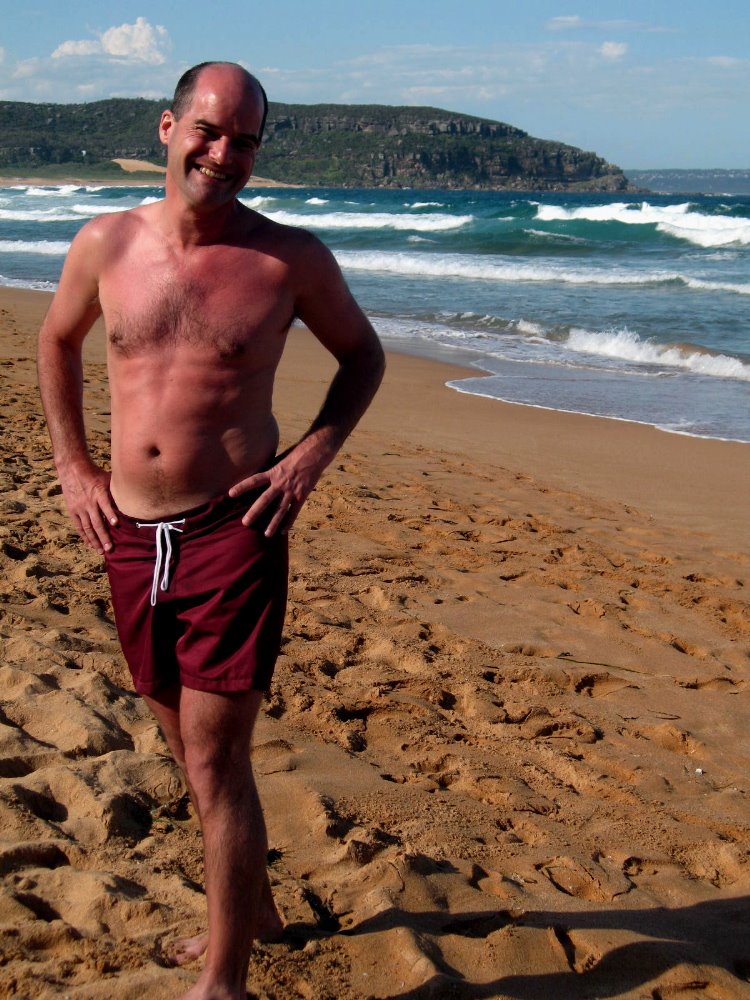
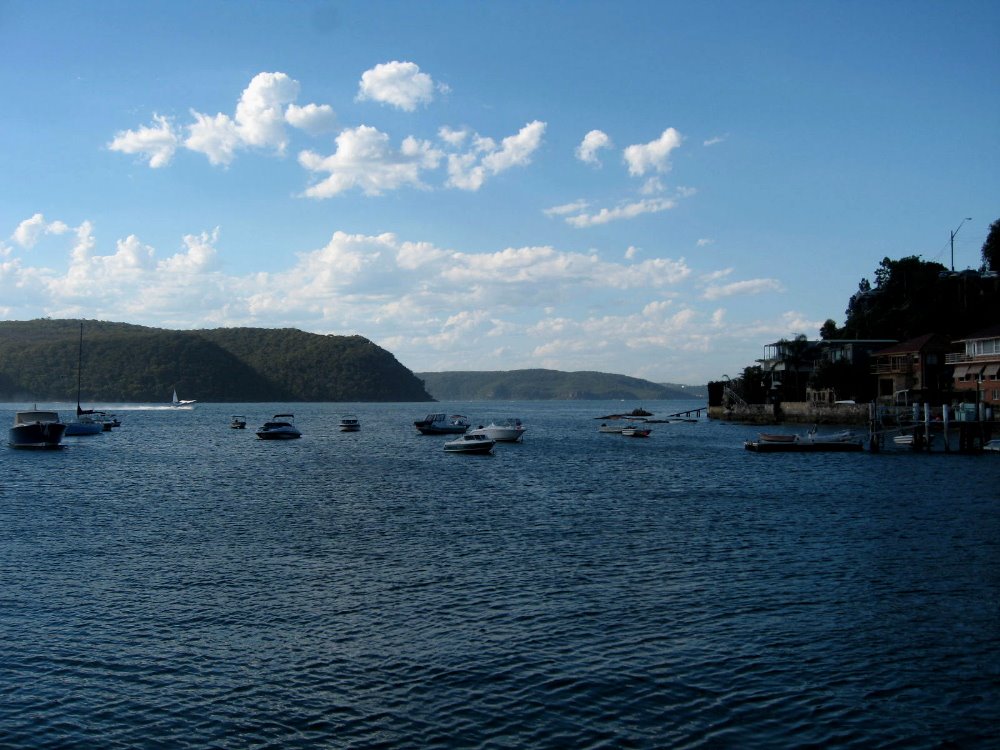
…Trudi went a little shutter-happy on our boat trip to Taronga Zoo from Circular Quay in downtown Sydney, and I’ve saved some of the better or sillier shots of me with the famous Opera House and Harbor Bridge in the background. Also above and below are shots of the skyline as seen from Lady’s Bay east of downtown, views of the South Head lighthouse (at the south entrance to Sydney Harbor aka, I believe, Port Jackson), and of North Head seen from South Head; and views of the Pittwater and me flexing what might pass for something vaguely six-pack-ish, at Palm Beach on the ocean side of the peninsula that creates that Pittwater. (Oh, look it up on google maps if you need to — north of Sydney.) Love you, mean it.


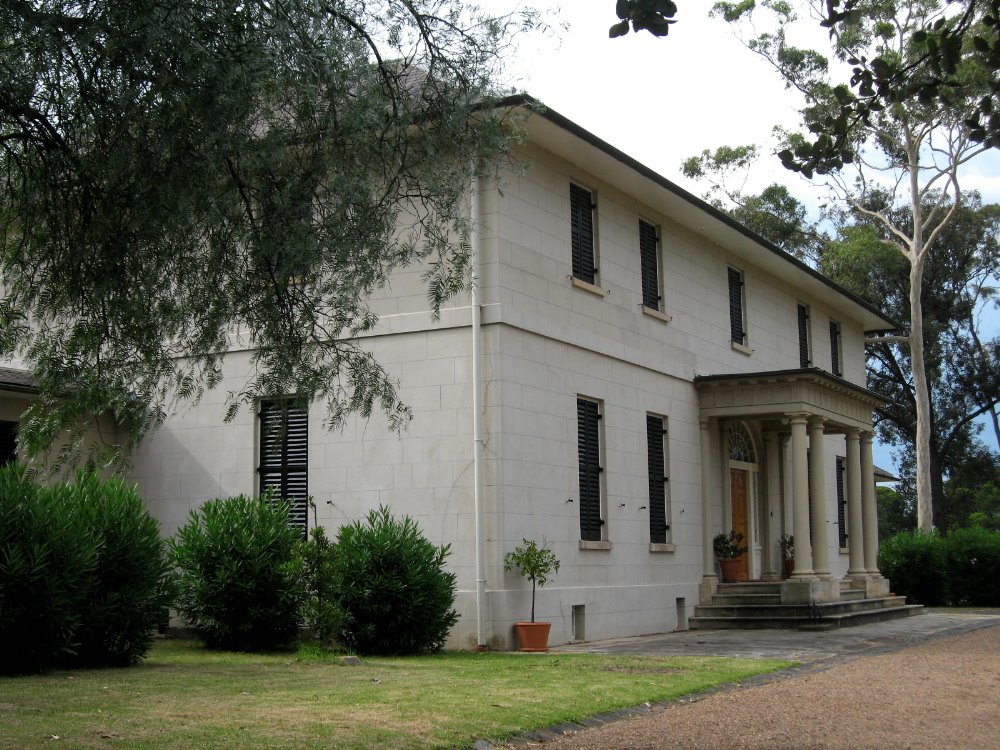
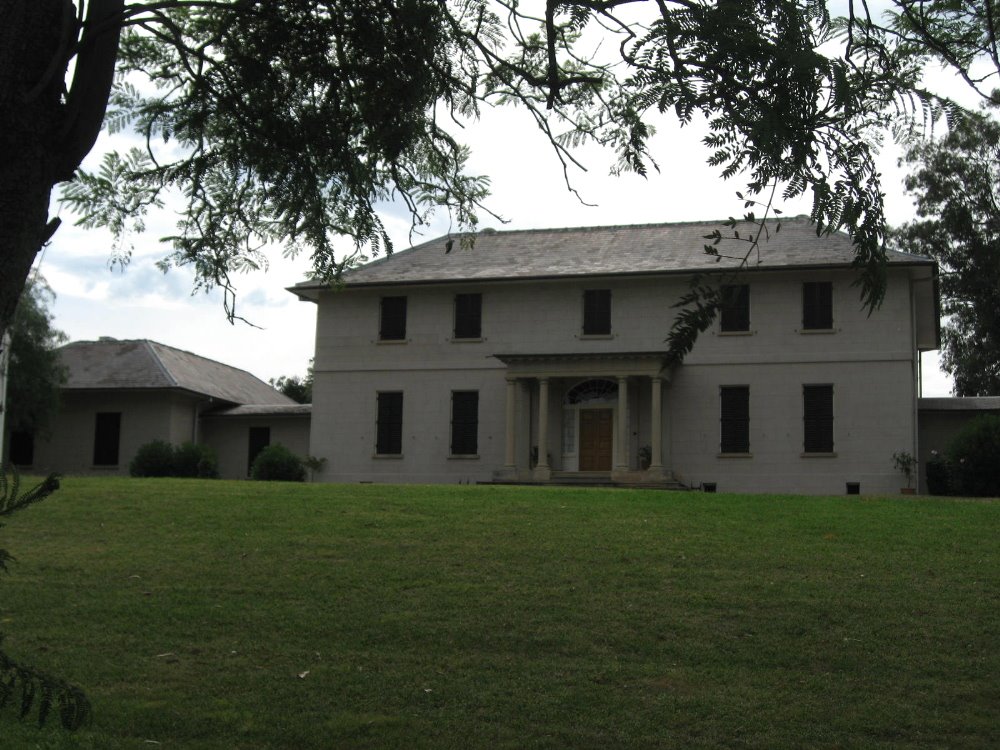
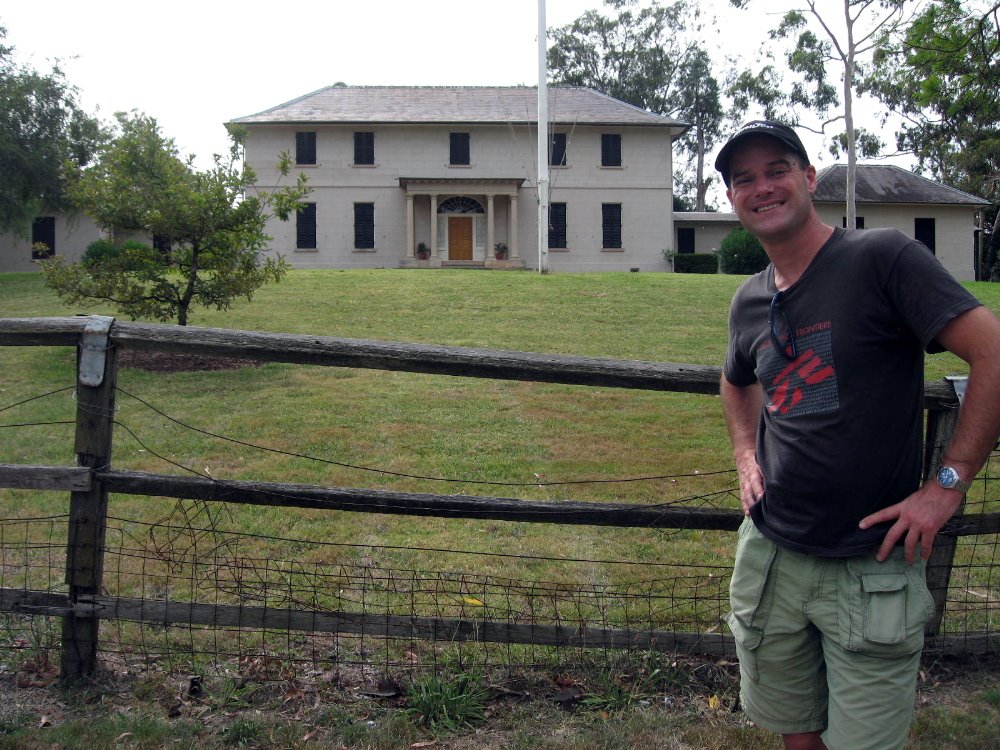
…oh yeah, and the old Government House (read: governor’s mansion) in Paramatta, inland or upriver from the main part of Sydney Harbor a bit — important for early Australian colonial history because the land there was more fertile and allowed the colonial settlements to become more self-sufficient and less reliant on boatloads of supplies from Britain. Australian colonial/european history is short, even compared to American colonial/european history — this first main residence of the colonial governor was only built around the first decade of the 1800s, I think. Lovely little house, though.


Greeting the New Year in Tahiti

Hello my friends. smw, slt is in Perth, Western Australia at the moment. In a few short hours we’ll hop in our rental car and head south to explore what’s reputed to be a gorgeous area of coastline, mountains and wineries in the southwestern portion of this vast and varied state. More about WA in some future post, but for now I’ve managed to get caught up on some photos from the tail end of 08 and the first day of 09, which doesn’t seem like too much of a lag until you realize I’ve already been in yet another country, and three new cities, since then. Oh well: with any luck, you’ll see more of Sydney, Melbourne and Western Australia in coming weeks. The news from the home front seems good; the house project moves ahead and my wonderful brother has taken the baton from me for the time being; thanks, Steve. I’ll send postcards, fear not. 🙂 Happy new year to you all, and let’s hope we don’t weigh our new president down with so many expectations that he’s bound to fail. Here’s to a much better 2009 than 2008. (Oh, and one small note: I’m on a hotel internet computer that is neither the best nor the worst I’ve been on, but tending to the bottom half; either this fact or some change in blogspot means I don’t have access to the usual formatting choices I’ve gotten used to…so there are likely some errors of formatting and things that won’t look as good as I’d hope. Oh well. Let the pics, if you can see them, speak for themselsves…


OK, so my January-February vacation this year was supposed to be Australia and New Zealand. But, as I figured out during my short stay there, this is not high season in French Polynesia, and the airlines and hotels still want to bring in business. Wherease in Oz and NZ, it’s definitely peak season. Result: far cheaper airfares if I flew via Tahiti than direct to the two main destinations. Tough choice, but like our soon-to-be-ex ‘president’ used to say, I’m the decider. Thus I spent about 50 hours on land, smack in the middle of the Pacific, in Tahiti.


As I’ve learned, Tahiti is the capital and largest island of the absolutely enormous territory of French Polynesia. French Polynesia includes something like 170 main islands in five different archipelagos, spread across an area the size of Europe (literally) in the middle of the Pacific Ocean (going east to west), somewhat south of the equator. They’re literally in the middle of nowhere, quite remote from anywhere else. (This seems to be a theme of this trip; I write this from a hotel lobby in what’s often described as the most remote major city in the world.) And they are, from what little I could see of them – plus all those stories and photos we’ve all seen over the years – truly beautiful.


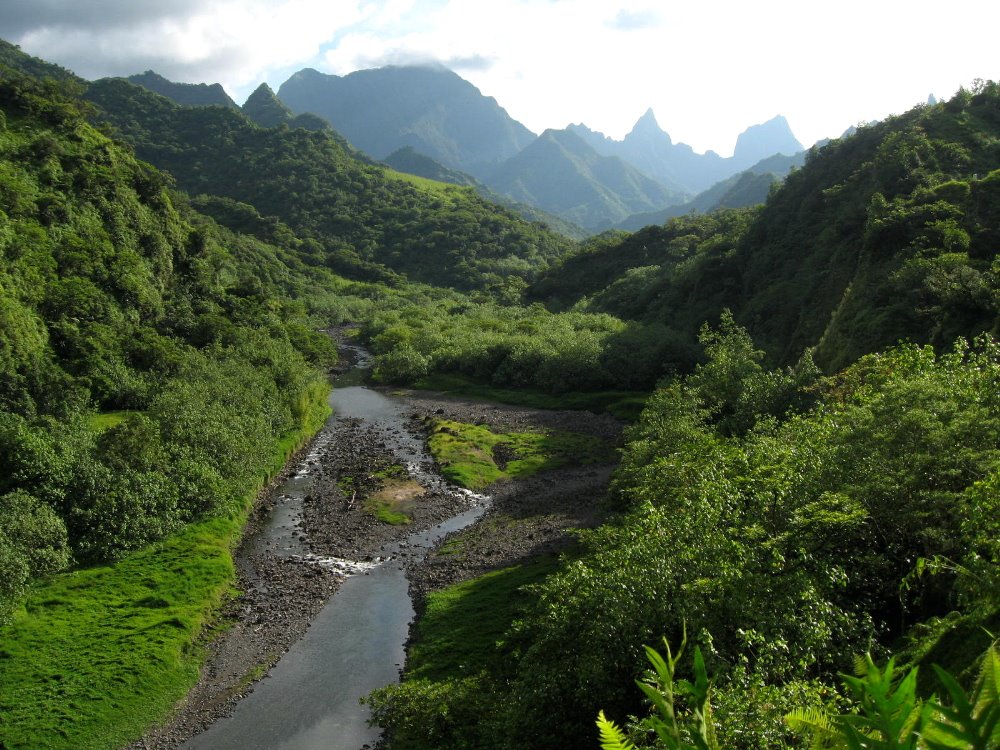
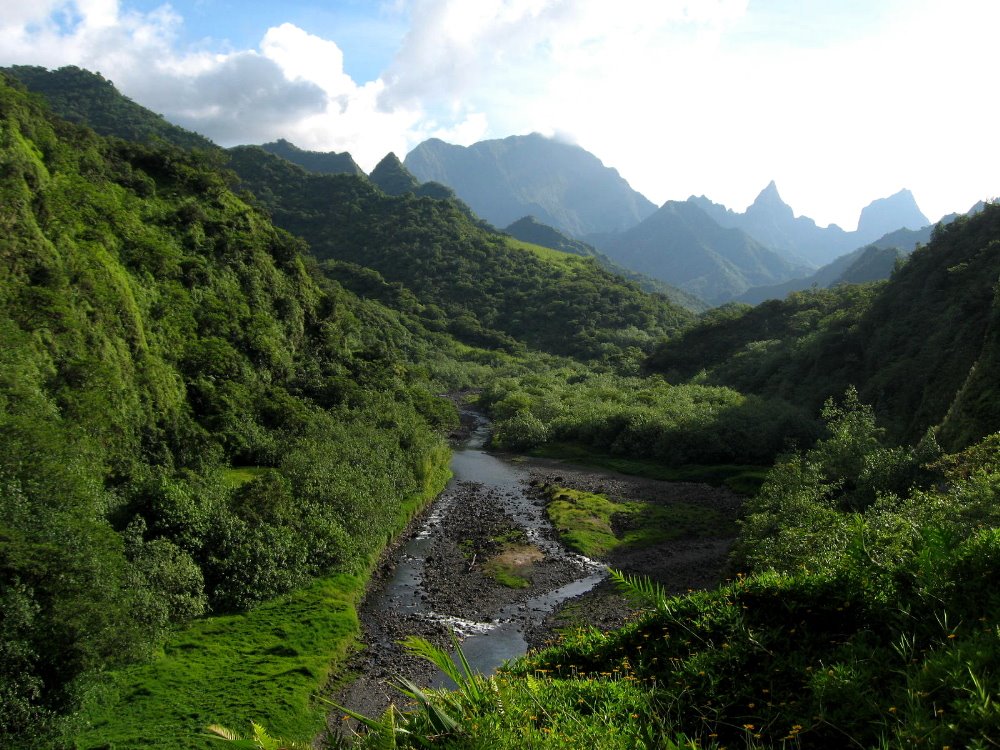
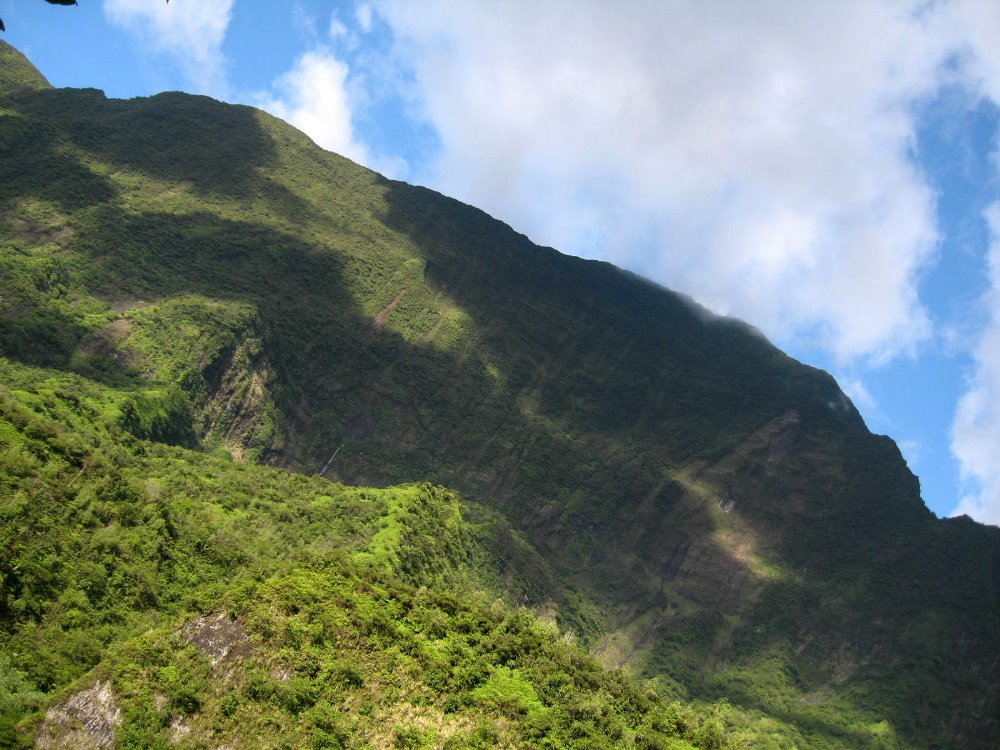
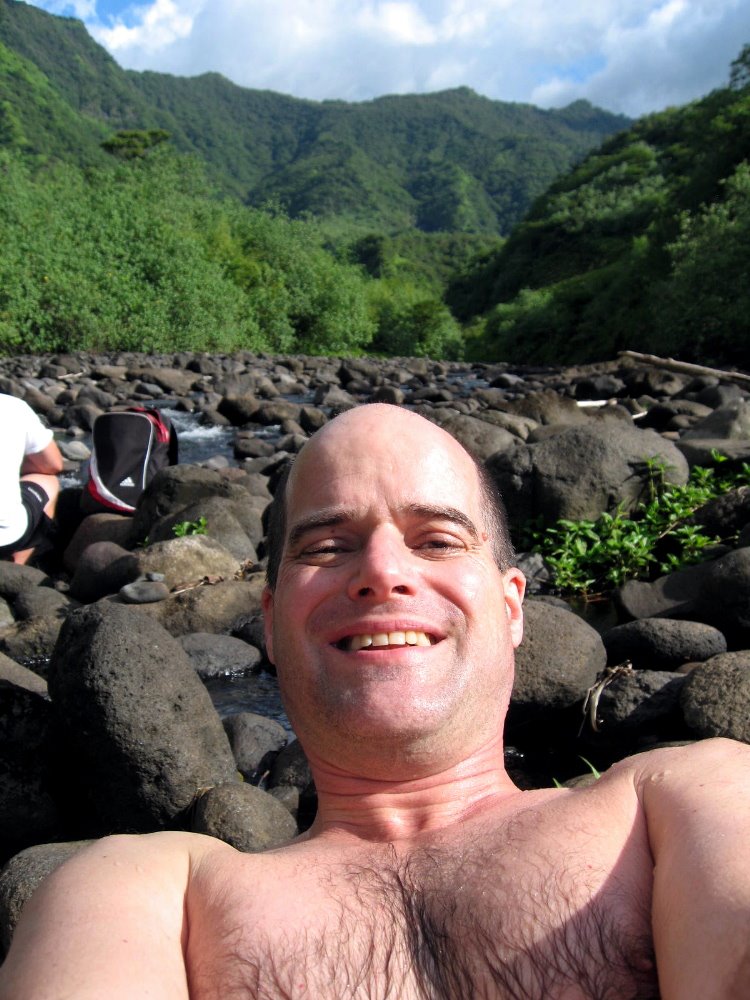
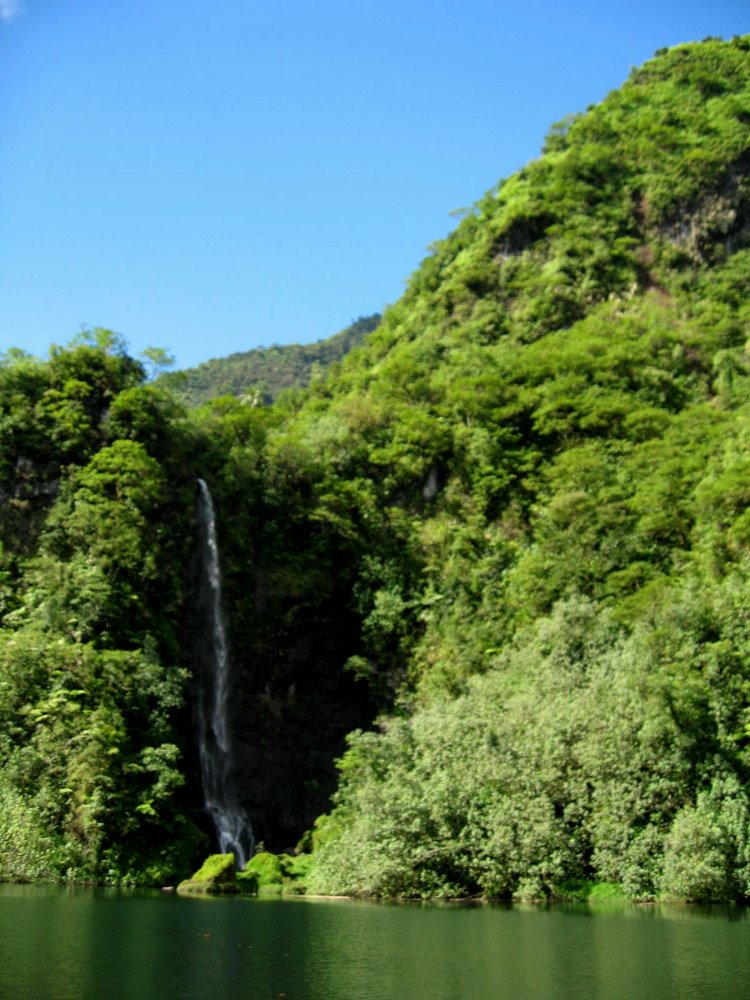
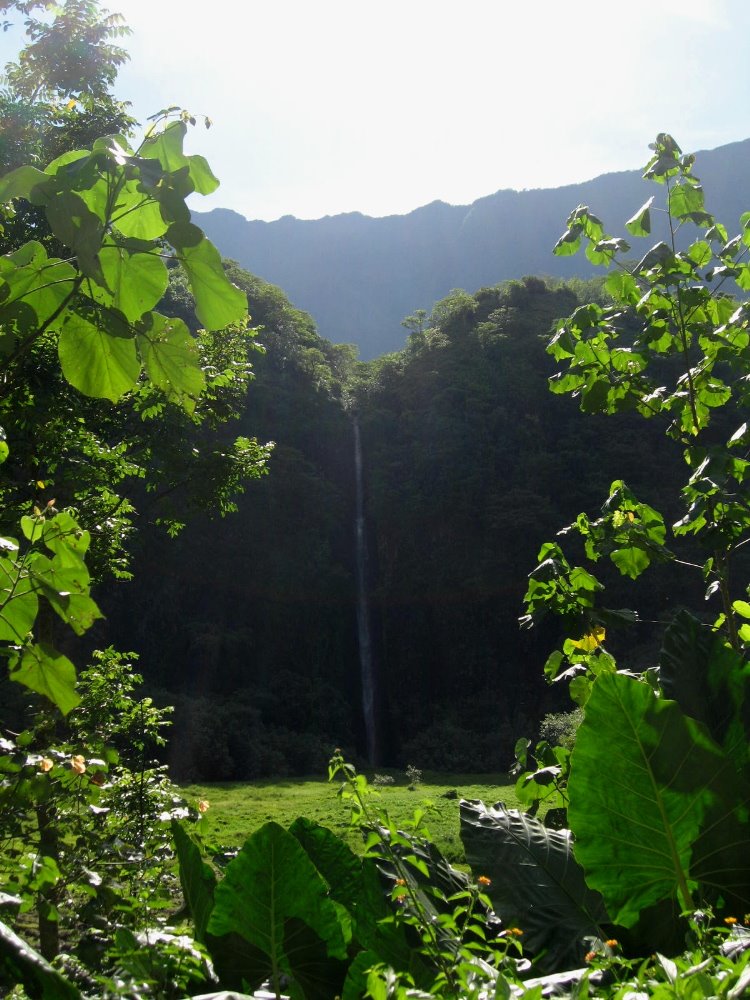
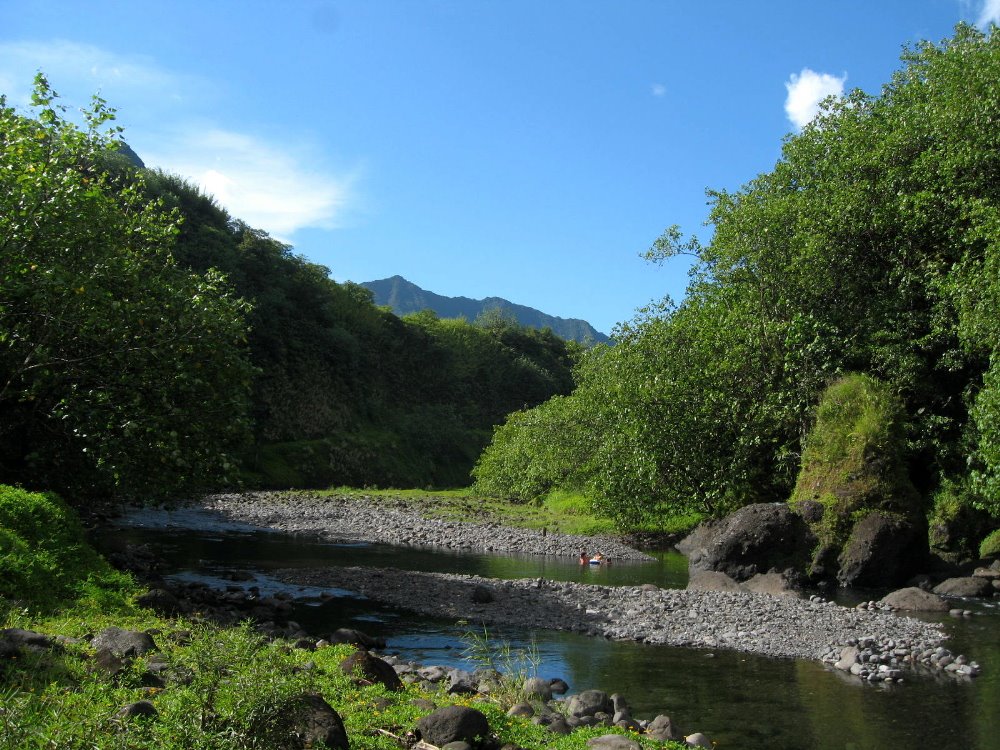
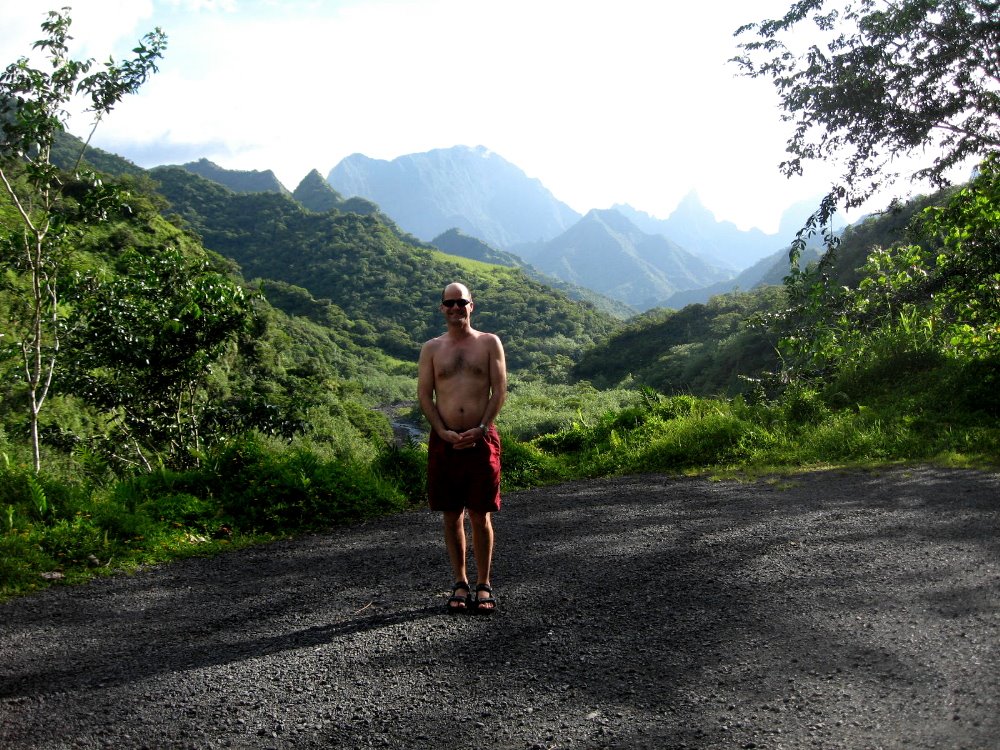
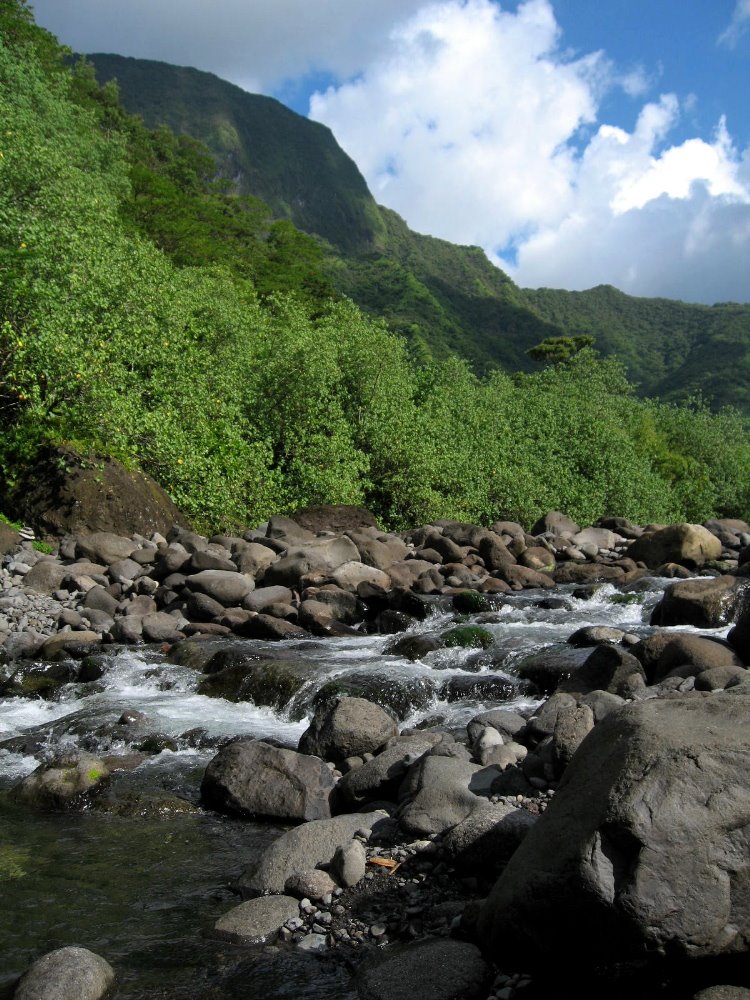
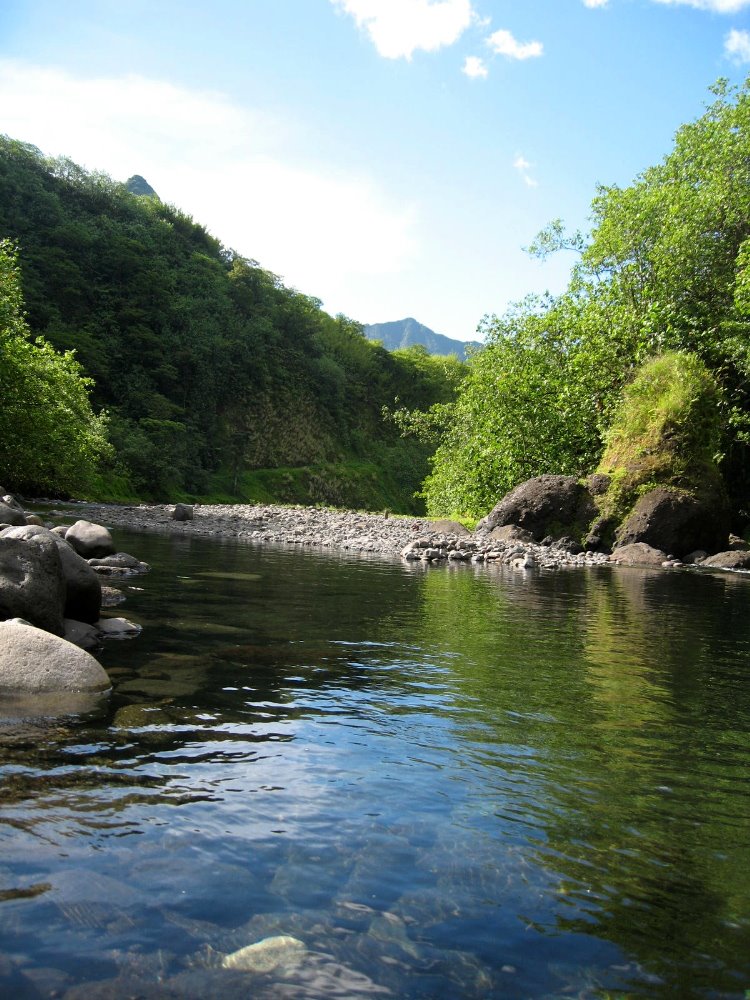
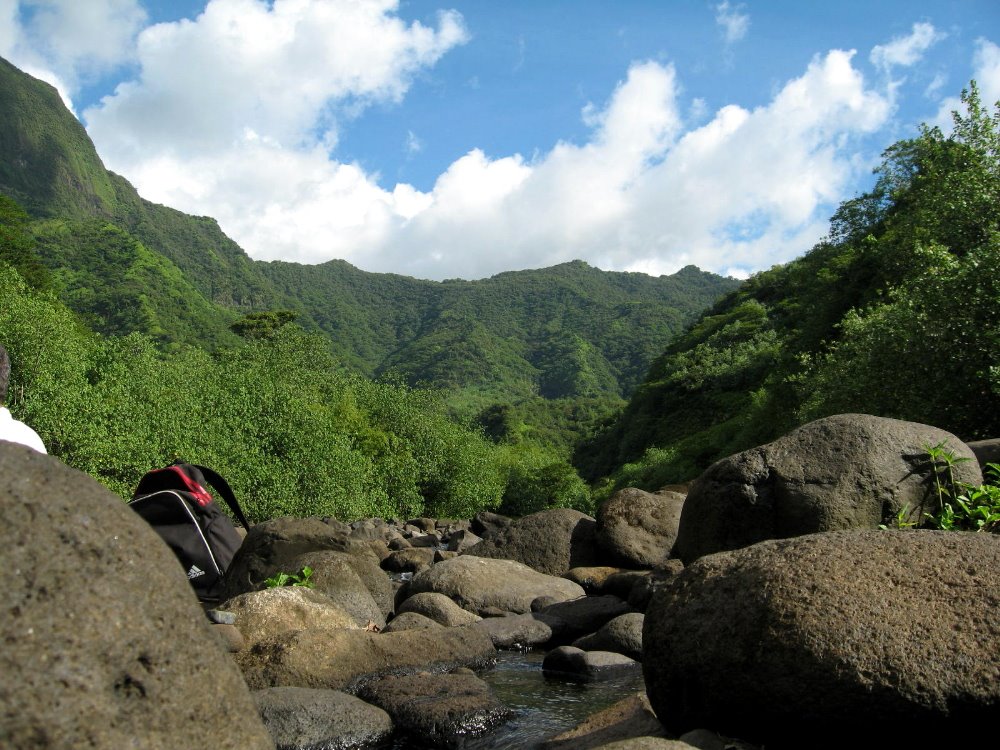
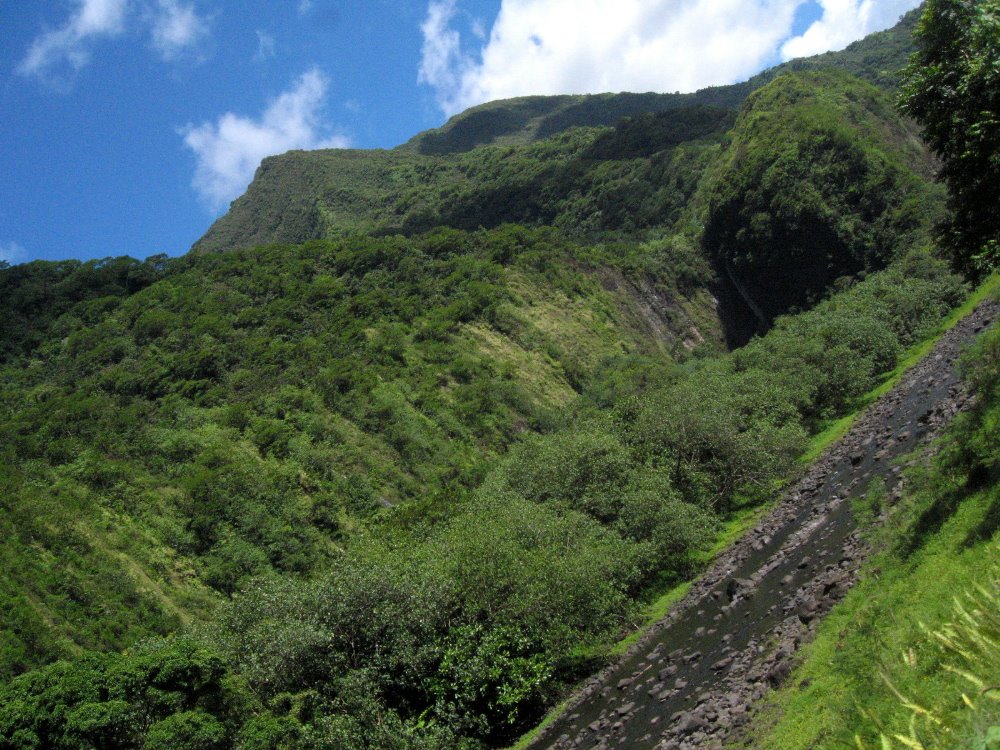
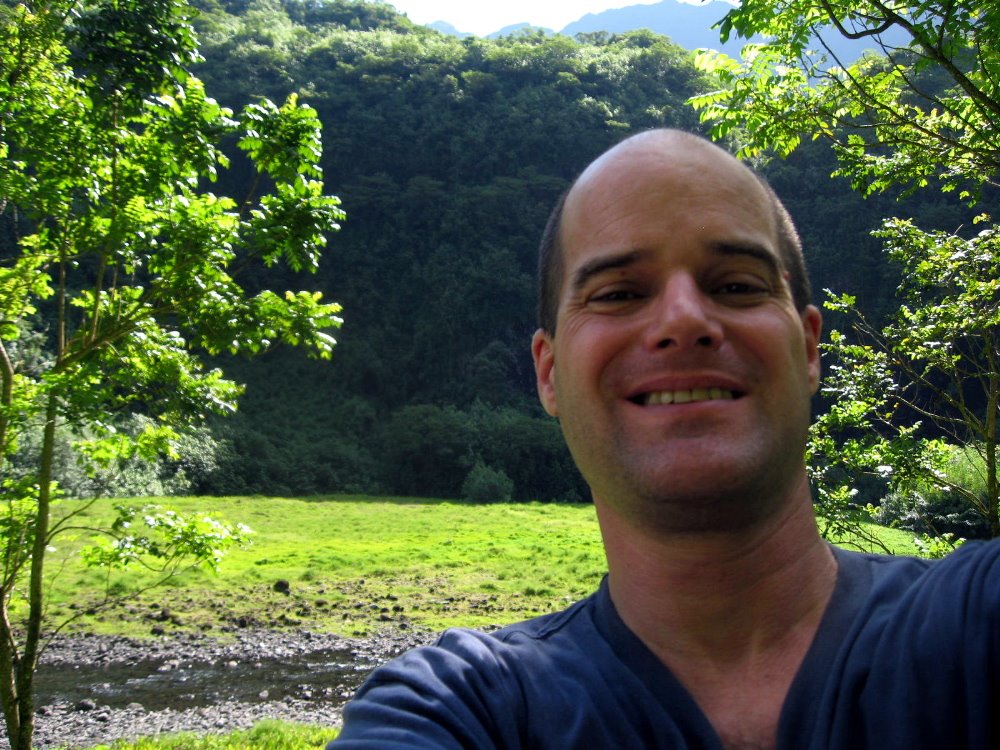
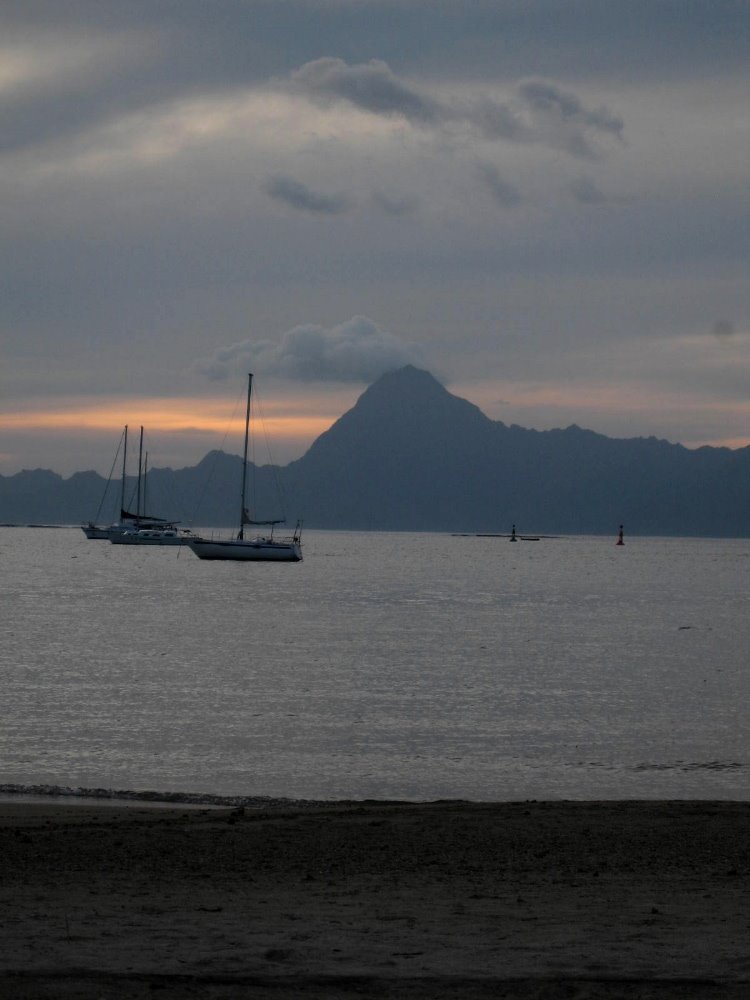
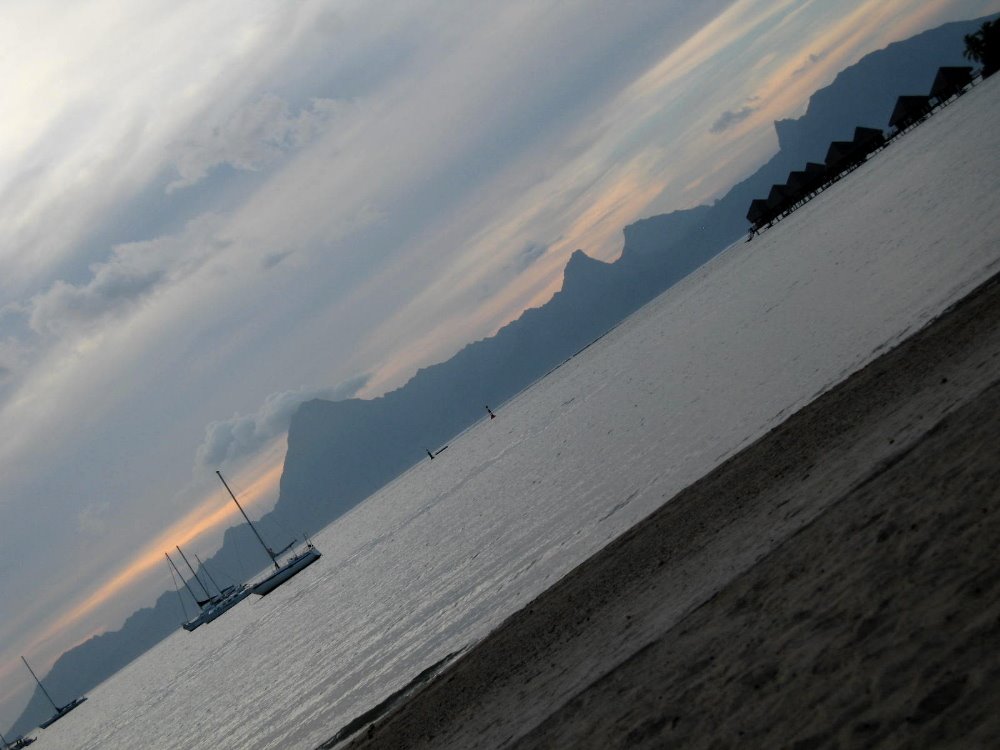
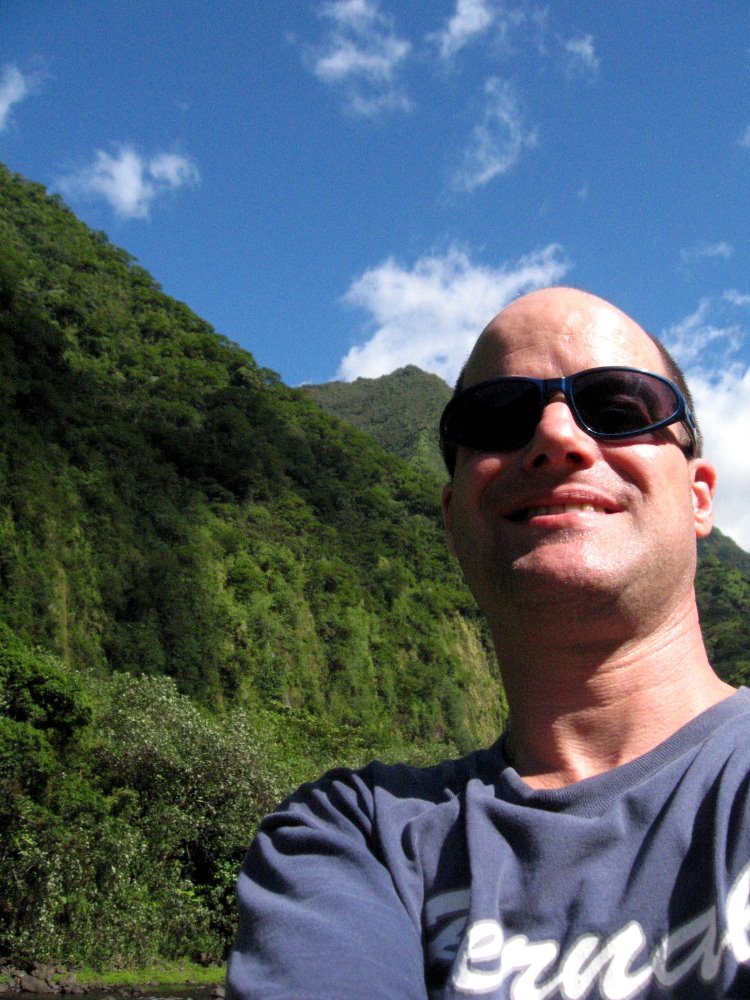
Having only a short time – December 31 and January 1, to be precise – I had just time to take a quaint little bus into the capital, Papeete to explore a bit, then hop a 4wd vehicle for a trip up the principal river valley on this volcanic island with two main portions, formed – like Maui, I presume – by two different volcanoes over the millenia. All of the lovely waterfall and moutnain valley shots are from that half-day trip; the others are from my walks around town, except the sunset beach shots looking out at Moorea (next-door island) and the high-up shot of turquiose water, which came from a walk in the hills above my hotel on new year’s day, where I found myself walking past the University of French Polynesia.


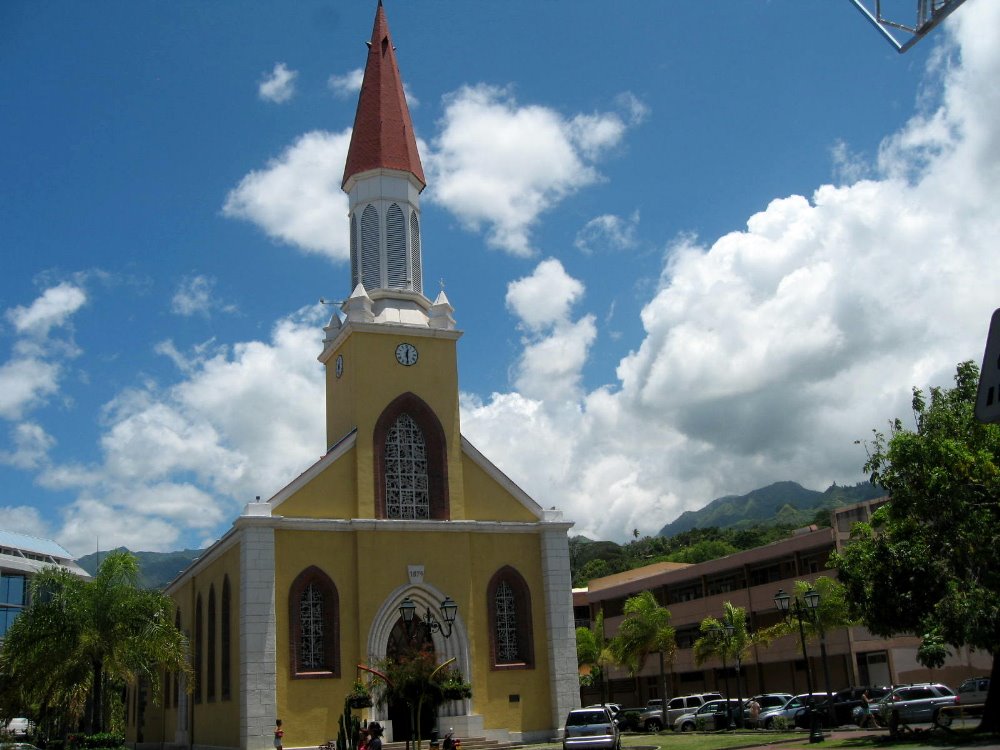
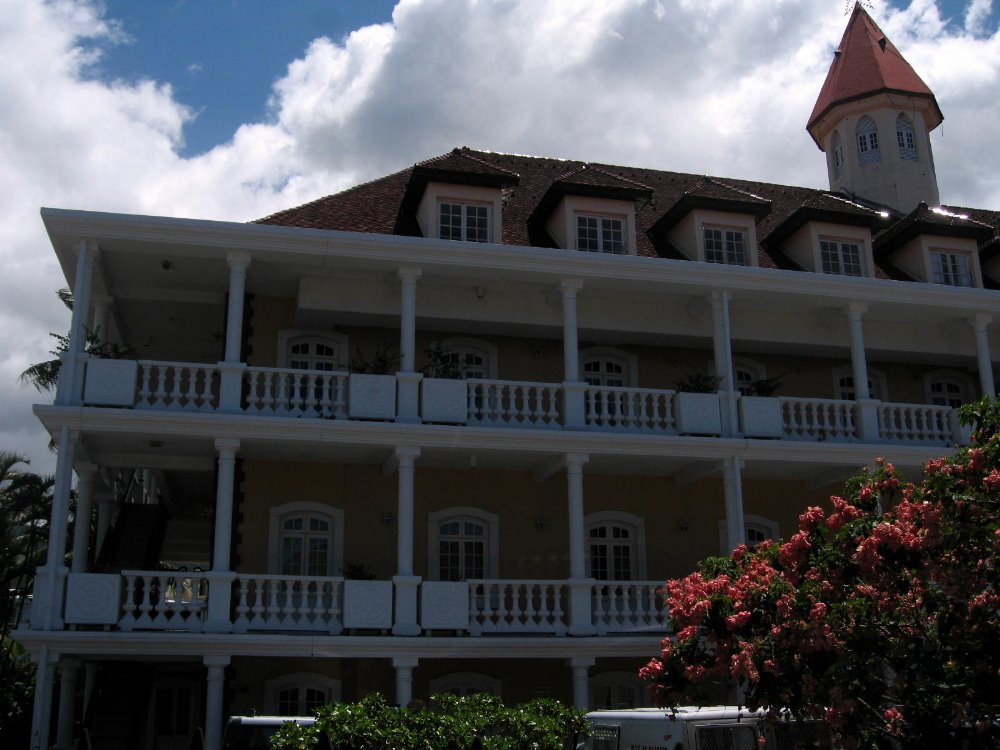
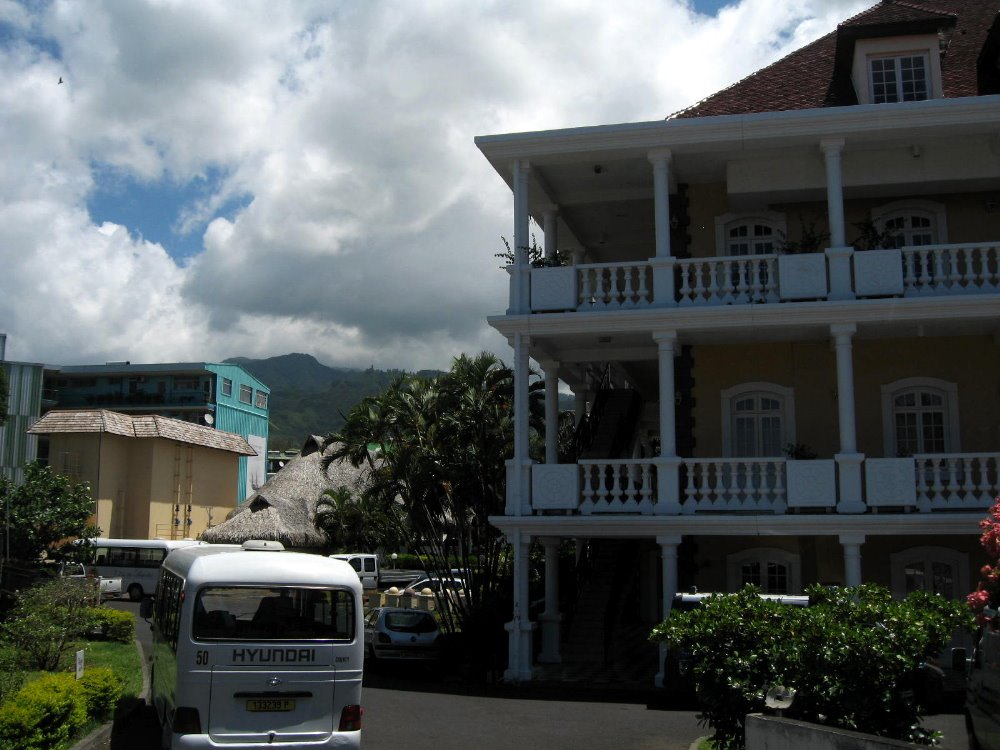
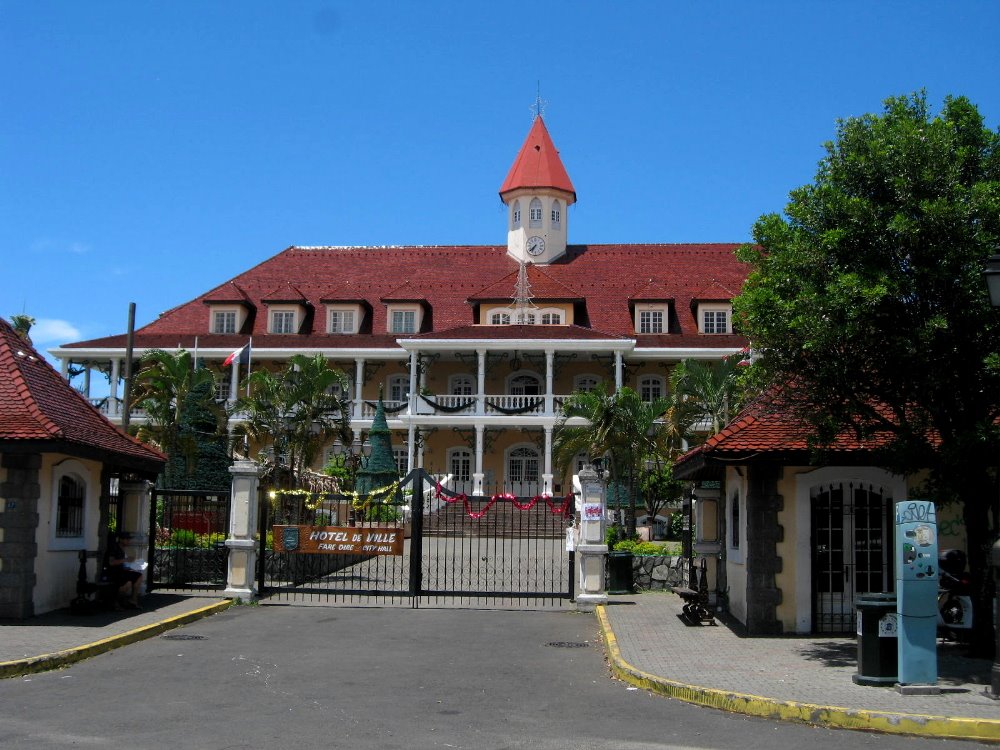
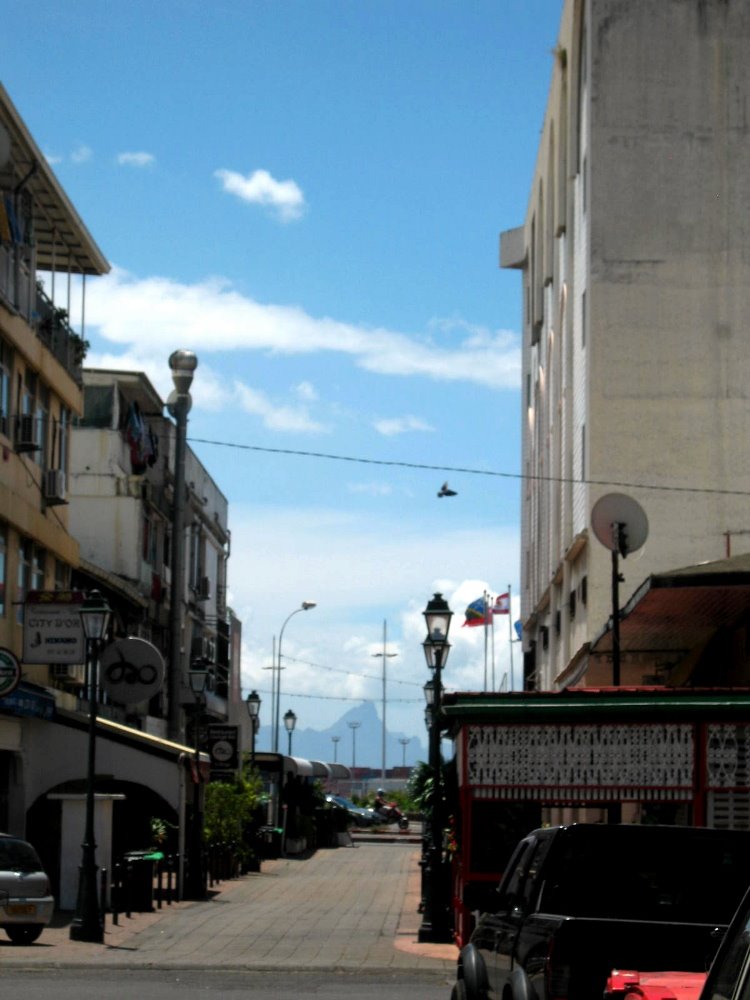
Above, a few shots taken around town in Papeete, the capital of French Polynesia and the main town on Tahiti. You can also see Moorea, a next-door island, in these shots as you could from the beach at my hotel, which is several miles back east or counter-clockwise around the island. Below are several shots of Papeete’s Town Hall, all decked out for Christmas — I took these shots on December 31st in Tahiti. Nice way to truly see out the old year, huh? 🙂 Tough life, but someone’s gotta do it…


Adieu 2008, from LA

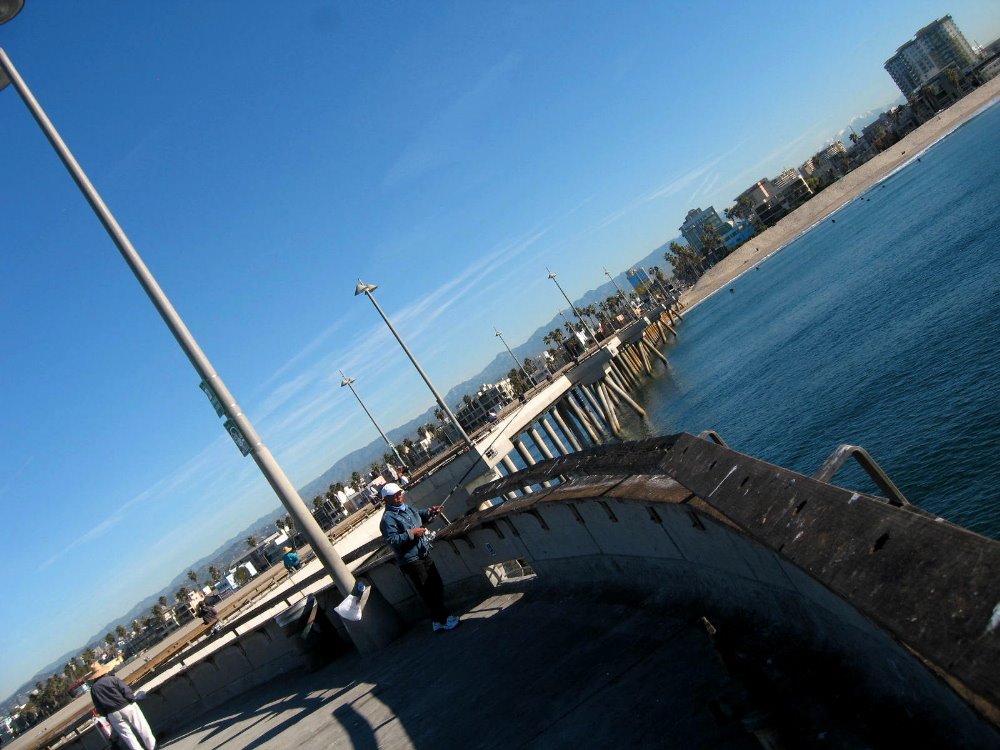
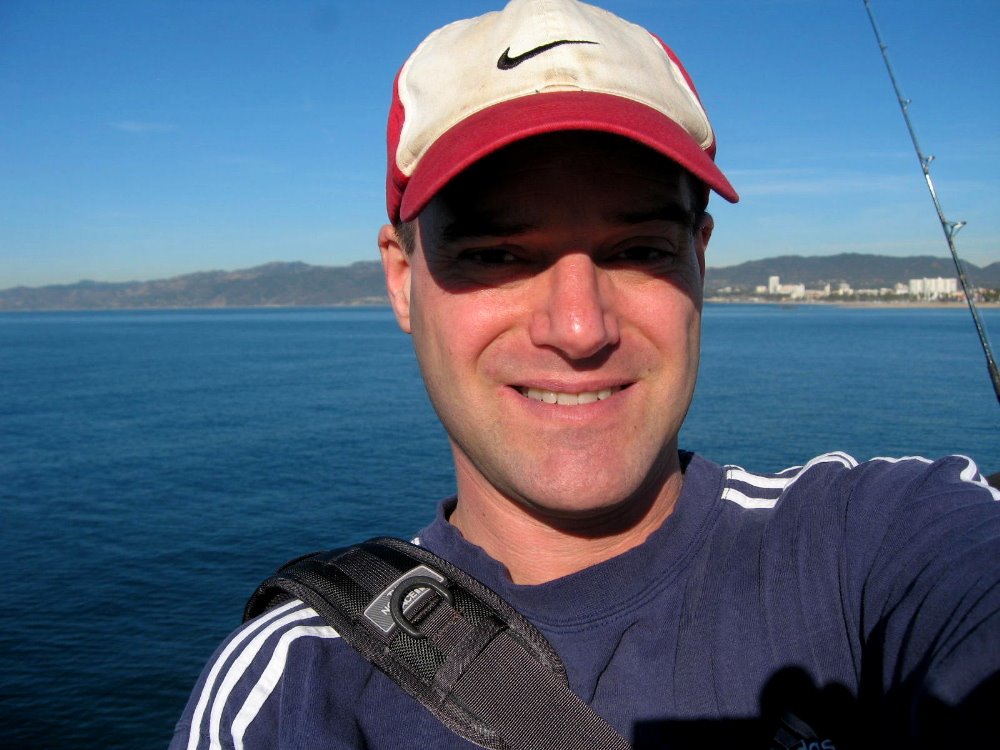
After a lovely family and food filled holiday hosted at my temporary apartment in NYC, I hopped a flight for LA on Monday the 29th, where I had a bit of time to walk around my old haunts of Venice and Marina del Rey before hopping a flight the following day for Tahiti. It being one of those classically gorgeous LA winter days, with seaside temperatures in the perfect range, and skies more than clear enough to see the snow on the San Gabriel Mountains, I couldn’t help snapping a few shots.


Oh Beautiful for Spacious Skies

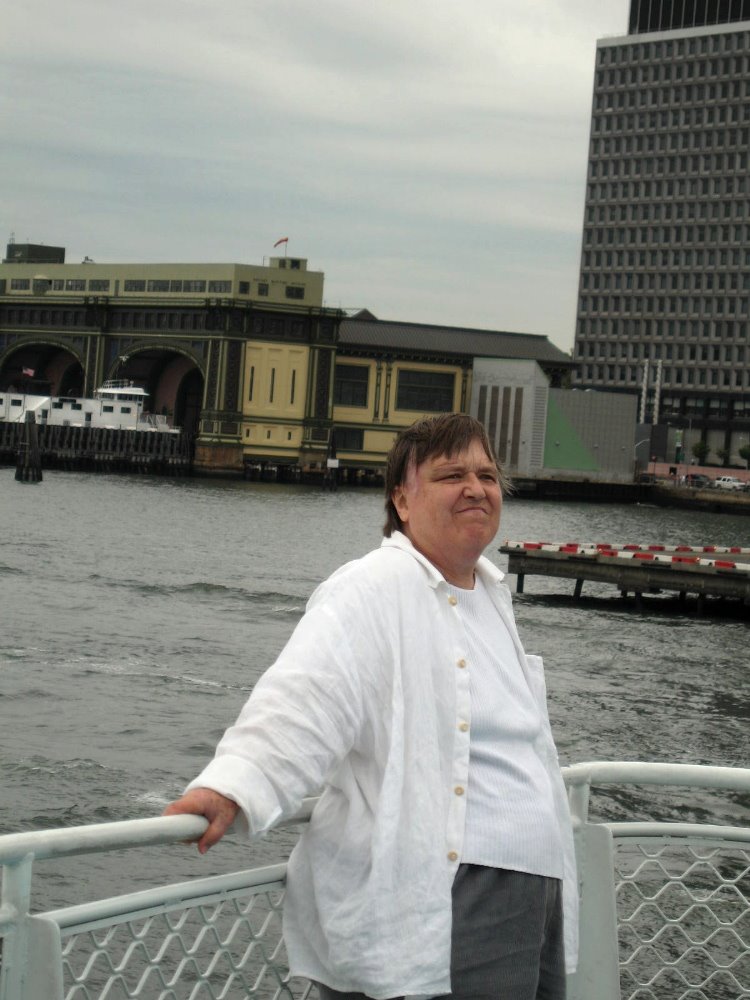
hey peeps. smw, slt has to start with an apology again: here come a few more philosophical entries. skip the words if you wish, and enjoy the photos. i’ll try to put in captions, in italic, to explain the pics every now and then. long story short — here come a bunch of photos taken around the neighborhood in upper manhattan where i’ve been living since june, other photos of the new york harbor while the ‘ny waterfalls’ public art project linked the lower harbor in a unique way, some garden and sculpture photos, and pics of an equal-rights-for-queer-people march in hollywood. wrapped around all these photos are some thoughts about the meaning of life, for me, in america at this time. i can’t seem to keep myself from waxing philosophical, in light of all that’s happening and my own interrogation of my feelings and thoughts about this country of which i’m so proud, and so ashamed. so, with apologies, here goes…and oh by the way, yeah, i’ve had some trouble getting it formatted the way i want. sorry for that, too! 🙂

I’m still pretty deeply embedded in this north American continent, still quite deeply enmeshed in this project to set Mom up for a safer, gentler ongoing retirement by, well, nearly tearing down and rebuilding her house. This raises questions both deep and shallow. The most-common question asked by new acquaintances (read: usually guys I wish I could be dating) is ‘What do you do.’ For some time now I’ve taken disproportionate pride and joy in being able to say I’m a humanitarian worker – it usually launches interesting conversations, and it pretty well always garners me some approving feelings and comments from my conversation partner. However, for a guy of my years and experience to be…sort of an unemployed homeless person, formerly a humanitarian worker but now engaged in the humanitarian ‘Mom Project,’ – well, that just doesn’t come across quite so glamorous. There are deeper pleasures and rewards of family closeness and connection to my Mom, though; one came this past week, as my brothers and I gathered to help move Mom into her new temporary residence, and a few days later when I saw this house in which she (and we) had been accumulating detritus and stuff since 1975 emptied completely. It awaits now only building approval for the demolition and excavation to begin.

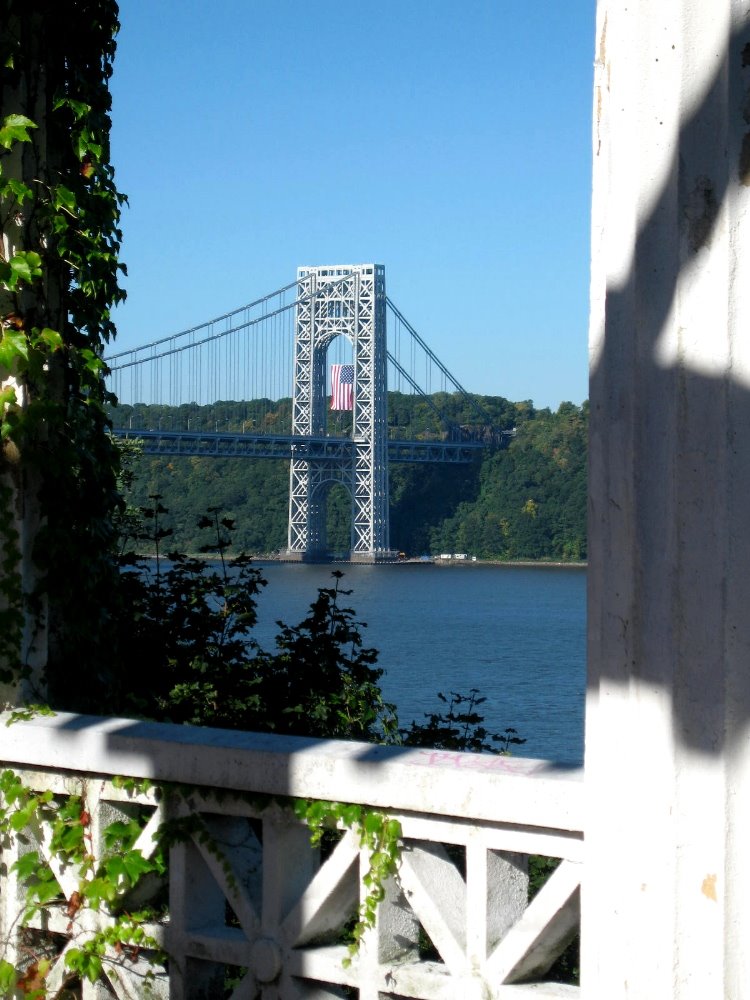
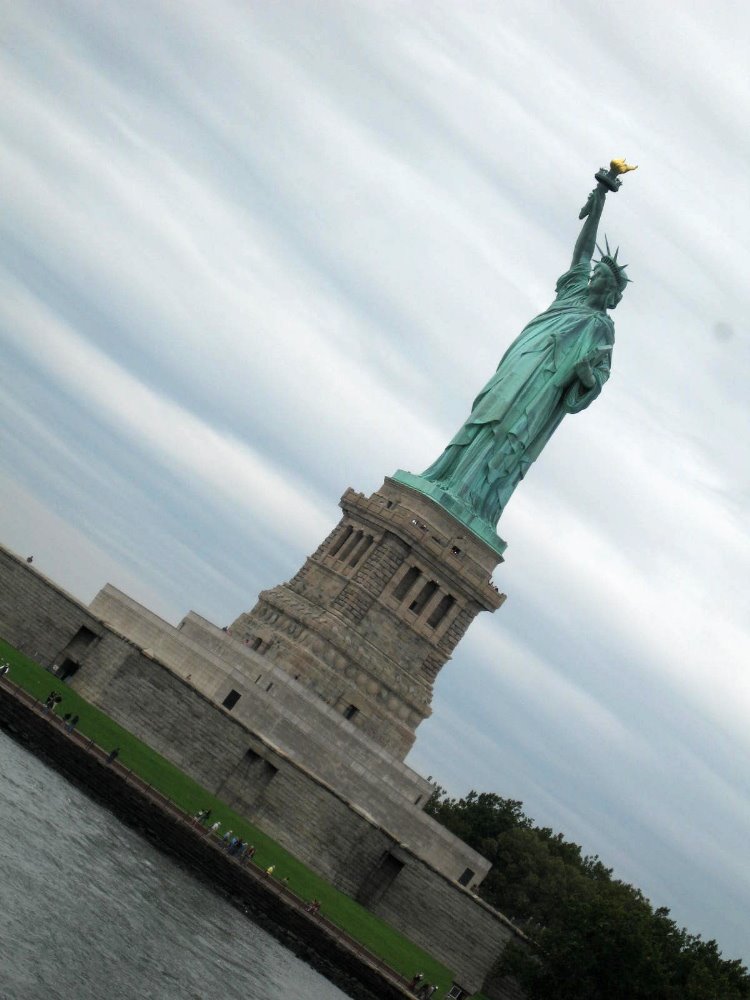
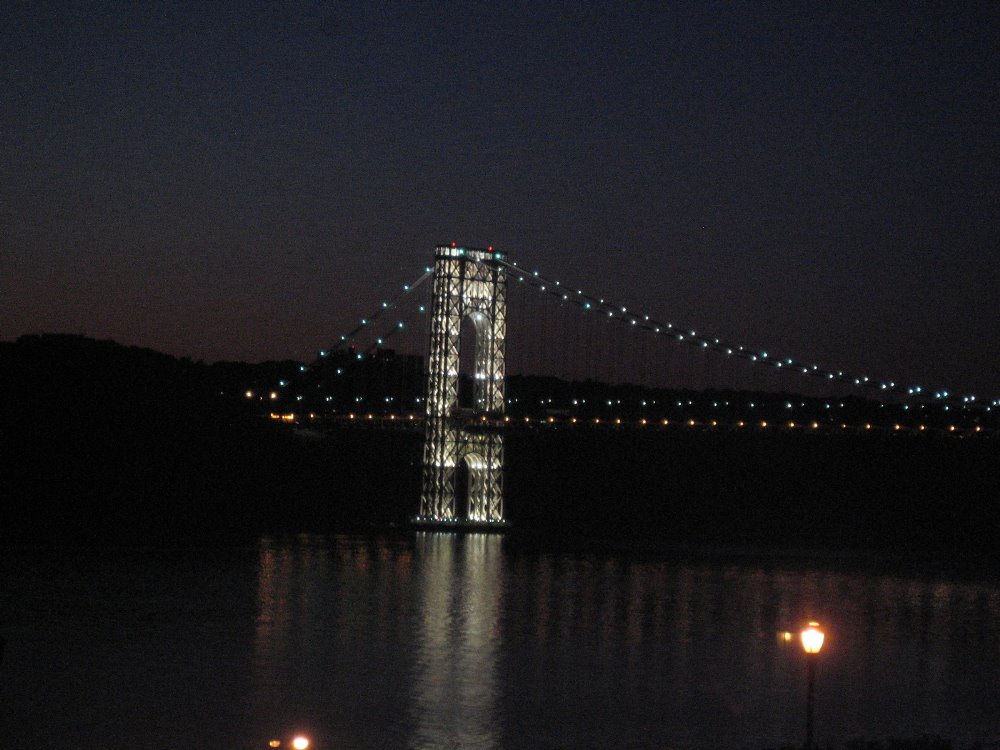
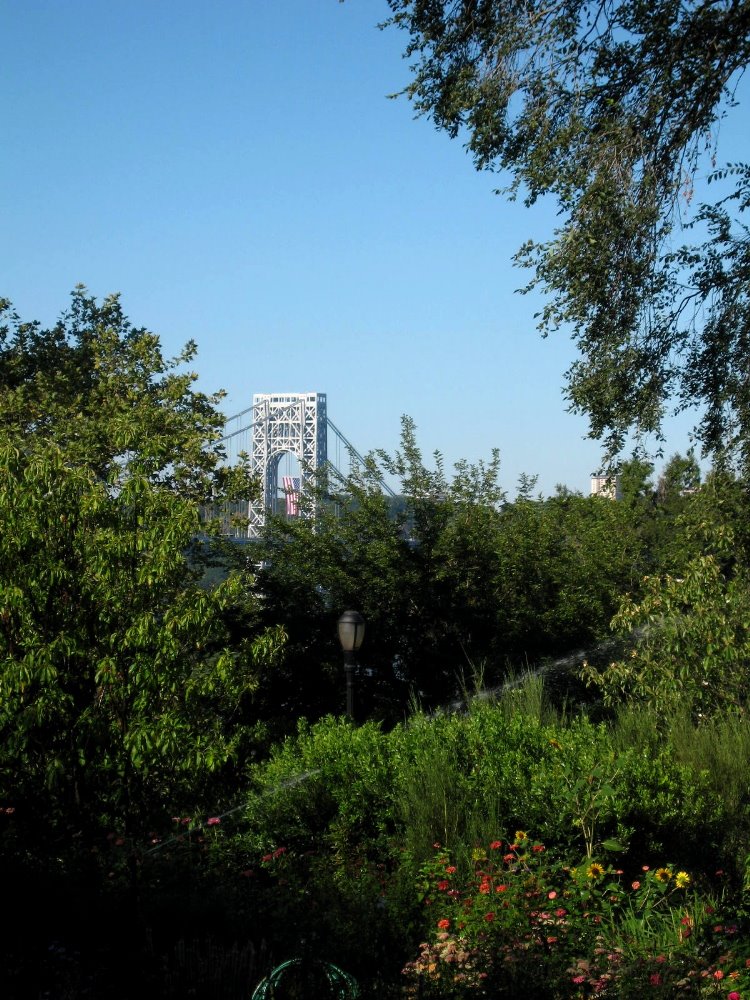
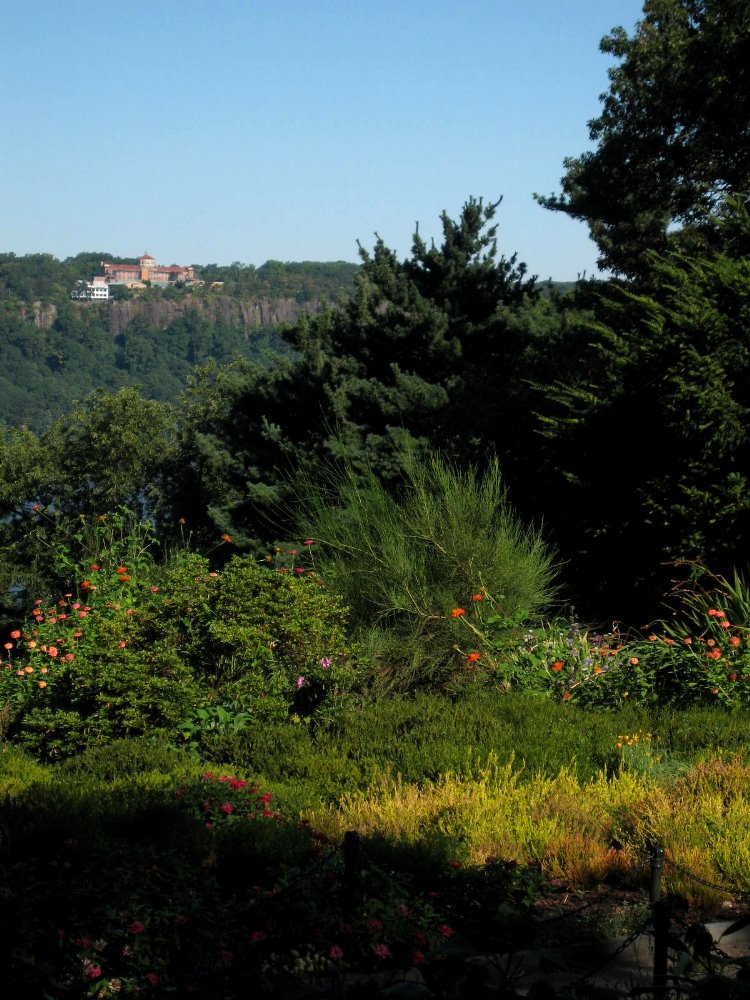
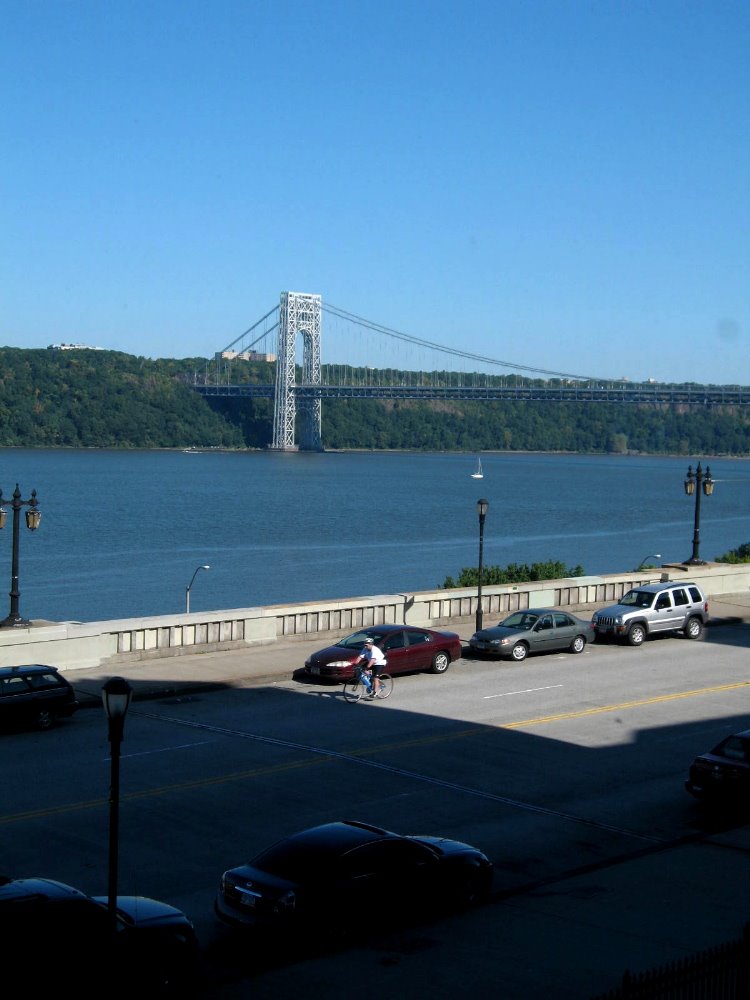
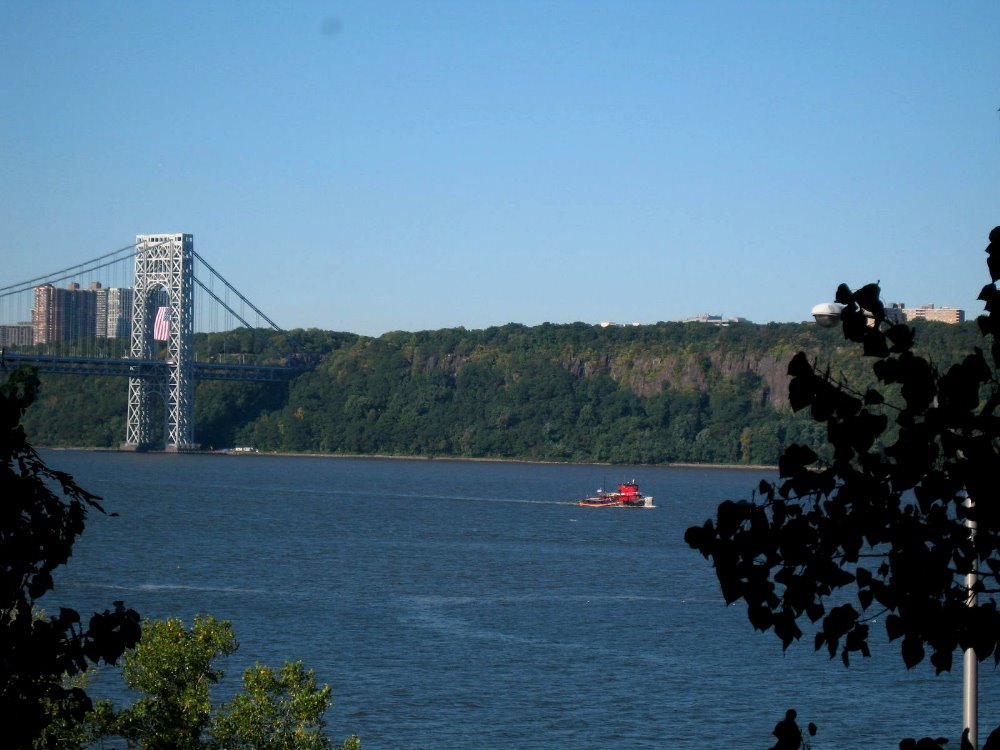
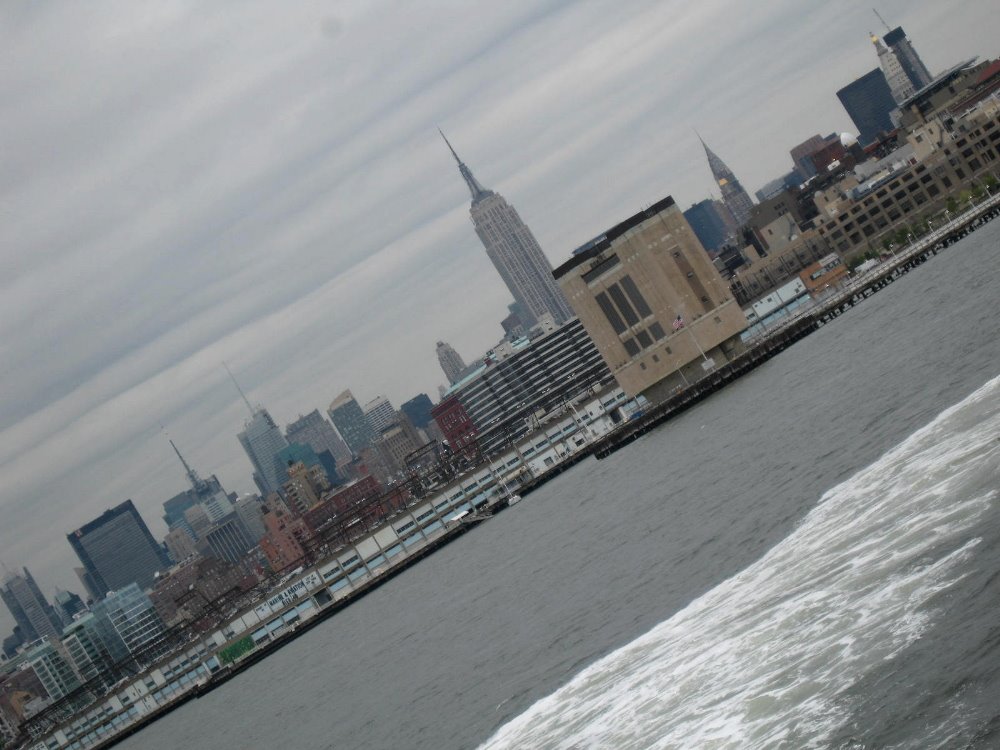
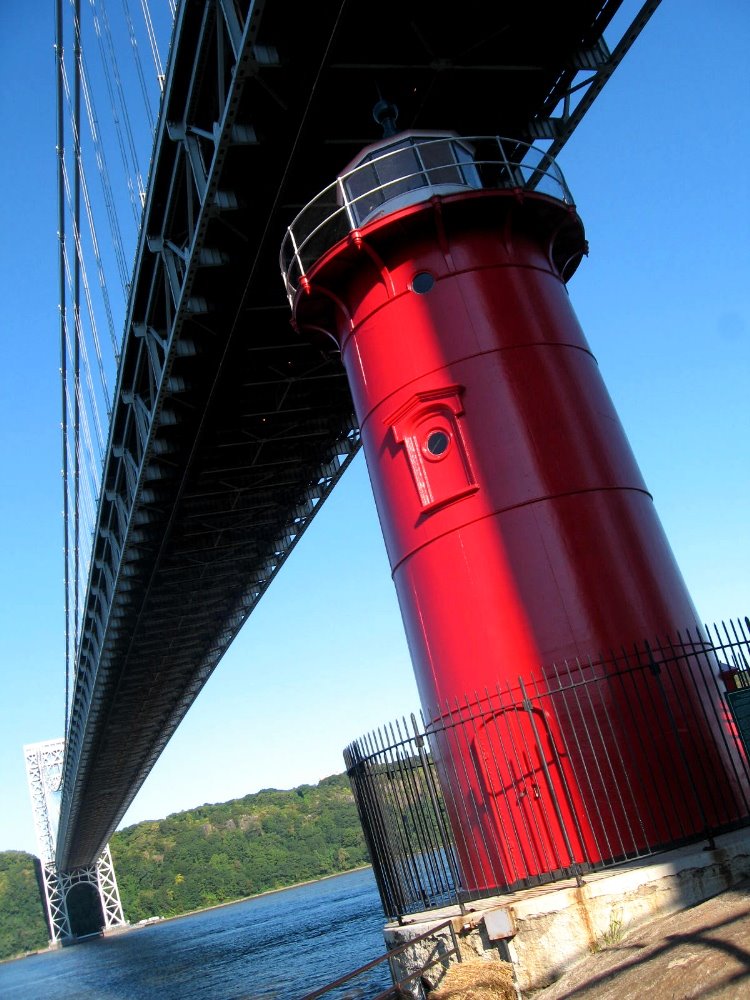
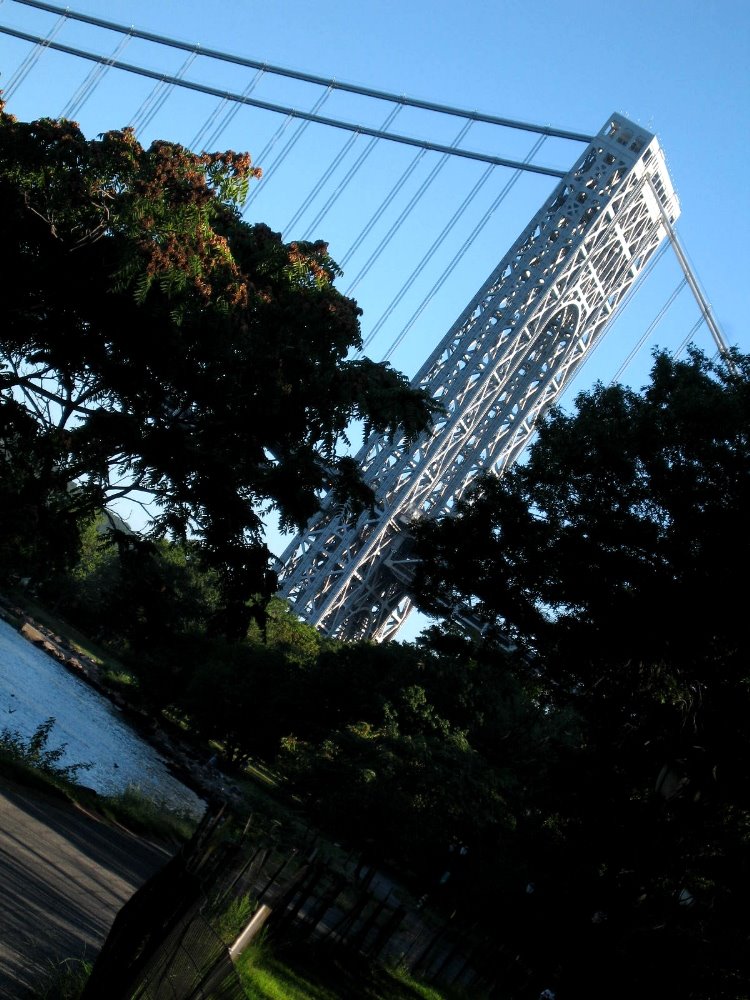
…some famous symbols of this city I’m again calling home are the George Washington Bridge, which connects Manhattan to New Jersey across the Hudson – the flag is only there on holidays – and lady liberty in the harbor. The shot below, and other green and treed looking shots further below, comes from the parks in northern Manhattan — the riverside park south of the bridge, Ft Tryon park a bit north of the bridge, and other parts of the area broadly known as Washington Heights because our founding president and first general retreated from British troops here early in our revolution.


And while, on the surface, none of this is as challenging or rewarding as – say – running a surgical and emergency hospital in the Niger Delta, it keeps me busy. In addition, whether I like it or not, it forces me to sit down with questions like identity, life goals, and what it’s all about. I’m one of those Americans who’s felt rather estranged from my country, which took a turn from bad to much worse when we allowed the most destructive president of all time to remain in office after the 2004 elections. It’s much easier, when traveling internationally, to act Canadian than to have to explain that we truly have NO IDEA how that managed to happen. And since that was true – I really have had no idea why so many Americans looked at this lying, incompetent man and said ‘yeah, four more years in the White House sounds like a great idea for him.’ So it’s been much easier to just act like I’m not really part of it.


Being back has made me recognize, again, the complicated reality that is America, that is being American. And that complicated multi-faceted contradictory reality is more than ever present in our current circumstances. We’ve passed a presidential election that’s brought hope to folks around the world for a more constructive, engaged and positive American influence in the world – not to mention more realistic and honorable policies at home. At the same time, the US has spurred another global economic downturn that’s clearly one of the worst in 100 years, and whose bottom we’ve probably not yet found. Four and six years ago, I was totally bearish on America when others were betting our stock ever higher and acting like the high-flying leveraged days of irresponsibility could last forever. Now I find myself unusually bullish and confident, at a time when many seem quite lost and fearful.

The Cloisters, bits and pieces of various medieval religious buildings from different parts of Euopre brought over by one of the Rockefellers and cobbled together here as a gift to the people of NY during the great depression, now houses most of the Met’s medieval collections.


The most worrisome aspect to me of our current situation is the deliberate know-nothing approach that many Americans take to our social and political realities. And I don’t say that lightly. A democratic nation whose citizens choose, quite deliberately, to show no interest in the complex and challenging realities of the world they live in simply cannot succeed over the long term. Those who’ve fallen deeply in love with Sarah Palin reflect a deeply-rooted, uniquely American idea that complicated answers are bad, and sound bites are good; that intellect is the enemy, irrational simplicity our friend. I’ve wondered constantly how mothers and fathers in middle America, who I’m certain can barely manage to find solutions to their own family’s belt-tightening crisis, can possibly think that simple sound-bite answers will be found for the largest economy and most complicated government structure the world has ever know. And YES, our government DOES need to be the most complicated the world has ever known, since it manages the largest military, biggest economy, and third largest population the world has ever known. How could there possibly be simple answers for such an entity?


But this is the country where you can’t run for president without mouthing the mandatory ‘America is the greatest nation on earth’ formula. Do those mouthing or hearing the words have concrete ideas (as in, why we’re necessarily greater than Bhutan, Ethiopia or Italy?) in mind when they say it or hear it? I AM proud to be American; I DO think there’s much to be proud of in what we’ve done over the years. Sadly, there’s very much to be terribly ashamed of more recently, and those who re-elected Bush and brought more death and torture to remote corners of the globe, funded by their tax dollars, need to acknowledge their responsibility for what was done by the government they voted for, with their tax dollars. And I’d love to hear their list of concrete things that make them so proud, that make this the ‘greatest nation.’ I have my own list – though I reject utterly the notion that any nation is, or should expect to be, the ‘greatest nation.’ All citizens in all nations are doing what they can to put food on the tables of their families, and most governments, to a greater or lesser extent, are trying to find ways of meeting at least the most basic needs of their citizens.


Still and all, considering the fear and worry on the minds of many Americans, it’s a good time to remember things we can be reasonably proud of. This country, in creative dialogue with Franceth century, created a meaningful new model of democracy that helped fire political and social imaginations throughout the world. This country has been the leading nation composed of immigrants from all cultures, languages and ethnicities; and that diversity has usually given us the kind of health and creative vitality that most mutts have. At times we could learn well from our great northern neighbor, Canada, how better to create a cultural quilt that honors our differences rather than trying to melt them in a pot and fit everyone into the same mold; but still, we’ve done pretty well at taking the energies and experiences of people from all over the world and using them grow an endlessly creative and energetic nation. And we’ll need all that energy and creativity to find our way out of the mess Bush & Co have sunk us so deeply into. I could go on, but the point is made –like all nations and groups, we’ve made contributions both good and bad to the world as a whole, but consistent with our size and place in history, we’ve had a larger impact that most other nations in the past couple hundred years. And we can really be proud of a lot. But it’s been too long since our government did much that we can really be proud of: I’d say the last truly visionary thing we did was use the Marshall plan to invest in a devastated Europe (including Germany) and Japan at the end of World War II. We’ve been coasting on the good will that created ever since – and that well done run dry. We need to get out there and create some meaningful good will, by dropping help rather than bombs on people in developing nations around the world. In fairness to Shrub, he’s left at least one meaningful, positive legacy in the plus column – his serious commitment to AIDS help for nations in Africa. Would that he’d done more of that, and less of the bombs and torture.

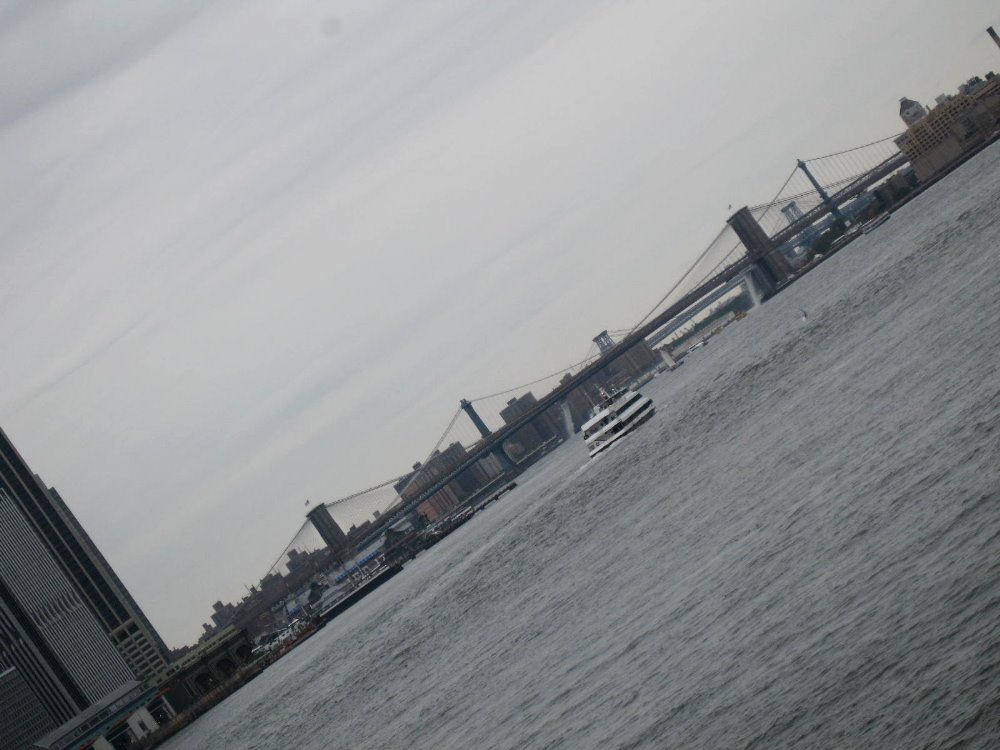
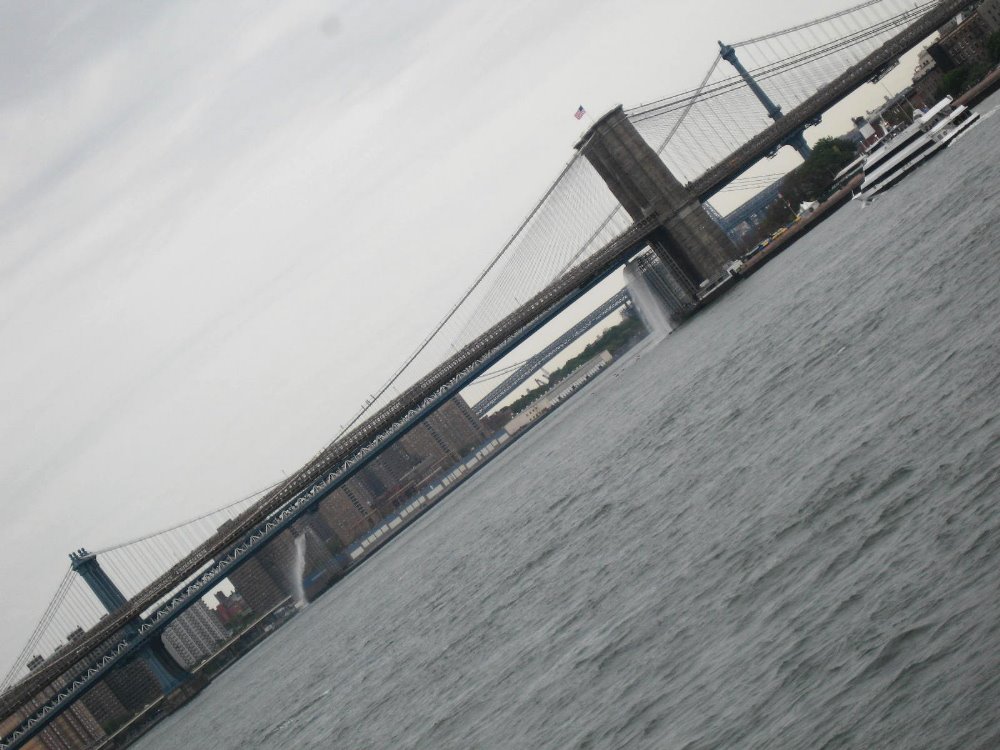
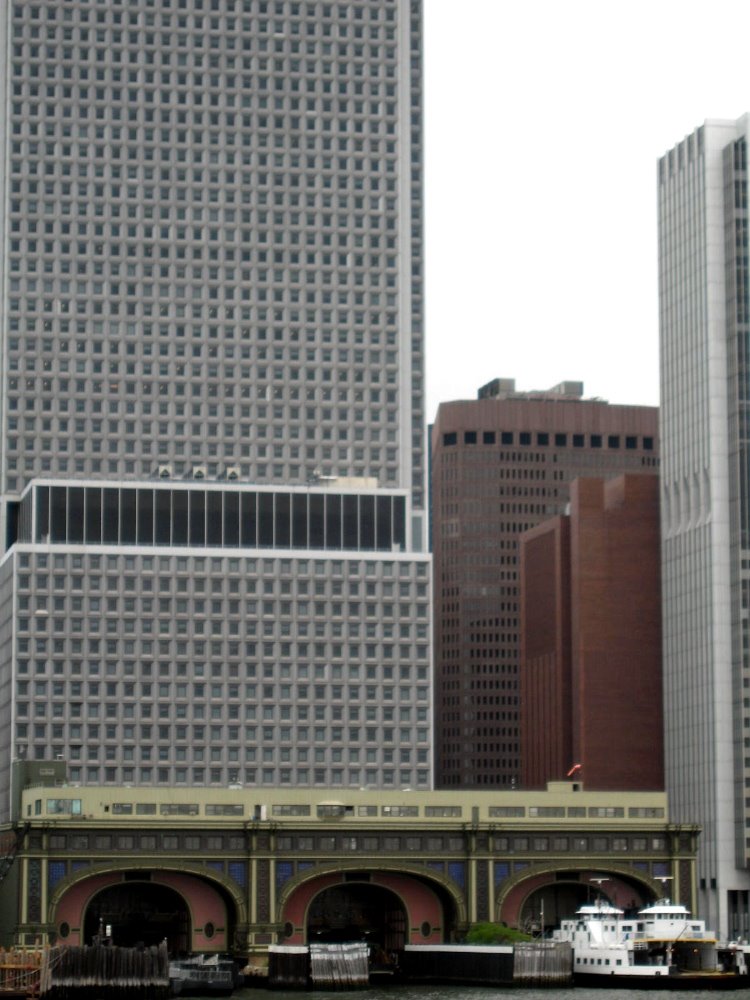
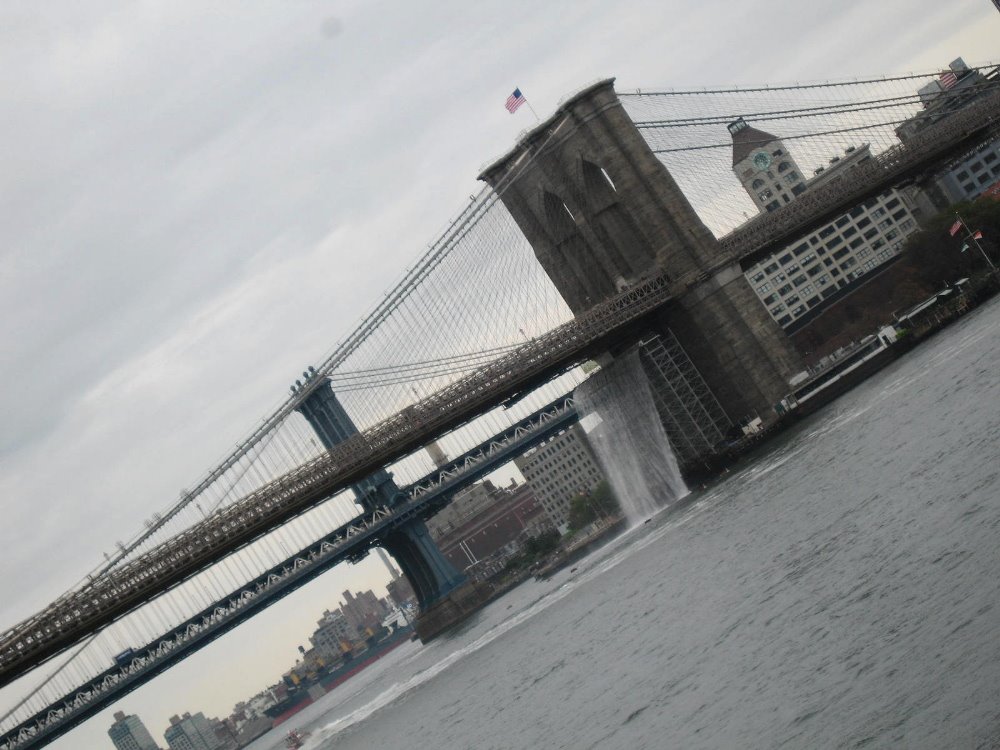
Below and above, the NY Waterfalls was a fun public art project that linked the harbor in a new way, with four artifial waterfalls built around the harbor off lower Manhattan, Brooklyn, and Governor’s Island. Other shots include Ellis Island next to the Statue of Liberty, through which some of my ancestors certainly arrived as immigrants.

It’s clear the hope for renewal and meaningful leadership is shared eagerly all over the world, and this shows up in my own inbox with emails from friends all over saying things from ‘good on you, america,’ or ‘yippi yi ya for obama’ to ‘thank you all you american friends out there…you have made it for the whole of us!!!’ and ‘tears of joy and relief are in my eyes.’ I gave many hours to campaign phone-banks for Obama during October and November. I was born and grew up in Ohio, which was to 2004 what Florida was to 2000. I’m so happy to see the voters finally reject the hate, fear and consumption based approach to life we’ve followed for too long. (Don’t forget that W’s recommendation to citizens after 9/11 was that we should go shopping.) I was personally called anti-American and anti-troops by several people I thought of as friends when I opposed our imperial unilateralist war-mongering response to what, in 2001, could have been a very teachable moment for ourselves and the world. (How different would we and the world now be if we’d taken all those dollars we’ve now wasted in Iraq, and used it on a Marshall-like plan to provide healthcare, education and opportunity in the world’s most deprived places?)

Below, an historic Hoboken train station on the Jersey side just by the Statue of Liberty, through which some of my plains-bound immigrant ancestors very possibly traveled.

One thing I’ve become increasingly clear about is the need to speak out about my own beliefs and faith. Here in the US, religion is too often used as such a bludgeon to separate and judge – making folks like me very uncomfortable about speaking out for our own beliefs and values, which differ so starkly from those judgmental, narrow-minded religions that bludgeon, but that are no less deeply based in a deep spiritual commitment to right and ethical living in this world. I’ve become convinced that traditional, hidebound religions are a terrible impediment to progress in the US, and are limiting our vision and potential far too much. We are, after all, a nation formed by religious rebels of many stripes – so it’s unsurprising that religion and ethics play a huge role in our public life. Before church recently, I sat in the one of the adult education sessions I’ve so enjoyed; this was about Jewish theologian Abraham Hershel. In one passage, he recounted being told, as a 7-year-old, about the biblical story of Abraham taking Isaac up to the mountain to be sacrificed, as he’d heard his god demand he do. Naturally the 7-year-old was pretty horrified by the notion of a father killing his son based on the say-so of some voice in the air, and wondered what would have happened if the angel hadn’t told Abraham to stop before his knife struck Isaac’s neck. The rabbi’s answer? Angels are never late – humans, maybe, Angels never.

And that, my friends, is as good an illustration as any of why organized, judgmental religions have far outlived their usefulness to humanity. What sane ethical being would stick a knife in a son’s neck, for any reason, let alone because a voice spoke in thin air? And what sane person would put stock in a holy book that calls this a test of faith? Who needs a god that tests faith by insisting on human sacrifice? Didn’t Christians kill ‘pagans’ for thinking just that when they arrived in far-flung lands throughout the 19th century? What responsible human being would cede agency and responsibility for their own actions and ethics to an unknown angel, or an unknown god, whose existence must be taken on faith? If you believe in that god, don’t you suppose he/she/it gave you that head on your shoulders to be USED rather than turned off?

Something that discomfits me about the unitarian church I’ve been attending here in NYC is that the G word comes up rather often in services. I’m tired of whether we do or don’t believe in G – and I think actions matter more than spoken beliefs. It’s totally clear what sane, intelligent and ethical human beings should be doing in this world — taking care of one another and the planet, reducing conflict, bringing more and more deprived and impoverished people from developing nations and deprived parts of our own nations into our communities of opportunity, restoring the earth and our human world to a more sane balance and distribution of opportunity. To those in Kansas or Alabama who want to parrot that old Puritan saw about predestination, and basically say that their god has blessed them by allowing them to be born in this rich land of milk and honey, while those poor kids in [name of developing nation here] are just shit out of luck in this life…well, I say yours is not a religious practice worthy of the name. Because if religion serves any purpose in human life, surely it is to bind humanity together and increase the safety and security of us all, not just of one people or one community, but of our ever-more-connected global village. So learn a bit more about the world, get out of the Wal Mart and off your butt and do something to help the world become a better place – and start by reducing your own consumption, and using the saved money to donate to reliable charities that give food and medicine to needy people – and not bibles, since those don’t cure tuberculosis or hunger. While you’re at it, you might get around to admitting that hormones are hormones, and abstinence-only ain’t never gonna work…but I won’t ask too much.

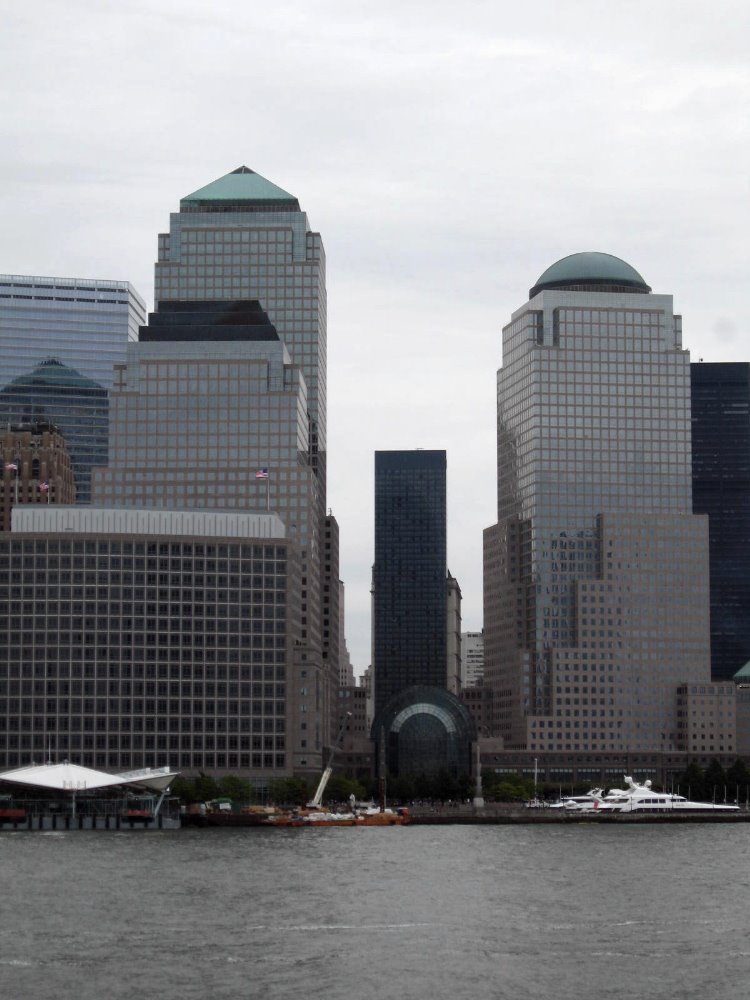
Above, you’re looking up the length of Wall Street itself, from the East River to Trinity Church where Wall meets Broadway. And below, the World Financial Center, inland from which sits the site that once housed the World Trade Center. I used to take the subway to the WTC/Chambers station, then cross the street to have lunch at the WFC’s Palm Court restaurants for a lovely view on a cold winter’s day.

In Clint Eastwood’s new movie Changeling, the main character says ‘I didn’t start this fight, but I’m going to finish it.’ I’m feeling much that way now. For many years now, I and other liberal and progressive Americans have felt judged and rejected by what the media like to call ‘values voters.’ I’m tired of that – I am what I am, my values tell me to take care of my friends, family, community and world, and yes I’m proud to be far to the left and far more knowledgeable about what goes on in the world than most other Americans. Deal with it. We all have the right and responsibility both to live the lives that feel right to us – and to accept, without complaint, the consequences of those lives. For many Americans, right now, that means finding ways to tighten belts and develop some goals and values in life that involve something more than non-stop consumption, trips to the mall, and heaping more junk into their houses that will end up in the trash. There’s a lot to see and do in the world that doesn’t increase you carbon footprint. Try it – learn a little, explore a little; you might find that you like living a bit smaller in a larger world.

Sculpture & Summer Gardens Around NYC


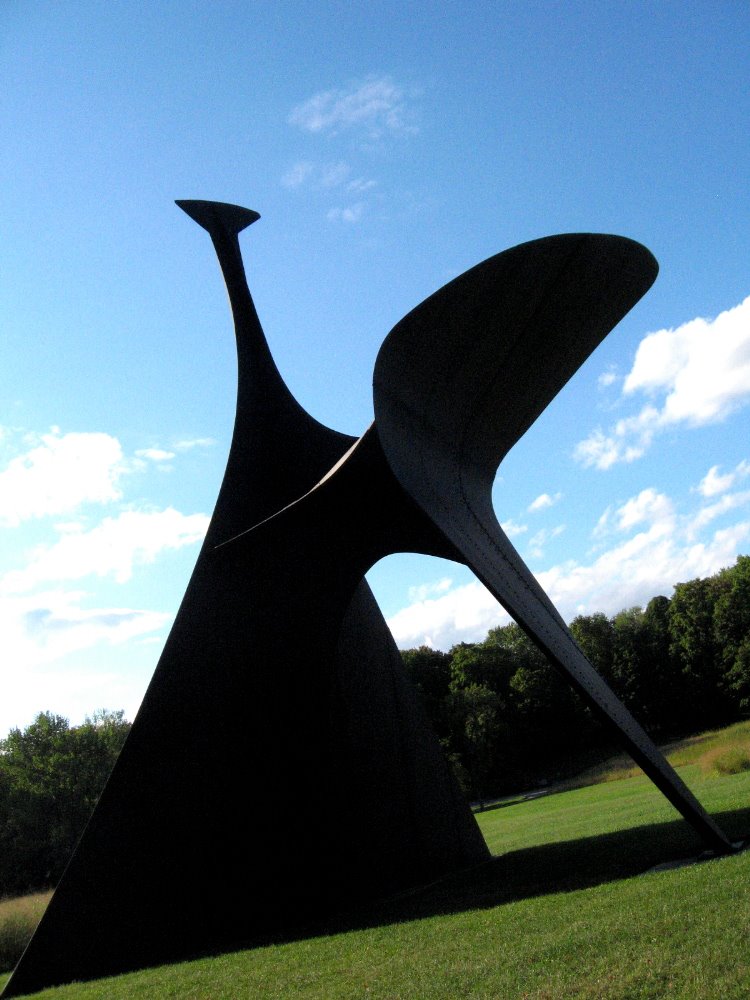
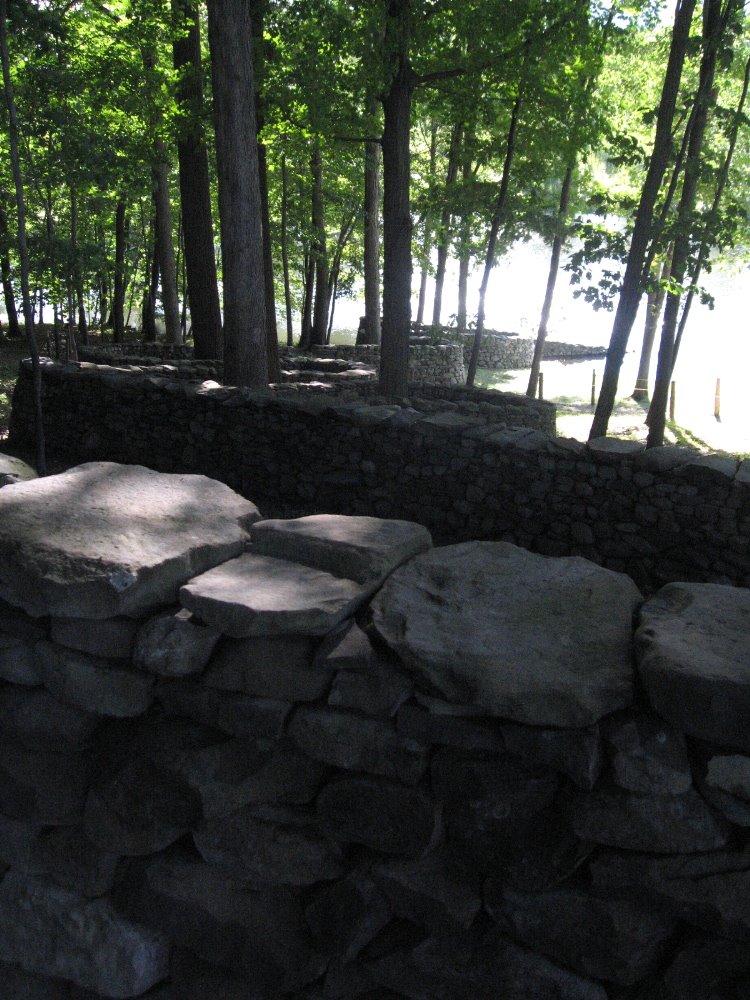
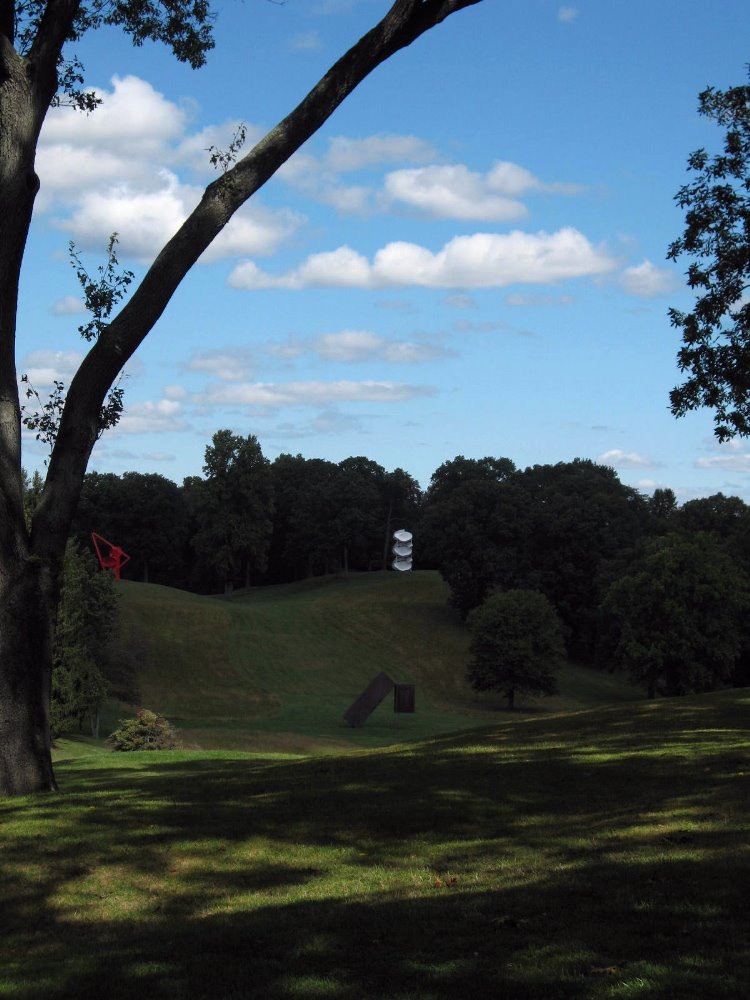
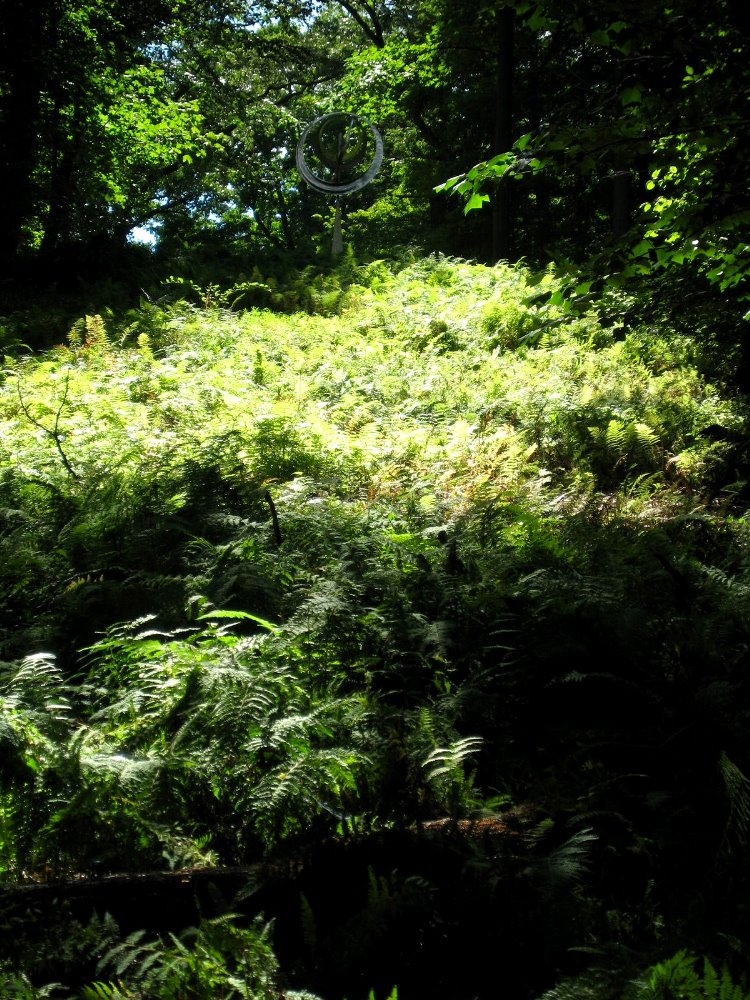
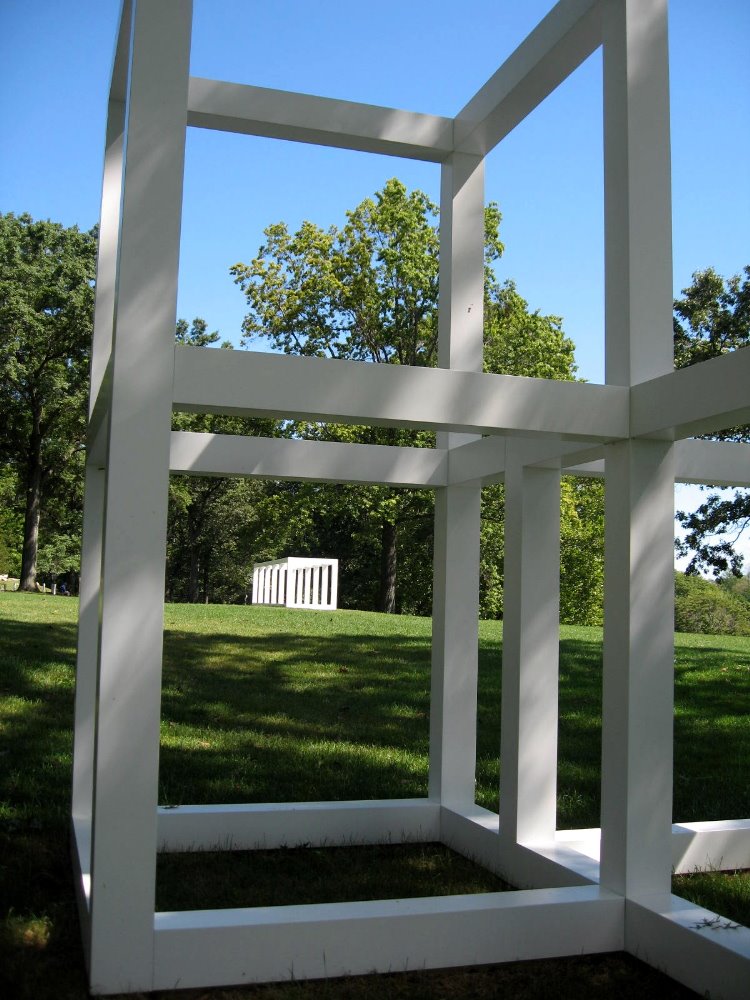
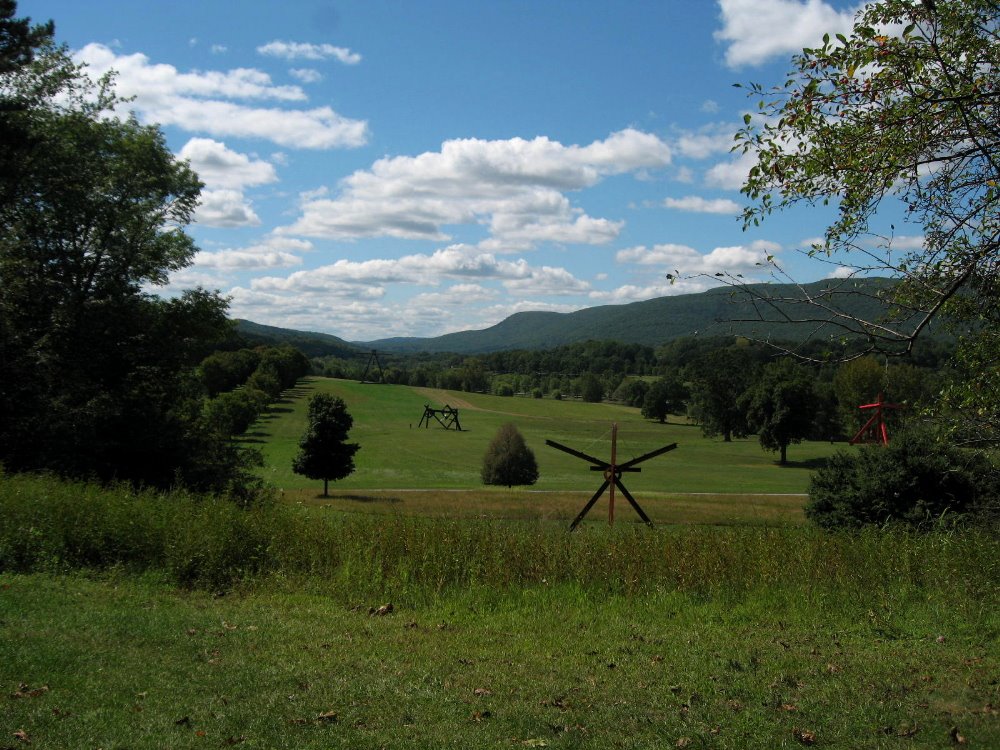
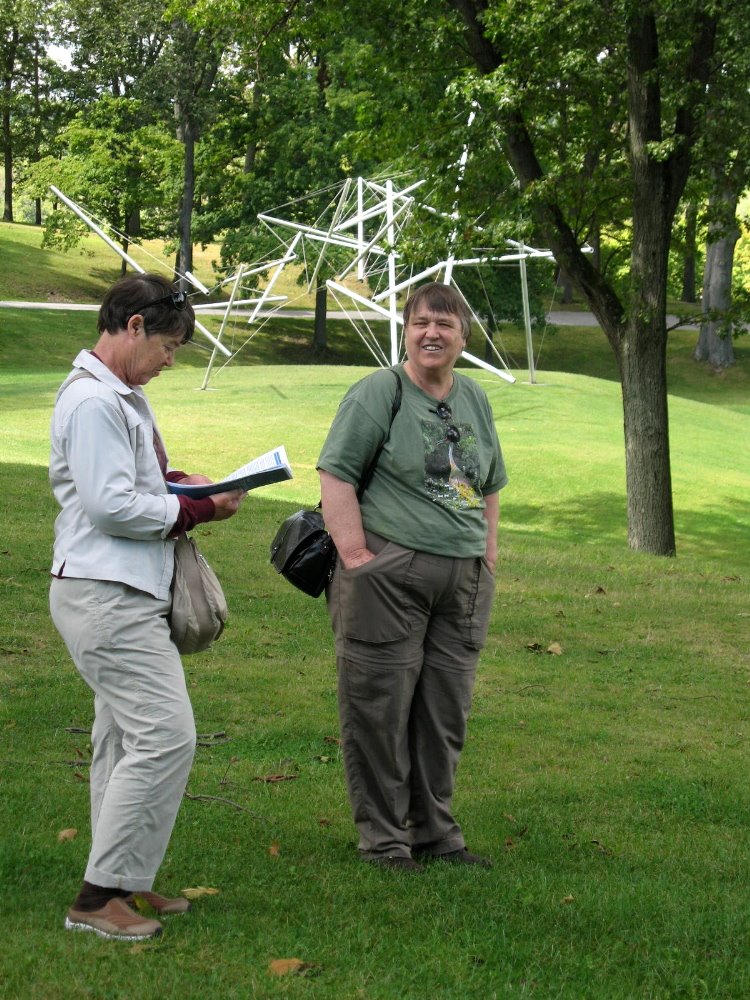
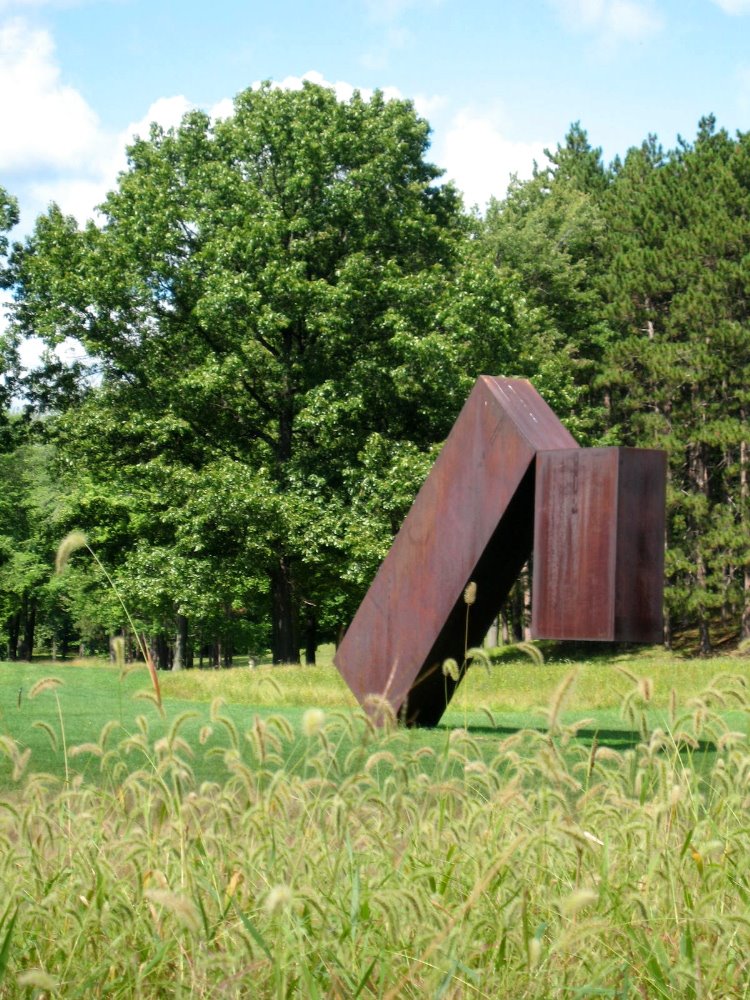
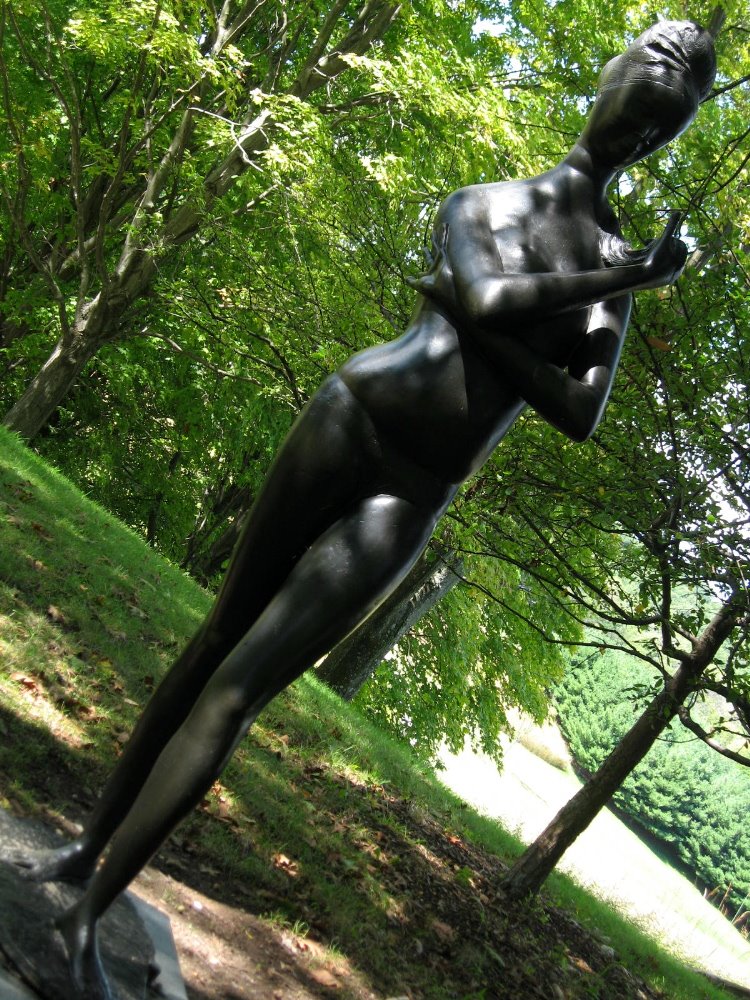
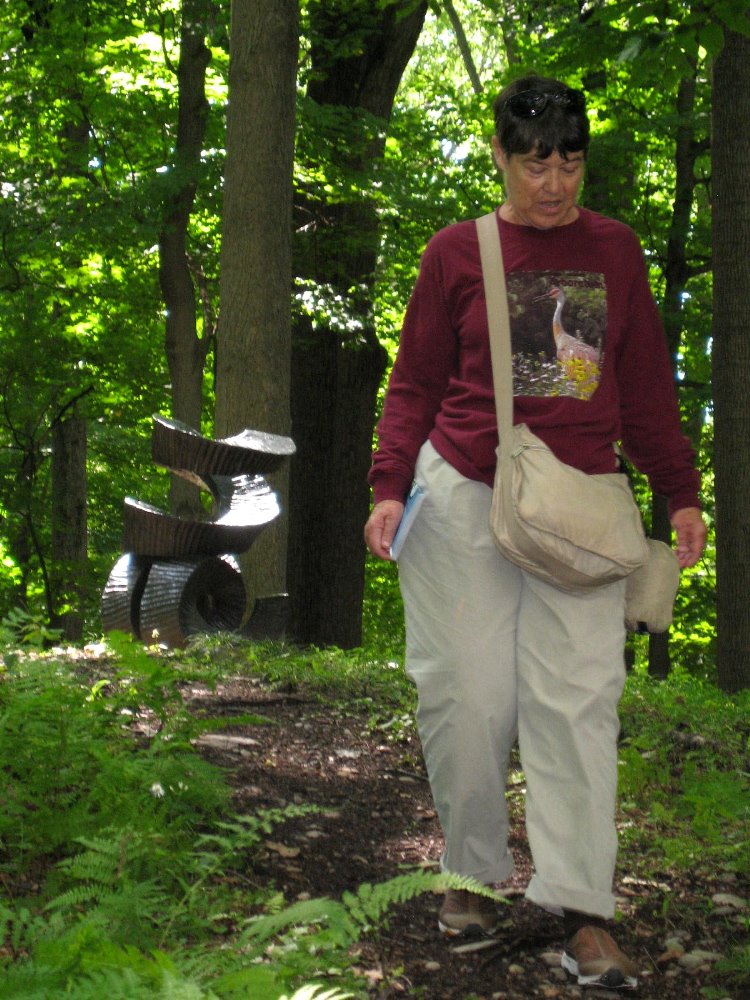
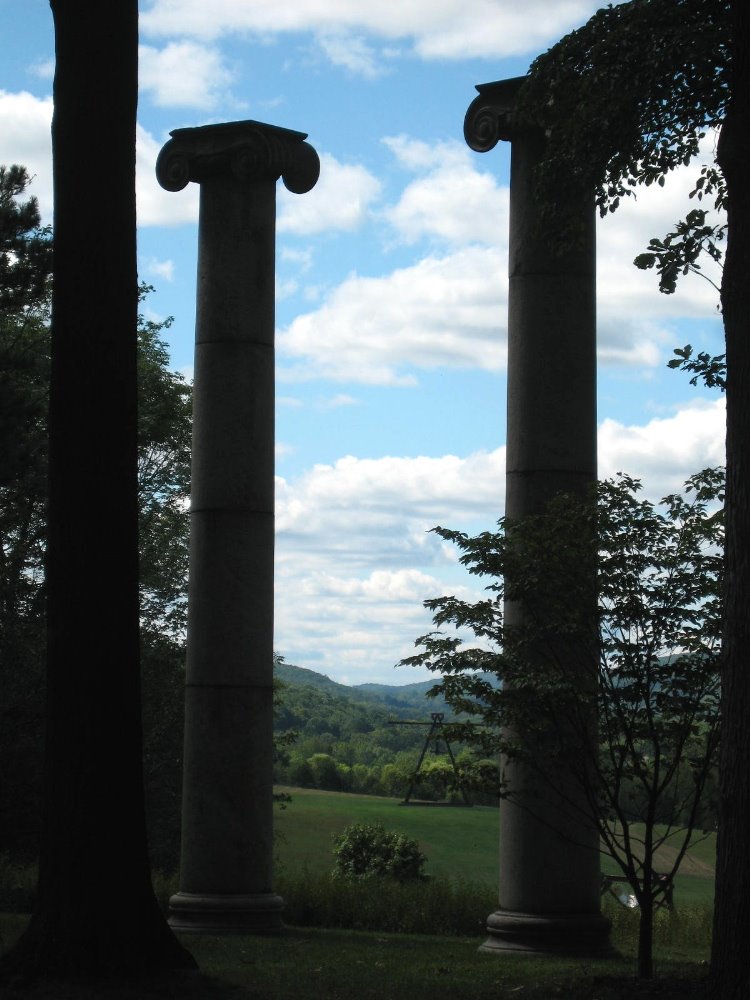
Above and below are photos of probably my very favorite single spot in or near NYC, Storm King Sculpture Park north and west of the city in the mountains west of the Hudson. Given my (and my family’s)longstanding love of this spot and its incomparable collection of beauty both natural and human-created, I felt nearly guilty when I put shots of last December’s visit to the (also lovely, but not as close to my heart) Yorkshire Scultpure Garden on the blog before I had a chance to show you all a bit of Storm King. Herewith some shots of a lovely visit with my mother and her sister in early September.


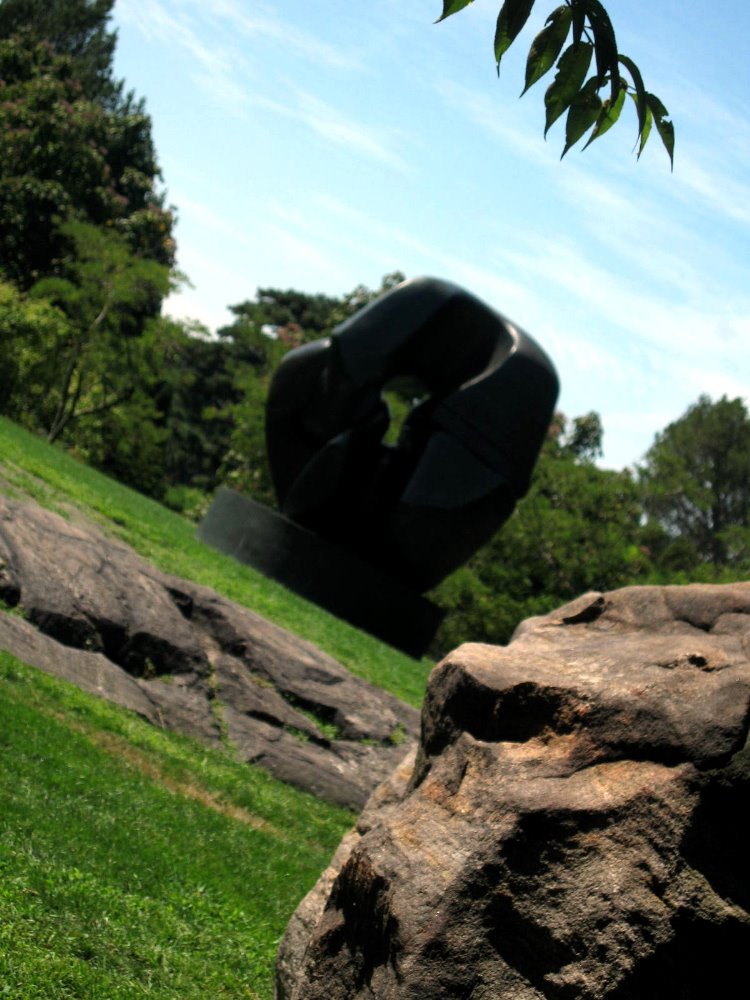
…and, below, some souvenirs of a visit with Mom to the New York Botanical Gardens while they were displaying some monumental Henry Moores, not unlike those we saw last year in Yorkshire – whence, I believe, Moore originated.


Pride & Prejudice

The day after our national election on 4th November, I flew to LA. The main purpose, honestly, was to retrieve winter clothes from storage: and the trip came not a moment too soon; these last weeks I’ve worn little other than the sweaters, jackets, mittens, scarves and other annoyingly bulky items I dug out of the hidden corners of my storage space. It’s been quite horrifyingly cold lately in NYC, even more so to one whose nerves and body had become accustomed to gentler equatorial climes these recent years. But I digress.

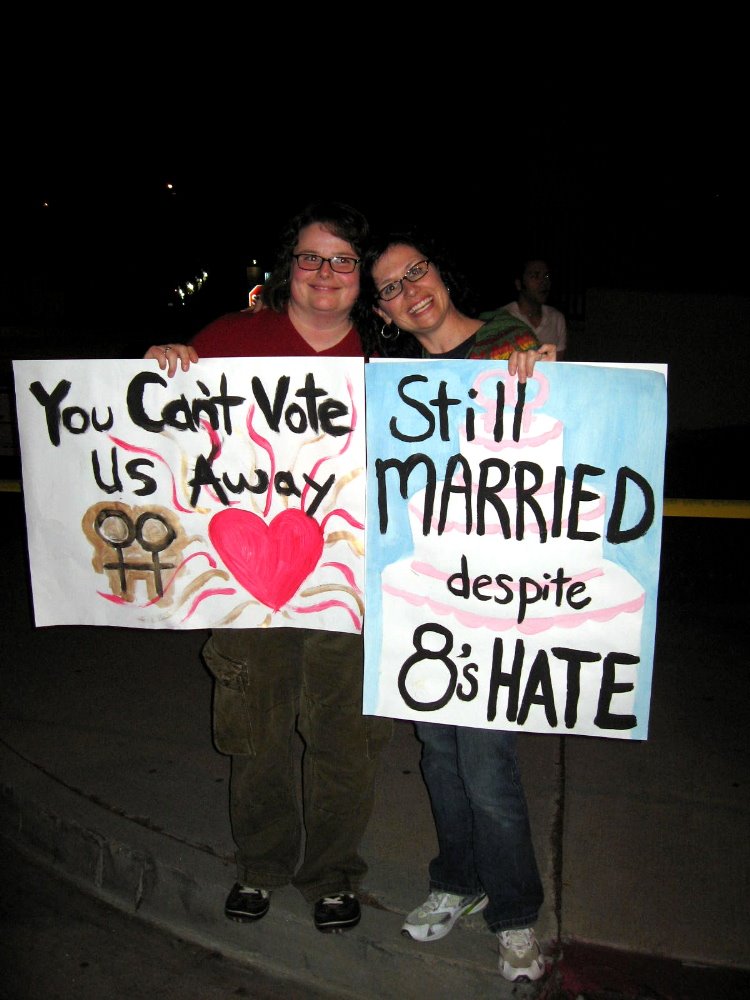
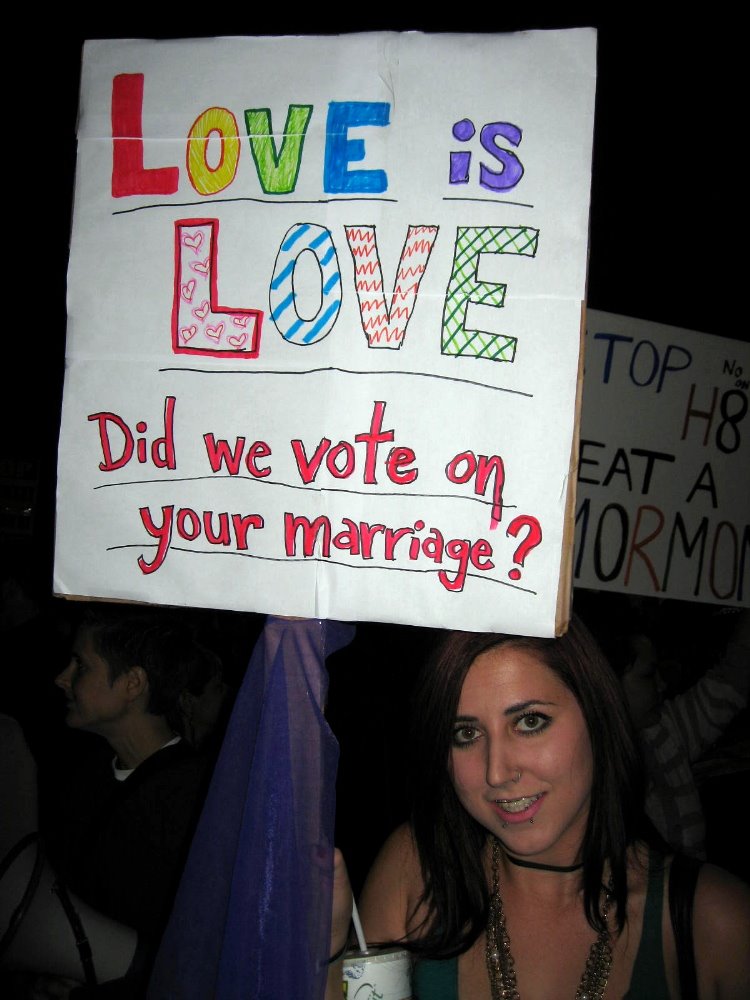
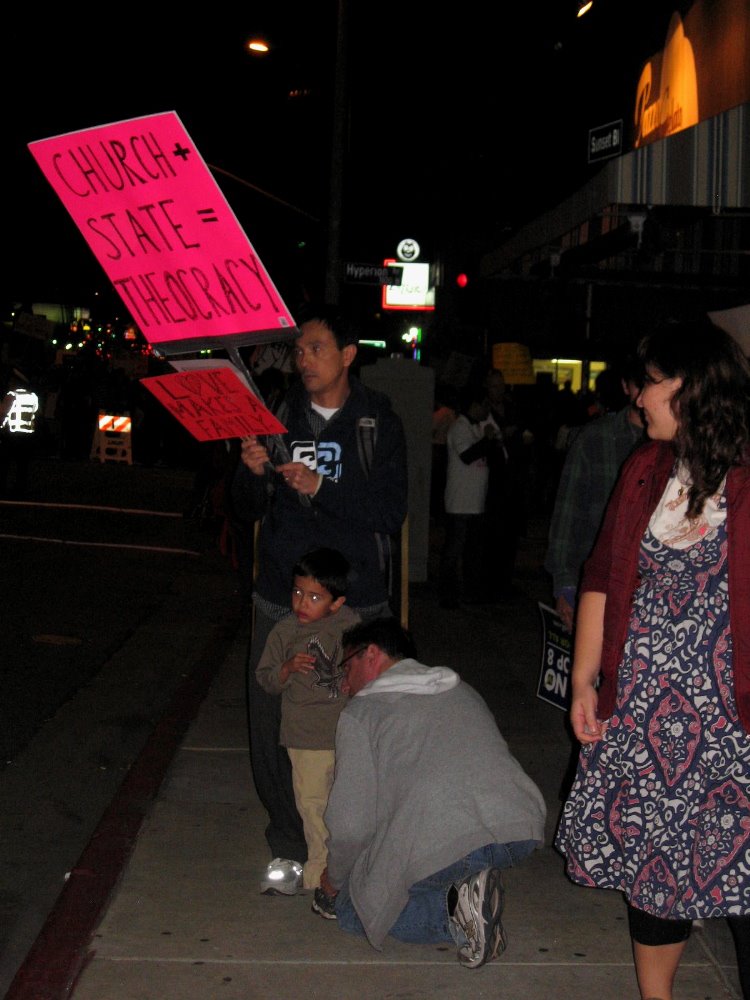
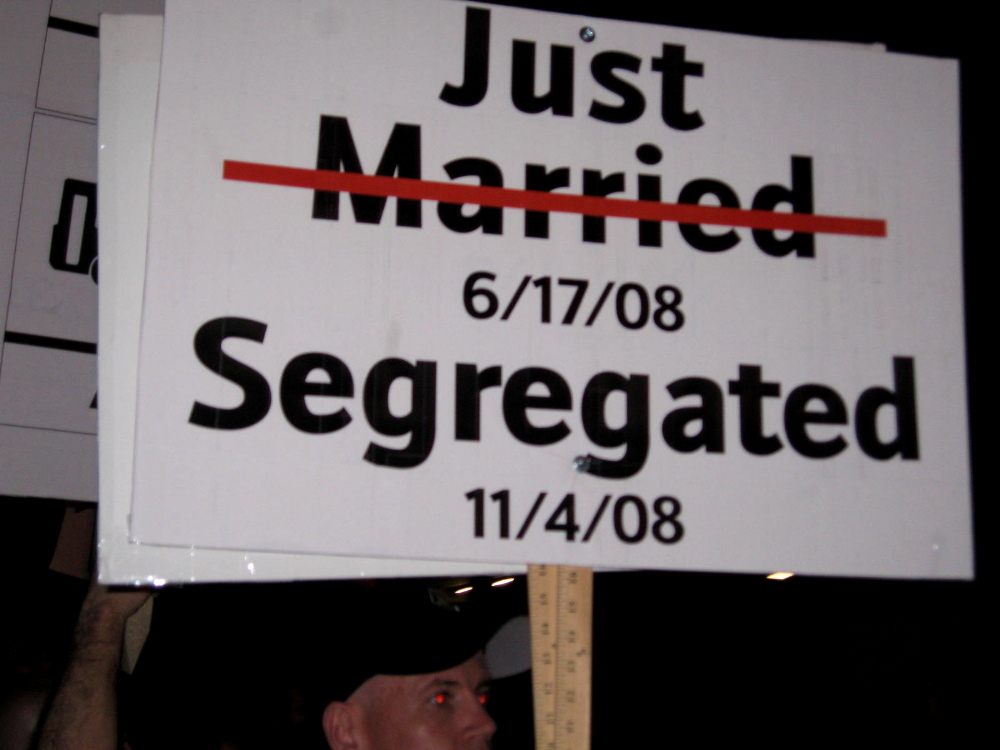
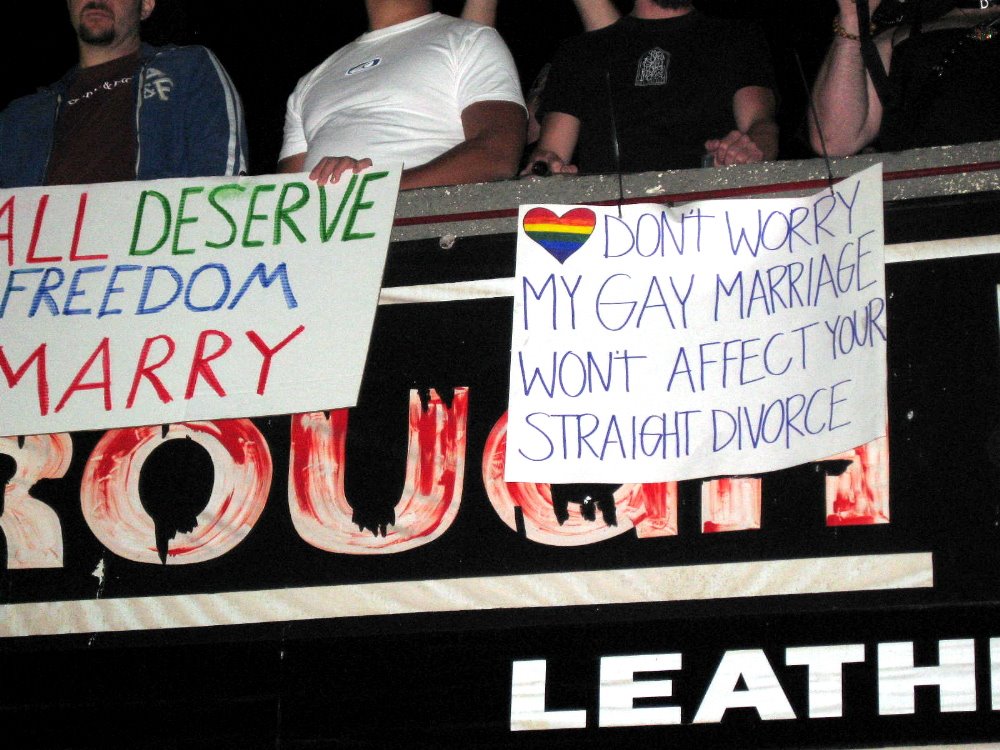
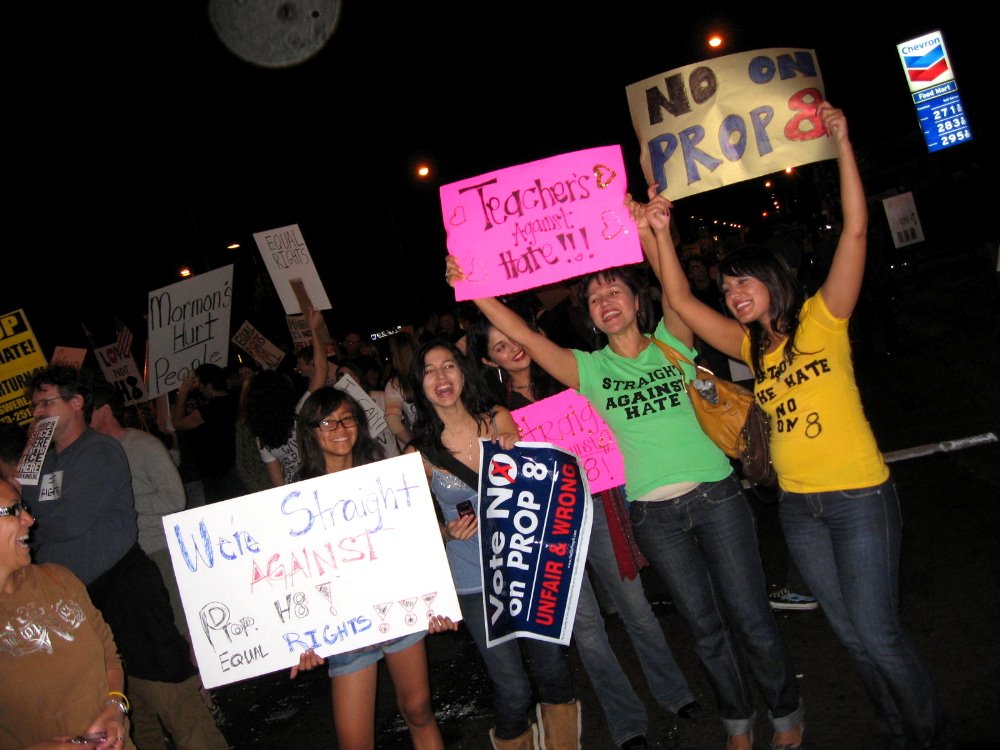
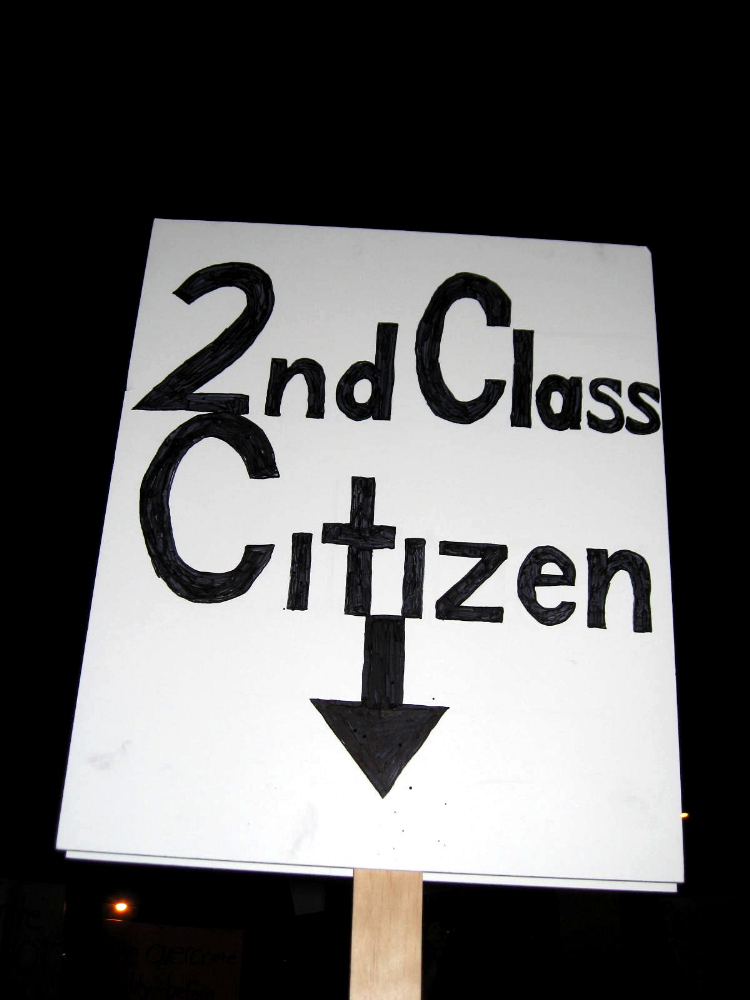
California, as many even outside the US are now aware, was the scene of perhaps the most disappointing electoral loss for the equality-minded on that night of otherwise glorious and liberating news for us all: by a simple majority on a ballot measure, the California state constitution was amended to eliminate equal access to marriage for lesbian and gay people — thereby relegating us to second-class status, even within California which has a good civil-union law for us 2nd-classers, let alone in other states whose laws are far more restrictive and discrimatory — not to mention federal laws which take no account of our families and relationships, whether for taxes or immigration or any other civil matter . Fired up by our disappointing loss, progressive spirits of all stripes (not just the LGBT community by any means) have begun to organize and try to reach out to those who voted in favor of restricting equal rights. There are many reasons we lost on this ballot measure and thus lost our equal rights — we didn’t reach out enough to religious and other communities who feared that our equal rights might infringe on their free practice of religion (whereas the campaign in favor of restricting our rights played actively on that fear among religious communities, and was very strongly funded by members of both the Catholic and Mormon churches), those of us who might have devoted more attention to education and outreach about the issue were focused on work, our economic and career fortunes, or trying to get a responsible and honorable president elected for the first time in this millennium. Be that as it may, we have some catching up to do.

I’ve always been afraid to reach out as a gay person to my non-gay/lesbianfriends about my need for equal access to rights like life, liberty and the pursuit of happiness. (I’m not joking — Matthew Shepherd was killed not all that long ago for the crime of wanting to love the wrong person, a fear of which has certainly affected my ability to reach out to those I find attractive and interesting.) Some inner voice has always said my equal rights matter less than those of others, because it’s always been this way and after all, I could fake it if I wanted to. (About as well as one of my uncles and all those others who leave behind broken families and shattered dreams when they finally give up on trying to be what they, quite simply, cannot be.) But these voices rest on misbegotten notions that we queer folks can, or should, change who we are. I don’t necessarily plan to marry any time soon or think it’s right for everyone of whatever love interest, but I don’t see that my right to do so should be different from that of my brother, cousins and best friends who’ve been married for years – in some cases more than once.

If the churches don’t want to sanctify my relationship, that’s fully a matter for them and their adherents to debate and hash out — as is happening, globally and visibly, within the anglican and other churches. But just as any church can deny religious marriage rites to non-adherents of its religion, so too it OF COURSE can decline to sanctify my marriage or my existence. But for a civil society based, finally, on equality for all — for a nation that 90 years ago finally allowed full ballot access to women, that 30 years ago legally overturned bans in many states against interracial marriage, that has struggled for all of its existence to overcome the inherent barriers to full participation in citizenship and society for all the many ethnic, cultural and religious groups who find their homes here and especially to all the Americans of African ancestry — how can such a nation, let alone one of its most progressive and leading-indicator states, still actively relegate me and my community to second-class status in a clear matter of equal access to civil rights and full particpation in civil society?
In the heat of the moment, I penned an angry letter to the head of Park City’s chamber of commerce – a lovely city where I had a great ski vacation once. Encouraged by a friend, I posted the letter on the blog and called on friends to join the boycott. I still feel this way, but I’m less fired up now and perhaps almost embarrassed at the youthful energy and righteousness of that letter. I understand there are those whose religions say I’m abomination. Personally, I find their religions abominable but I’ll fight to the death for their right to practice them, so long as they leave me alone to live my life without causing harm to others. And that’s what it’s about, for me in this. But I do think we need to find ways to communicate constructively with those who aren’t comfortable with us and our demand for equal rights. Just as other minorities over the years have overcome ‘scientific’ or religious explanations of their natural inferiority (heck, it wasn’t until the late 1970s that the mormon church noticed that black skin pigmentation was, in fact, not punishment from god), we too shall ultimately overcome the prejudice that still says we’re somehow different or unequal. But to do so, we’ll need help and we’ll need to reach out. Now’s a good time to start.

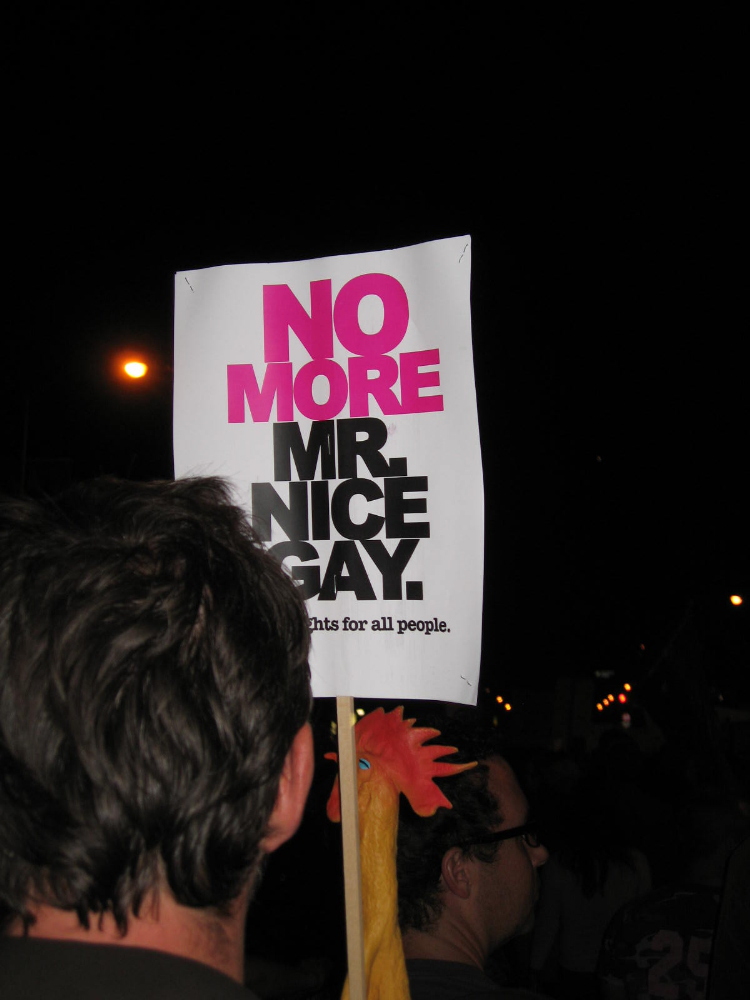
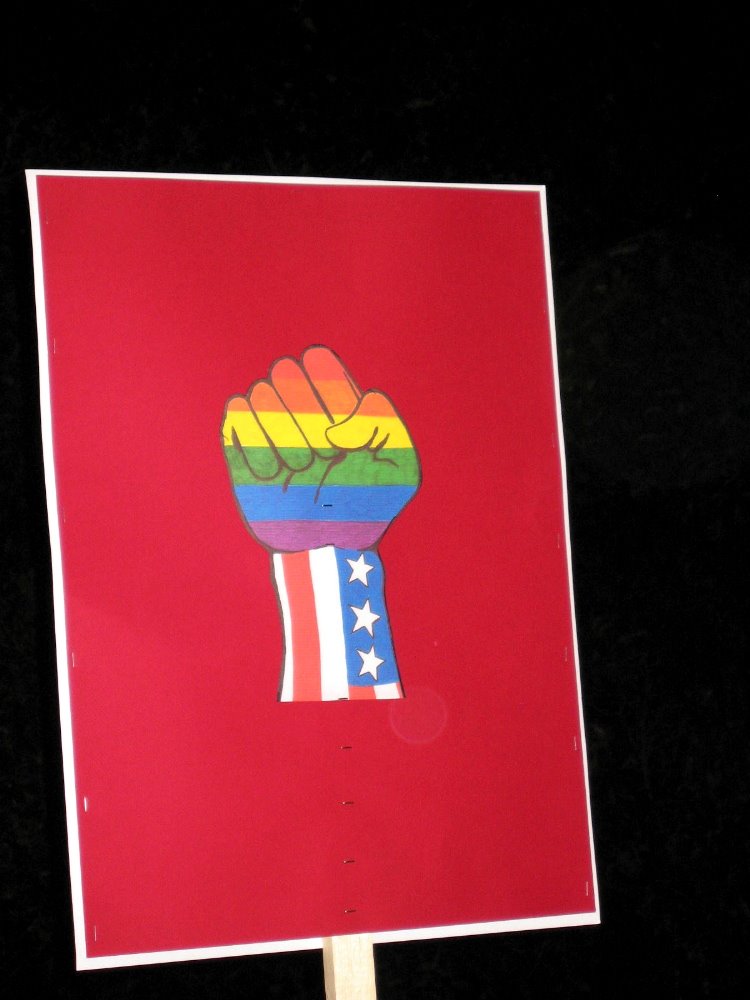
…Above and below, shots from one of the largest spontaneous marches the weekend after the election, through Hollywood in LA.


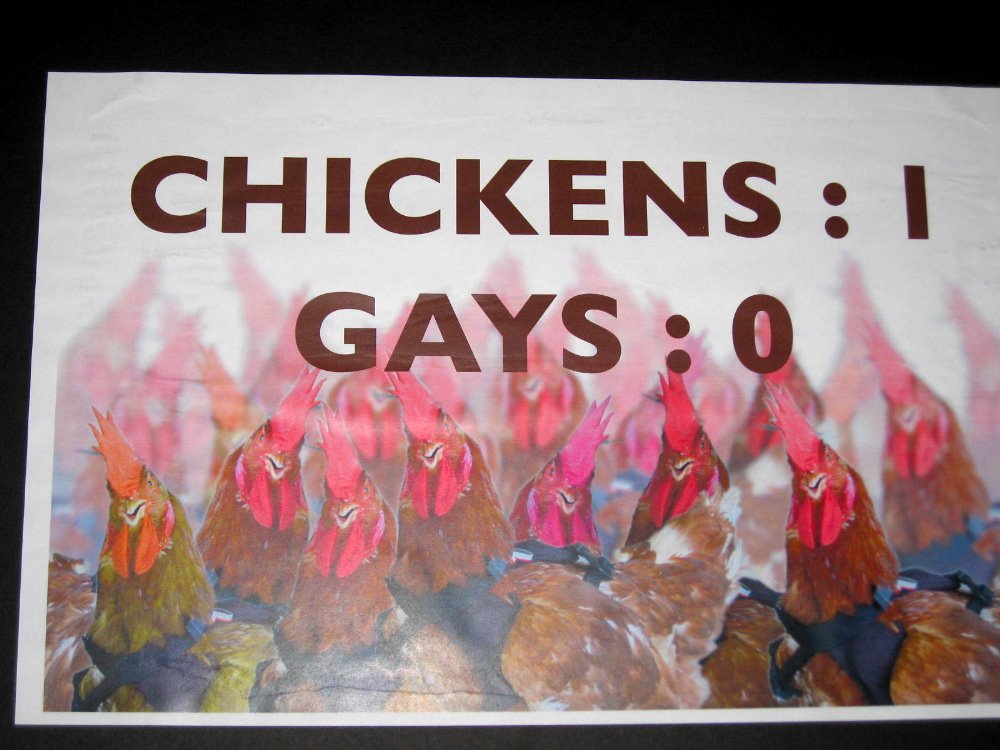
On the same day, a majority of Californians voted for a ballot measure that will require chicken farmers to allocate a minimum amount of space per chicken in their coops, so as to avoid overcrowding. 🙂

Sojourn in Sequoia

Being in California usually makes me feel better and more whole: more of my friends are there, it’s easier to do the things I most love to do (hiking, tennis, outdoor swimming all year long, etc.), and though I’m slowly rebuilding a social network in and around NYC, in general it’s just easier for me to find things to do and people to do them with in SF or LA than here in NYC. To my long-planned visit to the SF Bay Area for the Cabrillo Festival (see below), I added a leg to Los Angeles in order to attend the wedding of my friends Joezen and Steve. What a wonderful experience to be there with good friends for a wedding that, in the state of California, finally has legal weight! And such a generous, connected and concerned wedding it was — all about equality and conserving our planet’s limited resources, all about friendship and family. I’m glad I was able to be there.

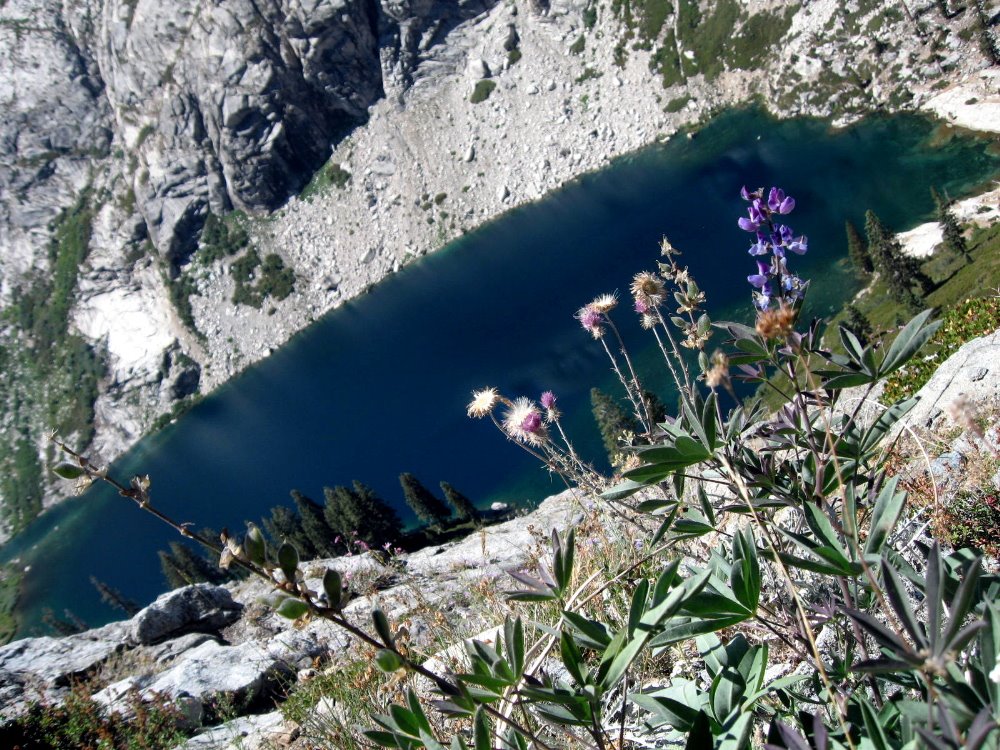
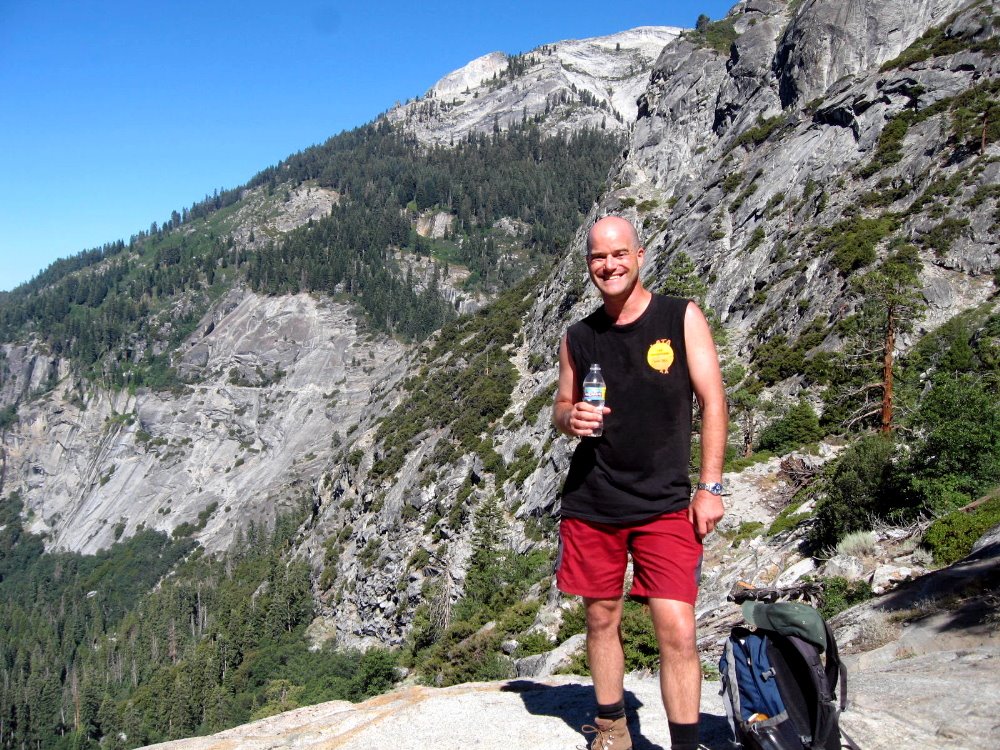
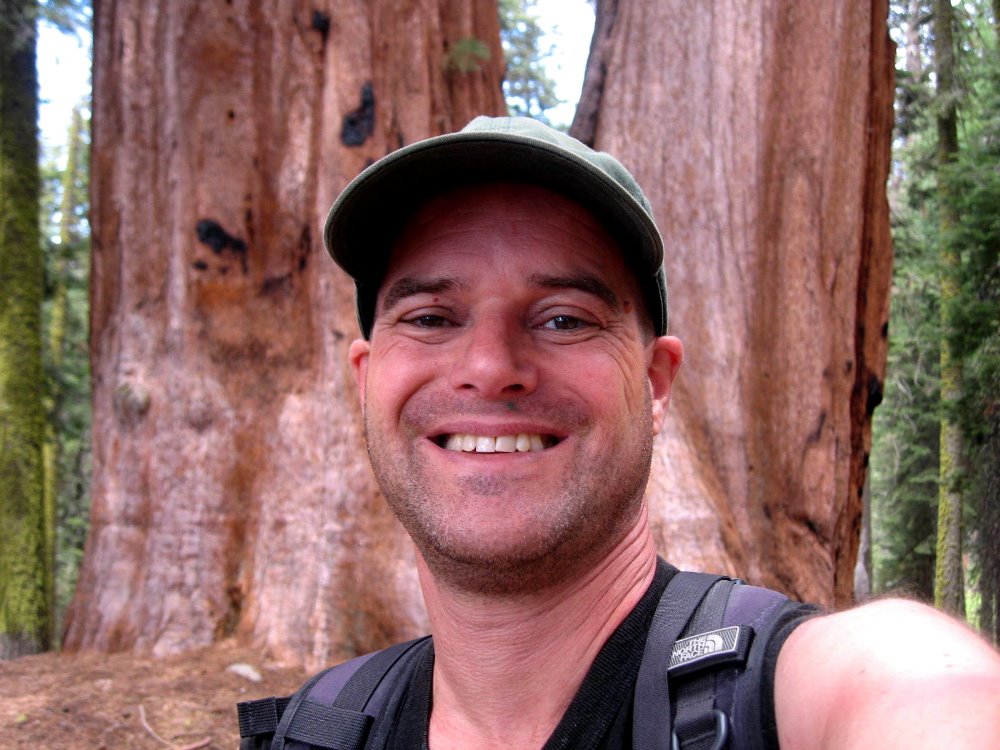
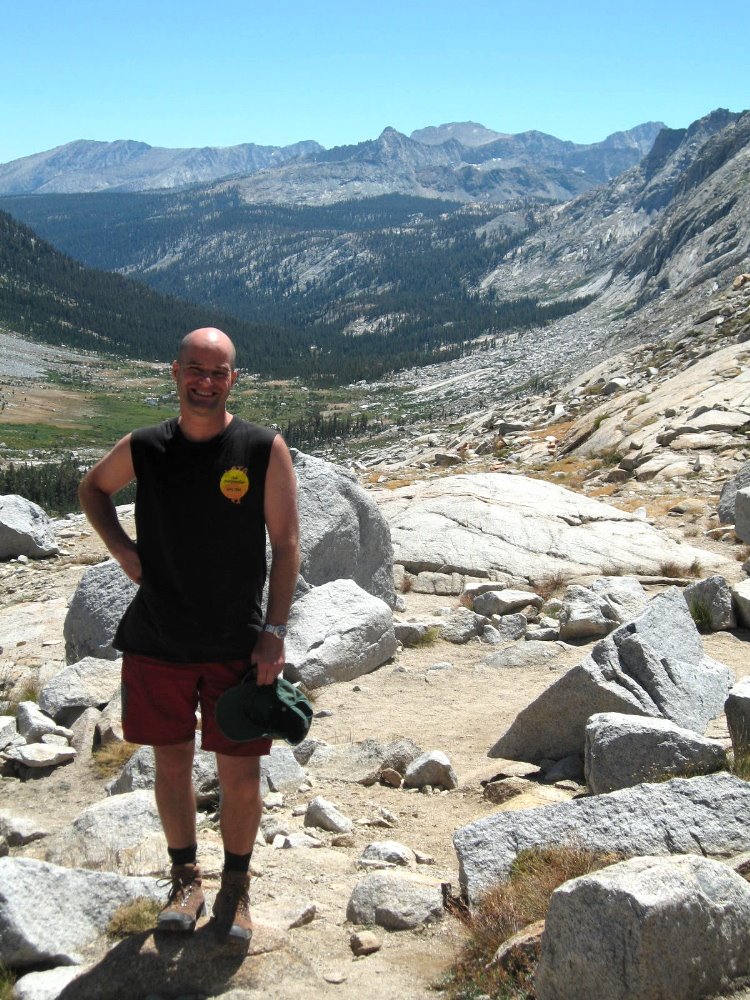
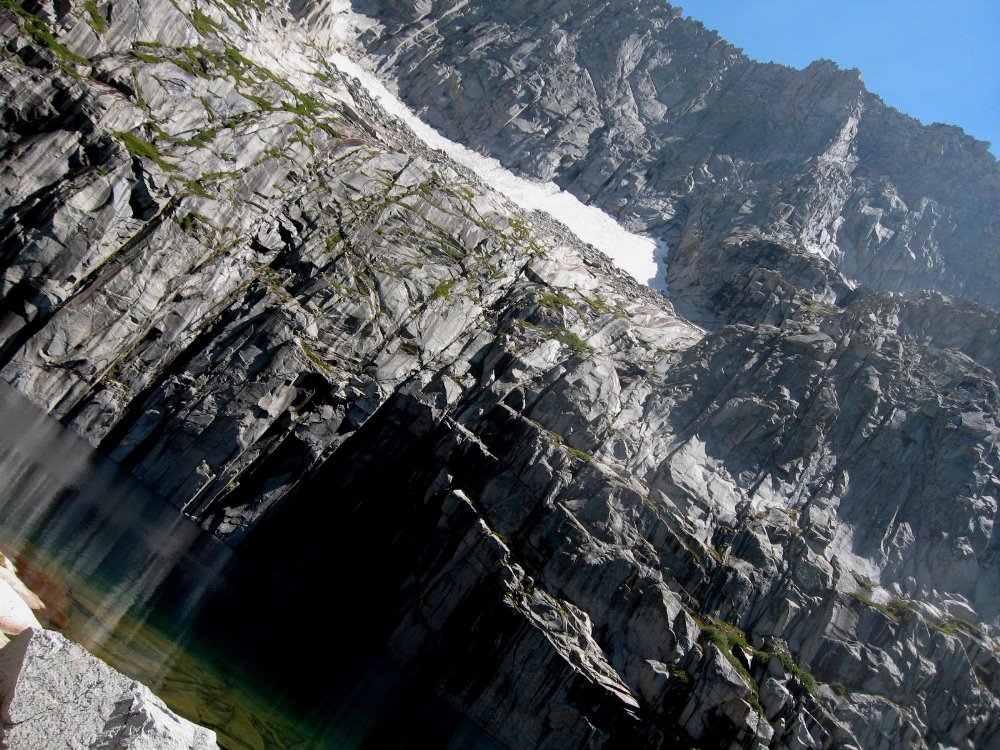
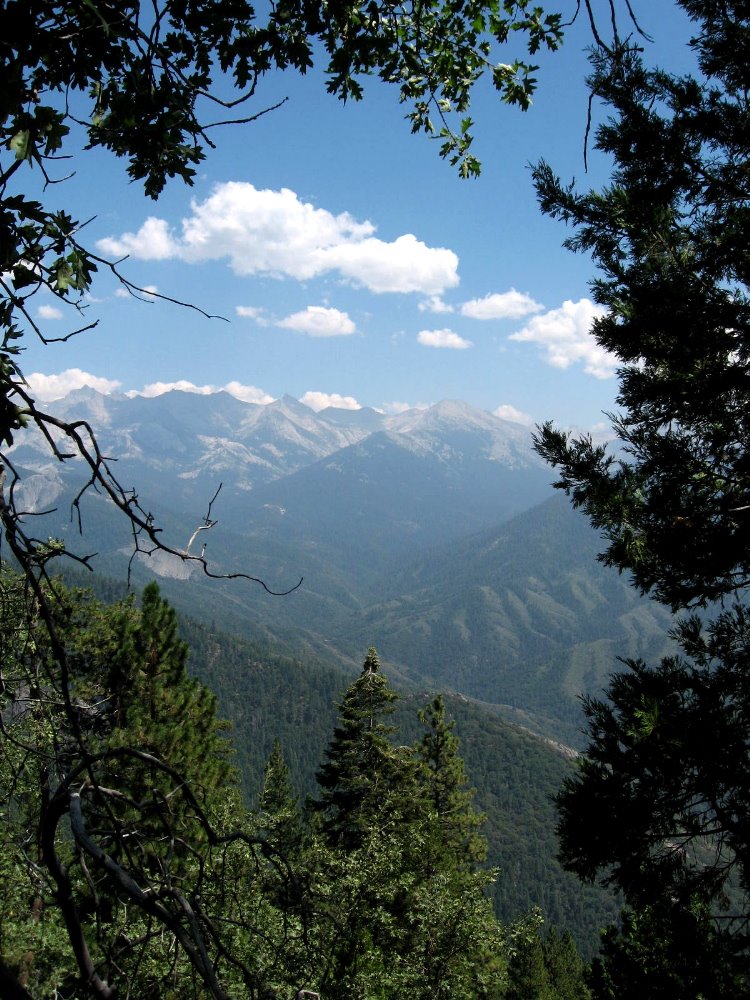
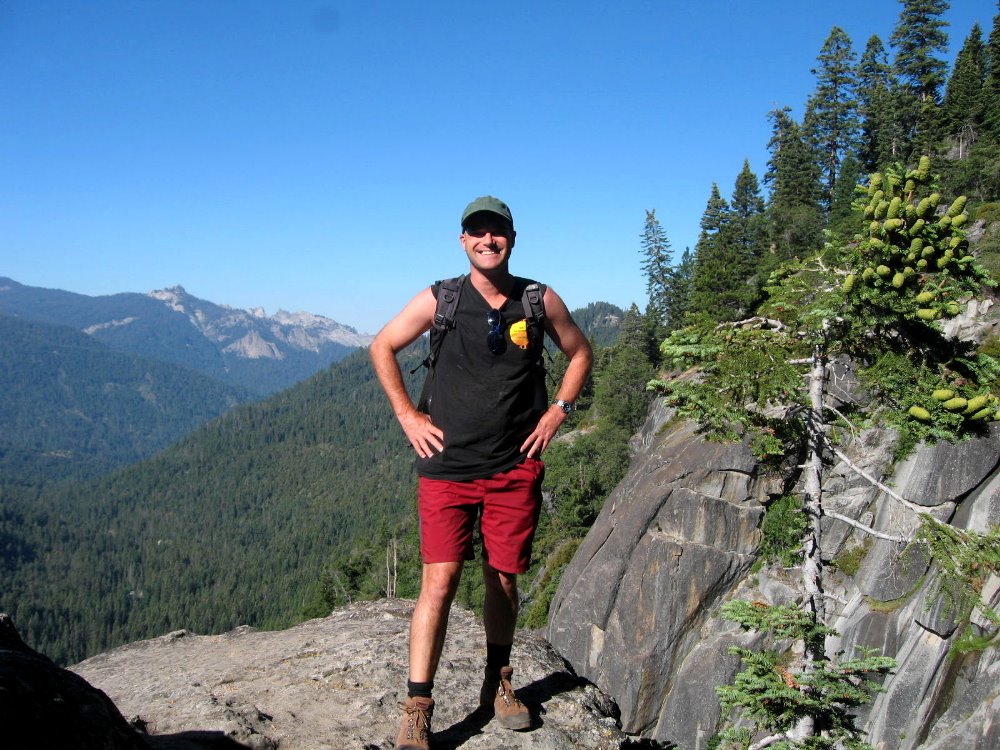
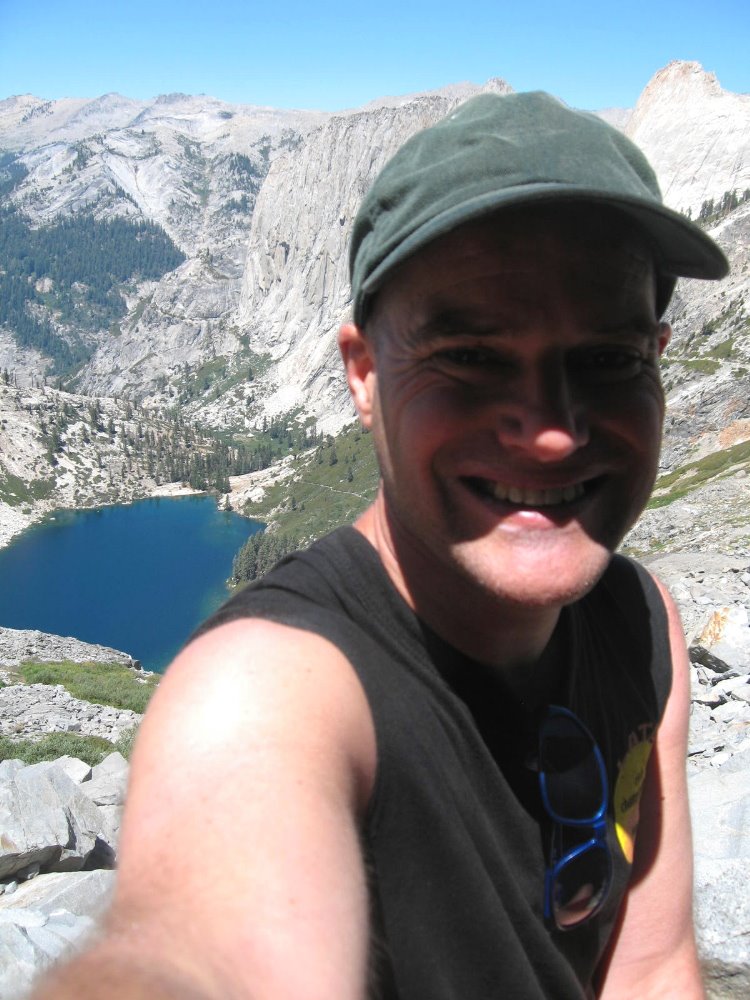
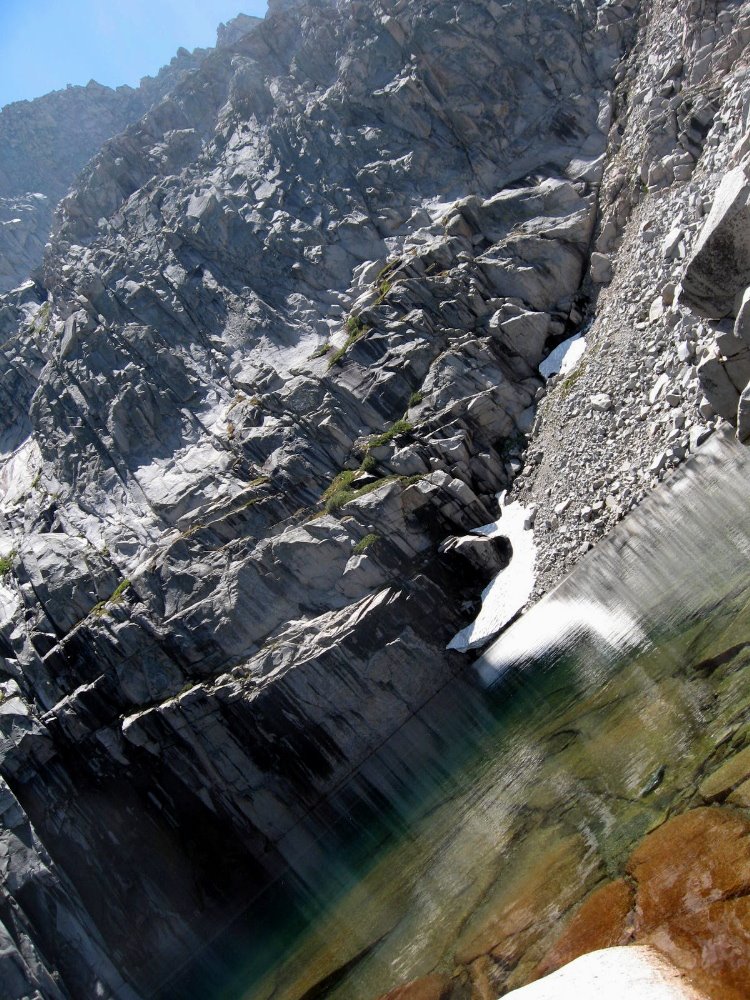
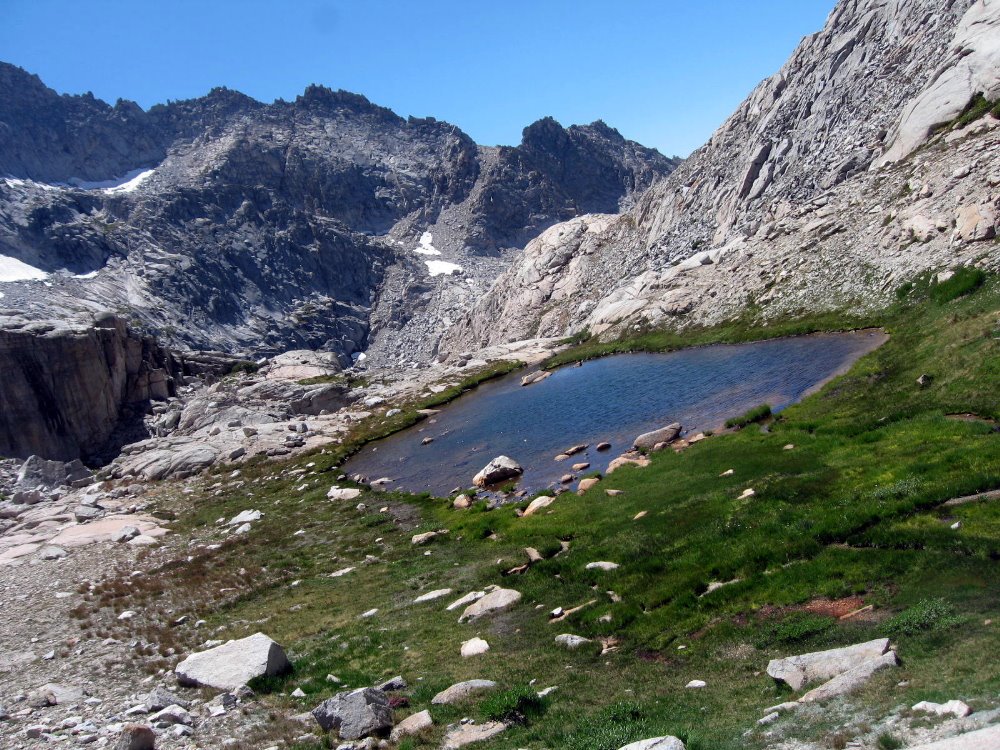
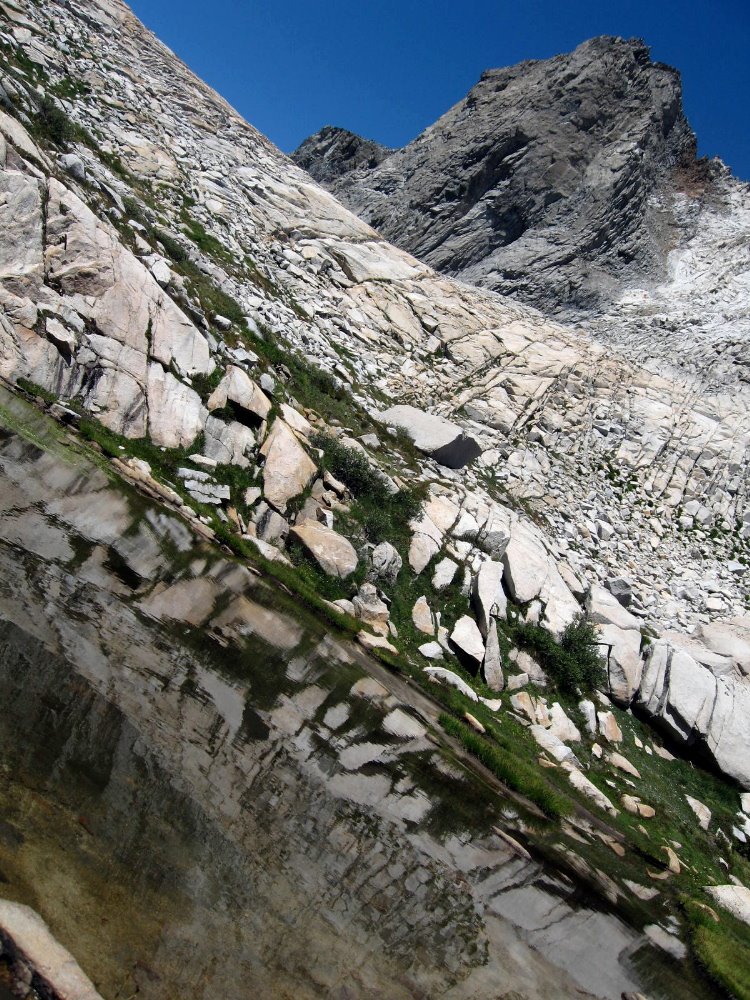
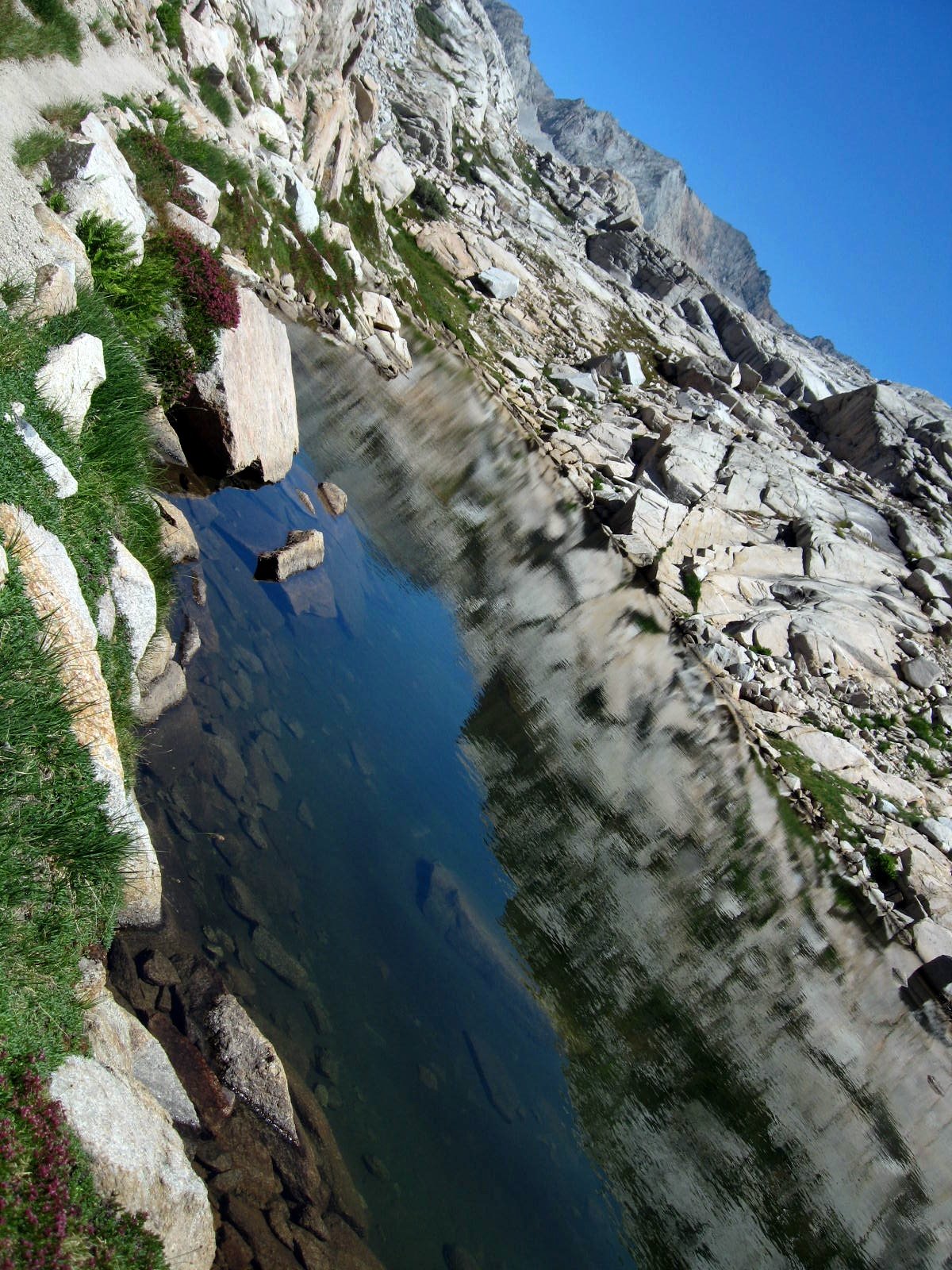
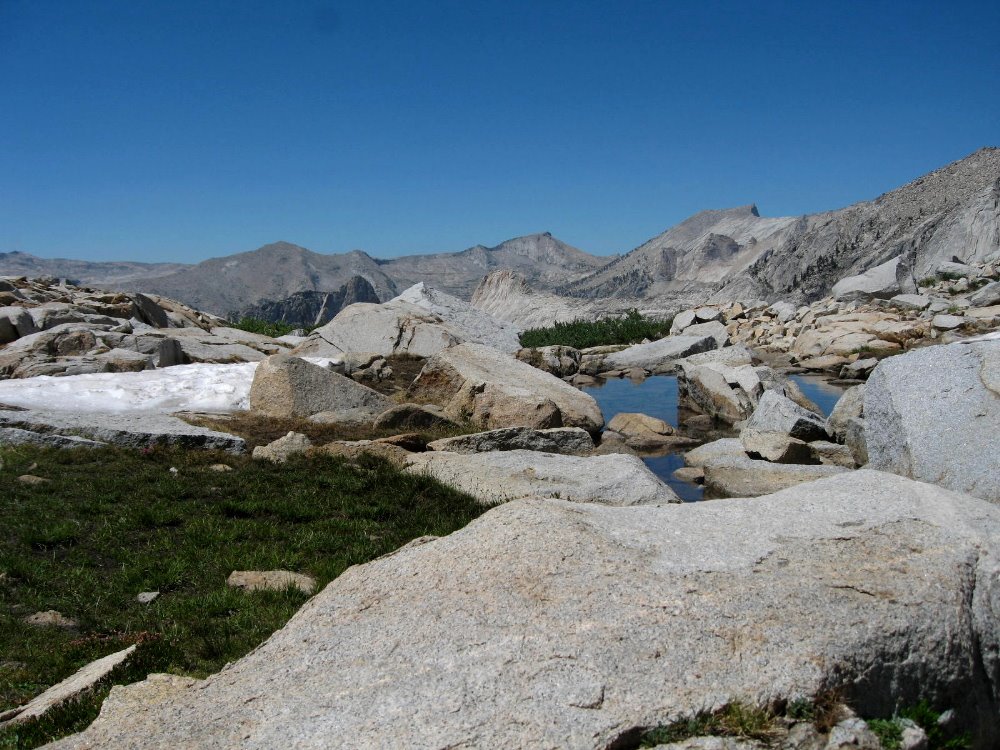
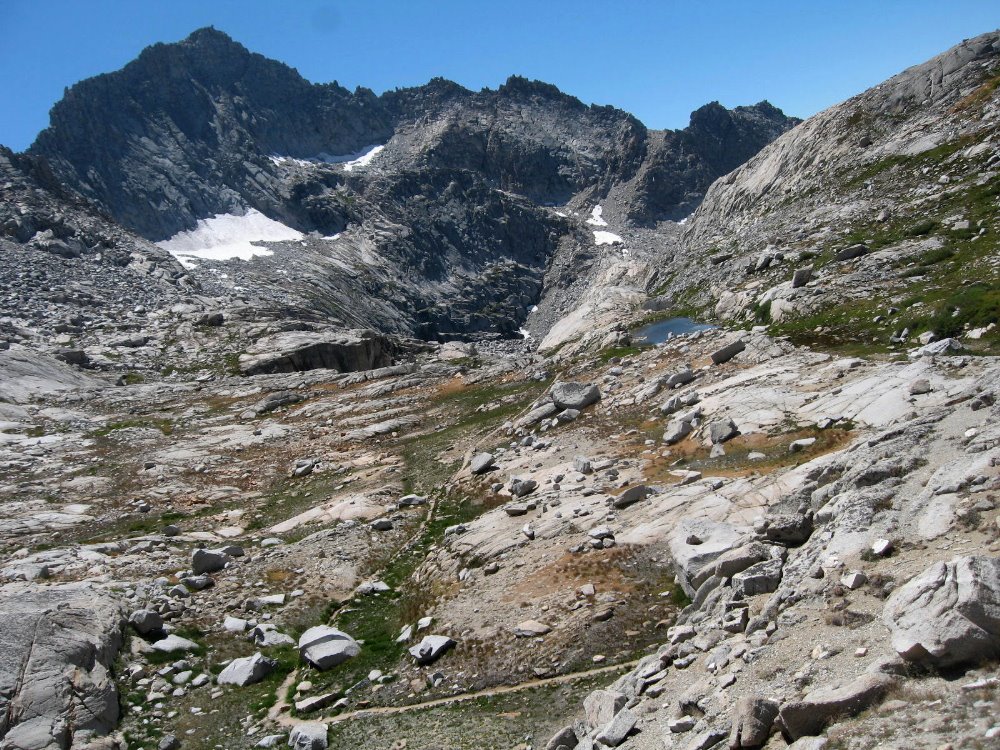
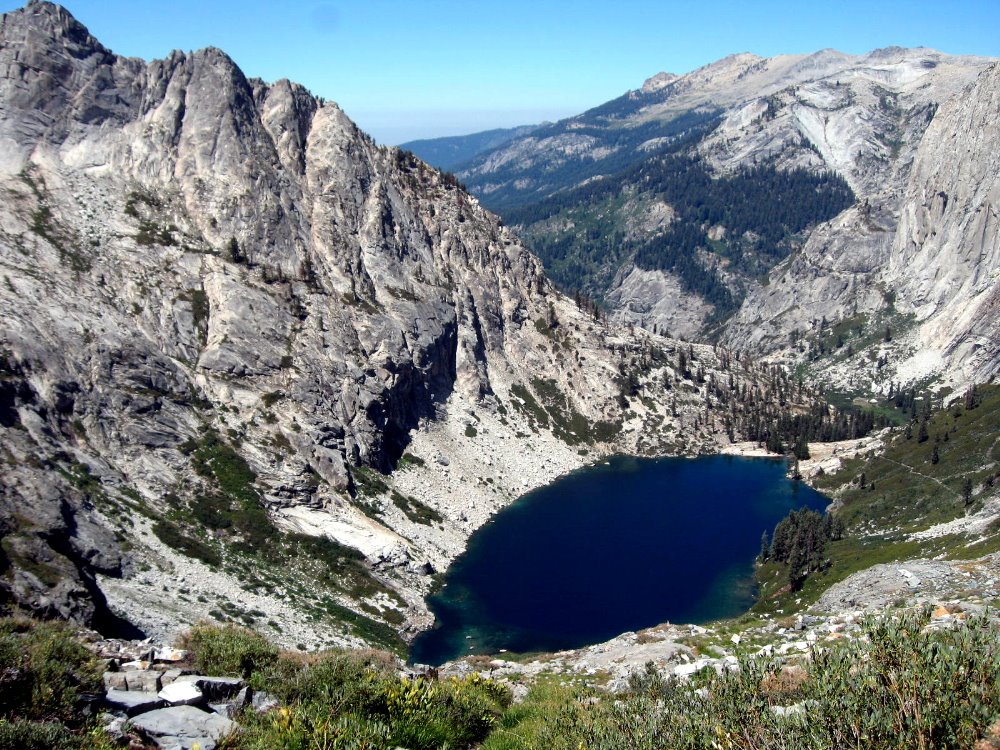
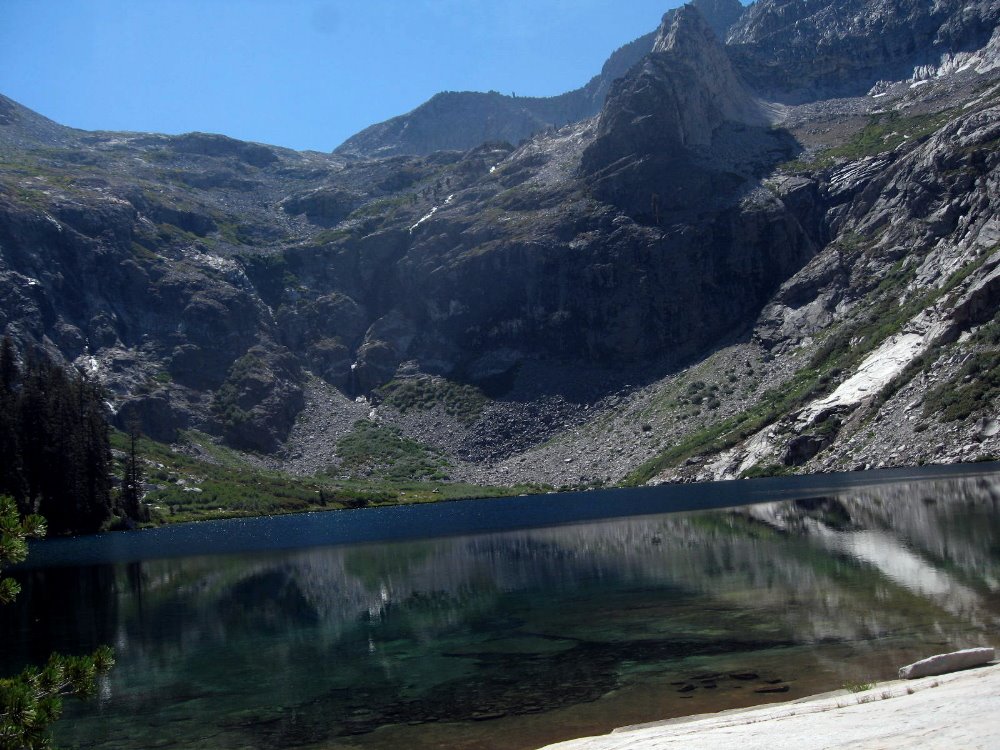
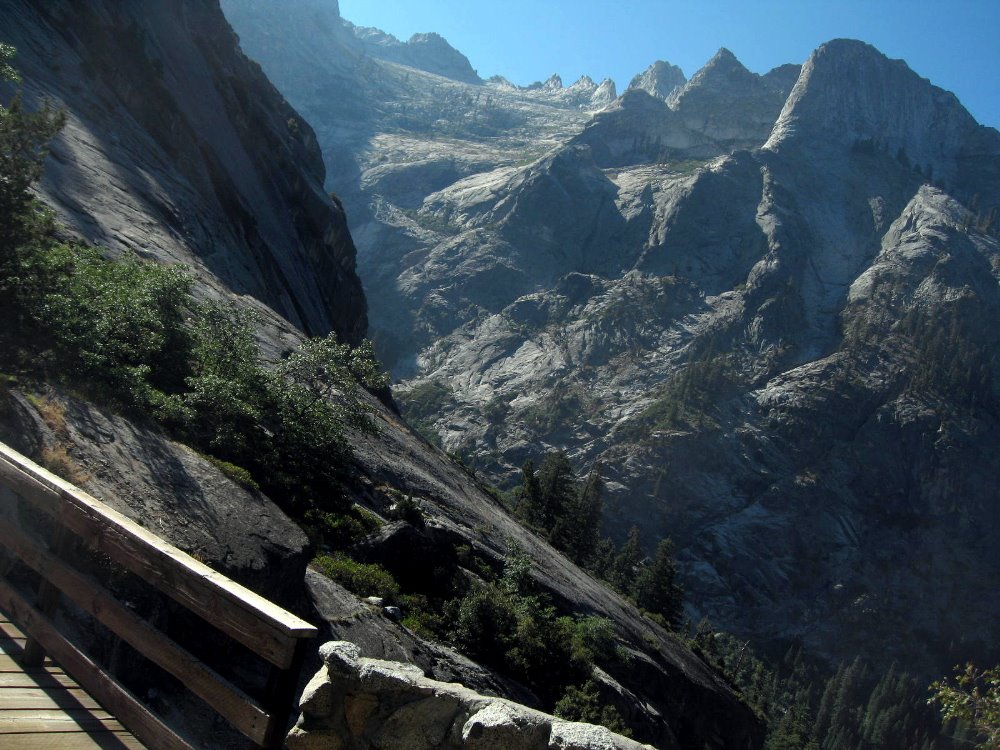
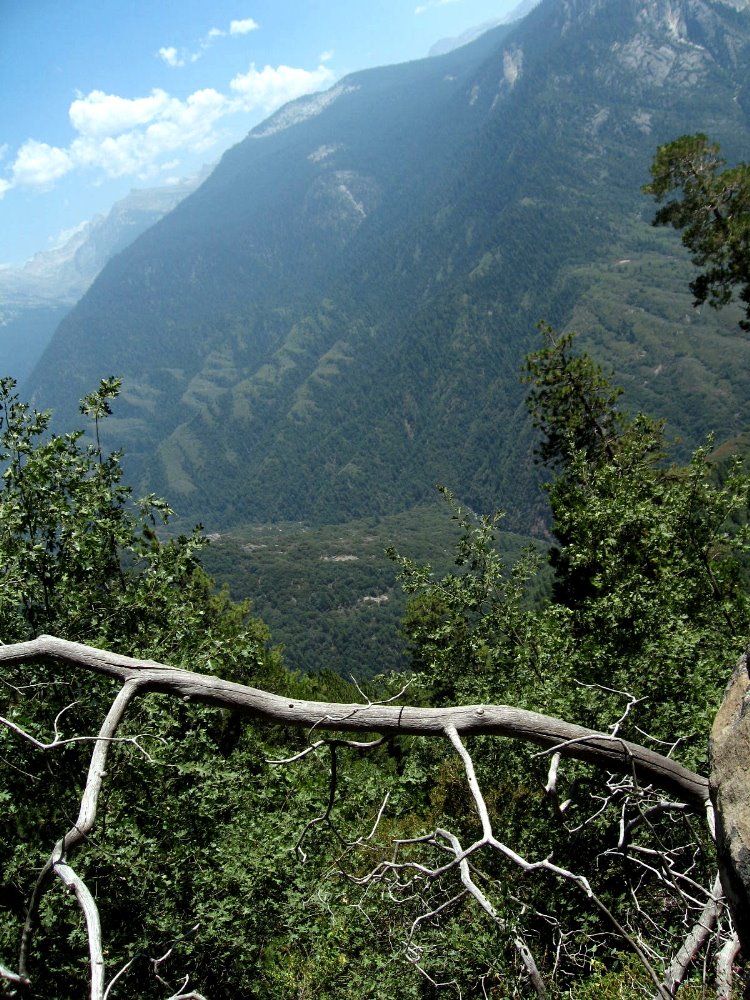
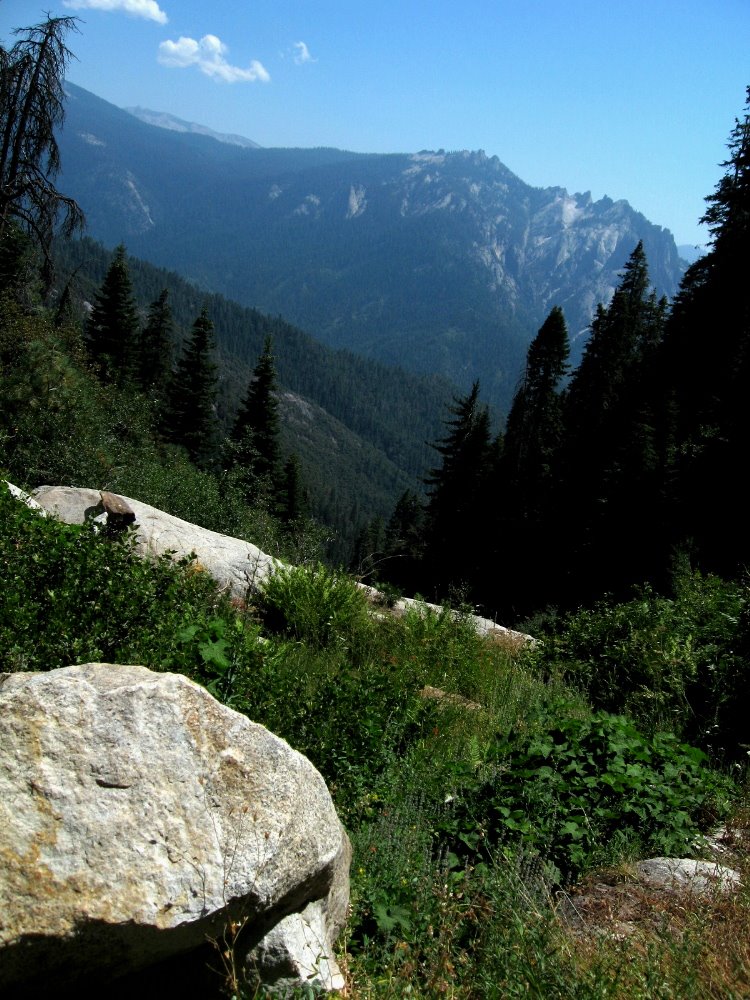
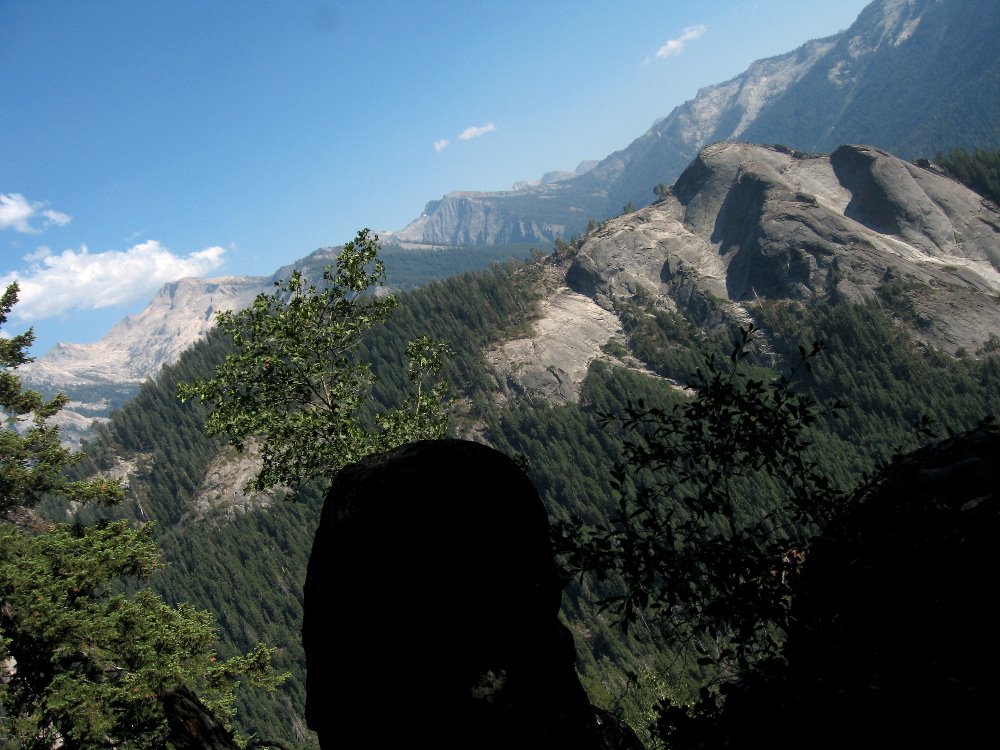
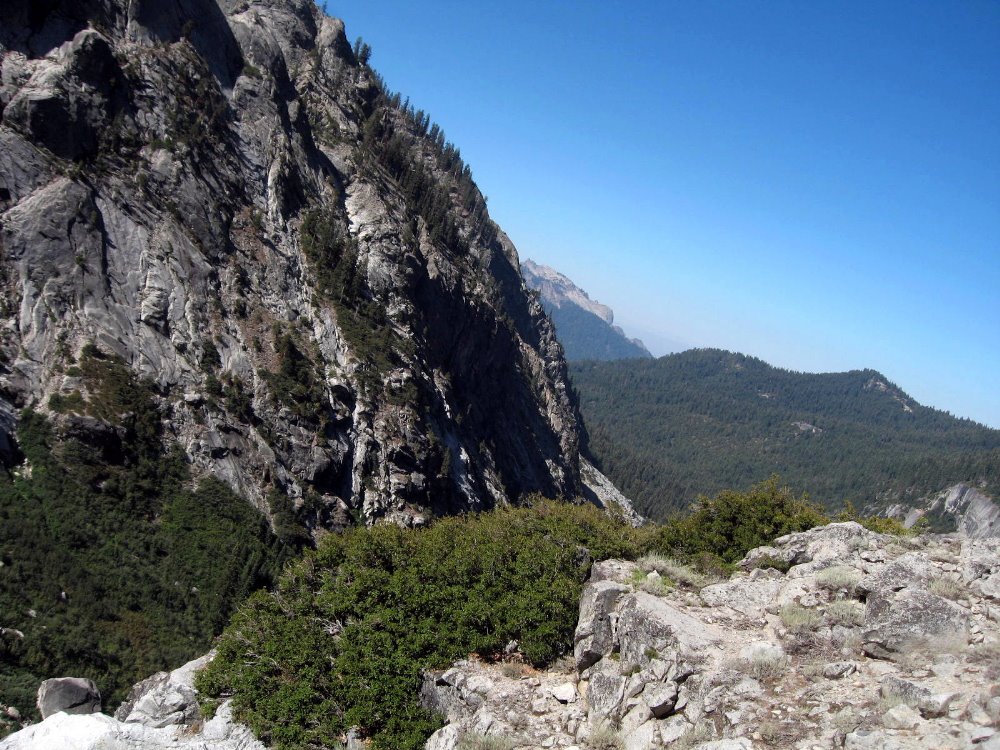
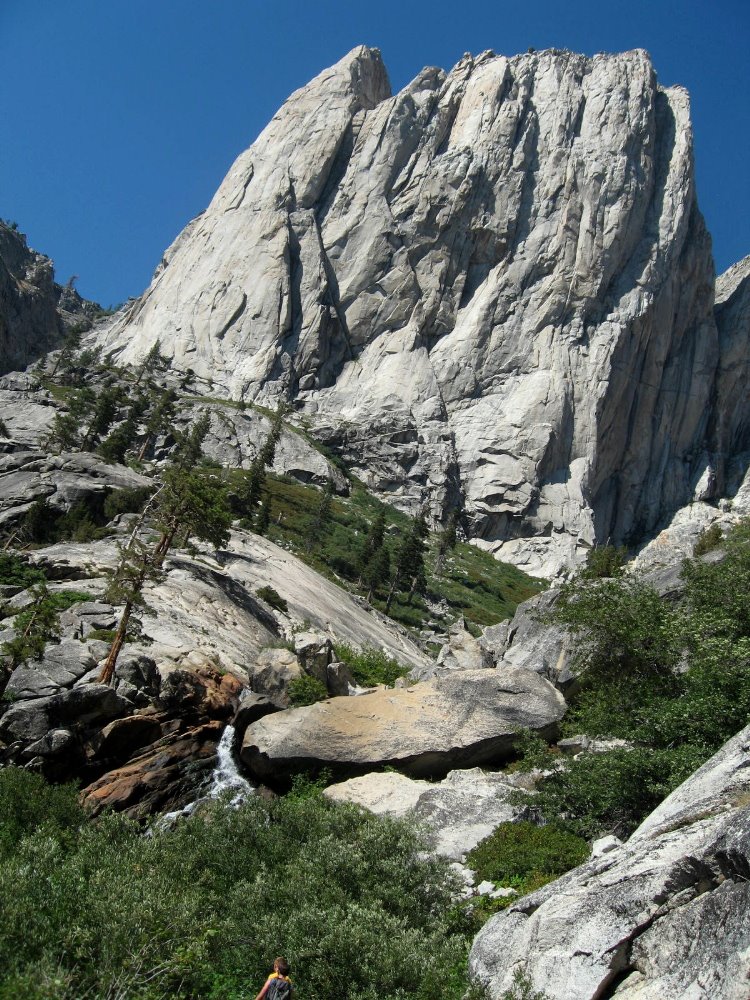
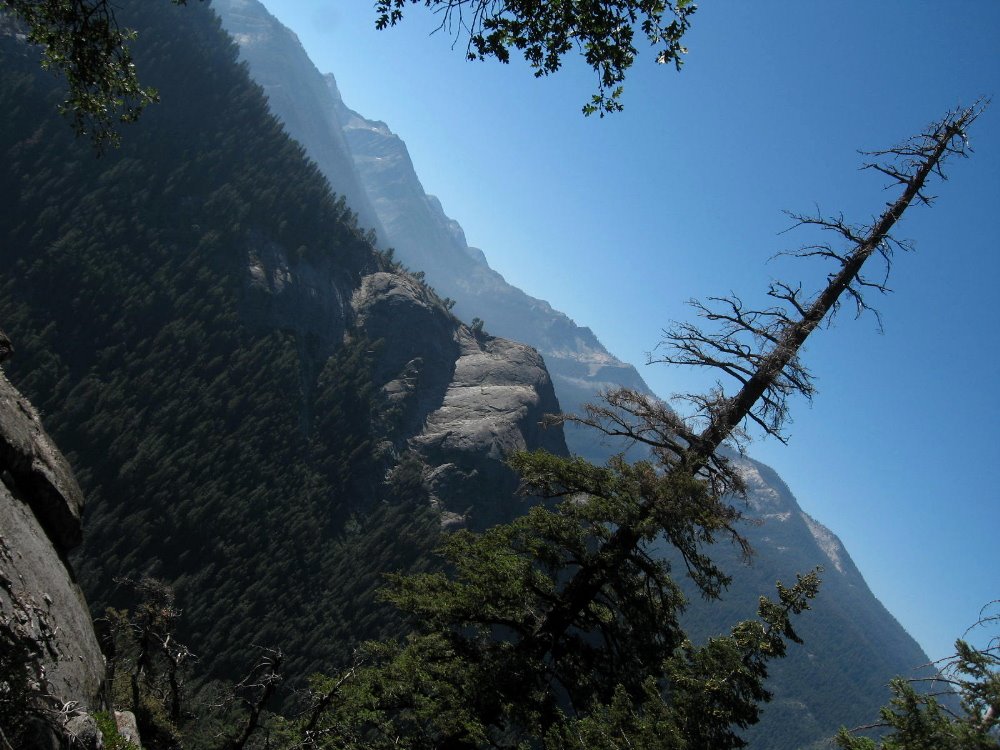
Having added that LA leg, I then signed on for a sojourn in Sequoia National Park, the less-visited and somewhat less-known southern neighbor to California’s blockbuster Yosemite National Park. My friends Howard and Gene, along with others whom I enjoyed meeting in the park, had arranged three out of six tent cabins at Bear Paw high sierra camp for a few nights, which dovetailed rather nicely with the wedding: I got myself up to Sequoia with help from Gene, we hiked the eleven miles up to Bear Paw, and spent two nights there before hiking the eleven miles back down. In between, I did an absolutely amazing 16-mile hike with 4500-foot elevation gain going up and then back down, up to Mt. Steward on the Great Western Divide (the crest of the Sierras). The higher alpine-tundra looking shots below and above are from that day’s hike, with high alpine lakes and so forth. The rest are generally shots of the Sierras in Sequoia, including a shot of me in front of one of the big, wide redwoods that give Sequoia its name. Believe it or not, I’ve actually sorted through these shots and excluded many from this entry — still and all, there are a lot of shots, but I hope you’ll agree they’re worth enjoying. 🙂
California has two varieties of redwoods still growing: mountain redwoods, or sequoias, which grow much much larger in girth but generally not quite so tall as the coastal redwoods, which can be seen just north of SF in Muir Woods, or in other spots along CA’s northern coast.


John, David & I took a few short swims in this glacial (almost literally — there are snow packs that are still melting, just next to it) lake.


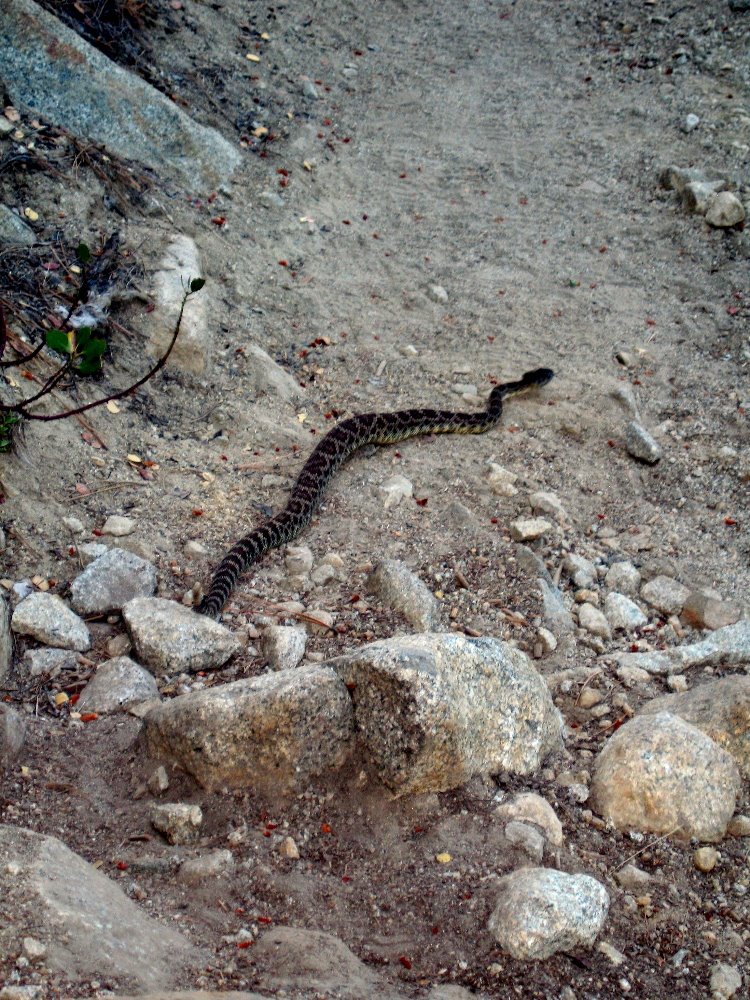
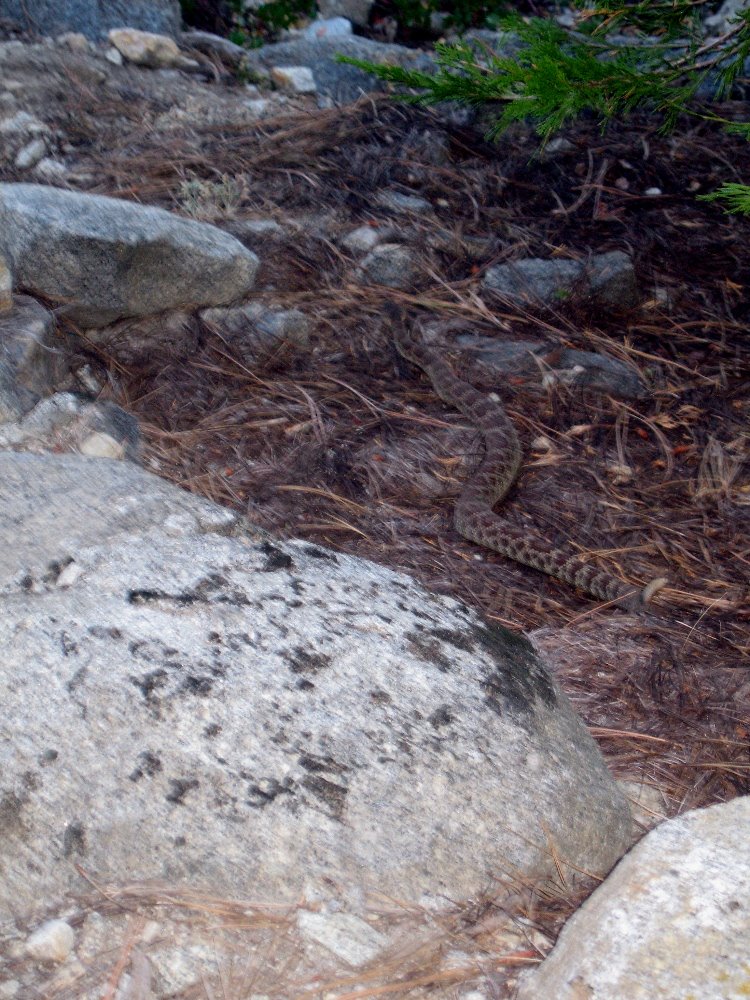
I nearly stepped on this six or seven-foot rattlesnake. Eek!


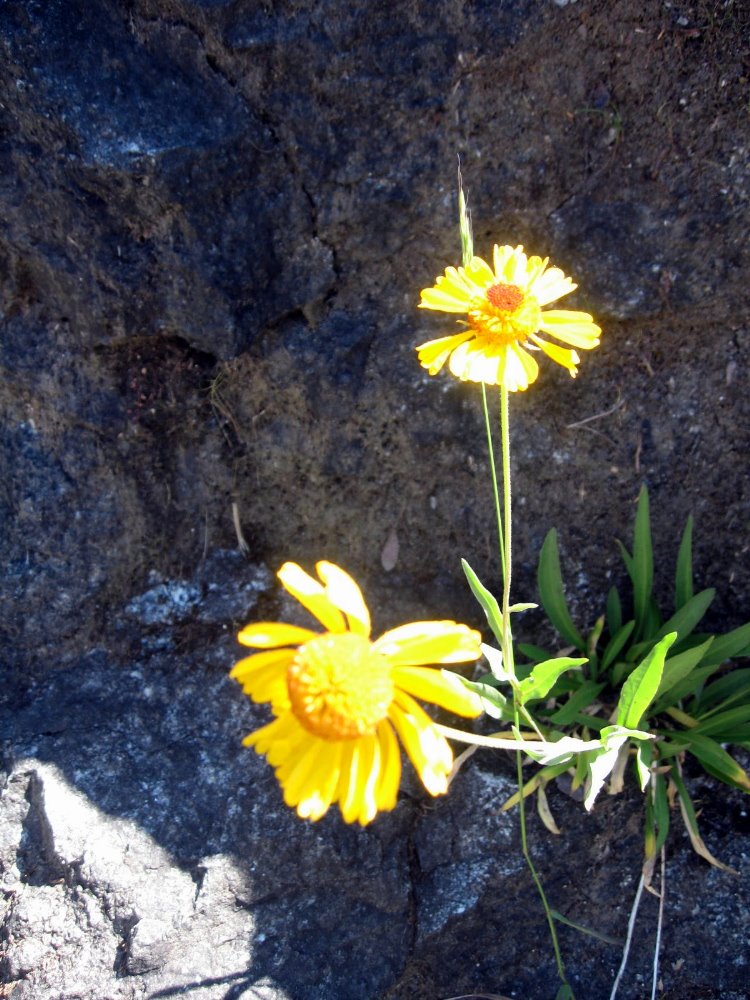
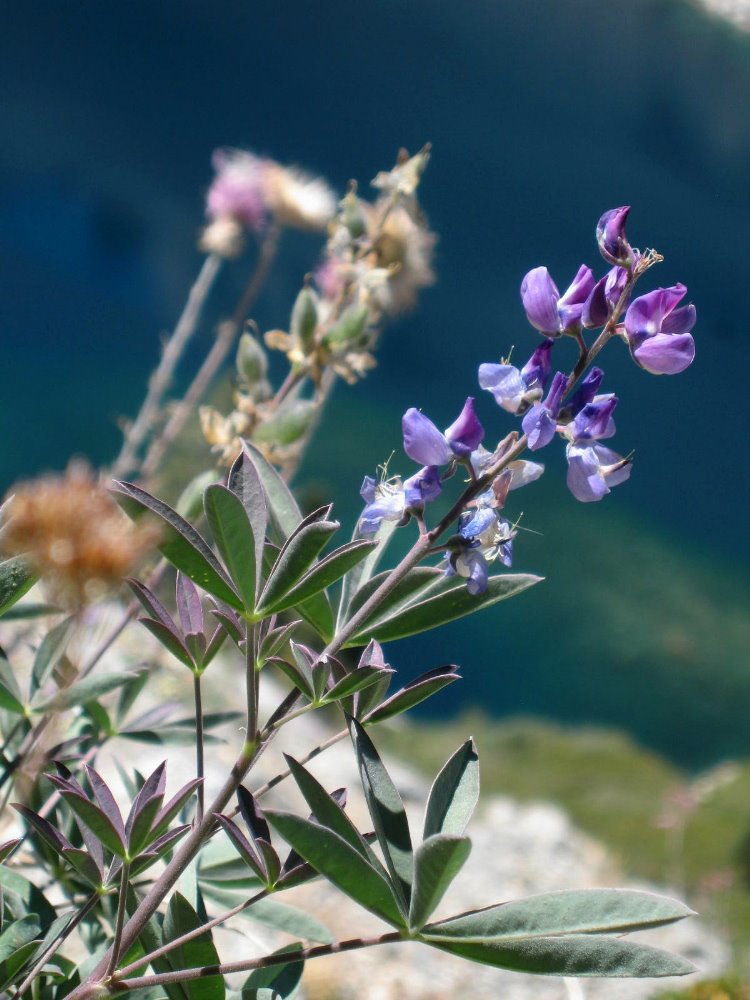
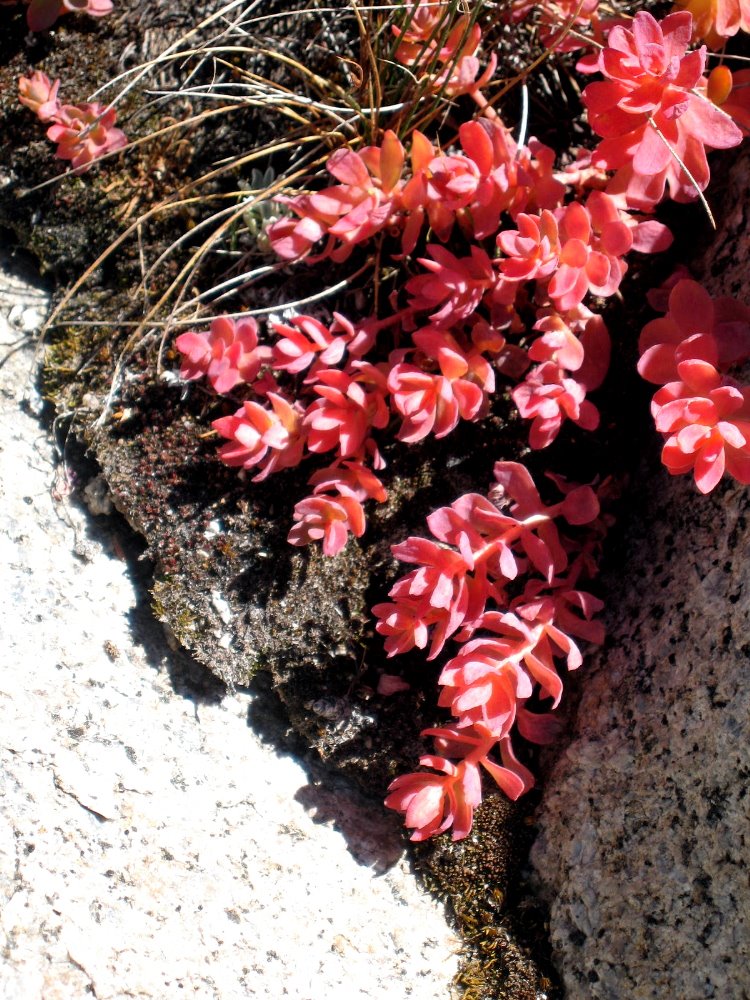
…the alpine flowers, as you can see, captured my imagination.


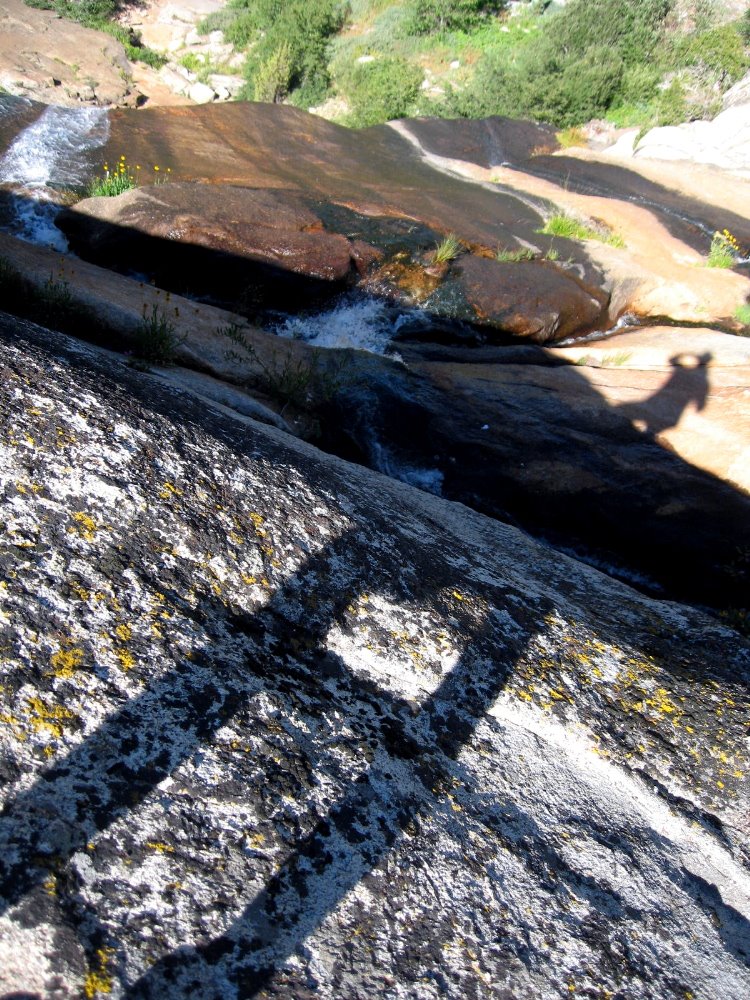
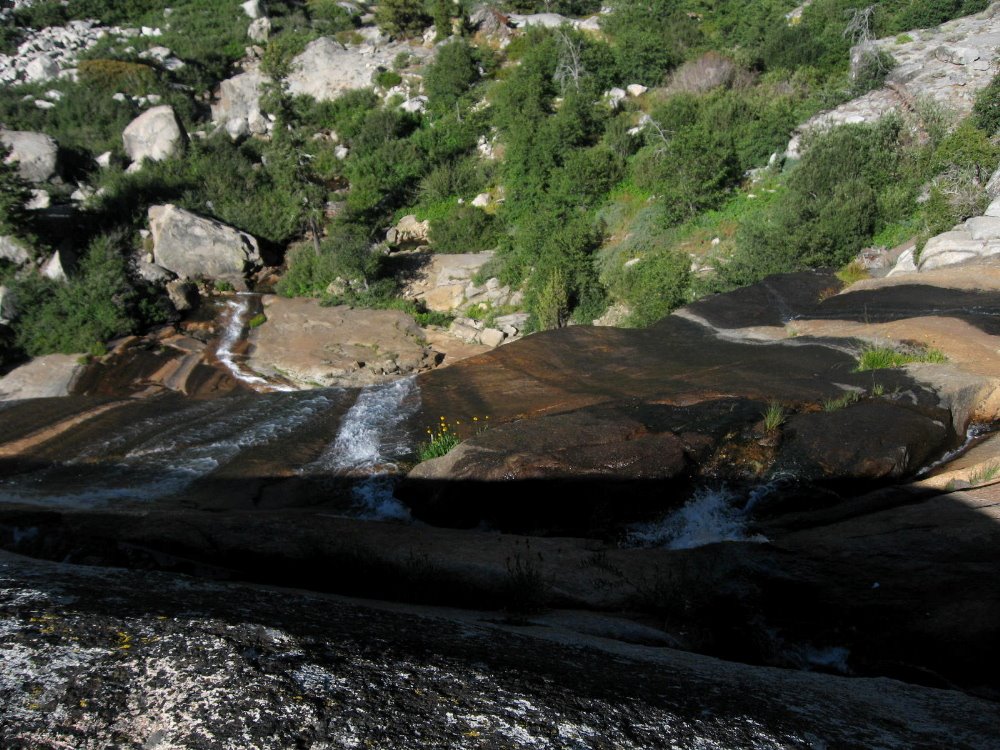
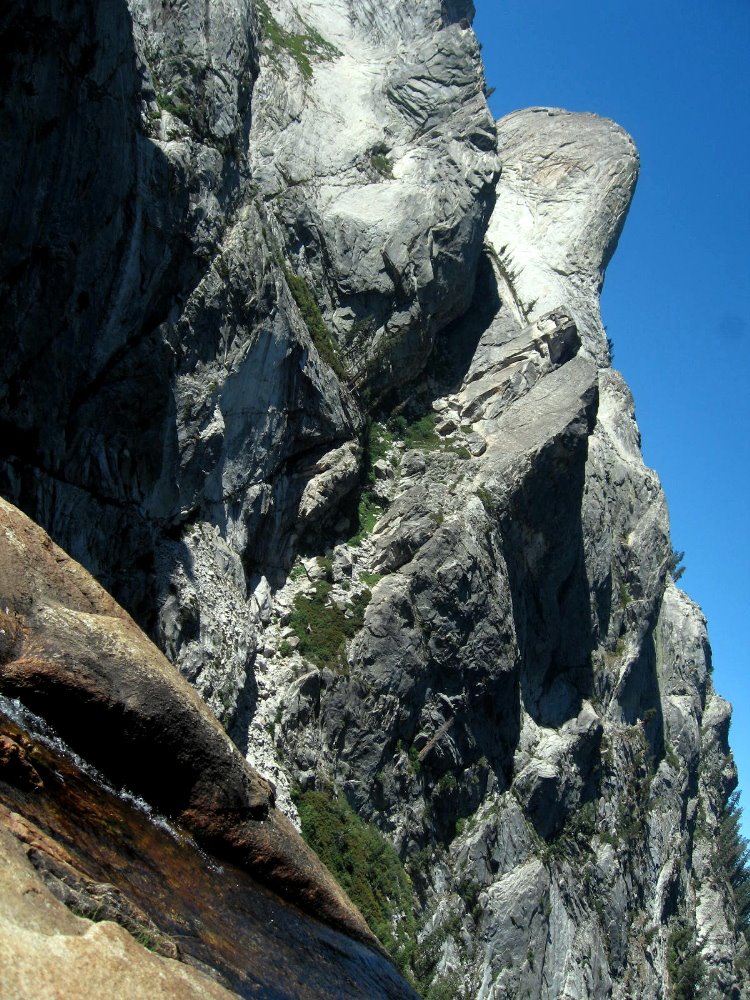
Above, I’m trying to convey the steepness of the rocks over which this water is falling. That’s basically a self-portrait of shadow, with the lower upper body much farther away because it’s a few hundred feet down a vertiginous drop.


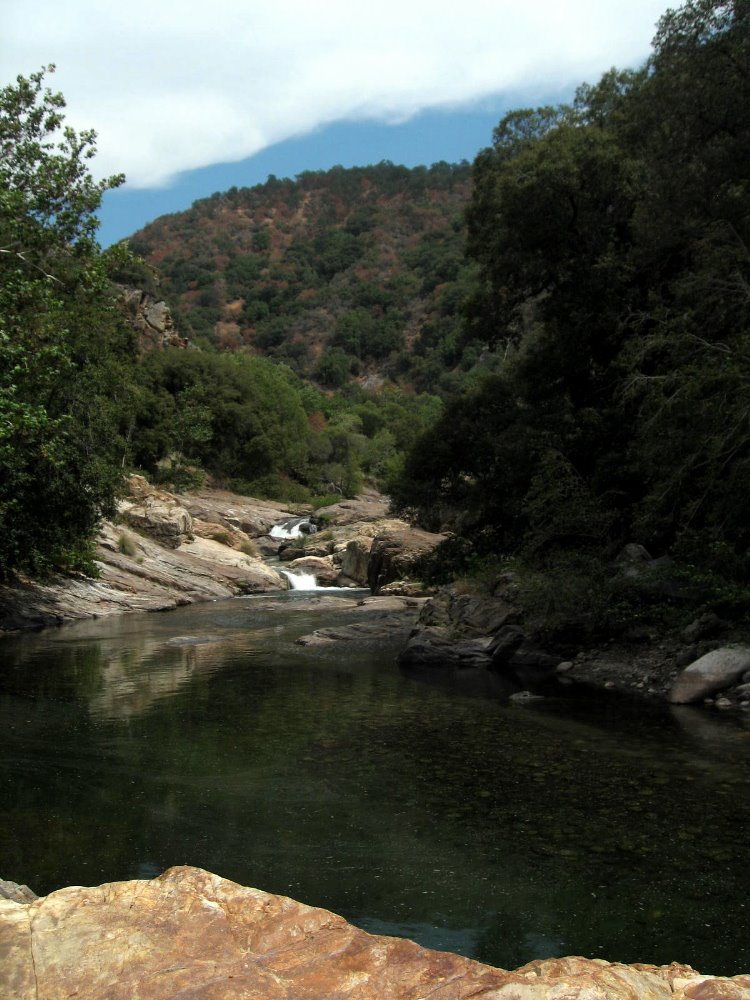
A waterfall and pools much lower down in which we took a muchj-warmer swim on our way out of the high country.


Music, Missions & Mountains Around the Bay


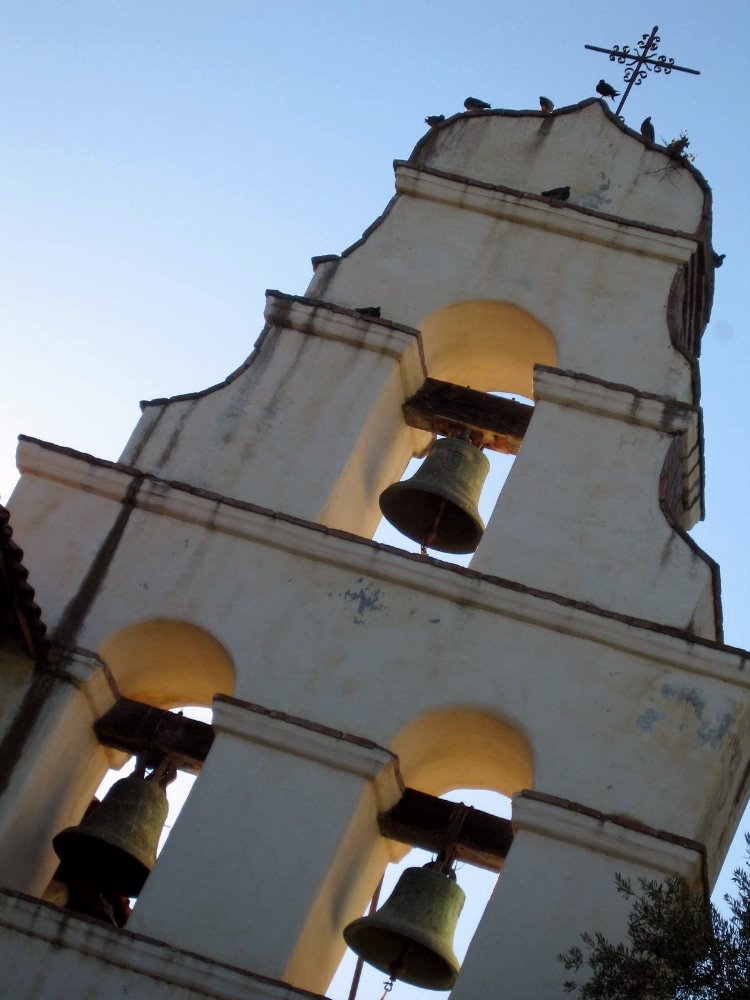
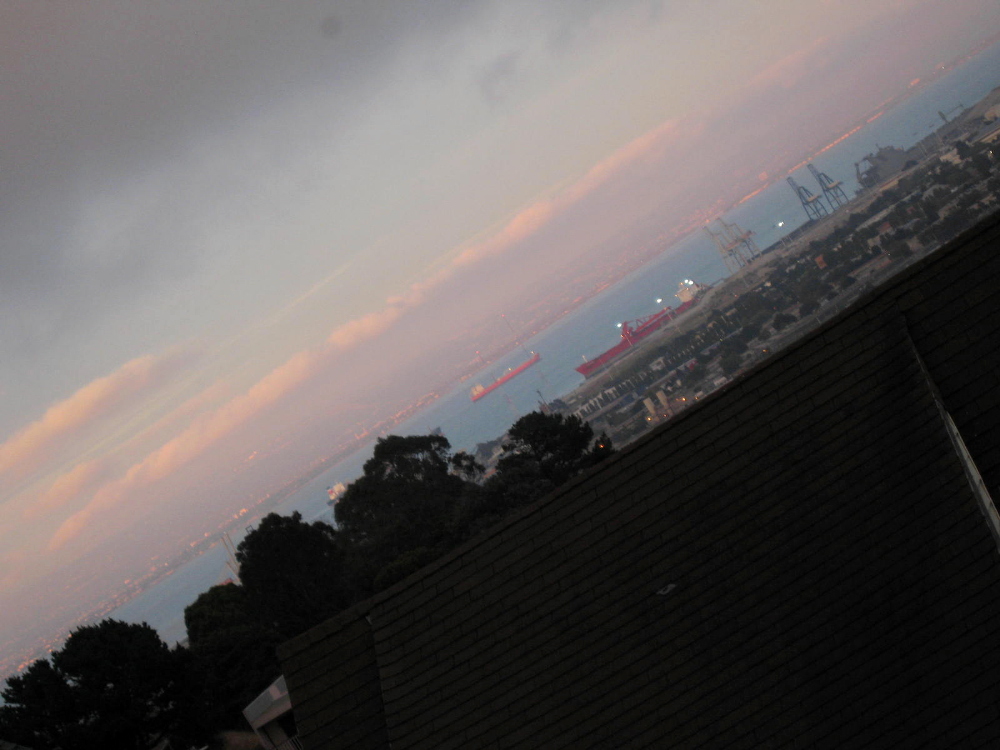
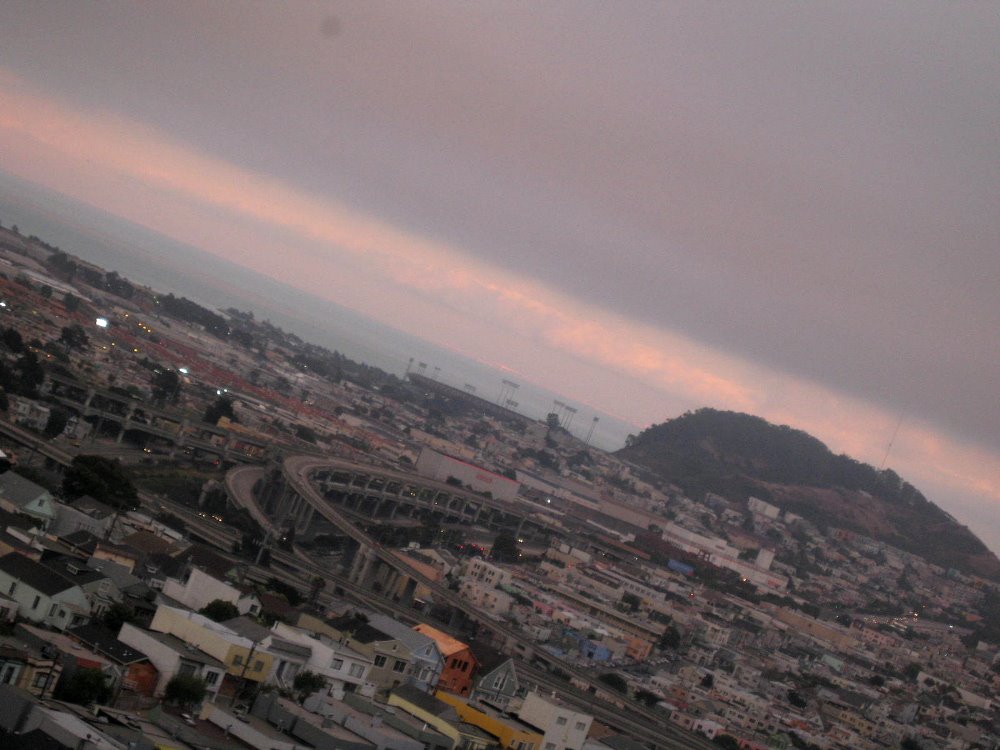
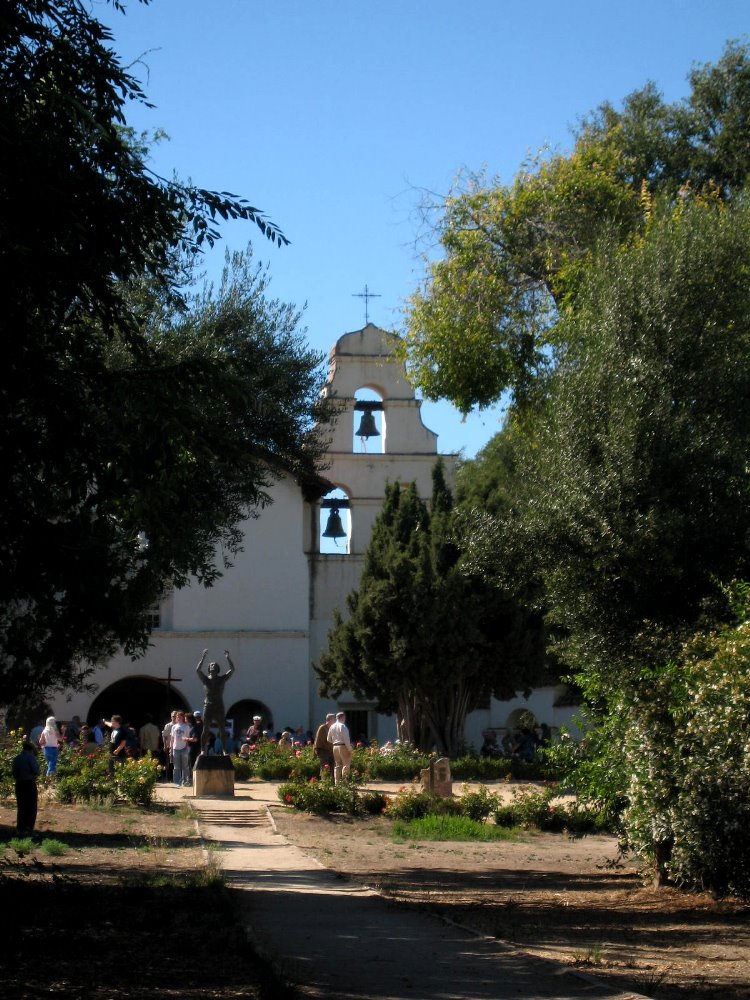
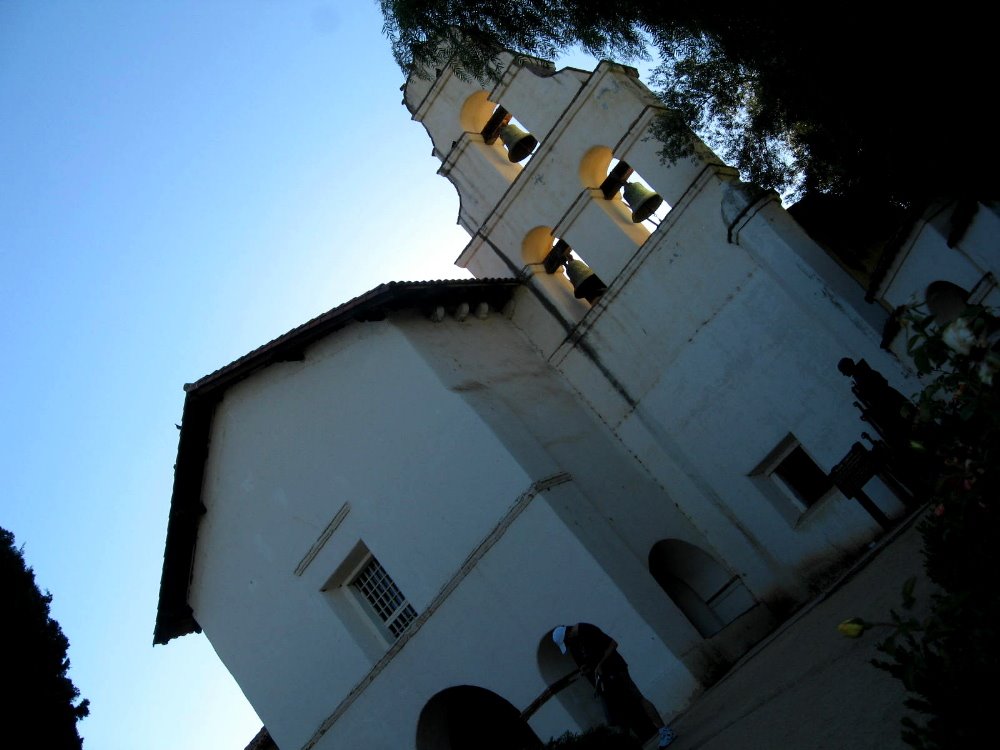
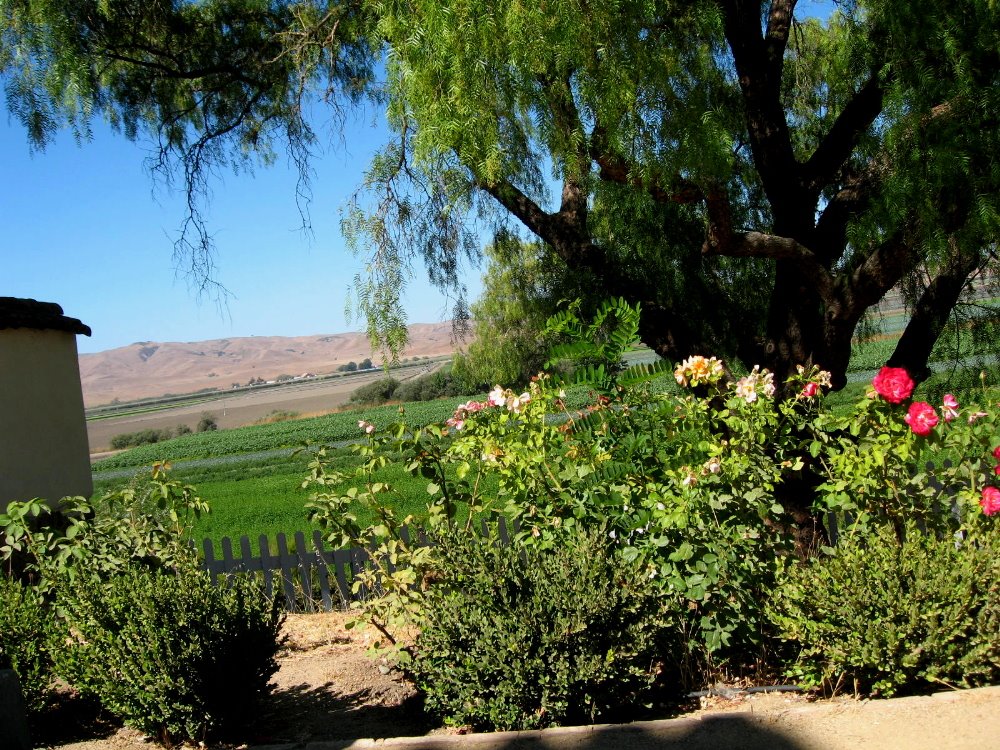
If it’s early August, the Cabrillo Music festival is happening in Santa Cruz and other areas in and around Santa Cruz, just south of the SF Bay Area. My friends Howard & Gene go most years, and I join them whenever I’m close enough to make it feasible. The final concert each year takes place at the old Spanish mission at San Juan Bautista, a small town south of San Jose — hence the bell tower, above. I take advantage of the week in between the two main festival weekends to enjoy SF and see my friends Amy, Nancy & Kip — from whose lovely hilltop neighborhood of Bernal Heights these sunset shots of the bay and city, above and below, were taken.


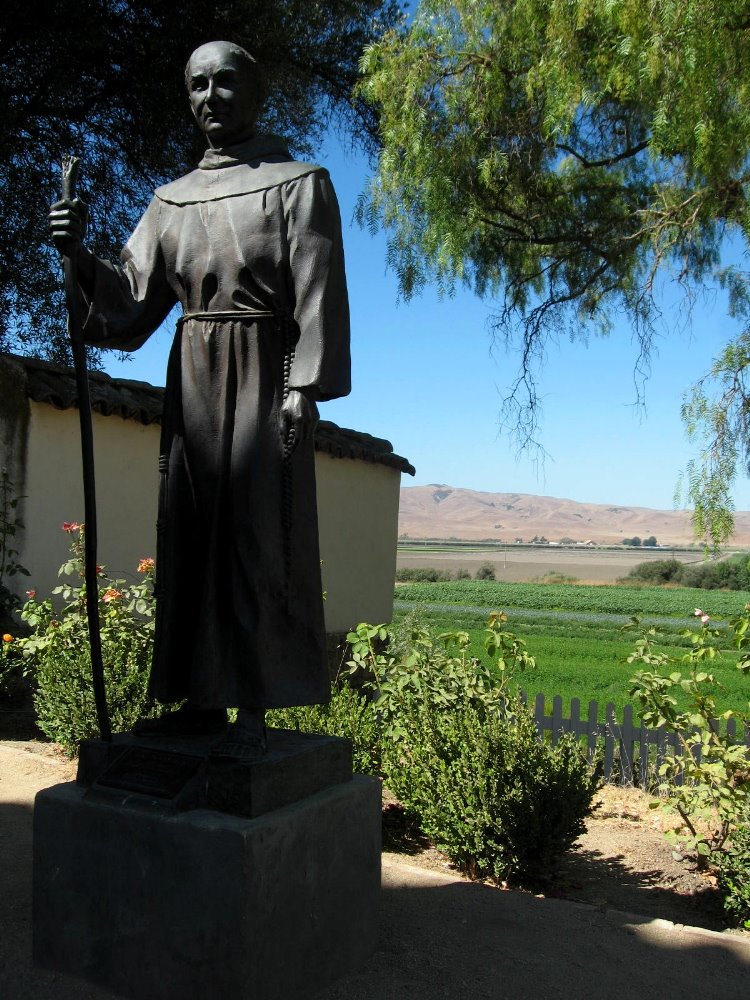
Junipero Serra was the Catholic priest who decided to set up missions a day’s ride from each other all up the coastline of what was then Alta California, part of the Spanish colony of Mexico. These days the missions serve as parish churches in many places, and historical points of interest from San Diego in the south all the way to Sonoma in the north. Considering the history of near-utter extermination of the native inhabitants of California (surely an earthly garden of eden in the pre-European-invasion era, I’d think) in very short order after their exposure to Europeans and their diseases and culture, I personally think Junipero Serra’s legacy is as freighted with death and destruction as that of the rest of the church. But that’s just me. He’s certainly an important historical figure, and the missions certainly add interest and history to California. OK, soapbox time, with apologies to those who’ve heard it before: what is it about American liberals that allows them to feel comfortable driving around in cars with “free Tibet” stickers while living in big houses in the hills of California, on land that’s far more stained with blood and cultural genocide than Tibet? I know, we can’t roll back history here in the US – or can we? is there some creative we could retroactively create a little more justice and space for the first nations that remain and whose land, culture, languages and resources we have shamelessly stolen since our ancestors first landed on these shores? – but could we at least be a bit more humble, a bit more nuanced in our approach to the complex histories of territorial expansion and conflict occurring on the other side of the world, in regions with millennia of history that make our own expunging of native Americans from most of their former homes and zones seem like a highly-efficient blitzkrieg?
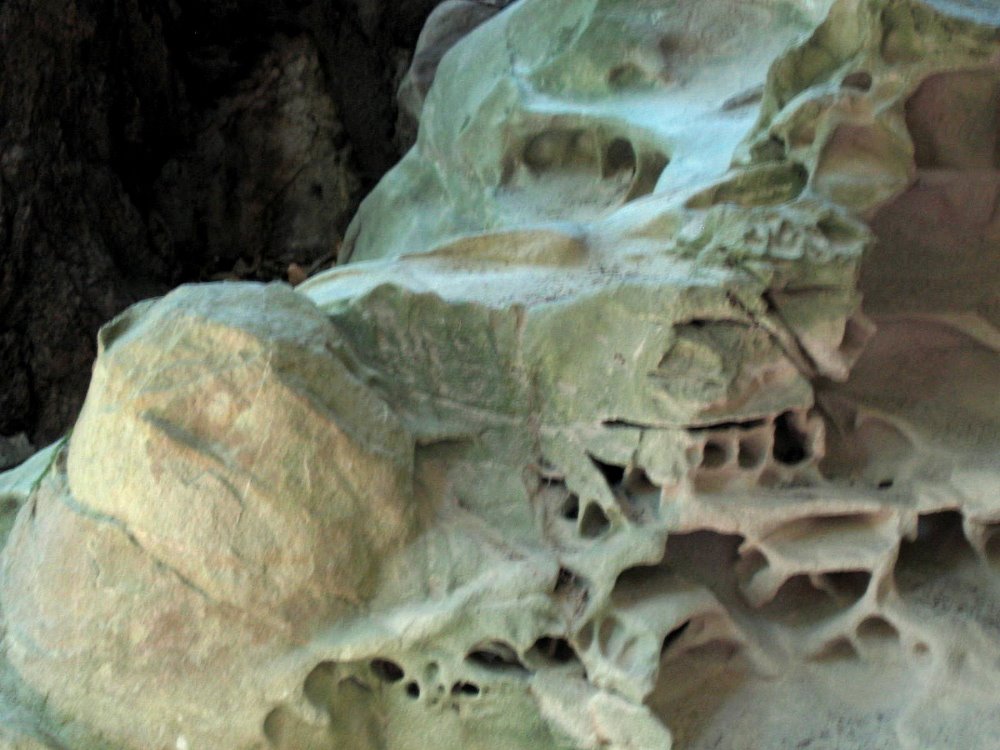
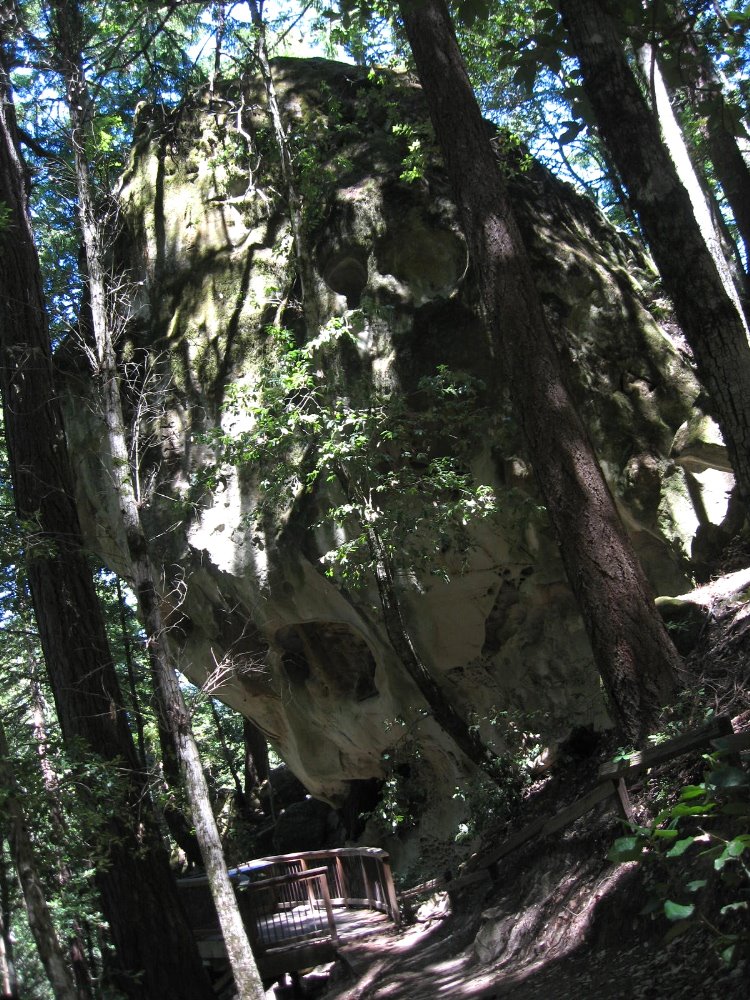
No, these are not Anasazi dwellings in the US southwest. They’re formations in a big limestone rock that’s been eroded by rain and water to form these fascinating images. I forget the name of the this particular type of rock formation: help me out, someone.
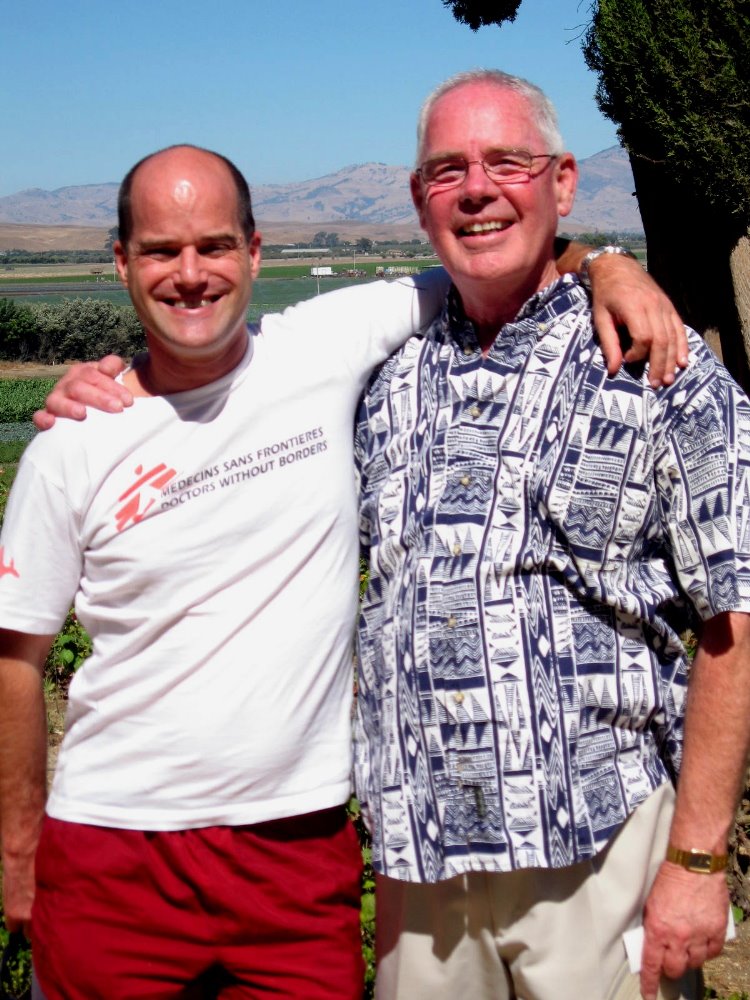
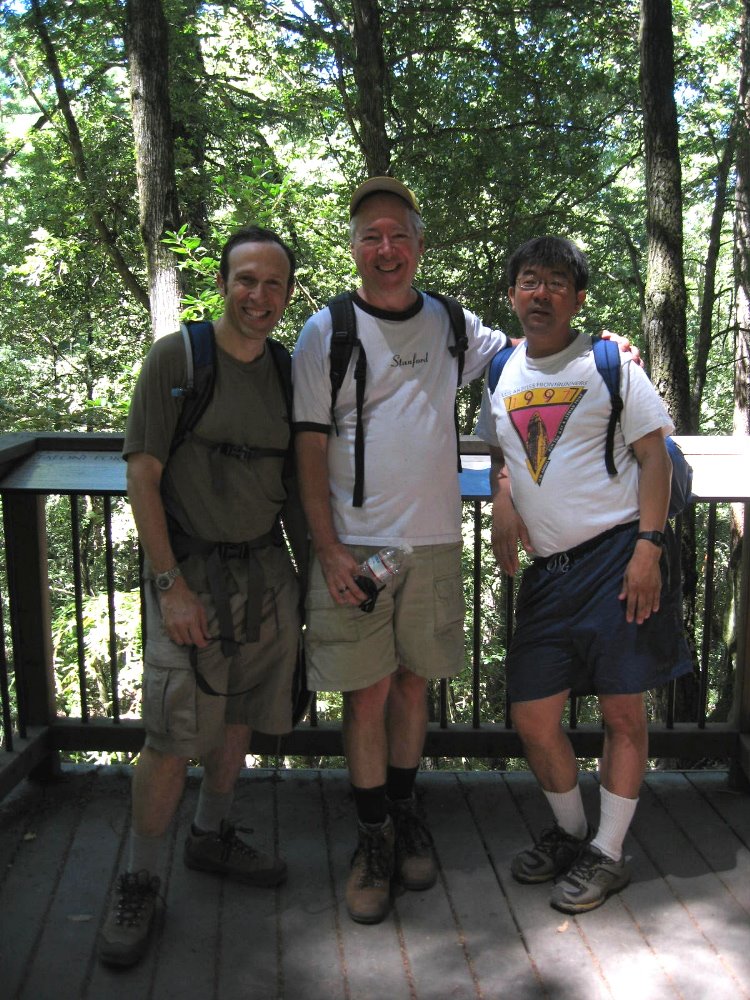
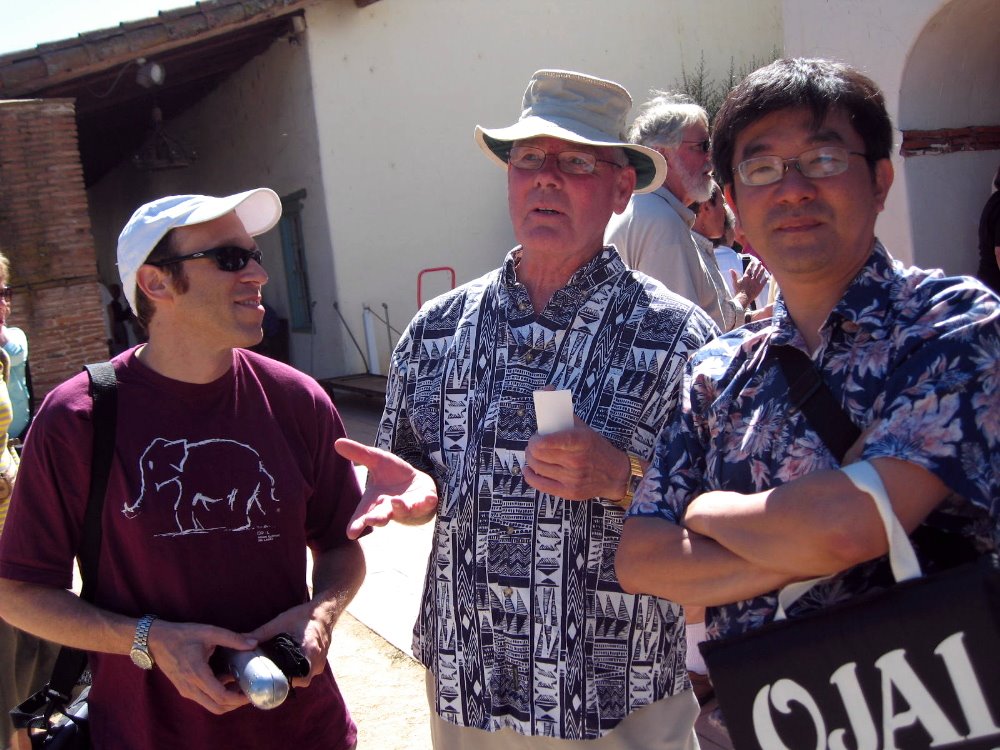
Above & below, me & Russ at the mission concert; Howard, John and Gene on the hike; Howard, Russ and Gene at the mission.


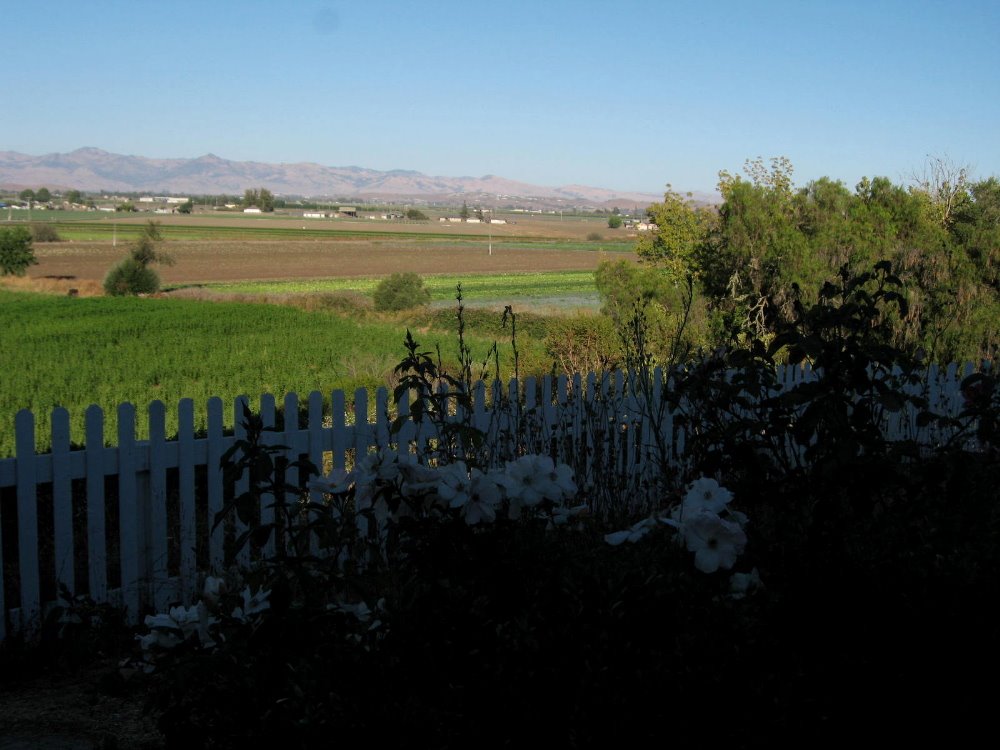
…you are looking, though you may not know it, at the San Andreas fault, which runs right through the valley next to San Juan Bautista.


Hills & Mountains of LA

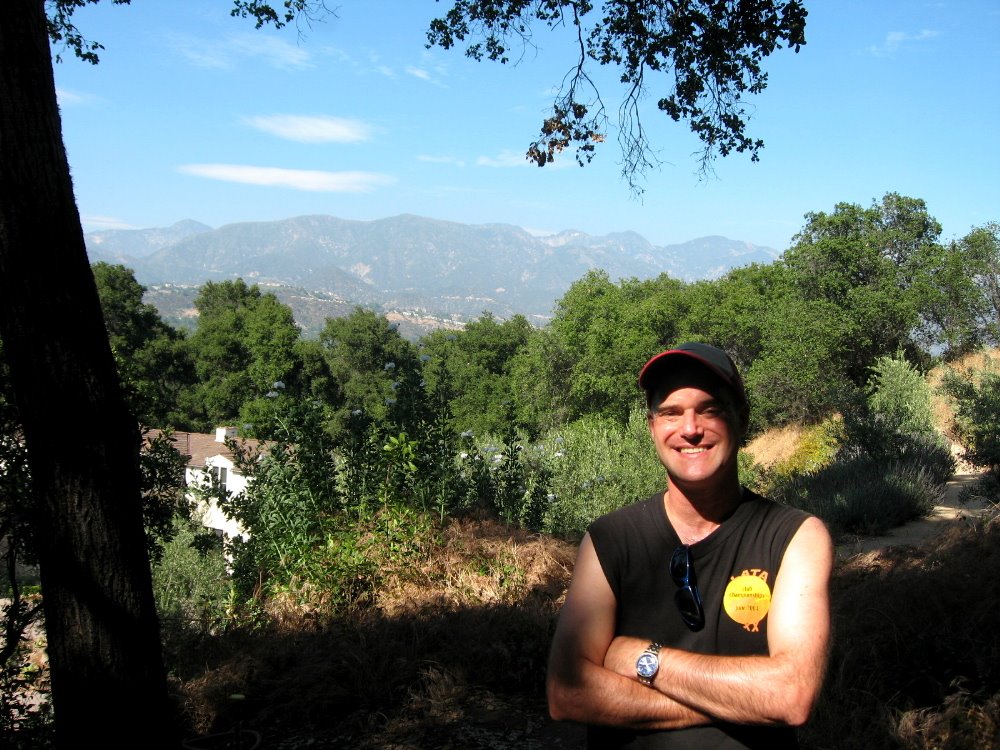
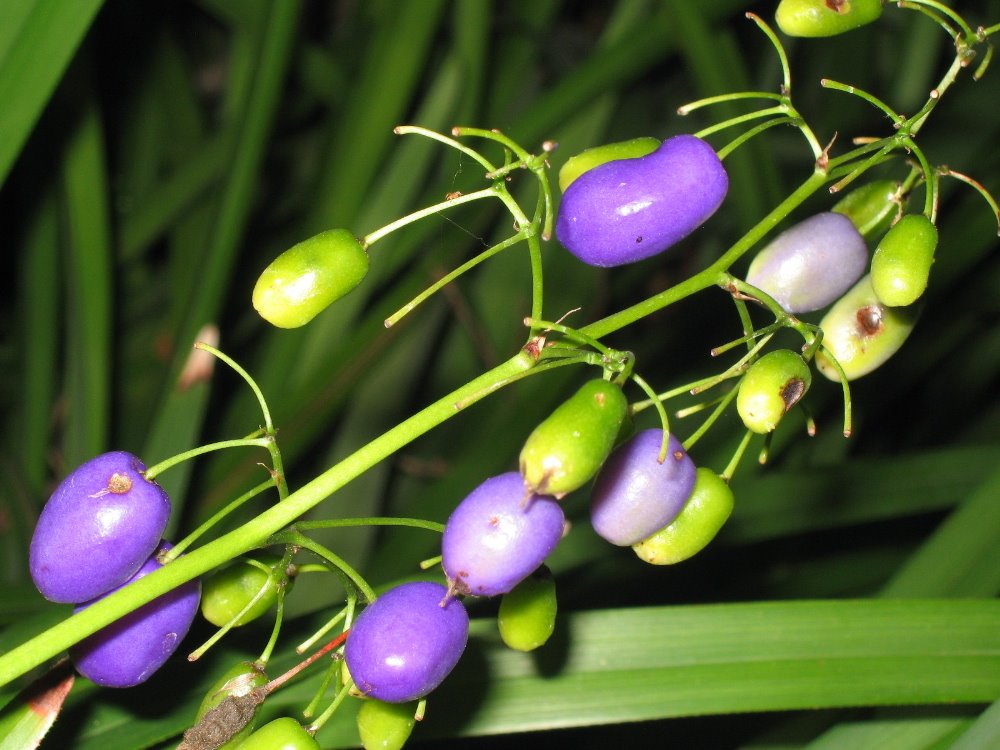
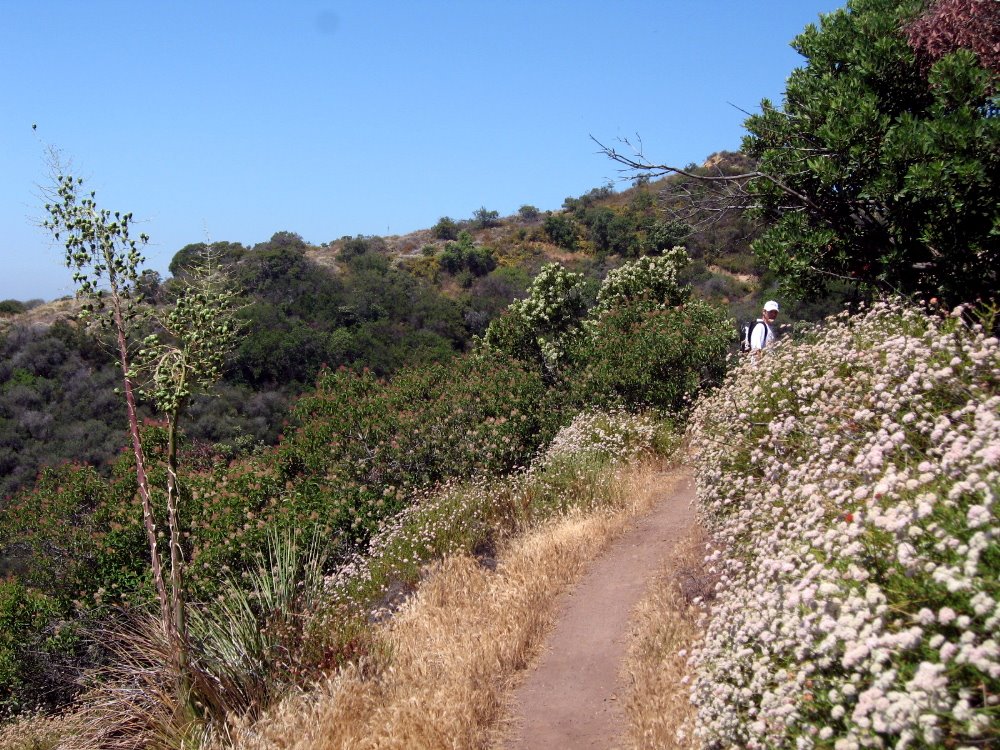
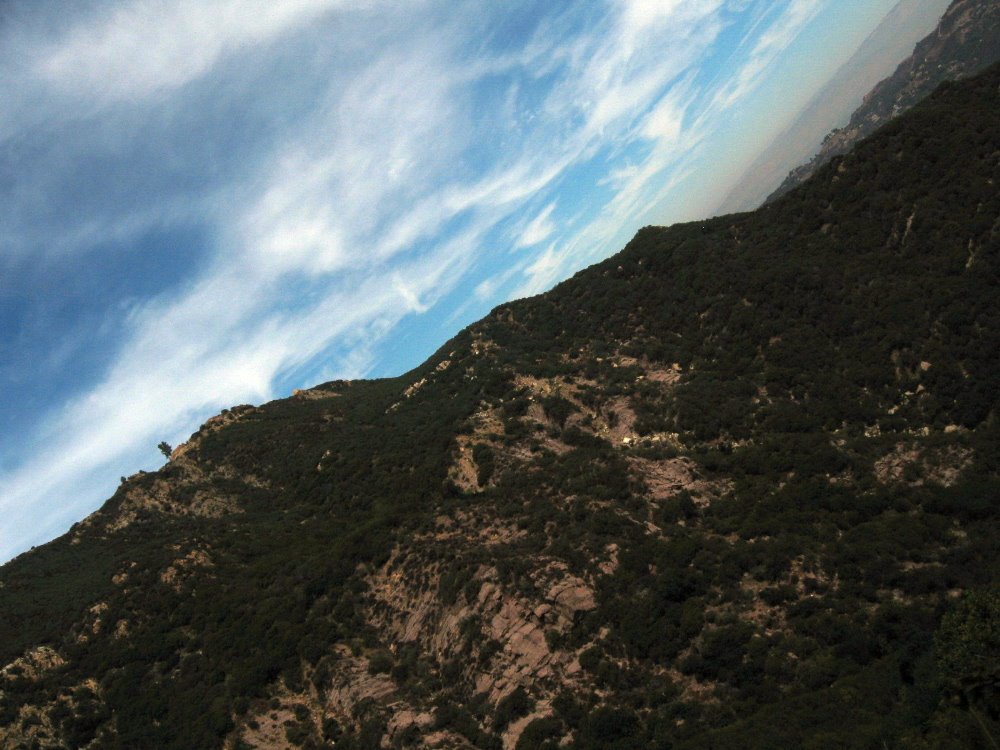
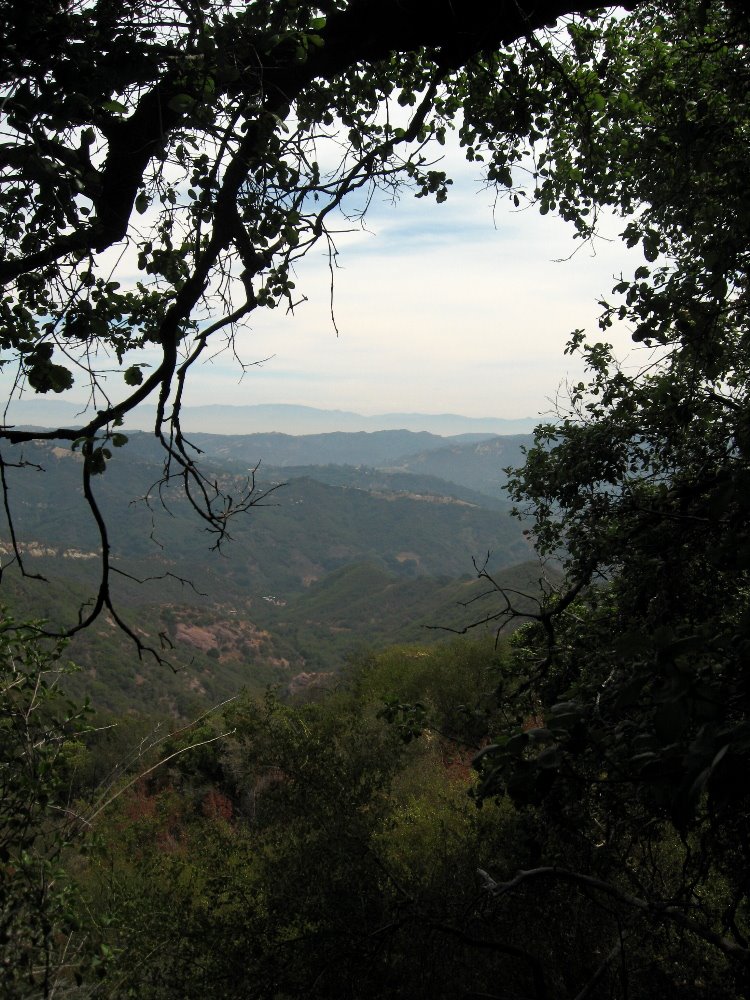
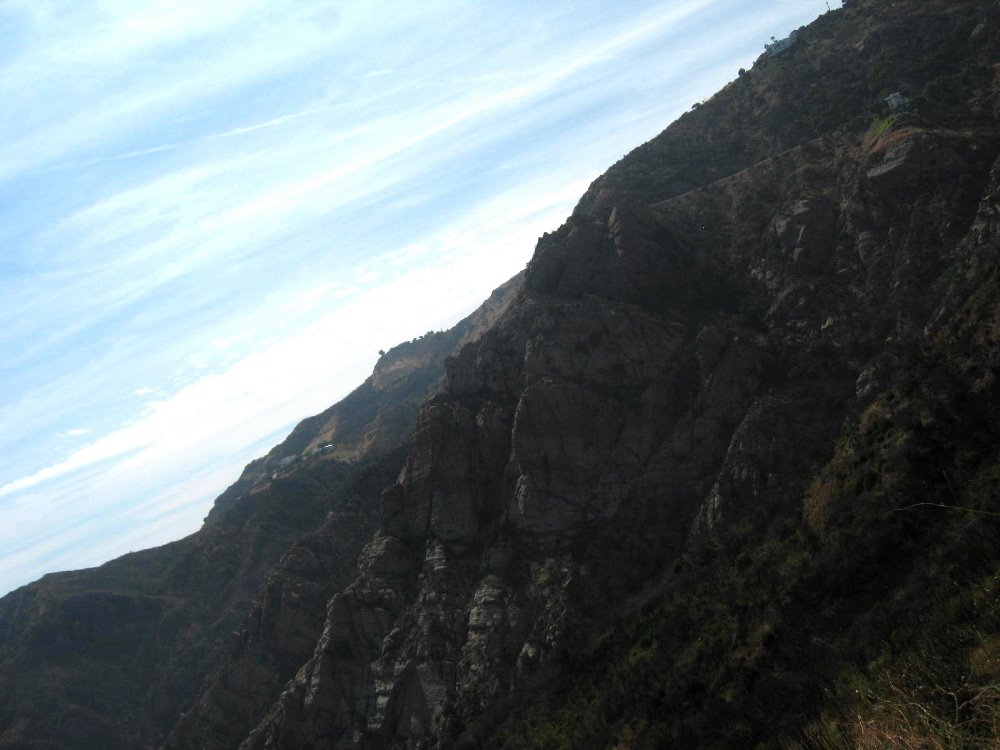
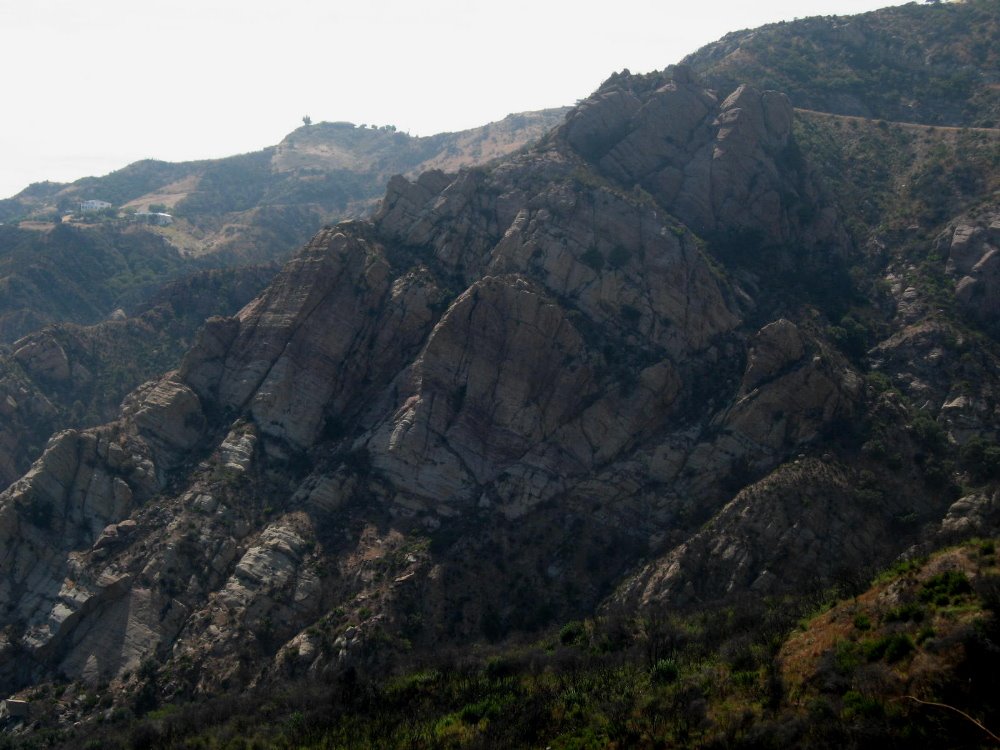
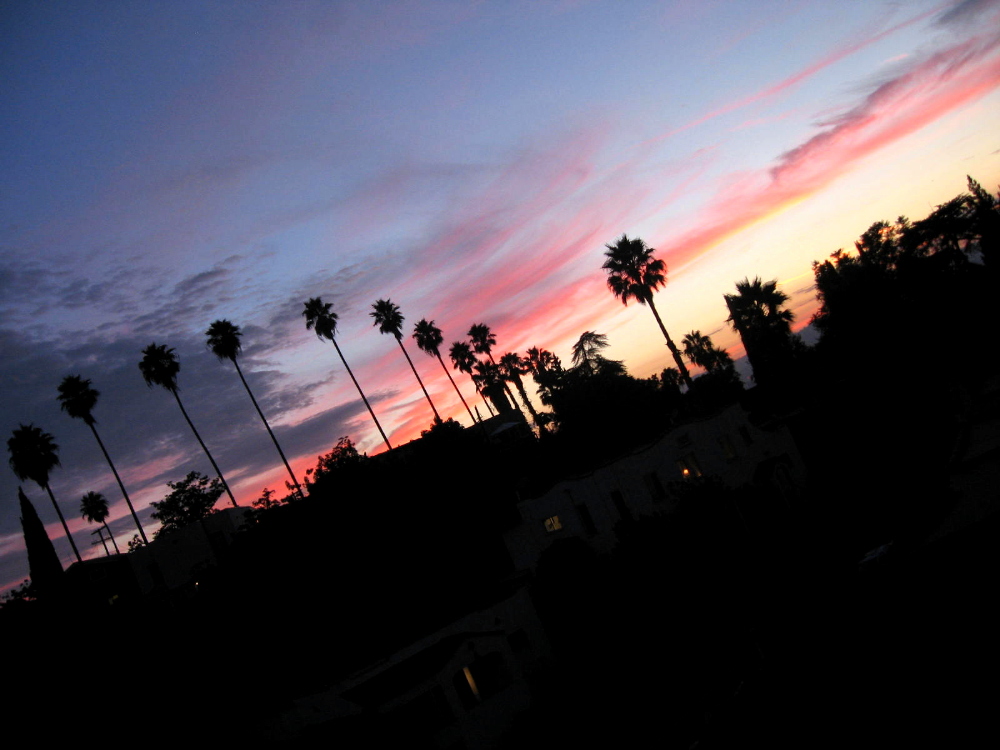
In June, and again in August, I spent some time in LA – a city many outsiders love to imagine as little more than a smog-ridden, traffic-overwhelmed sprawl. While it does have plenty of smog, traffic and sprawl, those of us who’ve lived there and learned to love the city know its many hidden jewels in the mountains and along the coastlines of California. With my friends George, Pierre and Ed I had the chance to enjoy two hikes along segments of the Backbone Trail, which follows the Santa Monica mountains to connect the uphill, inland portion of Will Rogers State Park (better known for the beach portion) to Point Mugu up the coast past Malibu. The hilly portions that are flowery and greener are from the June hike, and the drier ones are from the August hike. I’m also including some shots of a visit with my friend Gary to Descanso Gardens in La Canada Flintridge, at the base of the San Gabriel Mountains — the closeup of lavender berries, plus the shots above and below looking at big tall mountains in the background are from that visit. The sunset shot of a hilly arc of palm trees was taken in Gary and Rick’s lovely central LA neighborhood of Silver Lake. See how smoggy and ugly LA is!?


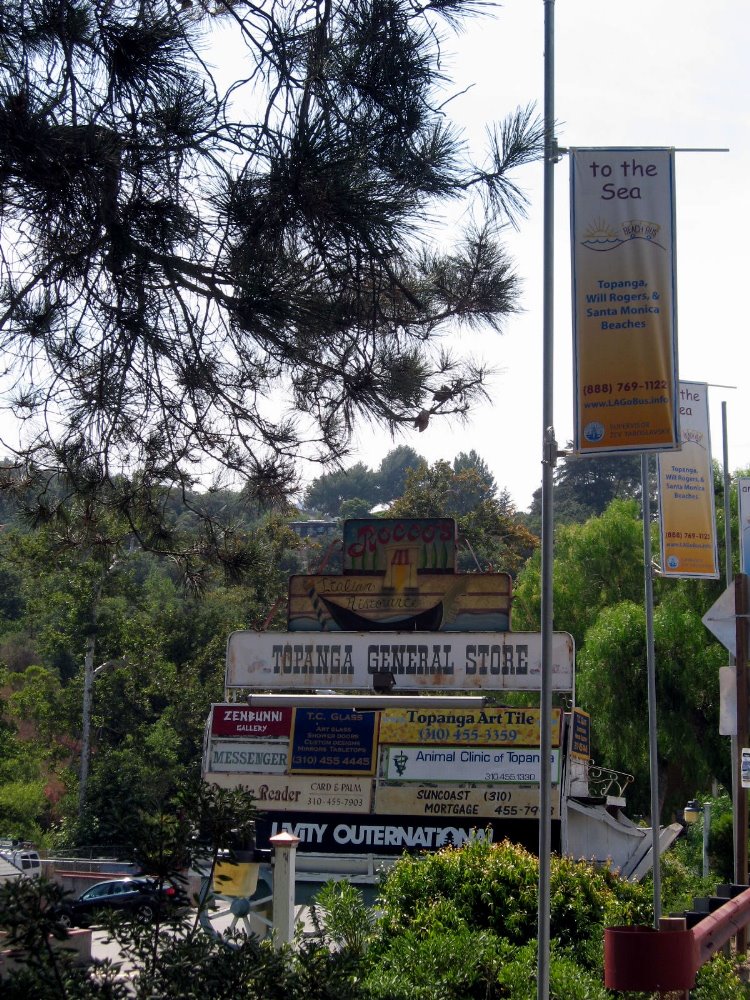
The backbone segments began or ended in Topanga Canyon, probably my favorite part of LA’s canyon country — home also to the Will Geer Theatricum Botanicum. Yes, if you visit LA, you should use this entry to help guide you to some of the more interesting and less-touristed sections than, say, Hollywood Boulevard. 🙂

Take That, Carmen Miranda! Out & Proud in NYC


SMW, SLT has been quiet lately. My life has gone from fast-lane multi-continent blur during May and June to … well, dealing with architects and contractors in between runs to the recycling center and carrying junk from Mom’s basement to the curb for big-trash day. I’ve settled in Washington Heights in upper Manhattan, and between June and August I’ve spent some time in my old haunts in SF and LA: pics from those hikes and trips will appear whenever I get around to it. Perhaps also, at some point, some shots of the beautiful Palisades, Hudson River, and George Washington Bridge of my new neighborhood. But for now, a few images from NYC’s LGBT pride parade in late June.


My first-ever pride parade came when I was 23, and since I had learned that week that my roommate had been diagnosed with AIDS, I remember crying as I watched the march. Before ARV’s, of course, this meant his prognosis was very poor indeed. In the late 80s and 90s, the parades were still fairly militant because of our anger and grief about all the friends we were losing to AIDS – I still have a picture taken at the parade in 1990 or 91 of my friend Kevin, on whom I’d had a big crush when I first met him. He had finally starting getting thin from AIDS wasting, and this was the last time I saw him; a year later a friend showed me his obituary, which contained a photo I’d taken of him on a trip to Storm King sculpture park. Things have changed during the decade or more that I’ve been away from the pride events: the fact that AIDS has become more of a chronic disease managed with ARVs has really breathed both literal and figurative life into our community. Pride seems now really to be a parade, a strutting of our confidence, variety, sexiness — and, above ALL ELSE (this is the US, after all) our purchasing power, or at least our credit cards’ purchasing power.
But this year, too, I found myself crying. I’m not sure why — maybe for Kevin or the other people we’ve all lost. Or the fact that there are still people out there who think the way we love is wrong. Or maybe in relief, inside, that I was finally among my own people. As this blog attests, I deeply loved my time in Nigeria and the people I met there. But, though my expat colleagues in general knew I date guys (or at least hope to, again, some day!), I took care not to be out to my colleagues there, since I’m pretty sure it would have had a negative impact on how I was viewed. I’m used to doing this when in the field, even though here in the US I’m pretty comfy with who I am. So I think I cried, to some extent, in relief at being able to be all the parts of me again, rather than just the hard worker and boss who has no personal feelings or desires, much. Now that I’ve been here longer, I feel my field self going deeper under ground, and I’m sort of mourning that even as I try to establish some pattern of life/work, social life, and – hey, maybe even a dating life again. And this makes me wonder who I am when I’m not a field worker with MSF – even though I firmly expect I’ll be back in the field again, doing work that challenges and enlivens me, whenever this looooooong house project is over. (Hey, maybe I’ll even find time while here to meet some fascinating smart guy who not only wants to date me, but to join me in field work — hehe, we can all dream, right?) Oh well, it’s all about balance and we’re all seeking it all the time. Enjoy the pics: an unusual set, for this blog, I know. Never fear: there’ll be shots from the mountains and hills of coastal and inland California soon enough.


It was nice to see that some people in the parade still remember our roots in political activism: being this out, loud and proud was NOT always so easy! I’ve been pleased and surprised at the amount of anti-war sentiment, considering how reviled I felt when I opposed the war back at the beginning.


…and the mandatory ‘Self Portrait with Parade’

Farewell to Nigeria

Well, my friends, here you have it. So Much World, So Little Time has landed back in the US of A. If I can do some early-morning lounging in a comfy bed in my good friends’ George & Pierre’s beachside bungalow in Venice, enjoying streaming KRNN on the headphones and uploading photos to the blog via WiFi, then it seems to suggest I’m no longer in one of the developing-world towns I’ve lately been calling home. You’ll note, in the non-italic text below, that I wrote it about three weeks ago while sitting in Hong Kong en route to China; as you can guess, all this travelling I’ve done in the month (wow! yes – it was EXACTLY one month ago that I left PH, the 9th of May…) has left me quite exhausted and rather mentally whiplashed, coming as it did after a fulfilling and hard-working eight+ months in Port Harcourt. (I hit four continents in less than four weeks and averaged about two hours per day airborne – not counting terminal time and gate-but-not-yet-airborne time — over that period…) I know the sequence of these shots may seem off to some people – after all, I went to China after I left PH. But it simply does not seem right to let these wonderful shots that bring the PH & Nigeria era of this blog to an end, come after the photos of China, which though impressive and important represent only a couple weeks of my life, rather than the investment of time and mental energy I made, and was well rewarded for in experience and enjoyment, in Nigeria. So…herewith, SMW, SLT presents some final shots and thoughts from Nigeria…and Paris….and China. J Don’t expect to see much more on here for quite some time to come. I’ll be helping Mom with this house-reconstruction project, so am unlikely to have many experiences that merit the SMW, SLT treatment. (Though life often surprises me.) Take care…and though I’ve said it before I shall say it again: you all – and you KNOW who you are – are the most wonderful group of friends and family and supporters that anyone doing what I do could ever dream of having, in fact far more wonderful than I or anyone has any right to even dream of.


It feels well-nigh trite to say of Nigeria that it’s the people that make it great, and a wonderful place to spend some time working. Photos of African children looking happy are standard fare in tour books and tourists’ photo albums the world over, so it’s truly with some trepidation that I present these portraits for your enjoyment. But it’s all altogether too true. Relaxing (what the Nigerians would call vacating, cognate of ‘vacation’) at my desk in Los Angeles last summer, I read with some trepidation the stories of violence, crime and near-anarchy in Port Harcourt, Lagos and other parts of Nigeria. While excellent books like This House Has Fallen present very good portraits of Nigeria, they are by nature geared toward the dramatic. And if I’ve learned anything, it’s that most of the time life somehow manages to go on in most places, in usually rather undramatic and mundane ways.


In point of fact, Nigeria rocks and its people rock even more. Sure, it’s messed up and full of corruption, and no Nigerian will deny it. Heck, even the politicians admit it; they’ll just say it’s all the other politicians who’re corrupt and not them! 🙂 I find this in many ways more palatable than the US, where so far as I can see everything about our foreign and domestic policy since the ascension of Shrub George II has been all about how best to enrich the companies in whose shares his friends have invested…while the folks in Kansas and Texas still seem to think he’s trying to keep Americans safe. Yeah, whatever. And this has involved the deaths of hundreds of thousands in Iraq and around the world, while all Nigeria’s troubles have done so far is mess up Nigeria…oh yeah, and raise the price of oil even higher, which is the only time the developed world (and especially Americans) ever seems to notice Nigeria. But don’t misunderstand me to be suggesting that you head off on vacation to Nigeria any time soon – one colleague says, of Senegal (one of the more tourist-friendly countries in West Africa, one is given to understand), that ‘it’ll be a while before tourism here is really enjoyable for the tourists.’ This is even more true of Nigeria: if you get to work there, it’s great. I wouldn’t go there as a tourist any time soon.


Still and all, I’d certainly be delighted to work again in Nigeria, with Nigerians. A colleague – pardon me if I’ve mentioned this before in these pages, but I do love the quote – says he describes his experience in Nigeria as ‘a minimum security prison with a work release program.’ He adds that he loved it – one of the most enjoyable and engaging jobs he’s had, at least with MSF. I fully concur. Yet another said that Port Harcourt presented in many ways the most unattractive surroundings in which he’d worked – but that the work and hospital presented the most enjoyable and engaging work he’d done; another statement with which I quite concur. And that’s always it with MSF – it takes me to these crazy places, far from potential dates or even potential bean & cheese burritos, where I run a bit more daily risk than when I’m walking down the streets of San Francisco or London…but where the things I get to learn, the work I get to do and the people I get to meet just hands-down beat anything else I’m likely to have a chance to do at this point in my life.


When I was sent to China more than three years ago on my first MSF assignment, I remembered with some worry all those things I hadn’t loved about China, Taiwan and the Chinese in the 1980s – noisy, nosy, brash, often olfactorily dense (that’s a politically-correct way of saying things and even people often have very strong odors in China, something to which we Americans tend to react very adversely), etc. But I’d forgotten all the things I love about China and the Chinese – fascinating, culturally rich, often open and very friendly, full of surprises. MSF seems to keep sending me to these superlative countries – most populous in the world, most populous in Africa, etc. And of course I grew up in another superlative — biggest economy, most populous outside Asia, most fucked-up of the major economies, etc. Whether from these roots or from some other aspect of my personality, this seems to work for me: I end up loving these big, loud countries. I dream of vacations and retirement in Iceland , Ireland and New Zealand (places I picture as quiet, peaceful, clean, unpolluted, green…), but I seem to thrive when my work takes me their diametric opposite.

…And, below, a bunch of shots of me and the team out and about around PH and the creeks spreading the word about our trauma clinic and services for victims of violence & sexual violence.


Above & below – this is more or less in the heart of PH, in a section that borders the creeks…obviously. Seen from this perspective, kinda hard to conceive that it’s a 3-million inhabitant city that’s by far the largest city in the Niger Delta, which houses the world’s eighth-largest identified reserves of petroleum, huh?


Better late than never may be a good motto in the case of these photos. It’s a gray and somewhat drizzly Wednesday afternoon in Hong Kong as I write this, and Nigeria and my dense and rich experiences there during more than eight months seem a world or maybe a lifetime away already. Two weeks ago I was still in the swing of handing over to my replacement in Port Harcourt; a week ago I innocently expected to be back in NYC the following night after a few days of helpful debriefing in Paris. Right now I was supposed to be in Oberlin, getting ready for the weekend’s 100th anniversary festivities for Shansi (www.oberlin.edu/shansi for the uninitiated) and enjoying a slight break before taking up the home-reconstruction project for my mother. But – well, the earthquake in China happened and it seemed a good idea for someone with my experience of China and knowledge of the language to be available to help the team that’s ascertaining how and whether MSF can do more than we already have (www.msf.org for those stories) to support populations affected by the earthquake in Sichuan. It strikes me that the contrast between China‘s official response to the earthquake – massive, swift, and generally quite thorough – and that of the junta in Myanmar to the destruction in the Iriwaddy Delta could hardly be more stark. Perhaps this means I’ll get to be home sooner rather than later, after all. But I’ve learned, again, that the future is unpredictable and often surprising. May we all experience surprises more pleasant than unpleasant in the coming months.

Empty market stalls on a non-market day in Oil Mill Market, where we frequently went on outreach to spread the word of our free-of-charge services for victims of violence & sexual violence. Below: a tree full of swallows’ nests in a creekside part of PH, and some of our outreach team posing with the local snack-stand manager in Abonnema, who it turns out happens to be the mother of two of our staff members. I remember my American friends all thinking I was crazy to go to Nigeria, and I remember my own worries; indeed, there is violence and there is danger there, as there is almost anywhere, but when we got into some of the smaller towns, again and again we found patients who’d been to us and welcomes our services, and/or friends and relatives of our own colleagues, if not our colleagues themselves on their days off. (On the day of this outreach, we were helped by one guy who happened to be in the market there in Abonnema, and just naturally grabbed some fliers and started helping out even though it was his day off.)