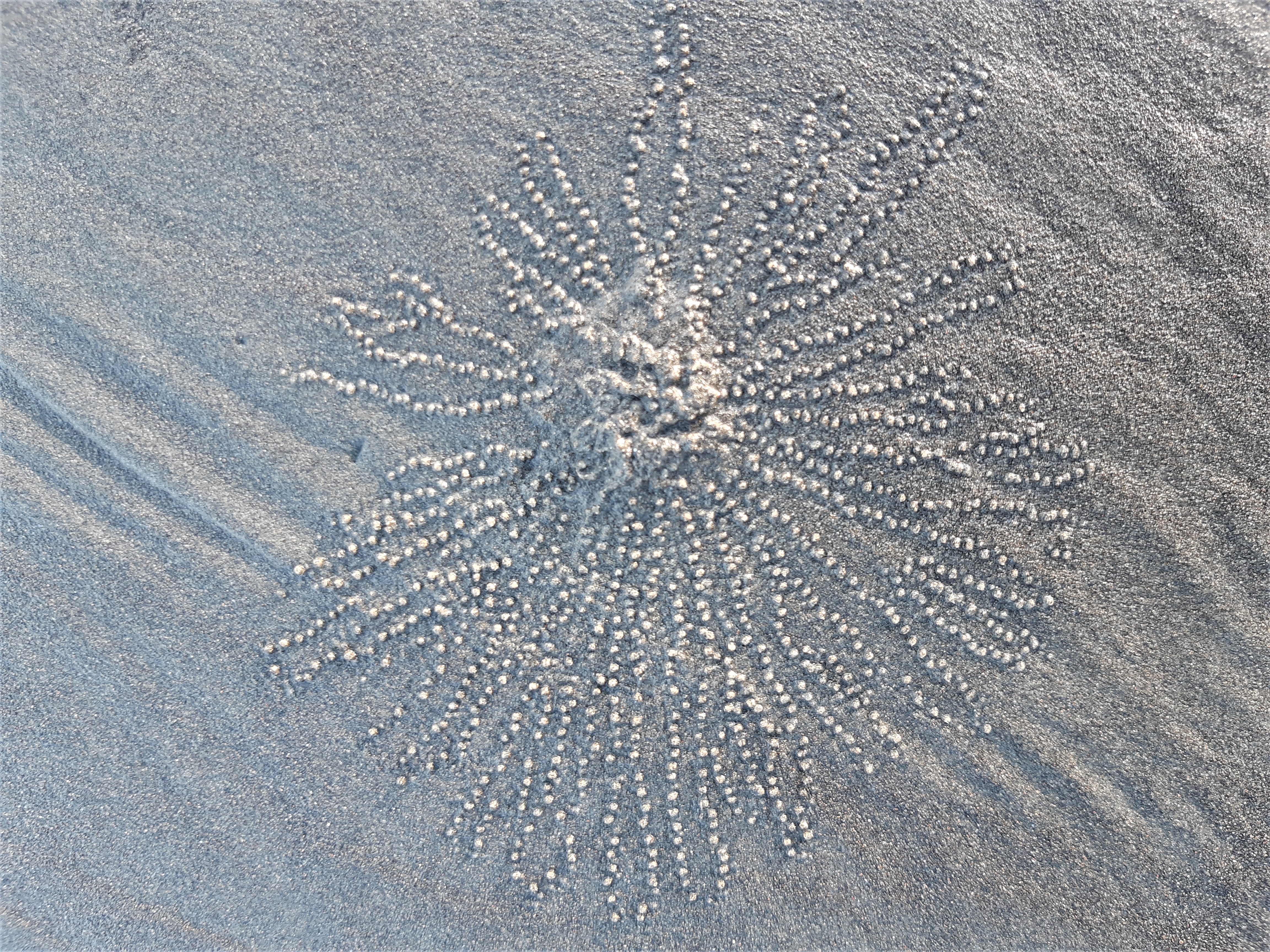
I considered making this the next entry in my Longest Beach series, but I’ve decided that one’s unique to Cox, so I’ll just have to wait until I’m there again to capture another image. Someone has been really loving this photo from my 2019 farewell to that series – my site tells me what photos are being viewed a lot – so thanks to whoever the viewer is who enjoys this photo :-). I do rather hope to get back to that longest beach before too much longer, so possibly that “farewell” may have been a bit premature, in hindsight…. 🙂
You may have picked up from a few recent posts that Urban Entrances has now gone beyond Prague. Chatted with a friend during a walk here in Amsterdam today, and she told me she loves to photograph doors as well. I’m not alone 🙂
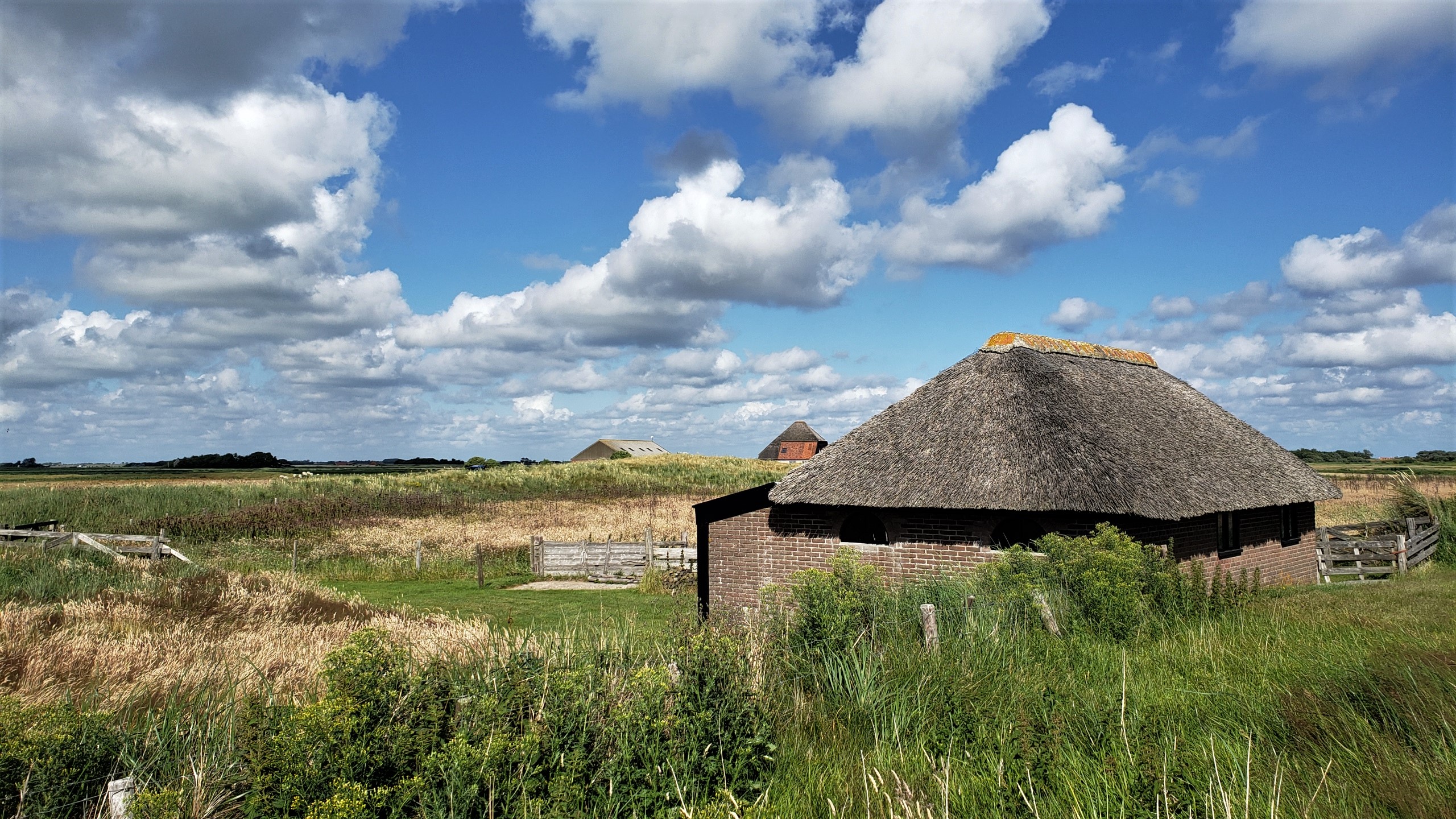
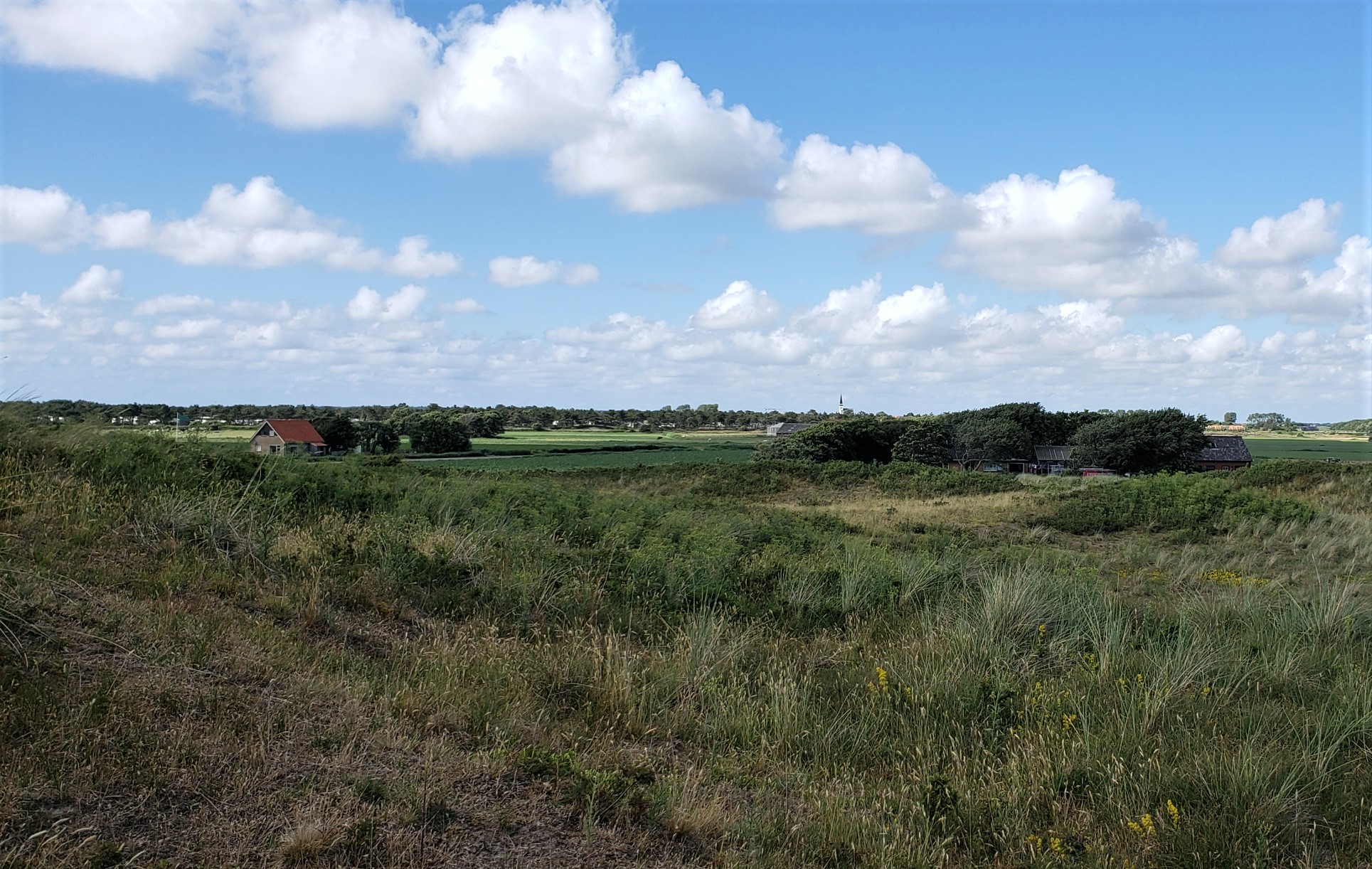
Farm buildings on the southern edge of the village of Den Hoorn, on Texel — with main village itself in the distance on the photo below. Hopefully this weekend, I’ll manage to figure out which Texel (pronounced “tessel,” it seems) photos I still haven’t posted, and get those ready for sharing in the day(s) ahead. I might have mentioned that I had a hard crash on my computer – mostly self-inflicted b/c there were some dialogues coming up which made me fear a virus had infected the computer, so I reinstalled everything, and thought I’d backed up up all the photos I’d already sorted and named…but turns out the backup was messed up and files didn’t open, so I’ve been recovering from my phone. At least one generally has several layers of backup in this digital world, eh? 🙂 Anyone coming to NL at a time when the weather is lovely should seriously consider a quiet day or two up on Texel. It’s really gorgeous 🙂
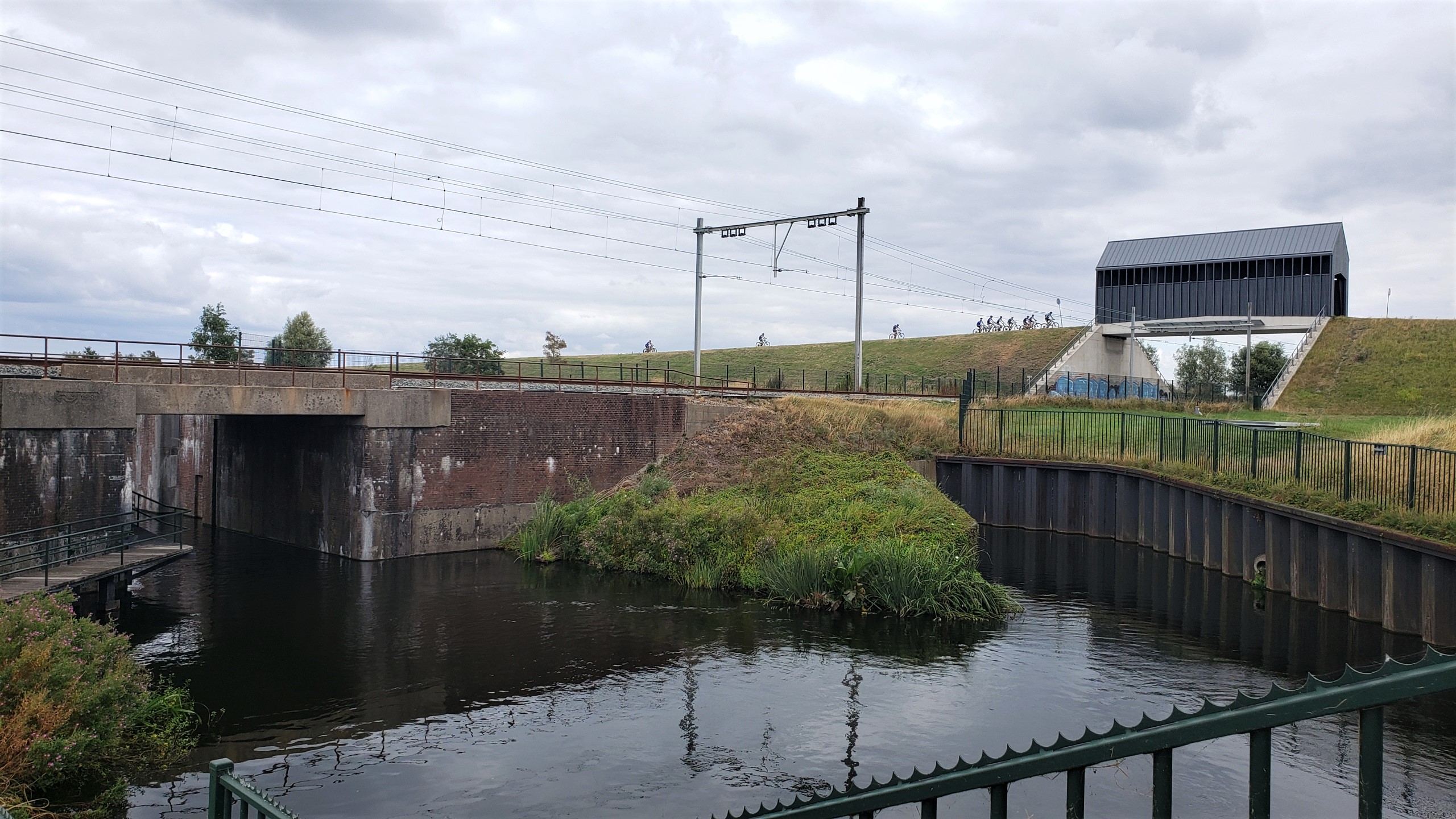
It’s my blog so I get to define what’s a “village” and what’s not. This is one of those uniquely Dutch views: railroad overpass covered-bridge which is mostly used by bikers, specifically small and large classes of kids taking mountain-biking classes on the natural and enhanced (since almost everything that touches upon elevation above or below sea level, flow of water and so on in NL are very much human-enhanced) hills and dunes and canals surrounding … the Maeslantkering, one of the world’s largest movable structures whose northern half sits perhaps 300 meters behind me as I took this photo on my first full day back from Myanmar. Photos of the Maeslantkering and other Hook-of-Holland area sites to come.
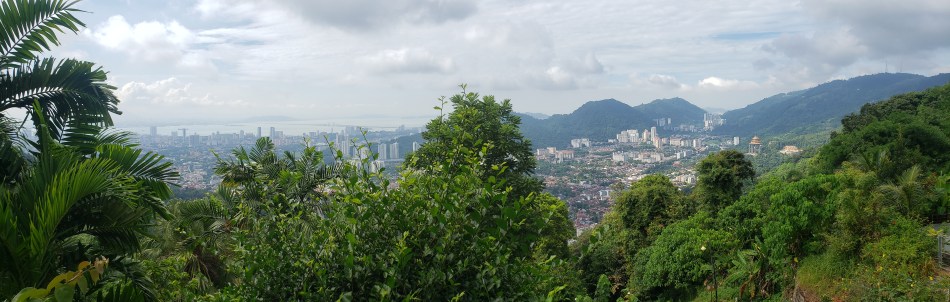
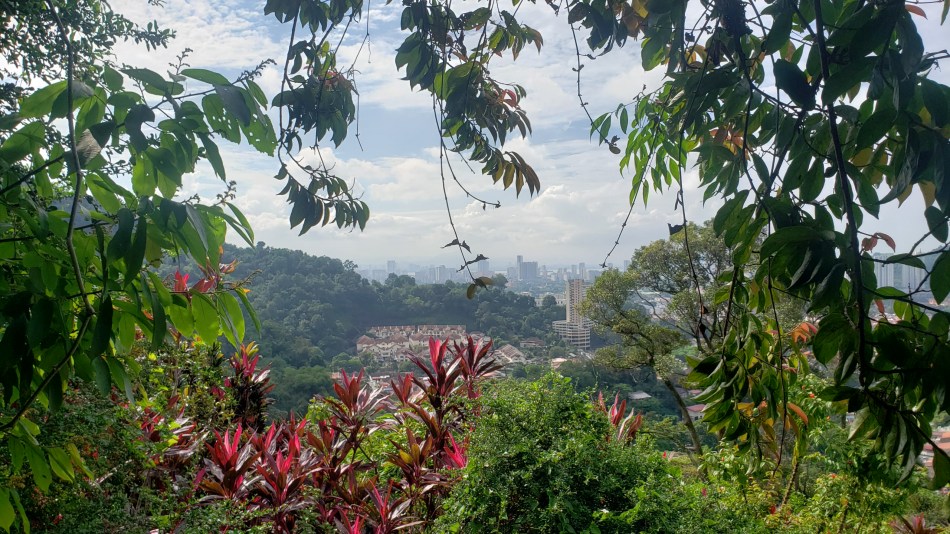
Seems time to wrap up the photos I haven’t yet posted from my Malaysia visit back in June, given that I’m now back from my Myanmar visit and have a TON of photos still to sort then post from there and right here at home in NL, as well. In case anyone’s keeping track, WordPress tells me I’ve now posted at least one new post for 218 days in a row. I thought I might give myself a break at my birthday earlier this month…but then I realized a) that I’m seeing so many lovely things that I really should share them with y’all, and b) that having a daily post to set up gives a bit of structure to how I see or photograph what I see when I’m out and about in the world, near or far. In this post, all the remaning unposted pics from that lovely weekend hike up and back down Penang Hill.
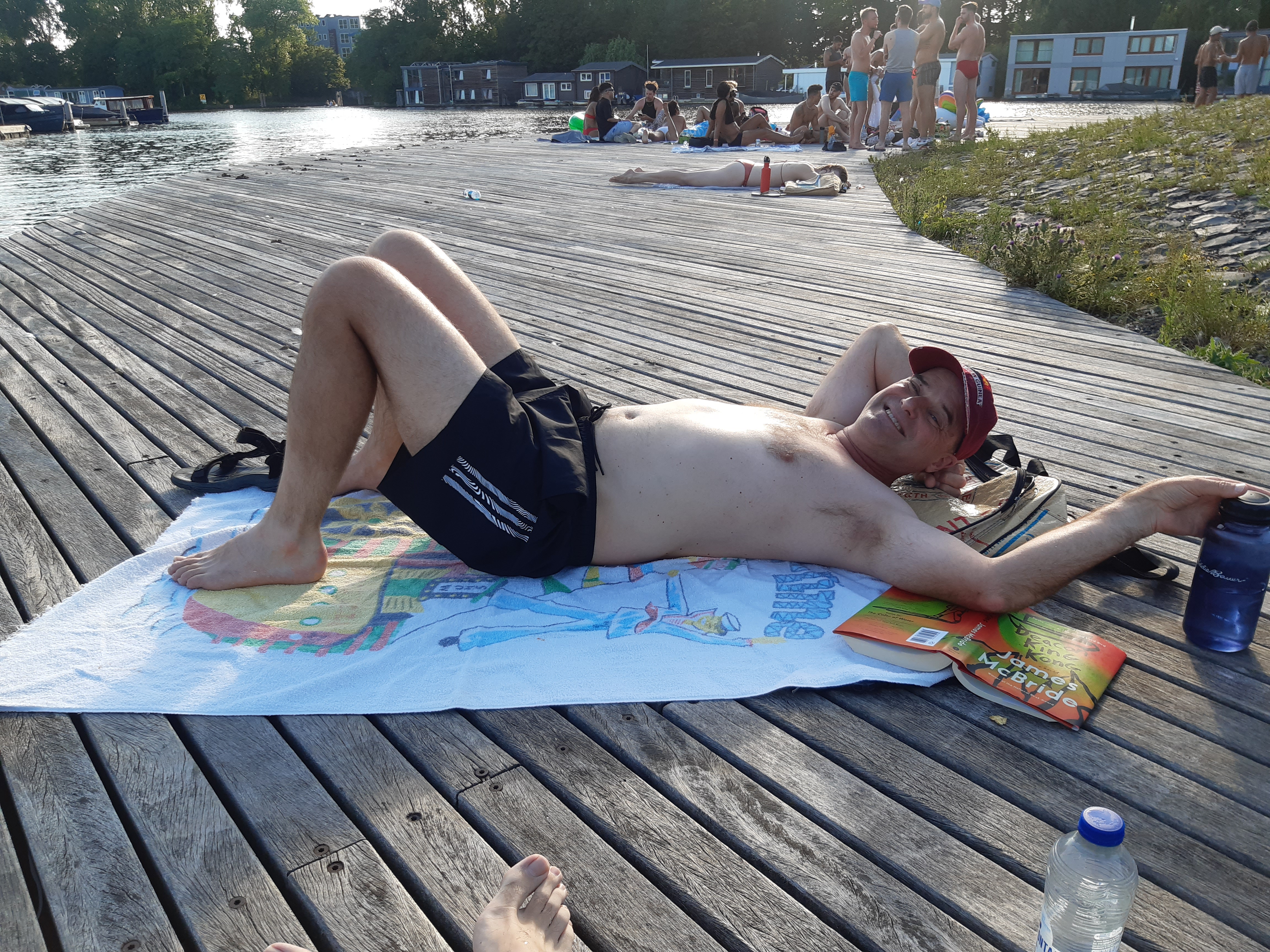
With warm weather, we’ve discovered that the canals of Amsterdam are wonderfully swimmable :-). At least one brother o’ mine will recognize both of these beach towels – ah, memories we bring with us from other times and places 🙂


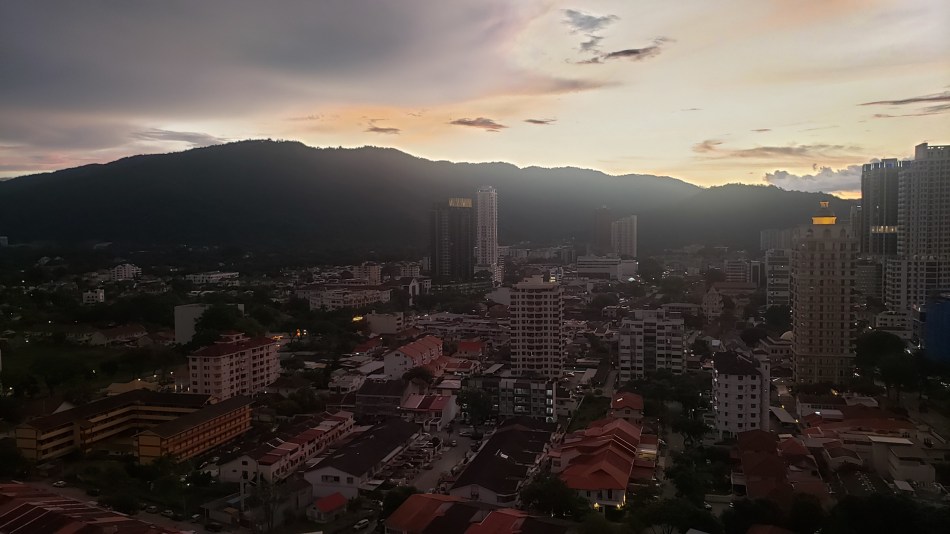


 Seems time to wrap up the photos I haven’t yet posted from my Malaysia visit back in June, given that I’m now back from my Myanmar visit and have a TON of photos still to sort then post from there and right here at home in NL, as well. In case anyone’s keeping track, WordPress tells me I’ve now posted at least one new post for 218 days in a row. I thought I might give myself a break at my birthday earlier this month…but then I realized a) that I’m seeing so many lovely things that I really should share them with y’all, and b) that having a daily post to set up gives a bit of structure to how I see or photograph what I see when I’m out and about in the world, near or far. In this post, all the remaning unposted pics from that lovely weekend hike up and back down Penang Hill.








 (so much world, so little time....)