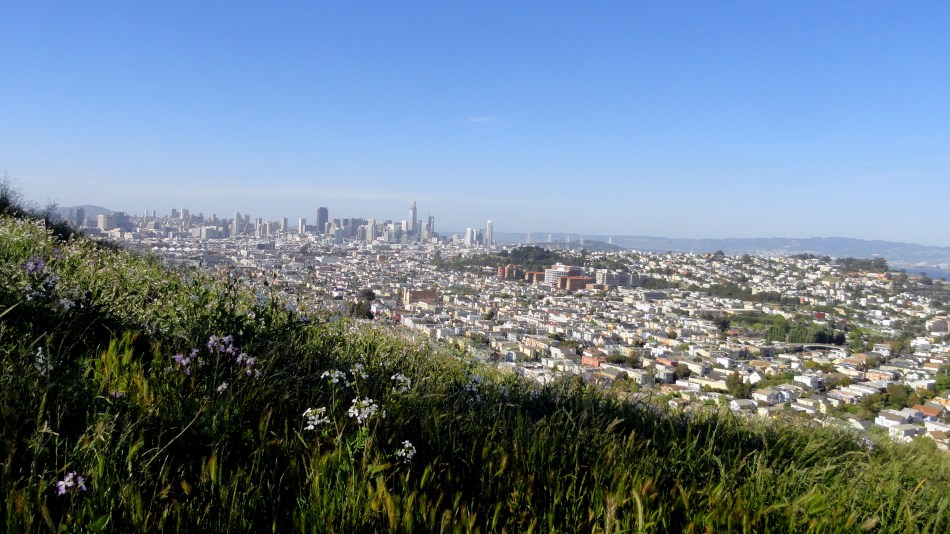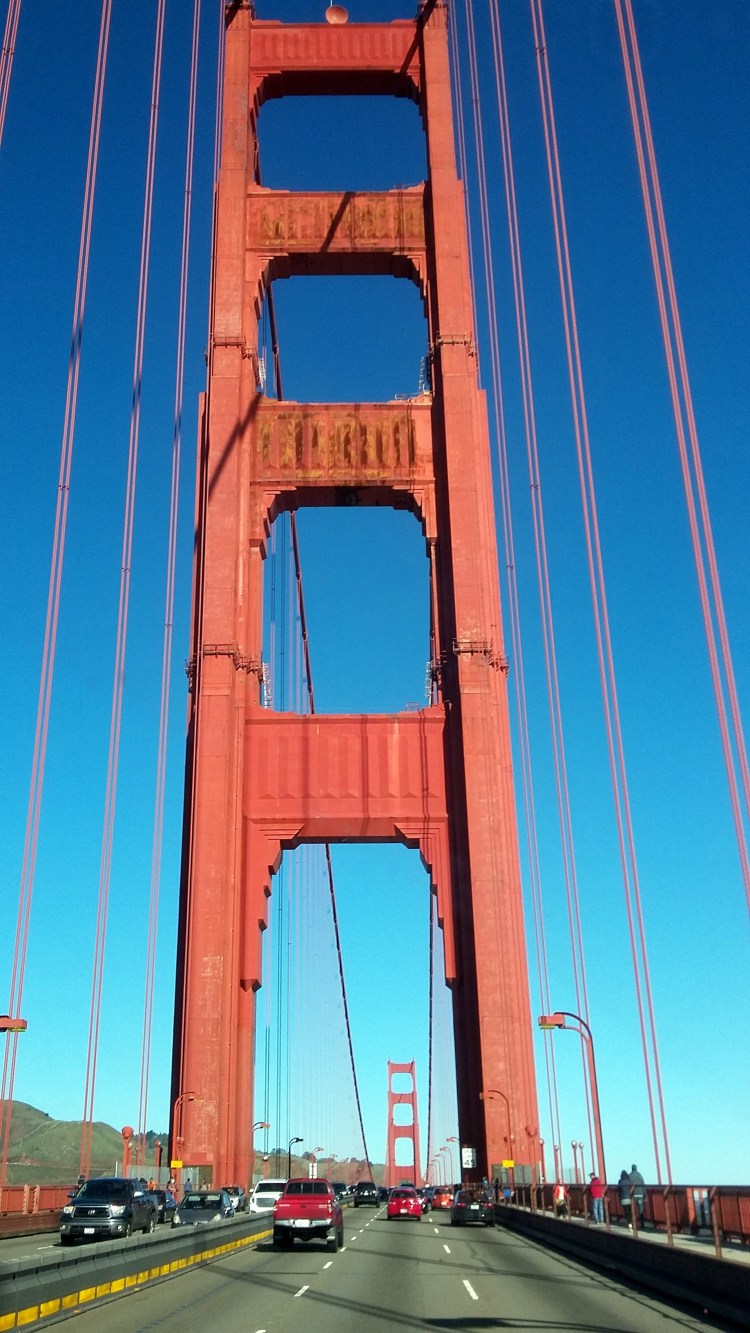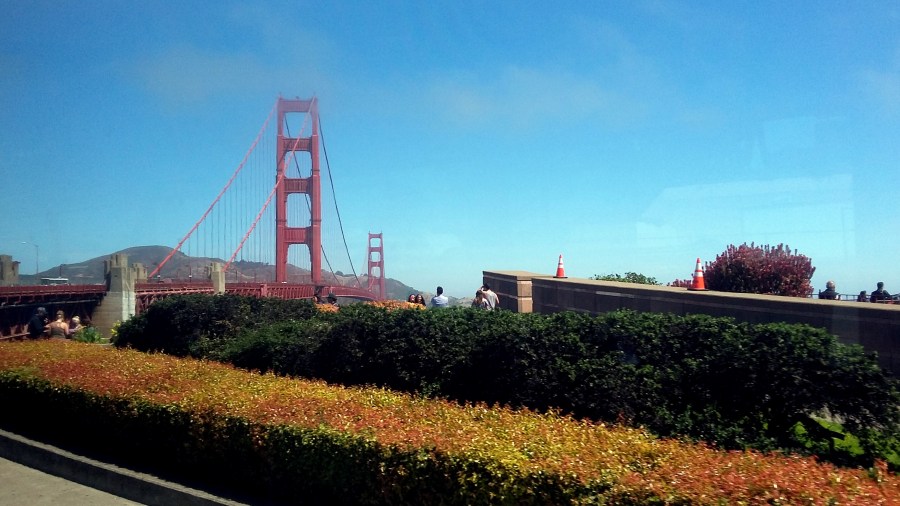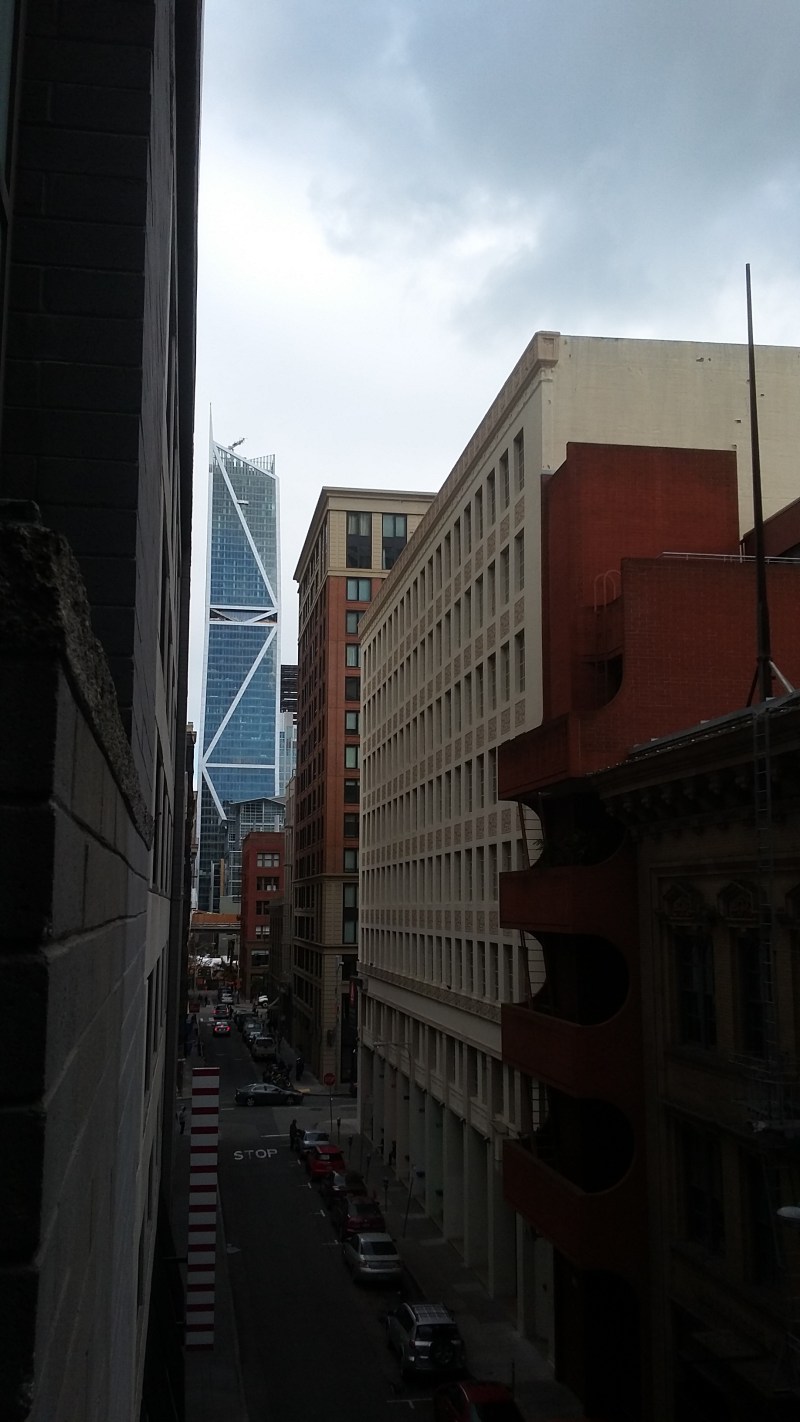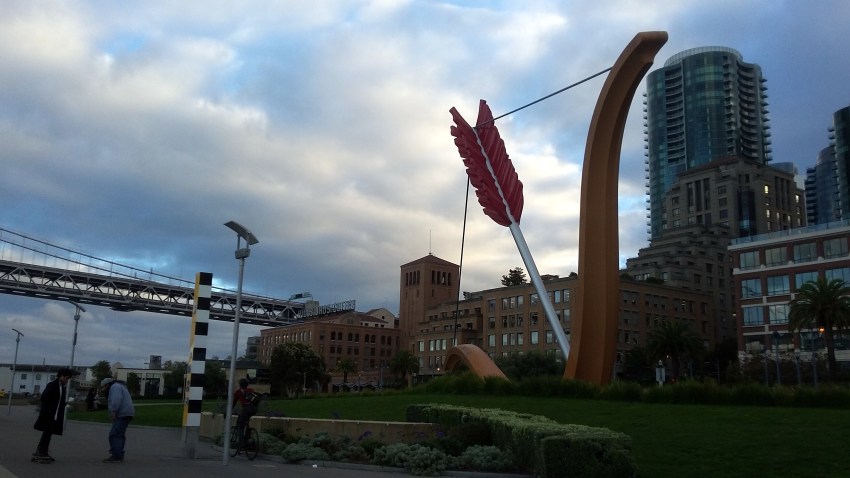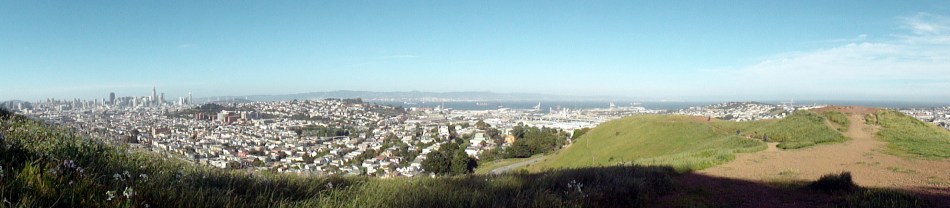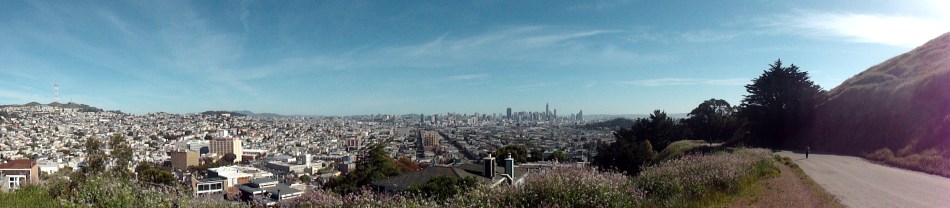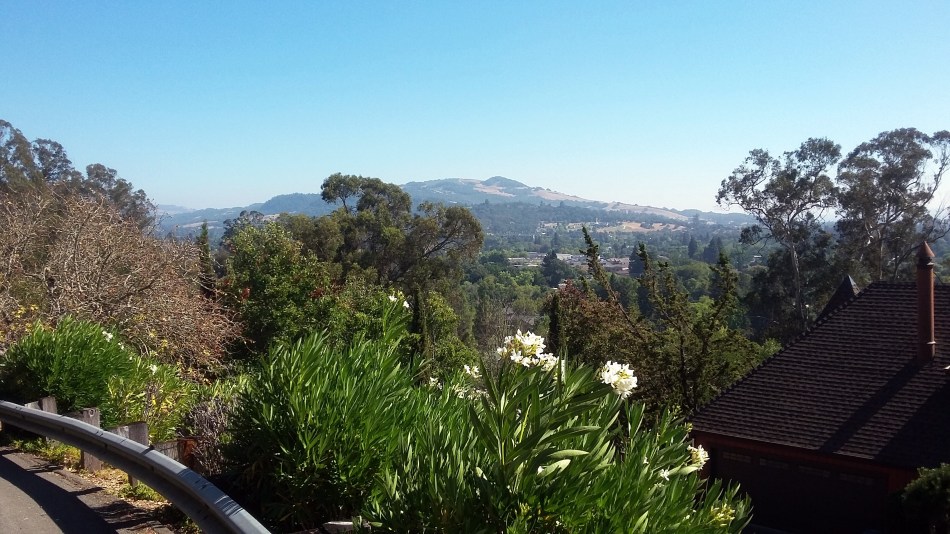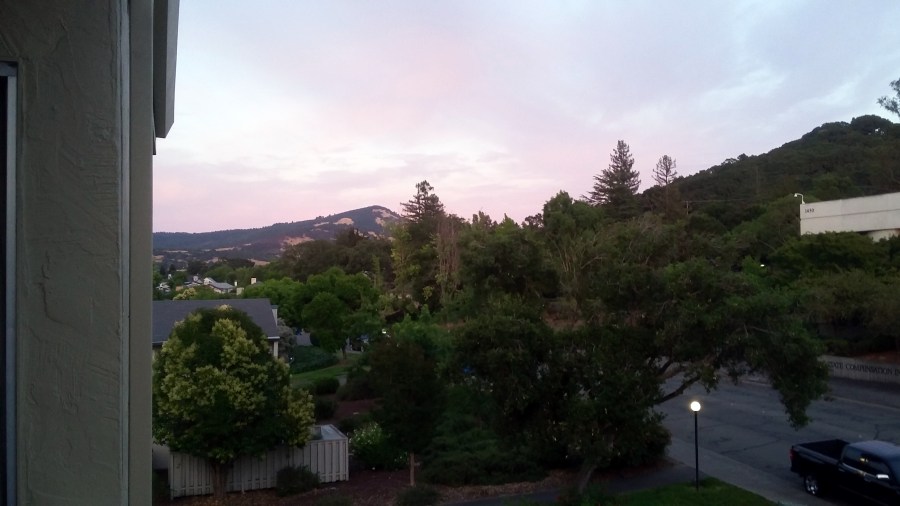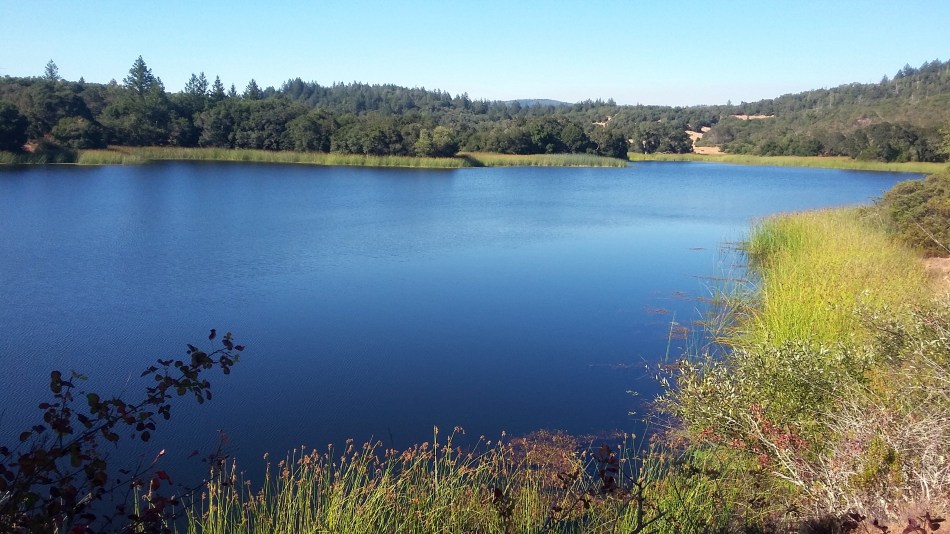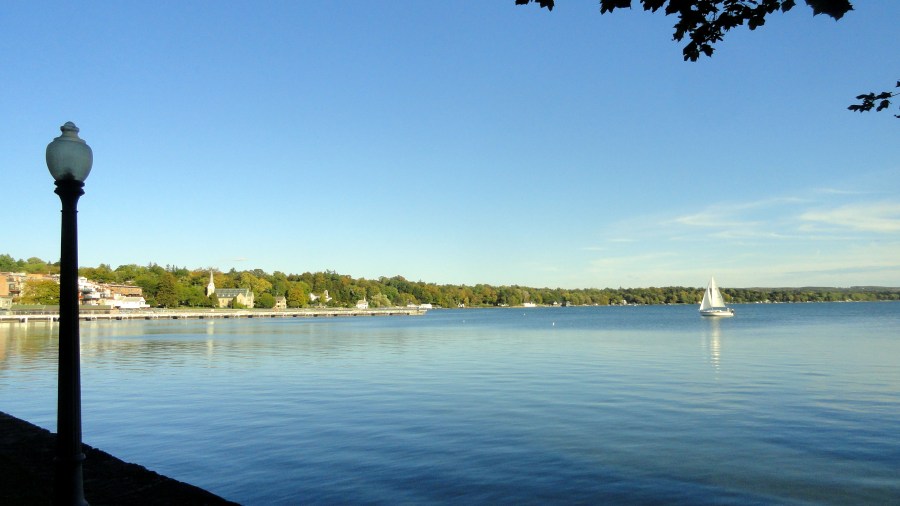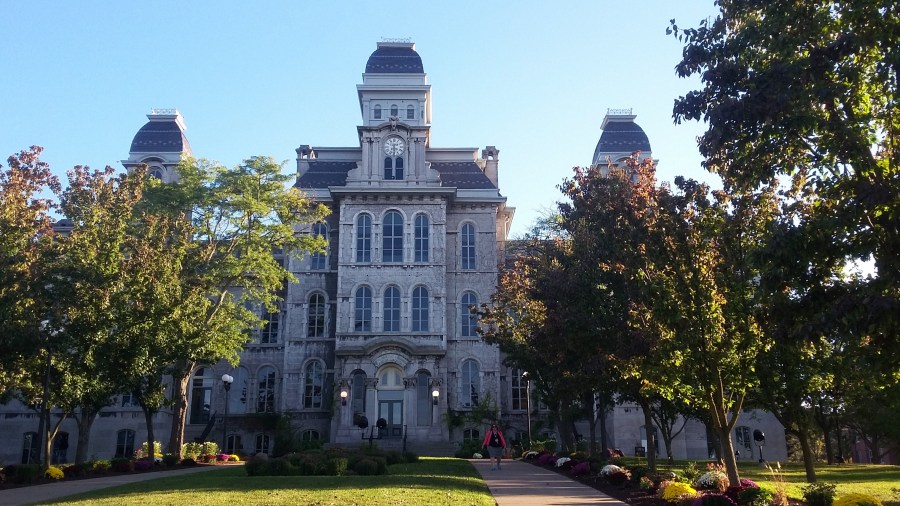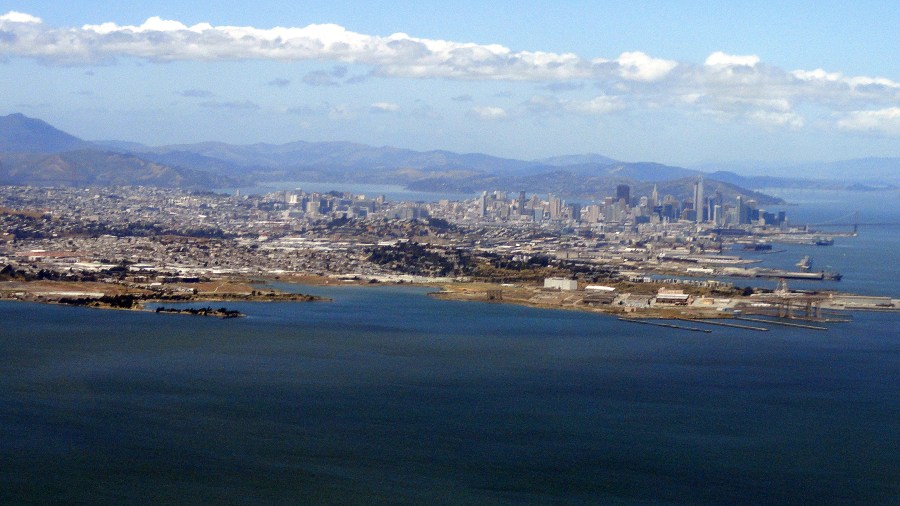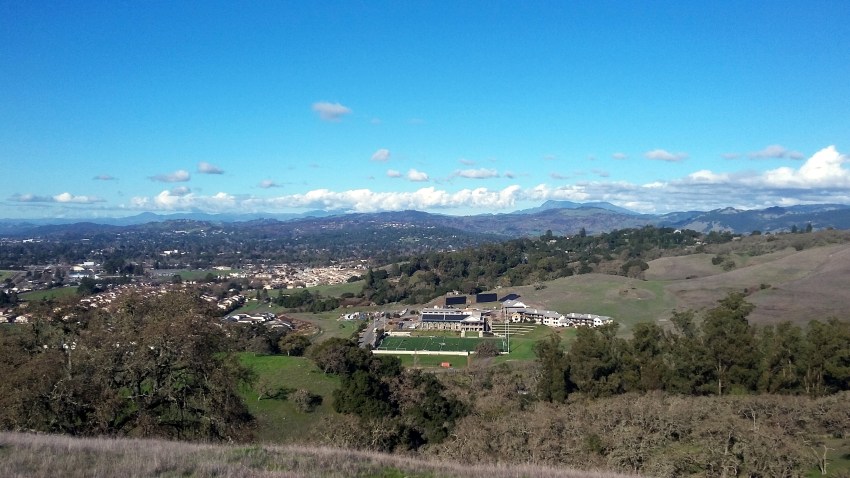
Each of us resonates particularly to some kinds of beauty more than others. I’m naturally drawn more to wilderness and natural areas than to cities, as you can probably tell by all the natural-world photos that occupy these pages. But I do find the combination of hills and abundant water, with densely-packed urban centers featuring tall buildings and dramatic bridges, interesting architectural features and urban parks quite compelling. San Francisco has all of the above in abundance. Now that each of my assignments begins and ends with flights from and to SFO — now that each trip back to my own home involves crossing the Golden Gate Bridge and seeing many of the views you see here — I find myself collecting photos two or four at a time, whenever I visit the city for a concert or lunch with a friend or just a trip to or from the airport. This post is full of my miscellaneous photos taken in such trips over the past year or so. As I prepare to head out for another assignment far away, some photos of my home region to enjoy while I’m away. 🙂 If you’re curious what’s shown in any of the photos, by and large they will have names that are descriptive.


Latest
Vistas, Bridges & Buildings by the Bay
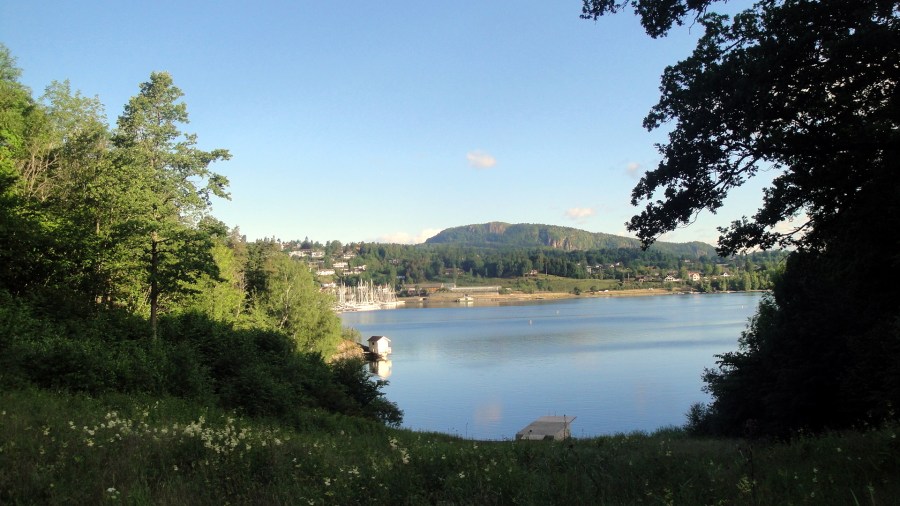
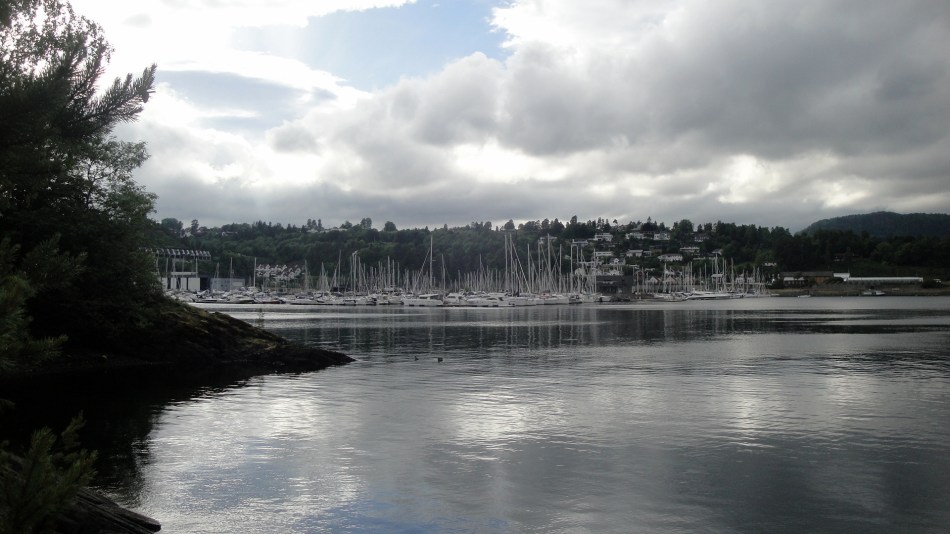
Footloose By Oslo’s Fiord
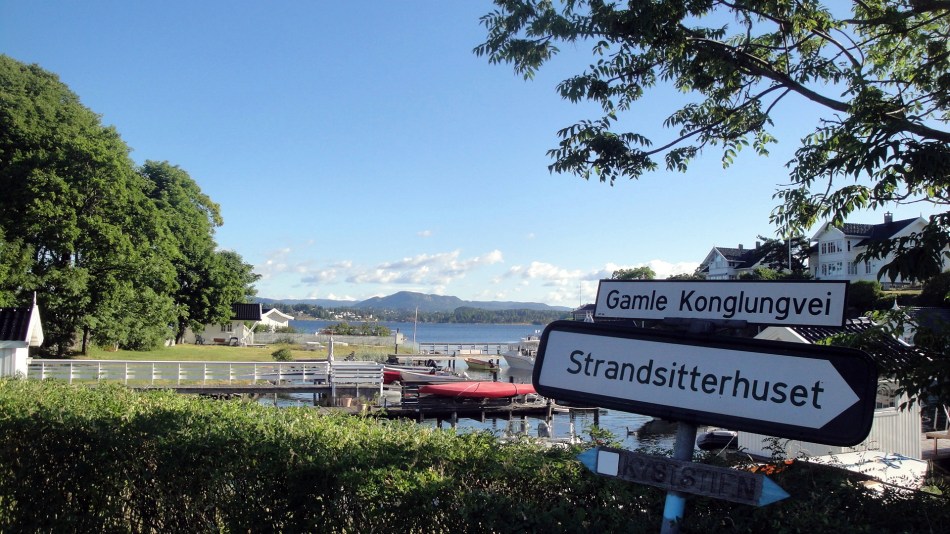
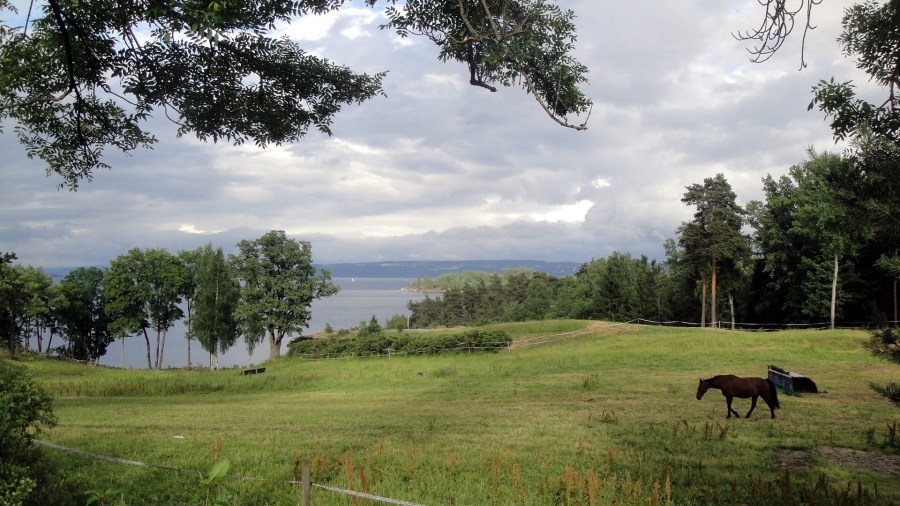
In June I had the great good fortune to spend four nights and most of five days in and around Oslo, at the top of a long and lovely fiord in southeastern Norway. The training which was the purpose of my visit took up all of three days and nights in a small town east of the main road along the twisty-turny fiord, about an hour’s bus ride south of Oslo itself. This I know since I took the bus in twice in order to enjoy Oslo. Photos from Oslo itself went up on this blog first, a few entries ago. This time I’m showing you where I walked each morning and evening, before and after lovely days with colleagues in rather intense and fruitful training. The training site and hotel was just next to a few nature preserves that occupied much of a peninsula jutting out into the fjord, meaning we had many kilometers of walking trails dotted with a few small villages and farms, literally right out our door. Anyone wanting night life would have been deeply disappointed. Myself, urgently needing peace and space to integrate what I was learning and to rest from a few hard months of intense work…well, I took full advantage of the 20 hours of daylight for two long walks each day. I hope the shots give you some sense of how lovely and fun it all was! 🙂


Last Year’s Fire Line

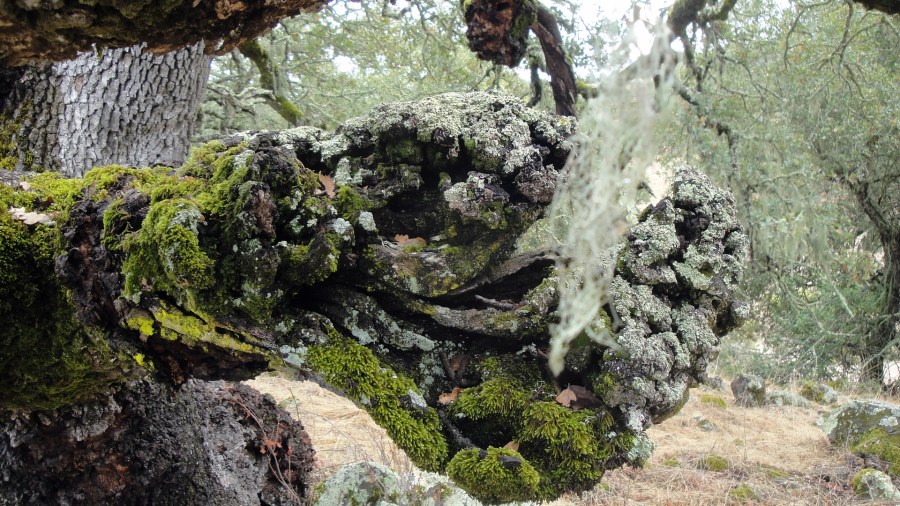
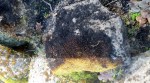
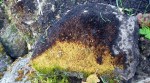
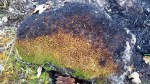
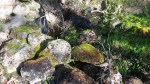
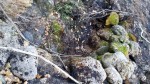
For many reasons I’ve been thinking about balance lately. Health and illness, birth and death, creation and destruction. My personal friends know I’ve had a fairly serious illness myself this past month, coupled with some fairly significant health issues affecting close family as well. And here we are nearly upon the one-year anniversary of the first outbreak of deadly wildfire which destroyed so many homes in my own community of Santa Rosa just a year ago. Recovering my own physical health at first involved avoiding much physical exercise, and now involves steadily allowing my stamina to build back. One way I’ve done that is to go hiking again in our local state park, where a second wildfire, coming from the south of Santa Rosa instead of the north of Santa Rosa, also destroyed many homes and lives at nearly the same time. Our rainy season here usually begins some time in October: last year, the first rains came later in the month. This year, we had an inch of rain last week and this allowed the moss to green up again on a stone I’ve been watching and photographing since the first time my normal trail in the park was reopened three weeks after last year’s Nunns fire was declared controlled. That stone is shown in the gallery below, with the most recent photo first and working backward. Date of the photo is indicated in format yymmdd, if you’re curious.
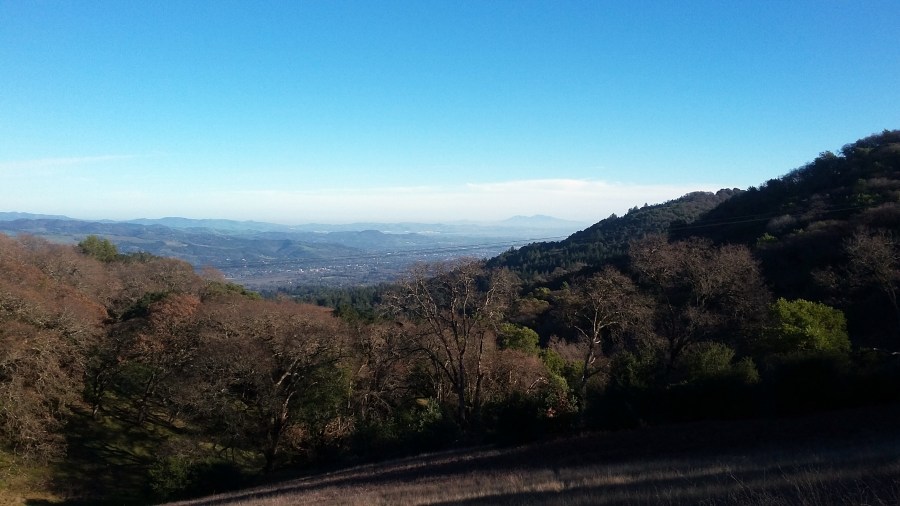
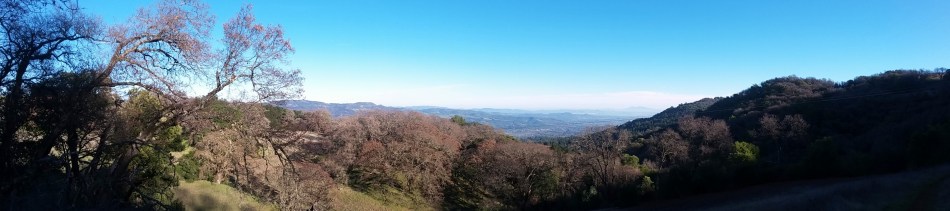
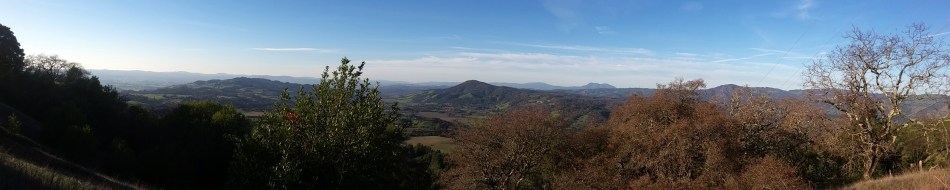
With a good friend I also drove up and over the hills to the north — hills from which this panorama shot just below, which looks south,was taken — there’s a major road across the mountains there along which many homes and businesses were destroyed in this week last year. There is some rebuilding happening and many lots cleared and seemingly prepped for rebuilding — just as a small tree in the second gallery, which last year was burned, is putting out a second season of new leaves now. You might need to enlarge some of the gallery photos to even see the burned parts lower down: the scars all across our landscape are already fading compared to what they were a year ago, though the vacant lots remain quite visible and the scars in the community and landscapre are certainly real. I feel fortunate to live in a community which came together in mutual support when faced with such challenge and destruction. I hope our human family more broadly will find constructive and healing ways to bridge our sometimes seemingly unbridgeable divides, on a larger scale and for a longer time. Balance, moderation, and an honest acquaintance with global realities seem quite necessary for longer-term health and survival of our planet and species, from what I’ve seen and experienced around this beautiful complicated world we all call home. Peace – health – balance.
Upstate in Autumn
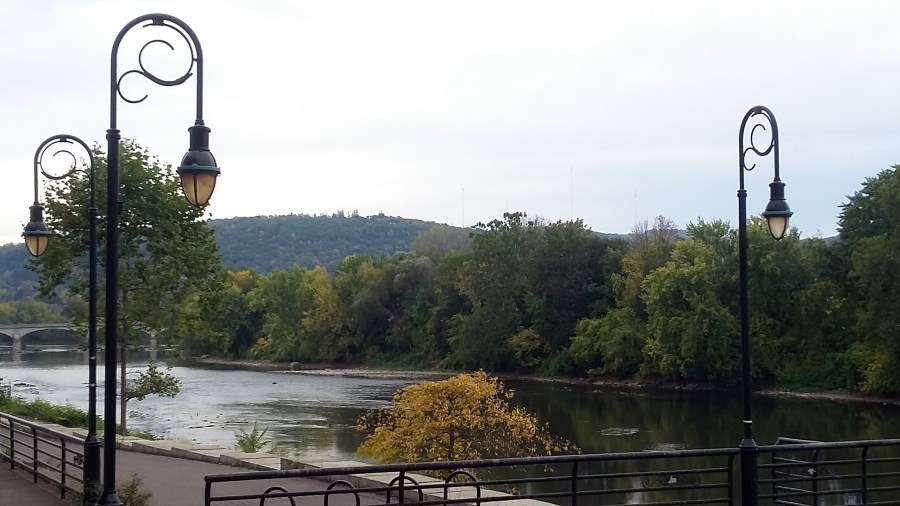
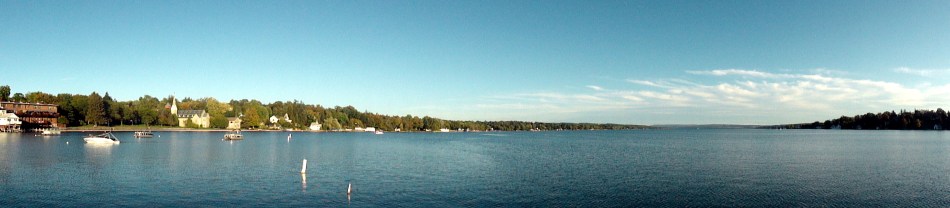
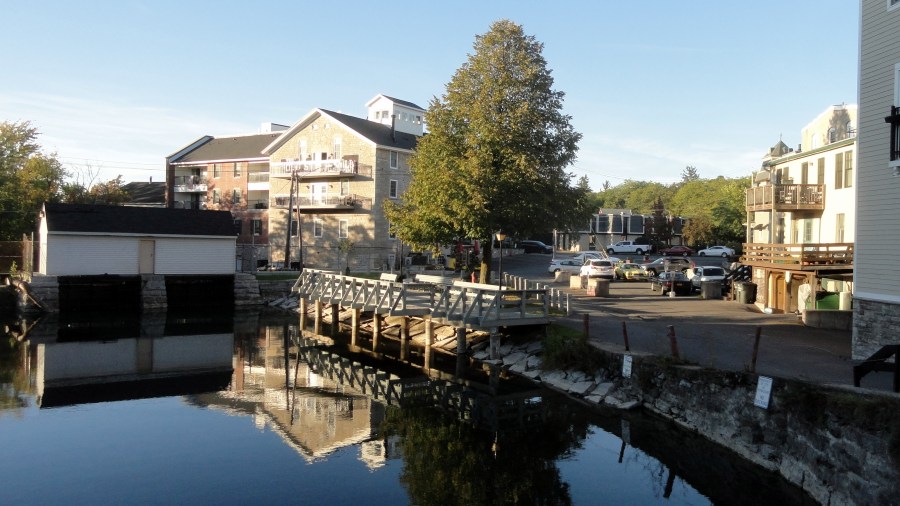
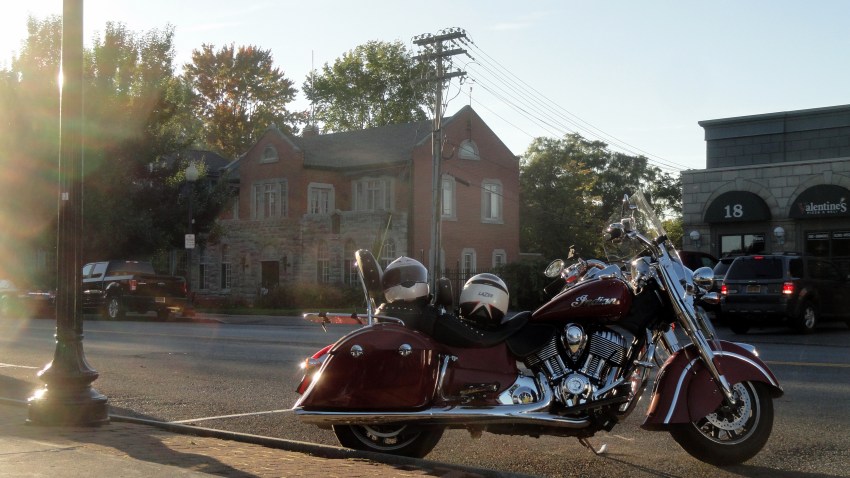
First, full disclosure that these photos were all taken in the autumn last year, not this year. 🙂 Since I didn’t post them right away last year — too busy with family and personal health stuff, plus chronicling the fires around my home out west — I decided I’d post them as the autumn months returned, this year. In this post are many photos taken in and around Syracuse and Skaneateles, in the northern region of New York State known as the “Finger Lakes.” You’ll also see a few photos taken as I walked around Binghamton, in central-southern New York State at the confluence of the Susquehanna River with its lesser-known tributary, the Chenango. I imagine Binghamton was an important manufacturing town and transit hub in earlier eras, although I admit I do not know its history in any detail. I went to Syracuse for an excellent seminar at Syracuse University’s Maxwell School; and I passed through Binghamton with extra time awaiting a connection, during the bus journey from Syracuse back to visit my mom in Northern New Jersey. It’s certainly true that Syracuse is a lovely city whose past – a key city on the all-important (in the 1800s) Erie Canal – was more economically robust than its present. Those seeking explanations to my homeland’s current highly-divided political climate might well find some explanations in such towns as these, and the changes in economic models represented by a former Erie-Canal hub town as compared to, say, Silicon Valley where there are many ideas but very little actual manufacturing. For what it’s worth.
You’ll notice I was particularly taken with vistas of lovely Lake Skaneateles and the village of the same name, situated at the northern end of this long beautiful “finger lake.” Enjoy!
Midnight Light in Oslo
Each time I return from an assignment to the kind of country where such things as paved roads, existence of & respect for traffic lights, and public water supply that’s free from unwelcome microbes are taken for granted, it’s an interesting shift in my own perceptions and expectations. The question friends most often ask about each new assignment is “what’s the food like there?” I remember asking a similar question, before I started working in resource-poor settings, of a friend who’d gone with Peace Corps to Togo a few decades ago. He answered with a basic truth I’ve come to understand viscerally – that food in the sense of a cuisine that you’d want to talk about, write home about, or visit a country for, is the preserve of nations with a history of sufficient social stratification & wealth concentration to allow at least some people to consider food as pleasure, not simply hard-won necessity for survival. Two hundred years ago (heck, probably one hundred), most residents of Europe and the US very rarely had the chance to take pleasure in food, more than just ensuring enough to survive. Although extreme hunger is globally reduced, still hundreds of millions of humans devote a lot of their days to just finding enough food for their kids and themselves – many concentrated in places where we work. (Here’s a quote from the WHO’s page covering malnutrition: Around 45% of deaths among children under 5 years of age are linked to undernutrition. These mostly occur in low- and middle-income countries. At the same time, in these same countries, rates of childhood overweight and obesity are rising.)
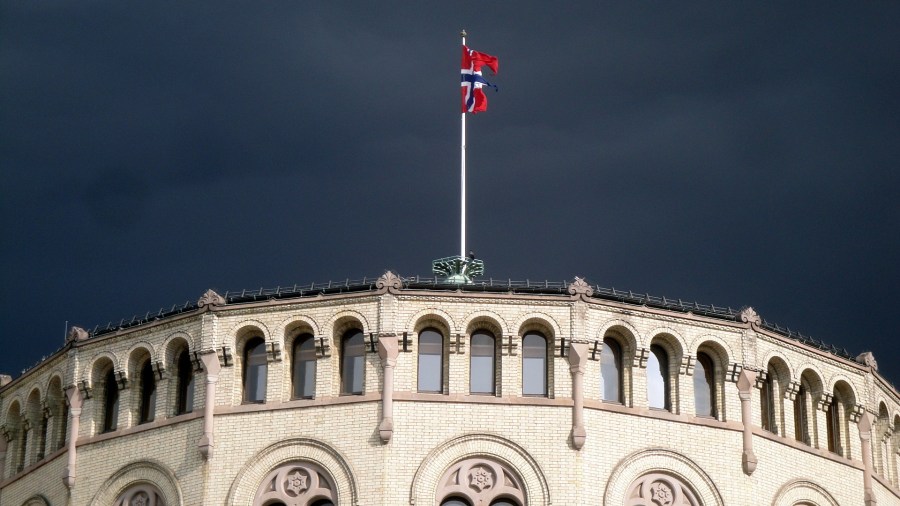
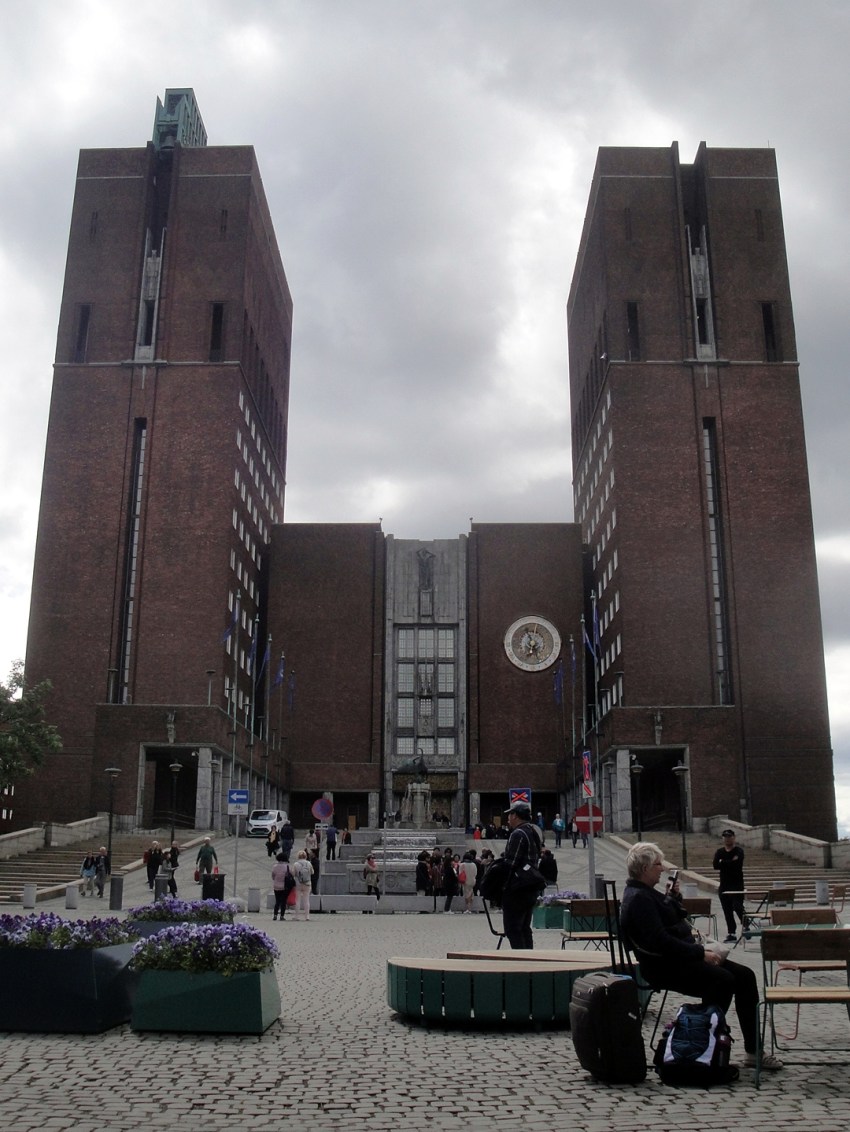
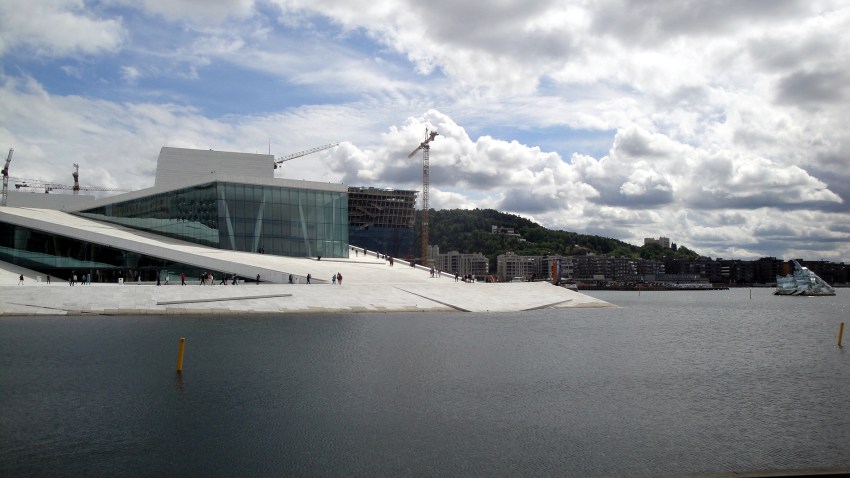
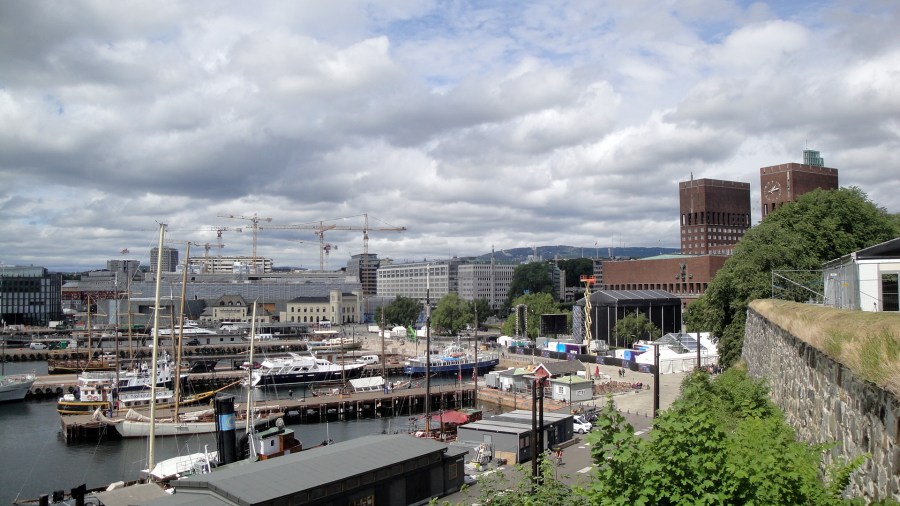
The same applies at national scale to investment in public architecture and parks, bridges that are beautiful as well as functional, streets which are clean and free of potholes or, in the case of many countries I’ve visited, even paved at all.So my senses greatly enjoyed a training visit I was able to make to Norway shortly after the end of my assignment in Central African Republic. Oslo is a gem of a city situated among gentle hills at the top of a long fiord, with abundant public sculpture and lovely architecture such as the parliament building (above) and the opera house as centerpiece of an ambitious waterfront urban-redesign effort (below). Since I enjoy art and architecture, I appreciate when governments and societies are able to invest in making them available to the public, not just hidden away in private residences and collections. The training was only three days – but since daylight was very nearly 24 hours each day, there was lots of evening time to explore along with some travel-day time before and after. Photos of specific buildings and such will usually have a title that says what it is. Enjoy these photos!
The city not only has abundant public sculpture and art but also some great museums. I think I’m allowed to post the photos above with I took at the National Gallery — Norway’smost famous artist’s most famous painting, though I’ll admit I actually found the other paintings I photographed more emotionally and visually engaging, if less dramatic. And I learned about a new artist, Gerhard Munthe, through the special exhibit of his work. Despite being a fairly populous capital city with a long history as port and harbor, Oslo still has a lovely little river that cascades down through the heart of it, and many public fountains as well. I walked along the river or enjoyed the fountains on the long evenings as much as I could :-).


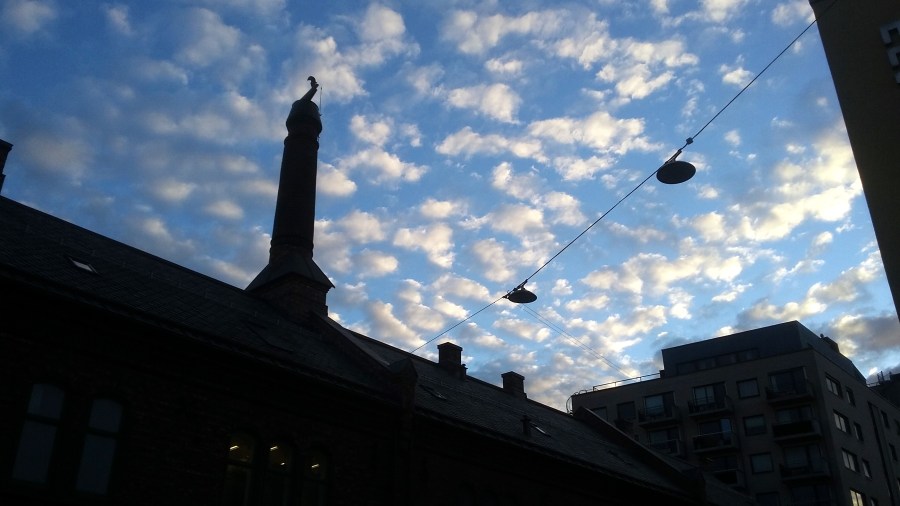
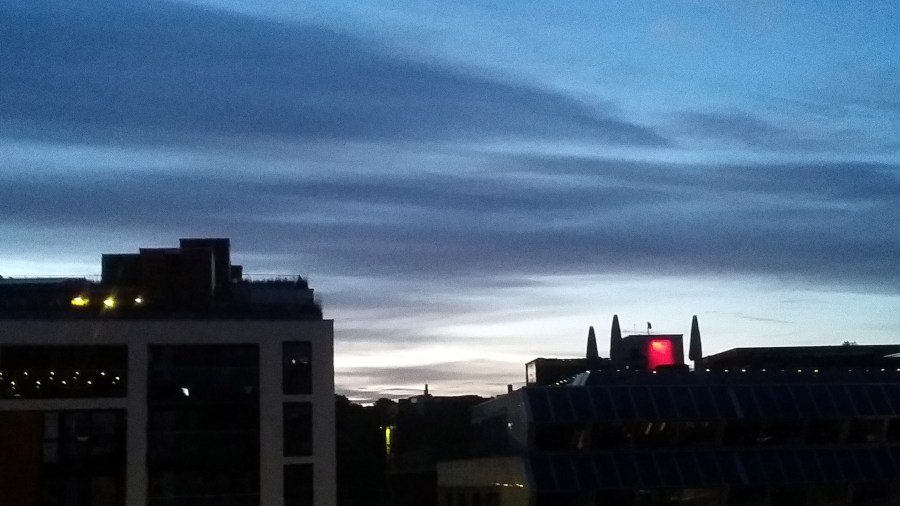
This photo of clouds against a darkening blue sky was taken just after 21:00 (9pm) on June 20th, while the next shot of a dark-ish sky over buildings was taken just past midnight. Fun 🙂
Rivers & Forests in Central African Republic
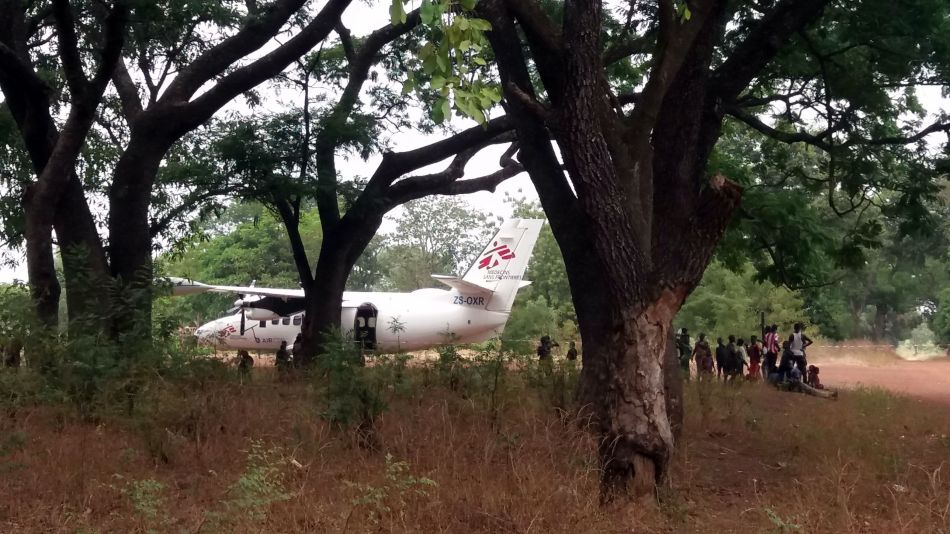
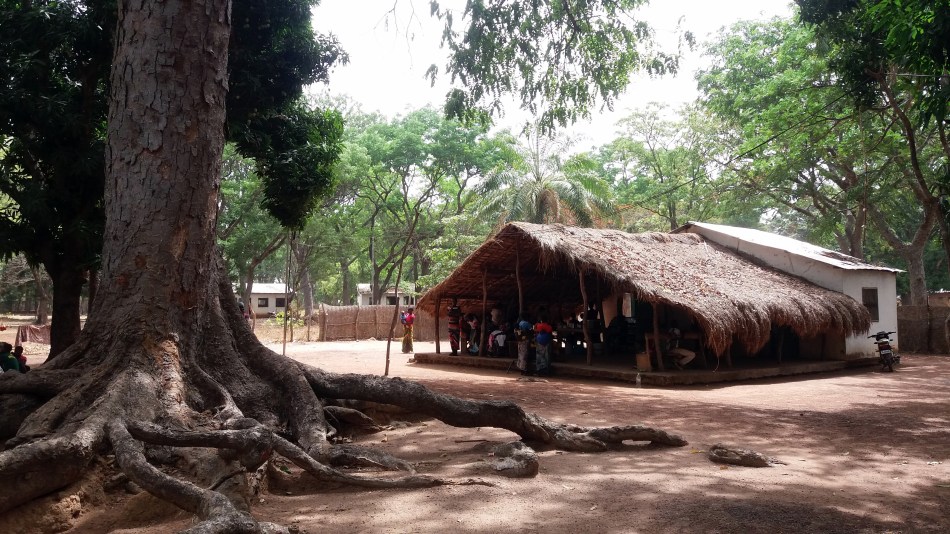
Between February and June, I worked in Central African Republic. I rarely had an opportunity to pull out the camera – combination of very busy, respect for people’s privacy, and some security questions, mostly. Nonetheless, a thing I feel increasingly in today’s global social environment is that, despite social media which claim to connect us all, so very many people especially in the wealthy countries like my own home just simply lack interest or ability to imagine or respect human life as it plays out daily in vastly varied communities spanning this beautiful world. CAR has many challenges – a quick web search will find reports on those challenges easily. But it’s an amazing, enormous, lovely country defined by rivers, forests, and hills which sits quite literally in the heart of Africa, at the meeting of desert-dry north and tropically-moist south, on trade and herding routes which humans have plied no doubt since long before the first Europeans thought of coming to North America. It also has some of the most engaging and resilient citizens I’ve met, many of them colleagues with whom it was a daily pleasure to work.
Something I love about my current work is that restoring human dignity (even in the most trying moments like conflicts, natural disasters and epidemics) is at its heart. I dearly wish more of us humans found time to deepen our own heartfelt respect and fellow human feeling for everyone – whether in different places or of different convictions. I love how my work connects me to a broader fabric of humanity than most Americans ever have a chance to imagine. This feels so much more meaningful and rich than the “purchase this gadget or app to give your life meaning” approach which seems so to dominate social culture and politics here.
For the first time I am trying some videos here. Friends or viewers from low-bandwidth contexts, tell me if this impedes loading the entire entry or just the videos themselves. I can put them into a separate entry if needed, but as you’ll see, I tried to place them where they inform the photos around them. And if any colleagues don’t agree with me posting any of the party or other photos, just write and I’ll take it down. It’s a fine line, making lives in other parts of the world real vs respecting individual privacy 😊. Peace, out.
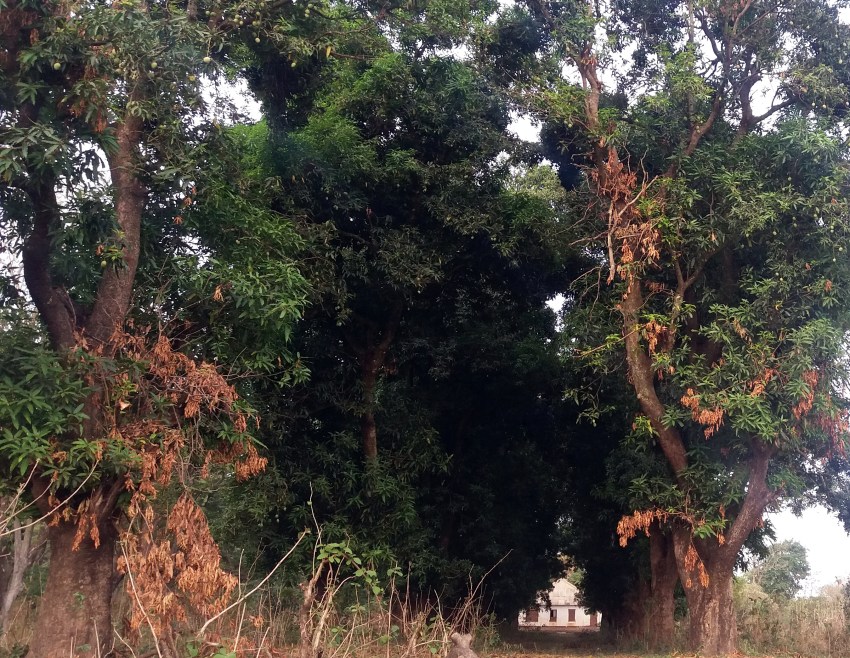
Notice, in the photos above, how the bush rules everywhere, and you can clearly see where human settlement has cut itself a home out of the bush. Where you see a much larger number of houses, we’re close to landing at the Bangui airport.
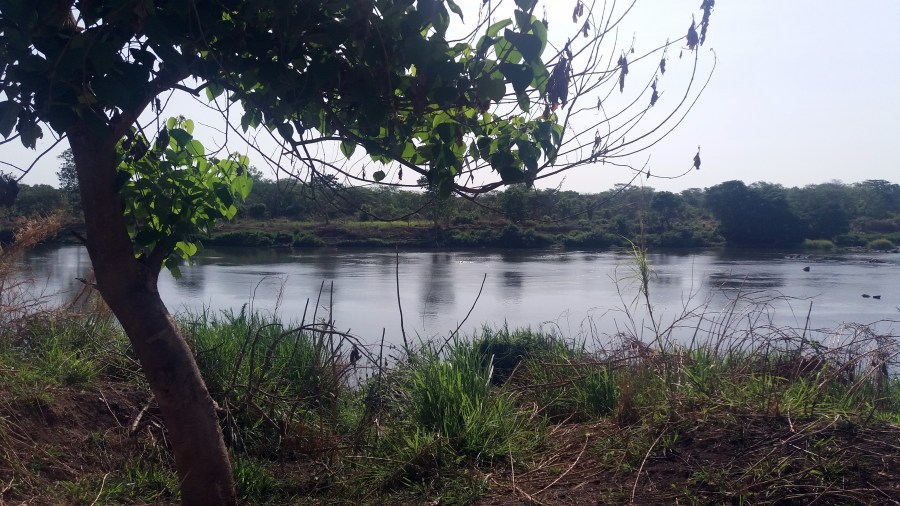
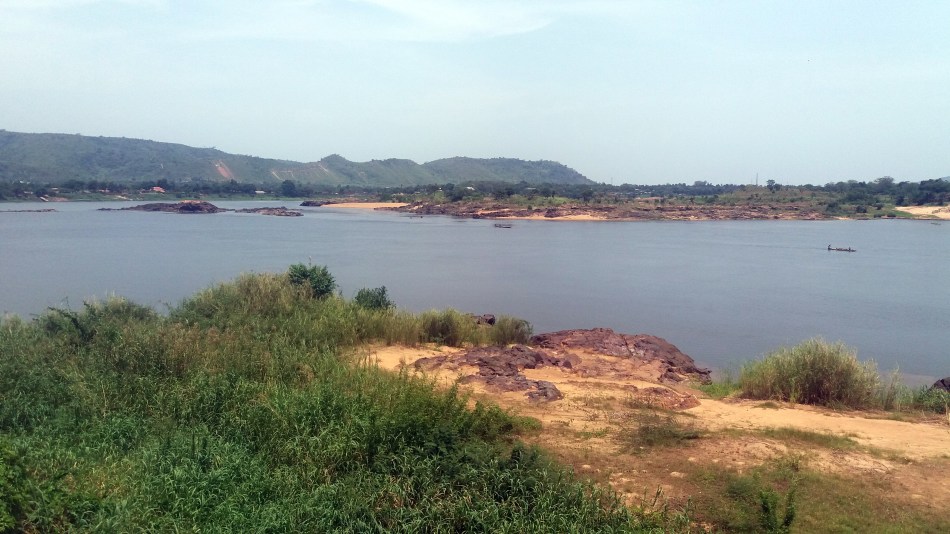
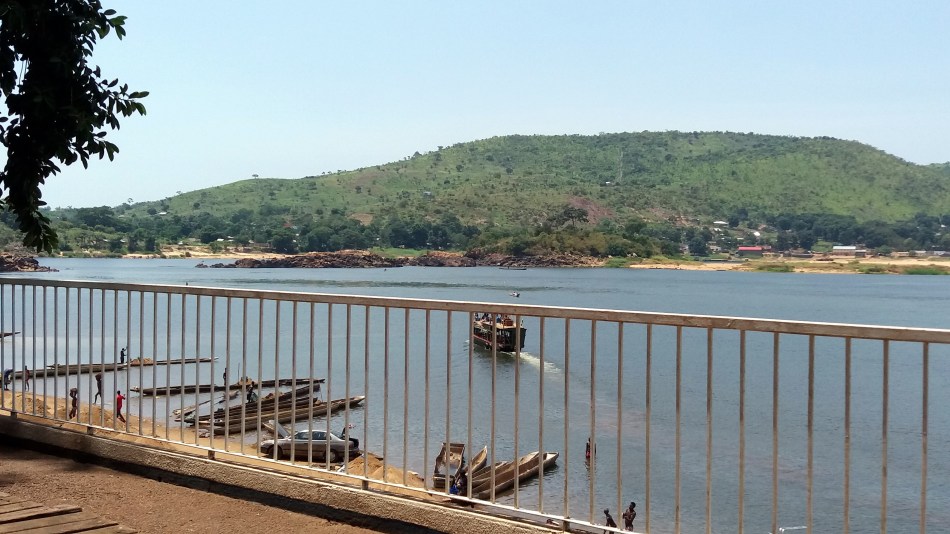
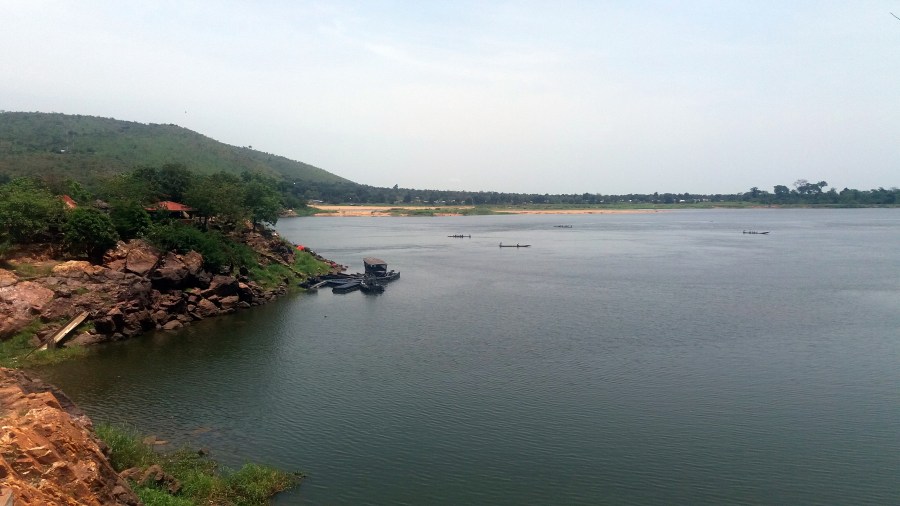
These photos of a broad river with hills on the other side are all from downtown Bangui (the capital of CAR). Across the river is the Democratic Republic of Congo, and the river is the Oubangui, which when it flows into the Congo River a few hundred kilometers downstream of Bangui is the largest tributary to the Congo. Here’s a video, below, which I made just before taking the photo above:Â
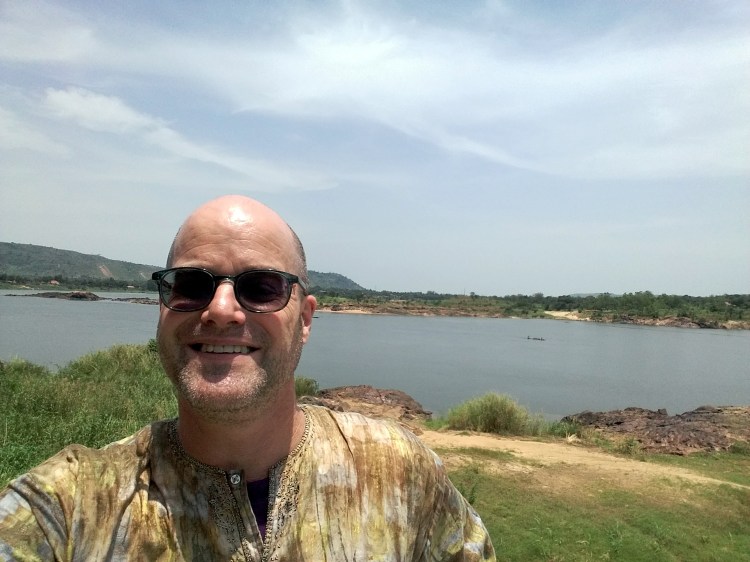
The selfie of me by a river, and the shot of a sunrise over the river, are all the Ouham River near Bossangoa. I sent some friends a photo or two — still photos — and told them there were hippos in the photos. But since the hippos look like rocks until they move (often), people expressed some doubts. Here are the videos, narrated by me and the colleague I did that morning run with:Â
From Sea to Sierra (SFO->EWR)
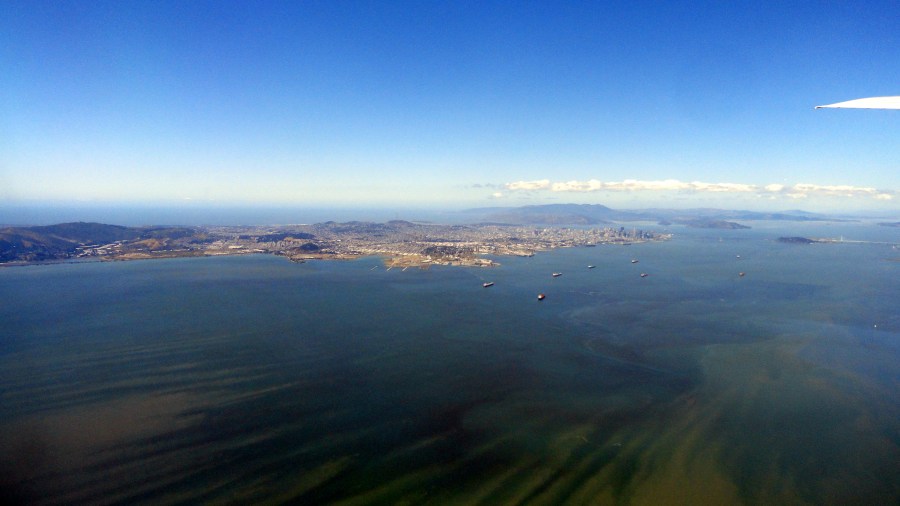
If you haven’t been to the San Francisco Bay Area yourself, and if you wonder why I’m always so happy to get home to it; or why visitors to SF and the bay area so often rave about it — a good place to start is to take in the photo just above. I’m still working my way through photos I took last year, before I headed over to Bangui, where I’ve been now for more than two months. I shot all of the photos in this post during a take-off from SFO en route to EWR last year, in May — but what I’m posting are just photos from the bay area and up til the time we reached the still snow-covered Sierra Nevadas. Since it was nearly a year ago, and this year hasn’t seen as much snow — just remember: it’s last year! Enjoy!
Consolation of the Arts: In Oakland for an Exhibition

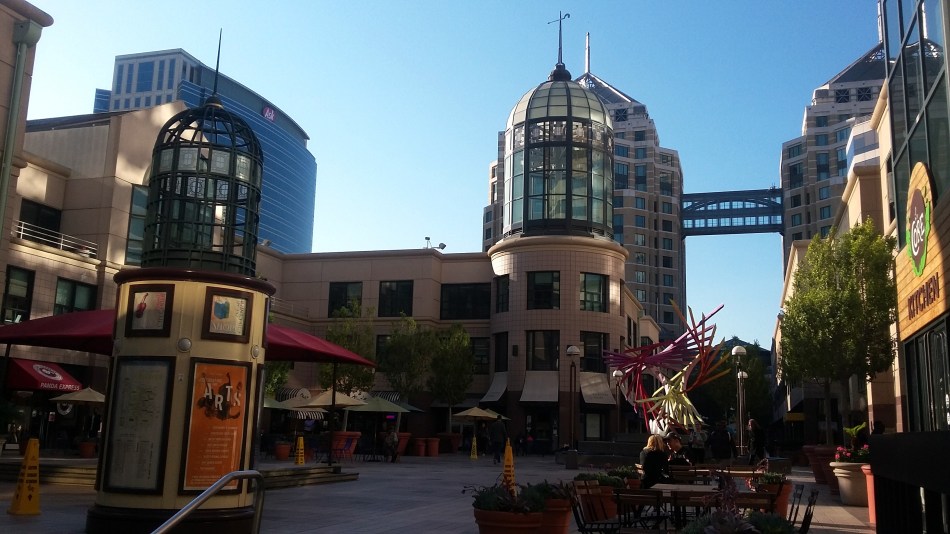
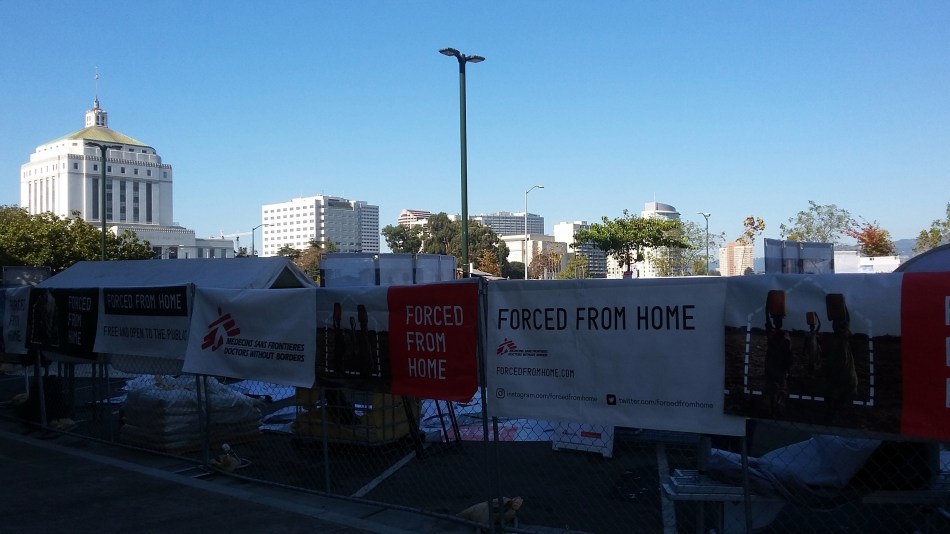
In November, I had the great pleasure of participating as a tour guide in the Forced From Home exhibit, which in 2017 toured five different cities in the west. This provided me with a chance not only to explore a few corners of Oakland more thoroughly than past visits, but also to meet a bunch of other MSF colleagues whom I’d probably never meet otherwise, unless we happened to be in the same mission at the same time. (Which was not the case for any of the interesting and fun fellow tour-guides I met during this stop on the tour.) The exhibit itself happened just across the street from Lake Merritt, right behind the beautiful Oakland Civic Auditorium aka Henry Kaiser Auditorium. The building itself has been closed for structural reasons for more than a decade – but the outside is still beautiful.
But the most important thing the tour gave me was a chance to share a more realistic taste of what life is like for many of the patients and communities we work with, than I can do just speaking in front of a classroom or to friends when I get home from an assignment. I’m always looking for ways to capture what’s similar and what’s different, between the wealth of most US communities and what’s normal for so many people where I work. People who grew up where and when I grew up take so very much for granted that they often seem to actually believe it’s a hardship to not be able to get the next release of an i-phone the day it comes out. (I know poverty is present in the US – but even the poorest states and towns will still usually have paved roads in the town center, a public electricity grid that’s very stable by global standards, a municipal water supply, local and national governments with sufficient income to maintain a fairly reasonable level of civil order, and so on.)Â In any case, I spent about 10 days sharing stories and examples of what displaced people all around the world might face – and it was an honor and a pleasure. It’s interesting to sort and look back at these photos and remember the questions my tour visitors asked, now that I’m back at work in a country with something like 25% of its citizens displaced from their homes due to violence.
I’ll let the photos, of the civic center and the tour, of downtown Oakland and Lake Merritt in all their glory, speak for themselves. (Do read the titles on the small photos from the auditorium, above – you’ll find how I titled this post.) And I’ll share three public links, the first about this year’s plans for the Forced From Home tour (it’s well worth a visit if it stops near you), the second an article about the exhibit which quotes me, and the third a recent public statement relating to the work I’m doing at the moment, to keep things in context. As you know I can’t really talk about the current work on this personal blog…but public statements are public statements.
http://www.forcedfromhome.com/about/
https://www.sfchronicle.com/news/article/Immersive-exhibition-on-the-plight-of-refugees-12327880.php
Dallying in Delft

Usually, my flights back across the Atlantic leave Amsterdam Schiphol in the morning. Usually as well, I like to visit a friend or two in other parts of Europe, after debriefing but before taking those morning flights back to the US. That means I usually come back to Amsterdam a day or two prior to the flight. Which means I need to find my own hotel. I can’t afford a hotel in Amsterdam, really, unless my employer is paying for it on their negotiated group rate. (A’dam is a fantastic town but hotels are freaking expensive.)
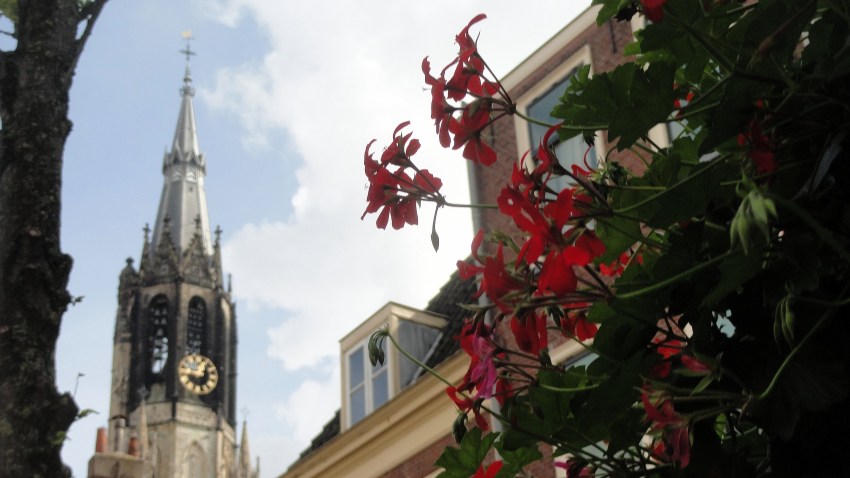
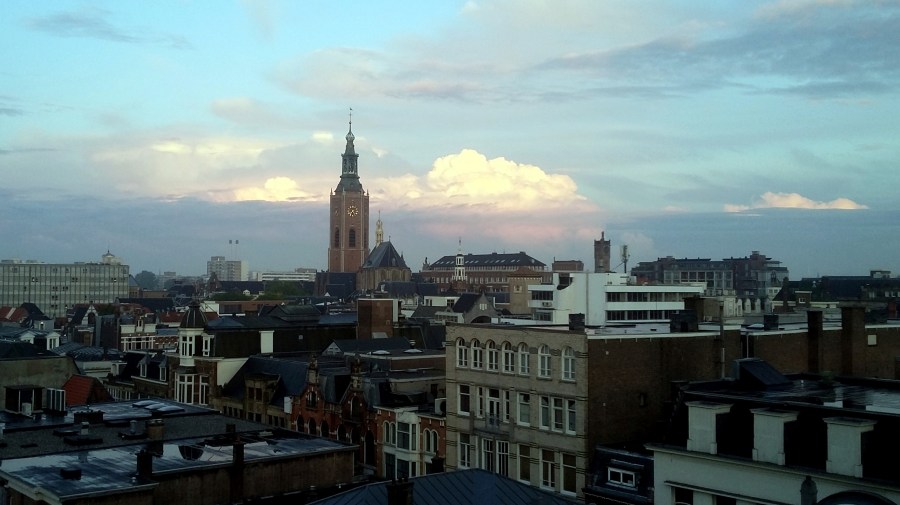
So I’ve taken to staying in other towns a bit further out – The Hague or Den Haag, the last few years. After debriefing from my short assignment to Sierra Leone, last September, I stayed there & spent a day exploring Delft, a lovely town just next door. These photos are mostly from Delft with just a few from The Hague. Usually when I leave a field assignment, one of my great joys is simply to walk the reasonably ordered, clean and secure streets of cities in the US or Europe, by day or night, without having to think in advance about potential risks or having to constantly jump out of the way of motorbikes or loud cars, etc.
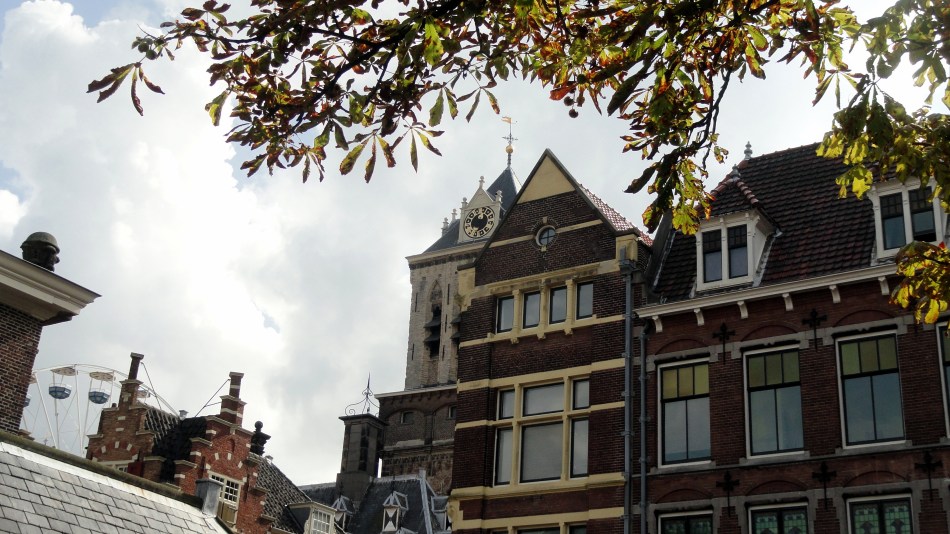
In my Oberlin classmate Tracy Chevalier’s book about Vermeer’s painting “Girl With A Pearl Earring,” a lovely climactic scene near the end of the book involves a large compass laid down in the cobblestones of the city square — so basically, I went in search of said compass, since I know Tracy does her research well. I was saddened to find that the actual huge compass, about which she writes in the book, must have been located somewhere out of sight, beneath the carnival attractions you see in the photo above. Oh well: next visit! It’s still a gorgeous little town full of history and charm, so I’m sure to be back some day. My consolation prize was the smaller compass you’ll find photographed below – but I’m told there’s definitely a bigger one hiding under one of those rides in the main square. 🙂
China Camp State Historic Park
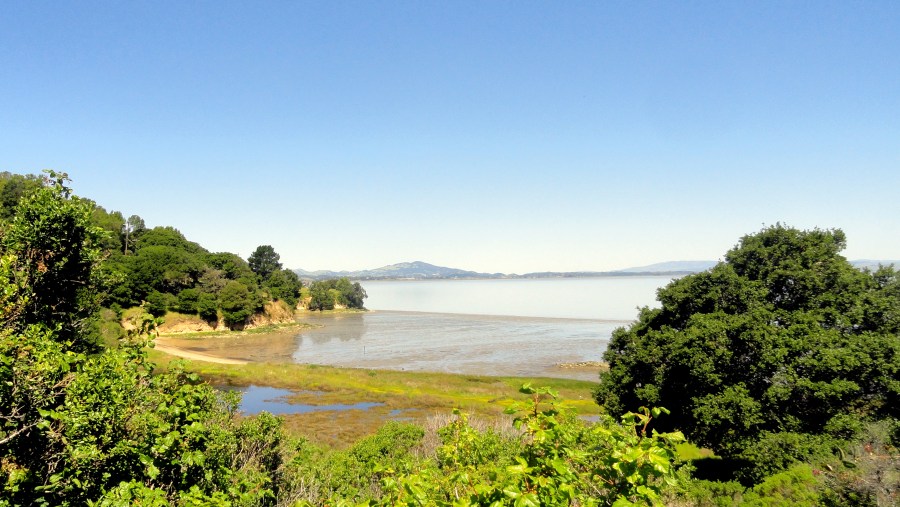
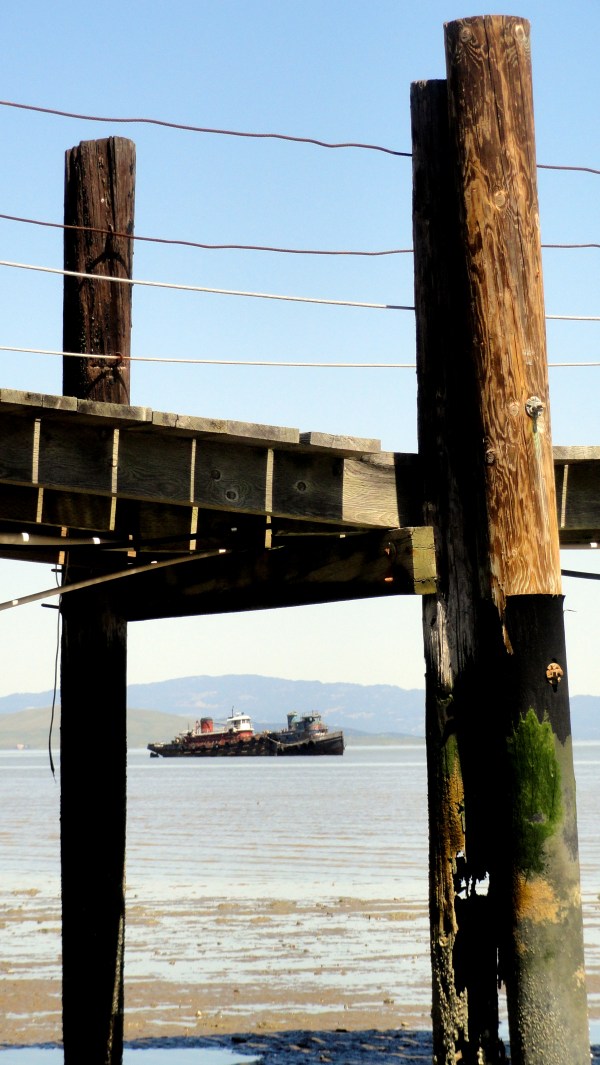
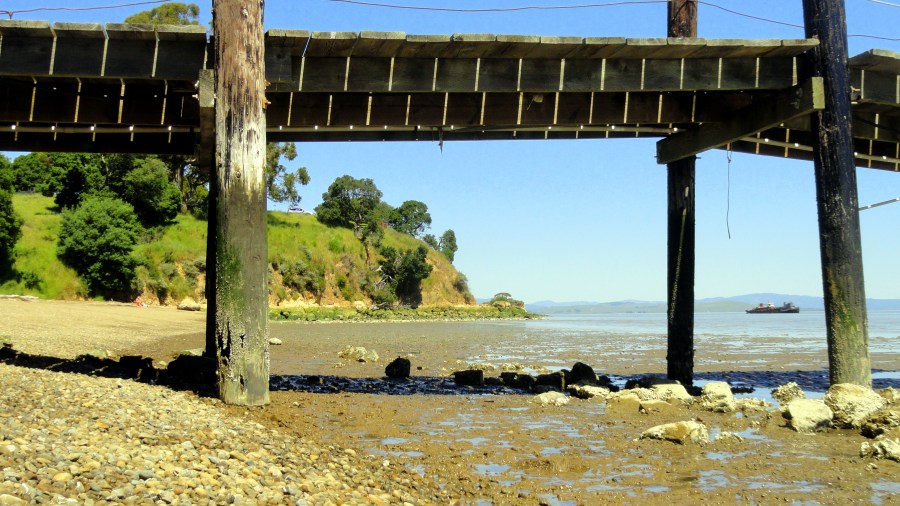
On a warm, bright day last May, I for the very first time took the freeway exit which would lead me, Amy & Nancy to China Camp State Historic Park on the shores of San Pablo Bay in the northern reaches of the greater San Francisco Bay. All along the freeway north of the iconic Golden Gate Bridge, one sees signs for state parks, state historic parks, significant historical or architectural landmarks…and too often one simply drives past with the internal monologue that says “I’ll visit next time.” It’s rather like New York City residents who see the Statue of Liberty out their subway window during elevated portions of the ride from Brooklyn into Manhattan but may actually visit the island itself only once a decade when visitors from out of town express an interest. In any case we three did finally visit on that bright morning in May, exploring a few short trails and enjoying the visitor center’s historical displays about the local shellfish harvesting done mostly by Chinese immigrants, and the local community and commercial culture that grew up around these camps. Yet another sad fact in the history of the western US is the sheer historical forgetfulness of too many anglo types around the essential, critical role played by so many non-anglo communities in making these places what they are today. This little park does its bit to remind us all, and I for one found it well worth a visit – try it yourself some time! And for anyone who’s curious: yes, I’m now back in the heart of Africa, writing this fairly close to the shores of the Oubangui river and I’ll just let you guess where that places me, if you don’t already know :-). At some point I might find a few things I can photograph and post from here, but for the time being I am still using my limited personal free time to dig through photos from some of my favorite outings during my extended inter-mission last year…I hope you enjoy them as they pop here every now and then in coming weeks, as the occasional lazy Sunday morning with sufficient internet bandwidth permits. Peace, health, thanks as always for visiting the site and sharing my photos with me … out.
Marred, Scarred & Marvelous Mountains of Sonoma County
Singing the mountains and valleys, trees and rocks, grass and flowers and even the loud wild turkeys that surround me in my adopted home here in the North Bay. As most readers and friends know, this adopted home town of Santa Rosa, where I’ve hung my hat any available moment between assignments or family-and-work trips elsewhere since 2014, was caught up in a devastating fire which then became a complex of several enormous fires in October of last year. As noted in a few previous posts, I’m trying to watch the process of decay and new growth which nature is pushing forward as the rainy season has rolled from November through now February here. We’re still far too short on rainfall for the rainy season, and must hope for many more inches in coming months if we’re to avoid further devastating fires and water restrictions later on. But for the moment, the grass has greened the hills and gentle steady rains have revived many plants whether burned, dormant, or both. Burned patches scar many of our mountains as seen from a distance, while burned trees and rocks remind us on walks and bike rides that we’re fortunate the fires ended when they did. I’ll soon be off to a new assignment, in a portion of Africa which rarely makes the global headlines, and where the opportunity and luxury of taking photos will rarely apply. So to remind myself of the beauty for which I’m so grateful every time I come home…I’m popping a whole ton of photos (yes, I know, way too many) up on here. Further down you’ll see galleries with tree-and-rock level detail of charred tree trunks still standing and bravely putting out new leaves and shoots; you’ll also see three months’ worth of photos of my fire-scarred rock in its gully and be able to compare the process of regrowth. It’s rather like watching the scar from my own small surgical procedure last December: each month, that scar seems to recede. Mine is only a small scar, unlike many of our mountainsides whose scars still astonish with their size and brownness, even in this relatively green time of the year. Enjoy the photos – click on individual pictures in each gallery and you might see why I included it once it’s a bit larger. (For example, a tree scarred at the bottom but still alive higher up.) Here’s to a year of healing wounds and finding new growth, for me and everyone reading this :-).
- January 30 2018
- January 1 2018
- December 11 2017
- November 12 2017
- 1/1/18
- 1/30/18
- 11/12/17
Rainbows & Red-Dirt Roads in Tonkolili

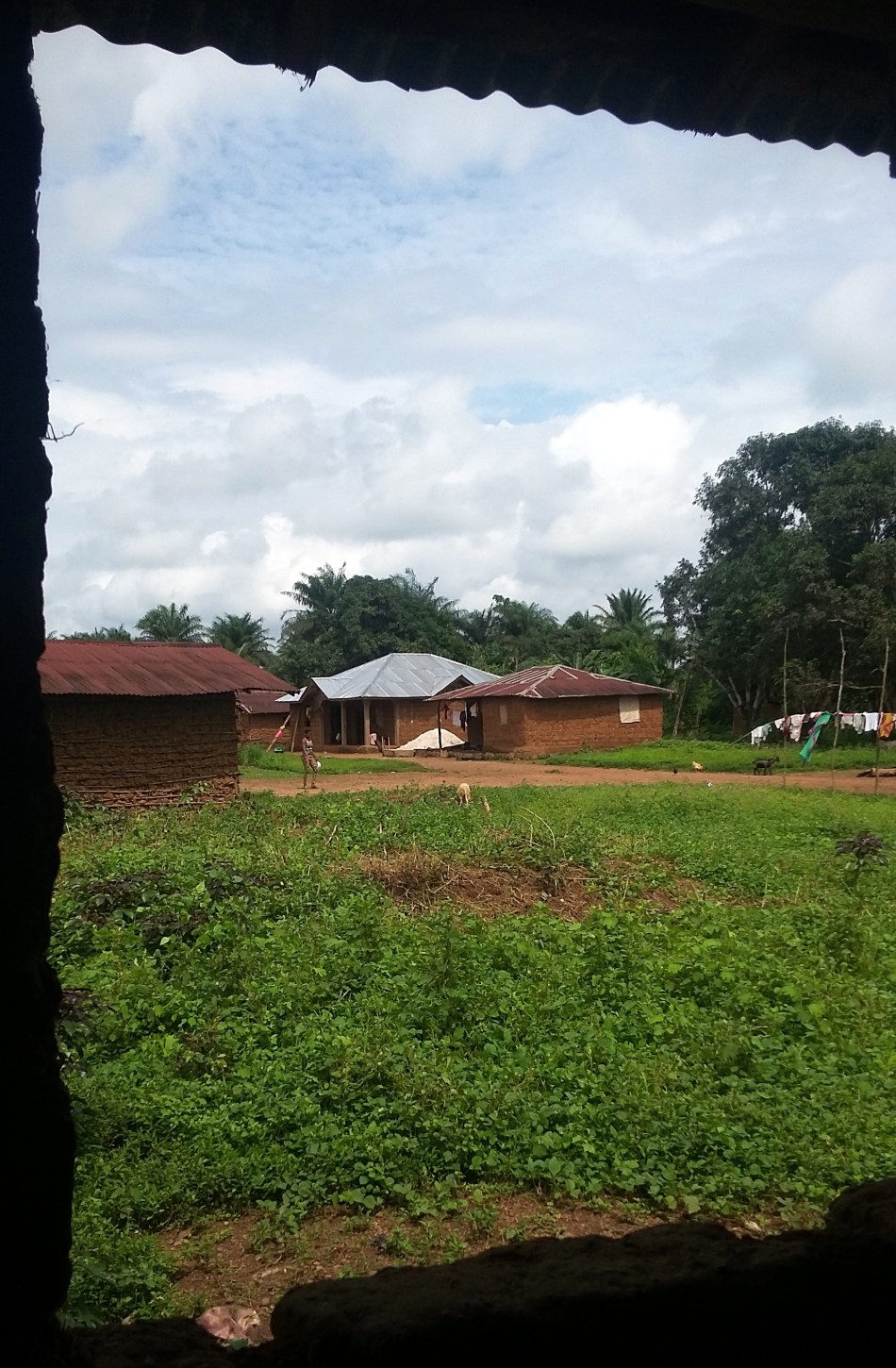
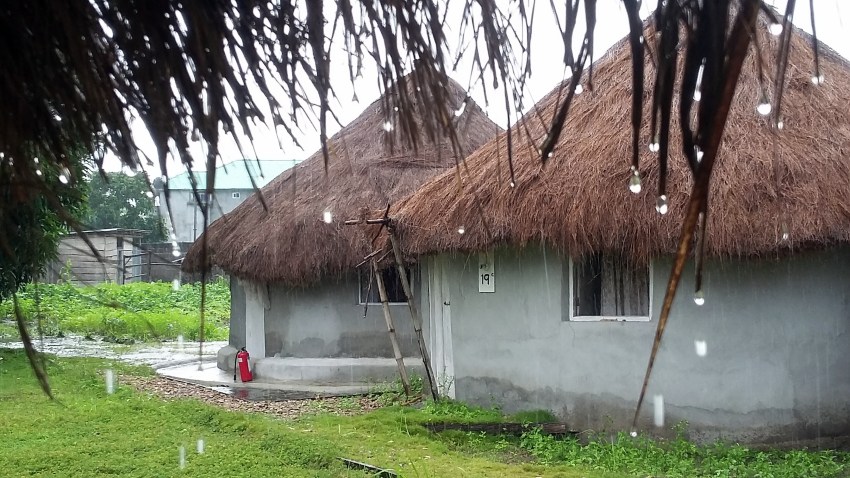
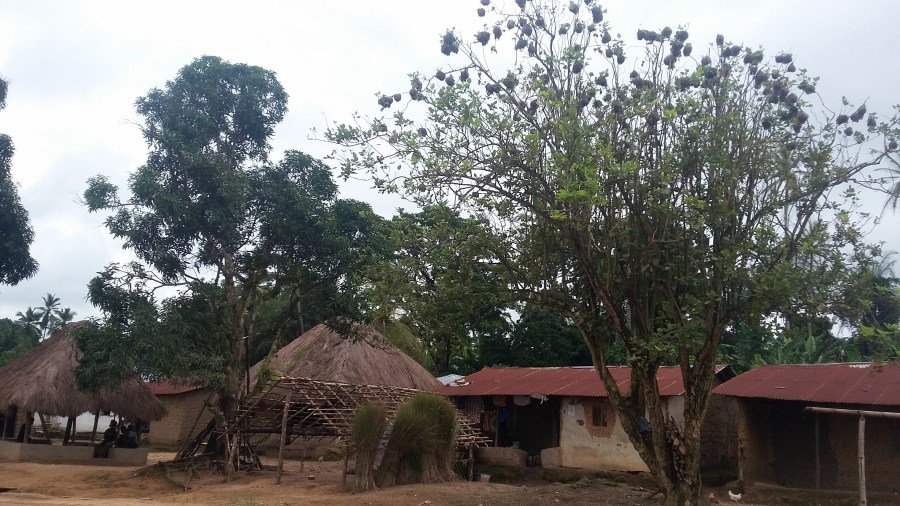
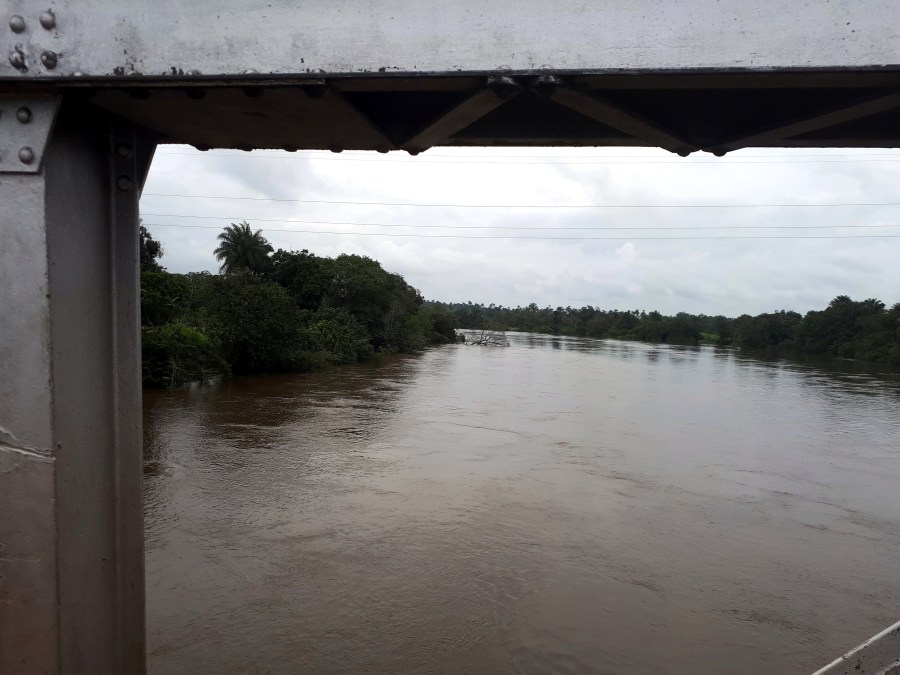
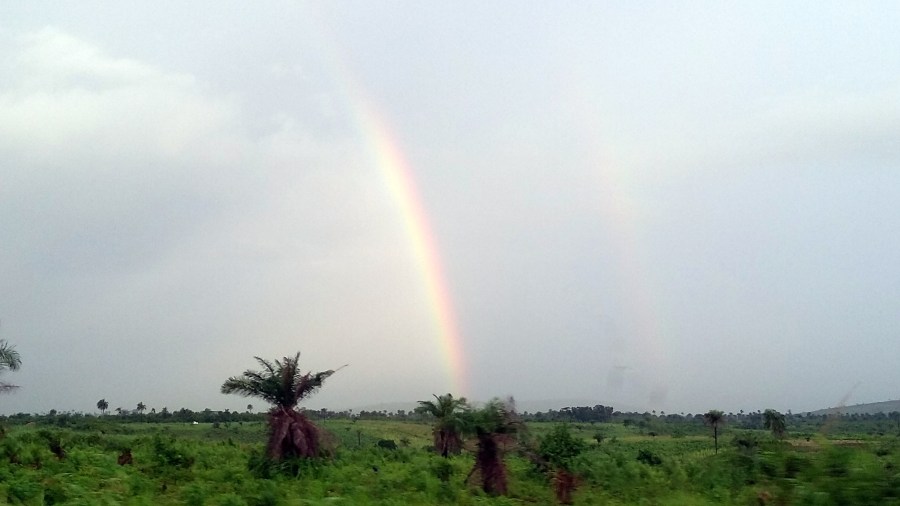
This post I’m sharing more photos from my seven or eight weeks back in Sierra Leone, July-September last year. These were all taken around my birthday, on a lovely trip to work with our project teams in Tonkolili district – green forested hills, red-dirt roads to small villages, lots of outreach to make sure folks got the care they needed and knew where and when and why to go for care. It was the first birthday in a few years I’ve been in small villages on health outreach, since I usually time vacations and a break from responsibility for my actual birthday — but what a great way to spend it, shaking hands with community members, seeing the rainbow from the very last photo in this post and the social weaver birds in their tree (just below, with some close-ups in the gallery below that), and reconnecting with small-town life in new places. 
Views From The Hills (of Massachusetts)


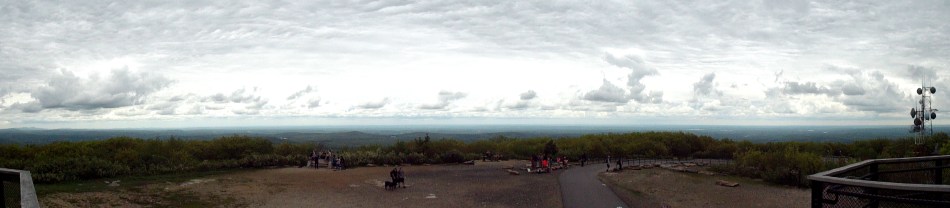
One of my oldest friends lives near Boston, and occasionally during extended breaks between my assignments, I manage to visit him & family, and explore Massachusetts for a bit. On our last visit, we sought songbirds on an exploration of the historic and quite lovely Mt Auburn cemetery in Cambridge, and did a lovely hike on a semi-rainy day at Wachusett Mtn State Reservation, toward the middle of the Bay State. It was early summer then, and so very green. I often wish I had more literal time and mental space to explore the corners of this country a bit more – and New England is a region I rather wish I could visit a bit more often…though, truth to tell, not in the winter!
Friendly Fabulous Freetown
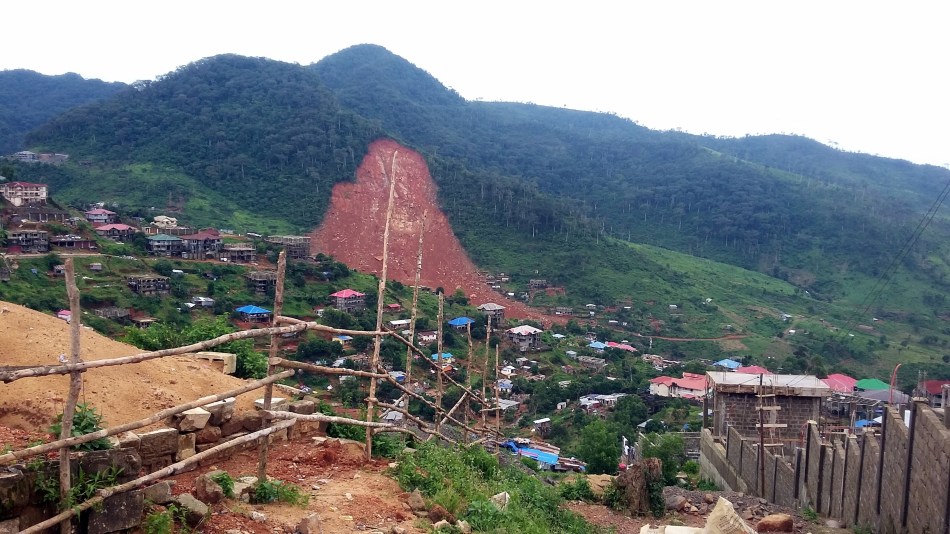
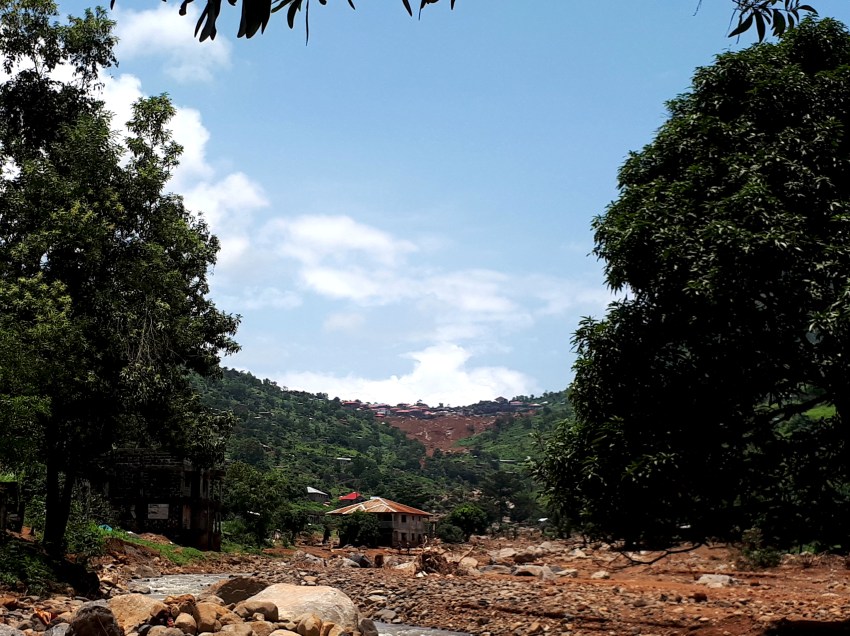
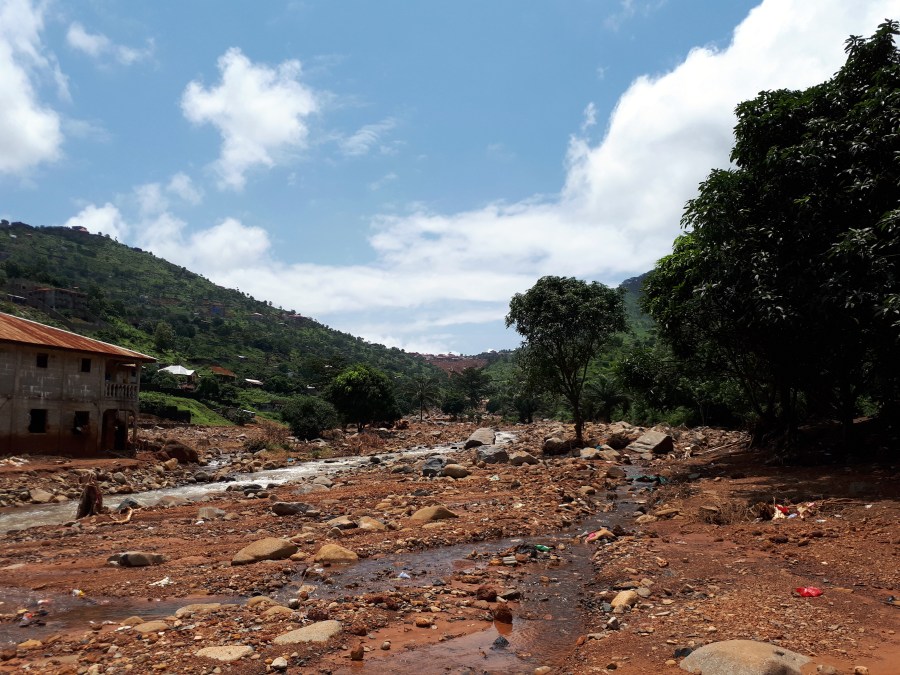
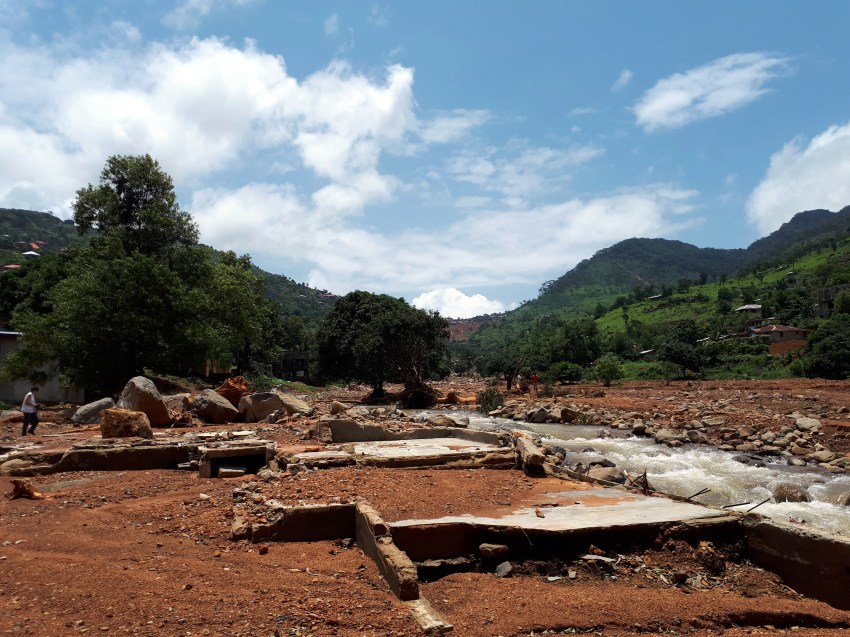
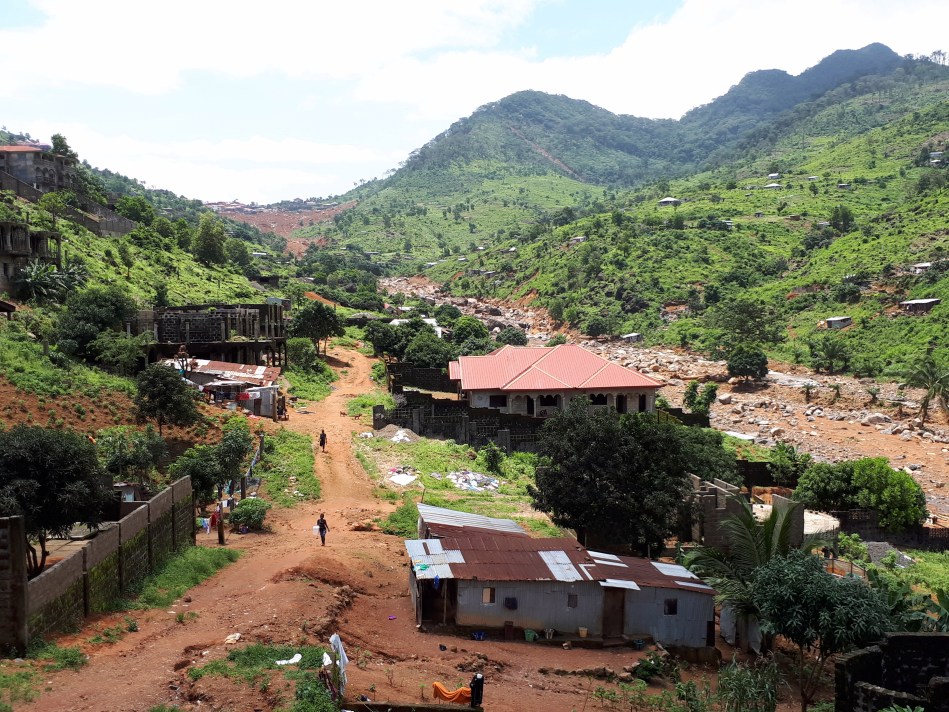
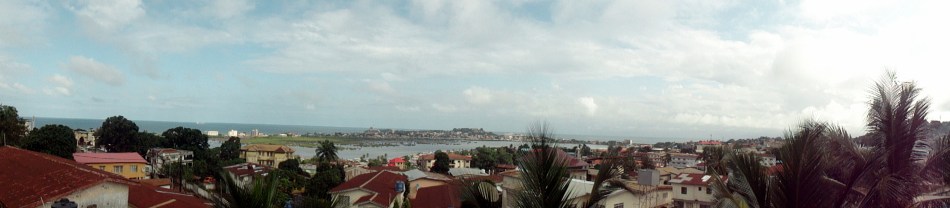
Linger on the photos just above this text, long enough to see all six of my favorite photos taken in & around Freetown, during the eight weeks or so I spent in Sierra Leone between July & September of last year. I’d gone for a short assignment to cover for a friend who took an extended vacation. While there, I ended up working a bit more intensely than expected since my Sierra Leonean friends, colleagues, hosts and interlocutors all found themselves having to deal with yet another unforeseen crisis when massive rains led to flooding and landslides right in the hills above Freetown. That sad reality, yet another time this nation has had to demonstrate its resilience, is documented on many a news site from August and September. I’ll likely post a few personal photos from some of those affected areas in coming weeks – but in honor and thanks to the warm and hard-working colleagues and friends I’ve worked with on my now two short assignments in Sierra Leone, I want to begin simply by showing again some of the beauty I enjoyed when I went for walks or drives, evenings or weekends. It’s such an honor and a gift to broaden my horizons and experience humanity in such variety and richness as I do through this work. The silly complaints of the privileged, spoiled and unappreciative individuals in places like my home country then come into a more meaningful and constructive focus for me. There really are times when I wonder what the end-game for all these greedy, destructive capitalist captains of industry is… Peace and health, friends.