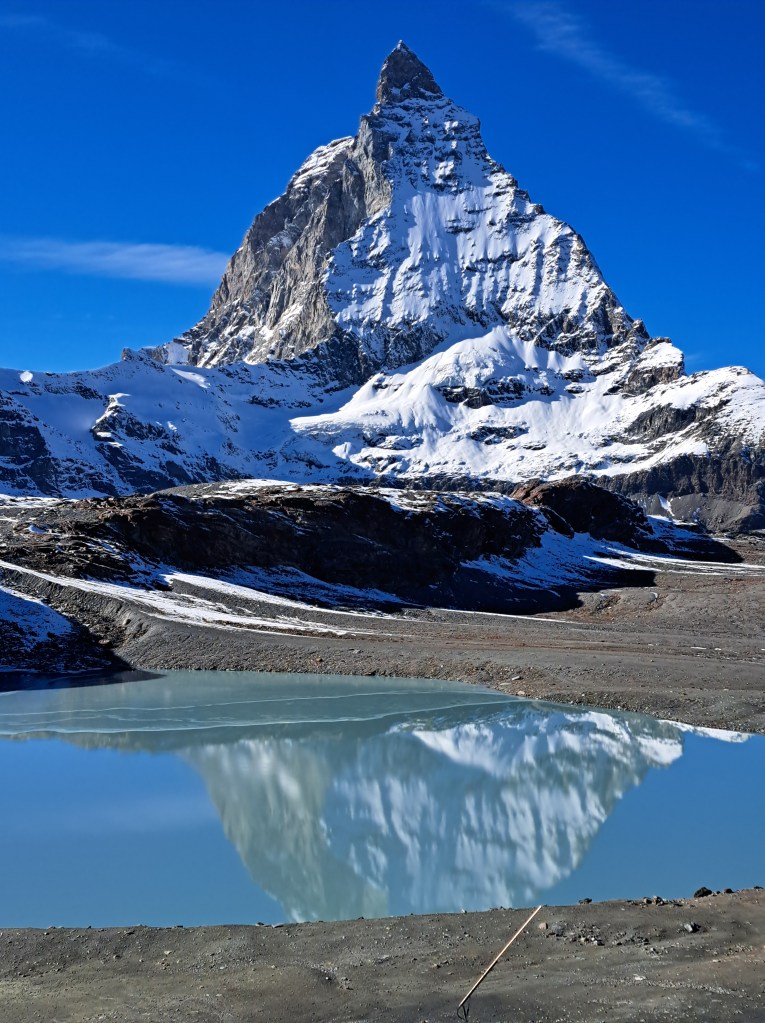
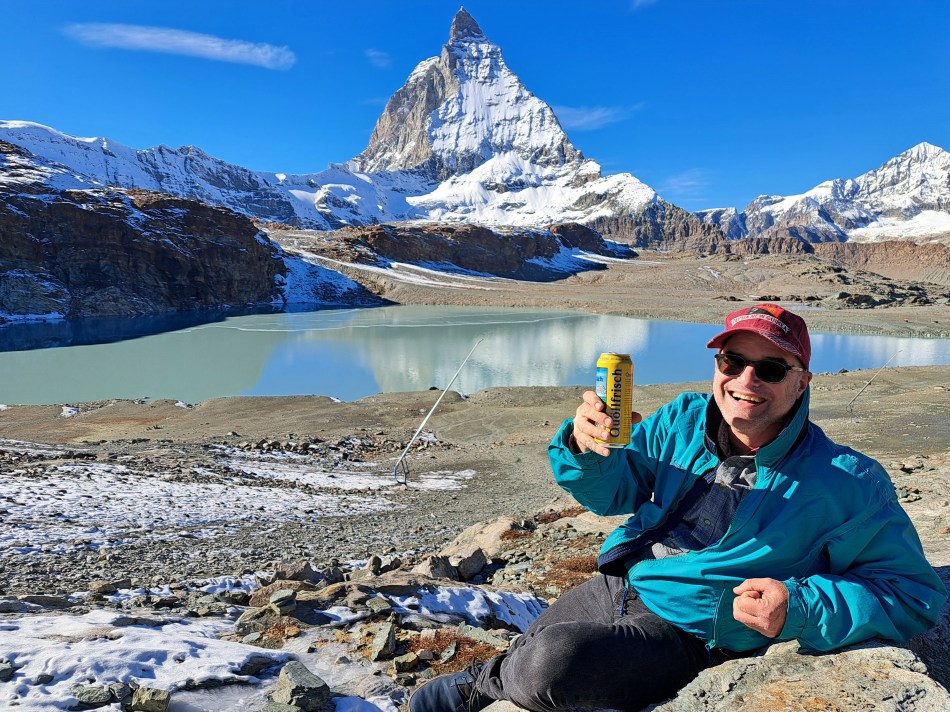
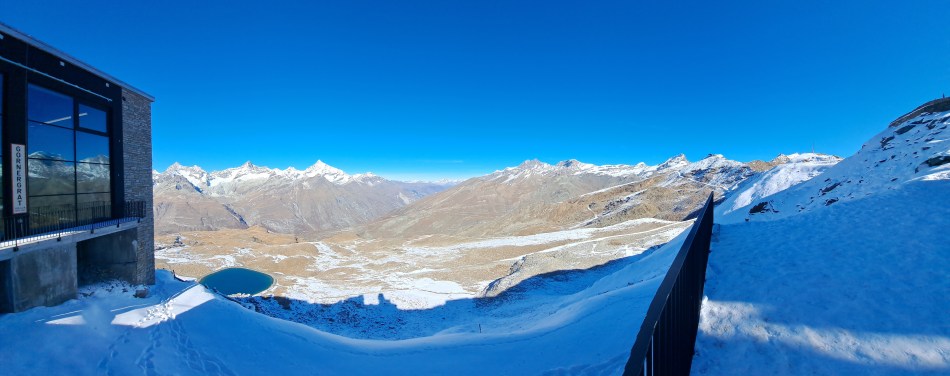
 This is the closest I got to the actual mountain; as you see, it’s actually starting just across this lake. The last “From the Air” claimed I was posting all the remaining gondola-ride photos from the trip up to the “Little Matterhorn,” which may be technically true, but then there was also the ride back down, from which you’ll see one shot below and likely more in future iterations of “From the Air.” In any case: during that ride up, I stood just next to a rather strikingly red-headed chap with whom I struck up a conversation and turned out he lives in San Diego, a city I know fairly well. Since we were both solo travelers, he and I then shared our explorations up top, and then decided we’d jointly wander over to this lake just downhill from the bottom of the first transfer station going down. He’d packed beer and snacks with the hope of having his photo taken drinking beer in the snow, but up top there weren’t good spots so we found a suitable spot with just enough snow here, lower down. You’ll see the pics he took of me enjoying one of his beers lower down, as well as a gallery of air bubbles trapped in ice around the lake as well.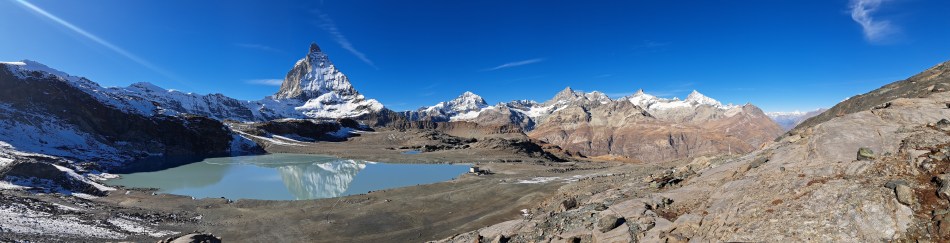


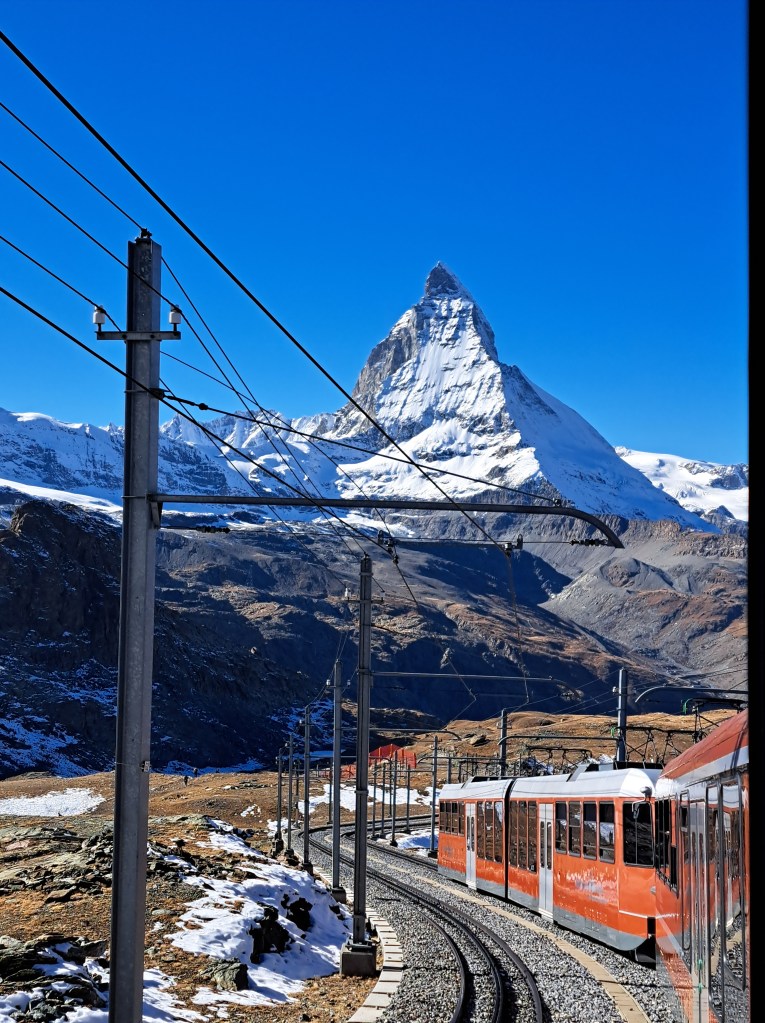 With some apologies, I’m going to throw a large post with a ton of photos at you. These are all the remaining photos that I took during my trip on the very expensive but quite remarkable Gornergrat Bahn, which connects from Zermatt in the valley below, to Gornergrat where (one of?) the highest hotels in the alps sits on a rocky ridge with views to the Gorner Glacier and more. Truly, I edited the photos down but felt each of the many I’m still sharing with you explores a different aspect of this particular journey and afternoon. Or maybe I just want to show lots of photos to make myself feel I got a lot out of the trip, given that the ticket was more expensive than what I’d pay to go from A’dam to Brussels…


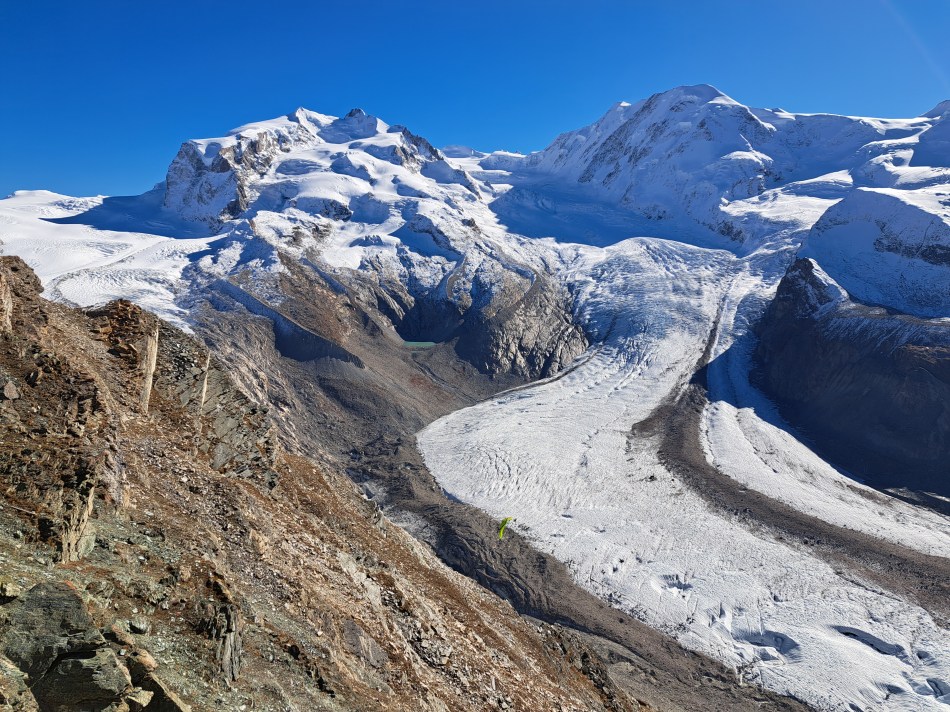
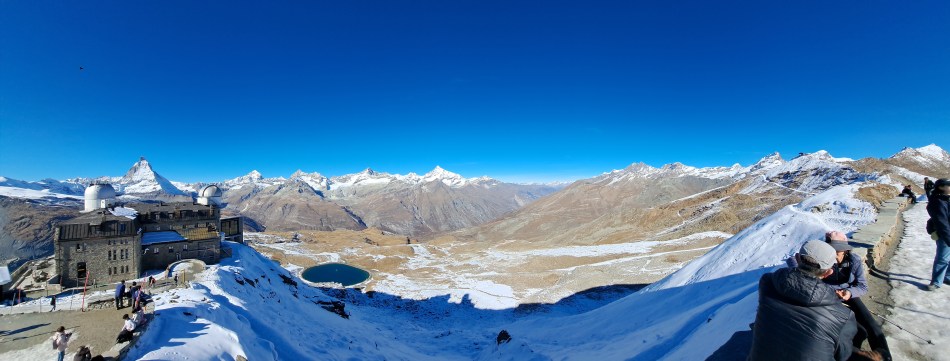


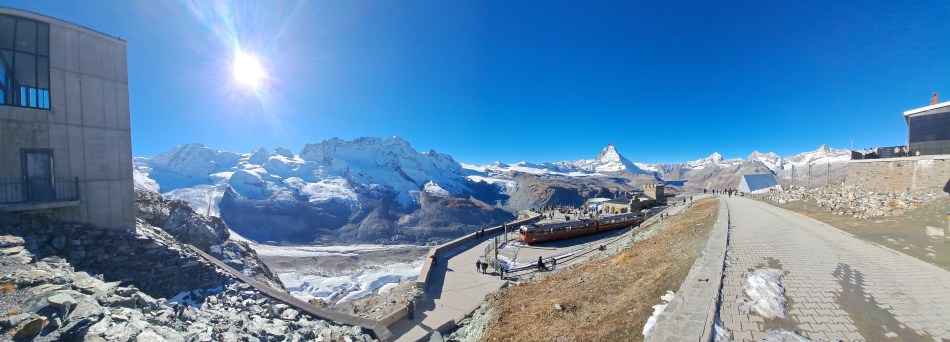


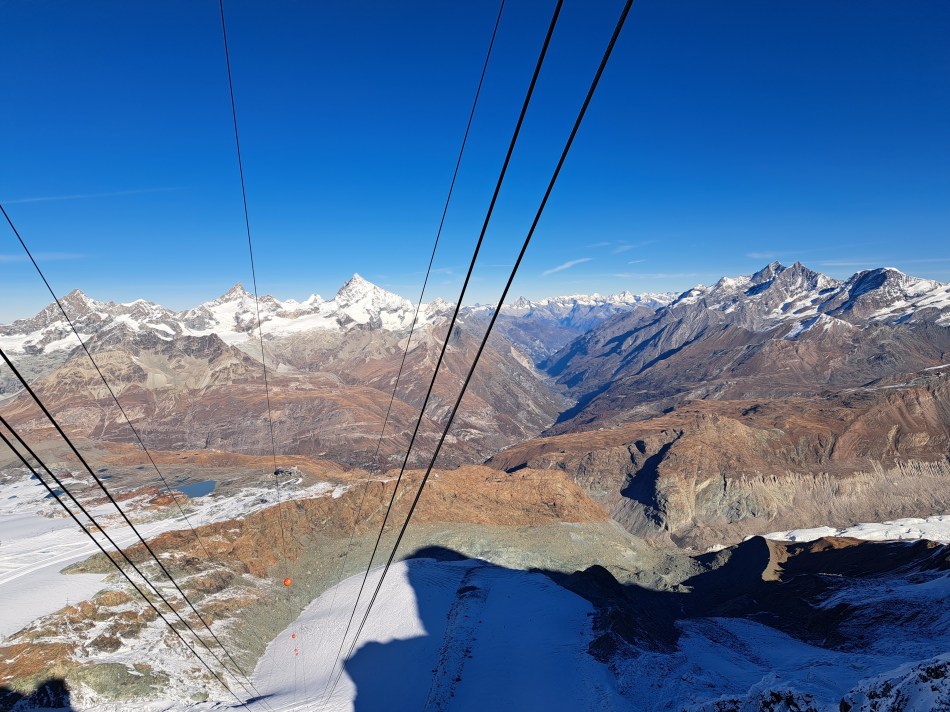
Last of the photos taken while dangling in a gondola on my way up to the Little Matterhorn and Glacier Paradise on November 1st :-). Definitely not yet the last of our Zermatt photos, which I am in fact still paring down for quality and duplication-reduction reasons. But you gotta admit, it’s a pretty spectacular region, eh?


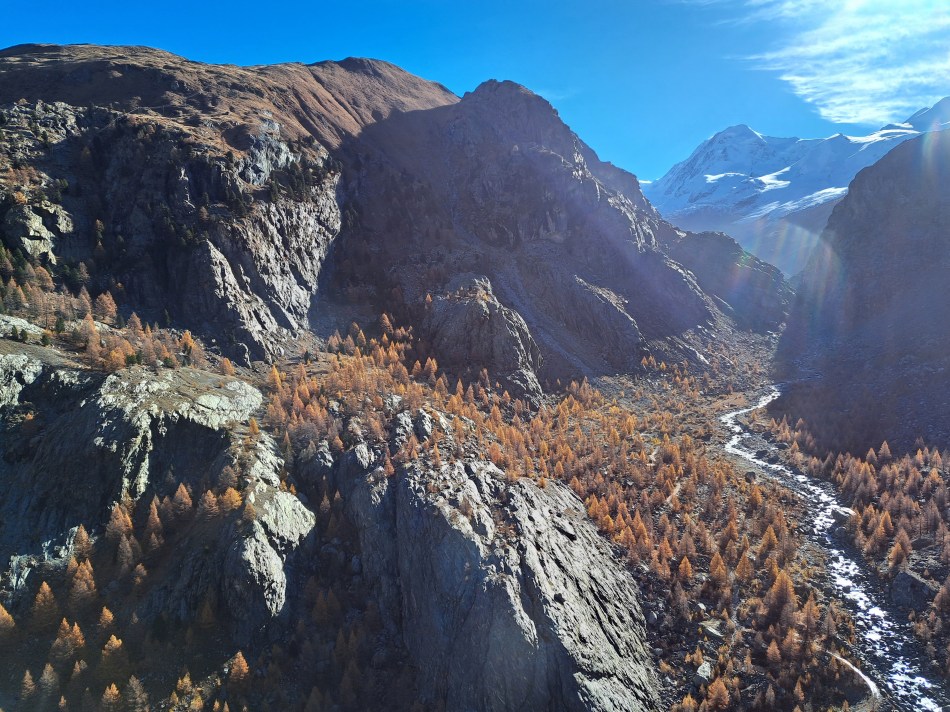



The stream above gets channeled into the pond below, and I believe becomes part of the water source for surrounding villages including Zermatt. But not sure.


These are all from walks during my first afternoon & evening in Bissone, the lovely mountain & lakeside village in which I spent four days and and nights on the east shore of Lake Lugano, across a causeway and bridge from Melide, which has the train station. Pretty sure we’ve shown you the snake emblem (above) of the town before; if not, you’ll see it again in future for sure b/c these aren’t the last of my photos from that eye-opening visit more than a month ago already.


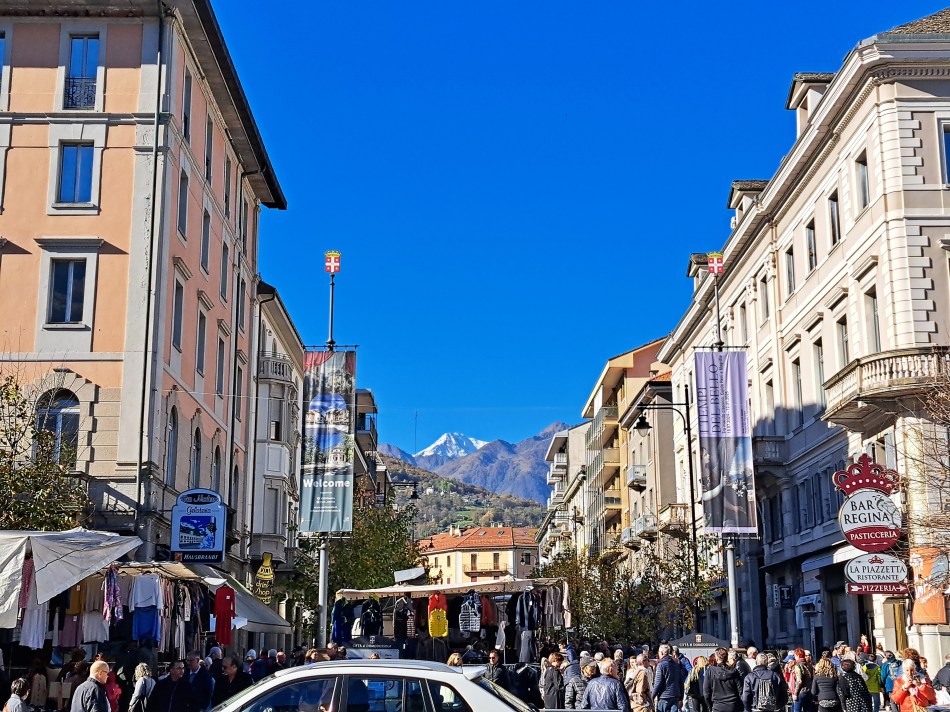
In traveling from Zermatt to Melide in early November, I changed trains at Domodosola, just south of the alps in Italy’s Piedmont region. I had roughly an hour’s layover here, during which I found an outside bench and took these photos while I ate the portable lunch I’d packed that morning before taking the first train down from Zermatt. In one of the shots of the train station below, you’ll see a reference to the Centovalli rail line that runs from here up to Locarno – a bit of which we’ve shown you before, when I came down the other direction later that week. 🙂


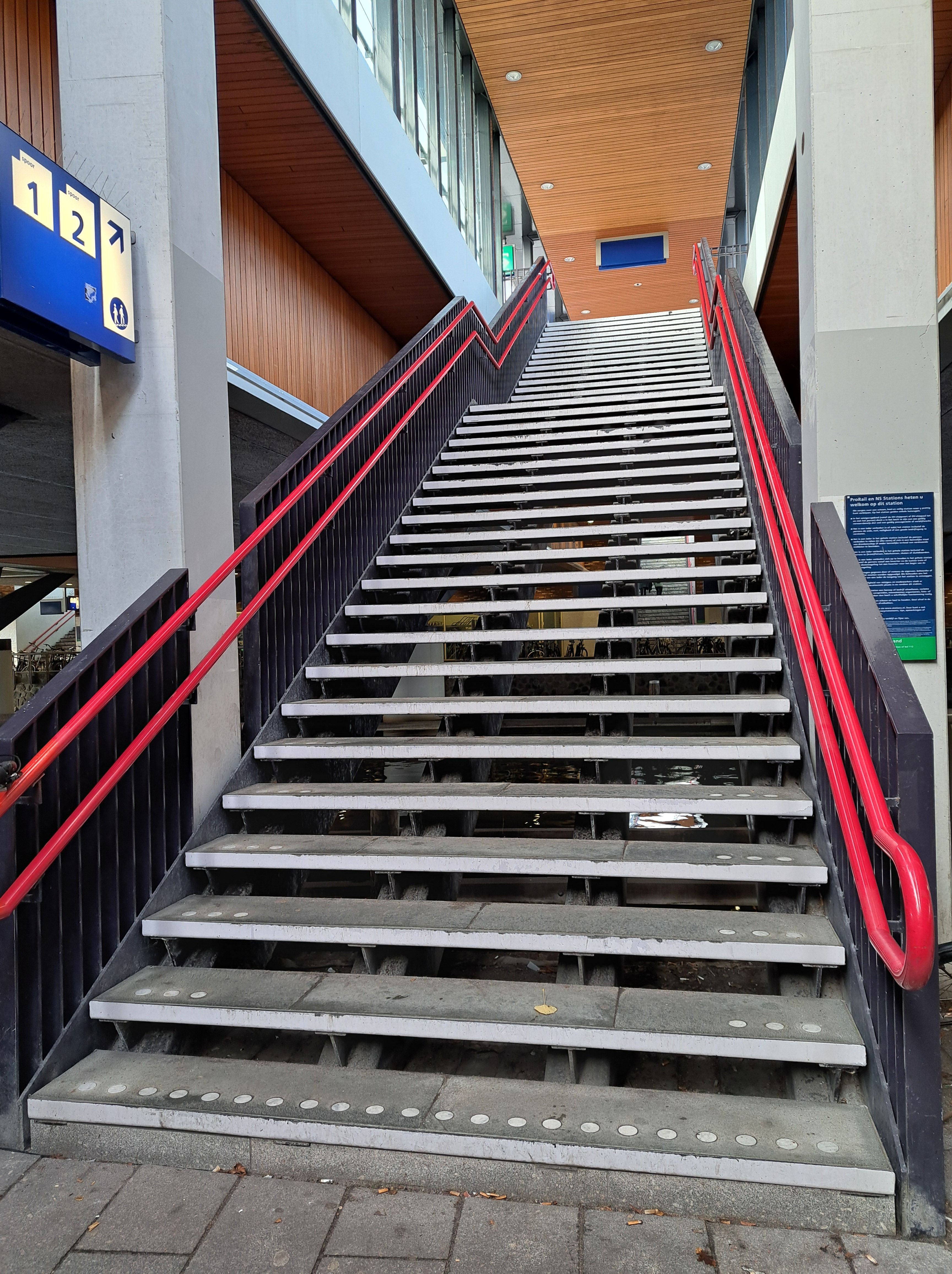
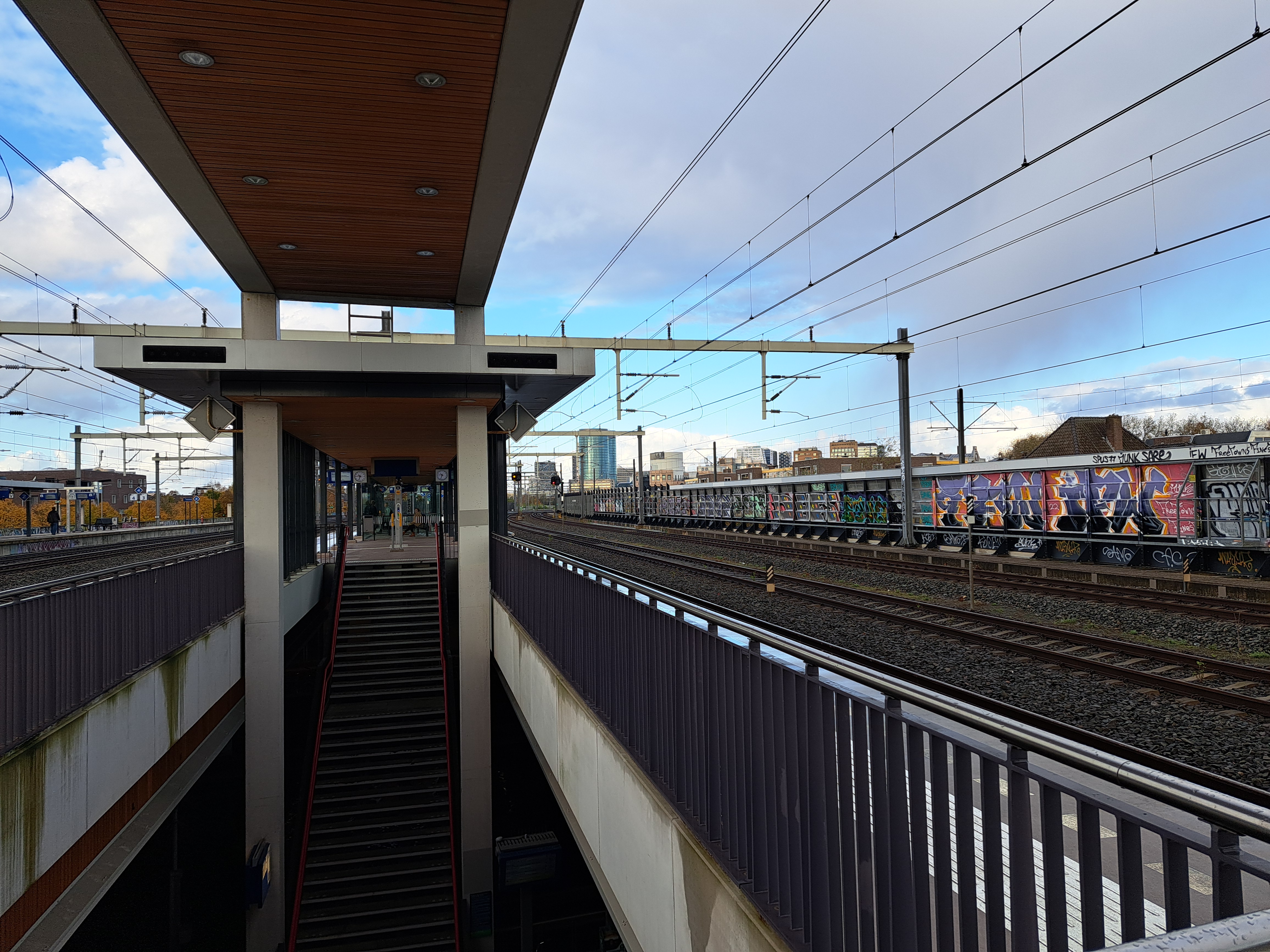
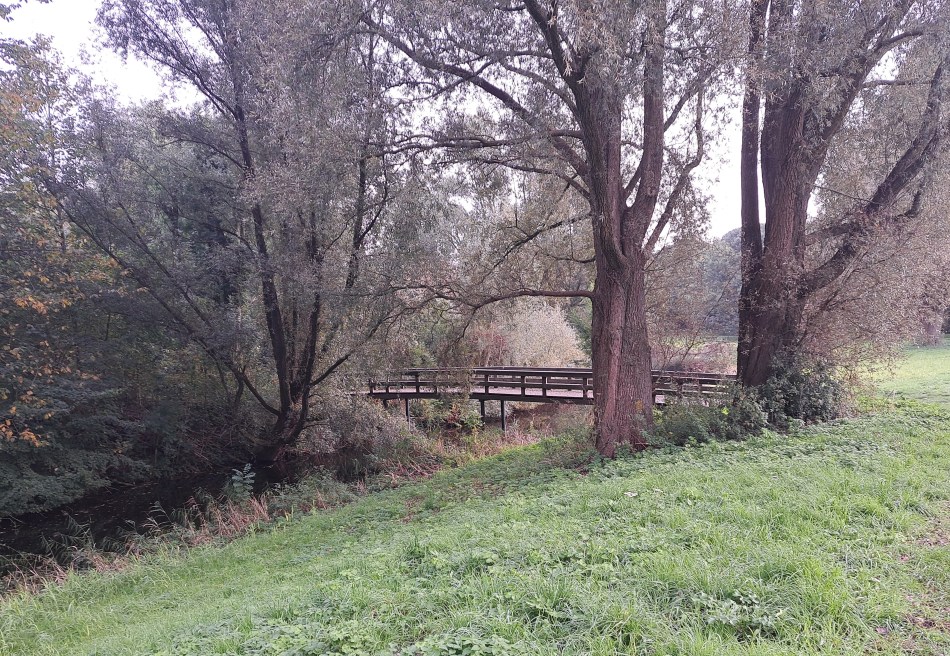 Oops, somehow I skipped this lovely new series when I ran through the “6” set, so now I need to catch up. Since we’ve shown you bridges in Paris and Berlin so far in this series, I’m home to Amsterdam for this first catch-up post, a lovely pedestrian bridge (bikes also, but the paths to the left side there aren’t paved and do wind a fair bit through a surprisingly wild patch of parkland) the park across the street from me.