
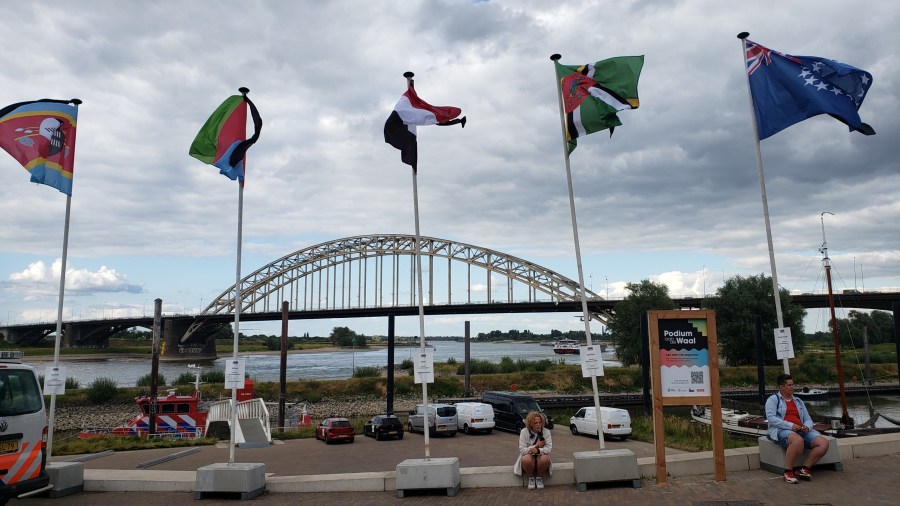
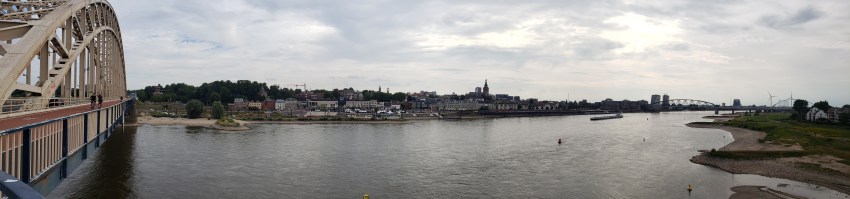
 Last shots from Nijmegen, including international flags along the riverfront which I assume were there for the opening and closing ceremonies of the Eurogames, an LGBTQI+ – oriented (but naturally welcoming to all) sports festival and competition at which yours truly took home a “bronze medal” in the (very, very small) draw of men’s singles that I had joined. Those games and playing a ton of tennis while watching many friends play tennis (and many others whom I don’t know play soccer, volleyball and squash) took up most of my time during those days in Arnhem and Nijmegen back in July. You’ll see a few more shots pertaining to the games — including the list of sports planned for next year’s event; see if you can spot the sport which demonstrates life imitating art… Immediately below, a few more highlights from Nijmegen’s excellent and well situated museum (yes, same bridge – it’s on the bluff above the river).


















 (so much world, so little time....)