Family Holiday…at Home :-)
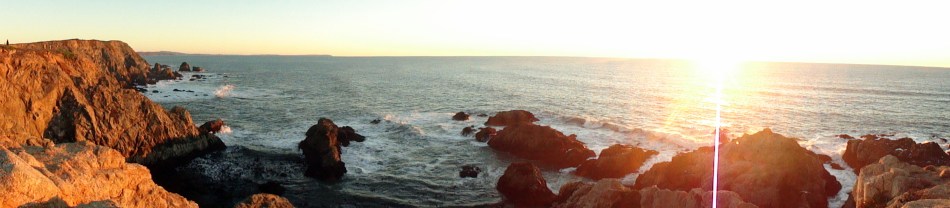
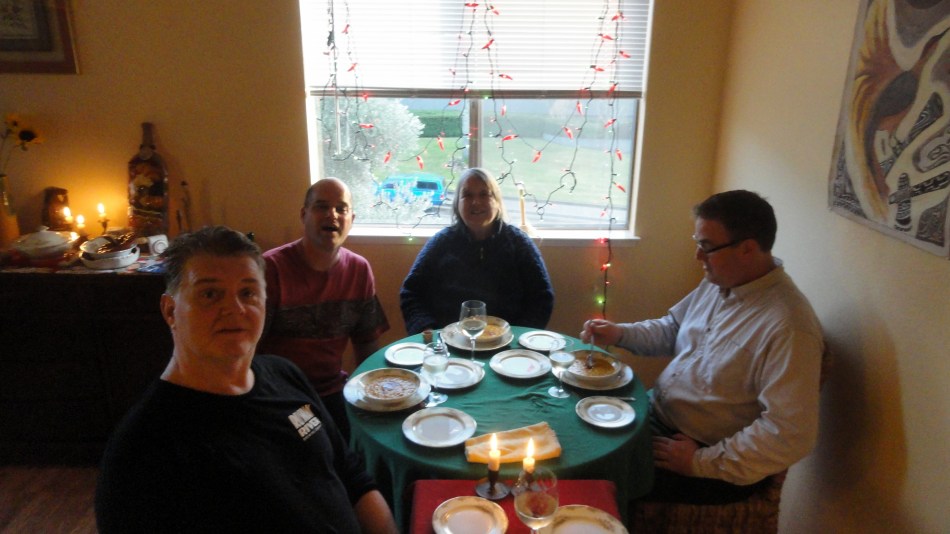
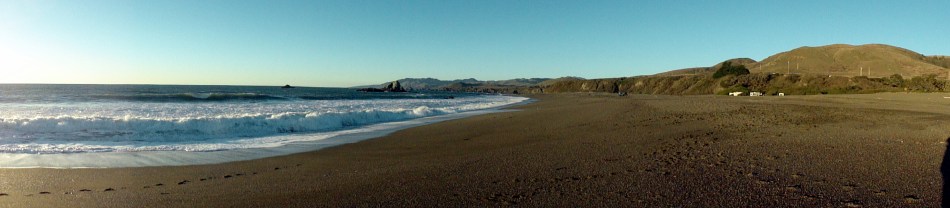 2015 was the first time since 2005, when I started this whole global-wanderer thing, that I’ve been at work only one flight away from the US, and in the same time zone as my mom and one of my brothers. This was also the first holiday season in more than a decade where both my brothers and I managed to get together in one place. Not only several lovely meals and afternoons together, but a trip to the local, fantastic, brewery in honor of my biggest brother’s new brewing ambitions. My sister-in-law generally stayed behind the camera, but certainly helped fill out the festive feeling for everyone. We got out and about a good deal, some with just mom and Steve who were able to stay longer, and some with Chuck as well. Lovely, and I’m going to let the many pics just speak for themselves. Some are really just family stuff of limited appeal to most of my readers…apologies, but it was special for me. 🙂


Elephant Seals @ Ano Nuevo

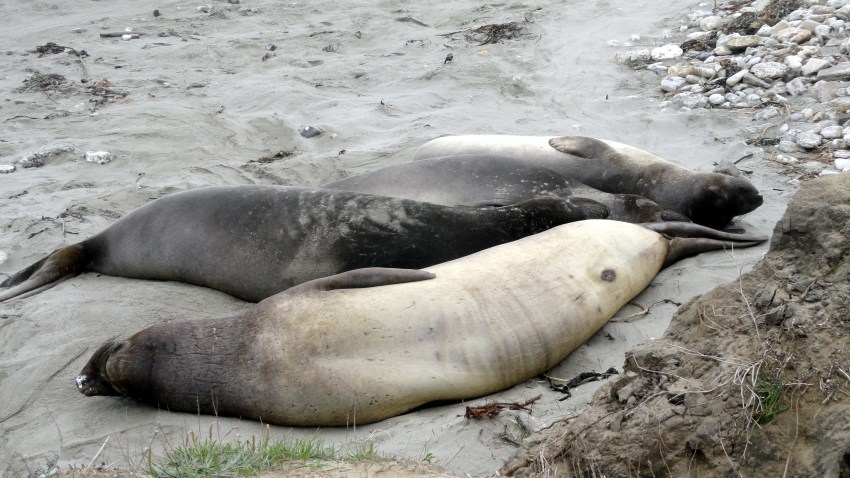
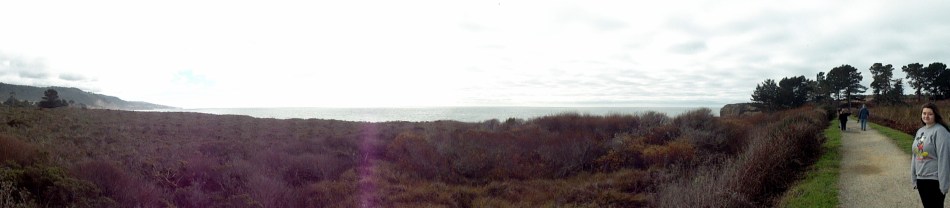
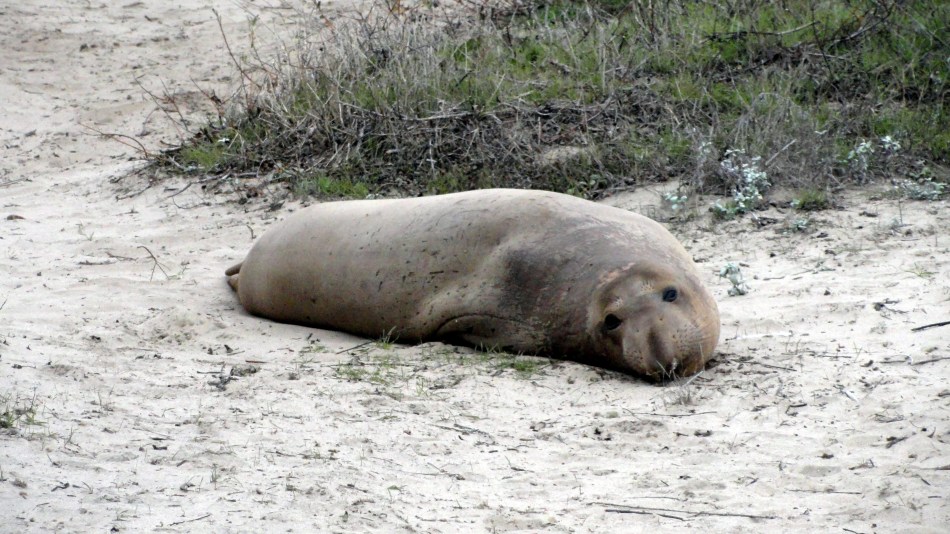
smw, slt has landed back on the west coast of North America for a short end-of-year holiday. The morning after I landed, I had the chance to head down from SF to Ano Nuevo State Park with my cousin’s daughter, who’s recently begun her college career in SF. Ano Nuevo is best know for its large visiting population of elephant seals – enormous, unusual seals of the northern Pacific who were nearly wiped out when Europeans first discovered how easy they were to kill when beached, because they had no natural land-based predators (and thus no land-based fear, let alone defense against guns). After European hunters had decimated whale populations, they found elephant seals a reasonable alternative source of oil for street lamps and other uses, and by early 20th century, there were no more seals hauling themselves out on the beaches of California for their mating, molting, or socializing seasons.
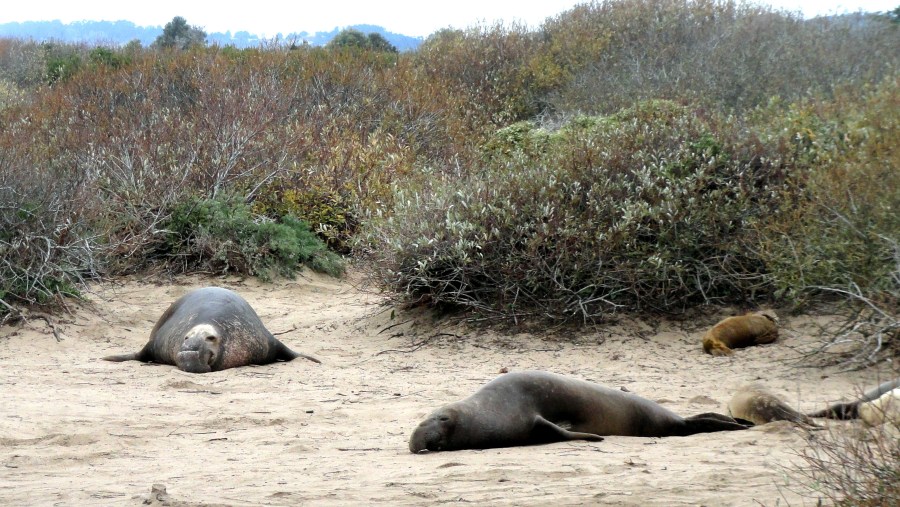
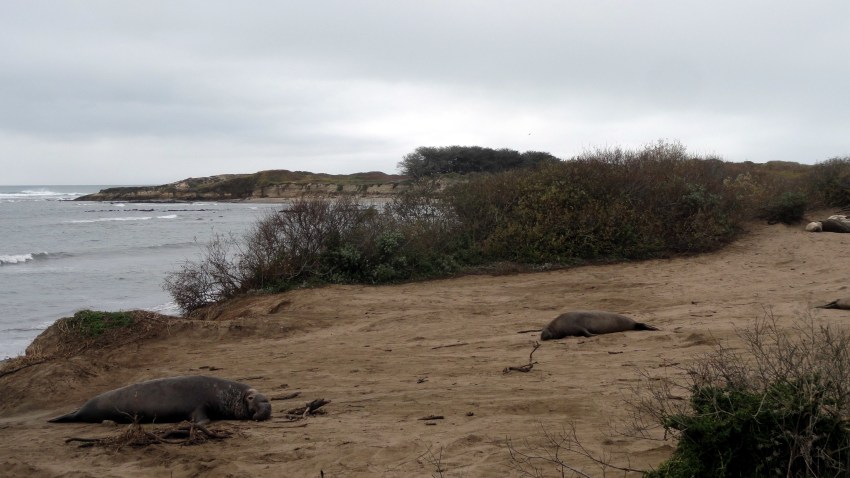
Mercifully a small remnant population of seals remained on a small island off the coast of Baja California. From that remnant population has sprung a newly-robust population that has resumed its historic habits of seasonal haul-outs in various spots along the mainland California coast. The very first, small groups started coming back to the island with the lighthouse-keeper’s house which you’ll see in these photos, in the 1960s or late 1950s. Now there seem to be thousands who haul out for mating, from mid-December through March or so – and then for the molting season (different months for adult males and adult females), the juvenile socializing season and other such things. These are fascinating animals who spend months at sea, then haul out and spend months on land without taking to the water again. We saw the very beginning of mating season – in six more weeks, the beaches will be completely packed with harems dominated by one bull seal – they’re the ones trumpeting loudly, and with scars on their necks. The females delay implantation, and then give birth just after beaching in December…feed their pups ‘til they wean (about four weeks), mate again, and head back to sea for several months to fatten up again, before returning to the beach for molting season. Truly fascinating stuff.

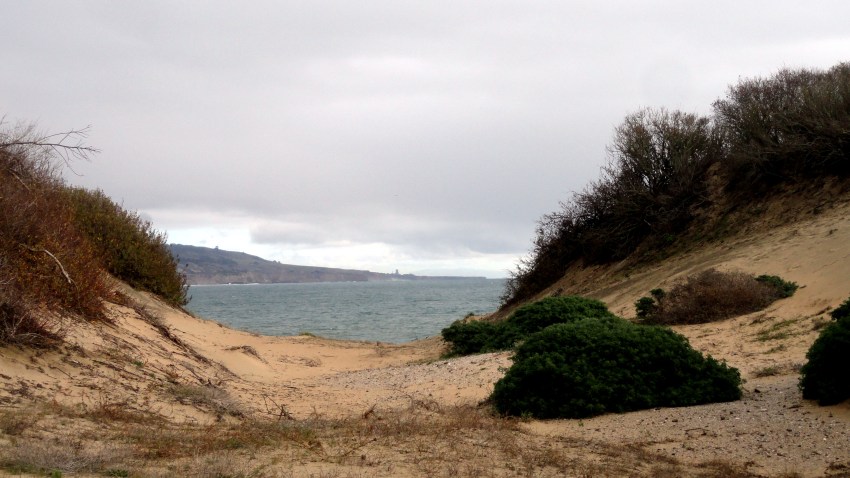
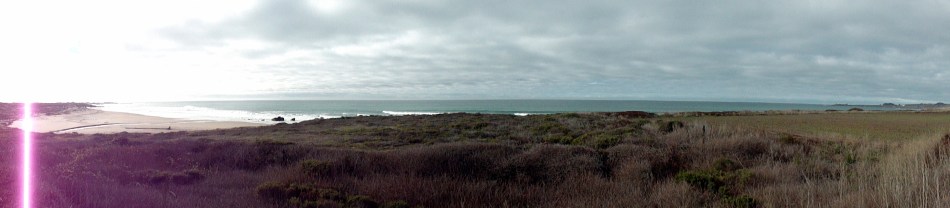
In the slide show just above you’ll see some juveniles hanging out together, and then a one-year-old (or so) coming ashore and wandering up onto the beach. I set that one up so if you follow the sequence of slides, you’ll see the young one emerging from the water, and then shots as it works it flippy-floppy way up onto the beach. The other shots are just general – you’ll see one bull seal trumpeting, but I didn’t have my camera out at the right moments when two were facing off. They don’t physically fight as often as the media would tell you: mostly they just posture and then one backs down, and the most we observed was two bulls trumpeting and staring each other down, ’til the smaller one shrank back and turned away. You’ll also see a rock – truly a rock – that was so distinctively shaped I hypothesized it had to be a petrified part of a (very) large animal’s skeleton – and indeed the ranger confirmed it’s a piece from the back of the skull of an ancient and mighty big whale. Every shot should be informatively named, so you can hover over the image or click on it to see its name. Enjoy.



Remembering in December
 My wandering field life passed the ten-year mark earlier this year. That’s ten years of finding my way into a new work environment and getting to know new colleagues once a year or so. In a more mundane way, it’s ten years worth of photo files to keep up-to-date and to try to remember to share on my blog. A cousin (thanks, Juliette!) noticed that the entries from my earliest days had lost their photos: mine was a rather early blog, and the ways of uploading photos have changed since then. (Many of those earliest posts appear frankly so embarrassingly shallow to me now that I’m tempted to simply wave my editorial wand and have done with them…but thus far my sense for historical accuracy is controlling that temptation…) If my continued research succeeds, many of those photos will be directly restored onto the blog as I find their originals in backup hard drives and other obscure locations: ah, new year’s resolutions before the old year has even wrapped up!


In the meantime, I’m uncovering little treasures that never made it up here, while fondly remembering where I’ve been and what I’ve done. I was recently saddened to learn that Nancy Schrom Dye, former president of Oberlin College, had passed this year. During my years of active alumni-association work I greatly appreciated her contributions to my alma mater – so I was proud to join some other colleagues in taking her for an end-of-year meal which, the digital date stamp tells me, occurred in Beijing on December 31, in 2005. Up above are also a few rediscovered December 2005 Beijing-area shots which somehow didn’t get posted at the time. (Posting photos was more challenging in those early days…)
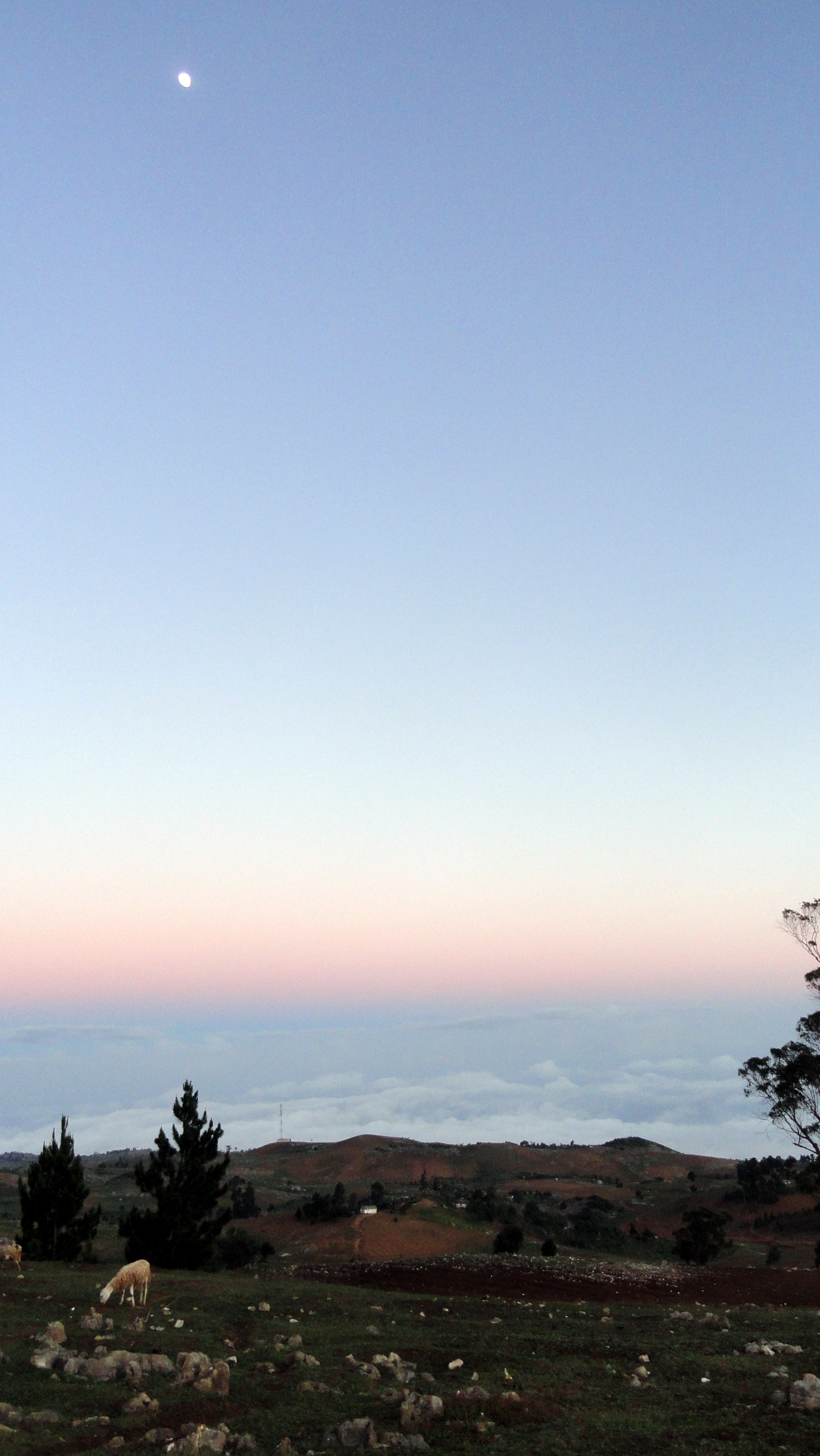
Just below are some previously-unposted 2015 shots: early-morning moonset at my home here in Haiti; me with my brother and a colleague when I gave a talk at Carnegie Mellon University earlier this year; and some shots from the lovely Frick House & museum in Pittsburgh, from the same visit. And since this put me in the mood, I’ve wandered through the many countries & continents, family meals & trips & assignments on four continents that have filled the years between these two sets of photos so very fully. Assembling them’s been fun for me so I hope viewing them is fun for you too :-).


This time last year? In December 2014, I returned from Sierra Leone & later went with great friends to enjoy the Ai WeiWei exhibit on Alcatraz Island (more photos from that one in the original post….though that particular set of great friends – you know who you are! – are remarkably camera-resistant):


Where’d I spend 2013? Living in PNG, participating in meetings in Amsterdam & dive trips in Australia, then celebrating the holidays with Steve & Mom in New Zealand:


I began 2012 in the US (where I visited Washington, DC in cherry-blossom season), turned 50 in the company of Howard & Gene at Kakadu National Park in Australia, and finished the year in PNG:
2011 was mostly Mweso, a little Lamu, a little London and a year-end back home seeing Frank Lloyd Wright homes of Pennsylvania with family:
2010…wow, what a year. Just seeing all the continents and countries where I spent time (actually meaningful time, with friends and family and work) makes my head spin even now. The photos evoked so much for me that I just couldn’t narrow it down to three or four…so I’m giving you a lot from 2010, a mix of Manipur (start of year) and Mweso (end of year), with a sprinkling of Sweden, Berlin, Paris & California in between:
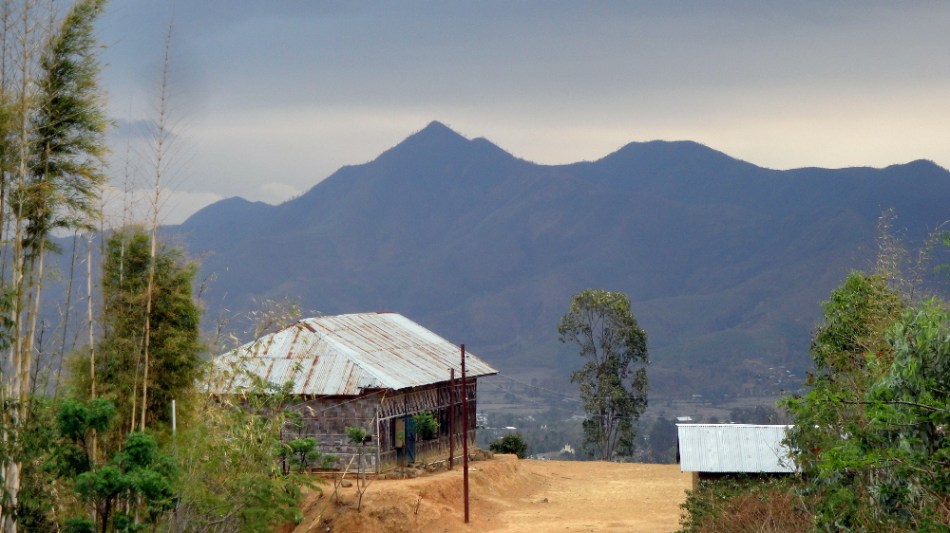


I entered 2009 in Tahiti, yes it’s true: during the year I took off from work to help Mom with her house, I dedicated two months to exploring Australia (and watching the Australian Open!) and New Zealand, flying in via Tahiti with a few nights in Papeete, just because I could. The year ended, of course, in Manipur and included a great trip to see excellent sites of Rajasthan with Howard & Gene:


2008 started in Nigeria, and ended in Tahiti…with a lot of good work in Nigeria, a short assignment for the earthquake in China, visits in Germany with my exchange family friends there….and a good deal of time in and around NYC (Mom, aunt Judy & I enjoyed a harbor trip past Ellis Island where our own immigrant ancestors entered the country, and also a trip to our favorite sculpture park up th Husdon)…with a side trip for some hiking in Sequoia and other California adventures:
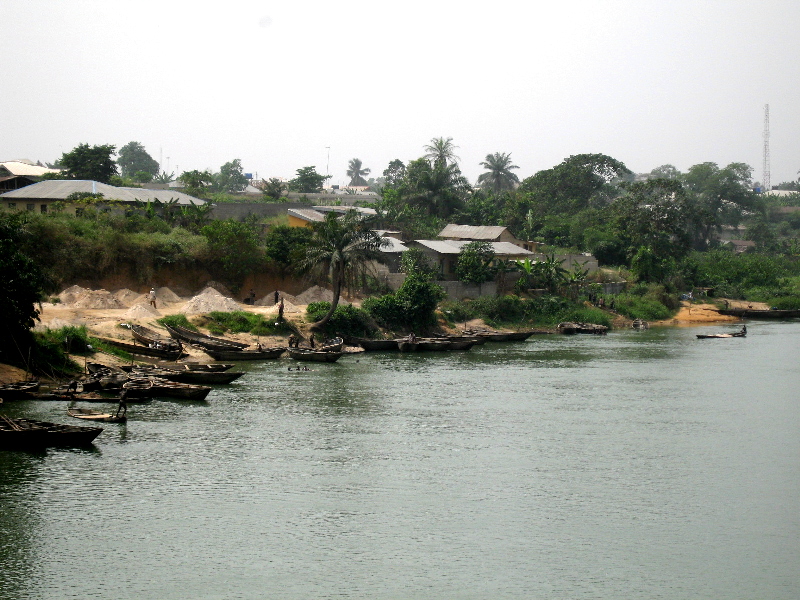


2007…I began the year based in Colombo but spend the new year’s period with Mom & Steve at Angkor Wat, returned to Colombo to finish out an assignment, headed on for training in Paris where I also got celebrate Mom’s 71st birthday…back to the US to reorganize my life after my first two years in the field, and then off for a new assignment in Nigeria. At the time it felt big. Now it’s all fond memories:


…which will bring us back to year two of this current phase of life’s great adventure, the lovely year 2006. From Beijing & Yunnan in China, to Polonnaruwa & Sigiriya in Sri Lanka (where I was based at year’s end), with family time on Cumberland Island (Mom’s 70th birthday dinner!) and in Germany in between. With a special souvenir from Seoul, where I had the opportunity to work a bit with the young ladies pictured with their daffodils. In a small-world twist, I had dinner with one of those two young ladies just a few nights ago in Port au Prince, which she visits sometimes in her current work with the CDC. So much small world, so little time for it all. Happy end of 2015, and many good hopes for a 2016 of more peace and health to everyone, everywhere.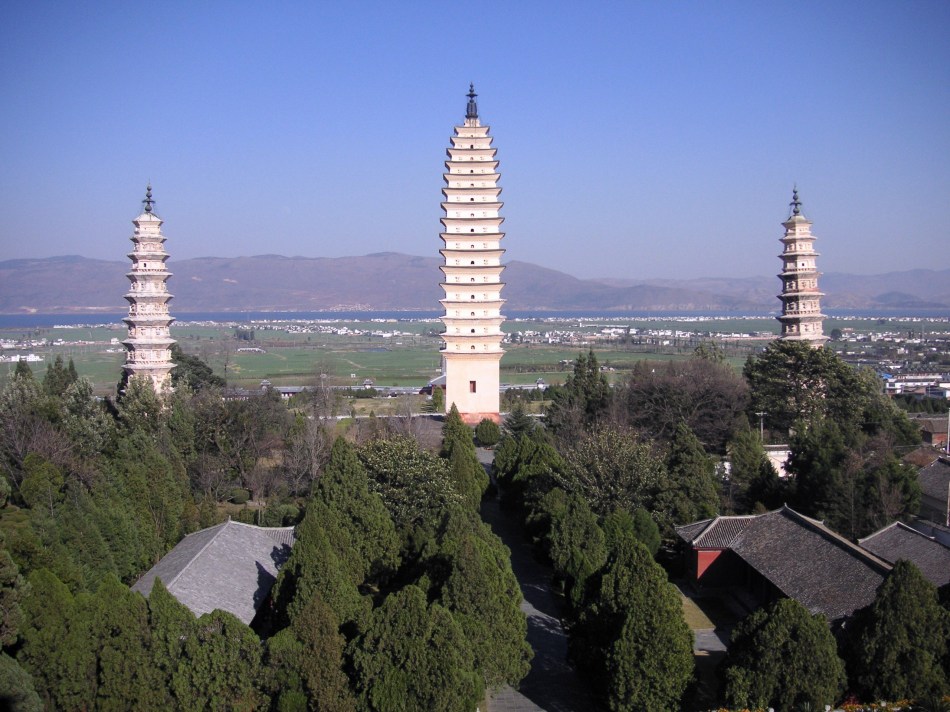


Election Fever in Port au Prince
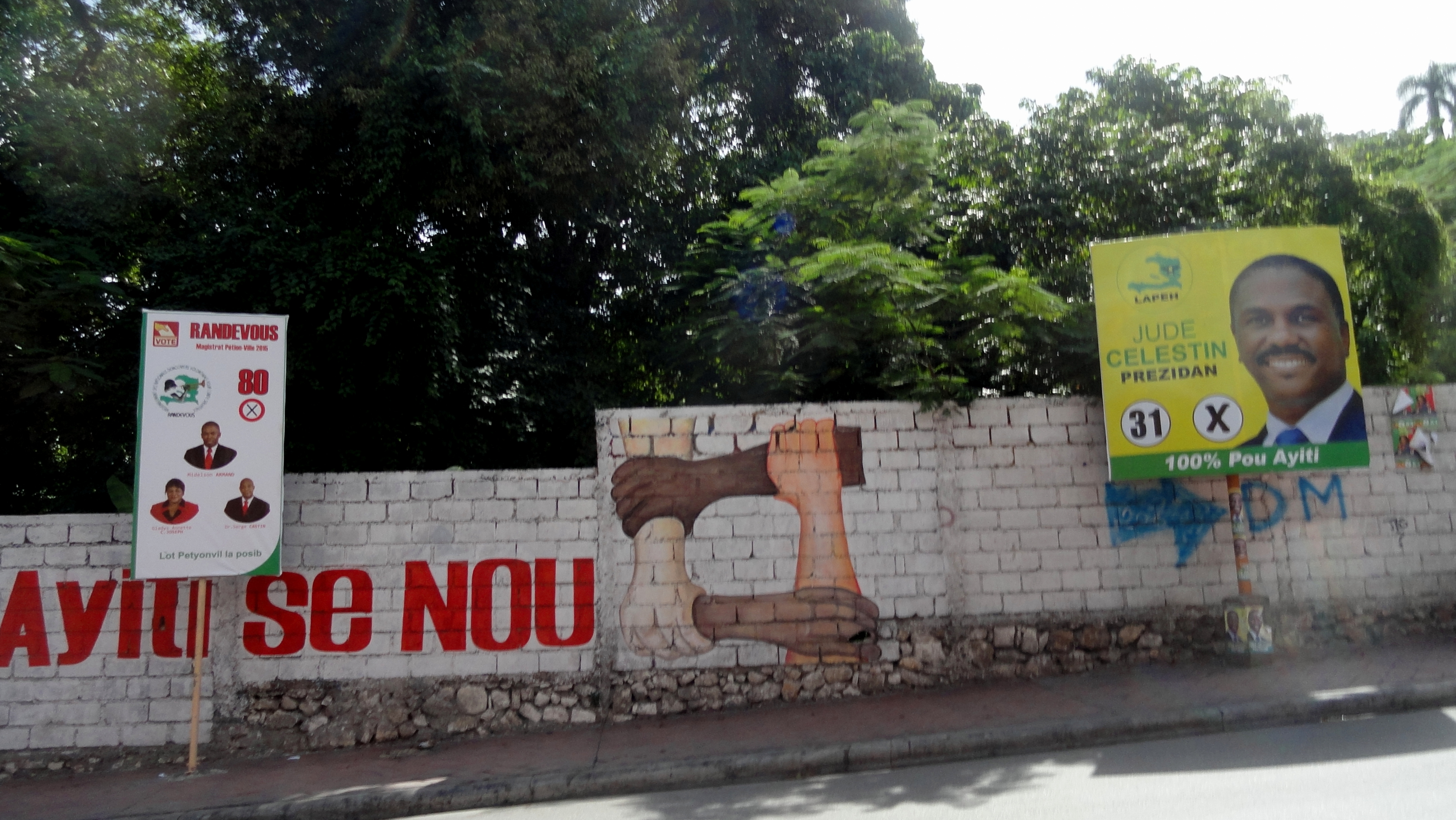
There will be 54 candidates on the ballot when Haitians vote for president on Sunday. Driving through the streets along one of Port au Prince’s wealthier neighborhoods recently, I commented to a Haitian colleague on a trend I’d noticed: no posters visible anywhere around for the Lavalas party. By contrast, in other more crowded parts of town I’d noticed plenty of posters. I figured I knew why – and my colleague’s response put it clearly: Lavalas’ supporters are the children of Dessalines, and the wealthy neighborhood is the children of Petion. Indeed, the wealthier neighborhood is named Petion-Ville, and in the poorer parts of P-V you will find a few Lavalas posters, but not higher on the hills where the big houses are.
Haiti’s founding, as anyone who’s followed my blog knows, inspires me with awe. That several hundred thousand slaves could rise up and free themselves, in the process pushing back the armies first of Spain and Britain, then finally being the first army in the world to defeat the concentrated attempt of Napoleon Bonaparte to force their submission, is a simply unique event in human history. Unfortunately that early history held the roots of a rich-poor, powerful-powerless divide that remains present in Haiti today. Describing the wealthy as children of Petion refers to his ancestry as mixed-race son of a wealthy white plantation holder, compared to Dessalines’ (& Henri Christophe’s) purely-African ex-slave background. But it’s worth noting Petion made himself president in the republic that governed the south of the country, after Henri Christophe made himself king in the north…after both he and Petion were among those in the government conspired to kill Dessalines shortly after Dessalines crowned himself emperor for life. So things got complicated fast, and it’s not always purely about power, wealth, or ethnic background. 
On Sunday, Haiti holds the first election since 2010. Races for parliament and for municipal posts have been successively postponed by the current government, the last several years. In January, parliament was dissolved and the current president, elected five years ago and in office since February 2011, has been ruling by decree since. He stated that he’d use his power of decree only to ensure that elections did happen this year for all offices. On Sunday Haitians will vote not only for the next president, but also for all municipal offices around the country, all deputies and most senators. There will almost certainly be a run-off for president at the end of December, and many of the coming weeks will doubtless be absorbed with arguments over which two candidates will be on that final ballot.


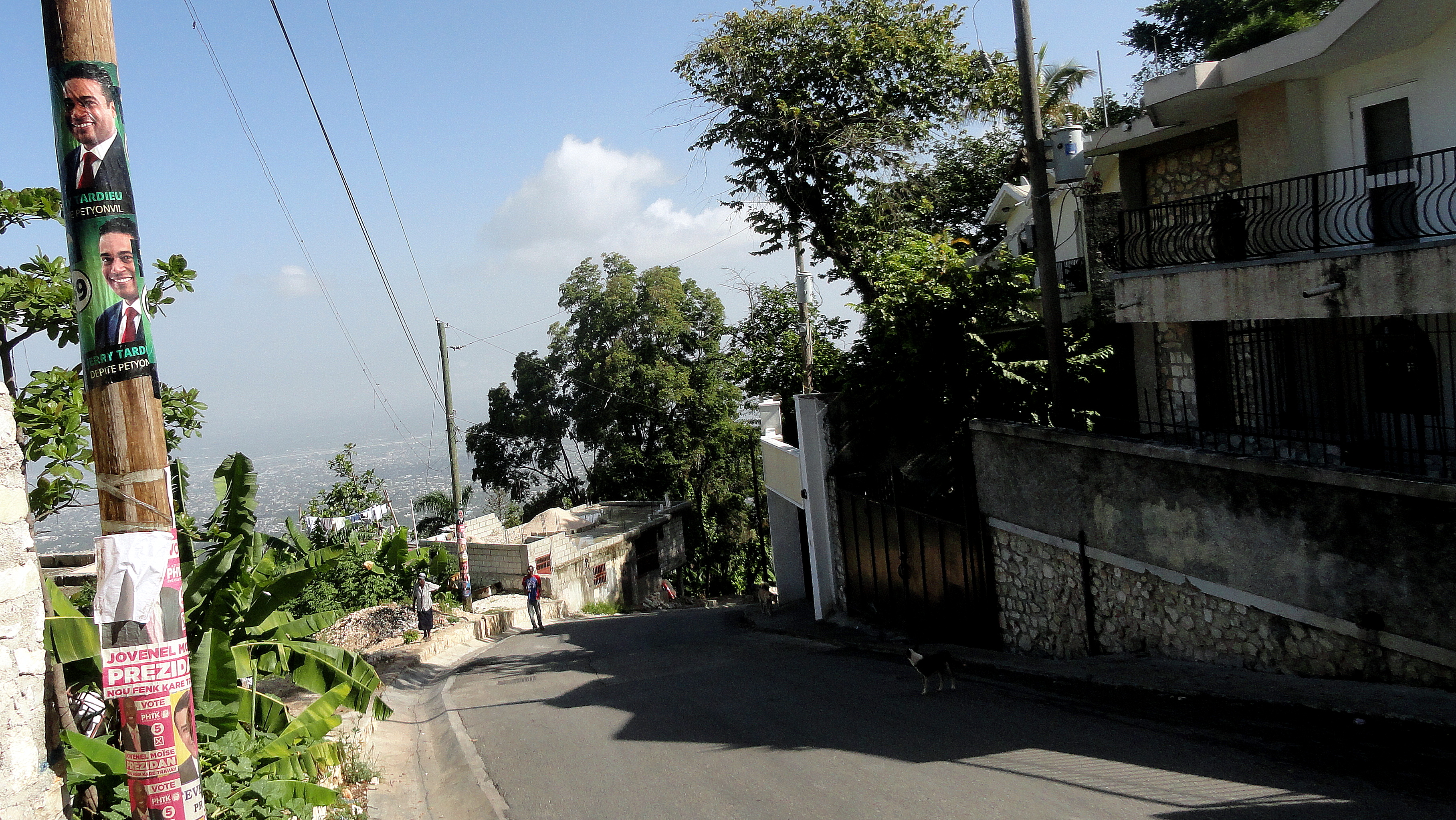
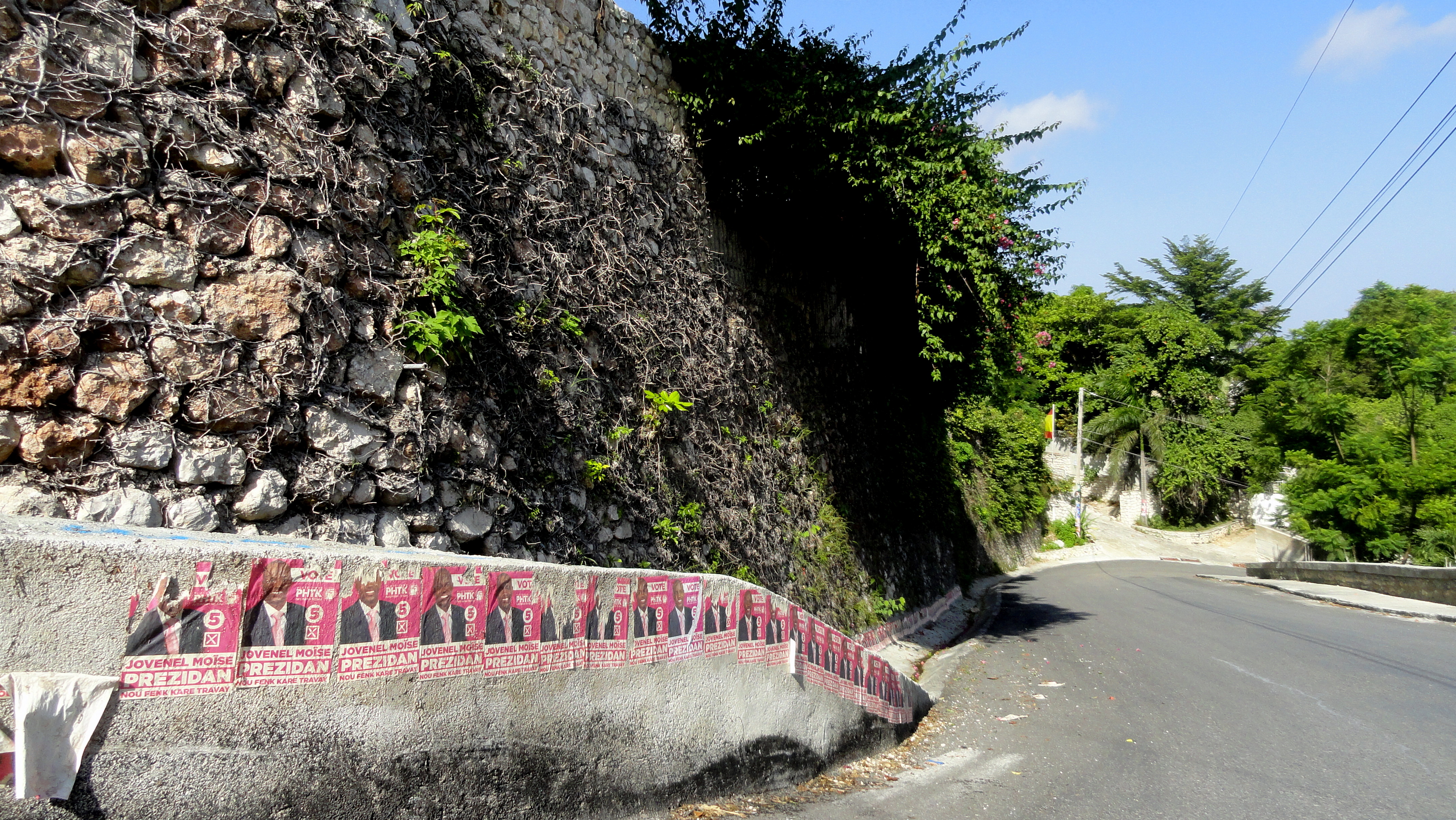
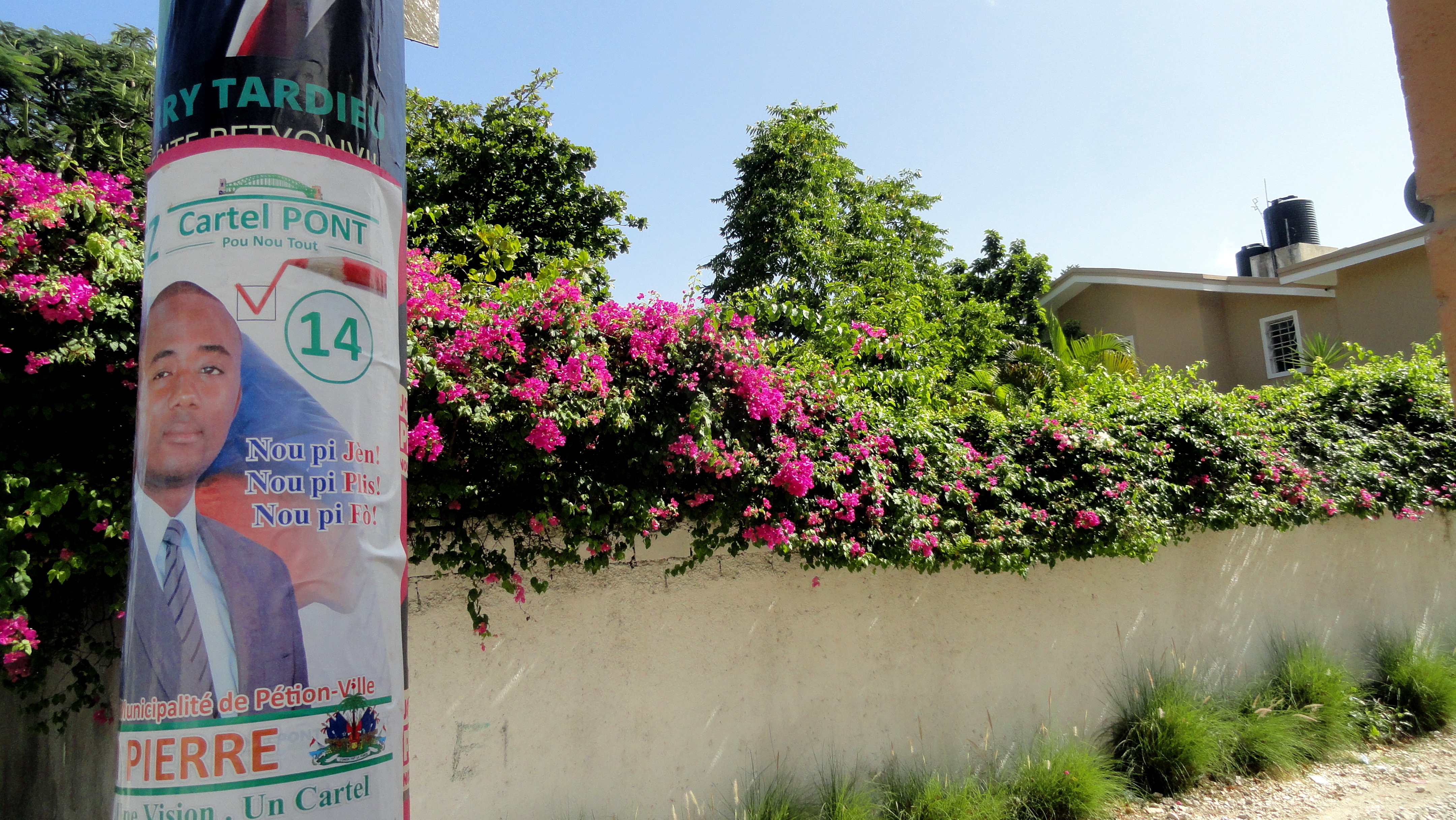
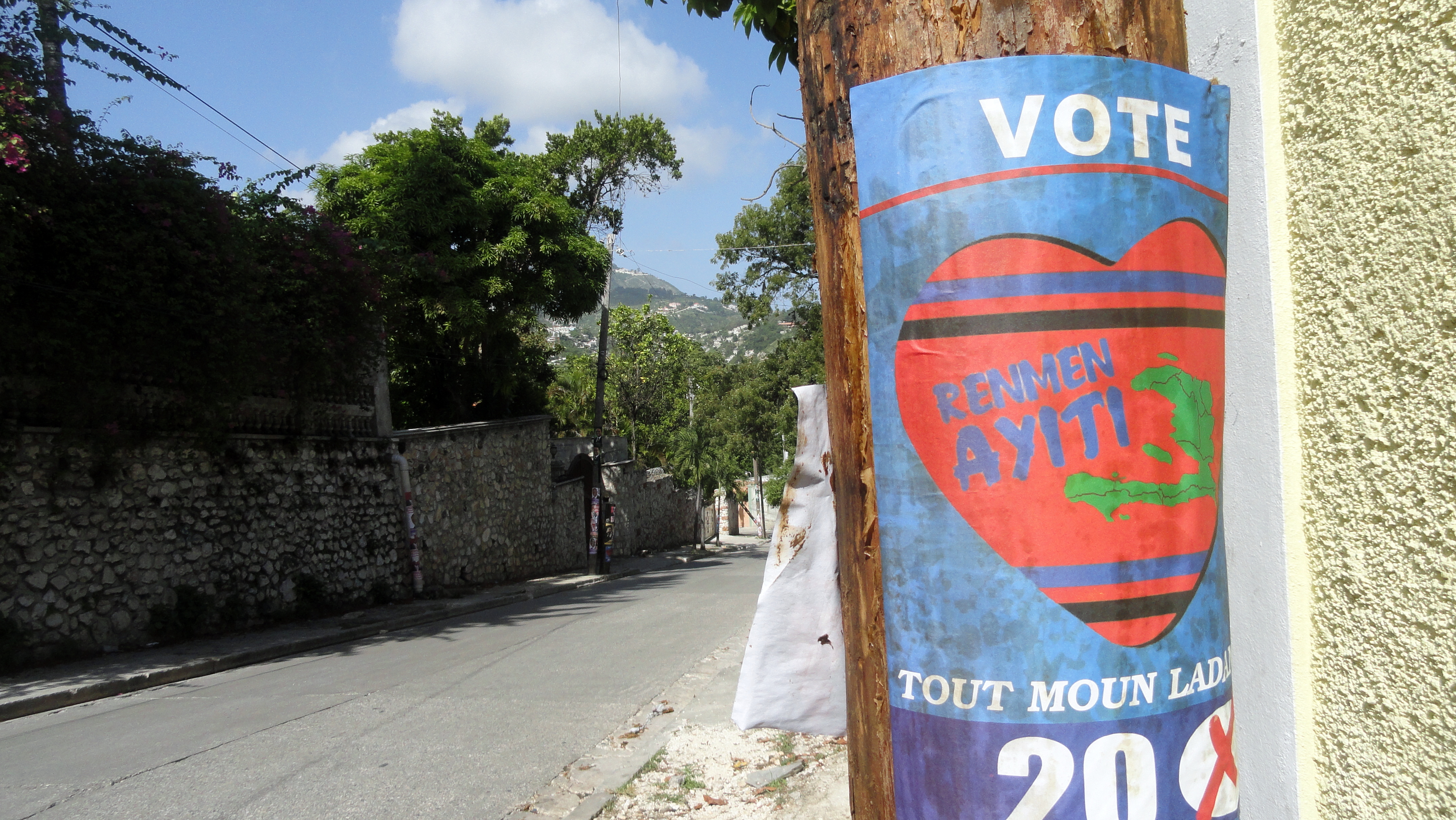
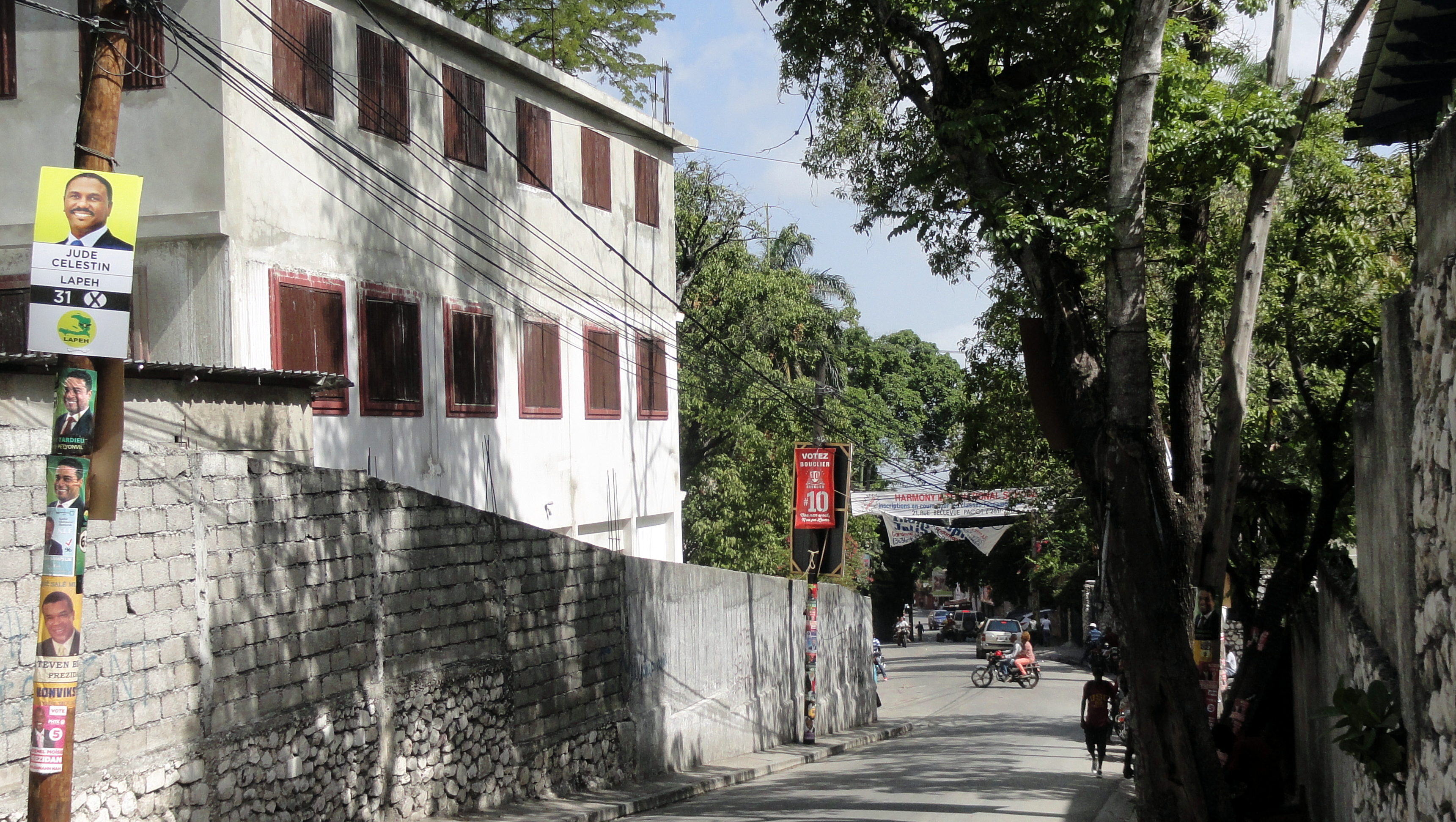
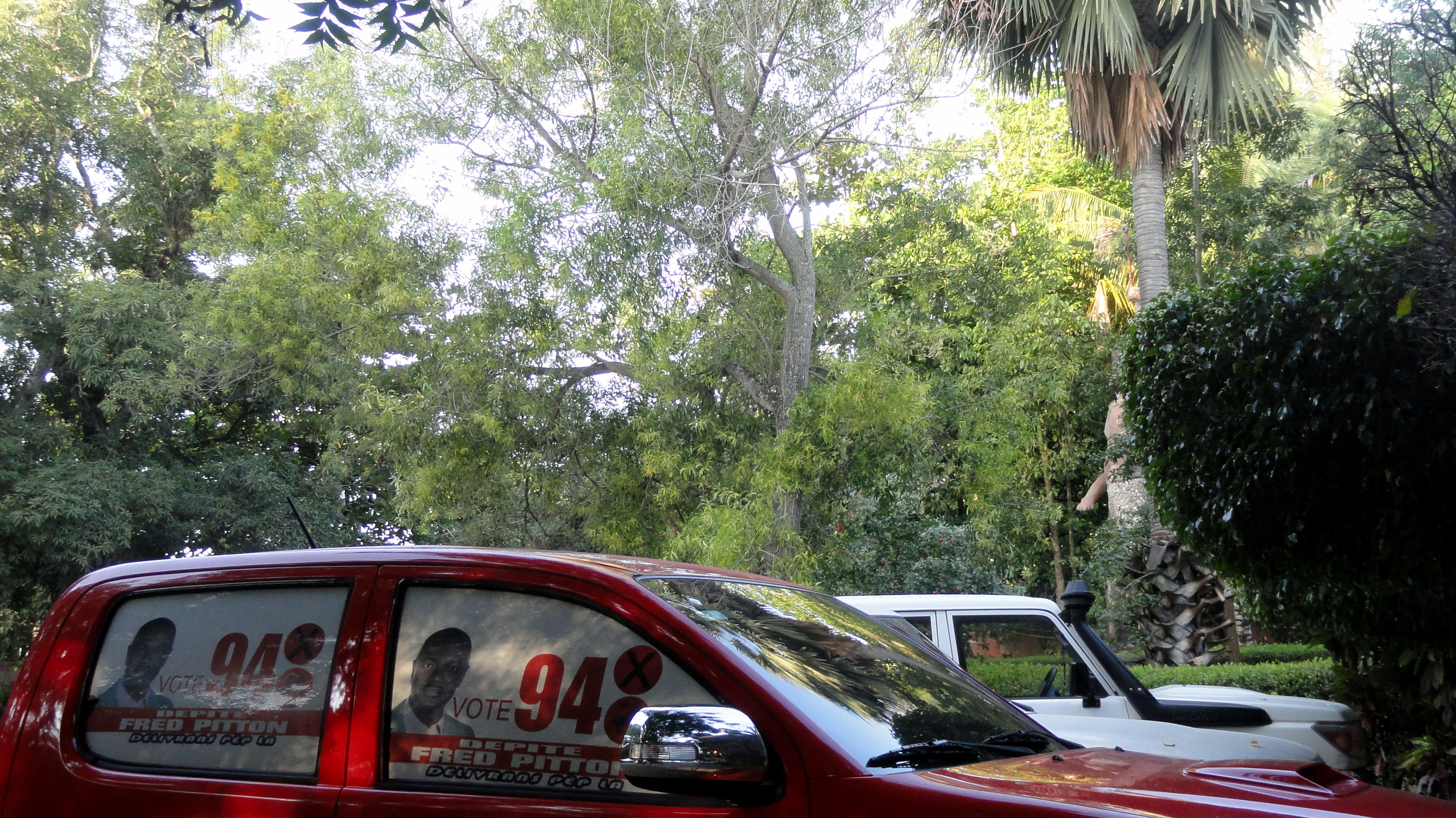
Every photo in this post has a campaign poster, graffiti or some other electoral element to it. If you can’t see it in any picture, look harder :-). 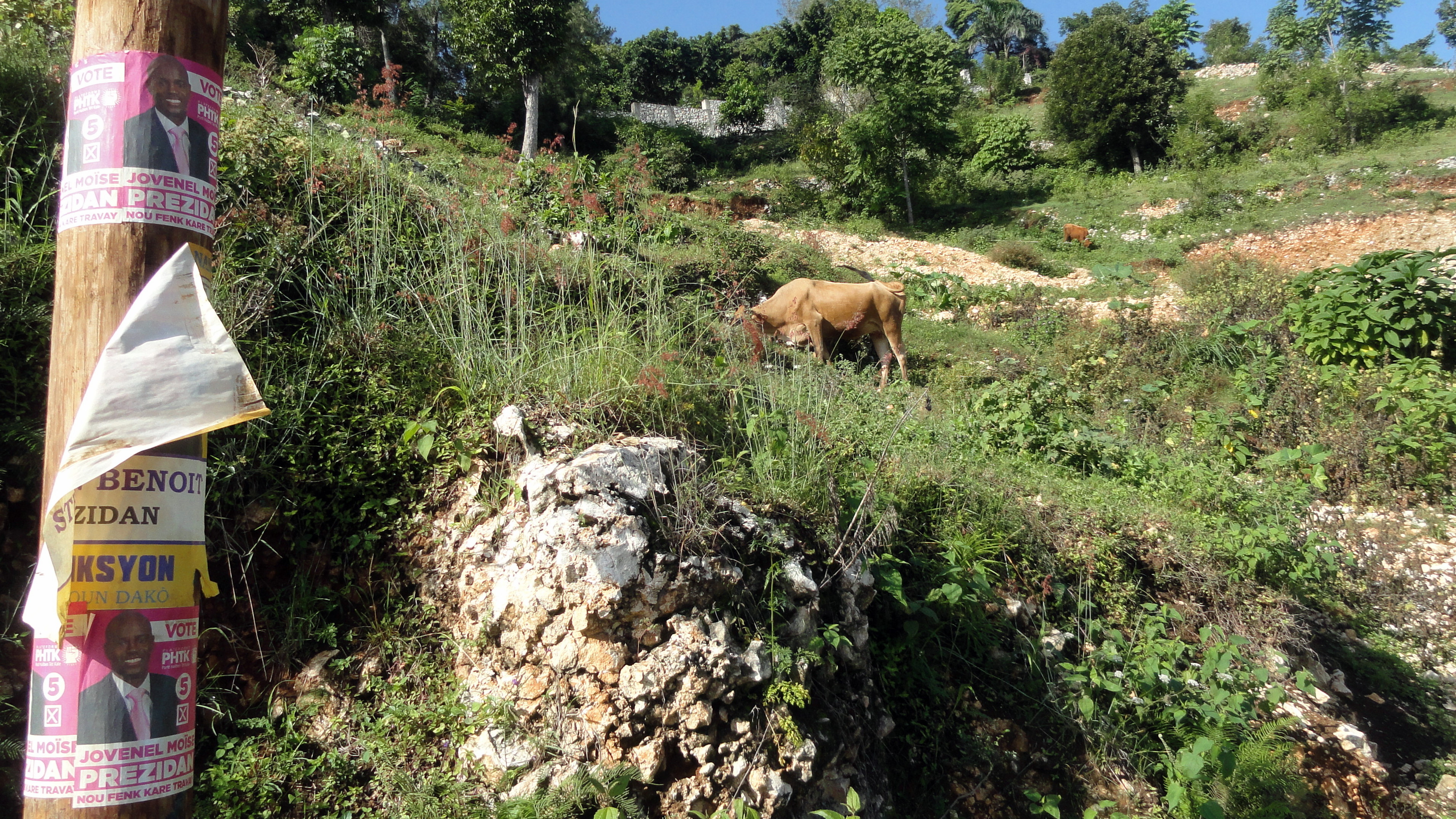
Americans of my generation remember Bertrand Aristide and his election as president in 1990. Many then lost sight of him, and got lost in the details of Haitian politics fairly soon after, but to recap, Aristide was ousted seven months after taking office (military coup), returned in 1994 to finish out his term; was succeeded by Rene Preval (presidents can’t serve two terms in a row, and can’t serve more than two total, under the post-Duvalier constitution); was re-elected in 2000 and held office from early 2001 until forced out of office by an organized and armed opposition movement in 2004; was then succeded after the 2005 election again by Preval, who was succeeded after the 2010 election by the current president, Martelly. The party Aristide founded, Lavalas, is being permitted to run candidates for the first time 2004 – and though the party has lost some of its shine since the idealistic days of the late 1980s and 1990-91, it seems to me that for many they still represent hope. For many others, it seems they call up fear of a return to violence and strife. I’m hoping for a reasonably peaceful weekend and an electoral result that most Haitians feel is fair enough. Either way, I have to admit I find the all the posters fun, seeing how politicians all over the world promise the same things, do the same things…a pothole on our street just got fixed last weekend! Just like NYC during election season, eh? Above all I join many friends and colleagues in hoping for a maximally non-violent weekend and subsequent counting period…


Meandering on Montagne Noir
 It’s been a busy several weeks here at smw, slt — busy enough that I’ve barely brought out the camera lately. I did manage a long-delayed walk around our neighborhood last weekend with the intention to collect many shots of the plethora of campaign posters, signs and graffiti which have proliferated in recent weeks as the country prepares for the biggest day of voting in, I think, its history: on the 25th of October there will a chance to vote for all three levels of government (president, legislature, and municipal posts all in one day). In the past, I believe these different levels have usually been elected in different years. Before then, I’m sure I’ll put a large collage of electoral miscellany up here, but for the moment I’m missing a few things I’d like to find, photograph, and add before I post for my much-appreciated, loyal and lovely readers. As it is, I’ll give you a wee appetizer of a sort – in the photo above you will see some posters if you look a bit, and in one of the other shots they’re there but you have to look harder to see them. 🙂 Hope you enjoy these little snaps ’til the larger selection’s ready.


Angles on Amsterdam
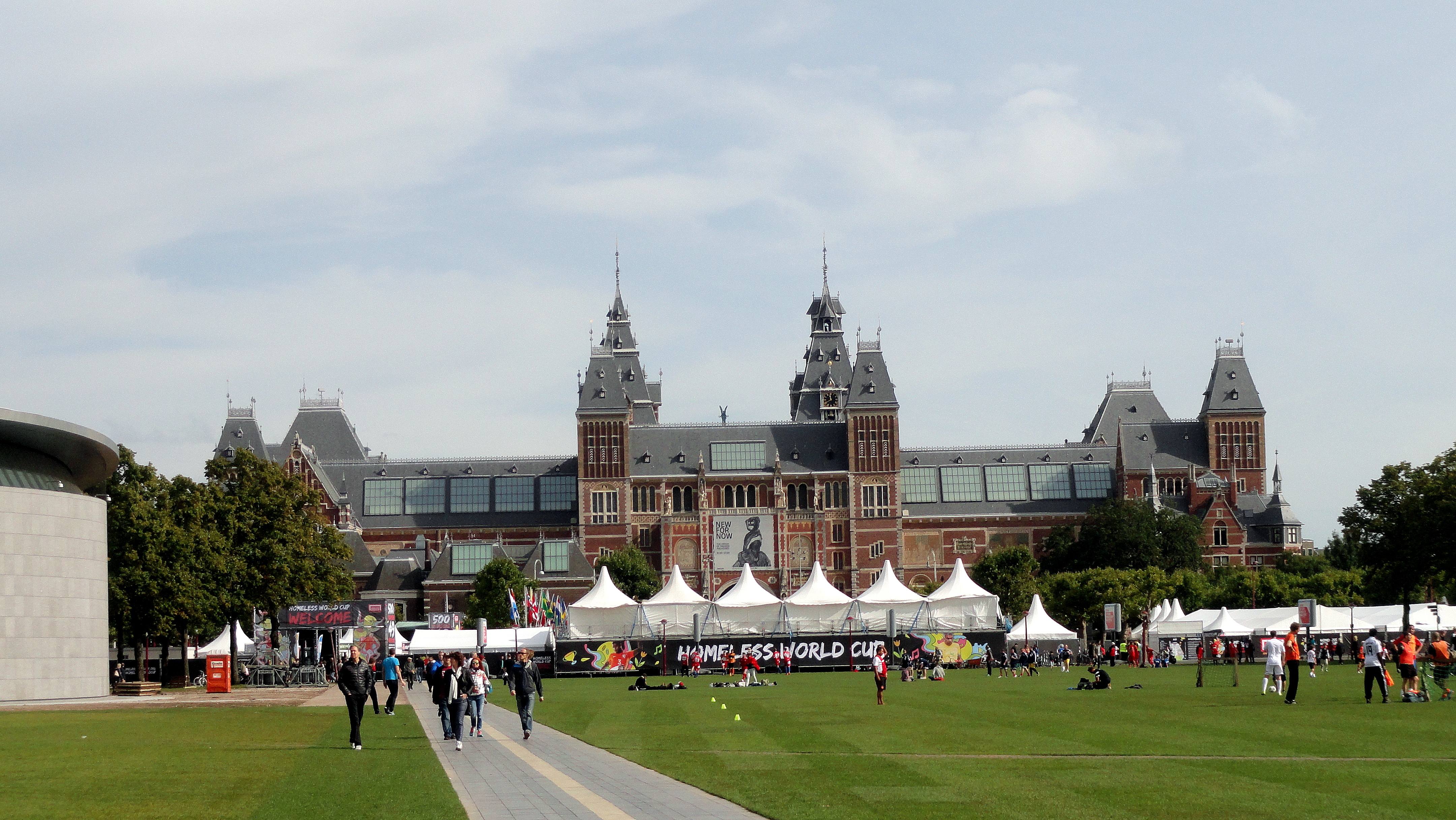
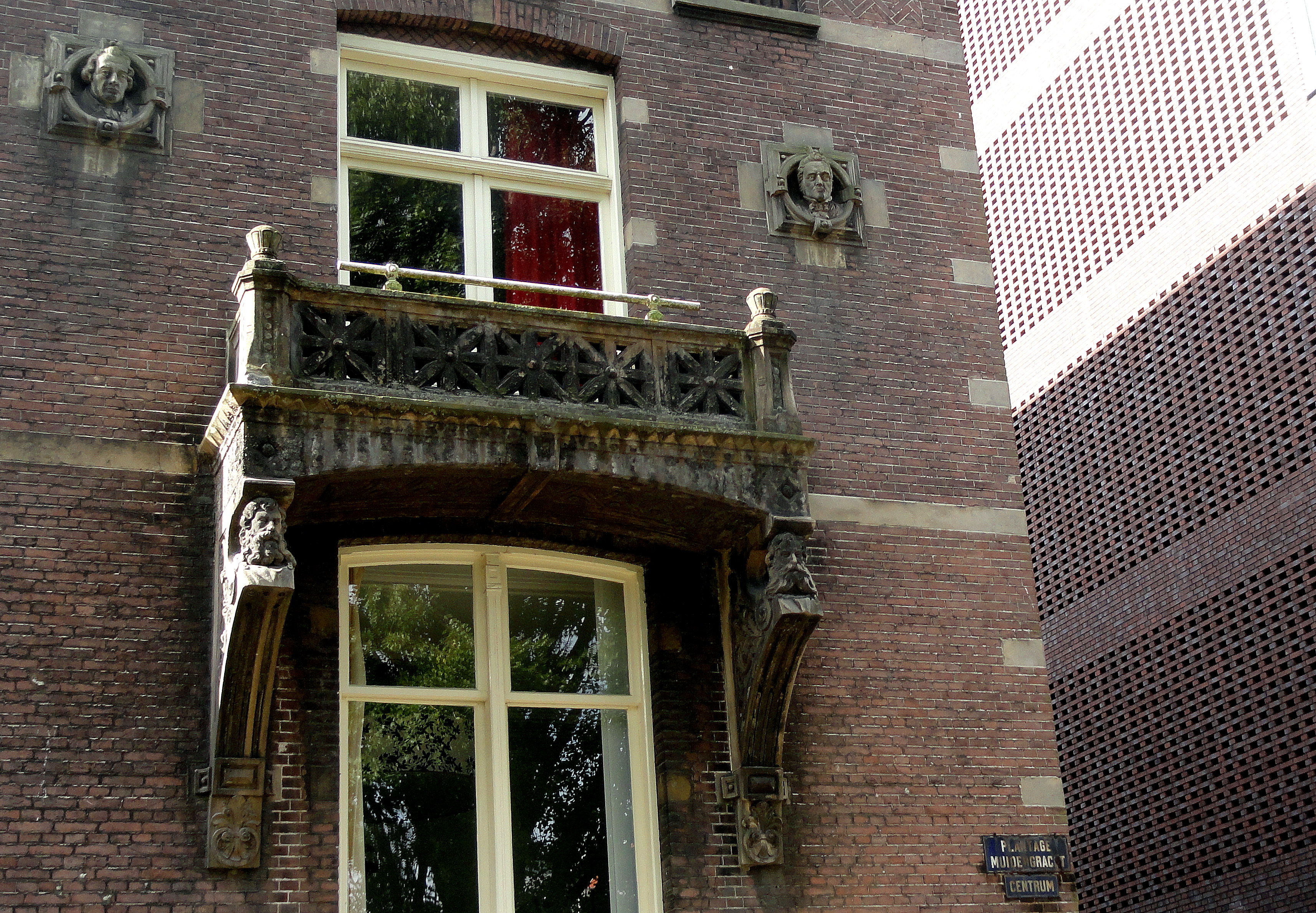
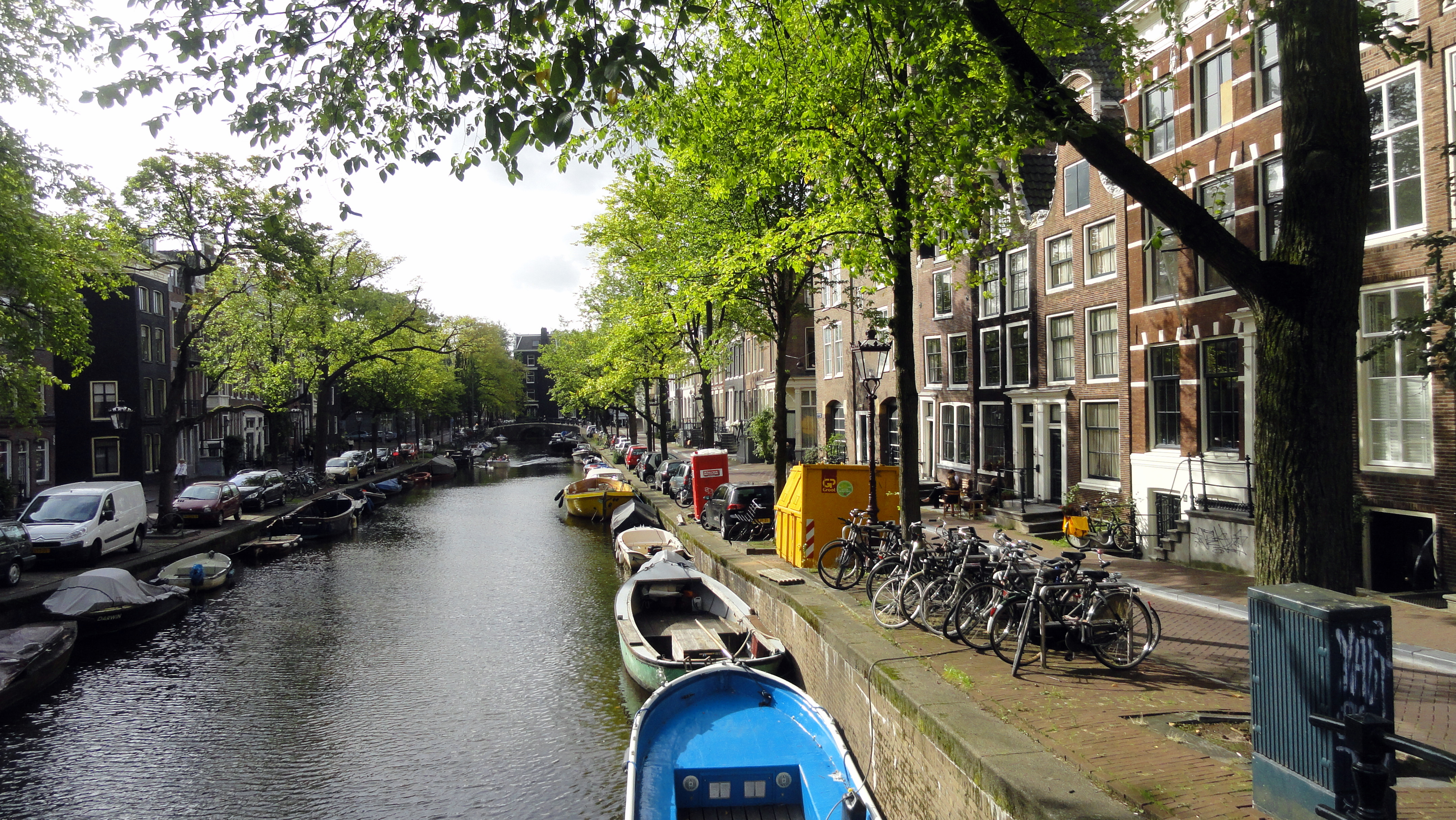
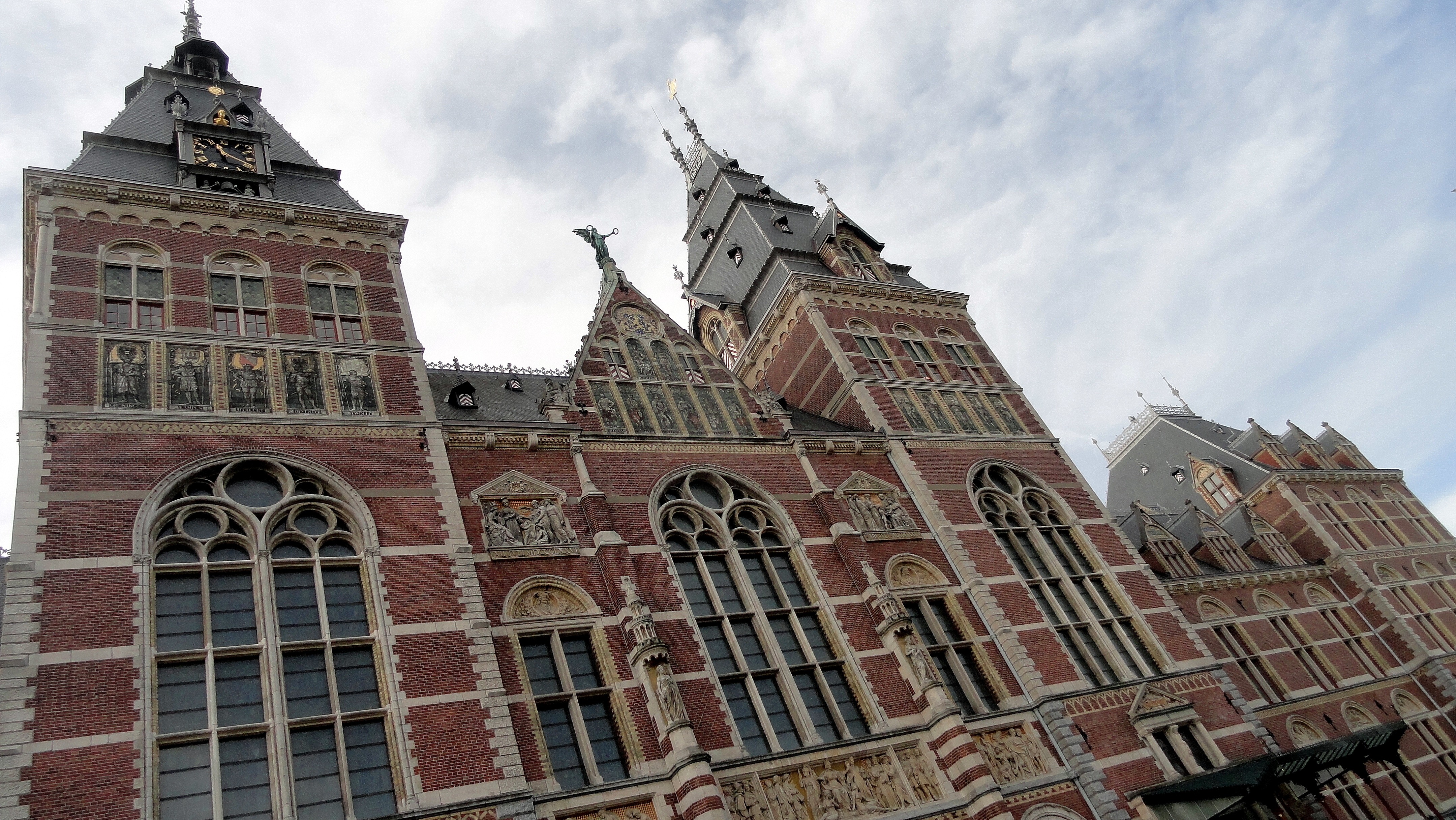
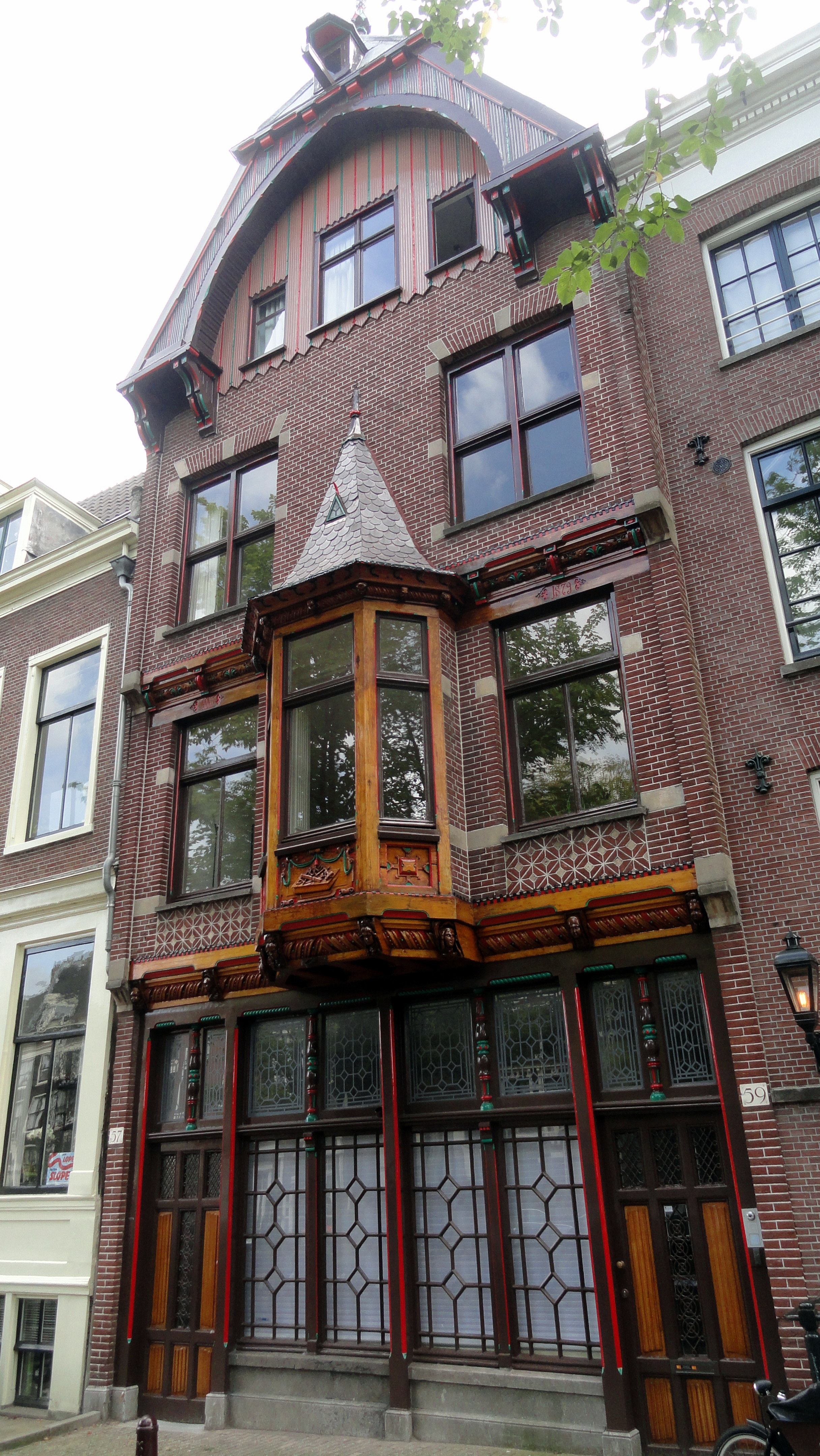
 One thing I’ve loved in my current work is the chance to pass through Amsterdam once or twice a year, depending on length of assignment and timing of planning meetings, etc. Seeing a city regularly over several years, for visits ranging from one or two days to longer than a week, gives a sense of familiarity that also causes me to dig down and try to find details and nuances in buildings, streets, canals, that I might not have noticed before. On my most recent visit, in mid September, I sadly didn’t take my camera out with me on the two or three sunniest days, and many of the others I was just too tired after a long working day to capture much. Still, I did get out and note a new element or two in obscure corners and famous landmarks that might interest my loyal friends and readers here at smw, slt… It’s an endlessly wonderful walking city when the weather’s at least reasonable, and rewards careful slow enjoyment in the quiet side streets and unusual corners.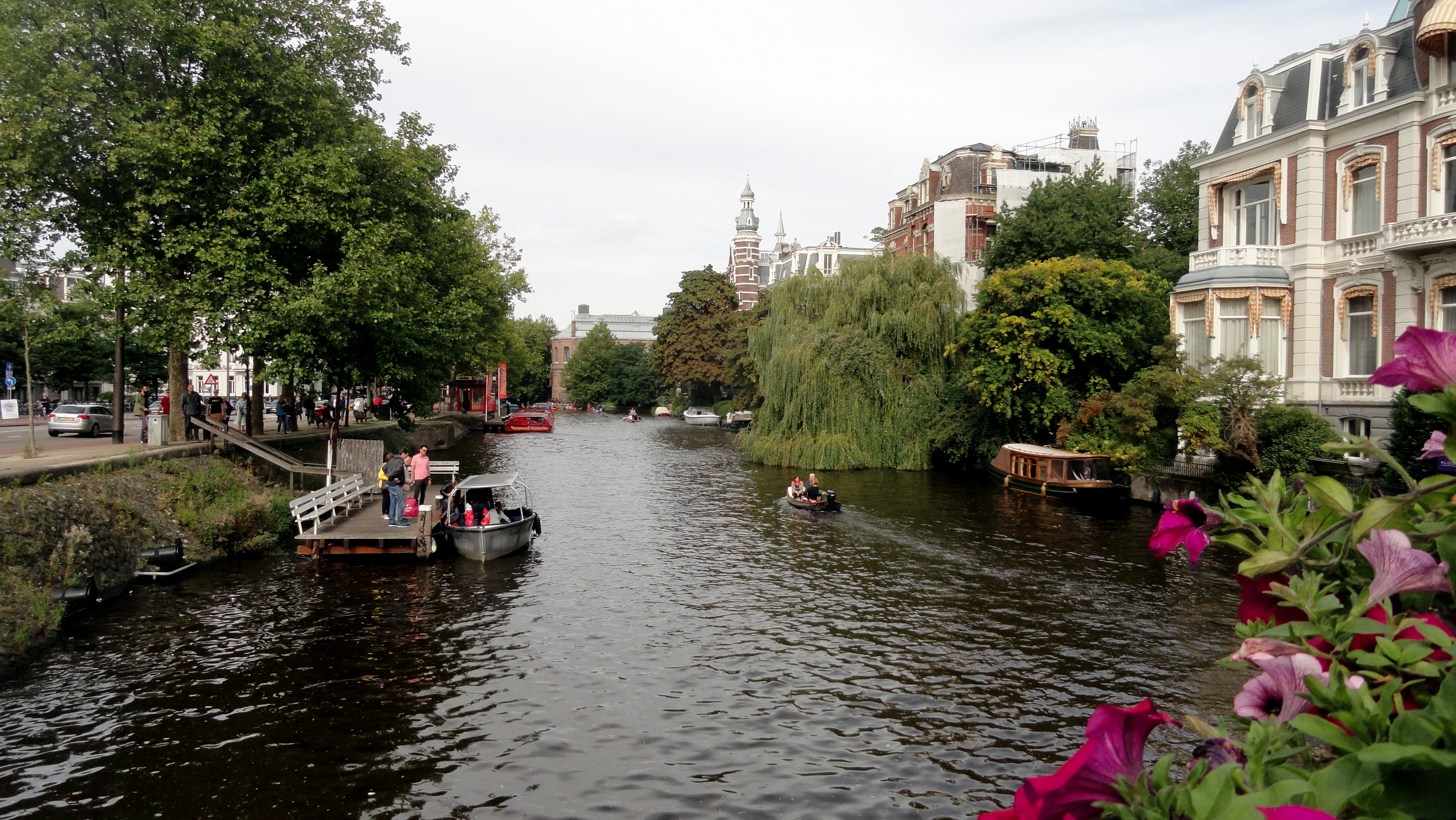
Seasons in Sonoma County
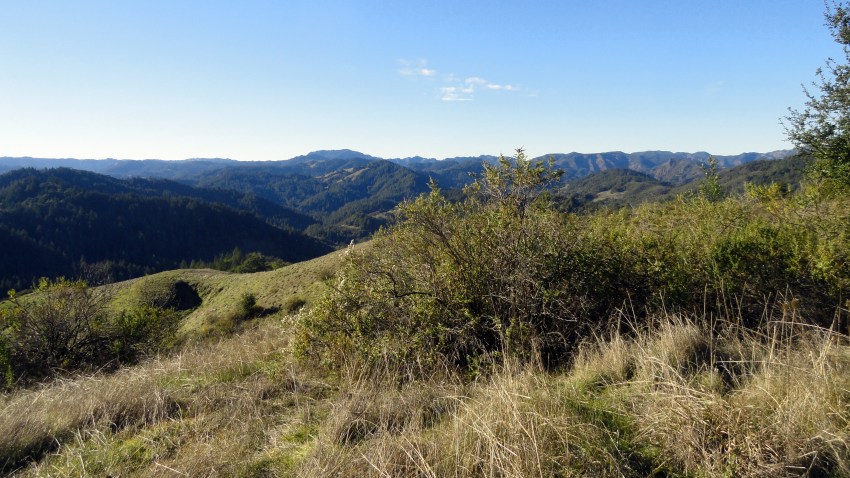
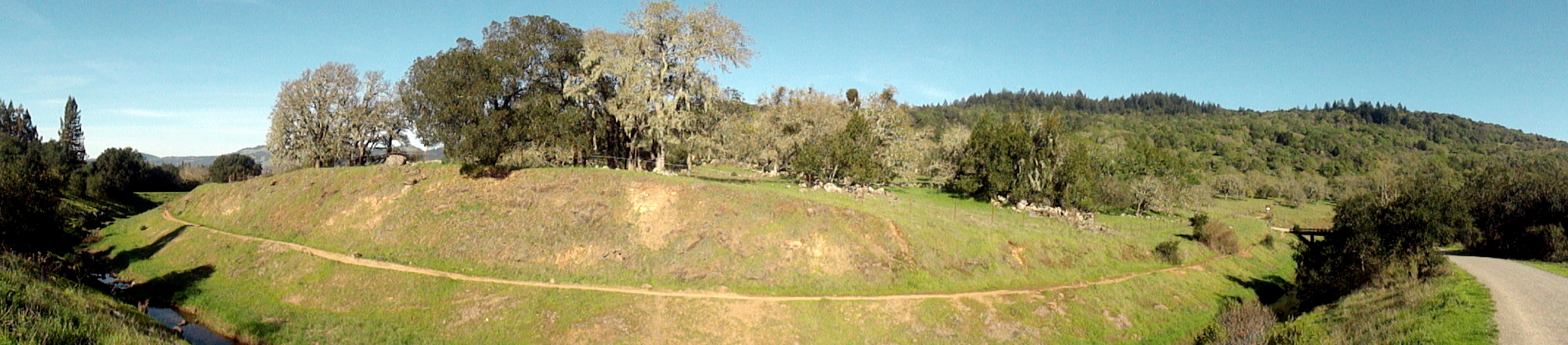
 When I moved from New York City to southern California, a long-time family friend told me I’d miss seasons. While not untrue, this was also not entirely true. The joke among southern Californians at the time was that there were seasons but they were just different from the classic northern four — in LA, one had fire season, mudslide season, etc. Now I’ve spent the past decade and more roaming among assignments mostly well within the world’s tropical bands, I’ve learned more about the seasons not of winter and summer, autumn and spring — but of wet and dry, all too often also of malaria and cholera. As a world we seem also to be learning about the less-bad and even-worse seasons to attempt crossing the Mediterranean in an overcrowded wooden boat in the urgent hope of providing for yourself, your children, your spouse some kind of safety or opportunity more than you and yours face in the horn of Africa or parts of the Arabian peninsula. And meanwhile, would-be presidential politicians in the US whose great-great grandparents left northern Europe as economic migrants wax sanctimonious and try to bar the gates behind them and limit opportunity only to those who look, think and act like them. Ah well: when the politics and pain of the world get too much for me I think about the green grass of winter, and the brown grass of summer, on the hills of California.
Herewith some examples of the same places, at different times of year. And let me add, for blog readers new and returning: I’ve made some changes in design and layout recently. One feature I’m personally addicted to is the header image on this page, which should shuffle through a bunch of different images, changing pretty much each time you come back to it. I’ve tried to pick some of the most interesting things I’ve seen since I started this little blog thing in early 2005…so please, if you see things up there that you especially like, or that you think aren’t strong or interesting enough, drop me a comment or shoot me a note. I’m enjoying fiddling with the design and layout, and always love to hear from readers, whether I’ve met you yet in person or not. Thanks!


Hills & Halls of San Francisco

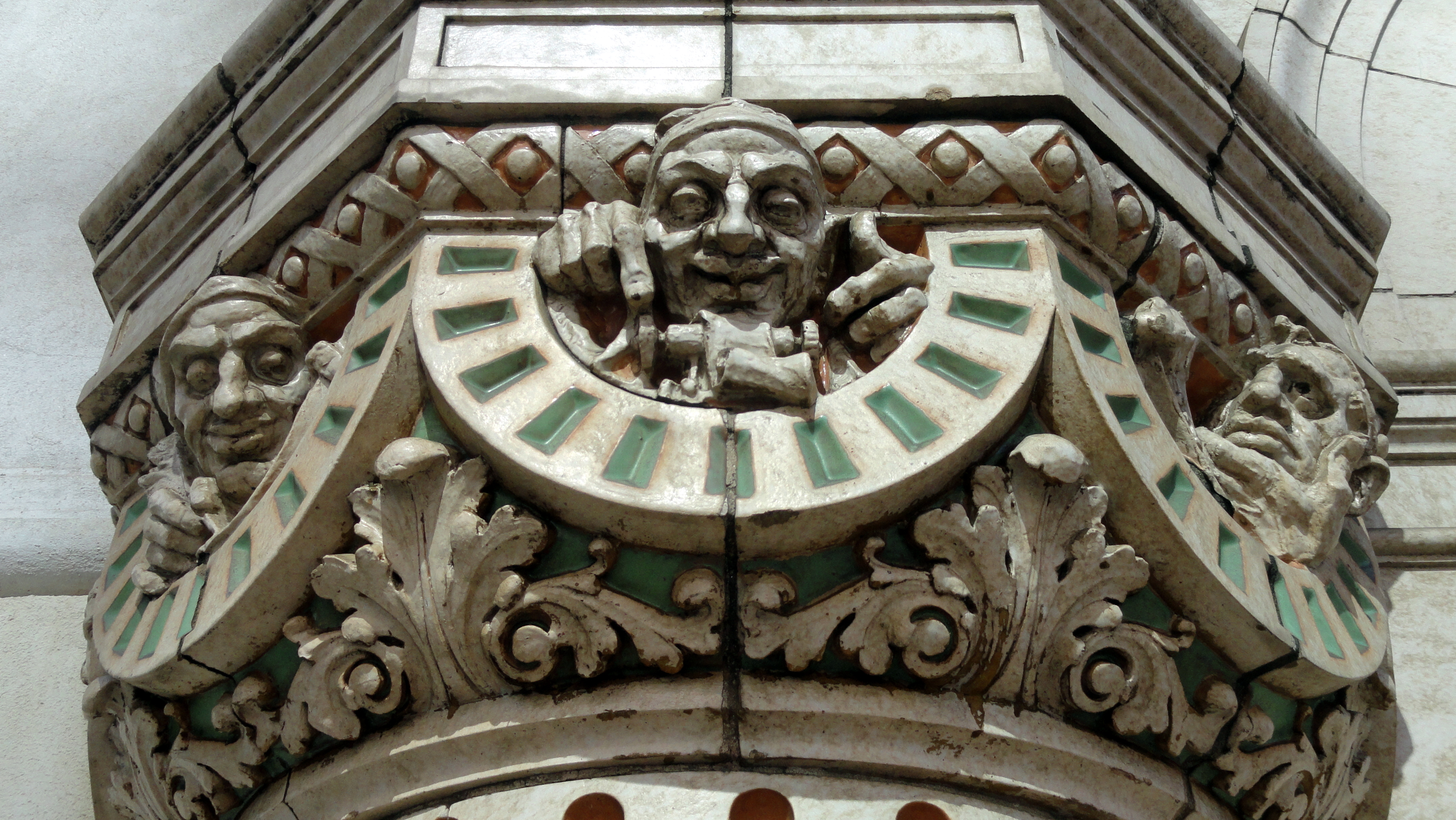
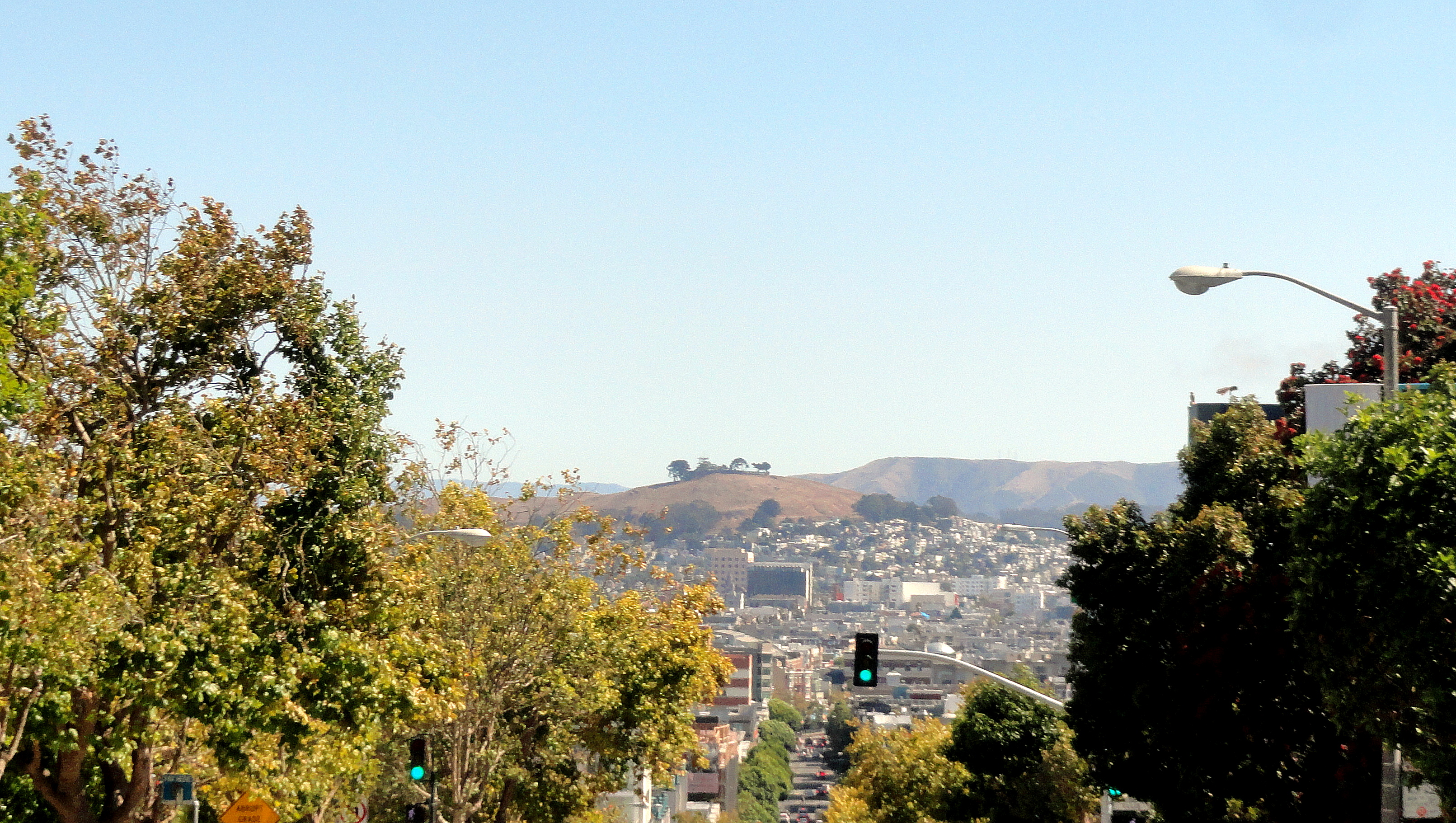
Readers may be aware that I’ve recently taken a short holiday from work in Haiti, to soothe my soul and celebrate another birthday in my home counties of the bay area. The airline complicated my return, much to my chagrin, with the silver lining of an extra, unplanned day in the city — which I used to take in a big-screen movie & walk some parts of the city that I frequent somewhat less often. From that day emerged these shots, which I hope you’ll enjoy. 🙂
Campaign Season in Haiti
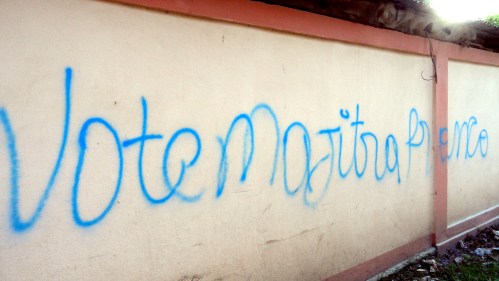
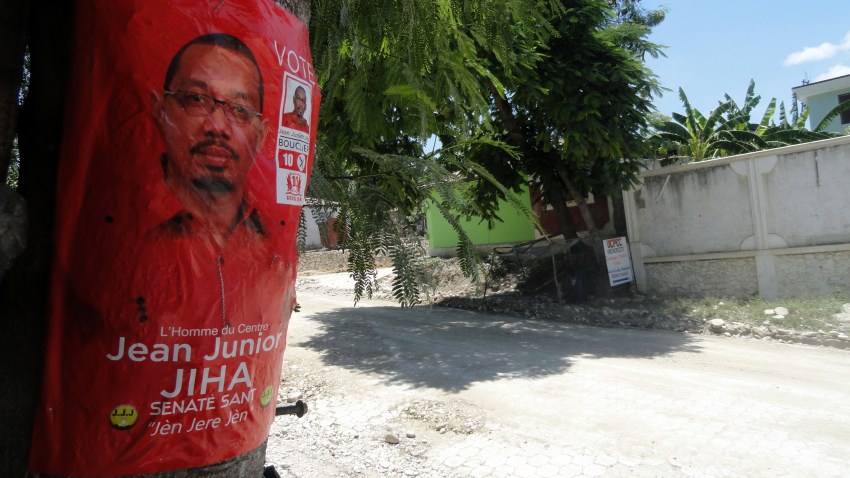 smw, slt has been on a bit of a holiday back home in northern California. Here in the US I’ve enjoyed the antics of the current republican presidential front-runner – ah, such inanity. Back in Haiti where my work remains, tomorrow will be the first round of elections in what bids to be a remarkable election year: the last time Haitians went to the polls was not long after the earthquake, in late 2010. A president was elected then in a second-round run-off, with substantial and documented influence from the US and the OAS to eliminate one candidate and include that eventual winner in the second round instead. The government led by that president has not managed to realize municipal or legislative elections since then. They’ve been scheduled more than once in past years, but always cancelled before happening. With no electoral mandate remaining, parliament was dismissed in January and the president is ruling by decree, with a stated goal of using that power to ensure elections happen this year before his own electoral mandate runs out. Tomorrow is the first round for 2/3 of the senate (1/3 of them apparently still have legitimate electoral mandates, or some kind of special deal), and all deputies. I’ll fly back on Tuesday, and am following this from a distance with interest.

If the schedule goes as planned, late October will be an even bigger day: second round for these candidates (where no one wins a clear majority), first round for president, and the only round for all the mayors and other municipal posts that have been filled by appointment rather than election since their own elected terms have run out in recent years. Campaign graffiti on walls has been omnipresent in Port au Prince for months already, but formal posters and billboards started springing up everywhere, about a month ago when the official campaign season started – I think July 9 was the date. I’ve really enjoyed watching all the many posters pop up, seeing all the graffiti, and realizing how similar the political slogans are to what I’ve seen in any country anywhere. (My favorite, not yet captured on camera but I’ll try when I get back, is the female candidate for a post in the Western Department of which PaP is part, whose slogan is “Les actions parlent plus fort que les mots ” — actions speak louder than words. I wonder what those actions will/would be if she’s elected!) I really hope that this big electoral season manages to happen fairly and without any major violence or problems, and thought maybe some of my readers would enjoy seeing signs of the season from Haiti, even though I didn’t get as many or as much variety as I’d have liked.

Mountains, Lake, Mountains, Sunsets

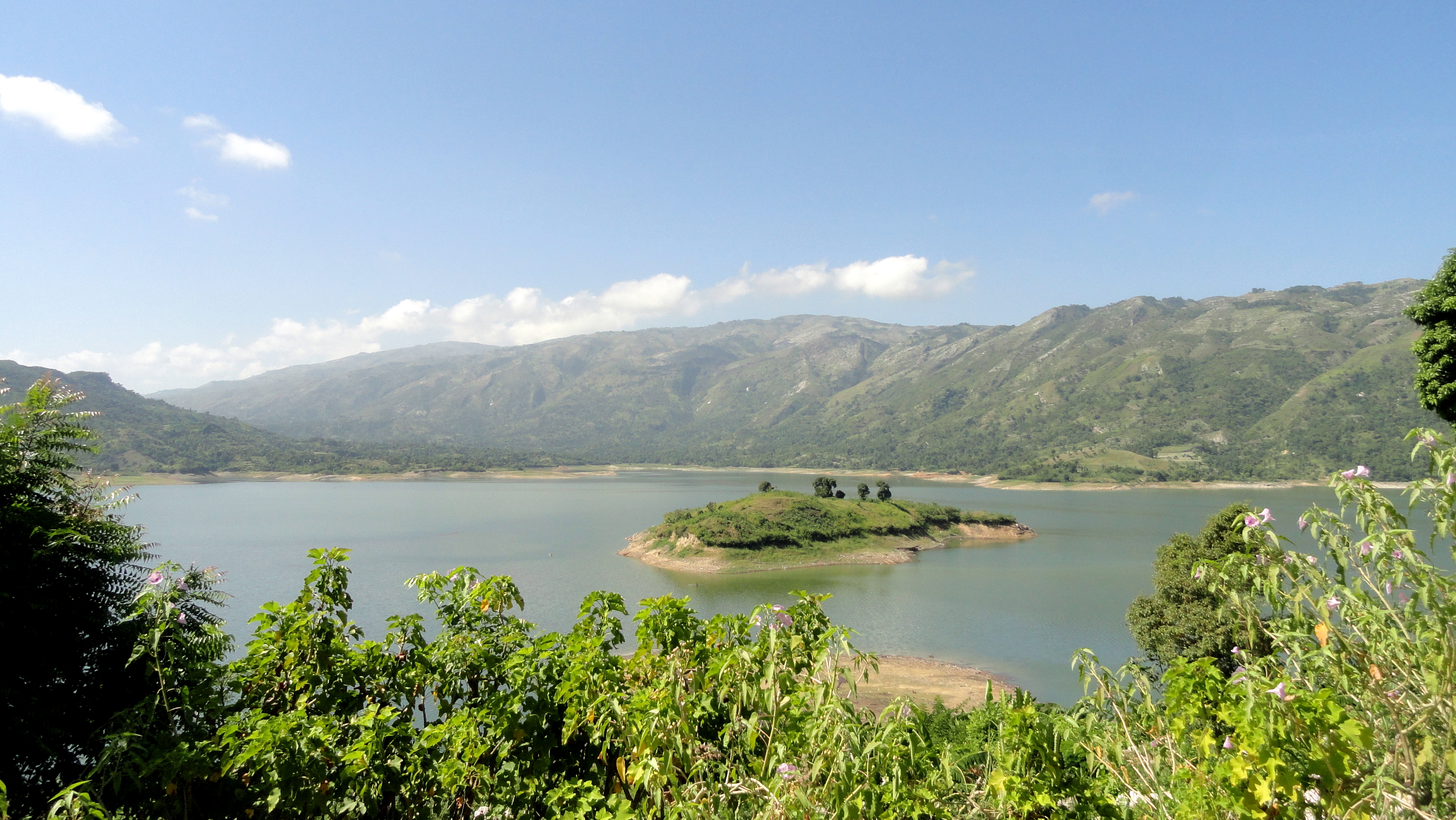
One thing many outsiders (especially in the US) know about Haiti is the popular refrain “mountains beyond mountains,” to describe the highly mountainous terrain most common here. Recently I’ve gotten out again a bit: up to Hinche in the Central Department here, driving through lovely green farming terrain along the way…and, indeed, getting a sense of the mountains which criss-cross this country, rank upon rank. These are mostly just shots taken during the drives, or in and around the hotel we stayed at in Hinche. There are also a few bits and pieces from here in Port-au-Prince and environs, just for fun.
It’s election season, with the first round due on August 9th; I’ve been trying to capture shots of the election posters and so on, and hope to put some of those up for your enjoyment in another post within the next few weeks. Right now, I’m about to take a short vacation back home in California, and I admit I’m excited for some down time. Hope everyone’s well, and enjoy the shots.


Walking to La Visite
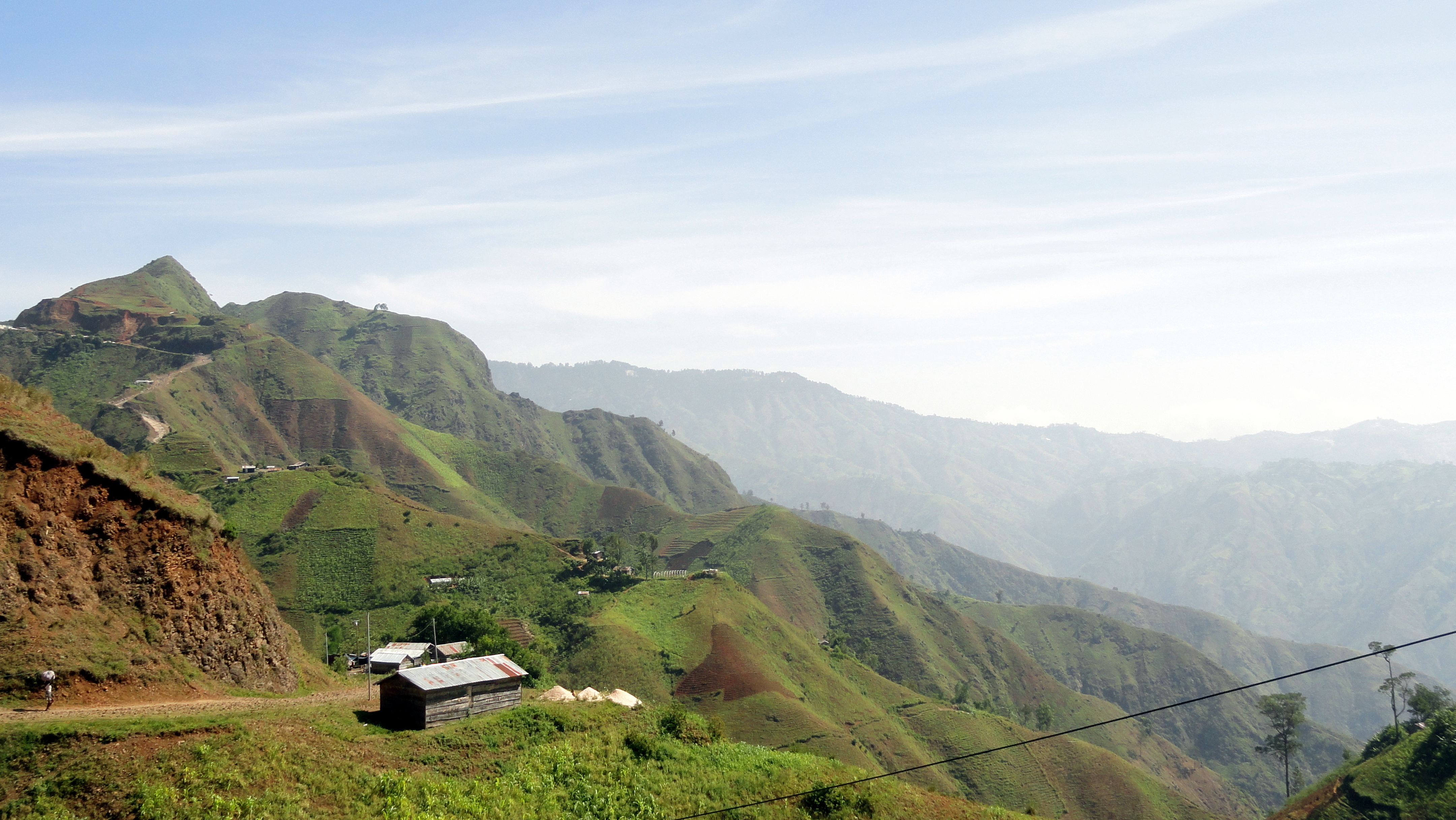
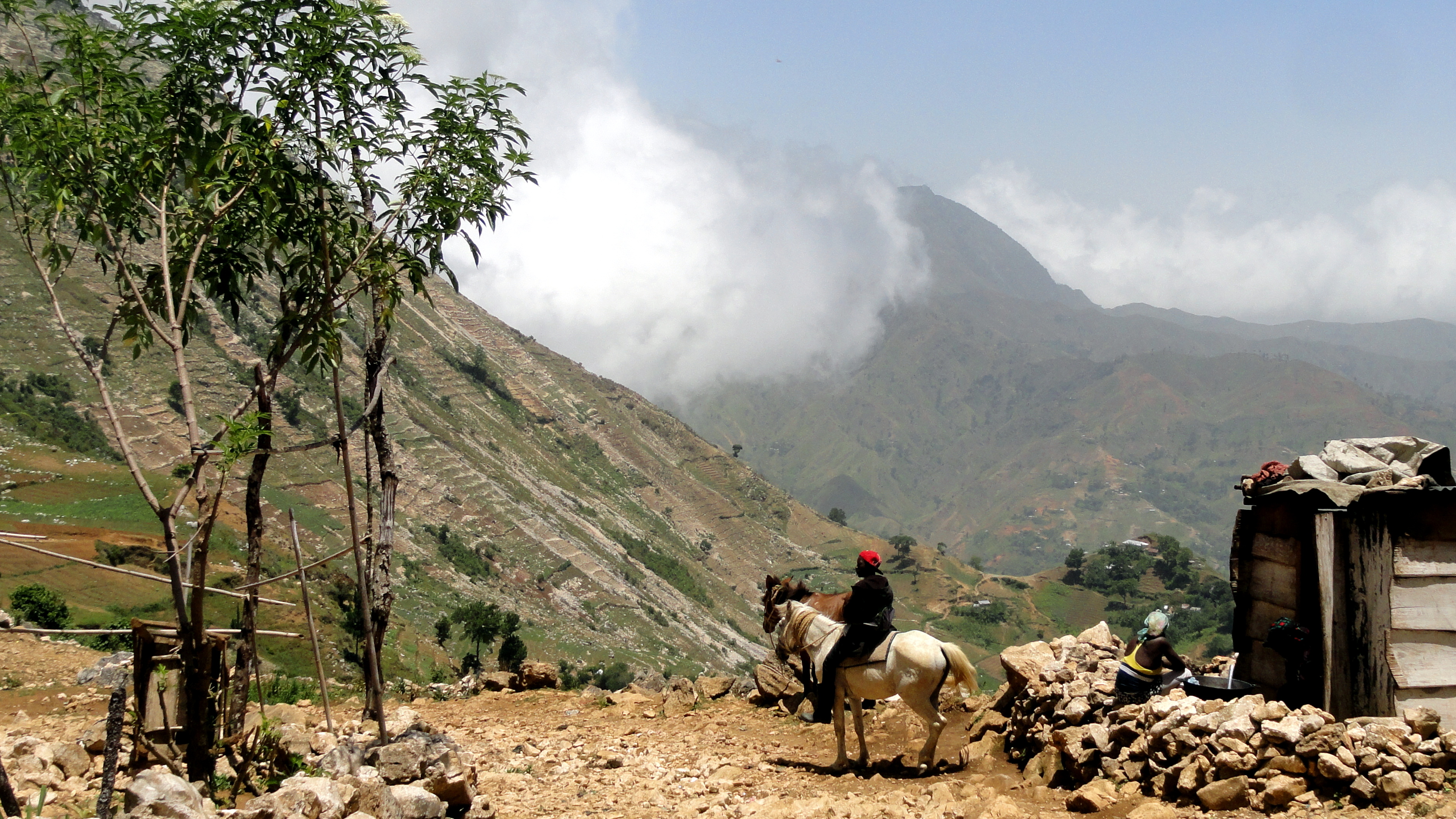
 A thing I learned long ago is that Haiti is almost entirely deforested. In the last post I put up, from a short trip I took up the coast to Arcahaie (about an hour north of PaP), you could see evidence of this fact in the hills I showed. And PaP too is nearly treeless – and full of cars, people, and dust at this time of year. Last weekend four colleagues and I drove to a town about an hour south of PaP, beyond Kenscoff village high in the mountains at the southern base of PaP, to a point where even a good 4wd vehicle really won’t be able to cover the road any more. (As we learned in our onward walk, motorcycles DO make the onward journey, though it’s not one I’d relish making that way.) In any case, the point of being deposited in this little town is that one can – and every weekend some handful of expats living in the capital, and apparently some straight-up tourists as well – do get dropped off in that town and start the walk further south, aiming to end up (after four or five hours of walking in hot sun on mostly shade-free road) and spend the night at what turns out to be quite a lovely little guesthouse set inside what’s now Parc Nationale La Visite. One reads, in a lovely coffee-table book available for sale at the guest house, that the national park is recently created, and that less than 2% of Haiti’s forest is protected. During the visit we played cards and chatted a bit with another American guy who’s part of a program to pay landowners to not cut down their trees for firewood or to sell for making charcoal, construction, etc.
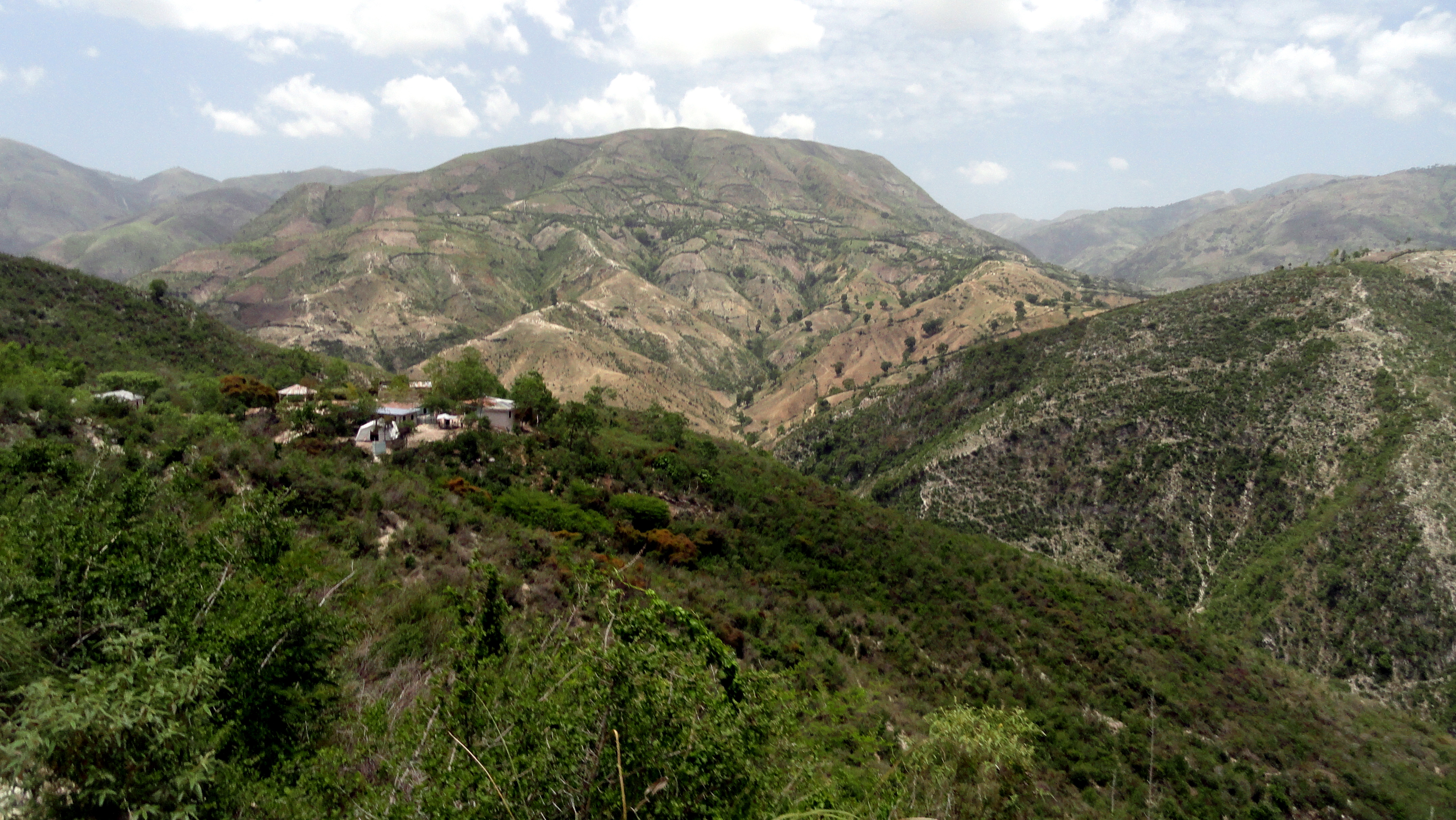
As you’ll see in these shots, the deforested steep mountainsides can certainly be beautiful…but look closely and you’ll also see apparent evidence of erosion, and of rocks left behind in landslides. (Some of the rocks seemed to be eroded lava from more ancient flows, but I’m no geologist so I might be quite wrong.) We wondered how much longer before all the top soil washes into the sea…and without trees to rot and replace it, what will be left? Again, not my area of expertise, but when I consider the amount of agricultural products I saw being carried on people’s heads or panniers on mules, and which we ate during our short stay at the guest house, I hope enough is retained to keep providing PaP etc. with food to eat. (That handful of expats hiking the road weaves into a much larger stream of foot, mule and motorcycle traffic, much of which is clearly geared at getting nice fresh produce to market.) For us it was mainly a lovely 2 days of walking and enjoying beautiful vistas and some stretches of forest which, without realizing it, we’d all grown to miss during our weeks and months on the dusty, busy streets of PaP. I did edit the photos, but not enough, I acknowledge. Sorry – after weeks with little but buildings to look at, I got a bit shutter-happy.

You’ll notice these three shots in a row show the same things from different angles and perspectives. My attempt to give a sense of how things fit together in this steep mountainous zone of windy roads...


Dry Hills of Arcahaie

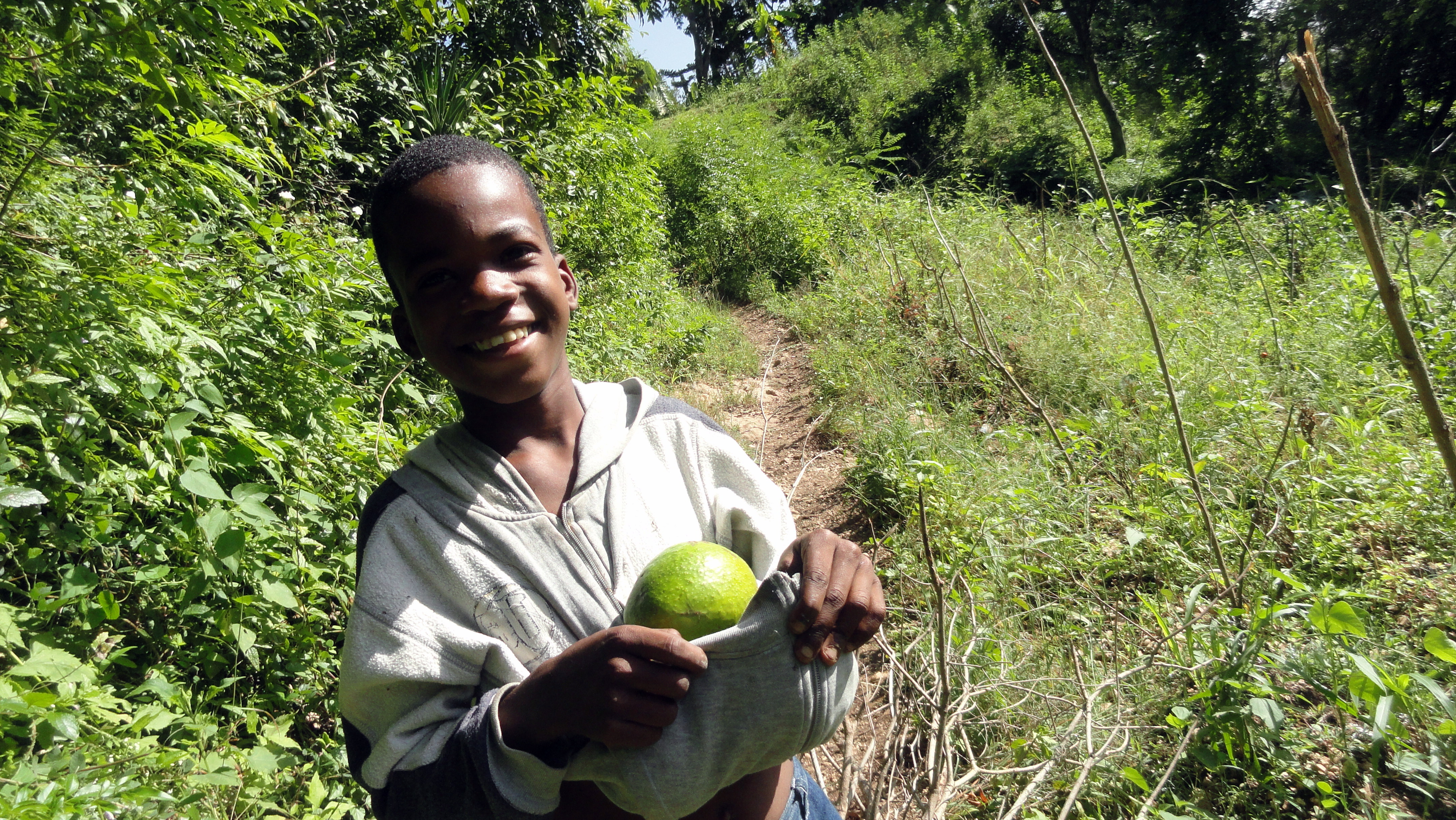
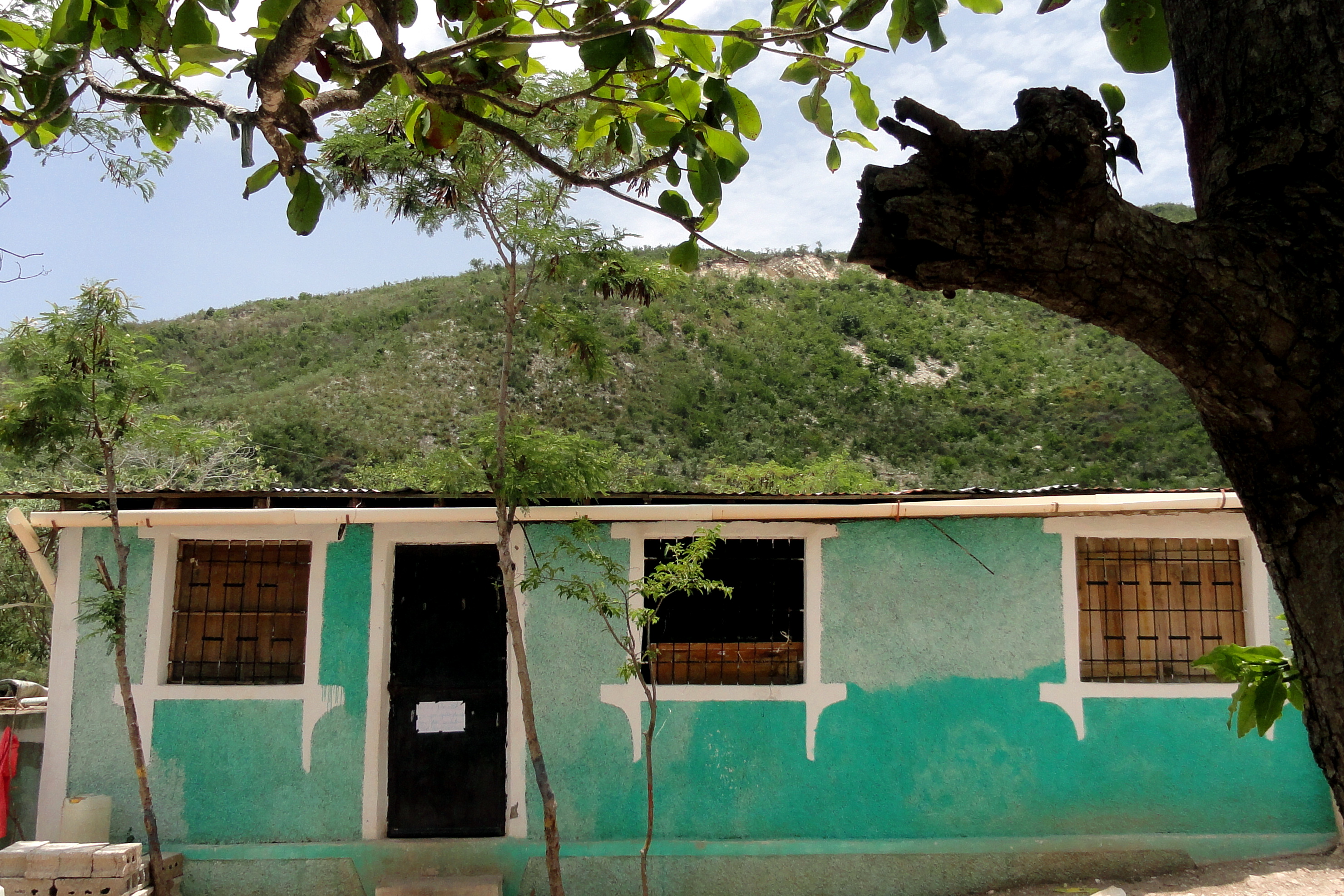
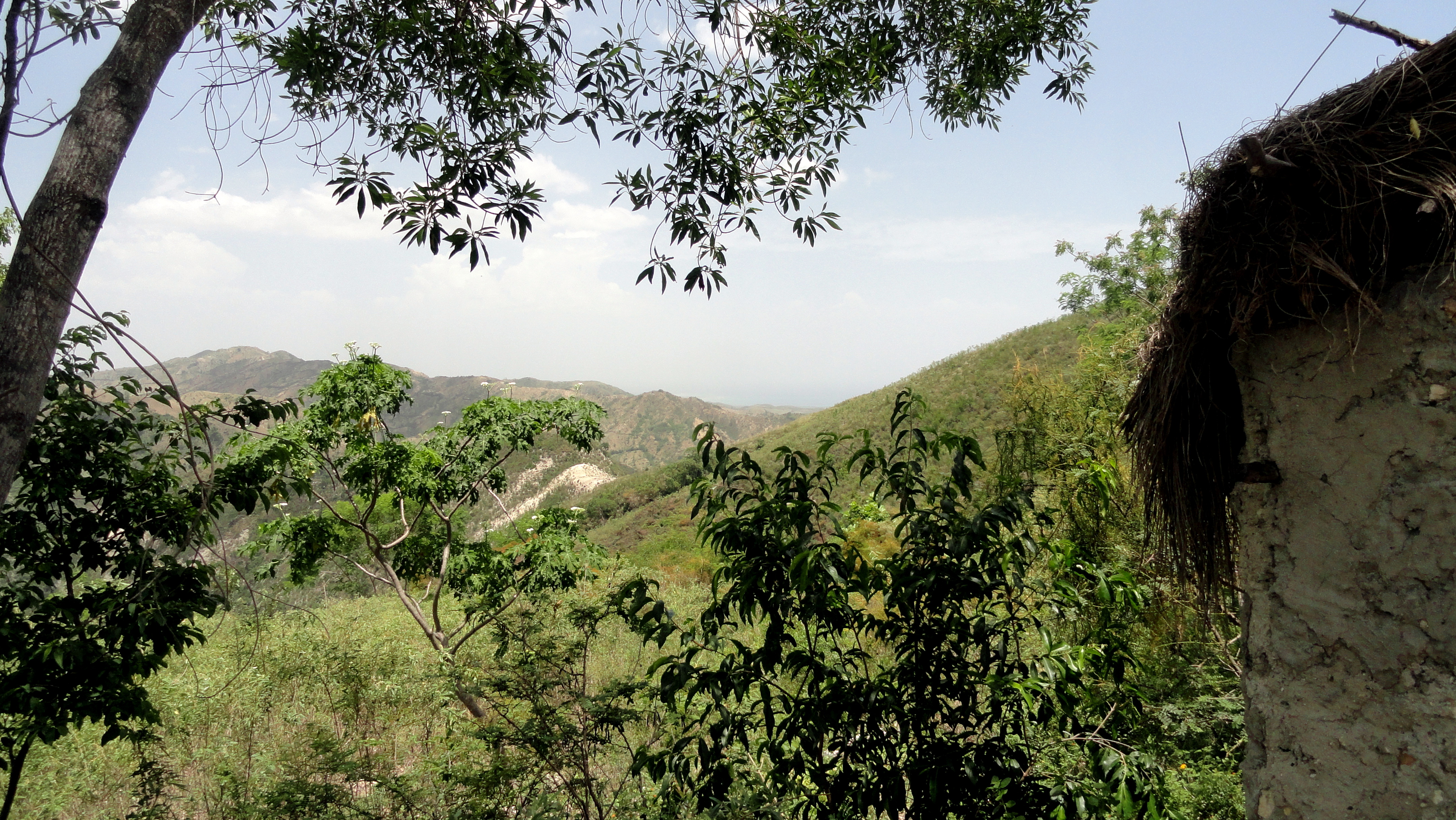
 Arcahaie is a small city on the coast north of PaP, and the first place outside metropolitan PaP that I’ve been so far. This was a work trip, with the team to visit some of the locations where we’ve been supporting oral rehydration points for cholera patients (creating a spot where very sick people can get rehydrated fast, after traveling often quite long distances from even further into the hills you see here on bumpy roads by foot, motorcycle or animal of some sort). The idea is for the staff of these points to get patients well enough to be out of danger and then transfer them to a facility with full care until they’re really well. Anyhoo, though, since this is a personal not a work blog, and since this was the first view I got of those many mountains beyond mountains for which Haiti’s become so well known by so many who’ve never been here, I took my camera and made some photos. And yes, the hills are as sadly deforested as I’ve read…and yes, it was as hot as it looks. (It was brutal.) Still and all, great to get out and about, and the local neighbors we ran into were friendly and interested. One of the kids above took a few selfies and enjoyed looking in the screen after.
 The shot below, and two in the gallery of circles further down, are the only ones in this set from Port au Prince rather than Arcahaie: if you enlarge the shot below, and look closely, you’ll see that there’s a city below and behind the trees & the lovely red flame tree. I drive past this every day on my way to work — that’s the main part of the city of PaP as seen from Montagne Noir which lies directly to the south. I waited and waited and waited for a clearer day, but it’s been hazy and humid most of the time and I worried we’d lose the bright color of the flame tree which makes it so beautiful. Further down are a close up, and a bigger shot, of plants growing from one of the stone retaining & protective walls which surround so many compounds around Montagne Noir.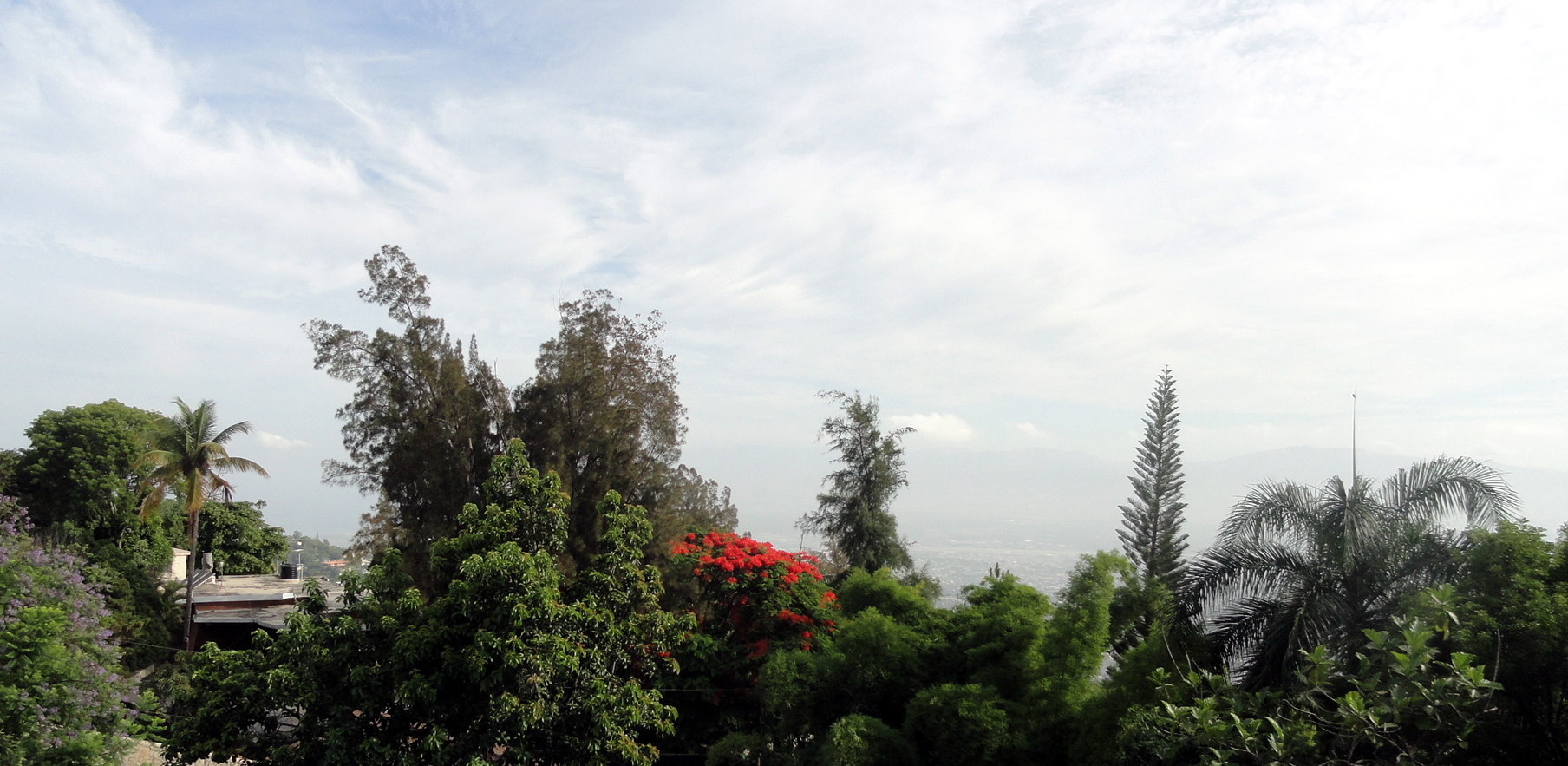


On & Around San Francisco Bay
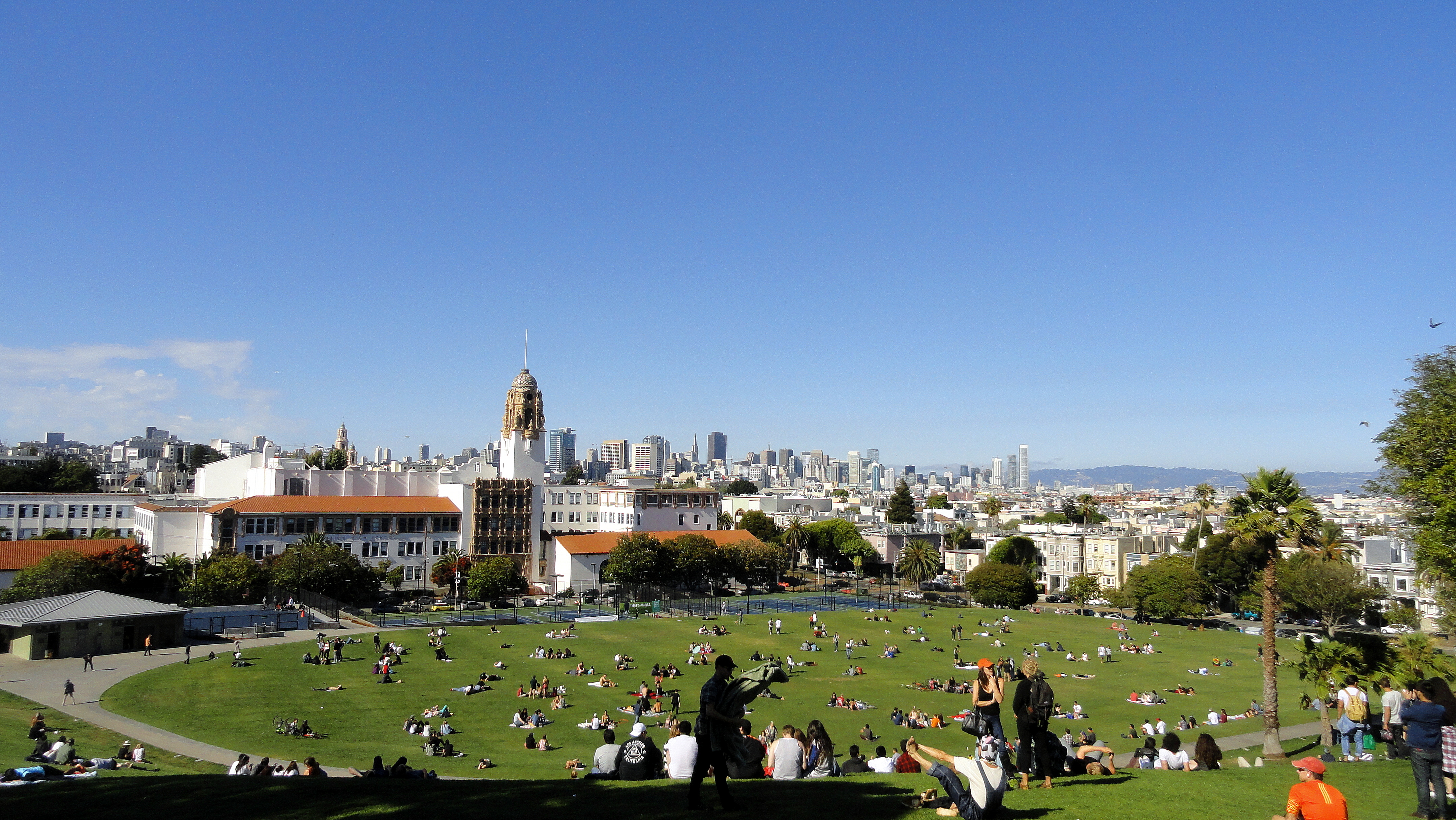
 …plus a few remnants from a series one might call ‘airports of the world.’ smw, slt has not gotten out and about with the camera much these past weeks, but I did realize there was a small cache of photos from some boat trips on the bay, and some hikes in Marin and Sonoma counties, that had not yet been posted. Since I get a bit homesick sometimes when I’m so far away, I’m putting these up so that I have an easy way to scan over them from time to time and remind myself what home looks like. Maybe some of you will enjoy it as well. All the photos have descriptive file names that show up if you hover over them or open them separately, I think. In the slide show below, you’ll see a panorama which goes from the Bay Bridge on the left (east), across the full waterfront of northern SF, to the Golden Gate Bridge & Marin Headlands on the right (west). Further down you’ll see some hiking shots from the trails in Tennessee Valley (Marin county), and Annadel State Park & Hood Mountain Regional Park (Sonoma County). In one of them you’ll see frost on the ground in the shadowy foreground: that was Christmas day last year – ah, how I long for frost on a hot afternoon here in Port au Prince! At the end are some photos of me and friends – at Wolf House in Jack London State Historic Park (Sonoma County) … and, well, me looking as lost as I felt, with some colleagues in Casablanca airport on my way home from Sierra Leone, last December. Our flight out of Freetown had been at some crazy hour like 2 am or 3 am or something, so we took the ferry over to the airport at 10pm or so, and snoozed in the waiting area and then flew for three hours to Casablanca to land at something like 8 in the morning. Oy, airports in which we have waited listlessly: might be a future series, what do you think?


Monuments of Port-au-Prince
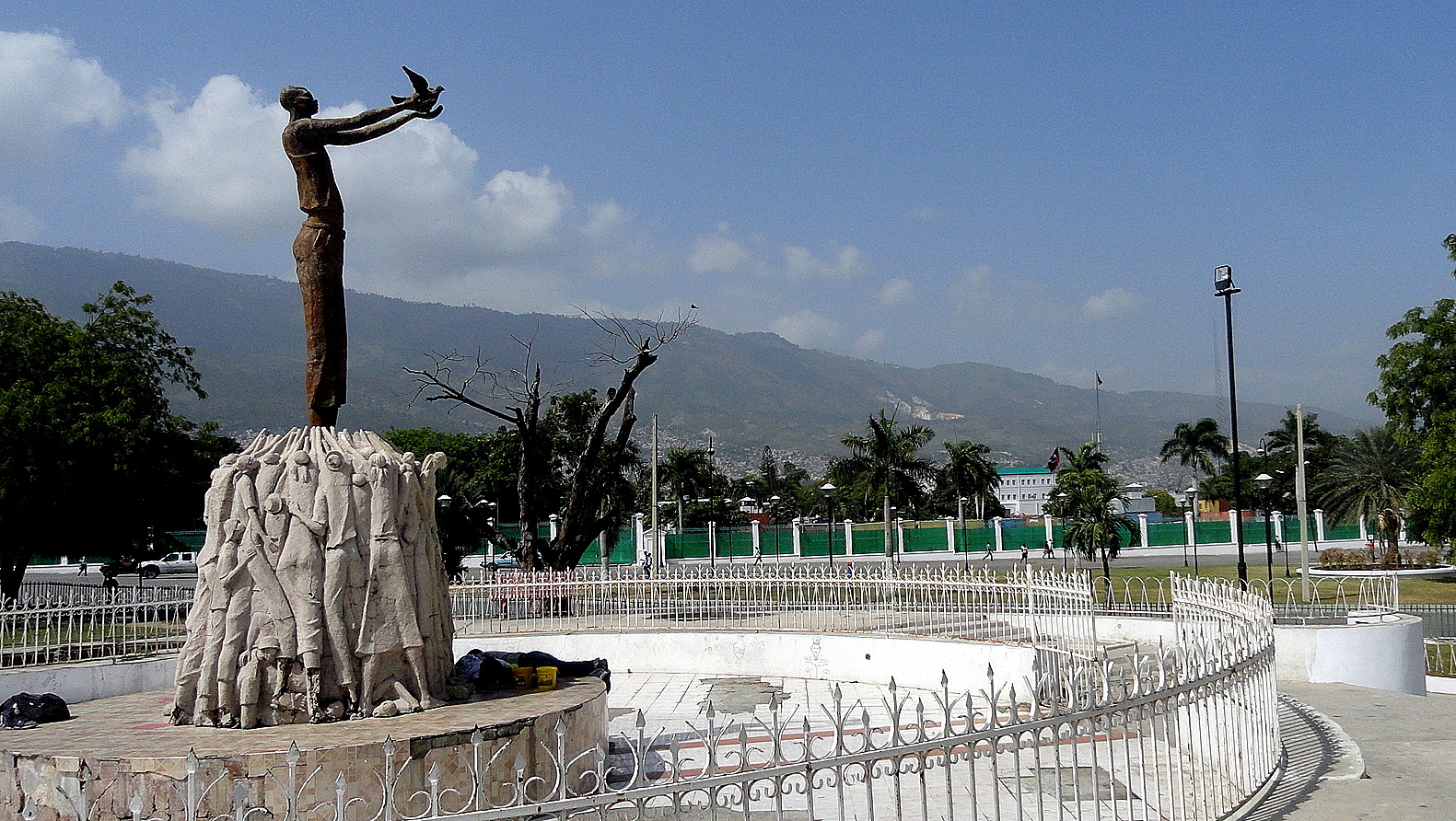 Napoleon Bonaparte wrote the following, in his memoirs from St. Helena: J’ai a me reprocher une tentative sur cette colonie, lors du consulat; c’était une grande faute que de vouloir la soumettre par la force; je devais me contenter de la gouverner par l’intermédiaire de Toussaint. (Thanks to Madison Smartt Bell in whose magnificent historical-fiction trilogy on the Haitian revolution I found that.) He’s basically saying that he made a big mistake trying to reconquer the self-liberated former slaves of this colony, instead of being content to rule the colony through their leader. I took the photos in this entry during a weekend morning exploring the heart of downtown Port-au-Prince, which is well-stocked with monuments to this country’s absolutely astounding history. So I’ll just give a quick and highly selective review of that history and ask a what-if or two.
Imagine that a man born into slavery, and without formal education, rises to a point where he organizes and leads a slave revolt which fights off the Spanish and British, restoring control of Hispaniola (the whole island, at one point) to the French Republic. Toussaint Louverture, spurred by Napoleon’s statement that the colony would need some new laws, then drafts a constitution which leaves the colony basically part of France but with a lot of home rule (some quotes are seen below in the three tall photos); and Napoleon basically responds by sending out a massive fleet, betraying and arresting Toussaint so he dies in prison in France…and then the former slaves of Saint Domingue get really mad, and with the help of yellow fever and the leadership of Dessalines and a few other key formerly-slave generals manage to permanently push the French out of the island, thereby defeating one of the world’s most powerful nations.
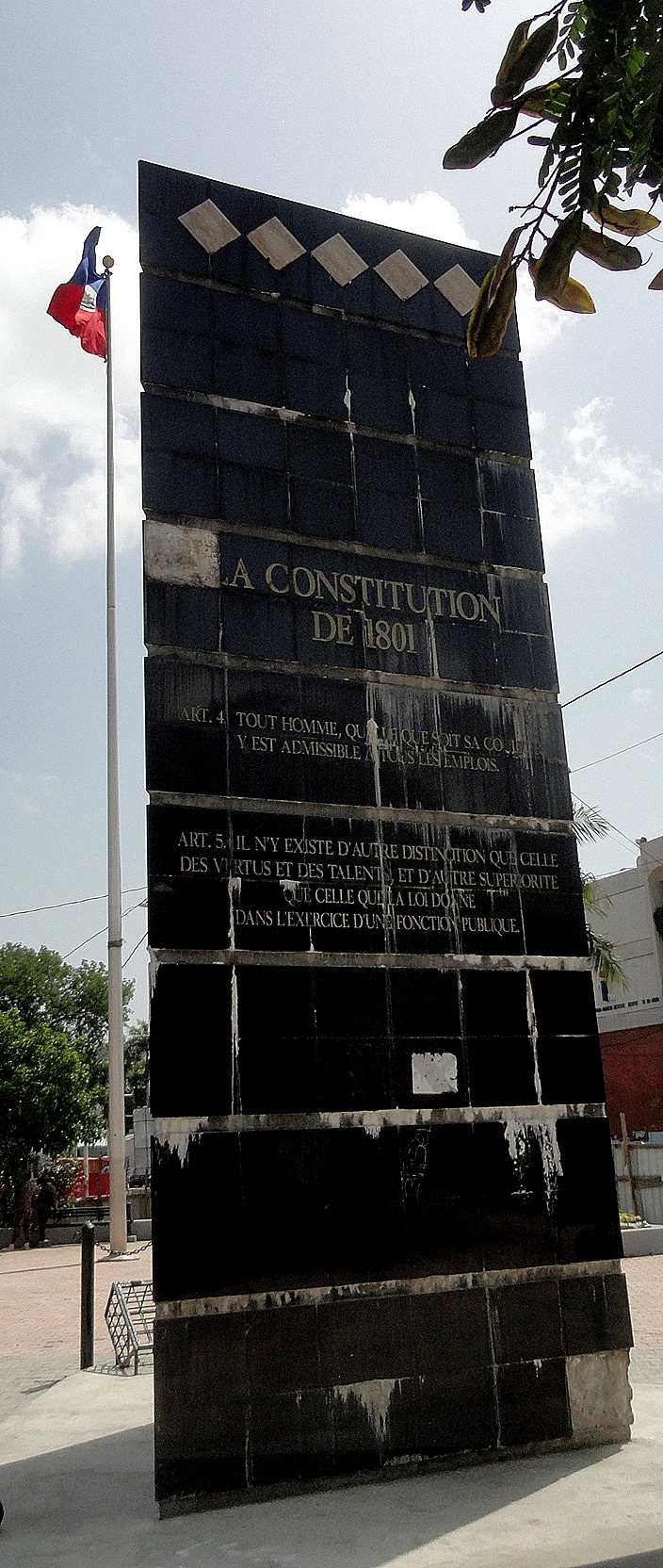

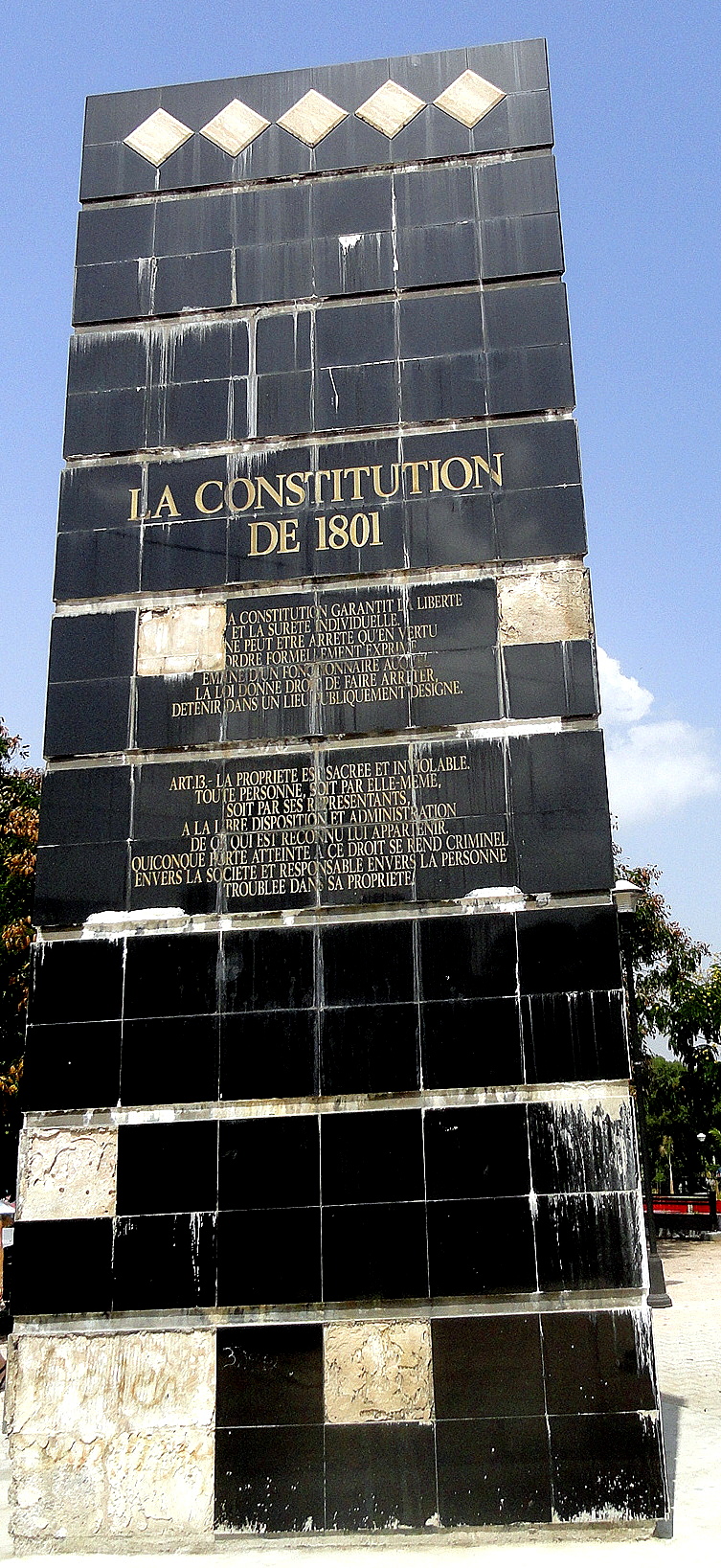 You could be forgiven for thinking such an interesting story would be widely known in the world. You might think the great democratic powers of the day – France and the U.S., eh? – would have welcomed this new republic & bastion of freedom, and developed warm ties of trade and friendship with it. (Especially if you consider that it was Napoleon’s grinding defeat here which forced him to sell the Louisiana territories to the US, step one of our gradual expansion to the Pacific.) You’d be wrong – France ran naval blockades and always threatened invasion until they forced the Haitians to buy themselves free with crippling debts that they were still paying well into the 1900s. (Thought experiment: what if Britain had done the same to us??) The US – with an economy in the south that depended on slave labor and continued to abduct people from West Africa and ship them across the ocean in chains for many more decades – didn’t choose to recognize Haiti’s independence until 1860. (Thought experiment: what if my own ancestors had crossed the ocean in chains and been sold in chains upon landing, rather than being given a homestead of redistributed formerly-Native American lands on the great plains?)
This country has an absolutely amazing history and I find it shocking, if sadly predictable, that its important place in history has rarely been appreciated beyond its shores. It has seemed to me since the 1980s that lots of people outside Haiti are free with opinions about what the country should or shouldn’t do, what’s right or wrong with its government or economic system, etc. – and I really wonder how many of those people with those opinions have taken time to think about (let alone interact respectfully with) the people of Haiti, their history, and their own desires as one of the earliest self-created nations in this hemisphere. Though it’s been shattered by the earthquake and battered by violent changes of government many times in recent decades, Port-au-Prince remains a great place to ponder this country’s rich history…and to hope for a brighter and more prosperous future with, might I add, a bit more external respect shown for this country and its people.


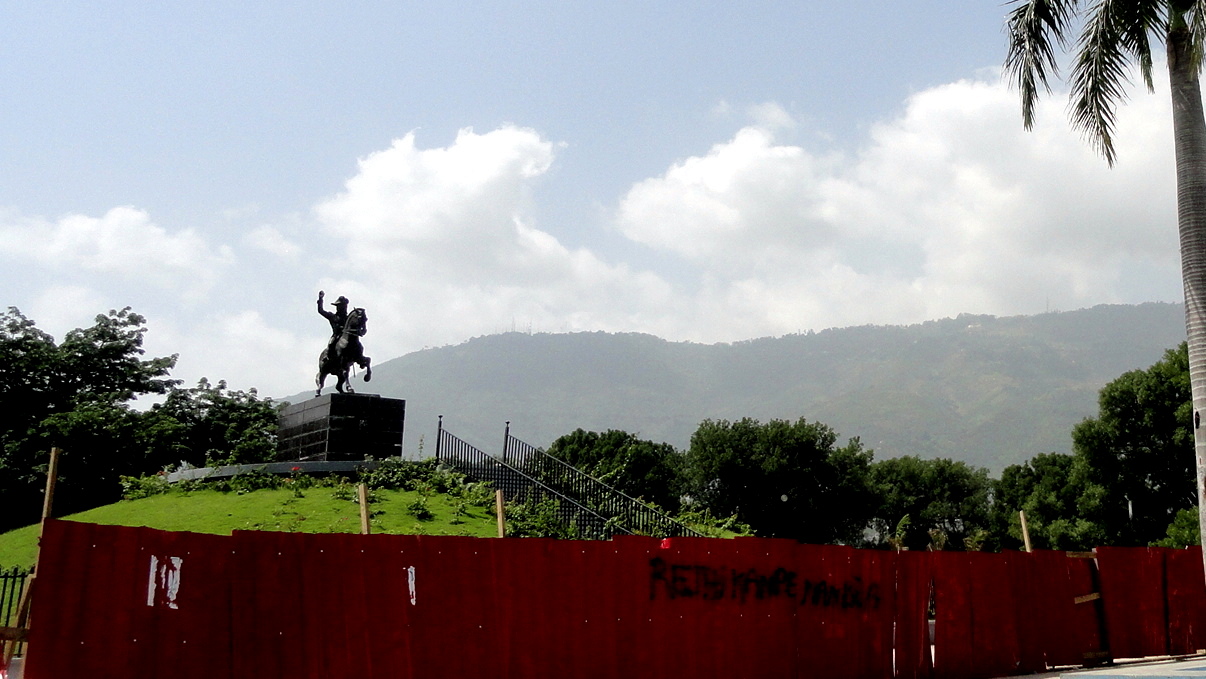
…immediately above is the monument to Dessalines. As you can tell, much of downtown is still under reconstruction but I’m told the pace seems to be picking up. Below is the eternal flame (to honor, I think, the original self-liberating revolutionary ex-slaves), with the new court house next to it; the big statue of the man blowing the conch shell in the Unknown Maroon – maroons being slaves who’d run away to the mountains during colonial times. Further down is a tap-tap with colorful paintings against sexual and domestic violence (which showed up at the opening to our new SGBV clinic), and the lovely old medical school building, which I guess either survived the quake or has been restored more rapidly than many others. The graffiti, I believe, expresses the hope that Haiti’s coming back into its strength again.


Baby Tarantulas on the Mountain
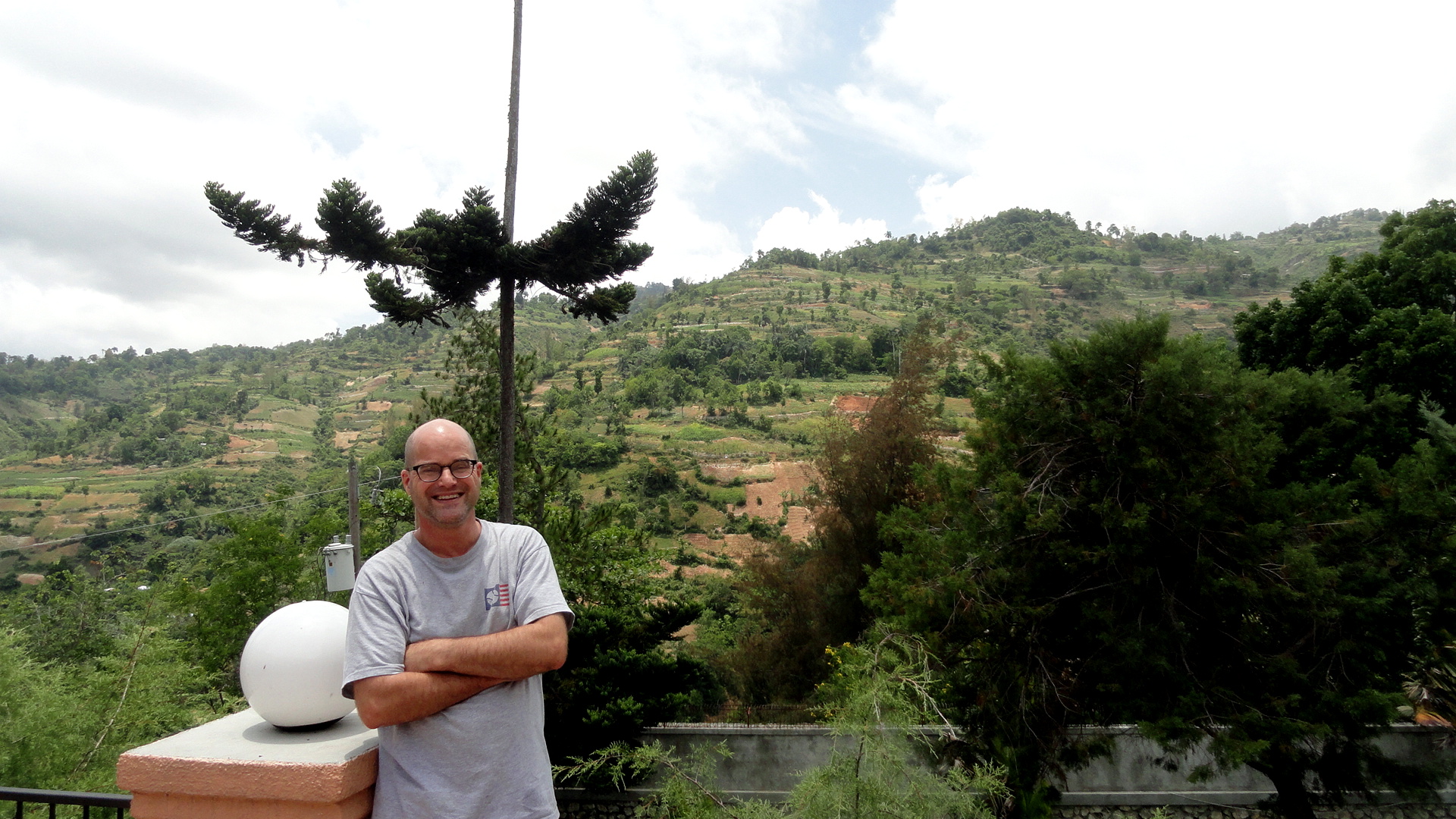
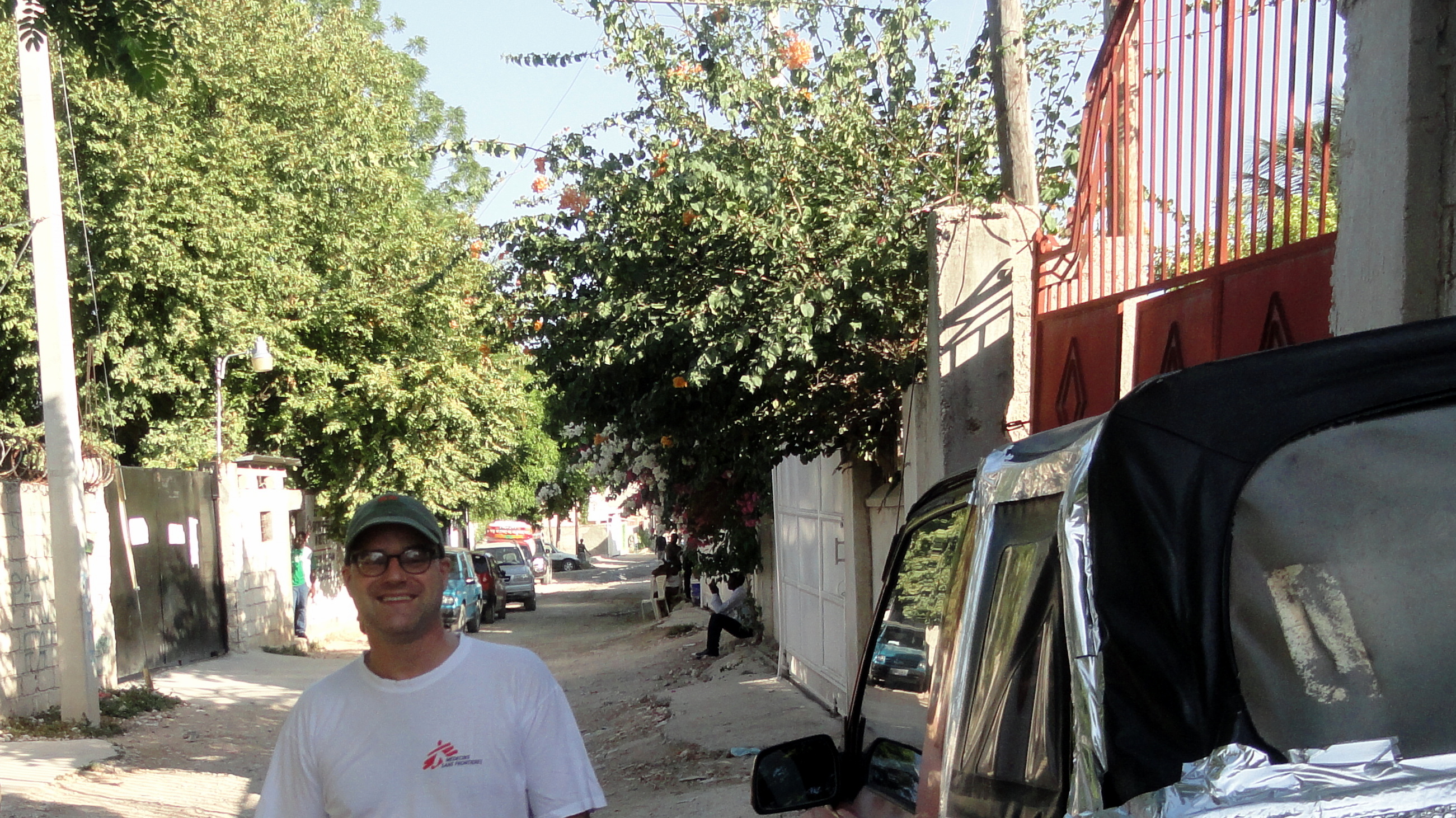
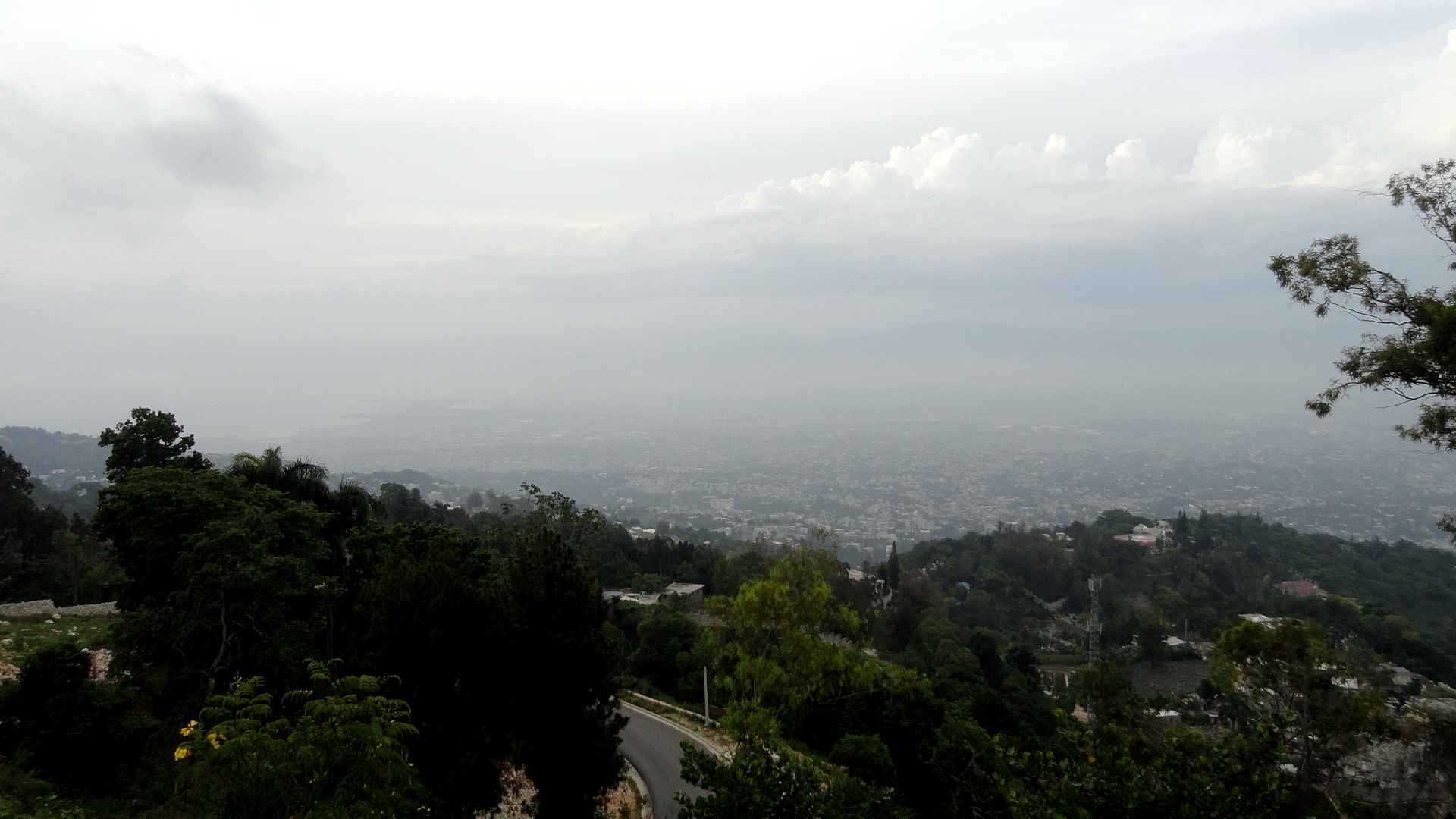
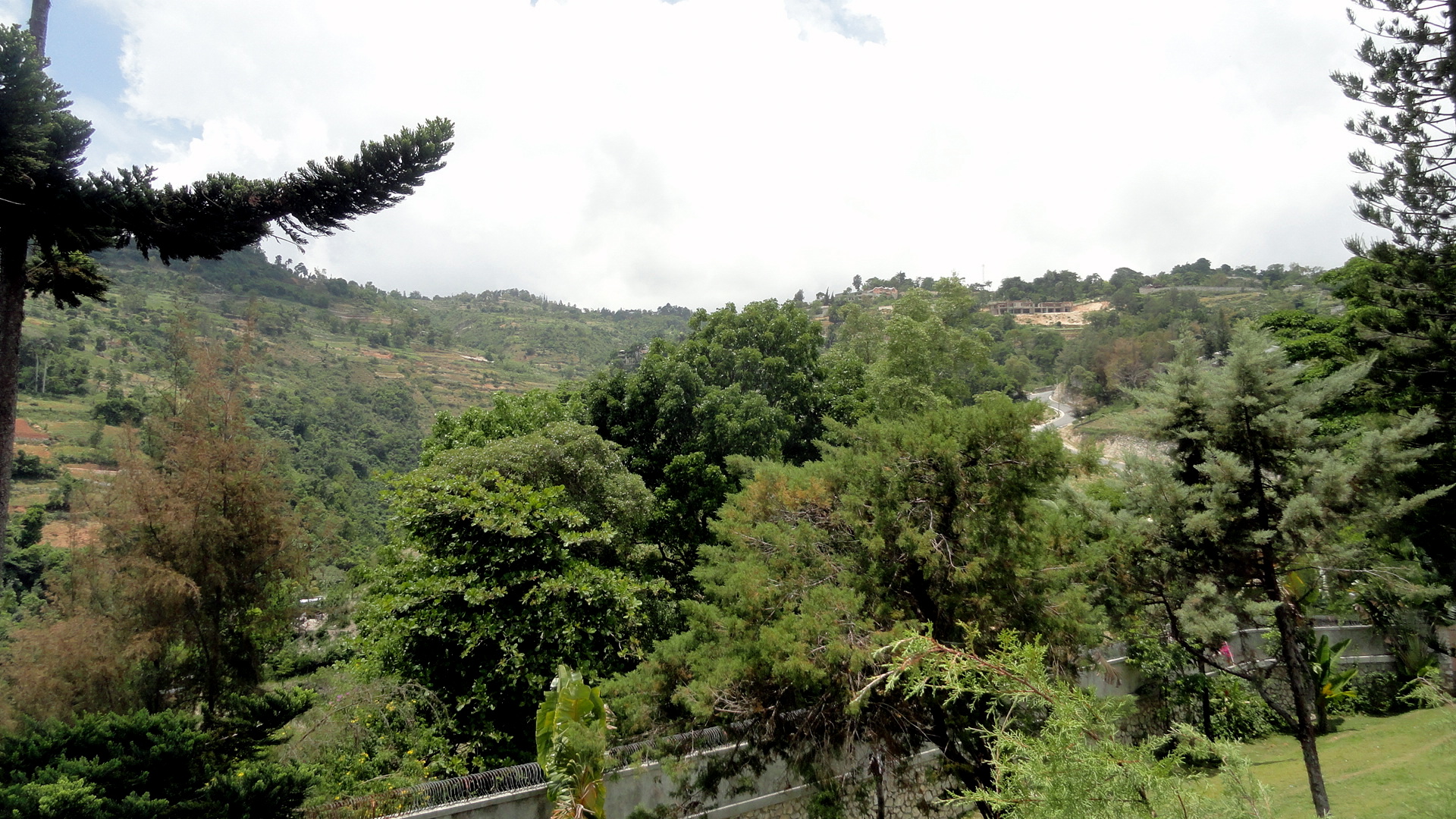
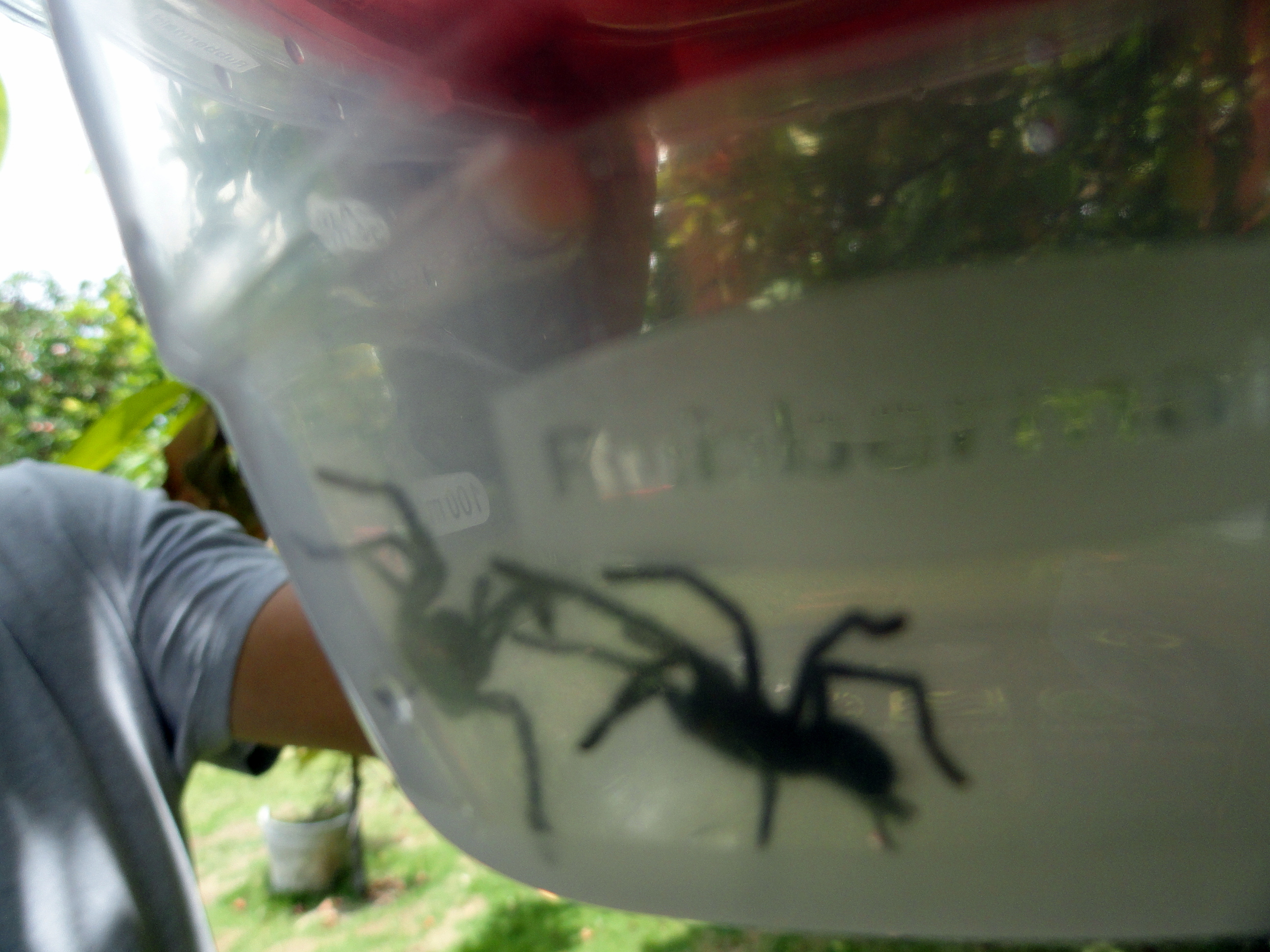 smw, slt is based in Port-au-Prince, Haiti for a while. I’ve been busy meeting new colleagues and partners, and probably won’t post much until I’ve settled down more. However I know a few friends back home wanted at least a view or two of me in my new home-for-a-time. Also, this second weekend here is a long weekend and so I’ve had some time to walk around at least a bit, and although the clouds have built and mugginess makes these views less spectacular than they’d otherwise be, I did catch a few views of the city of P-a-P spread along the plain. Also, the kids of some colleagues discovered a nest of baby tarantulas when they went to get some Malay (or Mountain) apples off the tree in the yard…and though I showed up too late to see the several dozen babies surging up out of the nest, I did snap this shot of a colleague holding two of them in plastic…
Today is jour du drapeau in Haiti, honoring the emblematic moment when Jean-Jacques Dessalines removed the white stripe from the flag of France in 1804 to acknowledge the creation of this new nation whose slave inhabitants had freed themselves from deadly forced labor in the sugar-cane plantations of the most lucrative colony (thanks to all that unpaid, forced labor, don’t ya know) of Europe’s mightiest nation at the time, then removed the remaining whites on the island as well as the white on their new flag. Anyone who hasn’t read up on Haiti’s history will find it well worth studying. And if you’re curious what we’re doing here, check out this from the 2013 annual report (I’d assume 2014’s will be out soon, but I’m only just back on the job and forget the timing of these things): http://www.msf.org/international-activity-report-2013-haiti. In the meantime, peace :-).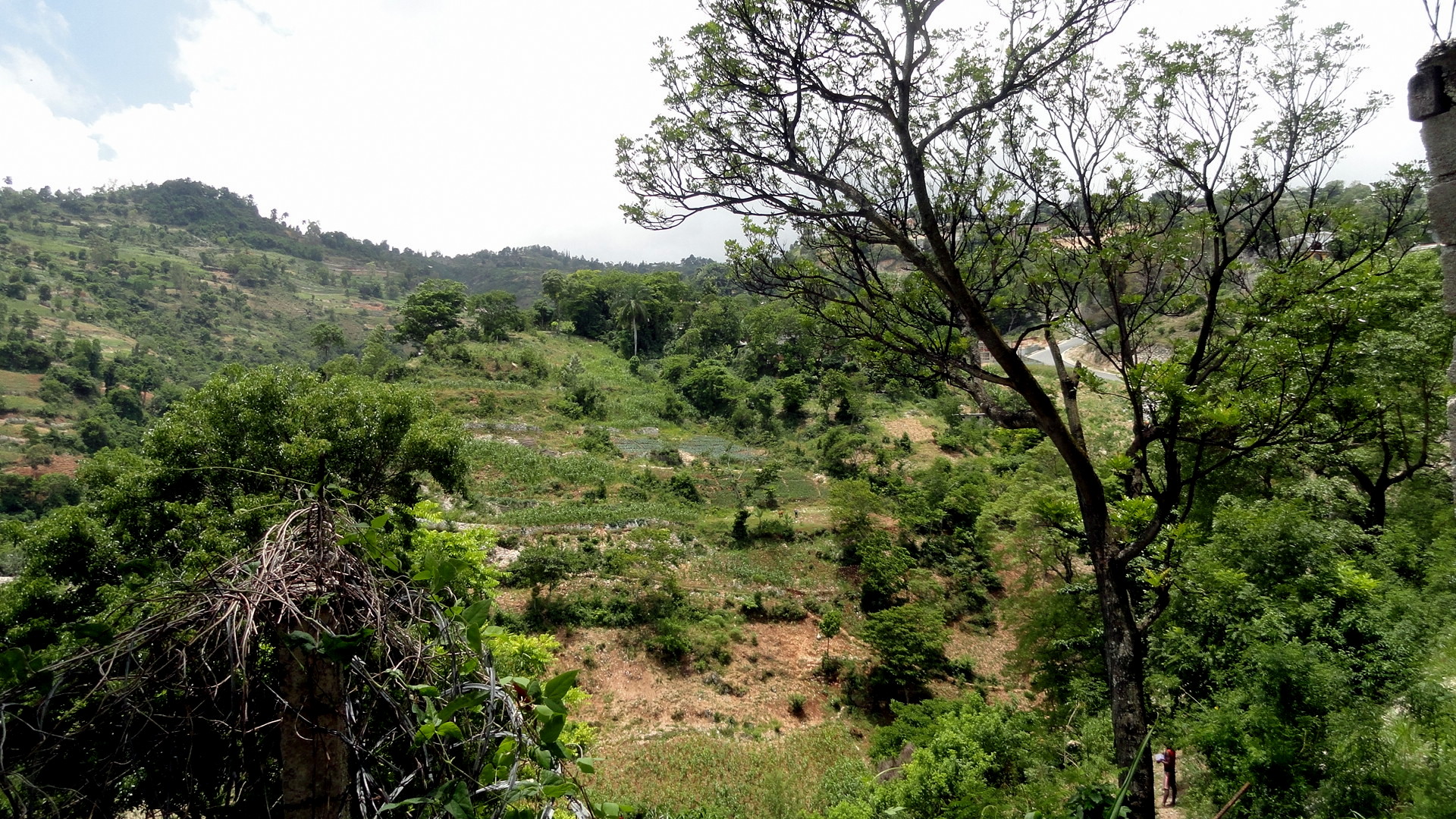



 (so much world, so little time....)